Category Archives: headline

One in four Australian adults now fully vaccinated

A quarter of Australian adults are now fully vaccinated against COVID-19.

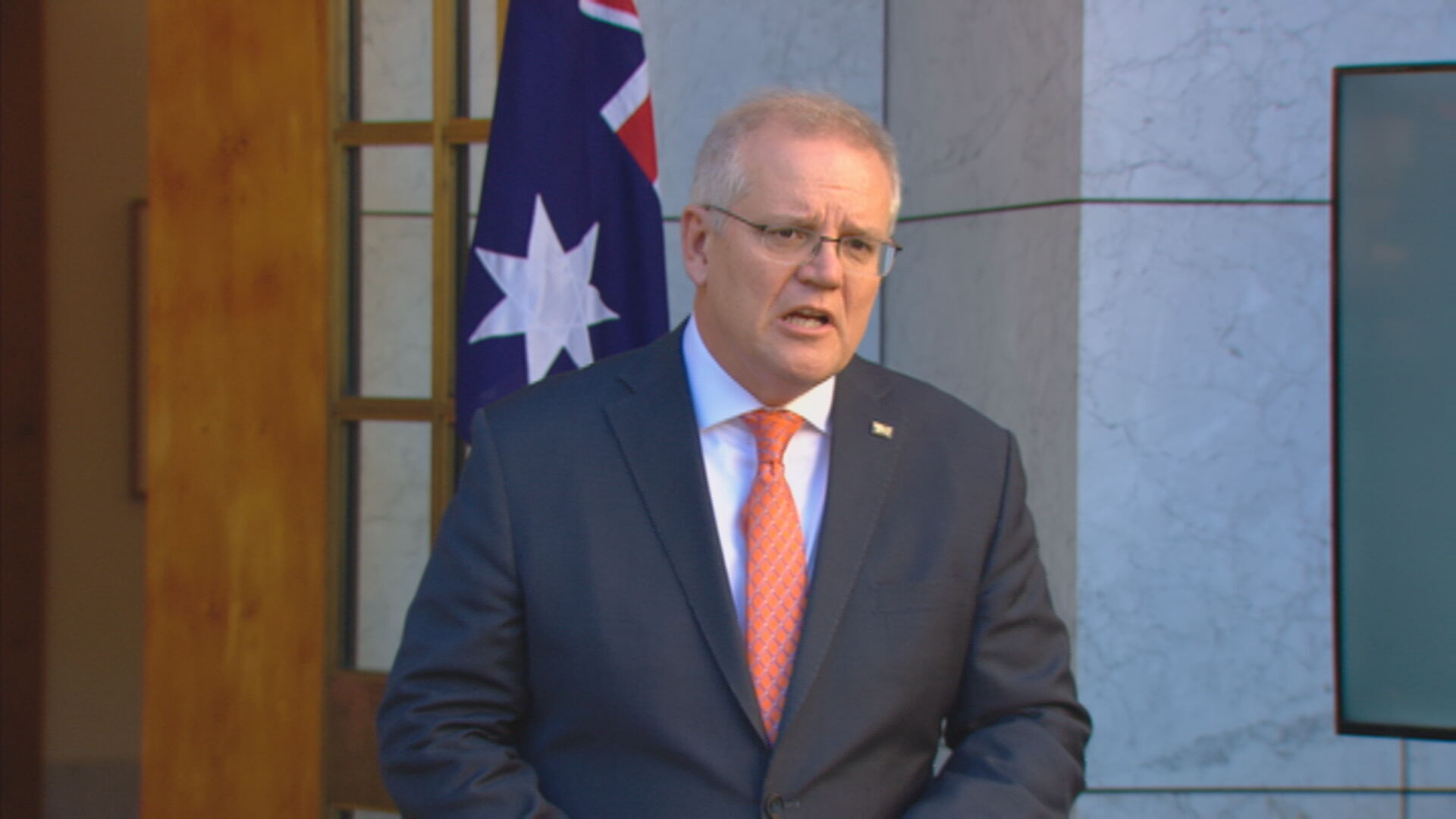
Prime Minister Scott Morrison has called current jab rates "world class", claiming they rival even those achieved in the United Kingdom.

However, the rising vaccination uptake comes as the NSW outbreak continues to surge, with 390 cases recorded in the state today.

LIVE UPDATES: Top doctor says Australia seeing 'third wave' of virus
Just one month ago, the percentage of Australians who were double vaccinated stood at 11.6 per cent.

"That just demonstrates how quickly this vaccination program is gathering pace all around the country," Mr Morrison said.

Yesterday saw another daily record set with 270,000 doses administered.

"It is equivalent in per capita terms to the fourth best day they had in the UK ever," the prime minister said.

"So the vaccination rates now being achieved under Operation COVID Shield right across the country are now hitting those world-class marks.

"I think that gives all Australians great hope about the path ahead.

READ MORE: WA bans unvaccinated NSW travellers in Australia-first
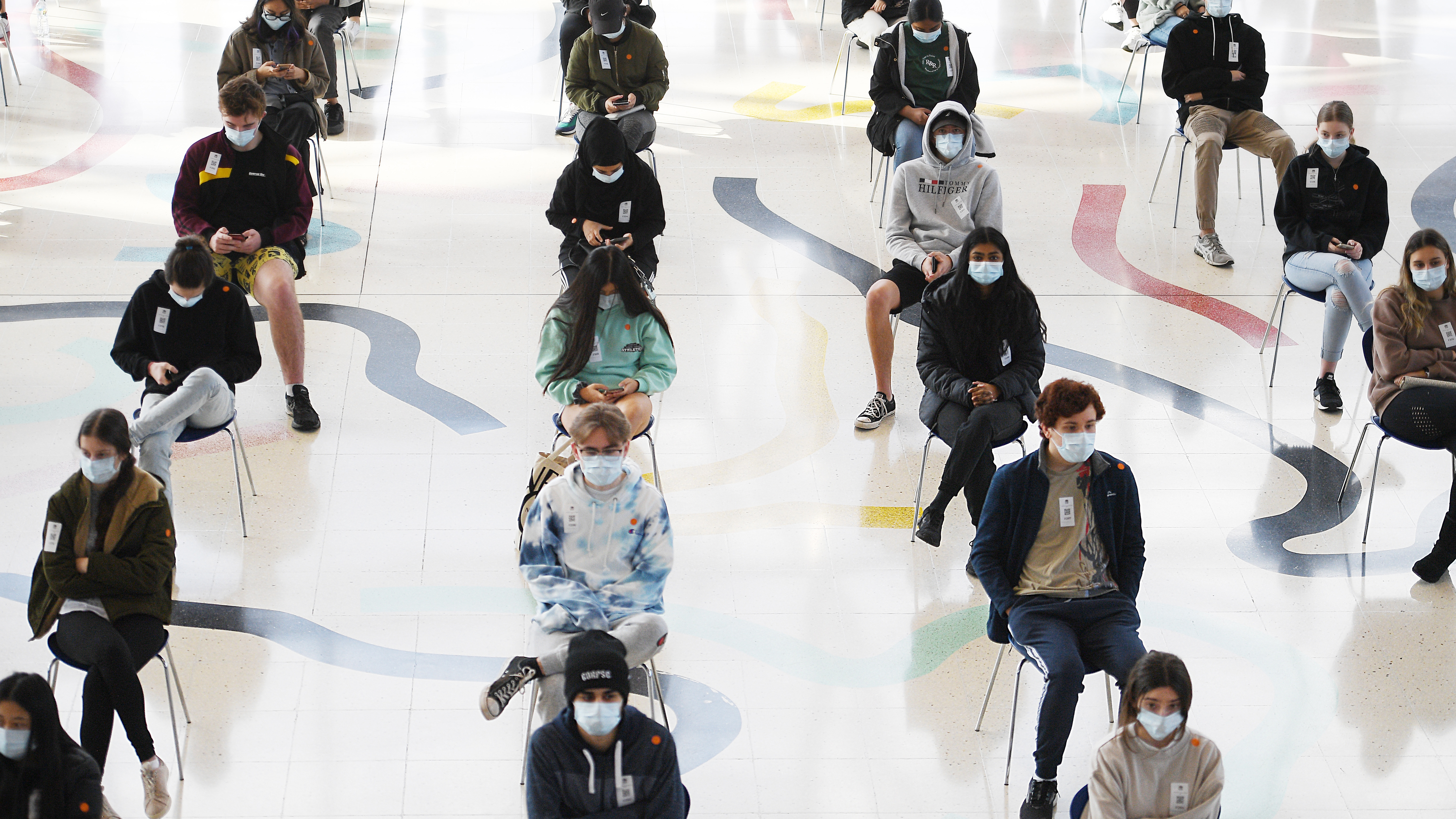
Students wait to receive the Pfizer vaccine for Covid-19 at Judos Arena, Sydney.

"Australians are charting that course. Australians are making that path ahead for our nation out of COVID-19 with every step they take into those vaccination clinics."

New South Wales' recent vaccine push amid its spiralling outbreak means it has now vaccinated more than half its population with at least one dose, joining the ACT and Tasmania.

But Mr Morrison said Tasmania was "leading the charge", with 52.5 per cent of its population having had at least one vaccine and more than 30 per cent having received two.

More than half of Australians aged over 70 are now fully vaccinated.

Vaccine rollout commander Lieutenant-General John Frewen said the "sense of momentum is very real" in the ongoing jab campaign with falling rates of vaccine hesitancy an "encouraging" sign.

"Recent surveys indicate to us that 79 per cent of Australians are prepared to get vaccinated and another 14 per cent are still deciding whether they will," Lieutenant-General Frewen said.

READ MORE: How to get vaccinated, state-by-state

Chief Medical Officer Professor Kelly said data from the UK and Singapore, two highly-vaccinated populations, showed the clear protection vaccines provided.

He said while both countries had undergone spikes in COVID-19 cases recently, high levels of vaccination had, to a great extent, prevented widespread hospitalisations and deaths.

The coronavirus has claimed 39 lives in Australia so far this year, most of them in NSW.
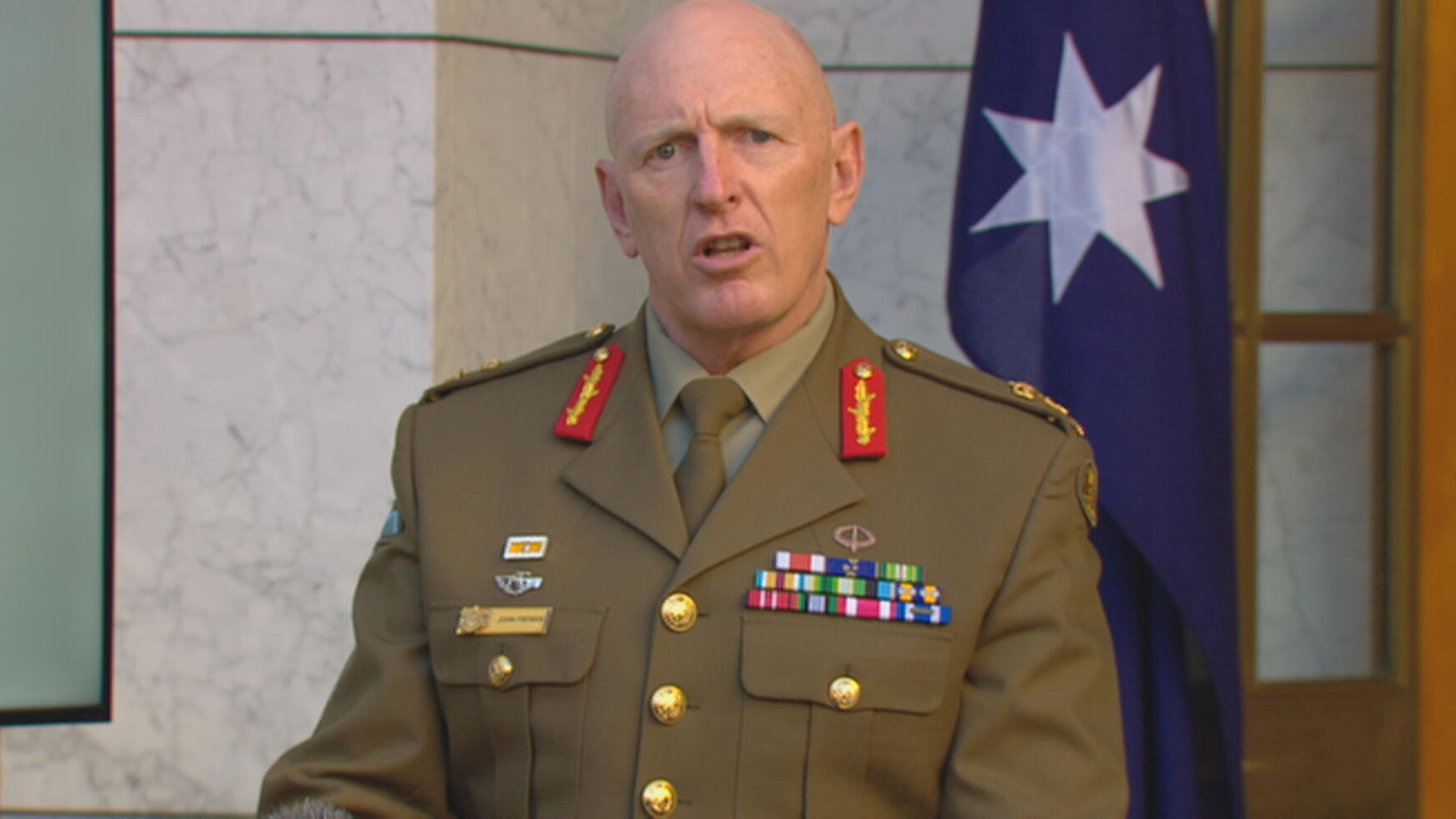
Vaccine rollout commander Lieutenant-General John Frewen said the "sense of momentum is very real" in the ongoing jab campaign.

Greater freedoms for those who have been vaccinated are also looking increasingly likely, the prime minister saying they "stand to reason".

"If you are vaccinated, you presented less of a public health risk to yourself and to others around you – your work colleagues, your community – so … it only stands to reason that you would have different arrangements," Mr Morrison said.

The prime minister noted that no decisions had been made on policies for the vaccinated as yet, but he backed WA's new mandate that exempt NSW travellers be vaccinated.

"That is not unlike the sorts of things we have been talking about for some time, where people are vaccinated, and an exemption has been granted, but the vaccination aids that exemption being given on public health grounds," Mr Morrison said.

However, he said such measures would not be permanent under the national plan, with vaccination levels of 70 per cent and 80 per cent meaning border restrictions could be discarded entirely.
Sex work to be decriminalised in Victoria

Sex work will be decriminalised in Victoria with a raft of reforms set to be implemented over the next two years.

The decriminalisation will mean sex workers will have access to the same rights as any other Victorian employee, regardless if they work for themselves, a small employer or a large company.

The Victorian Government in a statement said a range of reforms will be implemented over the next two years to increase safety, reduce stigma and improve access to government health and justice services.

READ MORE: Victoria's bold vaccine plan to get 'a million jabs in a million arms'

https://twitter.com/SWLRV/status/1426027613076660230

"Decriminalisation recognises that sex work is legitimate work and should be regulated through standard business laws, like all other industries in the state," it read.

"The current sex work regulatory system – which has not been updated for close to three decades – is out-of-date and no longer fit-for-purpose."

The changes will bring Victoria into line with other jurisdictions – including NSW – where sex work was decriminalised in 1995.

The government said sex workers have reported current working conditions as unsafe in both the licensed and unlicensed sectors, with issues involving violence in the workplace, deterrents to reporting violence and a lack of compliance with safe-sex measures.

"Every Victorian deserves to feel safe in their place of work – decriminalisation will ensure that sex work is safe work and go a long way towards breaking down the stigma sex workers continue to experience," Consumer Affairs Minister Melissa Horne said.

READ MORE: Victoria's mystery cases of 'particular concern'

In 2019, Northern Metropolitan Region MP Fiona Patten led a targeted review of sex work regulation and how to decriminalise the industry.

The government has considered the recommendations and vowed to remove offences and criminal penalties for consensual sex work and repealing public health offences.

They will also repeal the Sex Work Act 1994 to regulate sex work and update planning, public health and anti-discrimination laws to support a decriminalised system.

Only sex work between consenting adults will be decriminalised.

There will still be criminal offences to protect children and workers from other forms of non-consensual sex work.

"Replacing criminal sanctions with standard industry regulations has been proven elsewhere to improve workers, access to workplace health and safety, healthcare and justice," Workplace Safety Minister Ingrid Stitt said.

Feedback to inform the implementation of the sex work decriminalisation reforms is welcome via: engage.vic.gov.au/sex-work-decriminalisation

WHO expert 'concerned' about Wuhan lab, documentary claims

A top official in a World Health Organisation-led team investigating the origins of COVID-19 raised concerns about the safety standards at a Wuhan laboratory near a seafood market where the first human cases were detected.

The Wuhan branch of the Chinese Centre for Disease Control and Prevention was handling coronaviruses "without potentially having the same level of expertise or safety or who knows," Peter Ben Embarek said during a conference call in January, according to a documentary released by Danish television channel TV2.

Dr Ben Embarek is a WHO expert on disease transmission from animals to humans and one of the team's leaders.

READ MORE: Record spike with 390 COVID cases in NSW

But months later, when WHO released its dense report on its mission to Wuhan, the UN health agency concluded that a leak of the virus from the lab was "extremely unlikely" to have caused COVID-19.

The WHO report even lent credence to a fringe theory promoted by the Chinese government that the virus may have been spread via frozen seafood packaging.

In recent weeks, however, WHO chief Tedros Adhanom Ghebreyesus has acknowledged it was "premature" to rule out a possible lab leak as the source of COVID-19, saying last month he was asking China to be more transparent about the early days of the pandemic.

"I was a lab technician myself. I'm an immunologist and I have worked in the lab and lab accidents happen," Dr Tedros said.

"It's common."

READ MORE: German nurse accused of injecting fake COVID-19 vaccines

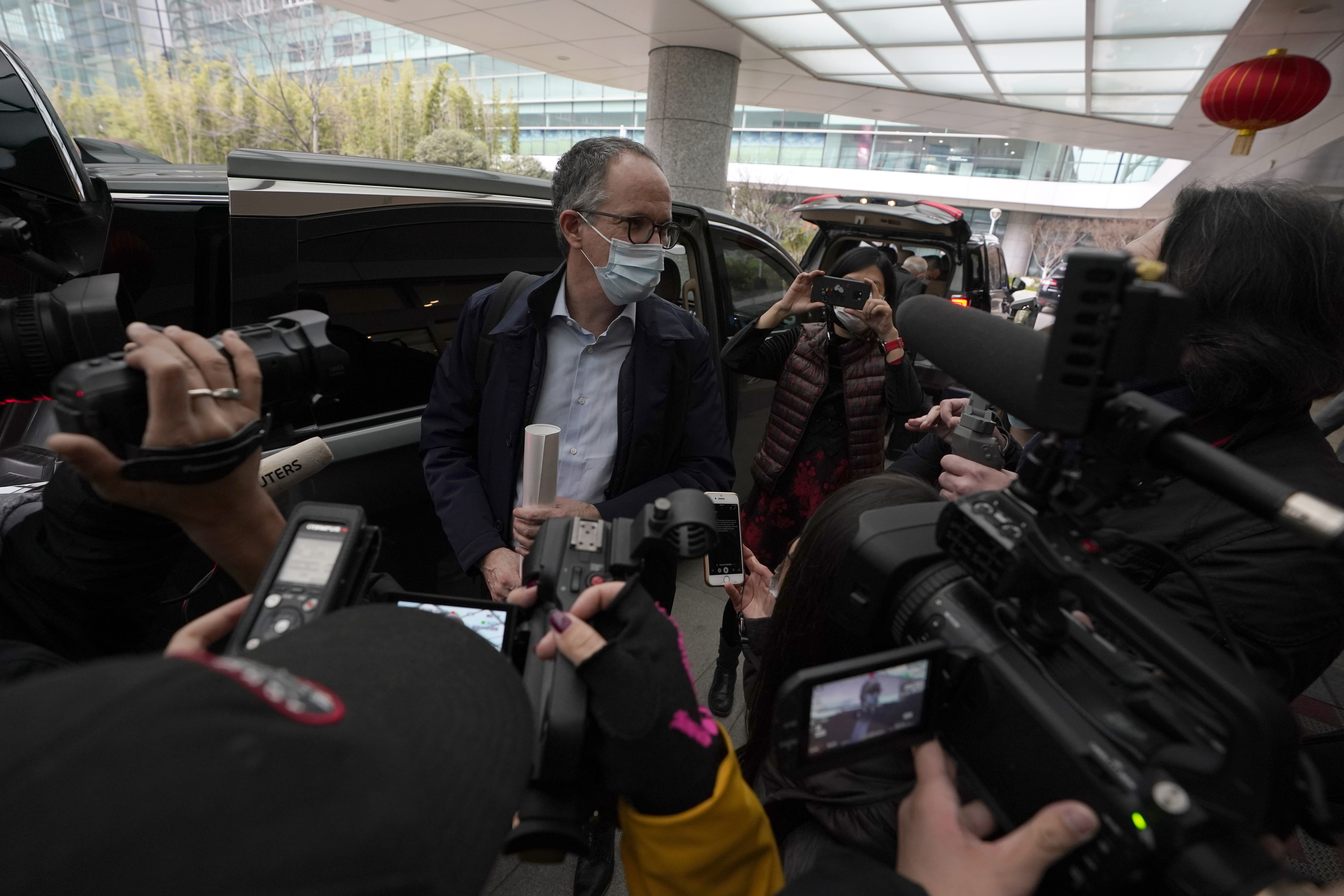
In the Danish TV2 documentary, the WHO's Dr Ben Embarek is pictured arriving in China, inspecting the stalls at the Huanan seafood market in Wuhan and examining what he hypothesises might have been living quarters for people who handled live animals there — raising the possibility the virus jumped from animals to people at the market.

"It would mean that the contact between the human beings and whatever may have been in the market, ie virus and maybe live animals, would have been more intense," Dr Ben Embarek said.

READ MORE: New information on Wuhan researchers' illness furthers debate on pandemic origins

"It goes without saying that the close contact would be doubled many times between humans and animals if you are among them around the clock."

Scientists have previously thought that because many of the earliest known human cases at Wuhan's Huanan market appeared to have no prior connection to each other, the market might have simply been the place where cases were amplified, not where the virus first breached the species barrier.

The Danish documentary also featured Dr Ben Embarek expressing his worries in January about the Wuhan branch of the Chinese CDC, concerns that have never been publicly disclosed by WHO.

While numerous experts have questioned whether there might have been a lab accident at the Wuhan Institute of Virology — where scientists were studying coronaviruses — there has been less interest in another nearby facility.

"What is more concerning to me is the other lab," Dr Ben Embarek said.

"The one that is next to the market."

He was referring to the Wuhan branch of the Chinese CDC, located just 500 meters away from the Huanan market.

READ MORE: Intelligence agencies scour reams of genetic data from Wuhan lab in COVID-19 origins hunt

In a June interview, Dr Ben Embarek told TV2 that the possibility of a lab staffer being infected with the coronavirus while collecting bat samples was "likely."

Although the idea that the pandemic somehow started in a laboratory was largely dismissed last year, it has gained traction recently, with US President Joe Biden ordering a review of US intelligence and increasing numbers of scientists calling for an independent investigation to be conducted by authorities beyond the WHO.

Dr Jamie Metzl, who has been leading an effort calling for an independent investigation of how COVID-19 started, called Dr Ben Embarek's comments "a game-changer," describing his earlier declaration that a lab leak was unlikely "shameful."

"It's even more significant that the international expert team who stated with such confidence in the February Wuhan press event that a lab origin was unlikely themselves believed this was not the case and were simply trying to assuage their Chinese government-affiliated hosts," said Dr Metzl, who sits on a WHO advisory board on human genome editing.

All of the scientists on the WHO-led team were approved by China and the team's agenda and final report were also vetted by the Chinese government.

Dr Ben Embarek told TV2 the purpose of the WHO team's visit was "collaboration and discussion" with China.

In a new statement, the WHO said the search for the pandemic's origins "should not be an exercise in attributing blame, finger-pointing or political point-scoring."

The agency said its first analysis of the coronavirus origins found "there was insufficient scientific evidence to rule any of the hypotheses out."