Category Archives: headline

As Fires Burn, Sicily Reports 48.8C ‘Europe’s Highest-Ever Recorded Temperature’

Sicily, Greece, Turkey, and Algeria are all engulfed in flames

The southwest Italian city of Syracuse saw enormously high temperatures on Wednesday, with the temperature reaching 48.8C (119.8F) throughout the day. For context, the highest temperature ever recorded in Europe was 48C (118.4F) in Athens in 1977.

Though you could be inclined to celebrate with a day at the beach, the soaring temperatures in Syracuse, Sicily, are actually part of a larger disturbing picture. The World Meteorological Organization (WMO) is yet to confirm these temperatures, but it is one puzzle piece in a larger heat crisis sweeping much of Europe.

Wildfires in Greece, Algeria, and Turkey have meant countless people have been evacuated from their homes. Firefighters from the UK have been sent to Greece to help battle the blaze, Sky News reports.

But why is this happening?

Rising temperatures do point to one obvious subject, climate change. However, it is believed that heatwaves driven by hot air from North Africa have spread across large parts of the Mediterranean in the last few days.

WMO’s Randy Cerveny says the temperature claims are “suspicious, so we’re not going to make any immediate determination.”

“It doesn’t sound terribly plausible,” he added. “But we’re not going to dismiss it.”

More than 3,000 firefighting operations have been conducted across Sicily and Calabria in recent days, which includes seven planes flying overhead with to combat the flames from the sky.


Syracuse’s mayor, Francesco Italia, told Italian newspaper La Repubblica the record “worries us”.

“We are devastated by the fires and our ecosystem – one of the richest and most precious in Europe – is at risk.”We are in full emergency,” he concluded.

The post As Fires Burn, Sicily Reports 48.8C ‘Europe’s Highest-Ever Recorded Temperature’ appeared first on The St Kitts Nevis Observer.

Cuban Diaspora Sends Medicines to Alleviate Dire Shortages


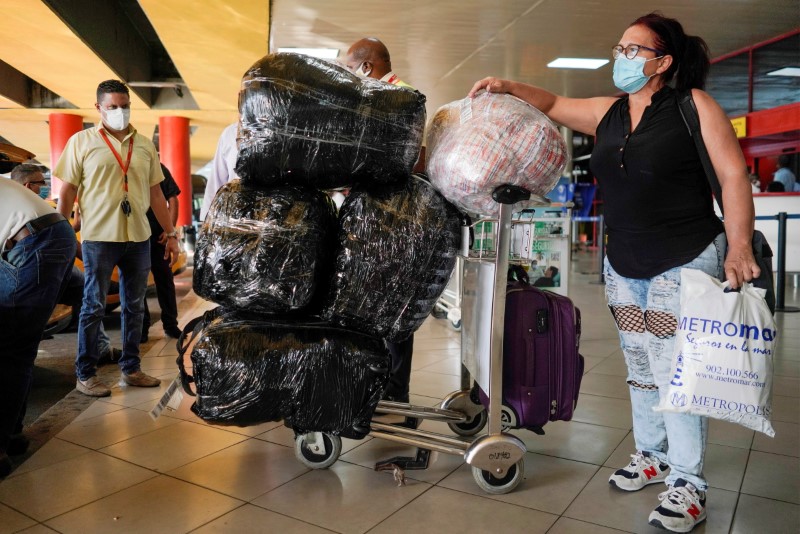
MADRID/HAVANA, Aug 12 (Reuters) – Wheeling two trolleys piled high with medical supplies, Marilys Colarte waits at Madrid airport to take her precious cargo to Cuba, where vital medicines are running low.

Colarte is part of a growing international network of volunteers from the Cuban diaspora who have been transporting tonnes of aid to the Caribbean island in recent months.

“Everyone has contributed a little bit of themselves, a bit of their love,” said Colarte, 52, before boarding the plane to Havana with 100 kilograms of supplies. “I’m so happy to bring medicine to my people who really need it.”

Built under the late revolutionary leader Fidel Castro, Cuba’s universal public healthcare system is one of his revolution’s most treasured achievements but a deep economic crisis has seen shortages of medicines and other basic goods.

The government largely blames U.S sanctions while its critics blame the inefficient state-run economy. Last month the shortages, along with power outages and a lack of civil liberties, prompted rare mass street protests. read more

One of the measures the Cuban government took in response to the unrest was to allow travellers to bring in medicine, food and sanitary products without paying import duties. In the two weeks following that move, travellers brought in 112 tonnes of such goods via Havana international airport, Cuban customs said. read more

Volunteers welcomed that move but said its impact was limited given the few flights operating to Cuba after the government restricted them due to the COVID-19 outbreak.

“The biggest diaspora community is in Florida but we went from 50 flights per week from the United States to Cuba to three,” said Florida-based volunteer Enrique Guzman Karell.

Those flights were booked up until next year, he said, meaning volunteers had to fly via Madrid, from where there were more flights – an “absurd, very expensive trip to deliver humanitarian aid”.

BATTLING COVID

At a church in Madrid, boxes piled high as volunteers sorted shipments donated by hospitals, pharmacies and individuals and bound for various Cuban provinces.

“People send requests for medicine via online messenger, saying ‘I’ve got a relative who needs this or that’ and they send us the prescription,” said Massiel Rubio Hernandez, 37, an editor and organiser of the Madrid-based Ayuda Humanitaria Cubana (Cuban Humanitarian Help), one of the first organizations to coordinate relief.

Over the past three weeks, the organisation has sent a tonne of medicines and other aid that is then distributed by other volunteers.

“We mainly send antibiotics and drugs which combat COVID-19 because there is just nothing there at the moment,” said Hilda Landrove, a Cuban student who is part of another volunteer group based in Mexico City.

Cuba is currently suffering one of the worst COVID-19 outbreaks in the world, with confirmed cases over the past week ten times the global average. read more

“The doctors have prescribed my grandmother Azithromycin but there isn’t any at the state pharmacies,” said one Havana resident who declined to be named for fear of reprisals.

He said he couldn’t afford current black market prices he had found online – of 1,200 pesos (about $50) per antibiotics treatment – on his monthly state salary of 3,200 pesos.

“I can’t let her die because of this shortage,” he said.

Even before the COVID-19 surge, Cubans had taken to queuing outside state pharmacies from before dawn to be at the front of the line when scarce medicine supplies arrived.

Some barter for medicine on social media or use herbal remedies instead as preventable diseases such as scabies spread due to a lack of adequate treatment.

Volunteers like Guzman Karell are calling on Cuba to allow more flights, especially from the United States, while they say the U.S. government should once again allow flights to cities outside of Havana.

“It’s a drop in the ocean, given the chronic shortages,” said Guzman Karell, “but at least it’s something.”

Additional reporting by Graham Keeley in Barcelona and Juan Medina in Madrid Writing by Graham Keeley Editing by Nathan Allen and Gareth Jones

The post Cuban Diaspora Sends Medicines to Alleviate Dire Shortages appeared first on The St Kitts Nevis Observer.

Nazi memorabilia to be included in upcoming Gold Coast auction

A Gold Coast auctioneer criticised for including pieces of Nazi memorabilia in an upcoming sale insists the items have historical value.

Dozens of pieces of World War II memorabilia including pins and propaganda will be among other antiquities and relics going under the hammer in Miami on Saturday.

The Anti-Defamation Commission has run a long campaign demanding Queensland ban the sale of such items.

Gold Coast Nazi memorabilia auction

READ MORE: Perth auction house under fire for sale of items belonging to Hitler

"If Hitler was alive today he would be thanking Danielle Elizabeth Auctions for glorifying his horrible crimes," commission Chairman and Jewish studies academic Dr Dvir Abramovich said.

"It made it easier for the Nazis to send them to deathcamps like Auchwitz.

"It is beyond sickening that anyone would turn a profit from these devil's tools."

Gold Coast Nazi memorabilia auctionGold Coast Nazi memorabilia auction

The items are being sold on behalf of an 85-year-old who began his collection while living in Germany during the war.

"It's not illegal so we don't discriminate, we're not a political party, we're just an auction house," Dustin Sweeny from Danielle Elizabeth Auctions told 9News.

"It shouldn't be forgotten, these things are bought and put in collections for future generations to see what happened to humanity in the 20th century."

New Census: US Diversifying at Fastest Rate Ever

Data to be released Thursday by the Census Bureau is likely to show the U.S. is diversifying at the fastest rate in the nation’s history, even as overall population growth slows to the most sluggish pace since the country’s founding.

The new figures are almost certain to shine a spotlight on a trend that annual surveys have illustrated over the last several years: The number of white Americans is declining.

The white population in America has grown far more slowly than minority groups for decades. White people are having fewer children and starting their families at a later age than other groups, a long-term trend that demographers have called a baby bust. The opioid epidemic, too, has claimed so many lives that it measurably reduced the nation’s life expectancy, especially among white people.

Over the last four years, annual census surveys have shown the white population has declined by more than 1 million — a drop that is sufficient to wipe out the population growth among white people from 2010 to 2016.

The pace of the decrease is accelerating, too. Between 2016 and 2017, the white population fell by an estimated 129,000 people. From 2019 to 2020, that decline sped up to 482,000.

If trends from annual estimates conducted over the last decade hold, the census data released Thursday is likely to show an America that is, for the first time in the nation’s history, less than 60 percent white.

Minority groups, however, are growing.

The number of Hispanic or Latino Americans grew by at least 1 million in eight of the last 10 years, and by 10.5 million between 2010 and 2020. The number of Asian Americans grew by about half a million in seven of the last 10 years, up 4.7 million over the decade. And the number of African Americans grew by at least 300,000 in eight of the last 10 years, or an estimated 3.4 million since the 2010 census.

“All of the U.S. population growth from 2016 to 2020 comes from gains in people of color,” wrote William Frey, a demographer at the Brookings Institution who closely tracks census data. “The statistics … imply that, as the white population ages and declines further, racial and ethnic diversity will be the hallmark demographic feature of America’s younger generations.”

Frey’s analysis shows the rising minority populations come mainly from natural growth — that is, people already living in the U.S. who are giving birth. Among Latino or Hispanic Americans, about three-quarters of the population added over the last decade came from natural increase, and the remaining quarter from immigration.

Asian Americans were the only demographic group to experience more growth from immigration, 3.3 million people, than from natural increase, 1.2 million.

But the data is also likely to show that the declines among white Americans is being mirrored in slowing growth among minority populations: All three of the nation’s largest minority groups — Latinos or Hispanic Americans, African Americans and Asian Americans — experienced their slowest growth rates of the last decade between 2019 and 2020.

The figures, taken in the middle of each year measured, do not include the vast majority of those who have died during the coronavirus pandemic.

The Census Bureau data to be released Thursday will officially kick off a scramble to redraw political boundaries that is already underway in many states. The data — which will include the first precinct-level population counts and demographic characteristic information from last year’s survey — will provide state legislators and redistricting commissions with the information they need to draw legislative and congressional district lines that will be in effect over the next decade.

The data is coming months later than initially expected, in part because of the effects of a national pandemic that forced the Bureau’s 4,200 employees to work from home and curtail some of the planned in-person count that typically follows the mail-in portion of the survey.

“The COVID-19 pandemic significantly delayed our schedule for collecting and processing the data for the 2020 Census,” acting Census Bureau Director Ron Jarmin wrote in a blog post.

The Bureau published its initial count, which showed state-level populations needed for apportioning seats in the House of Representatives, in April. Those results showed a continued shift of political power away from the Northeast and the Rust Belt and into the South and West.

California, Illinois, Michigan, New York, Ohio, Pennsylvania and West Virginia all saw their delegations reduced by one seat, while Colorado, Florida, Montana, North Carolina and Oregon all gained a seat. Texas will add two seats to its delegation.

The redistricting process has different rules in every state, but Republicans begin the map-making cycle with a distinct advantage: They will have complete power to draw 38 percent of congressional district lines, while Democrats will only hold total control — through majorities in state legislatures and governorships — of 16 percent of U.S. House seats.

Another third of the seats will be drawn with input from both parties, or by independent or nonpartisan commissions. Six states — Alaska, Delaware, North Dakota, South Dakota, Vermont and Wyoming — elect only a single at-large member of the House of Representatives.

Both Democrats and Republicans have set up well-funded outside groups dedicated to creating a partisan advantage, a decade after the most contentious and litigious redistricting process left Republicans with a huge advantage in controlling the House and state legislative bodies.

Those groups, and the attention that activists and party officials now pay to what was once a cartographic exercise that took place behind closed doors, means this year’s redistricting process is likely to be the most transparent in American history: Voters will be able to witness in real time their legislators remapping their states.

But at the same time, the process is likely to be governed by fewer guardrails than in previous decades. Several Supreme Court decisions in recent years have eroded the power of the 1965 Voting Rights Act and the federal Justice Department’s authority to limit a state legislature’s ability to draw lines for partisan purposes.

The post New Census: US Diversifying at Fastest Rate Ever appeared first on The St Kitts Nevis Observer.

Disappearing Asylum Protections for Migrant Families at Border

Aug 11 (Reuters) – Melissa Pinedo, a 27-year-old single mother from Guatemala, has been living in a tent in Reynosa, Mexico, across the border from Texas for weeks trying to find someone to call about a fast-closing window for seeking U.S. asylum.

“There are numbers of lawyers that are circulating, but no one answers. They are overwhelmed,” she said in a phone interview.

She is one of thousands of migrants in northern Mexico left with few options as the U.S. government and non-profit groups wind down a program that allowed for a narrow number of asylum seekers to be exempted from a sweeping border expulsions policy.

Pinedo said she and her brother witnessed the gang murder of a shopkeeper who failed to pay extortion fees two years ago. Gang members tracked down her brother and killed him a month later, she said. She escaped to a different neighborhood

But she decided to flee northward with her 8-year-old daughter earlier this year after gang members found her and tried to abduct them, she said.

She made her way through Mexico by bus and hoped to seek asylum in the United States, paying smugglers $1,000 this summer to cross the Rio Grande river. But border agents quickly expelled them before Pinedo got a chance to tell them her story.

Desperate, she decided two weeks ago to send her daughter across the border alone. Her daughter is now in U.S. federal custody for minors, waiting to be released to Pinedo’s relative who resides in Los Angeles.

Now, with the humanitarian exemptions to the expulsion policy dwindling away, Pinedo is running out of options to seek safety and reunite with her daughter.The controversial public health policy, known as Title 42, allows border agents to quickly expel most migrants caught crossing the U.S.-Mexico border.

U.S. President Joe Biden, a Democrat, has kept the March 2020 public health order in place and recently extended it. read more In addition to pushing migrants back into northern Mexico under the policy, the administration last week started flying migrants to Mexico’s southern border with Guatemala.

Biden, who took office promising a more humane approach to immigration than his Republican predecessor Donald Trump, implemented a system earlier this year to allow some migrants deemed the most vulnerable to apply for protection in the United States. He also exempted unaccompanied minors from the policy.

A consortium of non-profit organizations that helped the administration identify at-risk migrants for these exemptions is discontinuing their program at the end of the month, groups involved said. The groups have said they want to see Title 42 ended and always saw the exemptions as temporary.

At the same time, a separate similar process organized by the American Civil Liberties Union (ACLU) ended on Monday, said ACLU attorney Lee Gelernt, after the organization restarted a lawsuit against the government to scrap the Title 42 policy for families. read more The suit argues cutting off access to asylum at the border is illegal and that migrants face kidnapping and assault when they are left stranded in dangerous border towns in Mexico.

“The Biden administration’s decision to abruptly end humanitarian exemptions and illegally keep the border closed to asylum seekers plays into the hands of cartels who claim that they are the only reliable means for people to enter the United States,” said Noah Gottschalk of Oxfam America, one of the groups involved in the litigation.

David Shahoulian, a top U.S. Department of Homeland Security (DHS) official, said in a court declaration that the government “is committed to continuing to use mechanisms” to allow for exemptions, without elaborating.

DHS when asked about the end of the exemptions said the agency’s “collaboration with organizations referring cases is fluid,” without giving more details about future plans. U.S. Customs and Border Protection did not respond to a request for comment about individual cases. The Office of Refugee Resettlement, which handles unaccompanied minors, said they do not have official numbers but staff had noted hundreds of children referred to their care indicated they have family still in Mexico.

‘SO DANGEROUS HERE’

According Shahoulian’s court declaration, some 16,000 migrants have been given the humanitarian exemptions to date under Biden, who took office on Jan. 20. That is a small fraction of the more than a half million migrants encountered at the border, including families with small children, who have been expelled under Title 42 since February. Those numbers include individuals who may have tried to cross multiple times.

In Reynosa there are now an estimated 2,000 people – mostly families from Central America – living in a small plaza packed with a tangle of camping tents, clothing lines, and informal community kitchens near the international bridge leading to McAllen, Texas. read more

Ingrid Aguilar, 39, also from Guatemala has been in the plaza for two months after she and her 17-year-old son were caught by U.S. border agents and expelled. She said she fled her homeland after gangs threatened her son.

She now helps distribute food and other donations to those in the plaza, who also have little access to basic amenities. People in town charge migrants to bathe and use bathrooms, she said, which drains people’s minimal resources.

After they were expelled back to Mexico, Aguilar was so worried about her son being forced to return to Guatemala that she sent him across the border alone. She stayed, hoping for a humanitarian exemption.

Now she is stuck waiting with few answers.

“They just tell you to register and wait for a call,” she said in a phone interview. “It is so dangerous here. You escape from your country, then you end up here and it’s the same thing.”

Reporting by Mica Rosenberg in New York; Additional reporting by Laura Gottesdiener in Monterrey, Mexico and Kristina Cooke in San Francisco, editing by Ross Colvin and Aurora Ellis.

The post Disappearing Asylum Protections for Migrant Families at Border appeared first on The St Kitts Nevis Observer.

Panama, Colombia Reach Deal to Manage Migration Over Shared Border

PANAMA CITY, Aug 11 (Reuters) – Panama and Colombia agreed on Wednesday to receive up to 650 migrants each day, amid a humanitarian crisis at their shared border, where thousands of migrants are stranded in northern Colombia, waiting to continue north toward the United States.

Thousands of migrants – most of them Haitian but also from Cuba and various African countries – are stuck in Necocli, a remote resort on the Caribbean coast of Colombia, waiting for scarce boat transport toward Panama’s dangerous Darien Gap region, which many will cross on foot.

Many migrants were held back by COVID-19 border closures and have recently overwhelmed re-opened crossing points. read more

Panamanian Foreign Minister Erika Mouynes said the daily figure of 650 would be progressively reduced downward as the crisis abates.

“A staggered number was established downward, first, to address the crisis, from 650, and progressively towards 500 with specific days within which they can enter,” Mouynes told a news conference after a virtual meeting with officials from nine countries, including Colombia, the United States and Canada.

The agreement will be approved with Costa Rica, which also shares a border with Panama and through which migrants will cross as they head through Central America en route to the United States.

Mouynes said less than 1% of migrants who pass through Panama request asylum on the isthmus. Most of the migrants are Haitians and Cubans, but there are also Africans and Asians.

Colombia’s Migration Director Juan Francisco Espinosa said that the number of migrants in Necocli dropped to 3,000 on Tuesday from a high of 12,000 last week.

So far this year, a record of more than 42,000 migrants have arrived to Panama through Darien, with authorities expecting the figure will continue to rise as the borders reopen worldwide.

Reporting by Elida Moreno in Panama City, writing by Laura Gottesdiener; Editing by Michael Perry

The post Panama, Colombia Reach Deal to Manage Migration Over Shared Border appeared first on The St Kitts Nevis Observer.

Haiti Elections for New President Postponed to Nov. 7 -media

PORT-AU-PRINCE, Aug 11 (Reuters) – Haiti’s elections have been postponed to Nov. 7, according to local media on Wednesday, following the killing last month of President Jovenel Moise, which plunged the country into political turmoil.

Documents apparently issued by the government that were circulated on social media on Wednesday disclosed the postponement of the presidential and legislative elections, as well as a constitutional referendum, which had previously been scheduled for Sept. 26.

Reuters could not independently verify the authenticity of the documents. Haiti’s electoral council did not immediately reply to requests for comment.

Haiti’s new prime minister, Ariel Henry, said in late July that the government planned to create conditions for the Caribbean nation to hold elections as swiftly as possible.

Western powers have encouraged Haiti, the poorest country in the Americas, to elect new leadership as early as possible to give democratic legitimacy to the government.

Reporting by Andre Paultre in Port-au-Prince; Writing by Laura Gottesdiener; Editing by Peter Cooney

The post Haiti Elections for New President Postponed to Nov. 7 -media appeared first on The St Kitts Nevis Observer.

Coronavirus Surge Pushes Cuba’s Healthcare System to Brink

HAVANA, Aug 11 (Reuters) – Cuba is bringing back hundreds of doctors working abroad and converting hotels into isolation centers and hospitals in order to battle a COVID-19 crisis that is overwhelming healthcare and mortuary services in parts of the Caribbean island.

The country, which managed to contain infections for most of last year, is now facing one of the worst outbreaks worldwide, fueled by the spread of the more-infectious Delta variant, even as it races to vaccinate its population.

Cuba’s rolling seven-day average of confirmed COVID-19 cases has surged eightfold within two months to 5,639 per million inhabitants, ten times the world average.

One in five tests are positive, four times the benchmark 5% positivity rate cited by the World Health Organization. The seven-day average for confirmed COVID-19 deaths is around 52 per million inhabitants, six times the world average, although the real number could be much higher accounting for potentially undiagnosed cases.

The COVID-19 surge has come amid Cuba’s worst economic crisis in decades that had already resulted in medicine shortages and long queues for scarce goods that made implementing lockdowns tricky.

The predicament has come as a shock to some in the Communist-run country where the right to public healthcare is considered sacrosanct.

“I witnessed queues of more than 20 hours, people dying in the corridors (of the polyclinic),” wrote Ana Iris Diaz, a professor at the university of the central Cuban city of Santa Clara and self-professed “revolutionary”, in a Facebook post that went viral this week.

“I saw an elderly woman die after several hours of waiting and four days without an antigen test or PCR. Simply put, I saw what I would have hoped to never see: the collapse of our health system.”

Cuba’s Communist government did not reply to a request for comment. It has denounced the United States for tightening sanctions, saying this has also slowed down its vaccine rollout due to the difficulty of acquiring inputs. Critics blame more Cuba’s inefficient state-run economy.

“We are at the limit of our capacity for infrastructure, resources, medicine and oxygen,” President Miguel Diaz-Canel told a government meeting on COVID-19 on Monday.

INCINERATOR BREAKS UNDER STRAIN

Cuba was a COVID-19 success story last year, managing to contain the outbreak, dispatching doctors all over the globe to help and even developing its own vaccines, which it started applying in recent months.Deaths in Cuba since the start of the pandemic are still only a half of the global average, according to official data.

The death toll is rising fast though.

In the eastern province of Guantanamo, artist Daniel Ross said a 30-year-old friend of his who caught COVID-19 had recently died due to a lack of medicines and oxygen.

“Here, we fight COVID-19 with Azitromicina, which costs 16 pesos usually in the pharmacy, but they haven’t had any for months now,” he said, adding that the cost had surged to 3600 pesos, equivalent to $150 on the black market.

Also infected and struggling to breathe, he said he was doing inhalations with yagruma leaves but sometimes could not even heat water because of the power outages that have become more frequent lately.

Ihosvany Fernandez, director of communal services in the province of Guantanamo, said on local television that total deaths there, from any cause, had surged at the start of the month to more than 60 per day from around 12 on average usually.

Official data show no more than 10 COVID-19 death daily in Guantanamo for those days suggesting underreporting in deaths from the respiratory disease.

One of the province’s incinerators had broken down due to overuse, said Fernandez, so they were installing another and using a variety of state vehicles to transport the corpses given insufficient hearses.

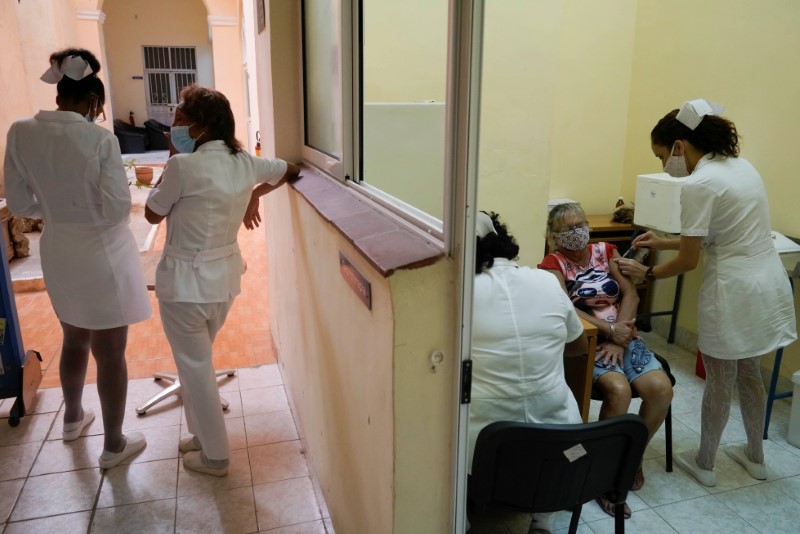
So far, a quarter of Cuba’s 11.2 million inhabitants have been innoculated with its two most advanced vaccines that officials say have proven more than 90 % effective in phase three trials.

In one bright spot, the case-fatality rate in Havana, where nearly two thirds of the population has now been fully innocculated, was just 0.69 % compared to 0.93% for the rest of the country in the first week of August, according to official data, suggesting the shots are working.

Reporting by Sarah Marsh in Havana Additional Reporting by Nelson Acosta in Havana Editing by Alistair Bell

The post Coronavirus Surge Pushes Cuba’s Healthcare System to Brink appeared first on The St Kitts Nevis Observer.
Brazil: Political Crisis, Covid Surge Rock Bolsonaro

BBC- Brazil’s Jair Bolsonaro is facing the biggest crisis of his presidency after the heads of the army, navy and air force all quit and the country recorded its highest daily Covid-19 death toll.

The unprecedented resignation of the defence chiefs is being seen as a protest at attempts by Mr Bolsonaro to exert undue control over the military.

Mr Bolsonaro’s popularity has plummeted over his response to Covid-19.

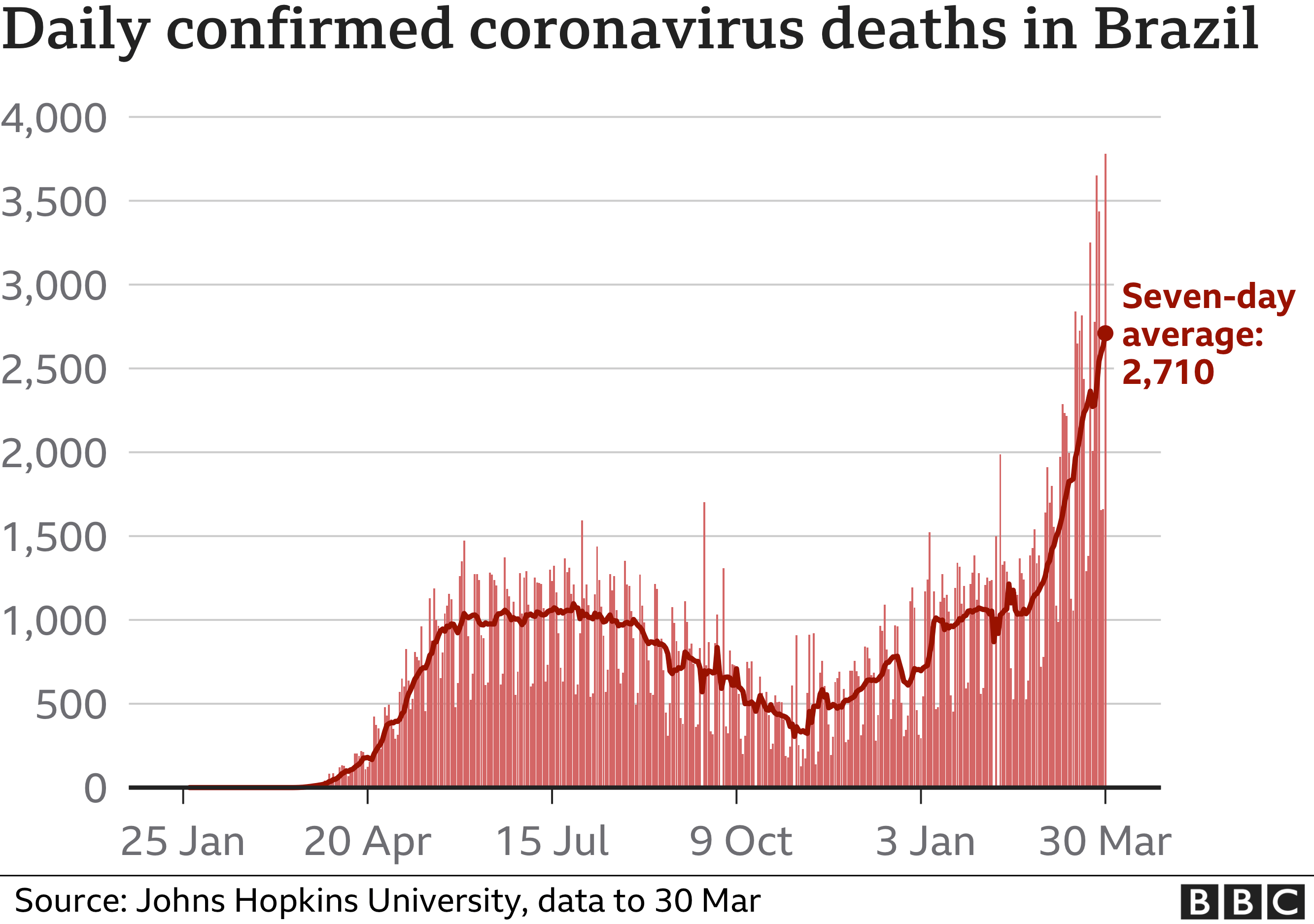
Nearly 550,000 people have died, with a new daily record of 3,780 on Tuesday.

What’s the situation with Covid?

Worldwide, Brazil has the second highest number of total confirmed Covid cases with more than 12.6m. Only the United States has more.

It is also the country with the second highest number of Covid-related deaths since the pandemic began and its daily deaths currently account for about a quarter of all coronavirus fatalities in the entire world.

line
Daily confirmed deaths in Brazil graphic

The high number of cases has brought the health system to the verge of collapse.

In 18 of Brazil’s 26 states and in the capital, Brasilia, the occupancy of intensive care units (ICU) is above 90%, according to Brazilian public health institute Fiocruz. In two states, Amapá and Mato Grosso do Sul, ICU are completely full.

How did it get so bad?

The latest surge in cases and deaths has been attributed to the spread of a highly contagious variant of the virus which was first detected in Japan in travellers from the city of Manaus, in Brazil’s Amazon state.

Preliminary data suggests the new variant could be up to twice as transmittable as the original version of the virus.

Neighbouring countries are extremely worried the new variant. Bolivia, which shares a 3,400km-long (2,100 miles) border with Brazil, announced that it would focus its Covid immunisation programme on the border areas.

Brazil’s own vaccine programme has been beset by delays. So far, only 8% of its 211-million-strong population have received a first dose.

What is the political fallout?

According to a poll published by Datafolha in mid-March, 43% of Brazilians blame President Bolsonaro for the poor handling of the pandemic.

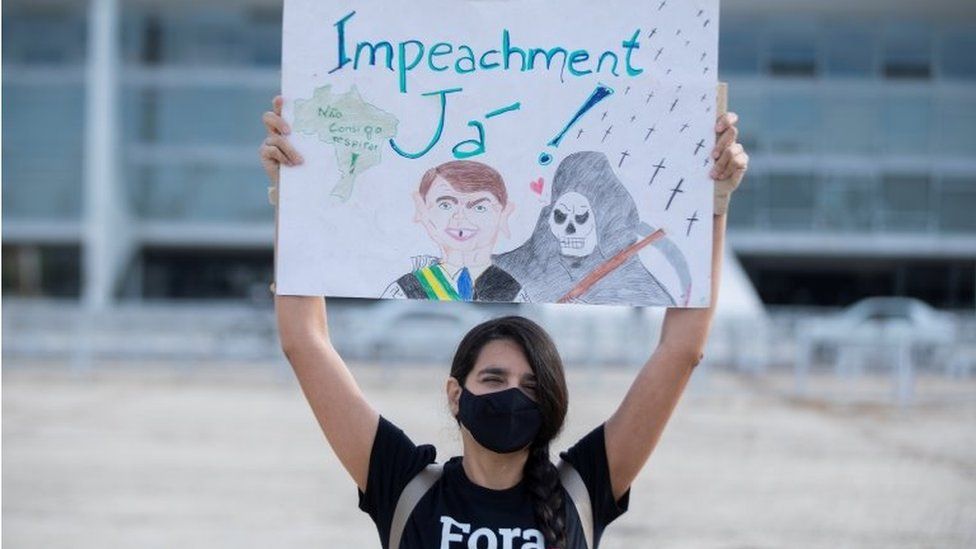
A woman demonstrates against the pandemic management by Brazilian President Jair Bolsonaro, in Brasilia, Brazil, 26 March 2021
Opponents of Mr Bolsonaro demand that he be impeached over his handling of the coronavirus crisis

The far-right leader has consistently opposed lockdown measures, arguing that the damage to the economy would be worse than the effects of the coronavirus itself. He has also told Brazilians to “stop whining” about the situation.

While his stance made him popular with anti-lockdown protesters, his popularity is falling. In a poll conducted in mid-March, 54% of respondents said his management of the Covid crisis was “bad” or “very bad”, up from 48% in January.

Mr Bolsonaro was a divisive figure even before the pandemic hit and the rapid spread of Covid seems to have further hardened opinions.

The Datafolha poll suggests that while the percentage of those who said they “never trusted” the president’s words rose from 41% to 45% between January and March, those who say they “always trust” what has only dropped slightly from 19% to 18% in that same timeframe.

However in recent days, his government has been furthered weakened by a deep political crisis.

What’s happening in the cabinet?

Since the pandemic began, Brazil has had no fewer than four health ministers. The latest is Marcelo Queiroga, a cardiologist, who replaced an army officer with no medical training on 16 March.

But while changes in the health ministry have become almost par for the course, this week also saw the foreign minister and five other cabinet ministers leave.

Foreign Minister Ernesto Araújo had fallen foul of Congress, some of whose members accused him of mishandling relations with China, India and the US, which they said in turn led to Brazil not getting enough Covid vaccines from those countries.

What’s with the resignations of the armed forces heads?

But it was Mr Bolsonaro’s sacking of the defence minister, Fernando Azevedo e Silva, which caused the biggest storm so far.

Mr Bolsonaro and his minister had clashed over the issue of the armed forces’ loyalty, which the defence minister said should be directed to upholding the constitution rather than supporting the president personally.

In a first in Brazilian history, on Tuesday the heads of the army, navy and air force all resigned together in a move signalling their opposition to the president and his sudden sacking of the defence minister’s sacking.

The role of the armed forces in Brazilian politics has been a contentious issue since the country’s return to democracy in 1985 after 21 years of military rule.

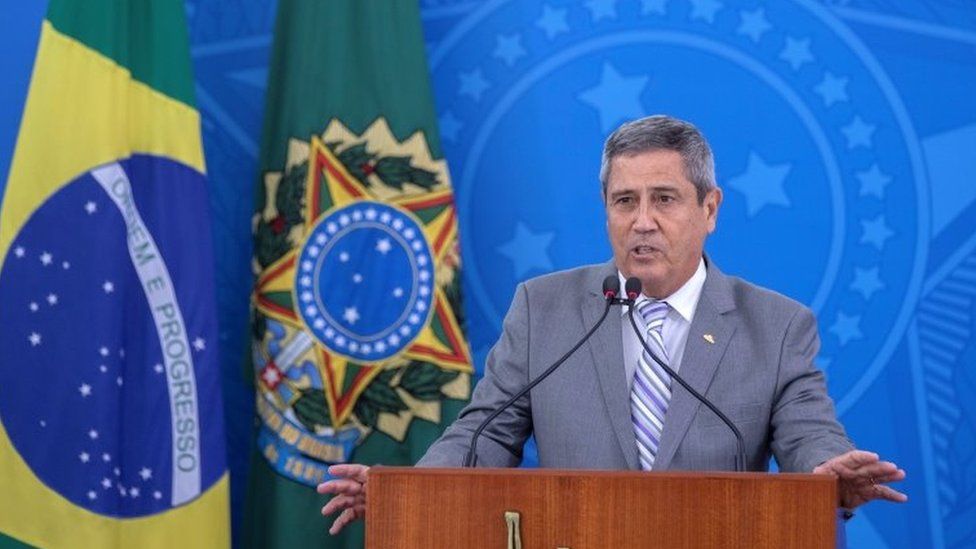
Walter Souza Braga Netto, speaks after visiting the coordination center of the Covid-19 crisis committee, in Brasilia, Brazil, 25 March 2020
Gen Braga Netto is the new defence minister

President Bolsonaro, a former army captain, caused outrage in 2019 when he organised a commemoration of the 1964 coup which brought the military to power.

He also appointed active duty and retired generals to key positions in his cabinet, including the health ministry and the vice-presidency.

But in recent weeks, top members of the military seem to have increasingly distanced themselves from the president, culminating in the resignation of the armed forces heads on Tuesday.

Mr Bolsonaro’s newly appointed minister of defence, Gen Walter Braga Netto, seems to be more closely aligned with the president. In one of his first statements he said that the 1964 coup had “pacified the country” and should be celebrated.

Marking the coup’s anniversary on 31 March, the general said that there had been a “very real threat to peace and democracy” and that the armed forces had confronted that threat in 1964.

==================================================

Bolsonaro defeated over printed ballot proposal

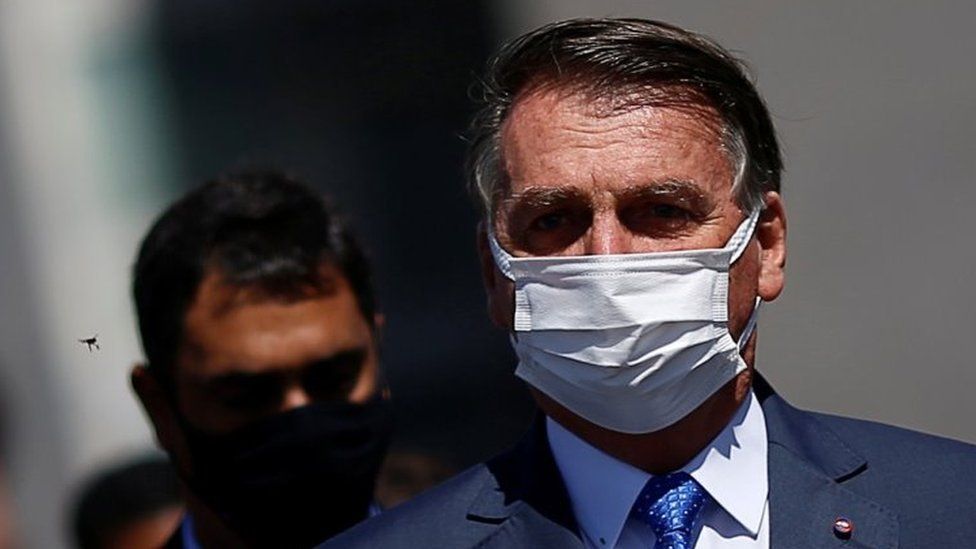
President Jair Bolsonaro walks after a meeting to deliver the interim measure for changes in social welfare program Bolsa Familia (Family Allowance) at the National Congress in Brasilia, Brazil, August 9, 202image sourceReuters
image captionMr Bolsonaro has threatened that there will not be elections in 2022 “if they’re not free and democratic”

Brazil’s President Jair Bolsonaro has suffered a defeat in Congress, after his plan to change the current electronic voting system in elections to one with a paper trail failed.

The proposal fell well short of the three-fifth majority required for a constitutional amendment.

Mr Bolsonaro, who is planning to run for a second term next year, says the current system is open to fraud.

The electoral tribunal has dismissed the allegation as “disinformation”.

Critics of the Brazilian leader, dubbed “Trump of the Tropics” during his campaign, say he is using the same tactics as the former US president to allege widespread fraud in case he loses the next election.

President Bolsonaro has for years campaigned for a change to Brazil’s electronic voting system, which has been in place for 25 years and which experts say has a solid track record.

On Tuesday, the constitutional amendment to change the system was approved by 229 of the 519 members of the lower house of Congress. It needed 308 to pass.

line

Brazil’s electronic voting system

  • Voters cast their ballots electronically at voting stations, there is no paper ballot or print-out
  • Electronic voting machines were first used in 1996
  • Became the exclusive voting method in 2000
line

Mr Bolsonaro says there should be a mixed system in which a receipt is printed out for each vote cast electronically.

He argues that a paper trail that can be publicly audited would make fraud more difficult.

After winning the first round of the election in 2018 – but falling short of the votes needed to stave off a second round – he alleged that there had been “problems” with the electronic voting system, which he claimed had robbed him of outright victory.

He did not provide any evidence of the alleged fraud and Brazil’s electoral authorities said there were no major problems.

With the presidential elections little more than a year away and Mr Bolsonaro trailing far behind left-wing candidate Luiz Inácio Lula da Silva in the polls, the issue has resurfaced.

In a two-hour Facebook live on 29 July, President Bolsonaro repeated his allegations that past elections had been fraudulent.

In a video message to his supporters on 1 August he went one step further and warned that the 2022 presidential elections would not be held “if they are not clean and democratic”.

In the days following his controversial remarks, both the Supreme Court and Brazil’s top electoral court ordered that he be investigated over the comments.

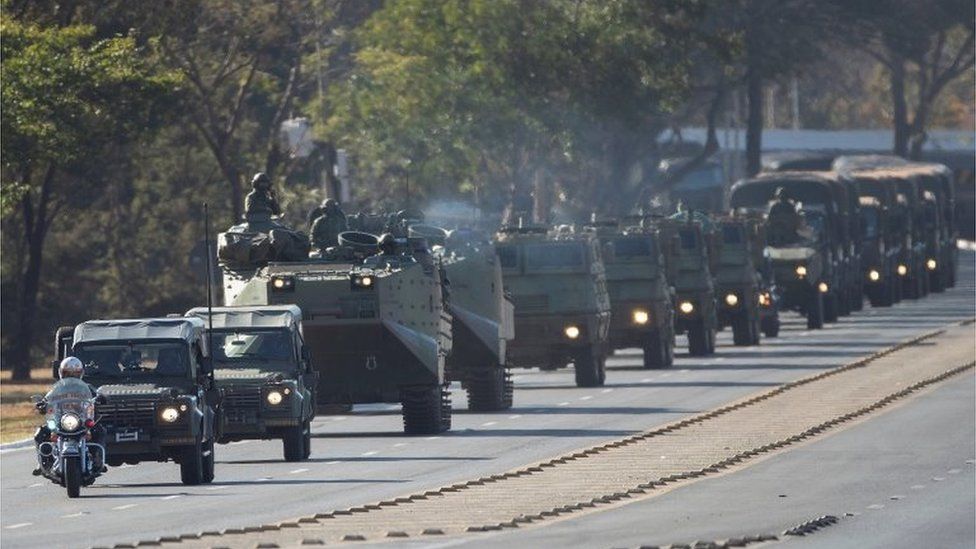
A military convoy is seen at the main entrance of Esplanada dos Ministerios, in the city of Brasilia, Brazil, 10 August 2021

He has faced additional criticism over a military parade he presided over just hours ahead of the vote in the lower house of Congress.

Opposition lawmakers said the parade was a brazen attempt to intimidate them but Mr Bolsonaro said it had been planned before the vote was scheduled.

It was the first time that tanks rolled past the presidential palace since the end of military rule in 1985.

The post Brazil: Political Crisis, Covid Surge Rock Bolsonaro appeared first on The St Kitts Nevis Observer.

Aussies warned of dangerous text message scam

A text message scam has been sent to a number of Australian numbers, with phone users warned not to open the malware link.

The ACCC's Scamwatch warned of the scam today, urging people to delete the message immediately if received.

"URGENT WARNING: Receiving text messages that look like this from Australian numbers saying you've missed a call?" The warning read on Twitter.

"Delete these messages immediately and do not click on the link – it's a scam and will download malware."

READ MORE: Mum pregnant with twins feared death after contracting COVID-19

https://twitter.com/Scamwatch_gov/status/1425691622306578434

The scam message appears to have spelling mistakes in the wording.

In some cases, it read: "You pave a missed call. Ccller sefe you a message", followed by a malware hyperlink.

Malware, short for malicious software, refers to viruses, trojans and other harmful computer programs hackers use.

READ MORE: Infectious travellers fined for unlawful flight to Melbourne

Several people on Twitter said they had received the scam text message.

"Been getting about five of these a day," one person said.

"I'm getting a few of these a day," another person said.

Scamwatch advised it was working to stop the scam from circulating in the community.

According to Scamwatch, Australians lost more than $27 million to scams in July this year, with more than 26,000 incidents reported.