Annual fleeing driver incidents across New Zealand have more than doubled in the past decade, seriously injured more than 400 people and claimed 77 lives, latest road policing figures reveal. There were almost 5000 incidents of…
Category Archives: headline
Napier police pursuit: Man denies kidnap, assault and car chase charges
A 20-year-old man charged with kidnapping and other domestic and driving offences after a pursuit which ended with a vehicle being nosed off a road on the outskirts of Napier four weeks ago has pleaded not guilty.Malcolm Karauria,…
Napier councillors' infighting over Māori wards revealed
By Tom Kitchin of RNZ A Napier councillor infight over the unanimous decision not to go ahead with Māori wards in time for next year’s election was kept from the public eye.Emails released to RNZ show a councillor wanted…
High Court won't hear Biloela child's case to stay in Australia
The High Court has rejected a request to hear the case of a four-year-old Tamil asylum seeker from Biloela who is seeking to apply for a visa to stay in Australia.
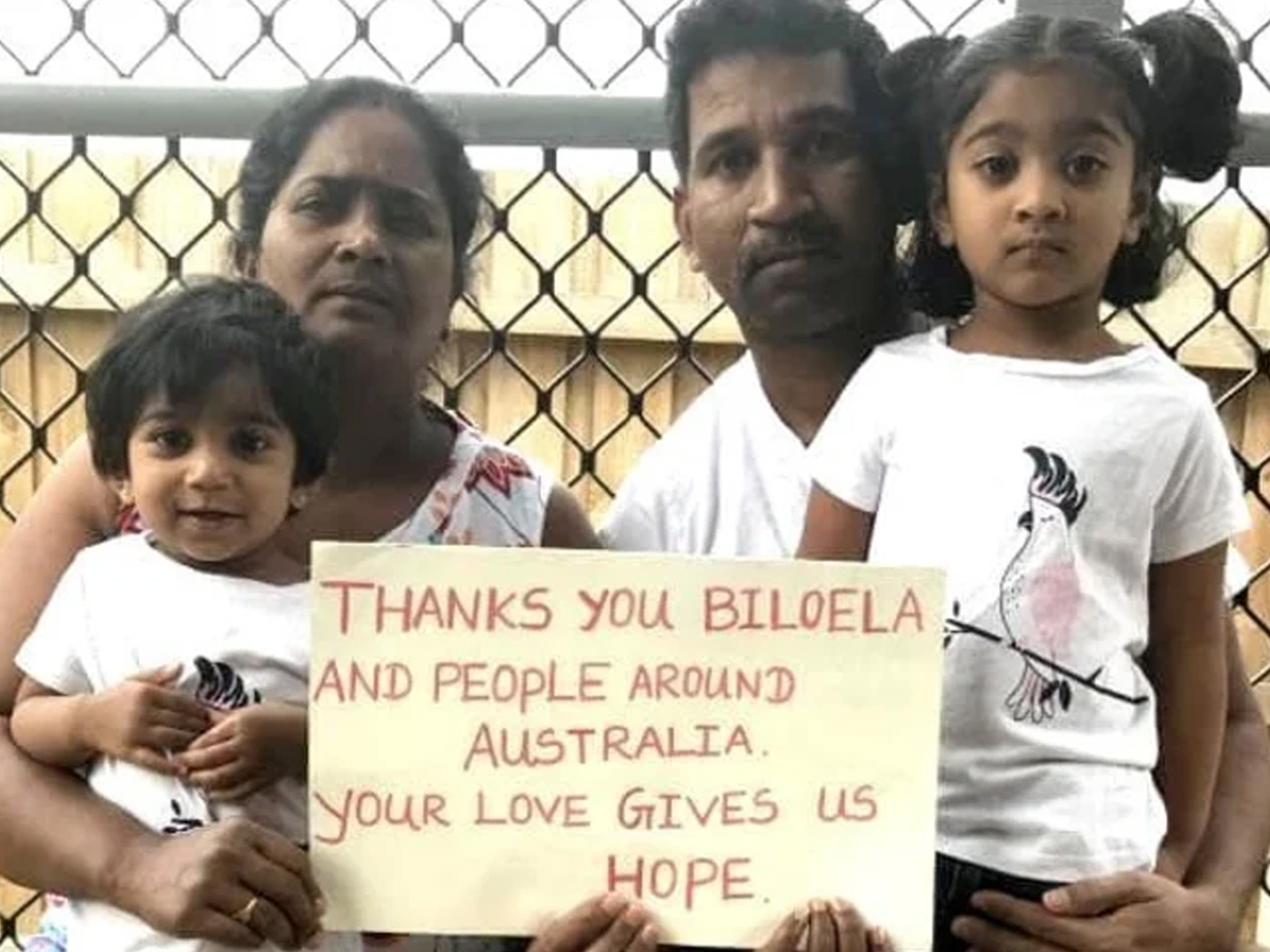
Lawyers for Tharnicaa Murugappan started the legal action after the child and her family were taken from their home in Biloela, in regional Queensland, in 2018 and placed into immigration detention on Christmas Island.
The rest of her family – including mother Priya, father Nades and sister Kopika – have exhausted their legal options to challenge the government's refusal to let them stay in the country.
READ MORE: Biloela family granted three-month bridging visa to stay in Perth

Both children were born in Australia but their parents do not have citizenship because they were deemed illegal arrivals.
In June, Tharnicaa was discharged from a Perth hospital after being medically evacuated from Christmas Island immigration detention centre.
They were held there for three years as they fought deportation to Sri Lanka.
The family has since been living in home detention in Perth.
READ MORE: Youngest daughter of Biloela family discharged from WA hospital
But a court order prevented them from being kicked out of the country.
Tharnicaa's lawyers had been fighting a law that states she can not even apply for a visa, unless Immigration Minister Alex Hawke exercises his discretion to allow it.
Her lawyers had been trying to convince the High Court that she does have a valid visa application already in play.
Tharnicaa's last chance now rests with the minister, who holds the power to overturn the decision.
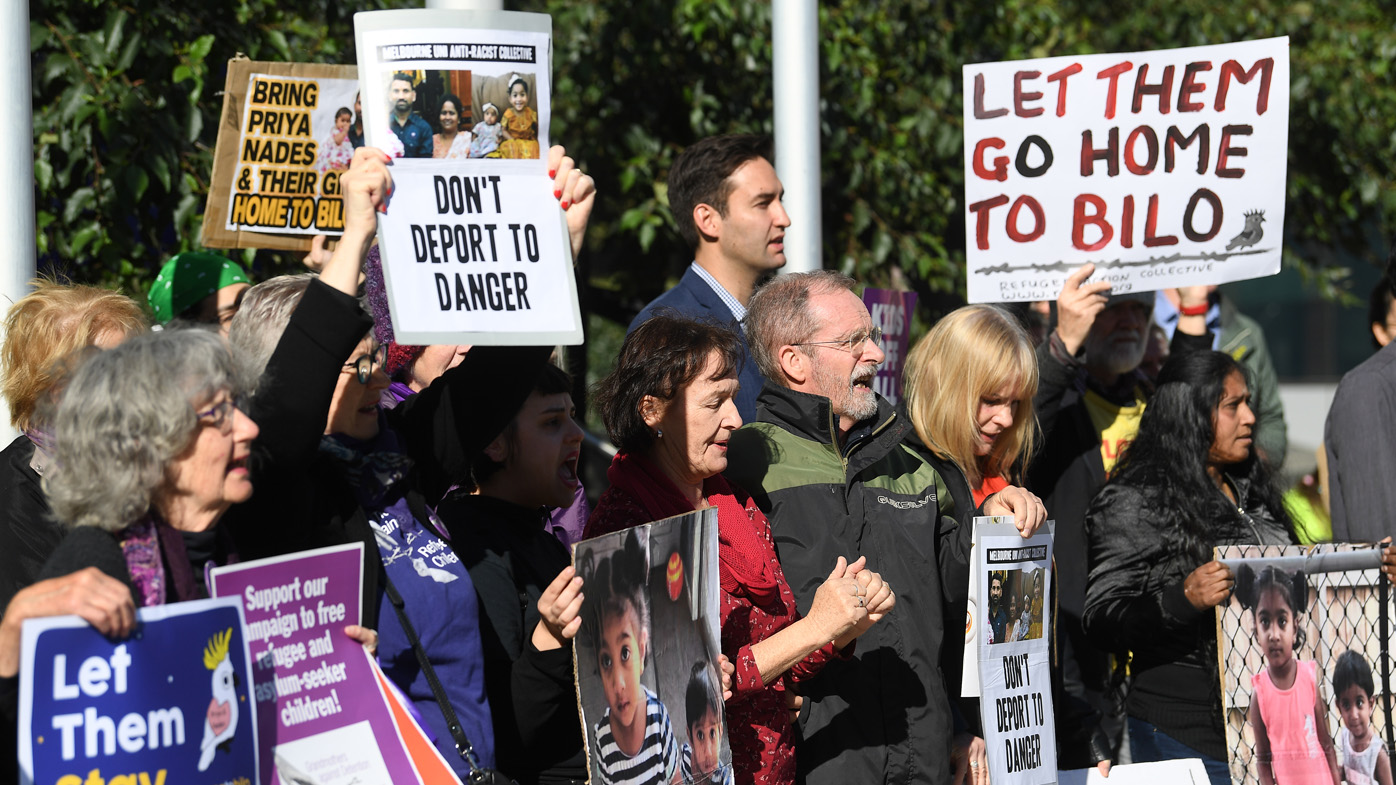
"The matter is now in the hands of the Immigration Minister and he or she is able at any point in time to grant a visa including a visa that would allow the family to return to and live in Biloela where they would receive community support, stability, care and a sense of belonging," the family's lawyer Carina Ford said.
"The Australian people's support in this case has been overwhelming as they have related to the families hardship and the fact both children were born in Australia."
Tharnicaa's mother Priya has thanked Australia for the "love and support".
"Tharni and Kopi are still having to see doctors, but this could happen back in my community of Biloela," she said.
"Biloela is where the girls will get better and be safe. Please Minister Hawke, let us return to our community in Biloela."
But in a statement issued a short time ago, Mr Hawke said it would be "inappropriate" to comment further on the case.
"Today the High Court declined to grant the Sri Lankan family formerly resident on Christmas Island special leave to appeal," Mr Hawke said.
"I note the High Court's decision follows a series of previous decisions by the Department of Home Affairs, Administrative Appeals Tribunal, Federal Circuit Court, Federal Court, Full Federal Court and High Court in relation to the family.
"The family has a number of other ongoing legal matters. It is therefore inappropriate for me to comment further."
Sydney outbreak seeps further out of hotspot zones
NSW has recorded 345 new cases of coronavirus in the 24 hours to 8pm yesterday, with two more people dying after being diagnosed.
A record 151,000 tests were conducted.
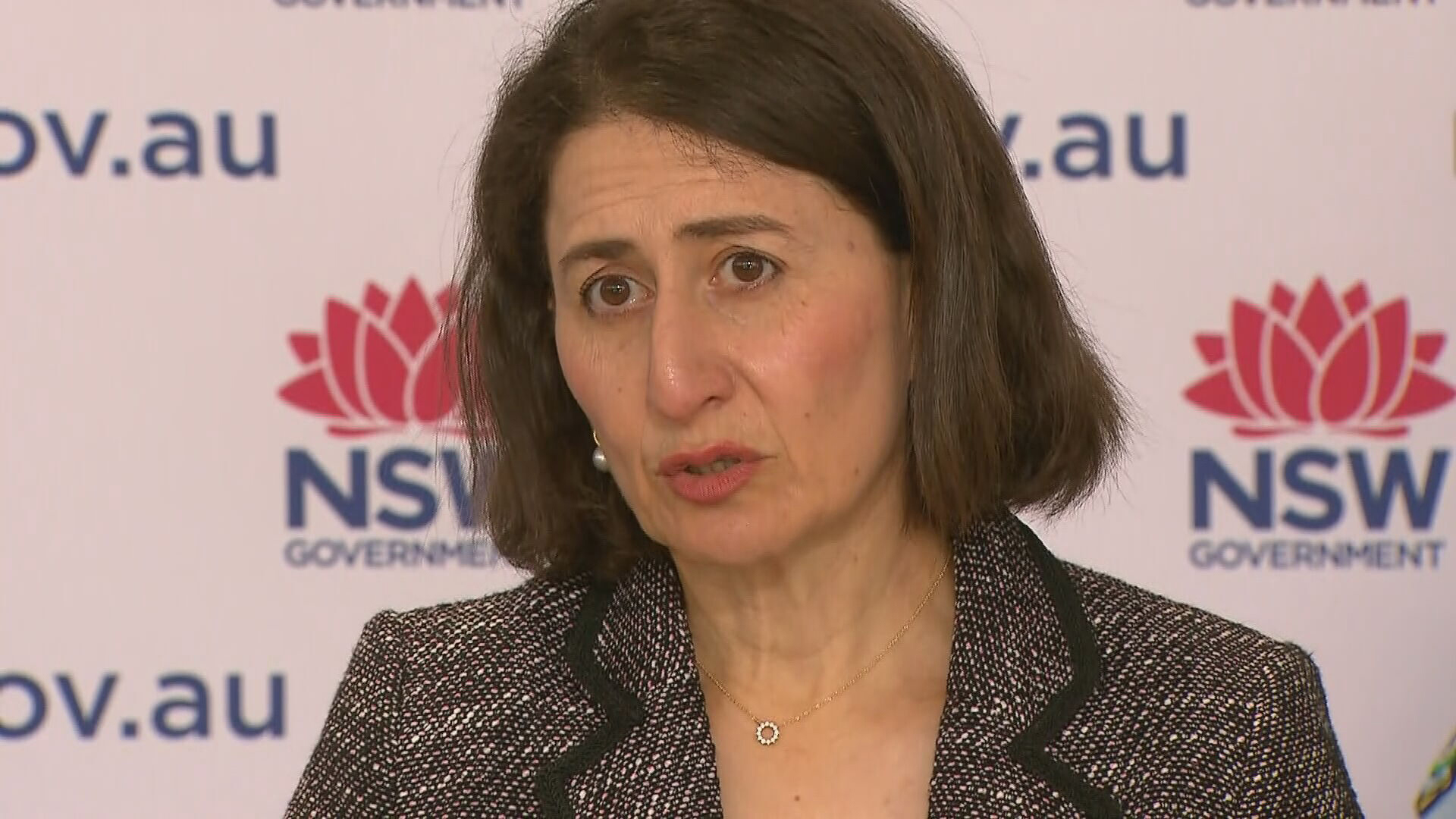
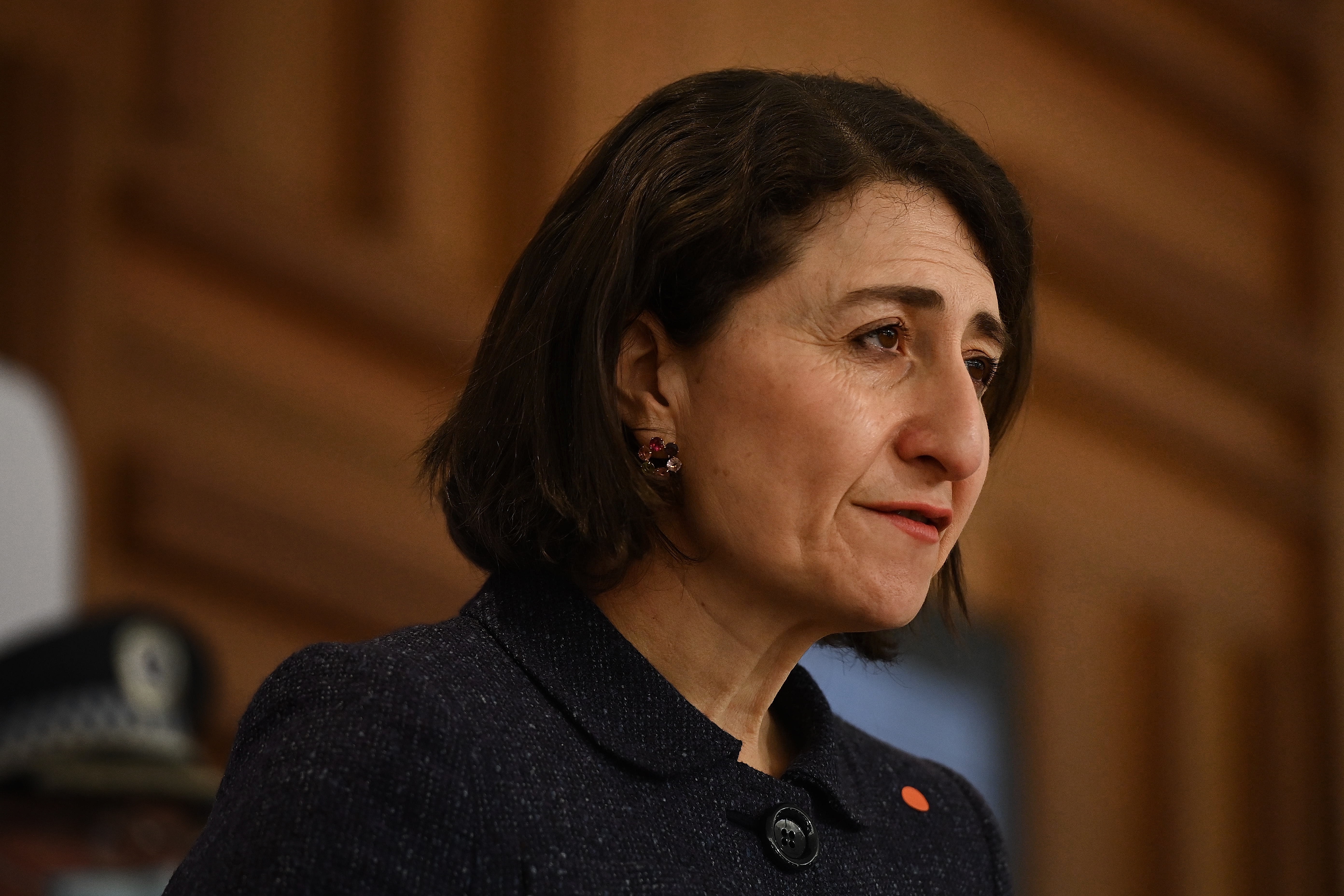
Premier Gladys Berejiklian said from 5pm, the local government areas of Bayside, Strathfield and Burwood would be included in the "areas of concern", with residents going into a tighter lockdown.
READ MORE: Victoria records 21 new cases as businesses fear 'yo-yo' lockdown

"In relation to Bayside, the suburbs of particular concern are Bexley, Banksia and Rockdale where additional cases have been identified overnight so if you live in those suburbs in particular, please come forward and get tested," she said.
"Also of course in Strathfield and Burwood, which are geographically smaller areas, but we are noticing relative to the population an increasing number of cases, and as a precaution those additional council areas have been brought into those areas of concern.
"We are asking also people who live in the Inner West and Camden to be on extra watch and alert, and health authorities are watching the cases in those areas very closely."
READ MORE: Three major changes to NSW lockdown orders amid COVID-19 crisis
Lockdown in the Hunter and Upper Hunter areas will be extended for another week, with new cases recorded overnight.
They had been set to leave lockdown tomorrow.
Armidale, Tamworth and the Northern Rivers areas recorded zero cases.
In Dubbo, five cases were identified overnight, with a further case in western NSW.
Two men in their 90s died from the disease yesterday.
One had received a single shot of AstraZeneca, while the second had had both shots of Pfizer.
The partially vaccinated man caught the disease as part of the Liverpool Hospital outbreak.
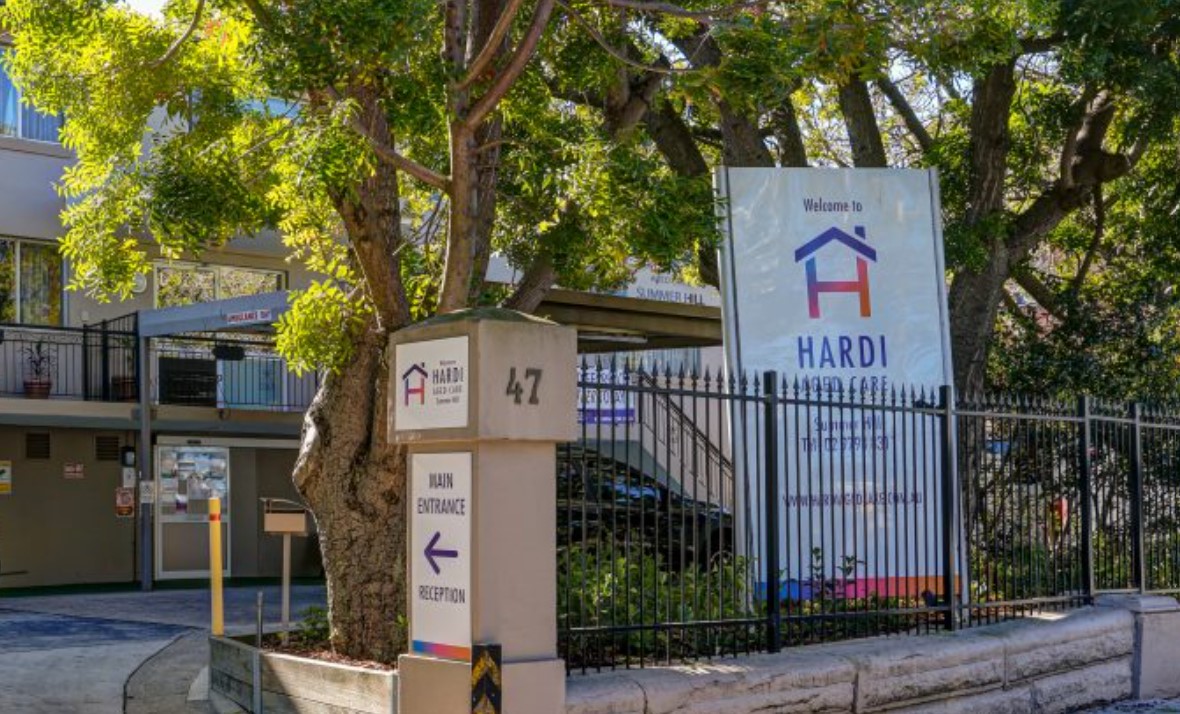
The fully vaccinated man contracted the disease at a nursing home in Summer Hill.
READ MORE: Three more Sydney LGAs under tougher lockdown measures
Ms Berejiklian has warned that the guilt of passing on the Delta variant to a loved one lasted "a lifetime".
"I think we have seen a turnaround in some communities because people are realising, you might think you are okay with the virus, but your loved ones will not be," she said.
"You could then go home and give it to those you care about the most and it has been horrific seeing those families, when people are at home and they have lost somebody closest to them, and the guilt that people have, knowing that they have infected their loved ones, it lasts a lifetime.
"So not only do people have to live with the consequence of losing a loved one but living with the guilt of the rest of their lives. That is not something I would wish on anybody and people are starting to get that message.
"We have seen some families having more than one death. We have seen somebody bring it home and unfortunately more than one person has died."
Delay in support payments
Earlier, Ms Berejiklian "apologised profusely" to those still waiting on business support payments as the state nears two months in lockdown.
Speaking to 2GB radio host Ben Fordham, Ms Berejiklian said Service NSW had upgraded its capacity to deal with the demand.
"Hopefully by the end of the week or next week, the backlog will be cleared," she said.
"All eligible business will get every dollar they deserve."
READ MORE: High-risk locations across NSW on exposure sites list

She also urged anyone hoping to return to work in the coming months to get vaccinated as health authorities grapple with a plan to get the state back on track.
Ms Berejiklian said she had sought advice from Chief Health Officer Dr Kerry Chant on who may be able to return to work in September and October.
"What I've asked for is advice as to if people are fully vaccinated, what can we do safely in September and October and she is in the process of providing that advice, not yet but over the next few weeks," she said.
"If you want to get back to work, please get vaccinated."
The premier said the ban on rental evictions would "absolutely" be extended.
"When a government restricts your right to move freely, we need to support you during that time," she said.
https://omny.fm/shows/ben-fordham-full-show/premier-refuses-to-admit-mistakes-in-handling-of-s/embed
Australia will need to vaccinate children to stem Delta, warns expert
Australia's roughly five million unvaccinated children will need to receive the coronavirus jab for the country to stem the Delta variant, according to an infectious diseases expert.
Professor Sanjaya Senanayake is the Director of the Department of Infectious Diseases at Canberra Health Services.
He told the Today show this morning that increasing numbers of children are becoming sick with the virus.
READ MORE: Vaccine rollout 'no longer a race, it's a bloody sprint' says Jacqui Lambie
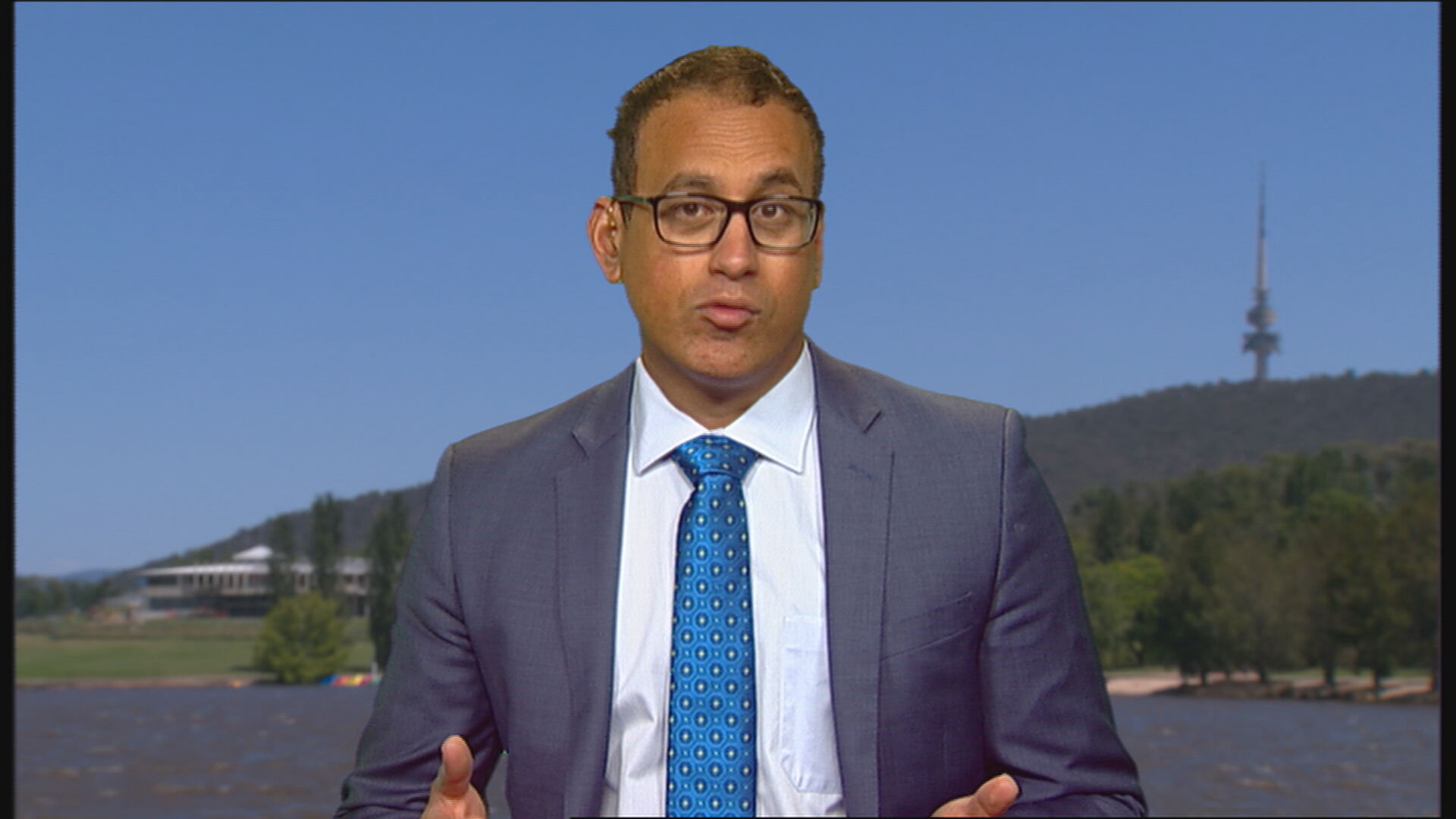
"Definitely children do get very sick with Delta. And the reality is this: children cannot only get infected, they can transmit it as well," he said.
"And, therefore, when we think about immunisation going forward, we do have to think about the five million children who aren't eligible in the current vaccination rollout and see if we can get them vaccinated soon."
Federal and state governments' vaccination targets currently only take into account the eligible population, which is those over the age of 16.
READ MORE: Patients receive 'ultra-low dose' of COVID-19 vaccine at Brisbane hub
NSW Premier Gladys Berejiklian has flagged a vaccination target of 80 per cent of adults to see lockdowns end and COVID-19 treated more like a seasonal flu, with some ongoing restrictions to remain.
However, if children are to be included in this target, the state's vaccination push would need to include an additional 1.11 million jabs.
This is because 80 per cent of the state's adult population equates to only around 66 per cent of the total population.
In an Australian first, South Australia today moved to make both the Pfizer and AstraZeneca vaccines available to anyone aged over 16.
The two vaccines will be available at state-run clinics in the state from Monday, but younger teenagers and children are still restricted from receiving the jab.
"The studies are actually going on, particularly with those MRNA vaccines like Moderna and Pfizer."
Hackers steal millions in the biggest crypto theft in history
Hackers have stolen some US$600 million in cryptocurrency from the decentralised finance (DeFi) platform Poly Network, in what it says is the largest theft in the industry's history.
A vulnerability in Poly Network allowed the thief to make off with the funds, the platform said begging the attacker to return the money.
"The amount of money you hacked is the biggest one in the DeFi history," Poly Network wrote in a letter to the attacker it posted to Twitter.
READ MORE: Ethereum booms as the 'environmentally friendly' crypto

"The money you stole is from tens of thousands of crypto community members… you should talk to us to work out a solution."
Poly Network urged other members of the cryptocurrency ecosystem to "blacklist" the assets coming from addresses used by the attacker to siphon away the funds — which included a mix of various coins including US$33 million of Tether, according to Tether's CTO.
(In a statement, Tether later said it froze the assets within 20 minutes of learning of the attack.)
READ MORE: Ethereum could overtake Bitcoin after major upgrade draws new buyers in

The cryptocurrency exchange Binance said it was "coordinating with all our security partners to actively help."
Poly Network links together the blockchains of multiple virtual currencies to create interoperability among them.
Following the hack, Poly Network established several addresses to which it said the attacker could return the money.
READ MORE: Top US official says crypto is ripe with 'fraud, scams and abuses'

And it appears the hacker is cooperating: As of 7:47 am ET Wednesday, Poly Network said, it had received about US$4.7 million back.
It was not immediately clear who was behind the hack.
By noon, much more money, about US$261 million, had been returned, according to the blockchain forensics firm Chainalysis.
In notes appended to some of the transactions, Chainalysis said, the attacker claimed to have hacked Poly Network "for fun :)" and that he or she undertook the attack as a challenge.
READ MORE: Amazon posted one crypto job and Bitcoin surged 14 per cent
"I take the responsibility to expose the vulnerability before any insiders hiding and exploiting it!" the attacker wrote.
"I understood the risk of exposing myself even if I don't do evil. So I used temporary email, IP or _so called_ fingerprint, which were untraceable. I prefer to stay in the dark and save the world."
Once the hack had gained the world's attention, there was virtually no way for the hacker to safely withdraw the funds, Chainalysis said, because every transaction is recorded and traceable.
READ MORE: Bitcoin plunges as Delta variant fears spread globally
"With the inherent transparency of blockchains and the eyes of an entire industry on you, how could any cryptocurrency hacker expect to escape with a large cache of stolen funds?" the company wrote in its report.
"In most cases, the best they could hope for would be to evade capture as the funds sit frozen in a blacklisted private wallet."
Regulators have increased their scrutiny of crypto platforms as investors pour billions of dollars into digital currencies.
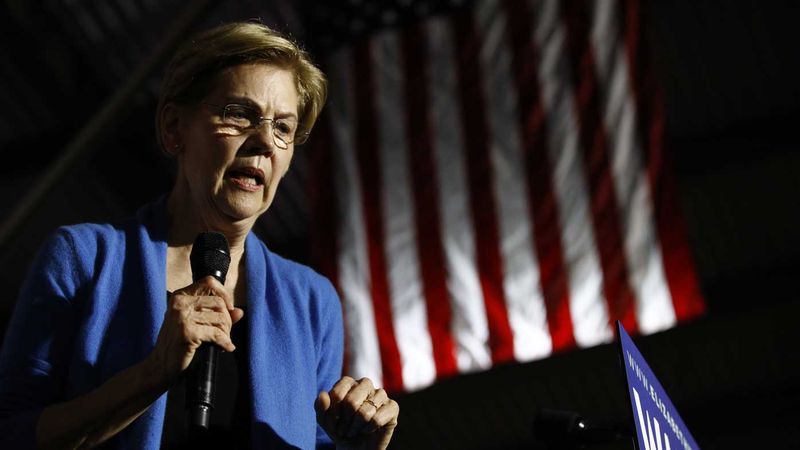
Senator Elizabeth Warren recently asked SEC Chair Gary Gensler to investigate the SEC's ability to oversee trading on crypto platforms.
In response, last week, Mr Gensler said: "Right now, I believe investors using these platforms are not adequately protected."
Two US Senators Seek Biden’s Help for Haiti
US Senators Marco Rubio of Florida and Robert Menendez of New Jersey have written to President Joe Biden seeking US aid for Haiti in the wake of its presidential assassination.
President Joe Biden
The White House
1600 Pennsylvania Avenue NW Washington, D.C. 20500
Dear Mr. President:
August 9, 2021
We write to express our deep concern with the political and security crisis in Haiti and the heinous assassination of President Jovenel Moïse and attack on First Lady Martine Moïse. Given that Haiti’s caretaker authorities have requested our assistance, there is an important role for the United States to play in helping our close neighbor in the aftermath of this tragedy.
We urge your administration to assist the Haitian authorities as they investigate this brutal attack and to cooperate with international partners to ensure justice and accountability for all individuals involved. We further implore your administration, in coordination with international partners, to engage in a diplomatic effort with a broad range of democratic actors across Haitian society to build the consensus and confidence needed to hold credible presidential and parliamentary elections. As part of this effort, the United States should work with the United Nations and partner nations to help address the alarming levels of criminal violence that have terrorized Haiti’s population and displaced tens of thousands of people. We recognize that this is a daunting challenge which will not be achieved quickly.
Over the past year, Haiti has experienced a startling rise in criminal activity, kidnappings, human rights violations, and a growing humanitarian crisis. President Moïse’s murder is only the latest in a wave of uncontrolled violence. In recent weeks, more than 20 Haitians were killed in Port-au-Prince, including human rights activist Antoinette Duclaire, who was brutally shot to death. We encourage you to aggressively use sanctions and other authorities to deny visas to and freeze the assets of the individuals responsible for these barbaric attacks.
Amidst this climate of violence more than 13,000 who were displaced during the month of June. Millions of Haitians lack access to food, water, fuel, and other basic items. Growing popular frustration and the ongoing impact of the COVID-19 pandemic have contributed to a widespread loss of hope in the country and daily street protests. The United States should continue to work with Haitian civil society and the international community to help respond to urgent humanitarian needs while promoting self-reliance.
We strongly support free and fair presidential and legislative elections in Haiti as a necessary step to overcome the current political crisis. However, an electoral process will only be successful if it is deemed credible by the majority of Haitians, meets international standards, and facilitates the participation of a wide range of political and civic actors. Less than 25 percent of Haiti’s electorate participated in the country’s last elections, underscoring a widespread lack of
trust in the process. We urge your administration to work with our diplomatic partners to engage Haitian political leaders, civil society, the private sector, and traditionally underrepresented populations in order to forge a broader social consensus in support of new elections and a consensus agenda for the current interim government. We believe the integrity and inclusivity of this process is essential to an outcome that has public confidence and support.
Additionally, we firmly believe that a safe and secure environment is essential to ensure that Haitians can actively participate in their country’s democratic process. The United States should continue to work with the international community to help the Haitian National Police (HNP) to facilitate acceptable electoral conditions, to fully investigate and prosecute the assassination of President Moise, and improve the professionalism of its force to effectively protect Haitians. Given our geographic proximity to Haiti, the ongoing pandemic, as well as previous instances of mass migration from Haiti, this is a pressing national security concern.
Considering the urgency of the situation, we respectfully request that you accelerate efforts to nominate a new U.S. Ambassador to Haiti. As Ambassador Michele Sison has been nominated for a new position in the State Department, it is imperative that our embassy not have a lapse in leadership during this critical time. As you consider candidates to serve as our next ambassador, we encourage you to select someone with a deep understanding of the country, extensive diplomatic experience responding to crises, and a record of effective collaboration with civil society and multilateral institutions.
Congress has provided billions of dollars in assistance to the Haitian people in response to disasters, both natural and man-made. This assistance has made the U.S. the single largest source of humanitarian assistance to Haiti. This includes assistance for improving access to agricultural markets, preventing and responding to gender-based violence, and improving access to public health services. The United States has also provided support to the Haitian National Police, which increased its force to more than 15,000 officers and built new commissariats in regions previously without a police presence. At the same time, it is important to ensure that our investments do not perpetuate Haiti’s dependency on foreign assistance or empower those who have cared more about enriching themselves than improving the lives of the Haitian people.
A safe, prosperous, and democratic Haiti is in the best interest of the United States and the Western Hemisphere. We therefore urge you to stand in solidarity with the Haitian people. We know you share our commitment to help enable the Haitian people to choose their next leaders in a free, fair and transparent manner. We thank you for your attention to this important matter and look forward to working with you to advance and uphold stability and democracy in our hemisphere.
Sincerely,
Marco Rubio U.S. Senator
Robert Menendez U.S. Senator “
The post Two US Senators Seek Biden’s Help for Haiti appeared first on The St Kitts Nevis Observer.
Tropical Storm Fred: 6th Atlantic Storm An Above-Average Hurricane Season?
Meteorologists have named the sixth Atlantic storm of 2021, hinting at an above-average season ahead.
The US National Hurricane Center (NHC) has bestowed the name Tropical Storm Fred on a low pressure system barrelling through the Caribbean.
The sixth named storm of the year usually forms at the end of August.
In coming days, it could bring strong winds, heavy rain and high seas to the Dominican Republic and Puerto Rico.
In early July, Tropical Storm Elsa became the earliest fifth named storm on record.
In the month since, the Atlantic has been very quiet. But we’re now entering what are historically the busiest months of the season.
Tropical Storm Fred will track west through the Leeward Islands before passing over many of the Caribbean’s largest islands.
It is likely to remain a tropical storm as it moves towards the Bahamas and Florida later in the week.
While this season is not expected be as active as the 2020 record-breaking season, when the Greek alphabet was used to name storms for only the second time, forecasters are confident that it will still be a busy season.
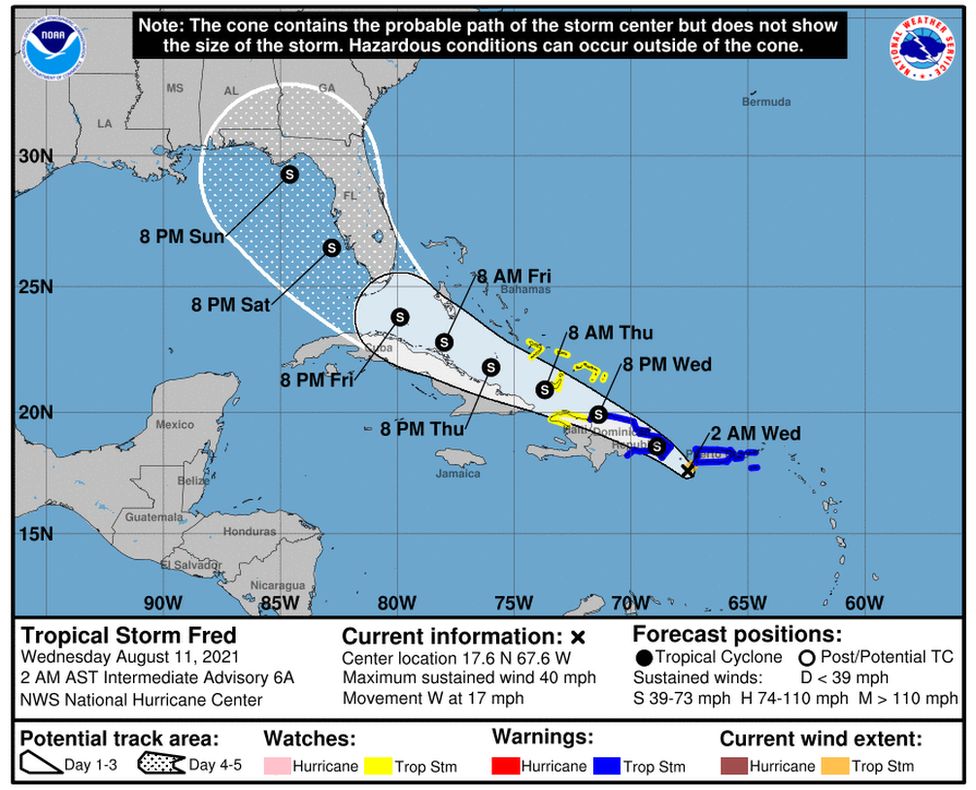 image sourceNOAA
“A mix of competing oceanic and atmospheric conditions generally favour above-average activity for the remainder of the Atlantic hurricane season, including the potential return of La Niña in the months ahead,” said Matthew Rosencrans, lead seasonal hurricane forecaster at Noaa’s Climate Prediction Center (CPC) in College Park, Maryland.
La Niña and a counterpart – El Niño – are climate patterns in the Pacific Ocean that can affect weather worldwide. During La Niña, trade winds are stronger than usual, pushing more warm water toward Asia. El Niño has the opposite effect.
In a recent update to the seasonal forecast, experts at the CPC increased the expected number of storms, hurricanes and major hurricanes by a small amount based on the latest atmospheric and Atlantic ocean conditions.
In their early August update, forecasters at Colorado State University in Fort Collins actually reduced the number of named storms expected from 20 to 18.
However, “overall, we still think that we will have an above-average season, just slightly less active than anticipated last month”, Phillip Klotzbach, a research scientist at Colorado State told BBC Weather.
Tropical storm formation requires a number of different environmental parameters, such as a sea surface temperature above 26C and weak wind shear to come together.
Forecasters look at these elements, along with larger natural climatic patterns such as El Niño and La Niña, to make predictions.
The above average forecast is therefore in part due to slightly warmer-than-average sea surface temperatures in the Atlantic and wind shear anomalies over the Caribbean and tropical Atlantic that are slightly weaker than normal.
There is a potential return to La Niña conditions in the months ahead, which would also signal to increased tropical storm development.
How will climate change impact the hurricane season?
With warmer oceans you get more fuel for a tropical storm or hurricane to develop.
In the UN’s latest IPCC report – which details the latest thinking in climate science – it says of tropical cyclones: “It is likely that the frequency of rapid intensification in tropical cyclones has increased globally over the last 40 years.”
The report goes on to conclude with “high confidence” that the proportion of intense tropical cyclones will increase on a global scale with increasing warming.
In other words, the tropical cyclones that form are likely to become more intense, which if they hit land, will bring more impacts.
As for the number of storms – while we’ve recently had active seasons – the IPCC report suggests with “medium confidence” that the “global frequency of tropical cyclone formation will decrease or remain unchanged with increasing global warming”.
The post Tropical Storm Fred: 6th Atlantic Storm An Above-Average Hurricane Season? appeared first on The St Kitts Nevis Observer.
Samsung's newest folding smartphones revealed
Global tech giant Samsung has revealed a range of new devices which give a glimpse into the future of smartphones and the company's new pricing strategy.
Samsung was the first company to announce a "folding screen smartphone" three years ago, but suffered issues with the screens of the first release as well as a high prices on both the first and second releases of the phones.
But now it appears the folding phone market has matured to a point of both reliability and price with the new models from Samsung launching at dramatically lower prices in 2021.
READ MORE: Samsung launches new more affordable smartphones

The flagship of the entire Samsung smartphone range will be the Galaxy Z Fold3 5G, a tall smartphone which folds open like a book to reveal a large 7.6 inch tablet-like screen.
The 2021 model adds support for the famed "S Pen" a stylus used on the popular Samsung Note series of smartphones allowing you to write notes, draw or navigate the screen with the pen.
This addition pushes the previously much-loved Galaxy Note series outside of Samsung's range, with the company putting their high-end customers into the Folding basket, while also offering an "S Pen" compatible version of the Galaxy S21 range for those at what was the entry level Note market.
READ MORE: Samsung launches flagship 2021 smartphones, the Galaxy S21 range

Samsung says the new Z Fold3 5G is constructed from a new aluminium that is 10 per cent stronger, as well as being IPX8 Water resistant – a first for a folding smartphone device of any brand.
While slightly thinner, and lighter, it's not a radical shift from either of the two previous versions. Instead, the Samsung Galaxy Z Fold3 5G is refined, in every way.
Inside, on the larger "tablet" screen is another huge innovation, a first among major smartphone brands – an under-screen camera. There is no more "cut out" of the screen for the front-facing camera.
READ MORE: The $479 watch that can detect heart problems

Instead the lens sits under the LCD display, in what is a barely noticeable position.
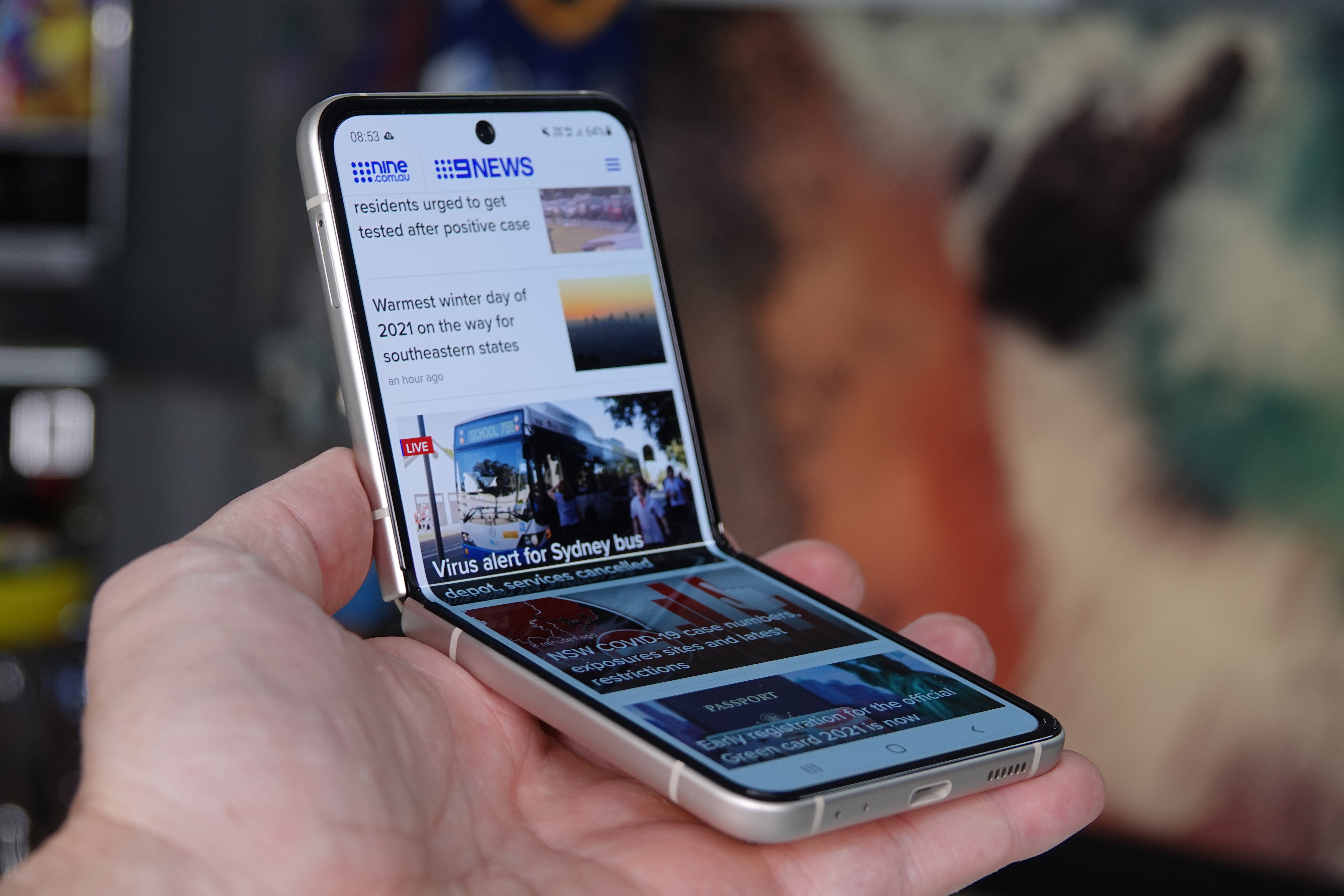
The smaller sibling of the Galaxy Z Fold3 5G is the Galaxy Z Flip3 5G.
This device looks more like a regular smartphone, but it folds in half to make a compact, easily carried device with the main smartphone screen protected.
In its "closed" state, the small front screen has been enlarged (4 times bigger) from previous generations. Acting as a fantastic at-a-glance look at time, notifications and many other widgets.
READ MORE: Samsung Galaxy Z Fold2 hands-on review

That screen also works as a viewfinder for any selfies using the main rear cameras.
Also slightly thinner and lighter, the Z Flip3 5G is once again utterly refined, better quality edges, materials and overall design, with several colours available and set to attract a very young and female skewed audience to this revolutionary form factor.
The biggest news from these announcements is the price. For the last two years, Galaxy Fold devices have been priced at $2,999 and least year's Z Flip device hit the market at $2,199.
READ MORE: What you need to know about Samsung's latest gadgets

Staggeringly, the 2021 Samsung Galaxy Z Fold3 5G will retail in Australia for $2,499, with the Galaxy Z Flip3 5G priced at $1,499.
That $1,499 price will put the stylish, futuristic and very appealing Flip phone smartphone in the price range of millions of Aussies who buy flagship Apple and Samsung smartphones.
Both products go on sale September 10, with pre-orders open from today at Telcos, Major Retailers and Samsung Online.