Category Archives: headline

Kim Jong-un's sister rips South Korea for military exercises with US

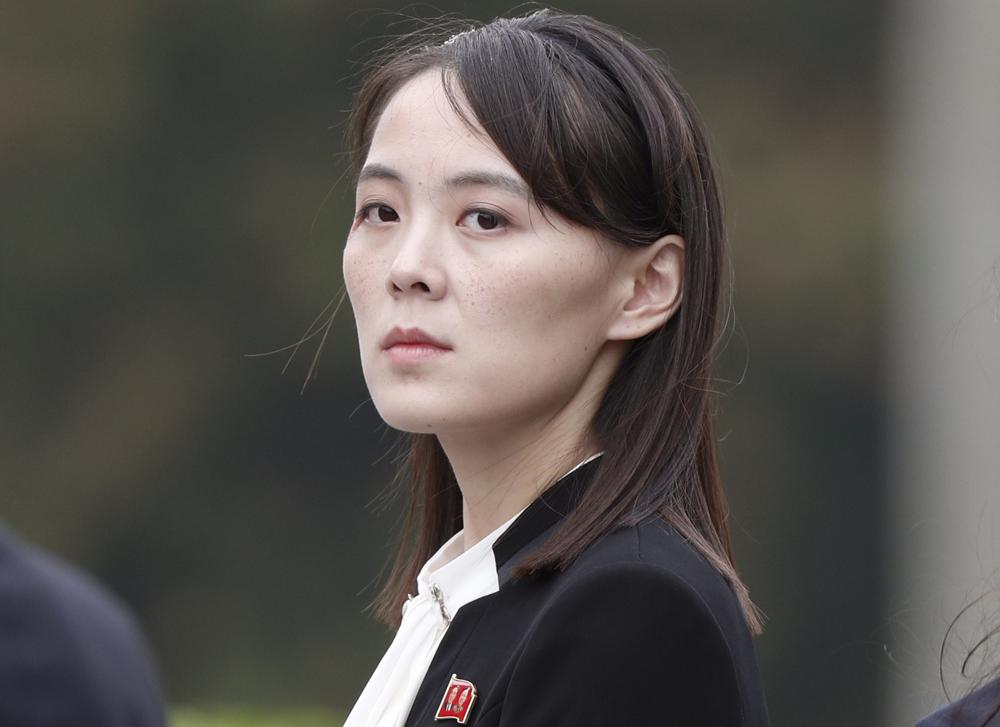
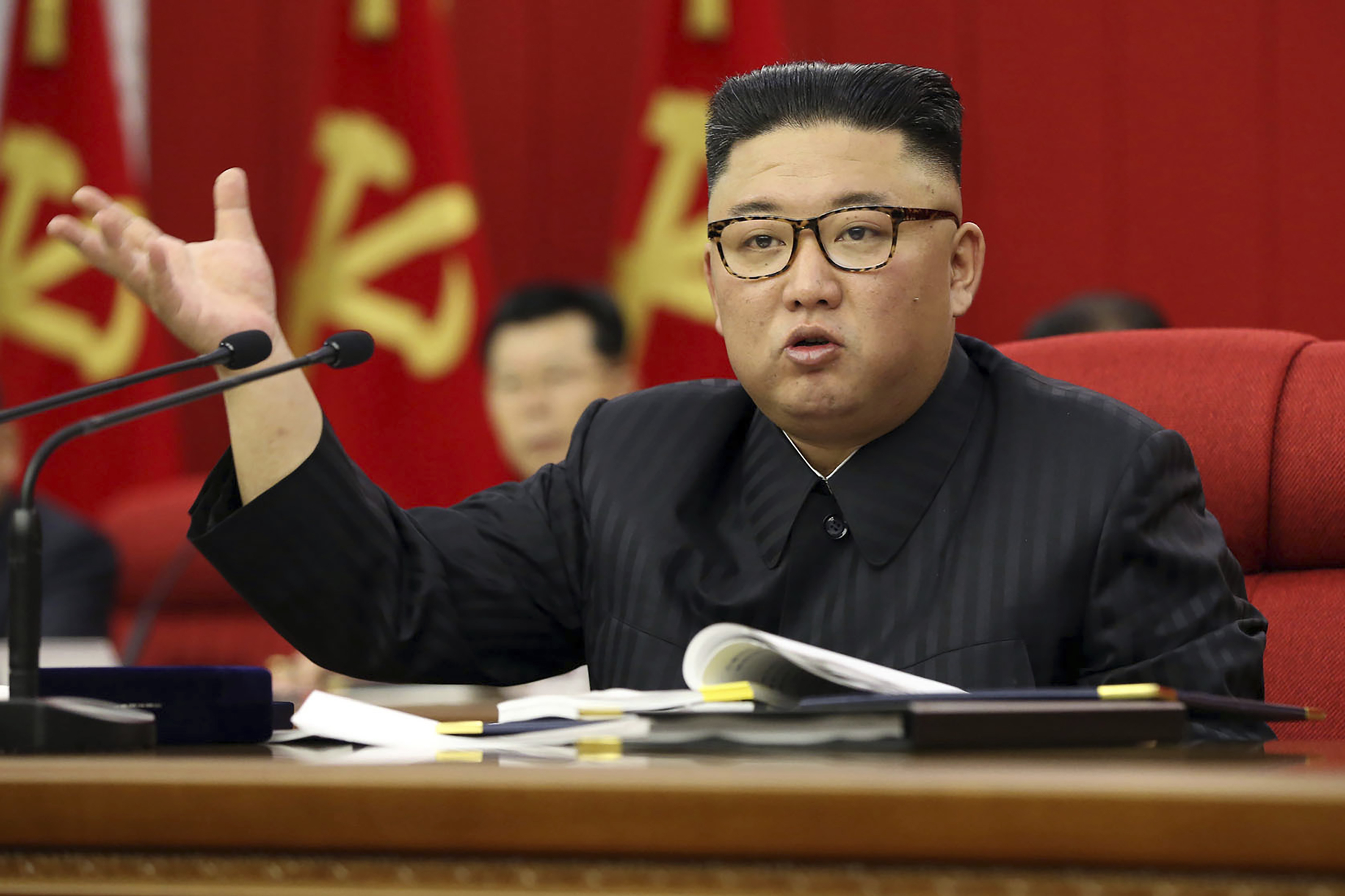
The powerful sister of North Korean leader Kim Jong-un ripped South Korea for proceeding with military exercises with the United States that she said are an invasion rehearsal and warned that the North will work faster to strengthen its preemptive strike capabilities.

Kim yo-Jong's statement came after South Korean media reported that the allied militaries will begin four days of preliminary training on Tuesday before holding computer-simulated drills on August 16 to 26.

Kim said she was given authority to release the statement, implying the message came directly from her brother.

READ MORE: North Korea urges young people to stop using South Korean slang
Hours after her comments were published on state media, South Korea's defence and unification ministries said North Korean officials hadn't responded to their calls Tuesday afternoon over inter-Korean hotlines, which had been disconnected for a year before North Korea agreed to reopen them in late July.

The Koreas then described the move as a conciliatory gesture.

South Korean officials said they were closely monitoring the development, but that it wasn't immediately clear whether North Korea had cut the communication channels again.

Kim yo-Jong described South Korea's decision to hold joint exercises despite earlier warnings by the North as "perfidious behavior" that will push the allies into facing a "more serious security threat."

She said continuing the drills exposed the hypocrisy of the Biden administration's offers to resume dialogue over North Korea's nuclear weapons program.

She said a stable peace won't be achieved on the Korean Peninsula unless the United States withdraws its troops and weapons from the South.

Kim said North Korea will "put more spur to further increasing the deterrent of absolute capacity to cope with the ever-growing military threats from the US, " including its capabilities for national defence and "powerful" preemptive strikes for "rapidly countering any military actions against us."

"(The drills) are the most vivid expression of the US hostile policy towards (North Korea), designed to stifle our state by force, and an unwelcoming act of self-destruction for which a dear price should be paid as they threaten the safety of our people and further imperil the situation on the Korean Peninsula," Kim said.

"For peace to settle on the peninsula, it is imperative for the US to withdraw its aggression troops and war hardware deployed in (South) Korea. As long as the US forces stay in (South) Korea, the root cause for the periodic aggravation of the situation on the Korean Peninsula will never vanish."

READ MORE: Kim Jong-un fires senior officials over 'grave' coronavirus incident
It wasn't immediately clear whether North Korea's threat to advance its preemptive strike capabilities signaled a resumption of testing activity.

North Korea ended a yearlong pause in ballistic tests in March by firing two short-range missiles into the sea, continuing a tradition of testing new US administrations with weapons demonstrations and other provocations apparently aimed at measuring Washington's response and wresting concessions.

But North Korea hasn't conducted any known test launches since then as Kim Jong Un focused national efforts on fending off the coronavirus and salvaging a broken economy damaged further by pandemic border closures.

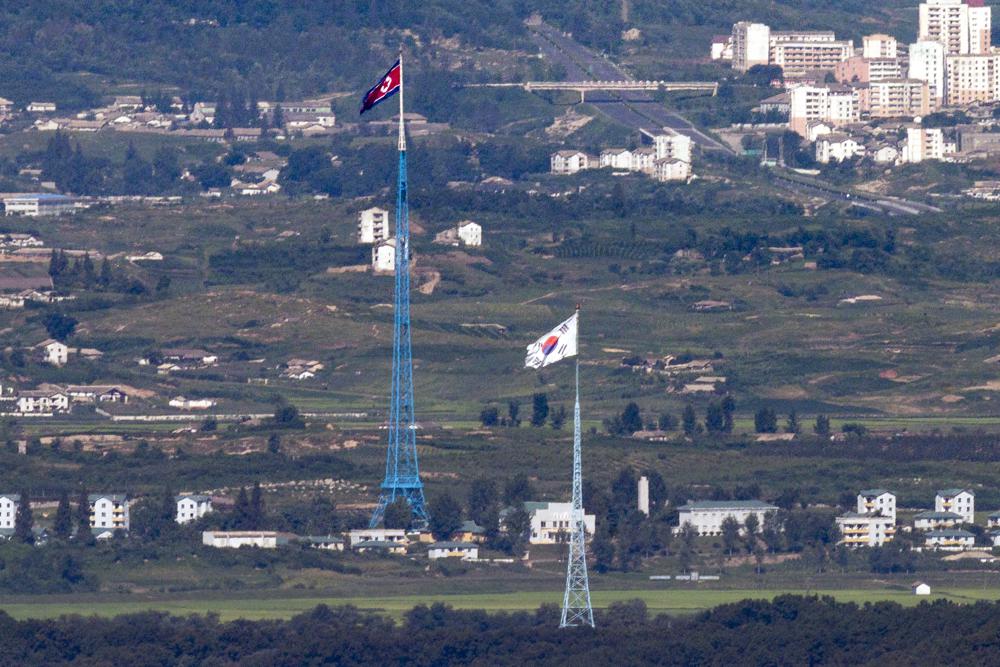
North Korea's angry reaction to the drills further diminishes South Korean hopes for improving bilateral ties, which rose after the North agreed to reopen long-stalled communication channels with the South.

But just days after the lines were restored, Kim yo-Jong warned that the planned military drills between South Korea and the United States will undermine prospects for better inter-Korean ties.

Some analysts say North Korea's decision to restore the communication lines was mainly aimed at pushing Seoul to convince Washington to make concessions while nuclear diplomacy remains deadlocked.

READ MORE: Leaders of North Korea, China vow to strengthen ties
"Kim yo-Jong's threatening statement demonstrates that North Korea will use even restrained US-South Korea defence exercises as an excuse not to implement inter-Korean cooperation agreements and to justify its next military provocation," said Leif-Eric Easley, a professor of international studies at Ewha Woman's University in Seoul.

Kim Jong-un has pledged to bolster his country's nuclear deterrent while urging his people to stay resilient in a struggle for economic self-dependence in the face of US-led pressure.

His government has so far rejected the Biden administration's overture for talks, demanding that Washington abandon its "hostile" policies first.

The United States keeps about 28,000 troops in South Korea to help deter potential aggression from North Korea, in a legacy of the 1950-53 Korean War.

The allies have yet to officially announce the details of this month's drills.

Boo Seung-Chan, spokesperson of South Korea's Defence Ministry, said in a briefing that the allies were discussing the "timing, scale and methods" of the summertime drills.

North Korea has long bristled at joint military exercises between South Korea and the United States, which the allies describe as defensive in nature, and often responds to them with its own weapons tests.

In the past few years, however, South Korea and the United States have canceled or downsized some of their training to support now-dormant diplomacy aimed at ending the North Korean nuclear crisis or because of the COVID-19 pandemic.

North Korea has suspended its nuclear and long-range missile tests since 2018, when leader Kim Jong-un initiated diplomacy with South Korea and then-President Donald Trump while attempting to leverage his nuclear weapons for badly needed sanctions relief.

After the talks fell through in 2019, North Korea ramped up tests of new short-range, solid-fuel weapons to improve its ability to deliver nuclear strikes and overwhelm missile defence systems in South Korea and Japan.

Inter-Korean ties flourished during the diplomacy of 2018, during which Kim and South Korean President Moon Jae-in met three times and vowed to resume inter-Korean economic cooperation when possible, expressing optimism that the sanctions would end and allow such projects.

But North Korea later cut off ties with South Korea following the collapse of the second summit between Kim and Trump in 2019 when the Americans rejected North Korea's demand for major sanctions relief in exchange for a partial surrender of its nuclear capabilities.


The moment Sydney lost control of Delta

A super-spreading birthday party in Sydney's western suburbs in June got out of control before contact tracers could get on top of it, an inquiry has heard.

NSW Chief Health Officer Dr Kerry Chant and Health Minister Brad Hazzard faced questions today from MPs who asked how the current Delta outbreak spread so quickly, leading to Sydney's longest lockdown.

The first COVID-19 case in what was then known as the Eastern Suburbs cluster was a limo driver on June 16. The virus spread through the community and an infected person went to a birthday party in West Hoxton on June 19.

READ MORE: NSW Premier confirms they're looking at increasing penalties

Crowd at party

From there cases spread like wildfire. Thirty guests got sick, they passed it on to 21 more people.

It should be noted the people at the party were not doing anything wrong under the restrictions at the time.

"It was thought that we got there very early, that we got to people before they'd become very infectious in the community, but that turned out to be not the case," Dr Chant said at the inquiry today.

Within a week Sydney's eastern suburbs were locked down.

And 24 hours later all Greater Sydney was ordered to stay at home.

By then the Delta strain of coronavirus had spread throughout the suburbs in the south-west.

"Clearly the delta variant behaved very differently to the other variants," Dr Chant said.

Greens MP David Shoebridge challenged the Chief Health Officer on this, saying: "this was not new information".

"We'd had that experience and that information from the UK, in particular, from India … surely that should have fed into the decision making on the 17th of June, the 18th of June," he said.

Ninety minutes into what was supposed to be an hour inquiry, Mr Hazzard grew agitated.

Chant Hazzard inquiry

"If you're challenging Dr Chant's advice, that's not appropriate," he said.

He then accused the inquiry of "wasting her time" before interjecting: "I'm the Minister, and I'll answer it".

Dr Chant was not able to provide any concrete answers on when the lockdown can end, or when restrictions can ease.

The inquiry was told she wants to see 70 per cent vaccination rates before any decisions are made.

"I have not provided any advice as to what restrictions I would be prepared to ease, it is premature."

NY Governor Resigns After Investigation Finds He Harassed Multiple Women

New York Gov. Andrew Cuomo (D) has resigned from office after a bombshell report released by state Attorney General Letitia James (D) found he sexually harassed 11 women, including some who worked in his office, and violated state and federal laws.

Cuomo had been inundated with calls for his resignation and faced an impeachment hearing in the state Assembly that appeared all but guaranteed to spark a trial in the state Senate. Should he have survived potential impeachment proceedings, he also faced daunting reelection prospects in 2022.

But he appeared defiant to the end.

His resignation followed a 45-minute news conference from Rita Glavin, his attorney, during which she rebutted the allegations in the report and attacked the credibility of the investigators and women who came forward with accusations, as well as the media that covered them.

But Cuomo, in his own press conference immediately after, announced he would be stepping down in 14 days.

“This is one of the most challenging times for government in a generation. Government really needs to function today. Government needs to perform. It is a matter of life and death, government operations. And wasting energy on distractions is the last thing that state government should be doing. And I cannot be the cause of that,” Cuomo said.

“I think given the circumstances, the best way I can help now is if I step aside and let government get back to governing. And therefore that’s what I’ll do,” he said.

His resignation also follows widespread questions about his handling of the coronavirus pandemic, particularly in the state’s nursing homes.

James’s office launched the independent investigation in March after several women publicly accused Cuomo of sexual misconduct. Investigators found Cuomo engaged in inappropriate conduct with current and former staffers and at least one state trooper who was assigned to his protective detail.

The report was finalized after attorneys interviewed 179 individuals and reviewed 74,000 pieces of evidence.

“These interviews and pieces of evidence reveal a deeply disturbing, yet clear picture: Gov. Cuomo sexually harassed current and former state employees in violation of both federal and state laws. The independent investigation found that Gov. Cuomo sexually harassed multiple women, many of whom were young women, by engaging in unwanted groping, kisses, hugging and by making inappropriate comments,” James said last week.

The blockbuster findings reignited calls from his resignation from both Democrats and Republicans who said his actions were beyond the pale.

“This report highlights unacceptable behavior by Governor Cuomo and his administration. As I said when these disturbing allegations first came to light, the Governor must resign for the good of the state,” state Senate Majority Leader Andrea Stewart-Cousins (D) said in a statement shortly after the report’s release. “Now that the investigation is complete and the allegations have been substantiated, it should be clear to everyone that he can no longer serve as Governor.”

Prior to Cuomo’s resignation, the number of Democrats who called for his departure had snowballed to most Democrats in the state legislature, the head of the state party, even to the pinnacles of Washington.

The sexual harassment scandal compounded the criticism Cuomo faced after it was revealed his office intentionally undercounted the number of coronavirus-related deaths in nursing homes by several thousand and sought to hide the true tally, in part over fears that a higher count would be wielded as a political cudgel by former President Trump.

Cuomo had apologized for both scandals but denied wrongdoing toward any woman he’s interacted with, maintaining his conduct should not be considered sexual harassment.

Even as the calls for his resignation piled up, he remained defiant and insisted he would not leave office.

“The facts are much different than what has been portrayed,” he said after James released the damning report.

That defiance continued even in Cuomo’s remarks Tuesday, during which he said there were “flaws” in James’s report.

“That should concern all New Yorkers, because when there is a bias or lack of fairness in the justice system, it is a concern for everyone, not just those immediately affected,” he said.

The Tuesday press conference from Glavin offered a point-by-point rebuttal of the report.

“Because of what has happened since Aug. 3, with the press conference and a report, that there’s no question in my mind was designed and meant to devastate Gov. Cuomo and his chamber,” Glavin said, referencing the date James released her report. “And for the last eight days it has been a pile on with people judging facts when they didn’t have all the facts.”

Glavin contended that the two main investigators, Anne Clark and Joon Kim, “brought their biases” and a “predisposition” when investigating the allegations against the governor.

Even just before announcing he would depart, Cuomo said it was his instinct to “fight through this controversy,” maintaining there were political machinations behind the report and an unfair narrative being spread in the press and social media.

“If I could communicate the facts through the frenzy, New Yorkers would understand,” he said. “I believe that.”

Prior to the announcement, press reports circulated detailing Cuomo’s intention to work through the scandal and try to beat an effort to oust him. But toward the end of his remarks Tuesday, Cuomo seemed to recognize the whirlwind surrounding the allegations and spoke directly to his daughters.

“I want them to know, from the bottom of my heart, that I never did, and I never would intentionally disrespect a woman or treat any woman differently than I would want them treated,” he said. “Your dad made mistakes and he apologized and he learned from it. And that is what life is all about.”

Cuomo’s resignation marks an ignominious end to a political career that spanned decades. He served as the secretary of Housing and Urban Development during the Clinton administration before becoming the New York attorney general and later governor. His popularity soared during the early days of the coronavirus pandemic with his daily, televised press conferences only to see his approval rating crater in light of the sexual harassment and nursing home scandals.

His resignation will elevate Lt. Gov. Kathy Hochul (D) to the governorship, making her the first female executive of the Empire State.

Hochul will take power in two weeks at a crucial time for New York, which like much of the nation is grappling with a rise in coronavirus cases fueled by the delta variant. But Cuomo said Hochul would use the next 14 days to get up to speed and would be ready to take over the governorship when his resignation takes effect.

“Kathy Hochul, my lieutenant governor, is smart and competent,” Cuomo said. “This transition must be seamless.”

The post NY Governor Resigns After Investigation Finds He Harassed Multiple Women appeared first on The St Kitts Nevis Observer.

'Code red' report amps up pressure on leaders to address climate crisis

Scientists have warned for decades that we were changing the climate in a way that would have devastating impacts on the planet and our lives. A landmark report on Monday showed that's already happening, and faster than we expected.

The findings, by the UN Intergovernmental Panel on Climate Change (IPCC), serve as a stern wake-up call for politicians, business leaders and policy makers, who in just 12 weeks will meet for the COP26 climate talks in Glasgow to address the biggest existential challenge in human history.

For decades, global policy has lagged behind the science, but leaders and big business are now being forced to play catch-up as their constituents and clients battle heat waves, wildfires and floods that are proving costly and deadly.

READ MORE: Key takeaways from the UN report on the climate crisis

"You've got the politicians being squeezed by the science, which is confirming a sense of alarm and fear, you've got the science now in the public mind," said Tom Burke, co-founder of E3G, a European climate think tank.

"You've got capital markets saying this is beginning to really threaten the future value of our investments. So you've got enormous pressure building up on the politicians."

Amid the growing pressure, climate-minded policymakers are likely to face hurdles in making a success of November's COP26 conference, which is often measured by how far the most conservative leaders are willing to go. Recent multilateral meetings on climate between far fewer nations have ended with disappointing results, sometimes even in division.

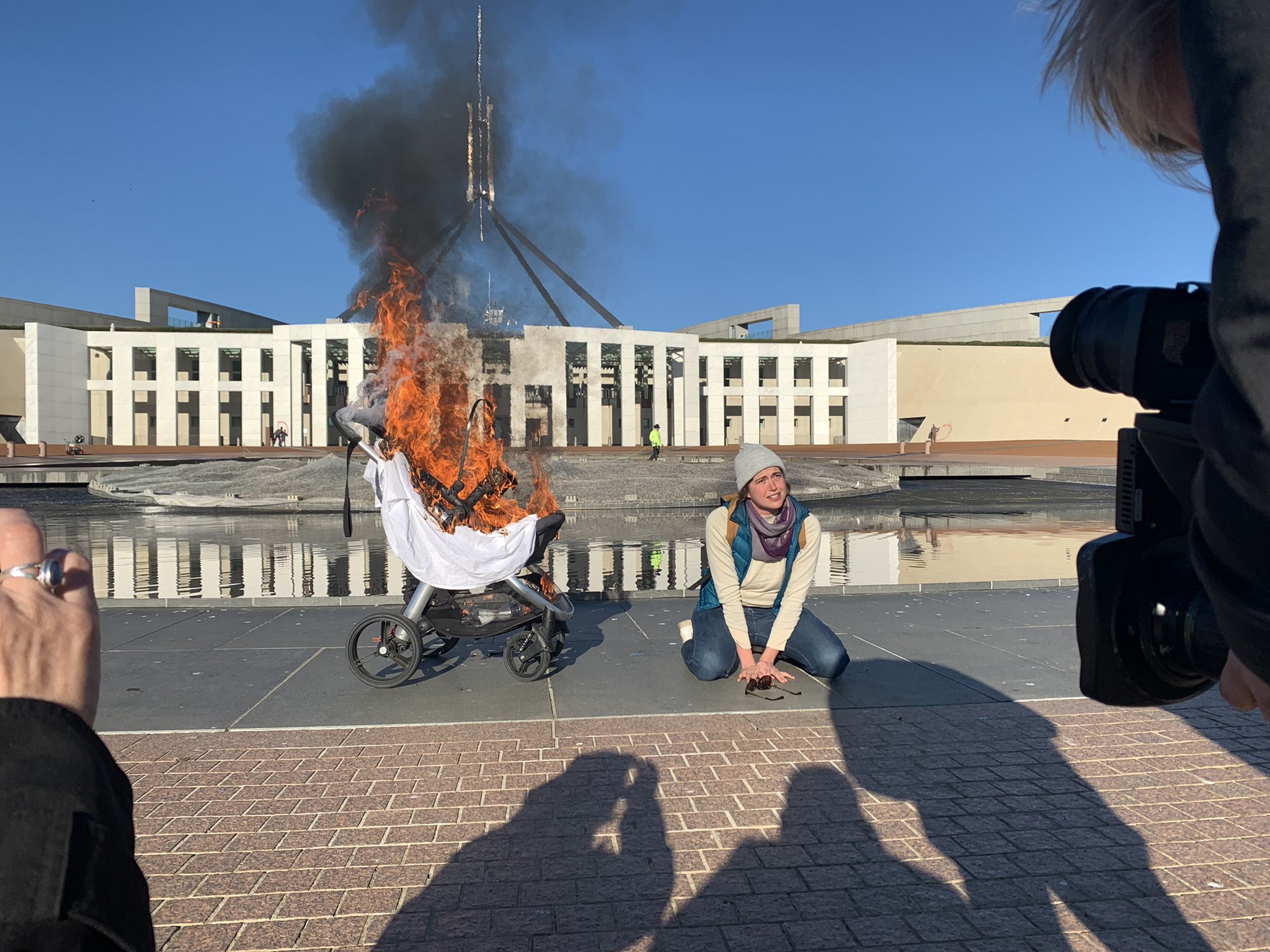
READ MORE: Eight arrested following climate change protests, vandalism at Parliament House

Keeping 1.5 alive

Alok Sharma — president of COP26 — has said he wants the conference to reach agreement on a number of key targets, including putting an end date on the use of coal, a commitment to make all new car sales zero emissions within the next 14 to 19 years, stopping deforestation by the end of the decade and greater reductions of methane emissions.

But his main message is to "keep 1.5 alive".

Under the 2015 Paris Agreement, more than 190 countries signed on to limiting the increase in global temperatures to well below 2 degrees, but preferably 1.5 degrees, beyond which scientists say the world will experience more intense and frequent climate extremes. 

But the G7 leaders' meeting in June and a G20 ministers' meeting last month left some on the global stage disappointed and unsure of what could be accomplished in November.

The G20 communiqué was delivered more than a day later than expected, as some countries opposed language on the issues of when to phase out coal and around the commitment to 1.5 degrees, according to Roberto Cingolani, Italy's ecological transition minister, who chaired the meeting.

Cingolani told reporters after the conference India and China were holding out on the issue of coal.

A source familiar with the talks at the time told CNN that the significant resistance was coming from fossil-fuel-producing countries, including some developing economies.

READ MORE: Scott Morrison criticises 'developing world' for carbon emissions

At a press conference on Monday, Mr Sharma denied that the 1.5-degree threshold was still divisive, and pointed to the communiqué G20 ministers ultimately agreed to, in which counties said they would "continue efforts" to limit it to 1.5 above pre-industrial levels.

"Based on all the conversations that I've had, I can tell you that there is a clear desire amongst governments to keep that 1.5 degrees within reach," Mr Sharma said.

Yet China's top climate negotiator Xie Zhenhua last week accused some countries of trying to shift the goal posts from 2 degrees, which countries agreed to in the Paris Accord, to 1.5 degrees.

"Some countries are pushing to rewrite the Paris Agreement," Mr Xie said, according to the AFP news agency.

"That is, they want to strive to change the target of control for the rise of temperature from two degrees Celsius to 1.5 degrees Celsius."

He added, "We have to understand the different situations in different countries, and strive to reach a consensus."

And while the G20 ministers eventually agreed to language around 1.5 degrees, some did so begrudgingly. India published its own statement alongside the communiqué defending developing nations' need to grow, urging richer countries to bring their emissions down faster.

READ MORE: Landmark climate change study paints grim future for Australia

climate change

Consigning coal to history

The G7 and G20 often try to show leadership in global policy areas — together, they represent 80 per cent of the world's emissions and about 85 per cent of the global economy. But the G20 meeting also failed to reach a concrete agreement on coal phaseout and the scrapping of fossil fuel subsidies.

Only 13 members of the G20 had committed to net zero, Mr Sharma pointed out Monday, and only eight had submitted new pledges that go beyond their previous ones. All signatories to the Paris Agreement were supposed to submit a second, more ambitious pledge by July this year.

Mr Sharma said the failure to reach an agreement on coal was "disappointing" and admitted securing one ahead of the COP26 conference would be tricky. He wants the world's richest countries to scrap coal by 2030 and the rest of the world by 2040.

Coal will be on the docket again at the next G20, which comes just before the COP26 summit.

$136 billion a year for the developing world

Another sticking point for developing nations is that they haven't received the money they were promised to adapt to climate change.

The developed world in 2009 agreed to transfer US$100 billion ($136 billion) every year to the developing world by 2020. That commitment was reaffirmed in the 2015 Paris Agreement but the goal was never met. Old divisions and distrust have resurfaced as a result.

A net zero economy powered on renewable energy involves overhauling infrastructure, employing new technologies, transitioning to electric vehicles and rethinking jobs and entire industries. Developing nations argue that many of the world's richest countries became wealthy because they were free to exploit the very fossil fuels they now want the rest of the world to phase out.

Withholding promised funds could mean that some countries are less likely to budge on scrapping coal and committing to 1.5 degrees.

What's at stake?

Already at 1.1 degrees above pre-industrial levels, the world is heading for average global temperatures of 1.5 degrees faster than scientists thought, the IPCC report said.

That threshold will likely be crossed in the mid-2030s, even if greenhouse gas is reduced sharply starting today.

The good news is we can keep it to 1.5 and avoid hitting 2 degrees, after which the impacts of climate change will become even more severe, according to the report.

"The key thing to focus on is that every degree of warming, that every tenth of a degree of warming, matters," Tamsin Edwards, a climate scientist at King's College London and one of the authors of the new IPCC report, told CNN. 

"It's getting harder and harder every year to limit warming to 1.5 degrees because it means we have to cut emissions faster to get to net zero.

"The reductions in emissions have to be immediate, rapid and large scale."

A climate protest has ramped up outside Parliament House following a climate change report.

If by the 2050s the world achieves net zero — where the net addition and removal of greenhouse gas is zero — it can contain temperature rises to 1.5 degrees.

The other good news is that the science shows that climate systems would respond well to carbon removal. Planting more trees, expanding carbon sinks and possibly using technology that is still being developed will limit the warming and its catastrophic consequences.

But so much has already been lost. Many of the effects of climate change are now "baked in" and impossible to reverse in the short term, like ice sheet and glacier melt that will cause sea level rises.

The question now is whether leaders will meet the moment and prevent the level of warming that will lead to catastrophe. It's also a question of whether politicians will learn from mistakes of the past.

"You've been telling us for over three decades of the dangers of allowing the planet to warm," UN Environment Program Executive Director Inger Andersen said to scientists on Monday, after the IPCC report launched.

"The world listened, but it didn't hear. The world listened, but it didn't act strongly enough. 

"As a result, climate change is a problem that is here, now. Nobody's safe, and it's getting worse faster."

'We fought a great battle': Greece defends wildfire response

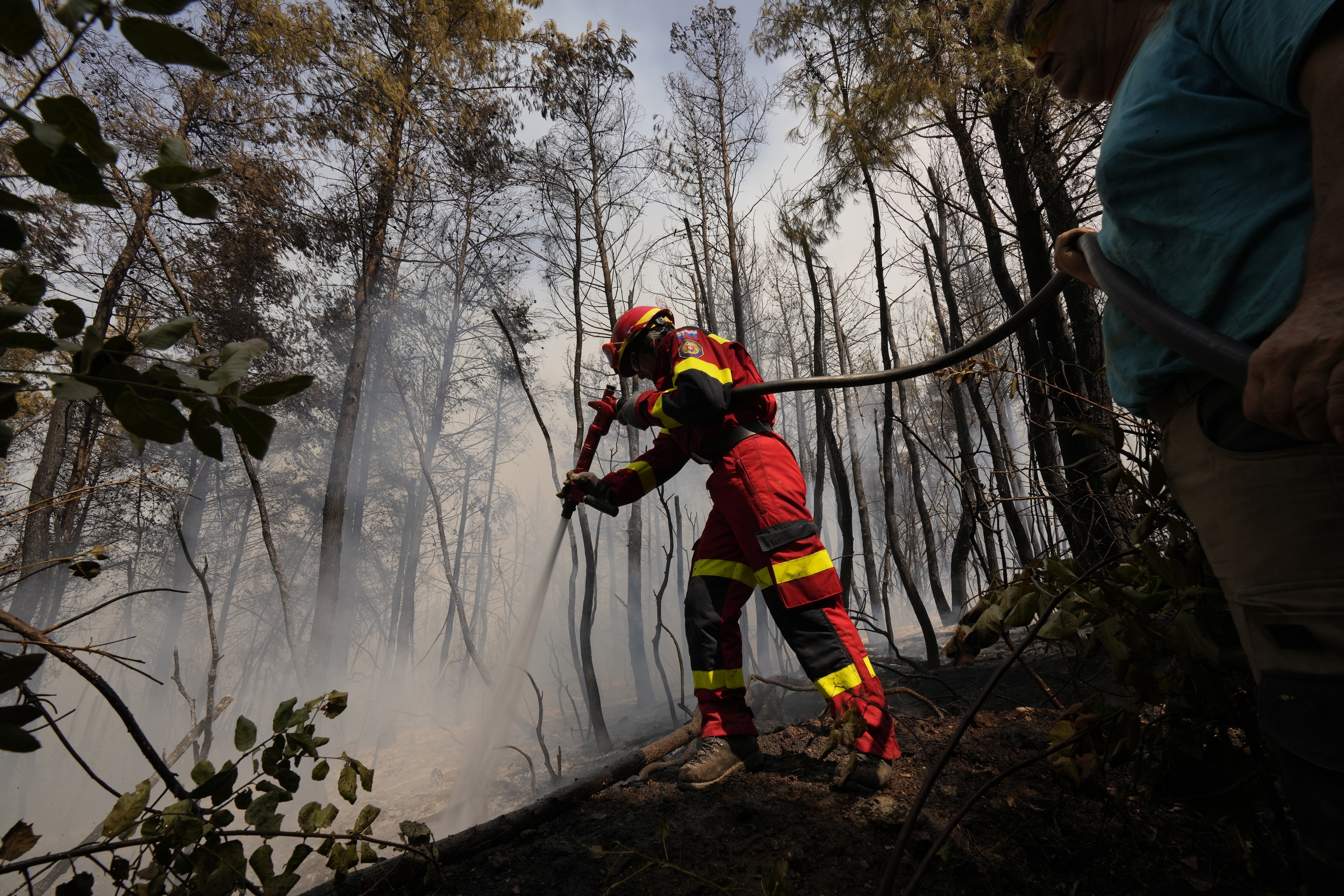
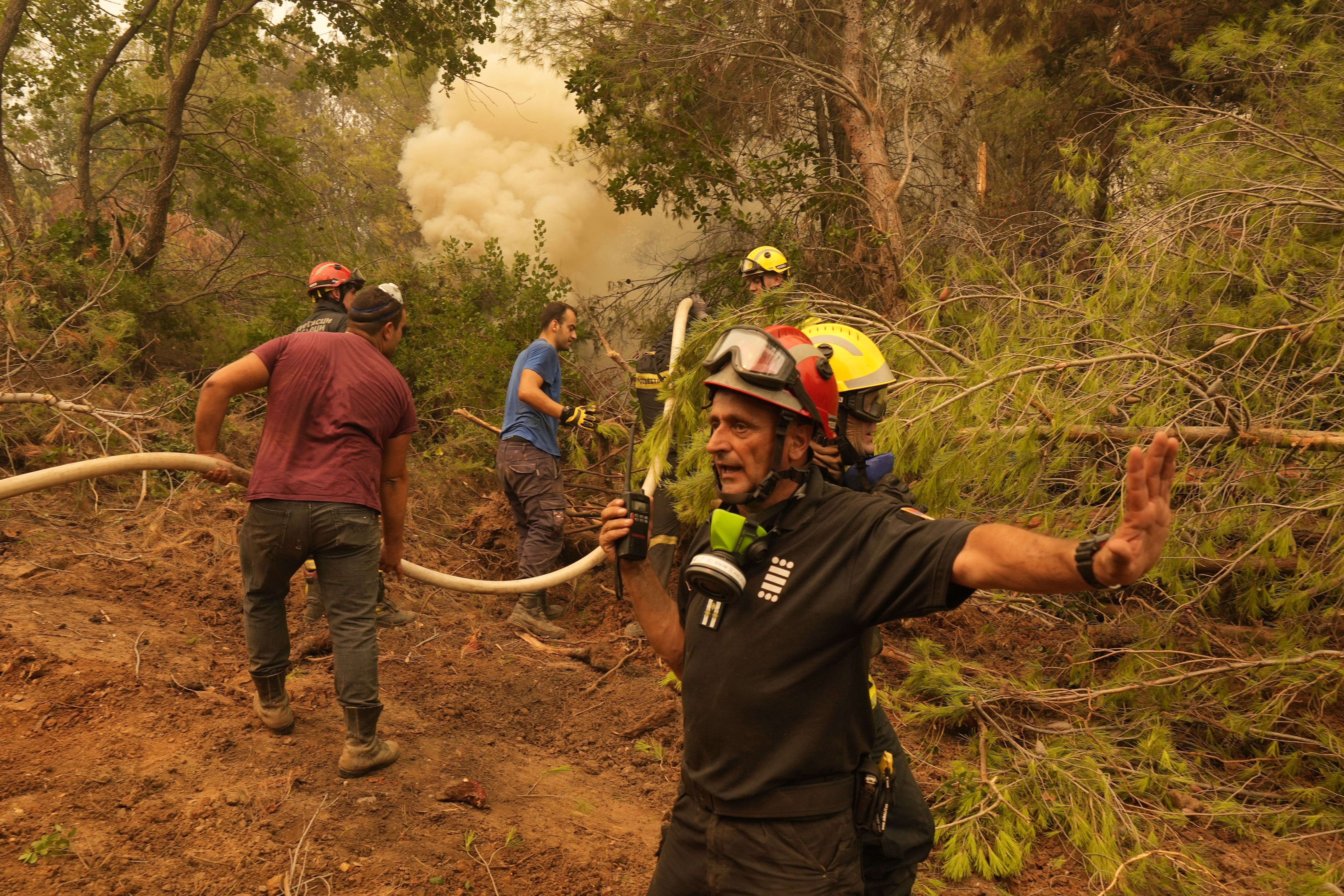
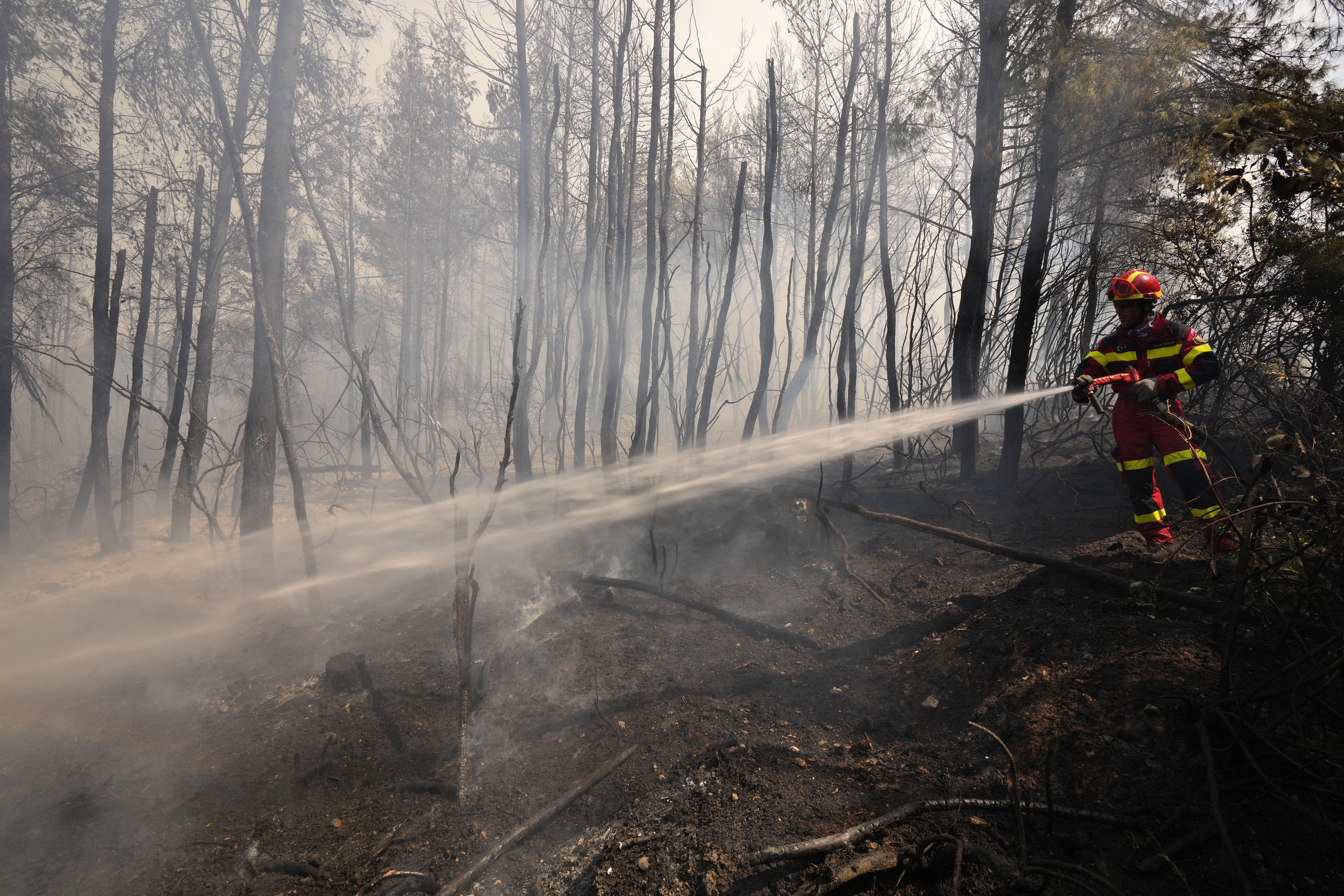
As Greece's massive wildfires were being tamed Tuesday, the country's civil protection chief strongly defended the country's firefighting efforts, saying every resource was thrown into the fight against what he described as the fire service's worst challenge ever.

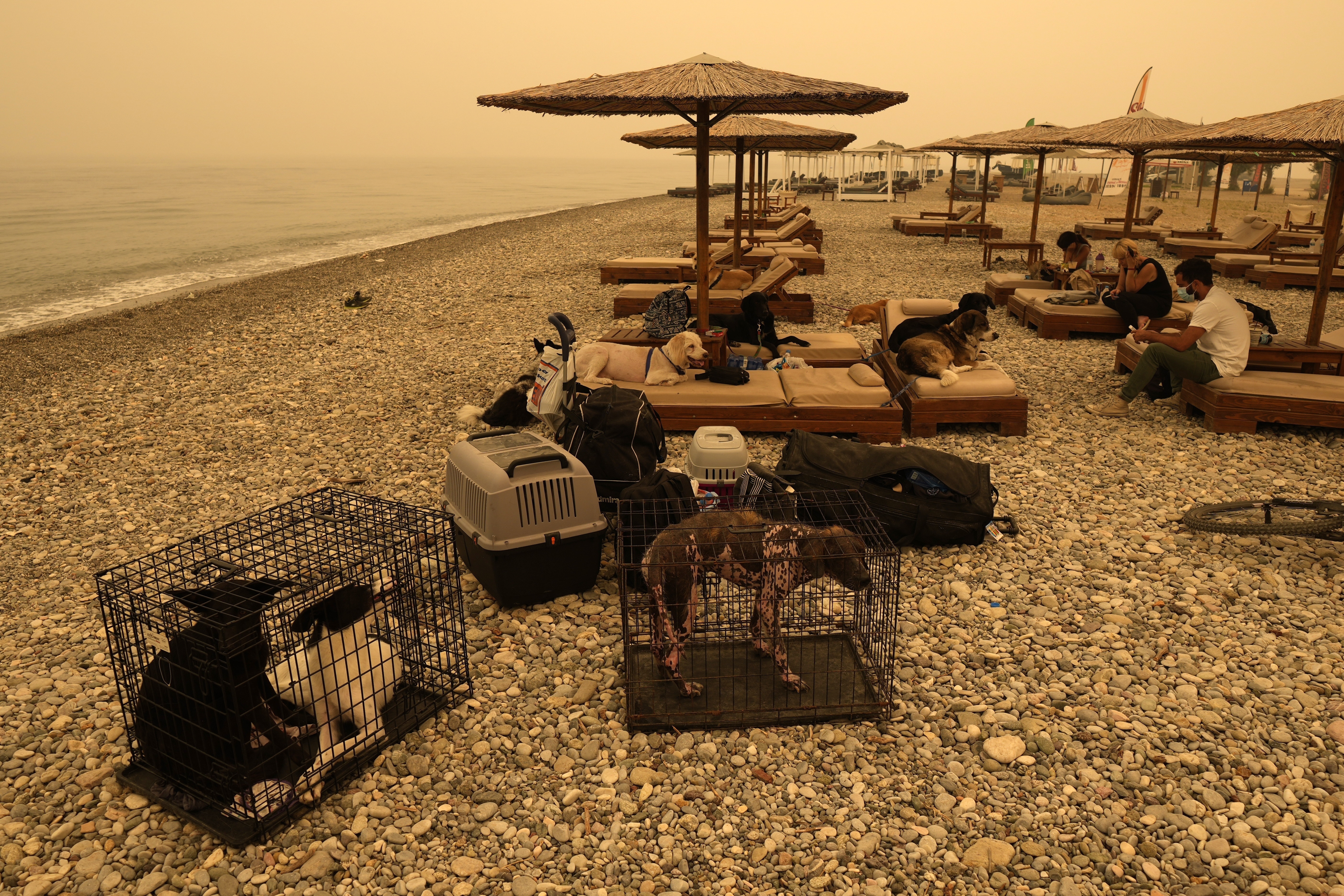
Nikos Hardalias said authorities "truly did what was humanly possible" against blazes that destroyed tens of thousands of hectares of forest and hundreds of homes, cost a volunteer firefighter his life and forced over 60,000 people to flee. Two other firefighters were in intensive care with severe burns.

"We handled an operationally unique situation, with 586 fires in eight days during the worst weather conditions we've seen in 40 years," Hardalias told a press conference. "Never was there such a combination of adverse factors in the history of the fire service."

READ MORE: 'Unprecedented': Massive forest fire ravages Greek island

Climate scientists say there is little doubt that climate change from the burning of coal, oil and natural gas is driving extreme events, such as heat waves, droughts, wildfires, floods and storms. Researchers can directly link a single event to climate change only through intensive data analysis, but they say such calamities are expected to happen more frequently.

Greece had just experienced its worst heat wave since 1987, which left its forests tinder-dry, and other nearby nations like Turkey and Italy also faced the same searing temperatures and quickly spreading fires.

Worsening drought and heat – both linked to climate change – are also driving wildfires this summer in the US West and in Siberia in northern Russia.

READ MORE: Thousands flee as fire devours Greek island's forests

In Greece, the worst blaze still burning Tuesday was in the northern section of Evia, the country's second-largest island, which is linked by a bridge to the mainland north of Athens and is a favourite holiday destination for the Greek capital's residents.

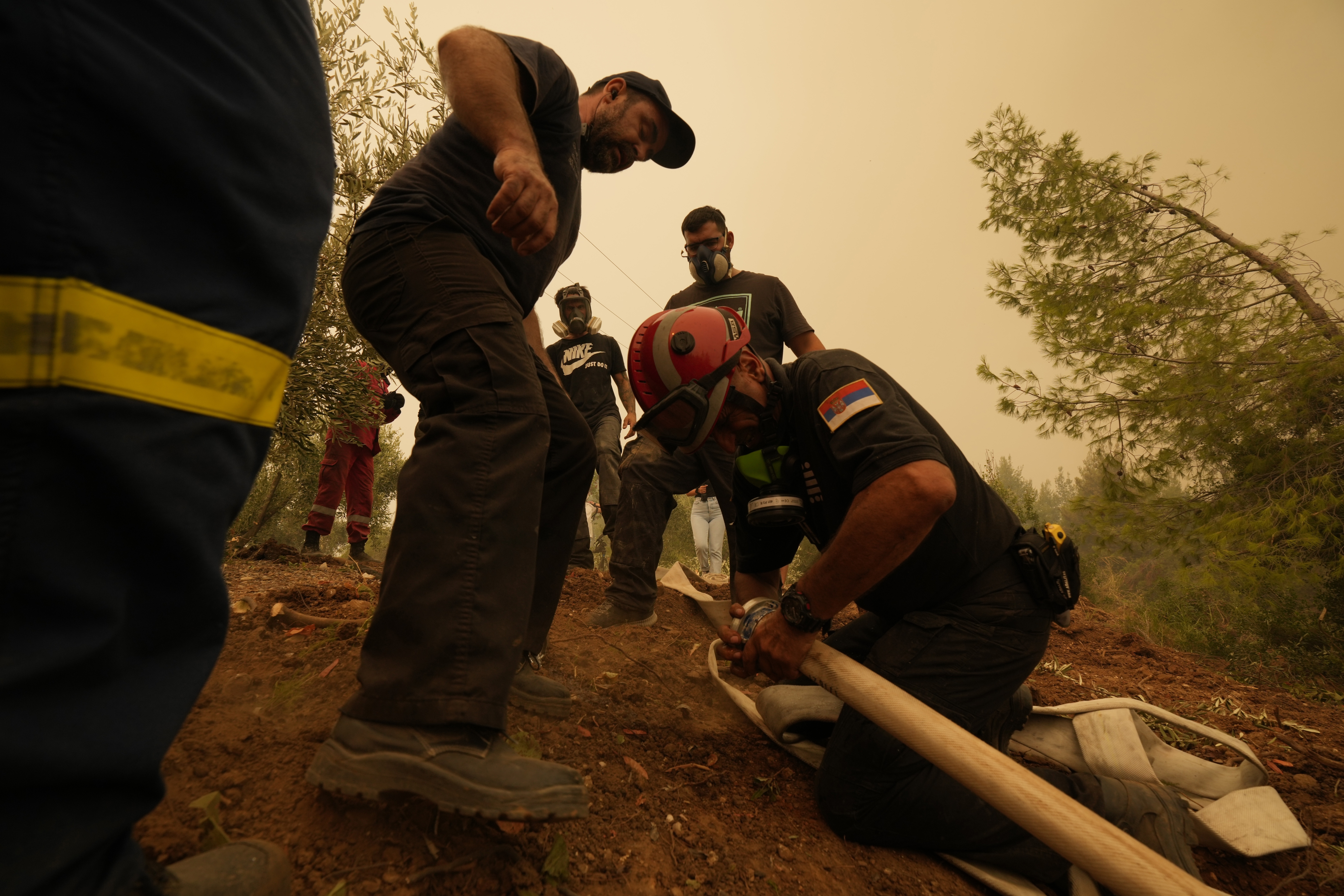
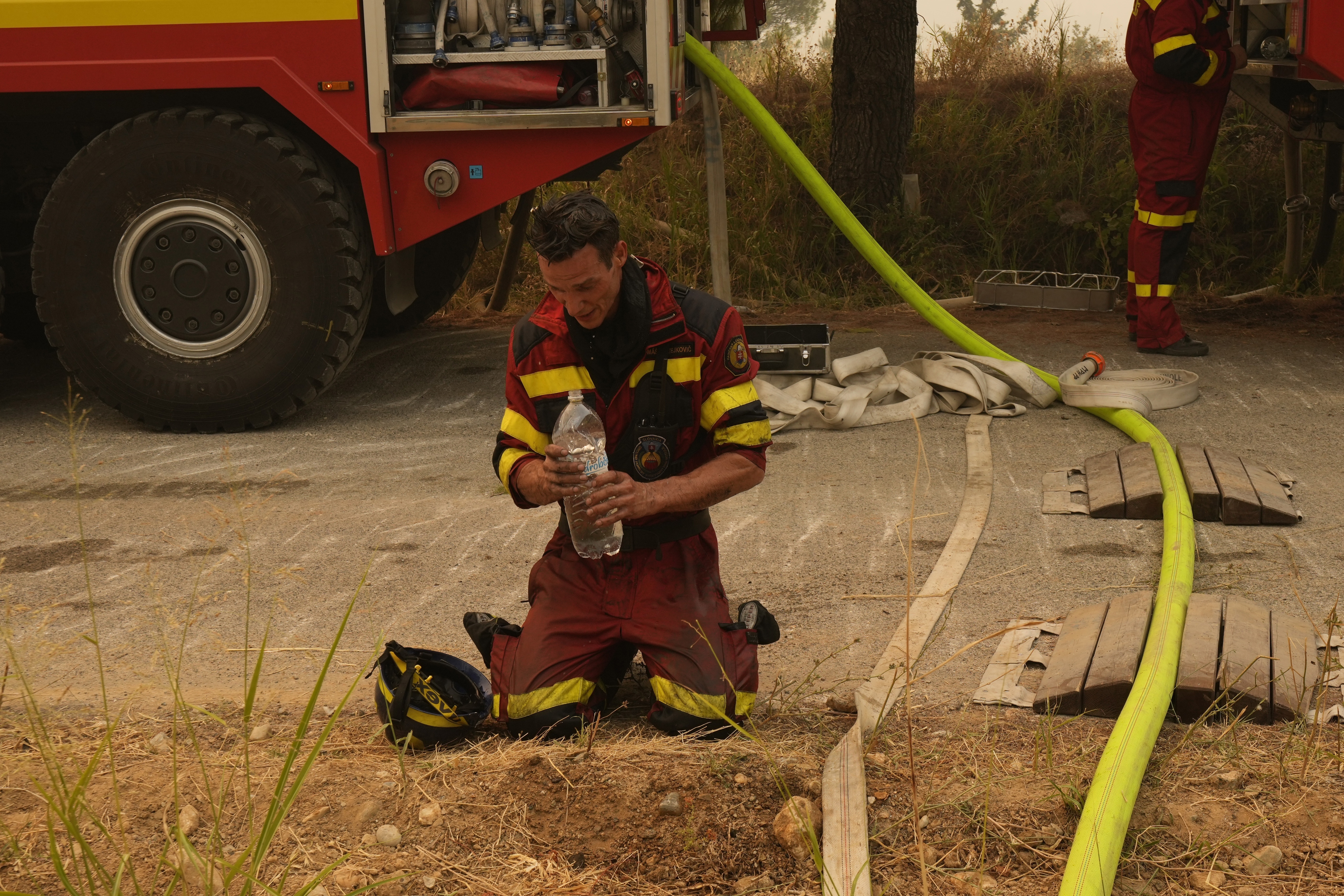
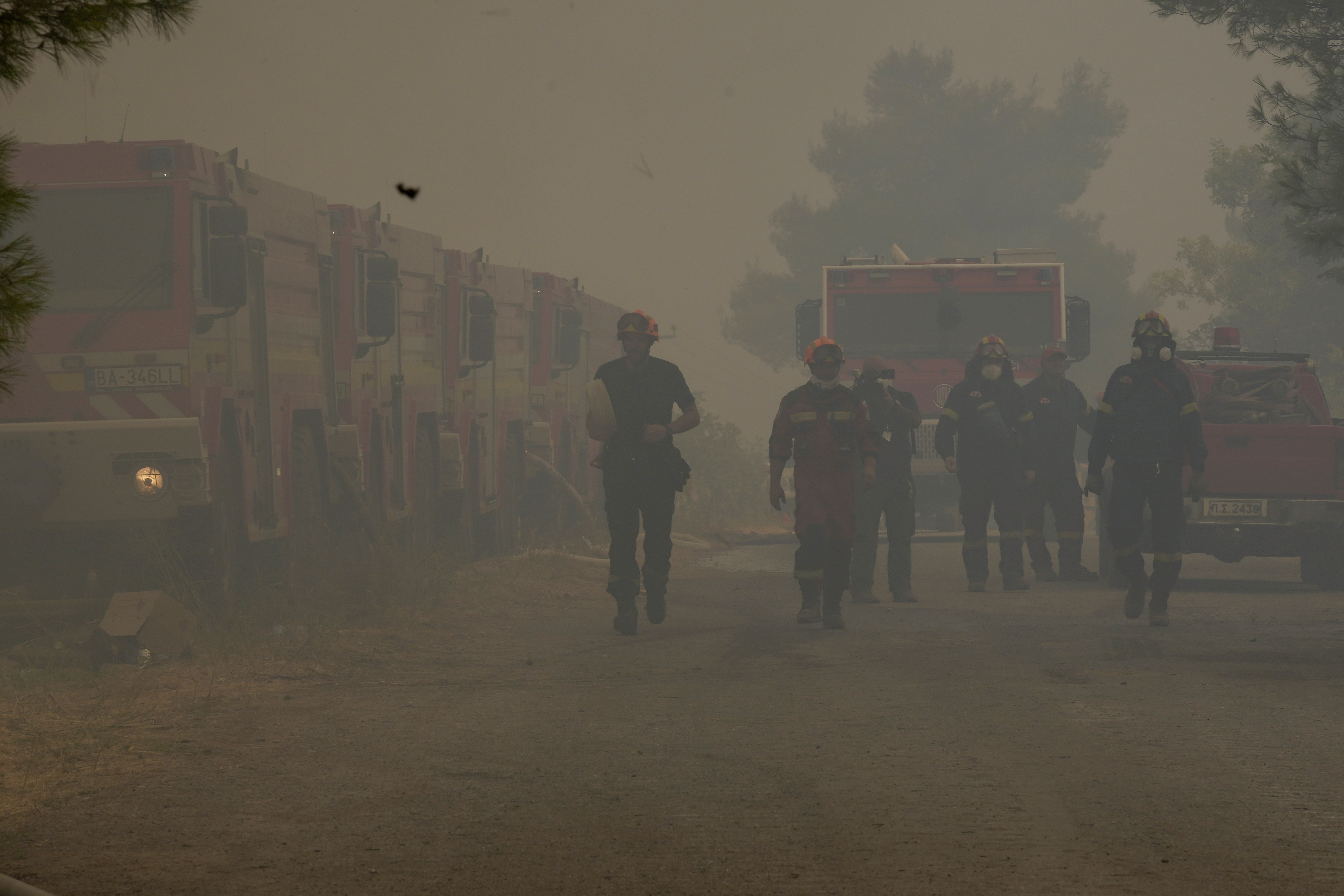
The fire service said 873 firefighters, 50 ground teams and 229 vehicles were fighting the blaze that broke out August 3. They included crews from Ukraine, Romania, Serbia, Slovakia and Poland — part of a huge international response to Greece's plea for assistance.

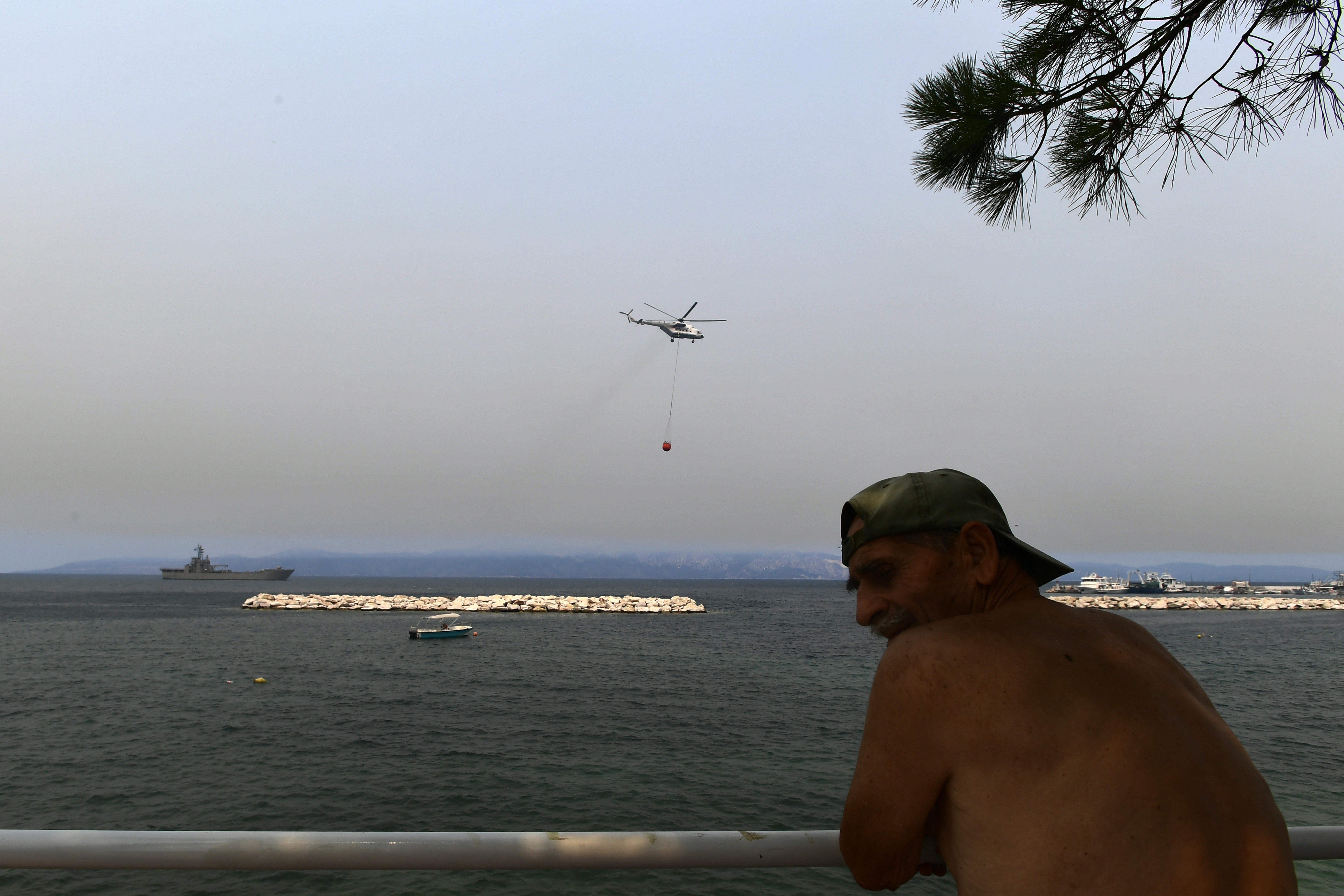
Fourteen helicopters were providing air support Tuesday on Evia, including three from Serbia, two from Switzerland and two from Egypt. The wildfire on Evia, unlike many in the United States, was taking place in an area in which villages and forests are entwined.

READ MORE: Resurgent wildfires in Greece burn homes, threaten monuments

In an afternoon briefing, Hardalias said all the fire fronts on Evia were waning, but strong firefighting forces were guarding the perimeter of the fire, particularly around a cluster of villages that are among the dozens evacuated on the island in recent days. However, heavy smoke from the fires has often reduced visibility to zero, making it very difficult and dangerous for water-dropping aircraft to assist the ground forces.

According to EU wildfire data and satellite imagery, more than 49,000 hectares have burned up on Evia — by far the worst damage from any of the recent fires in Greece.

Several other wildfires were burning in the country, with the most significant in the southern Peloponnese region, where new evacuations were ordered Tuesday afternoon.

Residents and local officials on Evia have complained about a lack of water-dropping planes, with some saying not enough were sent early on, leaving the fire to grow to such proportions that flying became too hazardous.

Hardalias argued Tuesday that when the Evia blaze broke out, authorities were already facing other enormous challenges. A major forest fire was burning through the northern outskirts of Athens, forcing the evacuation of thousands, and another was coursing through villages towards ancient Olympia — a hugely important archaeological site in the Peloponnese where the ancient Olympic Games were held for more than 1000 years.

"Every house lost is a tragedy for all of us. It's a knife in our heart," he said.

Asked whether he was satisfied with the country's firefighting response, Hardalias said: "Obviously, there can be no satisfaction after such a catastrophe. But all our available forces, ground and airborne, were sent immediately to the fires."

"Whether we could have done something different remains to be seen," he said. "But in any case, we fought a great battle, and the losses were among those fighting it, not among civilians."

Greek authorities have emphasised saving lives, issuing evacuation alerts for dozens of villages and neighbourhoods this summer. In 2018, a deadly fire that engulfed a seaside settlement near Athens killed more than 100 people, including some who drowned trying to escape the flames and smoke by sea.

Critics say the government's focus on evacuating villages, which did save lives, prevented villagers with local knowledge from helping firefighters and led to more property destruction.

Greece's centre-right government has pledged compensation to everyone whose property or business was damaged by the wildfires, and a massive reforestation effort to replace the trees that have burned. Several people have also been arrested on suspicion of arson.

Prince Andrew Sued by a Jeffrey Epstein Accuser

One of Jeffrey Epstein’s longtime accusers sued Prince Andrew on Monday, saying he sexually assaulted her when she was 17.

Lawyers for Virginia Giuffre filed the lawsuit in Manhattan federal court.

In a statement, Giuffre said the lawsuit was brought under the Child Victims Act to allege she was trafficked to him and sexually abused by him.

“I am holding Prince Andrew accountable for what he did to me,” she said. “The powerful and rich are not exempt from being held responsible for their actions. I hope that other victims will see that it is possible not to live in silence and fear, but to reclaim one’s life by speaking out and demanding justice.

“I did not come to this decision lightly,” she added. “As a mother and a wife, my family comes first — and I know that this action will subject me to further attacks by Prince Andrew and his surrogates — but I knew if I did not pursue this action, I would be letting them and victims everywhere down.”

In late 2019, Prince Andrew told BBC Newsnight that he never had sex with Giuffre, saying, “It didn’t happen.”

He said he has “no recollection” of ever meeting her and told an interviewer there are “a number of things that are wrong” about Giuffre’s account, which alleges the encounter occurred in 2001.

“I can absolutely categorically tell you it never happened,” Andrew said.

According to the lawsuit, which sought unspecified compensatory and punitive damages, the prince abused Giuffre on multiple occasions when she was under the age of 18.

It said that on one occasion, the prince sexually abused her in London at the home of Ghislaine Maxwell when Epstein, Maxwell and Prince Andrew forced her to have sexual intercourse with the prince against her will.

On another occasion, Prince Andrew sexually abused Plaintiff in Epstein’s New York mansion when Maxwell forced Giuffre and another victim to sit on Andrew’s lap as he touched her, the lawsuit said.

The lawsuit also alleged that Andrew sexually abused Giuffre on Epstein’s private island in the US Virgin Islands.

During each of the alleged acts, Giuffre was given “express or implied threats” by Epstein, Maxwell, and/or Andrew to engage in sexual acts with the prince, the lawsuit said.

It said that she “feared death or physical injury to herself or another and other repercussions for disobeying” the trio because of their “powerful connections, wealth, and authority,” the lawsuit said.

The lawsuit added that Andrew knew her age at the time based on communications with Epstein and Maxwell. It said he went ahead anyway “for the purpose of gratifying his sexual desires.”

Maxwell, 59, has pleaded not guilty to sex trafficking charges in Manhattan federal court, where she faces trial in November.

Epstein, 66, took his own life in a federal jail in Manhattan in August 2019, a month after he was arrested on sex trafficking charges.

As part of its continuing probe into Epstein and his encounters with women and teenage girls, Manhattan federal prosecutors formally requested to speak with Andrew.

The request, similar to issuing a subpoena, was made under the Mutual Legal Assistance Treaty, an agreement between the two countries to share evidence and information in criminal cases.

By LARRY NEUMEISTER Associated Press

The post Prince Andrew Sued by a Jeffrey Epstein Accuser appeared first on The St Kitts Nevis Observer.

Haiti Chooses Judge to Probe President Jovenel Moise’s Killing

A judge has been named to lead the probe into the assassination of Haiti’s President Jovenel Moise, a senior magistrate has announced. The dean of the Court of First Instance in Port-au-Prince, Bernard Saint-Vil, said that Judge Mathieu Chanlatte had been chosen for the job.

Chanlatte “will not be intimidated,” said Jean Wilner Morin, president of the National Association of Haitian Magistrates.

“It is an investigation that will take time. We also hope that the authorities will put all the necessary resources at the disposal of magistrate Chanlatte and will also ensure his safety,” Morin said.

A hit team burst into the presidential residence on July 7 and shot Moise dead. His wife Martine was wounded but survived.

Human rights defender Pierre Esperance said he hoped Chanlatte would treat the case “with the law as a compass, without falling into political persecution.”

Minister of Justice and Public Security Rockefeller Vincent said his ministry would take all measures necessary to guarantee the safety of judges as well as courtroom evidence.

Police say they have arrested 44 people in connection with the killing, including 12 Haitian police officers, 18 Colombians who were allegedly part of the commando team, and two Americans of Haitian descent.

The head of Moise’s security detail is among those detained in connection with the plot allegedly organised by a group of Haitians with foreign ties.

Moise had been ruling the impoverished and disaster-plagued nation by decree as gang violence spiked and coronavirus spread.

Police have issued wanted-persons notices for several other people, including a judge from Haiti’s highest court, a former senator and a businessman

The post Haiti Chooses Judge to Probe President Jovenel Moise’s Killing appeared first on The St Kitts Nevis Observer.

Dominica Gov’t Announces Extension of Curfew Due to COVID-19

The Dominica government has extended a curfew to August 17 as the island recorded more cases of the coronavirus (COVID-19) in the last few days.

“The existing order comes to an end on Tuesday, the 10th, we are extending the emergency period from Tuesday the 10th to the 17th of August, so there will be a one-week extension,” Prime Minister Roosevelt Skerrit said on the state-owned DBS Radio.

“Remember when I addressed the nation I said we would be looking at seven days in the first instance and if we find the situation concerning we will extend it, the situation is concerning and therefore we are extending it to the 17th,” Skerrit added.

He said that only certain categories of workers will be exempted from the curfew hours, including essential workers.

Health Minister Dr. Irvine McIntyre said the total number of active COVID-19 cases here is 179 and that contact tracing is continuing with health authorities boosting the testing capabilities “in order to contain the spread of the virus.

“The strategy of increased Antigen testing islandwide has resulted in us identifying the possible cases. This way we can remove these individuals from the community, preventing interaction and further transmission of the virus”.

Dominica had registered several clusters of the virus following two activities held on the outskirts of the capital late last month.

Dr. McIntye confirmed that five staff members at the Dominica China Friendship Hospital had tested positive for the Antigen tests and that one of them further tested PCR positive and is symptomatic and has been placed in the isolation unit.

The other four are in government quarantine facilities.

He said 245 members of the hospital staff had been tested over the weekend and all were found to be negative.

“This represents close to 50 percent of the total hospital staff. We are assured that the situation at the hospital is under control and will be monitored closely,” the Health Minister said, reminding the public that the hospital is out of bounds to the public for visiting during the new health regulations.

CMC

The post Dominica Gov’t Announces Extension of Curfew Due to COVID-19 appeared first on The St Kitts Nevis Observer.

Martinique: Tough Lockdown, Tourists Told to Leave

France’s overseas territory of Martinique will enter a tougher lockdown for three weeks starting Tuesday to tackle a Covid-19 outbreak on the West Indian island, a local government official said on Twitter.

Martinique had already imposed an evening curfew, but the tougher Covid-19 lockdown, set to start from 7pm, will shutter non-essential shops, close beaches and clamp down on people’s movements.

Authorities in Martinique have also advised tourists to leave the island.

“We will be entering a second phase of lockdown … Shops will close, except for food shops and pharmacies,” said Stanislas Cazelles, the prefect for Martinique, who encouraged “all vulnerable tourists to leave the territory”.

“Hotels will be closed – except to professionals and residents of the territory; the same goes for seasonal rentals,” the prefect added. “Stores useful for the back-to-school period” will reopen “when the health situation has improved”, he said.

“Firms and civil services are also encouraged to participate in this lockdown, organising their services so that a maximum of employees can work from home,” Cazelles added.

The prefect said culture and leisure facilities would be closed, including beaches, which “will no longer be accessible to the public”.

Residents must also restrict their movements to a maximum one-kilometre radius from their homes.

“These rules are strict. They will be lifted as soon as the health situation allows it,” the official pledged, saying the measures would be re-evaluated “in 15 days”.

Last weekend, French Health Minister Olivier Véran appealed to volunteer doctors and nurses to travel to the overseas territories of Guadeloupe and Martinique as a wave of Covid-19 infections overwhelms hospitals on the two Caribbean islands.

On Tuesday, some 240 healthcare professionals are due to arrive to begin a 15-day mission in support. Véran is slated to travel to Martinique on Thursday.

Martinique has one of France’s highest Covid-19 incidence rates, with nearly 1,200 cases per 100,000 people and hospitals stretched to 227 percent of capacity. The island also has a low rate of vaccination against Covid-19 compared to mainland France; only 22 percent of Martinique’s population has received a first dose of the vaccine.

(FRANCE 24 with AFP, REUTERS)

The post Martinique: Tough Lockdown, Tourists Told to Leave appeared first on The St Kitts Nevis Observer.

Storm Warnings As Fred Forms in E. Caribbean

Tropical Storm Fred, the 6th named tropical cyclone of the Atlantic hurricane Season 2021 is next in line to turn towards the Caribbean and potentially also impacting the United States around the next weekend.

Tropical storm warnings have been posted across the eastern Caribbean as a system gathers power and takes shape southeast of Dominica, the National Hurricane Center said.

With winds of 35 miles (56 kilometers) per hour, the system will likely become Tropical Storm Fred late Monday or early Tuesday local time, the center said in advisory at 5 p.m. New York time.

The storm is threatening to hit Puerto Rico, the Dominican Republic, Haiti and potentially Cuba later this week, but its exact path remains unclear. The system will likely be south of Florida by this weekend if it survives the trek over the larger Caribbean islands.

“Regardless of the exact track, locally heavy rainfall and gusty winds are expected to spread across portions of the Leeward Islands, the Virgin Islands, Puerto Rico, and the Dominican Republic over the next day or two,” Daniel Brown and Philippe Papin wrote in forecast analysis.

Five storms have already been named across the Atlantic this year, including three that hit the U.S. They come as extreme heat waves, floods and fires are becoming more common around the globe. The United Nations on Monday released a landmark report Monday concluding that there is “unequivocal” evidence that human activities have warmed the atmosphere.

A record 30 storms formed in 2020, about twice the annual average. They caused $42.3 billion in losses and damage and killed 86 people in the U.S. alone, according to the National Centers for Environmental Information. In addition, back-to-back storms caused more than $3 billion to Honduras, Guatemala, and Nicaragua and left much of the region still struggling to recover.

Storms tracking into the Gulf of Mexico are closely watched because they can roil natural gas, oil, and orange juice prices as they tear through the region.

Just a few days after the official release of the recent NOAA seasonal outlook for the ongoing Hurricane Season, the tropical western Atlantic is about to churn a new Tropical Storm. It will be Fred. Typically, the 6th named tropical cyclone forms on August 28th, so the season remains nearly 3 weeks ahead of the schedule.

atlantic-hurricane-season-storm-fred-united-states-seasonal-map

As we are now entering the mid-August period, the activity over the Atlantic Ocean statistically begins increasing. The very warm sea waters are coinciding with a major MJO wave, emerging into the Caribbean region and the tropical Atlantic from the west (Pacific). The combination of both will now boost the ongoing activity further.

Note, that the eastward-moving MJO wave normally has a major influence on the state of the atmosphere which allows tropical storms or hurricanes to develop. They require a very warm sea temperature (26 °C or above), high moisture, low vertical wind shear, and a surface low-pressure system.

atlantic-hurricane-season-storm-fred-united-states-cyclone-names

Above: Tropical cyclone names for 2021

When such conditions as recently are in place, especially with extremely warm sea waters and great upper-level support by MJO waves and low shear in place, a tropical cyclone could become a hurricane very quickly. Even a violent, major hurricane when conditions are near perfect. According to the recent data, as we see, these will likely strongly influence the peak Atlantic hurricane season this year.

Besides the wind intensity and lowest pressure in the tropical cyclones, we also use a so-called Accumulated Cyclone Energy (ACE index). A parameter that we use to express the energy that was used during the tropical cyclone’s lifetime. So we can compare every tropical storm or hurricane with the other. There are 4 categories to classify storms by the ACE index, from the extremely active to above, near, and below-average activity.

Already five named tropical storms also mean that we are more than double the long-term average to this date, so a fast start this year. And keep in mind that these numbers normally rapidly increase as the tropical activity ramps up towards the peak of the Atlantic Hurricane Season.

Such water temperatures are a very significant signal for the upcoming tropical cyclones that may move across this part of the tropical region. As it often leads to an explosive development of the tropical systems when convective storms encounter such a warm and moist fuel ingested from the sea surface.

The recent weeks over the tropical Atlantic region had mostly calm weather patterns, allowing the SSTs to become anomalously warm, especially across the known region – the MDR region (Main Development Region) that extends across the Atlantic between Africa and the Caribbean Sea.

Below is a high-resolution animation of the Atlantic Basin oceanic waters temperature anomalies, covering the whole Atlantic Basin as well as the MDR region where the majority of the tropical cyclone formations occur.

Tropical Storm Fred forms in the very warm waters of Atlantic Ocean

Having such significant temperature anomalies does hint at the enhanced potential for significant tropical cyclone development in the coming weeks as we are heading towards the most dangerous period around the peak of the Atlantic Hurricane Season, occurring from late August through September and October.

Very high sea temperatures will remain or even improve in the coming weeks ahead. And statistically, these SSTs are quite typical signs during August when an active Atlantic hurricane season follows.

The post Storm Warnings As Fred Forms in E. Caribbean appeared first on The St Kitts Nevis Observer.