An Auckland school that was told to apologise for expelling a student for what it considered gross misconduct has received support from people “dotted all over New Zealand”, the principal says.As reported by the Herald last week,…
Category Archives: headline
$60,000 raised after baby dies in magpie swooping accident
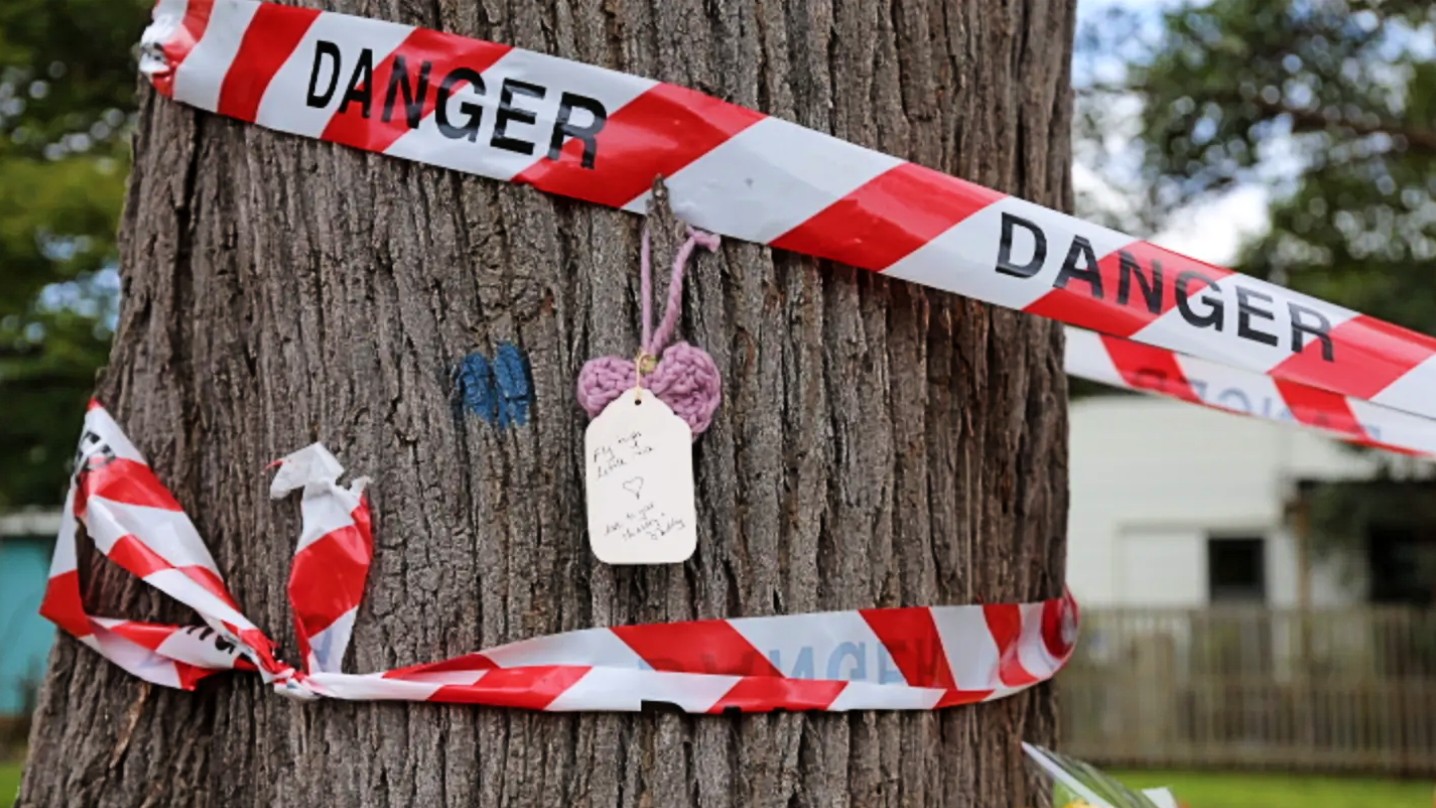
A note with the words "Fly High Little Mia" with a knitted heart has been placed at a Brisbane park where a swooping magpie led to the death of a baby girl.
Five-month-old Mia was being carried by her mother through Glindemann Park at Holland Park on Sunday before the "aggressive" bird attacked, causing Mia's mother to duck and trip.
Mia was rushed to Queensland Children's Hospital with serious injuries but later died.
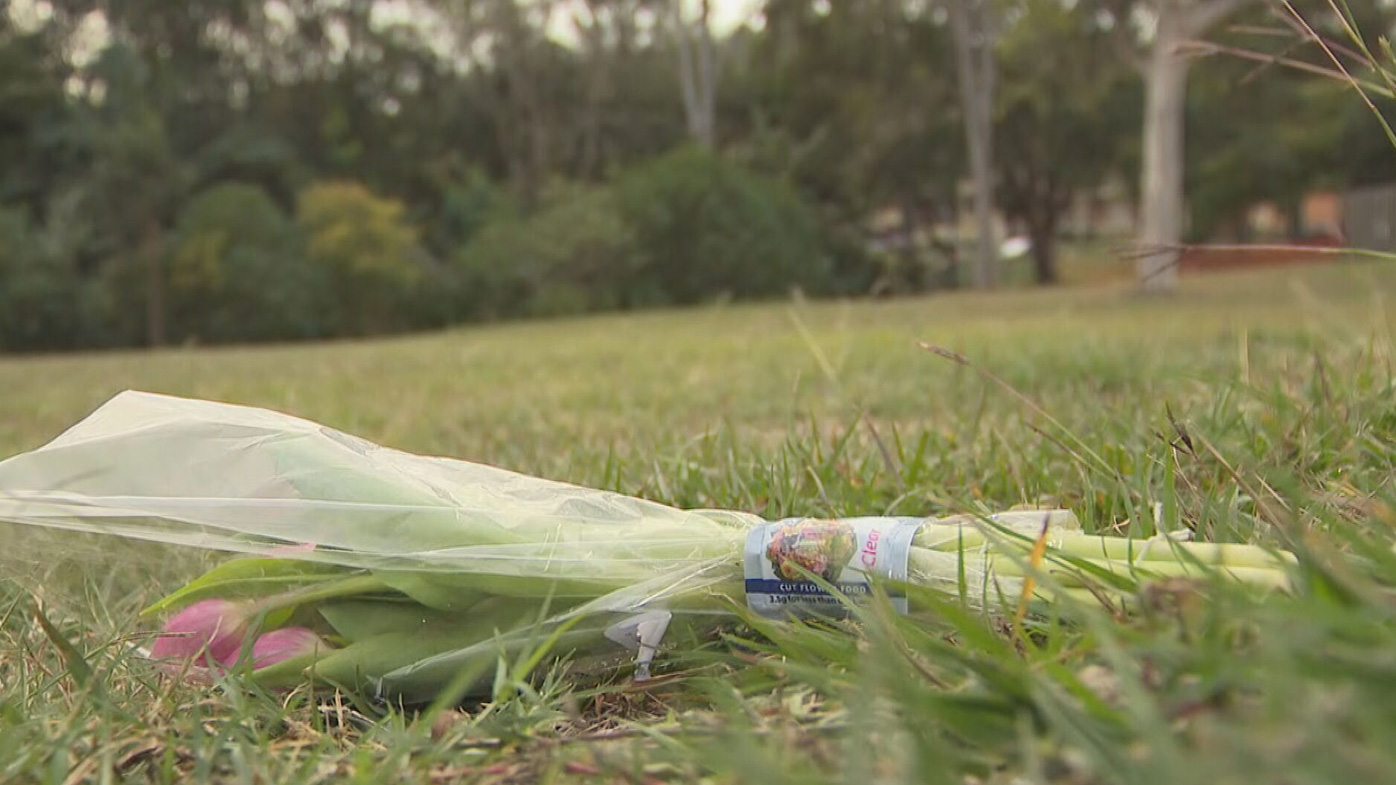
Tributes for the infant have since poured out online, with a fundraiser for the family also raising more than $60,000 by Tuesday afternoon.
READ MORE: Locked down Cairns holds breath on new case numbers

"Everything about Mia was perfect, from her head full of hair to her tiny little nose, and her little long toes," fundraiser organisers and Mia's Aunties Sophie P and Katie Hunt said.
"Beautiful she was and loved by all who got to meet her. The joy Mia brought to all of our lives cannot be described in words, but is certainly felt in all of our hearts."
"Her gentle soul will always be forever in our hearts. Rest in peace, beautiful Mia," other people posted.
Brisbane Mayor Adrian Schrinner today said that the incident had shocked the city "to the absolute core".
"This is something that I'm aware has never happened before," Mayor Schrinner said.
"We know that this situation probably was impossible to have predicted."
Magpie was a known threat to local residents
Holland Park West residents have said the magpie that caused the tragic accident was a known menace.
Locals who spoke with 9News said they had complained to the council about the bird, and that it was a persistent, aggressive swooper.
"This magpie swoops everyone every time," one man said, adding the bird would frequently attack kids and adults.
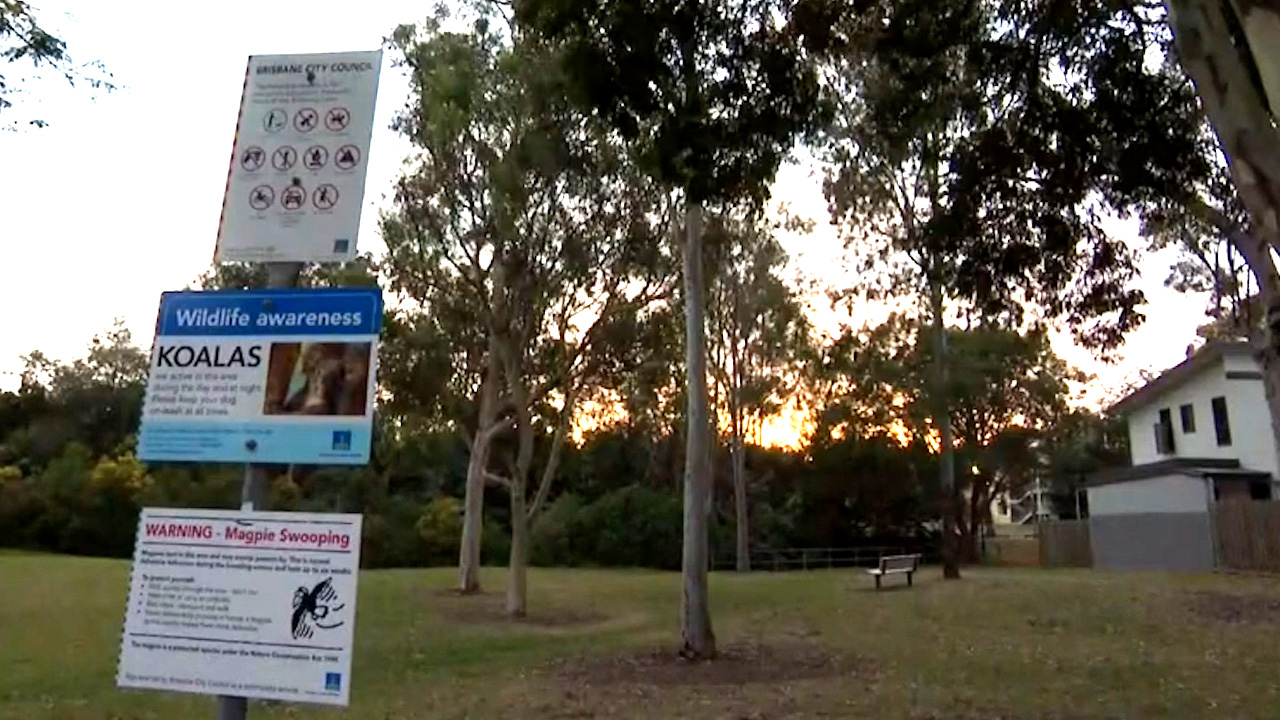
Since Sunday's tragic accident, council workers have installed extra signage and caution tape at Glindemann Park, just south of Brisbane's CBD.
The bird has since been removed.
READ MORE: Woman dies after waiting more than nine hours for an ambulance
"It's just a traumatic accident, it's a tragedy and really sad," another Holland Park West local told 9News.
A Queensland Ambulance Service spokesperson said paramedics were called to the park following "reports that a mum had fallen with a baby in her arms".
"(She was) reportedly ducking to avoid a magpie," the spokesperson said.
In a statement, Brisbane City Council said an investigation is underway.
Magpie swooping season runs from July to December and peaks in September.
Police are preparing a report for the coroner.
Fears as breast screenings cancelled due to lockdown
Breast cancer screening appointments across Greater Sydney are being postponed due to the current outbreak and subsequent lockdown.
Throughout the pandemic, NSW Premier Gladys Berejiklian has urged people to keep their regular medical appointments and promised people would still have access to healthcare.
But writer Kerri Sackville said her appointment for a regular breast screening and cancer check-up has been pushed back three times since the start of Sydney's most recent lockdown.
READ MORE: The breast cancer test that could help thousands of Aussie women avoid chemotherapy

She was initially booked in for July 5, had the booking cancelled due to lockdown and rescheduled for July 22 – which was also cancelled.
The appointment was re-booked for August 18, but that appointment has now been postponed.
Ms Sackville sparked a huge conversation online about the cancellation of her appointment after tweeting that Bunnings was open but she couldn't get a cancer screening.
"Each time I had a call from someone – a lovely woman at Breastscreen saying we have to postpone, we have to reschedule," she told Nine.com.au.

She said a staff member who called her said there was a chance the appointment could be changed again and there would be a huge backlog due to the cancellations.
"I'm most worried about that if there is something wrong that it's not going to be picked up for months and if you don't get to it it's too late.
"If my doctor feels I need to go and get a private mammogram I can afford to do that – but most women can't," Ms Sackville added.
"The private clinics can cost hundreds of dollars which is not an option for most people."
In Greater Sydney, one of the reasons people are allowed to leave home is for medical care, as stated on the NSW Health website.
BreastScreen NSW explained that a number of the screening clinics and mobile vans had been closed because nurses had been redeployed to help with the pandemic response.
"In response to the increasing risk posed by the COVID-19 Delta strain, as well as significant cancellations and a need to redeploy staff to support the pandemic response, districts have made the decision to close individual screening services as necessary," a spokesperson told Nine.com.au.
"BreastScreen NSW would like to reassure women that the short-term suspension of screening services will be monitored closely.
"As always, we encourage women to remain breast aware and see their GP if they experience any symptoms."
The spokesperson added BreastScreen NSW is closely monitoring the situation and anyone with an appointment will be contacted to reschedule.
Contact reporter Freya Noble at fr*****@*****om.au
Ancient fast food restaurant set to open to the public
An ancient thermopolium, or fast food restaurant, is set to open to the public in Pompeii this week.
The archaeological site, in southern Italy's Campania region, will be open to the public from August 12.
The site was unearthed in 2019, when a segment of the fast-food counter was partially dug up during work to shore up Pompeii's oft-crumbling ruins.
READ MORE: Pompeii fast food eatery excavation reveals what dishes were popular in ancient city
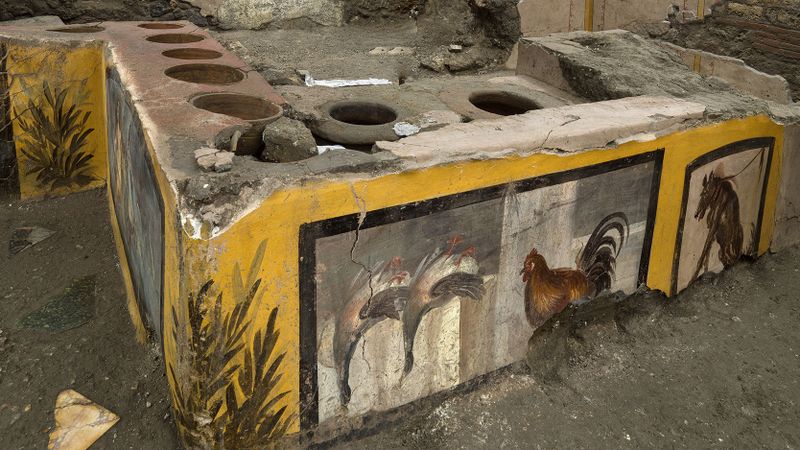
Archaeologists kept digging, revealing a multi-sided counter, with typical wide holes inserted into its top.
The countertop held deep vessels for hot foods, not unlike soup containers nestled into modern-day salad bars.
Pompeii Archaeological Park's longtime chief Massimo Osanna said at the time it was the first time a hot-food-drink eatery was completely unearthed.
READ MORE: Hawk's eye view of Australia's red centre
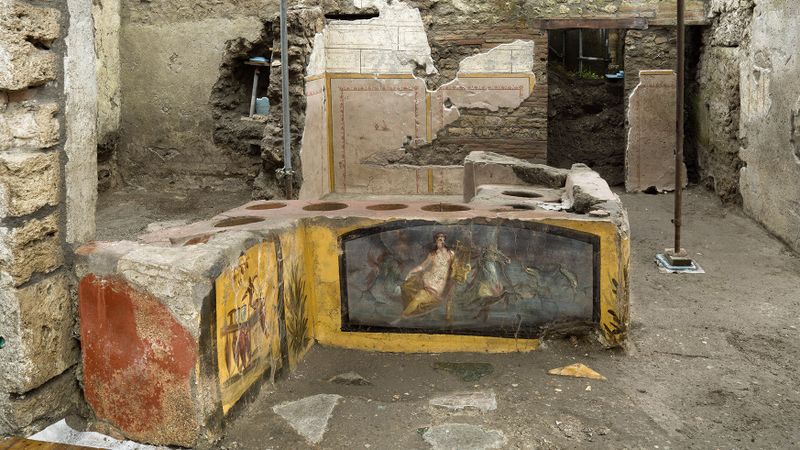
Plant and animal specialists analysed the remains from the site, with its counter frescoed with a figure of an undersea nymph astride a horse.
Images of two upside-down mallards and a rooster, whose plumage was painted with the typical vivid colour known as Pompeiian red, also brightened the eatery.
Snails, duck, pig, goat, and fish were among the items on the menu at the ancient restaurant.
Pompeii, in Italy's south, was a Roman city completely covered in ash and lava following a volcanic eruption in 79 AD.
The burial of the city preserved much of it near perfectly.
Influencer trial: Man threatened to 'destroy' teen in sexual blackmail, court told
“I can destroy you and make your life a living hell.”A teen who says he was blackmailed into letting a New Zealand social media influencer perform sexual acts on him said those were the words that made him give in to the man’s pressure…
Calls for action as sexual abuse soars during lockdowns
Trigger warning: This article contains mentions of domestic sexual abuse and sexual violence.
There are few words which prompt such a visceral reaction as incest.
"Most people hear the word and it creates shudders … people really don't want to talk about it – it's taboo," Karen Keavy, a counsellor specialising in child trauma, says.
For Lacy*, who was sexually abused as an eight-year-old by her father, the shame and stigma made it excruciatingly difficult to speak out.
And, when she did, it became all too easy for her cries for help to be ignored.
"It absolutely made it so, so hard – and all the more isolating. There was the shame and the guilt, not being able to speak about what had happened, and being silenced," Lacy said.
Yet figures show family members are the most common perpetrators of sexual violence against children.
LIVE NEWS UPDATES: Coronavirus case confirmed in Byron Bay, as Sydney man breaks lockdown to travel
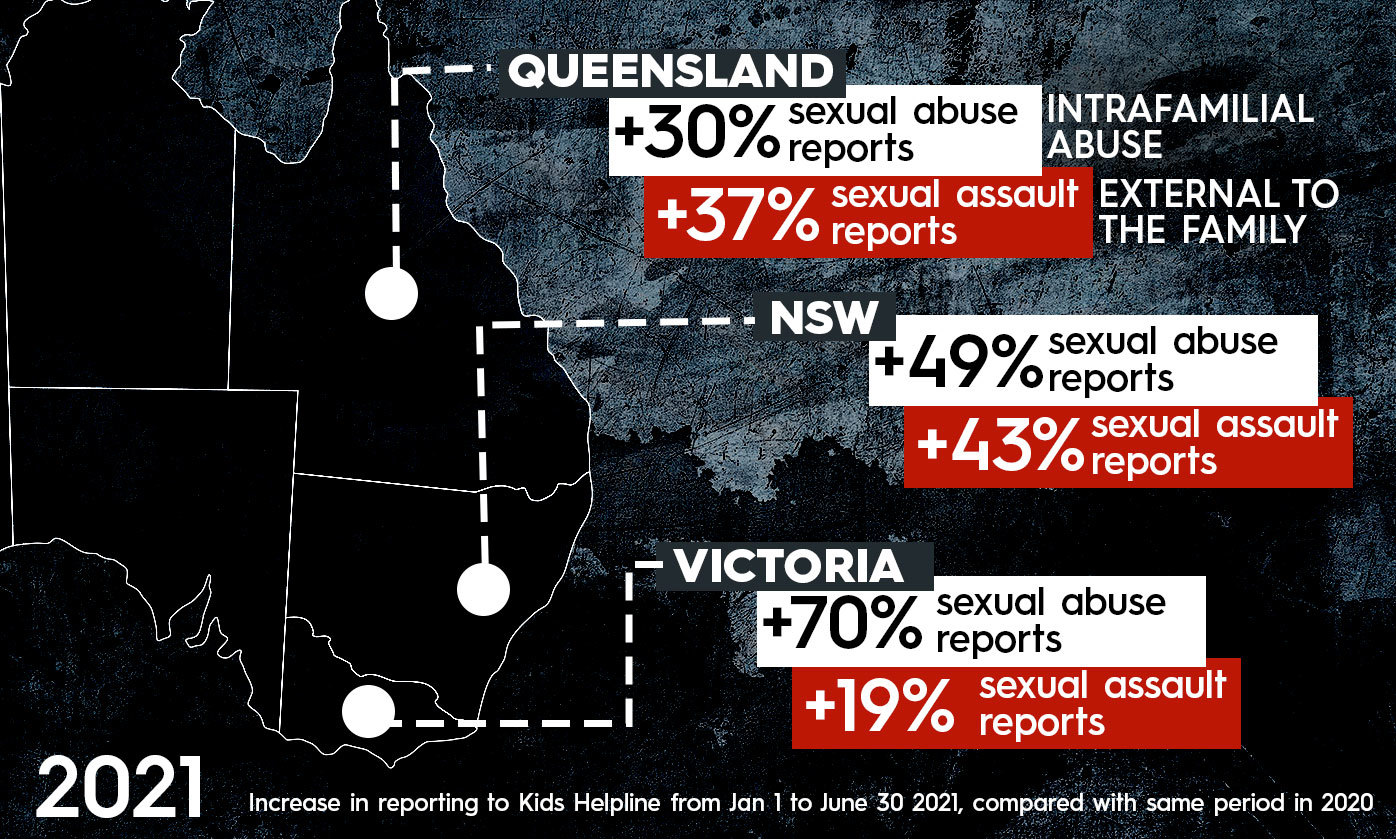
Recent statistics released by counselling service Kids Helpline – and compiled before the most recent lockdowns in Sydney, Victoria and Queensland – also suggest more parents than ever are abusing their kids while they are cloistered in their homes during the pandemic.
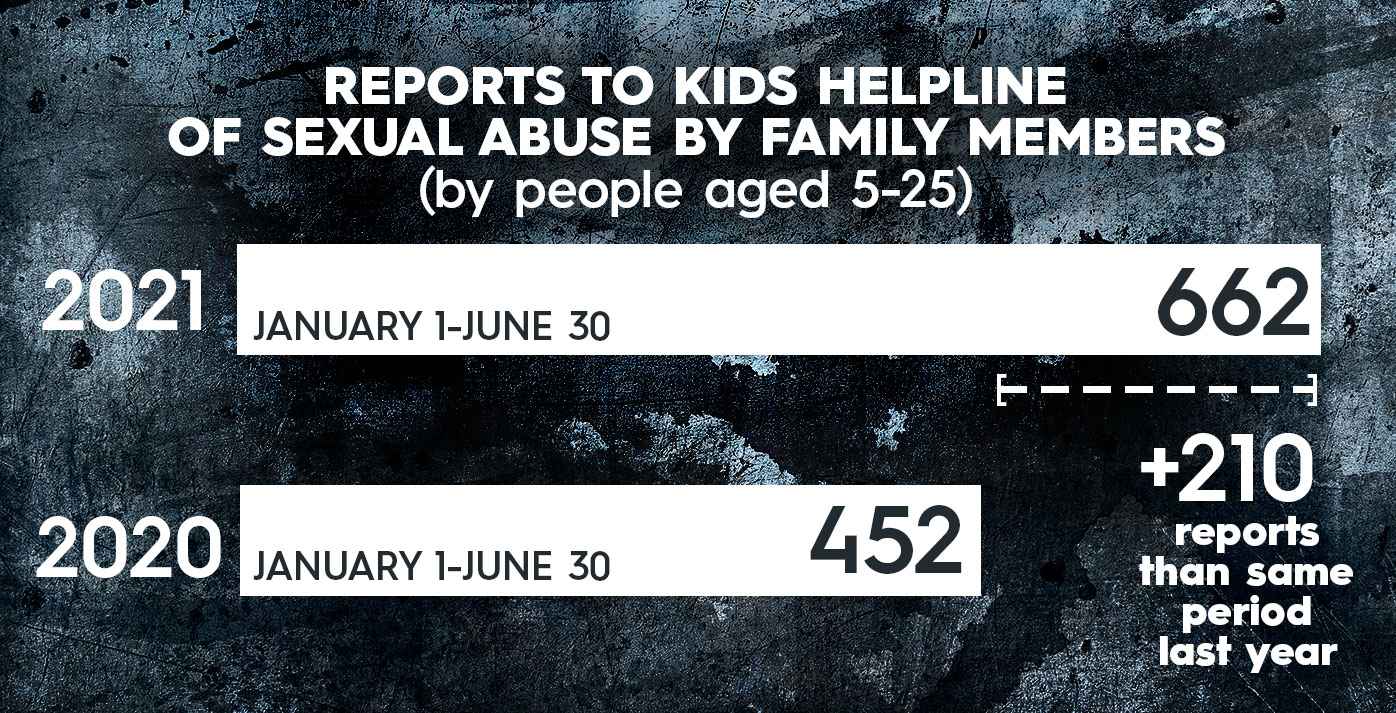
The number of calls made to Kids Helpline about sexual abuse in the home increased by 49 per cent nationally between January and the end of June this year, when compared to the same time last year.
The spike saw a total of 662 calls made by children and young people raising the issue of being sexually exploited by family members, 210 more than 12 months ago.
The trend was most pronounced in Victoria, which has seen six lockdowns. There, reports of sexual abuse in the home to Kids Helpline soared by 70 percent. In NSW, the increase was 49 percent, and in Queensland 30 percent.
Kids Helpline CEO Tracy Adams describes the increase as "a pandemic within a pandemic".
"Child sexual abuse can take place behind closed doors," Ms Adams said.
"The COVID-19 pandemic has affected daily life through restrictions on people's movements and interactions, potentially limiting opportunities for child abuse to be detected and reported.
"It is uncomfortable to think children are being sexually abused by those who have responsibility to care for them most, but Kids Helpline statistics for the past six months highlight the vulnerabilities children have in their own homes."
Ms Keavy, a former primary school teacher who up until last year worked as a counsellor in South Australian primary schools and high schools, said the statistics were almost certainly "just the tip of the iceberg".
"What we're actually seeing here are statistics from kids who have had the confidence to speak out and get help," she said.
"But my great concern is about kids that don't have the language, don't have the education, don't even realise that what they're experiencing, particularly with intra-familial sexual abuse, is just that, that it's abuse, and that it's wrong and that they need to seek help."
Schoolyard rumours
Lacy, who is now a mother, said her father, a teacher, was known as being charismatic and an active member of the community she grew up in.
"He was seen as a teacher who was approachable and went above and beyond for some of the more challenged students," she said.
But there were rumours of inappropriate behaviour swirling around about her dad, which grew more persistent over the years.
"It was nothing that was ever very concrete, but it was enough that people were raising their eyebrows," Lacy said.
The talk spread amongst the students, and Lacy was bullied with schoolyard chants calling her dad "a pervert".
"There was a time when some kids asked me, "Does he do it to you? And that was one of the most horrifically embarrassing moments of my life," Lacy said.
"I do remember saying, 'No, leave me alone. How dare you.' I remember being defensive and I remember trying to block it out, but then … it was coming to light to me that this was real – and I never wanted it to be real."
Lacy says she had a close relationship to her dad before the abuse started.
"My dad probably had more one-on-one time with me than a lot of fathers had with their children at that time," she said.
"But as soon as he started abusing me, that relationship became extremely difficult, and over time morphed into something that was just untenable, that I couldn't live with."
Not long after the abuse started, eight-year-old Lacy did try to tell her mother. That same year Lacy also called a crisis hotline.
Again, the words failed her.
"I just couldn't get it out. I was so embarrassed, ashamed and I had no narrative for it."
Lacy instead told the counsellor about the bullying she was going through at school and made no mention of the horrific abuse she was enduring at home at the hands of her father.
Lacy's full story will be featured later this month on a new podcast called No Laughing Matter in which comedians Adam Hills, Fiona O'Loughlin and Jean Kittson narrate the stories of incest victims.
An online fundraiser has been set up to help raise money for future programming.
No Laughing Matter spokesperson Lianne Williams said the podcast was promoting two main calls for action.
The first is for a dedicated online national counselling service to deal with incest. The second is for better education in schools about the topic.
Ms Keavy said school curriculums needed to be urgently reviewed, especially in light of increasing sexual abuse within the home.
"Education is so important because it's when we teach young kids the language to use and who to speak up to," Ms Keavy said.
Children needed to be encouraged to develop safe networks which included non-family members, she added.
In this year's federal budget, $146 million was allocated over four years for a National Strategy to prevent Child Sexual Abuse, a key recommendation stemming from the Royal Commission into child sexual abuse.
A spokesperson for the Federal Education Department said the Australian curriculum, which is currently being reviewed, supports students to develop protective behaviours.
"Students are taught to develop protective behaviours and apply strategies that can be used in situations that make them feel uncomfortable or unsafe," the spokesperson said.
*Name has been changed to protect privacy
Contact reporter Emily McPherson at em********@******om.au
Mt Ruapehu looking good for visitors after heavy snow fall in central North Island
The “storm of the season” has generously topped up Mt Ruapehu’s ski fields with snow as crews work around the clock to get the fields ready for visitors.Ruapehu Alpine Lifts chief executive Jono Dean said about 40cm fell in Monday…
Bryce Edwards: Political Roundup – Divisions threaten to sink National
OPINION: Today’s New Zealand Herald cartoon shows a Titanic-style National Party sinking beneath the waters while the captain orders “Full steam ahead!”. Cartoonist Daron Parton nicely sums up the general media perception about…
Whenuapai killing: Ex stole drugs, did donuts, held gun to throat before getting stabbed
An man stole drugs, attacked his former partner, did donuts in a paddock, and his own car blocked paramedics after he was stabbed.High Court jurors in Auckland heard a woman claimed to have been told after Coubin Tamatoa was killed:…
Alleged Penrose gunman faces raft of new burglary, theft charges including at Michael Hill Jeweller, No1 Currency
A man who allegedly held two members of the public at gunpoint during a lengthy police chase across central Auckland appeared in court today accused of breaking into stores, stealing jewellery, thousands of dollars in cash and cars.The…