Climate activist Greta Thunberg has angered New Zealanders on Twitter with a post about the country’s greenhouse gas emissions.Thunberg shared a Guardian article titled “Emissions from cows on New Zealand dairy farms reach record…
Category Archives: headline
Action Zealandia, NZ's largest neo-Nazi group, on the hunt for new recruits
A note on aliases: Members of Action Zealandia use aliases to obscure their identities, even from other group members. In the article aliases are signalled by the use of single quote marks the first time a name is mentioned, e.g….
Three youths in custody after person seen with fake gun on Auckland train
Three young people have been taken into police custody after reports a gun was spotted on an Auckland train. Police received reports around 4pm that a person in Morningside was seen carrying a gun before getting onto a train heading…
What will happen to the Olympics venues?
While the Paralympics Games are on their way, once they are over, Japan has plans for the spectacular venues it used for the Olympics.
Proposal to toll new Pūhoi to Warkworth motorway declined by Transport Minister
Motorists will not have to pay to use a new motorway between Pūhoi and Warkworth when it opens next year. Transport Minister Michael Wood has declined NZTA’s proposal to make the new Ara Tūhono – Pūhoi to Warkworth…
Health data underlines coronavirus a 'disease of the unvaccinated'
COVID-19 and its dangerous variants have been described by one of Australia's leading doctors as a "disease of the unvaccinated".
The declaration by Dr Mark Nicholls, vice president of the Australian and New Zealand Intensive Care Society, appears backed up by the latest New South Wales Health data, which revealed just one per cent of all local cases in the state since March this year have been people who are fully vaccinated.
In the five months since March, only 16 of 2121 locally acquired cases have reported being fully vaccinated. And just four per cent of overseas acquired COVID-19 cases reported being fully vaccinated prior to arrival in Australia.

READ MORE: Coronavirus case confirmed in Byron Bay, as Sydney man breaks lockdown to travel
"Vaccination is critical to this," Dr Nicholls told Today.
"This is the disease of the unvaccinated. The more people we get vaccinated, the better for the community."
That same drumbeat – calling for people to get vaccinated – is repeated daily by the premiers and their health chiefs at state COVID-19 briefings, and the Scott Morrison government.
Dr Nicholls said real-time data from a national ICU research centre in Monash underlined how COVID-19 was almost an exclusively deadly risk to the unvaccinated.
"There's been 175 patients admitted to intensive care this year across the country," he said.
"Of the 175, 168 were not vaccinated. The remaining (seven) patients had one dose. There's been no patients in intensive care who have been fully vaccinated."
READ MORE: Four new cases in Queensland as driver infection linked to pilot
Greater Sydney is entering its seventh week of lockdown after an unvaccinated limo driver in his 60s, from Bondi in Sydney's east, was patient zero in the ongoing Delta outbreak.
The driver did not wear a mask while shuttling international air crew from high-risk countries to and from the airport.
In Queensland, an unvaccinated taxi driver in his 60s is now in the middle of a COVID-19 scare in Cairns, which is one day into a snap three-day lockdown.
The Cairns taxi driver, who was infectious in the community for 10 days, including days when he would pick up 20-30 rides, caught the virus from a marine pilot who helps guide international ships through waters off the Queensland coast.
A Sydney man who broke lockdown rules by travelling to Byron Bay in late July is now in hospital with the virus, triggering alerts in the northern rivers region and placing the area at risk of lockdown.
Queensland most hesitant in country, study finds
Research released last month from University of Melbourne found vaccine hesitancy rates were highest in Queensland, with almost one in three adults deemed hesitant.
With 14.6 per cent, NSW was least hesitant in the country, followed by Western Australia on 21 per cent and Victoria on 23 per cent.
The study found 11.8 per cent of Australian adults remain unwilling to get vaccinated.
Australia has set a target of at least 70 per cent of the population to be fully vaccinated to begin loosening a variety of restrictions, including the prospect of international travel.
Outbreaks are changing some people's minds about getting vaccinated, the study found, especially in NSW.
Just three months ago, 32.9 per cent of NSW residents were categorised as hesitant.
But that number has now dropped to 14 per cent, seven weeks into a grinding lockdown which has killed 29 people and shows little sign of abating.
Even during outbreaks, researchers found that high rates of vaccine hesitancy persist amongst those aged 18-44 (28.8%) and those in Queensland (30.9%).
READ MORE: Everything you need to know about the Moderna vaccine
'Ashamed of myself': Man in court after dousing Brisbane eternal flame
A man filmed breaching lockdown and dousing Brisbane's eternal flame has been ordered to pay more than $1600 in fines.
Tim Warburton, 32, pleaded guilty to wilful damage in Brisbane Magistrates Court this morning after his friend, Ryan Mitchem, broadcast the disrespectful act on social media on June 29.
Warburton was captured jumping the fence at Anzac Square and smothering the flame with his jumper.
READ MORE: Everything you need to know about Cairns' snap three-day lockdown

"It's burning, and it's gone, perfect … no curfew anymore because the Olympic flame is gone," Mr Mitchem can be heard saying in the video.
Mr Mitchem attempted to defend the action the morning after, claiming that he was "against war" and "against countries going to other countries and stealing their resources".
Warburton presented to court without a lawyer and admitted to carrying out the act.
"It was a drunk and embarrassing mistake," he told Magistrate Anne Thacker.
"I woke up the next day and was ashamed of myself, and I handed myself in… just had a massive night, I was just very drunk and wasn't thinking if I'm being honest."
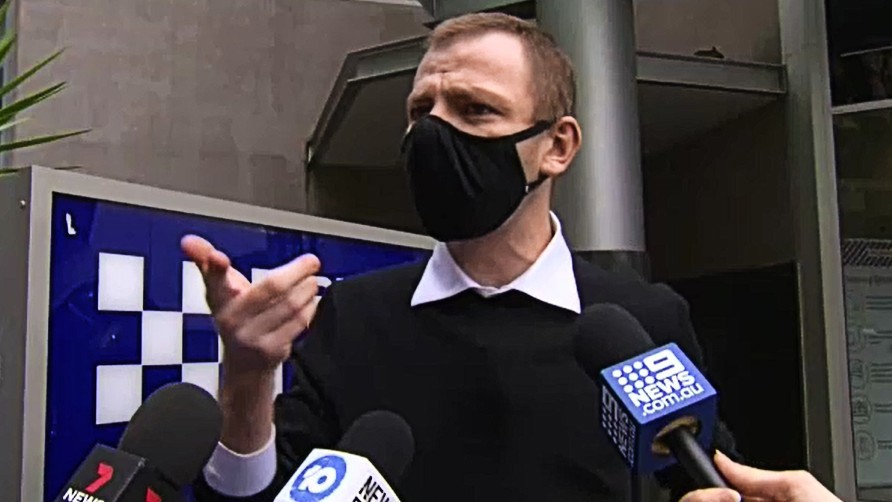
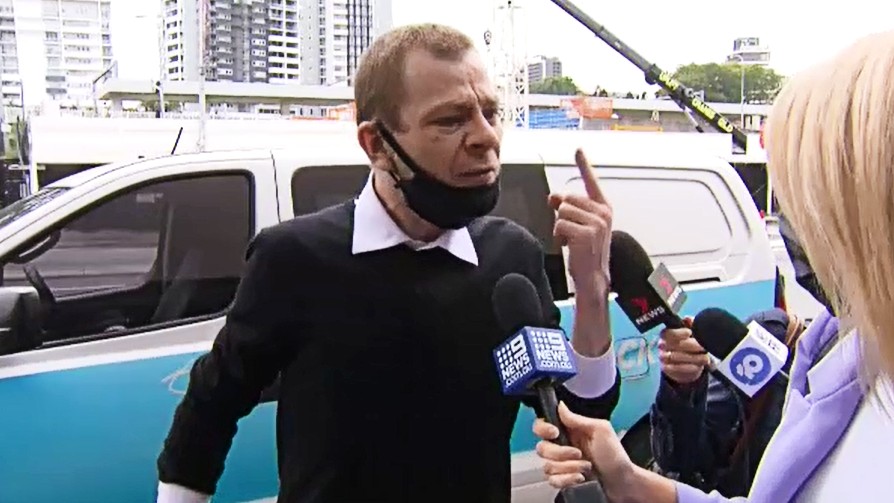
Warburton was fined $1500 and ordered to pay an extra $111 restitution, the cost of relighting the flame.
Outside court, Warburton declared that he did not need to apologise for his actions on camera and insisted that he and Mr Mitchem were not friends.
"Don't know (Mr Mitchem), don't know him … he's not my friend," Warburton said.
"I've just apologised in court.
"I don't need to apologise again, get the f— out of my face."
Warburton has one month to pay his fines with no conviction recorded.
Mr Mitchem will face court at a later date.
Thousands flee as fire devours Greek island's forests
Pillars of billowing smoke and ash turned the sky orange and blocked out the sun above Greece's second-largest island as a days-old wildfire devoured pristine forests and encroached on villages, triggering more evacuation alerts.
The fire on Evia, an island of forested mountains and canyons laced with small coves of crystalline water, began on August 3 and cut across the popular summer destination from coast to coast as it burned out of control.
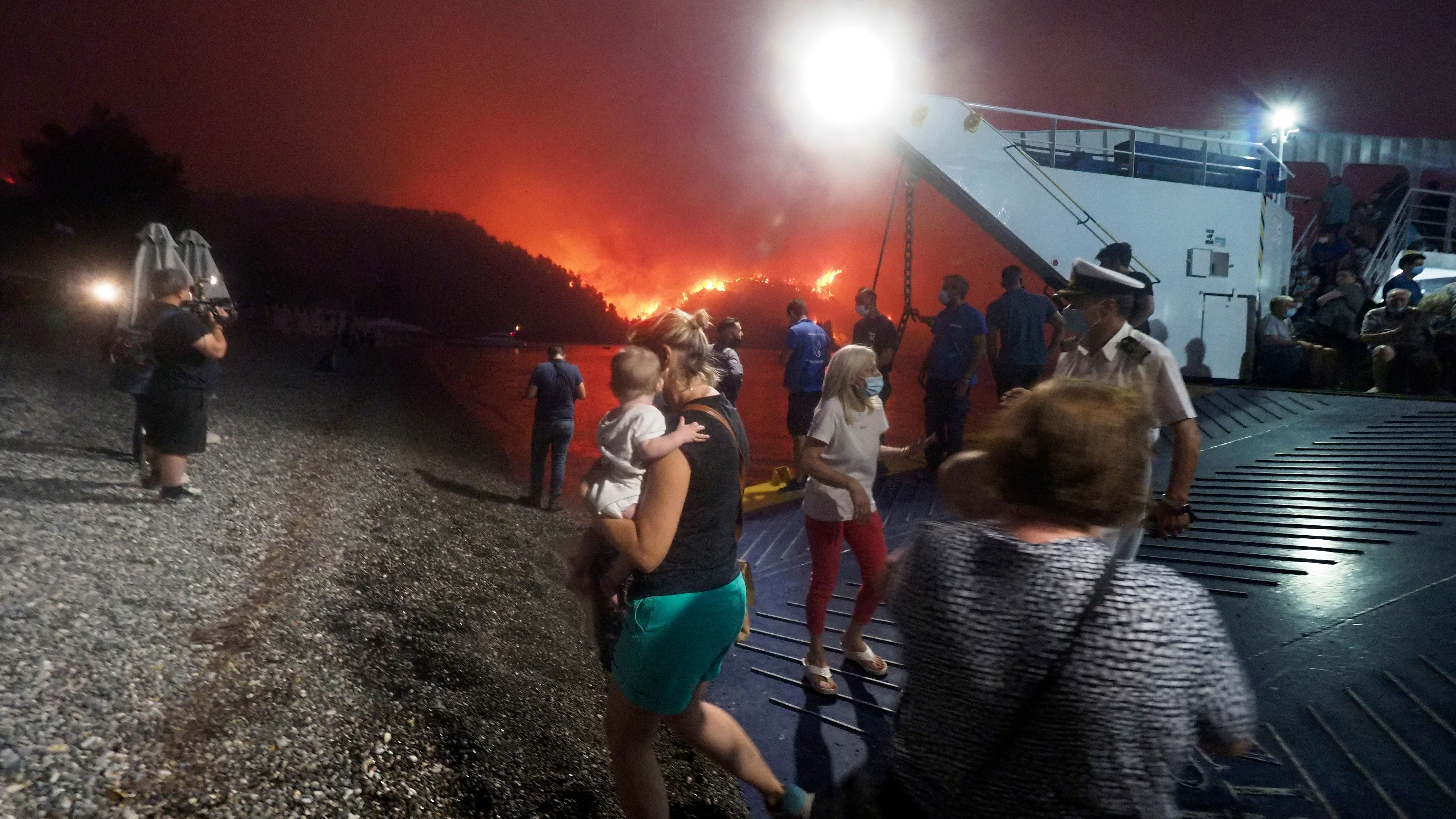
Scores of homes and businesses have been destroyed and thousands of residents and tourists have fled, many escaping the flames via flotillas that even operated in the dark of night.
READ MORE: Resurgent wildfires in Greece burn homes, threaten monuments
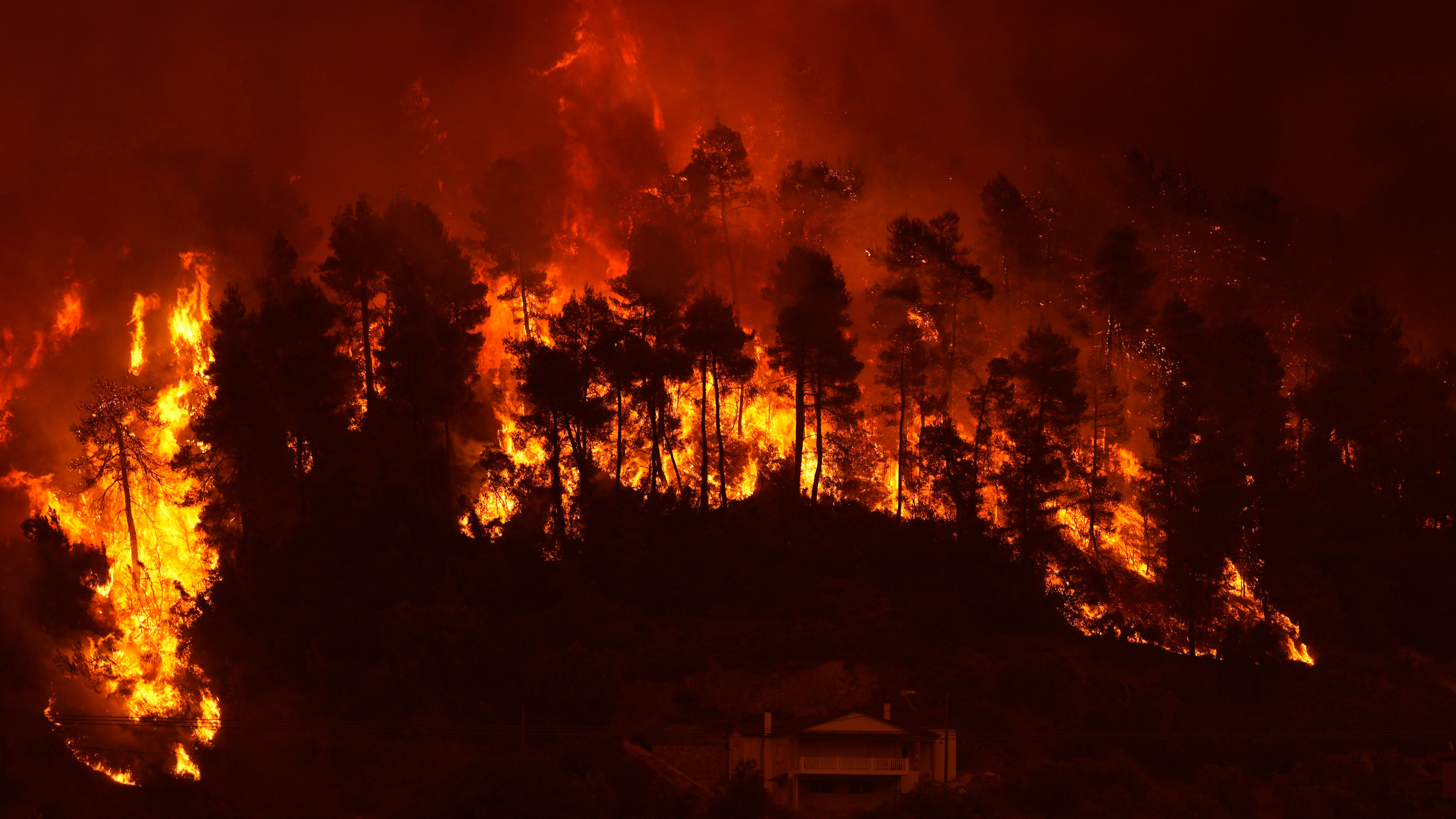
The blaze is the most severe of dozens that broke out in the wake of Greece's most protracted heat wave in three decades, which sent temperatures soaring to 45 degrees Celsius for days, creating bone-dry conditions.
"It's already too late, the area has been destroyed," Giannis Kontzias, mayor of the northern Evia municipality of Istiaia, lamented on Greece's Open TV.
He was one of several local officials and residents who took to Greek TV networks to appeal for more firefighting help, particularly from water-dropping planes and helicopters.
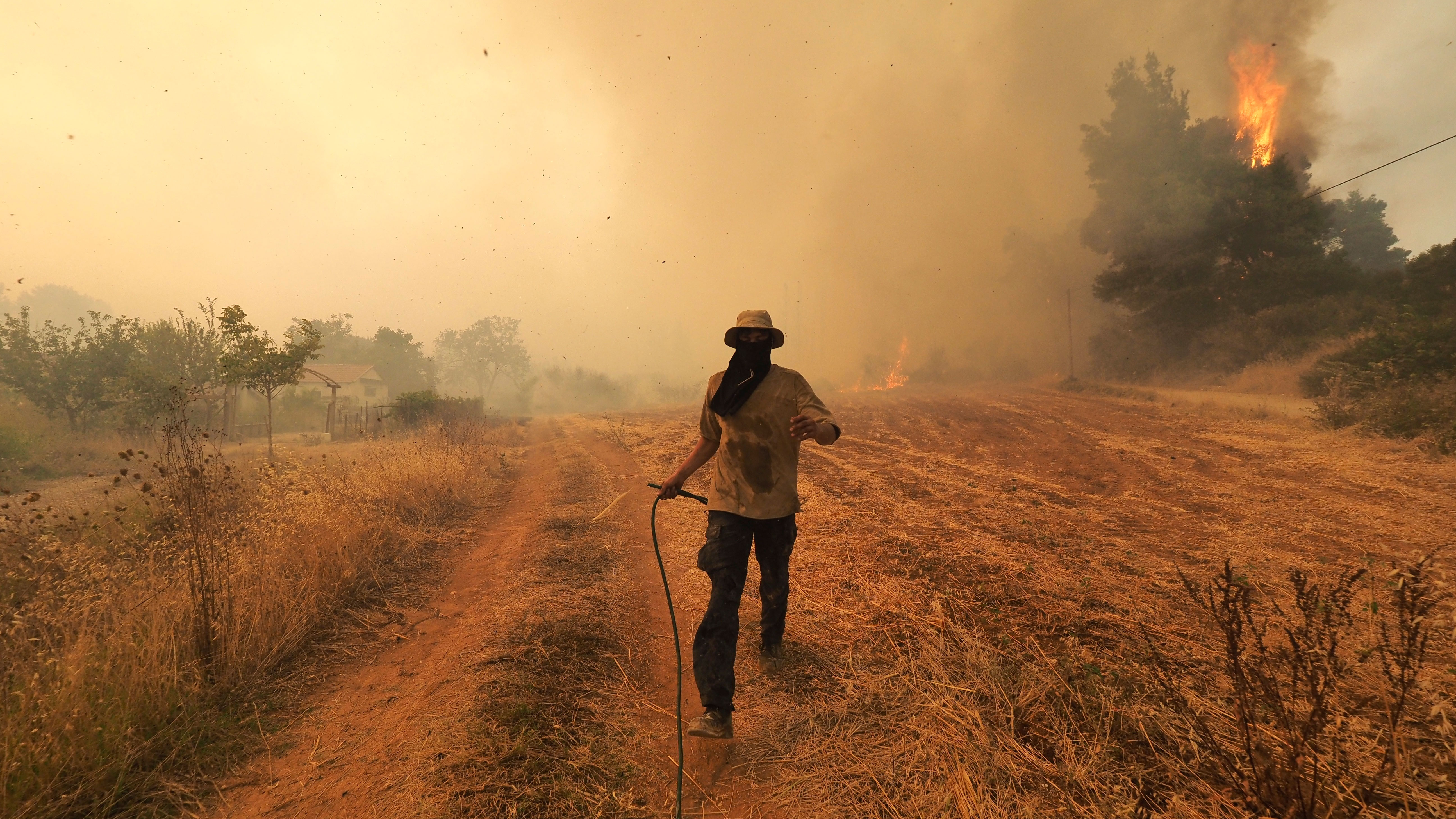
Evacuation orders were issued Sunday for four villages in northern Evia, including Pefki, but many residents refused to leave, hoping to save their properties.
In dramatic scenes Sunday afternoon, fast-moving flames had encroached on the seaside village of Pefki, burning trees on the fringes and entering the houses' yards.
Panicked residents raced with water tanks, hoses and branches in a seemingly futile effort to extinguish the flames.
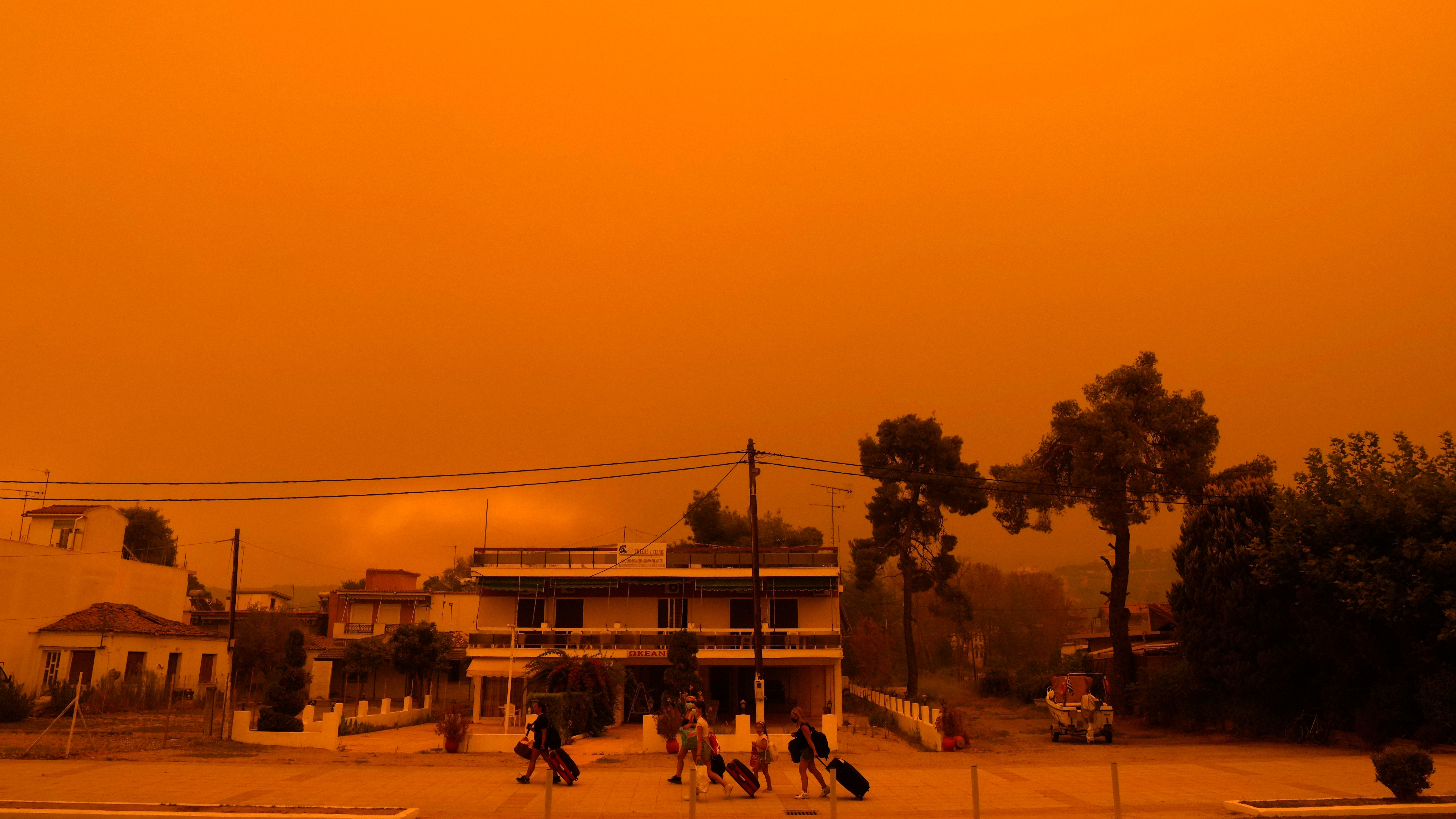
Late Sunday, firefighters managed to stop the fire before it advanced further into Pefki, on the island's northern coast.
Pefki residents and tourists fled to the port of Aidipsos to take the ferry to the mainland port of Arkitsa, 150 kilometres northwest of Athens.
Acrid, choking smoke hung in the orange-grey air, turning the day into an apocalyptic twilight as people headed towards Pefki's pebble beach, dragging suitcases, clutching pets and helping elderly relatives.
The ferry, carrying panicked, exhausted evacuees who had boarded the vessel before the advance of the fire was halted, arrived at Arkitsa on Sunday evening.
Passengers complained they had been left to fend for themselves as the fire approached.
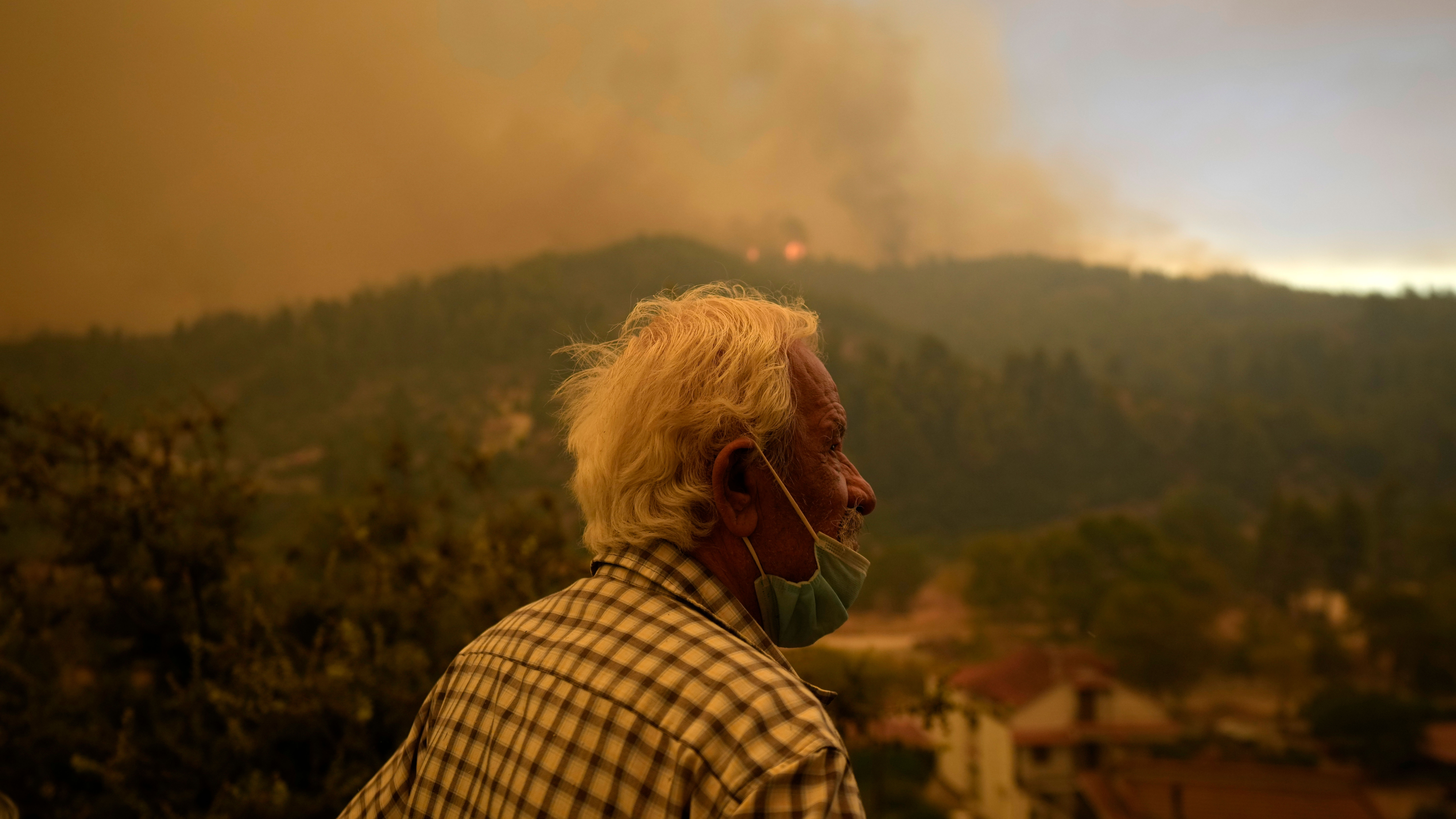
"We were completely forsaken. There were no fire brigades, there were no vehicles, nothing!" David Angelou told The Associated Press, adding that the villagers' hoses were inadequate to stop the fire.
Angelou described the frightening hours before the evacuation.
″You could feel the enormous heat, there was also a lot of smoke. You could see the sun, a red ball, and then, nothing else around," he said.
Angelou's complaint was echoed by others, who decried government efforts, citing what they saw as a lack of firefighting forces or planes or delays in their arrival.
"There was ash and smoke everywhere," said Christina Tsatou, who had been in the seaside village of Agios Georgios. "It is very sad that they did not send help in the first days and they left the island burning. It was unfair and many people have lost their property, their livelihoods."
In the picturesque mountain village of Gouves, towering flames leaped from the treetops, devouring the pine forest leading to the village.
Some residents remained, dousing homes with water from garden hoses in a last-ditch effort to save them.
Others used bulldozers to raze trees and bushes, hoping to create rudimentary firebreaks.
Civil Protection chief Nikos Hardalias said the Evia fire was burning on two fronts, one to the north and one to the south.
He said the conditions there were particularly tough for the water-dropping planes and helicopters, whose pilots faced "great danger" with limited visibility and air turbulence.
"We have before us…one more difficult night," Hardalias said.
"All the forces that have been fighting a difficult battle all these days will continue operating with unabated intensity, with the same self-sacrifice."
The wildfires have stretched Greece's firefighting capabilities to the limit, and the government has appealed for help from abroad.
More than 20 countries in Europe and the Mideast have responded, sending planes, helicopters, vehicles and manpower.
The fire department said 575 firefighters, 35 ground teams and 89 vehicles were battling the Evia wildfire, including 112 Romanian and 100 Ukrainian firefighters. Four helicopters and three planes provided air support.
Three more major fires were also burning in Greece's southern Peloponnese region, while another broke out Sunday afternoon on the southern island of Crete.
Another massive fire that ravaged forests, homes and businesses on the northern fringes of the Greek capital appeared to be on the wane.
That blaze burnt through large tracts of a national park on Mount Parnitha, the largest forested area remaining near Athens.
Firefighters were worried that the Mount Parnitha fire would rekindle, so they and the military had been patroling all night, Hardalias said.
On Friday, a volunteer firefighter died after suffering head injuries from a falling electric pole north of Athens, while at least 20 people have been treated for fire-related injuries, including two firefighters hospitalized in intensive care.
The causes of the fires are under investigation. At least eight people have been arrested around Greece.
Greek and European officials have also blamed climate change for the large number of fires in southern Europe this summer, from Italy to the Balkans, Greece and Turkey.
Massive fires also have been burning across Siberia in northern Russia for weeks, forcing the evacuation Saturday of a dozen villages. In all, wildfires have burned nearly 15 million acres this year in Russia.
In the US, hot, dry, gusty weather has also fueled devastating wildfires in California.
Woman forced to get liver transplant after DHB failures
A woman in her 40s was forced to get a liver transplant after mistakenly stopping her medication early due to multiple failures by Capital and Coast District Health Board. “I can’t even begin to describe the catastrophic impact…
Grieving dad whose girls died in crash knows what Timaru families going through
A father whose daughters died in a horror crash almost two years ago said he can understand the pain and hurt parents of five teenage boys who died over the weekend must feel. Niko William Hill, 15, Javarney Wayne Drummond, 15,…