Category Archives: headline

Abbott says Australia would never sign free trade deal with China now

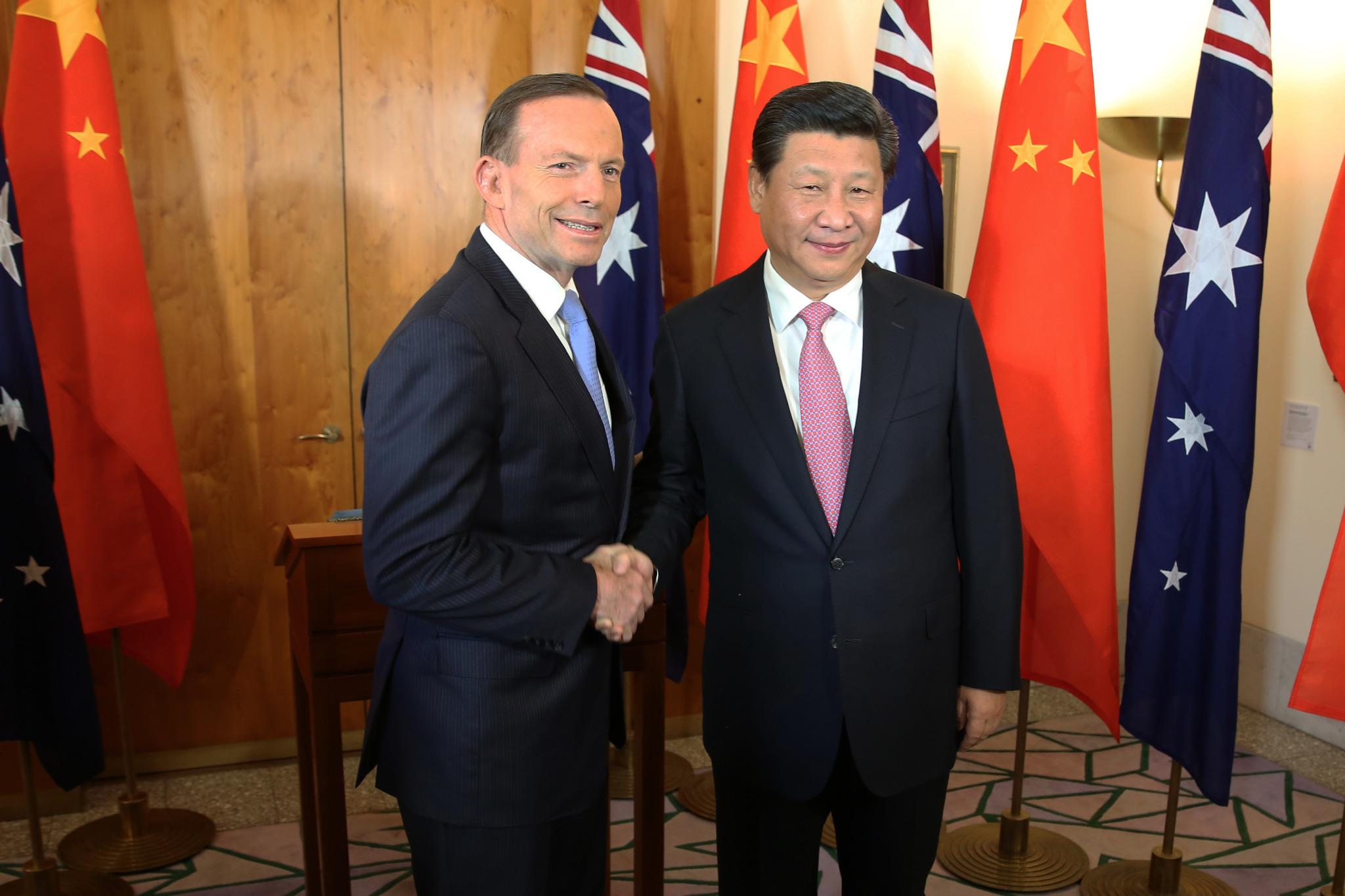
Tony Abbott says Australia would today never contemplate signing a free trade deal with China after "a hell of a wake-up call" in the years since his government inked the agreement.

Mr Abbott said after 40 years of "bide and hide", China was "asserting itself aggressively in what's at best a cold peace, and more likely, a new Cold War".

The UK Board of Trade adviser said he was not pushing against free trade but "distinguishing between countries that really are open for business, and those where business is more politics by other means".

READ MORE: Australian lobsters 'smuggled to China' despite trade ban

https://twitter.com/Policy_Exchange/status/1419976971824635909

"Trade deals after all, are not just about the cost and the quantity of the goods exchanged. They're pledges of economic trust and partnership," he said, in a keynote speech to right-leaning UK think tank Policy Exchange on Tuesday.

"I can't imagine that China and Australia, for instance, would contemplate concluding a trade deal today."

In 2014, Mr Abbott described the trade deal as "history making" and hailed the greater access to Australian beef and wine the Chinese would have.

Both industries, along with many others from coal to lobsters, have recently been hit with staggering tariffs in a damaging and one-sided trade war

China has sought to punish Australia economically over a series of comments and policy stands on issues ranging from crackdowns in Hong Kong and foreign interference in Australia to an investigation into the origin of the coronavirus.

Mr Abbot as recently as last year cited the China free trade deal and others he signed to bolster his credentials after an appointment to his key UK trade role.

On Sunday, he said the agreement was a boon for trade between the countries — Australian exports in particular — but that it was "hard to trust a country that uses spurious pretexts to block our exports to punish policy positions it doesn't like".

READ MORE: Australia prepares for China retaliation after blaming Beijing for Microsoft hack

READ MORE: China accuses Australia of hypocrisy over Microsoft server hack accusation

He contrasted that with the confidence Australia and the UK could have in each other following their historic trade deal agreed to in principle earlier this year, and described Beijing's change in approach over recent years as "a hell of a wake-up call".

"As late as 2014, when that free trade deal was finalised, we did have a very benign view of China," he said.

"Now, in retrospect, it looks like wishful thinking.

"But at the time, we were confident that there would slowly be not just economic, but political liberalisation in China.

"We thought there would be, over time, considerable convergence and that China would become, in a sense, more like us. Perhaps we've become more like them, in fact."

In 2014, Mr Abbott hailed President Xi Jinping's desire to turn China into a "fully democratic by 2050", after the Chinese leader expressed a goal to "turn China into a modern socialist country that is prosperous, democratic, culturally advanced and harmonious by the middle of the century".

"I have never heard a Chinese leader commit so explicitly to a rule-based international order founded on the principle that we should all treat others as we would be treated ourselves," Mr Abbott said, but was quickly criticised for misunderstanding what the Chinese president meant by democracy.

"Plainly what he meant by democracy and what we mean by democracy are two different things," Mr Abbott said on Tuesday. 

"But the mere fact that he used the word suggests that there was a willingness to engage on China's part, which has been almost entirely absent over the last few years."

Dominicans Get Third Vaccines as Virus Rages in Next-Door Haiti

(Bloomberg) — On one side of the island of Hispaniola lies Haiti, among the Western Hemisphere’s last nations to offer its population a first dose of Covid-19 vaccine. On the opposite side, the Dominican Republic is one of the first countries to offer a third.

The nation of almost 11 million people is rushing to provide boosters as the pandemic rages in its destitute neighbor, Haiti, defying criticism from global health organizations that no scientific evidence shows they’re necessary.

The Domincan Republic has had one of Latin America’s strongest immunization efforts, using mostly Chinese Sinovac inoculations to protect almost 50% of its population with at least one dose. But residents are starting to question Sinovac’s efficacy compared with mRNA vaccines. Since the government said June 30 that it would provide mRNA booster shots, almost 289,000 people have been inoculated a third time, including President Luis Abinader.

Meanwhile, Haiti has had one of the region’s weakest vaccination campaigns. Even as it wrestles with the recent assassination of President Jovenel Moïse, the Western Hemisphere’s poorest country received its first shipment of Covid-19 vaccines only July 14.

Across the globe, relatively wealthy countries are struggling to use all their vaccines, while poor nations go almost entirely without. Low-income countries account for almost 20% of the population yet have received only 2% of vaccines, according to the Bloomberg Vaccine Tracker.

Arthur L. Caplan, director of the NYU Langone health system’s medical ethics division, said wealthier countries must help fight a virus that recognizes no borders.

“There have been a few examples of sharing vaccines with a neighbor, but not many,” Caplan said. “We have failed, miserably, to distribute the supplies we have to those most in need. That’s a total moral failure.”

The Caribbean island of Hispaniola, which the Dominican Republic and Haiti share, is a microcosm of global disparity.

At the outset of the pandemic, Haiti closed its borders and kept its citizens relatively safe, while the tourism-dependent Dominican Republic — nearly 10 times richer — became a viral hot zone. A year ago, it had reported more cases than any other Caribbean nation. Now, the countries have traded places.

The nations have a historically complex relationship as they attempt to co-exist on the West-Virginia sized island. Many Haitians travel east to seek work and better living conditions, and illegal immigration is one of the main contributors to the tension. Caplan believes Haiti could engender new variants that could bleed over the Dominican border.

The Dominican Republic is joining Bahrain, Indonesia and Thailand in augmenting Sinovac and Sinopharm campaigns with mRNA shots — even though experts agree that the Chinese shots lower hospitalizations and deaths effectively.

“What we are looking for is that extra coverage against the variants, to increase the antibodies among the patients and to avoid reinfection and hospitalization,” Minister of Public Health Daniel Rivera said at a press conference last month.

The campaign began Feb. 16. The government has established more than 1,300 vaccination sites across its 31 provinces, 19 near the border.

The third doses, mainly from Pfizer Inc. and AstraZeneca Plc, are officially prioritized for health-care workers and people with underlying conditions, though they are widely available to all. Those who want one must wait at least a month after their second, and receive a different vaccine from the previous two. Everyone with a permanent Dominican address is eligible.

The nation is now recording about 400 new daily cases, down from the 1,300 peak at the beginning of June. The improvement is crucial to reviving its tourism-dependent economy. The republic is finally seeing more visitors, with about 20% more last month compared with May. The International Monetary fund expects the economy to grow 5.5% this year.

“Economic prospects are encouraging, underpinned by the reopening of the tourism industry and the sustained pace of the vaccine rollout,” strategists led by Regis Chatellier wrote in a note Tuesday encouraging clients to buy Dominican bonds. “Despite rising debt and a higher fiscal deficit in 2020, the economy massively benefited from the cushion this provided.”

But global health organizations are less impressed. The Pan American Health Organization and World Health Organization urged the Dominican Republic to delay a third dose.

“It is vital that we shift the conversation away from booster shots,” said Carissa F. Etienne, director of the Pan American Health Organization. Health officials across the world must guarantee that “everyone, everywhere and particularly health-care workers and those most vulnerable to severe disease are protected first.”

The office of Vice President Raquel Pena, who is overseeing the vaccine program, didn’t answer questions about the third-dose initiative.

Unknown Toll

Haiti didn’t start a vaccination campaign for its 11 million people until after the July 7 assassination of its president, which is still under investigation amid violence and political instability.

Official numbers show Haiti has reported almost 20,000 Covid-19 cases and more than 500 deaths, but doctors agree these numbers are far understated. Haiti has seen high hospitalization and death rates, and crowded shelters could become hot spots for Covid-19 transmission.

“Limited supplies and violence are also hindering the ability of health workers to safely care for patients in need. In some cases, patients may be avoiding seeking care due to safety concerns,” Etienne said in a press conference July 14.

Ralph Ternier, a doctor who is director of community care and support for Partners in Health Haiti, which treats the poor, is worried. “The country might not have the resources to respond, that’s why right now we are really focusing on the vaccine,” he said.

Helping Hands

Pedro Urena, a Dominican cardiologist, sees danger in the highly permeable Hatian-Dominican border. Urena has been an outspoken critic on the third-dose initiative, and believes Dominican resources could have been used differently.

“Haiti has a very bad Covid situation,” he said. “They have a very high hospitalization rate and a very high mortality rate. The problem is that since they don’t have very trustworthy statistics, sadly we can’t really know the magnitude of the problem. But I understand that makes it so we have to be even more careful with the migration flow into this country.”

Caplan said helping your neighbor while protecting yourself isn’t mutually exclusive. In fact, it’s essential.

“You can just sort of figure out international policy that would get the vaccine everywhere, but we just seem unwilling and unable as a world to do it,” he said.

©2021 Bloomberg L.P.

The post Dominicans Get Third Vaccines as Virus Rages in Next-Door Haiti appeared first on The St Kitts Nevis Observer.

Top Haiti Security Chief Arrested, Murder Warrant Issued for Former Jurist- in Moise Killing

Jean Laguel Civil joins more than two dozen suspects arrested by Haiti National Police as the investigation continues into the July 7 attack at Moïse’s private home.

Civil’s attorney, Reynold Georges, called his client’s arrest politically motivated. It wasn’t immediately clear if Civil had been charged with anything.

The arrest comes as more than 1,000 demonstrators gathered around one of Haiti’s most notorious gang leaders to commemorate Moïse. The crowd was mostly dressed in white as they cheered on Jimmy Cherizier, a former police officer who now leads “G9,” a federation of nine gangs that officials have blamed for a spike in violence and kidnappings in recent months.

“Everyone needs to wait on my order before we respond to the killing of Jovenel Moïse,” said Cherizier, who goes by the name of “Barbecue” and whom police say is behind several

He was wearing a white suit and black tie as he spoke to the crowd at the seaside slum of La Saline in the capital of Port-au-Prince. A nearby truck played music as Cherizier knelt down before a large portrait of Moïse and began to light candles.

“No justice, no peace!” he said.

Earlier, the crowd sang as they made a circle around a bonfire and threw salt into it as part of a ceremony to honor Moïse. Many had their faces covered so as not to be identified.

Moïse was shot several times during a July 7 attack in which his wife was seriously injured. At least 26 people have been arrested, including 18 former Colombian soldiers. Police are still looking for various suspects, including a former rebel leader and an ex-Haitian senator. On Monday, they identified another suspect: Haiti Superior Court Judge Windelle Coq Thelot.

=============================================

Murder warrant issued for ex-Supreme Court judge in Moïse assassination

Authorities in Haiti have issued an arrest warrant on murder charges for Judge Windelle Coq-Thélot, a former Supreme Court judge, in relation to the assassination of President Jovenel Moïse. Coq-Thélot was among about two dozen people that Moïse said tried to overthrow him last February 7 amid disputes over when his term’s end date.

On July 25, BedFord Claude, the government commissioner at the Court of First Instance in Port-au-Prince, issued the warrant for murder and armed robbery in connection with the July 7 slaying, according to court records and a Haitian National Police (PNH) search notice.

Police said Coq-Thélot is “dangerous and armed” and have urged anyone with information about her whereabouts to contact PNH at +509-3834-1111.

Coq-Thélot is a former judge at La Cour de Cassation, Haiti’s highest court. Originally from Marmelade, a town in the Artibonite region, she spent more than a decade at the Court of Appeal in Gonaives and Port-au-Prince and rose to become deputy commissioner at the Port-au-Prince Court of Appeal. In 2011, she was promoted to associate justice at the nation’s highest court.

In February, Coq-Thélot was among a group of at least 23 people that Moïse said attempted to kill him and overthrow the government in a dispute over when his term ends. She was one of three Supreme Court members chosen by the political opposition to replace Moïse at the time.

Moïse then issued a February 8 decree that forced Coq-Thélot and the other two judges to retire. Judge René Sylvestre then became the chief justice over the Supreme Court, a role that is in the line of succession if the president cannot function. Sylvestre died of Covid-19 in June, leaving the role vacant at the time of Moïse’s heinous killing.

The post Top Haiti Security Chief Arrested, Murder Warrant Issued for Former Jurist- in Moise Killing appeared first on The St Kitts Nevis Observer.

Man shot dead, at least five in hospital following massive Ipswich brawl

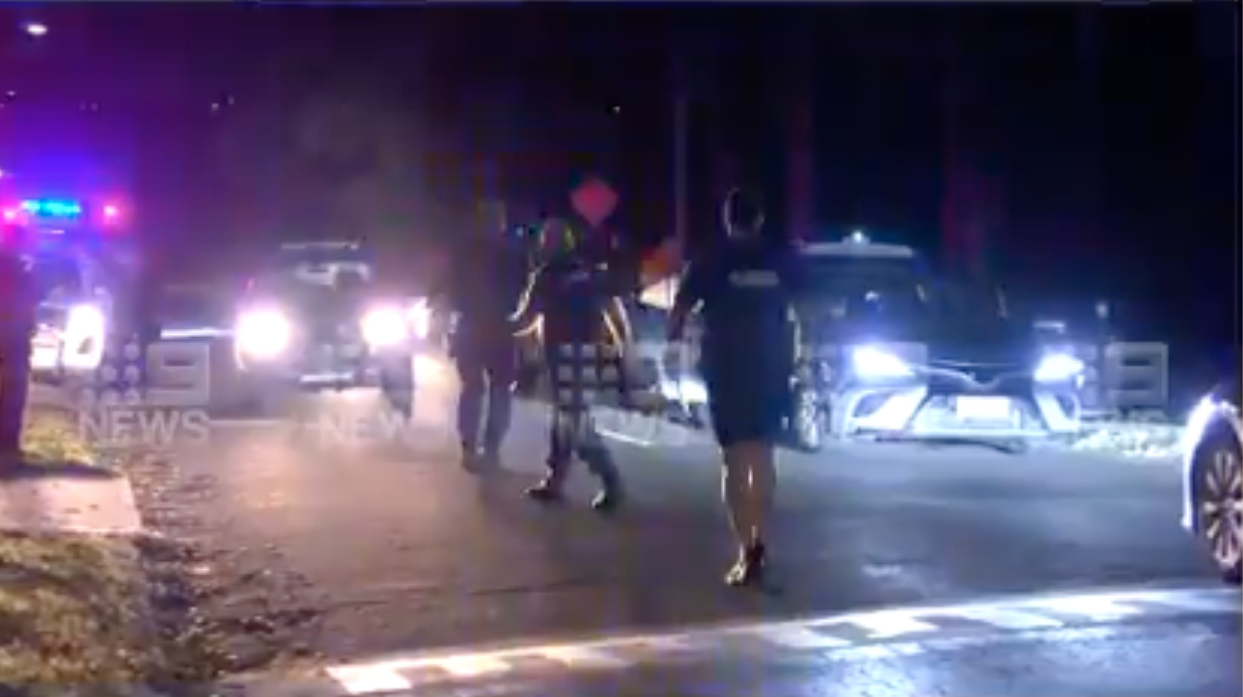
A man has been shot dead and at least five more people are in hospital following a massive brawl south-west of Brisbane.

A fight between about 15 people, which was believed to have involved a car, a gun and a baseball bat, broke out in Ipswich about 5pm on Tuesday.

Four men were taken from the scene to hospital but one died from gunshot wounds.

https://twitter.com/9NewsQueensland/status/1420012028790460416

9News understands paramedics were also called to a nearby home before taking two men, one with a gunshot wound, to hospital.

Police remained on the scene on Tuesday night trying to piece together what happened and track down the others involved in the fight.

Anyone with information should contact Crime Stoppers on 1800 333 000.

Sydney lockdown set to be extended by four weeks

Sydney's lockdown will be extended by four more weeks as the city struggles to control its coronavirus outbreak.

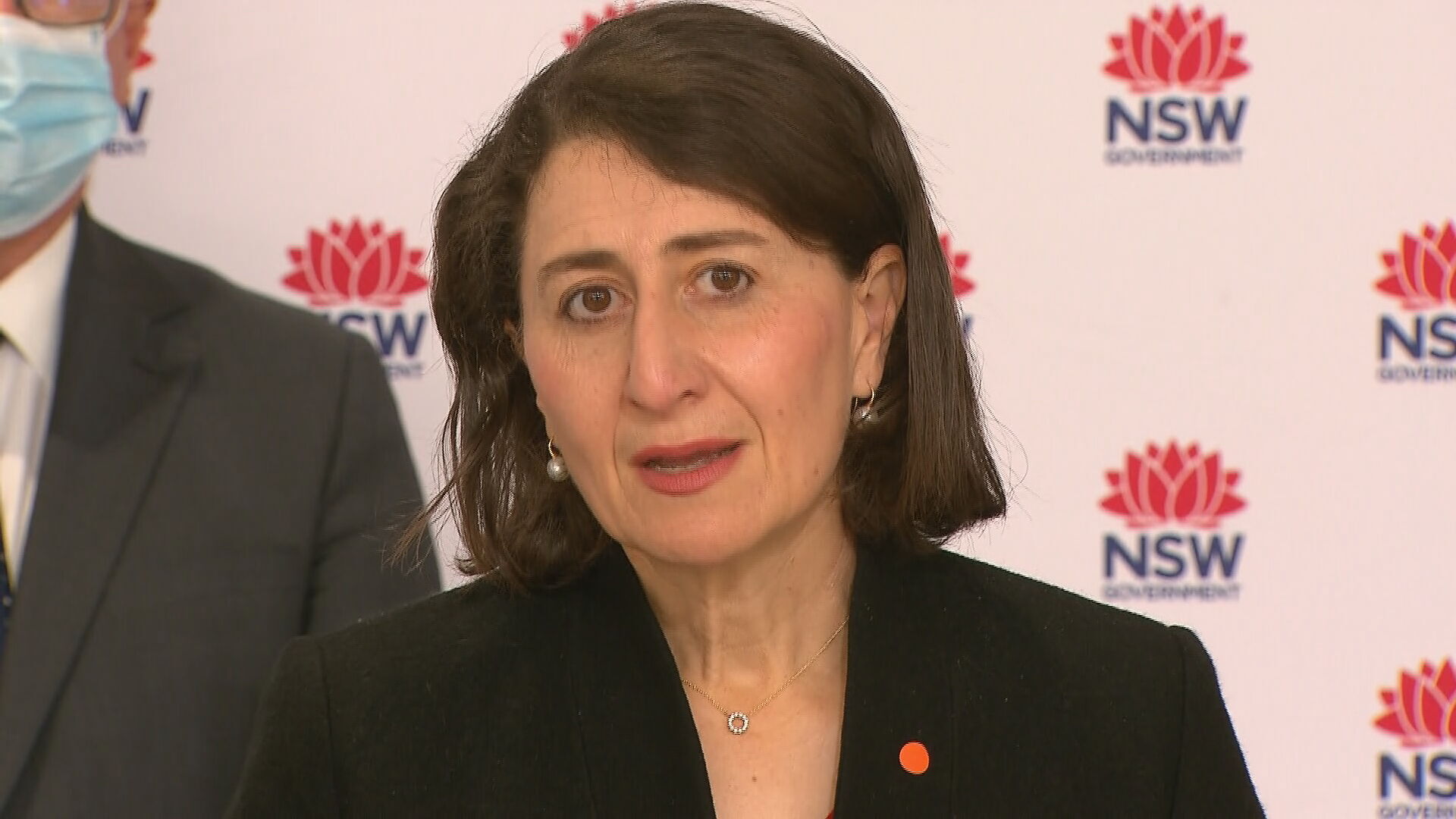
It's understood NSW Premier Gladys Berejiklian will announce the extension on Wednesday.

https://twitter.com/9NewsSyd/status/1420007940723970048

The introduction of daily rapid COVID-19 tests for essential workers to was also proposed at an emergency cabinet meeting on Tuesday.

The rapid tests, which return results in 15 minutes, would likely be done at work over the next six to eight weeks, 9News reporter Chris O'Keefe said.

It would mean testing hundreds of thousands of people every single day, with the full plan expected to be announced by the NSW Government on Wednesday.

Year 12 students could undergo daily testing too in order to get them back into classrooms.

Construction will also be able to restart in Greater Sydney from Saturday, Mr O'Keefe reported.

However, tradies who live in Blacktown, Fairfield, Canterbury-Bankstown and Liverpool can't work, and no work will be able to be done on homes where the owners still live in the property.

READ MORE: Latest COVID-19 cases revealed as Victoria announces lockdown changes

https://twitter.com/cokeefe9/status/1419932221599719430

172 new local cases in NSW

New South Wales announced 172 new cases of COVID-19 on Tuesday, with 60 of those infectious in the community.

It's a new record for the state during the current outbreak.

More than 85,000 people were tested for the virus.

The state recorded two additional deaths, a woman in her 80s from Pendle Hill in Sydney's west, and another woman in her 80s in Campbelltown, south-west of Sydney.

Both deaths were announced on Monday, taking the state's total to 10 during the Delta outbreak.

Earlier, Ms Berejiklian said the virus was becoming "more prevalent" in Sydney's west than suburbs in the south-west.

She called on residents in the local government areas of Canterbury, Liverpool, Cumberland and Parramatta to come forward for testing and get vaccinated as soon as possible. 

The Premier also thanked the people living in Fairfield for their efforts in reducing the number of community transmission cases. 

Cases breakdown

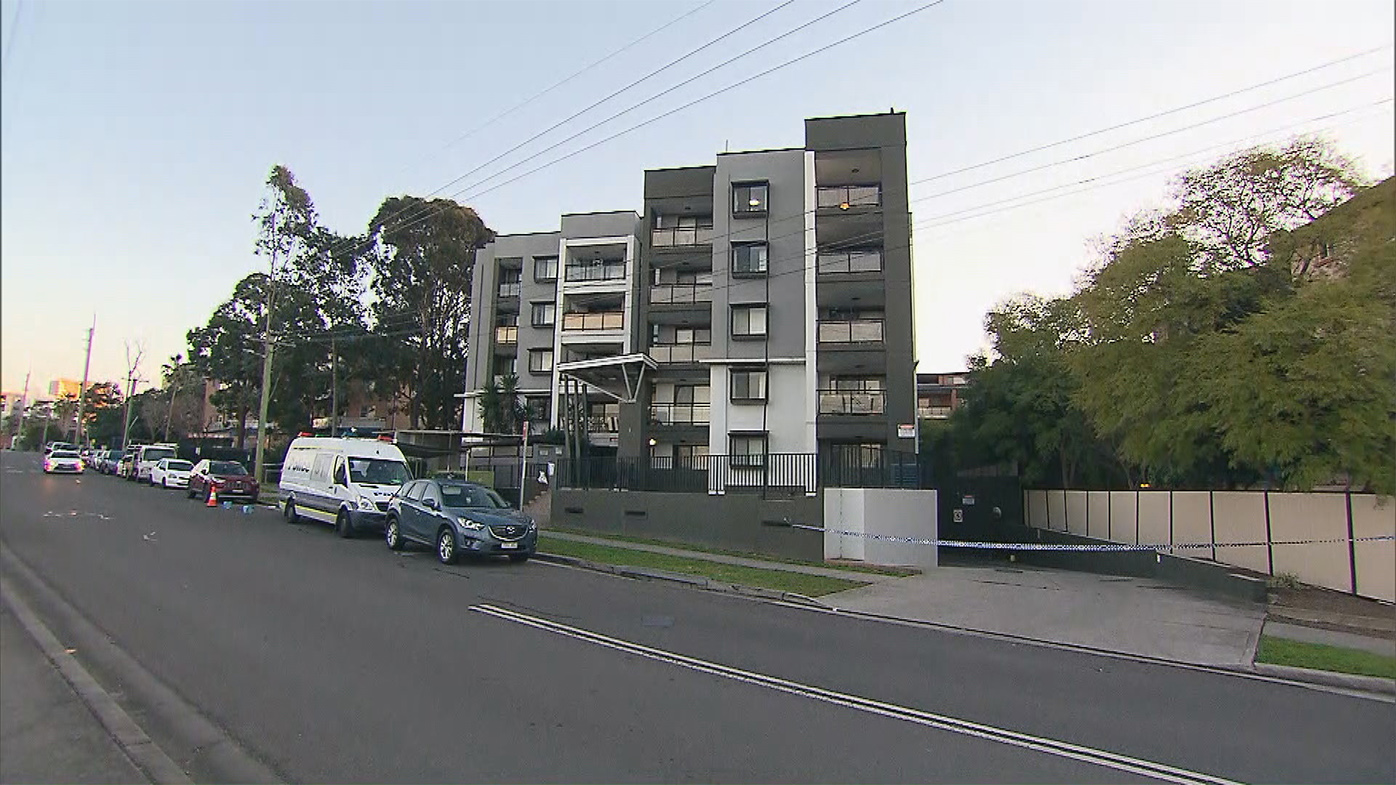
NSW Health's Dr Jeremy McAnulty has confirmed six people have tested positive at an apartment block in Blacktown

All residents are in a strict lockdown and contact tracing is underway. 

Two nurses and a student nurse at Liverpool hospital have also tested positive to COVID-19. 

The nurses are from the geriatric and vascular wards with contact tracing underway to identify anyone at risk of infection.

NSW Health confirmed eight patients linked to the nurses have tested positive to COVID-19.

One of these cases is a patient who was transferred from Liverpool Hospital to Fairfield Hospital.

Four other patients from Fairfield have been identified as close contacts and are now being tested for the virus. 

All three staff members have been vaccinated. Both nurses have had one dose of Pfizer vaccine, and the student nurse has been recently fully vaccinated, NSW Health said.

State waits on lockdown update

Ms Berejiklian on Tuesday said case numbers were not where they needed to be in order to ease restrictions in hotspot suburbs.

"We are seeing some positive changes in behaviour in regard to households but more needs to be done," she said.

She said the state would "intensify our strategy" in regards to vaccinations in government areas where transmission rates are increasing. 

The snap seven-day lockdown in Orange, in the state's Central West, will end tonight.

"There has been no further transmission of COVID-19 detected in the region since the case notified on 20 July," a statement from NSW Health said.

"Orange City Council, Blayney Shire Council, and Cabonne Shire Council will revert to the same restrictions as the rest of regional NSW from tomorrow (Wednesday).

"NSW Health thanks people in these local communities for their co-operation and patience during the stay-at-home restrictions for the past week."

https://twitter.com/JohnBarilaroMP/status/1419853575639900164

She wouldn't confirm when the Greater Sydney lockdown will end.

"I would much prefer to make a confirmed decision than speculate," she said. 

HSC exams announcement looming

Ms Berejiklian said she would be making an announcement about this year's HSC exams in the coming days. 

"Can I assure HSC students and their families that we will be making announced imminently about making sure they know what they can look froward to," she said. 

Ms Berejiklian insisted Year 12 students would be receiving an HSC regardless of any changes. 

"All the hard work they've been doing will be rewarded so please don't stress," she said. 

Protesters urged to get tested

Dr McAnulty has urged anyone who attended anti-lockdown protests in Sydney on the weekend to come forward for testing

"We would urge anyone who was at that protest … to watch out for symptoms and come froward for testing no matter what your political views are," he said.

"(Coronavirus) is a really serious disease, no matter what you think, protect your friends and your community."

'We won't have enough Pfizer'

NSW Health Minister Brad Hazzard has urged people to get the AstraZeneca vaccine given the lack of supply of Pfizer.

"We know for a fact we won't have enough Pfizer to do what we'd like to do," he said. 

"People need to understand we're smack bang in the middle of a major situation here in Sydney and if you're eligible, which is anyone over 18 … you need to go get vaccinated."

Mr Hazzard said the state would continue to ask the Federal Government for more Pfizer doses. 

"We need more Pfizer right now," he said.

Sydney's lockdown 'going to take a while'

Infectious diseases expert Professor Jane Halton said what was needed was "a different strategy and we need to see it pretty soon".

"I'm sorry to say but this is going to take a while," she told Today, on Tuesday.

"We need to see a little bit tougher – I'm sorry, Sydney – but actually, if you're going to get out of this in the next two months, that's what we need to see.

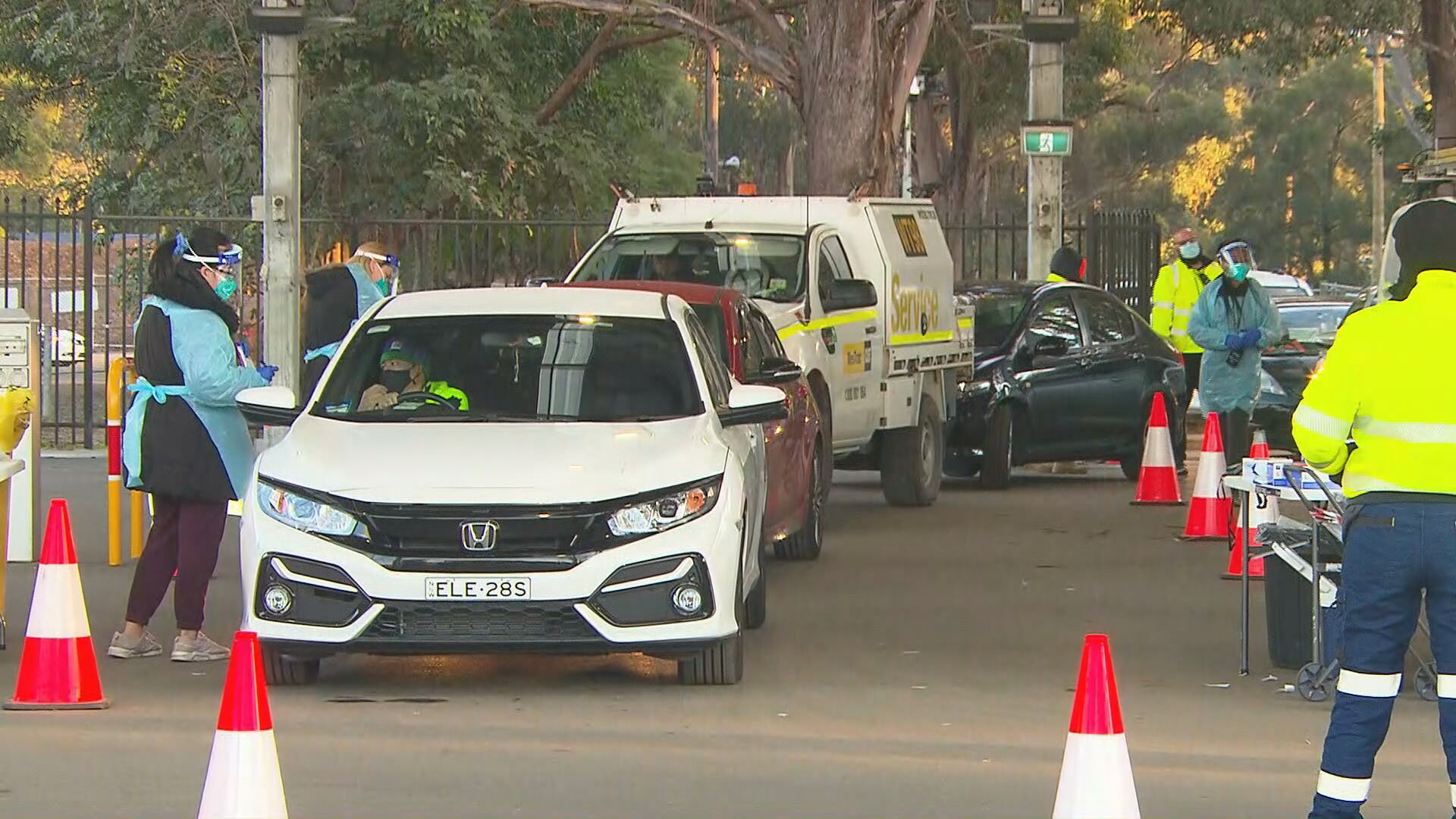
Fairfield testing clinic Monday July 19, 2021

"We need the start looking at some pretty tough measures, literally from this morning, in order that we can give people something to look forward to."

Her suggestions include vaccinating people at most risk of contracting the disease such as essential workers, supermarket staff, transport workers and essential maintenance employees.

"Get those people vaccinated and get them vaccinated now."

Supermarket 'venue of concern over 11 days'

Late last night NSW Health updated its venues of concern with a shopping strip in Sydney's south-west a new exposure site.

READ MORE: Eleven-day COVID-19 alert after transmission hits Sydney shopping centre

The Campsie Centre Shopping Mall was visited by infected cases, including staff, over a period of 11 days from Wednesday July 14 to Saturday July 24.

Supermarket workers in the parts of Sydney hit worst by the coronavirus will get priority vaccine access, amid ongoing concerns over transmission in the essential shops.

In a simultaneous push to get more residents jabbed in the COVID-19 epicentre of south-west Sydney, walk-in vaccinations are now being offered in some suburbs, and several pharmacies are involved in a distribution pilot program.

Foreign Ministers of More than 20 Countries Condemn Mass Cuba Arrests

WASHINGTON, July 26 (Reuters) – The foreign ministers of the United States and 20 other countries on Monday condemned mass arrests in Cuba and called for full restoration of Internet access in the island nation that has recently been rocked by political unrest.

The joint statement was issued by the governments of Austria, Brazil, Colombia, Croatia, Cyprus, Czech Republic, Ecuador, Estonia, Guatemala, Greece, Honduras, Israel, Latvia, Lithuania, Kosovo, Montenegro, North Macedonia, Poland, Republic of Korea, and Ukraine, alongside the United States.

“Democracies around the world are coming together to support the Cuban people, calling on the Cuban government to respect Cubans’ demands for universal human rights,” said Secretary of State Anthony Blinken, referring to the group that included some of Cuba’s Latin American neighbors alongside former members and satellites of the Soviet Union.

Last week the United States imposed sanctions on a Cuban security minister and an interior ministry special forces unit for alleged human rights abuses during a crackdown on anti-government protests earlier this month against an economic crisis, the government’s handling of the coronavirus pandemic and recent curbs on civil rights. Hundreds of activists were detained. read more

Reporting by Lisa Lambert and Doina Chiacu, Editing by Louise Heavens

The post Foreign Ministers of More than 20 Countries Condemn Mass Cuba Arrests appeared first on The St Kitts Nevis Observer.

Severe Floods Hammer Costa Rica, 2 dead

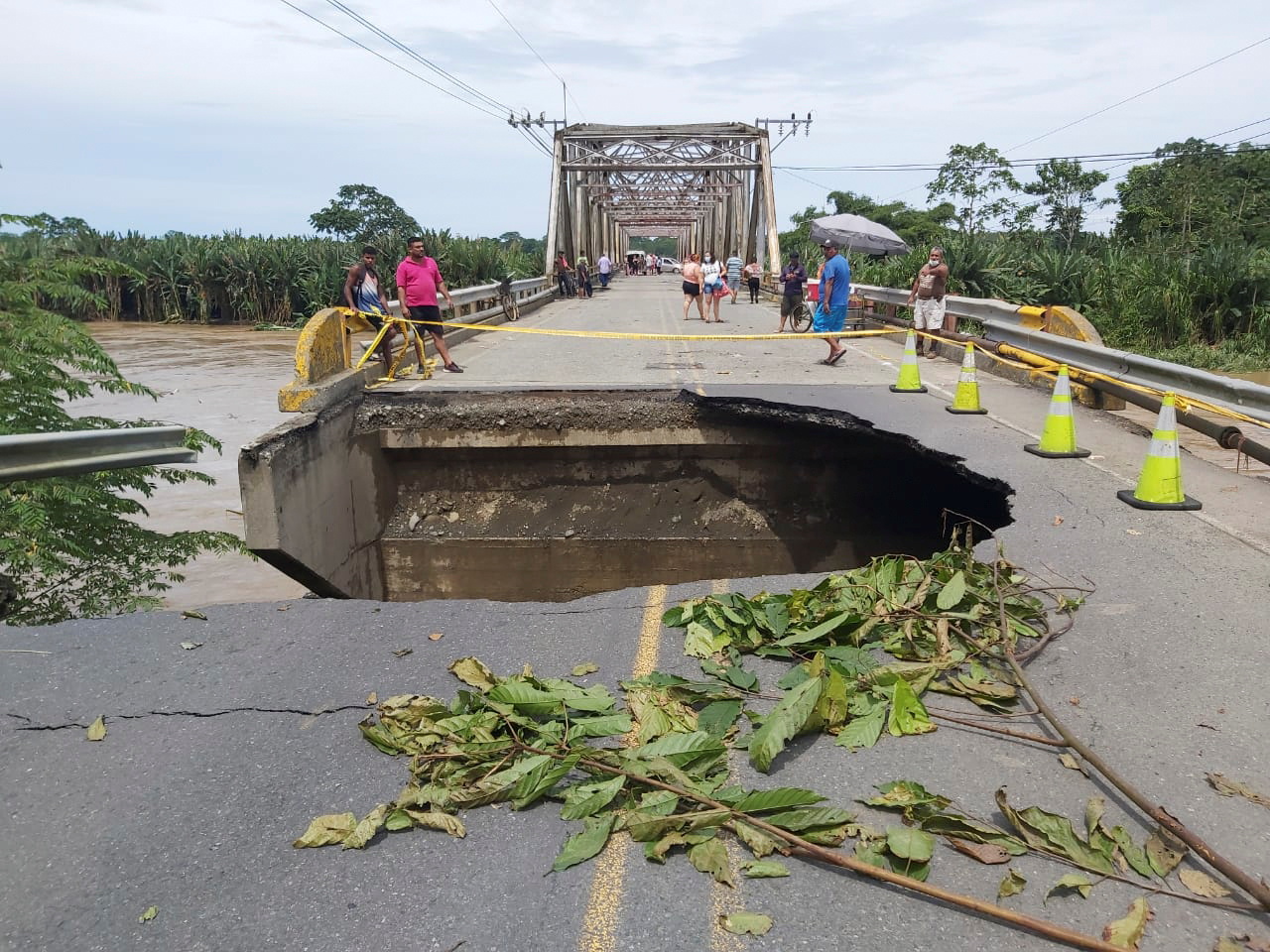
SAN JOSE, July 26 (Reuters) – Relentless rainfall in the Caribbean region caused at least two deaths amid severe flooding and major infrastructure damage in northern and eastern Costa Rica, authorities said on Monday.

Two people were killed and another two were missing, according to the Red Cross in Costa Rica. Some 3,000 people were forced to seek refuge from the extreme weather into emergency shelters, authorities said.

Nearly a quarter of Costa Rica is under a “red alert” declared by the National Emergency Commission (CNE) for flooding and landslides, including the northern municipalities of San Carlos, Upala, Guatuso and the Caribbean zones of Limón, Matina, Talamanca, Sarapiquí and Turrialba.

Turrialba, which is 60 kilometers (37 miles) east of San José, received in just one day the usual amount of rain for the entire month of July, according to Mayor Luis Fernando León.

“We were not prepared for this magnitude. It is an extreme event that has not occurred since 1978,” León told Reuters by telephone.

The rains were worsened by the position of the Intertropical Convergence Zone, a band of rain encircling the globe, and humidity carried by trade winds, the National Meteorological Institute (IMN) said in a weekend statement.

By Monday, rains had let up enough that authorities were able to deliver aid to some affected areas, President Carlos Alvarado said.

“There is a decrease in rainfall and it is getting easier to access aid and work to remove debris and begin to rebuild normalcy in these communities,” Alvarado said.

The IMN forecast additional but moderate rains in the Caribbean zones and an increase in rains in the center of the country and the Pacific slope.

Reporting by Alvaro Murillo; Writing by Cassandra Garrison; Editing by Sandra Maler

Our Standards: The Thomson Reuters Trust Principles.

The post Severe Floods Hammer Costa Rica, 2 dead appeared first on The St Kitts Nevis Observer.

Leaked Docs Reveal Death Threats, Roadblocks in Haiti Assassination Probe

By Caitlin Hu, Matt Rivers, Etant Dupain and Natalie Gallón, CNN
Photos and video by David von Blohn.

Port-au-Prince, Haiti (CNN)There was no mistaking the meaning in last week’s anonymous text message: Do what we say or die.

“Hey clerk, get ready for a bullet in your head, they gave you an order and you keep on doing shit,” read the July 16 text, one of several death threats sent to court clerks assisting Haiti’s investigation into the murder of former President Jovenel Moise, according to official complaints filed with Haitian police and seen by CNN.

They’re part of a cache of Internal Justice Ministry documents obtained exclusively by CNN, which reveal previously unheard testimonies from key suspects, mysterious attempts to influence the probe, and the acute danger felt by judicial investigators as they attempt to uncover who killed the president on July 7.

Death threats are not the only thing making Haitian investigators’ jobs more difficult. Multiple sources have also described to CNN a series of unusual roadblocks thrown at investigators, including difficulty in accessing crime scenes, witnesses and evidence.

The result is an investigation that has repeatedly veered from established protocol, according to both insiders and independent legal experts. The question is why?

Death threats and strange requests

Multiple Haitian officials have received death threats since their investigation began two weeks ago, documents show.

Carl Henry Destin, the justice of the peace who officially documented Moise’s ravaged home and body hours after his shooting, went into hiding just two days later. “As I am talking to you now, I am not home. I have to go into hiding somewhere faraway to talk with you,” Destin told CNN, describing in rapid-fire French the multiple threatening phone calls he had received from unknown callers.

Clerks that work with Destin and other investigative justices have also been targeted, according to documents obtained by CNN. On July 12, the National Association of Haitian Clerks published an open letter calling for “national and international” attention to death threats received by two local clerks, Marcelin Valentin and Waky Philostene. The letter demands action from Justice Minister Rockefeller Vincent to guarantee their safety.

Valentin and Philostene did not respond to requests for comment about the letter.

“Waky, they told you to stop going around searching peoples’ houses in the president assassination case and you refused. You’ve been told to take out two names and you refused, we’re watching you.”

— One of the threats addressed to Philostene, from official documents.

More than a week later, documents from the Justice Ministry offer little evidence that such concerns were taken seriously, showing that clerks went on to personally lodge formal complaints on July 17 and 20 about receiving death threats — from the same phone number.

Particularly unsettling is the timing of threats, which may suggest insider knowledge of investigators’ movements.

Documents show that Valentin received an intimidating phone call on July 9, while he was on a job documenting two corpses of suspects in the assassination. According to the official complaint log, the caller demanded information about the investigation and threatened Valentin with death if he refused to add certain names to his report or to modify witness statements. The complaint doesn’t detail the names or statements.

The next week, according to the same complaint, Valentin received a text message:

“I see you keep going on searches in the president’s case, they told you to take out two names and you refuse. I am calling you and you refuse but I know your every move.”

Reached for comment on Monday, the prosecutor in charge of the case, Bedford Claude, told CNN, “Everybody receives threats” — including himself. He added that he would work on arranging more security for investigators.

Neither the Justice Minister nor the Haitian National Police responded to CNN’s requests for comment.

Barred from the crime scene

Official revelations about Haiti’s investigation into Moise’s brutal assassination still don’t quite add up.

There are obvious holes in the information provided to the public, including the still-unknown contents of CCTV footage from the president’s residence on the night of the killing, and the testimonies of over 20 detained foreign suspects and two dozen local police officers.

It now appears that even Haitian investigators charged with bringing the truth to light are being left in the dark.

At crime scenes in Haiti, police typically secure the area and maintain order, while justices of the peace perform the initial investigation, document the scene and take witness testimony to create the official record of evidence. But sources close to the probe have described confusing lapses in protocol that resulted in the omission of key pieces of information from such judicial investigators’ reports.

Sources told CNN that judicial investigators were given the run-around on multiple occasions when they attempted to watch the CCTV footage, which is held by police.

Destin also said he and others were not immediately allowed to enter the site where Moise was attacked at around 1am. Despite his vital role in documenting the scene, the justice was barred from entering the police perimeter for hours — a highly unusual delay that insiders say raises the specter of evidence tampering.

“Police informed me that the scene was not yet cleared to allow (me) to come to the scene to collect evidence,” he told CNN. “I had to wait until 10:00 a.m. At that time, they then informed me that the police were on the scene and that we could now access the presidential residence.”

According to Destin, police explained that the attackers were still nearby and posed a possible danger.

But sources say the judge and his team were made to wait just outside the president’s residence — where they would have been just as exposed to chance encounters with assassins on the run.

“I’ve never heard of anybody impeding a judge and their clerks from going into a crime scene,” said Brian Concannon, an expert in the Haitian legal system.

“I guess it’s conceivably possible that if police felt a bomb was going to go off, I guess they would have the right to cordon off everything. But in terms of how that’s supposed to work … Both judge and police are trusted with doing the same thing, responding to the crime scene,” he said.

Meanwhile, sources tell CNN that FBI agents who visited the presidential residence a few days after the assassination were surprised to find an abundance of evidence left there by Haitian police, and wondered why it hadn’t already been collected.

Special agents collected the additional evidence, and sources say Haitian authorities have allowed them continual access to it.

Missing witnesses

Things only got stranger inside the presidential residence, where multiple sources close to the investigation confirm that presidential guards — potentially key witnesses in the killing — were removed or allowed to leave the premises before they could be interviewed.

“When I got to the president’s house, there was no police officer in the security booth as was always the case. Once I identified myself as the judge, then came some agents without proper identification and proper insignia. They looked like they were police officers, but I cannot tell you exactly who they were,” Destin said.

The few witnesses who were available had not seen the initial confrontation with the president’s assassins. According to a report seen by CNN, Destin was able to interview Jean Laguel Civil, chief coordinator of presidential security, who is currently wanted by police in relation to the case.

“President Jovenel Moise called me around 1 AM to tell me he heard a lot of gun shots outside of his residence and requested help. I immediately called Dimitri Herard, chief of (palace security) USGPN and (security official Paul Eddy) Amazan, who mobilized their troops quickly.

“They told me the road was blocked and they couldn’t make it to the president’s house. Dimitri told me all the guards couldn’t make it there. I was on my way down from my house … but a group of mercenaries who were coming from the president’s house stopped me. Luckily they didn’t do me any harm,” reads part of Civil’s statement in the report.

The report also shows that the president’s daughter, Jomarly Moise, gave a statement to the justice despite the terrifying experience she had just lived through and the dramatic loss of her father.

“I heard a lot of gun shots around 1 am. I was in my room when this was all happening. My little brother and (I) hid in his bathroom. When the shooting stopped, I saw my mom was injured and sitting on the stairs. She had blood all over her arms.”

Excerpt of Jomarly Moise’s statement to investigators.

Absent however were the many security guards sworn to protect the president, who had been at the house during the attack.

“I was informed that none of those who were there on the night of the killing was present,” Destin told CNN. “I did not have a chance to talk with anybody who was on the scene during the attack.”

Twenty-four police officers are currently under administrative investigation, according to Haiti Police Chief Leon Charles, and several security chiefs have been detained. But more than two weeks after the killing, the clerks and judges responsible for processing testimony still have not heard from them.

The prosecutor in the case, Bedford Claude, says he is satisfied with the work of the police and that they worked closely together. However, even he has not heard the testimony of any police stationed at the presidential residence during the night of the attack, he told CNN.

“The Central Direction of the Judicial Police have (heard their testimony). For myself, I have asked the DCPJ to bring them here so that I can hear it,” Claude said.

The prosecutor declined to answer whether he had seen the CCTV footage from inside the residence.

Bodies moved

Sources close to the investigation also tell CNN that they have doubts about whether correct protocol has been followed in the processing of evidence and handling of crime scenes.

Justice Ministry documents dated July 8 show that judicial officers were summoned to document two suspects’ corpses outside a police station in the hilly upscale neighborhood of Petion-Ville, where the president’s residence is also located. Colombian identification cards for Mauricio Javier Romero and Giraldo Duberney Capador — the latter a former Colombian Army officer alleged to have recruited many suspected attackers — were found with the bodies.

But the corpses had been moved, multiple sources say. As CNN has previously reported, several suspects were killed in an empty storefront around the corner, during the police pursuit after the assassination. Several cars in the area believed to belong to the attackers were also set on fire, an act of destruction that authorities blame on angry local residents.

Moving bodies and allowing potential troves of evidence to be destroyed are a red flag for potential crime scene tampering, experts and insiders say.

“There are a lot of things that don’t make sense in the handling of the crime scene. Cars were burned … those are the kind of things that seem inconsistent with trying to find out the exact truth,” said Concannon.

“Investigators should question whoever was involved in changing the crime scene to establish if they had good reason to make those changes,” he added.

Wounds found on Romero’s body also raise questions about how he was killed — investigators found a bullet wound in the back of his head, according to the report.

In the same report, investigators took statements from James Solages and Joseph Vincent, two US citizens alleged to be conspirators in the assassination plot, whose versions of events have not been made public until now.

“I turned myself in to the police because I am just a translator. I only knew there’s a warrant against the president, I was there to translate. The mission was to take him and bring him to the national palace, my role was to stay in the car. I was the one with the megaphone that you saw on the videos with my colleagues you see here at the police station. I was the one telling the police to not shoot. We are 26 or 27 guys… I found the job on the internet because I speak French, English and Spanish,” reads Solages’ statement.

According to the report, Vincent told investigators that he was also a translator, and that the suspected attackers carried a document that appeared to be an arrest warrant for the president.

In another statement, Vincent described being told by former Haitian justice official Joseph Badio to leave the home of another man, Rudolphe Jaar, on the night of the attack, and to head for the president’s private residence:

“It was 1 am when Badio called us and told us the president is home watching soccer and we headed there. When we got there, it was Solages who took the megaphone to tell the presidents guard to not shoot; he screamed “This is a DEA operation,” and the people at the president’s residence started to shoot. We were 28 and the Colombians manage[d] to get inside the house. I hid somewhere and after a moment I heard Colonel Mike call someone on the phone and said the president is dead.”

Jaar and Badio are both wanted by Haitian police. The identity and nationality of “Colonel Mike” is unclear.

Masterminds still at large

With so much about the assassination and its investigation still unknown, what may be most striking is how little Haiti’s judicial investigators have been allowed to learn about the very case they are charged with handling.

Any possibility that Haitian police are withholding information from investigators could raise concerns of a conflict of interest, at a time when dozens of police officers and security chiefs are under suspicion for ties to the case. Yet none of CNN’s sources have made any specific accusations as to who might be responsible for the multiple breaches in protocol.

Haitian legal expert and former judge Jean Senat Fleury tells CNN he fears many more legal norms have been broken in the course of the current investigation.

Haiti’s constitution forbids interrogating witnesses without an attorney or witness of their choice, and requires that an independent judge rule on the legality of any suspect’s detention for more than 48 hours.

More than two weeks after the assassination, there has been no public announcement of formal charges against any suspects in the case, and police have repeatedly declined to comment on whether the detained have access to legal representation.

It is possible that simple neglect or disorganization in Haiti’s underfunded justice system, which still largely relies on a paper filing system, have been the real hindrances to the investigation so far.

“To have an investigation where things seem like they should be obvious, like the contents of the surveillance footage … is that because of the systemic dysfunction or is that because someone didn’t want this thing to be publicly known? The system makes it very difficult for you to know which it is,” said Concannon.

But uncertainty around the investigation is feeding fears of dark and mysterious forces in a city where kidnapping and gang violence already threaten daily life. If the masterminds behind the murder of the most powerful man in the country cannot be brought to justice, can anyone?

“The birds of prey are still running the streets, their bloody claws still looking for prey,” First Lady Martine Moise told mourners at her husband’s funeral on Friday, in apparent reference to her husband’s killers. Moise herself only recently returned after receiving treatment in Miami for injuries sustained in the attack — accompanied by US security guards, CNN sources say.

The post Leaked Docs Reveal Death Threats, Roadblocks in Haiti Assassination Probe appeared first on The St Kitts Nevis Observer.
The Delta Variant Is the Symptom of a Bigger Threat: Vaccine Refusal

There are almost as many reasons for vaccine hesitancy and refusal as there are unvaccinated Americans. But this problem, not the variant, lies at the root of rising infection rates.

The waiting area of a pop-up vaccination site at St. John the Divine Cathedral in New York sat empty last month.
Credit…David Dee Delgado/Getty Images

New York Times


After an all too brief respite, the United States is again at a crossroads in the pandemic. The number of infections has ticked up — slowly at first, then swiftly — to 51,000 cases per day, on average, more than four times the rate a month ago. The country may again see overflowing hospitals, exhausted health care workers and thousands of needless deaths.

The more contagious Delta variant may be getting the blame, but fueling its rise is an older, more familiar foe: vaccine hesitancy and refusal, long pervasive in the United States. Were a wider swath of the population vaccinated, there would be no resurgence — of the Delta variant, or Alpha variant, or any other version of the coronavirus.

While mild breakthrough infections may be more common than once thought, the vaccines effectively prevent severe illness and death. Yet nearly half of the population remains unvaccinated and unprotected. About 30 percent of adults have not received even a single dose, and the percentage is much higher in some parts of the country.

America is one of the few countries with enough vaccines at its disposal to protect every resident — and yet it has the highest rates of vaccine hesitance or refusal of any nation except Russia.

Public health experts have fruitlessly warned for months that the virus — any version of it — would resurge if the country did not vaccinate enough of the population quickly enough. Bill Hanage, an epidemiologist at the Harvard T.H. Chan School of Public Health, predicted in January that Florida might have a rough summer. Now one in five new infections nationwide is in Florida.

True, the speed and ferocity with which the Delta variant is tearing through Asia, Europe, Africa and now North America has taken many experts by surprise. It now accounts for about 83 percent of the infections in the United States.

But Delta is by no means the wickedest variant out there. Gamma and Lambda are waiting in the wings, and who knows what frightful versions are already flourishing undetected in the far corners of the world, perhaps even here in America.

Every infected person, anywhere in the world, offers the coronavirus another opportunity to morph into a new variant. The more infections there are globally, the more likely new variants will arise.

The United States will be vulnerable to every one of them until it can immunize millions of people who now refuse to get the vaccine, are still persuadable but hesitant, or have not yet gained access. The unvaccinated will set the country on fire over and over again.

And they will not be the only ones who are singed. Vaccinated people will be protected from severe illness and death, but there may be other consequences. Already in some communities, they are being asked to wear masks indoors. If the numbers continue to soar, the restrictions that divided the country before may return. Workplaces may need to close again, and schools, too.

And some number of vaccinated people will become infected. Breakthrough infections were expected to be vanishingly rare with the original virus, but recent data suggest they may be less so with the Delta variant. It is roughly twice as contagious as the original coronavirus, and some early evidence hints that people infected with the variant carry the virus in much higher amounts.

“The larger the force of infection that comes from the pandemic in unvaccinated populations, the more breakthrough infections there will be,” Dr. Hanage said.

Most breakthrough infections produce few to no symptoms, but some may prompt illness in vaccinated people serious enough to lay them up in bed, miss work — and put their children or older relatives at risk. Some cases may lead to long Covid, scientists now fear — a poorly defined syndrome in which symptoms seem to persist for months.

This grim redux has a glaringly obvious solution: shots in arms. But short of a federal mandate — or a patchwork of mandates by municipalities, hospitals, colleges and businesses — it is hard to see how enough Americans will be immunized to form a buttress against the virus.

After a brisk vaccination campaign in the spring, the pace has slowed to about 537,000 doses per day, according to data gathered by The New York Times. Some responsibility for the lag lies with the frank refusal of conservative leaders — often Republicans — to champion the vaccines.

But misinformation, an epidemic all its own on social media, emanates from all parts of the cultural spectrum, and there is no single reason so many Americans remain unvaccinated. It is a Hydra-headed problem.

Of the 39 percent of adults who are unvaccinated, about half say they are completely unwilling. But even within that group, some say they would comply if required to do so.

Some are hesitant and may come around with the right persuasion from people they trust, while still others plan to be inoculated but say they have just not had the chance.

Politics is a driver for only some of these people, noted Dr. Richard Besser, a former director of the Centers for Disease Control and Prevention. In New Jersey, where he lives, the rates vary drastically because of socioeconomic factors. In mostly white Princeton, 75 percent of adults are immunized, versus 45 percent in Trenton, just 14 miles away, which is heavily Black and Latino.

“Both are strong Democratic areas, so it’s really important to break things down and to address the issues that are impeding vaccination progress in each segment of the unvaccinated population,” Dr. Besser said.

Still, there is no doubt that the political divide is playing a role in rising infection rates. From the start, vaccinations in counties that voted for Donald J. Trump lagged those in counties that voted for Joseph R. Biden, and the gap has only widened — from two percentage points in April to nearly 12 points now, according to one recent poll by the Kaiser Family Foundation.

Nationwide, 86 percent of Democrats have had at least one shot, compared with 52 percent of Republicans, according to another poll. Even the national goal of having 70 percent of adults at least partially vaccinated by July 4 somehow became “Biden’s goal,” said Dr. Nahid Bhadelia, director of the Center for Emerging Infectious Diseases Policy and Research at Boston University.

“All of a sudden, even getting out of the pandemic became a left versus right issue.”

Fewer than half of House Republicans acknowledged being vaccinated in a CNN survey in May, compared with 100 percent of House Democrats. For months, some Republican lawmakers including Senators Ron Johnson of Wisconsin and Rand Paul of Kentucky, and conservative news commentators like Tucker Carlson, have voiced their skepticism of vaccines, loudly and insistently.

Lately, as infections rise in conservative precincts, a few Republican leaders have begun championing vaccination. Senator Mitch McConnell of Kentucky, the minority leader, who survived polio as a child, has worn masks and has urged that everyone be immunized. Senator Mitt Romney, Republican of Utah, said in an interview on Wednesday that “the politicization of vaccination is an outrage and frankly moronic.”

All of these leaders, and many more, will need to repeat vaccine affirmations often enough to persuade millions of people to overcome their hesitation. The Delta variant is thriving amid American discord. The vaccines are the remedy not just for this variant, but all those yet to come.

The post The Delta Variant Is the Symptom of a Bigger Threat: Vaccine Refusal appeared first on The St Kitts Nevis Observer.
World View: KKK Murder Plot, US Capitol Riot Probe Begins, NK & SK in Pact, More

Jul 27, 2021

The Associated Press


The Rundown

I'm an image

PALATKA, Fla. (AP) — Joseph Moore breathed heavily, his face slick with nervous sweat. He held a cellphone with a photo of a man splayed on the floor; the man appeared dead, his shirt torn apart and his pants wet….Read More

Learn more about RevenueStripe...
I'm an image

WASHINGTON (AP) — Democrats are launching their investigation into the Jan. 6 Capitol insurrection Tuesday with a focus on the law enforcement officers who were attacked and beaten as the rioters broke into the bui…Read More

Learn more about RevenueStripe...
I'm an image

HONG KONG (AP) — The first person to be tried under Hong Kong’s sweeping national security law was found guilty of secessionism and terrorism on Tuesday. The Hong Kong High Court handed down the verdict in the case…Read More

Learn more about RevenueStripe...
I'm an image

JERUSALEM (AP) — Human Rights Watch on Tuesday accused the Israeli military of carrying attacks that “apparently amount to war crimes” during an 11-day war against the Hamas militant group in May. The international…Read More

Learn more about RevenueStripe...
I'm an image

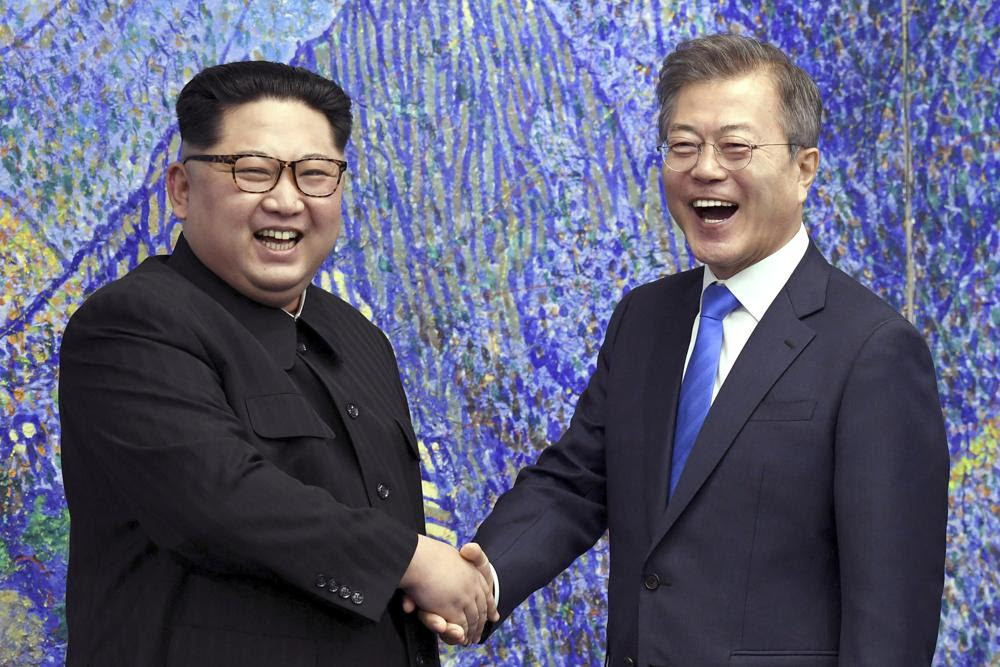
SEOUL, South Korea (AP) — The leaders of North and South Korea restored suspended communication channels between them and agreed to improve ties, both governments said Tuesday, amid a 2 ½ year-stalemate in U.S.-led…Read More

OTHER TOP STORIES

TOKYO (AP) — Alaska is renowned for its majestic natural beauty. The snowy peaks. The glistening glaciers. The sparkling fjords. An Arctic paradise, for sure. Swimming? That’…Read More

WASHINGTON (AP) — The United States served notice Monday that it will keep existing COVID-19 restrictions on international travel in place for now due to concerns about the s…Read More

HELSINKI (AP) — Norwegian experts say an unusually large meteor was visible over large parts of southern Scandinavia and illuminated southeast Norway with a powerful flash of…Read More

TOKYO (AP) — The greatest gymnast of all time must rally Team USA for the Americans to win their third consecutive gold medal. Simone Biles and her squad trail the team repr…Read More

The post World View: KKK Murder Plot, US Capitol Riot Probe Begins, NK & SK in Pact, More appeared first on The St Kitts Nevis Observer.