Hamilton City Council is shelling out $22,000 on a team-building event complete with MC, two motivational guest speakers and a cultural performance to get all its staff “excited and buzzing”.The two-and-a-half hour “team meeting”…
Category Archives: headline
Gary Dell: What te reo Māori means for four generations of my family
OPINION: I live in Aotearoa New Zealand, but I grew up in New Zealand.One of my great grandfathers was a man called Ben Keys, during the turn of the 20th century he travelled the country mapping tribal lands. His diaries are in…
Wellington drinking water plant deemed compliant after power outage breach
An investigation has found Waterloo Treatment Plant is compliant after a power cut stopped ultra-violet filters from working and partially untreated drinking water had to be drained from the network.Water at the Lower Hutt plant…
Herald morning quiz: July 23
Test your brains with the Herald’s morning quiz. Be sure to check back on nzherald.co.nz at 3pm for the afternoon quiz. To challenge yourself with more quizzes, CLICK HERE.
Te Pāti Māori pays tribute to Whanganui's Esther Tinirau
Te reo Māori educator and “dedicated leader of her people” Esther Tinirau (Ngāti Ruaka) has died.In recent years Tinirau, who was diagnosed with stage-four bowel cancer in 2016, has been a staunch advocate of widespread…
US Appoints Special Haiti Envoy to Help with Assistance
WASHINGTON, July 22 (Reuters) – The United States on Thursday announced a special envoy to help coordinate U.S. assistance in Haiti, including efforts promoting long-term peace and elections after the assassination of Haitian president Jovenel Moise this month.
Daniel Foote, a career member of the Senior Foreign Service, will work alongside the U.S. Ambassador Michele Sison, the State Department said in a statement.
“The Special Envoy will engage with Haitian and international partners to facilitate long-term peace and stability and support efforts to hold free and fair presidential and legislative elections,” the department said.
“He will also work with partners to coordinate assistance efforts in several areas, including humanitarian, security, and investigative assistance.”
Foote previously served twice as deputy chief of mission in Haiti and was the American ambassador to Zambia until January 2020.
Reporting by Susan Heavey; Editing byh Doina Chiacu, Kirsten Donovan
The post US Appoints Special Haiti Envoy to Help with Assistance appeared first on The St Kitts Nevis Observer.
China Flood Death Toll Rises
The official death toll from central China’s devastating floods has risen to 33, as the public began to ask questions about the readiness of authorities for the disaster.
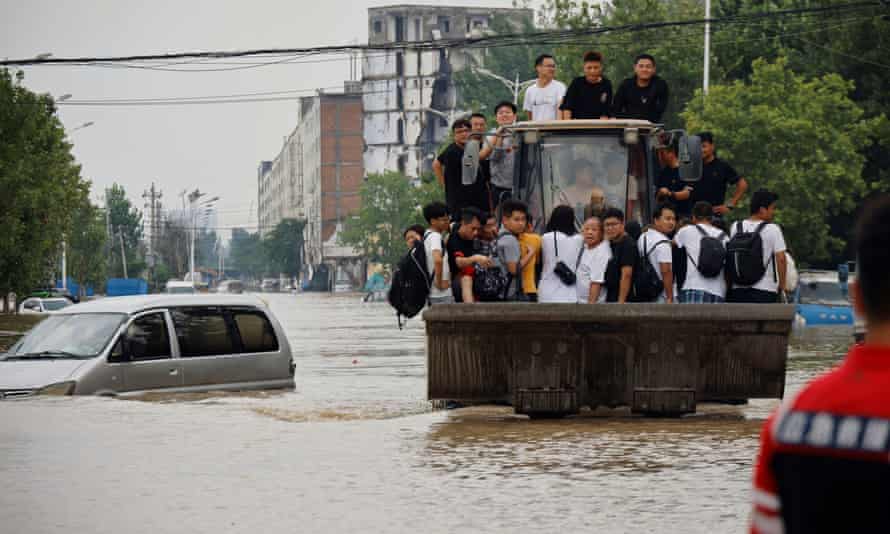
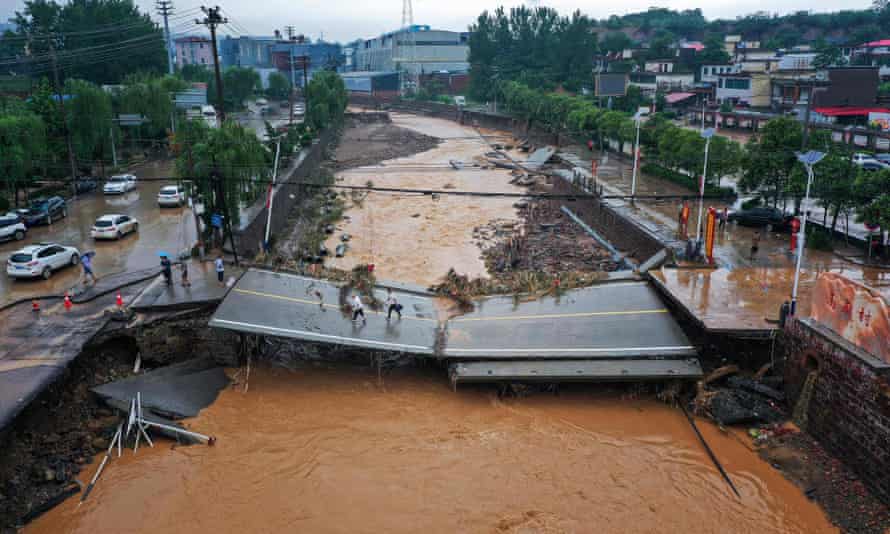
Cleanup efforts were under way in Henan province and the capital city Zhengzhou on Thursday, after a record breaking rain storm flooded the city’s streets and subway, damaged dams and reservoirs, collapsed roads, cut power to at least one hospital and was linked to a massive explosion at a factory in Dengfeng city.
Authorities said 200,000 people were displaced by the floods and more than three million people were affected. They also reported that eight people are still missing.
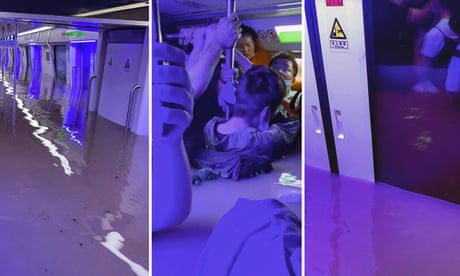
‘I might not make it’: passengers tell of horror as Chinese subway floods
Heavy rain was forecast to continue this week, driven in part by a strengthening typhoon east of Taiwan. In Guangdong, in southern China, 13 construction workers were killed when they were trapped in a flooded tunnel. Thousands of rescuers were sent in to assist northern Henan, where dozens of counties were hit by flooding on Wednesday night and Thursday, with reports of overflowing reservoirs, submerged roads, and cars and trucks being washed away.
The Henan disaster has prompted public scrutiny over the preparedness of authorities, in particular the apparently inaccurate weather forecasts and the confusing disaster alert system. Many also questioned the decision to keep the subway operating throughout the deluge.
“I later learned that the Henan Meteorological Department had issued the red alarm prior to the disaster, but no one can access it from the internet, or they didn’t pay attention, because there are a lot of alarms classified as spams,” a Zhengzhou resident told the Guardian.
“The alarms should be sent to the government at all levels and then to individuals. If individuals received alarms from authorities they would have paid serious attention. But I think many authorities didn’t see the alarm,” she said.
Local media outlets have referred to the rainstorm – which saw a year’s worth of rainfall in three days – as a “one-in-1,000-year weather event”. The rainfall broke hourly and daily records of the 70 years of collected data.
At least 12 of the deaths occurred on the subway, where about 1,000 people were reportedly trapped in stations and carriages after water filled the tunnels. Alarming footage showed people clinging to handrails in chest-high water.
Local authorities said the heavy rain caused water to accumulate in the parking lot near Line 5 of the metro, breaking through a retaining wall at around 6pm and flooding the line, stopping trains between Shakoulu – where at least five deaths are believed to have occurred – and Haitansi stations.
The Chinese government has ordered local authorities to make immediate improvements to urban flood controls and emergency responses, including hidden risks on the rail system.
“They must take emergency measures such as suspending trains, evacuating passengers, and closing stations in atypical situations such as excessively intense storms,” the ministry said in a statement viewed at least 190m times on Weibo.
Hawkish state-owned tabloid, the Global Times, said it was “absolutely impossible to keep Zhengzhou from flooding” in such heavy rains but greater mitigation efforts were needed to reduce the loss of life.
Concerns had been raised about the safety of the subway system – which opened its first line in 2013 – the decision to keep it operating at peak hour when the rain was at its heaviest, and the transparency of officials. Online, commenters were divided, but included substantial criticism of the response.
“Why didn’t you close the subway in advance when it was raining so heavily,” asked one.
Deadly rains hit central China as subways flood and tens of millions impacted – video
“I only see loads from Mr and Ms Hindsight,” said another in response to the ministry’s statement. “We can’t control the flood, but they should have suspended the operation when numerous alerts were released.”
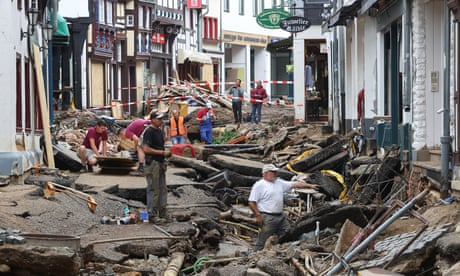
Catastrophic floods could hit Europe far more often, study finds
Zheng, a safety worker at Zhengzhou metro, told Southern Weekly on Wednesday they tried to keep the trains running so people could get home but were overwhelmed by the Tuesday afternoon downpour. “This is the first time in my life I have witnessed water flooding into the metro station. I felt hopeless,” he said.
The Henan Business Daily newspaper reported staff at one station told a man all passengers had been evacuated but had to acknowledge that wasn’t true after he started a video call with his wife who was still trapped on board a train. She told her husband the water had almost reached her neck and passengers were struggling to breathe, the report said.
Beijing News also questioned the timing of the subway operations, noting the network wasn’t fully suspended until 6pm, hours after water first started entering some stations.
A widely shared WeChat article noted early contradictory statements from local state media, including that no passengers were in danger, while at the same time footage – later blocked from China’s internet – was being shared of dead bodies at Shakoulu station, including by the national state media outlet, Xinhua.
The WeChat article also noted premature declarations that the rescue mission was complete, while trapped passengers continued to post about their predicament. The article – which also questioned whether it was a man-made disaster linked to the blasting of a dam late Tuesday near the city of Luoyang – was later censored for “violating regulations”, according to a Twitter user, Matt Knight, who collected online posts.
Knight noted multiple examples of the stark differences between some posts by state media and authorities, which emphasised rescue efforts and heartwarming community acts, and those shared by the public.
Public scrutiny has also fallen on the timing of warnings from the local meteorological services. The provincial weather bureau told state media it had issued a report warning of the coming torrential rains two days in advance.
The impact of the floods spread beyond the capital.
Zhengzhou’s flood control headquarters said water storage at the Guojiazui reservoir was at “major risk” of dam failure and the local government ordered evacuations.

In the city of Luoyang, local authorities said the rainfall had caused a 20-metre breach in the Yihetan dam, which “could collapse at any time”. A division of China’s military were sent out to the site to carry out emergency blasting and flood diversion.
At least four were killed in Gongyi city, about 80km from Zhengzhou, where the rains caused flooding and landslides.
Some worry that given the scale of the damage, the post-disaster reconstruction will be particularly challenging for one of the most populous provinces in China. Zhengzhou alone is home to 12 million people.
Henan province – which is situated between Beijing and Shanghai in central China – has many cultural sites and is a major base for industry and agriculture. It is crisscrossed by multiple waterways, many of them linked to the Yellow River, which has a long history of bursting its banks during periods of intensive rainfall.
China routinely experiences flooding in the summer months, but rapid urbanisation, and conversion of farmland, as well as the worsening climate crisis has exacerbated the impact of such events.
Additional reporting: Jason Lu and agencies
The post China Flood Death Toll Rises appeared first on The St Kitts Nevis Observer.
Fake News Takes Over Cuban Protests
Disinformation spread quickly across social media platforms as historic anti-government protests erupted in Cuba earlier this month—and it’s bots that are being widely utilized to spread fake news fast, experts have told Newsweek.
Thousands of people took to the streets in cities across Cuba on July 11 to protest shortages of basic goods amid a surge in COVID-19 cases and call for political change.
Over just two days of unrest, one disinformation expert said, thousands of Twitter accounts with the #SOSCuba hashtag were created, before utilizing an automated retweet system to share thousands of tweets in rapid time.
Researchers have also told of the difficulty of corroborating videos and images coming out of the island, where human rights organizations are banned.
In response, Twitter told Newsweek it is investigating bots potential role in spreading disinformation. “We’ll continue to monitor the situation and remain vigilant,” a spokesperson for the company added.
Meanwhile, on Saturday, Cuban authorities rallied tens of thousands of supporters in Havana and President Miguel Díaz-Canel delivered a speech where he blamed the recent unrest on the U.S. and its economic embargo.
Authorities also cut internet access and restricted social media and messaging platforms in the wake of the protests—tools that helped Cubans share their grievances and organize the protests.
False information spread quickly on social media. Fake news reports following the protests included claims that Raul Castro had fled to Venezuela, that protesters had kidnapped a provincial Communist Party chief, and Caracas was sending in troops.
The demonstrations died down after security forces were deployed on the island, where political dissent is not tolerated, and the Cuban government claimed the stories were spread by counter-revolutionaries—but critics suggested officials could be behind them.
Last Tuesday, Cuba’s Foreign Minister Bruno Rodriguez blamed the protests on a U.S.-based Twitter campaign. “I have irrefutable proof that the majority of those that took part in this (internet) campaign were in the United States and used automated systems to make content go viral, without being penalized by Twitter,” he said.
Disinformation expert Julián Macías Tovar, the director of Pandemia Digital, told Newsweek that many of the accounts using the hashtag were created recently.
Tovar—who has previously carried out separate work for Podemos, a left-leaning Spanish political party—said around 2,000 Twitter accounts were created on July 10 and 11 that used the #SOSCuba hashtag.
He said around 100,000 tweets using the hashtag were sent on July 9, but the following day it was 500,000. On July 11, it was 1.5 million.
Cubans Cry for Help on Social Media: ‘They Will Beat Us to Death As Well’
Read more
Cubans Cry for Help on Social Media: ‘They Will Beat Us to Death As Well’
Some the accounts using the hashtag utilize an automated retweet system to share thousands of tweets in a short space of time, he said. “If there are accounts with few followers who make many tweets or retweets, newly created accounts, with a fake profile picture… that’s always suspicious,” he said.
Sam Woolley, program director of propaganda at the University of Texas at Austin’s Center for Media Engagement, told Newsweek: “It’s clear that there are bots involved in the conversation about what’s going on in Cuba.”
But he added that spreading of misinformation and disinformation on social media has become common during major political events around the world in recent years. “So it’s not particularly surprising,” he added.
“All of this exists within the larger context of the fact that the internet is a crucial tool for people in Cuba for communicating and organizing these protests. However, that doesn’t mean that there isn’t attempts to control public perception about the protests.”

People take part in a demonstration to support the government of the Cuban President Miguel Diaz-Canel in Havana, on July 11, 2021. Yamil Lage/AFP via Getty Images
Independent verification is made difficult due to the fact that Cuban authorities prohibit independent human rights organizations from visiting the country, Louise Tillotson, a researcher for Amnesty International, told Newsweek.
“So there is certainly an approach from the authorities and there has been historically, which is one of keeping information quiet and not allowing for international scrutiny,” she said.
But she said the organization does work to corroborate videos and images coming out of Cuba, and cross-reference with reliable sources of information and testimonies.
‘Very Worrisome Space’
Still, social media remains a “a fertile space” for attempts at political manipulation, Woolley said, while figuring out who is behind coordinated disinformation campaigns is “really tricky.”
“Nearly anyone at this stage can build and launch bots on Twitter,” he explained. “It’s not as easy as just saying it’s the U.S. doing some kind of false flag operation, or Cuba is attempting to control the protests.
“That stands to benefit the people… the powerful individuals and entities that are involved in this, they benefit from the anonymity that exists online. But simultaneously, it does create a very, very worrisome space wherein a lot of conspiracies are birthed.”
In a blog post last year, Twitter said the term “bot” has been used to mischaracterize accounts with auto-generated numerical usernames and “more worryingly, as a tool by those in positions of political power to tarnish the views of people who may disagree with them or online public opinion that’s not favorable.”
The company explained that the “holistic behavior” of an account was more important than whether or not it is automated. As a result, the social media giant is focusing on targeting what it calls “platform manipulation,” including the malicious use of automation.
Facebook has also been contacted for comment.
The removal of bots and influence operations is a “bit of a cat and mouse game” for social media platforms, according to Woolley.
“They’re constantly looking for these and getting rid of them, but it doesn’t seem that they have a particularly systematic approach in doing this,” he said
As a result, the use of bots and other forms of online manipulation “continue to be very serious problems that neither social media companies nor governments or other organizations have a handle on yet.”
The post Fake News Takes Over Cuban Protests appeared first on The St Kitts Nevis Observer.
Heat Shatters Vision of Pacific North-West as Climate Refuge
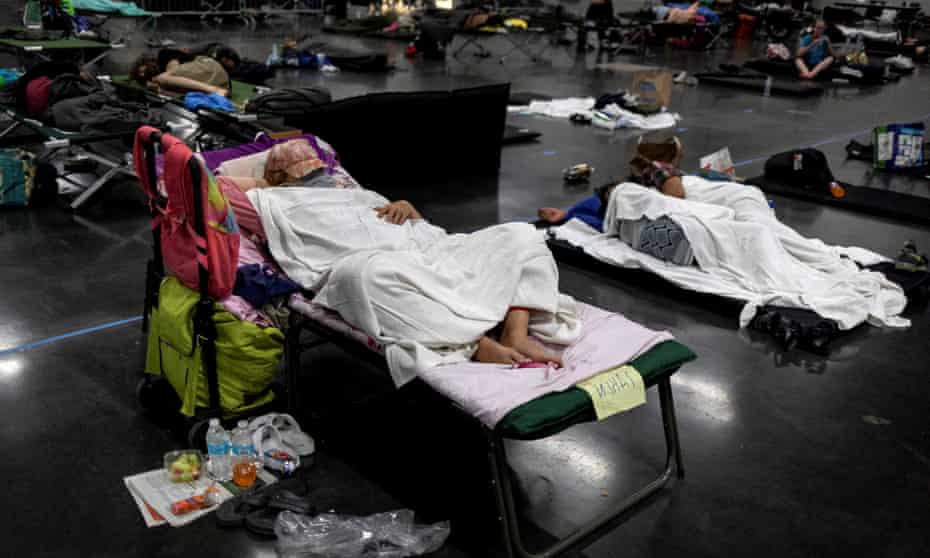
Residents of the region, known for its mild weather, are facing a shifting reality
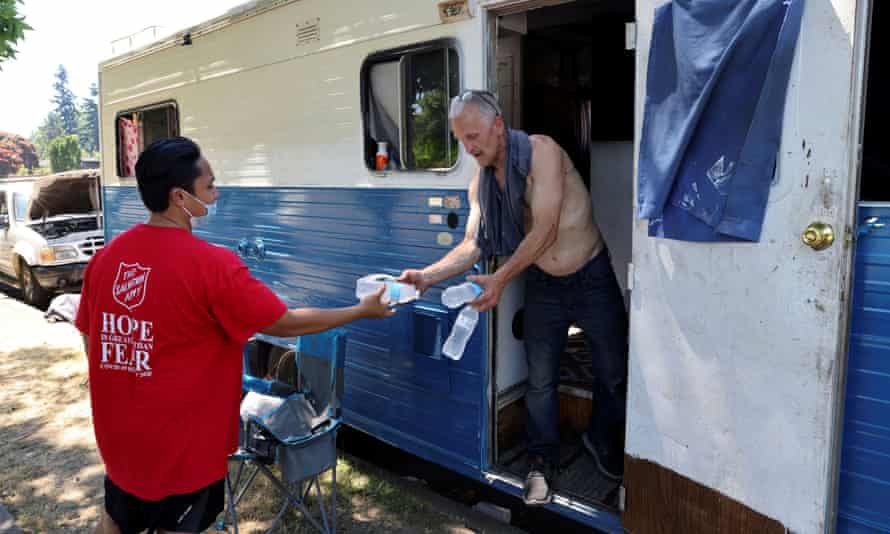
Unprecedented temperatures baked the region three weeks ago, part of a procession of heatwaves that have hit the parched US west, from Montana to southern California, over the past month. A “heat dome” that settled over the area saw Seattle reach 108F (42.2C), smashing the previous record by 3F (1.7C), while Portland, Oregon, soared to its own record of 116F (46.7C). Some inland areas managed to get up to 118F (47.8C).
The conditions in a corner of the US known for its moderate, often lukewarm, summers bewildered residents.
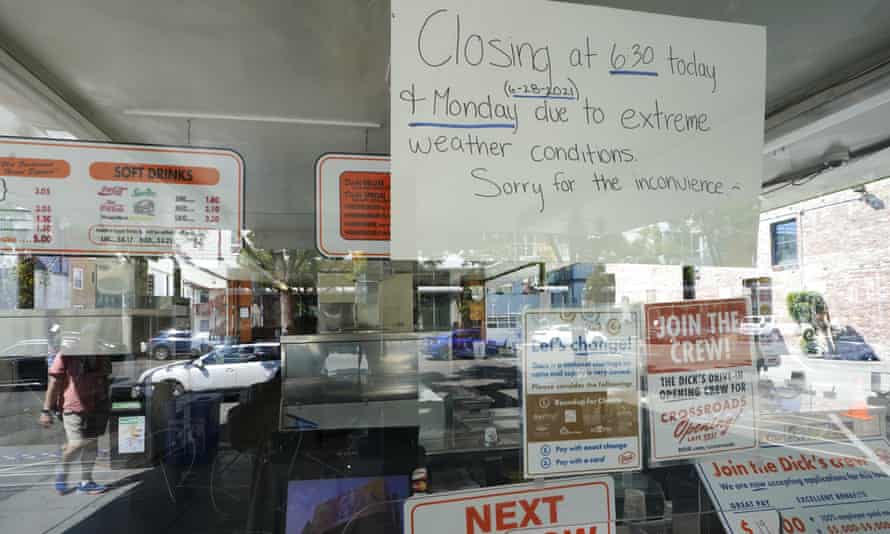
Roads cracked and buckled in the heat, power cables melted, restaurants shut down. Hospitals suddenly found themselves overwhelmed, with several hundred people believed to have died in the heat. Slightly north, off the coast of Vancouver, an estimated 1 billion marine creatures perished, as helpless mussels and clams cooked in their own shells.
“We saw the forecasts and it was hard to believe as we don’t really have heatwaves like that. In Seattle it’s usually so overcast during June we call it Juneuary,” said Kristie Ebi, an epidemiologist at the University of Washington who knew the heatwave was serious when she woke up at 6am with the temperature already at 80F. “You see the heatwaves hit other places and you know it’s bad but there’s not the sense of urgency until it hits you.”
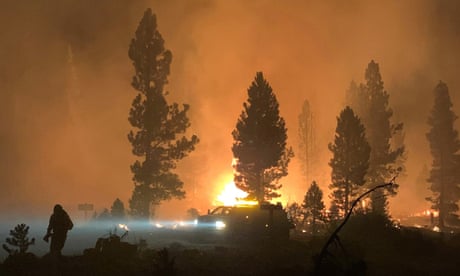
Thunderstorms and lightning threaten to spur more fires in US west
An old joke in Seattle is that you will know more people with a boat than people with air conditioning and the latest figures show just 44% of households in the city are fitted with air con. The Pacific north-west’s image as a place of rugged natural beauty, comfortable climes and forward-thinking politics has helped draw plenty of newcomers – Seattle was the fastest-growing major US city last year – but the freakish heatwave has provided a sobering reality check to its blossoming status as a refuge.
“There are a lot of people moving up from California with the idea there’s a lot of natural amenities and a lot of cheap space but all of these factors are changing,” said Jesse Keenan, an expert in climate adaptation at Tulane University. “It’s becoming less affordable and is increasingly burdened by forest fires, terrible smoke, flash floods and these heatwaves that suddenly make things a matter of life or death.”
The Pacific north-west has heated up by an average of 2F (1.1C) over the past century, with growing wildfires, failing coastal fisheries, receding snowpack and increasing heat taking its toll upon a region historically unprepared for such extremes. The recent heatwave would have been “virtually impossible” without human-induced climate breakdown, scientists have said.
Communities in the north-west face a “monumental task” to adapt to this shifting reality, Keenan said, requiring the upgrading of homes, businesses and public buildings with proper cooling, increasing shade with more tree cover, making urban surfaces more reflective to the heat and retooling an electricity grid ill-equipped for huge power surges in summertime.
“There is a very rapid change in the climate under way and at the moment they are not well prepared for extreme heat,” Keenan said. “People are finally feeling the pain of that.”
Oregon was supposed to be a tranquil haven for Steven Mana’oakamai Johnson, who moved to the state in 2017 after witnessing his home in Saipan, part of the Northern Mariana Islands in the Pacific Ocean, menaced by typhoons made increasingly powerful by the warming ocean and atmosphere.
But when the heatwave struck, Johnson, his partner and their dog had to flee their Corvallis apartment, which does not have air conditioning, to stay on the Oregon coast in an attempt to cool down. The surging heat, which followed wildfires that raged nearby last year, has forced Johnson to revise his previous assumptions.
“I always thought this was a comfortable place, that it could even be a host state for climate migrants,” said Johnson, a biologist. “But there has been this big wake-up that things are moving faster than anticipated. It was shocking how hot it got, and how long it took to cool down.”
Several of Johnson’s friends are among the many people now inundating local contractors with requests to install air conditioning.
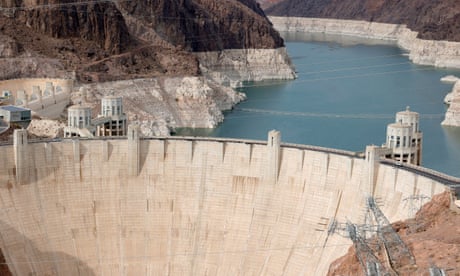
Severe drought threatens Hoover dam reservoir – and water for US west
“In just a few days you’ve seen this big change in how people are thinking about adapting,” he said. “It has changed my view of Oregon. It’s hammered home to me that climate change is inescapable – no matter where you are or when you go there, you have to think about it. Nowhere is safe, nowhere is truly a refuge.”
The calculus for some people is even more existential. A few hundred miles north of Seattle, the small Canadian town of Lytton was almost completely consumed by a fast-moving wildfire on 30 June, the day after it set a stunning new national record temperature of 121F (49.6C), a huge leap on the previous record and higher than any temperature ever gauged in Europe or South America.
Lytton is located in a more arid inland area than the breezier British Columbia coast and so often gets scorching heat in summer, although nothing approaching the incredible extremes endured this year. It is forcing some to think about their presence in what is supposed to be a safe corner of the world.
“I firmly believe there will be more and more fires until there are no trees here,” said Jim Ryan, a computer programmer who has lived in Spence’s Bridge, a small town near Lytton, for the past 30 years. “Even if I don’t get burned out, do I want to spend every summer living in smoke, in a place more polluted than in the big cities?”
Ash is still falling down around Ryan’s house and in most recent summers a nearby wildfire has choked his town, leaving his clothes smelling of smoke. “There were always fires before, but never this big, they never took off as fast,” he said.
“To me, it is climate change in action. I don’t really want to move away but I don’t want to live here and cut short my life either. That’s something we are struggling with. The question is, though – where would we go to?”
The post Heat Shatters Vision of Pacific North-West as Climate Refuge appeared first on The St Kitts Nevis Observer.
Venezuela’s Maduro Dismisses Vatican Plea as Hate Filled
CARACAS, July 21 (Reuters) – Venezuelan President Nicolas Maduro on Wednesday called a letter sent by the Vatican’s foreign minister to local businesses, which urged Caracas politicians to take seriously negotiations to resolve the country’s crisis, a “compendium of hatred.”
The letter from the Vatican’s Secretary of State, Cardinal Pietro Parolin, was read aloud by a Catholic Church representative on Tuesday evening at the annual assembly of Fedecamaras, the largest business federation in the heavily Roman Catholic South American country.
A top government official attended that meeting for the first time in years in a sign of easing tensions between business leaders and the socialist government, as Maduro opens the economy in an effort to end a years-long recession in the once-prosperous OPEC nation. read more
“When everyone is talking about producing and overcoming the economic crisis, an unknown priest…read a letter from Pietro Parolin, a letter that was a compendium of hatred, of venom,” Maduro said in a state television appearance on Wednesday, accusing Parolin of meddling in Venezuela’s affairs.
The Vatican did not immediately respond to a request for comment.
Maduro’s comments came as Venezuela’s government and opposition – which labels Maduro a dictator who rigged his 2018 election and has largely boycotted the past two elections – prepare for negotiations to attempt to establish mutually agreeable electoral conditions.
Parolin’s letter said that a solution to Venezuela’s crisis would only come “if Venezuelans, and especially those who have some political responsibility, are willing to sit down and negotiate in a serious way about concrete problems and find solutions to Venezuelans’ true needs.”
Venezuelan Cardinal Baltazar Porras last month said the Church was willing to facilitate dialogue between the two sides.
Reporting by Mayela Armas; Writing by Luc Cohen; Editing by Leslie Adler
The post Venezuela’s Maduro Dismisses Vatican Plea as Hate Filled appeared first on The St Kitts Nevis Observer.