Category Archives: headline

Finally! Pedro Castillo Declared President-Elect of Peru

Pedro Castillo has been declared president-elect of Peru, weeks after winning the popular vote in a tightly-contested run-off election.

The country’s election authority announced its verdict after reviewing claims of electoral fraud by his right-wing rival, Keiko Fujimori.

Mr Castillo, a 51-year-old former school teacher and union leader, secured just over 50% of the votes.

He will now be sworn in as Peru’s president on 28 July.

After the jury announced its verdict, Mr Castillo gave a speech in the capital, Lima.

“We are going to work together and bring this country together,” said Mr Castillo, according to news outlet RPP. “We are going to reject anything that goes against democracy.”

In a tweet, Peru’s current President Francisco Sagasti said he welcomed the announcement.

“May this be the beginning of a new stage of reconciliation, consensus and unity,” he added.

Mr Castillo burst onto the national scene four years ago when he led thousands of teachers on successful strike over pay.

During his presidential campaign, Mr Castillo pledged to nationalise Peru’s lucrative mining and hydrocarbon sectors, and said he would aim to create a million new jobs in a year.

He also proposed re-introducing the death penalty to help tackle crime.

Mr Castillo won last month’s election by a margin of only 44,000 votes – beating Ms Fujimori in her third bid for the presidency.

He has previously claimed victory, but a series of legal challenges by Ms Fujimori delayed an official verdict from election officials.

Ms Fujimori had provided little evidence of her claims of election fraud, and Castillo’s Free Peru party has rejected the accusations. Electoral observers, including the Organisation of American States, have also said they have found no irregularities.

Ahead of Monday night’s announcement, Ms Fujimori said she would accept the result.

“The truth will come out anyway,” she added. “We are all going to work together to re-establish legitimacy in our country.”

Ms Fujimori is the daughter of former President Alberto Fujimori, who is in jail serving a 25-year sentence for crimes including corruption and human rights abuses.

Ms Fujimori herself is being investigated for alleged corruption and money laundering, claims she says are politically motivated. Her failure to become president means prosecutors can now proceed with the charges against her.

The post Finally! Pedro Castillo Declared President-Elect of Peru appeared first on The St Kitts Nevis Observer.

Cuba Now Has Highest Per Capita Rate in Latin America, US Delta Surge

HAVANA, July 19 (Reuters) – Cuba, which kept coronavirus infections low last year, now has the highest rate of contagion per capita in Latin America. That has strained its healthcare sector and helped stoke rare protests that have roiled the Communist-run island.

The Caribbean nation of 11 million people reported nearly 4,000 confirmed cases per million residents over the last week, nine times more than the world average and more than any other country in the Americas for its size.

The outbreak, fueled by the arrival of the more contagious Delta variant first identified in India, has pushed hospitals at the virus epicenter in the province of Matanzas to the brink. State media has shown rare images of patients in beds in corridors and doctors complaining of a lack of oxygen, ventilators and medicines.

Cuba’s handling of the pandemic was one of the issues that propelled thousands to take to the streets nationwide last Sunday in unprecedented anti-government demonstrations in a country where public spaces are tightly controlled. read more Demonstrators also protested shortages of food and medicines and curbs on civil liberties.

Cuba is not alone in struggling under new waves of the pandemic. But the political implications of such a crisis are greater in a country where healthcare is considered one of the pillars of legitimacy of its “revolutionary” one-party system.

Moreover the outbreak and subsequent lockdown and reduction in numbers of flights has taxed an already bankrupt economy where many work in tourism and others rely on travelers to bring in remittances and goods including medicine.

“The government has consistently made the case that one of the main accomplishments of the revolution is its world-class medical sector,” said Cuban American historian Daniel Rodriguez, author of a book on medical politics in post-independence Havana.

Rodriguez said the exacerbation of food and medicine shortages over the past year due to the pandemic-related economic crisis had already broken Cuba’s social pact.

“When the pandemic began spiraling out of control a couple of weeks ago, it appeared increasingly the revolutionary government was no longer able to protect Cuban lives, and the result was an extraordinary repudiation of the revolution itself.”

‘NOT EVEN MEDICINE’

Cuba’s government has blamed the demonstrations on U.S.-financed “counter-revolutionaries” exploiting hardships caused by decades-old U.S. sanctions tightened during the pandemic. Several countries and non-government organizations including Oxfam called on Washington to lift sanctions this week.

On Saturday, authorities organized pro-government rallies across the island attended by thousands.

But many Cubans have aimed their anger at their own government’s handling of the economy and the pandemic.

“We are hungry, there’s nothing at the moment, not even medicine,” said Aylín Sardiña, 33, at a protest in Havana.

Some critics complained that the authorities appeared to have ample transport to deploy security forces to quell protests and bus state workers to rallies, while lacking ambulances.

To be sure, Cuba has had some pandemic successes, notably the development of five vaccine candidates, two of which have proven to have efficacy of more than 90%,according to preliminary Cuban data. read more

Thanks to one of the highest numbers of doctors per capita rates in the world, it was also able to send its “white coat army” to help other countries, and lately to reinforce hospitals in Matanzas.

Moreover cumulative cases per capita are still below the global average, while deaths per capita, though rising, are still just a third of the global average, a fact Cuba credits to its experimental treatments and its free, universal healthcare.

However, with cases now rising fast, a deepening of Cuba’s economic crisis has prevented officials from imposing stricter lockdowns with many Cubans having to stand in lines for hours to get scarce goods.

And so far only some two million people – less than a fifth of the population – are fully vaccinated.

Brazil-based Cuban virologist Amilcar Perez Riverol said that premature triumphal statements from state media about the Cuban vaccine candidates and rallies like Saturday’s may have also led to people lowering their guard, creating a breeding ground for cases to soar.

The country has an ambitious aims to have fully vaccinated 70% of the population by September. But Perez Riverol warned that in the next few weeks COVID-19 deaths would likely continue to rise as they lagged the surge in cases.

“You go out onto the street to buy food and someone says to you: do you know who else died?” said Libia Ortega, 44, a worker in a private cafeteria in Matanzas city closed due to the pandemic and shortages of products.

“The doctors are making a big effort to save lives every day but medicine and supplies are lacking.”

Reporting by Sarah Marsh; Additional reporting by Nelson Acosta; Editing by Adam Jourdan
and Daniel Wallis
======================================================

US: Delta fears grip economy as cases jump across the country

The delta variant of the coronavirus is sweeping through the United States, raising the average number of cases to 30,000-per-day, crowding hospitals in areas with large number of unvaccinated people and spurring questions about the nation’s recovery from the pandemic.

Stocks tanked on Monday, with the Dow Jones Industrial average dropping 725 points after being down more than 900 points at one time.

It was the worst one-day performance in the Dow since last October, and followed losses in markets around the world as investor fears about how the delta virus might slow both the health and economic recovery took hold.

Divide between vaccinated and unvaccinated: ​​Health officials have described the latest stage of the coronavirus as a pandemic of the unvaccinated while emphasizing that those who have had their shots are relatively safe.

Sten Vermund, a professor at the Yale School of Public Health, said he is “not particularly worried” about COVID-19 for himself, because he is fully vaccinated.

“What worries me is my fellow Americans who for a variety of reasons choose not to get vaccinated; they continue to be in harm’s way,” Vermund said.

Cases, deaths on the rise: While the 30,000 cases per day on average is more than double the 13,000 average at the end of June, that rate is still well below highs from last fall and earlier this year.

Still, deaths are also ticking back up, at around 240 per day.

=============================================

Pediatric group recommends masks for students over 2 when schools reopen

The American Academy of Pediatrics (AAP) recommended on Monday that all students older than 2 years old wear masks, regardless of their vaccination status, when schools reopen in the fall.

The leading pediatrics organization called for universal masking, noting that most school-aged children are not yet eligible to get the COVID-19 vaccine, and many schools are not planning to track the vaccination status of students and staff.

“There are many children and others who cannot be vaccinated,” Sara Bode, chairperson-elect of the AAP Council on School Health Executive Committee, said in a statement. “This is why it’s important to use every tool in our toolkit to safeguard children from COVID-19.”

Support for reopening: The AAP said, however, it “strongly recommends in-person learning,” adding that children face a higher risk of mental health issues and developmental setbacks if students do not return to classrooms.

The pediatrics group acknowledged that current research indicates reopening schools with safety precautions like masking “does not significantly increase community transmission.” But with variants like the delta strain spreading, the AAP noted transmission could increase.

Overall, the AAP says opening schools with effective safety precautions, including masking, is the right move.

The post Cuba Now Has Highest Per Capita Rate in Latin America, US Delta Surge appeared first on The St Kitts Nevis Observer.
Former Nat. Security Official: Trump, Republican Party Bigger Threat to US Than ISIS

Former Trump administration official Miles Taylor has slammed the Republican Party, arguing that the GOP represents a greater threat to the country than U.S.-designated terrorist groups ISIS and Al Qaeda.

Taylor served as the chief of staff to the secretary of Homeland Security under former President Donald Trump from February 2019 to September 2019 and worked for the Department of Homeland Security in the previous administration for more than two years. However, Taylor went on to publicly condemn Trump and work with conservative groups to campaign against the former president ahead of the 2020 election.

During a Thursday evening interview with MSNBC, Taylor touted his credentials working in national security and said that the present-day Republican Party represents the “number one national security threat” to the country. Notably, Taylor still described himself as a member of the GOP.

“I’m a national security guy. I’ve worked in national security against ISIS and Al Qaeda and Russia,” he said. “And the number one national security threat I’ve ever seen in my life to this country’s democracy is the party that I’m in, the Republican Party.” Taylor reiterated that the GOP “is the number one national security threat to the United States of America.”

Newsweek Newsletter sign-up >Former Trump administration official Miles Taylor called the Republican Party the “number one national security threat to the United States of America.” Pictured, Trump supporters clash with police and security forces as hundreds violently attack the U.S. Capitol Building in Washington, D.C. on Jan. 6. JOSEPH PREZIOSO/AFP via Getty Images

The former Trump administration official cautioned that if Republicans retake the House of Representatives in 2022 that it will “become a haunted house.” He argued that Trump would be the “ghoul and the specter” haunting the legislative chamber. Taylor said that if House Minority Leader Kevin McCarthy, a California Republican, became Speaker of the House that it would “really be Donald Trump’s hand on the speaker’s gavel.”


The post Former Nat. Security Official: Trump, Republican Party Bigger Threat to US Than ISIS appeared first on The St Kitts Nevis Observer.
Forbes Claims Trump Made $2.4B During Presidency, Lost $200M

In April 2017, Press Secretary Sean Spicer took the podium in the White House briefing room and announced that the president was donating his first-quarter salary to the National Park Service. With a serious look on his face, Spicer pulled out an oversize check with an oversize signature. It was the first of several checks that Donald Trump signed while in office, handing over his $400,000 salary in exchange for good publicity.

That was pocket change for Trump. His real money came from the business he refused to divest, not from his government salary. An analysis of documents, some of which only became public in recent weeks, shows just how much Trump’s businesses raked in while he was in office. Dig through everything—including property records, ethics disclosures, debt documents and securities filings—and you’ll find about $2.4 billion of revenue from January 2017 to December 2020.

If not for the pandemic, there would have been even more. Trump’s business was hauling in about $650 million annually during the first three years of his presidency. But in 2020, revenues plunged to an estimated $450 million as Covid infected the business. “It’s hurting me, and it’s hurting Hilton, and it’s hurting all of the great hotel chains all over the world,” Trump said in a March 2020 press conference at the White House. “It’s hurting everybody. I mean, there are very few businesses that are doing well now.”

The biggest portion of Trump’s revenue flowed through his clubs and golf properties, which generated approximately $940 million over four years. Trump National Doral, the golf resort in Miami, contributed roughly $270 million to that total. Mar-a-Lago, Trump’s club in Palm Beach, brought in about $90 million.

A New Jersey golf club, where the former president has been spending time this summer, took in $60 million or so. Those top-line figures didn’t all end up in Trump’s pocket, however. Golf clubs and resorts are expensive to manage, with operating profit margins running at 20% in good times. During the pandemic, Trump’s traditional courses fared reasonably well, but his golf resorts had to contend with long shutdowns, causing his overall golf and club revenues to drop 27% to an estimated $190 million in 2020.

Donald Trump owns a 30% interest in 555 California Street, a San Francisco office building.

David Paul Morris/Bloomberg

Fortunately for Trump, he also had high-margin commercial real estate holdings to bolster his bottom line. That proved especially critical in 2020, as commercial tenants—many locked into long-term leases—continued to pay rent.

At 555 California Street, a San Francisco office building in which Trump holds a 30% stake, his rent actually inched up last year, from $42 million to $43 million, according to an analysis of filings. The same thing happened at New York City’s 1290 Avenue of the Americas, where Trump’s haul increased from roughly $55 million to $58 million.

The hotel, licensing and management businesses, on the other hand, didn’t fare so well. Estimated revenues stayed well above $100 million from 2017 to 2019 but dropped closer to $50 million in 2020. No part of Trump’s portfolio was more poorly positioned to withstand such a blow, given the debt load against his hotels.

Inside his Washington, D.C., hotel, revenues flatlined at about $52 million from 2017 to 2019. With the top line stalled out, the hotel didn’t seem to be producing enough profit before the pandemic to cover the interest on its $170 million loan from Deutsche Bank. Things only got worse when Covid-19 hit, and revenues plunged to less $20 million. It’s no wonder the Trump Organization tried to sell the place.


Just down the street from the White House stands the Trump International Hotel in Washington, D.C.

Alex Brandon/AP

But the former president didn’t have much luck offloading that hotel or other assets last year. Trump ditched $32 million of real estate in 2017, an estimated $53 million in 2018, then $32 million in 2019. In 2020, however, he pocketed just $435,000, by selling condos in Vegas. The lack of deals was one reason revenues dropped about 25% to an estimated $450 million. A smaller sum, to be sure, but still more than 1,000 times the annual salary he gave away.


The post Forbes Claims Trump Made $2.4B During Presidency, Lost $200M appeared first on The St Kitts Nevis Observer.
Australian researchers trial Viagra during childbirth to reduce caesarean risk

Researchers are calling for pregnant women to participate in an Australian-first trial that observes the use of Viagra to reduce the risk of caesarean childbirth.

Brisbane's Mater Mothers' Hospital research staff believe Viagra's main ingredient, sildenafil, could help provide more positive outcomes for both mum and baby.

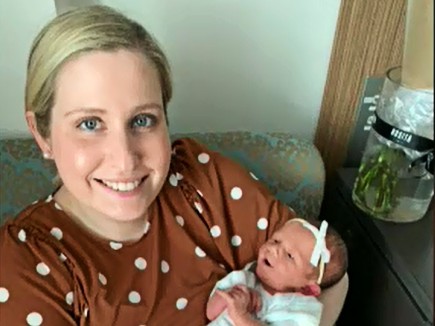
Those among the research team is obstetrician Tegan Triggs, who delivered her daughter Margot via a caesarean and hopes to help other nervous mums-to-be.

Those among the research team includes obstetrician Tegan Triggs, who delivered her own daughter Margot via a caesarean – hoping to help other nervous mums-to-be.

"I actually had a caesarean section for fetal distress in labour," Ms Triggs told 9News.

"It'll be wonderful to reduce the need for mums to undergo an operative birth."

Mater lead investigator Professor Sailesh Kumar said the Australia-wide trial had the potential to change clinical practice for childbirth both national and internationally.

"We want to show that it benefits the mother and particularly the baby, particularly outcomes related to lack of oxygen in labour," Professor Kumar said.

During contractions, blood flow from mother to baby can drop by up to 60 per cent, which can lead to a lack of oxygen.

Researchers believe that taking Viagra during labour could boost blood flow to the placenta, improve oxygen supply to the baby and reduce the need for an emergency caesarean.

"Our pilot study certainly showed promising results – we certainly didn't find any adverse outcomes in mother or baby," Professor Kumar said.

The program is looking to recruit 3200 pregnant women to take part in the trial, which will include placebos being used during childbirth and ultrasounds.

If the 18-month trial is considered a success, the next step is to take it global.

Victorian pub opens doors despite lockdown rules

A pub in regional Victoria is refusing to shut its doors to customers despite being in lockdown and police taking action.

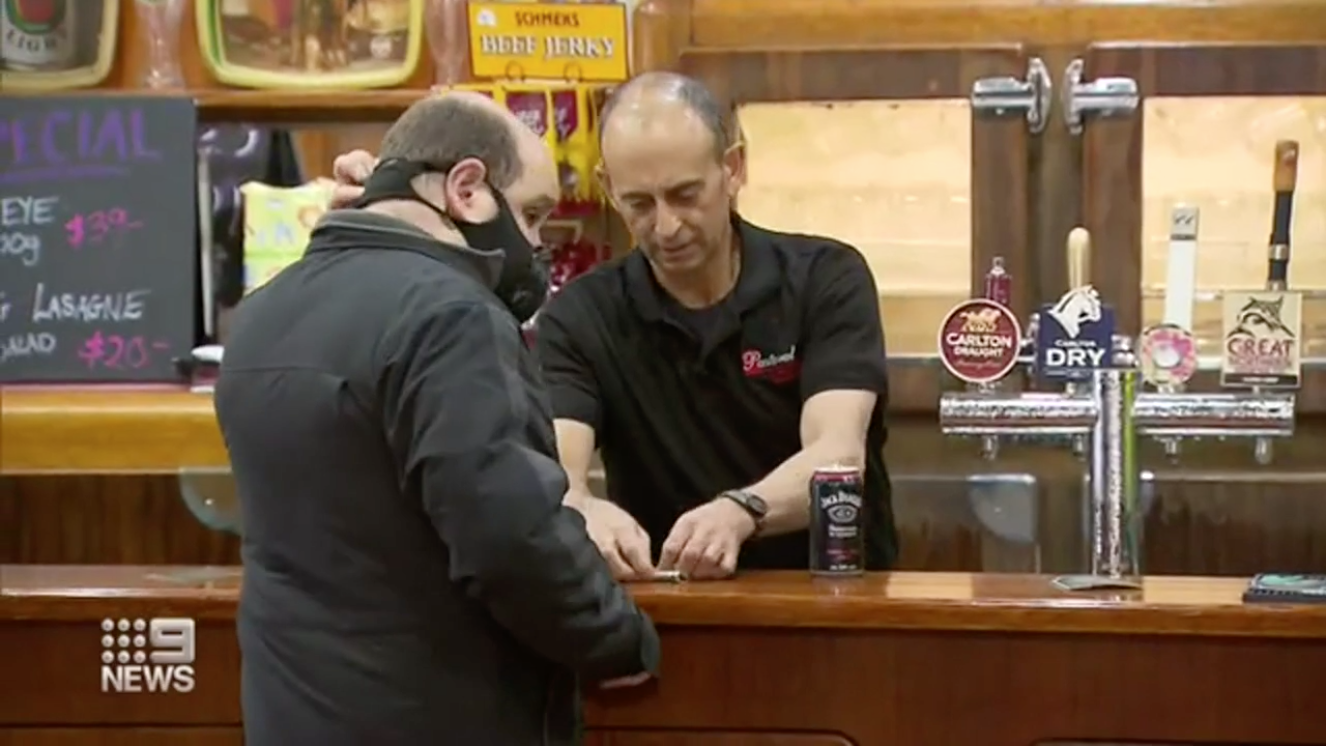
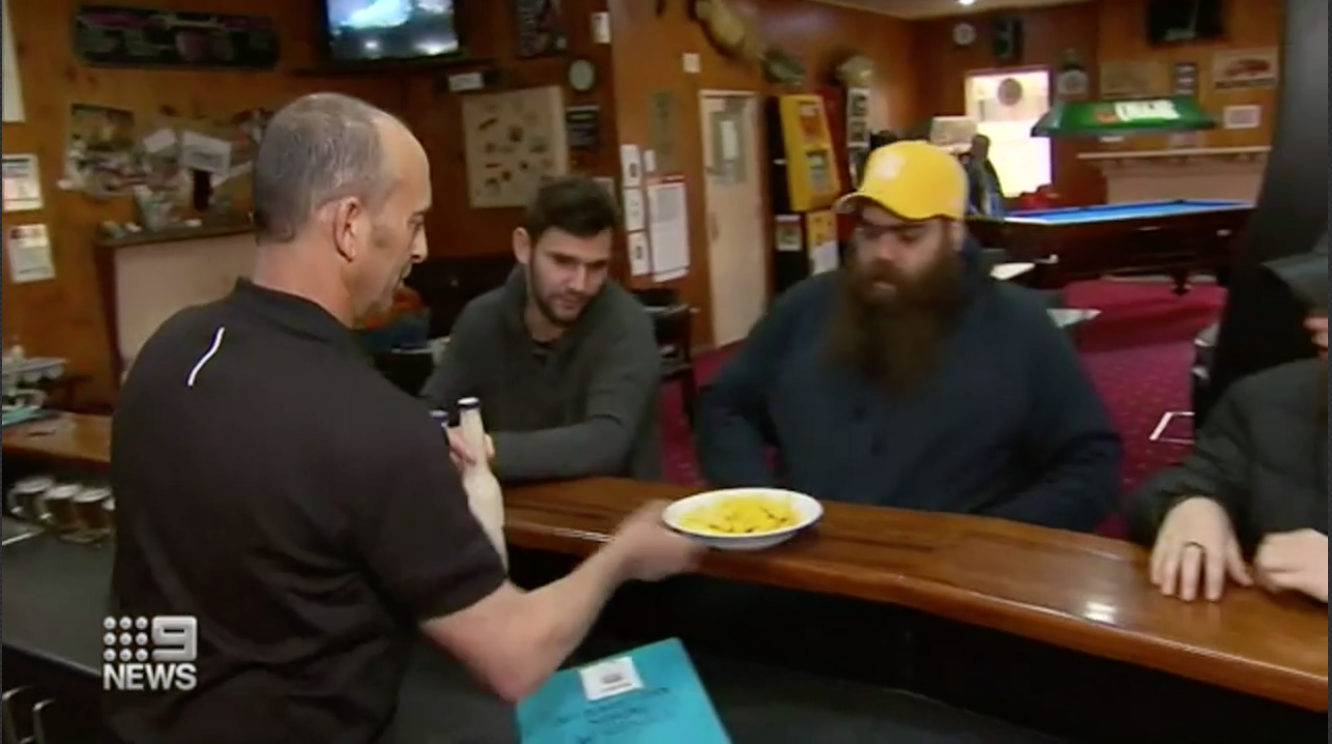
The Pastoral Hotel in Echuca might be the only place to get a parma and pint right now, openly defying lockdown orders.

"We've opened up as of Monday," publican Trevor Andrews said.

READ MORE: Victoria's lockdown extended for seven days as nine new local cases of COVID-19 recorded

"We've had people in the bar all yesterday, had some people in the bistro."

Since announcing he was throwing back open the doors, customers have been coming in but at their own risk.

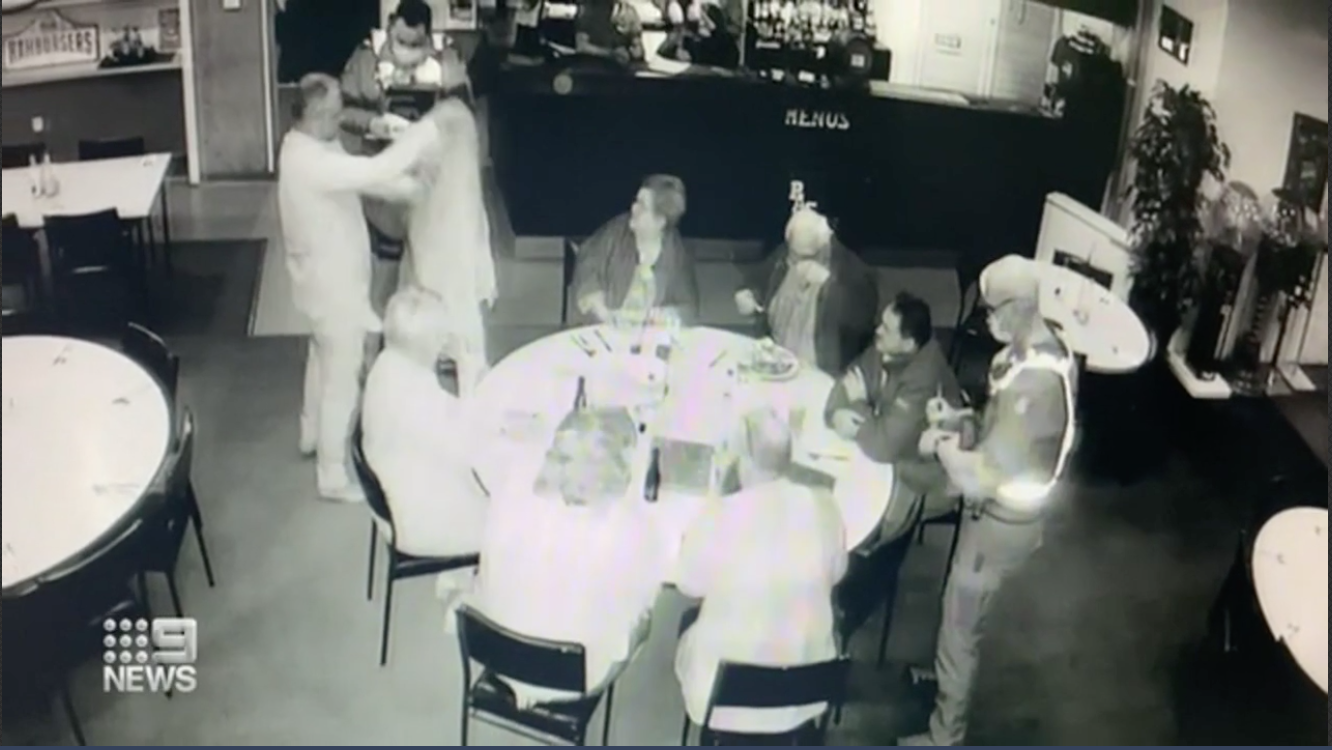
"Police came in yesterday and gave me a notice saying these people aren't meant to be here," Mr Andrews said.

"I believe they're going to get a fine."

Patrons say it's unfair.

READ MORE: Victoria clamps down on 'red zone permits' with NSW border: What you need to know

"I think it's like $1600, but no one here can afford that," customer Scott said.

"We could be breaking actual laws like home-invading … this is a human right," another pubgoer said.

Mr Andrews said the hotel was careful about good coronavirus practices.

"We're COVID-safe, and we've been that way since day one … we should be allowed to open."

The publican says he has no option but to throw open the doors because he's been crippled financially by lockdowns.

READ MORE: What you need to know about Victoria's extended lockdown

"Our bills here … you're looking at a $3000 a month power bill, a $1000 a month gas bill, let alone the insurance, wages and everything else," Mr Andrews said.

The pub opening up is prohibited under the current extended lockdown, with police likely to crack down with more than a warning.

"The ultimate thing is they can probably end up taking my licence away," Mr Andrews said.

"And then I've got no pub – the beer but no pub – but there's ways around those things too."