Category Archives: headline

From S.A. – $41M of Cocaine Disquised as Charcoal Seized in Holland, Big PR Coke Haul

(CNN)  Cocaine disguised as charcoal with a potential street value of up to 35 million euros ($41.4 million) has been seized in a joint operation between Irish and Dutch authorities.

The drugs were found inside two shipping containers from South America that arrived at the port of Rotterdam, in the Netherlands, as part of what Irish investigators believe was an attempt to import up to half a ton of cocaine to Ireland, according to a press release from the Garda Síochána, Ireland’s national police and security service, published Wednesday.
Inside the containers were 2,000 bags of charcoal. Thanks to the use of an X-ray scanner and police sniffer dogs, some of the bags were found to contain cocaine.
Forensic Science Ireland (FSI) later confirmed that cocaine was present, but “it will take a number of days and perhaps longer for FSI to extract the cocaine from the product within which it is concealed,” reads the press release.
If the full shipment of cocaine has been discovered it could have a street value of up to 35 million euros ($41.5 million), police said.
=======================================

US Coast Guard in Massive Coke Seizure off PR

U.S. Coast Guard along with the Customs Border Protection (CBP) unit successfully intercepted a fast-go vessel off the coast of Puerto Rico near Mona island on July 10th, followed by the seizure of massive cocaine consignment worth $15M. They also withheld two smugglers onboard, aided by the coast guard cutter USCG JOSEPH TEZANOS.

The 1,104 pounds of cocaine found in 502 loose packages confiscated from the 24-foot long vessel were offloaded at the U.S. Coast Guard base in San Juan. This happened two days later, on July 12th. The custody of two detained smugglers was also exchanged at the base to the U.S. Attorney’s Office for the District of Puerto Rico.

The interception was successful due to the close coordination between various U.S agencies like the CBP, Coast Guard, and the Caribbean Corridor Strike Force (CCSF). The vessel was first tagged suspicious of drug trafficking by the Air and Marine operations Aircrew of the CBP while on a routine patrol on Saturday. CBP notified other agencies of the U.S. southern command for the counter-narcotics operation.

The U.S. Coast Guard which was under a regular mission in the region in close vicinity was diverted to carry out the pursuit to interdict the vessel vectored by the CBP aircraft. USCG JOSEPH TEZANOS‘s arrival at the scene led to the hot pursuit of the fast-go vessel. The two men were observed throwing the drug packages overboard which were later recovered. Ultimately, the vessel was intercepted in Mona Passage waters.

Lt. Anthony Orr, the commanding officer of Cutter USCG JOSEPH TEZANOS expressed his delight as he said, “As Joseph Tezanos completes her patrol, we return home with the pride that half a metric ton of cocaine will not make it to the streets.”


The post From S.A. – $41M of Cocaine Disquised as Charcoal Seized in Holland, Big PR Coke Haul appeared first on The St Kitts Nevis Observer.
Perth man thought he would die during alleged petrol attack

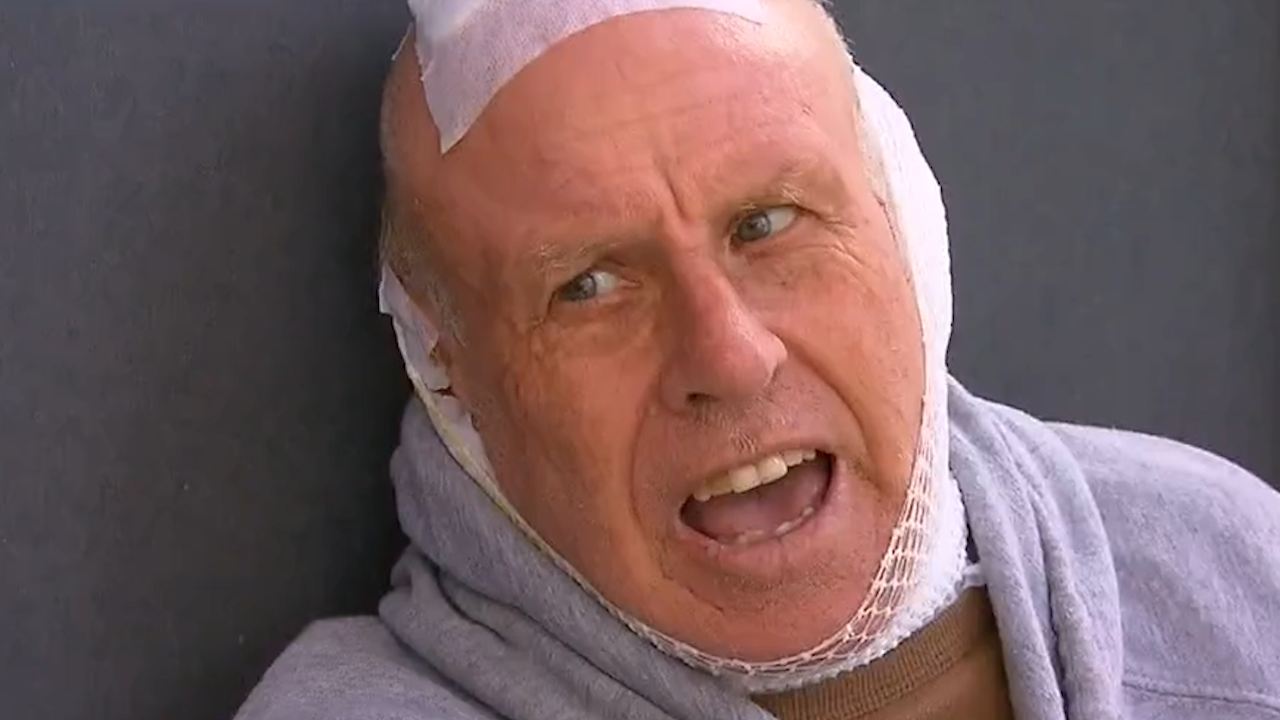
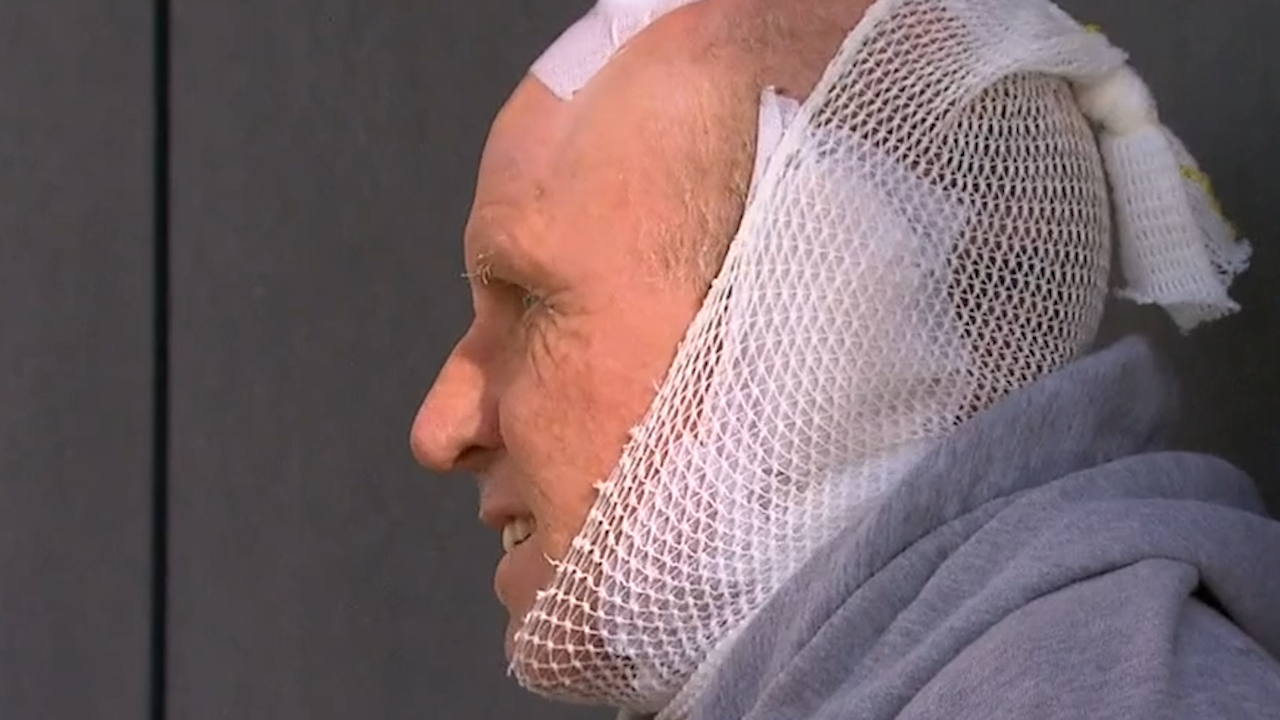
Perth man Tymen Wortel feared he would die when a stranger allegedly doused him in petrol and set him on fire.

"I was going to die. I knew that was the end," Mr Wortel told 9News Perth.

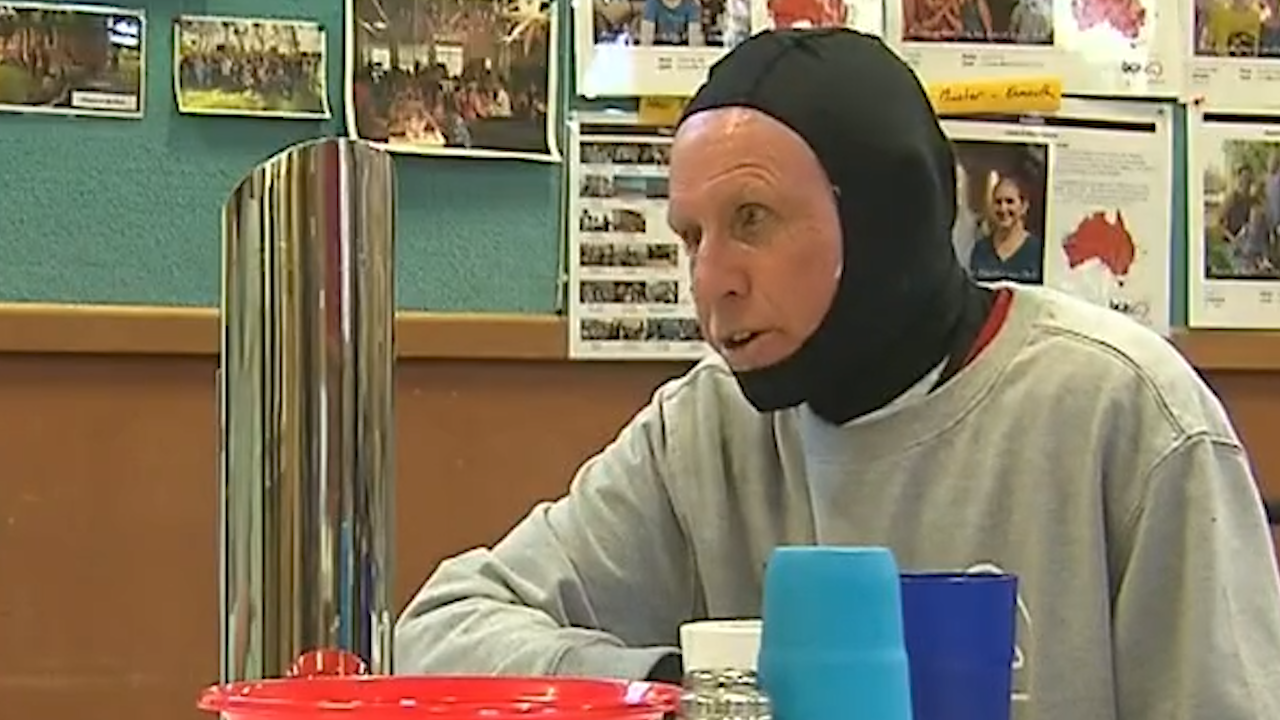
The 70-year-old was leaving a Highgate soup kitchen last month when he was allegedly set upon by a masked stranger.

READ MORE: Victoria records two more cases as lockdown announced

"He had something like a silastic gun, squirting petrol all over me, and then he set me alight," Mr Wortel said.

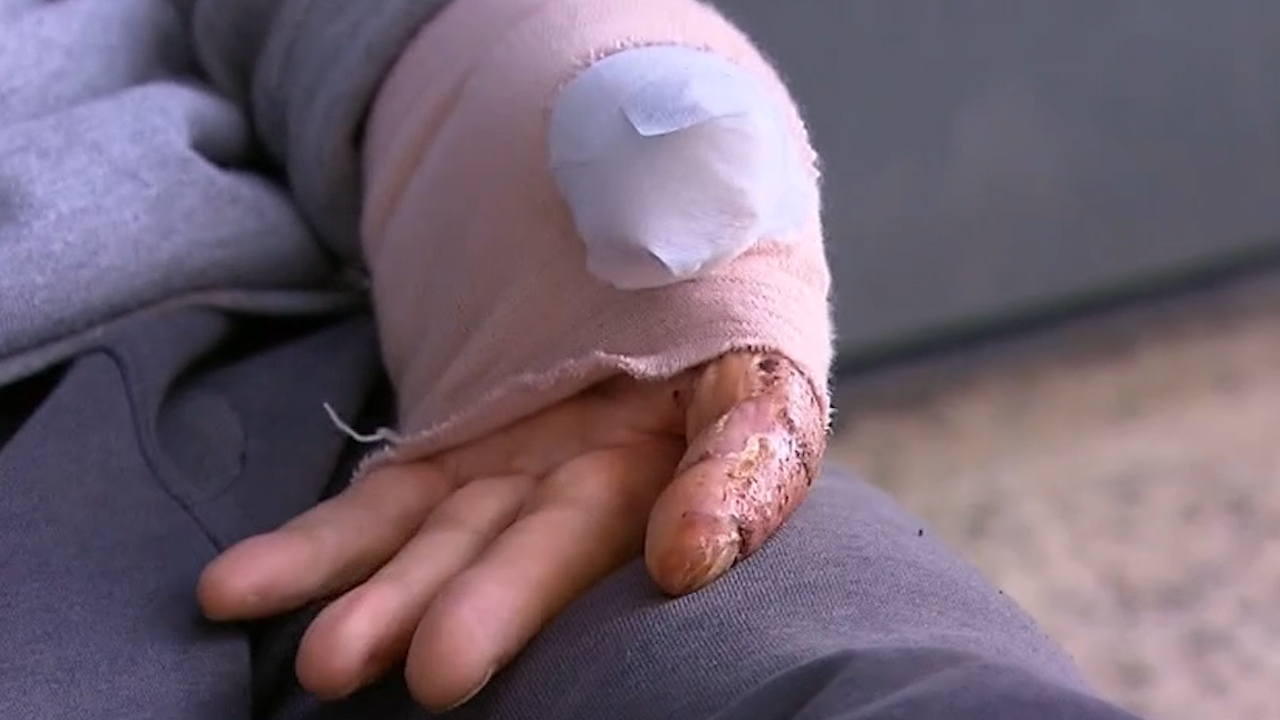
He suffered serious burns to his head, neck, chest, and hands, and spent two weeks in a specialised burns unit.

Mr Wortel said he owed his life to the good Samaritans who ran to help.

READ MORE: Regional NSW on alert for COVID-19 as new exposure sites announced

"The people in the soup kitchen saw me on fire. Fortunately there was a nurse among them," he said.

"They rushed out and poured water over me."

One month on, the Perth senior returned to the St Alban's soup kitchen to thank those who saved him.

READ MORE: Woolworths partners with Big W to launch major online marketplace

"Had it not been for those people … I would not have lived," Mr Wortel said.

His alleged attacker, a 45-year-old man, was arrested whilst on a treadmill at a West Perth gym.

He is still behind bars, facing a serious assault charge.

READ MORE: Victorian mother and girl perish in horror house fire

Mr Wortel has vowed to turn his fire nightmare around.

"Sometimes you've got to be broken yourself to help the broken," he said.

"I would like to do work praying with people and seeing people heal themselves."

US to Evacuate Afghan’s Who Assisted NATO Forces

The United States is formally launching “Operation Allies Refuge” to evacuate Afghans who helped U.S. troops during the 20-year war and are facing threats to their lives from the Taliban, the Biden administration announced Wednesday.

Flights out of Afghanistan for those who are already in the process of obtaining special immigrant visas (SIVs) will start in the last week of July, a senior administration official said in a statement.

No further details on when the evacuations will start will be released, the statement said, citing “operational security.” Officials also did not say where the Afghans would be sent.

“At President Biden’s direction, the United States is launching Operation Allies Refuge to support relocation flights for interested and eligible Afghan nationals and their families who have supported the United States and our partners in Afghanistan and are in the SIV application pipeline,” the official said.

“As the President made clear, the United States remains confident that Afghanistan’s Armed Forces have the tools and capability to defend their country and that the conflict will ultimately have to be resolved at the negotiating table,” the official added.

The Biden administration has faced increasing pressure from lawmakers and advocates to evacuate Afghans who served as interpreters or otherwise helped the U.S. military during the war as the United States nears its final exit from Afghanistan.

The withdrawal is about 95 percent done, U.S. Central Command said this week. One of the last major steps in the withdrawal happened Monday when Gen. Scott Miller, who was the top U.S. commander in Afghanistan, left his command.

Amid the withdrawal, the Taliban have racked up battlefield successes, seizing several key border crossings and sweeping through the north.

Amid fears the Taliban could overrun the country, lawmakers and others have been sounding the alarm about delays in the SIV program, which Congress created to allow Afghans who helped the U.S. government during the war to come to the United States.

An estimated 18,000 applicants are already awaiting visas, with an estimated 53,000 family members seeking to accompany them. The application process can take as long as 800 days.

The Biden administration said last month it would evacuate Afghans who are waiting for their SIV applications to be processed, but offered few other details of its plan.

Last week, President Biden also pledged to start evacuating Afghan allies by the end of the month, but again offered few other details.

“Our message to those women and men is clear: There is a home for you in the United States, if you so choose,” Biden said in an address defending his order to withdraw. “We will stand with you, just as you stood with us.”

On Wednesday, the senior administration official said Tracey Jacobson, a former U.S. ambassador to Tajikistan, Turkmenistan and Kosovo, is leading a State Department coordination unit to run Operation Allies Refuge. The unit also includes representatives from the departments of Defense and Homeland Security.

Deputy homeland security adviser Russ Travers is also coordinating the interagency policy process on Operation Allies Refuge, the official said.

Wednesday’s statement does not elaborate on key details of the plan, such as how many people will be evacuated or where they will go.

Pressed later Wednesday for numbers and locations, White House press secretary Jen Psaki declined to say, citing security reasons.

The Pentagon has identified installations outside the United States where the Afghans could be sent, but no final decisions have been made on where to send them, Pentagon press secretary John Kirby said at a briefing Wednesday afternoon.

The department has also been looking at the potential to house some people at military installations inside the continental United States, Kirby confirmed, saying “we’re trying to provide as many options to the State Department-led effort as we can.”

The department has also started an “action group” to help identify Afghans who worked with the U.S. military but are not yet in the SIV program, Kirby said, though he stressed, as the White House did, that the evacuations would be begin with those who are already in the middle of the application process.

The U.S. military has not been asked to provide transportation for the Afghans to get out of the country, nor has it been asked to help Afghans who live outside of Kabul make the journey to the capital for the flights, Kirby added.

While advocates and lawmakers welcomed Wednesday’s announcement, they also continued to press for further details.

“It’s heartening to hear that something might be happening, but it’s quite disappointing to not hear any actual details about who is going to be evacuated, where they are going to go and what’s going to happen to the folks that are not evacuated,” Sunil Varghese, policy director with the International Refugee Assistance Project, told The Hill, adding that such information is vital to those in Afghanistan who are waiting.

Rep. Michael Waltz (R-Fla.), who previously warned there “blood will be on [Biden’s] hands” if he did not evacuate the interpreters, called Wednesday’s announcement “belated but welcomed news.”

“I hope to see more details on the number of those being evacuated, how they are being prioritized, how the United States is helping them safely travel to evacuation sites given the Taliban’s gains, and an expedited timetable,” added Waltz, a retired Green Beret. “We must also prioritize helping those in Afghan civil society, especially women, who may be outside of the SIV requirements but that the Taliban will continue to target.”

Lawmakers and advocates have been pushing for the Afghans to be sent to Guam, citing the historical precedent of sending South Vietnamese refugees there during the fall of Saigon in 1975. Additionally, advocates say, using a U.S. territory would allow the Afghans to have legal protections they wouldn’t have in a third country, such as being able to apply for asylum if their SIV applications are denied.

Psaki would not say Wednesday whether Guam remains an option for the administration, saying she will not “rule in or rule out any places.”

“The security and safety of the individuals who are relocating is of utmost focus and concern,” she said at a White House press briefing.

The administration has reportedly asked three Central Asian countries near Afghanistan — Kazakhstan, Tajikistan and Uzbekistan — to take in the evacuees while they wait for their visas to be processed.

Homeland security adviser Elizabeth Sherwood-Randall is leading a U.S. delegation to Uzbekistan this week to “discuss opportunities to bolster regional economic development, enhance stability, and strengthen American partnerships,” National Security Council spokesperson Emily Horne said in a statement earlier Wednesday.

Zalmay Khalilzad, the top U.S. envoy for the Afghan peace process, is part of the delegation and will meet with Afghan President Ashraf Ghani and other leaders to “discuss how to promote peace, security and development in Afghanistan, and advance shared regional security interests, including counterterrorism cooperation,” the statement added.

Rebecca Beitsch contributed to this report, which was updated at 3:58 p.m.

The post US to Evacuate Afghan’s Who Assisted NATO Forces appeared first on The St Kitts Nevis Observer.
World View: Variant Slams Asia, Floods Hit Germany, Haiti Assassination, More

Learn more about RevenueStripe...

Jul 15, 2021

Alternate text

The Associated Press

The Rundown

I'm an image

JAKARTA, Indonesia (AP) — As many Asian countries battle their worst surge of COVID-19 infections, the slow-flow of vaccine doses from around the world is finally picking up speed, giving hope that low inoculation rates can increase and help blunt…Read More

Learn more about RevenueStripe...
I'm an image

WASHINGTON (AP) — The child tax credit had always been an empty gesture to millions of parents like Tamika Daniel. That changes Thursday when the first payment of $1,000 hits Daniel’s bank account — and dollars start flowing to the pockets of more…Read More

Learn more about RevenueStripe...
I'm an image

BERLIN (AP) — At least eight people have died and dozens of people are missing in Germany after heavy flooding turned streams and streets into raging torrents, sweeping away cars and causing some buildings to collapse….Read More

Learn more about RevenueStripe...
I'm an image

American diplomats are escalating a charm offensive with Central Asian leaders this week as they work to secure a close-by spot to respond to any resurgence of outside militants in Afghanistan after the U.S. military withdraws….Read More

Learn more about RevenueStripe...
I'm an image

MIAMI (AP) — For the owner of a small private security company with a history of avoiding paying debts and declaring bankruptcy, it looked like a good opportunity: Find people with military experience for a job in Haiti. …Read More

OTHER TOP STORIES

HAVANA (AP) — Cuban President Miguel Díaz-Canel for the first time is offering some self-criticism while saying that government shortcomings in handling shortages and other …Read More

PULGA, Calif. (AP) — A blaze that erupted near the flashpoint of the deadliest wildfire in recent U.S. history was heading away from homes on Thursday but survivors of the 2…Read More

NEW DELHI (AP) — It began in February with a tweet by pop star Rihanna that sparked widespread condemnation of Indian Prime Minister Narendra Modi’s handling of massive farm…Read More

LONDON (AP) — Tiziana Di Costanzo makes pizza dough from scratch, mixing together flour, yeast, a pinch of salt, a dash of olive oil and something a bit more unusual — groun…Read More

The post World View: Variant Slams Asia, Floods Hit Germany, Haiti Assassination, More appeared first on The St Kitts Nevis Observer.
KLM to Increase Flights to Caribbean, S. America

KLM announced Wednesday that its route network was closer to operating at full strength as it raises the number of destinations it is serving within South America and the Caribbean, reaching 2019 levels with 17 destinations at the end of the quarter.

Destinations currently served in South America include the likes of Rio de Janeiro and São Paulo, Brazil; Santiago, Chile; Bogota, Colombia and San José and Liberia, Costa Rica, among others. Both destinations in Costa Rica have been recently added to the summer 2021 schedule with flights operating three times a week on Tuesdays, Thursdays and Saturdays.

Destinations in the Caribbean within territory controlled by the Netherlands include Aruba, Bonaire, Curaçao and Sint Maarten. These destinations will see a larger number of weekly departures compared to 2019 in the weeks ahead. Meanwhile, for the 2021 winter schedule, KLM will open flights to two new destinations, Port of Spain, Trinidad and Tobago as well as Bridgetown, Barbados. The flights will operate three times a week with the Airbus A330 on Monday, Thursday and Saturday.

The post KLM to Increase Flights to Caribbean, S. America appeared first on The St Kitts Nevis Observer.
Protests: Cuban President Admits Govt. Shortcomings

Cuban President Miguel Diaz-Canel on Wednesday acknowledged shortcomings in his government’s handling of shortages and of neglecting certain sectors, but he urged Cubans to not act with hate — a reference to violence during recent street protests.Until now, the Cuban government had only blamed social media and the U.S. government for the weekend protests, which were the biggest seen in Cuba since a quarter century ago, when then-President Fidel Castro personally went into the streets to calm crowds of thousands furious over dire shortages following the collapse of the Soviet Union and its economic subsidies for the island.

In a nighttime address on state television, Diaz-Canel for the first time was self critical and acknowledged that failings by the state played a role in the protests over food shortages, rising prices and other grievances.

“We have to gain experience from the disturbances,” he said. “We also have to carry out a critical analysis of our problems in order to act and overcome, and avoid their repetition.”

In the protests, many Cubans expressed anger over long lines and shortages of food and medicines, as well as repeated electricity outages. Some demanded a faster pace of vaccination against the coronavirus. But there were also calls for political change in a country governed by the Communist Party for some six decades.

Police moved in and arrested dozens of protesters, sometimes violently, and the government has accused protesters of looting and vandalizing shops. Smaller protests continued Monday and officials reported at least one death. No incidents were reported Wednesday.

“Our society is not a society that generates hatred and those people acted with hatred,” Diaz-Canel said. “The feeling of Cubans is a feeling of solidarity and these people carried out these armed acts, with vandalism … yelling for deaths … planning to raid public places, breaking, robbing, throwing stones.

Cuba is suffering its worst crisis in years from a combination of the coronavirus pandemic that has paralyzed its economy, including the vital tourism industry, inefficiencies in the state-run economy and the tightening of U.S. sanctions on the island. The administration of President Donald Trump imposed more than 200 measures against the island in four years.

Diaz-Canel said that this “complex situation” was taken advantage of “by those who do not really want the Cuban revolution to develop or a civilized relationship with respect with the United States.”

Shortly before the president’s remarks, Prime Minister Manuel Marrero announced some measures such as customs flexibility for Cuban citizens who go on foreign trips to bring home toiletries, food and medicines, which are among the most hard to find items in Cuba.

Marrero also said that work is being done to improve the stability of the national electricity system and that officials will seek to improve the supply of medicines, many of which are produced on the island but whose inputs must be imported.

Meanwhile, Economy Minister Alejandro Gil announced the directors of state-owned enterprises will be allowed to determine salaries beyond the regulations. He also said that in the coming weeks long-promised rules will be instituted for small- and medium-size enterprises to be formed, a step once unthinkable under the communist government.

The post Protests: Cuban President Admits Govt. Shortcomings appeared first on The St Kitts Nevis Observer.

Haiti Gets U.S.-Donated COVID-19 Vaccines, Argentina Deaths Pass 100K

PORT-AU-PRINCE, July 14 (Reuters) – Haiti received on Wednesday its first 500,000 doses of COVID-19 vaccines donated by the U.S. government through the COVAX vaccine distribution scheme, regional health officials said.

The batch was part of a U.S. pledge to donate some 12 million vaccine doses to countries in the Caribbean and Latin America, according to a statement from PAHO, the regional office of the World Health Organization. The donations were made through the global vaccine facility COVAX, which distributes vaccines to poorer countries.

A national vaccine campaign has yet to begin in Haiti, which has plunged deeper into turmoil following the assassination of President Jovenel Moise. Some private companies, however, have distributed doses to their employees.

Preliminary results of a study conducted by the University of Haiti showed only 22% of Haitians, however, would accept the vaccine, according to Jean Gough, UNICEF Regional Director for Latin America and the Caribbean in a separate statement.

“Reaching communities with doses of vaccines doesn’t guarantee they want to get vaccinated,” Gough said.

Haiti’s health ministry reported earlier this month that the country to date has registered around 19,400 total cases, and about 500 deaths. Both figures, however, likely undercount the real impact of COVID-19 due to little testing.

Reporting by David Alire Garcia in Port-Au-Prince and Sarah Marsh in Havana, Writing by Cassandra Garrison; Editing by Jacqueline Wong

==========================================

‘We’re drowning’: Argentines struggle under COVID-19 as death toll hits 100,000

1/5

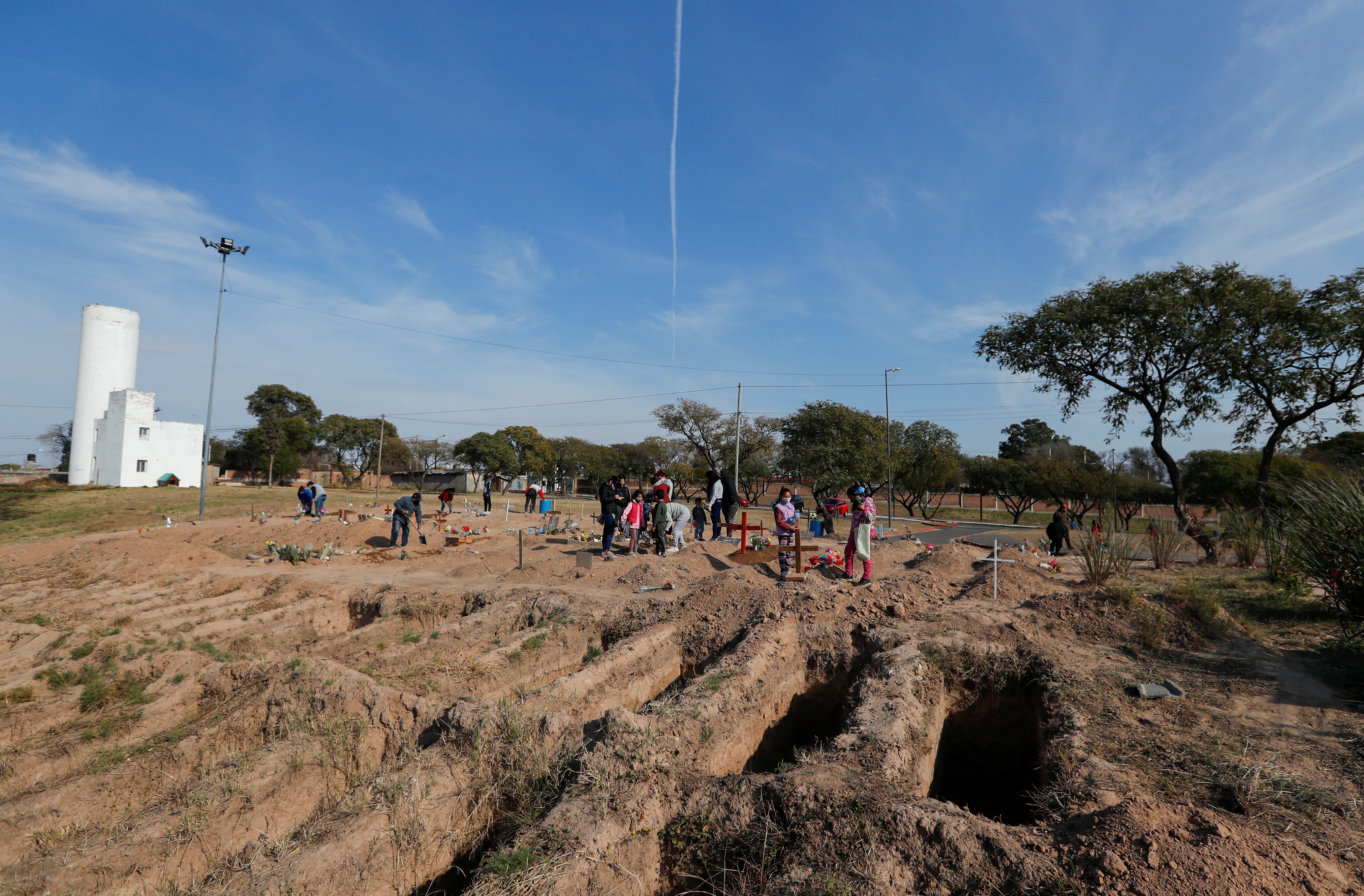
Relatives of people who died from the coronavirus disease (COVID-19) are pictured next to new graves at the San Vicente cemetery, in Cordoba, Argentina, July 11, 2021. REUTERS/Agustin Marcarian

CORDOBA/BUENOS AIRES, July 14 (Reuters) – In the San Vicente cemetery in the central Argentine city of Cordoba, Sandra del Valle Pereyra, 50, has come to visit the graves of her parents who both died from COVID-19 that has ripped through the South American nation.

“I have been left alone,” Valle Pereyra told Reuters, saying that she and her siblings were isolating from one another to avoid contagion. “First my mother died and then my father. I don’t know what to feel any more about this terrible disease.”

Argentina has been one of the hardest-hit countries in the region in terms of cases and deaths per capita, with some 4.7 million confirmed infections and a death toll from the pandemic that hit 100,000 on Wednesday. (Graphic on cases and deaths)

Daily average cases have fallen since a peak last month and ICU bed occupancy is coming down, though still above 60% nationwide.

“Every life that has gone is a great regret for me,” President Alberto Fernandez said in a speech last week. “I guarantee that we are not going to stop in these months vaccinating each and every Argentine man and woman.”

While developed countries like the United States have reduced fatalities with rapid inoculation programs, countries in South America have topped the charts for daily per capita cases and deaths, with vaccines rollouts stalled by slow supply.

Argentina, a country of some 45 million people, has carried out 25.7 million vaccine jabs, though only around 5 million people are inoculated with the full two doses, mainly using Russia’s Sputnik V, AstraZeneca’s (AZN.L) vaccine and China’s Sinopharm (1099.HK).

The vaccine rollout is raising hopes that the country can control the pandemic, but the more contagious Delta variant is igniting surges in cases even in countries like Israel with high vaccination rates, causing them to rethink their vaccination campaigns. read more

‘RELATIVES CALL US CRYING’

The pandemic has sharpened an economic crisis already existing in Argentina, which has been largely stuck in recession since 2018 with rampant inflation, strict capital controls and a weak peso currency sparking an outflow of dollars.

“It’s not just the pandemic drowning us in this country. There is also the huge economic crisis,” said Gastón Rusichi, 34, from a team of firefighters in Cordoba who have taken charge of transferring the dead during the pandemic.

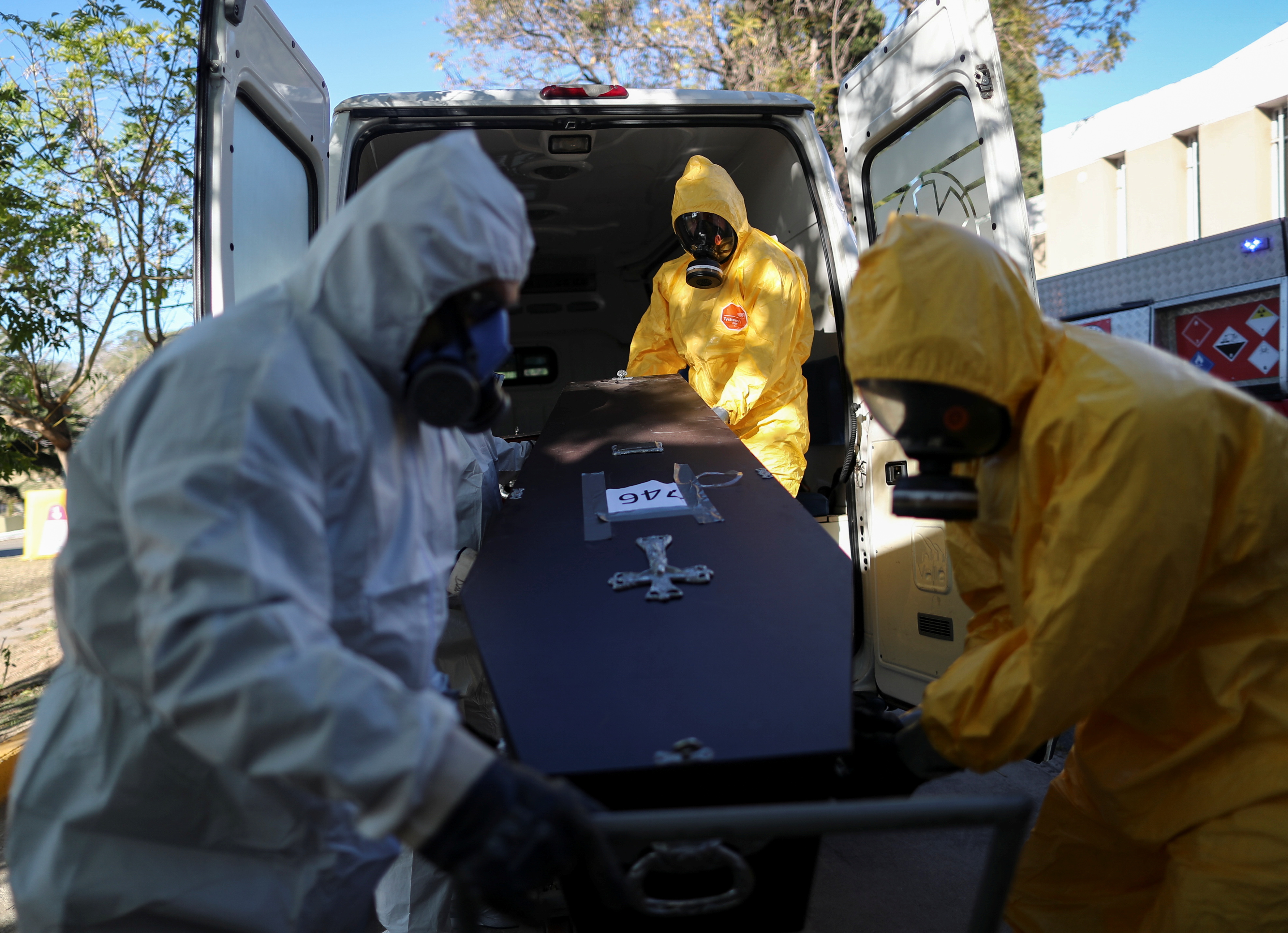
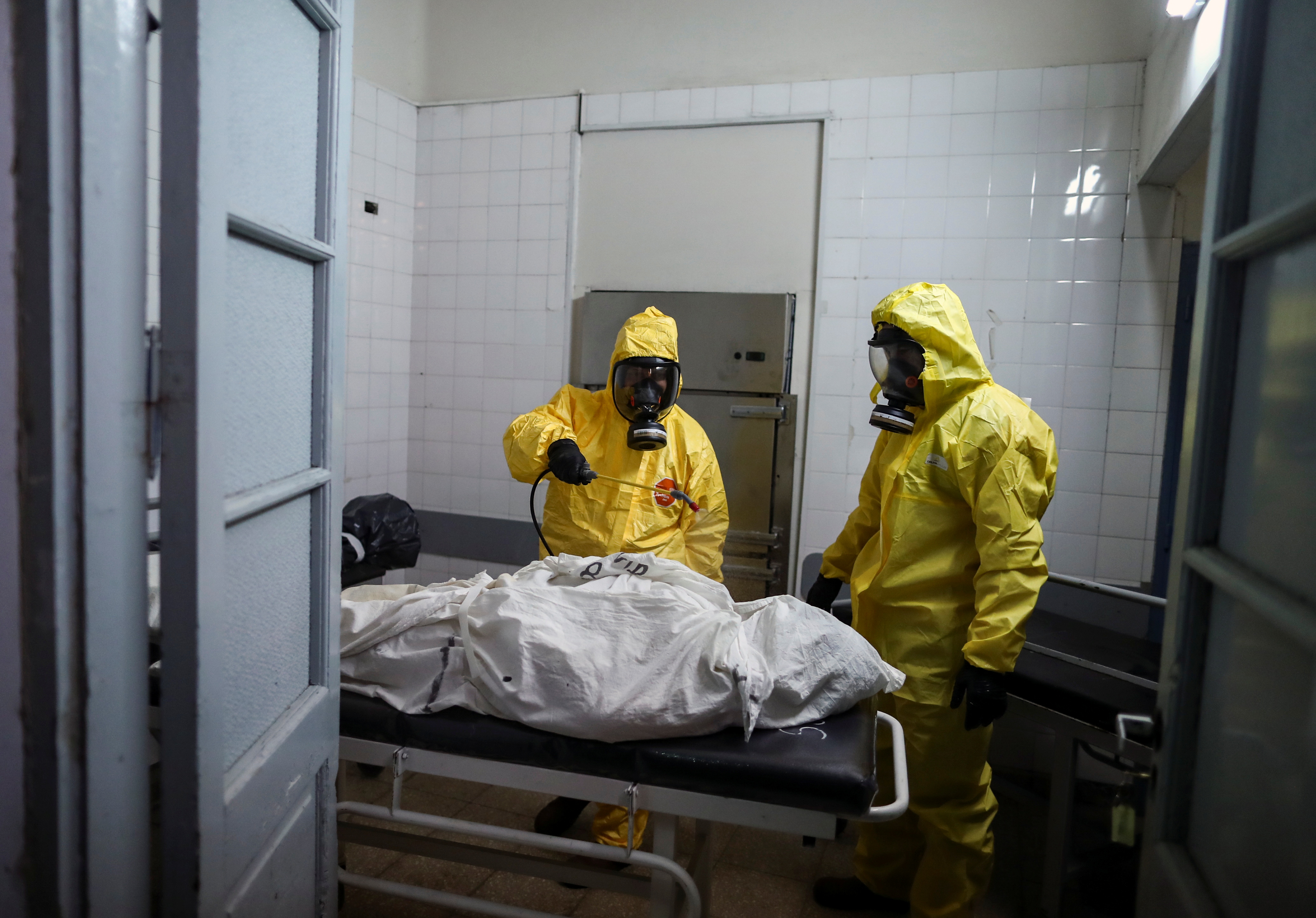
“Many relatives call us crying, not only because of the death, but because they don’t have the money… to be able to give a burial as a person deserves,” added Rusichi, who works 12-hour shifts in a biohazard suit for safety.

Argentina’s government reimposed lockdown measures earlier this year amid a steep second wave of infections, some of which have since been rolled back. It has a strict cap on arrivals at the border in a bid to keep out contagious virus variants.

Ezequiel González, a 35-year-old worker in Buenos Aires suburb Tigre, said that it was hard to see how the country could have stopped the pandemic given the need to balance restrictions while battling rising poverty levels.

“We would all have had to lock ourselves up completely and that’s very difficult. You have to go out to the street to earn money to be able to eat and survive,” he said.

A local laboratory is now starting to produce Sputnik V to speed up inoculations and the country recently sealed a deal for 20 million doses of Moderna’s (MRNA.O) vaccine. read more

Lautaro Fabian Gomez, 20, however, said lax attitudes by some people going out into crowded areas without wearing face masks was stymieing improvements.

“It makes me very angry and helpless,” he said. “It seems to me that if this is how we act then we are going to have the coronavirus here until 2050.”

Reporting by Agustín Marcarian and Miguel Lo Bianco; Written by Lucila Sigal; Editing by Nicolas Misculin, Adam Jourdan and Lisa Shumaker

The post Haiti Gets U.S.-Donated COVID-19 Vaccines, Argentina Deaths Pass 100K appeared first on The St Kitts Nevis Observer.

Haitians Protest, Pay Tribute Over President’s Murder

PORT-AU-PRINCE, July 14 (Reuters) – Scattered protests broke out in Haiti’s capital on Wednesday as gasoline shortages added to concerns over insecurity and police announced new arrests a week after the assassination of President Jovenel Moise pitched the already-troubled Caribbean nation into political chaos.

Nearly all the gas stations in Port-au-Prince were closed and long lines formed outside the few that were still operating, with residents blaming both the criminal gangs that control key supply routes and opportunistic black market fuel sellers paralyzing distribution into Haiti’s biggest city.

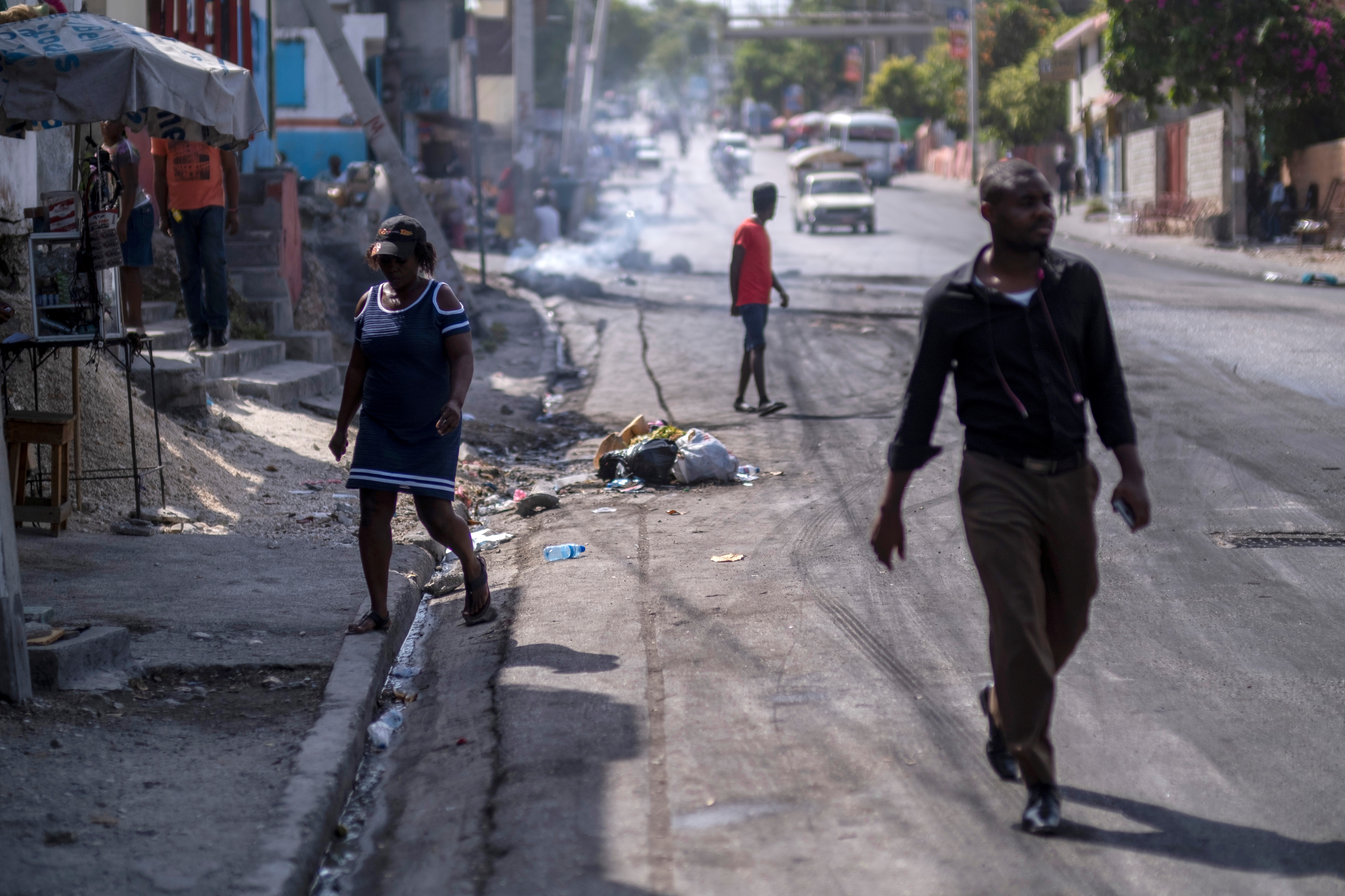
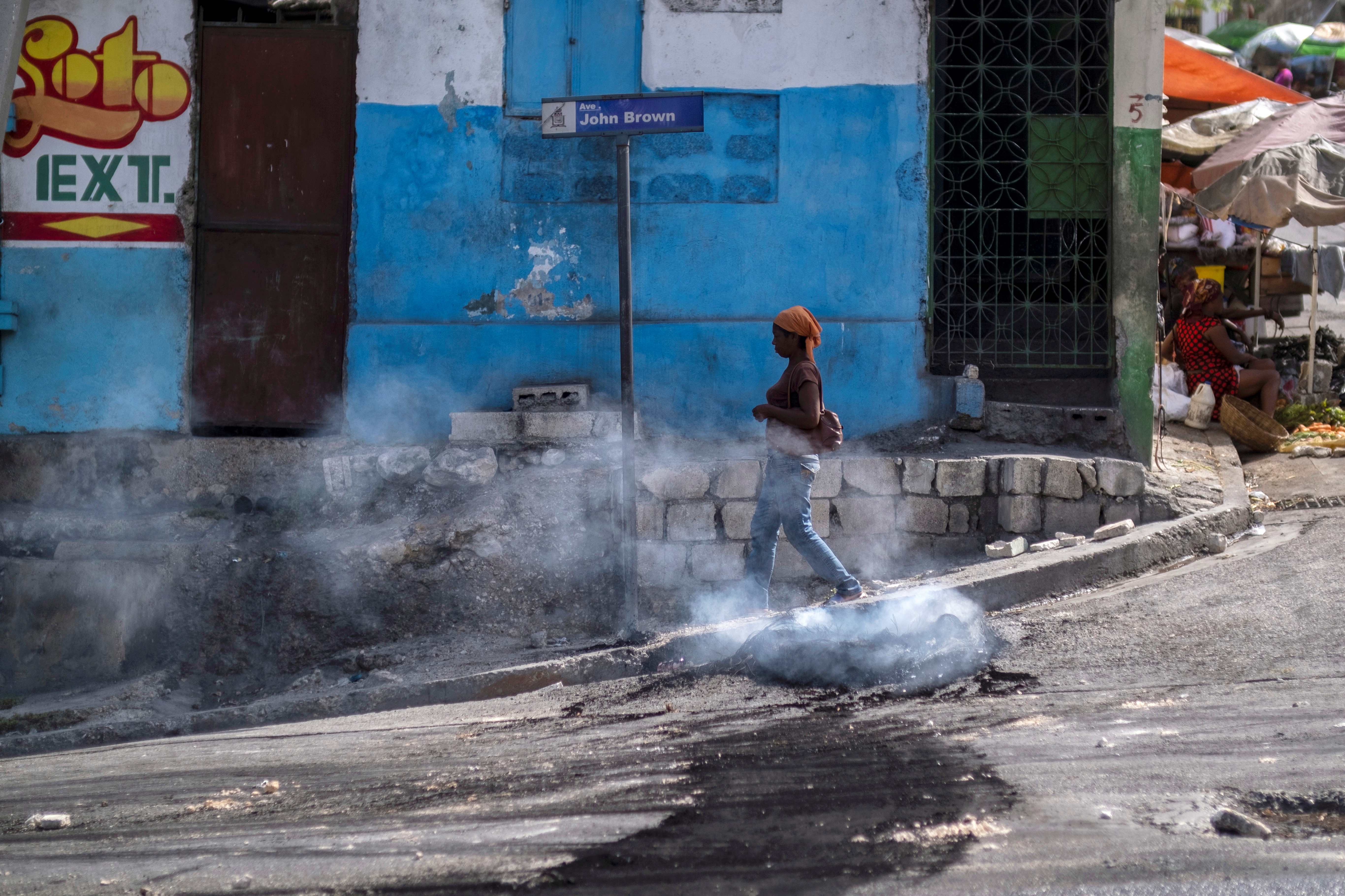
Some protesters set tires ablaze in the middle of gritty streets, which remained quieter than usual in the aftermath of Moise’s killing early on July 7.

Moise was shot dead at his home by what Haitian authorities describe as a unit of assassins, including 26 Colombians and two Haitian Americans. Eighteen of the Colombians were detained, three were killed by police and five were still on the run, Haitian police said. A third Haitian-American, Christian Emmanuel Sanon, was arrested on Sunday by Haitian authorities, who accused him of being a mastermind of the attack.

Haitian police announced Wednesday that they arrested two more men after searching their homes and finding weapons.

Police said at a news conference that 24 police officers have been subjected to “precautionary” measures and four were in isolation as part of the investigation.

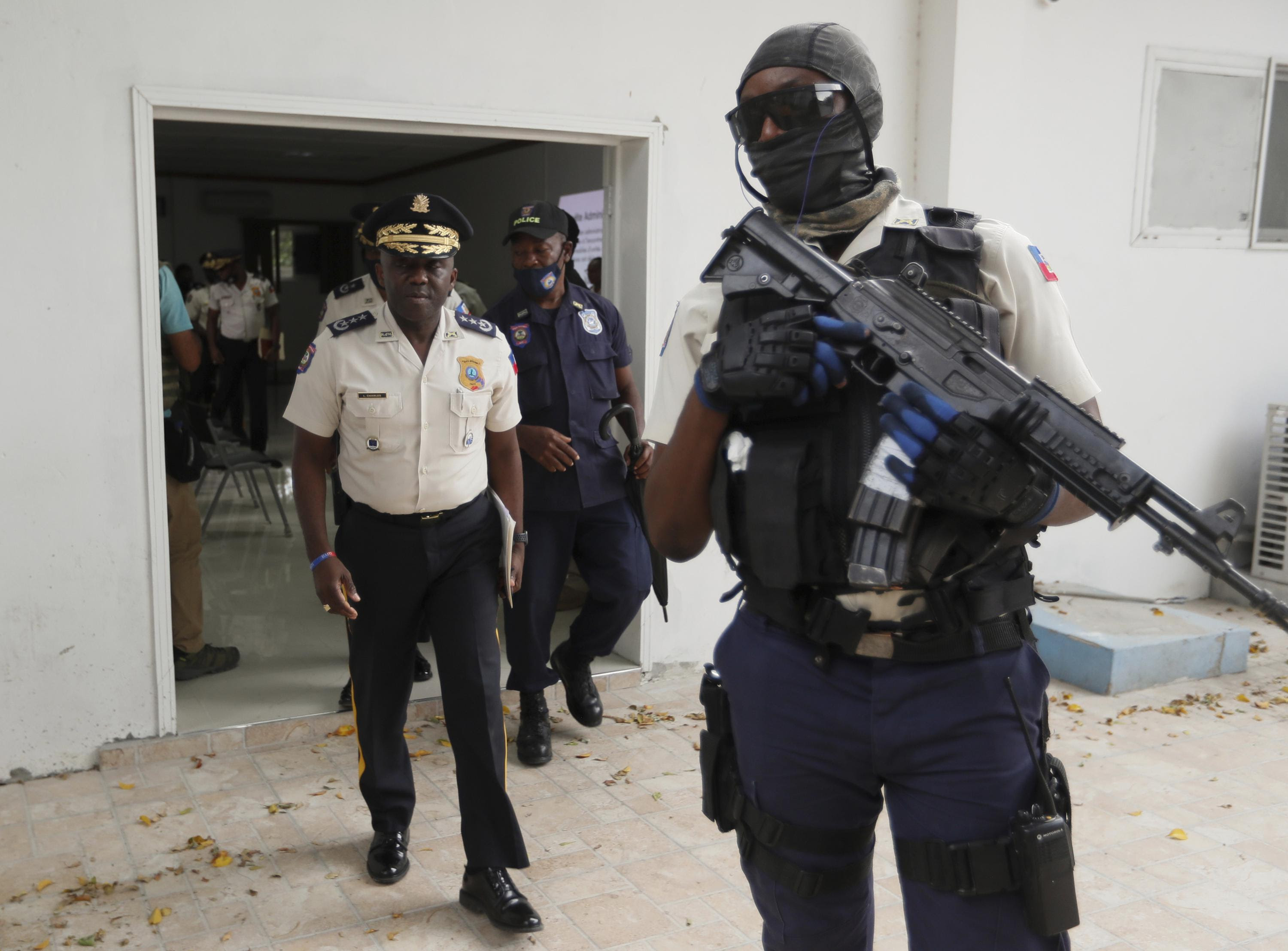
National Police chief Leon Charles identified former Haitian Senator John Joel Joseph as a key player in the plot. He supplied weapons and planned meetings, Charles said, adding that police were searching for him.

Charles also pointed a finger at a company he identified as World Wide Capital Lending Group as being responsible for fundraising “to execute this criminal act.”

World Wide Capital Lending Group, which is based in Florida, did not immediately respond to a request for comment.

Colombian news outlet Semana reported that one of the Colombians in custody confessed on Wednesday afternoon to Haitian authorities that seven of the Colombian suspects were what it called the “killers” of Moise, without elaborating.

Semana did not provide a source for the apparent confession, which it said the retired soldier had made “in tears.” The report was not verified by Reuters, and Colombian officials did not immediately respond to a request for comment.

Prosecutors have been preparing to question the head of Moise’s security team, Dimitri Herard. It was not clear if the questioning has yet taken place.

People walk on a street after tires were set on fire by protesters upset with growing violence in the Lalue neighborhood, a week after the assassination of President Jovenel Moise, in Port-au-Prince, Haiti July 14, 2021. REUTERS/Ricardo Arduengo

Moise’s killing came amid a surge in gang violence in recent months that has displaced thousands and hampered economic activity in the poorest country in the Americas. At the justice ministry where Herard was to be questioned, graffiti spray-painted on the wall declared: “We reject the power of the gangs.”

Eugene France, 63, speaking outside the ministry, said he was struggling to sell any of the men’s dress shoes he had slung around his neck and feared more violence.

“No one is safe, not even the police,” he said. “I’m scared because the gangs just keep killing people and I can’t sell anything.”

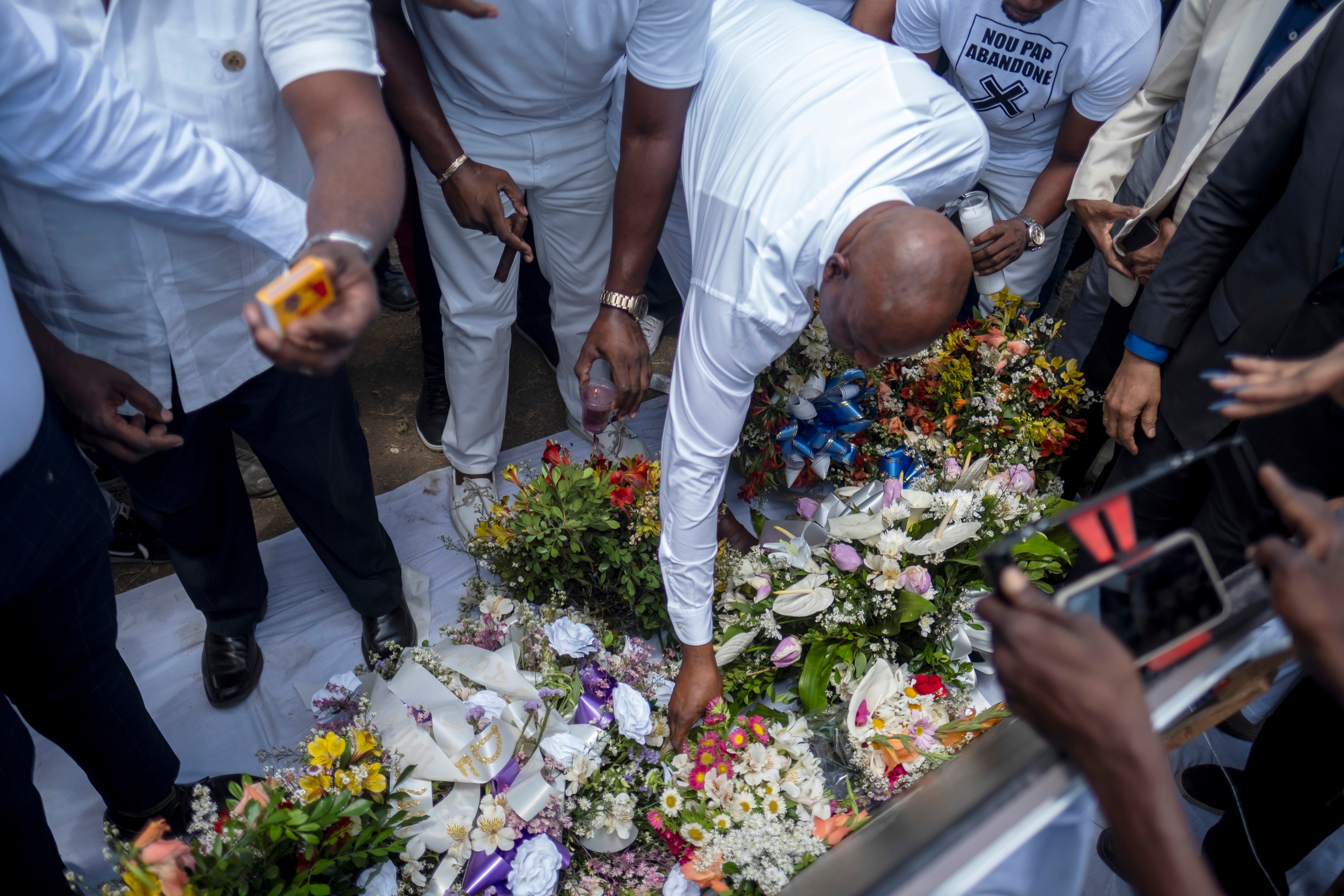
Outside the national palace, a small crowd gathered at a makeshift memorial with flower arrangements, rows of white candles and a Haitian flag at half staff in front of a large photograph of Moise.

Damy Makenson, a 30-year-old office worker, slowly approached the memorial, laid down some flowers and solemnly made the sign of the cross over his head and chest.

“He died working to remake Haiti, and I want you to know that his ideas did not die with him,” Makenson said, comparing Moise to Jean-Jacques Dessalines, a Haitian founding father and military leader who helped put an end to French colonial rule in the early 1800s.

In New York, Haiti’s U.N. ambassador, Antonio Rodrigue, on Wednesday appealed for international help.

“At this uncertain time, Haiti needs the support of the international community more than ever,” he told the 193-member U.N. General Assembly, where ambassadors stood to mark a moment’s silence to honor Moise.

Rodrigue listed organizing democratic elections and the government’s ability to meet Haiti’s socio-economic needs as challenges facing the nation.

The U.S. ambassador to the United Nations, Linda Thomas-Greenfield, said a U.S. delegation recently in Haiti had called for dialogue to help enable free and fair presidential and parliamentary elections.

The United States is still evaluating Haiti’s request for assistance, and its focus is helping the Haitian government “with navigating the investigation into the assassination of President Moise,” State Department spokesman Ned Price said.

“The Department of Justice will continue to support Haitian authorities in their review of the facts and the circumstances surrounding this attack,” Price said at a news briefing on Wednesday.

Reporting by David Alire Garcia in Port-au-Prince, Michelle Nichols in New York and Daphne Psaledakis in Washington; Additional reporting by Oliver Griffin in Bogota; Writing by Daina Beth Solomon and Cassandra Garrison; Editing by Rosalba O’Brien and Leslie Adler

The post Haitians Protest, Pay Tribute Over President’s Murder appeared first on The St Kitts Nevis Observer.