A rare “red warning” has been issued for parts of the South Island’s West Coast, with residents told to brace for heavy rain, flooding, slips and possible thunderstorms. MetService has also issued a spate of weather warnings for…
Category Archives: headline
Police release the names of pair involved in fatal Porirua car crash
Police have released the names of two young people who died after crashing a car into a Porirua home. They were Tualauta Tusa, 22, and William Temo, 21, both of Porirua.The single-vehicle crash happened on Warspite Ave in the…
Royston Hospital, Hawke's Bay: Anaesthetic technicians to strike
Anaesthetic technicians employed at Royston Hospital have given notice of a 24-hour strike taking place at the end of July.Technicians at Bowen and Wakefield hospitals in Wellington will also be taking part in the strike on July…
World's most endangered marine mammal 'abandoned' to extinction
The Mexican government officially abandoned the policy of maintaining a fishing-free zone around the last 10 or so remaining vaquita marina — a critically endangered porpoise.
The measure announced Wednesday replaces the fishing-free “zero tolerance” zone in the upper Gulf of California with a sliding scale of punishments if more than 60 boats are seen in the area on multiple occasions.
Given that Mexico has been unable to enforce the current restrictions — which bans boats in the small area — the sliding-scale punishments also seem doomed to irrelevance.
READ MORE: Florida breaks annual manatee death record in first six months of year
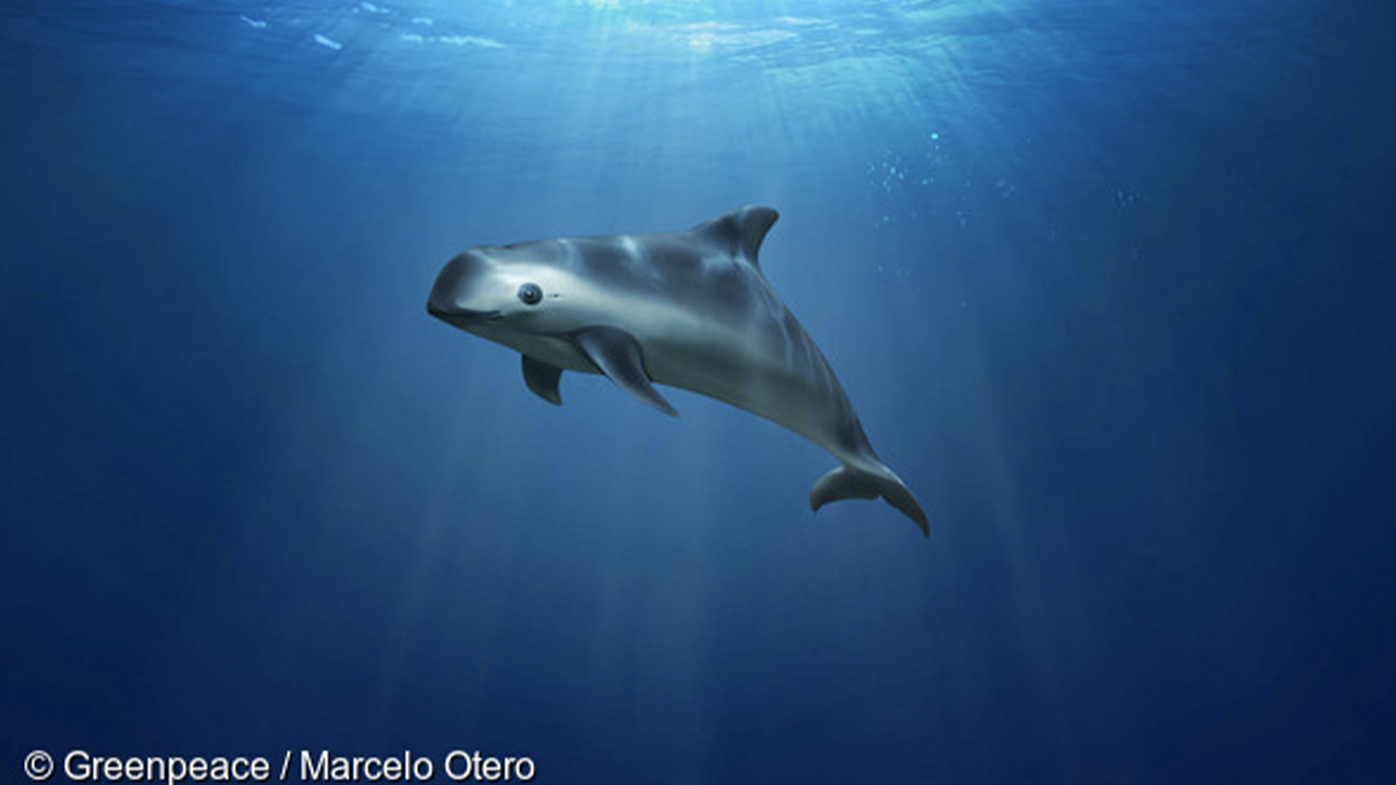
Environmental experts say the move essentially abandons the world’s most endangered marine mammal to the gill nets that trap and drown them. The nets are set for totoaba, a fish whose swim bladder is a delicacy in China, and sells for thousands of dollars per kilogram.
Alex Olivera, the Mexico representative for the Centre for Biological Diversity, said the rules establish a sliding scale of responses to a situation that shouldn't be allowed to occur in the first place. For example, the Agriculture and Fisheries Department says it will use 60 per cent of its enforcement personnel if 20 fishing boats or less are seen in the restricted area.
“This is stupid. They are waiting to count boats in an area designated as 'zero tolerance,' where there shouldn't be a single boat," Mr Olivera said.
“They are letting in dozens of boats.”
“This is the end of the concept of zero tolerance,” Mr Olivera said.
“There is just going to be dissuasion.”
One conservation expert who is familiar with the case, but who cannot be quoted by name for fear of repercussions, said the new rules “imply not protecting the vaquita.”
“It appears that fisheries authorities want to drive the vaquita to extinction,” the expert said.
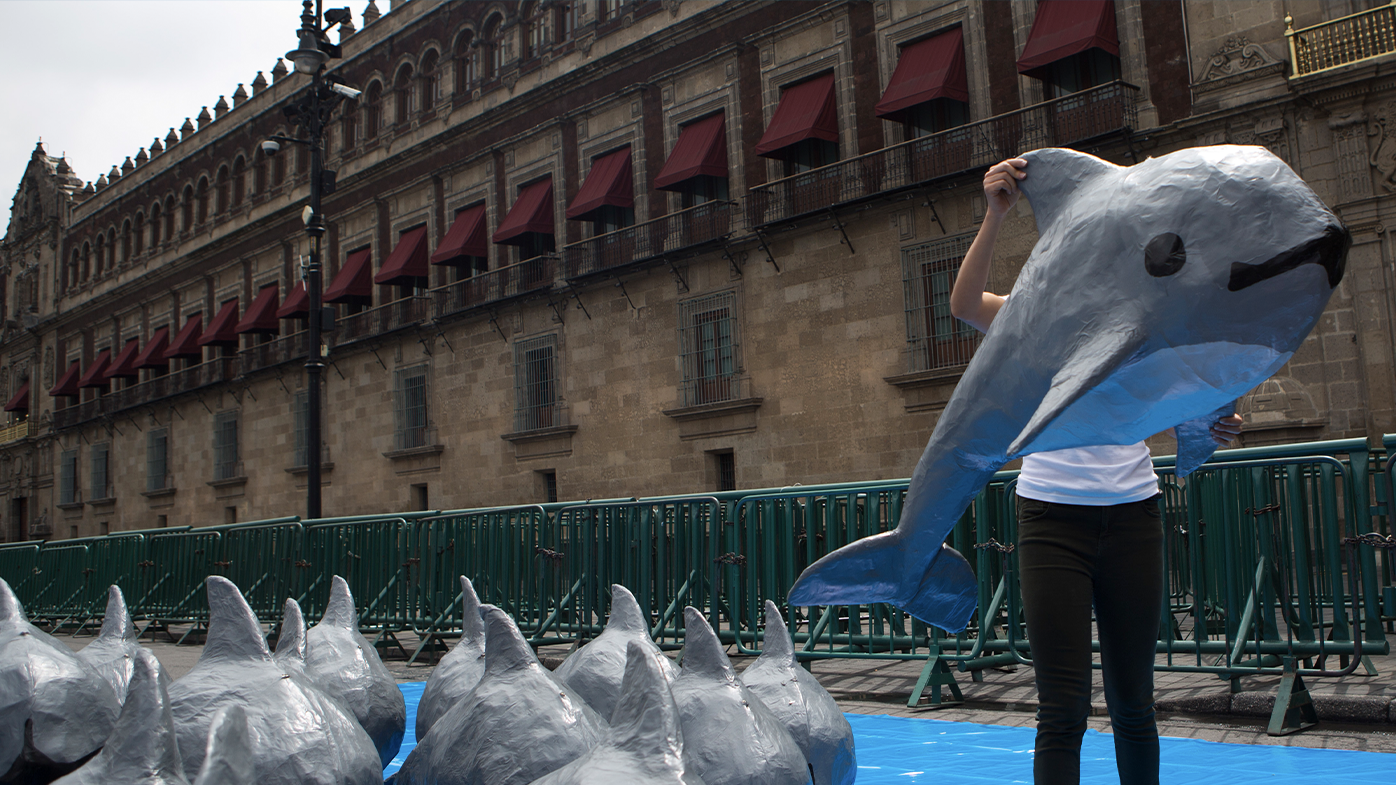
Two ships from the conservationist group Sea Shepherd have worked with Mexican marines to try to grab banned fishing nets from the area, but they are frequently outnumbered and attacked by fishermen, who have no fear at all of the marines.
In January, two fishermen rammed their small boat into a larger vessel used by Sea Shepherd to haul out nets. Sea Shepherd said its vessel, the Farley Mowat, was pulling illegal gill nets out of the waters of the gulf, also known as the Sea of Cortez, when people on a group of about a half dozen small, open fishing boats began tossing gasoline bombs at the vessel, setting the bow and another part of the ship afire.
The nets confiscated by Sea Shepherd vessels are expensive, so fishermen often harass the conservationists’ boats to try to get them back. The fishermen claim they have not received compensation from the Mexican government for lost fishing income. Groups representing fishermen were not immediately available to comment.
The upper Gulf of California is the only place the vaquita lives.
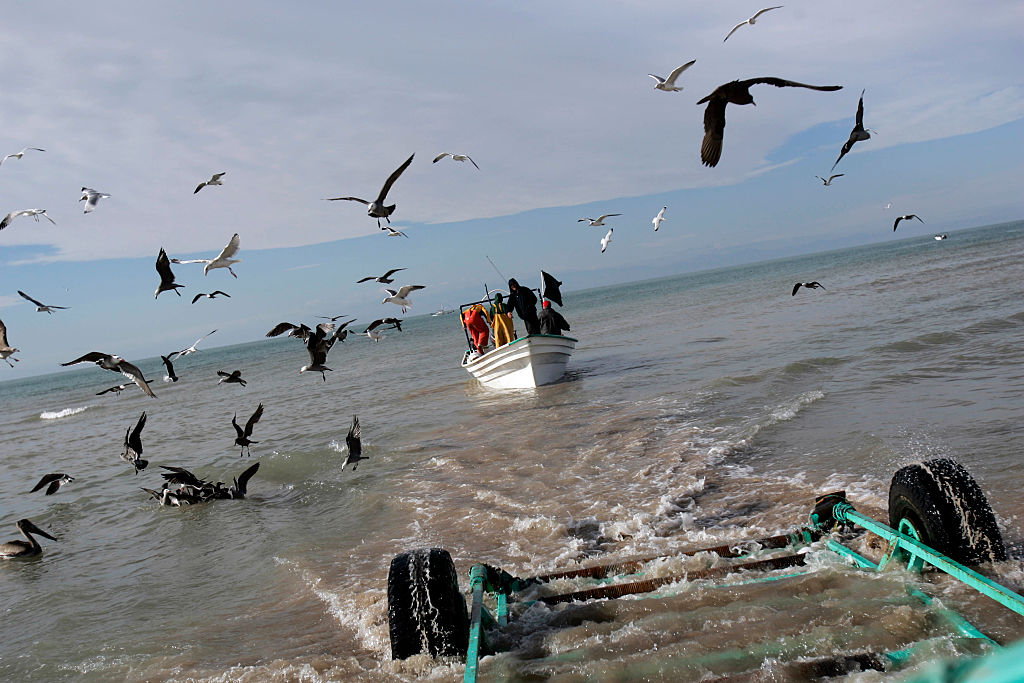
Mexico’s Environment Department had previously said the drop in the number of vaquitas and the area where they have been seen in recent years justified reducing the protection zone, which in theory once covered most of the upper Gulf.
Formally known as the vaquita “reserve,” that zone starts around the Colorado river delta and extends south past the fishing town of San Felipe and near Puerto Peñasco.
But as vaquita numbers dwindled to a few dozen, and then to less than a dozen, scientists and environmentalists decided to make a last-ditch stand in the ‘zero tolerance’ zone, a far smaller area where the last vaquita were seen.
Their numbers are confirmed by subaquatic listening devices that graph the squeaks and squeals the animals make, even as visual sighting become rare.
Two adults and three children now in Hawke's Bay Hospital ICU with RSV
Two adults are now in the Hawke’s Bay Hospital intensive care unit, alongside three children, after being struck down by respiratory syncytial virus. The outbreak of RSV has been spreading throughout New Zealand since the transtasman…
Anaesthetic technicians from Wellington and Hawke's Bay private hospitals threaten strike action
Anaesthetic technicians employed at Bowen and Wakefield Hospitals in Wellington and Hawkes Bay’s Royston Hospital are threatening a 24-hour strike on Tuesday July 27 unless an agreement is reached through mediation. Technicians…
Covid 19 coronavirus: Ministry of Health dishes $300 fines to 18 border workers for testing noncompliance
The first fines for border workers who have not complied with Covid-19 testing requirements have been issued. The Ministry of Health said 18 infringement notices with fines of $300 had been dished out. Routine Covid-19 testing…
'We have not yet seen the peak': St John ambulance service struggle to cope with demand as winter bites
Ambulance services across the country have been struggling to cope with “extreme” demand and St John fears worse is yet to come.St John national deputy chief executive of ambulance operations Dan Ohs said resources were so stretched…
Herald afternoon quiz: July 15
Test your brains with the Herald’s afternoon quiz. Be sure to check back on nzherald.co.nz for the morning quiz tomorrow. To challenge yourself with more quizzes, CLICK HERE.
Indonesia reports 54,000 virus cases, becomes Asian hotspot
Indonesia reported more than 54,000 new coronavirus cases for the first time yesterday, surpassing recent daily infections in India, whose disastrous outbreak is declining, and becoming Asia's new virus hotspot.
Officials fear that the more highly transmissible Delta variant is now spreading from the islands of Java and Bali, where outbreaks prompted a partial lockdown that closed places of worship, malls, parks and restaurants.
"I predict the outbreak will increase continuously in July as we are not able yet to prevent the spread of infections," epidemiology expert Pandu Riono at the University of Indonesia said.
READ MORE: Indonesia caught between COVID-19 surge and slow vaccine rollout
"Emergency social restrictions are still inadequate. They should be twice as stringent since we are facing the Delta variant, which is two times more contagious."
The Health Ministry reported 54,517 new cases and 991 deaths yesterday, bringing the number of confirmed cases since the pandemic began above 2.6 million and the number of confirmed fatalities to more than 69,000.
A month ago, daily cases were running at about 8000.
Reported daily cases in Indonesia are now higher than in India, despite Indonesia having far less testing by population.
READ MORE: Indonesian officials give away live chickens to residents willing to get vaccinated
India reported fewer than 39,000 cases yesterday, far below its peak of more than 400,000 daily cases in May, following lockdowns in its worst-hit areas and a stepped-up vaccination drive.
Indonesian Health Minister Budi Gunadi Sadikin said the government has identified the spread of the Delta variant in some regions outside Java and Bali.
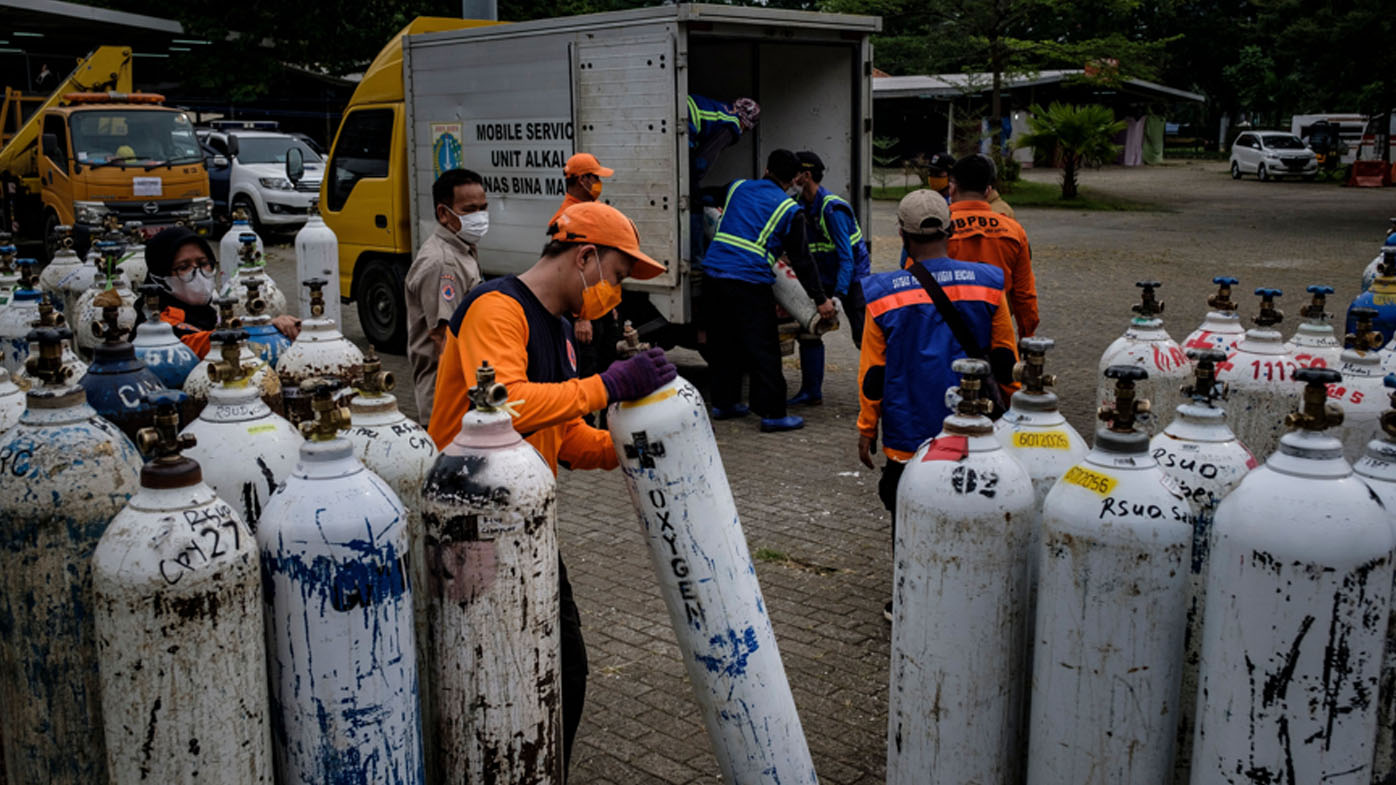
He told legislators on Tuesday that across the country, more than 90,000 of the 120,000 hospital beds for COVID-19 patients are occupied.
"Nationally, we still have some room. But the bed occupancy rate is very high in some provinces where the explosion of the Delta variant is concentrated," Mr Sadikin said.
READ MORE: Track the COVID-19 vaccination rollout in Australia and around the world
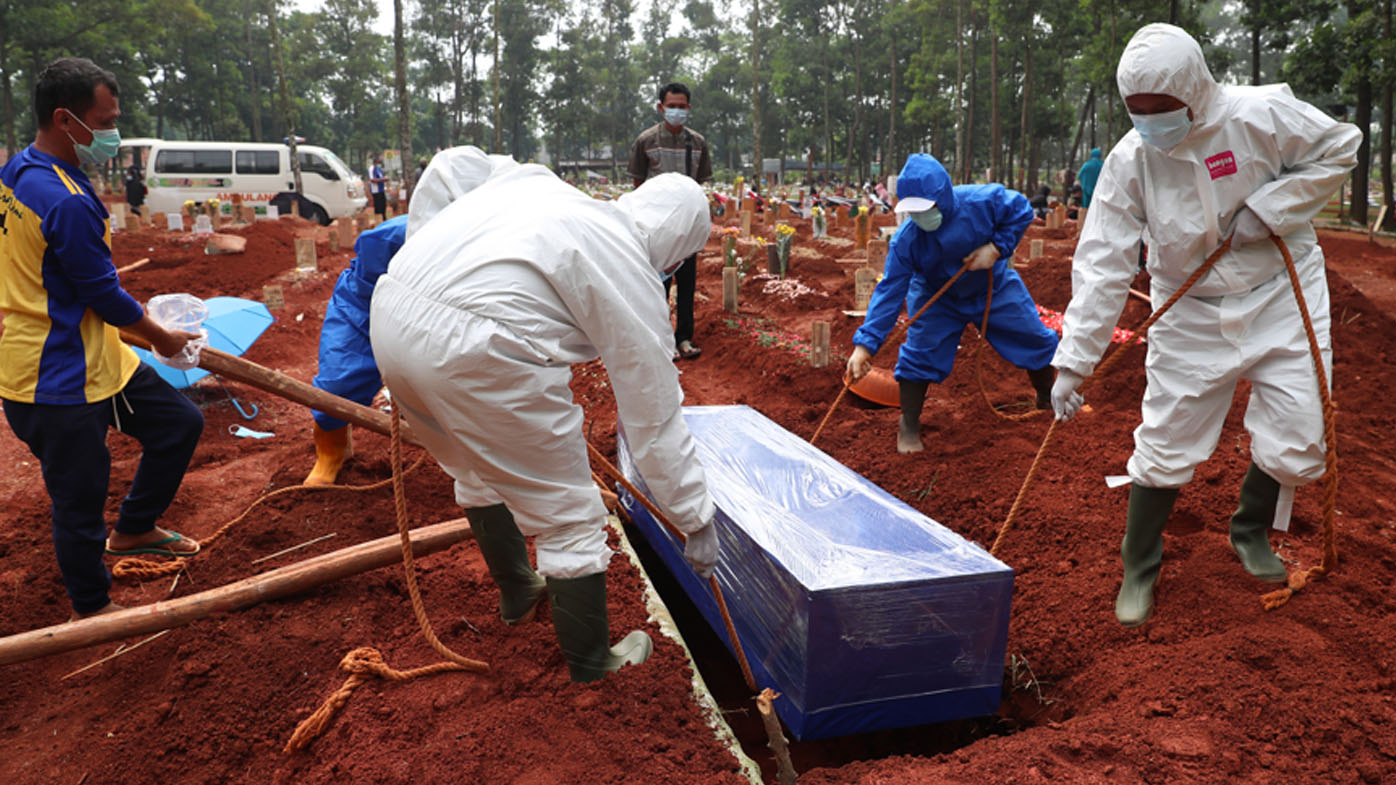
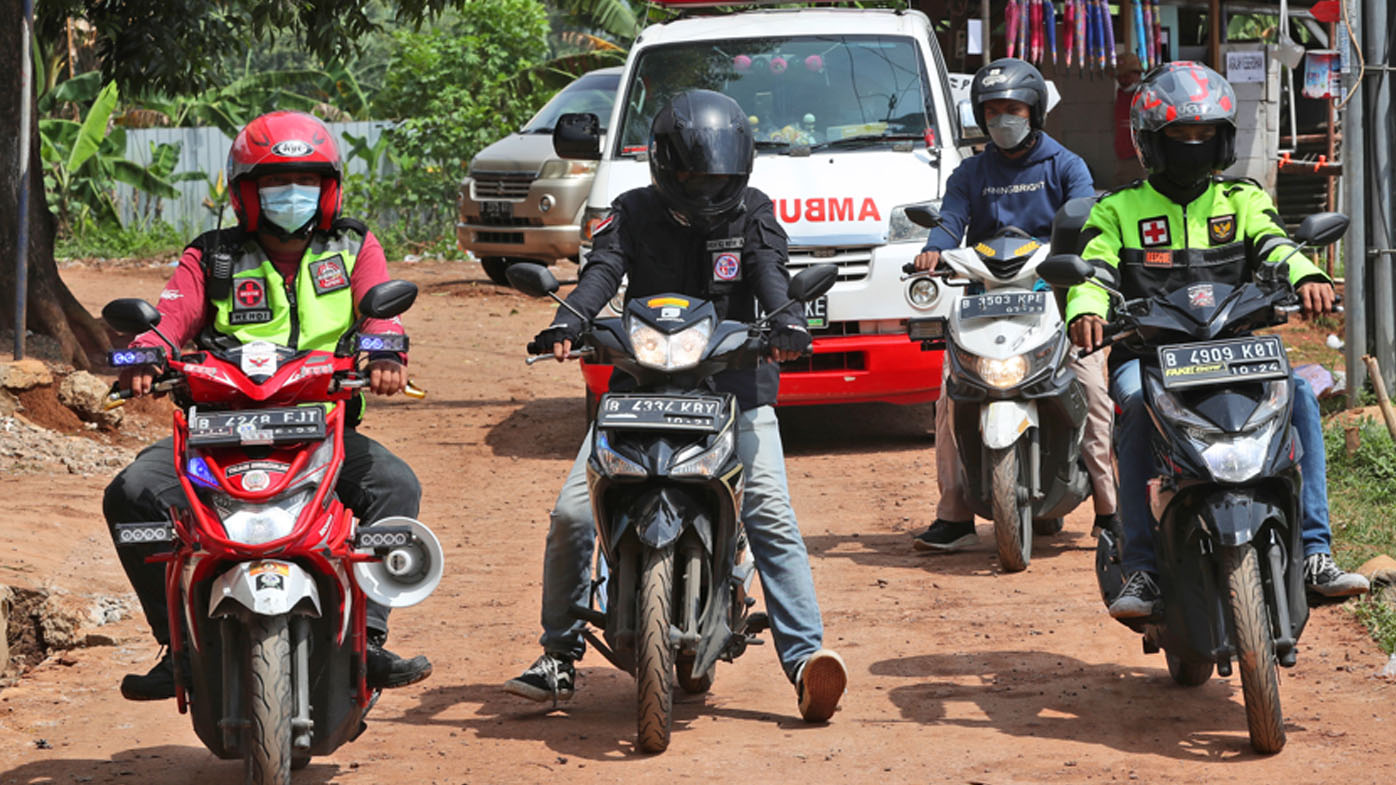
With the increase in deaths over the past month, some residents near Jakarta have begun helping overburdened gravediggers.
"As the diggers are too tired and do not have enough resources to dig, the residents in my neighbourhood decided to help," Jaya Abidin, who lives in Bogor on the outskirts of the capital, said.
"Because if we do not do this, we will have to wait in turn a long time for a burial in the middle of the night."
READ MORE: Concern new Lambda variant could be resistant to vaccines
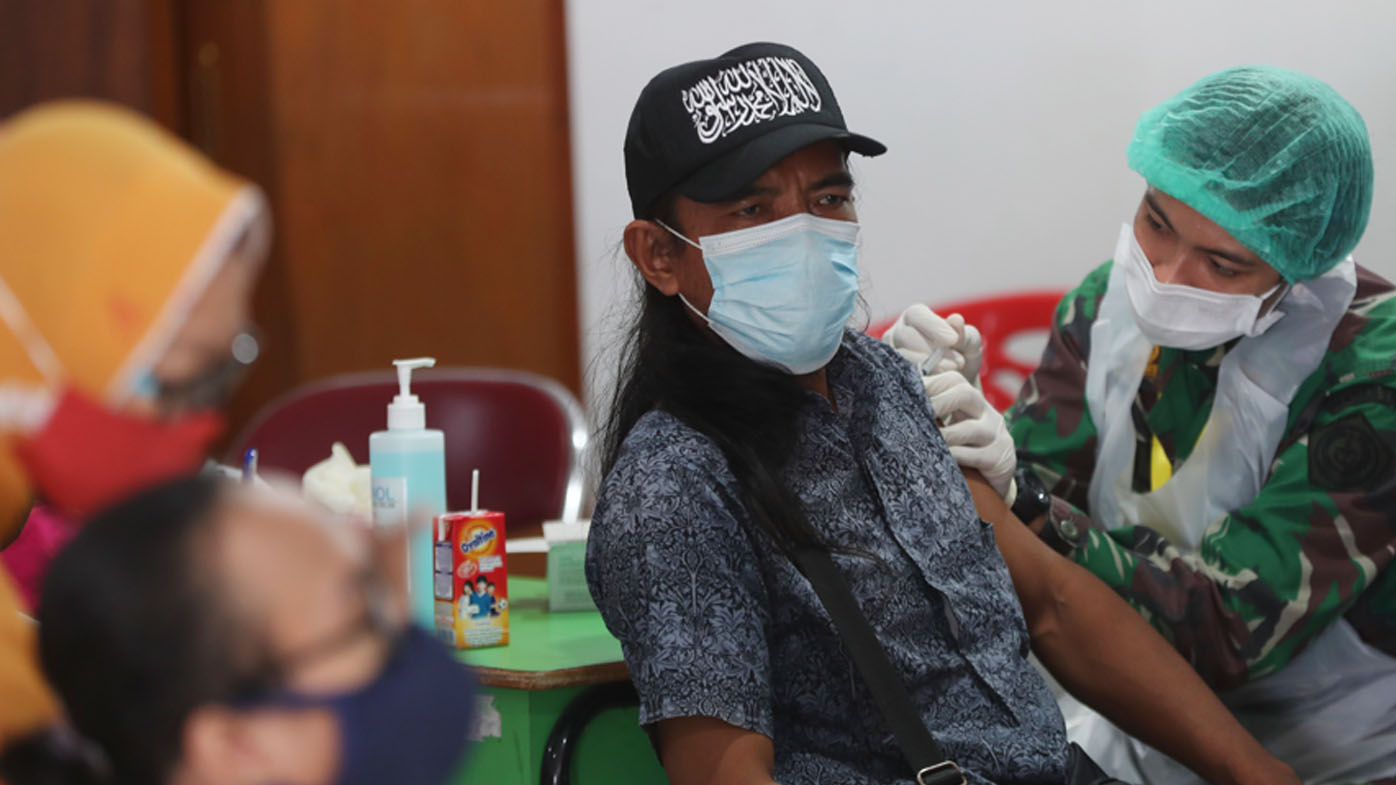
The government is struggling to acquire enough vaccines to reach its target of inoculating more than 181 million of its 270 million people by March 2022.
So far, only 15.6 million people have been fully vaccinated.
So far, the world's fourth-most populous country has secured 137.6 million doses of Sinovac, AstraZeneca and Moderna vaccines, enough for about 69 million people.