Category Archives: headline

Sydney plunges deeper into lockdown

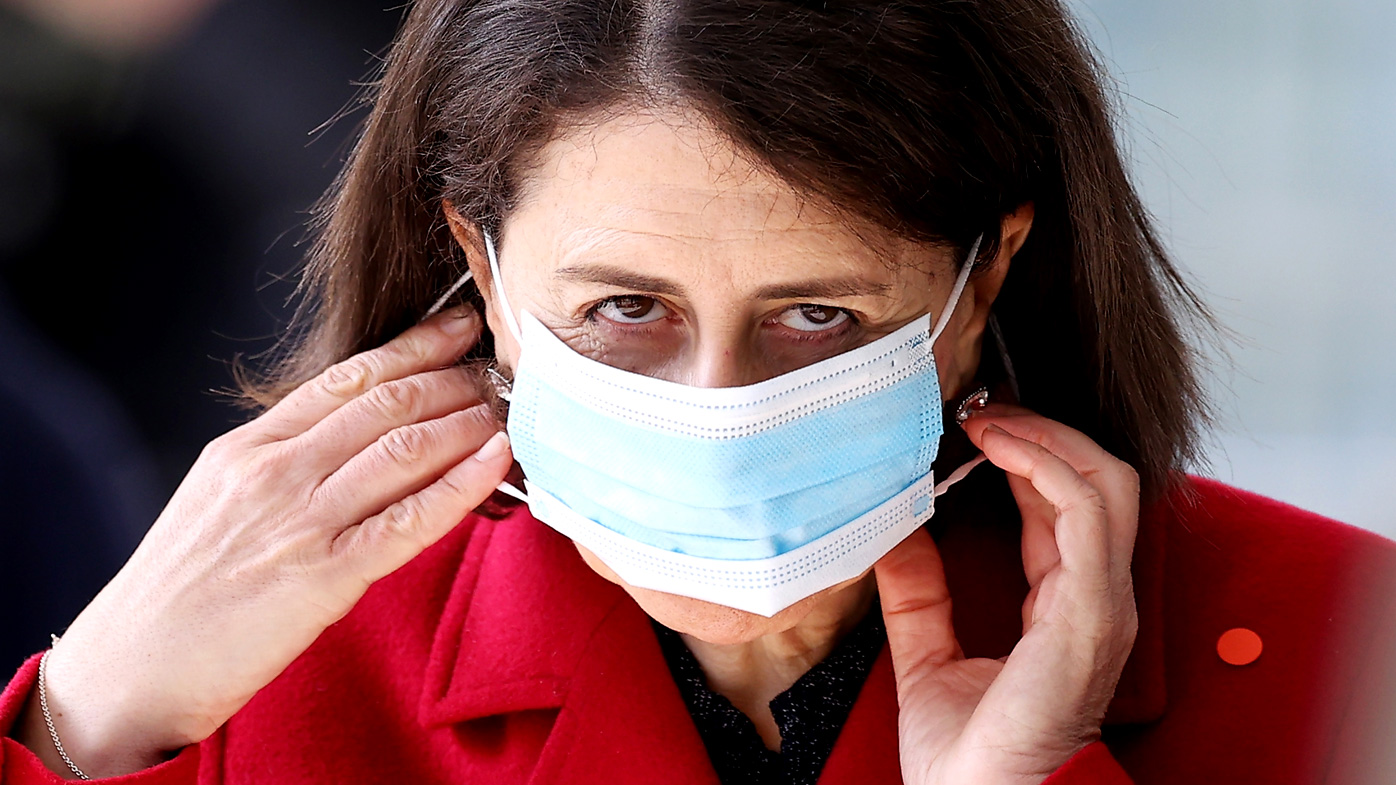
Greater Sydney faces at least two more weeks of lockdown, after 97 new locally acquired cases of COVID-19 were reported.

Of those, 24 cases were infectious while in the community. That is the key number Premier Gladys Berejiklian said she needs "as close to zero as possible" before there is any hope of ending the lockdown.

Ms Berejiklian said home learning for hundreds of thousands of school children would continue for at least another two weeks, while warning she had no "crystal ball".

READ MORE: Scots College allowed to bus students from locked down Sydney to regional NSW
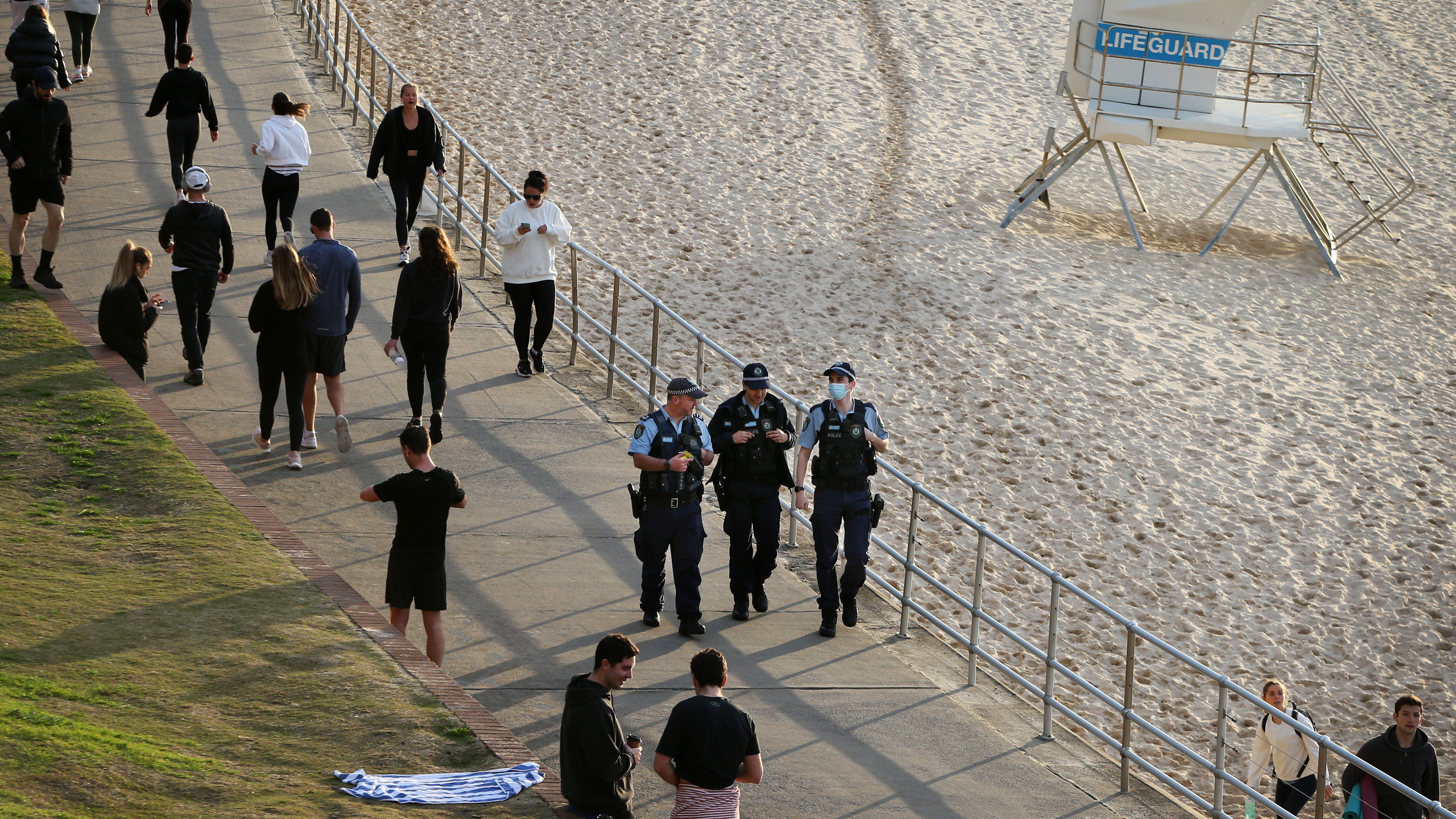
People exercising in Bondi in Sydney.

"We will know at the end of two weeks to what extent we need to extend the lockdown, whether there is any chance of face-to-face schooling ending," Ms Berejiklian said

But the current lockdown settings for what people can and can't do aren't about to change.

"I appreciate people are stressed and upset about what is going on, myself included," Ms Berejiklian said.

The vast majority of cases are being detected in south-west Sydney, with areas of most concern including Fairfield, Roselands, Rosebery, Canterbury, Belmore, Sutherland Shire, the St George area, Windsor, St Ives, Penrith and Bayside. 

READ MORE: What you need to know about Sydney's lockdown extension

READ MORE: Victoria tightens mask rules as COVID-19 outbreak spreads
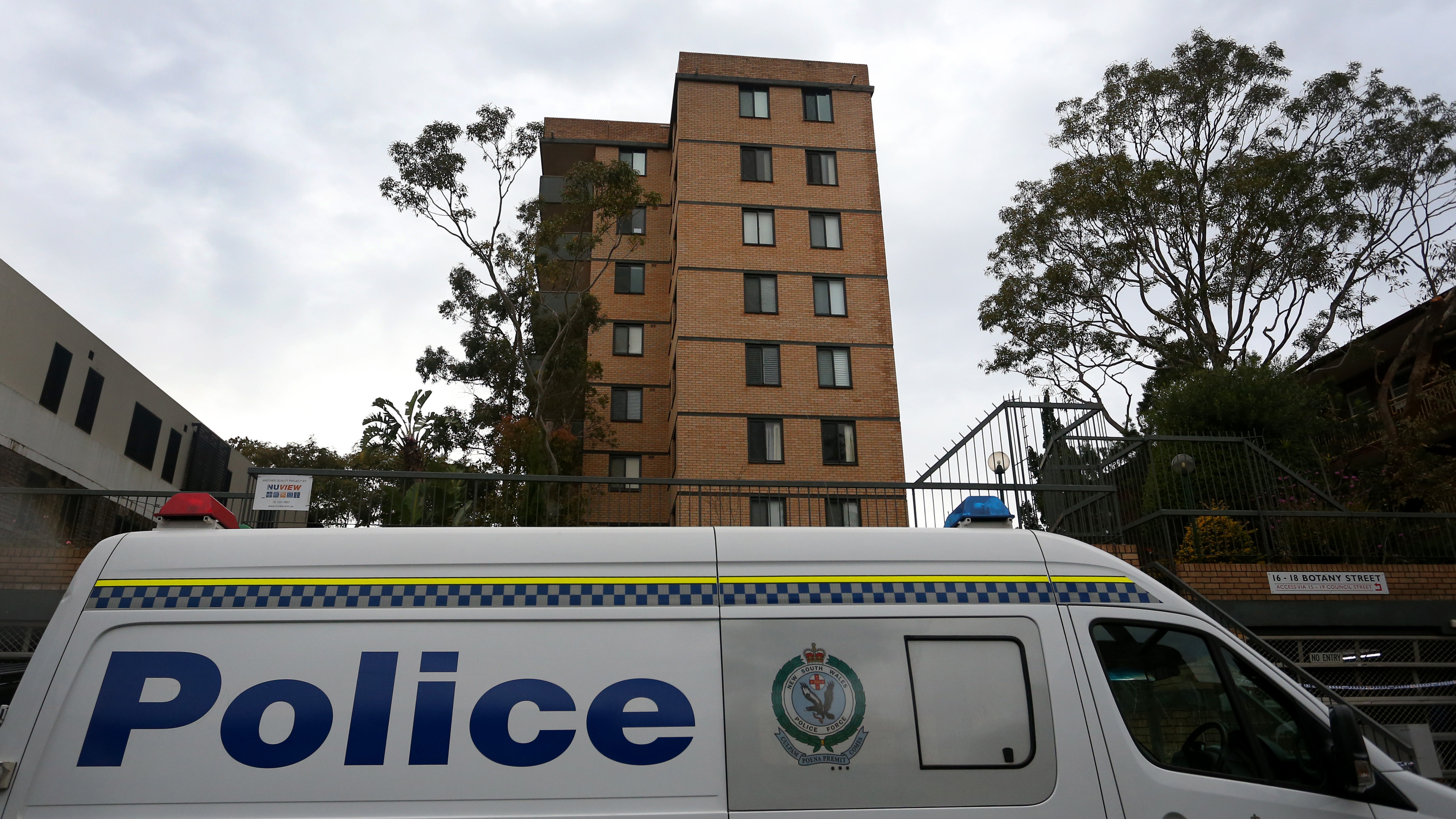
 NSW police monitor an apartment block in Botany Street in Bondi after multiple cases.

Mobility data for Sydney showed movement inside the Fairfield LGA had tapered off considerably.

However, Ms Berejiklian said the same data showed too many people were moving around in the neighbouring Canterbury-Bankstown and Liverpool Council areas.

That was backed up by NSW Police Deputy Commissioner Gary Worboys, who on Wednesday said 201 coronavirus restriction tickets had been written in the last 24 hours, "the vast majority not in south-west Sydney".

Data on mobility and movement was a "key metric" informing NSW Health's coronavirus modelling, and lockdown calculations.

READ MORE: How to claim the COVID-19 Disaster Payment
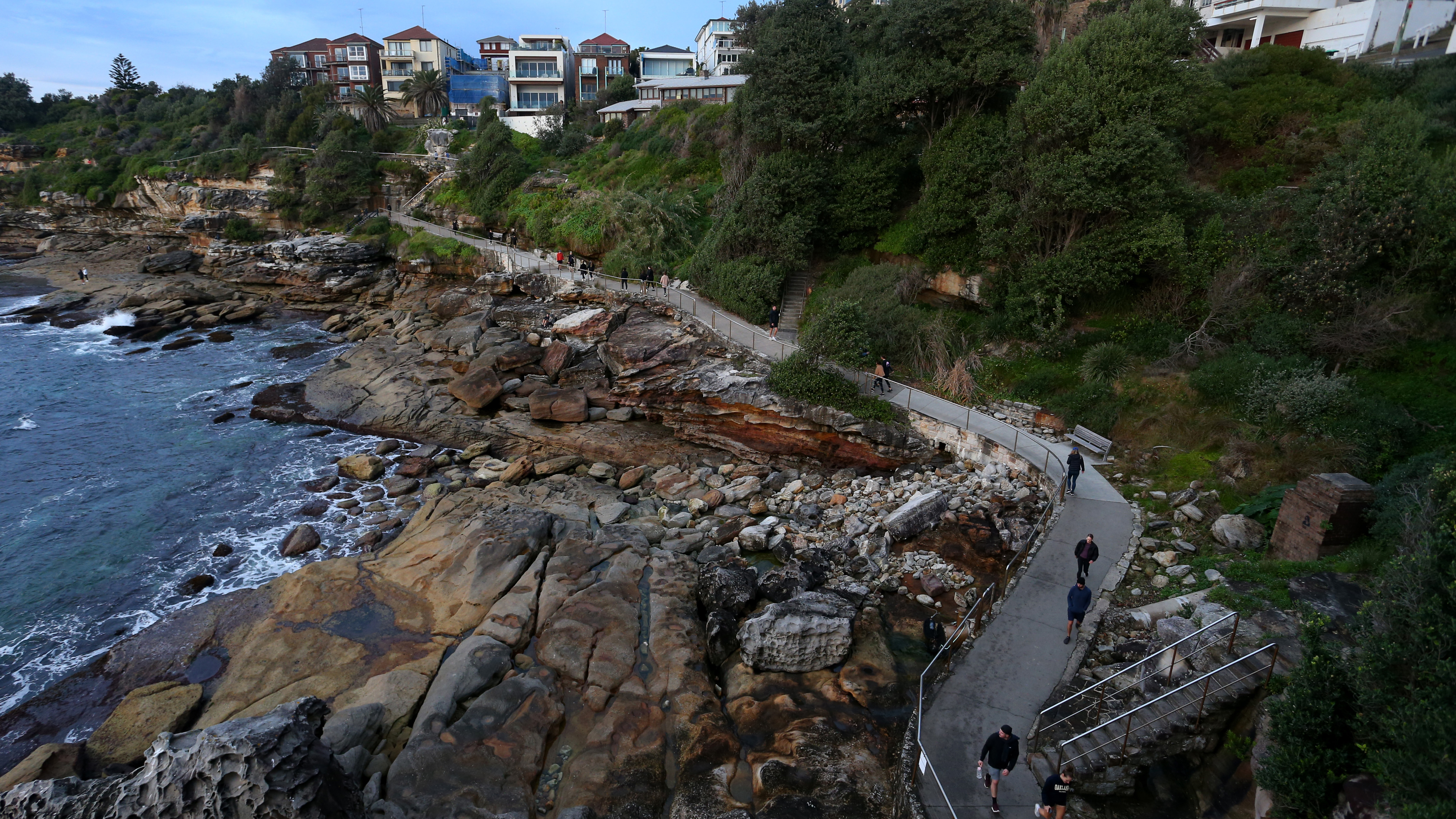
People are exercising along the Bondi coastal walk in Sydney.Lockdown restrictions have been tightened across NSW as COVID-19 cases continue to emerge in the community.

"There are various different models," NSW Chief Health Officer Dr Kerry explained, when asked whether government modelling was showing a two-week lockdown extension would be sufficient.

"What I can say to the community is that we need to decrease our movements, particularly in the areas of south-western Sydney and Canterbury Bankstown, St George, Sutherland, that sort of area."

Dr Chant defended the decision to keep Wollongong and the Blue Mountains locked down, despite no community transmission in those regions.

"What we know is that there are mobile workforces across the whole of Greater Sydney," she said.

READ MORE: NSW authorities shutdown idea of Melbourne style 'singles-bubble' during Sydney lockdown

"We are concerned that you can get seeding so until we reduce the burden of the disease in Greater Sydney, we are really still concerned with the mobility, the way workers move around."

When asked by reporters if the NSW lockdown was too soft, compared to Victoria, Ms Berejiklian said it was foolhardy to "compare apples and oranges" and that Sydney was fighting the highly transmissible Delta variant.

Victoria imposed much stricter health orders to stop movement when it faced multiple outbreaks.

Dr Chant said 70 of Wednesday's cases were from the south-western Sydney local health district, with "most" in the Fairfield LGA.

There are now 71 COVID-19 patients in hospital, with 20 in intensive care.

Of the 21 people in ICU, five are aged under 50.

Testing times for Fairfield residents wanting tests

Adding to the pressure on the system, new guidelines announced on Tuesday put intense pressure on testing stations in Fairfield.

On Wednesday morning, 9News filmed queues of cars stretching for kilometres, with Fairfield residents experiencing waits of more than five hours.

Ms Berejiklian acknowledged there had been major problems at Fairfield COVID-19 testing sites, and offered an apology, but she did not accept responsibility for the chaotic scenes.

She also rejected assertions she had imposed a lockdown on Sydney too late, leading to a lockdown which will now run for at least five weeks.

Mr Worboys said it was "a very challenging situation" around those testing centres.

https://twitter.com/lizziepearl/status/1415116710990925824

Some experts have predicted the lockdown, now in week three, could last for two months.

Cases have climbed as the Delta variant has swept through households, particularly in Sydney's south-west.

Health officials are concerned about a possible spread into regional NSW, with a fresh case detected yesterday in Goulburn, 200 kilometres south-west of Sydney.

That development led a raft of tough new testing measures focused on Fairfield, in Sydney's south-west, and essential workers travelling outside of Greater Sydney.

Colombia: Pres. Dugue Pressed on Ties to Haiti Assassination Team Boss

Colombia Reports- Colombia’s President Ivan Duque will have to clarify his ties to a dodgy businessman who allegedly recruited veterans who ended up accused of assassinating Haiti’s president.

State propaganda chief Hassan Nassar insisted that Duque “had no meeting with or ties to” Antonio Intriago despite evidence indicating the opposite.

According to Colombian and Haitian police, Intriago’s security company CTU recruited the Colombians who ended up being suspected of assassinating President Jovenel Moise.

As for Intriago, he is nowhere to be found.

The non-existent photo of the meeting that never took place

Hassan Nassar (Image: RCN Radio)

News website La Nueva Prensa alerted Nassar on Sunday already that Duque met with Intriago when the then-candidate was campaigning in Florida on February 10, 2918 in an open information request.

The propaganda chief responded that “there exists no registry of the photographic material” of the campaign meeting where the two allegedly never met.

The news website published the photo of Duque and the owner of CTU after which The Miami Herald confirmed its veracity.

The New York Times additionally said that the suspected key suspect in Moise’s assassinate wasn’t just friendly with Colombia’s president, but also had a “history of debt, evictions and bankruptcies” in Florida.

Duque’s murky foreign policy contacts

La Nueva Prensa additionally reported that Intriago and Duque met for a second time in February 2019 at “Venezuela Live Aid,” a concert in support of the opposition against Venezuelan tyrant Nicolas Maduro organized by the Colombian government and businessmen from the two neighboring countries.

The concert turned out to be a PR disaster after images emerged of Venezuelan opposition leader Juan Guaido posing with members of drug trafficking organization “Los Rastrojos.”

Venezuelan opposition leader Juan Guaido poses with drug traffickers “Brother” and “El Menor.”

Both Nassar and Guaido claimed the politicians posed with all kinds of people and were unaware that they were also posing with alleged criminals.

Duque made a similar claim after photos revealed the president’s ties to a late money launderer until wiretaps triggered criminal investigations into the president’s party and his political patron, former President Alvaro Uribe.

President Ivan Duque and late money launderer Jose Guillermo Hernandez. (Image: Instagram)

Colombia’s National  Security Adviser Rafael Guarin denied knowing his own cousin after admitting that also his family member had been arrested by Haitian police.

Police, soldiers and family claim deceit

Haiti’s police chief claimed that Intriago’s security firm deceived the former Colombian soldiers who either died or ended up in jail in the Caribbean island state.

According to Haiti’s chief of police, Leon Charles, Intriago’s firm hired the Colombian veterans to protect, among others, businessman Emmanuel Sanon who has been arrested for allegedly masterminding the assassination.

The mission of these attackers was initially to ensure the safety of Emmanuel Sanon, but later the mission was changed…and they presented one of the attackers with an arrest warrant for the president.
Haiti police chief Leon Charles

The sister of one of CTU”s main recruiters in Colombia, Duberney Capador, confirmed that her brother agreed to recruit others for to “protect important people” in Haiti, according to Reuters.

The former soldier told his sister that “we got there too late” and that “the person we were going to protect” was already dead.

“In the last conversation I had with my brother, he told me, ‘We got here too late; unfortunately, the person we were going to guard, we couldn’t do anything,’” Jenny Carolina Capador

Hours after this alleged phone call, Capador would be killed himself.

Colombia investigation Moise’s security chief

Colombia’s police chief, General Jorge Luis Vargas, confirmed on Sunday that CTU regularly contacted Capador and another soldier, German Rivera, who is being detained.

Vargas added that his men were also investigating why Moise´s personal security chief, Dimitri Herard, had traveled to the South American country at least five times this year.

The activities of Commissioner Dimitri Herard during these trips in Colombian territory are being verified. Colombia’s National Police chief, General Jorge Luis Vargas

The fact that none of the presidential guards were injured in the attack has raised questions since the first reports of the assassination.

Duque’s apparent ties to Intriago and the involvement of the cousin of Colombia’s national security chief in the Haiti affair raised even more questions.

Intriago hasn’t been able to answer any questions as the CTU boss appears to have vanished.

The post Colombia: Pres. Dugue Pressed on Ties to Haiti Assassination Team Boss appeared first on The St Kitts Nevis Observer.

Chinese 'spy ship' heading to waters off Australia

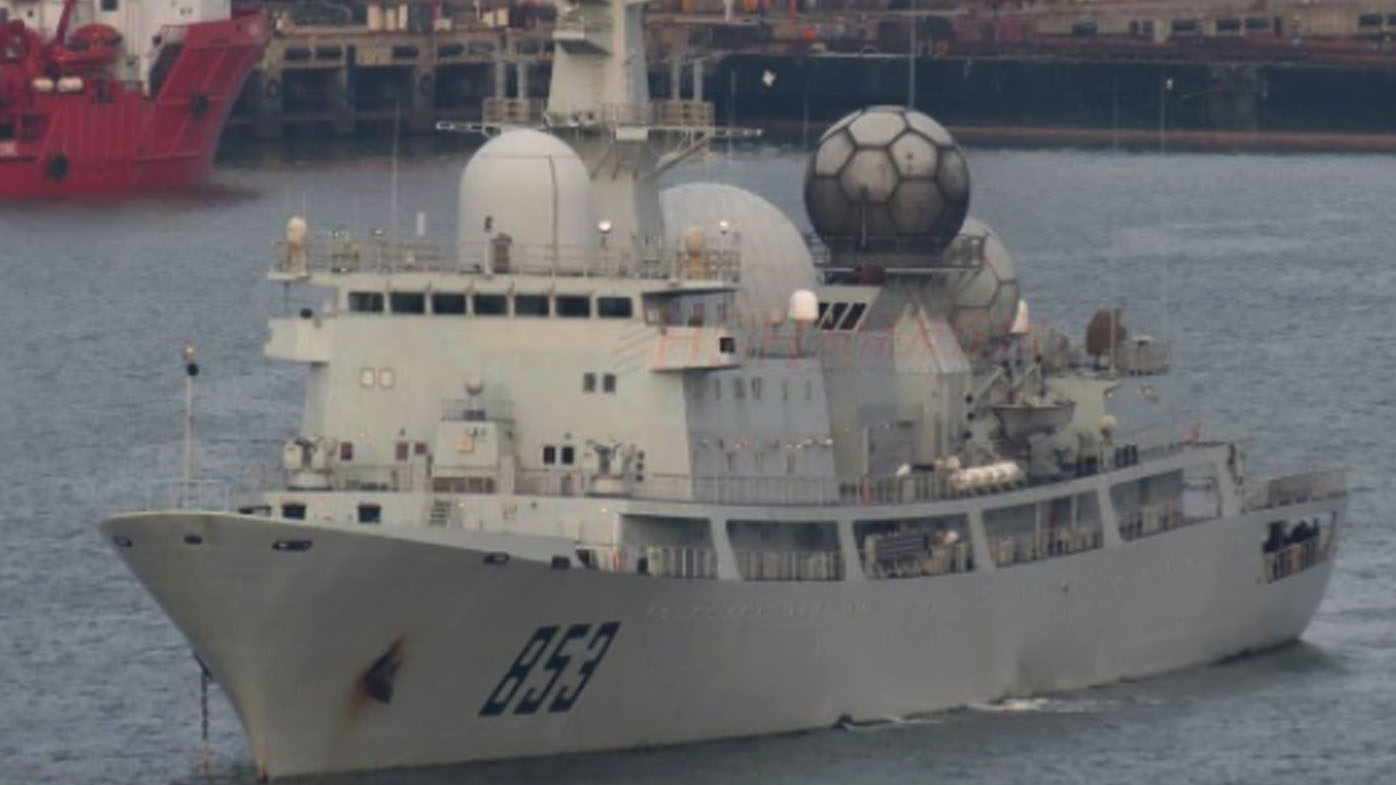
A Chinese surveillance ship is being tracked heading towards Queensland waters ahead of upcoming Australian-hosted military exercises.

The vessel is the high-tech general intelligence (AGI) ship Tianwangxing and is scheduled to arrive on Friday.

It is then expected to surveil the Talisman Sabre 2021 military exercises involving Australia, the US and other international forces which officially start today.

READ MORE: Australian warships 'to hold naval drills with UK strike group'

The Department of Defence told nine.com.au that it was monitoring the Chinese ship.

"Defence is aware that the People's Liberation Army (Navy) General Intelligence Ship Tianwangxing is approaching Australia's east coast via the Torres Strait," a Defence spokesman said.

"Australia monitors all vessels operating in our maritime approaches.

"Australia supports and respects the rights of all states to exercise lawful freedom of navigation and overflight in international waters and airspace, just as we expect others to respect our right to do the same."

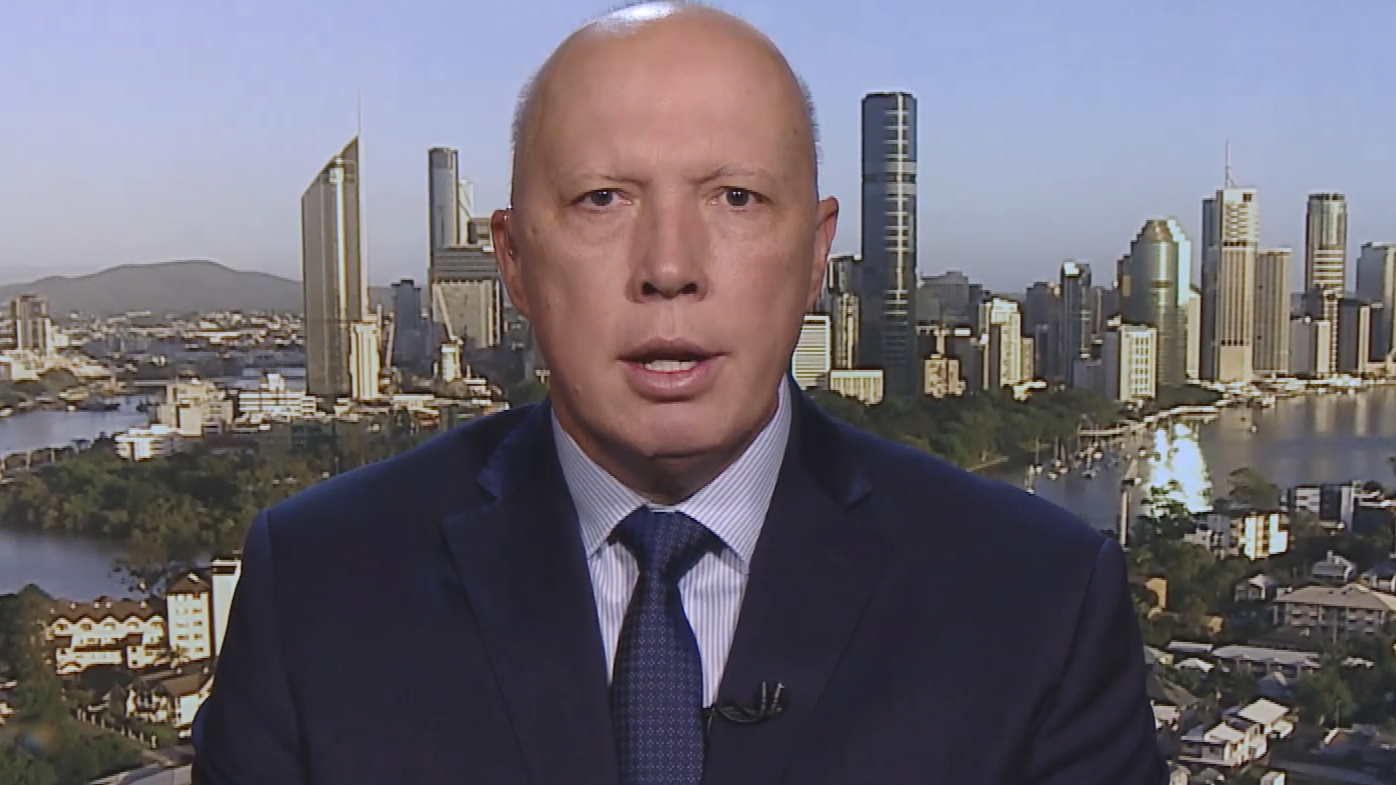
Defence Minister Peter Dutton said the Australian Defence Force (ADF) had been tracking the Chinese naval vessel over recent days.

READ MORE: US warns China it stands behind South China Sea ruling

AFP letter provides 'clear direction' on how criminal complaints should be handled: Dutton

"We are aware that the People's Liberation Army (Navy) general intelligence ship Tianwangxing is approaching Australia's east coast via the Torres Strait," Mr Dutton said.

"We have been monitoring its approach to Australia for several days as part of Australia's broader surveillance effort."

Mr Dutton said he did not expect the presence of the Chinese naval ship to impede the Talisman Sabre exercises.

"We fully expected a ship of this class to arrive in our region during the exercise and have planned for its presence, as we do for every iteration," he said.

According to the US Navy, the Tianwangxing is equipped with advanced surveillance equipment that can intercept communication signals.

https://twitter.com/DeptDefence/status/1414806210780487681?ref_src=twsrc%5Etfw

Chinese naval vessels have previously monitored the biennial Talisman Sabre exercises.

The military drills involve armed forces from the US, Japan, South Korea, New Zealand, the UK and Canada.

South Africa Zuma Riots: Looting, Unrest Leaves 72 Dead

BBC- The death toll in South Africa has risen to 72 as violence continues across the country following the jailing of former President Jacob Zuma.

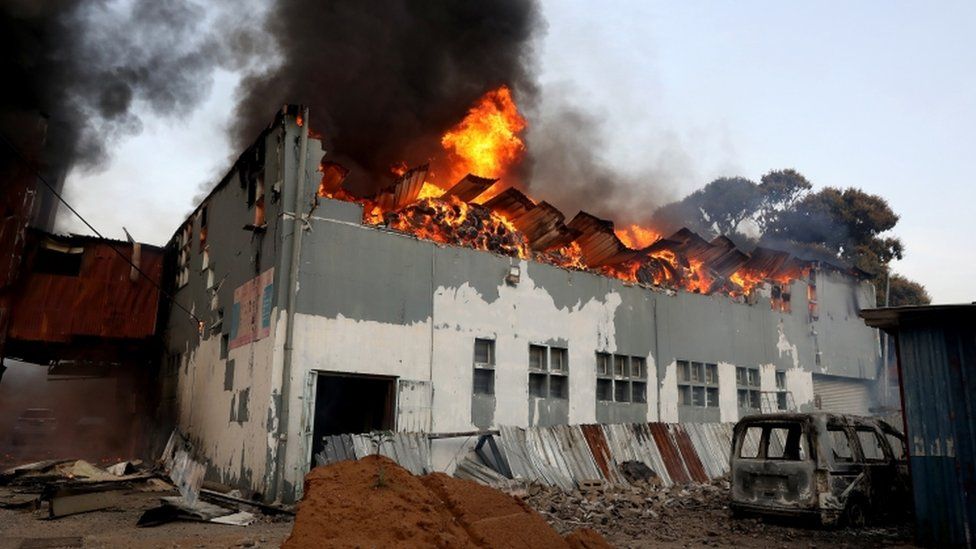
Crowds looting and setting alight shopping centres clashed with police in several cities on Tuesday.

The BBC filmed a baby being thrown from a building in Durban that was on fire after ground-floor shops were looted.

A day earlier, 10 people were killed in a stampede during looting at a shopping centre in Soweto.

The military have been deployed to help police overstretched since the unrest began last week.

South African police said in a statement they had identified 12 people suspected of provoking the riots, and that a total of 1,234 people had been arrested.

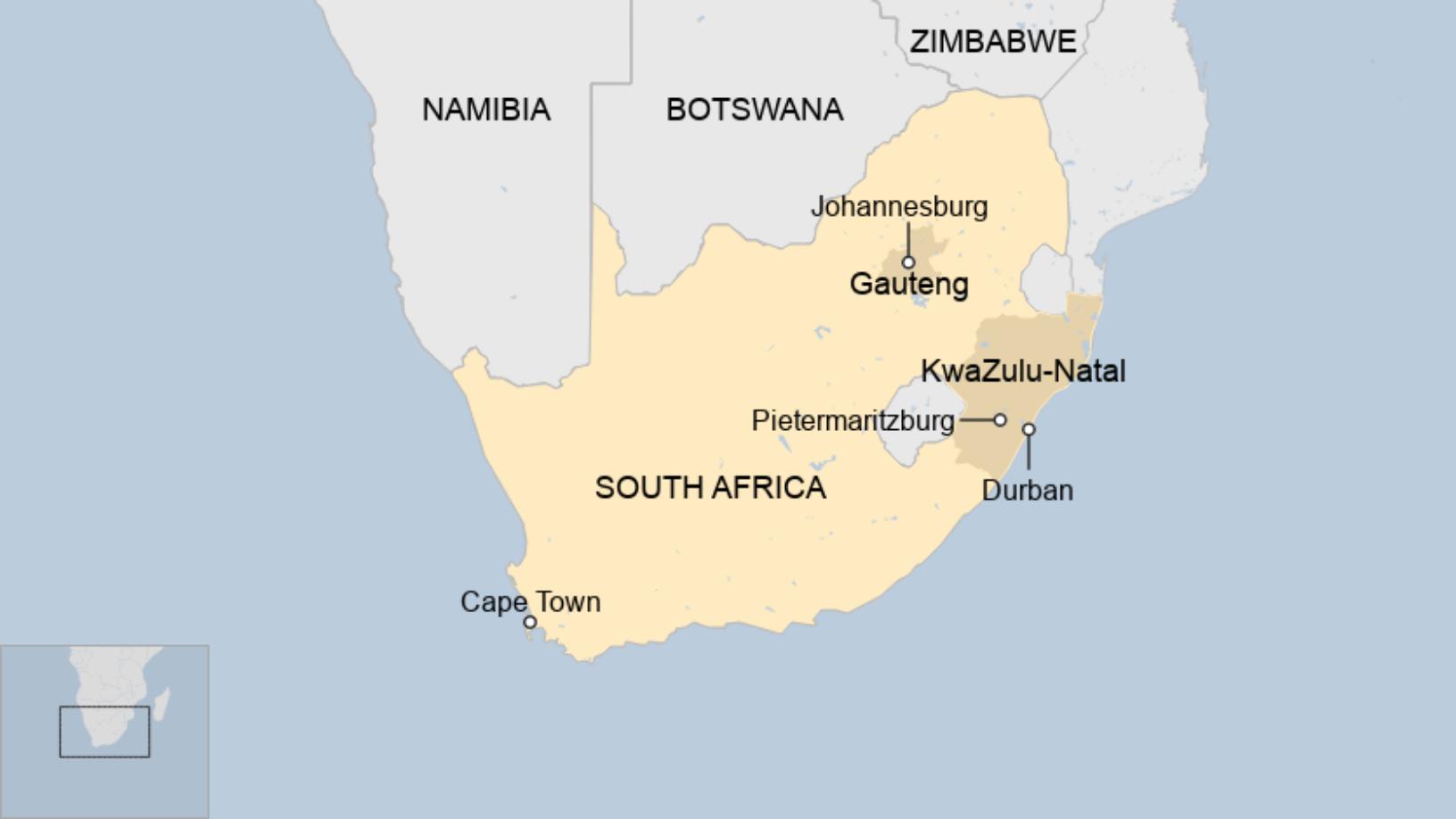
President Cyril Ramaphosa has called it some of the worst violence witnessed in South Africa since the 1990s, before the end of apartheid, with fires started, highways blocked and businesses and warehouses looted in major cities and small towns in KwaZulu-Natal and Gauteng provinces.

Ministers have warned that if looting continues, there is a risk areas could run out of basic food supplies soon – but have ruled out declaring a state of emergency.

What happened to the baby?

The child was caught by a crowd of people who rushed to help those trapped in the apartment block in the central business district of Durban, a coastal city in KwaZulu-Natal, on Tuesday afternoon.

Those stealing from shops on the ground floor of Smith Street had started the fire which spread, affecting those living upstairs.

The BBC’s Nomsa Maseko in Durban says that after catching the baby, the passers-by and neighbours rushed to get ladders to help other residents, including children, escape.

The mother was reunited with her baby, but was too emotional to talk. The rescue services arrived after about 20 minutes to help douse the fires.

How bad is the damage?

More than 200 shopping malls had been looted by Monday afternoon, Bloomberg news agency quoted the chief executive officer of Business Leadership South Africa, Busisiwe Mavuso, as saying.

Several shopping centres in Soweto – South Africa’s largest township which was once home to Nelson Mandela – have been completely ransacked, with ATMs broken into, restaurants, stores selling alcohol and clothing shops all left in tatters.

Soldiers working with the police managed to catch a few rioters; in total almost 800 have been arrested, but law enforcement remains heavily outnumbered, he reports.

In KwaZulu-Natal – where livestock has also been stolen – the unrest continues with ambulances coming under attack by rioters in some areas, South Africa’s TimesLive news site reports.

Video footage shows that a blood bank was looted in Durban as Mr Ramaphosa addressed the nation on Monday night.

line

Analysis: What’s behind the riots?

By Farouk Chothia, BBC News

The catalyst was the arrest last week of Zuma, with his supporters blockading major roads – the economic arteries of the nation – as they demanded the release of their political hero.

Low income levels and unemployment – standing at a record high of 32.6% among the workforce and even higher at 46.3% among young people – are seen as the ticking bombs that have exploded.

Many South Africans have been shaken by the riots that have swept through Zuma’s political heartland of KwaZulu-Natal and the economic hub of Gauteng.

And many feel that his successor as president, Cyril Ramaphosa, has failed to provide decisive leadership – either to calm anger over Zuma’s imprisonment or to reassure South Africans that they will be safe.

Mr Ramaphosa was accused of belatedly deploying troops – and only 2,500 of them compared with the 70,000 he deployed to enforce a nationwide lockdown to curb the spread of Covid-19 last year.

But there is no agreement over the deployment – the Economic Freedom Fighters (EFF) opposition party has opposed it, saying the solution lies in “political intervention and engagement with our people”.

Many residents in affected areas have remained at home, and some have formed what local media call “defence squads” to protect their neighbourhoods and businesses as looting and burning continues.

There is no doubt that the unrest is the biggest security challenge that Mr Ramaphosa has faced since he became president in 2018 after ousting Zuma. It is bound to worsen the economic crisis, already hit by the pandemic, given the scale of destruction.

line

Why is Zuma in jail?

He was convicted of contempt of court last month after failing to attend an inquiry into corruption during his presidency.

The 79-year-old, who denies corruption, was given a 15-month prison sentence. He handed himself in to police last Wednesday.

He is hoping to get the sentence rescinded or reduced by the country’s constitutional court. However, legal experts say his chances of success are slim.

A business is set on fire during widespread looting and protests in Durban, South Africa - 12 July 2021image copyrightEPA
image captionPeople are being investigated for inciting the violence

Police Minister Bheki Cele has warned that “no amount of unhappiness or personal circumstances from our people gives the right to anyone to loot, vandalise and do as they please and break the law”.

There has been some concern over fake news online fuelling the unrest, while the governing African National Congress (ANC) had already revealed it was looking into tweets sent by Zuma’s daughter, Duduzile Zuma-Sambudla.

State Security Minister Ayanda Dlodlo said officials were “busy sorting fact from fiction” after receiving information that former security agents linked to Zuma had instigated the violence.

Map
1px transparent line
line

The post South Africa Zuma Riots: Looting, Unrest Leaves 72 Dead appeared first on The St Kitts Nevis Observer.

Inside Sydney's COVID-19 intensive care unit

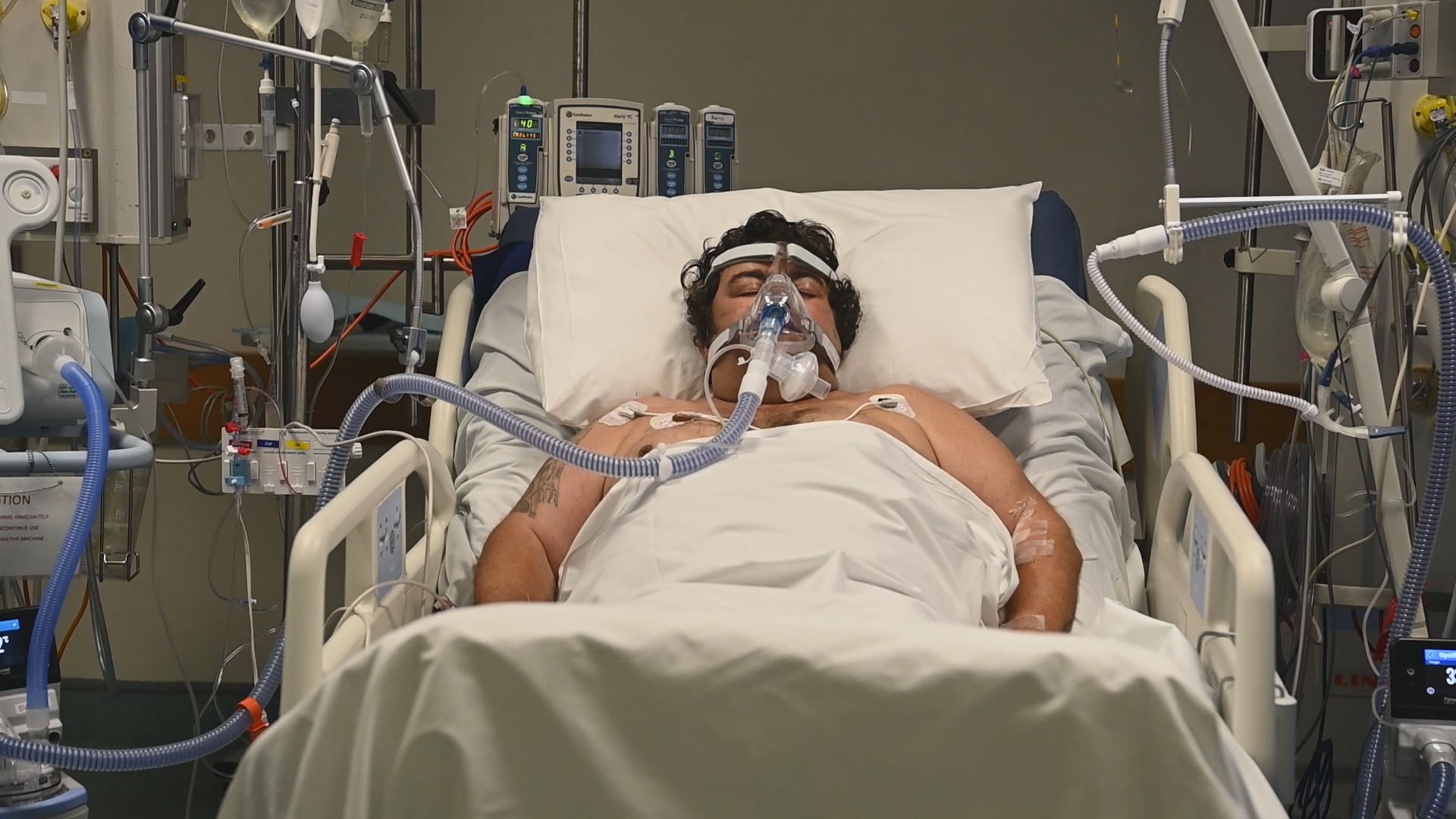
As the number of COVID-19 cases continues to surge across Sydney, more patients have been admitted to hospital – some in a critical condition.

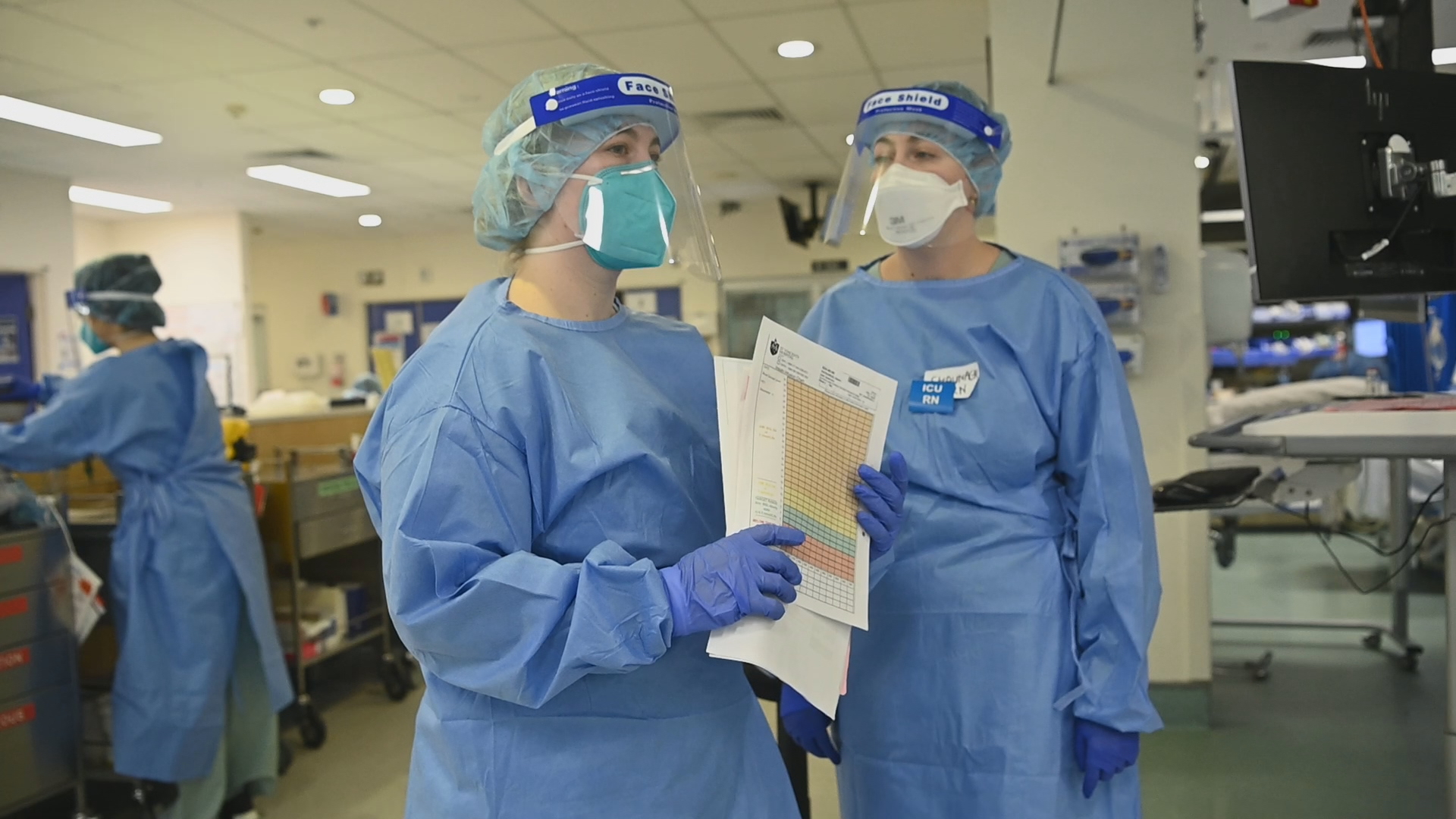
Sydney Morning Herald Photographer Kate Geraghty was today given special permission to enter one of Sydney's intensive care units where gravely ill patients are being treated for the Delta variant.

The ward, located at St Vincent's Hospital, is known as the red zone and is dedicated exclusively to COVID-19 cases.

READ MORE: New cases in locked-down Bondi Junction apartment block

Patients in the ward are fitted with ventilators to help them breath as the virus attacks their lungs and respiratory system.

Every patient has their own dedicated team to ensure constant care.

For nurses, dressed head to toe in full PPE to stop cross infection, there's no downtime as they continuously monitor and assess vital signs to ensure their patient doesn't deteriorate.

Across Greater Sydney there are 20 people in intensive care, six of those at St Vincents, but the hospital is bracing for more as the Delta strain continues to make its mark on the city.

READ MORE: Paddy's Markets among new Sydney COVID-19 exposure sites

READ MORE: When will Sydney's lockdown end?

The hospital has increased staff in the red zone, cut surgeries and opened up dedicated beds on the ward for COVID-19 patients.

Doctors are seeing a disproportionate number of younger patients in ICU … some with no underlying health conditions.

Of the people in intensive care, one is in their 20s, two are in their 30s and another two are in their 40s.

"It can happen, its less likely to lead to death in younger age groups but it can still be a serious illness requiring admission into ICU," the state's Chief Health Officer Dr Kerry Chant warned.

U.S Warns Refugee Cubans Against Sea Crossings, Most Use Mexican Border

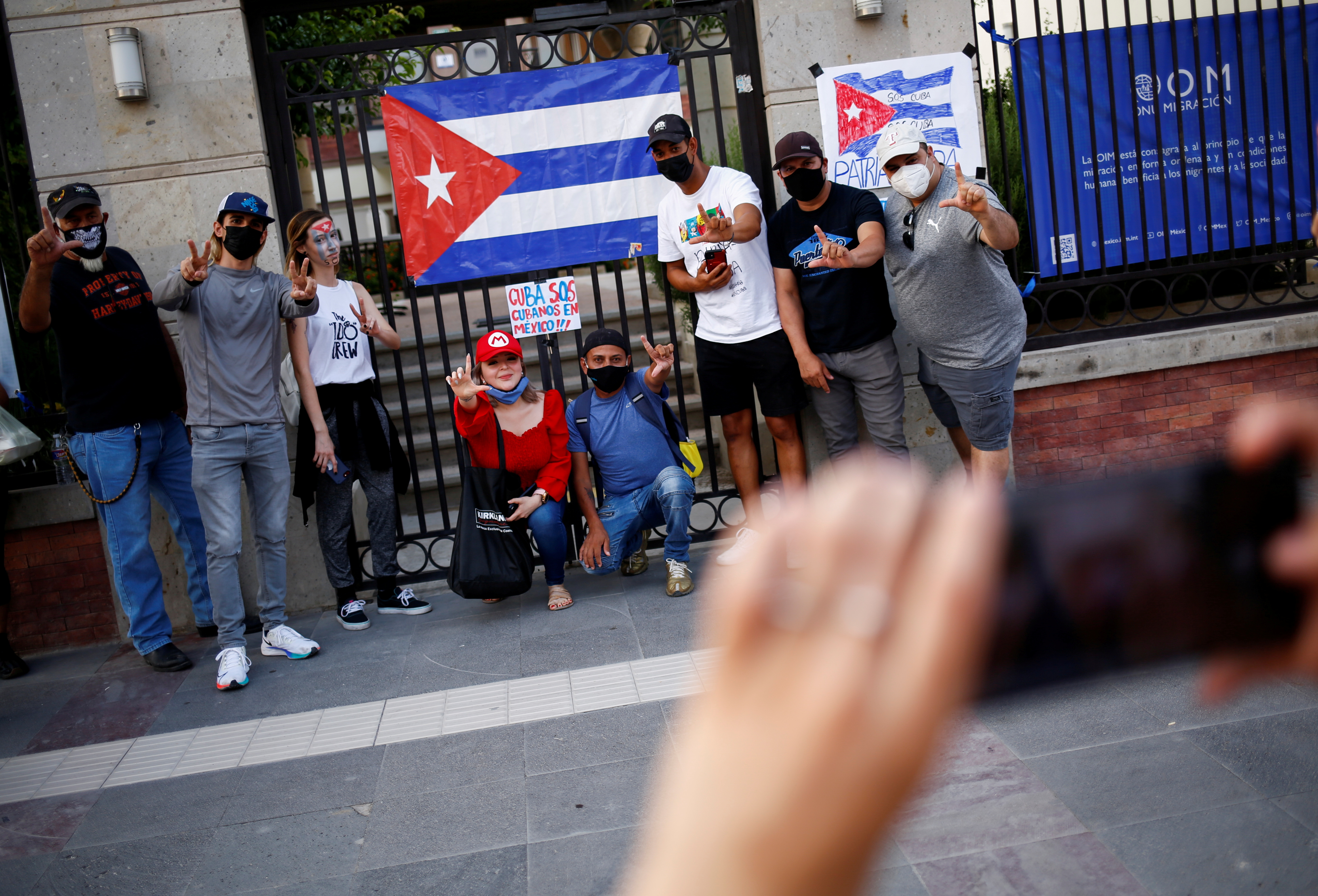
Cubans gesture during a protest against the Cuban government in front of the offices of the International Organization for Migration (IOM) in Ciudad Juarez, Mexico July 12, 2021. REUTERS/Jose Luis Gonzalez/File Photo

NEW YORK, July 13 (Reuters) – U.S. Secretary of the Department of Homeland Security Alejandro Mayorkas on Monday told any migrants fleeing unrest in Cuba: “Let me be clear: If you take to the sea, you will not come to the United States.”

But Cuban migrants are largely flocking to the U.S.-Mexico land border, not the U.S. coast. And in a sharp break from his predecessor Donald Trump, President Joe Biden has been letting most in pending the outcome of their asylum applications, according to government data.

Since Biden took office in late January, the number of Cubans arriving at the U.S.-Mexico border has risen sharply. This fiscal year through May, which began in October, border officials encountered more than 22,000 Cubans, the highest level in more than a decade.

U.S. Customs and Border Protection data shows vividly the sharp contrast between the approaches of the Trump and Biden administration toward Cuban migrants.

In December 2020 – the last full month of Trump’s presidency – nearly two-thirds of all Cubans caught crossing the border were expelled to Mexico under a pandemic-related health order known as Title 42. By May of this year, the last month data is available, around 96% of Cubans were allowed into the United States to reunite with U.S.-based family members and seek legal status in immigration court.

The majority of Cuban migrants being allowed in are single adults, a notable development because Biden has continued to expel the vast majority of individual adults arriving from Central America and Mexico. He has made exceptions only for unaccompanied minors and most families.

The U.S. Department of Homeland Security did not immediately respond to a request for comment.

UNREST ON THE ISLAND

In Cuba, thousands have joined recent protests in cities across the nation amid frustrations with widespread shortages of basic goods including medicine, power outages, rising prices and a surge in COVID-19 cases. Some demonstrators also called for political change. The Cuban government has blamed the shortages on U.S. sanctions and says the United States has backed the opposition. read more

It is not yet clear whether the unrest could lead to even more people trying to flee the island. Mayorkas said in his press briefing that the United States has not seen an uptick in migration via sea.

“Any migrant intercepted at sea, regardless of their nationality, will not be permitted to enter the United States,” Mayorkas said. “This risk is not worth taking.”

He said 20 people have died in recent weeks during these voyages. ​The U.S. Coast Guard recently sent two cutter boats to back up others in nearby waters off the coast of Haiti, which is also experiencing a political crisis following the assassination of its president. “Our priority is to preserve and save lives,” Mayorkas said.

U.S. Republican Senator Marco Rubio voiced concerns this week an explosion in anti-government protests in Cuba could spark a return to the era of massive boatlifts of Cubans seeking refuge at U.S. shores. Rubio, a Cuban-American representing Florida, raised the specter of the iconic Mariel boatlift in the 1980s and a 1994 surge in rafts leaving the island, saying on Twitter that the Cuban government could use the protests as an excuse to lift travel restrictions and spark another crisis at sea.

Pedro Ruiz, 51, who said he had to flee Cuba in 2016 because of his involvement in an opposition political party, encountered the stark difference between Trump and Biden policies on his journey to the United States.

Ruiz first escaped to Brazil, then discovered he could try for U.S. asylum and headed to the U.S.-Mexico border in 2019. But when he tried to cross, border agents sent him back to Mexico under a different Trump-era policy, known as the Migrant Protection Protocols, that forced migrants to wait in Mexico for U.S. court hearings.

Ruiz was stuck in a shelter in the northern Mexican city of Ciudad Juarez for two years until Biden reversed the policy soon after he took office this year. Ruiz was finally allowed across the border in March to start a new life with his family in Miami while pursuing his asylum case.

“The only thing that Biden did was restore internationally protected asylum laws that Trump had violated,” said Ruiz in a phone interview. “That was the only change.”

(Corrects typo in paragraph 8)

Reporting by Mica Rosenberg in New York; additional reporting by Doina Chiacu and Jan Wolfe in Washington D.C. and Jose Luis Gonzalez in Ciudad Juarez, Editing by Ross Colvin and Aurora Ellis


The post U.S Warns Refugee Cubans Against Sea Crossings, Most Use Mexican Border appeared first on The St Kitts Nevis Observer.

Cuba Demo: Govt. Curbs Social Media Access, Miami Protests Block Traffic

HAVANA, July 13 (Reuters) – Cuba has restricted access to social media and messaging platforms including Facebook and WhatsApp, global internet monitoring firm NetBlocks said on Tuesday, in the wake of the biggest anti-government protests in decades.

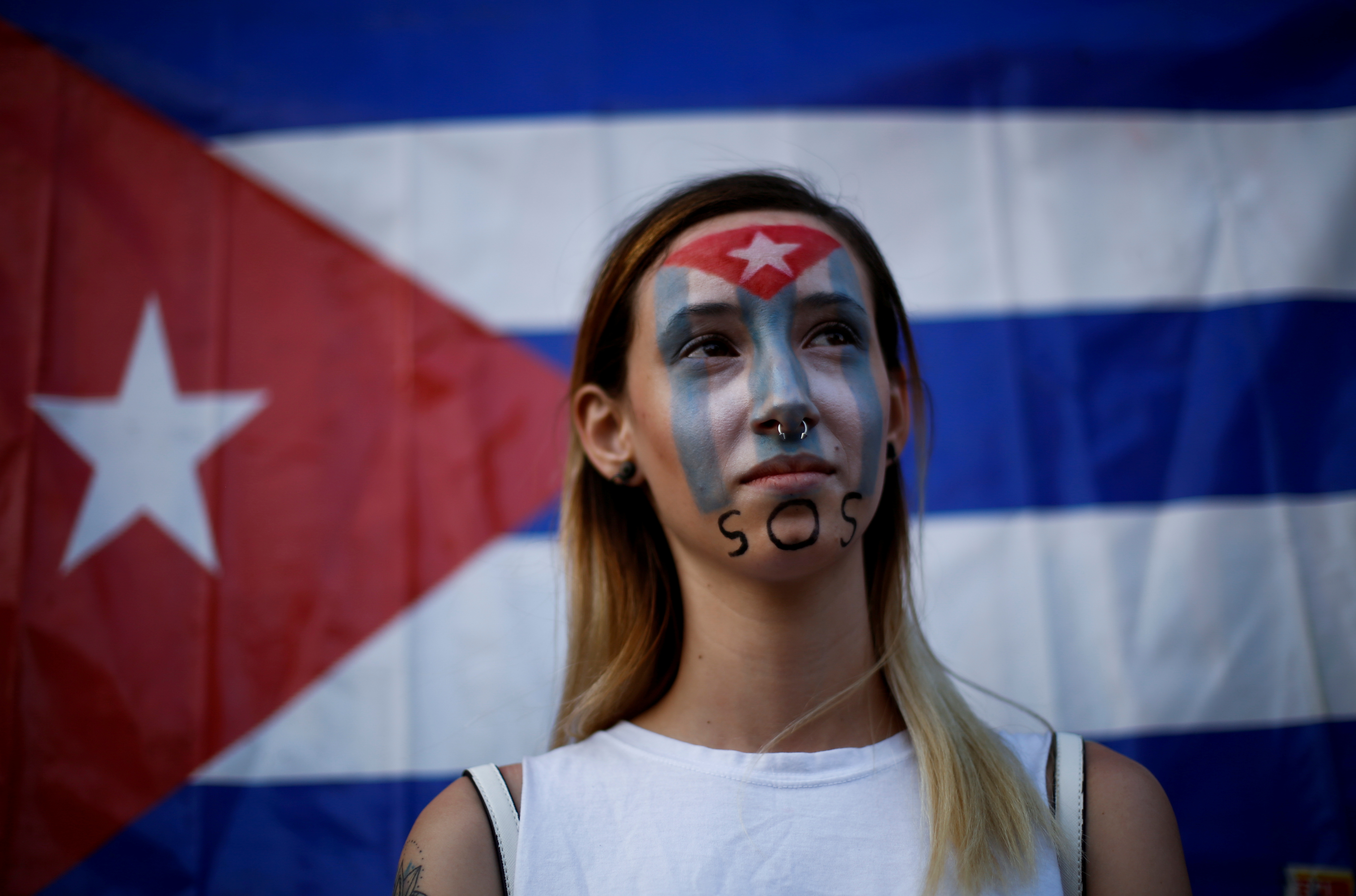
Thousands of Cubans joined demonstrations throughout the Communist-run country on Sunday to protest against a deep economic crisis that has seen shortages of basic goods and power outages. They were also protesting against the government’s handling of the coronavirus pandemic and curbs on civil liberties.

Cuba’s government has said the demonstrations were orchestrated by counter-revolutionaries financed by the United States, manipulating frustration with an economic crisis largely caused by the decades-old U.S. trade embargo.

The protests, rare in a country where public dissent is tightly controlled, had largely ended by Sunday evening, as security forces were deployed to the streets and President Miguel Diaz-Canel called on government supporters to go out and fight to defend their revolution.

But another protest flared late Monday in the southern Havana suburb of La Guinera, where one man died and several others, including members of the security forces, were hospitalized with injuries, according to state-run media on Tuesday.

It did not say what caused the death. No other deaths and injuries have been officially confirmed so far.

Hundreds had taken to streets in La Guinera, shouting slogans like ‘down with communism,’ and ‘freedom for the people of Cuba,’ according to two residents and video footage seen by Reuters. Some started throwing rocks at security forces who eventually responded with gunfire, said resident Waldo Herrera, 49.

“I think the Communists have lost control, they won’t have a solution to this situation,” he said. “The people are tired of so much humiliation, so much repression.”

A Reuters witness saw dozens of people carrying sticks departing La Guinera late on Monday.

Activists say the government is using so-called rapid-reaction brigades – government-organized bands of civilian recruits – to counter protesters.

MOBILE INTERNET OUTAGES

They also accuse the government of trying to disrupt communications. Introduced just over two years ago, mobile internet has been a key factor behind the protests, giving Cubans more of a platform to express their frustrations and enabling the word to get out quickly when people are on the street.

In the capital, there have been regular and atypical mobile internet outages since Sunday, according to Reuters witnesses.

NetBlocks, based in London, said on its website that Facebook, WhatsApp, Instagram and Telegram in Cuba were partially disrupted on Monday and Tuesday.

“The pattern of restrictions observed in Cuba indicate an ongoing crackdown on messaging platforms used to organize and share news of protests in real-time,” said NetBlocks director Alp Toker. “At the same time, some connectivity is preserved to maintain a semblance of normality.”

Facebook Inc (FB.O), which owns Instagram and WhatsApp, said that it was concerned about its services being restricted in Cuba, in a statement to Reuters late on Tuesday.

“We oppose shutdowns, throttling, and other disruptions of the internet that limit the debate of our community. We hope connectivity will be restored as soon as possible so that Cubans can communicate with family and friends,” said Joe Osborne, a Facebook spokesperson.

Asked whether the government was intentionally restricting internet connections, Foreign Minister Bruno Rodriguez told a news briefing the situation was “complicated.” He said power outages could impact telecommunications services and “Cuba would never renounce the right to defend itself.”

Telegram did not immediately respond to a request for comment. Twitter Inc (TWTR.N) said it found no blocking of its service.

“Our weapon is the internet. If they take away the internet we are unarmed,” said Havana resident Gino Ocumares, as he tried but failed to connect to the web at a government Wi-Fi hotspot. “The government does not want people to see the truth.”

‘PROVOCATIONS’

The protest in La Guinera was spearheaded by “antisocial and criminal elements” that had tried to reach the police station with the aim of attacking its officials and damaging infrastructure, said the state-run Cuban News Agency.

When security forces stopped them, they vandalized homes, set containers on fire, and damaged the suburb’s electricity wiring, attacking officials with stones and other objects, the agency said.

State-run media also reported on Tuesday that Raul Castro, who stepped down as head of the ruling Cuban Communist Party in April, attended a meeting on Sunday of the political bureau to address the “provocations.”

Diaz-Canel said in April he would continue to consult Castro on matters of utmost importance.

The Cuban Bishops Conference said in a statement it was worried that the response to protests over legitimate concerns would be “immobilism” rather than an attempt to resolve them, and even a counterproductive hardening of positions.

Reaction to the protest in Latin America split along ideological lines, with Mexico’s president blaming the U.S. embargo for fomenting the unrest, while Chile and Peru urged the government to allow pro-democracy protests.

U.S. President Joe Biden said on Monday that the United States “stands firmly with the people of Cuba as they assert their universal rights.”

State Department spokesman Ned Price called on the Havana government to open all means of communication, both online and offline.

“Shutting down technology, shutting down information pathways – that does nothing to address the legitimate needs and aspirations of the Cuban people,” Price told a news briefing on Tuesday.

Reporting by Sarah Marsh in Havana and Elizabeth Culliford in New York; Additional reporting by Nelson Acosta and Reuters TV in Havana, Simon Lewis in Washington and Sheila Dang in New York, Juby Babu in Bengaluru; Editing by Richard Chang and Rosalba O’Brien
=================================================

Demonstrators block traffic in Miami area to support Cuban protesters

A woman holds a flag as emigres in the Little Havana neighborhood gather following reports of protests in Cuba against its deteriorating economy, in Miami, Florida, U.S. July

MIAMI, July 13 (Reuters) – Demonstrators waving Cuban flags and calling for change on the Communist-run island blocked a major highway and staged other protests in the Miami area on Tuesday in support of the wave of demonstrations that rocked Cuba on Sunday.

The Miami area has long been home to the largest Cuban exile community and a focal point for anti-Castro sentiment.

The South Florida demonstrators sought to replicate the protests by thousands of Cubans on Sunday who denounced a deep economic crisis, shortages of basic goods and power outages in the largest showing of unrest in decades. read more

“If Cuba is in the street, Miami is too,” many chanted.

Dozens of demonstrators shut down the Palmetto Expressway for several hours.

1/7

A woman reacts as emigres in the Little Havana neighborhood gather following reports of protests in Cuba against its deteriorating economy, in Miami, Florida, U.S. July 13, 2021. REUTERS/Maria Alejandra Cardona

“The roadway remains shut down due to protesters. We have deployed additional resources to assist with re-opening,” Florida Highway Patrol spokesman Lieutenant Alex Camacho said in an email on Tuesday evening.

But witness Jules Martinez said later that police were allowing the highway protest, which remained peaceful, to continue.

“As I was exiting the highway I saw people joining the protest and walking towards it,” Martinez said by Twitter chat. “Local police were allowing the protest to happen and guiding the traffic.”

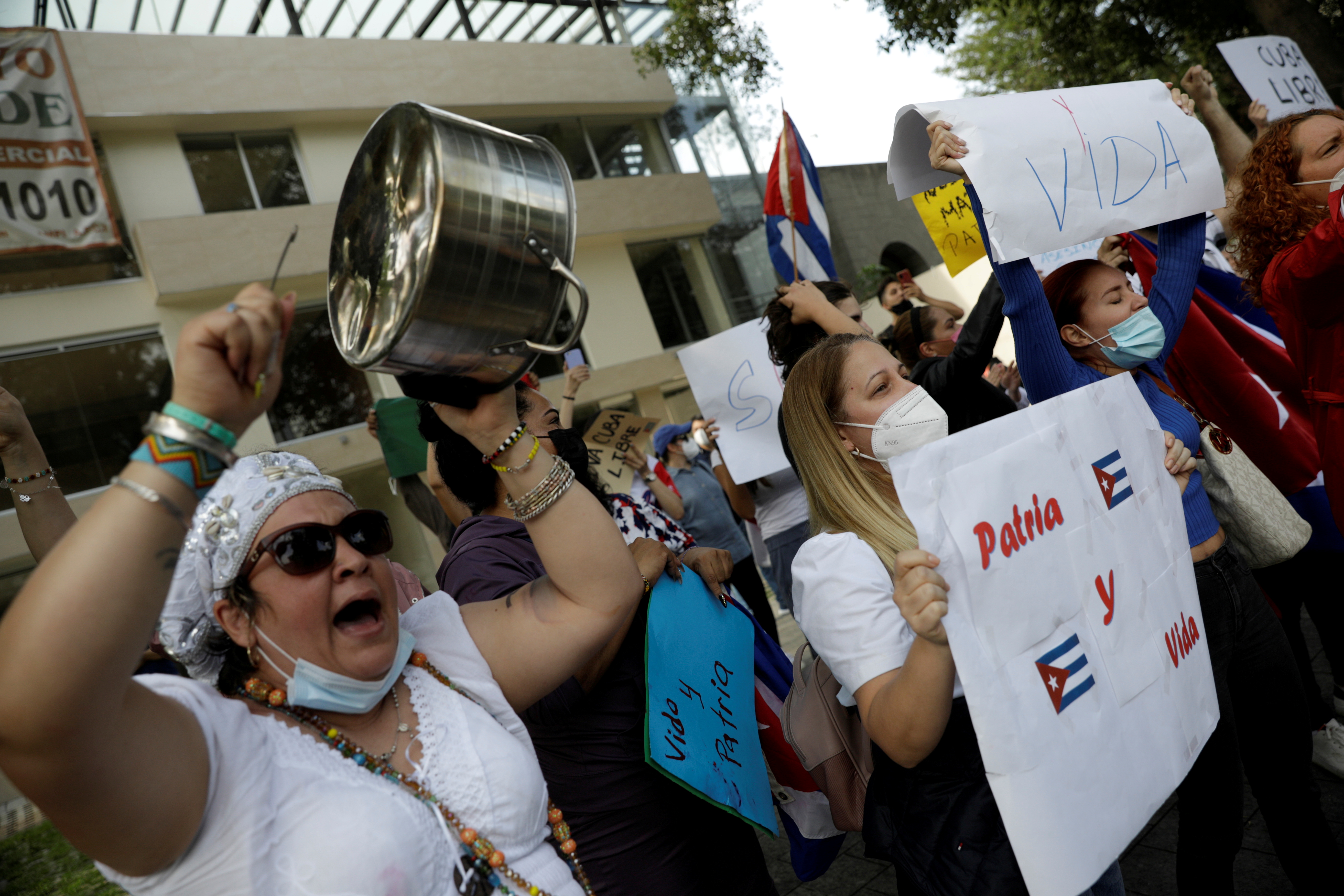
Other demonstrations popped up in places such as Tamiami Park in the Westchester neighborhood, where protesters called for “intervention” and shouted: “Patria y Vida,” or “Homeland and Life,” a slogan popularized by prominent Cuban recording artists.

The phrase plays on the Cuban revolutionary slogan “Patria o Muerte,” meaning “Homeland or Death,” a rallying cry and call for sacrifice from Fidel Castro’s 1959 leftist revolution.

Reporting by Maria Alejandra Cardona in Miami and Nur-Azna Sanusi in Singapore; Writing by Daniel Trotta; Editing by Peter Cooney

The post Cuba Demo: Govt. Curbs Social Media Access, Miami Protests Block Traffic appeared first on The St Kitts Nevis Observer.

UK Public at Risk from Hostile State Threats – MI5

The head of MI5 is to urge the public to be as vigilant about threats from “hostile states” as from terrorism.

These include disruptive cyber-attacks, misinformation, espionage and interference in politics – and are usually linked to Russia and China.

In a speech on Wednesday, Ken McCallum will say these “less visible threats… have the potential to affect us all”.

He will say these threats are affecting UK jobs and public services and could even lead to a loss of life.

The head of the Security Service wants to challenge the idea that activity by so-called “hostile states”, usually taken to mean primarily Russia and China, only affects governments or certain institutions.

Instead, he will argue, in an annual threat update, that the British public are not immune to the “tentacles” of covert action by other states.

In the speech at MI5’s Thames House headquarters, Mr McCallum will warn the “consequences range from frustration and inconvenience, through loss of livelihood, potentially up to loss of life”.

Terrorism has dominated MI5’s agenda for the last two decades. That danger has not gone away but MI5 is now also dealing with a broader range of threats as well.

These include cyber attacks. China is often accused of seeking to steal information for commercial gain but Russia and China have both been accused in the last year by Western governments of targeting vaccine research – allegations they have denied.

The warning comes amid growing fears that cyber-attacks by states, or by criminal groups sheltered by states such as Russia, could take down critical infrastructure like water or power or healthcare leading to a loss of life.

In 2017, a cyber-attack linked to North Korea took down parts of the NHS, affecting appointments, and a recent attack linked to criminals in Russia took down a pipeline supplying half the fuel to America’s East Coast.

As well as claims it may have tried to increase scepticism about the Oxford vaccine, Russia was directly accused by the government of trying to influence the 2019 general election and was linked to interference in the US 2016 election.

The government faced criticism for delays in releasing the so-called Russia Report from the Intelligence and Security Committee which looked at this.

When it was released last summer, it said there had been a failure to investigate interference from Moscow in the Brexit referendum. Moscow has dismissed the accusations.

‘Discoveries stolen or copied’

Traditional espionage – spies stealing secrets – also continues, but sometimes in a more modern way.

One example comes with foreign spies targeting people over professional networking sites like LinkedIn, often associated with China.

Fake profiles are used to try and lure them into passing over sensitive information. MI5 recently launched a campaign called “Think before you Link” to raise awareness.

“We have seen over 10,000 disguised approaches from foreign spies to regular people in the UK, seeking to manipulate them,” Ken McCallum will say, referring to a five-year period.

“UK victims of state espionage range way wider than just government. We see the UK’s brilliant universities and researchers having their discoveries stolen or copied; we see businesses hollowed out by the loss of advantage they’ve worked painstakingly to build.

“Given half a chance, hostile actors will short-circuit years of patient British research or investment. This is happening at scale. And it affects us all. UK jobs, UK public services, UK futures,” the MI5 head will say.

‘If you are working in a high-tech business, or engaged in cutting-edge scientific research, or exporting into certain markets, you will be of interest – more interest than you might think – to foreign spies,” he will say, arguing people should be “switched on” rather than scared.

Campaign ad
MI5 launched an awareness campaign over foreign spies approaching the public on LinkedIn

Mr McCallum will call for a response across government and society, including increased public vigilance.

“We must, over time, build the same public awareness and resilience to state threats that we have done over the years on terrorism,” he will say.

The government is currently consulting on new legislation to counter hostile state activity, including a requirement for those working for foreign governments to register and updates to the laws surrounding espionage and secrets.

Encryption concerns

This is the second annual threat update since Mr McCallum became Director General of MI5 in April 2020.

He is also expected to address the current terrorism threat – including Islamist extremism and Northern Ireland activity as well as that from the far right, which MI5 recently became involved in monitoring.

Other subjects he will cover include the withdrawal of UK forces from Afghanistan. Some analysts worry it could lead to a resurgence from Al Qaeda, which plotted the September 2001 attacks from the country.

The MI5 chief is also likely to reiterate concerns over the spread of end-to-end encryption by tech companies such as Facebook.

The companies say their technology helps protect users’ privacy by ensuring no one but the sender and recipient can read a message, but the authorities argue this will pose a challenge to public safety because they can no longer demand companies hand over the contents.

The post UK Public at Risk from Hostile State Threats – MI5 appeared first on The St Kitts Nevis Observer.