Category Archives: headline

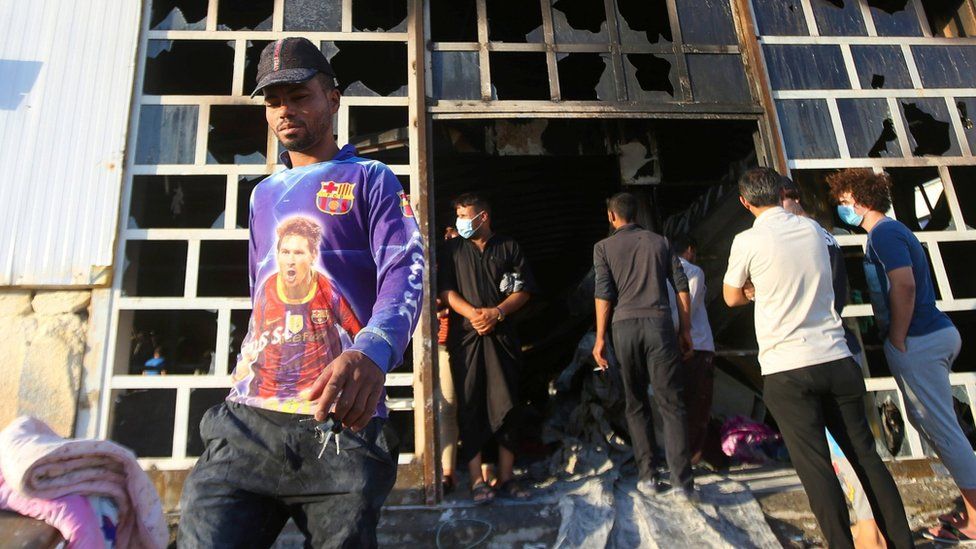
Iraq: 60+ Corona Patients Die In Hospital Fire

More than 60 people have died after a fire in a coronavirus isolation ward at a hospital in the Iraqi city of Nasiriya.

Much of Iraq’s health care system is in poor condition after years of conflict and angry relatives of the victims have been protesting outside the facility.

The cause of the fire at the al-Hussein hospital is unclear, but reports said it began after an oxygen tank exploded.

Iraqi PM Mustafa al-Kadhimi ordered the arrest of the head of the hospital.

State media put the death toll at 64, with nearly 70 others injured.

The speaker of the Iraqi parliament, Mohammed al-Halbousi, tweeted that the blaze was “clear proof of the failure to protect Iraqi lives, and it is time to put an end to this catastrophic failure”.

Reuters news agency reported clashes between demonstrators and police at the scene, and two police vehicles set ablaze.

Aftermath of fireimage copyrightReuters
The fire was only contained late on Monday night

The new ward had space for 70 beds and was built just three months ago, medical officials told the Associated Press news agency. A health official said that at least 63 people were inside when the fire began.

“I heard a big explosion inside the coronavirus wards and then fire had erupted very quickly,” a hospital guard told Reuters. A search operation is continuing.

In April, an exploding oxygen tank started a fire that killed at least 82 people and injured 110 at a hospital in the capital Baghdad. Health Minister Hassan al-Tamimi resigned after that fire.

The coronavirus pandemic has severely strained Iraq’s health service, already suffering from years of war, neglect and corruption.

Iraq has recorded 1.4 million infections and reported more than 17,000 deaths from coronavirus, according to Johns Hopkins University data.

The country has given at least one dose of a vaccine against Covid to just over one million of its roughly 40 million citizens, the World Health Organization says.

The post Iraq: 60+ Corona Patients Die In Hospital Fire appeared first on The St Kitts Nevis Observer.

Jamaica to Seek Slavery Reparations from UK

Reuters

KINGSTON, July 12 (Reuters) – Jamaica plans to ask Britain for compensation for the Atlantic slave trade in the former British colony, a senior government official said, under a petition that could seek billions of pounds in reparations.

Jamaica was a centre of the slave trade, with the Spanish, then the British, forcibly transporting Africans to work on plantations of sugar cane, bananas and other crops that created fortunes for many of their owners.

“We are hoping for reparatory justice in all forms that one would expect if they are to really ensure that we get justice from injustices to repair the damages that our ancestors experienced,” Olivia Grange, Minister of Sports, Youth and Culture, told Reuters in an interview at the weekend.

“Our African ancestors were forcibly removed from their home and suffered unparalleled atrocities in Africa to carry out forced labour to the benefit of the British Empire,” she added. “Redress is well overdue.”

An estimated 600,000 Africans were shipped to toil in Jamaica, according to the National Library of Jamaica.

Seized from Spain by the English in 1655, Jamaica was a British colony until it became independent in 1962. The West Indian country of almost three million people is part of the Commonwealth and the British monarch remains head of state.

Britain prohibited trade in slaves in its empire in 1807 but did not formally abolish the practice of slavery until 1834.

To compensate slave owners, the British government took out a 20 million pound loan – a very large sum at the time – and only finished paying off the ensuing interest payments in 2015.

The reparations petition is based on a private motion by Jamaican lawmaker Mike Henry, who said it was worth some 7.6 billion pounds, a sum he estimated is roughly equivalent in today’s terms to what Britain paid to the slaveholders.

“I am asking for the same amount of money to be paid to the slaves that was paid to the slave owners,” said Henry, a member of the ruling Jamaica Labour Party.

“I am doing this because I have fought against this all my life, against chattel slavery which has dehumanized human life.”

Grange herself declined to give a figure.

The petition, with approval from Jamaica’s National Council on Reparations, will be filed pending advice from the attorney general and three legal teams, Grange said. The attorney general will then send it to Britain’s Queen Elizabeth, she added.

The initiative follows growing acknowledgement in some quarters of the role played by slavery in generating wealth in Britain, with businesses and seats of learning pledging financial contributions in compensation.

They include insurance market Lloyd’s of London, pub owner Greene King and the University of Glasgow.

The petition also coincides with increasing efforts by some in Jamaica to sever formal ties with the United Kingdom.

Opposition lawmaker Mikael Phillips in December presented a motion to remove the British monarch as head of state.

More than 15 million people were shackled into the transatlantic slave trade, according to the United Nations.

Editing by Dave Graham and Nick Macfie

The post Jamaica to Seek Slavery Reparations from UK appeared first on The St Kitts Nevis Observer.

Venezuela Levels Terrorism Charges Against Guaido Ally After Highway Arrest

Reuters

CARACAS, July 12 (Reuters) – Venezuelan prosecutors on Monday said they had charged opposition politician Freddy Guevara with terrorism and treason, among other allegations, after the country’s intelligence service arrested him from his car on a Caracas highway.

Guevara is a close ally of opposition leader Juan Guaido, who is recognized as the South American country’s legitimate president by the United States and others. Guaido said unidentified armed men threatened him with arrest earlier on Monday as he left his apartment in an effort to assist Guevara.

In a statement, the chief prosecutor’s office said it had sought an arrest warrant for Guevara due to his alleged “ties with extremist groups and paramilitaries associated with the Colombian government.”

The incidents took place as the government and opposition prepare for negotiations planned for next month in Mexico with mediation by Norway aimed at resolving the South American country’s deep political crisis, people familiar with the matter told Reuters last week.

In an appearance on state television on Monday, Maduro confirmed the negotiation plans but said the opposition should renounce violent tactics ahead of the talks. Without naming Guevara or Guaido, he said he had proof some actors were plotting coups and that prosecutors acted on the basis of that proof.

“I agree with the Mexico and Norway table, but there must be conditions, there must be an express renunciation of violent practices,” Maduro said, adding that the United States and European Union should lift sanctions on Venezuela before the negotiations begin.

The U.S.-backed opposition labels President Nicolas Maduro a dictator, alleging he rigged his 2018 re-election and uses the justice system to stifle dissent.

“We strongly condemn the arrest of Venezuelan Congressman Freddy Guevara and threats against Interim President Juan Guaido in Venezuela,” Julie Chung, Acting Assistant Secretary for the U.S. Department of State’s Bureau of Western Hemisphere Affairs, wrote on Twitter.

She urged the international community to join in condemning the acts and called for the release of all political prisoners in Venezuela.

Maduro, who retains the support of the military, denies that the election was rigged, has labeled Guaido a U.S. puppet and has accused him of conspiring to oust him in a coup.

A spokesperson for Guaido’s office said Guevara, who was pardoned less than a year ago on 2017 charges of instigating violence, was taken to the Sebin intelligence service’s Helicoide prison in Caracas. The prosecutor’s office did not specify where he was being held.

‘GET OUT’

Reporters arrived outside Guaido’s residence in eastern Caracas minutes after his wife, Fabiana Rosales, tweeted that security forces had entered their apartment building in an attempt to arrest Guaido.

Neighbors had gathered in protest around two white, unmarked trucks in which sat men bearing bulletproof vests and assault rifles, some in balaclavas, according to a Reuters witness. Others wore hats that said DIE – the Spanish acronym for the Directorate of Intelligence and Strategy police unit.

“Dictatorship!” some of the neighbors yelled at the men. Others leaned out nearby windows banging on pots and pans.

Shortly afterwards, an unmarked gray Toyota truck filled with police raced out of the garage in the basement, leaving the residential complex. Minutes later, Guaido emerged from an SUV.

Guaido told the reporters gathered outside the building that the men had left, and said it was unclear which branch of the security forces they had belonged to.

“They intercepted us and pointed their weapons at us, in the basement,” Guaido told reporters.

Guaido’s office circulated two videos which they said showed the incident in Guaido’s basement. The videos show at least two men with bulletproof vests and balaclavas approaching a car, pointing assault rifles. Guaido is sat in the passenger seat. One of the men opens the driver’s door and forces the driver onto the ground, yelling “Get out!,” the videos show.

Venezuela’s information ministry did not respond to a request for comment.

Reporting by Vivian Sequera and Sarah Kinosian; writing by Luc Cohen and Sarah Kinosian; editing by Rosalba O’Brien and Richard Pullin

The post Venezuela Levels Terrorism Charges Against Guaido Ally After Highway Arrest appeared first on The St Kitts Nevis Observer.

COVID payments explainer: How to get what you are owed

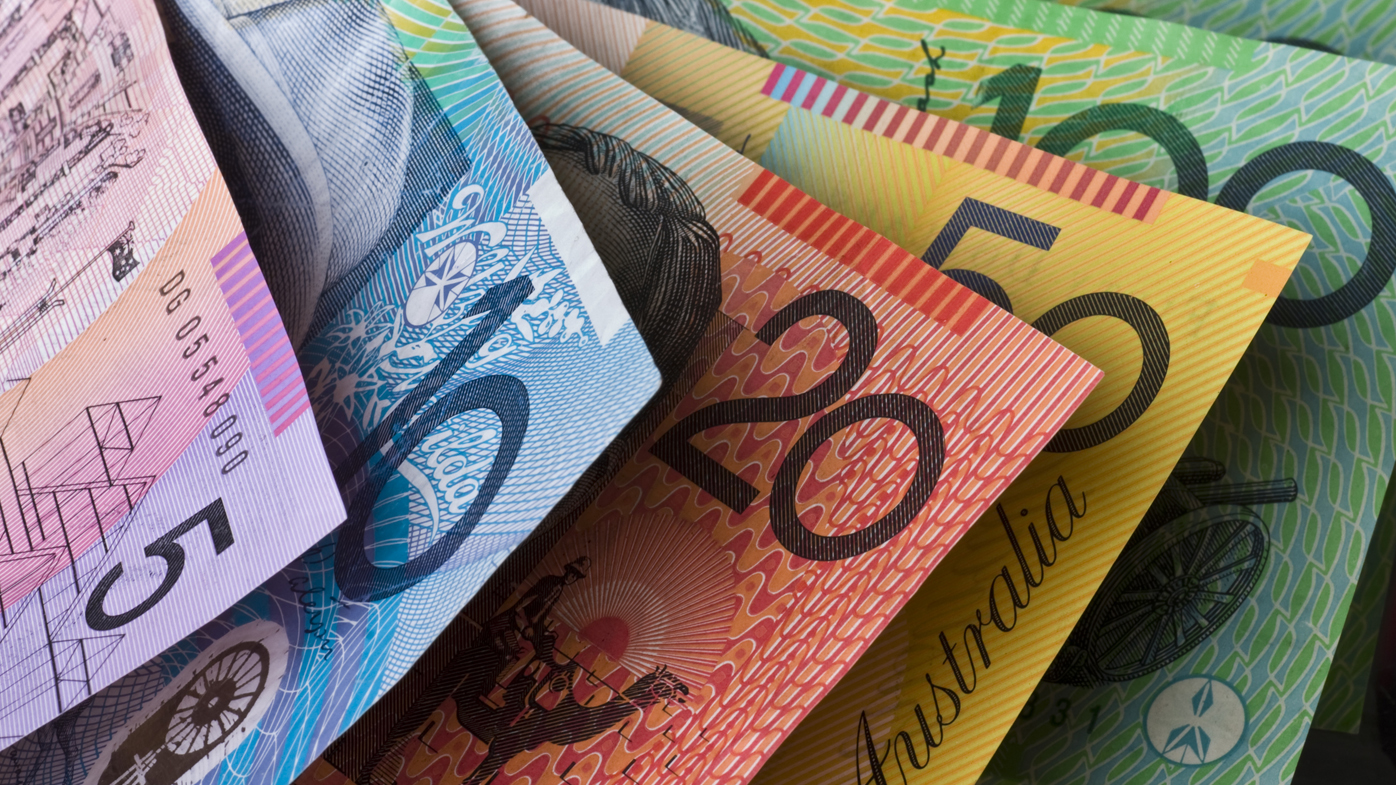
The Federal Government's COVID Disaster Payment has once again gone through another change – this time bumping up the weekly payment by as much as $100 if a state's lockdown goes into a fourth week.

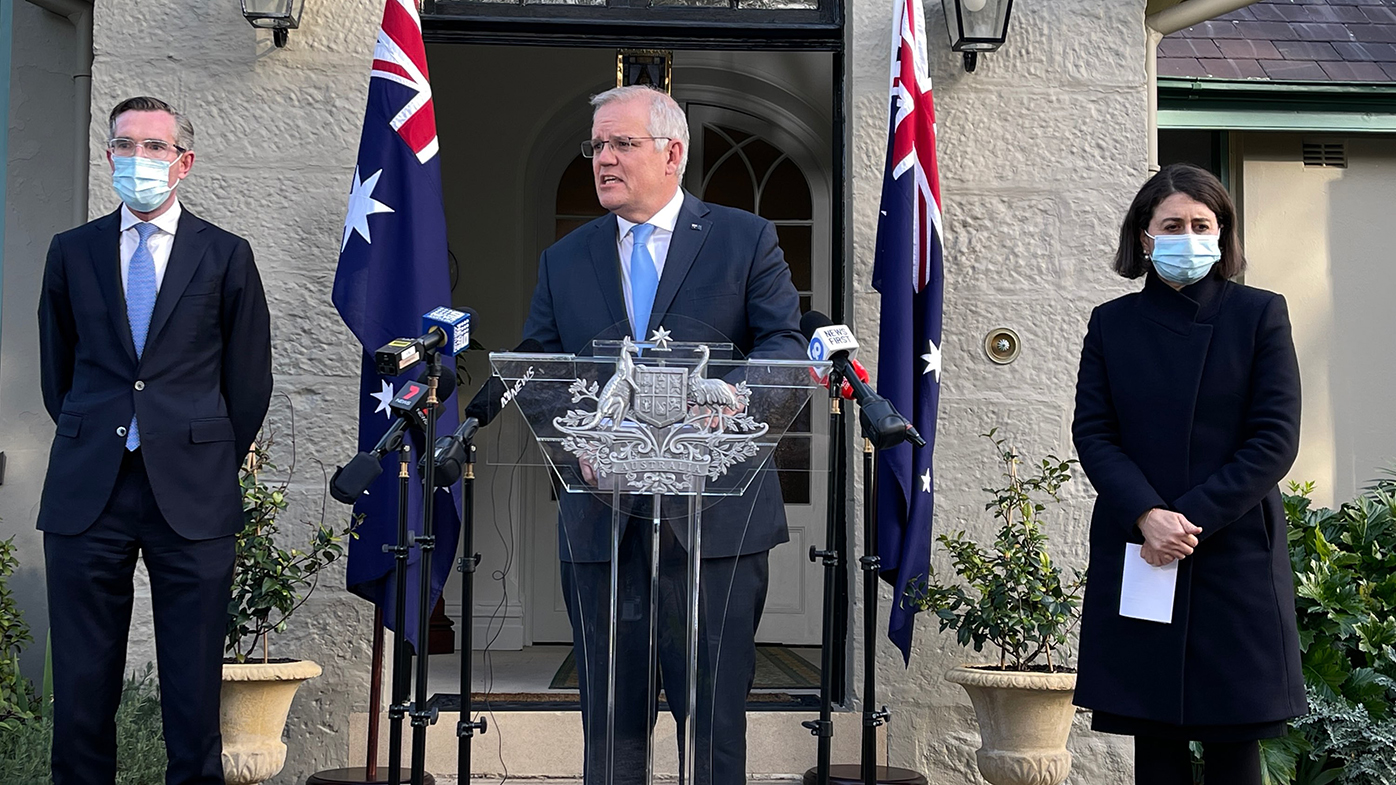
Prime Minister Scott Morrison announced this afternoon that if you are unable to work due to public health orders, you can receive up to $600 in support after a month.

Under the changes, if a lockdown enters a fourth week, the payments will increase to: $375 if a person has lost between 8 and less than 20 hours of work a week, and $600 if a person has lost 20 hours or more a week.

READ MORE: Extra financial support announced for workers and businesses hit by lockdowns
The $10,000 threshold asset test will remain scrapped for the fourth week, and the payments will be capped at those upper limits for any week after.

The announcement comes just hours after NSW Premier Gladys Berejiklian signalled that it was "unlikely" for Greater Sydney's lockdown to end after this Friday.

Still confused? No one can blame you – it's an extremely confusing system where the rules change by the week. Here's our simple breakdown:

READ MORE: ATAGI changes its vaccine advice for people living in outbreak areas
What is the COVID-19 Disaster Payment?

The COVID-19 Disaster Payment is a one-off cash payment for each week of lockdown.

If you've lost less than 20 hours of work, you can receive $325.

If you lost 20 hours or more of work, you can receive $500.

The payment is only accessible if you are locked down for more than seven days.

I will explain in more detail below, but the rates of $325 or $500 only apply to the first three weeks of a lockdown.

READ MORE: Tens of thousands of Aussies still stranded overseas
Okay, who can access the payment?

To access the payment you need to live or work in an area that has been declared a Commonwealth COVID-19 hotspot.

Only the Chief Medical Officer Professor Paul Kelly can do that.

Again, the payment is only accessible if you are locked down for more than seven days.

On June 26, Professor Kelly declared all of Greater Sydney plus the Blue Mountains, the Central Coast and Wollongong as Commonwealth hotspots.

That means residents and workers in these areas can already claim and be paid.

But that's not the end of it – starting from today, NSW Premier Gladys Berejiklian announced that her government would open up the payments to residents outside of Commonwealth-declared hotspots if they can prove they have lost a certain amount of work due to stay-at-home orders.

For example, this will help tourism operators who sit outside the Greater Sydney region but rely on Sydneysiders to travel to their region.

READ MORE: State-by-state guide to restrictions and border rules
Centrelink sign (AAP)

What if I'm living outside of NSW? What about Victoria, Queensland and the Northern Territory?

The COVID Disaster Payment is not state-specific. It doesn't matter what state the lockdown occurs in.

The basics of the payment still apply:

  1. You need to live or work in a Commonwealth declared hotspot (which state governments cannot control)
  2. The lockdown needs to last for more than seven days

READ MORE: Three-day lockdown announced for parts of Queensland
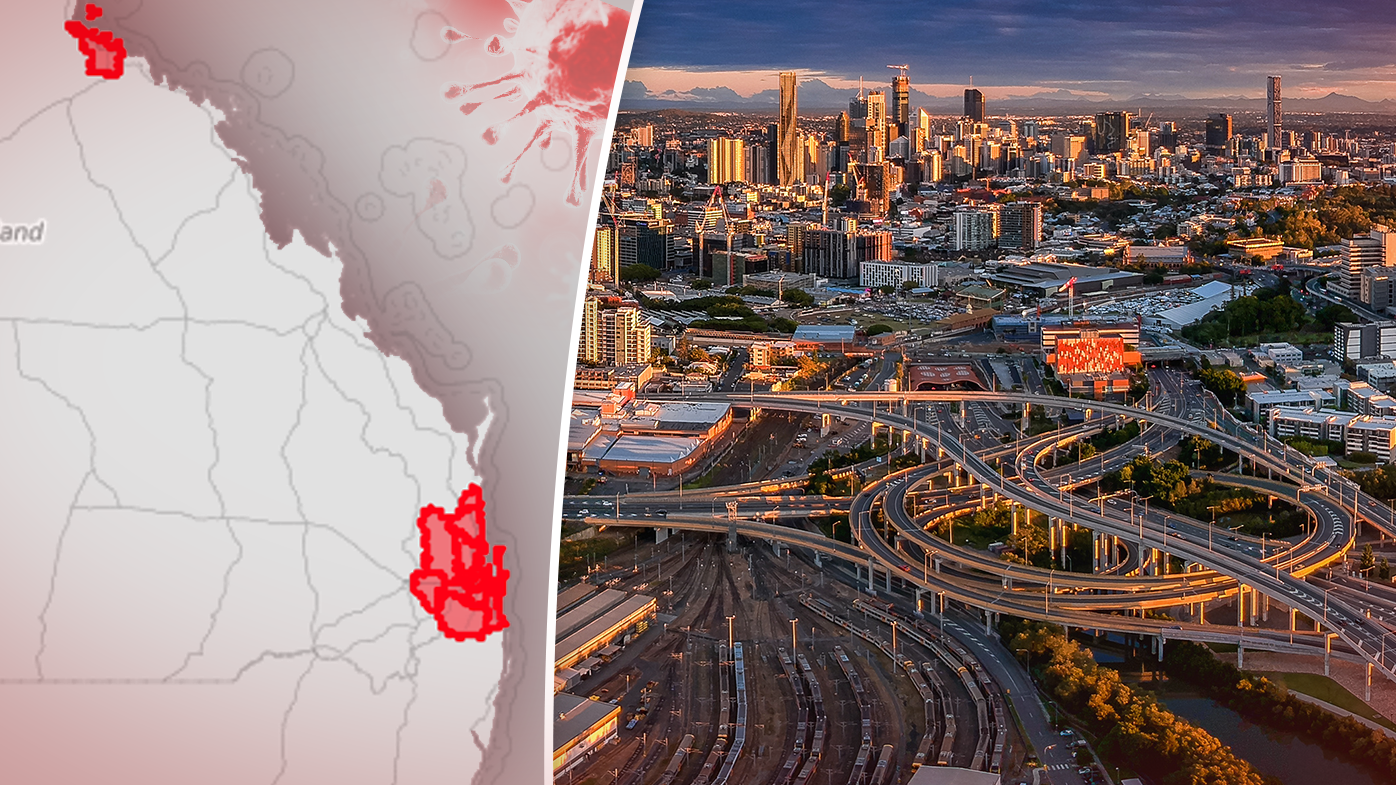
Queensland Lockdown announced June 29

That's pretty confusing. Are there any more terms and conditions I need to know about?

To receive the payment you must be an Australian resident, a permanent resident or be an eligible working visa holder.

For the first two weeks of a lockdown, to receive any payment you need to have liquid assets of $10,000 or less.

That means if you have more than $10k in the bank worth of savings – or trust fund money, or shares – you wouldn't be eligible.

And no, your car is not a liquid asset.

Prime Minister Scott Morrison has confirmed that if a lockdown enters a third week, the liquid asset test will be scrapped.

That means for Sydneysiders, they can now apply for the payment after a third week if they have more than $10,000 in the bank.

You also won't receive the payment if you're getting income support payments, another form of pandemic leave payment or a state small business payment.

READ MORE: New Zealand to resume travel bubble with some Australian states
Okay. And what if the lockdown enters a fourth week or more?

If the lockdown enters a fourth week or more, those payments are bumped up to $375 if a person has lost between 8 and less than 20 hours of work a week, and $600 if a person has lost 20 hours or more a week.

These rates – of $375 and $600 per week – are the ceiling and will stay that way for however long a lockdown will last.

The $10,000 asset test also does not apply from the third week going forward.

I'm totally lost. Can you give me an example?

Put it this way: Let's pretend that you are a hairdresser with more than $10,000 in the bank (perhaps you are saving for a house deposit).

You have lost pretty much all of your work because of stay-at-home orders.

You can receive the COVID Disaster Payment for the third and fourth weeks of a lockdown, and then for however long it lasts after that.

You can't receive the first two weeks because your liquid assets exceed $10,000.

READ MORE: 'Australia now stands as a warning': UK paper slams vaccine rollout
Right … I think I'm still eligible. How do I apply for the payment?

To apply for the payment, you need to have an online myGov account to which you can link a Centrelink online account (if you haven't already).

Once online, Centrelink will ask the user a series of questions to determine if they are eligible to claim the payment.

If you are, a claim will be submitted and the user will be sent a text message confirming the claim has been submitted successfully.

Services Australia has said on its website that it can all be done online without giving them a call.

But Prime Minister Scott Morrison keeps repeating in press conferences that Australians should ring 180 22 66 to find out if they are eligible.

READ MORE: Not a race? The graphs that rank Australia dead last

The information provided on this website is general in nature only and does not constitute personal financial advice. The information has been prepared without taking into account your personal objectives, financial situation or needs. Before acting on any information on this website you should consider the appropriateness of the information having regard to your objectives, financial situation and needs.
Former U.S. Drug Agency Informant Arrested in Haiti Assassination, DEA Source Says

Reuters

WASHINGTON, July 12 (Reuters) – One of the Haitian-American men arrested on suspicion of taking part in the assassination of Haiti’s president last week had been an informant to the U.S. Drug Enforcement Administration, a DEA official said on Monday.

Haitian authorities last week arrested two Haitian-American men, Joseph Vincent, 55, and James Solages, 35, and charged them with joining 26 Colombians in the fatal attack on Haitian President Jovenel Moise.

The official, who spoke on condition of anonymity, declined to say which of the two men had been an informant.

“One of the suspects in the assassination of Haitian President Jovenel Moise was a confidential source to the DEA,” the DEA official said in an email, adding that the suspect had reached out to the DEA after the assassination and that it urged him to surrender. “These individuals were not acting on behalf of DEA.”

The suspect was not an active informant at the time of the assassination, a law enforcement source said.

A third Haitian American, Christian Emmanuel Sanon, was arrested on Sunday by Haitian authorities, who accused him of being a mastermind of the attack.

U.S. law enforcement and intelligence agencies are probing why the Haitian-American men may have taken part in the assassination. read more

The U.S. Justice Department said on Monday that it had been asked by Haiti to assist in the probe of Moise’s murder, and was doing so.

“An initial assessment has been conducted in Haiti by senior U.S. officials,” said spokesman Anthony Coley. “The department will also investigate whether there were any violations of U.S. criminal law in connection with this matter.”

A source close to the investigation said Solages and Vincent told investigators they were translators for a Colombian commando unit that had an arrest warrant for Moise, but that when they arrived, they found Moise dead.

Solages described himself online as a “certified diplomatic agent” and the former “chief commander of bodyguards” for the Canadian Embassy in Haiti. Those statements were made on the website of a charity he ran, which on Thursday removed them. Reuters reviewed an archived version that remains accessible.

The Miami Herald quoted an unnamed government official as saying that a decade ago, Solages briefly worked for a company that provided security for the Canadian Embassy in Haiti.

“We are aware of allegations implicating an individual who was briefly employed as a reserve bodyguard by a security company hired by Global Affairs Canada in 2010,” the newspaper quoted the official as saying.

Florida records show Solages has held security officer and firearm licenses.

Few details have emerged about Vincent.

Reporting by Mark Hosenball; additional reporting by Diane Bartz; Editing by Scott Malone, Cynthia Osterman and Leslie Adler

The post Former U.S. Drug Agency Informant Arrested in Haiti Assassination, DEA Source Says appeared first on The St Kitts Nevis Observer.

Cuba Protests: Scores Arrested After Thousands Rally Against Government

BBC- Dozens of people have been arrested in Cuba after thousands joined the biggest protests for decades against the island’s Communist government, media and opposition sources say.

Unauthorised public gatherings are illegal in Cuba and protests are rare.

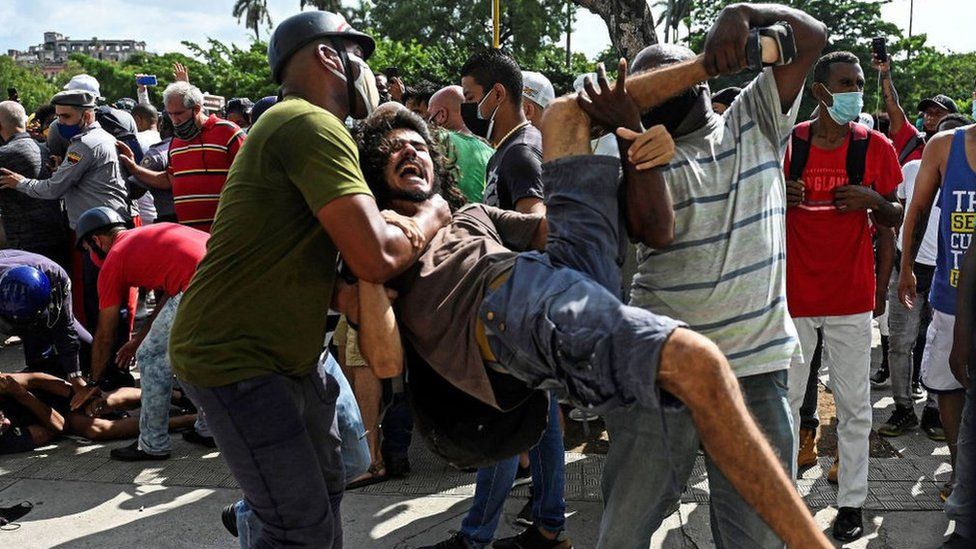
Images on social media showed what appeared to be security forces detaining, beating and pepper-spraying some of the protesters.

Cuba’s president labelled those protesting “mercenaries”.

In a four-hour-long televised address President Miguel Díaz-Canel slammed protestors as “counter-revolutionaries” while his foreign minister alleged the demonstrations had been financed and instigated by the United States.

But those who took to the streets said they were angry about the collapse of the economy, food and medicine shortages, price hikes and the government’s handling of Covid-19.

The government’s response to the demonstrations was swift.

Figures compiled by legal help centre Cubalex suggest around 100 people were arrested on Sunday.

A young man who only gave his name as Carlos Alberto told BBC News Mundo he was hiding at his girlfriend’s home after taking part in a demonstration.

“A colleague of mine was arrested, they came to look for him at his home. I’m afraid the same thing could happen to me,” he said.

“We weren’t doing anything bad, we’re just asking for freedom and with this attitude they’re showing what they are: a dictatorship,” he told BBC Mundo’s Lioman Lima over the phone.

‘The streets are full of police’

There were reports of internet blackouts across the island. Access to mobile internet was rolled out in December 2018 in Cuba but is controlled by the state-owned telecommunications company Etecsa.

Internet monitoring site Netblocks said access to WhatsApp, Facebook, Instagram and Telegram had been restricted by Etecsa’s servers.

Mobile internet is the main way for Cubans to access independent news and many said the blackouts had increased the sense of ominous unease following the protests.

There also appeared to be a heightened presence of security forces with one Havana resident reporting that “the streets are full of police”.

“There are police at every corner and practically all you see going past is police patrols.”

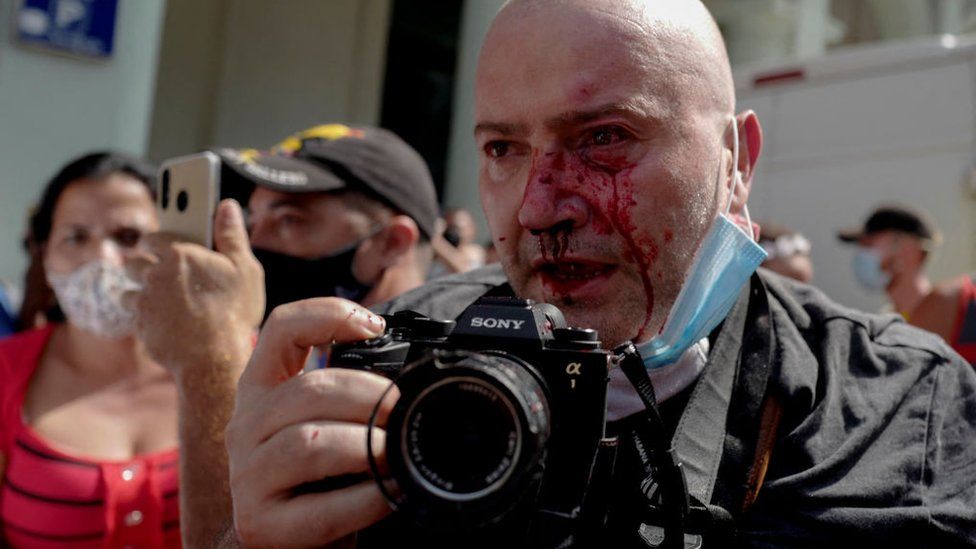
AP photographer, Spanish Ramon Espinosa, is seen with injuries in his faceimage copyrightGetty Images
image captionRamón Espinosa, a photographer with AP news agency, was injured while covering the protests
A man is arrested in Cubaimage copyrightGetty Images
image captionSecurity forces detained people who took part in the demonstrations

With messaging services down and dozens of people arrested, relatives of some of those detained gathered in front of police stations for news of their loved ones.

Ariel González told BBC News Mundo he had been to his local police station twice to enquire about his son, a 21-year-old student who was arrested during the protests.

“I knew he got roughed up because some of his friends who were with him told me. At the police station they told me they couldn’t tell me where he is because he was taken by another ‘institution’,” he said referring to the presence of plainclothes officers at the protests.

Deepening discontent

Many of those attending the protests on Sunday complained about shortages

“There is no food, no medicine, there is no freedom. They do not let us live,” one man named only as Alejandro said.

Protesters also shouted “freedom” and “down with the dictatorship”.

President Miguel Díaz-Canel blamed the US sanctions on Cuba – which have been in place in various forms since 1962 – for the shortages, calling them a “policy of economic suffocation”.

The US – which has a decades-old history of hostilities with Cuba – has said it stands with Cubans, and called on those in government to refrain from violence and listen to its people.

“The Cuban people are bravely asserting fundamental and universal rights,” US President Joe Biden said.

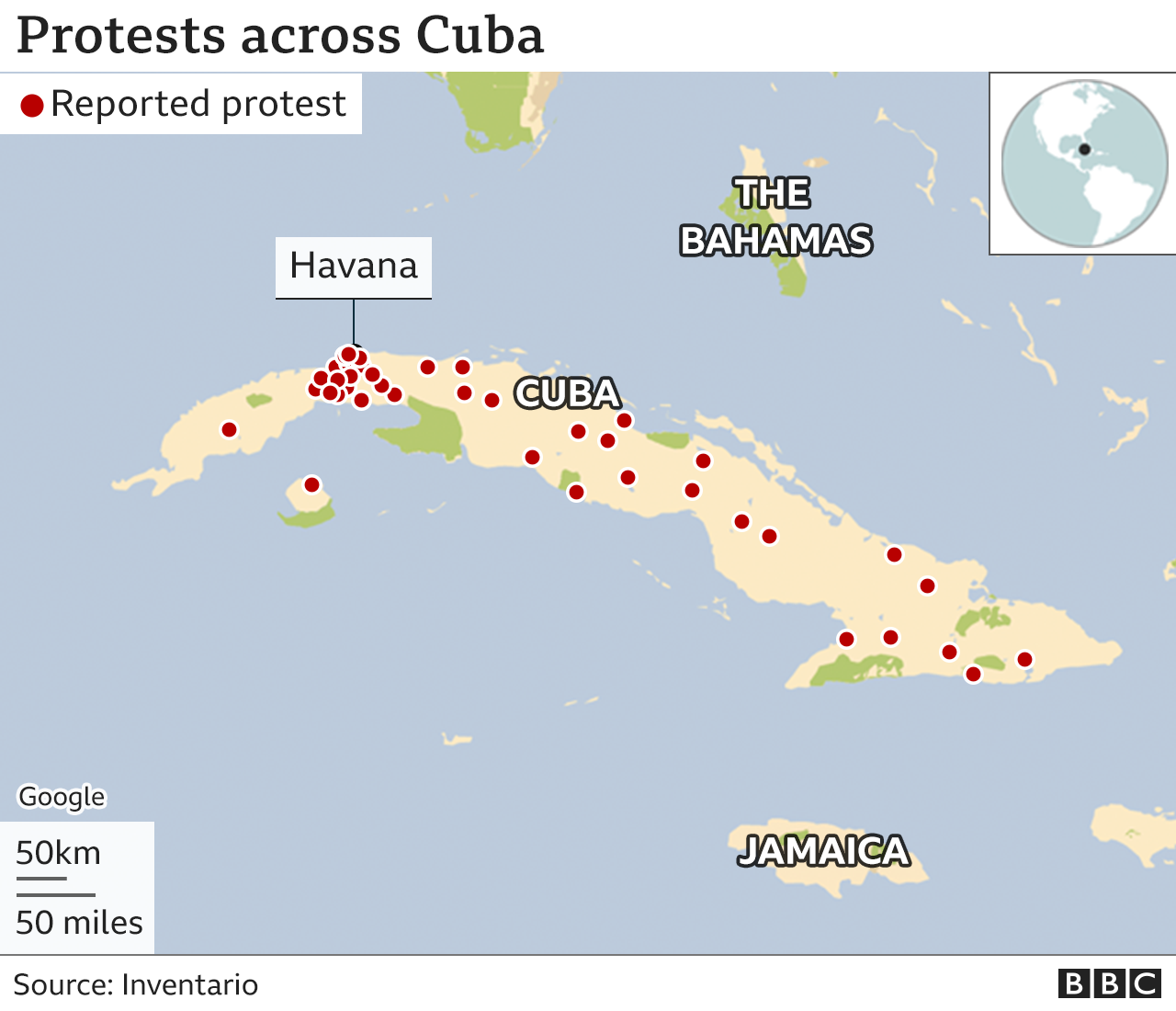
Map of Cuba protests
1px transparent line

Looted shops

The anti-government protests began with a demonstration in the city of San Antonio de los Baños, south-west of Havana, but soon spread throughout the country.

Many were broadcast live on social networks, which showed marchers shouting slogans against the government and the president, and calling for change.

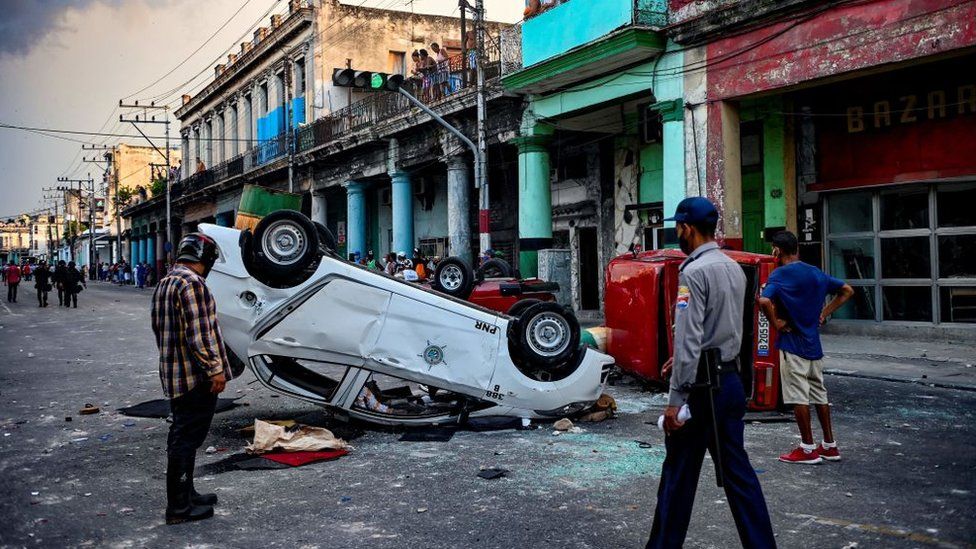
Posts on social media showed people overturning police cars and looting some state-owned shops which price their goods in foreign currencies. For many Cubans, these shops are the only way they can buy basic necessities but prices are high.

Cars overturned by protesters in Havana, July 2021image copyrightGetty Images
image captionSome protesters targeted police vehicles and state-owned shops

Cuba’s economy is struggling. Tourism, one of the most important sectors, has been devastated by the restrictions on travel during the Covid pandemic.

Sugar, which is mostly exported, is another key earner for Cuba. But this year’s harvest has been much worse than expected.

Cuba’s sugar monopoly, Azcuba, said the shortfall was down to a number of factors, including a lack of fuel and the breakdown of machinery which made bringing in the harvest difficult, as well as natural factors such as humidity in the fields.

As a result, the government’s reserves of foreign currency are depleted, meaning it cannot buy in imported goods to supplement shortages, as it would normally do.

The post Cuba Protests: Scores Arrested After Thousands Rally Against Government appeared first on The St Kitts Nevis Observer.

Australian internet prices soar as speeds remain slow

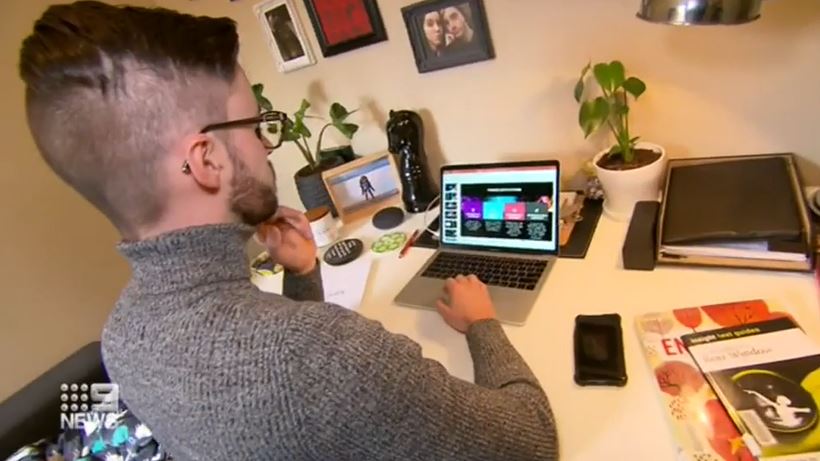
The wrong home internet plan can mean more than $650 a year in wasted cash for Australian households.

Prices are rising despite slow speeds, and there are now calls to treat the internet more like an essential service rather than a luxury.

Despite appearances, it's by no means an internet free-for-all at the Reynolds' house in Melbourne, but with three kids – the modem does get a workout.

READ MORE: Extra financial support announced for workers and businesses hit by COVID-19 lockdowns

Australian internet prices soar as speeds remain some of the slowest in the world

"When we do allow screentime, the gates tend to open somewhat and our internet really gets thrashed," Dad Tom Reynolds said.

It costs $100 a month, but that's usually just the start.

"It's the little things on top of that … the $5 here, the $10 there for the other internet services – that can really add up," Mr Reynolds said.

To keep costs down the family recently moved providers, something experts say everyone should do annually.

Tara Donelly editor of Canstar Blue Telco who compares deals, said people often stayed with the same company for years.

"Most of us have been with our current provider for around five years, so it seems like we are quite loyal when it comes to broadband," Ms Donelly said.

The gap between cheap and expensive plans is widening.

READ MORE: Outrage after hefty parking fines issued at Sydney mass vaccine hub

For unlimited NBN, prices range from $50 to $120 per month.

Details vary, but being on the wrong plan could cost more than $650 a year.

Customers should also beware of any activation or set-up fees, additional costs for a modem, or lock-in terms.

"Probably every 12 months or so is a good time to have a look at what's out there," Ms Donelly said.

Consumer groups say the industry needs to do better.

Acting Deputy CEO Andrew Williams from the Australian Communications Consumer Action Network said internet was a vital part of life today.

"Telecommunications and broadband in particular is an essential service – it's as important as electricity and water," Mr Williams said.

READ MORE: Infected Victorian family who returned from Sydney broke home quarantine rules

Internet speeds across the country are also disappointing.

In fact, Australia is now ranked 56th in the world, below countries like Trinidad, Tobago, Estonia and Bulgaria – all the more reason to make consumers are not overpaying.

Both Optus and Telstra have lifted prices since May.

The telco giants blame higher NBN costs.

Euro Final:World Disgusted by Racist Abuse Toward Players

The sports world is reeling Monday morning after an onslaught of racist vitriol was spewed on social media toward members of England’s soccer team following Sunday’s Euro 2020 final, in which England was beaten by Italy in penalty kicks.

Marcus Rashford, Jadon Sancho and Bukayo Saka — who are Black — were the final three penalty kick takers for England during the shootout. 

All three missed, sealing the victory for Italy.

It was a bitter defeat for England, which jumped out to an early 1-0 lead in the game and hasn’t won an international championship since the 1966 World Cup. 

Almost instantly, Instagram and Twitter became inundated with waves of racist abuse aimed at the young stars, all of whom play for top-flight clubs in Europe.

The outpouring of hate has received widespread condemnation.

“We’re disgusted that some of our squad — who have given everything for the shirt this summer — have been subjected to discriminatory abuse online after tonight’s game,” the national team tweeted. “We stand with our players.”

Prince William, who is the head of England Football Association, tweeted that he was “sickened” by abuse, calling it “abhorrent.”

Unfortunately, the racist outpouring highlights a well-documented problem within European soccer that has yet to be solved.

Twitter said in a statement Monday that it had deleted more than 1,000 racially abusive tweets and had permanently banned “a number of accounts” as a result.

Earlier in the tournament, Austrian forward Marko Arnautović was suspended one game for racist comments made to a North Macedonia player.

In February, the Premier League launched its “No Room For Racism” campaign aimed at stopping racism across the game as well as making career opportunities in professional soccer more accessible for people of color.

The English team itself decided to take a stand against racism during the tournament, taking a knee before all its games as a show of solidarity with the Black Lives Matter movement.

It did so before its championship tilt with Italy as well, with players of the Italian side also taking part in the gesture.

England was met with boos when it started doing this at the beginning of the tournament and even failed to gain the initial support of British Prime Minister Boris Johnson.

After sharp criticism, Johnson changed his tune, urging the entire country to get behind the team.

The oft-controversial leader also spoke out against the hate speech following the match, tweeting that the players should “be lauded as heroes, not racially abused on social media.”

“Those responsible for this appalling abuse should be ashamed of themselves,” Johnson added.

However, some have continued to chastise the prime minister’s leadership, saying that his support for the team kneeling should have been absolute from the start.

“[English manager] Gareth Southgate and the players a few weeks ago, about five days on the trot told us that they were taking the knee to promote equality and it was against racism,” former English international coach Gary Neville told Sky News on Monday. “The prime minister said it was OK for the population of this country to boo those players who are trying to promote equality and defend against racism; it starts at the very top.”

The post Euro Final:World Disgusted by Racist Abuse Toward Players appeared first on The St Kitts Nevis Observer.

Outrage after hefty parking fines issued at Sydney mass vaccine hub

Residents in NSW heeding advice to get vaccinated as quickly as possible have been left stunned after returning to their cars to find hefty parking fines at the state's mass vaccine hub in Sydney.

Across the road from the centre on Figtree Drive in Homebush, parked cars were each slapped with a $270 parking ticket.

Michael Shafran claims there was no signage outlining where he should park.

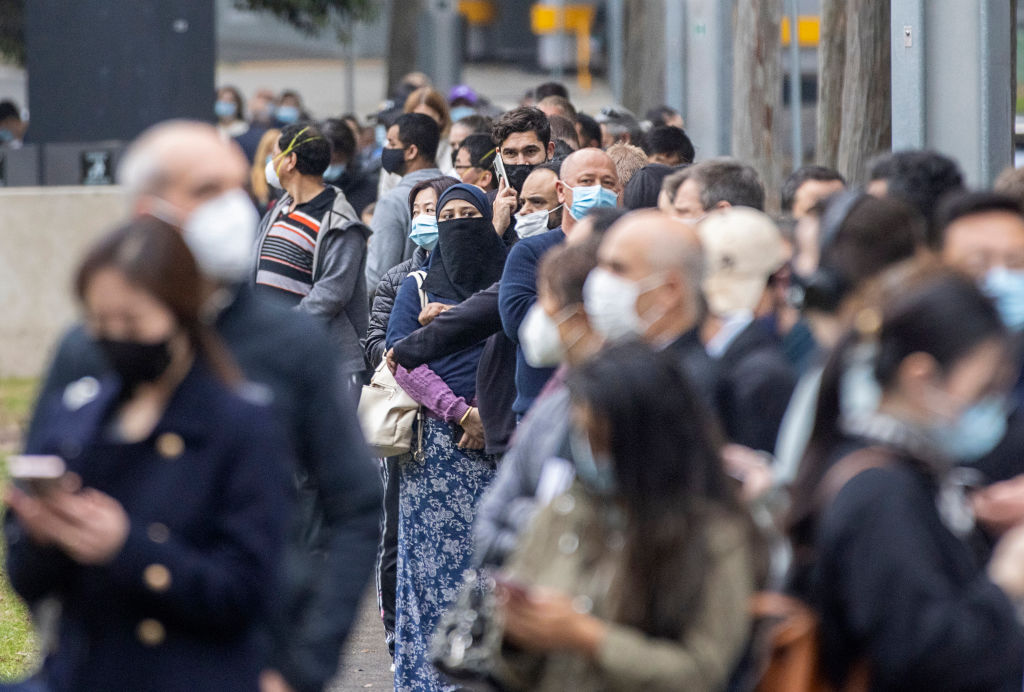
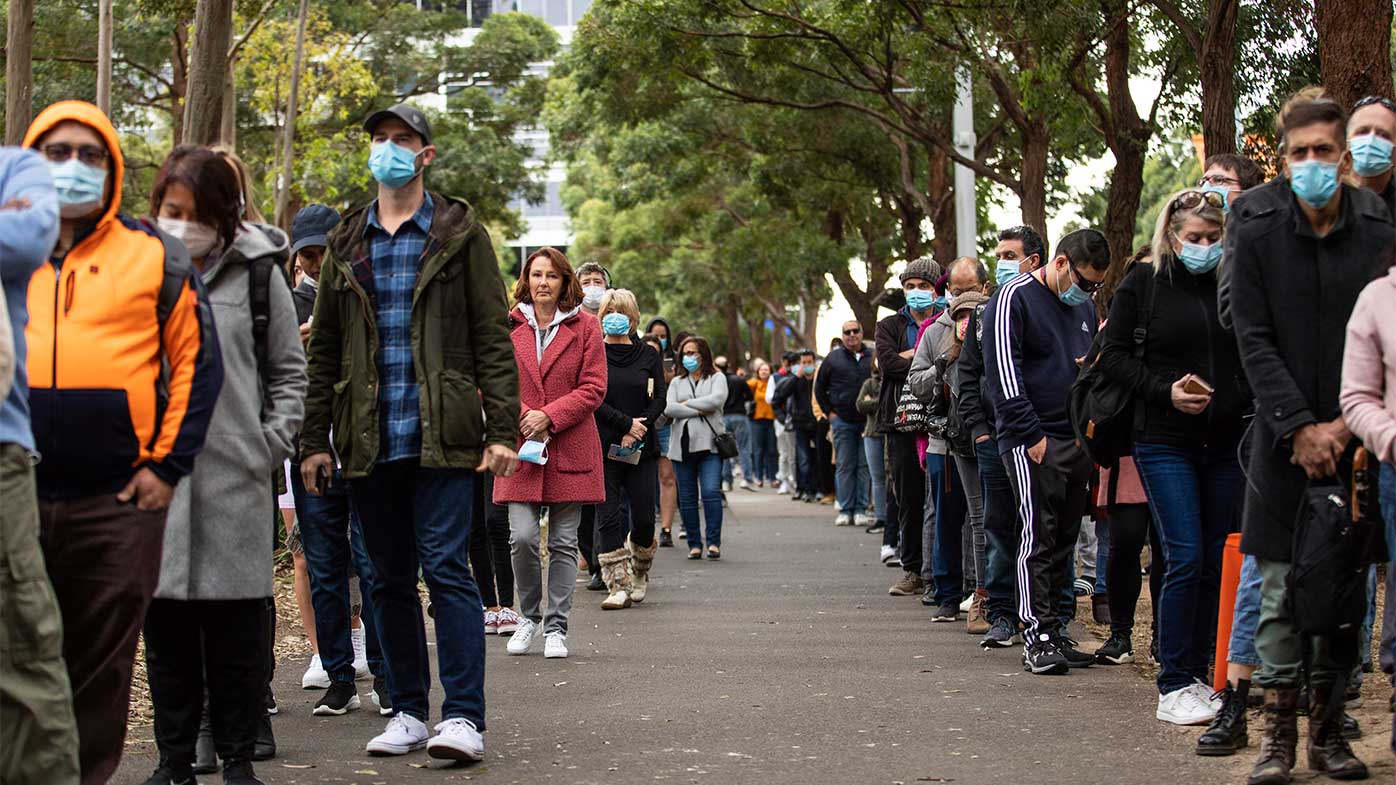
Long lines of people were also seen at the NSW Vaccination Centre in Homebush on July 01, 2021 in Sydney, Australia. The hub administered a whopping 7,057 doses yesterday.

"When I got here it was a bit confusing as to where to park, I saw that everyone else was all parked up along the side of the streets across from the vaccination centre," he told 9News.

Sydney Olympic Park says it has been forced to take action to ensure road safety.

Despite a city-wide lockdown, it claims businesses and residents have complained about the way cars are parked.

Hundreds line up to recieve a COVID-19 vaccination at the NSW Health Vaccinination Centre in Homebush.

The pay per hour parking stations are operating as usual despite large queues and wait times at the centre due to a surge in vaccination rates.

A small business owner with 20 staff, Shafran says his bakery has lost tens of thousands through lockdowns and, like so many, he is trying to stay afloat.

"It's like kicking a guy while he's down and it's such a large fine too just for trying to do the right thing."