By Jordan Bond for RNZ A law professor says the managed isolation and quarantine (MIQ) booking system may be discriminatory, as it is revealed tech-savvy people are able to game the system to increase their chances of booking…
Category Archives: headline
Chris Dawson's last-ditch legal attempt to avoid trial
Chris Dawson is making a last-ditch bid to avoid trial, asking the High Court to permanently stay the case.
The former Newtown Jets rugby league player has pleaded not guilty to killing his wife Lynette who was last seen at their Bayview home in 1982.
He has repeatedly said she is alive.
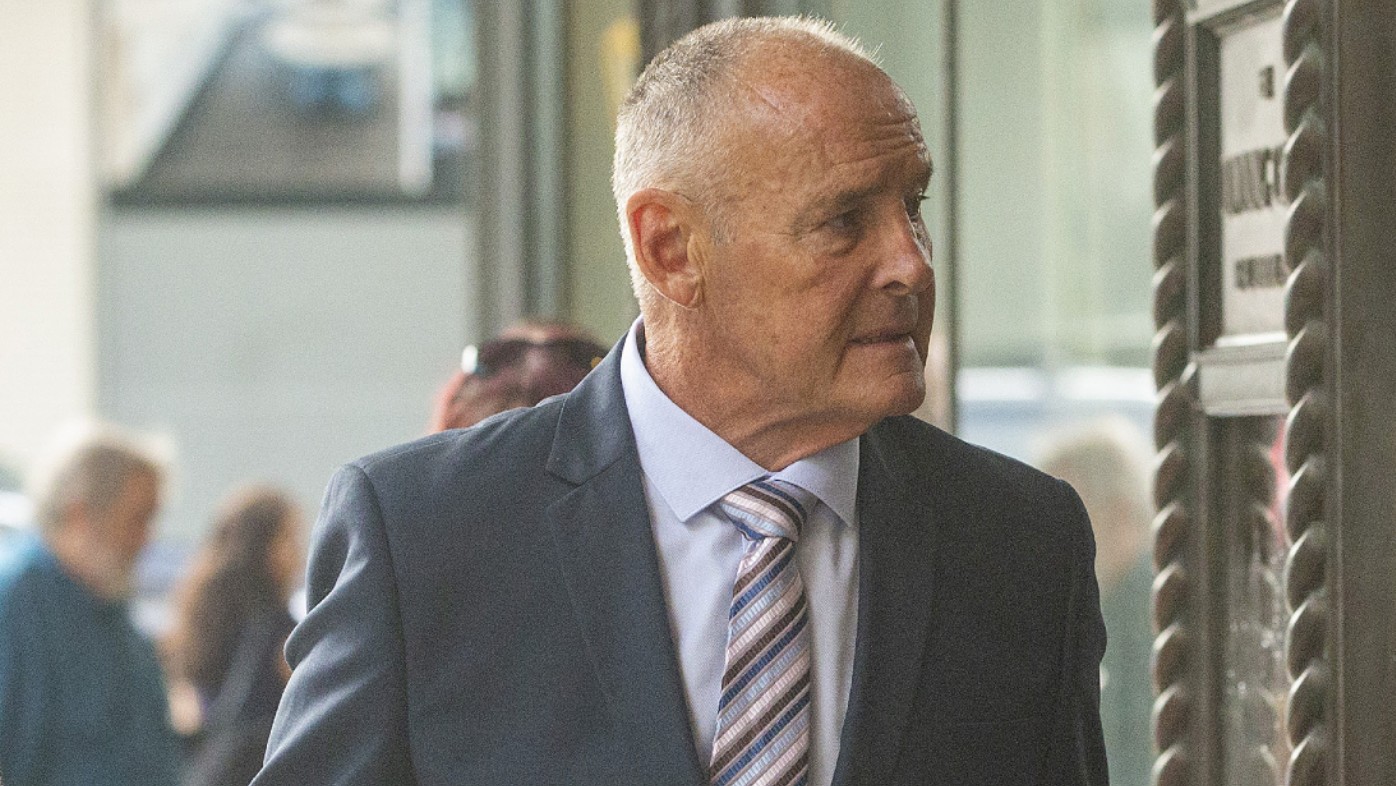
Dawson applied to the Supreme Court for a permanent stay of proceedings citing extensive pre-trial publicity through a podcast and the delay in charging him.
But last month the Court of Appeal agreed the application should be refused.
Chief Justice Tom Bathurst said while the issues were serious, they also had to consider the community's interest in bringing those charged with serious criminal offences to trial.
"…such prejudice to Mr Dawson is able to be remedied or sufficiently ameliorated by careful directions which the judge at the trial will give to the jury, as was found by the primary judge," a judgement summary read.
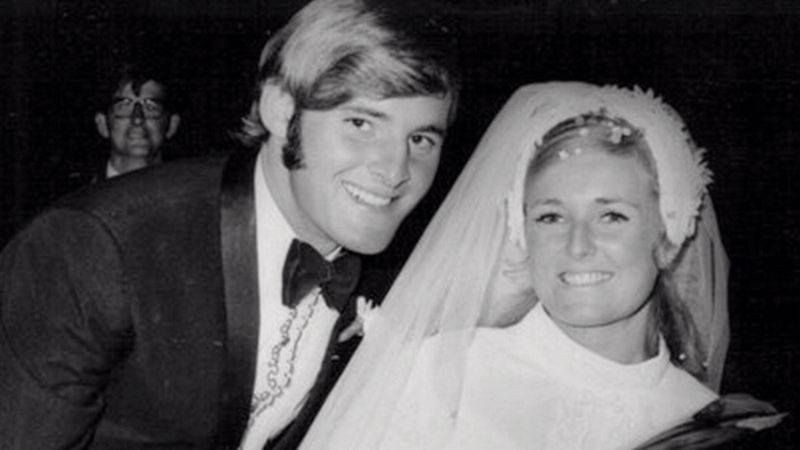
9News can reveal the 73-year-old this week filed papers in the High Court.
"The basis of the application is simply that both the original Judge, Justice Fullerton and the court of criminal appeal erred in their approach to the permanent stay," his lawyer Greg Walsh said.
Mr Walsh also said there was an important issue to look at in terms of the impact of new media on criminal matters, highlighted in a case which others had agreed was exceptional.
"…this was the first occasion where the focus was on publications arising from a podcast series."
Dawson remains on bail in Queensland with his trial set down for May 2022.
"He's recovering some falls, he's very depressed, so you know he's under a lot of stress and anxiety," Mr Walsh said.
Four-day week business pioneer frustrated by slow uptake, Holidays Act law
By Amy Williams of RNZ The business owner who championed the four-day working week says New Zealand lags behind the rest of the world when it comes to leaving Monday-to-Friday behind.Perpetual Guardian was the first company…
PM insists vaccine lag not to blame for Sydney lockdown
Prime Minister Scott Morrison has insisted Sydney's lockdown is "absolutely not" due to vaccine rollout delays.
At his National Cabinet media conference today, Mr Morrison was asked whether Sydney and parts of NSW were in lockdown due to the speed of the vaccination program.
Mr Morrison said it was "always known at this time of the year, in July of this year, that we would still be in the suppression phase".
READ MORE: Sydney lockdown tightened after 44 new cases
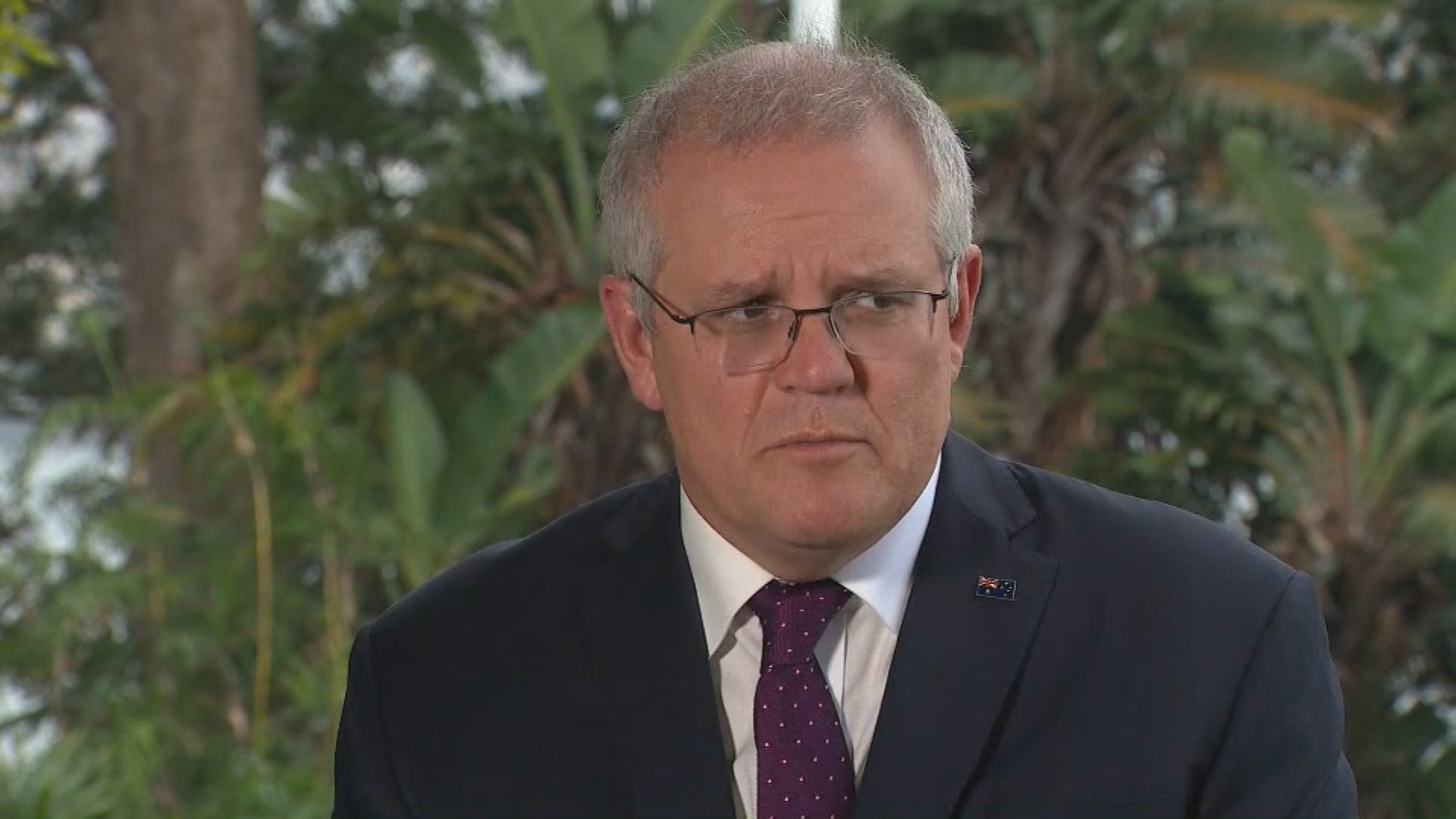
"That means that in the suppression phase, you need to keep your systems as tight as possible," he said.
"We've had breaches here, there have been breaches in other places, and when there are breaches it's about trying to contain it as quickly as possible.
"When there are breaches it's about trying to contain it as quickly as possible and move as quickly as possible to get us in that situation, which is what the New South Wales government is doing."
Mr Morrison touted the strong numbers of Australians coming forward to get vaccinated.
Yesterday was the second-highest day for vaccinations in Australia since the beginning of the rollout.
"We will be hitting that important mark of 1 million doses every week," he said.
"That puts us in a very strong place to be able to get this job done as we move towards the end of the year and indeed perhaps sooner than that."
READ MORE: Data reveals how the Delta variant has evaded the Sydney lockdown
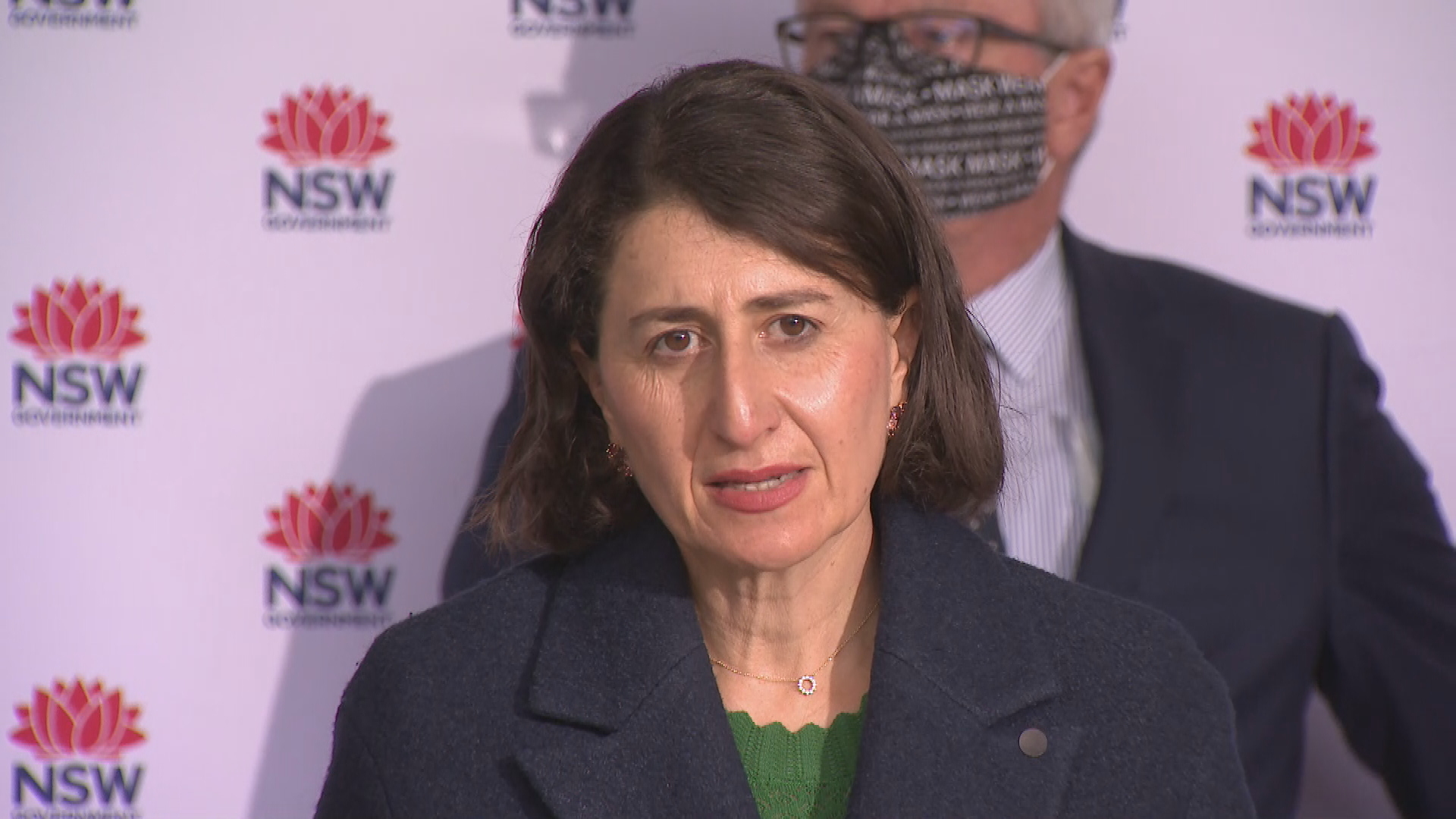
New South Wales today recorded its highest daily COVID-19 number in the current outbreak with 44 new cases, prompting Premier Gladys Berejiklian to tighten lockdown restrictions.
Ms Berejiklian pointed to the vaccination rate as a reason why the lockdown was necessary.
"NSW – in fact, no state or nation or any country on the planet – can live with the Delta variant when our vaccination rates are so low," she said.
"So please, do not think that the NSW Government thinks we can live with this when our rate of vaccination is only at 9 per cent.
"Because if we chose to live with this while the rates of vaccinations are at 9 per cent, we will see thousands and thousands of hospitalisations and death."
READ MORE: Leaders dismiss 'learning to live with COVID-19' idea
Ms Berejiklian said the state was facing "the biggest challenge we have faced since the pandemic started".
From 5pm today, additional restrictions will apply for Greater Sydney, Central Coast, Blue Mountains, Wollongong and Shellharbour.
'This cannot continue': NSW cases reach new high
New South Wales has recorded its highest daily COVID-19 number in the current outbreak with 44 new cases, prompting Premier Gladys Berejiklian to tighten lockdown restrictions.
Even more concerningly for health authorities, the majority of those cases have not been in isolation while infectious.
Just 10 were in isolation throughout their infectious period, eight for part of the time and 19 have been out in the community. The isolation status of the remaining seven is still under investigation.
EXPLAINER: Everything you need to know about Greater Sydney's new restrictions
LIVE UPDATES: All the latest COVID-19 news
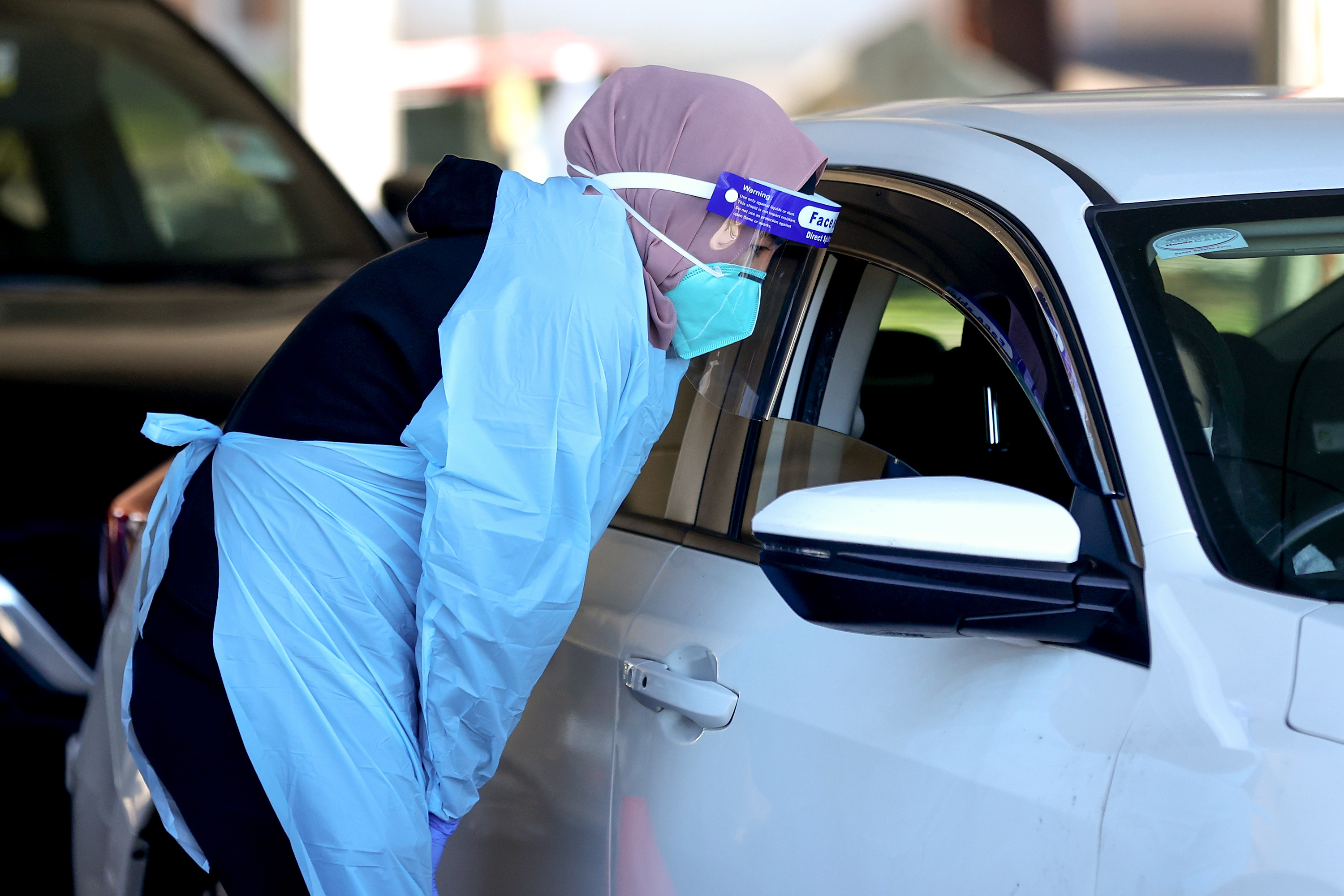
It marks another jump from yesterday's record figure of 38 new coronavirus cases. At the time, it was the highest daily number in NSW in more than a year.
The figures have prompted a dire warning from Ms Berejiklian, who has told Sydneysiders to brace for even higher daily case numbers in the days ahead.
"The number of people that have been infectious in the community – last night it was 29 and I suspect it will grow tomorrow and the day after," Ms Berejiklian said.
"It is so transmissible, (so) obviously we're going to see higher cases moving forward."
Ms Berejiklian also echoed Prime Minister Scott Morrison's message this morning that there was no way that NSW could live with the Delta variant in the community, given its current vaccination rate.
READ MORE: When will lockdown end? NSW premier flags further extension
"When you only have nine per cent of your community vaccinated, opening up before you get as close to that zero number as possible – it means you would subject thousands and thousands to hospitalisation and death," she said.
"When we look around the world and we look at countries that are opening up, that are living freely with COVID and the Delta strain, they are able to do that because half of the population is vaccinated."
New restrictions in place for Greater Sydney
Today's figures have prompted a tightening of stay-at-home orders, with tougher rules now in place around outdoor exercise, essential shopping and funerals.
- Outdoor gatherings limited to two people (excluding members of same household)
- Exercise and outdoor recreation restricted to local government area or within 10km radius
- No browsing in shops; only one person per household per day can leave the house for shopping
- Funerals limited to 10 people (from Sunday)
Restrictions in regional New South Wales remain unchanged.
"Browsing is not allowed," Ms Berejiklian stressed.
"Whether you are in a supermarket or anywhere else buying essential items, you have to think about before you leave the home, can I get this online? Do I need to leave the house to go shopping?"
In what the premier has described as a "heartbreaking" decision, from Sunday funerals will be limited to 10 mourners.
READ MORE: PM shuts down suggestion NSW could 'learn to live with COVID-19'
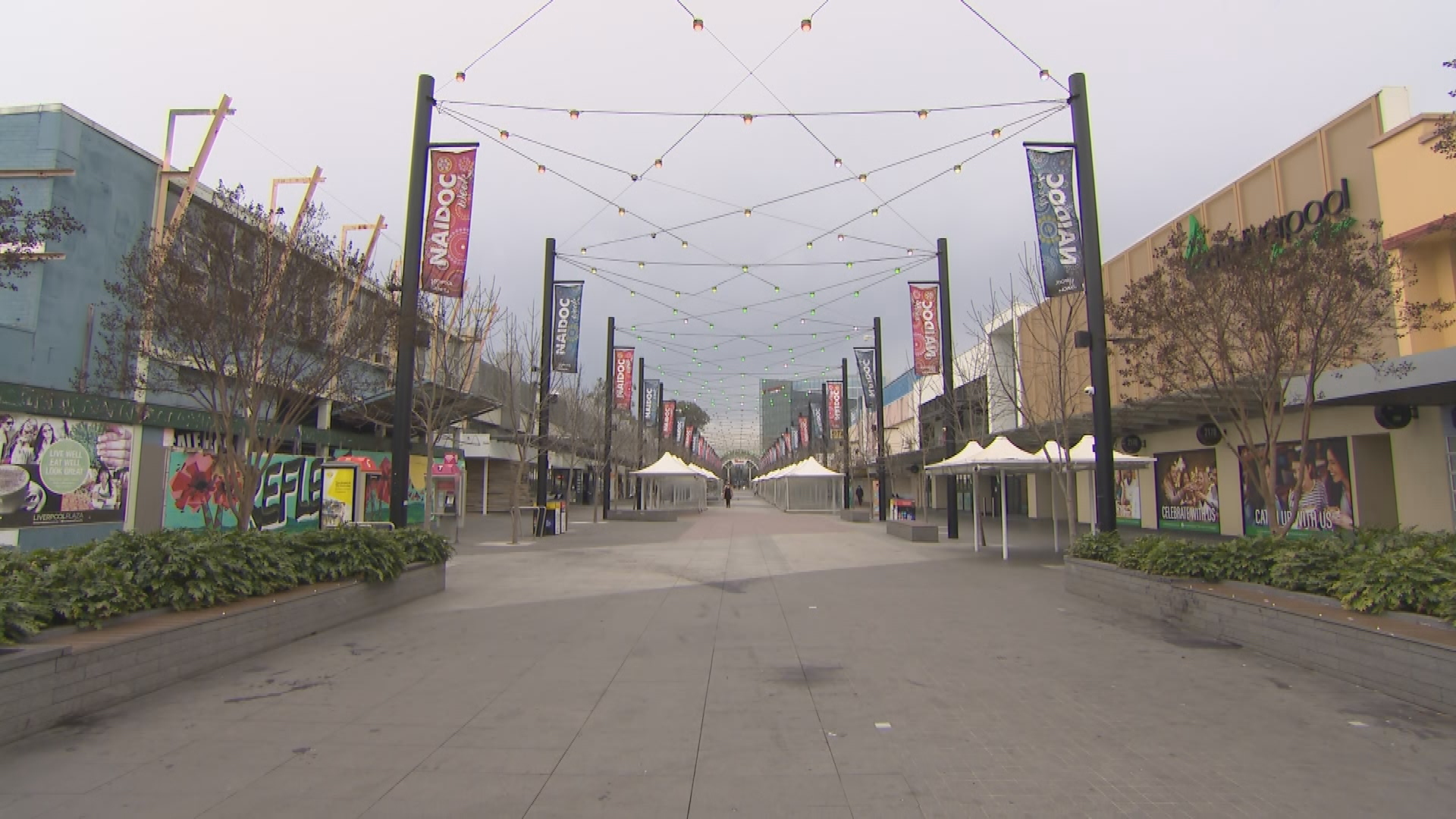
Ms Berejiklian again stressed that no one should be visiting others' households, except for essential care.
"The only exception is if you are receiving care by one person, dropping off essential goods or for health reasons or exceptional circumstances," she said.
Current arrangements around childcare centres will remain, but the premier said she was unable to say what schools would look like after next week until she saw where the COVID-19 numbers were heading.
Mr Morrison expressed his "strong support" for the new restrictions issued for Greater Sydney.
"We will get through it together," he said.
"I know it is tiring, exasperating and frustrating. But we need to keep pushing through."
The Prime Minister rejected the assertion that Sydney was in lockdown because of the government's sluggish vaccine rollout.
"It was always known at this time of the year in July of this year that we would still be in the suppression phase," he said.
"We've had breaches here, there have been breaches in other places, and when there are breaches it's about trying to contain it as quickly as possible."
Sydney suburbs of most concern
NSW's Chief Health Officer Kerry Chant today issued a list of the Sydney suburbs of most concern to health authorities, where COVID-19 is circulating amongst the community.
In the city's south-east, residents in Sutherland, Kareela, Sylvania, Hurstville and Maroubra need to stay particularly vigilant and continue to come forward for testing.
READ MORE: NSW Premier, PM dismiss 'learning to live with COVID-19'
The city is also seeing a number of cases emerge in Bossley Park, Smithfield, Fairfield, Glenfield, West Hoxton, Bass Hill, Greenacre, Bonnyrigg Heights, Panania, Bankstown, Canley Vale, Casula, Chester Hill, Edensor Park, Edmondson Park, Greenfield Park, Moorebank, Narellan Vale and St Johns Park.
It comes after the local government areas of Fairfield, Canterbury-Bankstown and Liverpool were marked as areas of growing concern earlier in the week, as the outbreak spreads from its origins in Bondi.
Of the state's 44 new local cases, 21 infections were from south-west Sydney, eight were from the south-east and seven were from western Sydney.
Dr Chant urged Sydneysiders to assume they were coming into contact with someone with COVID-19 every time they left the house.
"Every time you leave your home, you need to assume you are coming into contact with someone who could potentially have COVID," she said.
Young people seriously ill with COVID-19
Dr Chant stressed that as cases rise, hospitals are seeing more young people becoming seriously ill with the coronavirus.
There are now 43 people in NSW hospitals being treated for the virus, with six new cases have been admitted in just the past 24 hours.
In a warning for young people, Dr Chant said an increasing number of younger people are being admitted, including seven aged less than 35.
Ten people are being treated in intensive care units, four of whom require ventilation.
One of those patients is in their 20s and another is in their 30s.
'Dramatic change' needed for lockdown to end next week
Today's figures have left the end date Greater Sydney's lockdown looking increasingly far off, just days after it was extended by a week.
Ms Berejiklian said today that the length of the lockdown will "depend on how the community responds" to restrictions.
"Unfortunately, whether it is complacency or whether it is compliance, we've seen too many people out in the community with symptoms," Ms Berejiklian said.
"Unless there is a dramatic change, unless there is a dramatic turnaround in the numbers, I can't see how we would be in a position to ease restrictions by next Friday," she said.
READ MORE: 'This is not about discrimination': Police head to south-west Sydney
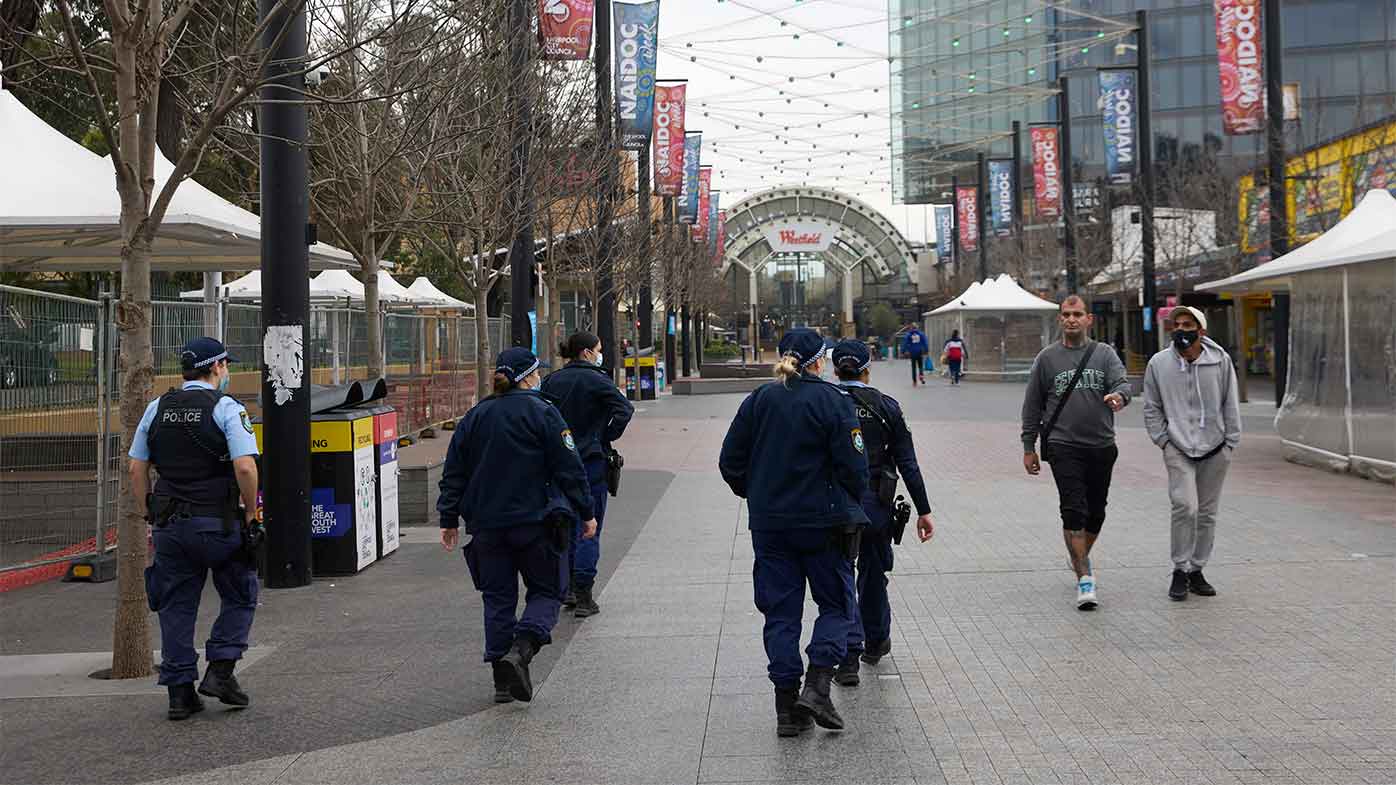
The original time frame for the lockdown – which also includes the Blue Mountains, the Central Coast, Shellharbour and Wollongong – was to run for two weeks from 6pm on June 26.
Ms Berejiklian said she needed "everyone to be shocked" by the tightening of restrictions so the tide of climbing COVID-19 cases could turn for the state.
"It is really up to us how long we are in the situation for," Ms Berejiklian said.
"What I can say is that our target has to be zero or close to zero community transmission before we can live a normal life like we did prior to the lockdown."
Almost 200 extra police officers have been deployed across the three south-western local government areas of most concern to ensure compliance with the stay-at-home orders.
NSW Police Deputy Commissioner Mal Lanyon said the measures are not racist or discriminatory and were necessary to ensure the latest outbreak doesn't spread any further.
Family speak out: Ferro-James, 5, 'loved' the 'monster' who killed him – his father, William James Sio
The family of Ferro-James Tiopira Sio say the 5-year-old loved the “monster” who killed him – his father.Today William James Sio, 25 was sentenced to life imprisonment with a minimum non-parole period of 17 years for the murder…
Dozens of children today battling respiratory syncytial virus in hospital intensive care units
Dozens of children are battling a highly contagious winter virus in intensive care units around the country.Eleven of the country’s 20 district health boards today told the Herald 22 children were currently being cared for in intensive…
Data reveals how the Delta variant has evaded the Sydney lockdown
For the second time in six months, parts of Sydney were thrust into lockdown on June 25 as the Delta strain of COVID-19 spread rapidly throughout the city.
A stay-at-home order that began with seven local government areas was widened a day later to include all of Greater Sydney, the Central Coast, Blue Mountains, Wollongong and Shellharbour.
It was extended by another week on July 7 and tightened further today, with Premier Gladys Berejiklian warning it will not end until there is a "dramatic change" in daily case numbers.
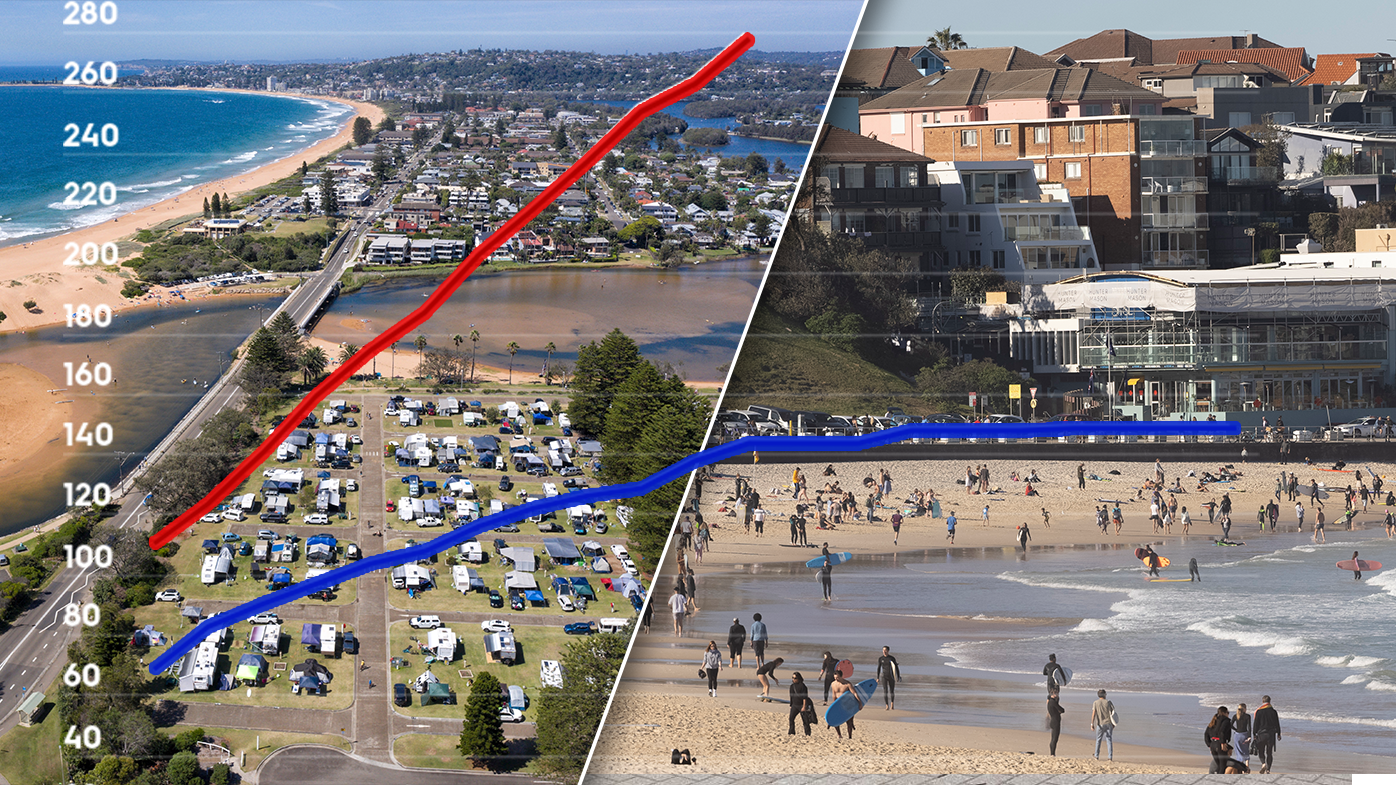
Data analysis conducted by 9news.com.au has revealed just how much more the current COVID-19 outbreak has spread compared to the previous Northern Beaches one, which placed half of the peninsula under strict stay-at-home orders for three weeks over the Christmas period.
As seen in the graphic below, the findings show the cluster has not "flattened out" in the manner last year's Avalon cluster had at similar stages of the outbreak.
Instead, cases continue to rise.
While the growth is steady rather than exponential, it is a worrying sign as NSW continues to struggle to contain the Delta strain outbreak.
On the first day of the December-January lockdown on the Northern Beaches, the Avalon cluster was at 68 cases.
On the first day of this lockdown, the Bondi cluster had reached 110 cases.
Ten days into the Northern Beaches lockdown, the Avalon cluster had nearly doubled to 129 cases.
But at the same point in this current lockdown, the Bondi cluster had increased by 145 cases, ballooning to 2.5 times its size at the start of the lockdown.
In the three following days (day 11, 12 and 13), the Avalon cluster increased by 15 cases, whereas the Bondi cluster increased by double that amount, by 30 cases.
Worryingly, there also appears to be an unlinked cluster of cases emerging.
On July 7, NSW Health reported there were 25 cases unlinked to a known case or cluster, with a further 68 which are linked to those 25 unlinked infections.
Today, that has jumped to 37 unlinked cases, with 117 further cases linked to those.
Additionally, though the numbers do vacillate day-to-day, the current outbreak does not display the general downward trend in daily local acquired cases that the Avalon outbreak did at this same point in time.
On day 13 of the Northern Beaches lockdown, NSW recorded just three new local cases, a significantly lower figure than today's 44-case increase.
The major factor in the increased spread of the current outbreak is the presence of the Delta variant.
Health authorities have repeatedly warned of the increased contagiousness of this variant, which has wreaked deadly havoc in India and elsewhere around the world.
It has been known to spread in hotel quarantine without direct contact between recipients – with even the opening of a door allowing it to enter a communal area.
Health authorities have said every household contact of the current outbreak was becoming infected – a household transmission rate of 100 per cent, compared to about 30 per cent in earlier strains of the virus.
Interact with the tables above for more information. Tables are best viewed on desktop and mobile sites.
David Seymour confronted by Lee Williams who was sacked from Synlait over his YouTube channel
A heated exchange between Act leader David Seymour and Lee Williams, the man who lost his job because of the far-right content of his channel, has been posted online after the two men attended an Act Party event in Ashburton last…
Hundreds charged under New Zealand's Harmful Digital Communications Act
Five years after coming into force, more than 500 people have been charged criminally under the Harmful Digital Communications Act.And Netsafe chief executive Martin Cocker says it has received nearly 14,000 civil complaints through…