Dubbed the country’s “first $1 million diamond” its whereabouts has been a mystery – until now, reports Kim Knight. Diamonds are forever – but diamond mysteries are, eventually, solved.For 15 years, the whereabouts of New Zealand’s…
Category Archives: headline
Christchurch Girls' High School sexual harassment survey rape claims: Parents react
Parents of a girl at Christchurch Girls’ High School have applauded the school’s bravery while challenging boys’ schools to lead the change in sexual behaviour.Three female students at CGHS have laid complaints with police over…
Lion King musical helps Spark Arena chart path through Covid downturn
Aucklanders are flocking to the record-breaking, all-singing, all-dancing Lion King production – and in turn helping the operators of Covid-affected Spark Arena rewrite their business playbook.Already the world’s highest-grossing…
Herald morning quiz: July 3
Test your brains with the Herald’s morning quiz. Be sure to check back on nzherald.co.nz at 3pm for the afternoon quiz. To challenge yourself with more quizzes, CLICK HERE.
Northland student allegedly threatens to stab classmate – and police were not called
A parent of a Northland high school student has spoken of her upset that a school did not alert police when a boy allegedly armed with a knife threatened to stab her daughter to death.The girl and another classmate were reportedly…
NSW enters crucial days of COVID lockdown
NSW Health authorities are pleading for people to stay home this weekend as the current COVID-19 wave gripping Sydney continues to grow without slowing down.
One week into the full lockdown, 31 new cases of community transmission were recorded, including 13 who were out and about while infectious.
Health authorities are already eyeing a lockdown extension, with Premier Gladys Berejiklian saying the next few days will be crucial.
READ MORE: Two Sydney swimming pools added to COVID exposure sites
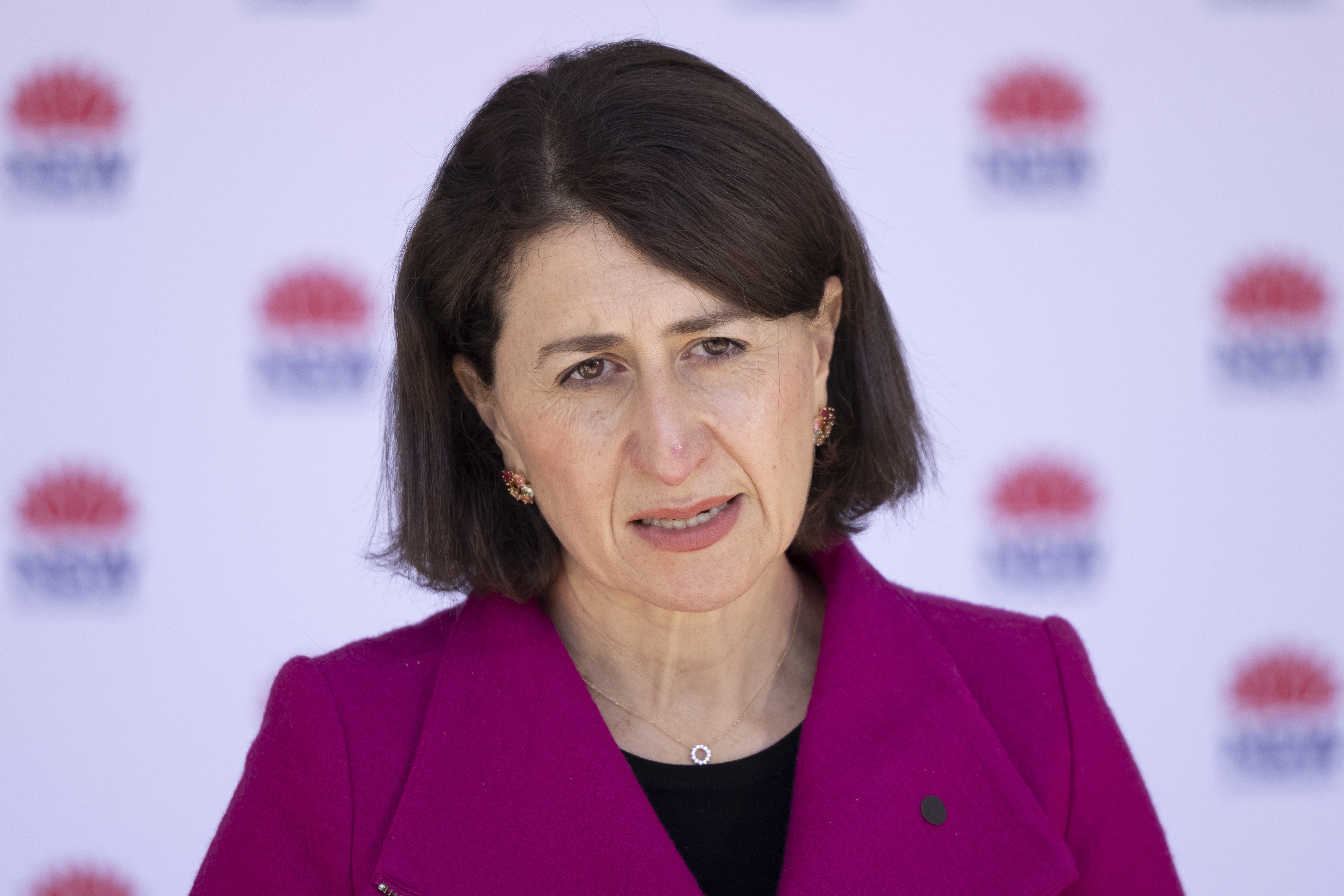
"Come early next week, we do want to see the tide turn in terms of the number of the people with the virus who are in isolation as opposed to those who have been active in the community," Ms Berejiklian said.
NSW Chief Health Officer Dr Kerry Chant said the shape of the outbreak had morphed, with the virus still spreading but not in the same way it was a week ago.
"Because of the lockdown, the exposure sites are really shifting," Dr Chant said.
"We're seeing a move from hospitality venues, beauticians, hairdressers, to retail."
READ MORE: State-by-state COVID-19 restrictions explained
At Coles in Bondi Eastgate alone, hundreds were forced on Friday night into two weeks of isolation after a worker tested positive following a five-hour shift on Tuesday afternoon.
Sydney's lockdown is at risk of being extended if people who are infectious continue to move about in the community before they test positive.
"Stay at home means stay at home, don't leave the house unless you absolutely have to," Ms Berejiklian said.

The shape of Sydney's outbreak
Sydney's COVID-19 sub-clusters grew on Friday:
- 8 new cases linked to the student nurse who worked at Fairfield and Royal North Shore hospitals, bringing the total to 10 with 390 staff and patients who were close contacts
- The West Hoxton birthday party is now at 42 cases, up one case
- Two more cases for the Crossways Hotel at Strathfield South, now at 12
- At the Lyfe Cafe at Bondi, 3 new cases took the cluster to 28
- One more case for Joh Bailey Double Bay, the total now 14
- Great Ocean Foods at Marrickville remained unchanged at 19 cases
More than 73,000 people were tested on Thursday, a result Ms Berejiklian said was "very pleasing".
What Queensland needs to lift final part of lockdown
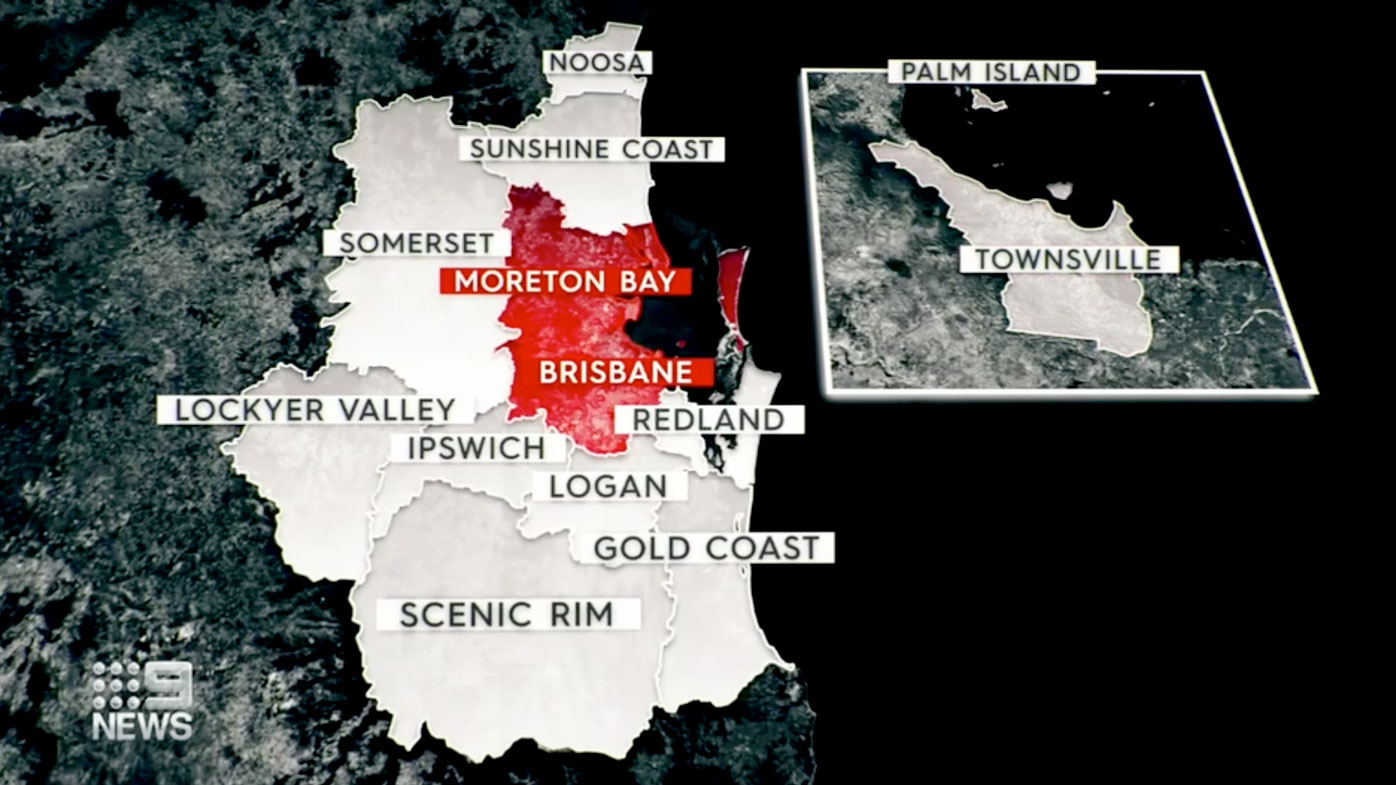
The last of Queensland's lockdown may be lifted today if contact tracers working overtime have been able to isolate anyone connected to the state's latest COVID-19 cases.
Just when the doors were about to be opened, three new coronavirus cases were announced on Friday morning, which meant Brisbane and Moreton Bay would stay shutdown for at least another 24 hours.
Every other local government area had their lockdown lift at 6pm, including the Sunshine Coast despite a fourth new case announced on Friday afternoon of a man in his 50s from Aroona.
READ MORE: Queensland COVID-19 exposure venues
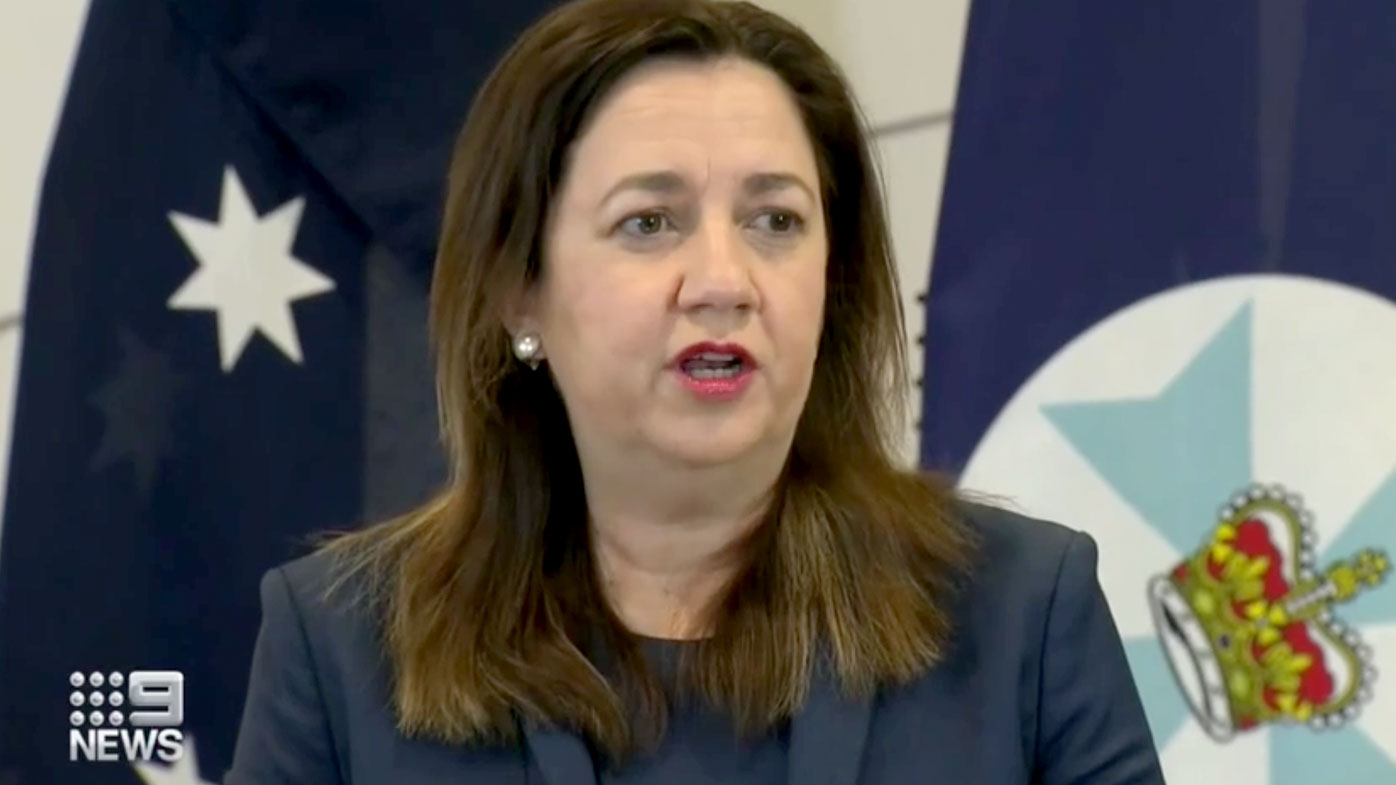
"We really need, our contact tracers … to really get on top of this issue quickly," Premier Annastacia Palaszczuk said on Friday.
Two of the new cases were a mother and daughter from Carindale who had "been out quite extensively around Brisbane", Ms Palaszcauk said.
It wasn't immediately known how they were linked to existing clusters.
Chief Health Officer Dr Jeannette Young praised huge testing rates in Townsville that helped it avoid a worrying outbreak from the Prince Charles receptionist who travelled there with her family while she was infectious.
READ MORE: PM outlines pathway out of pandemic
"The amount of testing that has been done up there has been absolutely fantastic," Dr Young said.
Contact tracing will be crucial in deciding if the Brisbane and Moreton Bay lockdowns can be lifted or if the strictest restrictions drag on into Sunday or next week.
Sunshine Coast on high alert
The man who tested positive on Friday afternoon works at the Sippy Downs campus of the University of the Sunshine Coast and was at work on June 28 and 29.
Anyone in the Caloundra, Mooloolaba, Sippy Downs or Maroochydore areas is urged to come forward for testing even if they have only the slightest symptoms.
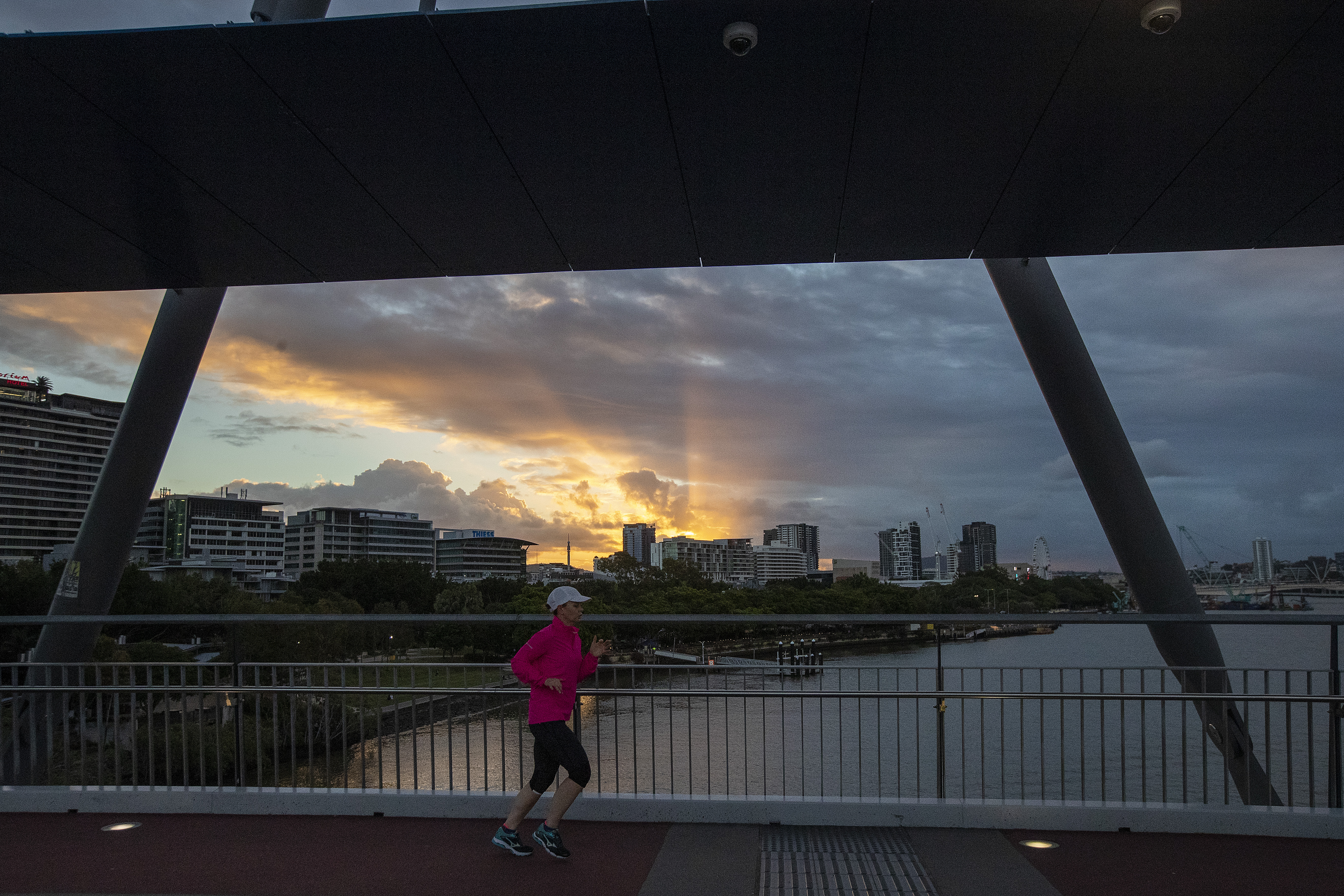
Dr Young said she was confident in the Sunshine Coast lifting out of lockdown.
"The man was only in the community while potentially infectious for two days before the lockdown began, at his workplace, and briefly during lockdown," she said.
"Because of this, I am confident we can continue with the eased lockdown for the Sunshine Coast this afternoon, and we'll continue to monitor the situation.
"Contact tracing is already underway and we are contacting everyone that we can identify."
Coles at Sippy Downs has now been classed as a low risk venue.
T&T Enacts New Gambling Laws for Revenue
CNW- Trinidad and Tobago recently passed a new bill recently that could see the Caribbean island earn up to $2bn in revenue.
The Gaming and Betting Control Bill 2021 passed through the House of Representatives in June, giving the government firmer control over the taxation of the industry.
They will now collect taxes from the cost of gaming owners’ license, gaming tables, customs duty on imported gaming devices and corporation tax. According to News Day, it is seen as a huge step forward for Trinidad and Tobago to reduce their budget deficit, thought to be $8bn.
The bill lists the sums payable to the government as $120,000 for every Black Jack table, $120,000 for every roulette table, physical and electronic, and $24,000 for every slot machine. Failure to comply will see establishments hit with stiff penalties, including $1m and a $250,000 administrative fine for anyone using unapproved chips and devices or counterfeit gaming machines.
If an establishment breaches its license terms or fails to obtain a license, there will be a $5m penalty and a further $1.25m administrative fee.
The bill has come into being because the government feel the gaming industry on the island has not been paying its dues in the past. The Minister of Public Administration, Allyson West, believes that the industry is worth $16bn annually, but the taxes have never exceeded $82m.
Whilst many have welcomed the move, Allan Bhaggan, the owner of the Oasis Lounge on Broadway, has voiced his concerns at the rising costs of owning such an establishment, saying: “The rent for some casinos could be about $60,000. A machine costs about $200,000. To rent one costs about 50 per cent of your revenue. It could cost about over $100,000 to rent a machine. If somebody cracks a screen, it costs about $3,000 to $4,000 to fix it. If there is a power outage and machines go down, it costs a lot to repair. These machines are a huge cost to maintain. Very expensive.”
The worldwide casino industry has struggled over the past 18 months or so due to the pandemic. Doors had to be closed on many physical establishments, in Trinidad and across the Caribbean.
This has seen an increase in people playing online, with providers in that sector becoming particularly diverse and appealing. Not only can an online provider offer multiple online slots, certainly at a cost lower than $200,000, but they can also offer live events without the overheads associated with a casino.
Online provider Gala Casino has a range of live games such as Mega Fire Blaze Roulette and Infinite Blackjack, which create the illusion of being in a real casino without actually attending.
That variety and depth make it very tough for physical locations to thrive, even without the added burden of such heavy taxation. Whilst those market forces are a problem for the likes of Bhaggan, he confesses he believes the legislation is needed, but the timing, on the back of a challenging 18 months, could be a problem.
“I have no problem with the legislation,” he added. “I think the State’s timing is not right. Maybe another two years. Maybe by 2023. They have to be careful that the legislation does not force the local owners out. They have to be careful that it does not allow only the foreign owners to survive. That can happen if the small man cannot pay his taxes.”
The worry doesn’t seem to be whether the casinos will survive; Trinidad and Tobago does provide an excellent backdrop for establishments that online gaming cannot, with sun and the Caribbean Sea all around.
The problem is whether the local owners can thrive under the new legislation or struggle and see their businesses gobbled up by larger providers with the resources to meet the new taxation structure.
The post T&T Enacts New Gambling Laws for Revenue appeared first on The St Kitts Nevis Observer.
US COVID-19 Vaccines Arriving in Region
Pan American Health Organization (PAHO) Director, Dr Carissa Etienne, says 15 countries will receive approximately six million of the 25 million doses of COVID-19 vaccines that the United States has earmarked for deployment to help ease the global shortage.
She said that these nations include countries in Central and South America, and the Caribbean, inclusive of CARICOM member states.
Speaking during PAHO’s COVID-19 digital briefing on Wednesday, Dr Etienne said 1.5 million of the doses arrived last Sunday (June 27), from which the first allocation was dispatched to Honduras.
She said that “millions more [are expected] to be delivered in the coming days”.
Dr Etienne noted that PAHO, through its Revolving Fund, has been working tirelessly with the US Government and those of the recipient countries, as also the World Health Organization COVID-19 Vaccines Global Access (COVAX) Facility “to ensure that these vaccines are received promptly, safely and are ready to be deployed as soon as they arrive”.
The Director advised that PAHO is also in discussions with Canada, Spain, and other partners to secure more vaccine donations and ensure speedy deployment to member countries.
Noting that global vaccine supplies remain “very limited”, Dr Etienne maintained that donations are “our best option in the short-term to protect the most vulnerable in Latin America and the Caribbean”.
She said that PAHO is grateful to the US for the “generous donation”, which she pointed out, “will make a difference in some countries that are suffering extreme hardships due to COVID-19”.
Dr Etienne indicated that PAHO, in tandem with COVAX, governments, vaccine producers and other partners has, to date, delivered more than 21 million doses to 31 countries in Latin America and the Caribbean.
She pointed out, however, that “the reality is… we still face a glaring gap in access to vaccines”.
“We are hopeful that these donations [by the US] and the support [provided] will be duplicated by other developed countries so that we can expand access to vaccines as soon as possible,” Dr Etienne said.
The region of the Americas has recorded a staggering 72 million COVID-19 cases and nearly 1.9 million deaths since the pandemic’s onset.
These figures include 1.1 million new cases and 30,000 additional deaths recorded last week.
The post US COVID-19 Vaccines Arriving in Region appeared first on The St Kitts Nevis Observer.
The Caribbean should support ecocide as an international crime
By Sir Ronald Sanders

(The writer is Antigua and Barbuda’s Ambassador to the United States and the Organization of American States. He is also a Senior Fellow at the Institute of Commonwealth Studies at the University of London and Massey College in the University of Toronto. The views expressed are entirely his own)
Small island states and countries with low-lying coast are the victims of ecocide.
A draft law, unveiled on June 22, defines ecocide as “unlawful or wanton acts committed with knowledge that there is a substantial likelihood of severe and widespread or long-term damage to the environment being caused by those acts”.
Getting the law accepted would be a long process. It could take years. And, that is precisely why small islands and low-lying coastal states should embrace and promote it now. Every year that passes brings greater dangers of irreparable damage without compensation.
While Climate Change is not specifically mentioned in the draft law, supporting it and eventually joining in its enactment, would send a serious message to states and entities that do little or nothing to stop ecological damage to vulnerable countries.
Something has to give in this unlevel playing field in which small island states and low-lying coastal states are made to suffer. Therefore, the initiative for a new international criminal law, called “Ecocide”, by a group of legal experts, co-chaired by British Professor Philippe Sands QC, and Dior Fall Sow, a UN jurist and former prosecutor from Senegal, is heartening news.
At least, it would open the door for criminal prosecutions against entities that cause ecological damage. Eventually, it could lead to the inclusion of the harmful effects of Climate Change, which, despite all the efforts of small island states, show no prospect of slowing down, let alone ending.
The possibilities for damage to countries that could be classified under ecocide are: transboundary nuclear accidents, major oil spills and Amazon deforestation. The Caribbean has long been exposed to nuclear accidents by the passage through the region of ships carrying nuclear waste from Japan to Europe. Major oil spills have also now become a matter for concern in the area as oil production new extends from Trinidad and Tobago to Guyana and Suriname.
Caribbean nations ought not to be pessimistic about the chances of ‘ecocide’ being added to the four international crimes that now exist and are triable by the ICC. It should be recalled that it was a Caribbean man, A.N.R Robinson, a former Prime Minister of Trinidad and Tobago who, in 1989, revived the idea of the International Criminal Court (ICC) with jurisdiction over international crimes. He triggered the process that eventually led to the adoption of the Rome Statute – the Court’s founding treaty that came into force in 2002. Large tasks have been taken on by small countries to success when they act together.
Several other small island nations, including Vanuatu, in the Pacific, and the Maldives, in the Indian Ocean, called for “serious consideration” of a crime of ecocide at the ICC’s annual assembly of states parties in 2019. Undoubtedly, they had Climate Change in mind. But, even if, at this stage, including climate change in the definition of ecocide is not possible, the opportunity should be grasped to make it attainable in the future. The perpetrators, who are now getting a free pass, should see that the victims are serious about recompense for damage.
The initiative for a new criminal law is a serious one, backed by the ‘Stop Ecocide Foundation’, a Netherlands-based global coalition. It is the Foundation that gathered a panel of 12 leading lawyers, including Sands and Sow, to work on the draft law.
Professor Sands said it creates “a definition that catches the most egregious acts but doesn’t catch the kinds of daily activity that so many of us, myself included, and regions and peoples and countries are involved in which cause significant harm to the environment over the long term”. The other co-chair, Dior Fall Sow said: “The environment is threatened worldwide by the very serious and persistent damage caused to it, which endangers the lives of the people who live in it. This definition helps to emphasise that the security of our planet must be guaranteed on an international scale”.
So, while the law, if it is enacted, will not include climate change, the panel of lawyers passionately believe that the proposed definition could provide a basis for the consideration of a new international crime. As Sands puts it “what is original and innovative, is that the environment will be put at the heart of international law”.
The initiative has attracted the support of the Caribbean’s Sir Shridath Ramphal, himself an international lawyer, former Secretary-General of the Commonwealth and member of the UN World Commission on Environment and Development, whose 1987 report, “Our Common Future” awakened the world to the major threat to the environment. He said of this new initiative: “I urge serious global support for the work of the Independent Expert Panel for the Legal Definition of Ecocide, organised by the Stop Ecocide Foundation. Their ‘Commentary and Core Text’ of a definition of ‘ecocide’ as an international crime deserve humanity’s urgent attention”.
Every country in the Caribbean should embrace and promote the draft law to make ecocide an international crime. Doing so would give them the support of a further strand of international law which, along with diplomacy, is a principal tool for the defence of their interests.
Responses and previous commentaries: www.sirronaldsanders.com
The post The Caribbean should support ecocide as an international crime appeared first on The St Kitts Nevis Observer.