OPINION: Just last night, a man who’s attempted suicide multiple times reached out to me and explained the inadequacy of the support he’s been offered. He described it as about as helpful as a flea on an elephant’s back.He’s not…
Category Archives: headline
Herald morning quiz: June 30
Test your brains with the Herald’s morning quiz. Be sure to check back on nzherald.co.nz at 3pm for the afternoon quiz. To challenge yourself with more quizzes, CLICK HERE.
Race to find new Queensland cases
Queensland Health authorities are hoping a three-day lockdown will be enough time to find any new coronavirus cases after an unvaccinated COVID hospital ward receptionist was found to be infectious with the dangerous Delta strain in the community.
The wide-ranging lockdown includes South East Queensland, Townsville city, Palm Island and Magnetic Island, given the 19-year-old hospital worker flew around the state during 10 days while she was infectious.
The lockdown is due to end at 6pm on Friday.
EXPLAINER: Everything you need to know about the Queensland lockdown
Premier Annastacia Palaszczuk said she was "absolutely furious" about the situation with the unvaccinated hospital worker, and had no choice but to impose the lockdown because of the fast-moving situation.
"The risk is real and we need to act quickly," the premier said.
"We need to go hard and we need to go fast."
https://twitter.com/AnnastaciaMP/status/1409765997951602688
Queensland reported two new locally acquired coronavirus cases on Tuesday, including the hospital worker, along with two other cases in hotel quarantine.
The other positive locally acquired case is a miner from Ipswich, one of the 170 FIFO workers from the NT gold mine, where a positive case was detected after hundreds of workers had dispersed across Australia.
Hospital clerical worker tests positive
The woman who tested positive overnight is a 19-year-old casual clerical worker from Prince Charles Hospital in Chermside, in Brisbane's north.
Working as a receptionist outside the hospital's COVID ward, health authorities have confirmed she tested positive for the Delta strain variant of the disease.
The young woman visited multiple sites while infectious and developed symptoms last Monday.
This means the woman would have been infectious and in the community for 10 days since last Saturday, including taking flights in and out of Brisbane and Townsville airports, and visiting Magnetic Island. All 2500 people on Magnetic Island have been urged to get tests.
The young woman was not vaccinated despite the health directives, the premier said.
Two of her family members are now showing signs of sickness and have been tested for the virus.
"Let me say, I am absolutely furious about this," Ms Palaszczuk said.
"We need to make sure that we are getting our population vaccinated, right across the state."
Ms Palaszczuk confirmed a full investigation would be launched into the reason why she was not vaccinated.
The premier confirmed hospital staff who worked inside the ward had to be vaccinated, but it was unclear if the guidelines included the woman and her role.
"For some reason she wasn't vaccinated, there will be a full investigation into that."
The woman travelled with her family between her home in Sandgate to Magnetic Island in Townsville at the end of last week.
While on the road, she attended the Sunday markets in Townsville.
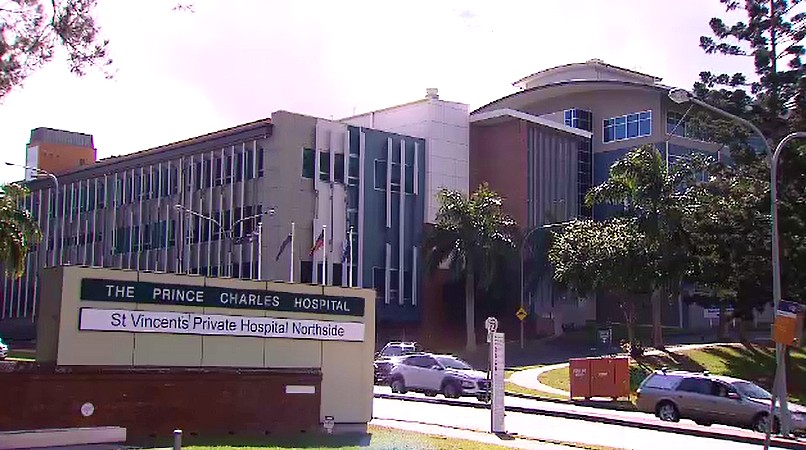
Fears over FIFO workers and five Virgin flights
Chief Health Officer Jeannette Young said the other 170 FIFO workers from the NT gold mine remained a Delta variant risk.
The Tanami mine workers are now in isolation across Queensland and being tested for the virus, Dr Young said.
"That is a continuing risk for Queensland," she said.
The Virgin flight crew member who had worked on two flights which landed in Queensland also had the Delta variant, Dr Young said.
But Dr Young said she was "worried about all five of those flights", because Queenslanders could have been on the non-Queensland flights.
"We've just got so many different groups that have slightly different risk profiles and we're trying to manage and balance all of those, and that's what's so difficult."

Sites visited by infected hospital worker
- Sandgate Woolworths – June 20
- Bay Health Gym – June 20
- Prince Charles Hospital – June 22, 23
- Flight VA369 from Brisbane to Townsville on June 24
- Brisbane Airport – June 24
- Townsville airport – June 24
- Magnetic Island from June 24 to June 27
- Flight VA374 from Townsville to Brisbane – June 27
- Brisbane Airport – June 27
- Townsville Airport – June 27
Queensland Health believes there are 2500 people on Magnetic Island.
All have been urged to get tested.
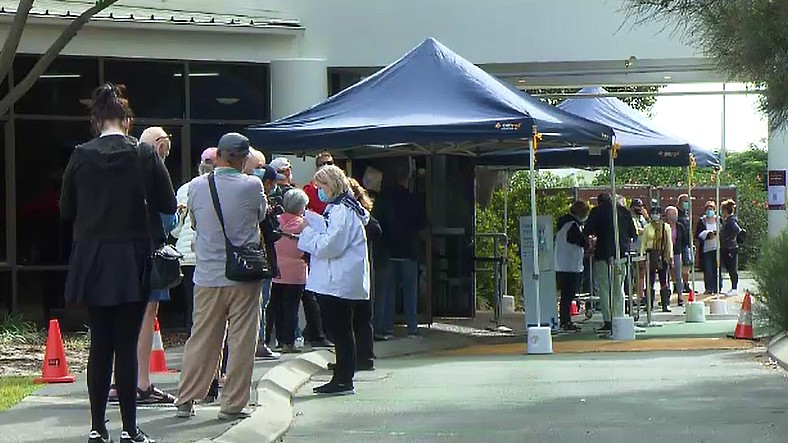
Only four reasons to leave home
For Queenslanders in the areas that are locked down, there are only four reasons you will be able to leave home.
1. Essential education and work that cannot be done at home or to obtain health care services, including getting your vaccination
2. Care or support of a vulnerable family member
3. Essential shopping in your local community
4. Exercising with no more than one person, not from your household in your local community
Canada: Heat Hits Record 116F, US North-West also Sizzles
Canada has recorded its highest ever temperature as the country’s west and the US Pacific north-west frazzle in an unprecedented heatwave.
Lytton in British Columbia soared to 46.6C (116F) on Sunday, breaking an 84-year-old record, officials said.
A “heat dome” – static high pressure acting like a lid on a cooking pot – has set records in many other areas.
The US and Canada have both warned citizens of “dangerous” heat levels that could persist this week.
Experts say that climate change is expected to increase the frequency of extreme weather events, such as heatwaves. However, linking any single event to global warming is complicated.
BBC forecaster Nick Miller says that “heat dome” isn’t a strictly defined meteorological term but has become associated with describing large areas of high pressure, leading to clear skies and hot sunny days. The longer the high pressure pattern lasts, the longer the heatwave is and temperatures can build day by day.
This high pressure zone is huge, from California right up to Canada’s Arctic territories and stretching inland through Idaho.
Sales of air-conditioners and fans have surged, and cooling shelters have sprung up. Some bars and restaurants – and even a swimming pool – were deemed too hot to function.
Lytton, which is about 150 miles (250km) north-east of Vancouver, surged past the previous Canadian record.
That was set in two towns in Saskatchewan – Yellow Grass and Midale – back in July 1937 at a balmy 45C (113F).
Lytton was not alone. More than 40 other spots in British Columbia set new records.
Environment Canada senior climatologist David Phillips told CTV: “I like to break a record, but this is like shattering and pulverising them. It’s warmer in parts of western Canada than in Dubai.”
He said there was a chance of topping 47C somewhere, with Monday the likeliest day.
British Columbia’s power providers said there had been a surge in demand for electricity to keep air-conditioners running.
Environment Canada said Alberta, and parts of Saskatchewan, Yukon and the Northwest Territories, should also be on alert.
In its warning, it forecast a “prolonged, dangerous, and historic heatwave will persist through this week”, with temperatures 10C-15C above normal, at near 40C in many places.
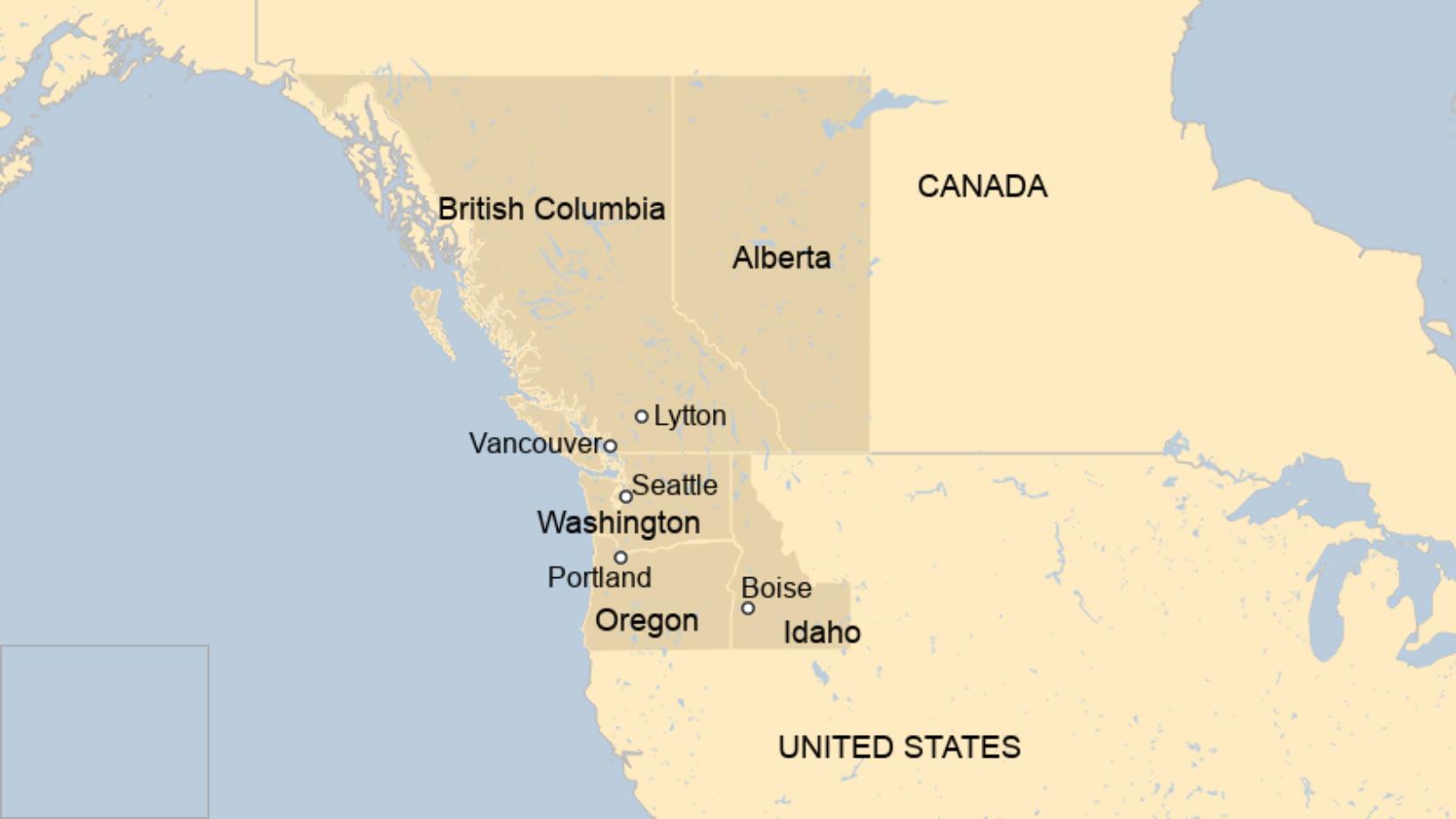

‘Historic’ heat in US north-west
The Pacific north-west has also been breaking records, particularly in parts of Washington and Oregon states.
The US National Weather Service called the heatwave conditions “historic” and said they would persist through the week, “with numerous daily, monthly and even all-time records likely to be set”.
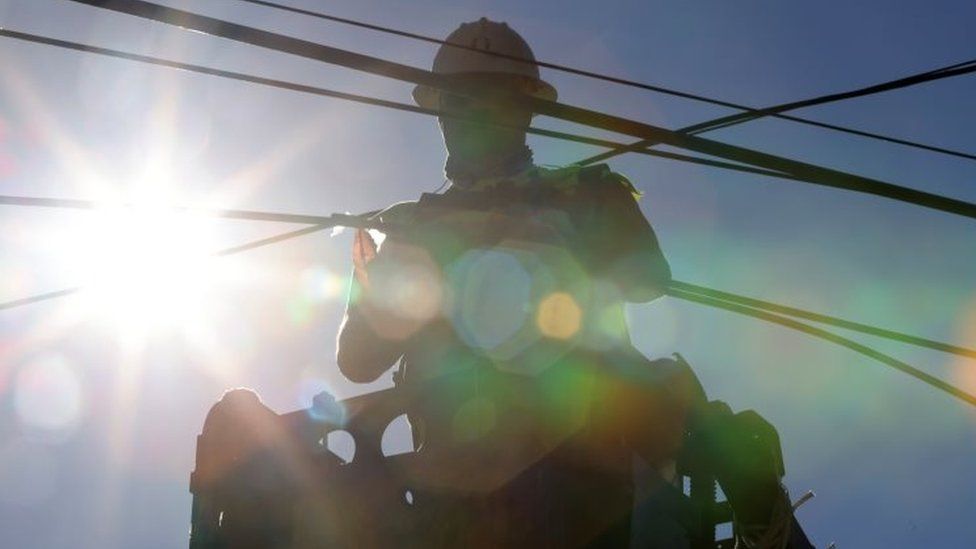 A worker tends to a fibre-optic line in Lake Forest Park, Washington, amid the scorching heat
Seattle and Portland, cities with famously rainy climates, both recorded their hottest temperatures ever on Sunday.
Portland shattered its prior record when temperatures reached 44C, according to the US National Weather Service. Seattle also passed a historic high as the mercury hit 40C.
Oregon eased Covid attendance restrictions to open up swimming pools and air-conditioned areas like shopping centres. But Seattle in Washington had to close one pool because of “unsafe, dangerous pool deck temperatures”.
Fruit growers have been rushing to pick crops, fearing the heat could shrivel cherries and other fruit. Pickers have been starting at dawn and stopping at lunchtime in the unbearable temperatures.
BJ Thurlby, president of the Northwest Cherry Growers, told the Seattle Times: “We are travelling in absolutely uncharted waters.”
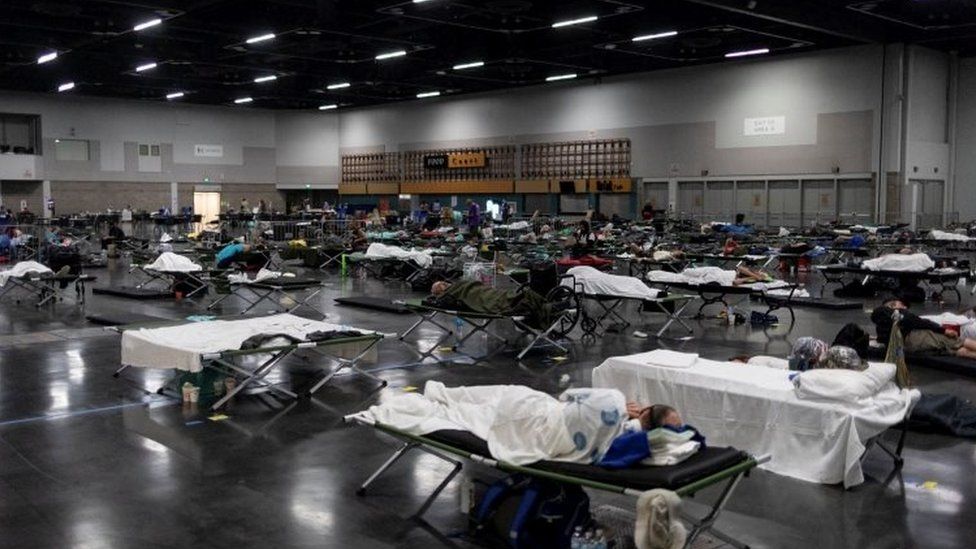 People sleep at a cooling centre set up in Portland in the US state of Oregon
The US track and field Olympic qualifying trials had to be halted in Eugene, Oregon, on Sunday, as the crowd was told to leave the stadium for safety reasons.
Some Covid vaccination centres also closed because of the heat.
Some areas along the coast could cool a little later in the week, but Boise, Idaho, could see a week of 40C+ temperatures. The National Weather Service said parts of the state could suffer “one of the most extreme and prolonged heatwaves in the recorded history of the Inland Northwest”.
The warnings for all were to stay hydrated, avoid strenuous activities, and check on vulnerable neighbours.
The post Canada: Heat Hits Record 116F, US North-West also Sizzles appeared first on The St Kitts Nevis Observer.
Antigua Announces Reduced Taxes for Intra-Regional Travel
Antigua and Barbuda has announced a 50 percent reduction in taxes on airline tickets for travel within several countries of the Caribbean Community (CARICOM).
The government says the measure will last for six months in the first instance.
“We think at this time where regional travel is relatively low, extremely flat that there is very little to lose and even though it may not be the best condition which to analyze the elasticity of ticket prices, it will give us some indicative indication as to how a reduction in pricing would impact on demand without creating a financial crisis, “Prime Minister Gaston Browne said.
“There is nothing to lose at this time, very little will oose as a result of cutting those taxes. So in the case of Antigua and Barbuda, we have taken a decision to cut our regional airport taxes by 50 percent, effective Monday (June 28) and we will do so for six months to see how it impacts revenue and then to make a final determination going forward as to what percentage is sustainable, if it is 25, 40 or even the 50 percent,” he added.
Browne said that the matter had also been discussed within the sub-regional Organisation of Eastern Caribbean States (OECS) “probably about three weeks ago.
Browne said that a reduction in taxes would assist the cash-strapped regional airline, LIAT, which has been placed under court-ordered administration.
“This will also help LIAT too especially if the OECS and Barbados could come together and agree on a travel bubble and to allow for fully vaccinated persons to move without quarantining. We think that will be a win-win for all of us.”
Last week, CARICOM leaders, who are members of the Prime Ministerial Sub-Committee on the CARICOM Single Market and Economy (CSME), met and among the agenda items were the proposal to cut taxes.
There has been no indication as to the position adopted at the meeting, but the CARICOM leaders are to meet early next month for their annual summit, where it is expected that Barbados Prime Minister Mia Mottley, who has lead responsibility for CARICOM Single Market and Economy (CSME), will report to her regional colleagues. The CSME allows for the free movement of goods, skills, labour and services within the region.
Browne said as a result of the high ticket prices, LIAT for example, for every country they fly into “they have to pay a tax, you have airport taxes for the passengers.
“In the case of Antigua and Barbuda, the airport taxes is US$97 and your ticket price would include the airport tax and if you are going into Barbados, there will be another airport tax.
“So technically speaking, your travel from Antigua to Barbados is US$600, half of your ticket cost is actually traveling taxes. So our proposal will be one in which we will ask the countries to move in lockstep with each other,” he said, hoping that a “travel bubble of low-risk countries” can be established as soon as possible.
CMC
The post Antigua Announces Reduced Taxes for Intra-Regional Travel appeared first on The St Kitts Nevis Observer.
Coronavirus: Harris Extends SOE for 6 Months
The St. Kitts-Nevis coalition government Monday extended the state of emergency (SOE) by a further six months, with Prime Minister Dr Timothy Harris telling Parliament it is a critical tool in the fight against the coronavirus (COVID019) pandemic.
The SOE was due to expire on July 7, but Harris said that it was being extended as part of his administration’s efforts to protect the lives and livelihoods and contain the spread of the COVID-19 disease that has now resulted in the deaths of three people in the twin-island Federation.
“Since the onset of the COVID-19 pandemic last March, we have utilized this tool to help us control the virus. Emergency powers were utilized in the first instance in March 2020, for a period of 21 days which is the limit placed on the time span for which the Governor-General can promulgate a state of emergency without the approval of the Parliament,” Harris said as he moved the resolution extending the SOE.
“Given the continuing community spread there is a need for the State of Emergency to be extended beyond July 06 as the COVID-19 pandemic still presents an existential threat to the lives and livelihoods in St Kitts and Nevis.
“Indeed, on Saturday last our Chief Medical Officer advised that a new variant which is more transmissible is present in our Federation. We have come today, ahead of the expiry date of the current state of emergency to seek an extension for a period of six months,” Prime Minister Harris said.
He told legislators that the SOE provides a sound legal anchor for the promulgation of curfews in St. Kitts and Nevis that prohibit the movement of persons that can help halt the spread of the disease.
“If persons stay in shelter the probability of a COVID-19 spread is significantly and dramatically reduced Mr Speaker, and this is what, in large measure, we are attempting to do now.
“I, therefore, want to reiterate my call for all persons in St. Kitts and Nevis to stay at home including their yard space and minimize contact with others outside of their household during the period of the lockdown.”
Harris said while his administration understands that the temporary measures being implemented in the fight against COVID-19 may inconvenience many “these measures are being brought for one reason and one reason only that is to save lives”.
The latest figures show that the twin-island Federation has recorded 429 cases of the virus since March last year with 127 having recovered. There have been three deaths.
Relatives of one of those who have died said she had been fully vaccinated and that they are now awaiting information from health authorities after a recent meeting.
Health officials have not publicly responded to the complaints and allegations now in the public domain.
The government has already announced a 24-hour lockdown as part of a slate of additional restrictive measures being taken to limit the movement of people, in an effort to stem the spread of the virus.
The post Coronavirus: Harris Extends SOE for 6 Months appeared first on The St Kitts Nevis Observer.
Two charged over alleged learner road rage attack
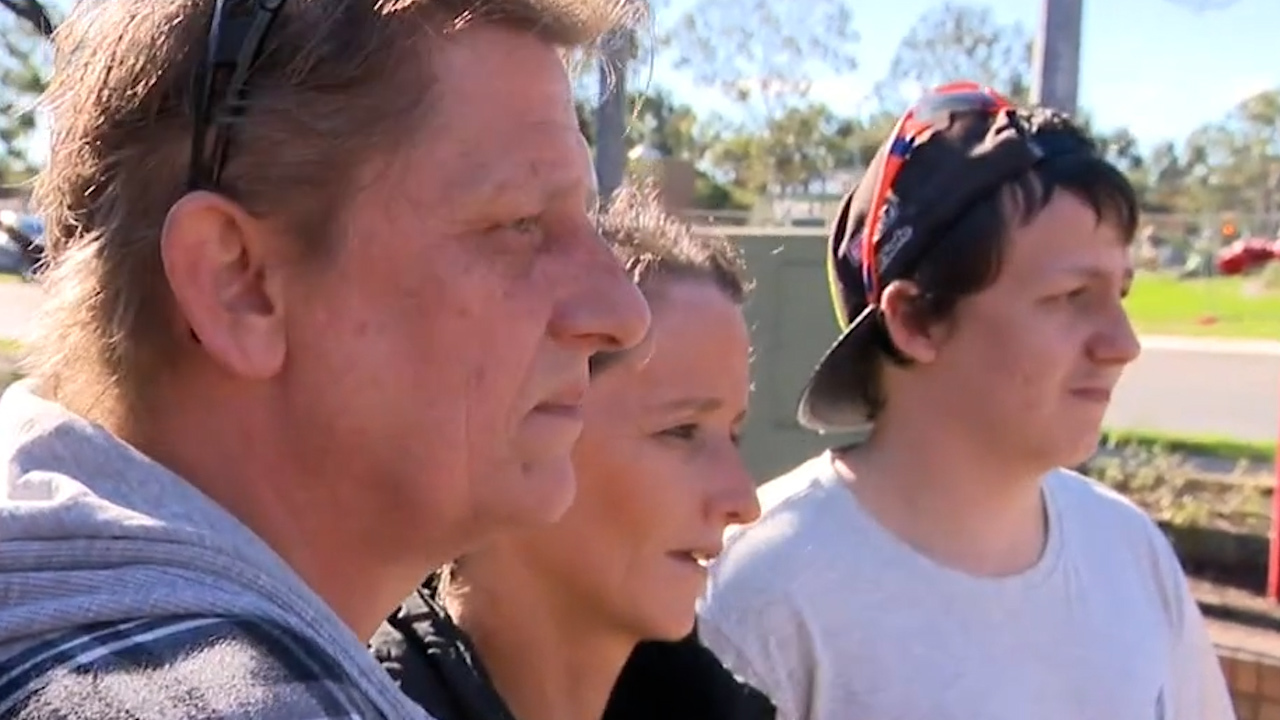
A brave learner driver who says he was viciously attacked in an Adelaide road rage attack has told 9News he is now too scared to get behind the wheel again.
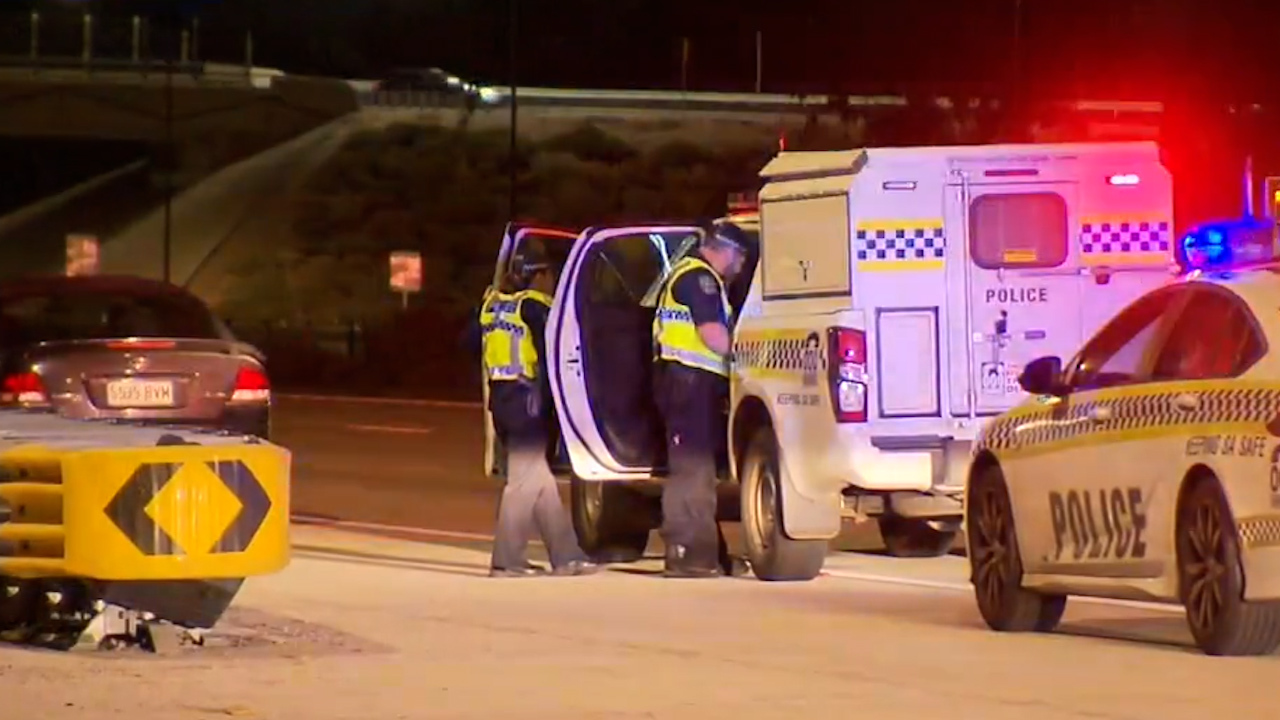
Jacob Trench was driving with his mother and a friend along the North-South Motorway when they were allegedly set upon by two men.
The 19-year-old says he was lashed on the back with a metal rod and he also received a cut to his head from a sharp object, needing stitches for the injury.
https://twitter.com/TomAngley9/status/1409772715158900736?ref_src=twsrc%5Etfw
READ MORE: Good samaritan steps in during Adelaide alleged road rage attack
"Yes I'm scared, yes I'm nervous, my legs are shaking," Mr Trench told 9News.
Mr Trench's mother, Amanda, was also allegedly attacked, saying she was punched through the passenger window before her son and his friend were set upon.
"I had black eyes, I looked like an alien. I had an 'egg' on the side of my face, I was dizzy for days afterwards," Ms Trench said.
"I felt helpless, absolutely helpless."
Mr Trench said the pair tailgated his car for over 10 minutes last month, forcing him to pull over near the Bolivar exit, hoping they would speed off. But instead the van allegedly pulled up behind them.
READ MORE: Two men sentenced over horrific road rage attack on young tradie
"I didn't spark them in any way, I was just learning to drive, sticking to the road rules," Mr Trench said.
Today, 23-year-old Amman Almasmmoum and 49-year-old Radwan Masmoum appeared in court after they were arrested at a Mitchell Park home after allegedly fleeing the scene of the attack.
They were granted conditional bail and are next expected to appear in court in August.
Three charged after alleged home invasion machete attack
Three men have been charged after allegedly attacking a duo with a machete in a violent home invasion in Adelaide's north and throwing tiles from a roof in a bid to escape arrest.
Police were called to the home on Massey Street, Salisbury North just before midnight on Monday after reports three men had forced the front door open and assaulted a man and woman inside.
Detectives say one of the men was armed with a machete and struck the a 33-year-old male occupant on the leg while the others held the 36-year-old woman down.
READ MORE: Man's hand almost severed in machete attack outside Perth hotel
The trio allegedly fled the scene with the victims' Holden sedan and the woman's handbag.
Polair was able to follow the allegedly stolen car as it travelled through several suburbs before stopping on Lillee Avenue, Brahma Lodge where two of the car's occupants were arrested.
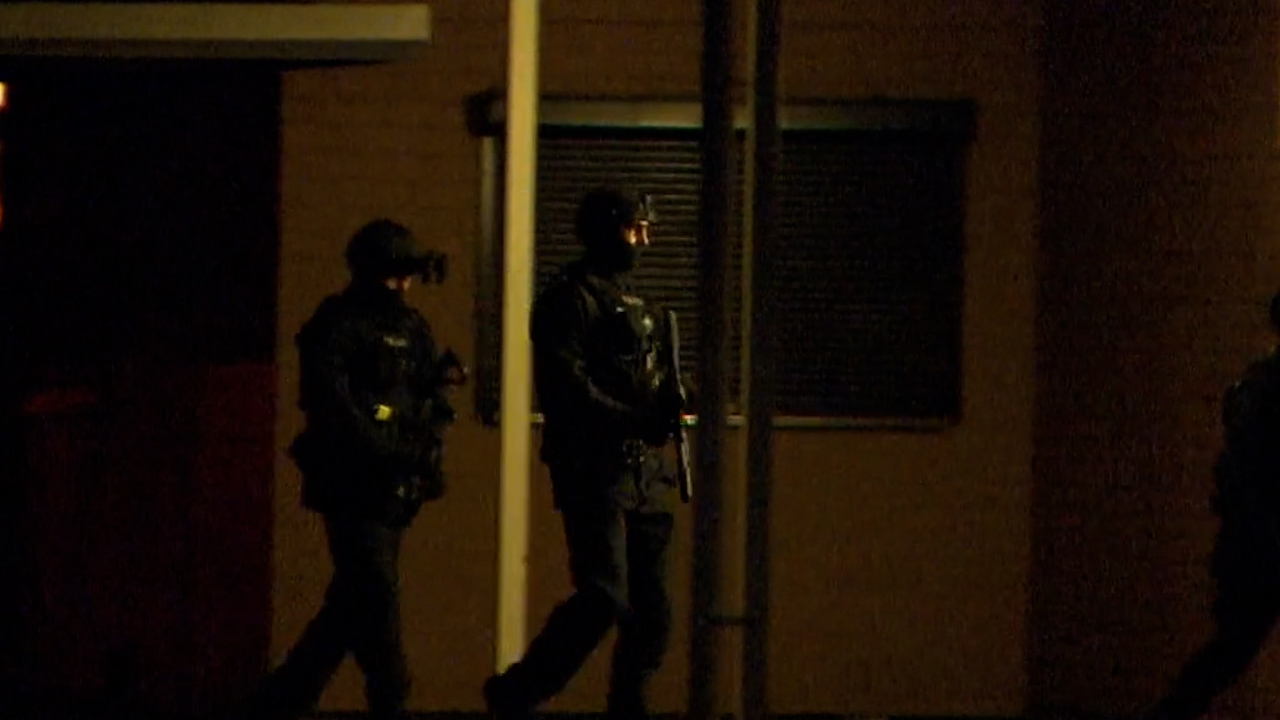
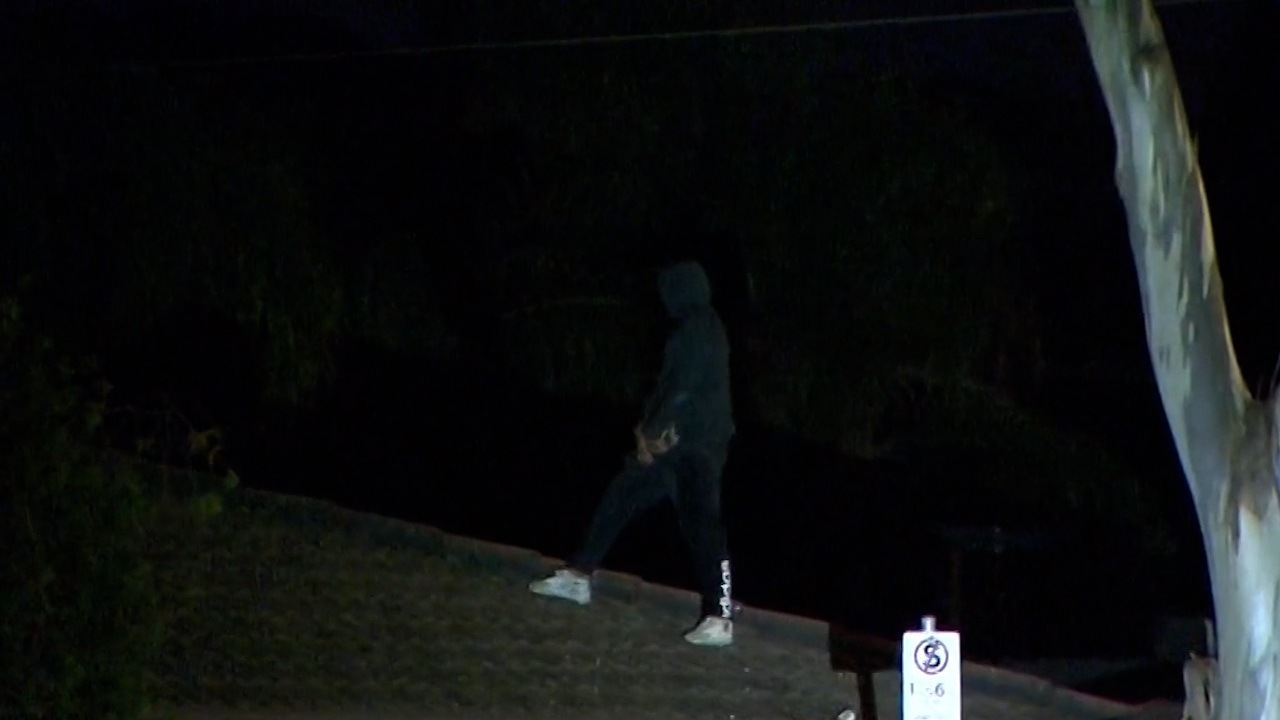
Police say a third man ran from the scene and climbed onto a nearby roof where he allegedly started flinging roof tiles at officers on the ground, refusing to come down.
Footage from the intense standoff shows a hooded man on the roof, throwing tiles and yelling at police to "f— off".
READ MORE: Shirtless customer picks up machete to chase alleged robber in Adelaide IGA
The man was eventually coaxed down and placed in cuffs along with his alleged counterparts.
The man and woman from Massey Street were taken to hospital for treatment to machete wounds and the alleged offenders were charged with a raft of offences including aggravated assault, and serious criminal trespass.
Tens of thousands of Aussies still stranded overseas
More than 34,000 Aussies around the world remain locked out of Australia and can't fly home, according to the latest government figures.
Of those, 10,400 Australians are stuck in COVID-ravaged India, which is still recording 50,000 cases of coronavirus every day.
In April, when India was gripped by its second wave, 9000 Australians in India had registered with DFAT as wanting to come home.
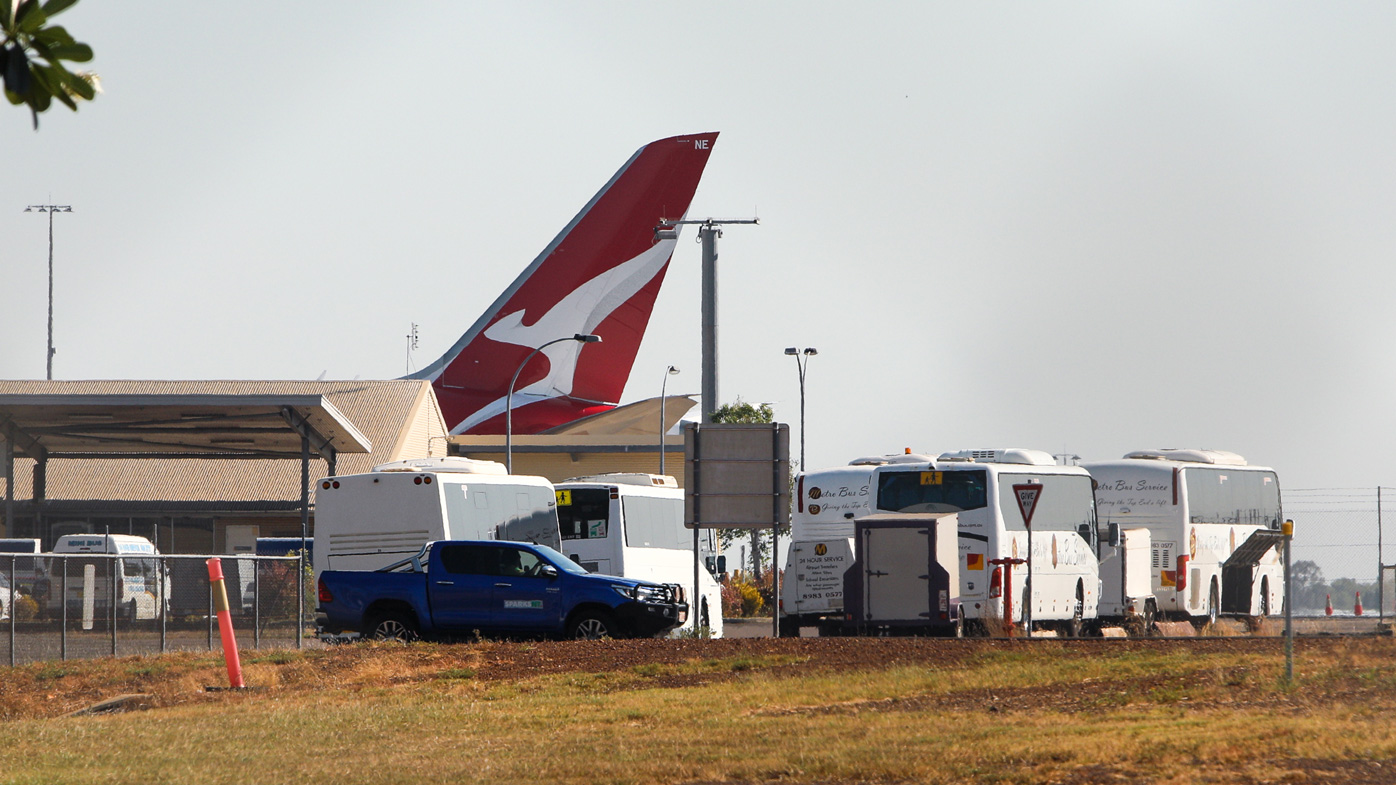
Since the start of the pandemic, when Australia slammed its borders to the world shut, the Department of Foreign Affairs and Trade has helped 48,700 Australians return, a spokesperson told 9news.com.au, including more than 21,000 people on 142 government facilitated flights.
"The number of Australians registered changes frequently according to people's circumstances," a DFAT spokesperson said.
READ MORE: Not a race? The COVID vaccination graphs that rank Australia dead last
Stephen Duckett, the Grattan Institute's health program director and a former secretary of the federal Health Department, said Australia's snail-paced vaccination rollout had effectively left Aussies stranded around the world.
"The reason it was always a race (to vaccinate) was that we wanted to open the borders, and we can't open the borders until we've got a high proportion of the population vaccinated," he said.
Current figures rank Australia dead last in the OECD for fully vaccinated adults by percentage of population.
Led by New South Wales and Queensland, states have repeatedly called on the Commonwealth to open federal quarantine facilities to ease the burden and risk on hotel quarantine.
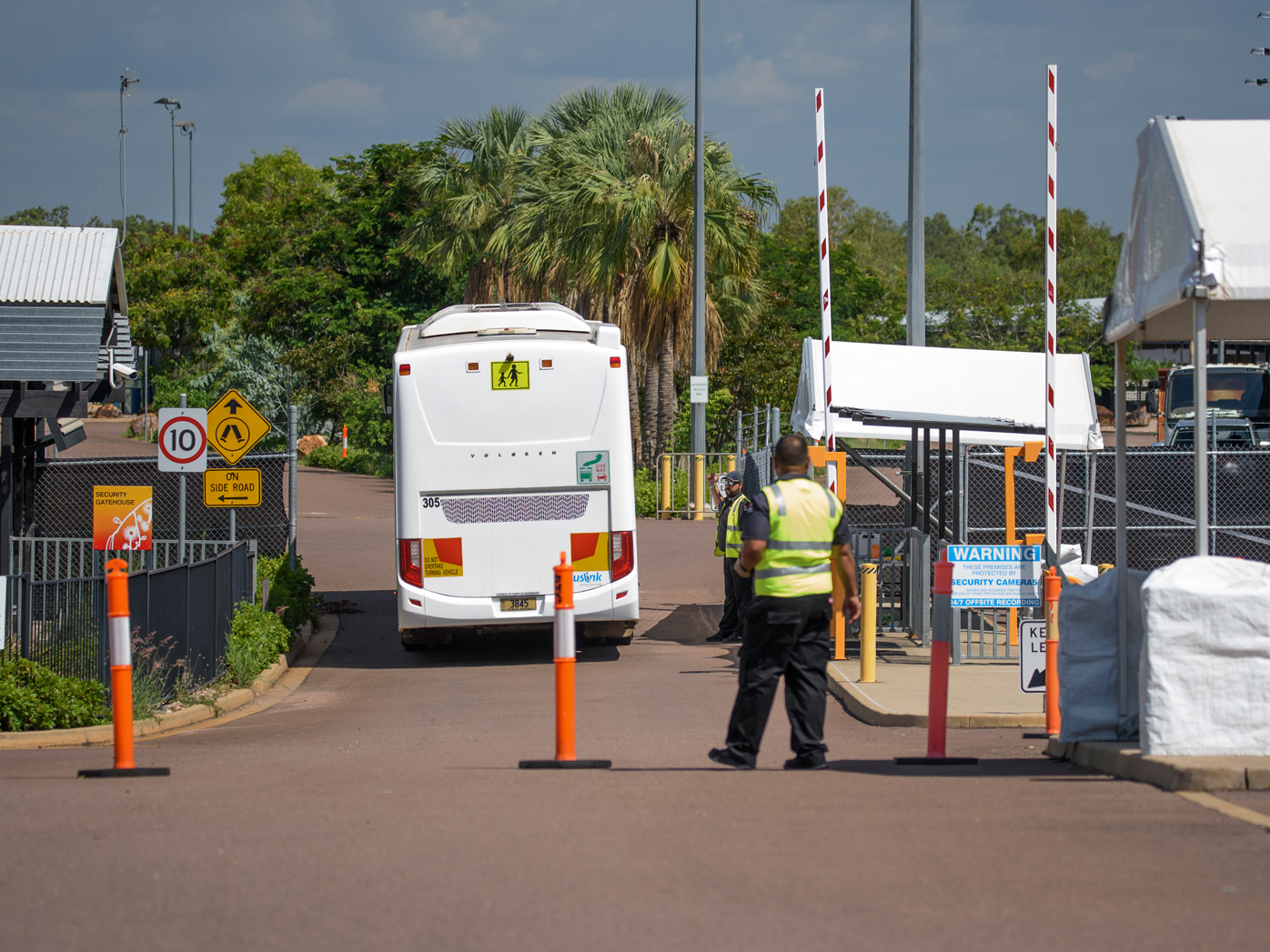
In March, Prime Minister Scott Morrison announced the Howard Springs quarantine facility in the Northern Territory would increase capacity to 2000 returned Australians a fortnight, up from 850.
When asked by 9news.com.au what progress had been made on that front, NT Health did not disclose specifics, except to say "considerable improvements" had been made to support the Howard Springs expansion.
"Recruitment and workforce modelling has been undertaken to support the gradual increase in repatriation passengers," the spokesperson added.
READ MORE: How the world is reacting to Australian COVID-19 'complacency'
Earlier this month, reports suggested Howard Springs had not yet recruited enough workers to operate at a 2000-person capacity.
Data requested by 9news.com.au showed Howard Springs had taken in 18 government repatriation flights since June.
Most flights carried between 100-200 passengers.
Seven of the government repatriation flights were from India, and five from London.
A federal Department of Health spokesperson said 50 repatriation flights have arrived at Howard Springs between October and June, allowing 8365 people to quarantine.
Howard Springs also caters for domestic quarantine.
Last night, Mr Morrison declared international arrivals in hotel quarantine would be separated from domestic quarantine residents.
It is not known how this may impact Howard Springs.
UK: Travel Sector Demands Reopening in Nationwide Protest
Travel agents, pilots, tour operators, aviation workers and cabin crew are among the thousands of people who will ‘speak up for travel’ today, as part of a day of action.
The sector is seeking to put pressure on the government to capitalise on the Covid-19 vaccine rollout by safely reopening travel for the summer season and provide tailored financial support to businesses.
The pandemic has been a catastrophe for the travel industry, closing borders, and even making most travel to and from the UK illegal for months on end.
Data from ABTA estimates that as many as 195,000 jobs have been lost or are at risk within the travel industry, with IATA research indicating that hundreds of thousands of aviation jobs are supported by the furlough scheme.
Although travel is no longer illegal, the industry says the government has failed to deliver a restart to international travel as promised, by undermining the risk-based system ministers established for a safe return to travel.
In contrast, other countries are forging ahead with pragmatic, risk-based schemes that allow safe travel including most recently Germany, France and Spain.
Tim Alderslade, chief executive of Airlines UK, said: “It is now or never for the government to reopen travel and save what is remaining of the summer season, not just for families desperate to get away but the tens of thousands of jobs which rely upon this once thriving sector.
“Airlines are at the absolute limit of what they can borrow and without a genuine reopening this summer they will require Government support to survive.
“The best way to save UK aviation is to enable a return to the skies – safely – by taking advantage of our vaccine dividend and allowing fully vaccinated passengers to travel without restrictions from amber and green countries.
“This is now happening across much of Europe and the UK is in grave danger of needlessly falling behind.”
Without a meaningful summer season – a crucial period of the year for travel businesses, airlines and airports – many thousands of livelihoods are at stake, as well as the ability of the travel sector to recover and reconnect the UK to the world.
As part of the day of action there are a range of events and activities happening across the UK – including 800 people attending an organised lobby outside parliament in London, 200 people at an event in Holyrood in Edinburgh and 100 gathering in Belfast.
There will be a virtual lobby in Cardiff, as well as activities at a range of UK airports and meetings with MPs locally and campaigning on social media.
The industry bodies behind the protest – including ABTA, Airlines UK, the Business Travel Association, Airport Operators Association, UKinbound, Advantage Travel Partnership and the Travel Network Group – also say the UK government’s support through the crisis has been inadequate.
While other sectors have received tailored support, such as grant schemes, the story is quite different for travel, with many travel businesses excluded from the general grant support available and others only able to access the bare minimum.
Airlines and airports, meanwhile, have taken on billions of pounds of debt – raised privately and through government loans schemes – that will have to be paid back.
As a result, many businesses are struggling to survive – 57 per cent of small- and medium-sized travel agents said they would not have the cash to survive more than three months based on current trading conditions and available government support.
The travel day of action has support from the major airlines and tour operators as well as hundreds of small independent travel agents and leisure and business travel agents.
Collectively they are calling on the UK government to:
- Allow international travel to return safely and in a risk managed way by properly implementing the Global Travel Taskforce’s plan for a traffic-light system, by expanding the green list in line with the evidence and making restrictions more proportionate, while keeping a strong red list to guard against variants. Government should also capitalise on the success of the vaccine rollout by removing testing and quarantine requirements for fully vaccinated individuals travelling from green and amber countries.
- Bring forward a package of tailored financial support, including extension of furlough support until April 2022, recognising that the travel sector’s ability to trade and generate income is much slower than first anticipated and more gradual than for businesses in the domestic economy.
The government is expected to provide an update on the traffic light list within the next week, and a review of the requirements for international travel is due on June 28th.
Despite international travel significantly being curtailed, meaning businesses still have little opportunity to generate income, companies will be subject to the ten per cent rise in furlough costs at the end of the month, and payments towards business rates for travel agents will also go up.
The post UK: Travel Sector Demands Reopening in Nationwide Protest appeared first on The St Kitts Nevis Observer.