A prominent New Zealand artist and an award-winning race car driver have teamed up for a first-of-its-kind art piece.The 120 by 60-metre art piece had race car driver Greg Murphy drive along lines that artist Otis Frizzell sketched…
Category Archives: headline
Herald morning quiz: June 22
Test your brains with the Herald’s morning quiz. Be sure to check back on nzherald.co.nz at 3pm for the afternoon quiz. To challenge yourself with more quizzes, CLICK HERE.
Samuel Pou gave CPR to Bridget Simmonds after bashing her, court told
Warning: This story discusses graphic details of domestic violence A Northlander accused of killing his partner resuscitated her for 30 minutes after bashing her and contemplated ringing an ambulance but decided not to, thinking…
World powers slap sanctions on Belarus over 'hijacking' of journalist's plane
The United States, European Union, Britain and Canada have joined forces to impose sanctions on several senior officials in Belarus over the forced diversion to Minsk of a passenger plane travelling between two EU countries last month.
Asset freezes and travel bans were also imposed on a number of officials linked to the security crackdown that continues to rock the country some 10 months after President Alexander Lukashenko was returned to power in elections branded by the EU and others as "fraudulent."
"We are united in our deep concern regarding the Lukashenko regime's continuing attacks on human rights, fundamental freedoms, and international law," the four said in a joint statement released on Monday (Tuesday AEST).

READ MORE: Belarusian journalist appears in new video after 'state-sponsored hijacking'
"We are committed to support the long-suppressed democratic aspirations of the people of Belarus and we stand together to impose costs on the regime for its blatant disregard of international commitments."
The EU hit seven people and one entity over the "forced and unlawful" landing of the Ryanair plane, which was travelling from Greece to Lithuania when it was ordered to stop in Minsk.
Belarusian authorities arrested Raman Pratasevich, a dissident journalist who was one of the passengers and the incident, which some leaders labelled a "hijacking", sparked global outrage.
Australian Foreign Minister Marise Payne condemned the "forced military interception" and called for the journalist's immediate release.
On Monday, the four countries called on Minsk to cooperate with an international probe into the incident, immediately release all political prisoners, and "enter into a comprehensive and genuine political dialogue" with the democratic opposition and civil society.
READ MORE: Hong Kong newspaper raided by authorities may be forced to close
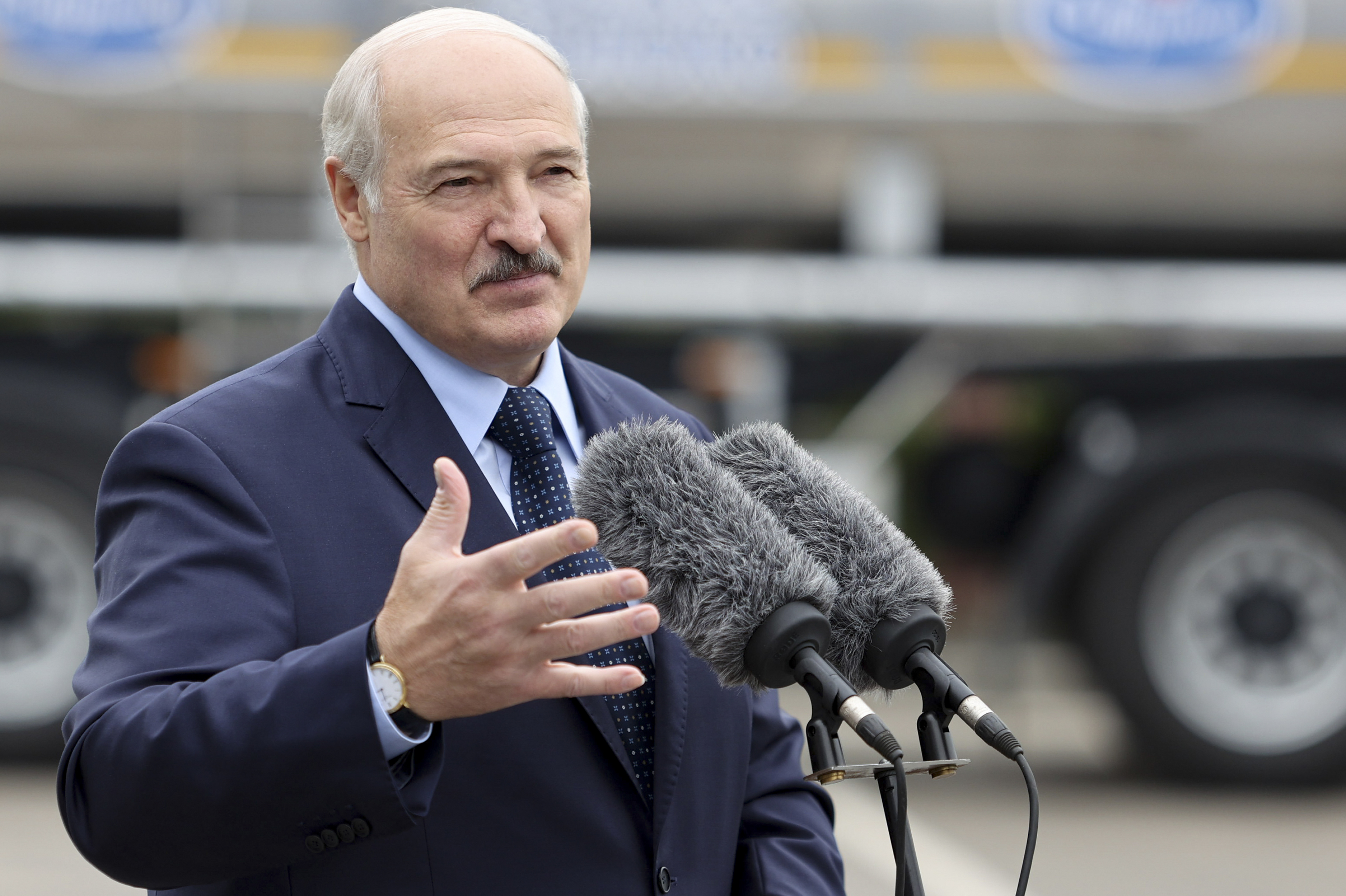
At a meeting in Luxembourg, EU foreign ministers also prepared a series of economic measures aimed at hitting Mr Lukashenko and his allies. EU leaders are expected to endorse them at a summit in Brussels on Thursday.
The EU has gradually ratcheted up sanctions since Mr Lukashenko – dubbed the last dictator in Europe – won a sixth term last August in elections it says were fraudulent. The measures have targeted people accused of electoral misconduct and responsibility for the police crackdown that followed.
But the 27-nation bloc has taken a harder approach since the Ryanair incident, and over the country's alleged use of migrants to pressure neighbouring Lithuania, which has provided a safe-haven to Belarusian opposition figures and is one of Mr Lukashenko's most vocal critics.
Among their actions Monday, the ministers imposed travel bans and asset freezes on 78 Belarus officials and froze the assets of 8 "entities," which are usually companies, banks, or associations. It means that a total of 166 people and 15 entities are now under EU restrictive measures.
"This decision was made in view of the escalation of serious human rights violations in Belarus and the violent repression of civil society, democratic opposition and journalists," a statement said.
READ MORE: 'Total disgrace': Mission to Afghanistan was a failure, former leader says
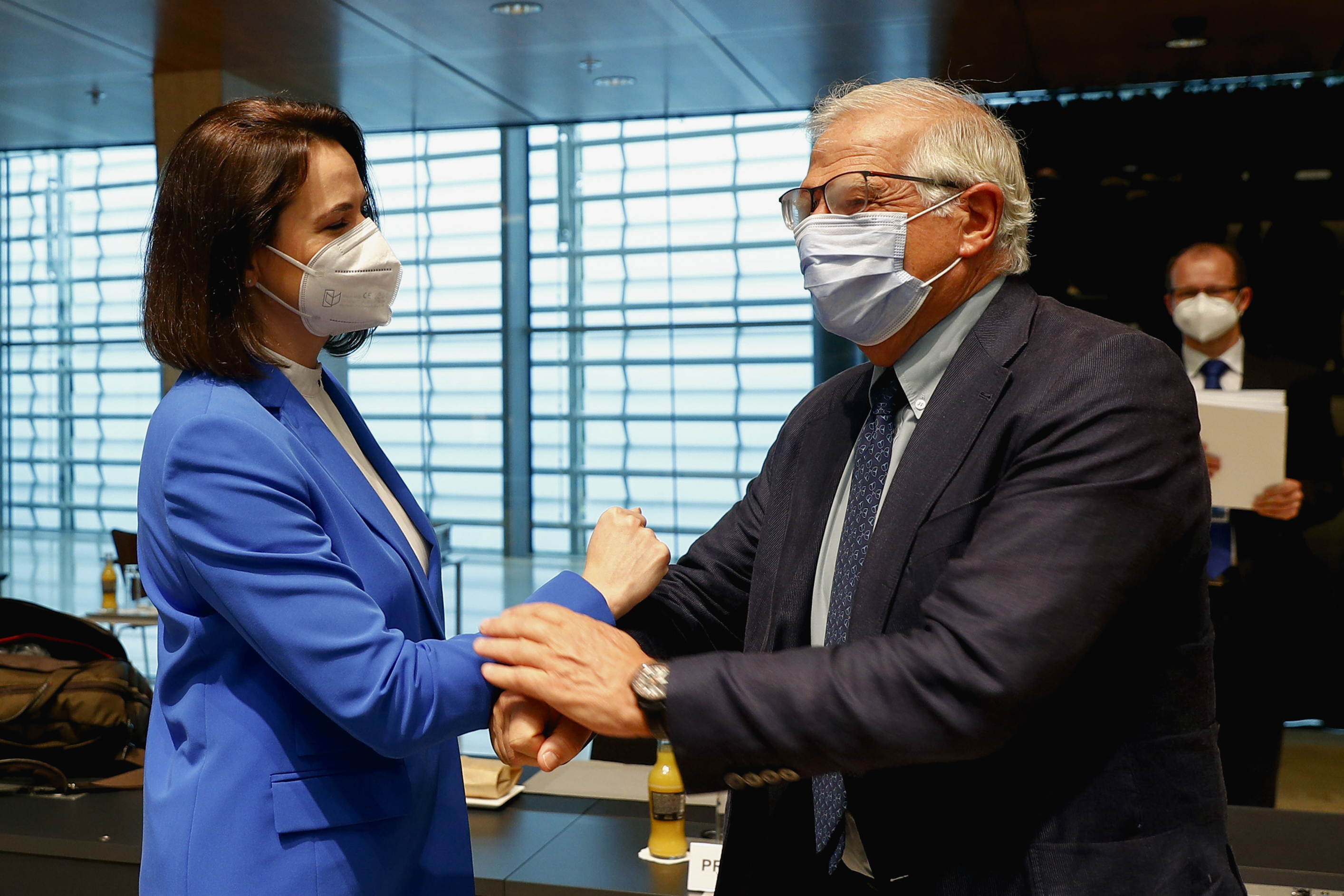
EU foreign policy chief Josep Borrell, who chaired the meeting, said the economic sanctions "are going to hurt … the economy of Belarus heavily."
The measures are likely to include action against the export of potash – a common fertiliser ingredient – tobacco industry exports and petroleum products.
"We will no longer just sanction individuals. We will now also impose sectoral sanctions — meaning that we will now get to work on the economic areas that are of particular significance for Belarus and for the regime's income," German Foreign Minister Heiko Maas said.
"We want to make very, very clear to Lukashenko that there is no going back," Maas said, adding that the 27 EU countries stood united on sanctions.
"We are really very, very determined not to budge, not just today — nothing about this will change in the coming weeks and months," he said.
Lithuanian Foreign Minister Gabrielius Landsbergis said EU countries had thought only a month ago that it still might be possible to reason with Mr Lukashenko but that "the mood is different now."
Mr Landsbergis accused Minsk of "weaponising" migration flows. He said about 500 people were sheltering in Lithuania, most from Iraq, and that Belarus border guards brought 30 refugees to the border in recent days. He said Lithuania had limited capacity for them and is building a tent camp.
To kick off Monday's meeting, the ministers held a working breakfast with Sviatlana Tsikhanouskaya, the main opposition candidate to challenge Mr Lukashenko in last year's election.
– With 9News Staff
Hong Kong newspaper raided by authorities may be forced to close
Hong Kong's embattled pro-democracy newspaper Apple Daily says its board of directors will meet on Friday to decide if the newspaper will cease operations
The board had asked authorities to unfreeze some assets so it could pay salaries and avoid labour violations, the newspaper reported on Monday.
Police last week arrested five top editors and executives of Apple Daily under the city's tough national security law on suspicion of foreign collusion, searched its offices and froze $2.3 million worth of assets of three companies linked to the newspaper.
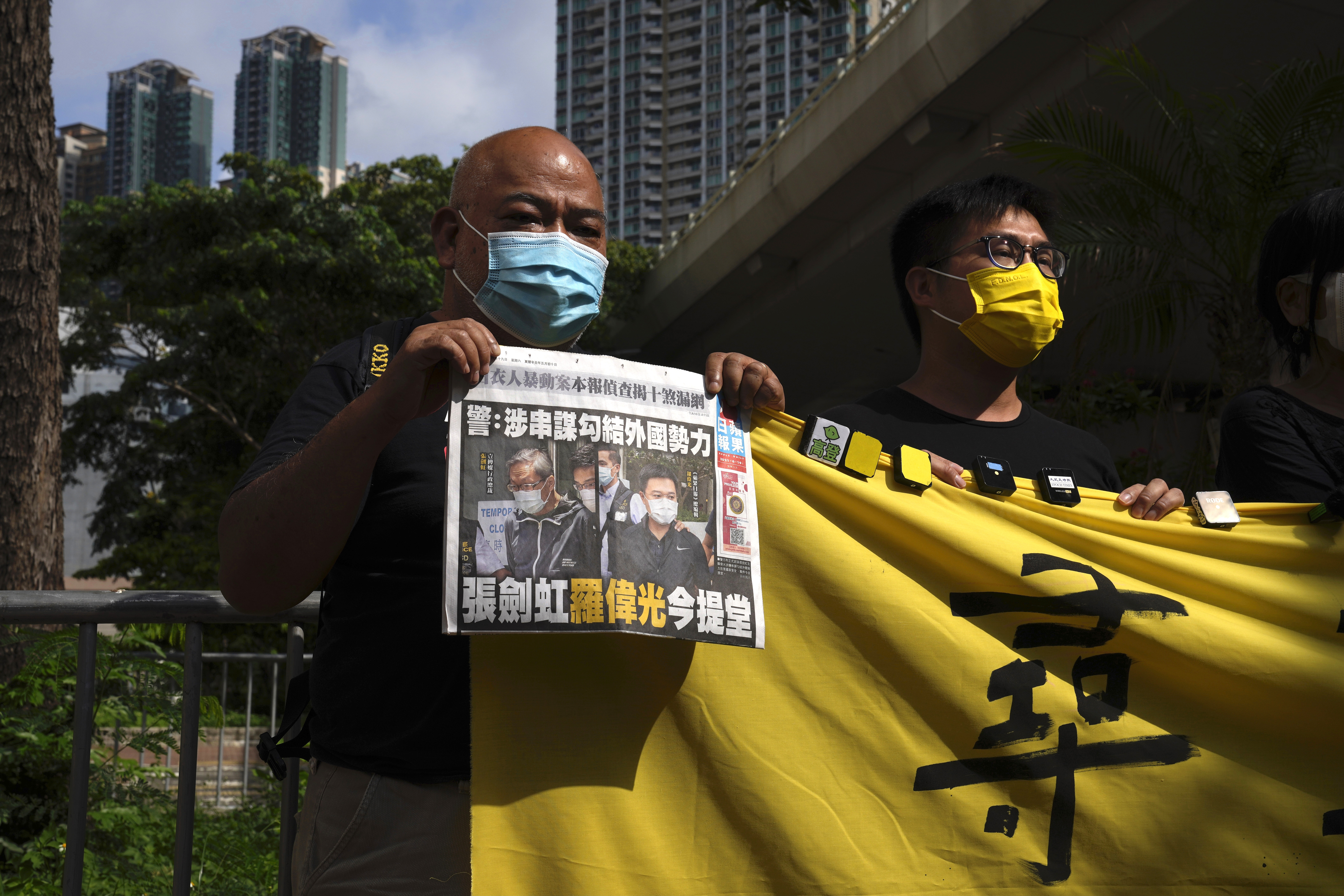
READ MORE: Editor and CEO denied bail in Apple Daily case in Hong Kong
The arrests and freezing of assets came as Hong Kong authorities cracked down on dissenting voices and Beijing tightened control over the territory in what critics said was an erosion of freedoms it promised the city for 50 years when the former British colony was handed over to China in 1997.
Apple Daily has been outspoken in defending Hong Kong's freedoms and in recent years has often criticised the Chinese and Hong Kong governments for limiting the city's democratic freedoms and constricting the rights of free speech and assembly not found on mainland China.
Apple Daily said in an article on its website on Monday that if its board decided on Friday to cease operations of the newspaper, its website could stop publishing as soon as early Saturday morning, and Saturday's print edition of the newspaper would be its last.
An internal department memo sent to some employees at Apple Daily also stated those who wished to resign immediately could do so.
READ MORE: Clogged ports in China could deal blow to end-of-year shopping
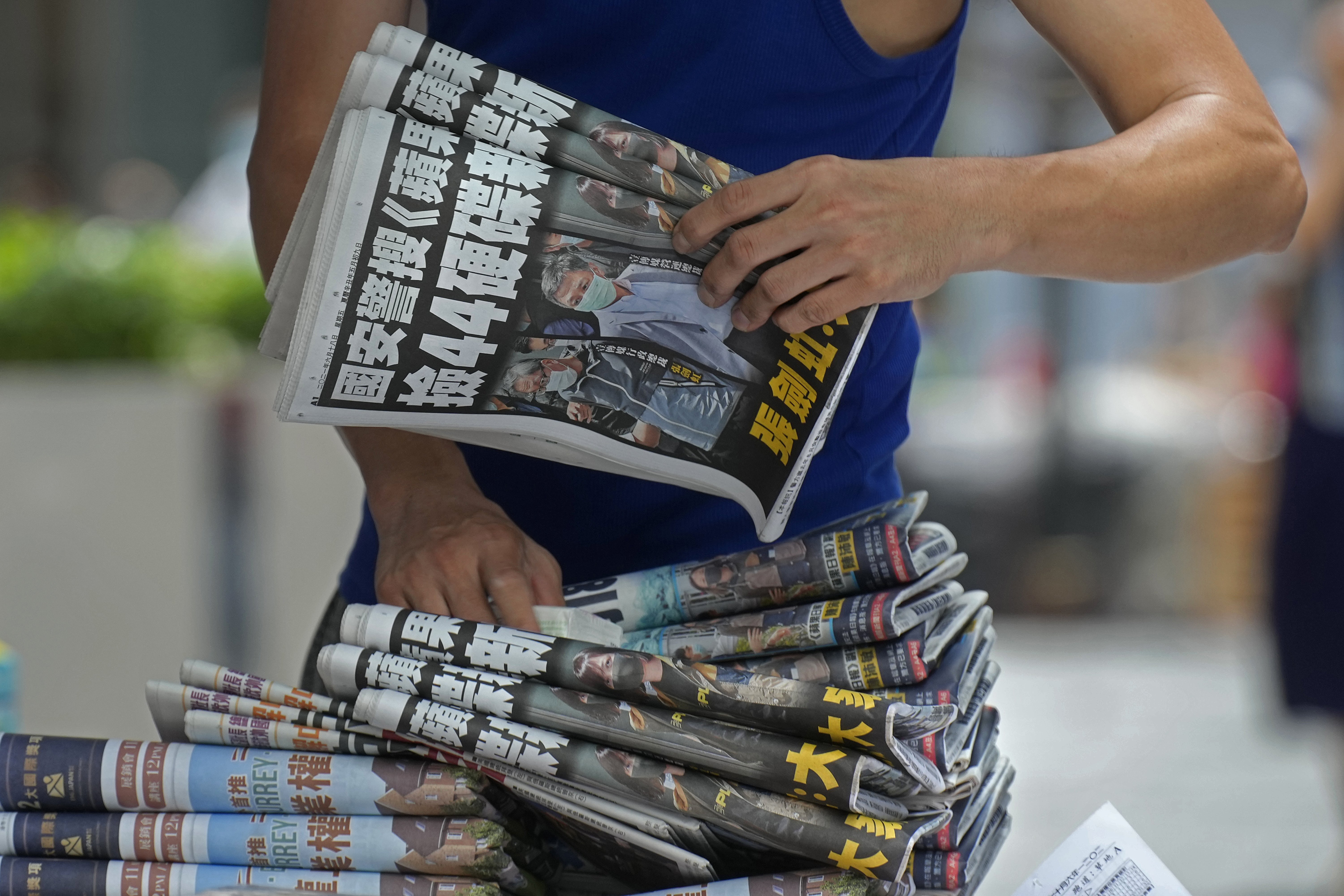
Apple Daily said in an article on Sunday it might challenge the decision to freeze its assets in court if the city's Security Bureau denied its request.
The Security Bureau said it would not comment on the details of the case because legal proceedings were ongoing. It said endangering national security was a "very serious crime."
"We handle such crimes according to the law, targeting at illegal acts, and invoke the power to freeze offence-related properties based on need and the law," the bureau said in an English-language statement.
"Secretary for Security will handle in accordance with the law any application related to the frozen property."
Last week, police identified more than 30 articles published by Apple Daily they said played a "crucial" role in a conspiracy with foreign countries to impose sanctions against China and Hong Kong for undermining Hong Kong's autonomy.
The newspaper's founder, media tycoon Jimmy Lai, was convicted earlier this year for his involvement in unauthorised assemblies and is currently in jail.
Two of the five people arrested last week have also been charged with collusion with foreign countries.
The police operation against Apple Daily has drawn criticism from the US and Britain, which say Hong Kong and Chinese authorities are targeting the city's promised freedoms.
Chinese and Hong Kong officials have insisted that the media must abide by the law, and that press freedom cannot be used as a "shield" for illegal activities.
Why the US-China rivalry is extending from Earth into space
When it comes to the intensifying rivalry between the United States and China, the sky is by no means the limit.
As the two countries jockey for economic, technological, geopolitical and even ideological superiority on Earth, space has become a natural extension — and crucial frontier — in their great power competition.
And due to the inherent dual-use nature of space technologies, what's at stake extends far beyond mere scientific prestige and global standing. In addition to national defence, so much of our life on Earth — from digital communications to navigation — depends on satellites in space.
READ MORE: Australia taking China to trade watchdog over wine tariffs
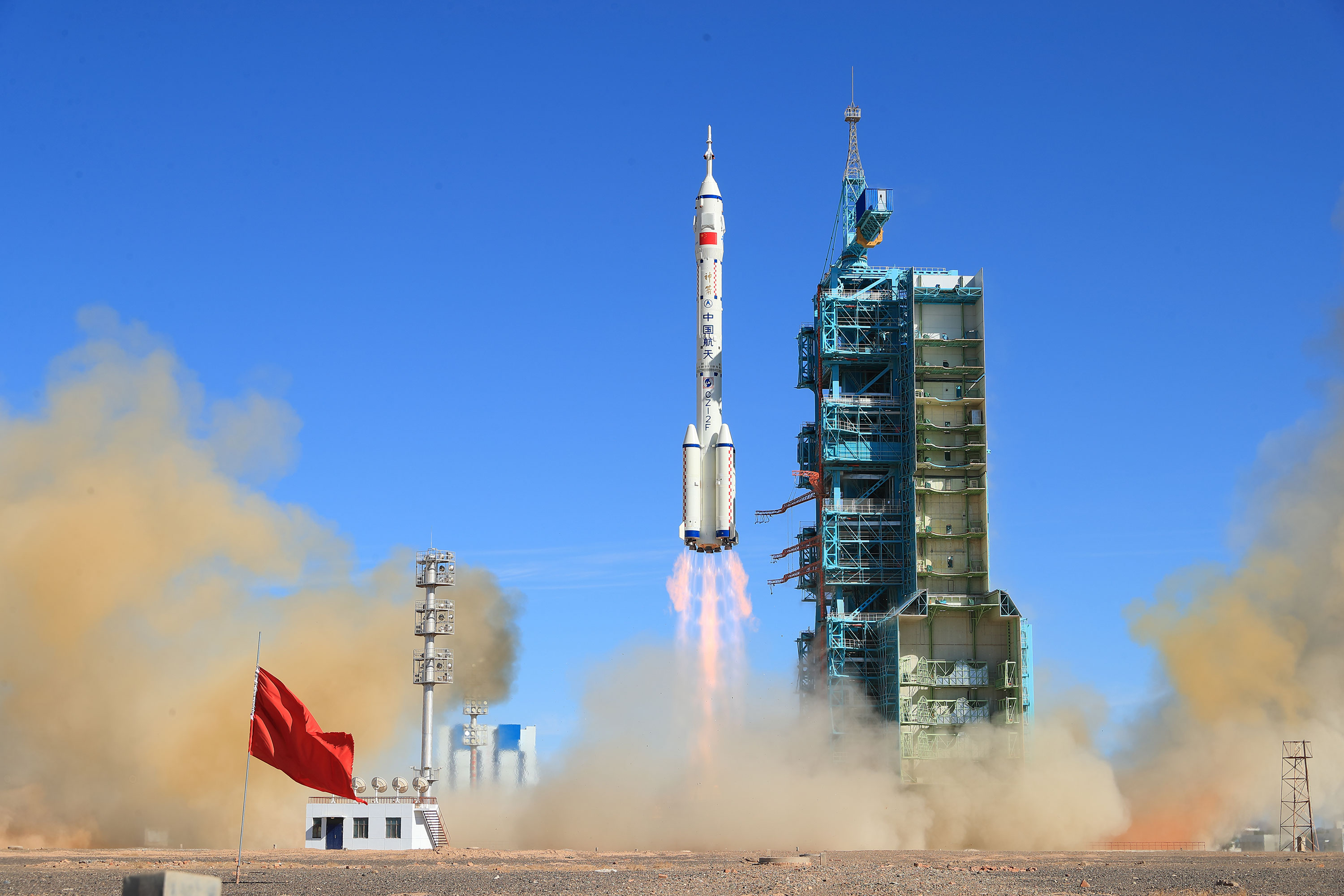
Following the demise of the Soviet Union's space program, the US has enjoyed a period of unparalleled leadership in space. But in recent years, US observers and politicians have warned that America's dominance could soon be challenged by China's fast-growing space capabilities.
That concern has only deepened with a series of important and high-profile Chinese achievements: In 2019, it became the first country to land on the far side of the moon; last year, it successfully put into orbit its final Beidou satellite, setting the stage to challenge the US Global Positioning System (GPS); and last month, it became the only country after the US to put a functioning rover on Mars.
That particular breakthrough prompted NASA's new administrator Bill Nelson to warn against American complacency in face of China's space ambitions.
READ MORE: New photos show Chinese rover's exploration of Mars
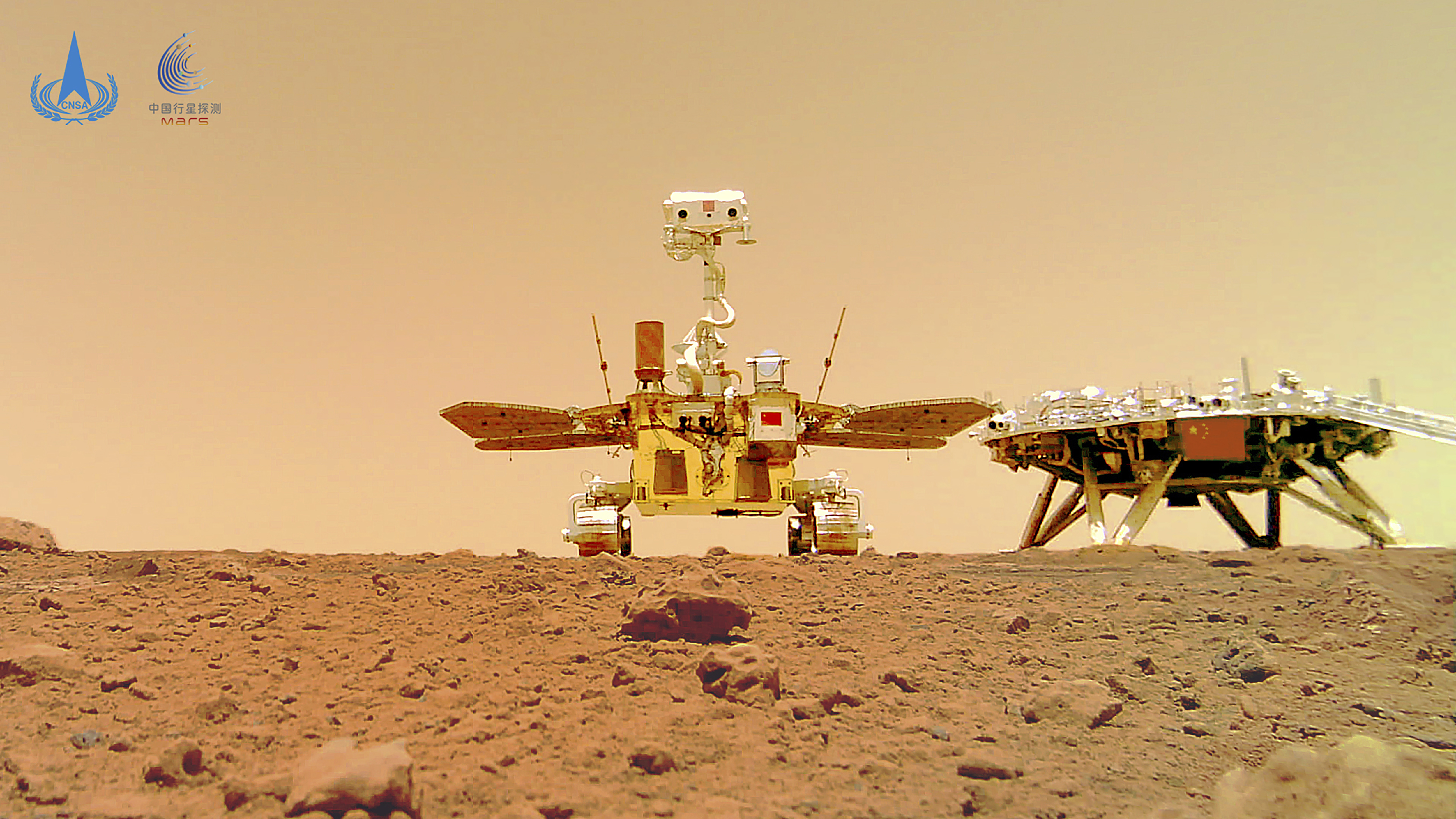
At a House hearing last month, he held up an image taken by the Chinese rover on Mars, called China "a very aggressive competitor," and lobbied Congress to fund NASA's plans to bring humans back to the moon.
Despite its advancements, China's space technology still lags behind the US. But China's space program is flush with political and monetary support from the ruling Communist Party, which views its success as a key measure of its intentional standing and domestic legitimacy.
Last week, US-China competition in space entered a new phase when three Chinese astronauts arrived on the country's still-under-construction space station for a three-month stay. The only other space station in orbit is the International Space Station (ISS), a US-led collaboration with Russia, Europe, Japan and Canada.
For the past 23 years, the ISS has been visited by more than 200 astronauts from 19 countries — except China. Since 2011, NASA has been effectively banned from cooperating with China, after Congress passed the Wolf Amendment due to espionage-related concerns.
That exclusion has at least in part spurred Beijing to build its own space station, the Tiangong, which is expected to be completed by the end of next year — two years before the ISS is scheduled to be decommissioned in 2024.
READ MORE: Clogged ports in China could deal blow to end-of-year shopping
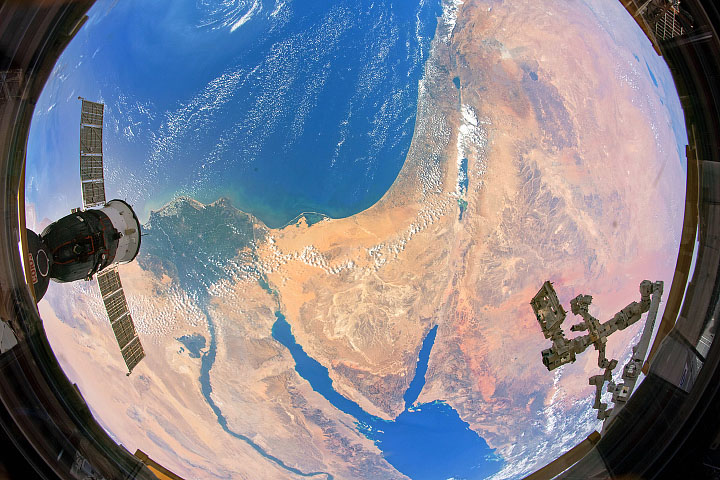
If the US and its international partners do not decide to extend the ISS's operational life, China's Tiangong space station may soon become the only crewed outpost in orbit — one that NASA astronauts are barred from joining by US law.
While the ISS was primarily a US-Russian venture born out of the ashes of the Cold War, China's Tiangong is being built amid talks of a new Cold War. And it is likely that in the years to come, alliances in space will increasingly mirror the geopolitical lines on Earth.
Already, Chinese space officials have made clear they wish to welcome foreign astronauts aboard its space station upon completion. China is also joining hands with Russia to build a joint research station on the moon's south pole by 2035 — a facility that will be open to international participation.
The US, meanwhile, is building its own international coalition to establish basic principles for safe and responsible lunar explorations. The Artemis Accords, released by NASA in May last year, have been signed by 12 countries, including the US and key allies such as Britain, Australia, Canada, Japan and South Korea.
Neither China nor Russia is a signatory.
Body found beside burnt-out vehicle in rural Victoria
Police are investigating after a body was found beside a burnt-out vehicle in rural south-west Victoria.
A resident found the body in Wickliffe, 200km west of Melbourne, about 3pm on Monday and called emergency services to Chatsworth-Wickcliffe Road, near Karmala Lane.
Police are yet to formally identify the body or establish a cause of death but said the body was found beside a burnt-out vehicle.
READ MORE: Victorian cafe faces David and Goliath name battle with French giant
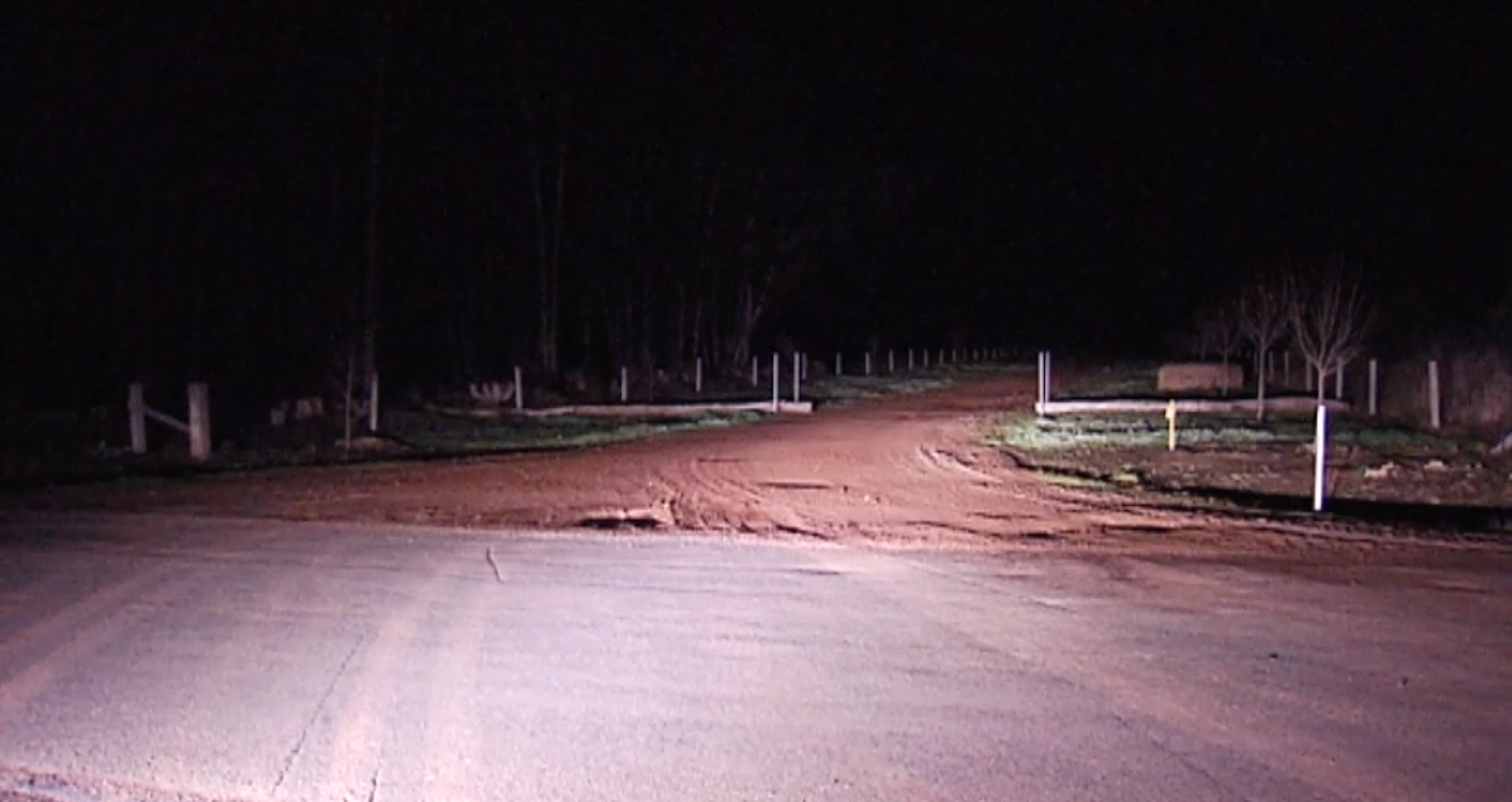
Emergency services on Chatsworth-Wickcliffe Road, near Karmala Lane.
Anyone with information was urged to call Crime Stoppers on 1800 333 000
'Significant' vintage Aussie photos go to auction
If you've ever sent a postcard in Australia – before Instagram demanded that you tell people immediately how relaxed and tanned you are- there's a strong chance it was made by the Rose Stereograph Company.
Founded in 1880, the company would only close down last year.
Now more than 110,000 images that were taken by the company's battalion of photographers over 140 years are up for auction.
READ MORE: 'Ghost ship' surprises New Zealand snapper
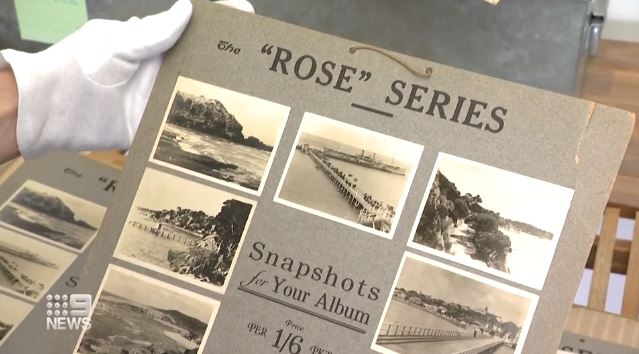
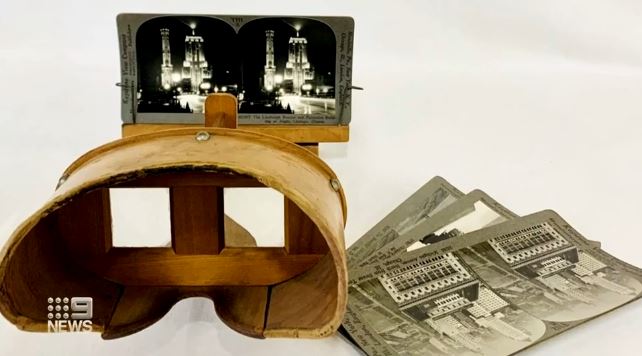
As per their name, the initial focus for the Rose Stereograph Company was to supply the dual pictures that would be placed into what was called a stereoscope, that would provide a simulated 3D effect.
It was high tech in 1880, when the photograph itself was still new.
But it wasn't long before the silver screen would start garnering paying customers at the expense of the stereoscope, and the company changed tack, moving into the postcard business.
The newly instituted industrial rights such as an 8-hour day and holidays, now allowed the average worker the chance to get away, and to brag of it via the new postal service. That needed pictures.
And for almost a century and a half since, the snappers of the Rose Stereograph Company have been shooting pics and in turn building an archive, that taps into the critical moments, motifs and horizons in Australia's colonial history.
"It's a collection that spans 140 years, 5 generations of families," says Amanda Benson, Head of Fina Arts and Antiquities with Lloyds Auctions.
"It captures some of the most historically significant events in our time. Their entire business was to create images of places, people, things, and events."
READ MORE: Centuries old piece of paper heralded a 'New World'
Of the over one-hundred thousand pieces, more than 7000 are glass negatives, a technology that still beats the modern digital world today.
"We don't have a technology still, that actually outpaces the sheer clarity of image, that was able to be captured by the glass plate negatives," says Amanda.
She gestures to one plate holding a crowded beach scene from Coogee in 1910,
"This could be blown up the size of the Opera House, and not lose any of its resolution. Every time you look closer, you walk further and further into the past."
READ MORE: Mind-bending picture of orangutan wins first prize at nature photography awards

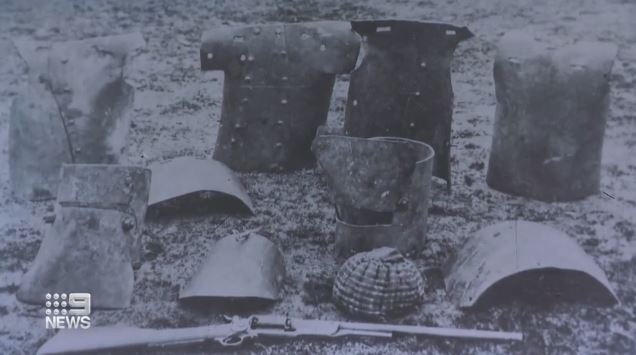
Two of the plates hold true iconic moments of Australiana. One is of the armour of the Kelly gang, laid out on a lawn as Dan and Ned Kelly faced the beak.
"Out the front of the courthouse, while they were being trialled in 1880 at Beechworth'" adds Amanda.
The other is Anzac Cove, on the morning of Sunday the 25th of April, as Australian troops came ashore for the ill-fated campaign.
"They had probably the biggest network of photographers in Australia," says Amanda. "Even in war zones."
READ MORE: Captain of Boeing 777 shoots incredible time-lapse from cockpit
The collection is so voluminous, that it is being auctioned over the course of 8 days.
A sad irony being that it would be COVID, plus Instagram, that would finally kill off the Rose Stereograph Company.
Amanda adds in closing, "this collection is without question, the most significant historical collection I've ever seen."
Hurricane Season 2021 Could Bring 5 Major & 20 Tropical Storms
STATEN ISLAND, N.Y. – Experts says this year’s hurricane season won’t be as bad as it was in 2020, but there’s a 60% chance the 2021 season, which started June 1, will be above normal.
According to the National Oceanic and Atmospheric Administration (NOAA), there’s a 30% chance of a near-normal season and a 10% chance of a below-normal season.
The NOAA is expecting three to five major hurricanes, classified as category 3, 4, or 5, with winds of 111 miles per hour or above. It says it predicts these storms with 70% c
The Atlantic hurricane season is also expected to bring 13 to 20 named storms – storms with winds of 39 miles per hour or higher. Of those, six to 10 could become hurricanes with winds of 74 miles per hour or above.
The average Atlantic hurricane season has 14 named storms, of which seven become hurricanes, and three hurricanes that are classified category 3, 4, or 5.
Atlantic tropical storms are named ahead of time, are alphabetical, and alternate between traditionally female and male names. Some of the names for the 2021 season are: Ana, Bill, Claudette, Danny, Elsa, Fred and Grace.

“Although NOAA scientists don’t expect this season to be as busy as last year, it only takes one storm to devastate a community,” said Ben Friedman, acting NOAA administrator.
“The forecasters at the National Hurricane Center are well-prepared with significant upgrades to our computer models, emerging observation techniques, and the expertise to deliver the life-saving forecasts that we all depend on during this, and every, hurricane season.”
The city Office of Emergency Management (OEM) revised its hurricane evacuation zones just as the Atlantic storm season begins.
On Staten Island, much of the East Shore and West Shore are covered by the first and second evacuation zones, which represent the most at-risk parts of the city, and much of the Island is covered in the less severe evacuation zones.
City officials may order evacuations in these zones depending on a hurricane’s forecast strength, track and storm surge, and the map is intended to help New Yorkers better prepare for that possibility, according to OEM.
The maps also feature evacuation centers around the city, like the Michael J. Petrides school complex, and Curtis High School
OEM recommends that all New York City residents make an emergency plan ahead of any storms and prepare for flooding and power outages. The city offers many preparation examples that families can build upon for their own homes.
“Now is the time for communities along the coastline as well as inland to get prepared for the dangers that hurricanes can bring, said Secretary of Commerce Gina Raimondo. “The experts at NOAA are poised to deliver life-saving early warnings and forecasts to communities, which will also help minimize the economic impacts of storms,” Raimodo said
The post Hurricane Season 2021 Could Bring 5 Major & 20 Tropical Storms appeared first on The St Kitts Nevis Observer.
Cuba Testing Its Own COVID-19 Vaccine On Children
The head of the Centre for State Control of Medicines, Equipment and Medical Devices (CECMED) in Cuba, says a clinical trial of the COVID-19 vaccination for children is currently underway and is progressing satisfactorily.
According to Dr. Meiby de la Caridad Rodríguez González, the first anti-COVID-19 research in children and adolescents complied with a rigorous approval process seven weeks after the dossier was submitted to the regulatory authority and on June 14, during the application of the first dose, they had the first sanitary inspection by the CECMED.
The Soberana-Pediatrics clinical trial, includes in its first and second phase, children and adolescents between three and 18 years of age, healthy, of Cuban nationality.
Fifty volunteers have been included in the first stage and 300 in the second.
The health authorities in Cuba said the study will be carried out sequentially, after the first week of immunization, blood tests will be performed to determine the safety of the product, to request the approval of CECMED with a view to continue with the group from three to 11 years of age and to continue towards phase II with a greater number of adolescents.
The first stage of the research will be carried out at the Juan Manuel Márquez Pediatric Hospital and later the trial will be extended to the health areas of the municipalities of Playa, Marianao and La Lisa, said Rodríguez GonzáleA.
CMC
The post Cuba Testing Its Own COVID-19 Vaccine On Children appeared first on The St Kitts Nevis Observer.