Some Auckland rest home residents won’t be fully vaccinated until at least the end of July while others in Nelson have been done for weeks, showing a substantial disparity in the sector’s vaccine rollout. The NZ Herald can reveal…
Category Archives: headline
Dawn raids apology 'very small start to the healing process' – Polynesian Panthers
An official apology for dawn raids that racially targeted Pasifika families and have been described as “state-sanctioned terrorism” is being welcomed by those impacted as a “very small start to the healing process”. But advocates…
Wellington sinkhole repair estimated to cost $5m
It’s estimated the cost to repair and replace a 100-year-old pipe in central Wellington will amount to $5m.In February a sinkhole opened up on Jervois Quay after the stormwater pipe collapsed, risking the safety of drivers and increasing…
Let's Get Wellington Moving Governance Reference Group didn't meet for nine months
The governance group advising Let’s Get Wellington Moving (LGWM) didn’t meet for a whole nine months during a time when the $6.4 billion transport plan was in chaos.LGWM is a joint partnership between Waka Kotahi, Wellington City…
Herald morning quiz: June 15
Test your brains with the Herald’s morning quiz. Be sure to check back on nzherald.co.nz at 3pm for the afternoon quiz. To challenge yourself with more quizzes, CLICK HERE.
Whangārei homicide: Killed man's family grieves as his accused murderer appears in court
The family of a man killed in Whangārei on Saturday are seeking comfort in “beautiful memories” as the man accused of causing his death appeared in court for the first time. Haze Peihopa, 23, was fatally wounded on Bank St…
How worried should China be about the West's G7 rebuke?
United States President Joe Biden's plan to unite Washington's closest allies and take on China just scored a big political win. But it's going to take a lot more than words to curb the advance of the world's second largest economy.
The US joined the United Kingdom, Germany, France, Italy and Canada this weekend to deliver the Group of Seven's strongest condemnation of China in recent decades.
The G7 confronted China on just about every sore spot, from allegations of human rights abuses and forced labour in Xinjiang to ongoing political disputes over Hong Kong, Taiwan and the South China Sea.
READ MORE: G7 leaders back Australia on facing down China trade threats
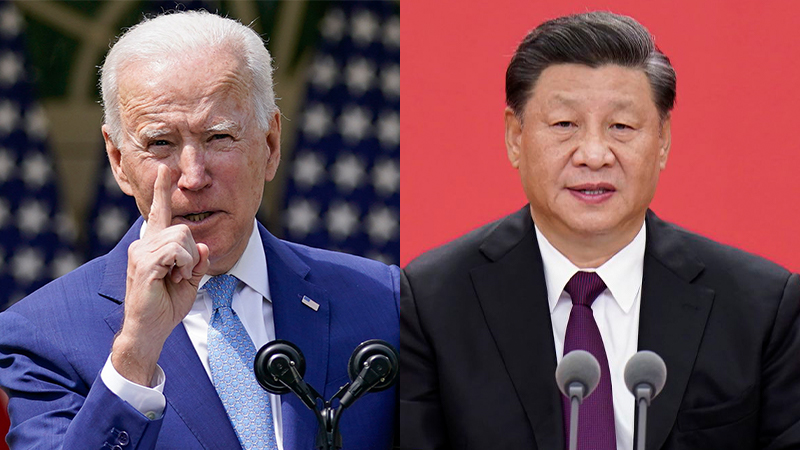
The world's wealthiest democracies also pushed for a renewed independent investigation into the origins of COVID-19 and promoted a green alternative to China's Belt and Road, Chinese President Xi Jinping's expansive plan to boost its trading influence.
The rhetoric, at least, is a step forward for a US president who has been trying to bring his diplomatic partners together to counter what Washington sees as its biggest threat to trade, tech and other issues of strategic importance.
Former US President Donald Trump talked tough on China and slapped the country and its prized companies with sanctions.
But Trump never really presented a united front with US allies, often burning bridges rather than building them.
The G7's announcement doesn't include many concrete steps forward.
For example, the group is forming a task force to explore what it called the "Build Back Better World" initiative — a private-sector led plan to "help narrow the $40+ trillion infrastructure need in the developing world" that's clearly set up as a challenge to Belt and Road. But it has yet to lay out how much the program would cost, which is expected to be funded by US government finance groups, the private sector and the G7 countries.
Similarly, the communique's calls for China to "respect human rights and fundamental freedoms" in Xinjiang and Hong Kong came with little detail on how to follow through with action, nor did it offer any practical means of safeguarding the stability of the Taiwan Strait and the South China Sea.
READ MORE: Chinese cartoon mocking G7 leaders goes viral online

China still fired back against the statement, accusing the G7 of deliberately slandering China" and "arbitrarily interfering in China's internal affairs."
The Chinese Embassy in London called it "a serious violation of the basic norms of international relations."
There are a couple of reasons Beijing should be watching its back.
Some Trump-era sanctions were effective at curtailing China's technological rise — look, for example, at its campaign against Huawei, which watched as its smartphone and 5G businesses were battered by restricting its access to American tech, along with US pressures on Europe and elsewhere to bar the company from extending its reach.
Under Biden, the United States recently expanded a ban on American investment in dozens of Chinese firms.
And US lawmakers are advancing a bill that would pour hundreds of billions of dollars into American technology, science and research in yet another challenge to China.
"Irreconcilable differences regarding values and growing frictions with China's mercantilist and authoritarian model will continue to drive polarisation and competition," said Alex Capri, a research fellow at Hinrich Foundation and a visiting senior fellow at the National University of Singapore.
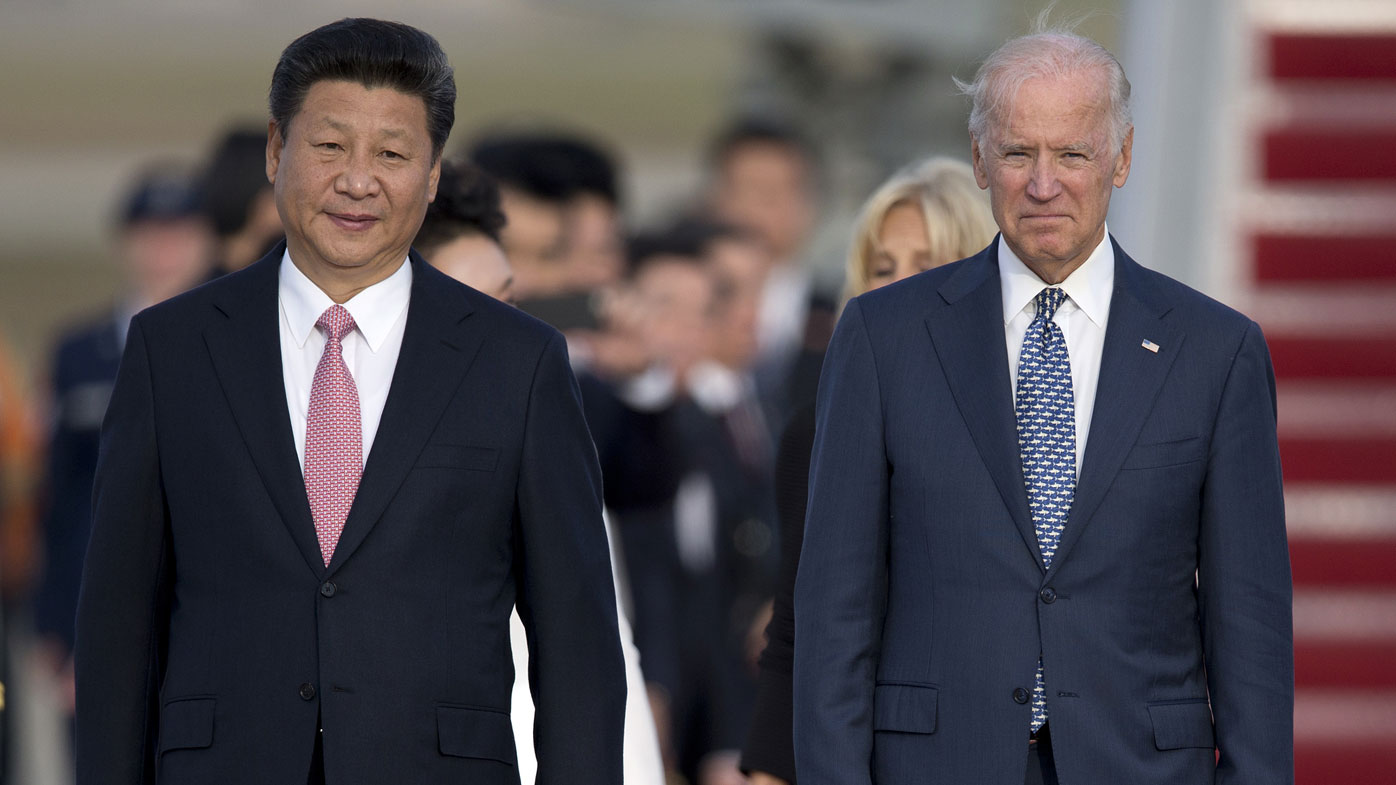
He added that "values-driven" frameworks from the West around infrastructure development, trade and supply chain networks were "clearly emerging."
"Human rights standards around privacy and freedom of speech, fair labour standards and a clean environment will serve to further alienate Beijing," Mr Capri said.
Such tensions have already played out on a global stage, with many Western companies facing pressure to limit business in China because of concerns about forced labour.
In turn, some firms have faced boycotts within China for denouncing the government's handling of Xinjiang.
And just before the G7 summit kicked off, China passed a law to counter foreign sanctions, a symbolic warning that any countermeasures taken by the West would be met with strong retaliation.
Even so, it may be tough for the G7 nations to contain China. This weekend, democratic leaders aired serious differences over how best to approach China, as the United States, Britain and Canada urged stronger action against China's authoritarianism than their allies did.
European countries' reluctance to go too hard on China may stem in part from a strong economic reliance: From 2010 to 2019, Germany received €22.7 billion ($35.7 billion) in Chinese foreign direct investment, while Italy received €15.9 billion ($25 billion) and France received €14.4 billion ($22.6 billion), according to the Mecrator Institute of China Studies.
Even the UK — where relationships with China have been deeply strained over the last couple of years — received €50.3 billion ($79 billion) in such investment.
And many of those countries, like Germany, rely on partnerships with China to drive other industries, such as autos, and to provide huge markets for their exports.
"Ultimately, the European Union's desire for strategic autonomy and Biden's hunt for allies to primarily counter China will create natural barriers to cooperation," analysts at Eurasia Group wrote in a note last week ahead of Biden's trip.
You can find out more details about how to book your vaccine through the Federal Government health site here.
Nectar Gan Nectar Gan is a digital producer for CNN International based in Hong Kong.
World View: Biden, Putin &NATO, Novavax 90%, More
June 10, 2021

AP Morning Wire
The Associated Press
|
|
The Rundown

BRUSSELS (AP) — President Joe Biden makes his entrance at a NATO summit aiming to consult European allies on efforts to counter provocative actions by China and Russia while highlighting the U.S. commitment to the 30-country alliance that was…Read More
 *****@
 *****@
Vaccine maker Novavax said Monday its shot was highly effective against COVID-19 and also protected against variants in a large, late-stage study in the U.S. and Mexico. The vaccine was about 90% effective overall and preliminary data showed…Read More
 *****@
 *****@
 *****@
JERUSALEM (AP) — For the first time in 12 years, Israelis on Monday woke up to a new government and a new prime minister after Naftali Bennett secured the backing of parliament and ousted longtime leader Benjamin Netanyahu. …Read More
 *****@
 *****@
 *****@
BRUSSELS (AP) — President Joe Biden frequently talks about what he sees as central in executing effective foreign policy: building personal relationships. But unlike his four most recent White House predecessors, who made an effort to build …Read More
 *****@
 *****@
 *****@
LONDON (AP) — British Prime Minister Boris Johnson is expected to disappoint many people across England later Monday by saying that restrictions on social contact will remain for a few more weeks because of rising infections due to the delta …Read More
|
|
OTHER TOP STORIES
TOKYO (AP) — Two Americans suspected of helping former Nissan chairman Carlos Ghosn flee Japan while he was out on bail go on trial Monday in Tokyo. Michael Taylor, a forme…Read More
KYIV, Ukraine (AP) — Central and Eastern European nations are anxious about the coming summit meeting between U.S. President Joe Biden and Russian President Vladimir Putin, …Read More
TARRYTOWN, N.Y. (AP) — The flavor of the year at the Westminster Kennel Club dog show: Wasabi. A Pekingese named Wasabi won best in show Sunday night, notching a fifth-ever…Read More
CHICAGO (AP) — A Chicago bus driver looking for a way to relieve stress during the coronavirus pandemic jumped into Lake Michigan for a 365th straight day on Saturday. Dan O…Read More
The post World View: Biden, Putin &NATO, Novavax 90%, More appeared first on The St Kitts Nevis Observer.
With World Dying for Vaccines, US Has Surplus Supply Going to Waste
The U.S. is confronted with an ever-growing surplus of coronavirus vaccine, looming expiration dates and stubbornly lagging demand at a time when the developing world is clamoring for doses to stem a rise in infections.
Cash prizes, free beer and marijuana, raffled-off hunting rifles and countless other giveaways around the country have failed to significantly move the needle on vaccine hesitancy, raising the specter of new outbreaks.
Millions of Johnson & Johnson doses nationwide were set to expire this month before the government extended their dates by six weeks, but some leaders acknowledge it will be difficult to use them up even by then.
“We really cannot let doses expire. That would be a real outrage, given the need to get vaccines to some under-vaccinated communities in the U.S. and the glaring gap in vaccinations and the inequity of vaccinations that we have globally,” said Dr. Kirsten Bibbins-Domingo, chair of epidemiology and biostatistics at the University of California, San Francisco.
President Joe Biden wants to have 70% of the adult U.S. population at least partially vaccinated by July 4. But the U.S. could well fail to meet that target. As of Friday, 64% of Americans 18 and older had had at least one dose, by the CDC’s count.
Some states, especially in the Northeast, have already reached that 70% goal for adults, while places like Mississippi and Alabama are nowhere close. Mississippi, in fact, has been transferring large quantities of vaccines to other states and the federal government.
Amid the glut, the White House has announced plans to share 80 million doses globally by the end of June and also buy 500 million more doses of the Pfizer vaccine and donate them to 92 lower-income countries and the African Union over the next year.
Among the countries that will receive vaccines from America, is Jamaica where just some eight percent of the population has been vaccinated.
Prime Minister Andrew Holness, says he welcomes the United States’ commitment to donate vaccines to Latin America and the Caribbean.
“We welcome the announcement of the United States President [Joseph] Biden and his administration to make available some of their vaccines for the region,” Holness said.
“Certainly, it will not be enough even in the first instance to satisfy our total demand to bring us to herd immunity, but we welcome it and appreciate it as a continuing example for rich countries who have surpluses to make them available right across the world, right across the globe, not necessarily entirely by grant, but certainly available for purchase,” Mr. Holness said.
The Prime Minister also said Jamaica has put aside the fiscal resources to purchase the vaccines that are needed.
The post With World Dying for Vaccines, US Has Surplus Supply Going to Waste appeared first on The St Kitts Nevis Observer.
Caribbean Assoc. of Banks Donates to SV&G Volcano Relief
The Caribbean Association of Banks (CAB) has joined the ranks of organisations that have come to the aid of the Government and people of St Vincent and the Grenadines in the aftermath of explosive eruptions at the La Soufriere Volcano.
The donation of $60,000 Eastern Caribbean dollars to the Government was made earlier this week. On hand to receive it was Acting Prime Minister Montgomery Daniel and Minister of Finance Camillo Gonsalves.
Managing Director of Bank of St Vincent and the Grenadines, Derry Williams, handed over the cheque while CEO of CAB, Wendy Delmar, Cooperate Secretary of BOSVG, Nandi Williams, Director of NEMO Michelle Forbes and other Caribbean members of CAB witnessed the handing over which took place virtually and in person.
CEO of CAB, Wendy Delmar, stated that she was pleased and encouraged by the outpouring of support given by member states to St Vincent and the Grenadines in the wake of the La Soufriere eruption. The monetary donation is part of CAB’s care initiative.
Minister of Finance Camillo Gonsalves stated that the region has been impacted significantly by natural disasters recently with immense cost to individual nations, noting that the La Soufriere eruptions have damaged in excess of 50 per cent of the GDP of SVG.
The finance minister said that it is entities such as the CAB which show the solidarity and strength of regional integration.
The post Caribbean Assoc. of Banks Donates to SV&G Volcano Relief appeared first on The St Kitts Nevis Observer.