Category Archives: headline

Court approves $1.7b settlement for 'shameful' Robodebt scheme

The controversial Robodebt scheme has been blasted as "shameful" and a "failure" as the Federal Court approved a multi-million-dollar restitution payout for the victims.

The scheme saw 443,000 Australians wrongly pursued by Centrelink for $1.7 billion in welfare debts they didn't owe, after the Federal Government in 2016 switched to an automated income averaging system that produced false information.

Hundreds of thousands of Australians paid the debts, often at great personal expense, before it was discovered in court that the scheme was unlawful and in many cases incorrect.
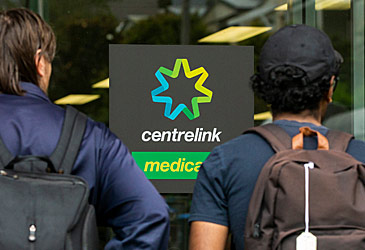
Young people outside Centrelink office (Getty)

READ MORE: Queensland man took his own life after learning of Centrelink debt, mum says

Many of the victims joined a massive class action led by Gordon Legal, which was settled in November last year.

Now that the settlement has been approved, Centrelink will pay $112 million in restitution to about 380,000 members of the class action, including legal costs.

Since the beginning of the class action, the government has also refunded $751 million in repayments of invalid debts, dropped claims for $744 million in debts partially paid back, and dropped claims for $268 million in debts where no repayments had been made, totalling more than $1.7 billion.

READ MORE: 'Huge anti-climax': Robodebt victims divided on class action settlement

Federal Court Justice Bernard Murphy said in his ruling Robodebt was a "shameful chapter" in Australia's history, as well as a "failure" in public administration.

Labor has continued to call for a royal commission to determine who was responsible for the scheme and whether it was known it could be unlawful.

However, Justice Murphy said there was little evidence to prove that claim and that he regarded Robodebt as a bungle rather than a conspiracy.

The man says his partner earns a lot less than him.

Gordon Legal partner Andrew Grech said the firm and its clients were "delighted" the settlement had been approved.

"We hope that this outcome brings peace of mind and some certainty to all class action members, and acts as a strong deterrent against similar callous welfare practices for both present and future governments," he said.

Gordon Legal noted in its statement that in its settlement the Federal Government had not admitted it was legally liable to class action members.

Treasurer Josh Frydenberg today dismissed calls for a royal commission.

"As the Prime Minister has said, on this matter … we apologise for the hurt and the harm that has been caused by the administration of that program."

Mr Frydenberg claimed the Robodebt scheme was in fact part of Labor's "income averaging".

He also commented on the judge's comments today that the debt recovery scheme was linked to suicides.

"When it comes to recovering debts, it's a very difficult – it's a very difficult situation … Suicides, when they occur, are absolute tragedies."

Readers seeking support can contact Lifeline on 13 11 14 or beyond blue on 1300 22 4636.

You can find out more details about how to book your vaccine through the Federal Government health site here.
Brazil: Copa America Kicks-Off Sunday After High Court Okay

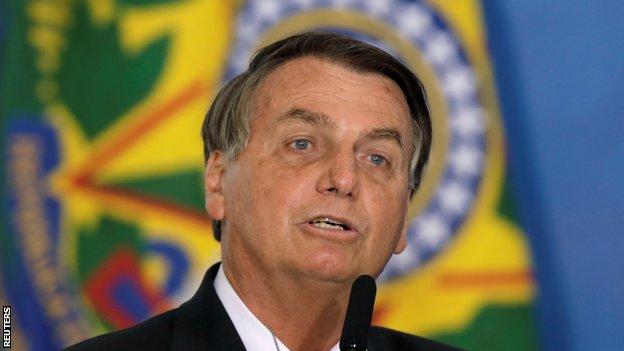
Brazilian president Jair Bolsonaro
President Bolsonaro said the decision to host the tournament was not up for discussion
Host: Brazil Dates: 13 June to 10 July Coverage: Live on BBC iPlayer and BBC Sport website and app.

BBC-  The Copa America, which is set to start on Sunday, can go ahead in Brazil, the country’s Supreme Court has decided.

Judges held an emergency session on Thursday to consider requests to halt the competition because of the coronavirus pandemic.

It was argued that hosting the tournament would endanger the lives of thousands of people.

The judges said that the Brazilian constitution did not give the court the power to block it.

But they said that state governors and city mayors should do more to ensure “appropriate health protocols” are respected.

They also expressed their dismay at President Jair Bolsonaro’s last-minute decision to stage the tournament, which will be held with no fans in stadiums.

Teams face mandatory testing every 48 hours. Their movements will be restricted and they will travel to host cities aboard chartered flights.

The tournament, postponed from 2020 because of the coronavirus pandemic, was originally to have been staged in Colombia and Argentina.

But Colombia was removed as co-host on 20 May because of domestic civil unrest, and Argentina was then stripped of its host status on 30 May, with organisers citing coronavirus concerns and the “present circumstances”.

Earlier this week, Brazil’s players criticised the decision to hold the tournament in their country.

Brazil has recorded more than 475,000 deaths attributed to coronavirus, the second highest number in the world after the US.

The post Brazil: Copa America Kicks-Off Sunday After High Court Okay appeared first on The St Kitts Nevis Observer.

COVID UPDATE: UK to Give 100m Vaccine Doses to Poorer Countries, 1 Billion from G7 Nations, Chile Lockdown, World Stats

At least 1bn doses due from G7 but campaigners say package does not address structural problems

Guardian (UK)

The UK will donate 100m surplus coronavirus vaccine doses within the next year to low-income countries as part of at least 1bn doses due from the G7.

The US has promised to buy 500m Pfizer vaccines at a cost of $3bn for distribution to 100 poorer countries, with 200m to be distributed this year, in addition to releasing 80m of its surplus by the end of June.

But a group of campaigners including the former UK prime minister Gordon Brown said the G7 package did not address the structural problems facing low-income countries in securing a regular supply of vaccines, adding that these countries needed 11bn vaccines, at a cost of $50bn.

The World Health Organization said infections had been rising in the past three weeks across Africa. “Forty-seven of Africa’s 54 countries – nearly 90% – are set to miss the September target of vaccinating 10% of their people unless Africa receives 225m more doses,” it said. “At 32m doses, Africa accounts for under 1% of the over 2.1bn doses administered globally. Just 2% of the continent’s nearly 1.3 billion people have received one dose and only 9.4 million Africans are fully vaccinated.”

Boris Johnson first promised in February that the UK would give a majority of its surplus vaccines to poor countries, and Thursday’s announcement provided some of the details.

The UK will donate 5m doses by the end of September, beginning in the coming weeks. A further 95m doses will be supplied within the next 12 months, including 25m by the end of 2021. Eighty per cent of the UK’s 100m doses will go to Covax, the UN-led international clearing house for vaccines for poorer countries, and the remainder will be shared bilaterally with countries that the UK selects.

The UK believes it can afford to give up 5m doses in the coming weeks without delaying completion of its own vaccine programme. It has calculated that the 100m donation still leaves a buffer in case of new strains or supply bottlenecks. It points out it was the fourth-largest donor to Covax last year, and 96% of the doses it gave were Oxford/AstraZeneca, of which it helped fund the development.

Johnson said: “As a result of the success of the UK’s vaccine programme we are now in a position to share some of our surplus doses with those who need them. In doing so we will take a massive step towards beating this pandemic for good.”

UK officials said the cost of transferring the vaccines would be treated as overseas development assistance but would not come from the existing ODA budget, currently lowered to 0.5% of the UK national income. This means the as yet unsettled additional cost will represent additional UK aid spending.

Brown, speaking alongside Nita Deerpalsing from the UN Economic Commission for Africa, said the G7 should “guarantee that 11bn vaccines, enough vaccines to cover the whole world, will be available in months, and that the G7 will ensure that protection is delivered to all by paying their fair share of the $50bn cost of the vaccines, the testing, the protective equipment that the world urgently needs.”

Kirsty McNeill, Save the Children’s policy director, described the British contribution as “a good start” but added: “It’s really on the financing that the summit will be judged and we need a 24-hour drive from the PM to negotiate a global costed and financed roadmap to vaccinate the world and scale up supply.”

On Thursday, the eve of the G7 summit, Joe Biden confirmed his plan to buy 500m doses and said the US will be “the vaccine arsenal of the world”. The US president said in Cornwall: “This is about our responsibility, our humanitarian obligation, to save as many lives as we can. When we see people hurting and suffering anywhere around the world, we seek to help any way we can.”

The French president, Emmanuel Macron, said pharmaceutical firms needed to donate 10% of their vaccines, and set a target of “60% of Africans vaccinated by the end of the first quarter 2022”.

Western leaders have been wary of sending surplus vaccines abroad, insisting they must protect their own populations first, but the balance of the argument has gradually shifted as stockpiles have mounted.

The UK has joined the EU in resisting a call led by South Africa and now backed by France and the US for a compulsory waiver on vaccine patents. It fears such a waiver would deter pharmaceutical firms from investing in research and development.

The UK is instead asking the G7 to encourage pharmaceutical companies to adopt the Oxford/AstraZeneca model of providing vaccines at cost for the duration of the pandemic. Pfizer, Moderna and Johnson & Johnson have already pledged to share 1.3bn doses on a non-profit basis with developing countries. On this model, pharmaceutical firms only start to rack up profits once the initial pandemic has been controlled.

==================================================

Covid-19 pandemic: Chile capital locks down despite mass vaccination

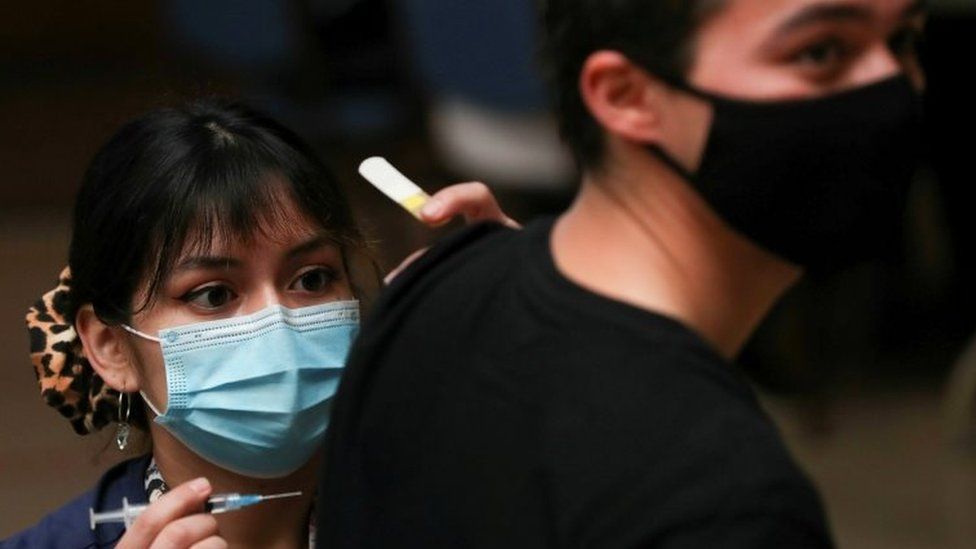
A healthcare worker prepares to vaccinate a man in Santiago, Chile. File photoimage copyrightReuters
Critics accuse the Chilean authorities of getting caught up in triumphalism over the vaccine rollout

Chile has announced a lockdown in the capital Santiago amid rising Covid cases, despite nearly 60% of the country being fully vaccinated.

More than eight million residents living in and around the capital now must stay at home from Saturday.

On Thursday, Chile reported 7,716 new daily cases, with the vast majority of infections being among those who had not been fully vaccinated.

Intensive care beds are nearing full capacity, health officials warn.

Jose Luis Espinoza, the president of Chile’s National Federation of Nursing Association, says his members are “on the verge of collapse”, Reuters reports.

About 58% of the country’s 17.5 million people have been fully vaccinated, and as many as 75% have received at least one vaccine dose.

But critics have accused the government of getting caught up in triumphalism over the vaccine rollout and of having loosened coronavirus restrictions too fast.

Chile’s borders had been closed from March to November 2020. But after a strict lockdown had driven infections down, the decision was taken to reopen them.

Chileans were also given special holiday permits to travel more freely around the country during the southern hemisphere summer holidays.

Restaurants, shops, and holiday resorts were opened up to kickstart the faltering economy.

Chile has had nearly 1.5 million infections since the pandemic began, with more than 30,000 Covid-related deaths, according to America’s Johns Hopkins university.

==================================================

WORLD STATS

Coronavirus Cases:

175,646,938

Deaths:

3,789,644

Recovered:

159,195,832
Highlighted in green
= all cases have recovered from the infection
Highlighted in grey
= all cases have had an outcome (there are no active cases)

[back to top ↑]

Latest News

June 11 (GMT)

Updates

  • 12,505 new cases and 396 new deaths in Russia [source]


The post COVID UPDATE: UK to Give 100m Vaccine Doses to Poorer Countries, 1 Billion from G7 Nations, Chile Lockdown, World Stats appeared first on The St Kitts Nevis Observer.

Australia commits 20 million vaccine doses to struggling nations

Australia will commit at least 20 million coronavirus vaccine doses to struggling countries around the world.

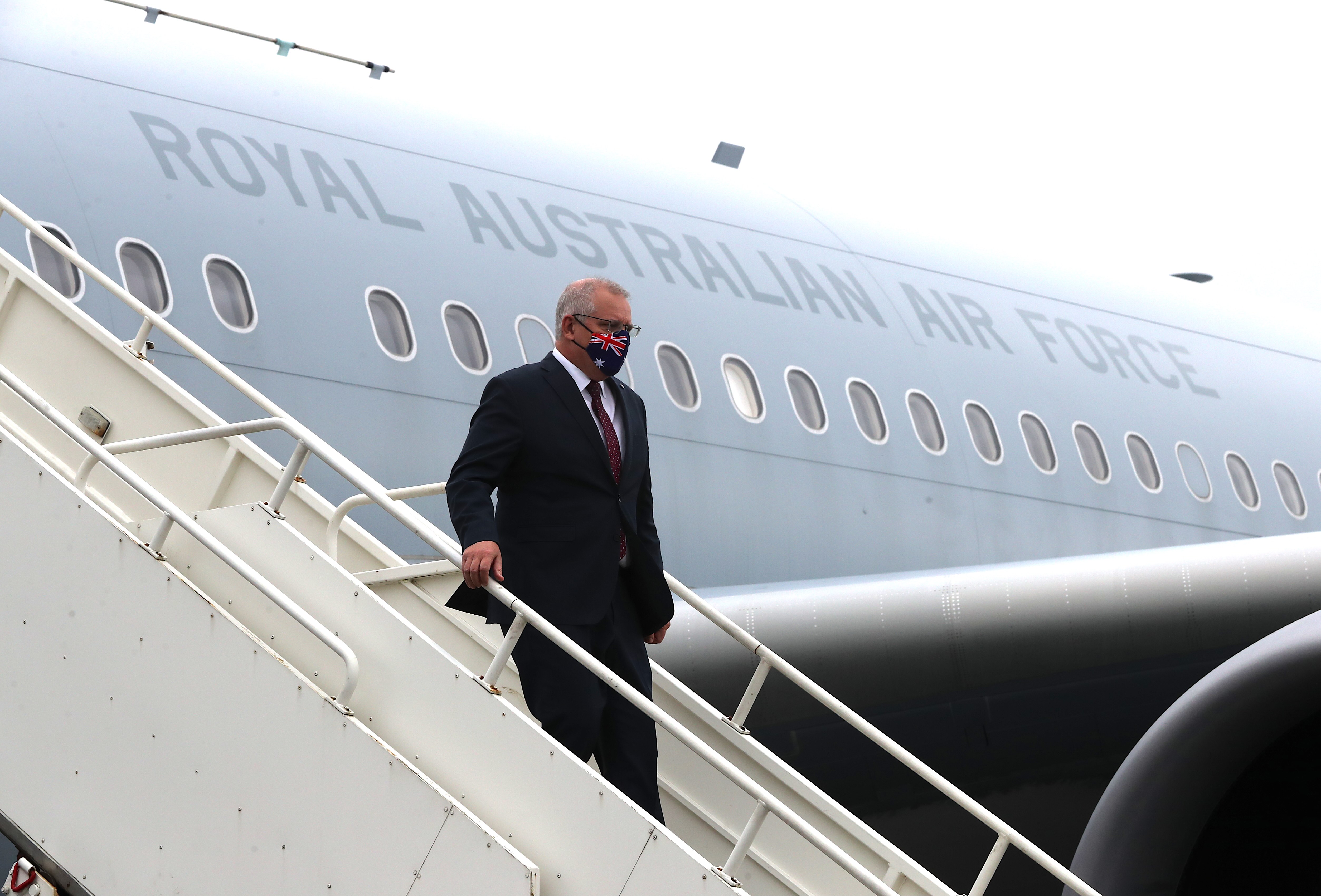
Prime Minister Scott Morrison announced the pledge in Cornwall, UK on Friday night ahead of the G7 meeting where world leaders are set to agree to supplying at least 1 billion shots for developing nations.

"I am pleased to be able to join my counterparts in the G7 and beyond to commit more vaccines for people in developing countries in our region," Mr Morrison said.

READ MORE: Hopes new travel bubble will revive international student industry

"COVID does not respect borders and the pandemic is not a problem confined to any one nation. That's why we will commit to distributing at least an additional 20 million vaccine doses across our region.

"The more people we can safely vaccinate around the world, the more we stop the spread and devastation of this disease."

The 20 million doses will be a mix of AstraZeneca, Pfizer and Moderna and will be provided by mid-2022.

The Australian Government has entered into five separate agreements to secure more than 195 million doses of COVID-19 vaccines.

Of the more than 1 billion being pledged by the group of world leaders, half of the doses are coming from the US and 100 million from the UK.

READ MORE: Biden lays out US vaccination donations, urges world leaders to join

G7

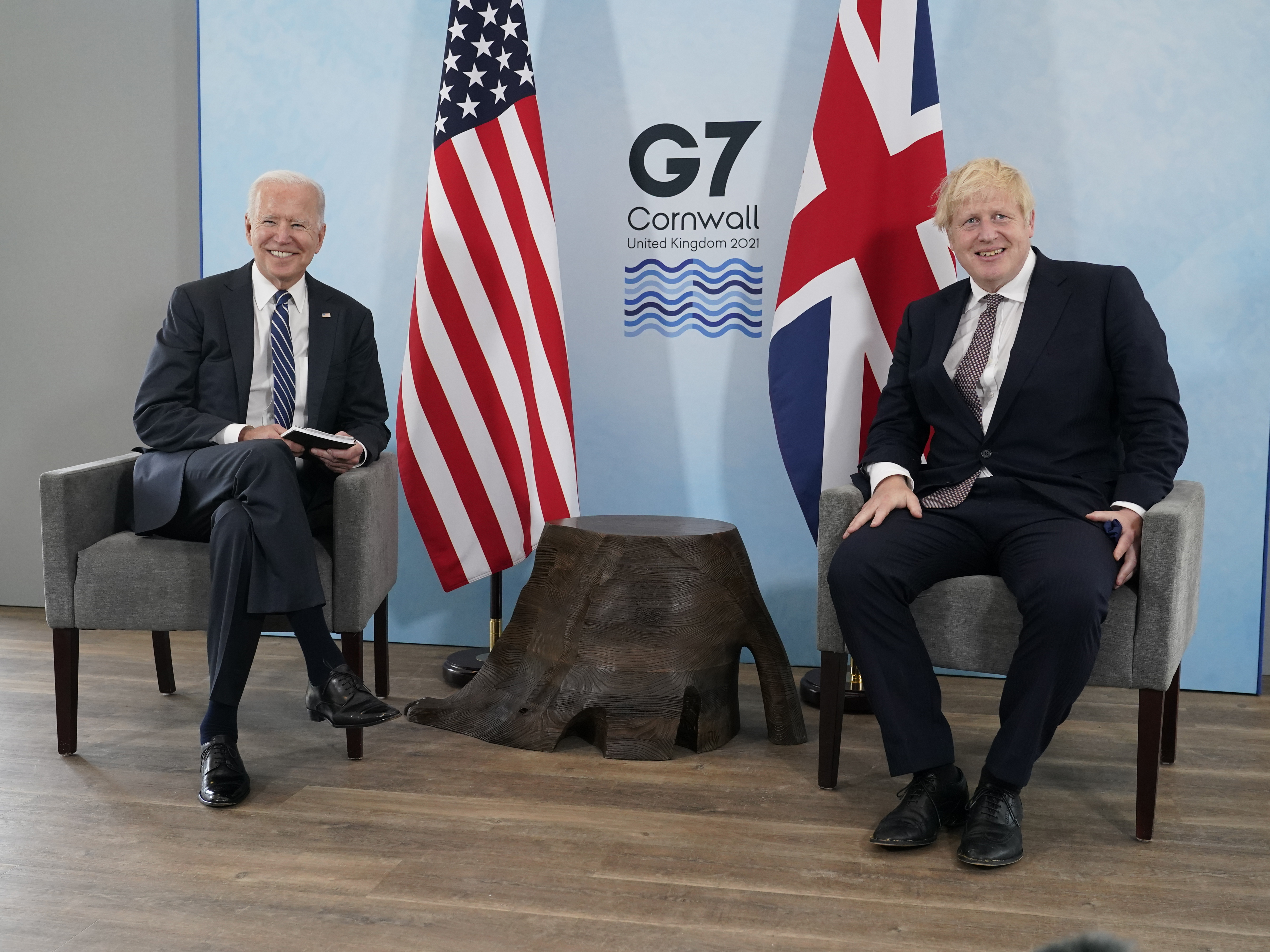
The vaccine sharing commitments from US President Joe Biden and British Prime Minister Boris Johnson set the stage for the G7 leaders' meeting in southwest England, where leaders will pivot on Friday from opening greetings and a "family photo" directly into a session on "Building Back Better From COVID-19".

"We're going to help lead the world out of this pandemic working alongside our global partners," Mr Biden said, adding that the G7 nations would join the US in outlining their vaccine donation commitments at the three-day summit.

The G7 also includes Canada, France, Germany, Italy and Japan.

You can find out more details about how to book your vaccine through the Federal Government health site here.
FBI Chief: Capitol Attack Domestic Terrorism, More Charges to Come, No Election Fraud

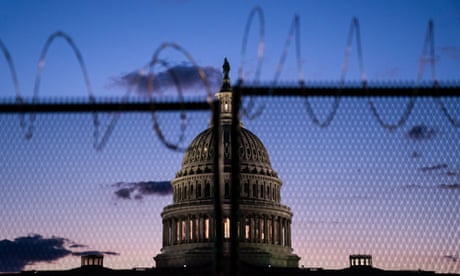
The FBI director, Christopher Wray, has said that the bureau considers the 6 January Capitol attack an act of “domestic terrorism” and suggested that “serious charges” were still to come in its continuing criminal investigation.

Testifying before Congress on Thursday, the director rubbished Donald Trump’s claims about a stolen presidential election. “We did not find evidence of fraud that could have changed the outcome of the election,” he told lawmakers on the House judiciary committee.

Wray’s testimony came as federal prosecutors charged six members of a rightwing militia group with conspiring to storm the Capitol, the latest in a series of such charges arising from 6 January.

Democratic lawmakers repeatedly grilled Wray, appointed by Trump in 2017, over what they said were intelligence failures that left law enforcement ill-prepared for the deadly attack.

“The FBI’s inaction in the weeks leading up to January 6 is simply baffling,” said Jerry Nadler, the House judiciary committee chairman. “It is hard to tell whether FBI headquarters merely missed the evidence – which had been flagged by your field offices and was available online for all the world to see – or whether the bureau saw the intelligence, underestimated the threat, and simply failed to act.”

A Senate report recently concluded that the deadly insurrection had been planned “in plain sight” but that warnings had gone unheeded due to a troubling mix of bad communications, poor planning, faulty equipment and lack of leadership.

Wray said that “almost none” of the 500 people charged so far with participating in the attack had been under FBI investigation previously, suggesting it would have been difficult for the FBI to have monitored them in advance.

“You can be darn sure that we are going to be looking hard at how we can do better, how we can do more, how we can do things differently in terms of collecting and disseminating” intelligence, Wray said.

US Capitol attack was planned in plain sight, Senate report finds

Thursday’s charges against six men, all from California, were disclosed in an indictment unsealed in federal court in Washington. Two of them, Alan Hostetter and Russell Taylor, were seen a day before the riot with Roger Stone, a friend and adviser to Trump, during a protest outside the US supreme court against the outcome of the 2020 presidential election.

About 30 people – including members of two other rightwing groups, the Oath Keepers and The Proud Boys – have been accused of conspiracy, the most serious charges related to the riot. Those pending cases are the largest and most complex of the roughly 500 brought by the justice department since the attack.

Asked whether the FBI was investigating Trump or Stone, Wray said he could neither confirm nor deny any FBI investigation.

“I’m talking about Mr Big, No 1,” said the Tennessee Democrat Steve Cohen, referring to Trump. “Have you gone after the people who incited the riot?”

Wray responded: “I don’t think it would be appropriate for me to be discussing whether or not we are or aren’t investigating specific individuals.”

Wray also faced questions about the recent spate of ransomware attacks against major US companies. The FBI’s director told lawmakers that the bureau discouraged ransomware payments to hacking groups.

“It is our policy, it is our guidance, from the FBI, that companies should not pay the ransom for a number of reasons,” Wray said.

Still, recently hacked companies including Colonial Pipeline and JBS, the world’s largest meat processing company, have admitted paying millions to hackers in order to regain control of their computer systems.

The justice department has said it was able to recover the majority of the ransomware payment made by Colonial Pipeline after locating the virtual wallet used by the hackers.

The post FBI Chief: Capitol Attack Domestic Terrorism, More Charges to Come, No Election Fraud appeared first on The St Kitts Nevis Observer.

Trump, Bill O’Reilly To Team Up in December Campaign

Ex-Fox News host Bill O’Reilly, who was forced out in 2017 following sexual harassment accusations, will join the former president in Florida and Texas in December


in Washington
Guardian


Donald Trump appears to have found his historical muse. The former US president will go on tour for a series of “live conversations” with Bill O’Reilly, an ex-Fox News host who has reason to understand him better than most.

At least 26 women have accused Trump of sexual misconduct over four decades, ranging ranging from harassment to sexual assault and rape; he denies them all. O’Reilly was forced out of Fox in 2017 following multiple accusations of sexual harassment and inappropriate behaviour.

The duo’s defiant apparent embrace of shamelessness will be put to the test in the The History Tour, in Sunrise, Florida, on 11 December, Houston, Texas, on 18 December and Dallas, Texas, on 19 December. The venue for another stop on 12 December is yet to be confirmed.


The series is likely to be a hot ticket in the “Make America Great Again”, or “Maga” universe and prove a moneyspinner for both men. It will give Trump, who has shown little interest in a presidential library, a first stab at posterity. But anyone hoping for a replay of David Frost’s revealing interviews with Richard Nixon is likely to be disappointed.

A press release on O’Reilly’s website notes that Trump presided over “an especially intense period” and says the pair will “discuss exactly how things were accomplished, as well as challenges, both good and bad!”

It describes O’Reilly himself as a “Historian/Journalist”. He has co-written bestselling books including Killing Kennedy and Killing Lincoln about presidential assassinations.

The release quotes Trump as saying: “These will be wonderful but hard-hitting sessions where we’ll talk about the real problems happening in the US, those that the Fake News Media never mention.”

The 45th president also promises that “it will be fun, fun, fun, for everyone who attends!”

Trump and O’Reilly are kindred rightwing populists who have raged against political correctness, offering dubious examples such as “the war on Christmas”.

O’Reilly, the former presenter of Fox News’s top-rated The O’Reilly Factor, adds in the press release: “My job as a historian/journalist is to get important things on the record in a fact-based way. These conversations with the 45th president will not be boring.”

The tour is the latest step in the unusual post-presidency of Trump, who turns 75 on Monday. Banned from Facebook and Twitter, and with a blog that collapsed within a month, his online presence has reverted to pre-2016 levels yet he remains the unofficial leader of the Republican party and has hinted at another presidential run in 2024.

“Mr Trump was both a diminished figure and an oversized presence in American life, with a remarkable – and many say dangerous – hold on his party,” noted a New York Times report on his speech to North Carolina Republicans last weekend.

The conversations with O’Reilly seized on by late-night TV hosts. Jimmy Fallon of NBC quipped: “It should be a fun tour. Backstage passes automatically come with a hush money payment of $130,000. Isn’t that nice?”

The post Trump, Bill O’Reilly To Team Up in December Campaign appeared first on The St Kitts Nevis Observer.

ILO Report: Child Labour Rises to 160M – First Increase in 20 Years

The International Labour Organization and UNICEF warn nine million additional children at risk as a result of COVID-19 pandemic.

News | 10 June 2021

GENEVA (ILO News) – The number of children in child labour has risen to 160 million worldwide – an increase of 8.4 million children in the last four years – with millions more at risk due to the impacts of COVID-19, according to a new report by the International Labour Organization (ILO) and UNICEF.

Child Labour: Global estimates 2020, trends and the road forward  – released ahead of World Day Against Child Labour on 12th June – warns that progress to end child labour has stalled for the first time in 20 years, reversing the previous downward trend that saw child labour fall by 94 million between 2000 and 2016.

The report points to a significant rise in the number of children aged 5 to 11 years in child labour, who now account for just over half of the total global figure. The number of children aged 5 to 17 years in hazardous work – defined as work that is likely to harm their health, safety or morals – has risen by 6.5 million to 79 million since 2016.

The new estimates are a wake-up call. We cannot stand by while a new generation of children is put at risk.”

Guy Ryder, ILO Director-General

“The new estimates are a wake-up call. We cannot stand by while a new generation of children is put at risk,” said ILO Director-General Guy Ryder. “Inclusive social protection allows families to keep their children in school even in the face of economic hardship.

“Increased investment in rural development and decent work in agriculture is essential. We are at a pivotal moment and much depends on how we respond. This is a time for renewed commitment and energy, to turn the corner and break the cycle of poverty and child labour.”

In sub-Saharan Africa, population growth, recurrent crises, extreme poverty, and inadequate social protection measures have led to an additional 16.6 million children in child labour over the past four years.

Even in regions where there has been some headway since 2016, such as Asia and the Pacific, and Latin America and the Caribbean, COVID-19 is endangering that progress.

© Rod Waddington

The report warns that globally, nine million additional children are at risk of being pushed into child labour by the end of 2022 as a result of the pandemic. A simulation model shows this number could rise to 46 million if they don’t have access to critical social protection coverage.

Additional economic shocks and school closures caused by COVID-19 mean that children already in child labour may be working longer hours or under worsening conditions, while many more may be forced into the worst forms of child labour due to job and income losses among vulnerable families.

We are losing ground in the fight against child labour, and the last year has not made that fight any easier.”

Henrietta Fore, UNICEF Executive Director

“We are losing ground in the fight against child labour, and the last year has not made that fight any easier,” said UNICEF Executive Director Henrietta Fore. “Now, well into a second year of global lockdowns, school closures, economic disruptions, and shrinking national budgets, families are forced to make heart-breaking choices. We urge governments and international development banks to prioritize investments in programmes that can get children out of the workforce and back into school, and in social protection programmes that can help families avoid making this choice in the first place.”

Other key findings in the report include:

  • The agriculture sector accounts for 70 per cent of children in child labour (112 million) followed by 20 per cent in services (31.4 million) and 10 per cent in industry (16.5 million).
  • Nearly 28 per cent of children aged 5 to 11 years and 35 per cent of children aged 12 to 14 years in child labour are out of school.
  • Child labour is more prevalent among boys than girls at every age. When household chores performed for 21 hours or more each week are taken into account, the gender gap in child labour narrows.
  • The prevalence of child labour in rural areas (14 per cent) is close to three times higher than in urban areas (5 per cent).

Children in child labour are at risk of physical and mental harm. Child labour compromises children’s education, restricting their rights and limiting their future opportunities, and leads to vicious inter-generational cycles of poverty and child labour.

To reverse the upward trend in child labour, the ILO and UNICEF are calling for:

  • Adequate social protection for all, including universal child benefits.
  • Increased spending on free and good-quality schooling and getting all children back into school – including children who were out of school before COVID-19.
  • Promotion of decent work for adults, so families don’t have to resort to children helping to generate family income.
  • An end to harmful gender norms and discrimination that influence child labour.
  • Investment in child protection systems, agricultural development, rural public services, infrastructure and livelihoods.

As part of the International Year for the Elimination of Child Labour , the global partnership Alliance 8.7 , of which UNICEF and ILO are partners, is encouraging member States, business, trade unions, civil society, and regional and international organizations to redouble their efforts in the global fight against child labour by making concrete action pledges.

During a week of action from 10–17 June, ILO Director-General Guy Ryder and UNICEF Executive Director Henrietta Fore will join other high-level speakers and youth advocates at a high-level event during the International Labour Conference to discuss the release of the new global estimates and the roadmap ahead.

The post ILO Report: Child Labour Rises to 160M – First Increase in 20 Years appeared first on The St Kitts Nevis Observer.