Category Archives: headline

Argentina Pres. in Racist Insult to Brazilians, Apologizes

Argentine President Alberto Fernandez triggered a Twitter storm and a regional race debate on Wednesday with misjudged comments to visiting Spanish Prime Minister Pedro Sanchez that sought to play up the South American country’s ties with Europe.

“The Mexicans came from the Indians, the Brazilians came from the jungle, but we Argentines came from the ships. And they were ships that came from Europe,” Fernandez said, referring to the country’s many European migrants. He later apologized for the comments and said his country’s diversity was something to be proud of.

He later was forced to apologize for the comment.

Fernandez seems to have taken the phrase from a song by local musician Lito Nebbia, of whom the President has declared himself an admirer on more than one occasion.

The comments sparked a viral response on social media, with many criticizing Fernandez for racial insensitivity.

“I did not mean to offend anyone, in any case, whoever has felt offended or invisible, I give my apologies,” Fernandez said on Twitter.

Brazilian media ran Fernandez’s statements on Wednesday and many on social media joked that right-wing President Jair Bolsonaro would enjoy getting back at the left-wing Argentine leader.

Bolsonaro obliged by tweeting a photograph of himself wearing a native head-dress, smiling among a group of indigenous people. The only text in tweet was the word “JUNGLE” in capital letters, flanked by a Brazilian flag emoji.

Eduardo Bolsonaro, a congressman and the Brazilian president’s son, slammed the comments as “racist” and shot a retort back at Argentina over its troubled economy, in recession since 2018.

“I say the ship that is sinking is that of Argentina,” he posted on Twitter.

Netizens on YouTube posted replies under a video of the speech, expressing anger or unease.

“Excuse me, Mexican and Brazilian friends, on behalf of all Argentines we feel a lot of embarrassment. You know how much we love you, and your countries and customs,” said one user under the name Barbara Bongiovanni.

The post Argentina Pres. in Racist Insult to Brazilians, Apologizes appeared first on The St Kitts Nevis Observer.

US Sanctions 4 Nicaraguans, Including Presidents’ Daughter, Over Arrests

Reuters- The United States has imposed sanctions on four Nicaraguans, including a daughter of President Daniel Ortega, and Washington warned it would continue to use diplomatic and economic tools against members of the leftist government that it accused of undermining democracy.

U.S. Secretary of State Antony Blinken urged Ortega to release detained presidential candidates as well as other civil society and opposition leaders arrested over the past week in what he called a “wave of repression.”

“As these sanctions demonstrate, there are costs for those who support or carry out the Ortega regime’s repression,” Blinken said in a statement.

“The United States will continue to use all diplomatic and economic tools at our disposal to support Nicaraguans’ calls for greater freedom and accountability as well as free and fair elections.”

The U.S. Treasury Department on Wednesday slapped sanctions on Ortega’s daughter Camila Ortega Murillo, who is also a senior government official, and three others it accused of supporting the government that Washington said has undermined democracy, abused human rights and enacted repressive laws.

The Treasury said Camila Ortega managed television station Canal 13, a family-run media outlet that it accused of spreading propaganda, while the president “uses state spending and tax laws to promote family-run stations and squeeze independent rival outlets.”

Also hit with sanctions are: Leonardo Ovidio Reyes Ramirez, president of the Central Bank of Nicaragua; Edwin Ramon Castro Rivera, a deputy of the Nicaraguan National Assembly; and Julio Modesto Rodriguez Balladares, a Brigadier General of the Nicaraguan Army and executive director of the Military Social Welfare Institute.

The Nicaraguan government and army did not immediately respond to requests for comment on the sanctions.

Wednesday’s action freezes any U.S. assets of those blacklisted and generally bars Americans from dealing with them.

Nicaraguan police detained two possible contenders for the presidency on Tuesday, following on from two similar arrests of opposition politicians in prior days.

Police statements accused the detained politicians of working with foreign financing to carry out “acts of terrorism and destabilization,” without giving details.

On Wednesday evening, police surrounded the house of the former director of the American Nicaraguan Chamber of Commerce, Mario Arana, according to a relative who spoke to Reuters.

A police order that was circulated in local media with Arana’s personal details described his “crimes” as “compromising the peace or dignity of the republic.”

The government did not respond to a request for comment on the document.

International organizations, including the Inter-American Commission on Human Rights and the Office of the United Nations High Commissioner for Human Rights, have accused Ortega’s government of fabricating false accusations against opponents.

U.N. Secretary-General Antonio Guterres was very concerned by the recent arrests in Nicaragua and invalidation of opposition leaders’ candidacies, U.N. spokesman Stephane Dujarric told reporters on Wednesday.

“These developments can seriously undermine the public’s confidence in the democratic process ahead of the November general elections,” Dujarric said, adding that Guterres called on the authorities to fully respect international human rights obligations and release the political leaders.

The post US Sanctions 4 Nicaraguans, Including Presidents’ Daughter, Over Arrests appeared first on The St Kitts Nevis Observer.

VP Harris Visit: Cent. America Problem Here to Stay

San Pedro Sula, Honduras (CNN)It is best to get permission from local gang leaders before entering a small neighborhood that locals call La Playita in Chamelecón, Honduras. Violence here is as pervasive as the poverty in this area, and strangers aren’t generally welcome.

But these days, access is a bit easier to come by, especially if you happen to be a news outlet that wants to talk about the incredible destruction that still plagues this neighborhood.
Twin Category 4 hurricanes made landfall in Central America within two weeks of each other in late 2020, decimating huge portions of Nicaragua, Guatemala, and Honduras.
In La Playita, or Little Beach — so-named because the community lies on the banks of the Chamelecón River — hurricane rainfall caused the river to surge more than 20 feet, pushing torrents of water up and over dirt levies. Hundreds of residents scrambled to safety with nothing more than the clothes on their backs, many seeking shelter underneath nearby bridges.
When the waters receded, colossal amounts of heavy mud remained, submerging entire structures in silt. There were no homes to return to.
“The truth is that many people were forced to flee from here,” said Father Saul Arrieta, a well-known local priest in the neighborhood. “Many went north, many young people went to the US. It hurts my heart to see all this.”
Central Americans migrating north, even in large numbers, is not a new phenomenon. But the hurricanes coupled with a deadly pandemic combined to create an unprecedented situation where, for many, migration is not only about simply seeking better lives — it is a matter of survival.
It has also created unique challenges for the Biden administration and its immigration point person, Vice President Kamala Harris. Harris was in Central America this week, tasked with helping the US figure out how to shrink the record numbers of migrants arriving at the southern border.

The storms

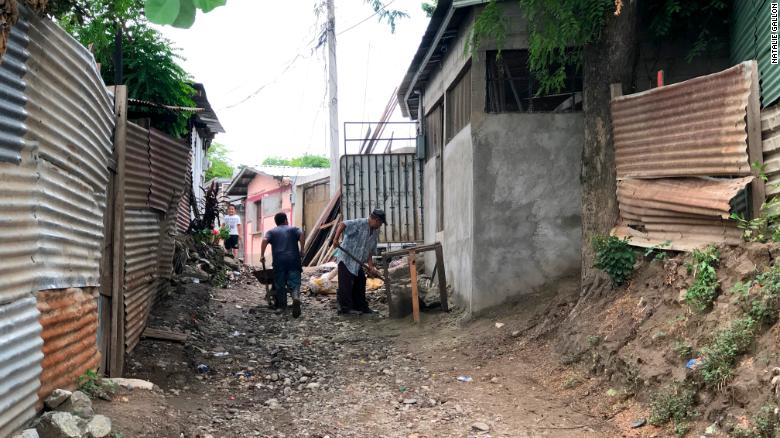
Visiting with the Arias Sánchez family is more difficult than it used to be, considering they now live on top of a 10-foot-tall pile of dried mud. They direct guests to use the half dozen steps they carved out from the mud to make it easier.
Some homes still covered in mud in La Playita.

Twin category 4 hurricanes decimated parts of Honduras.

When the water rushed in last November, the family of nine, two grandmothers, sons, daughters, babies, had to flee to a local shelter. When they came back, they found their family home had been completely subsumed by mud.
With nowhere else to go, they gathered what random materials they could — some tarps, old doors, corrugated metal sections of fallen roofs — climbed on top of the hardened mud and built the one-room makeshift structure that all nine of them now share.
“Everyone sleeps together on the dirt floor here at night,” said Juana Fransisca Sánchez, the matriarch of the family. “We’ve lost absolutely everything.”
The family says they’ve lasted here as long as they can but without government support soon, there will be only one option.
“We would leave,” said her son Joel Raul Arias Sánchez, 26, with a one-year-old daughter. “There are no jobs, there is nothing here. There is no future. Many neighbors are already in the US and many are planning on leaving soon.”
In an interview with CNN, a top government official acknowledged that many parts of the country have yet to receive the level of assistance necessary.
“It’s not possible that everything is instant,” said Hector Leonel Ayala, the Honduran Minister of Government. “We are not a powerhouse. We are a developing country with challenges.”
Many of the country have yet to receive assistance.

He stressed the government had done a lot of work already, however, including the clearing of at least a million cubic meters of mud, building new homes and levies and providing loans to certain affected industries.
Critics, including ordinary citizens that spoke to CNN and non-governmental organizations, have argued the government has not done nearly enough to help its population rebuild and say the proof is in how many people have left.
Entire sections of the neighborhood where Arias Sánchez lives are empty. Some houses are still filled top to bottom with mud, tall weeds growing skyward where ceilings used to be.
“Many people haven’t come back since the storms,” said Arias Sánchez, adding most went to the US.
A short drive away, a mattress half-buried in mud acts as a doormat of sorts to the small lot Osban Obdulio Cruz Henrique shares with his family of a half-dozen people. His “house” is in worse shape than the Arias Sánchez’s. Two walls are made of tarps and bedsheets, the other two a patchwork of old doors and thin plywood.
“Every time it rains the water leaks through the tarp overhead, and it runs underneath our feet,” said Cruz Henrique, showing the gap between the walls and the ground. Three mattresses lay directly on a mud floor, permanently half-soaked with rainwater that won’t dry out.
“We are desperate,” he told CNN. “We don’t know how to start from zero if we have no chance at making an income. There is no other choice but to leave.”
The total number of people displaced by the storm is difficult to assess, and the government told CNN it does not have such figures. But various think tanks and the UN Refugee Agency have put the number well into the hundreds of thousands, if not millions. It is a staggering percentage given the country’s total population is less than 10 million people.
In two dozen interviews, CNN heard story after story that mirrored each other. Before the hurricanes, many were barely hanging on. After the hurricanes, they had nothing left.

The Pandemic

Seven months before the hurricanes hit, another storm arrived in Central America. While the Covid-19 pandemic spared no country its biological wrath, perhaps no region has been hit harder economically than Latin America.
Nation after nation hunkered down, closing borders and shuttering businesses. Economies in the region generally weren’t faring well before the pandemic—once it hit, many simply cratered.
Honduras was no different. In 2019, nearly 15 percent of the population lived on less than $1.90 per day, a figure that has likely increased World Bank data shows.
When the coronavirus arrived, government-imposed lockdowns and strict restrictions combined with migration outflows and the devastating storms contributed to a 9 percent drop in the country’s 2020 GDP, according to the World Bank. More than 50 percent of the population now lives below the poverty line.
Honduran think tank FOSDEH, short for Social Forum on the External Debt and Development of Honduras, says more than a half-million people lost their jobs in 2020. Given the informal nature of so many jobs in the economy here, a true figure is impossible to come by. Still, that level of job loss would represent more than 12 percent of the labor force, according to World Bank statistics.
More than 15 months after the pandemic began, lost jobs are not rematerializing in Honduras in earnest, an enormous factor in the decision some are making to leave. “It feels terrible because we’re going to leave my mother, but we have no future here,” said 17-year-old Gerardo Alexis Perez Argueta.
He and his twin brother Celin Adolfo said they are planning to leave and head north to the United States in roughly two weeks. They showed off the new sneakers they plan to wear as they make the nearly 1,500-mile trek on foot. Each pair cost $35, an enormous sum of money for a family that survives on only a few dollars per day.
“What can you do,” asks their mother Griselda Argueta Argueta through tears. “It hurts that your children leave. You don’t know if they will return or not, but there’s no other option for them here.”
Griselda Argueta Argueta, with Celin Adolfo Perez Argueta (right) and Gerardo Alexis Perez Argueta (left)

The brothers don’t want to leave Honduras, but with nothing higher than a sixth-grade education and an economy in tatters, the decision, they argue, was essentially made for them.
“If they had more opportunities people wouldn’t have to leave this country,” said Arrietta, the local priest.

Addressing the root causes

The storms and the pandemic combined to exacerbate long term trends in the region forcing people to migrate—corruption, food insecurity, and a lack of economic opportunity. Though homicide rates throughout Central America generally ticked down in 2020, it remains among the deadliest regions in the world and violence remains a migration driver, according to Human Rights Watch.
None of these issues are new but they stand to worsen without a significant turnaround. And that is where the Biden administration wants to make its mark.
Vice President Kamala Harris has taken the lead in spearheading the US push to fundamentally help address some of those concerns. The Biden administration has earmarked some $310 million in near-term humanitarian aid as a part of a longer-term plan to invest some $4 billion dollars in the region.
But this is not the first US administration to try and stem migration by throwing money at the problem, often funneling the funds through agencies like USAID. Fixing the systemic issues driving people to flee can’t simply be solved by budget allocations alone.
“[Harris] has a very, very tough job ahead of her,” said Cynthia Arnson, Director of the Wilson Center’s Latin America Program. “It’s not impossible, there is a lot that can be done, but achieving the generational change that the administration hopes to produce will be extraordinarily difficult to achieve.”
Start with the fact that Central American governments are extensively corrupt. Transparency International ranks countries’ levels of corruption on a 0-100 scale. El Salvador was the high achiever of the bunch with a score of 36, good enough for 104th place worldwide. The rest fared worse.
Put another way, the US cannot rely on good government partners in the region to help make sure that aid money does what it is supposed to do. The risk of government officials simply lining their own pockets is high.
The Biden administration knows that and has signaled it wants to work with the private sector and non-governmental groups on the ground to ensure help reaches where it needs to and makes living conditions better for ordinary citizens throughout the region.
Even if that works, though, it will take time. Meanwhile, spiking numbers of migrants at the US border is a political problem for the White House now.
“The kind of deeper, structural changes that are going to create opportunities and reduce violence are really long term,” said Arnson. “So the question is whether [the administration] can move fast enough to give people hope for what their lot in life will be if they stay.”

The post VP Harris Visit: Cent. America Problem Here to Stay appeared first on The St Kitts Nevis Observer.

Solar Eclipse 2021: ‘Ring of Fire’ to Sweep Across Earth

BBC- It’s celestial showtime on Thursday as much of the Northern Hemisphere gets to witness a solar eclipse.

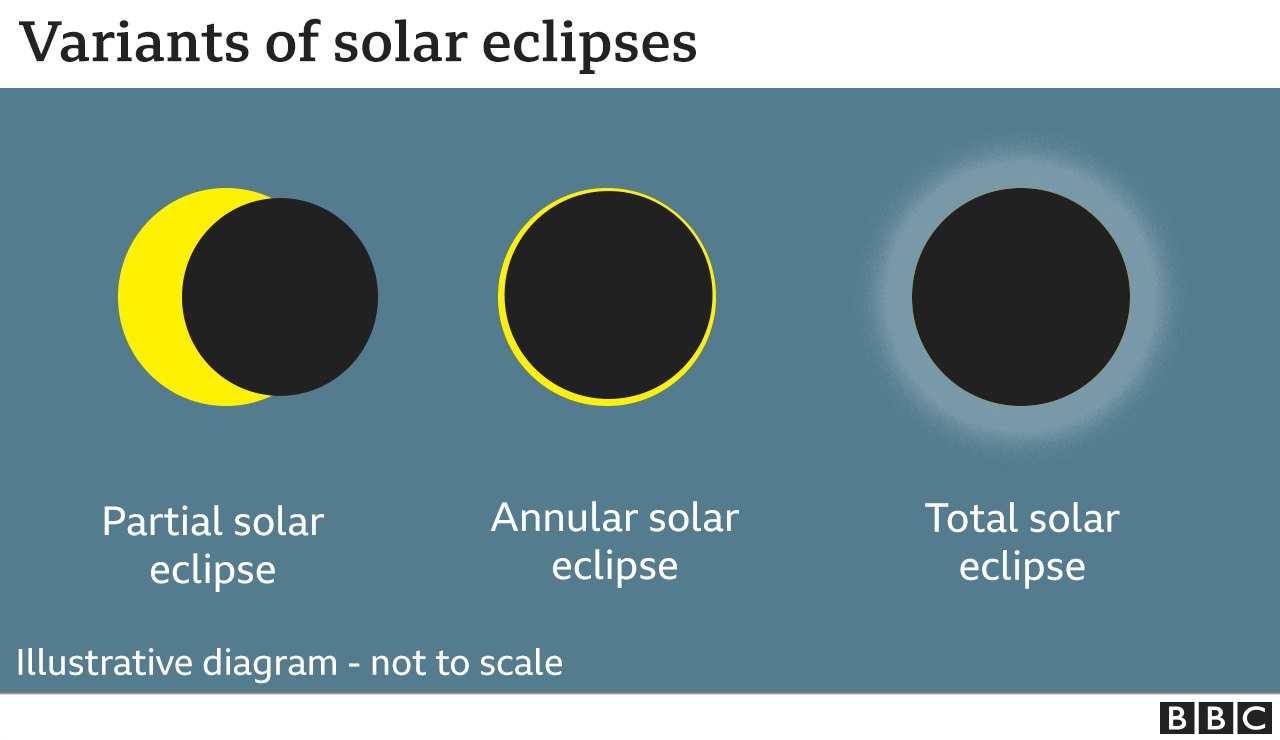
This particular event is what’s termed an annular eclipse. It will see the Moon move across the face of our star but not completely block out the light coming from it.

Instead, there will be just a thin sliver of brilliance left to shine around the Sun’s disc.

The best of the action will be in the Arctic.

Yes, not many people live there, but a good portion of the globe will still get treated to a partial eclipse where the Moon appears to take a big bite out of the Sun.

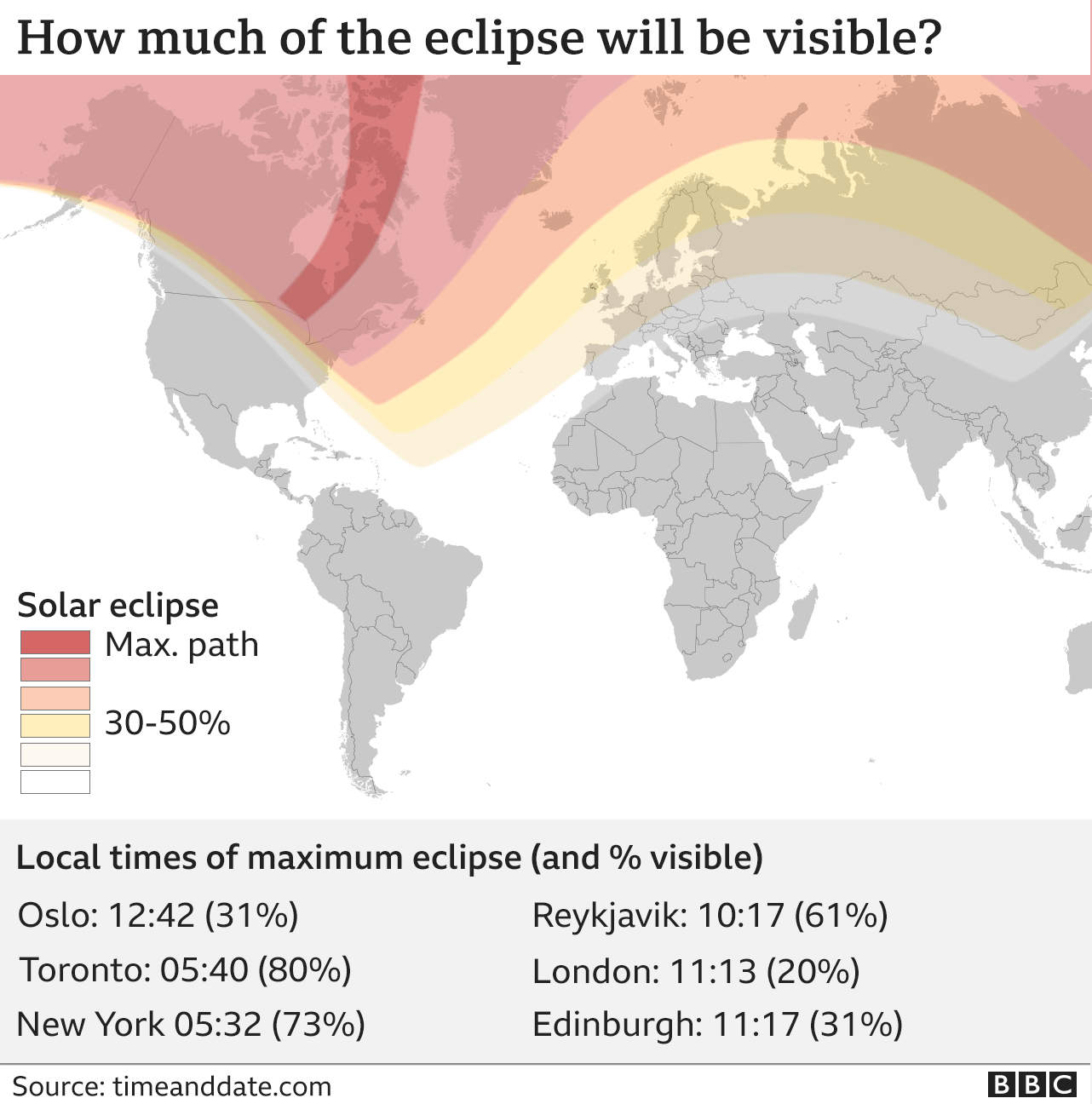
This will include the eastern United States and northern Alaska, along with much of Canada, Greenland, and parts of Europe and Asia.

In the UK, the most favourable place to watch, in terms of the percentage of the Sun’s disc that gets covered up, will be in Scotland – somewhere like Lerwick in the Shetland Islands (11:27 BST), or Stornoway on the Isle of Lewis (11:18 BST)

These places will see about 40% of the Sun eclipsed.

But even down south, in London (11:13 BST) for example, 20% of the star will be covered over.

World map

As ever, the advice is not to try to look at the Sun with the naked eye. This can do severe damage.

Anyone gazing skyward should only do so with the aid of protective viewing equipment, such as approved eclipse glasses or a pinhole projector.

Better still, attend an organised event. Local astronomy clubs will be out in force to show people how to view the eclipse safely.

Projection techniqueimage copyrightRobin Scagell
A safe way to view the eclipse is via a projection technique

The so called “path of annularity” – the track across the Earth’s surface where the Moon sits entirely within the Sun’s disc to give the greatest spectacle – begins at sunrise in Ontario, Canada, at 09:49 GMT (10:49 BST).

It then sweeps across the top of the globe, including over the North Pole, to eventually reach Russia’s Far East and lift off the planet at sunset at 11:33 GMT (12:33 BST).

Figure captionWarning: Third party content may contain adverts

The place which enjoys the greatest duration eclipse – at almost four minutes in length – is in the middle of the Nares Strait, the narrow channel that divides the Canadian archipelago from Greenland.

There’ll be few there, however, to see 90% of the Sun’s disc being blocked out. Perhaps only the odd walrus or two on an ice floe.

For all other locations, there are plenty of calculators out there where you can input your nearest city or town to get more relevant timings, such as here.

Annular eclipseimage copyrightStefan Seip
When the Moon is just that bit further away from Earth, it can’t block out the entirety of the Sun

Not every eclipse can be total. The Moon’s orbit around the Earth is not perfectly round; the satellite’s distance from the planet varies from about 356,500km to 406,700km (221,500 to 252,700 miles).

This difference makes the Moon’s apparent size in the sky fluctuate by about 13%.

If the Moon happens to eclipse the Sun on the near side of its orbit, it totally blocks out the star (a total eclipse). But if the Moon eclipses the Sun on the far side of its orbit, as now, the satellite will not completely obscure the star’s disc – and a “ring of fire” or annulus of sunlight is seen.

But no less wonderful.

“An eclipse gives us an opportunity to connect with the Sun,” said Prof Lucie Green from the UCL Mullard Space Science Laboratory.

“Normally, our star is so dazzlingly bright we kind of don’t pay it much attention. But during an eclipse of one form or another, we’re able – if we look safely – to watch the Moon glide in front of the Sun and remind ourselves of this clockwork Solar System we live in,” she told BBC News.

Eclipse types

The post Solar Eclipse 2021: ‘Ring of Fire’ to Sweep Across Earth appeared first on The St Kitts Nevis Observer.

Sydney records coldest day in 37 years

Sydney has officially shivered its way through its coldest day in 37 years.

Metropolitan Sydney reached a maximum of just 10.3 degrees today, making it the coldest day overall since 1984.

Elsewhere in NSW blizzards dumped more than half a metre of snow over parts of NSW over the last 48 hours as towns and cities shiver through record-breaking temperatures.

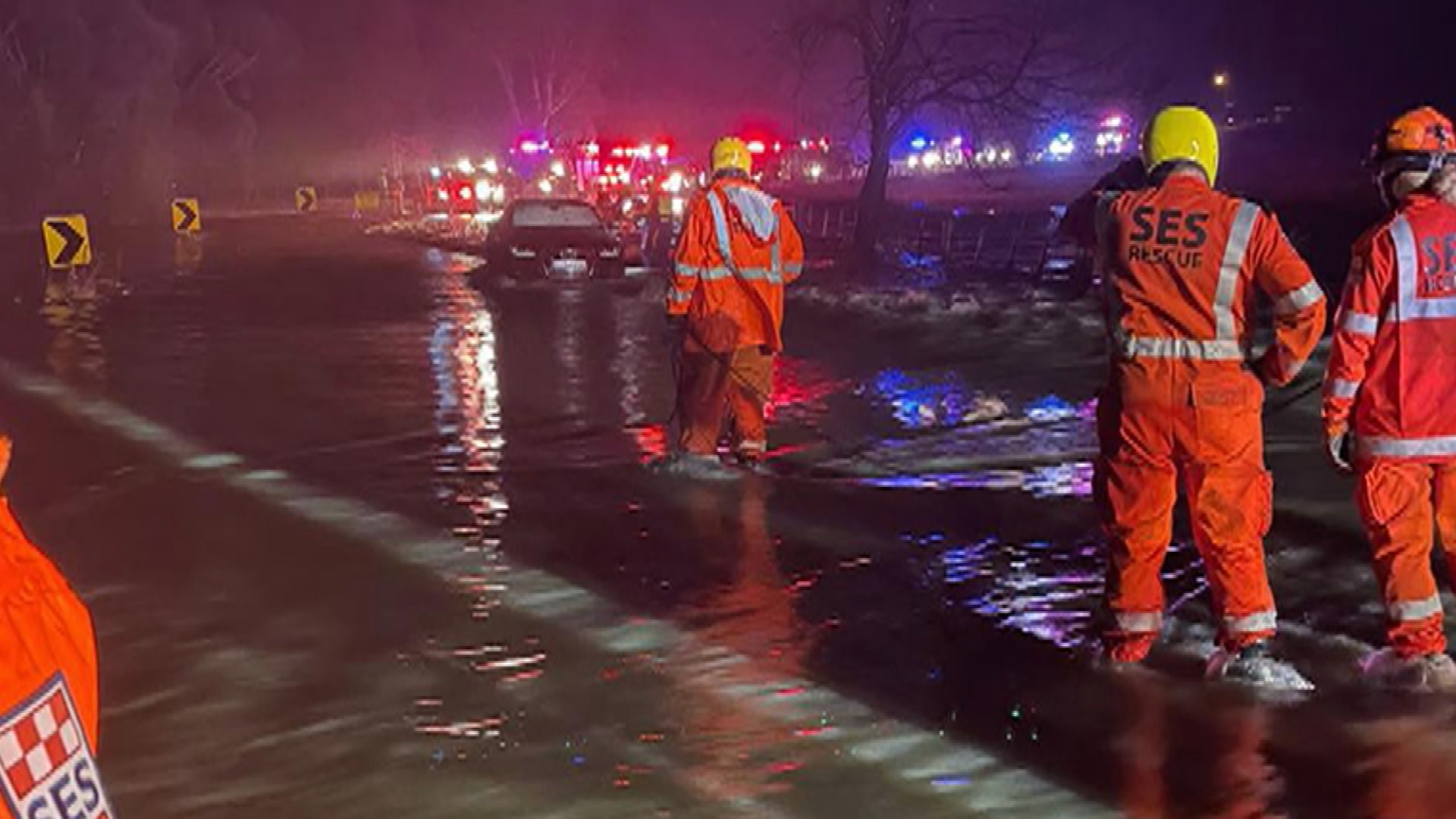
READ MORE: Victorian town urged to evacuate as wild storms ravage state

https://twitter.com/weatherzone/status/1402858140748681218

While city dwellers might be struggling through today's icy weather, the conditions are barely comparable to temperatures in regional areas today with Cooma on track to record its coldest day in 17 years with a maximum of just 1.2C.

Mudgee is also on track to record its coldest day in nearly three decades with a top of 4.4C.

The last time temperatures dropped that low was in 1992, when the town recorded a minimum of 5.2C.

https://twitter.com/BOM_au/status/1402799109724061700

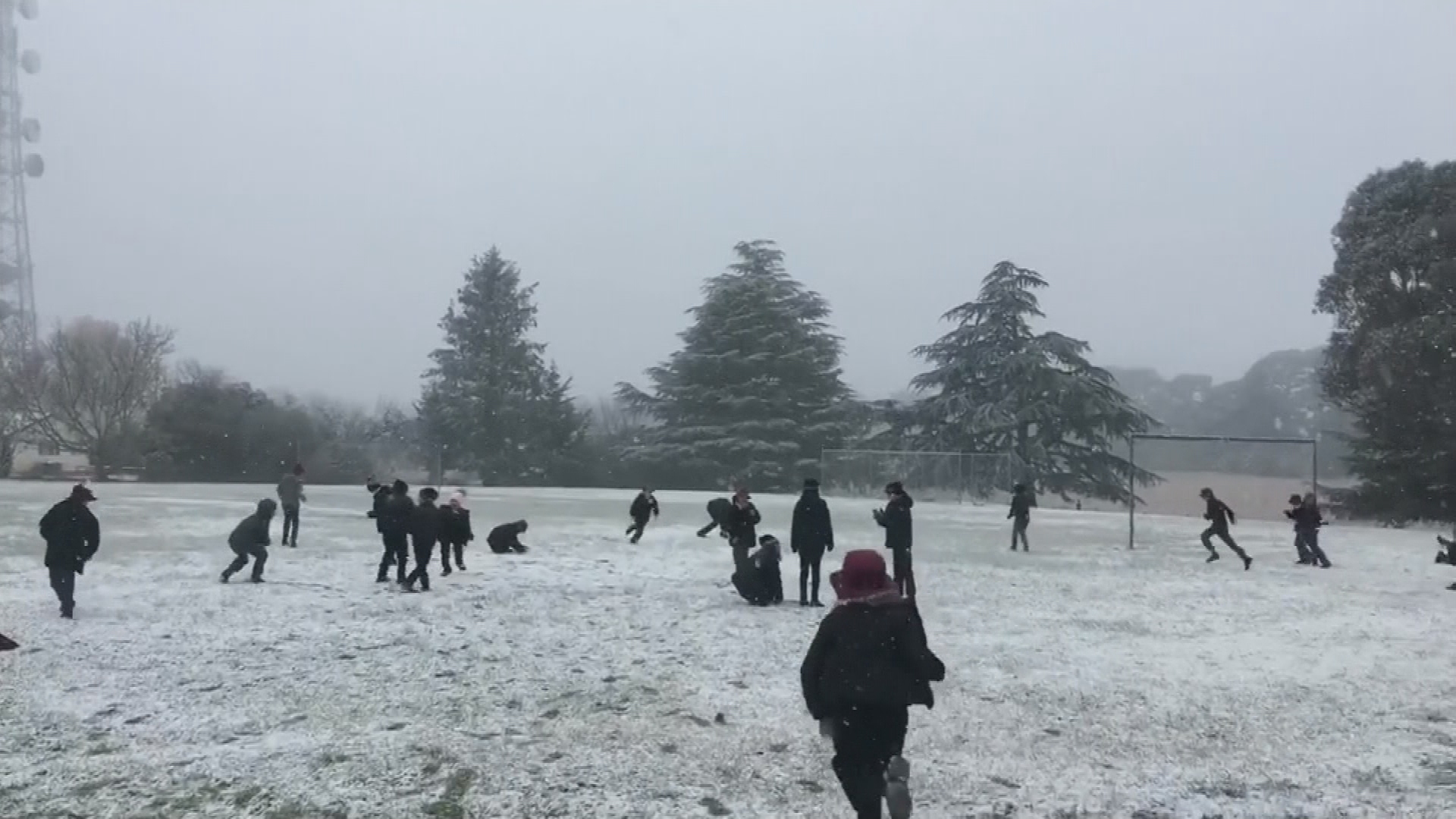
In the Central Tablelands, Orange has received its heaviest dump of snow since 2015 with a whopping 16cm falling today alone.

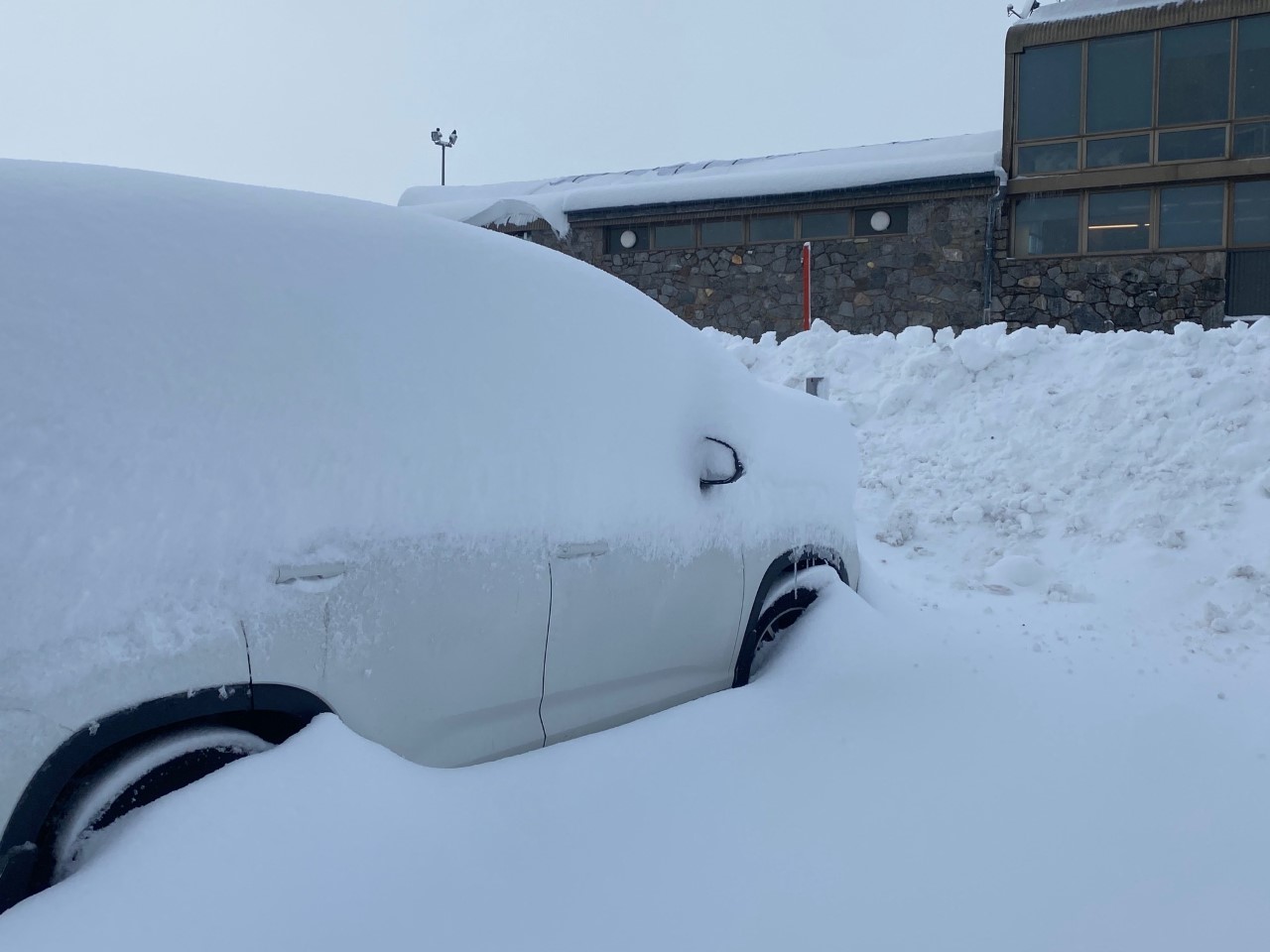
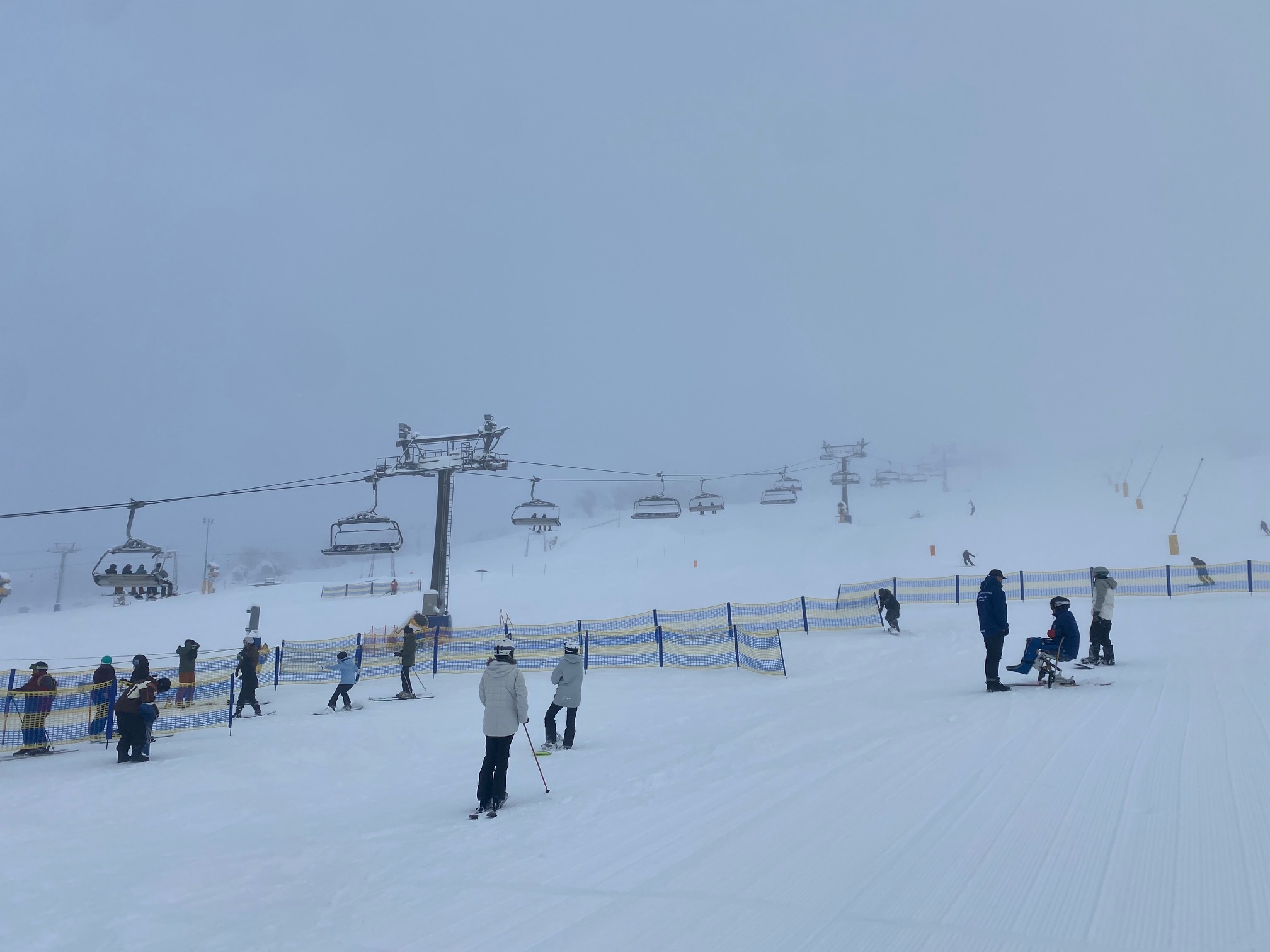
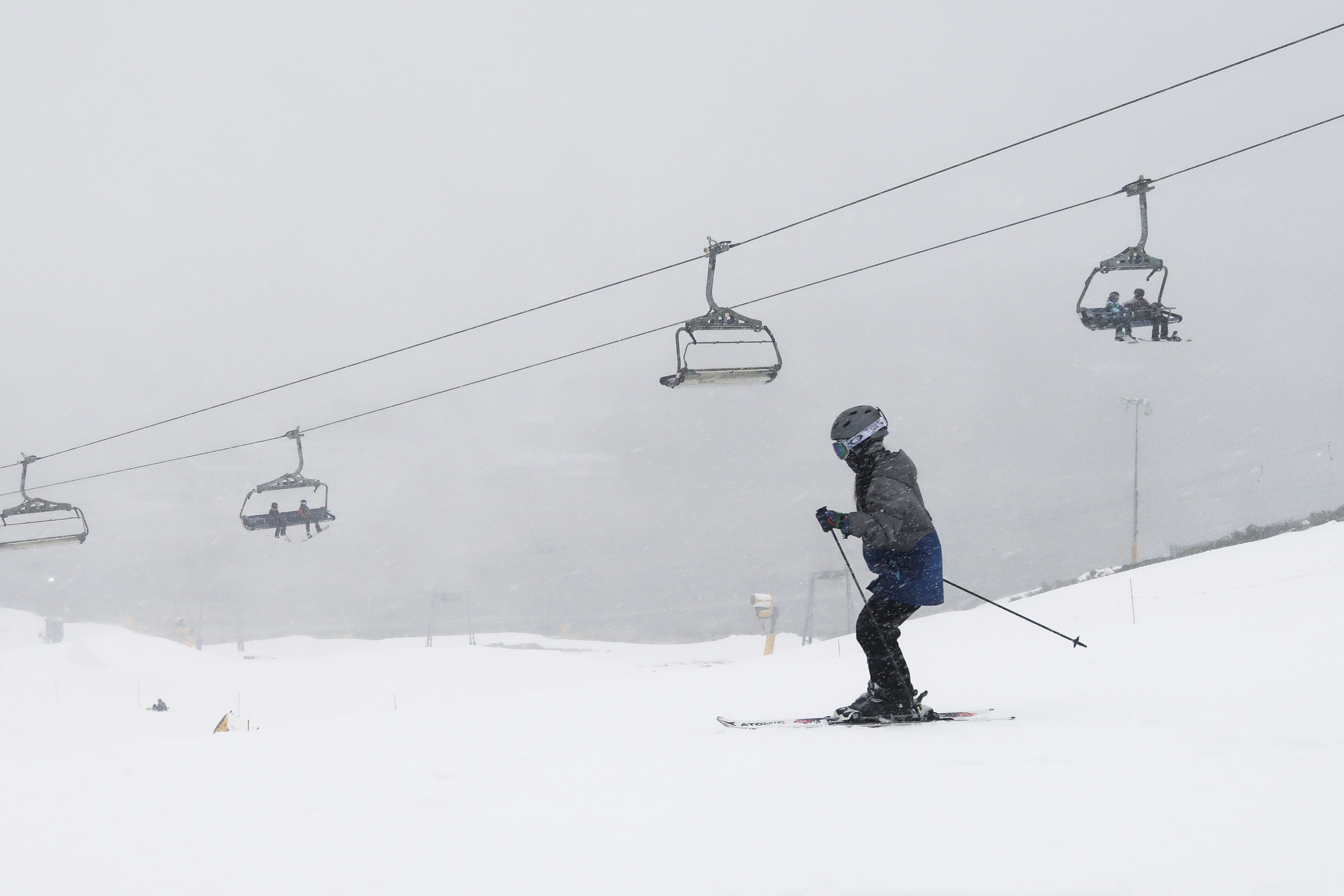
Fresh flakes hit the slopes throughout yesterday, with 15cm to 30cm of snow at some resorts by last night, including Thredbo.

Perisher Valley has already received around half a metre of snow over the last two days with more on the way today.

READ MORE: Towns across NSW record coldest day in two decades as snow falls

https://twitter.com/savannahmeacham/status/1402794761321279490

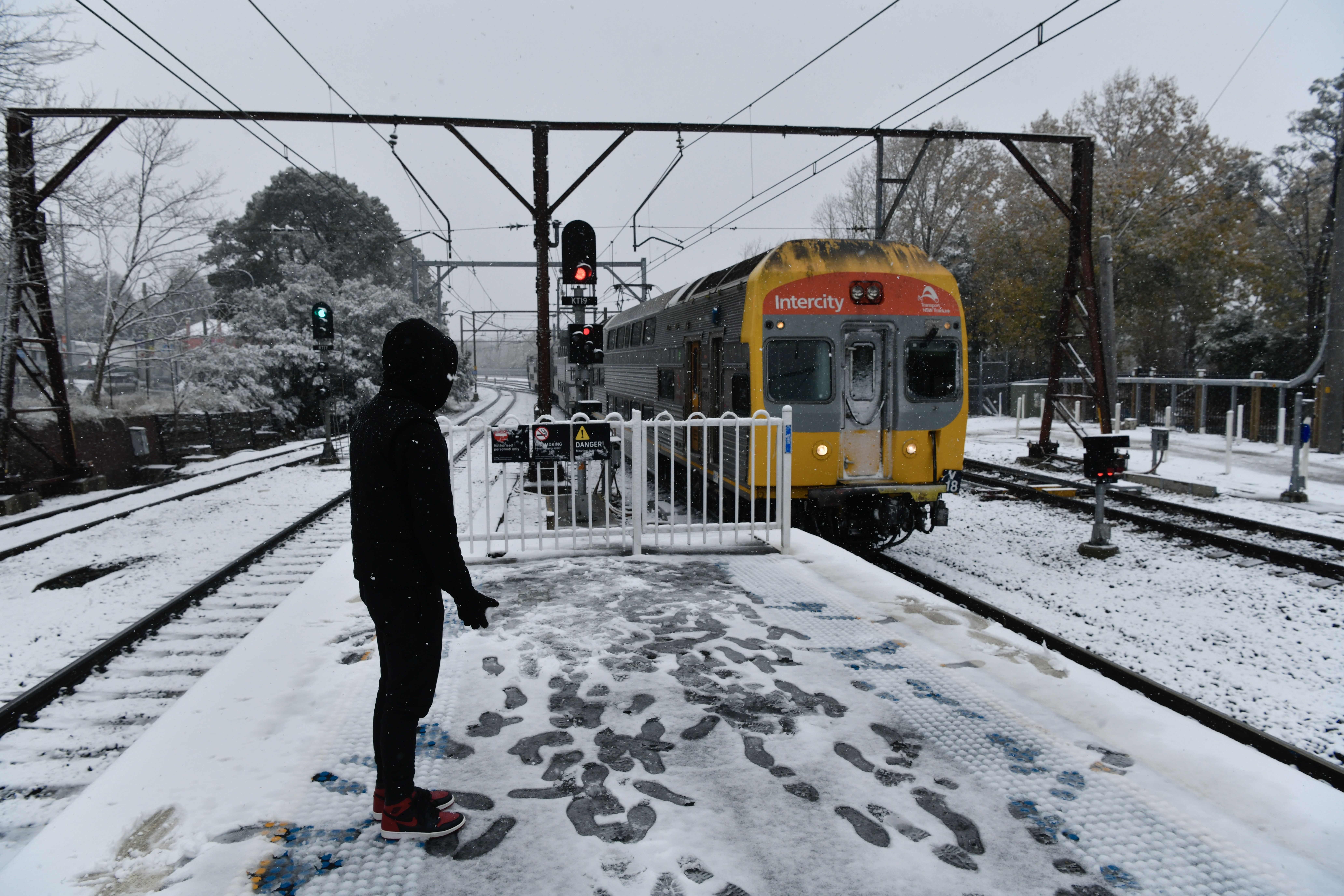
Snow is also falling across the upper Blue Mountains this morning with Katoomba, Blackheath and Mount Victoria receiving their first sprinkle of snow for the season this morning.

Frost risk is high to severe in most areas across the region with drivers warned of black ice and dangerous driving conditions.

Snow is expected to continue to fall above an elevation of about 900 metres in southern NSW this afternoon, with another 10 centimetres likely in the Alps, according to Weatherzone.

Locations at lower elevations including the lower Blue Mountains and Greater Sydney are forecast to receive showers today with temperatures in the city unlikely to get above 11C.

Drivers across NSW have been warned to postpone travel plans as the severe weather creates treacherous driving conditions in the lead up to the long weekend.

The conditions come after severe wintry weather slammed much of Australia's south-east, with damaging winds, heavy rain, thunderstorms, flooding, widespread snow, and hail overnight.

Several roads in the state's Central West have been closed due to snow and ice.

The Mitchell Highway is closed between Northern Distributor Road in Orange and Millthorpe Road in Shadforth.

The Escort Way is closed between Northern Distributor Road in Orange and Peabody Road in Boree.

Chifley Road is closed between Bells Line of Road in Bell and Hartley Valley Road in Lithgow and Ilford Sofala Road is closed about 5km west of the Castlereagh Highway in Ilford.

In the central west of NSW, regional cities such as Orange saw snow start to fall from yesterday morning (June 9).

A number of local roads in these areas are also closed.

Further south, a low is generating damaging winds, heavy showers, and small hail in Victoria and Tasmania.

Damaging winds which reached 100km/h carved a path of destruction across Melbourne overnight, with thousands of calls for help to the State Emergency Service.

Weather June 10

In the past 24 hours, there were more than 2000 reports of trees down, about 500 reports of trees down, about 500 reports of building damage, and about 150 calls for help in areas where there is severe flooding.

A severe weather warning is spanning across Victoria all the way from Sale to Ballarat.

South to south-easterly winds with gusts of up to 90km/h will continue across Melbourne this morning, decreasing to 25 to 40km/h in the afternoon and 15 to 20km/h in the late evening.

Another low is causing showers and storms in western parts of Western Australia with a severe weather warning in place today.

https://twitter.com/weatherzone/status/1402512616337993742

Strong to gale force northerly winds are occurring along the west coast prior to the passage of the low.

Damaging winds with gusts up to 100km/h, abnormally high tides and damaging surf for Lower West and South West.

Localised wind gusts up to 90km/h are possible between Mandurah and Lancelin this morning with Cape Naturaliste recording wind speeds of 96km/h overnight.

A high is keeping elsewhere mostly dry and settled.