By RNZ The “slumping” Ashburton bridge has reopened for light traffic, says Waka Kotahi, the New Zealand Transport Agency.It had been testing the damaged bridge on Tuesday afternoon and evening, and at 11.35pm traffic started…
Category Archives: headline
Fishermen's frightening encounter with great white shark caught on camera
Two Western Australian fishermen were having a peaceful morning wetting a line until a giant catch appeared.
A four-metre great white shark got a little too close for comfort.
After 10 minutes circling Mr Marshall and Paul Marriott's boat in Catherine Bay, four kilometres off Rottnest Island, the predator suddenly turned aggressive.
READ MORE: Diver willingly sticks 'full arm' down mouth of shark
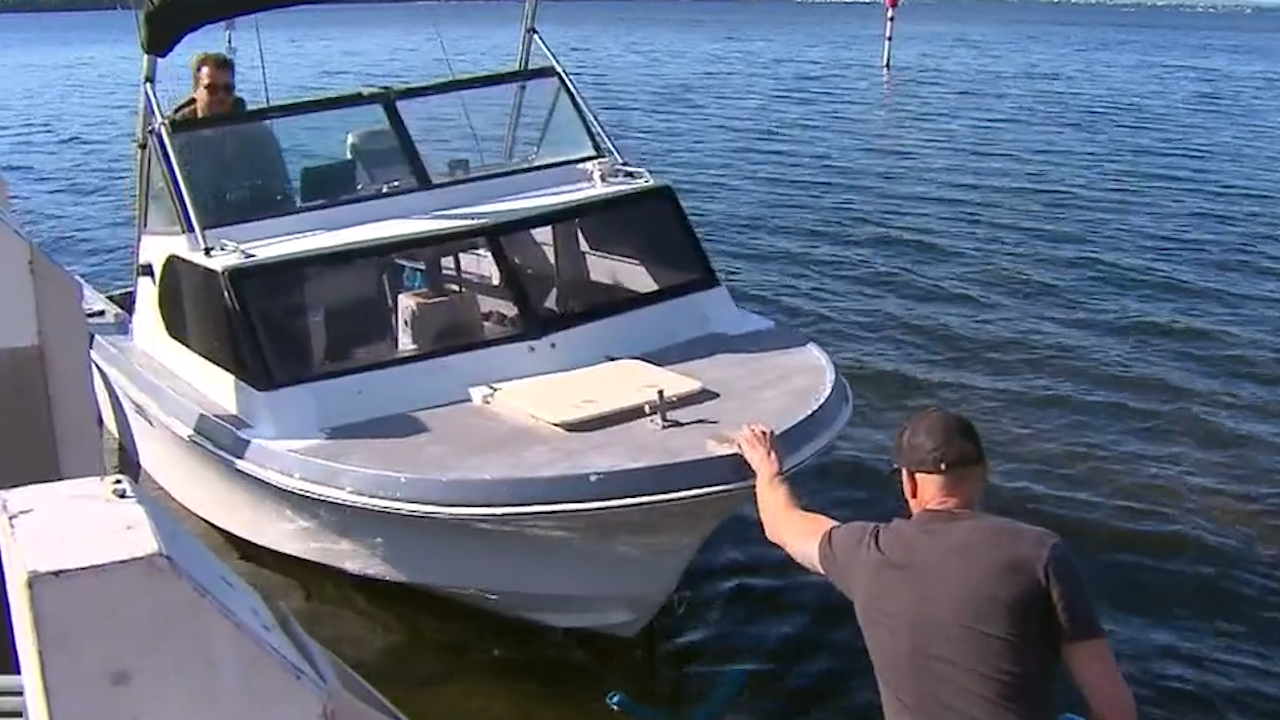
"It was quite daunting actually," fisherman Jordan Marshall said.
The pair filmed the close encounter on camera.
"Holy s–t — that is a beast… oh he's going at the motor — sheesh woah, yeah f–k," one said.
Mr Marriott said they felt scared as the shark "was right there looking at us".
READ MORE: Missing US fisherman found after 17 nights lost in wilderness
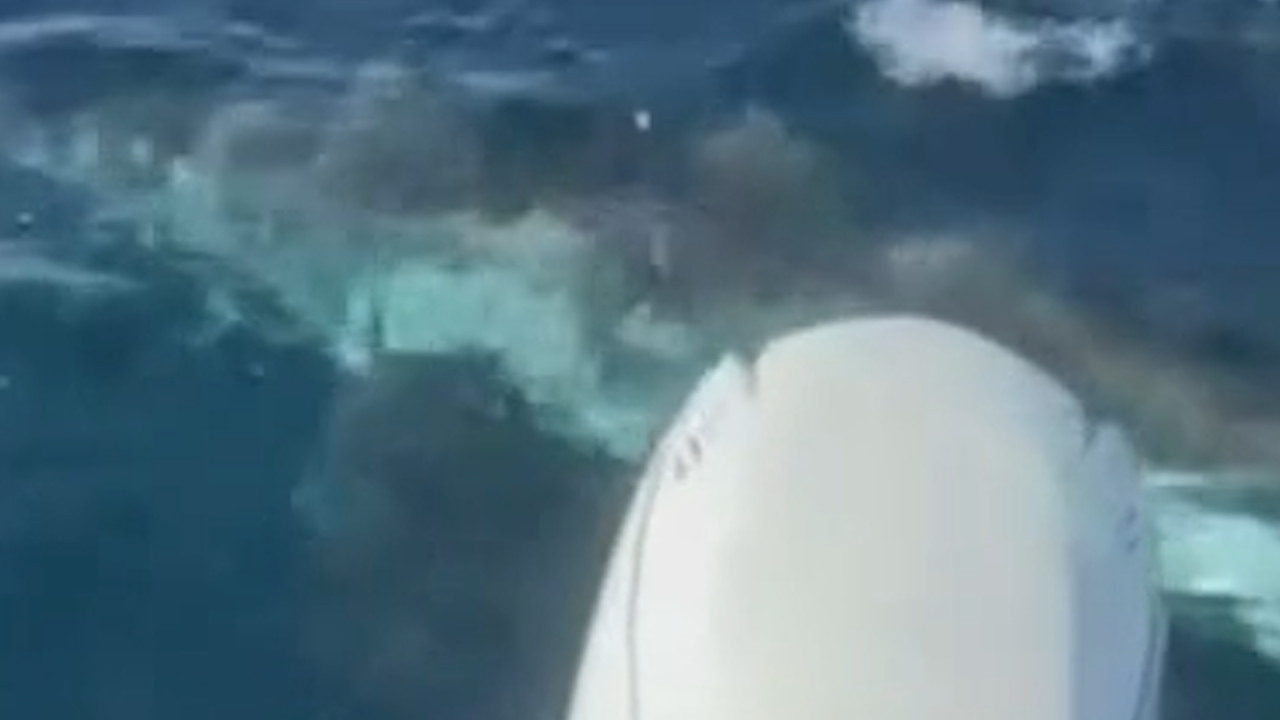
Still – the fishermen were in no rush to escape.
"He was a bit more game than me, patting the water and doing that kind of stuff," Mr Marshall said, of his friend.
Mr Marriott said he was "angling a couple of mullets trying to get him up close".

But it didn't take the bait.
"We'd tucked into a couple of beers by then so we sort of let him go off and do his own thing," Mr Marriott laughed.
The pair returned to shore without a scratch but boasting a shark tale they'll never forget.
It’s Here: CDEMA Calls for Caution and Preparation During Hurricane Season
The Caribbean Disaster Emergency Management Agency (CDEMA) has called on the region to pay close attention to the upcoming hurricane season.
The 2021 Atlantic Hurricane Season, which runs from June 1 to November 30, is forecast to be above normal with a likely range of 13 to 20 named storms (winds of 39 mph or higher), of which six to 10 could become hurricanes (winds of 74 mph or higher), including three to five major hurricanes with winds of 111 mph or higher.
“It only takes one event to make an impact so hurricane preparedness is critical every year regardless of how much activity is forecast,”Elizabeth Riley, Executive Director of CDEMA, said at a media conference today.
“The message is really one of preparedness and we say this every year and the national disaster offices reiterate the message and we want to repeat it.”
The risk of coronavirus (COVID-19) spreading during the hurricane season remains high and Riley said both her organisation and its partner the Caribbean Public Health Agency (CARPHA) have agreed that virus prevention measures need to be maintained as some states are battling with the spread of variants of concern such as the one discovered in Brazil.
Over 700,000 cases of COVID-19 have been reported in the region and more than 10,000 of those people have died.
“Individuals and communities must therefore continue to adhere to covid-19 protocols in the face of hurricane threats especially if public sheltering is required,” Riley said while noting that sheltering at public facilities will be limited.
She encouraged people, who plant to use their private dwellings as hurricane shelters, to ensure that sanitation measures are in place for all guests.
The process to restock items taken from CDEMA’s sub-regional warehouses in Barbados, Trinidad and Antigua to respond to the La Soufriere volcano eruption has started. Riley noted that most of the food and water sent to St Vincent were donated by the private sector.
The post It’s Here: CDEMA Calls for Caution and Preparation During Hurricane Season appeared first on The St Kitts Nevis Observer.
NCB Manger Gets 7 Years for Massive Bank Funds Swindle
Gleaner- The former senior manager at the National Commercial Bank (NCB), who admitted to swindling $34 million from the financial institution, has been sentenced to a total of seven years and six months in prison.
Andrea Gordon, 52, was sentenced to five years and four months on three counts of larceny as a servant, two years and 11 months on three counts of access with intent to commit an offence, and to seven years and six months on seven counts of engaging in a transaction involving criminal property.
Her fate was decided by Justice Lorna Shelly Williams in the Home Circuit Court who ruled that her sentences are to run concurrently.
The mother of two appeared remorseful and ashamed as she sat in the prisoner’s dock.
The once highly-respected bank manager previously pleaded guilty in April and was remanded.
The court heard that Gordon’s criminal behaviour was discovered in June 2020 after the bank received intelligence that she had been conducting fraudulent transactions.
Based on subsequent investigations, it was discovered that she transferred money from the bank’s internal system to her personal accounts and also to her family members as well as accounts belonging to customers.
Gordon had used the funds to purchase items including clothing, handbags and to fund construction work on her Coolwater Havendale premises in St Andrew.
However, when confronted about the embezzlement, Gordon told investigators that she took the money to assist a relative who had cancer and also because she was going through financial difficulties after she started building her home in 2017.
The court had previously heard that NCB had linked $111 million in suspicious transactions to Gordon.
However, the indictment on which she was sentenced only accounted for $34 million over the period 2017 to 2020.
Gordon, who worked at NCB’s Atrium headquarters, was employed to the bank for 30 years and at the time of the offence was earning $11.1 million per year.
Attorney-at-law Vincent Wellesley represented Gordon.
In the meantime, a July 9 date has been scheduled for a case management hearing pertaining to an application for a forfeiture and pecuniary penalty order that has been filed by the Financial Investigation Division.
The post NCB Manger Gets 7 Years for Massive Bank Funds Swindle appeared first on The St Kitts Nevis Observer.
The decoration that's caused $8 million in damages over five years
A simple household decoration has become a destructive item for households.
The items have caused almost $8 million in the past five years to 113 South Australian homes.
Now fire authorities are warning people not to leave candles unattended, with the launch of home fire safety week, which coincides with the start of winter.
READ MORE: Three hospitalised and traffic gridlock after major truck fire on NSW Central Coast

Minister for Emergency Services Vincent Tarzia said candle fires caused $7.75m damage and resulted in destroyed homes.
"The figures equate to an average damage cost of $68,584 per candle fire over the past five years," Minister Tarzia said.
"Some might think candles are perfectly safe, but it is crystal clear misused and unattended candles pose a significant risk to lives and property."
Country Fire Service (CFS) Chief Officer Mark Jones said candles also presented a risk if they were not extinguished properly.
READ MORE: Pfizer warns Aussies against buying 'illicit and counterfeit' vaccines online
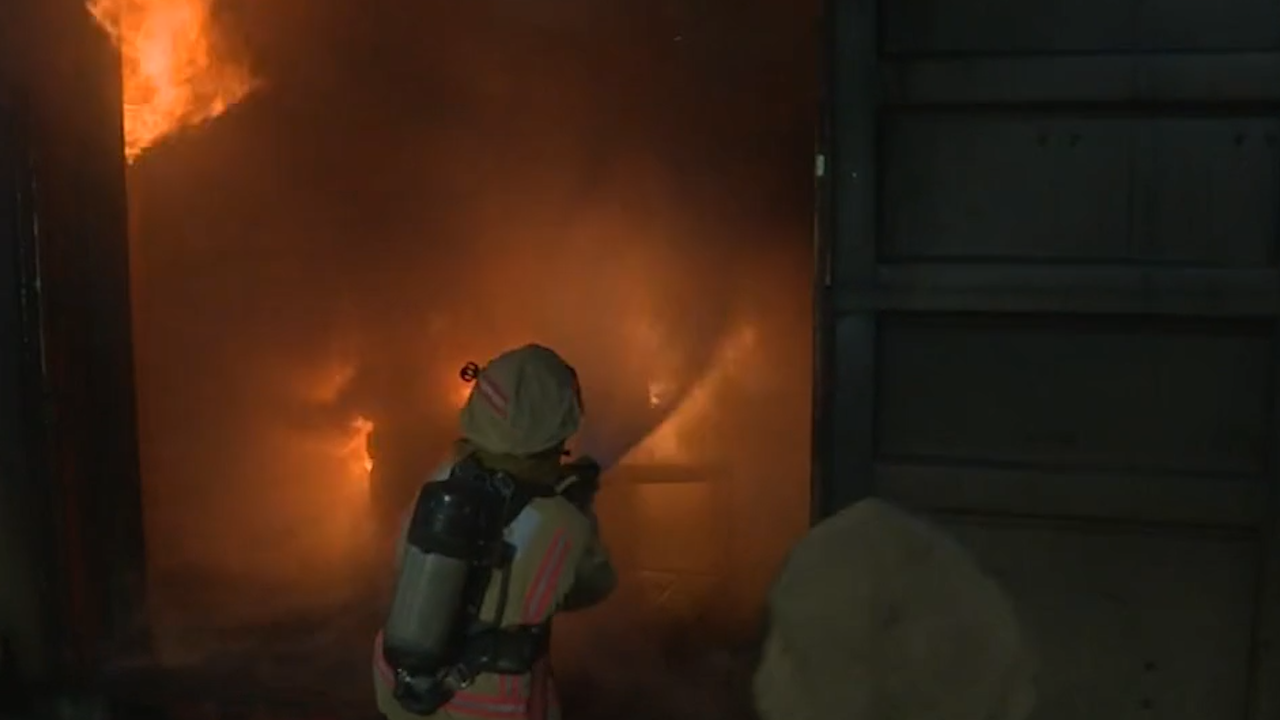
"While most people safely extinguish candles by blowing them out, many don't know the explosive dangers of using water to extinguish a candle," Mr Jones said.
"It can be just as dangerous as putting water on a fat fire.
"Putting water on a candle that has burned down into a pool of hot, liquid wax may lead to a rapid expansion of the candle's flame into a ball of fire.
"This can cause burn injuries and the rapid spread of fire.
"Never use water on a candle fire."
READ MORE: Australia's interest rates remain on hold at historic low of 0.10 per cent
South Australian Metropolitan Fire Service chief officer Michael Morgan said the cause of injury and potentially death "is a very real risk".
Accidental house fires have resulted in about five to six deaths in South Australia and 2000 burn injuries each year.
Each of them is preventable if open flames are never left burning near combustibles or on plastic surfaces.
"Don't place them on the sides of plastic baths. There have been fires where they've melted through the sides of plastic baths," Mr Jones said.
"We'd prefer if you use an LED or battery-operated candle, just for that peace of mind," Mr Morgan said.
Fire authorities said it's a timely reminder to make sure you have a working smoke alarm.
"That early warning, early detection is absolutely critical for people to get out and get out safely, and then raise the alarm," Mr Morgan said.
World View: Biden Honors Tulsa Massacre Victims, Spare Vaccine Debate, Osaka Quits French Open, More
May 28, 2021

The Associated Press
Advancing the Power of Facts
|
|
The Rundown

ARLINGTON, Va. (AP) — President Joe Biden honored America’s war dead at Arlington National Cemetery on Memorial Day by laying a wreath at the hallowed burial ground and extolling the sacrifices of the fallen for the pursuit of democracy, “the soul of…Read More
 *****@
 *****@
TULSA, Okla. (AP) — Hundreds gathered Monday for an interfaith service dedicating a prayer wall outside historic Vernon African Methodist Episcopal Church in Tulsa’s Greenwood neighborhood on the centennial of the first day of one of the deadliest ra…Read More
 *****@
 *****@
WASHINGTON (AP) — In April, the Biden administration announced plans to share millions of COVID-19 vaccine doses with the world by the end of June. Five weeks later, nations around the globe are still waiting — with growing impatience — to learn wher…Read More
 *****@
 *****@
WASHINGTON (AP) — President Joe Biden will take part in a remembrance of one of the nation’s darkest — and largely forgotten — moments of racial violence, marking the 100th anniversary of a massacre in Tulsa, Oklahoma, that wiped out a thriving Black…Read More
 *****@
 *****@
NEW YORK (AP) — Though Brian Walter knows he tried to protect his parents from the coronavirus, doubts torment him. Did he grab a wrong bottle of orange juice, one covered with infectious droplets? …Read More
|
|
OTHER TOP STORIES
VIENNA (AP) — The United Nations’ atomic watchdog hasn’t been able to access data important to monitoring Iran’s nuclear program since late February when the Islamic Re…Read More
Naomi Osaka withdrew from the French Open on Monday and wrote on Twitter that she would be taking a break from competition, a dramatic turn of events for a four-time Gr…Read More
KEOKUK, Iowa (AP) — Democrats lost last year’s election for Iowa’s 2nd Congressional District by the narrowest margin in a House race in almost 40 years. After the six-…Read More
NEW YORK (AP) — Moviegoing increasingly looks like it didn’t die during the pandemic. It just went into hibernation. John Krasinski’s thriller sequel “A Quiet Place Pa…Read More
The post World View: Biden Honors Tulsa Massacre Victims, Spare Vaccine Debate, Osaka Quits French Open, More appeared first on The St Kitts Nevis Observer.
Biden Shows Little Desire to Reverse Trump’s Cuba Policies
By Rebecca Beitsch – 05/31/21 07:05 PM EDT
The post Biden Shows Little Desire to Reverse Trump’s Cuba Policies appeared first on The St Kitts Nevis Observer.
Canada: Indigenous People Call for Continued Mass Grave Search
Indigenous groups in Canada are calling for a nationwide search for mass graves at residential school sites after the discovery of the remains of 215 children at one former school last week shocked the country.
Prime Minister Justin Trudeau said on Monday that searching for more mass graves was “an important part of discovering the truth” but did not make specific commitments.
Tk’emlúps te Secwépemc First Nation announced last week they had found the remains of 215 children, some as young as three years old, buried at the site of the Kamloops Indian Residential School, once Canada’s largest such school.
Between 1831 and 1996, Canada’s residential school system forcibly separated children from their families, subjecting them to abuse, malnutrition and rape in what the Truth and Reconciliation Commission tasked with investigating the system called “cultural genocide” in 2015.
Last week’s announcement sparked outrage, prompting flags to be flown at half-staff and people to lay hundreds of tiny shoes in public squares, places of government and on the steps of churches, in reference to the role of Christian churches from a range of denominations in running the schools.
There have long been rumors within indigenous communities, also discussed by the commission, of children buried at these schools.
The fourth volume of the commission’s report, titled ‘Missing Children and Unmarked Burials,’ identified 3,200 children who died at residential schools, about a third of whom were not named. Since that report’s publication in 2015, an additional 900 have been identified.
Parents “spoke of children who went to school and never returned,” the report reads.
A working group established by the commission in 2007 proposed, among other things, a study to identify unmarked gravesites. While the federal government initially denied the C$1.5 million ($1.2 million) needed to conduct this work, the government announced in 2019 C$33.8 million over three years for a ‘National Residential School Student Death Register’ and an online registry of residential school cemeteries.
Now there are renewed calls for Canada to do more to uncover what happened.
In meetings across the country, indigenous communities are working to figure out how to investigate, said Grand Chief Stewart Phillip, President of the Union of British Columbia Indian Chiefs.
“It’s absolutely essential that there be a national program to thoroughly investigate all residential school sites in regard to unmarked mass graves,” he said.
The post Canada: Indigenous People Call for Continued Mass Grave Search appeared first on The St Kitts Nevis Observer.
Cuba: Dissident Artist Released, Vows to Keep Fighting
Leading Cuban dissident Luis Manuel Otero Alcantara vowed to keep fighting after he was released from hospital on Monday, four weeks after authorities admitted the “artivist” while he was staging a hunger and thirst strike.
The General Calixto Garcia hospital in Havana said its treatment had enabled the 33-year-old artist to completely recover from his diagnosis of “voluntary starvation,” and his clinical and health parameters were now all within normal range.
His supporters denounced contradictions in statements by health authorities. When he was first admitted on May 2, they had said they could detect no sign of malnutrition and that he was in a stable condition, in what appeared a bid to cast doubt on his hunger strike.
Otero Alcantara said in a video published by outlet CubaNet that he needed to get up to date on all that had happened while he was kept incomunicado in hospital and would then explain in further detail his side of the story.
His release comes after pressure from U.S. officials and rights groups like Amnesty International, which 10 days ago named Otero Alcantara a “prisoner of conscience,” saying state security appeared to have him under supervision at the hospital. read more
Cuba’s government accuses him of being a mercenary for the United States, which in recent years has tightened its decades-old sanctions on the Communist-run island, deepening its economic crisis.
“I’ve got to get up to date and emerge from a state of shock, but what is clear is that … we are going to keep fighting,” Otero Alcantara told CubaNet after arriving at the home of relatives, noting he was worried about fellow activists who remained detained after protesting his hospitalization.
Reuters was unable to immediately reach Otero Alcantara, who is the head of the San Isidro Movement, a group of a few dozen artists, writers and activists that has protested restrictions in Cuba on civil liberties for the last few years.
The movement has used the advent of mobile internet in Cuba at the end of 2018 to document its provocative performances on social media and command attention. A collective hunger strike sparked a rare protest outside the culture ministry last Nov 27 which in turn catalysed a new protest movement: 27N.
Last week, around 20 Cuban artists including some from 27N asked that their works in Havana’s Fine Arts Museum be hidden from public view, in a sign of solidarity with Otero Alcantara. The museum denied the request saying it was not in the public interest.
The hospital said in its statement that the artist had reiterated many times his gratitude toward the medical staff that “respected his will” both regarding his treatment and the length of his stay.
“I’m really happy and relieved, he’s at his family home now at least,” his friend and fellow activist Iris Ruiz said. “There was so much uncertainty before.”
The post Cuba: Dissident Artist Released, Vows to Keep Fighting appeared first on The St Kitts Nevis Observer.
“Bizarre” the Reaction to the Copa America Tourny Moving to Brazil
BBC- The 2021 Copa America will be hosted by Brazil, after Argentina was stripped of the tournament just two weeks before it startsm mainly due to a coronavirus surge there.
The South American Football Confederation (Conmebol) said Argentina was removed as host because of the “present circumstances”.
The country is currently experiencing a surge in Covid-19 cases. Yet Brazil has the 2nd highest Pandemic death rate in the world, behind the USA.
Later on Monday, Conmebol confirmed Brazil would host the showpiece event, which starts on 13 June.
“Conmebol thanks the president @jairbolsonaro and his team, as well as the Brazilian Football Confederation for opening the doors of that country to what is today the safest sporting event in the world. South America will shine in Brazil with all its stars!” Conmebol said on Twitter.
But Mr Bolsonaro’s chief of staff warned that there is “no done deal yet” and tough conditions would have to be met.
“We are in the middle of the process (of negotiations). But, we will not shy away from a demand that, if it’s possible to be done, it could be done,” Luiz Ramos said.
It is not known which stadiums would host the tournament if it goes ahead.
Argentina was originally set to co-host with Colombia, who were removed on 20 May with wide-spread protests sweeping the country.
Opposition to the tournament had grown both inside and outside Argentina’s government, while Uruguay striker Luis Suarez told reporters on Friday that priority had to be given “to the health of human beings”.
On 22 May Argentina went into a new nine-day lockdown after seeing 35,000 new cases each day that week.
Meanwhile, in Brazil, protests over the management of the Covid-19 pandemic by the government of President Jair Bolsonaro took place on Saturday.
Brazil has registered nearly 460,000 deaths – the second-highest toll in the world after the United States. It also has the third-highest number of recorded coronavirus cases at more than 16 million.
Brazil’s Senate is holding an inquiry into the Bolsonaro government’s handling of the pandemic and the slow roll-out of the vaccine programme.
Brazil are defending champions, having won the tournament in 2019.
Every game at the Copa America will be shown live on the BBC.
Analysis
Hugo Bachega, BBC Latin America online desk
“Bizarre” and “out of touch”. That’s how Brazilians have labelled Conmebol’s surprise decision to move the Copa America to a country which continues to be a hotspot in the pandemic, with an average of 2,000 deaths a day. Even if the matches end up being played behind closed doors.
When you take into account that the previous host, Argentina, was removed because of its struggle to contain the virus, the move becomes even harder to explain.
Brazilian cities are experiencing an upsurge in infections as restrictions are lifted and many people continue to ignore advice to socially distance and wear masks.
Intensive Care Unit beds are full, and the vaccination campaign is progressing very slowly.
It is all about money. Cancelling the event, which many say would have been the most sensible decision, would have resulted in huge losses for the organisers.
And it is also about Brazil’s president who, it seems, gave his backing to the country becoming a last-minute host.
Jair Bolsonaro opposes lockdowns, face masks and, some months back, even raised doubts about the vaccine.
He has been accused of doing very little to control the virus, so some commentators have argued that agreeing to host a massive sporting event as the pandemic rages on is very much in the Bolsonaro style.
The post “Bizarre” the Reaction to the Copa America Tourny Moving to Brazil appeared first on The St Kitts Nevis Observer.