Category Archives: headline

Diver willingly sticks 'full arm' down mouth of shark

In the crystal clear waters of the Bahamas one diver is doing what most people would baulk at — she's approaching wild sharks, sticking her arm down their mouths and removing embedded hooks.

Cristina Zenato had been diving in the chain of islands, off Cuba, for a couple of years and has always been fascinated by the ocean.

After seeing sharks in visible distress she told 9news.com.au she decided to do something.

READ MORE: The island that's had so many shark attacks swimming is now banned
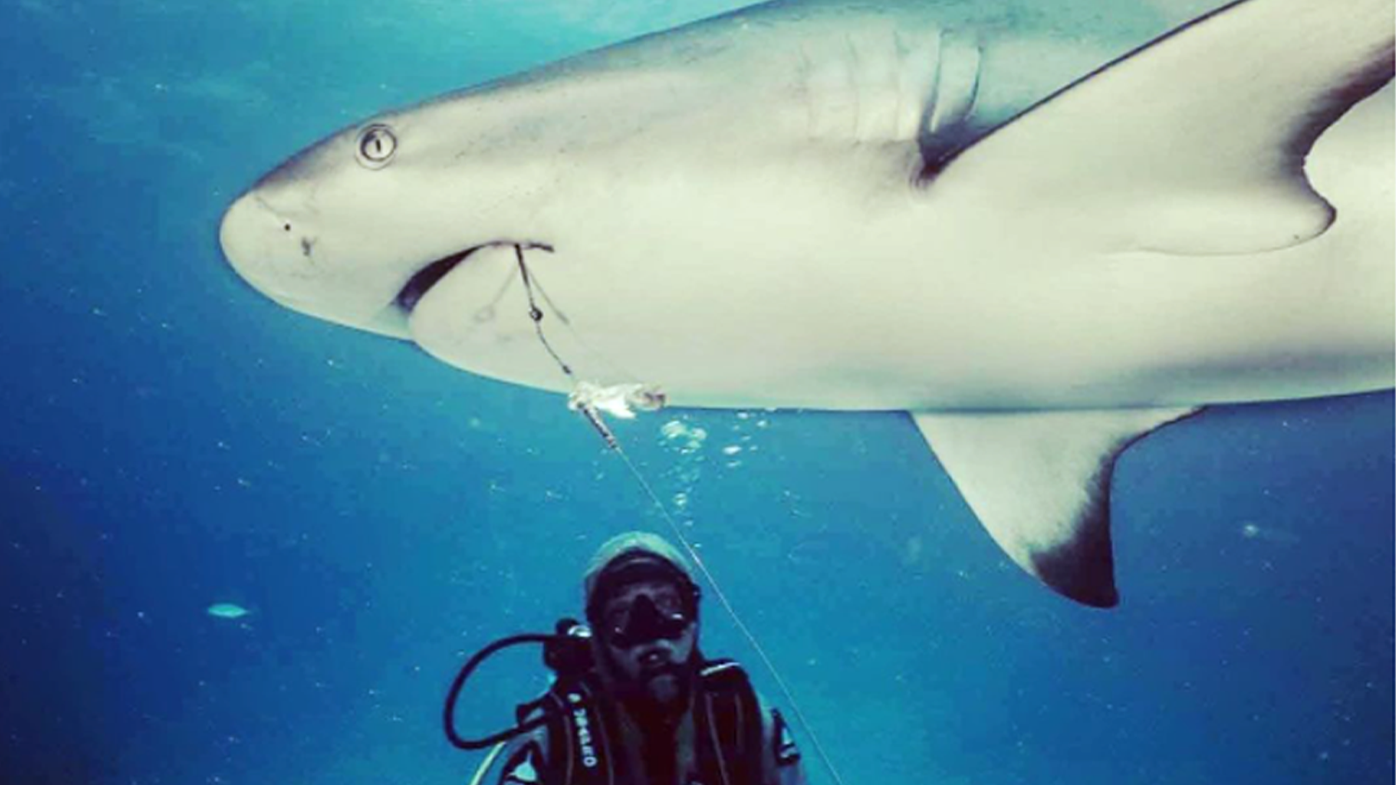
Diver Christina Zenato has been removing fishing hooks from sharks in the Caribbean.

"(They'd have) swollen jaws, or I watched them slam themselves in the sand trying to remove it," she said, adding it was a natural progression to start removing the hooks.

"It's the same way I would remove a thorn out of my dog's paw."

Obviously, don't try this at home.

READ MORE: Hordes of sharks found living in volcano

https://www.instagram.com/p/CGcXA66FWUF/

It was the removal of a hook from a Caribbean reef shark called "Foggy Eye" that still sticks with Ms Zenato.
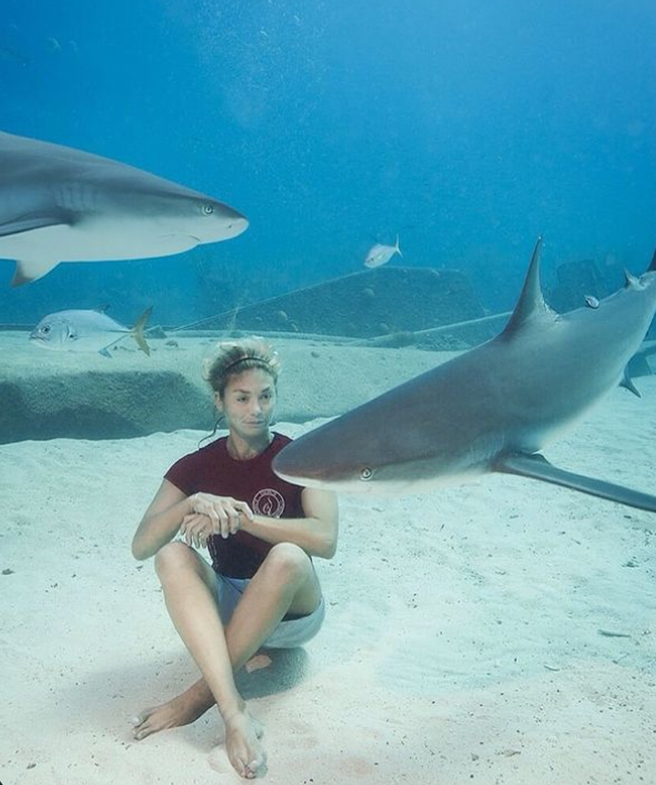
Cristina Zenato can also free dive. She can hold her breath for up to three minutes.

"She never liked to be touched, she'd never approach," she said.

"One day she showed up with a hook on the side and as she was swimming by I grabbed it and it came out easily.

"Three days later she showed up with another. I couldn't see the hook I could just see the lure coming out of her mouth.

"I started working with her and after a 30 minute dive I literally shoved my arm down her mouth up to the elbow and pulled this hook out.

"From that day on she always likes to be patted. She will come lean into me, come into my lap and allow me to pat her.

"It was really a 180 degree behavioural change."

Ms Zenato has formed such a close bond with the "smart" animals she claims they actually started seeking her out for help.
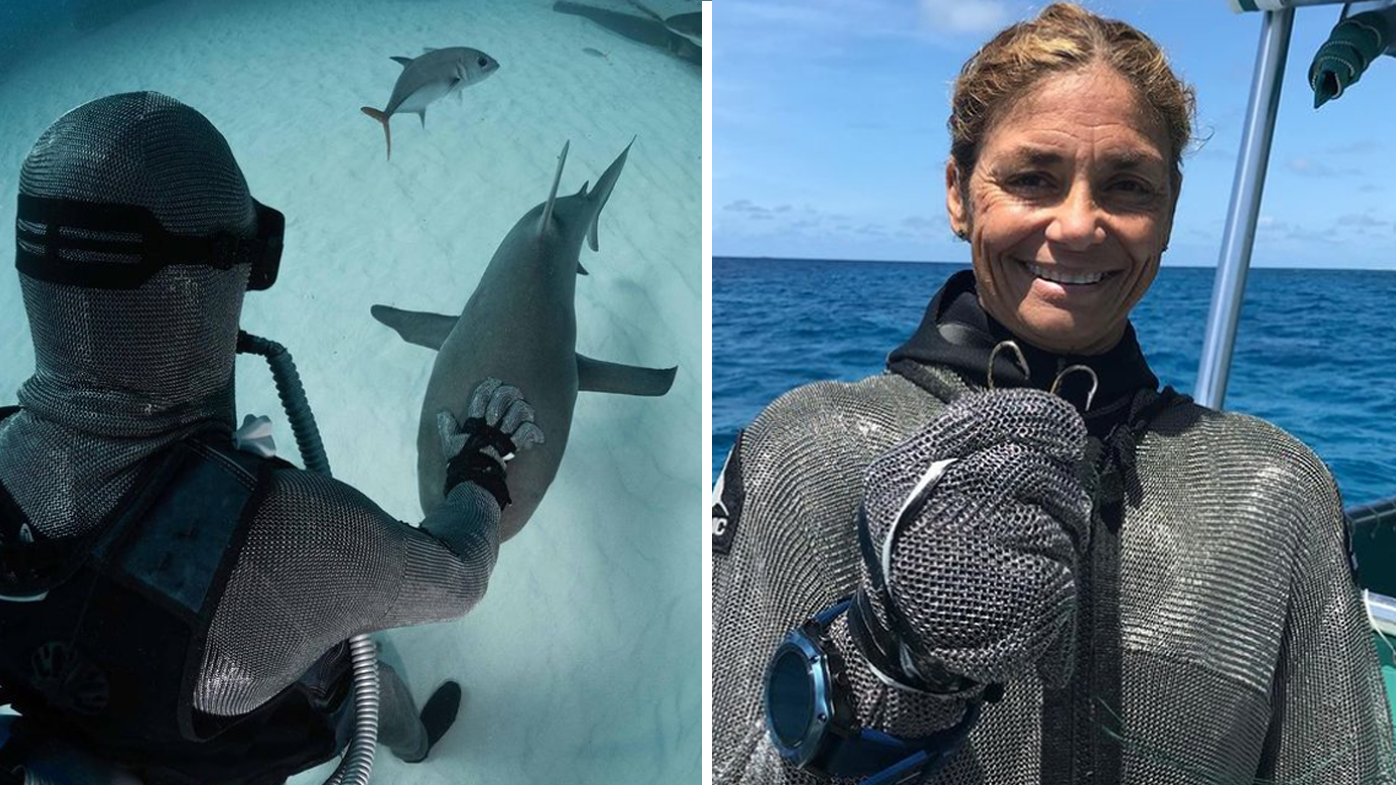
The diver said 'there's a level of trust' between her and the sharks as she works with the same population of animals.

While the diver wishes she could help all species, she predominantly performs removals on Caribbean reef sharks and nurse sharks.

She explained that the size of larger species, such as tiger sharks and bull sharks, makes removals near-impossible.

"They're just too big. Size does matter in this case," she said.

"If a tiger just tries to move away from me it could actually knock me off by a couple of feet.

"Unless I was extremely comfortable with a specific animal I wouldn't go around trying to remove hooks."

'The deadliest form of plastic pollution'

Australia's scientific research agency CSIRO estimates that more than a quarter of the world's fishing lines are lost every year.

Researchers sifted through 40 years of data to produce the first global estimate of commercial fishing gear losses.

READ MORE: Plastic pollution could be working its way up the food chain
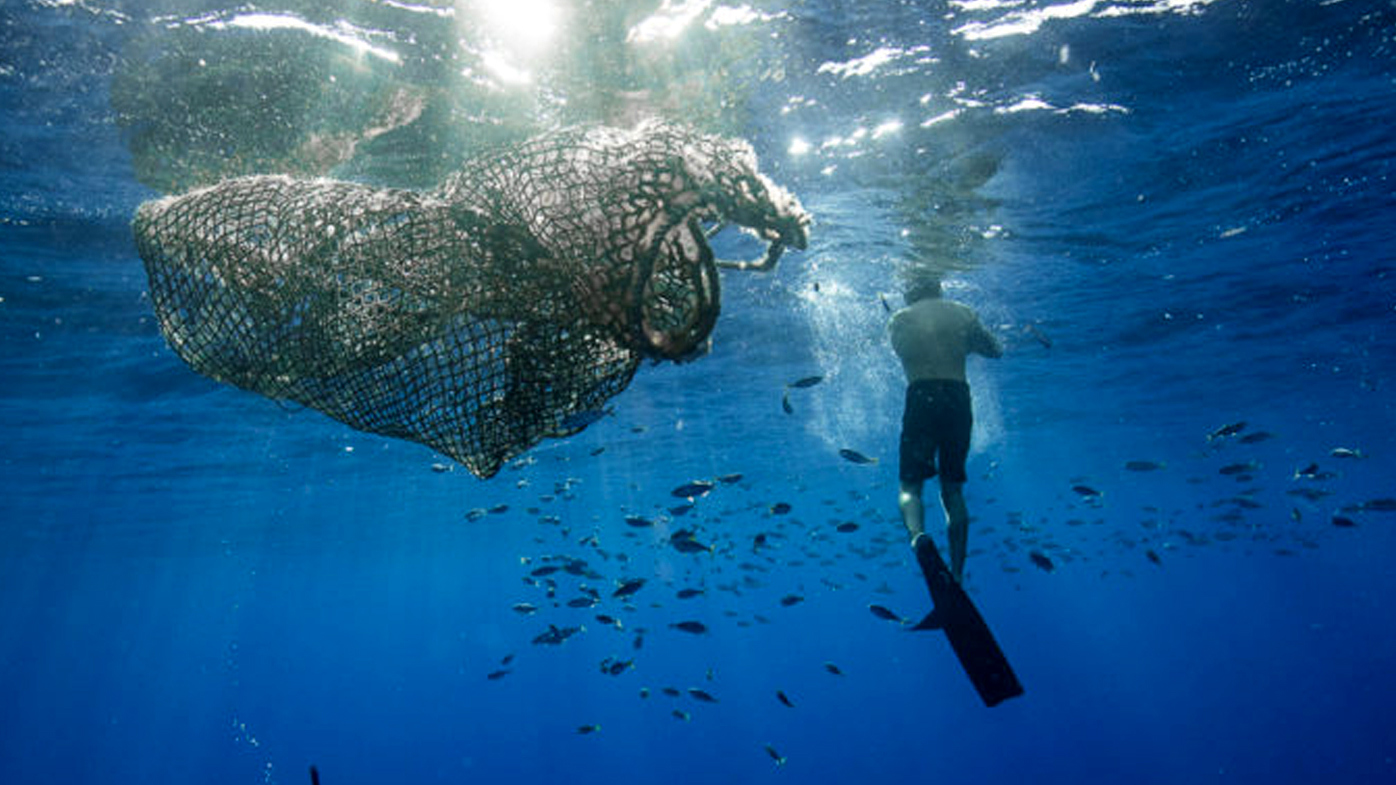
A man swims near a ghost net in the Great Pacific Garbage Patch.

"The study estimates that six per cent of all fishing nets, nine per cent of all traps, and 29 per cent of all lines are lost or discarded into our oceans each year," Kelsey Richardson, a PhD student from CSIRO's Marine Debris Team, who led the study, said in a statement.

"We found that bad weather, gear becoming ensnared on the seafloor, and gear interfering with other gear types are the most common reasons for commercial fishing gear being lost."

Discarded fishing gear is the deadliest form of marine plastic pollution as it leads to death by exhaustion or suffocation.
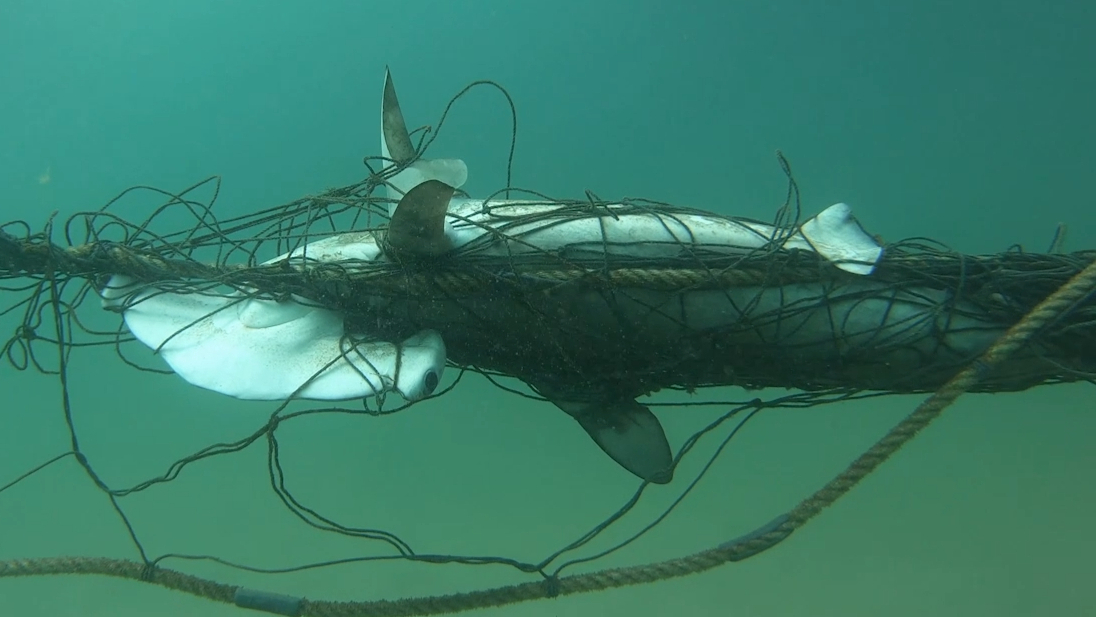
Hammerhead stuck in shark nets

"Discarded nets, lines, and ropes now make up about 46 per cent of the Great Pacific Garbage Patch," the World Wildlife Fund (WWF) states.

Once in the ocean, fishing gear can take hundreds of years to breakdown.

FOLLOW: Raffaella Ciccarelli on Twitter
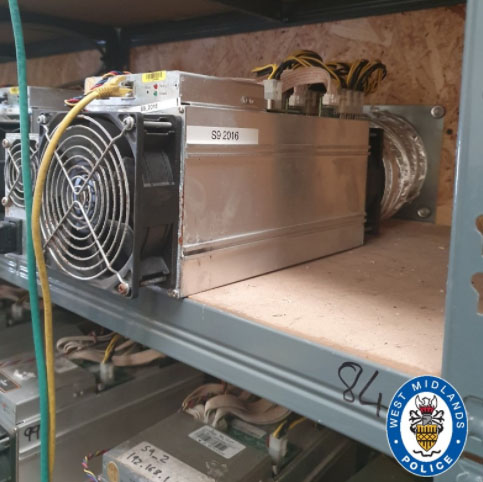
Police find massive Bitcoin mine in raid on suspected cannabis farm

UK police uncovered a cryptocurrency mine powered by stolen electricity during a raid of what they suspected was a cannabis farm.

The facility was stealing thousands of pounds worth of electricity from the mains supply, according to a statement from the West Midlands Police.

"Officers forced entry to the premises in Great Bridge Industrial Estate, Sandwell, on May 18 on the back of intelligence suggesting it was being used as a cannabis farm," the statement read.

READ MORE: Why has Bitcoin been plunging?

"Lots of people were visiting the unit at different times of day, lots of wiring and ventilation ducts were visible, and a police drone picked up a considerable heat source from above," it added.

Despite these being described by the police as "classic cannabis factory signs," officers instead found "a huge bank of around 100 computer units as part of what's understood to be a Bitcoin mining operation.

"Police seized IT equipment and said inquiries with electricity supplier Western Power revealed the electric supply "had been bypassed and thousands of pounds worth had been stolen to power the 'mine'."

"It's certainly not what we were expecting," Sandwell Police Sergeant Jennifer Griffin said.

"It had all the hallmarks of a cannabis cultivation set-up and I believe it's only the second such crypto mine we've encountered in the West Midlands," Ms Griffin added.

READ MORE: 'We are alarmed': Tax Office warns cryptocurrency traders to report gains

"My understanding is that mining for cryptocurrency is not itself illegal but clearly abstracting electricity from the mains supply to power it is," Ms Griffin said.

No arrests have been made on site and no one was at the unit at the time of the warrant, but inquiries with the unit's owner will be conducted, the statement also read.

Cryptocurrency mining requires significant computer power and electricity, and has a large carbon footprint. Mining hardware is constantly running, which also increases energy consumption.

Aussies turn to retail therapy as border closures see international holidays cancelled

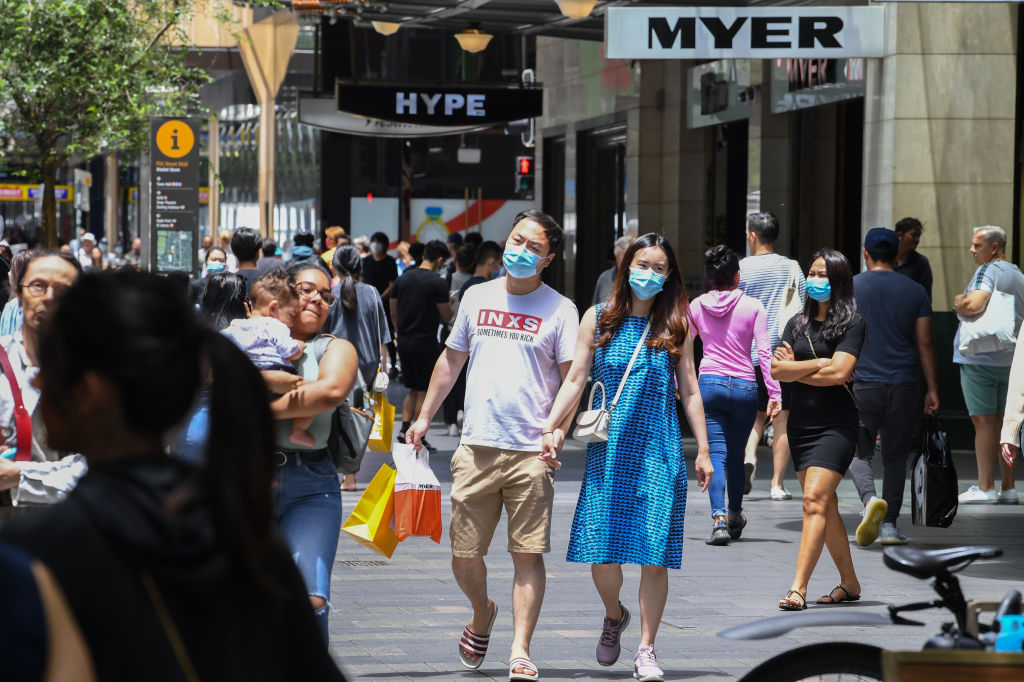
Aussies forced to cancel their international travel plans amid coronavirus border closures have found other ways to treat themselves in the last year, spending big on retail therapy, new data reveals.

Hundreds of thousands of people across the country have been left cashed up from cancelled international holidays, leaving that money to be funnelled into the retail, beauty and hospitality sectors.

With more than $65 billion spent on international travel in Australia in 2019 pre-pandemic, some of that has now been injected back into local businesses, specifically designer goods, dining out, fine wines and even non-surgical procedures like face fillers and Botox.

READ MORE: Victoria records five new COVID cases amid record testing and vaccine blitz

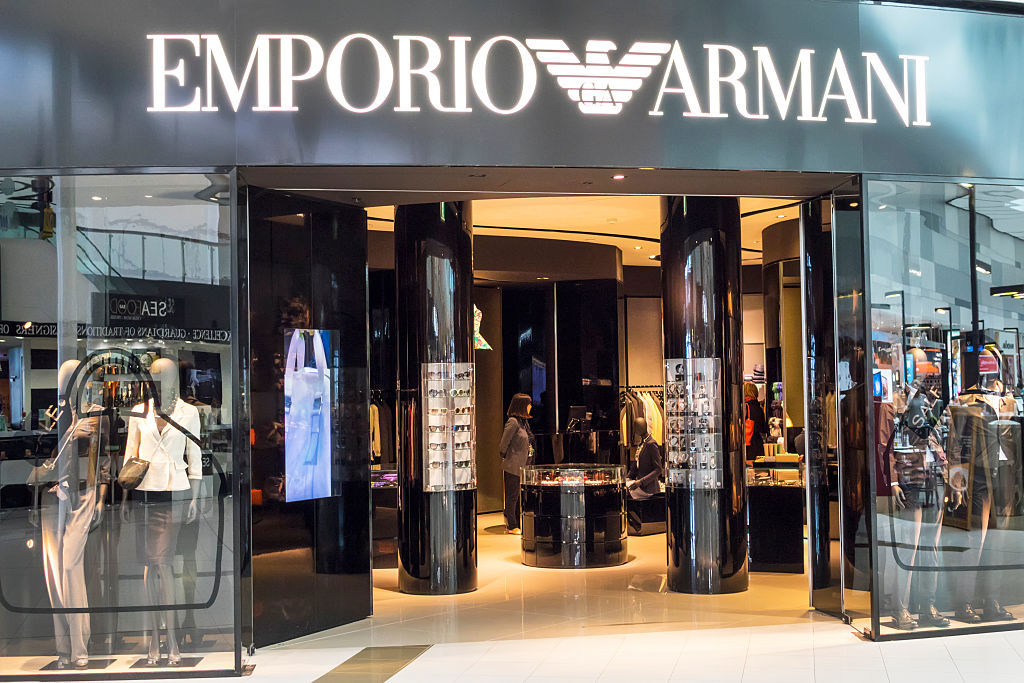
The luxury industry is set to increase by two per cent to $4billion this financial year, despite the sector usually relying on international travellers coming to Australia for a fifth of its revenue.

A new trend in spending has emerged, with shoppers singling out so-called 'zoom friendly products' like earrings and necklaces, to improve their image while working from home.

High-end restaurants have said they have seen an increase in diners spending on top menu items and expensive wines, with luxury car sales up 5.8 per cent in the past five months.

READ MORE: Teen charged over alleged stabbing at showground in Sydney's west

Spending on renovations – a popular choice among homeowners since the outbreak of the pandemic – has increased to $1 billion per month as people treat themselves to new additions like gyms, saunas and spas.

Australian retail sales surpassed expectations back in March, in a strong sign for the local economy as house prices and high employment rates boosted consumer confidence, adding to the spending.

Sales rose 1.4 per cent from February to March, surpassing expectations of a one per cent gain, data from the Australian Bureau of Statistics (ABS) suggests.

As well as the lack of international travel, the spending blitz has been assisted by government welfare payments, low borrowing costs and a surge in employment, which has boosted consumer confidence.