Originally published by The Spinoff OPINION: The ‘segregationist’ rhetoric was a desperate tactic by the National leader and last night’s Newshub poll issued a thundering fail grade. Before, MPs were inclined to hold off on…
Category Archives: headline
Māori girl in the gallery: How reporter Rukuwai Tipene-Allen copes with racism in the Beehive
Originally published by Māori Television OPINION: “Welfare dependent,” “inferior,” “savages,” “natives”.Walking through Parliament, I head to my office in the press gallery, passing gilded portraits of reporters who came…
The death of Allen Ball: Hāwera police officers' trial begins in New Plymouth
Three Hāwera police officers had more than two hours to provide medical assistance to a man who would later die in their custody, a court heard today.It’s that timeline that forms one of many issues a jury of five men and seven…
Trillions of red-eyed cicadas about to emerge after 17 years underground
Sifting through a shovel load of dirt in a suburban backyard, US couple Michael Raupp and Paula Shrewsbury find their quarry: a cicada nymph.
And then another. And another. And four more.
In maybe a third of a square foot of dirt, the University of Maryland entomologists find at least seven cicadas, a rate just shy of a million per acre.
READ MORE: Swarm of killer bees kills US man mowing his lawn
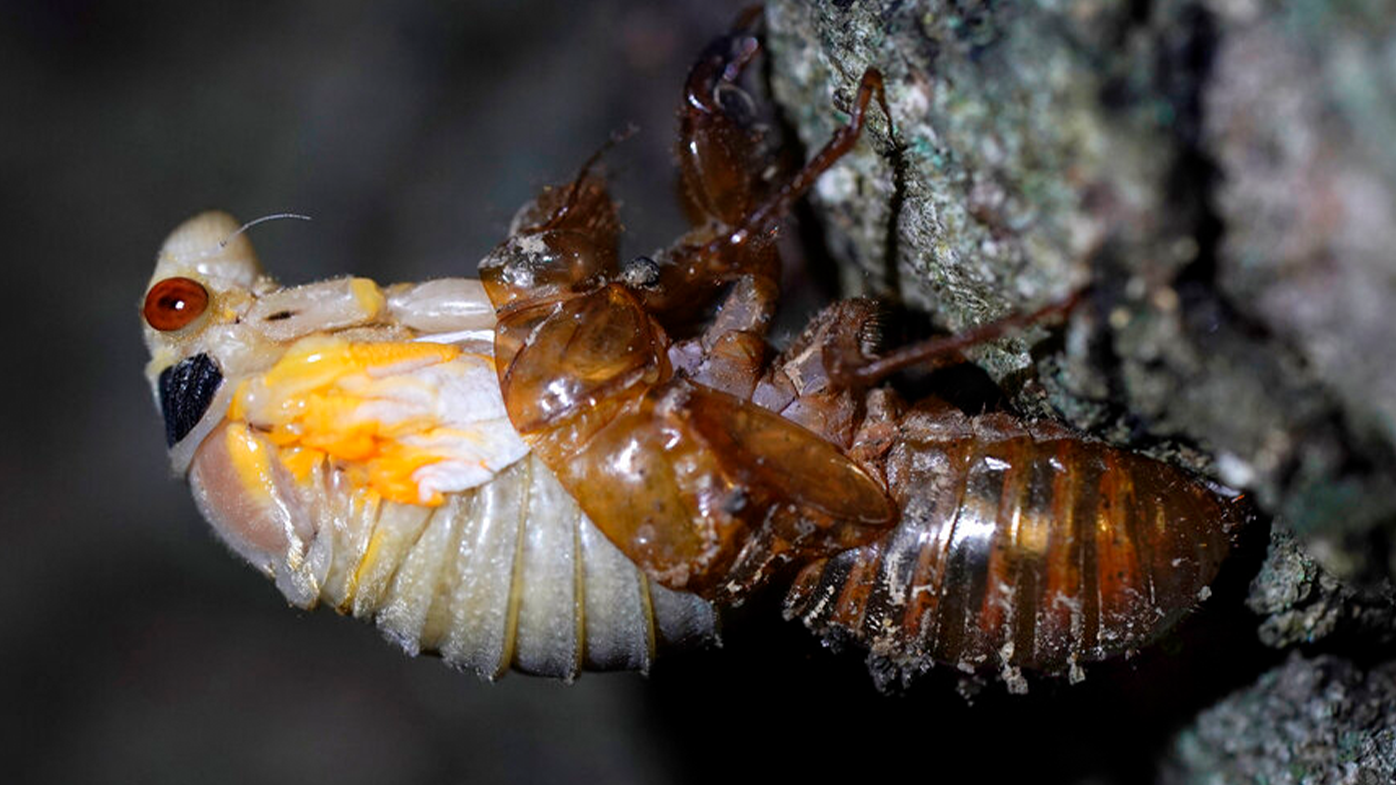
A nearby yard yielded a rate closer to 1.5 million.
And there's much more afoot.
Trillions of the red-eyed black insects are coming, scientists say.
Within days, a couple of weeks at most, the cicadas of Brood X (the X is the Roman numeral for 10) will emerge after 17 years underground.
There are many broods of periodic cicadas that appear on rigid schedules in different years, but this is one of the largest and most noticeable.
They’ll be in 15 states from Indiana to Georgia to New York; they’re coming out now in mass numbers in Tennessee and North Carolina.
When the entire brood emerges, backyards can look like undulating waves, and the bug chorus is lawnmower loud.
The cicadas will mostly come out at dusk to try to avoid everything that wants to eat them, squiggling out of holes in the ground.
They’ll try to climb up trees or anything vertical, including Mr Raupp and Ms Shrewsbury.
Once off the ground, they shed their skins and try to survive that vulnerable stage before they become dinner to a host of critters including ants, birds, dogs, cats and Mr Raupp.
It’s one of nature’s weirdest events, featuring sex, a race against death, evolution and what can sound like a bad science fiction movie soundtrack.
READ MORE: Tradies find giant moth at Queensland school worksite
Some people may be repulsed.
Psychiatrists are calling entomologists worrying about their patients, Ms Shrewsbury said.
But scientists say the arrival of Brood X is a sign that despite pollution, climate change and dramatic biodiversity loss, something is still right with nature.
And it’s quite a show.
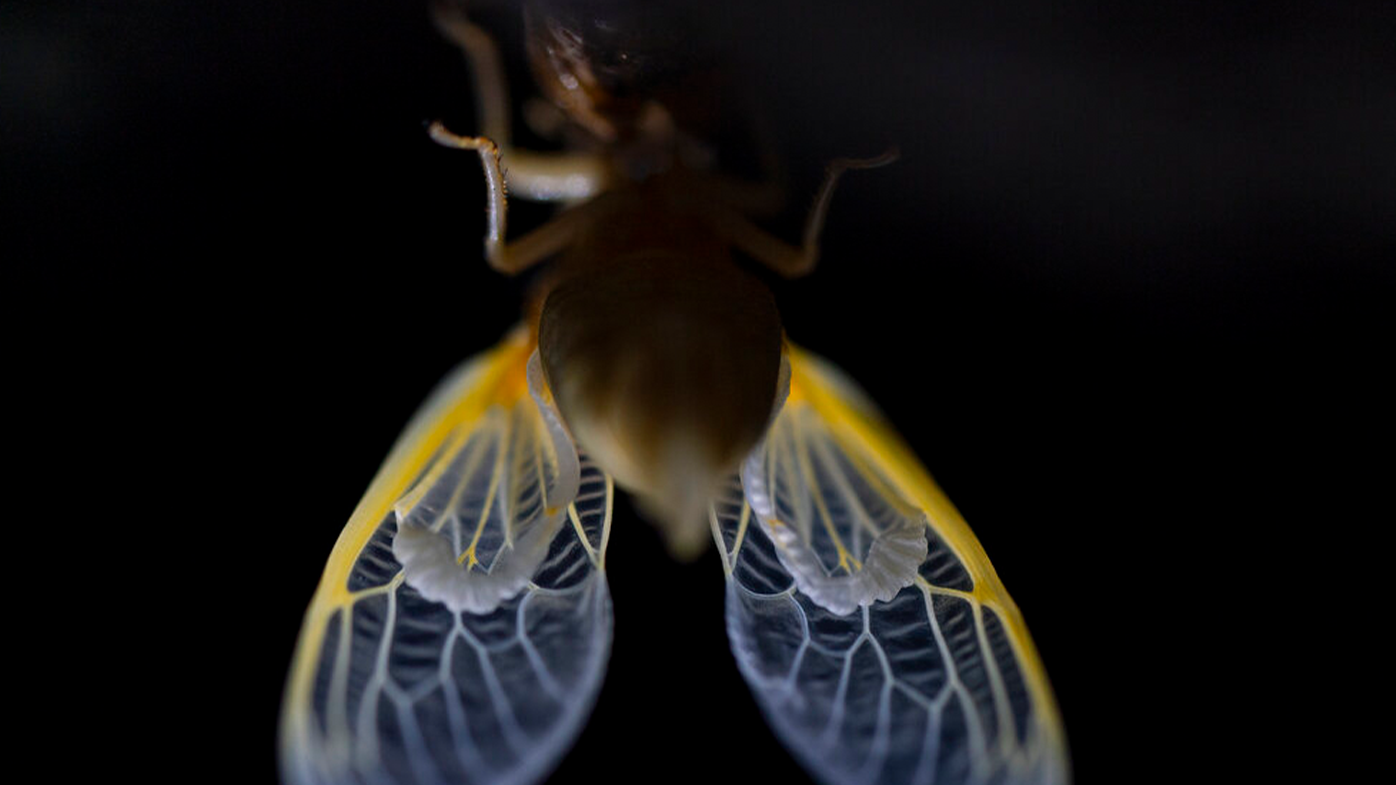
Mr Raupp presents the narrative of cicada’s lifespan with all the verve of a Hollywood blockbuster:
“You’ve got a creature that spends 17 years in a COVID-like existence, isolated underground sucking on plant sap, right?" he says.
"In the 17th year these teenagers are going to come out of the earth by the billions if not trillions.
"They’re going to try to best everything on the planet that wants to eat them during this critical period of the nighttime when they’re just trying to grow up, they’re just trying to be adults, shed that skin, get their wings, go up into the treetops, escape their predators.
“Once in the treetops, hey, it’s all going to be about romance.
"It’s only the males that sing. It’s going to be a big boy band up there as the males try to woo those females, try to convince that special someone that she should be the mother of his nymphs.
"He’s going to perform, sing songs.
"If she likes it, she’s going to click her wings. They’re going to have some wild sex in the treetop.
“Then she’s going to move out to the small branches, lay their eggs.
"Then it’s all going to be over in a matter of weeks.
"They’re going to tumble down. They’re going to basically fertilise the very plants from which they were spawned.
"Six weeks later the tiny nymphs are going to tumble 80 feet (24 metres) from the treetops, bounce twice, burrow down into the soil, go back underground for another 17 years.”
“This,” Mr Raupp says, “is one of the craziest life cycles of any creature on the planet.”
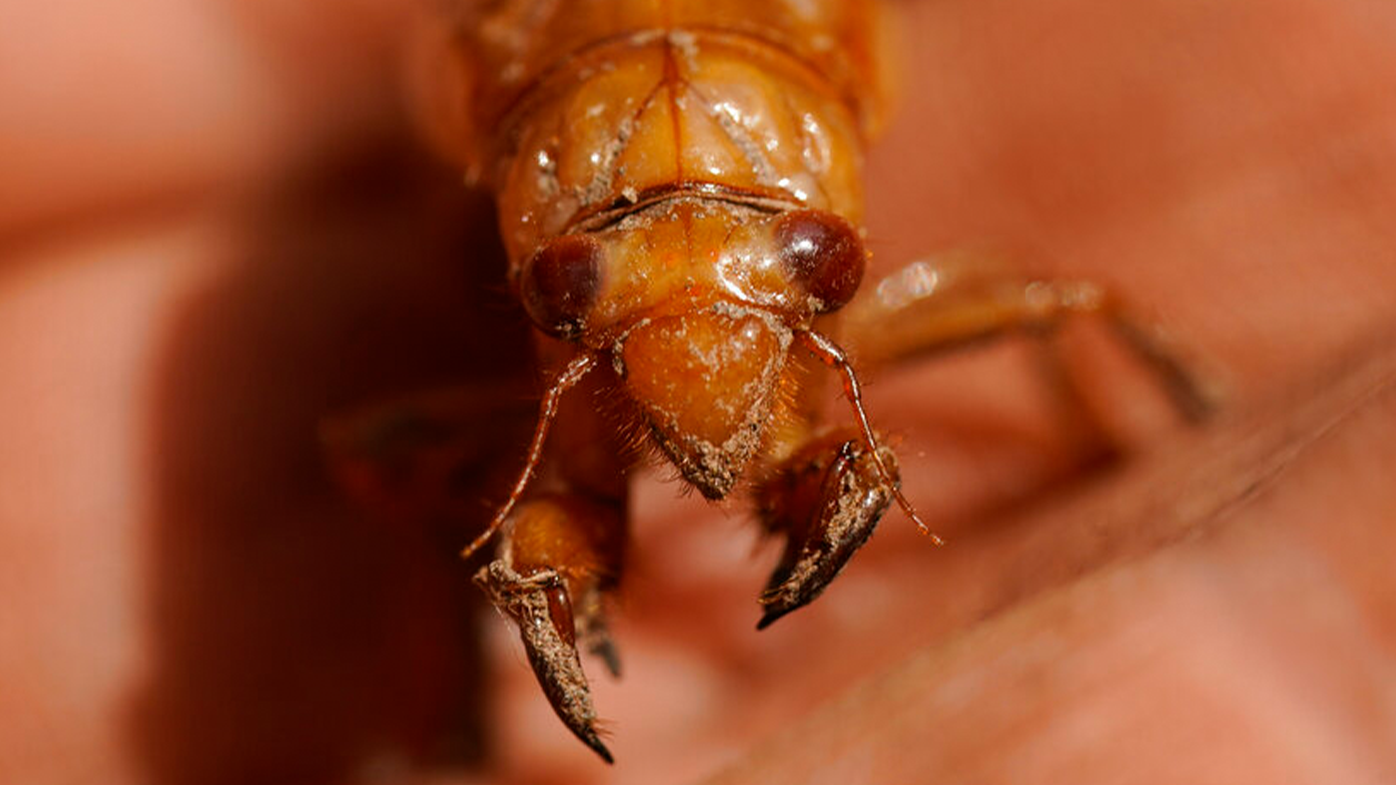
America is the only place in the world that has periodic cicadas that stay underground for either 13 or 17 years, says entomologist John Cooley of the University of Connecticut.
The bugs only emerge in large numbers when the ground temperature reaches 18 degrees.
That’s happening earlier in the calendar in recent years because of climate change, says entomologist Gene Kritsky. Before 1950 they used to emerge at the end of May; now they’re coming out weeks earlier.
Cicadas who come out early don’t survive. They’re quickly eaten by predators.
Cicadas evolved a key survival technique: overwhelming numbers.
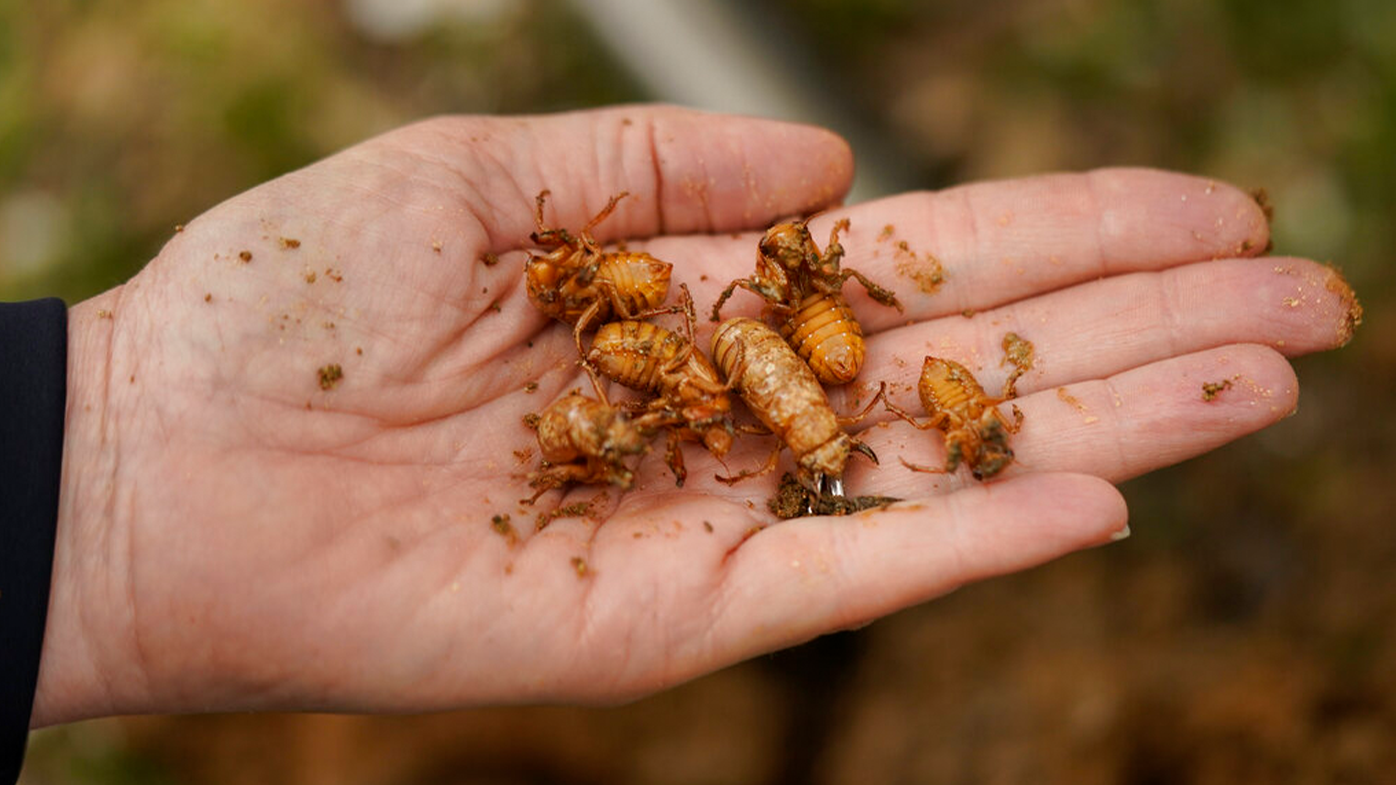
There’s just too many of them to all get eaten when they all emerge at once, so some will survive and reproduce, Mr Raupp says.
This is not an invasion.
The cicadas have been here the entire time, quietly feeding off tree roots underground, not asleep, just moving slowly waiting for their body clocks tell them it is time to come out and breed.
They’ve been in America for millions of years, far longer than people.
When they emerge, it gets noisy – 105 decibels noisy, like “a singles bar gone horribly, horribly wrong,” Mr Cooley says.
There are three distinct cicada species and each has its own mating song.
They aren’t locusts and the only plants they damage are young trees, which can be netted.
The year after a big batch of cicadas, trees actually do better because dead bugs serve as fertiliser, Mr Kritsky says.
People tend to be scared of the wrong insects, says University of Illinois entomologist May Berenbaum.
The mosquito kills more people than any other animals because of malaria and other diseases.
Yet some people really dread the cicada emergence, she said.
“I think it’s the fact that they’re an inconvenience. Also, when they die in mass numbers they smell bad,” Ms Berenbaum says.
“They really disrupt our sense of order.”
But others are fond of cicadas – and even munch on them, using recipes like those in a University of Maryland cookbook.
And for scientists like Mr Cooley, there is a real beauty in their life cycle.
“This is a feel-good story, folks. It really is and it’s in a year we need more,” he says.
“When they come out, it’s a great sign that forests are in good shape.
"All is as it is supposed to be.”
More airstrikes hammer Gaza after war's deadliest day so far
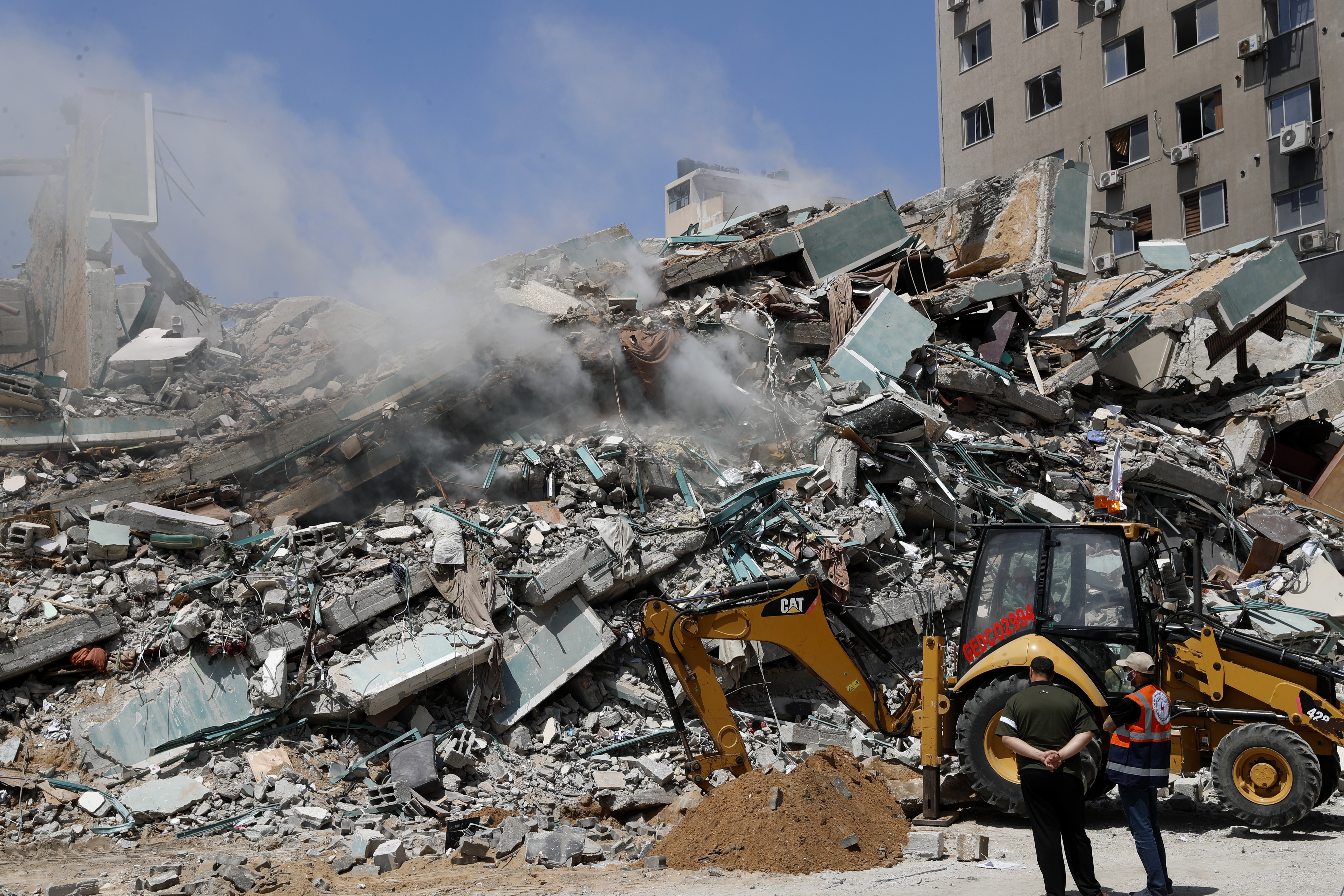
Israeli warplanes have unleashed a series of heavy airstrikes at several locations of Gaza City.
Explosions rocked the city from north to south for 10 minutes early on Monday.
The airstrikes were heavier, on a wider area and lasted longer than a series of air raids 24 hours earlier in which 42 Palestinians were killed.
READ MORE: Netanyahu warns war will go on, after dozens died in deadliest attack yet
That attack was the deadliest single attack in the latest round of violence between Israel and the Hamas militant group that rules Gaza.
In a brief statement, the Israeli Defence Force says only that "IDF fighter jets are striking terror targets in the Gaza Strip."
Overnight, Israeli Prime Minister Benjamin Netanyahu indicated that the fourth war between Israel and Palestinians in Gaza would rage on despite international efforts to broker a ceasefire.

READ MORE: Deaths rise as Palestinians flee heavy Israeli fire in Gaza
In a televised address, Mr Netanyahu said on Sunday evening (early Monday morning AEST) the attacks were continuing at "full-force" and would "take time."
Israel "wants to levy a heavy price" from Gaza's militant Hamas rulers, he said, flanked by Defence Minister and political rival, Benny Gantz, in a show of unity.
Singapore COVID spike hurts Australian travel bubble plan
Singapore's hold on pole position to be the next country Australia opens a travel bubble with could now be in doubt, the prime minister has hinted.
Scott Morrison said border discussions with his Singaporean counterparts are ongoing but he warned any two-way bubble remained "some way off", especially after a recent uptick in cases in the Asian nation.
Singapore's government has just imposed a new four-week lockdown after a string of new COVID-19 cases in the community.

Last week Singapore reported 71 new cases, up from 48 the week before.
Some of the cases are so far unlinked, prompting concern of a new wave.
"I'm looking forward to further discussions with the Singapore government about them being the next potential country," Mr Morrison said.
"(But) I still think that's some way off."
Fiji, a long-popular destination for Australian families, is eager to forge a travel bubble with Australia.
However, like Singapore, the Pacific nation has been fighting a recent rise in coronavirus cases.
Taiwan is frequently mentioned by Australian government officials alongside Singapore and Fiji as potential bubble partners.
Australia's former deputy chief medical officer has predicted a "slow, methodical and safe opening" of its international borders in the first half of 2022.
Speaking on Today, Dr Nick Coatsworth denied he was in conflict with Mr Morrison over a timeline for opening borders for international travel.
"When you put your head up over the trench this is what happens," Dr Coatsworth said, describing the reaction to his recent comments about smashing the "false idol" of COVID-19 eradication in Australia.

READ MORE: Qantas to investigate the accuracy of COVID-19 tests in India
Dr Coatsworth said he was in "100 per cent agreement" with Mr Morrison.
But he said it was important to now start a conversation about how Australians will travel abroad in 2022.
"What do we do when the majority of Australians are vaccinated and immune, safe from hospitalisation, safe from death from COVID-19 but there's still critical events going on that people want to attend around the world?" he said.
"Do we still put them in hotel quarantine in 2022 at their expense?"
In a recent speech at the Royal Australasian College of Surgeons' annual scientific meeting which made headlines over the weekend, Dr Coatsworth said Australia needed to ready itself for borders to open and the return of the virus into the community.
"The best way to make people feel more comfortable about COVID-19 is get vaccinated," he said.
READ MORE: Australian cricketers touch down in Sydney after leaving India

Dr Coatsworth said a poll showing three-quarters of Australians wanted borders to remain shut because of coronavirus was "completely reasonable".
"This is a conversation we need to get the community involved in," he said.
"There will be COVID-19 circulating within the community in the future."
Australia has vaccinated three million people but the government has been criticised over the slow rollout.
More icy, brisk conditions for southeast coast
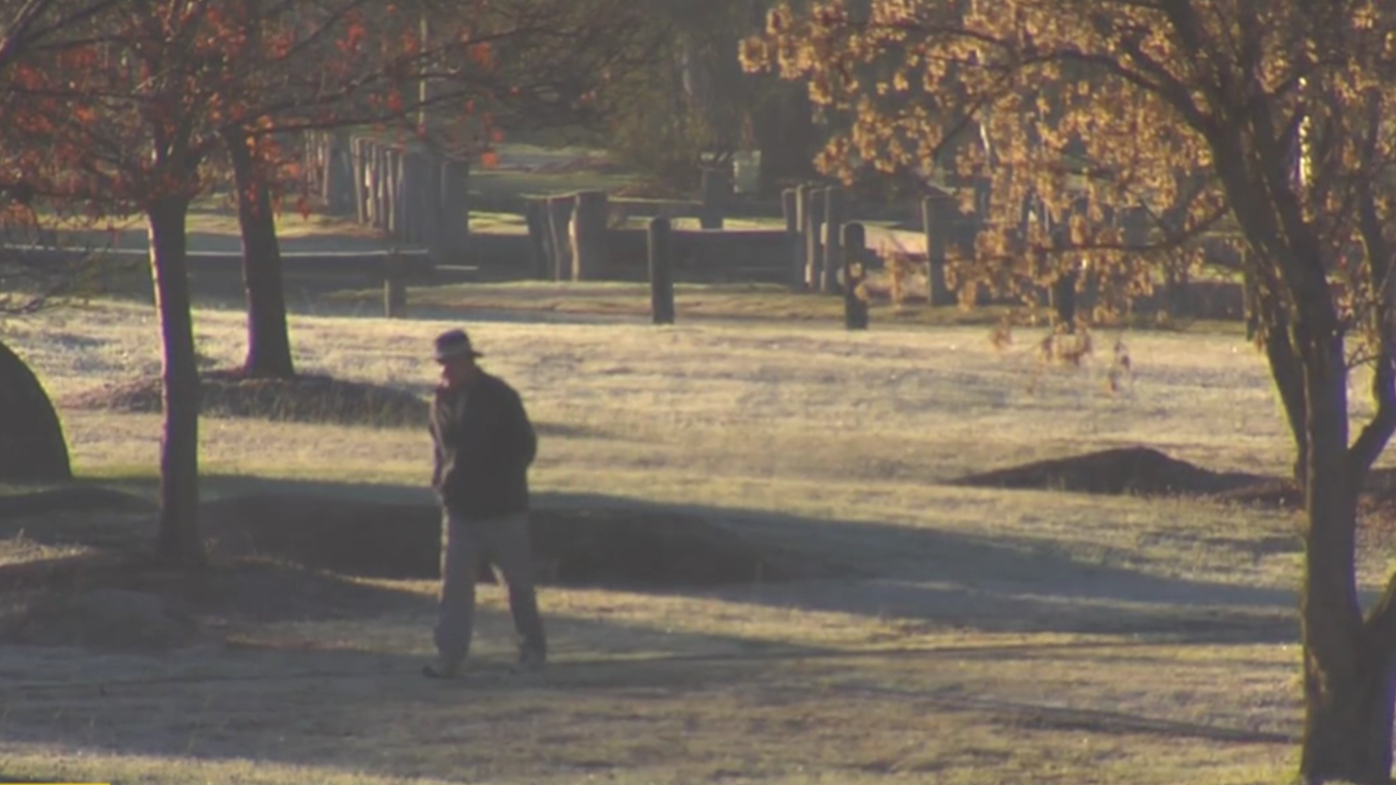
Australia's southeast is waking to brisk, icy conditions as a cold front continues to bring an early taste of winter to most regions.
In major cities including Sydney, Brisbane and Melbourne the temperature sat around 10C and below while in Hobart and Canberra it was closer to a 5C average this morning.
LIVE UPDATES: Latest on the Israel-Gaza conflict

There are marine strong wind warnings in place for East Gippsland, Victoria, Queensland's South East Gulf of Carpentaria, Torres Strait, Peninsula Coast, Cooktown Coast and Cairns Coast, the NSW Illawarra, Batemans and Eden coasts, the Top End's Roper Groote Coast and Tasmania's Upper East, Lower East, South East and South West coasts.
While the cold front, which made its way in from the Bight over the weekend, is bringing brisk winds, showers and even snow in some regions, a high is keeping other areas like Perth and Darwin dry with frost in the south and eastern inland area.

READ MORE: Cold snap sweeps across southeast Australia
Over the weekend, the frigid conditions brought a chill not experienced in over a decade for most parts with temperatures plummeting to almost 10 degrees below average for this time of year.
While the morning is brisk, clear skies in Sydney, Brisbane and Adelaide will mean warmer weather just after midday.
Perth, Melbourne and Canberra could see some showers come through later this afternoon.
Southern mayors condemn Judith Collins for 'fear-mongering'
Dunedin’s mayor has accused Judith Collins of creating “fear and division” over her claims Ngāi Tahu will be given co-ownership of the South Island’s water infrastructure.The National Party leader told a party regional conference…
Covid 19 coronavirus: Vaccination centre considers cutting hours to ease pressure on nurses
From RNZ An Auckland vaccination centre may have to cut the number of days it operates unless it gets more vaccinators.Each nurse at the Ōtara site is delivering about 100 injections a day at the centre, which runs seven…
Fire crews fight large house blaze in St Albans, Christchurch, this morning
Emergency services have been battling a large fire in St Albans after it broke out in the early hours of this morning.Fire and Emergency NZ received a report of a house fire on Malvern St just after 3am.A southern fire communication…