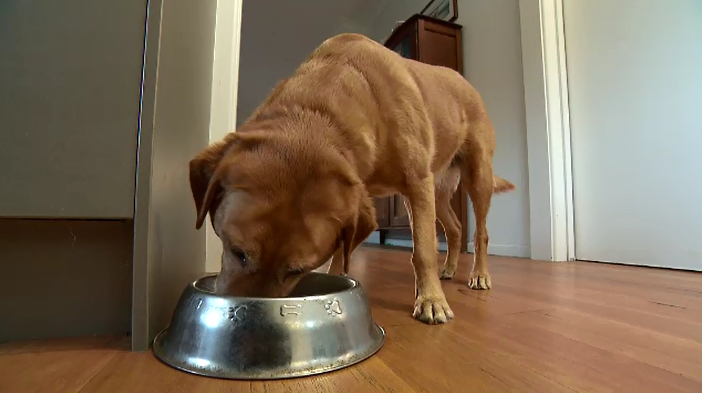
Investigators today visited the home of a young boy killed in a rubbish truck accident to try to understand why he was sleeping in the bin when it was collected.
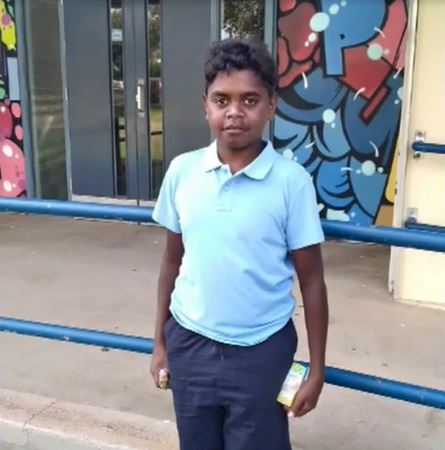
Thirteen-year-old Spencer Benbolt was asleep in the skip bin next to a McDonald's restaurant in Port Lincoln in South Australia, along with two others — an 11-year-old and a 12-year-old, when a council worker emptied it just after 5am on Tuesday.
Unknown to the driver of the truck, the three boys were inside the bin.
Two managed to escape, however Spencer suffered fatal injuries and died at the scene.
The local council won't be taking immediate steps to change its collection practices, instead trying to establish if there is a greater problem in the region.
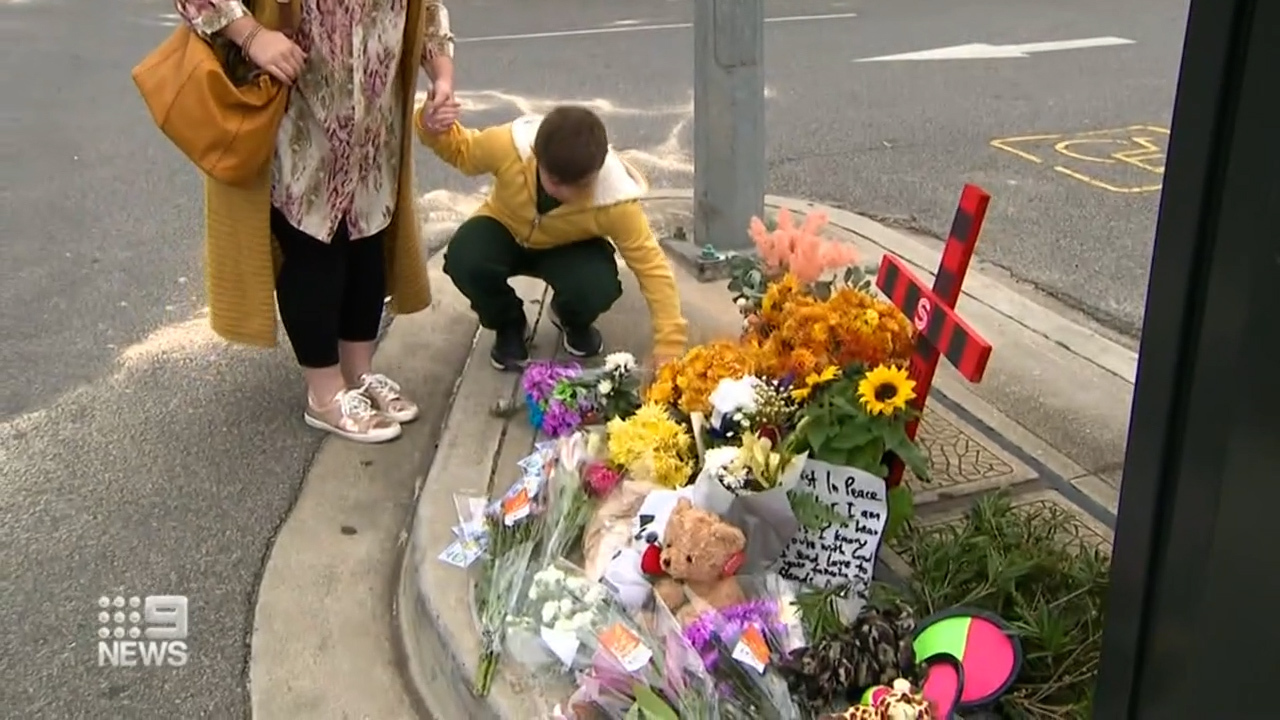
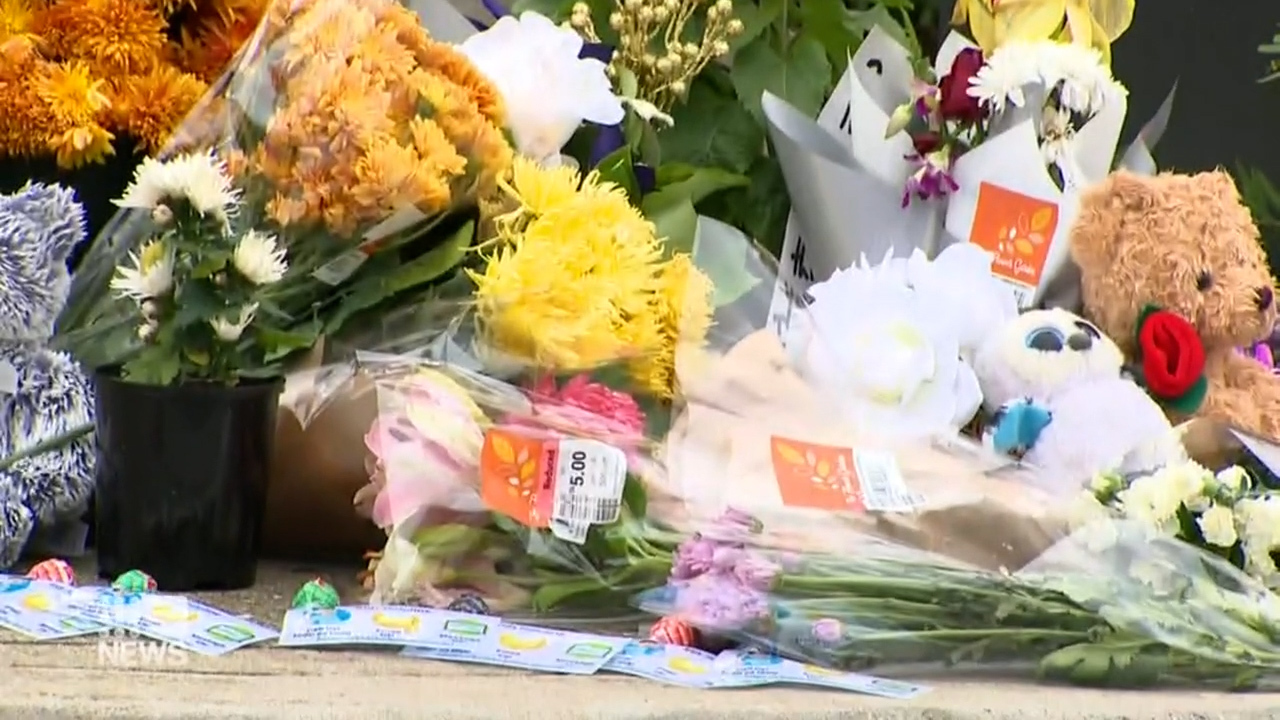
As it determines this, the Port Lincoln community is in pain but wrapping its arms around its youth in the wake of the tragedy.
"It's heartbreaking, it makes you just feel sick to the stomach and sad," local resident Munnalita Kujcic said.
"I just like, I cried throughout it yesterday."
Port Lincoln Council CEO Matthew Morgan described the event as "unspeakable".
"There's no words that define what the community is going through at the moment," Mr Morgan said.
At Spencer's primary school, the Aboriginal flag flies at half-mast.
"This morning teachers spoke about his unique talent for storytelling, and how people warm to him for his lovely personality and sense of humour," regional education director Rowena Fox said.
Children at Spencer's primary school are being offered counselling to help them cope with what's happened, while psychological support is available for staff.
Spencer's families spans South Australia, some posting online of their grief over the boy known as "butter", while others travelled to be with his mother and brothers.
Police hope to learn about that from the other boys involved in the incident.
South Australia's Police Commissioner Grant Stevens sent his thoughts to Spencer's family, his officers and the truck driver.
"I don't think anyone who was involved in this very tragic loss of life won't walk away being devastated by what they've seen and what they've had to deal with," Mr Stevens said.
GAZA CITY, Gaza Strip (AP) — Rockets streamed out of Gaza and Israel pounded the territory with airstrikes early Wednesday as the most severe outbreak of violence since the 2014 war took on many hallmarks of that devastating 50-day conflict, with no…Read More
WASHINGTON (AP) — House Republicans seem ready to toss Rep. Liz Cheney from her leadership post after she repeatedly rebuked former President Donald Trump for his false claims of election fraud and his role in fomenting the Jan… …Read More
NEW DELHI (AP) — A potentially worrisome variant of the coronavirus detected in India may spread more easily. But the country is behind in doing the kind of testing needed to track it and understand it better… …Read More
CHAMBLEE, Ga. (AP) — More than 1,000 gas stations in the Southeast reported running out of fuel, primarily because of what analysts say is unwarranted panic-buying among drivers, as the shutdown of a major pipeline by a gang of hackers entered its f…Read More
BRUNSWICK, Ga. (AP) — Attorneys for a white father and son charged with chasing and killing Ahmaud Arbery are asking a judge to allow evidence of the slain Black man’s past problems to be presented when their clients stand trial for murder… …Read More
WASHINGTON (AP) — The surge in Israeli-Palestinian violence has flummoxed the Biden administration in its first four months as it attempts to craft a Middle East policy it …Read More
FORT LAUDERDALE, Fla. (AP) — During the gloomiest stretches of the pandemic, Dr. Diona Krahn’s veterinary clinic has been a puppy fest, overrun with new four-legged patient…Read More
BENI, Congo (AP) — When Shekinah was working as a nurse’s aide in northeastern Congo in January 2019, she said, a World Health Organization doctor offered her a job investi…Read More
SIOUX FALLS, S.D. (AP) — A college baseball player from South Dakota whose prosthetic arm was stolen from his vehicle got it back Tuesday after it was found at a recycling …Read More
OPINION: By Helen Clark, review co-chair In July last year, the Director General of the World Health Organisation (WHO) asked the former President of Liberia, Ellen Johnson Sirleaf, and me to be the co-chairs of a review of the…
A high-powered global panel convened by former prime minister Helen Clark has found failures at every step of the world’s pandemic preparedness and response.It’s now set out a range of fixes to stop the next disaster, including…
Taiwan condemned China on Wednesday for seeking to use vaccines for political gain after Taipei’s diplomatic ally Honduras said it was considering opening an office in China in a bid to acquire much needed COVID-19 shots.
Honduras does not have formal relations with China and is one of a group of Latin American nations that have formal diplomatic ties with Taiwan, which Beijing considers part of its territory.
Honduran President Juan Orlando Hernandez said that to buy Chinese vaccines, he would do as the Chinese had suggested and look for a “diplomatic bridge”. read more
Several Latin American nations are receiving Chinese vaccines, but countries that have built ties with Taipei rather than Beijing, such as Honduras and Guatemala, are not.
Taiwan Foreign Ministry spokeswoman Joanne Ou said China was trying to use the same methods it did with Paraguay, another Taiwanese ally that Taipei has complained of Beijing trying to push into a vaccines-for-recognition deal. read more
“This clearly proves that following the vaccine crisis in Paraguay, the Chinese government is once again using vaccines to exchange political and diplomatic benefits for countries that are in urgent need, a shameful act of disregarding humanitarian needs,” Ou said.
Honduras has reaffirmed its ties with Taiwan, and Taiwan promises to help to the best of its ability to alleviate the health crisis, including working with “like-minded” countries, she added, a reference to democracies such as the United States, the European Union and India.
In Beijing, Zhu Fenglian, a spokeswoman for China’s Taiwan Affairs Office, said China was committed to helping provide vaccines to the developing world as a public good.
China hopes that “relevant countries can appropriately handle Taiwan-related issues according to the one China principle” she added, which states that Taiwan is part of China.
Beijing has been gradually whittling away at Taiwan’s diplomatic allies – now down to just 15 countries – which has alarmed Washington, nervous about an increased Chinese presence in Latin America and the Pacific where those allies are concentrated.
Reuters- Hellen Ñañez has suffered enough tragedy for a lifetime. The Peruvian 28-year-old mother has mourned the death of 13 close relatives since the pandemic struck last year: uncles, cousins, a grandfather. Now her dad is fighting for his life.
Hellen Nanez, who lost 13 relatives to the coronavirus disease (COVID-19) and whose father is being treated for COVID-19 in the Intensive Care Unit, visits the grave of her aunt, who died in June 2020 of COVID-19, in Pisco, Peru, May 9, 2021. Picture taken May 9, 2021. REUTERS/Alessandro Cinque – RC28CN9DIM91
On a recent day in a dusty cemetery in the Pacific port town of Pisco, Ñañez visited the graves of relatives lost to COVID-19.
“The truth is, I don’t have any more tears,” said Ñañez, who dropped out of studying psychology to work and help pay her father’s medical bills. “This is taking away our family. It’s taking away our dreams, our tranquility and stability.”
Ñañez’s story is a grim reflection of the tragedy unfolding in Latin America, a resource-rich but politically volatile region of some 650 million people stretching from Mexico to the near-Antarctic southern tips of Chile and Argentina.
The region has recorded 958,023 coronavirus-related fatalities, a Reuters tally shows, some 28% of the global death toll. It is set to hit the 1 million mark this month, which will make it the second region to do so after Europe.
But unlike wealthier Europe and North America, Latin American nations have lacked the financial firepower to keep people from sliding deep into poverty; underfunded healthcare systems have strained and inoculation programs have stalled.
Regional leaders from Brazil’s Jair Bolsonaro to Argentina’s Alberto Fernandez and Mexico’s Andrés Manuel López Obrador have come under fire for their handling of the pandemic, while a string of health ministers have been fired.
“We Peruvians are dying, Mr President. We are dying every day,” Miriam Mota, a relative of a coronavirus patient in Lima told Reuters, beseeching the country’s leader, Francisco Sagasti, to do more to help bring the crisis under control.
“There are no vaccines. There are no intensive care beds. There are no medicines. Please, for humanity’s sake, help us!”
Peru has officially confirmed 1.85 million COVID-19 cases and some 64,000 deaths, but that toll could be three times as high in reality, experts say. The country’s national death register has linked 171,000 deaths to the virus.
‘PEOPLE ARE FED UP’
Latin America’s crisis has been driven by regional juggernaut Brazil, which has recorded the most deaths globally after the United States and where right-wing President Bolsonaro has long railed against lockdown measures and backed unproven cures.
The emergence of virus mutations in the country, including the more transmissible P1 variant, has been linked to the severity of Brazil’s outbreak. It has also driven surges in infections in neighboring countries, including Uruguay and Bolivia.
Now there are signs that the pandemic, which has torn through regional economies and driven a spike in poverty, will have a longer-term ripple effect, stoking unrest, rattling industries and driving voters at the polls.
Colombia has been roiled by deadly protests over a now-shelved tax reform and poverty; Chile is moving towards a sharp tax hike on copper miners; Peru’s polarized presidential election race is being led by a socialist teacher who is a political outsider.
“People are fed up and obviously tired of everything that has happened lately,” Paula Velez said in front of a burned-out police station in Colombian capital Bogota, set on fire in the protests.
‘I DON’T WANT TO LOSE HIM’
Public health experts say Latin America has suffered an outsized hit from the pandemic, both in terms of health and growth, rattling fragile economies with high debt levels, steep inequality and where many work in less secure informal jobs.
Unlike North America, Europe or Asia, the region has also lacked the high-tech infrastructure to rapidly develop or manufacture vaccines.
A deal to produce the Oxford University-AstraZeneca Plc (AZN.L) COVID-19 vaccine by firms in Argentina and Mexico has been stalled by manufacturing hold-ups, and many Latin American countries are reliant on insufficient supplies of Chinese and Russian vaccines.
A cottage industry has developed for wealthier Latin Americans to travel to Florida and Texas to get their shots. But for the less affluent, that is not an option.
“I have been looking for work for a year and a half and I can’t wait for my vaccine,” said Rio de Janeiro resident Marco Antonio Pinto, who like others in the city was disappointed last week when an immunization center quickly ran out of vaccines.
“They are playing with the people, thinking that we are animals. We aren’t animals: we are human beings. We pay taxes. We pay for everything,” he said.
Back in Peru, Ñañez is now fighting to save the life of her father, who has been in the intensive care unit of a hospital for more than two weeks, receiving medicine to reduce the ravages of the disease and on a mechanical respirator.
Ñañez, who has a two-year-old child, has turned to making soap at home and selling it on the street or in shops in Pisco, a coastal town set amid arid desert landscapes.
She said her bank loans had run dry and the family had incurred enormous debts of some 100,000 soles ($26,500) to buy medicines, medical oxygen – and funeral expenses. While hope was low, she was determined to battle for her dad.
“I’m not going to lose him. I don’t want to lose anyone else. My dad can’t leave me,” Ñañez said, sobbing, outside the hospital where she has come to check on the health of her father, who is in a coma.
“I have been standing here for 17 days in front of the hospital and I know that he is going to make it. I do not think that life can be so unfair if it has taken so much from me and now it also wants to take away my father.”
=================================================
Summary
Here’s a roundup of the key events from the last few hours:
The Netherlands expects to further relax coronavirus restrictions next week, giving the green light to sex workers and zoos so long as cases keep falling, prime minister Mark Rutte said Tuesday.
Major US airlines have weighed in alongside UK carriers to urge the reopening of transatlantic travel, calling on governments in Washington and London to arrange a summit as soon as possible.
Burger chain McDonald’s has announced it is partnering with the White House to promote vaccination information on its coffee cups. Separately, Joe Biden announced on Tuesday a new program with Lyft and Uber which will offer free rides to anyone going to a vaccination site to get vaccinated.
Pfizer has asked the UK medical regulator for permission to use its Covid-19 vaccine for 12- to 15-year-olds in Britain, the Telegraph has reported.
Teachers in Buenos Aires are demanding a return to virtual learning due to the increase in cases of coronavirus since the return of students.
Brazil recorded 72,715 additional confirmed cases of the coronavirus in the past 24 hours, along with 2,311 deaths from Covid-19, the health ministry said on Tuesday.
The Canadian provinces of Alberta and Ontario said on Tuesday they would stop offering first doses of AstraZeneca’s vaccine, with Ontario citing evidence that the risk of rare blood clots is somewhat higher than previously estimated.
Brazil’s federal government on Tuesday nationally suspended the vaccination of pregnant women with the AstraZeneca shot, after an expectant mother in Rio de Janeiro died from a stroke possibly related to the inoculation.
===========================================
CANADA
The Canadian provinces of Alberta and Ontario said on Tuesday they would stop offering first doses of AstraZeneca’s Covid-19 vaccine, with Ontario citing evidence that the risk of rare blood clots is somewhat higher than previously estimated.Alberta said it took the same step only because it was unclear when more shipments of the vaccine might arrive, and not due to concern about side effects, Reuters reports.
Officials in Ontario said roughly one in 60,000 people who received the vaccine in the province, eight in total, developed the complication, which involves blood clots accompanied by a low level of platelets, cells in the blood that help it to clot.
Regulators and expert groups in Canada, Australia, the United Kingdom and Europe had previously estimated that the risk was between one in 95,000 and one in 130,000.
Ontario’s chief medical officer David Williams said, “We maintain that those who received their first dose with the AstraZeneca vaccine did absolutely the right thing to prevent illness and protect their families, loved ones and communities.”
Three deaths in Canada have been linked to the AstraZeneca vaccine.
Officials said the vaccine is effective, and noted that alternative vaccines from Pfizer and Moderna are increasingly available. Canada has distributed just over 20 million doses of various COVID vaccines, and 11.6% were AstraZeneca’s vaccine.
Experts have said it is likely fine to mix COVID-19 vaccines, and a trial underway in the UK is looking at the question directly.
==============================================
BRAZIL
Brazil recorded 72,715 additional confirmed cases of the coronavirus in the past 24 hours, along with 2,311 deaths from Covid-19, the health ministry said on Tuesday.
Brazil has registered nearly 15.3 million cases since the pandemic began, while the official death toll has risen to 425,540, according to ministry data.
Music festival Bluesfest has announced its return after being cancelled two years in a row.
Bluesfest 2021 was originally set to go ahead in the opening week of April, before NSW Health Minister Brad Hazzard cancelled it due to COVID-19 concerns.
The festival was struck off less than 24 hours before gates were set to open at Byron Bay.
Ticketholders from the first event will take first priority.
"Current Bluesfest 2021 patrons will receive official communication from our ticket provider, Moshtix, and will be given options on how to redeem your rollover with an option to refund remaining available," the Bluesfest website states.
More details will be available closer to the event.
The pet industry is worth a staggering $13 billion dollars to Australia after a spike in ownership and the popularity of gourmet meals continuing to rise.
IBIS World predicts the pet retail industry will increase by 3.9 per cent this year, and at an even faster rate online where sales are expected to surge by more than 19 per cent.
Pet owner Jenny Karpin is among a growing number of people who want the best for their four-legged friends.
"I want them to have the best food for their health," Ms Karpin told 9News.
"There's a lot of pressure out there to feed your dog high end raw feed," she said.
More than 60 per cent of Australian households have a pet.
The rise in pet ownership is anticipated to encourage greater overall investment in pet food, accessories and pet care services.
The growing humanisation of pets is also contributing to greater spending, and gourmet pet foods designed to appeal to human tastes are forecast to become more popular over the next five years.
Supermarkets are now fighting for a bigger share of the lucrative market, releasing their own premium products spelling trouble for speciality pet stores.
Amazon launched its pet supplies category in Australia in September 2018 and by October last year, had more than 100,000 products on offer including pet foods, litter supplies, toys, grooming products and pet beds, according to the latest IBISWorld report on the sector.
"Due to increasing competition, many specialist pet retailers will likely struggle to differentiate themselves from their competitors over the next five years," the report said.
"Remaining players are anticipated to shift towards large format retail centres and category killer superstores as they seek to leverage economies of scale to fend off competition from supermarkets."
The supermarkets in recent years have been introducing pet food brands made especially for them.
Woolworths has Baxters and Coles has also jumped on the band wagon releasing its new Elevate range covering both cats and dogs and dry and wet foods.
Brands like Elevate are being marketed as science-based premium pet food created by pet nutritionists and sold at prices significantly lower than an equivalent premium product sold from a speciality pet store.
Between the online businesses and the supermarkets now fighting for more market share, the competitive pressures could muscle out the smaller players.
The reported death toll from nearly two weeks of anti-government protests in Colombia rose past 40 on Tuesday, a day ahead of a planned national strike, while major cities warned of a prolonged peak in COVID-19 cases due to demonstrations.
Violent protests fueled by outrage at a now-canceled tax plan began on April 28. Demonstrator demands have expanded to include a basic income, an end to police violence and the withdrawal of a long-debated health reform.
Colombian student activist Lucas Villa was declared brain dead Monday night, nearly a week after he was shot eight times at a peaceful protest against President Ivan Duque’s government, CNN Espanol reported, citing a statement from San Jorge de Pereira University Hospital where he was being treated.
His family and the government also confirmed his death on social media Tuesday.
The 37-year-old was one of three students shot by unknown gunmen on motorcycles at a demonstration on the evening of May 5 in Pereira, central Colombia.
“Continue dancing in each cloud and make everyone there happy, like you did here,” his sister, Nicole Villa wrote in a post on Instagram.
The death caused consternation in Colombia, as Villa was a well-known figure in Pereira, and doctors at San Jorge Hospital had expressed hopes he might recover from his wounds.
Duque commented on the protester’s death on Twitter writing: “We stand with the Villa family with deep sadness after the news of Lucas’ death. I repeat what I [said to] Mauricio, his father, that this becomes the opportunity to come together and reject violence. To the responsible [I wish] all the power of the law.”
The government is offering a reward of 100 million Colombian pesos ($27,000) in exchange for any “information to capture those responsible,” Minister of Defense Diego Molano wrote on Twitter, before expressing “all our commitment to finding those guilty for this atrocious crime.”
Smaller protests and road blockades have continued daily around the country. Unions and student groups have called for a national strike on Wednesday after a meeting with President Ivan Duque left them at odds with the government. read more
Colombia’s human rights ombudsman said it had received reports of the deaths of 41 civilians and one police officer. It is verifying if they are directly connected to the protests.
The police and its ESMAD riot squad are presumed responsible for 11 killings, the ombudsman has previously said, while it classed seven deaths as unrelated to the marches themselves.
“We call for all necessary measures to be taken to put an end to the violence that is bleeding Colombia dry,” the ombudsman’s office said on Twitter.
Local advocacy group Temblores says 40 protesters have allegedly been killed by police, while Human Rights Watch said it has received 46 credible reports of protest deaths and verified 13.
So far three police officers are facing murder charges connected to demonstrator deaths.
Duque visited the city of Cali – a focal point for protests – for a second day in a row on Tuesday and announced poor and working class students at public universities and technical schools will pay no tuition next semester.
The center-right president lacks strong backing in Congress, where his tax proposal, which would have expanded items subject to sales tax, was heavily criticized. His term ends in August next year.
The three largest cities in Colombia, which has recorded nearly 79,000 COVID-19 deaths, are now bracing for an extended third peak in coronavirus cases and over-stretched intensive care units, local authorities said.
Capital Bogota is confronting a “hospital collapse,” Mayor Claudia Lopez said in a press conference on Monday, and will not see infections drop this week as previously predicted.
A fall in infections will not come until the end of May, Lopez said, adding that protests make quarantine restrictions nearly unenforceable, although she extended a curfew and restriction on alcohol sales.
Medellin, whose ICUs have been at or near full-capacity for weeks, is preparing for a possible crisis, health secretary Andree Uribe told Reuters in a video.
“We know there will be an increase in cases, we’re on alert, we are carrying out actions for early identification, like testing everyone who participated in the marches,” she said.
In Cali, demonstrations are likely to extend a current peak, health secretary Miyerlandi Torres said.
“We’re worried about marchers who don’t comply with any of the self-protection protocols like physical distancing and the use of face masks,” she said. “And with the presence of strains like the British one, which are highly contagious, it’s indicated the figures won’t fall in the short term.”
Cali’s ICUs are about 95% occupied, according to local government figures.
 *****@
 *****@

 *****@
 *****@
 *****@
 *****@
 *****@
 *****@
 *****@
 *****@
 *****@
 *****@
 *****@