Category Archives: headline

India's government eases hospital oxygen shortage as demand jumps

Under order by the Supreme Court, India's government agreed on Thursday to provide more medical oxygen to hospitals in the capital, potentially easing a two-week-old shortage that worsened the country's exploding coronavirus crisis.

Government officials also denied reports that they have been slow in distributing life-saving supplies donated from abroad.

The government raised the oxygen supply to 662 tonnes from 444 tonnes per day in New Delhi as ordered by the Supreme Court. The court intervened after 12 COVID-19 patients, including a senior doctor, died at New Delhi's Batra Hospital when it ran out of medical oxygen for 80 minutes last week.

READ MORE: Two million coronavirus tests to expire this month
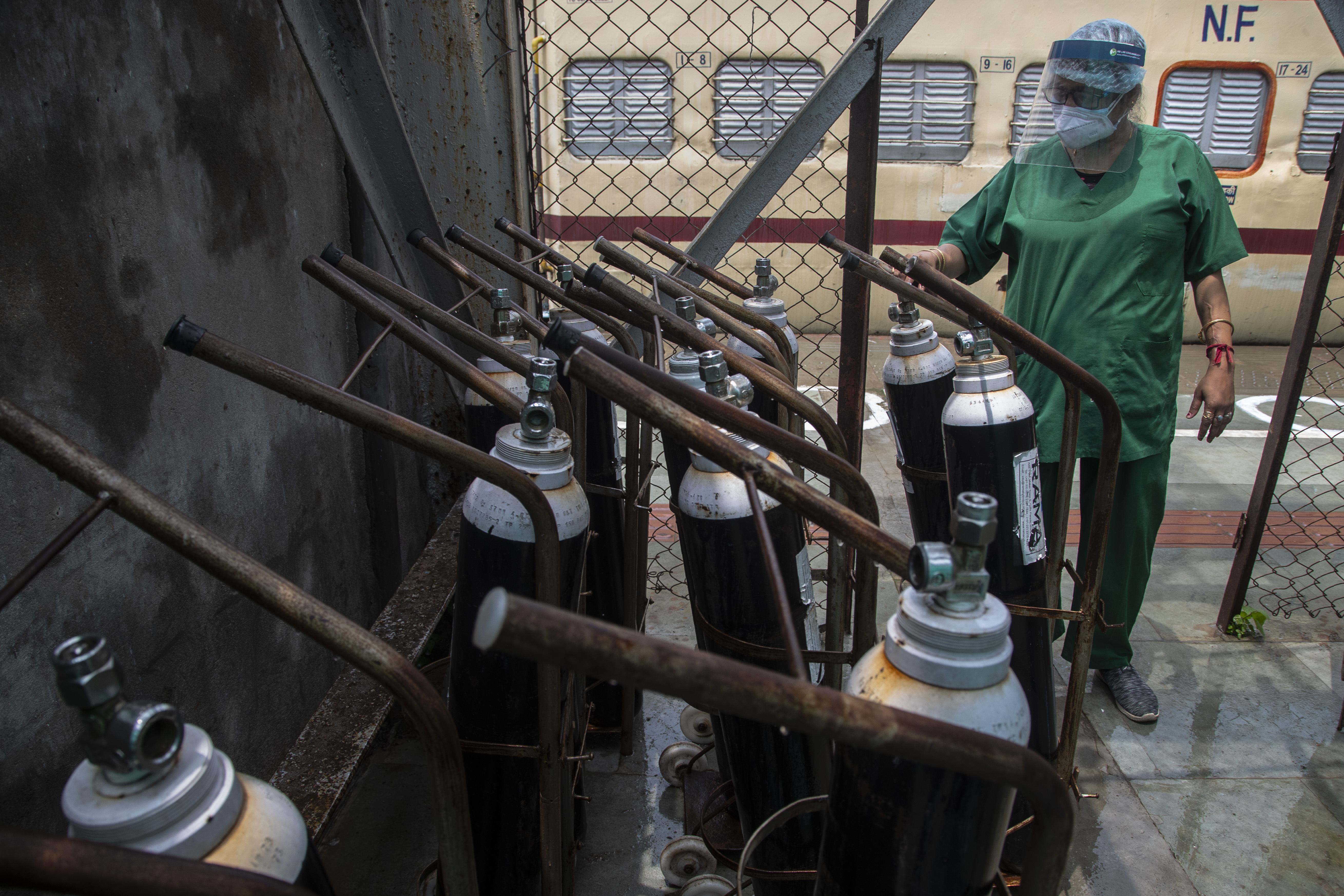
On Wednesday night, 11 other COVID-19 patients died when pressure in an oxygen line dropped suddenly at a government medical college hospital in Chengalpet in southern India, possibly because of a faulty valve, The Times of India newspaper reported.

Hospital authorities said they repaired the oxygen line last week, but the consumption of oxygen had doubled since then, the newspaper said.

The number of new confirmed cases in India on Thursday breached 400,000 for the second time since the devastating surge began last month. The 412,262 new cases pushed the country's official tally to more than 21 million. The Health Ministry also reported 3980 deaths in the past 24 hours, bringing the total to 230,168. Experts believe both figures are an undercount.

K Vijay Raghvan, a principal scientific adviser to the government, called the explosion of cases "a very critical time for the country."

READ MORE: Sydney arrivals questioned in Adelaide over NSW COVID hotspots
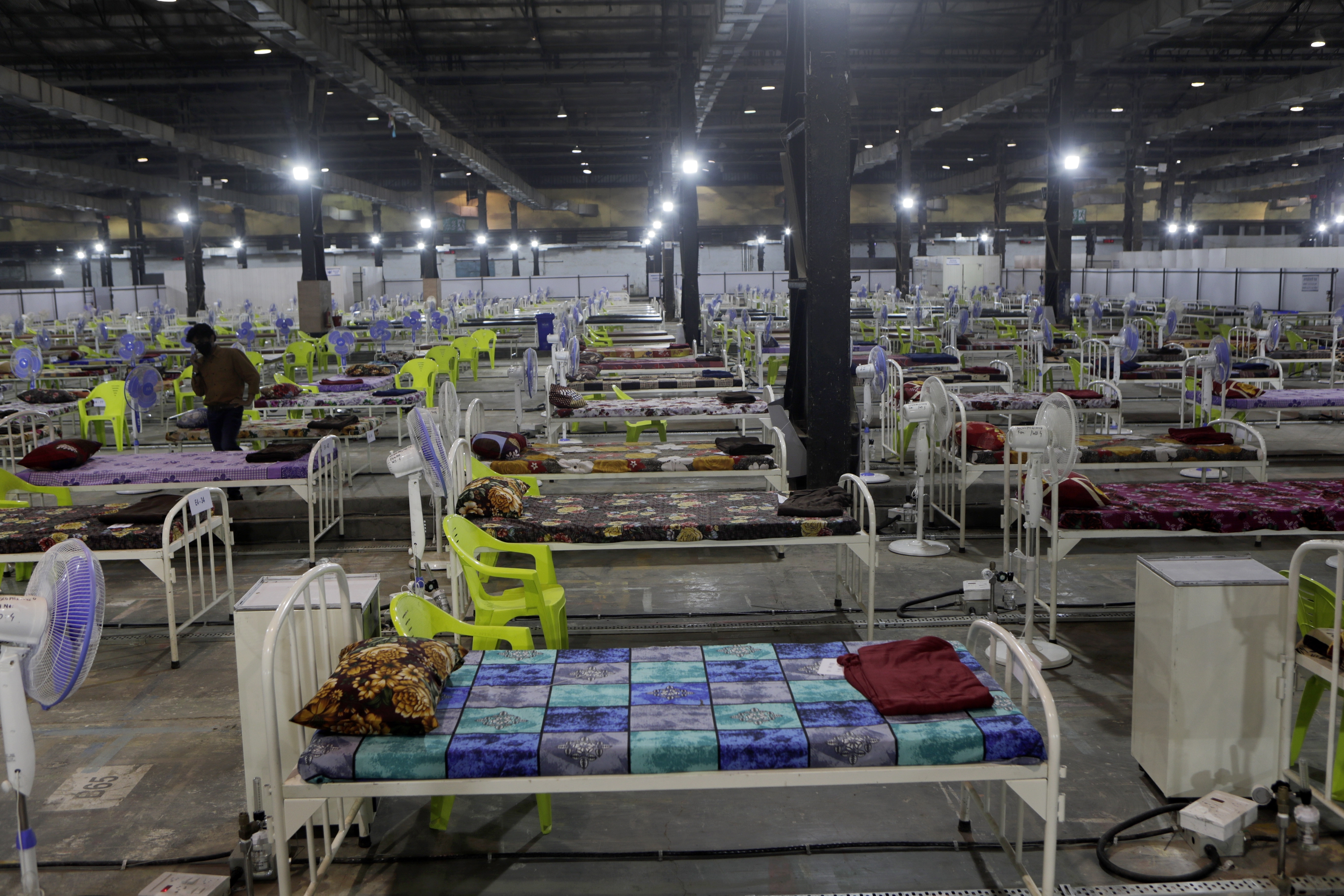
Demand for hospital oxygen has increased sevenfold since last month, a government official said, as India struggles to set up large oxygen plants and transport oxygen to where it is needed. India on Tuesday stated ferrying oxygen tankers from Bahrain and Kuwait in the Persian Gulf, officials said.

Most hospitals in India don't have their own plants that generate oxygen for patients, As a result, hospitals typically rely on liquid oxygen, which can be stored in cylinders and transported in tank trucks. But amid the virus surge, supplies in hard-hit places such as New Delhi have run critically short.

Dr Himaal Dev, chief of the critical care unit at Apollo Hospital in the southern city of Bengaluru, said COVID-19 patients in ICU wards require at least 10-15 litres of oxygen per minute because of their reduced lung function.

READ MORE: Five more suffer blood clotting after receiving AstraZeneca jab
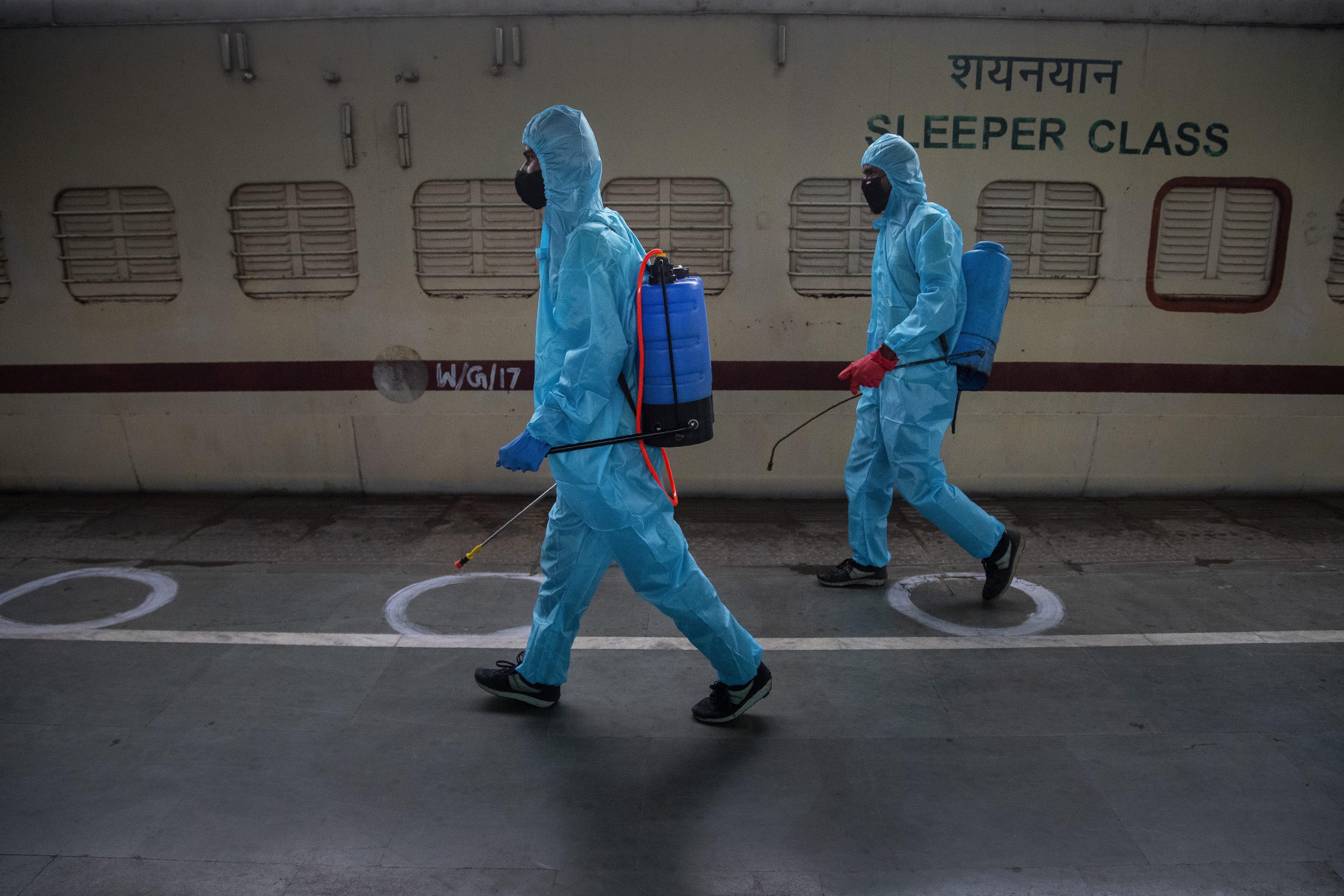
Health Minister Harsh Vardhan said India has enough oxygen but is facing capacity constraints in moving it. Most oxygen is produced in the eastern parts of India while the demand has risen in northern and western parts.

The outbreak has been spreading to neighbouring countries which share porous borders with India.

In Nepal, thousands of people rushed to leave the country ahead of a halt to all international flights because of spiking COVID-19 cases.

Nepali citizens leaving to report back for jobs in foreign countries or to visit family members and a few foreign tourists lined up at Kathmandu's airport before flights ceased at midnight Thursday. Domestic flights in Nepal have been halted since Monday.

Nepal's main cities and towns have been in lockdown since last month as the number of coronavirus cases and deaths continues to surge. Nepal recorded its highest daily infections with 8659 on Wednesday and 58 deaths, also a record.

READ MORE: 'I have to make decisions in the national interest' PM says over India ban
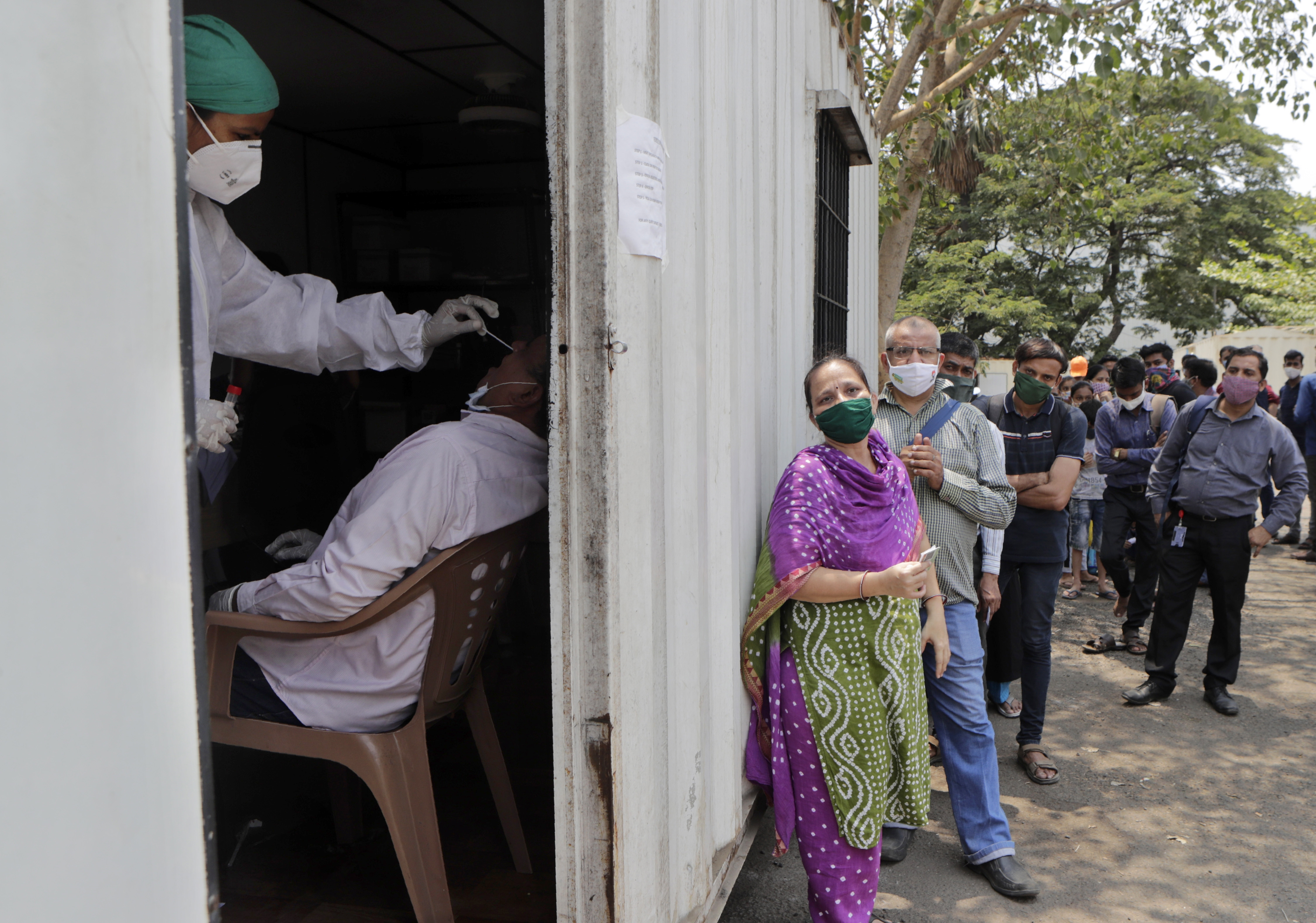
In India, Prime Minister Narendra Modi reviewed the coronavirus situation with top officials on Thursday and told them to ramp up the vaccination drive.

The country, with nearly 1.4 billion people, has so far administered 162 million doses but is facing vaccine shortages.

The United States, Britain, Germany and several other nations are rushing therapeutics, rapid virus tests and oxygen, along with materials needed to boost domestic production of vaccines to ease pressure on the country's fragile health infrastructure.

India's vaccine production is expected to get a boost with the United States supporting a waiver of intellectual property protections for COVID-19 vaccines.

Vaccine components from the U.S. that have arrived in India will enable the manufacture of 20 million doses of the AstraZeneca vaccine, said Daniel B Smith, the senior diplomat at the U.S. Embassy in New Delhi.

Last month, Adar Poonawalla, CEO of the Serum Institute of India, the world's biggest vaccine maker, appealed to President Joe Biden to lift the embargo on US export of raw materials, which he said was affecting its production of COVID-19 shots.

The government meanwhile described as "totally misleading" Indian media reports that it took seven days to come up with a procedure for distributing urgent medical supplies that started arriving from overseas on April 25.

It said in a statement that a mechanism for allocating supplies received by India has been put in place for effective distribution. The Indian Red Cross Society is involved in distributing the supplies from abroad, it said.
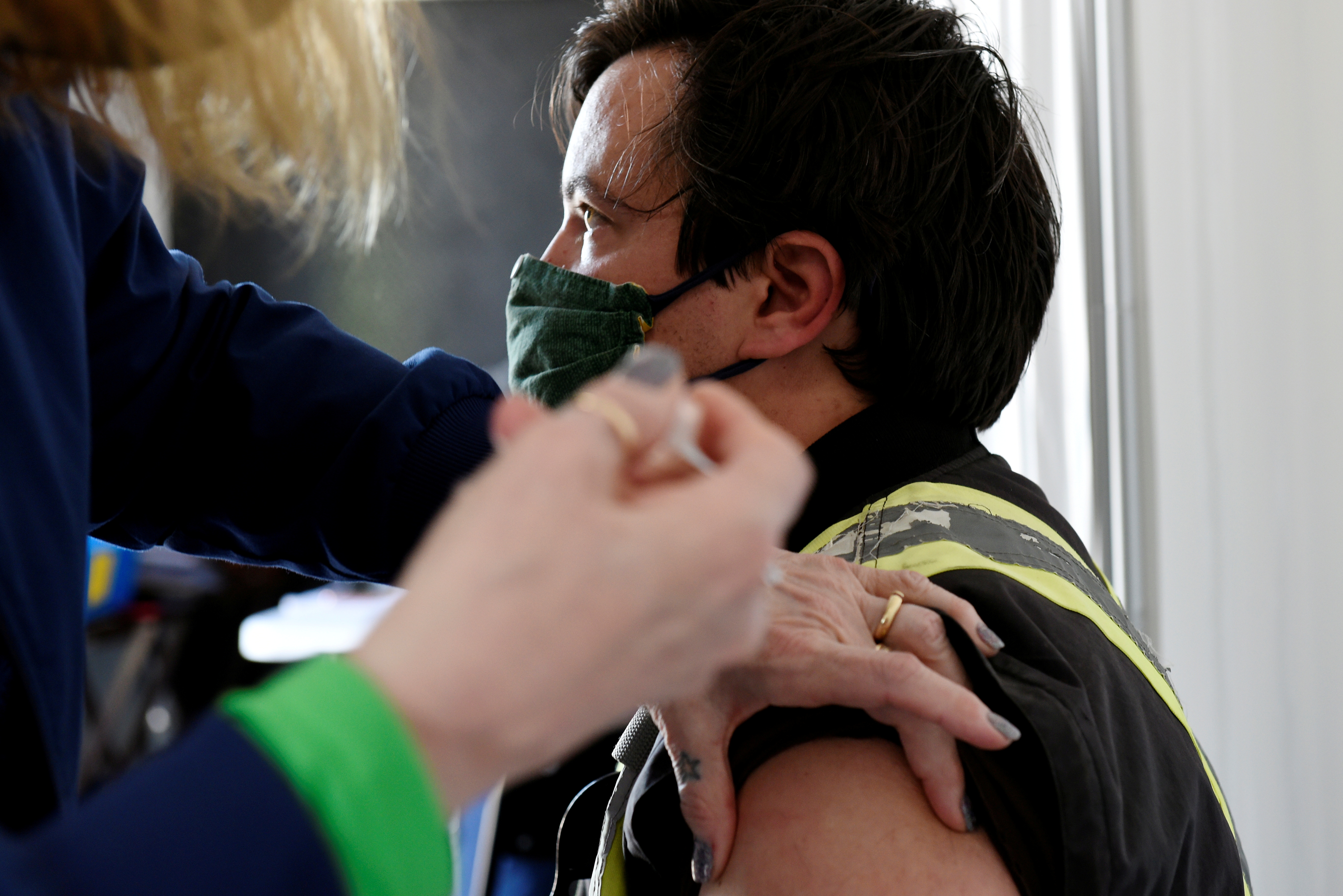
Truck driver arrested after Melbourne crash that left two men critically injured

A B-double tanker driver has been arrested after leaving the scene of a crash in downtown Melbourne that left five pedestrians injured, two of them critically.

Witnesses told police the truck left the road and hit a traffic light near the intersection of City Road and Power Street in Southbank about 7pm.

"It appears that while performing the left-hand turn the truck cut the intersection corner and mounted the footpath, taking out the traffic light which fell to the ground," Victoria Police said, in a statement.

Police had earlier said investigators were told the truck had collided with the group of people as well as the traffic light.

https://twitter.com/tpwkelly/status/1390270289485787139

Four men and a woman, all believed to be aged in their 20s and 30s, were injured.

Police said the vehicle left the scene via Power Street.

A driver who saw the crash followed the tanker and passed on information that led to police finding the truck at Truganina, about 20 kilometres west of Southbank.

Police arrested a 64-year-old driver from Wyndham Vale, who detectives were speaking to overnight.

Major collision investigation unit detectives appealed for anyone who saw the incident or had dashcam footage to come forward.

https://twitter.com/VictoriaPolice/status/1390312788816535553

Ambulance Victoria said two of the injured men, believed to be in their 20s, were taken to the Alfred Hospital. One was in a critical condition, the other was serious but stable.

The other pedestrians, one critically injured and the other two in a serious but stable condition, were taken to the Royal Melbourne Hospital.

Paramedics said all five suffered lower-body injuries.

Harry Ledingham, who works at My Goodness nearby, said he didn't realise what had happened until he heard the sirens.

He said an "army of fire trucks" was blocking the scene for about an hour and a half and an investigation team remained afterwards.

"It's shocking," he said.

"It's a bit of a reality check. That sort of stuff doesn't happen every day."

The crash scene is expected to remain cordoned off throughout the night.

Anyone with information should call Crime Stoppers on 1800 333 000.

Barbados Govt. to Gift Liat Workers $2,000

Nearly 100 Barbadian LIAT workers can expect at least $2,000 from the Barbados Government to be paid immediately or within a week at the latest.

After a ZOOM Meeting today, Prime Minister Mia Amor Mottley shared this announcement saying that she wants to help the displaced workers who are in many instances drowning in debt.

Both the President of the National Union of Public Workers (NUPW), Akanni McDowall and the Acting General Secretary, Wayne Walrond, were present and thanked the Prime Minister for the support being offered to the workers by the Government of Barbados.

The full statement is below:

The Government has offered a helping hand to just under 100 displaced Barbadian workers of LIAT, who will get some relief by early next week.

During an hour-and-a-half-long Zoom meeting with dozens of the former employees who have been waiting for well over a year for entitlements from the regional airline, Prime Minister Mia Amor Mottley promised that each person would receive a one-off gift of $2,000 by Friday — or early next week, at the latest.

This gift, which will be provided by central Government, will give authorities time to put other measures in place that would offer further relief over a much longer period.

All former Barbadian LIAT employees who were based here, paid contributions into the local National Insurance Scheme, and are therefore entitled to severance will now benefit from expedited hearings by the NIS Tribunal.

It is expected that these hearings will also begin as early as next week, with the hope that they will be wrapped up in time for payments to be made just after the end of the month.

Prime Minister Mottley explained that it had become necessary for the cases of these workers to go before the Tribunal since the Judicial Administrator of LIAT in Antigua, Cleveland Seaforth, had so far failed to sign and deliver to Barbados the paperwork that would have automatically triggered severance payments.
The other significant group of LIAT workers being assisted comprises Barbadians based primarily in Antigua, from whose salaries deductions were made to that country’s Social Security Scheme and who are entitled to severance under that country’s laws.
Arrangements are now being put in place to allow them to receive an advance of $2,000 per month from the Government of Barbados, to be paid back at a future date from any eventual severance settlement.

Prime Minister Mottley explained that this would be provided for up to one year, to be terminated earlier if they are able to find alternative employment before the end of that year.

Mottley stressed that she understood that $2,000 a month would not equate to their salaries or erase the debt and hardships they have accumulated since they stopped working, but she was trying to assist them while balancing it against all the other urgent needs of Barbadians.

In the face of a direct request from the employees who related their encounters with banks and other creditors, the Prime Minister promised to reach out to the sector on their behalf to solicit payment eases.

The workers agreed to the immediate formation of a small working committee to liaise with Government to ensure all information necessary for the fulfilment of the promised assistance is available to the relevant agencies, and the former LIAT workers will meet again with the Prime Minister in 100 days.

The post Barbados Govt. to Gift Liat Workers $2,000 appeared first on The St Kitts Nevis Observer.

Antigua Government Paying Residents to Get Vaccinated

Photo: VB Bird Airport/Facebook

CNW- The Antigua and Barbuda government has entered into a partnership with a local company to offer an incentive to residents who take the vaccine.

The Ministry of Health, Wellness, and the Environment said it was partnering with Epicurean Fine Foods and Pharmacy in a “One World Protected” campaign offering a EC$50 food voucher to each person receiving a first dose of the COVID-19 vaccine.

Last weekend, Prime Minister Gaston Browne warned of the possibility of implementing a mandatory vaccination program as he criticized persons who were encouraging others not to participate in the national vaccination program.

“This is not a threat,” Browne said noting that the pandemic has had a tremendous impact on the socio-economic development of the island since the first case was diagnosed last March.

Well I want to say definitively to the people of Antigua and Barbuda that we do not have the luxury of not getting vaccinated and if we do not get the herd immunity perhaps in the next 60 to 90 days there is going to be weeping and gnashing of teeth in this country,” Browne said, adding “that is the reality of it”.

In its statement, the ministry said that the voucher is not redeemable for cash or change and must be utilized in one transaction.

Health, Wellness and the Environment Minister, Sir Molwyn Joseph said that he is delighted that Epicurean Fine Foods and Pharmacy has come forward to support the government’s drive to reach herd immunity by offering a token to individuals who receive their first dose of the COVID-19 vaccine.

“Getting vaccinated is not only a personal choice, but it is a choice that will impact positively on individuals, families, friends, communities and the nation of Antigua and Barbuda.  The support of Epicurean Fine Foods and Pharmacy in this public health initiative is vital to the overall wellness and development of our society,” Sir Molwyn said.

The company’s human resource administrator, Nola Clarke, said that the company recognizes the importance of the nation being fully vaccinated and is delighted to support the government in offering a token to those individuals who make the responsible decision to get vaccinated.

“We proudly stand resilient with the government in this fight against the COVID-19 virus,” said Nola Clarke.

Sir Molwyn said that this initiative comes at an opportune time as the Ministry of Health ramps up its campaign to get more persons vaccinated.  He said that he looks forward to other businesses on island partnering with the Ministry to get the nation vaccinated against the COVID-19 virus.

The ministry has said that creating herd immunity will ensure that the majority of the population is protected from becoming seriously ill from COVID-19.

“With herd immunity, it is expected that the country will return to normalcy, which will include the facilitation of economic, social and cultural activities and the ease of travel. Individuals who received their first dose twelve weeks ago will commence receiving their second dose this month,” it added.

CMC

The post Antigua Government Paying Residents to Get Vaccinated appeared first on The St Kitts Nevis Observer.

Caribbean Countries Discuss Financing Solutions for Climate Action

More than 70 delegates from 16 Caribbean countries joined international partners to discuss financing solutions for climate action on land, and share their experiences in tackling the inter-related challenges of desertification, biodiversity loss and climate change.
The virtual event was organised jointly by the Commonwealth Secretariat, the Regional Liaison Office for Latin America and the Caribbean and the Global Mechanism of the United Nations Convention to Combat Desertification (UNCCD), and the Regional Collaboration Centre for the Caribbean of the United Nations Framework Convention on Climate Change (UNFCCC).

Climate resilience

Opening the session, Senior Director for the Commonwealth Secretariat’s Economic, Youth and Sustainable Development Division, Ruth Kattumuri, said:

“Land Degradation exacerbates the existing vulnerabilities of Small Island Developing States (SIDS) and other vulnerable countries to environmental challenges, such as climate change, which severely undermine the socio-economic resilience of these countries.

“The Commonwealth Secretariat has recognised the need to leverage synergies between biodiversity, climate and land, thereby bringing together the three Rio Conventions to catalyse coordinated action on land.

She added: “These interlinkages are so crucial as the adaptation of land systems to climate risks is a key component of the National Adaptation Plans (NAPs) of member countries.”

Rio Conventions

The Rio Earth Summit in 1992 gave rise to the three Rio Conventions – the United Nations Convention on Biological Diversity (UNCBD), the United Nations Framework Convention on Climate Change (UNFCCC), and the United Nations Convention to Combat Desertification (UNCCD).

These conventions recognised that biodiversity loss, climate change and land degradation are interrelated major factors which threaten agriculture, food and water security, forests and biodiversity, endangering the livelihood of millions of people, particularly women and youth of developing countries.

During the webinar, representatives from the Commonwealth Secretariat, the UNFCCC Regional Collaboration Centre for the Caribbean (RCC St. George’s), UNCCD, the Caribbean Community Climate Change Centre (CCCCC), the Caribbean Development Bank (CBD), the Caribbean Biodiversity Fund (CBF) and the UK COP26 Presidency in the Caribbean presented their research and actions in these areas.

Delegates discussed how to move towards a “coordinated approach” in implementing the three Rio conventions. They agreed on the need for increased levels of international finance for climate action, especially for adaptation measures in vulnerable countries. They discussed the importance of holistic and innovative financing, along with the critical need to enhance access to climate finance through long term capacity-building.

For example, the Commonwealth’s Climate Finance Access Hub (CCFAH) supports governments in applying for and securing international funding for climate action, by embedding long-term experts within ministries to build the relevant human and institutional capacity within the country. To date, CCFAH national advisers have been deployed to 15 member countries, and have helped to mobilise US$43.8 million of climate finance for member states, for 31 approved projects, with more than US$760 million in the pipeline.

Mobilising finance

Delegates also discussed the issue of debt, which has become more complicated under the COVID-19 pandemic. As high debt levels can affect a government’s ability to invest in building resilience, there was a call to consider a country’s vulnerability when trying to access debt relief and concessional funding.

Concluding the discussions, British High Commissioner to Trinidad and Tobago, Harriet Cross, reiterated the UK Government’s commitment as President of the forthcoming UN Climate Change Conference COP26 to greater action on adaptation and mobilising climate finance.

The event is part of a series of regional webinars being held in the lead up to the forthcoming Commonwealth Heads of Government Meeting later this year.

The post Caribbean Countries Discuss Financing Solutions for Climate Action appeared first on The St Kitts Nevis Observer.

Federation to Welcome Fully Vaccinated Cruise Passengers In July

St. Kitts and Nevis announced May 5 that the two-island nation will be welcoming back vaccinated cruise passengers in July with Seabourn.

The post Federation to Welcome Fully Vaccinated Cruise Passengers In July appeared first on The St Kitts Nevis Observer.

Vaccine tourism: Canadians Fly South for Shot as U.S. Demand Falls

Allison LampertSteve Scherer
5 minute read

1/2

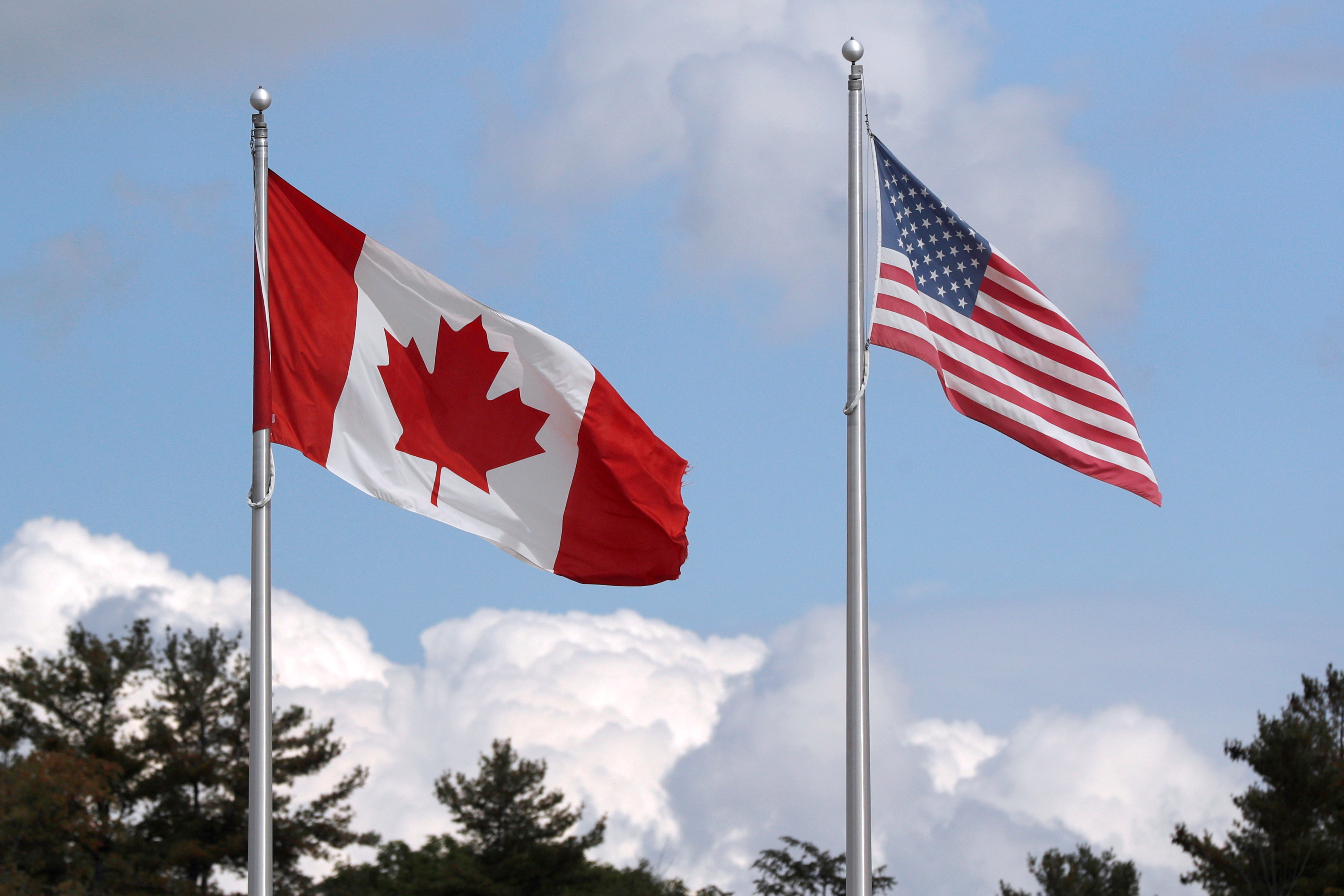
A U.S. and a Canadian flag flutter at the Canada-United States border crossing at the Thousand Islands Bridge, which remains closed to non-essential traffic to combat the spread of the coronavirus disease (COVID-19) in Lansdowne, Ontario, Canada September 28, 2020. REUTERS/Lars Hagberg/File Photo

With COVID-19 vaccine demand declining in the United States, some Canadians facing third-wave lockdowns are flying south to get inoculated, perhaps months earlier than they would be able to at home.

Jimmy Simmons, 37, saw friends in their 40s struggling to get a shot in the hard-hit Canadian province of Ontario. The Toronto businessman decided to spend a few weeks in New York City to meet clients and get vaccinated. He got his first of two shots on Tuesday.

Simmons, who works in real estate, is not yet eligible for a vaccine in Ontario. His girlfriend, a medical student who treats COVID-19 patients at Toronto’s Hospital for Sick Children, has still only received one dose, he said.

“I want this (pandemic) to end, and in order for this end I need to get vaccinated,” Simmons said. “Just sitting at home in Ontario isn’t going to change anything.”

While almost a third of Americans have been fully vaccinated, Canada has inoculated only 3% of its almost 38 million people, though more than 34% have received a first dose.

Canada is allowing for a four-month gap between doses, while Americans are getting their second shots three or four weeks after the first to reach optimal protection much sooner.

The U.S vaccination campaign has reached a tipping point, with supply outstripping demand due to a combination of factors including skepticism about the vaccines. The number of Americans seeking vaccines dropped by a third in recent weeks, according to the U.S. Centers for Disease Control and Prevention. read more

That is encouraging Canadians to cross the border and tap into this oversupply without paying any fee, which means the U.S. government is paying for foreign travelers to get their COVID-19 shots. The White House declined to comment.

Simmons and others had little trouble getting vaccinated at no charge in the United States, where the government is now practically begging people to get the shots and several states do not require proof of residency.

The trick was to fly because land crossing has been closed to non-essential traffic since March of 2020.

U.S. President Joe Biden on Tuesday urged those who are hesitant to get a COVID-19 vaccine, saying it was a matter of “life or death.” read more

Everyone age 16 or older can get vaccinated in the United States, while in Ontario, most adults 18 and up will not be eligible for a first dose until May 24.

‘REALLY EASY’

Canadian Prime Minister Justin Trudeau has said everyone who wants to can be fully vaccinated by the end of September. Andrew D’Amours, 31, of Quebec City, said that could mean “another half pandemic” without getting inoculated.

He flew to Dallas and got vaccinated on April 10. With his business partner at the Flytrippers travel website, D’Amours booked an appointment for the one-dose Johnson & Johnson (JNJ.N) vaccine online.

“It took a couple clicks. We got an appointment in a grocery store pharmacy and we booked flights for the next day, Friday, and on Saturday morning we were vaccinated,” D’Amours said.

While D’Amours used hotel and flight points, he estimated a weekend trip to Dallas – if two people share costs – could be as low as C$750 ($611) each. He flew directly from Montreal.

David, 37, an executive from Ontario, said he and his girlfriend got vaccinated without appointments at the Ellis Davis Field House site in Dallas, after showing a Texas hotel address.

When the couple went back for their second shot, “there was no one there,” he said. “It’s immoral that they may be throwing shots out while people are dying of COVID,” he said.

Americans have been sharing vaccines with Canadians in other ways. Truck drivers from Manitoba and Saskatchewan are receiving jabs in North Dakota, while Alaska’s governor has offered surplus shots to a neighboring Canadian town to help reopen the border sooner.

While it is not known how many Canadians are traveling for U.S. vaccines, several people on Simmons’ packed flight to New York told him they would get inoculated, and D’Amours has fielded several queries from others interested in doing so.

Canada still discourages foreign travel and requires a 14-day quarantine and testing upon re-entry. D’Amours said it still may be worth it.

“If you want to travel, if you want to be fully vaccinated, and you’re able to go and you’re going to do it safely, it is really easy,” he said.

The post Vaccine tourism: Canadians Fly South for Shot as U.S. Demand Falls appeared first on The St Kitts Nevis Observer.

Hit List: U.S. Targets Corrupt Central America Officials

Ted HessonMatt Spetalnick

Reuters- The Biden administration plans to release by the end of June a list of corrupt Central American officials who may be subject to sanctions, a U.S. special envoy told Reuters, as Washington seeks to cut back on a root cause of increased migration to the U.S.-Mexican border.

Ricardo Zuniga, President Joe Biden’s point man for Central America’s Northern Triangle countries of Guatemala, Honduras and El Salvador, also said the administration was considering further sanctions against officials in the region for alleged graft under the Global Magnitsky Act.

U.S. officials see corruption as one of the main drivers for the flow of migrants – along with poverty, gang violence and the fallout from hurricanes last year – and want to make sure a $4 billion aid package being put together for the region does not fall prey to graft.

“That’s the mandate from Congress. We have a responsibility and we’re going to meet it,” Zuniga said in an interview on Wednesday. “That tracks with our commitment to defend those who are combating impunity.”

Zuniga was referring to a law sponsored by then-U.S. Representative Eliot Engel and enacted by Congress in December that requires the State Department to assemble within 180 days a so-called Engel List of corrupt actors in the Northern Triangle.

The administration, he said, would comply with that congressional requirement. Those targeted could then be subject to bans on travel to the United States, seizing of U.S. property and prohibitions on Americans doing business with them.

Central American officials may be more likely to have assets in the United States, given the geographic proximity and historical relationships, than those from countries that have fewer U.S. financial links.

Another path for sanctions in Central America could be the use of so-called Global Magnitsky measures, which the United States has imposed for years on those accused of corruption, human rights abuses and anti-democratic actions around the world.

Zuniga declined to name those who might face sanctions.

Asked whether Honduran President Juan Orlando Hernandez might be targeted, Zuniga said: “I’m not going to comment on him because of the Department of Justice engagement on his case.” Hernandez is under U.S. investigation for alleged links to drug cartels. He denies any involvement in drug smuggling.

Biden’s aides have spoken out in recent days against Guatemalan lawmakers’ refusal to swear in a corruption-fighting judge and the removal of top judges and the attorney general in El Salvador.

U.S.-MEXICO TALKS LOOM

Zuniga spoke just days ahead of a virtual meeting between Vice President Kamala Harris, tasked by Biden to lead diplomatic efforts to curb unauthorized migration, and Mexican President Andres Manuel Lopez Obrador. She plans to visit Mexico and Guatemala on June 7 and 8.

The influx at the U.S.-Mexican border, many of them Central American migrants, has emerged as Biden’s biggest political weakness in the early months of his presidency, opinion polls show, as he seeks to reverse the hardline immigration policies of his predecessor, Donald Trump.

Harris and Lopez Obrador are expected on Friday to discuss how to stem the movement of migrants to the border.

Among Harris’ initiatives is to try to get U.S. companies to invest more in the impoverished Northern Triangle.

Zuniga said a lot of U.S. firms are interested in doing more business in the region but that “there is investment hesitancy” because of local corruption, poor infrastructure and other problems.

“Companies see those kinds of problems, and they hold back,” he said.

Zuniga said U.S. firms are also concerned about the strength of judicial systems in the Northern Triangle and regulatory structures that are “very difficult to navigate” or “designed to favor local companies over foreign investors.”

Ahead of Harris’ talks with Lopez Obrador, Zuniga stressed an ongoing partnership with Mexico on migration issues, saying: “We want to work closely with Mexico on Central America.”

Our Standards: The Thomson Reuters Trust Principles.

Read Next
  • Read NextBombardier says U.S. joins probe into decade-old Indonesia jet deals
  • Read NextBombardier profit jumps as wealthy travelers return to flying
  • Read NextCanadian dollar seen consolidating gains as drumbeat builds for Fed taper
  • Read NextDollar falls as risk appetite improves, sterling steady before BoE
Read Next
  • Read NextCloser EU military cooperation with U.S., Canada, Norway is quantum leap, Germany says
  • Read NextAt-risk rheas released into Chile’s Patagonia for repopulation
  • Read NextHigher commodity prices and vaccines to buoy EMFX vs. U.S. yields
  • Read NextBrazil court suspends probe into Indigenous leader who criticized Bolsonaro

Sign up for our newsletter

Subscribe for our daily curated newsletter to receive the latest exclusive Reuters coverage delivered to your inbox.

The post Hit List: U.S. Targets Corrupt Central America Officials appeared first on The St Kitts Nevis Observer.

Mexico City Metro: Fears Structural Failure Behind Deadly Crash

Mexican authorities have promised a full investigation into the collapse of a metro overpass in Mexico City, as questions mount over the line’s safety.

President Andrés Manuel López Obrador said “nothing would be hidden” while the mayor said an external company would be involved in the inquiry.

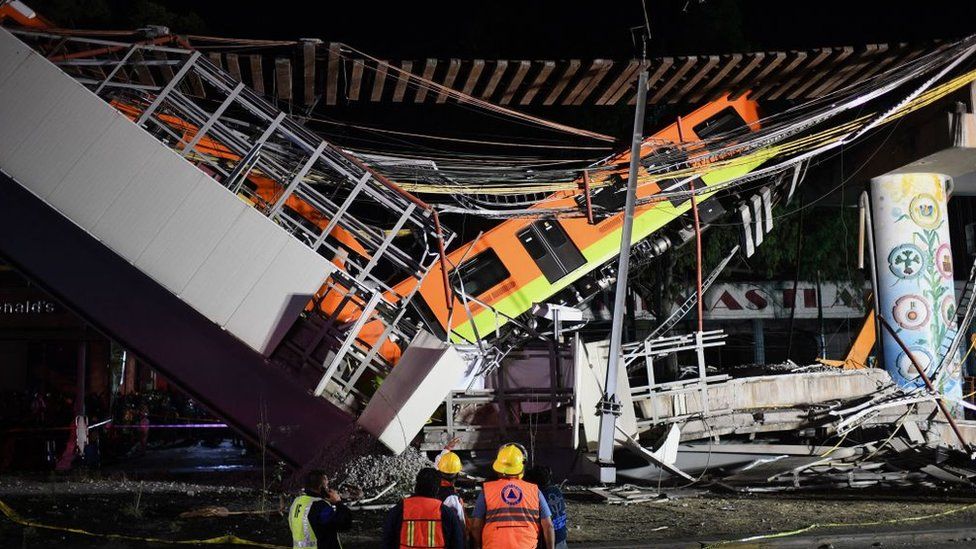
The elevated track on Line 12 fell on to a road, killing at least 24 people.

Concerns over possible structural failures had been raised since the line was inaugurated, in 2012.

There were concerns about design problems and construction standards, as well as allegations of corruption.

At a news conference, President López Obrador said the investigation, to be carried out by federal and Mexico City prosecutors, should be done quickly. “We cannot get into speculation, much less blame the possible perpetrators without having proof,” he said.

The line was built when Foreign Minister Marcelo Ebrard, a close ally of the president, was mayor of the capital. Speaking alongside the president, Mr Ebrard said it was a “very sad day for everyone”.

Current Mayor Claudia Sheinbaum also said it was too soon to say who was responsible for what happened. Earlier, she said it appeared a girder had given way on the overpass. The line will remain closed while a structural survey is carried out.

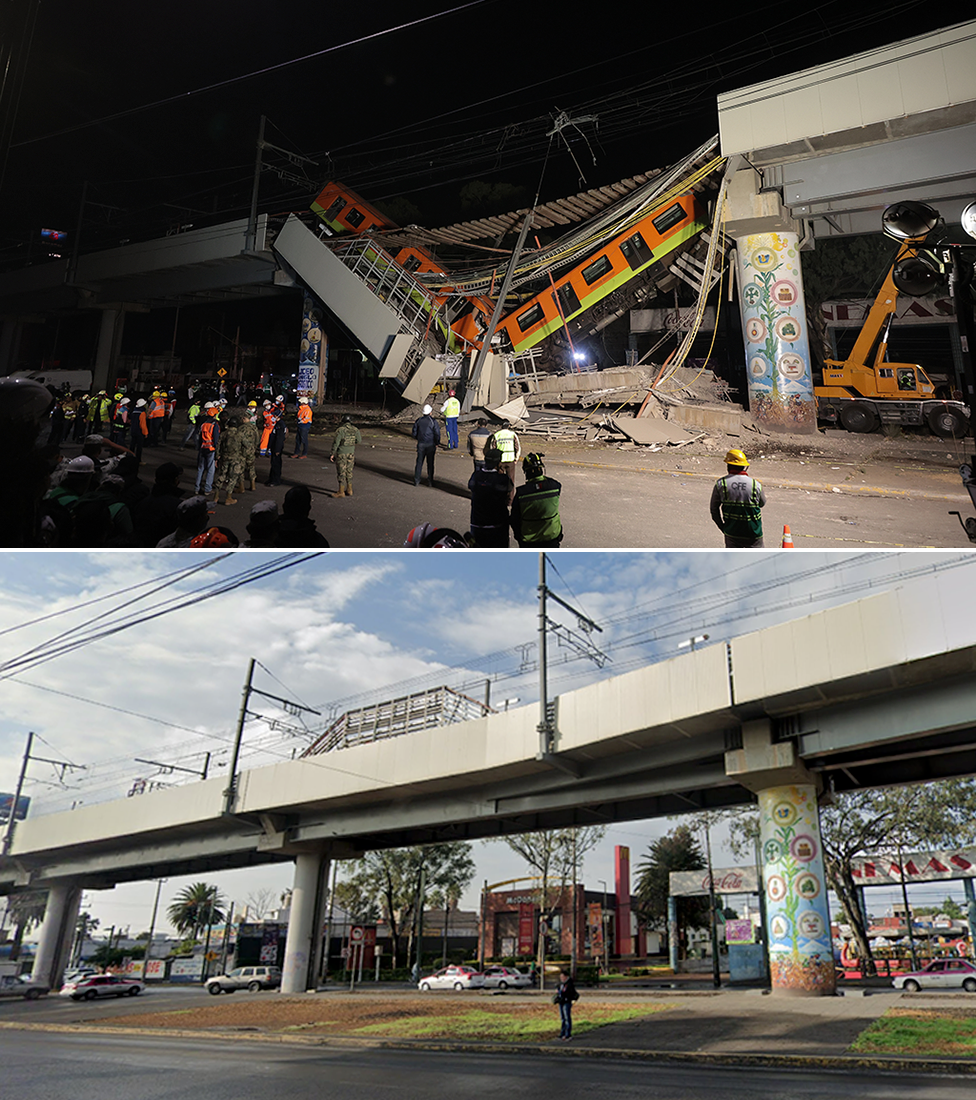
Composite picture showing images before and after and after the accidentimage copyrightGetty and Google Maps
image captionImages show the site of the incident now and in 2019
1px transparent line

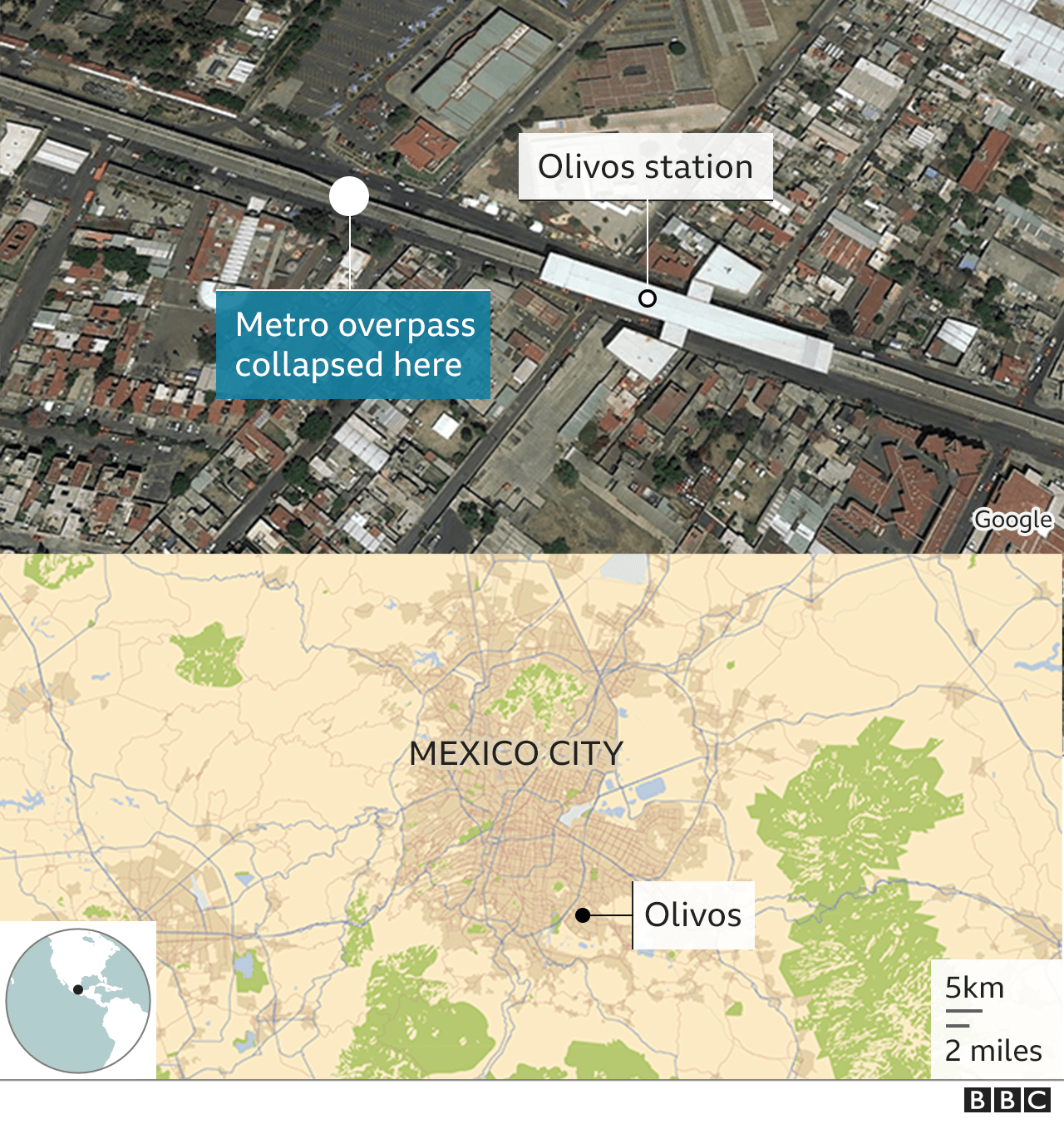
CCTV footage showed the overpass collapsing as a train was travelling over it, sending up clouds of debris and sparks. The crash happened near the Olivos station, in the south-east of the city, on Monday night.

Fernando Espino, secretary-general of the union representing metro workers, said the incident was related to a construction problem.

“This is a structural failure… We don’t know if it’s related to the material with which this [section] was built. We need to see what happened,” he said, according to El Universal newspaper.

Elevated parts of the line, including the collapsed overpass, had to be closed for multiple repairs in 2014. Residents also reported cracks in the structure after an earthquake in 2017, and transport authorities made repairs following the reports.

In 2017, the then director of the city’s metro, Jorge Gaviño, said the line “was born with endemic problems that would never be solved in its life” and that it would require “permanent” maintenance.

An aerial view shows the site of a metro train accident after an overpass for a metro partially collapsed in Mexico Cityimage copyrightAFP
image captionCranes were deployed to stabilise and remove the train carriages from the structure
Rescue workers gather at the site of a train accident after an elevated metro line collapsed in Mexico Cityimage copyrightAFP
image captionThe overpass collapsed as a train was travelling over it

On Tuesday, cranes were deployed to stabilise and remove the two train carriages that remained hanging from the structure.

“We never had much faith in this metro [line],” 62-year-old Maria Concepcion, who heard the collapse from her house, told Reuters news agency.

CCICSA, one of the firms involved in the construction of the line, said in a statement to Reuters it was “going to wait for the official expert opinion”. French train maker Alstom said it was willing to “co-operate with and to aid authorities responsible for investigations in any way necessary”.

At least 79 people were injured, including one person who had been pulled out alive from a car underneath the wreckage. The mayor said the dead included children, but she did not give details.

2px presentational grey line
Analysis box by Will Grant, Mexico and Central America correspondent

Mexico City’s metro system is one of the most used in the world, carrying tens of millions of passengers a week. In North America, only New York’s subway carries more people every day.

Yet the incident did not occur on one of the older lines, which have been through at least two major earthquakes in the past 35 years. Rather it happened on Line 12, completed as recently as October 2012.

There will be difficult questions for the mayor’s office to come about the construction of the line, including for several former mayors.

2px presentational grey line

This is the deadliest incident in decades for the city’s metro system. In 1975, two underground trains collided, killing 31 people.

Last year, one person was killed and more than 40 injured in a collision between two metro trains elsewhere in Mexico City.

Map of where the incident took place
Banner saying 'Get in touch'

Were you in the area? Did you witness what happened? Share your experiences by emailing ha*********@****co.uk.

Please include a contact number if you are willing to speak to a BBC journalist. You can also get in touch in the following ways:


0/500

Your contact info

We’ll be in touch if we look into your question.

I am over 16 years old

I accept the Terms of Service

If you are reading this page and can’t see the form you will need to visit the mobile version of the BBC website to submit your question or comment or you can email us at Ha*********@****co.uk. Please include your name, age and location with any submission.

More on this story

The post Mexico City Metro: Fears Structural Failure Behind Deadly Crash appeared first on The St Kitts Nevis Observer.

Colombians Continue Protest Marches, Police Use Tear Gas

Oliver Griffin


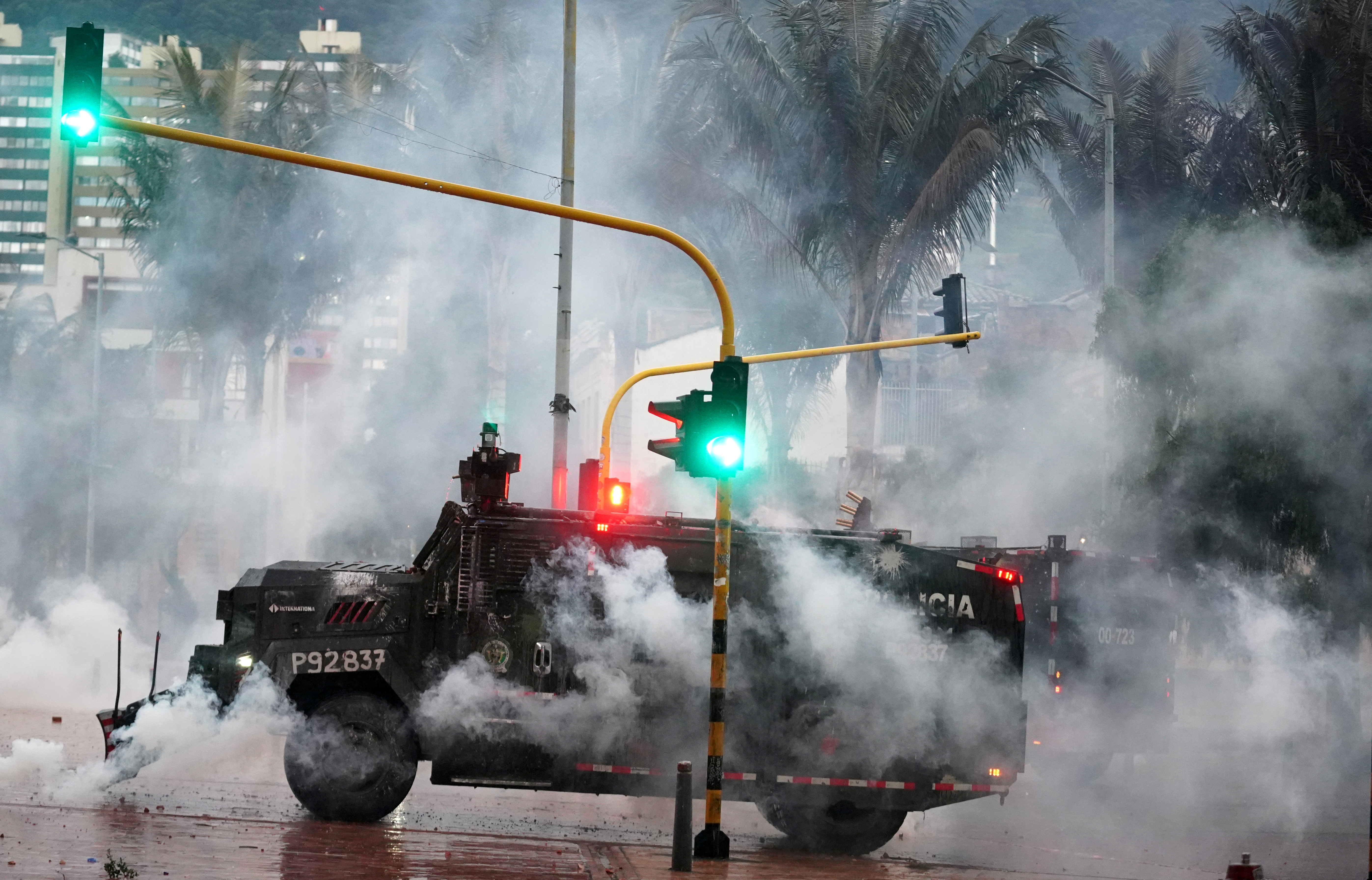
Reuters- Riot police fired tear gas at protesters in Bogota on Wednesday during the eighth day of nationwide anti-government demonstrations, after crowds attacked police stations in the capital overnight.

The protests were originally called in opposition to a now-canceled tax reform plan, but demonstrators have broadened their demands to include government action to tackle poverty, police violence and inequalities in the health and education systems. read more

Demonstrations and lawmaker opposition led to the tax reform’s withdrawal and the resignation of the finance minister. International organizations have warned against police violence, which is so far linked to just under half of 24 confirmed deaths, mainly of protesters. read more

Many protesters are calling for the ESMAD riot police to be disbanded, but some said they did not blame individual officers.

“They get orders from the state, which they have to follow,” said student James Romero, 18, who joined a chanting crowd in Bogota’s central Bolivar Plaza.

Romero said he was struck several times in the back by a baton-wielding ESMAD officer while running from confrontations on Saturday.

“I felt fear – so much fear.”

Minutes later, police fired tear gas to deter some demonstrators from attempting to enter Colombia’s Congress.

Earlier gatherings farther north were peaceful.

Bogota psychologist Benjamin Paba Al-Faro, 53, said he was demonstrating for better education and to ensure the continuity of the peace process with now-demobilized FARC rebels, adding: “This isn’t about defeating just one law.”

Poverty, which rose to 42.5% of the population last year amid coronavirus lockdowns, has aggravated long-standing inequalities and reversed some recent development gains.

The number of Colombians living in extreme poverty grew by 2.8 million people in 2020.

1/12

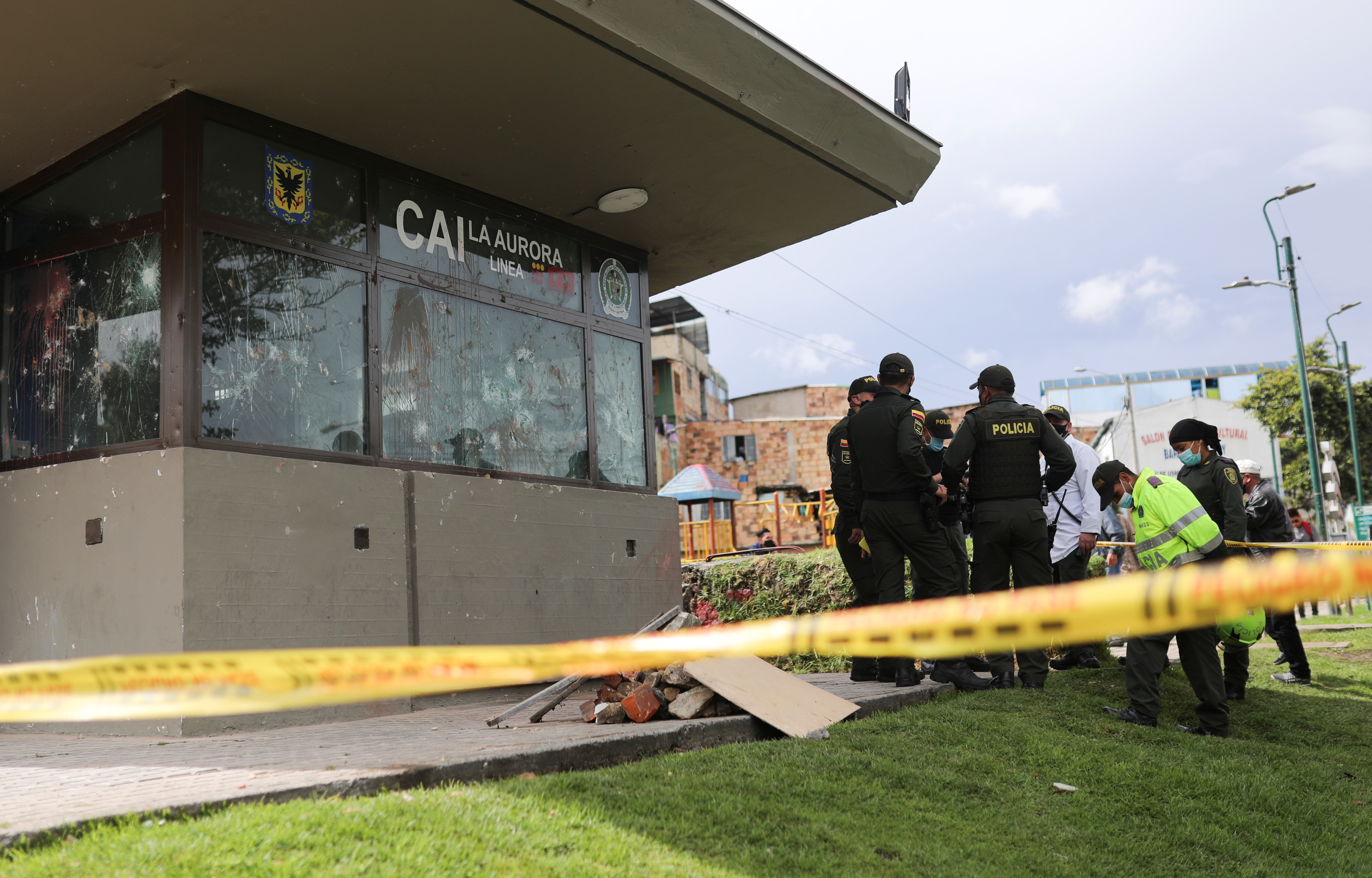
Police officers are seen at a vandalized police station following a protest against poverty and police violence in Bogota, Colombia, May 5, 2021. REUTERS/Luisa Gonzalez

The protests and associated road blockades – which have stymied shipments of top agricultural export coffee – could affect the economy, the central bank’s technical director said on Wednesday. read more

“They are temporary effects, but they could affect monetary policy depending on their duration and reach,” Hernando Vargas said during a presentation.

POLICE STATION BURNED

President Ivan Duque has said the government will create space to listen to citizens and develop concrete proposals, similar to overtures offered to protesters following demonstrations in 2019. Many groups – including major unions – say he has failed to deliver.

In a video on Wednesday, Duque repeated government allegations that drug trafficking mafias were behind vandalism and looting and said more than 550 arrests had been made.

“There will be no truce with those who commit these crimes – all of society will take them to justice,” Duque said.

During a seventh night of protests on Tuesday, 30 civilians and 16 police officers were injured in Bogota, the mayor’s office said in a statement.

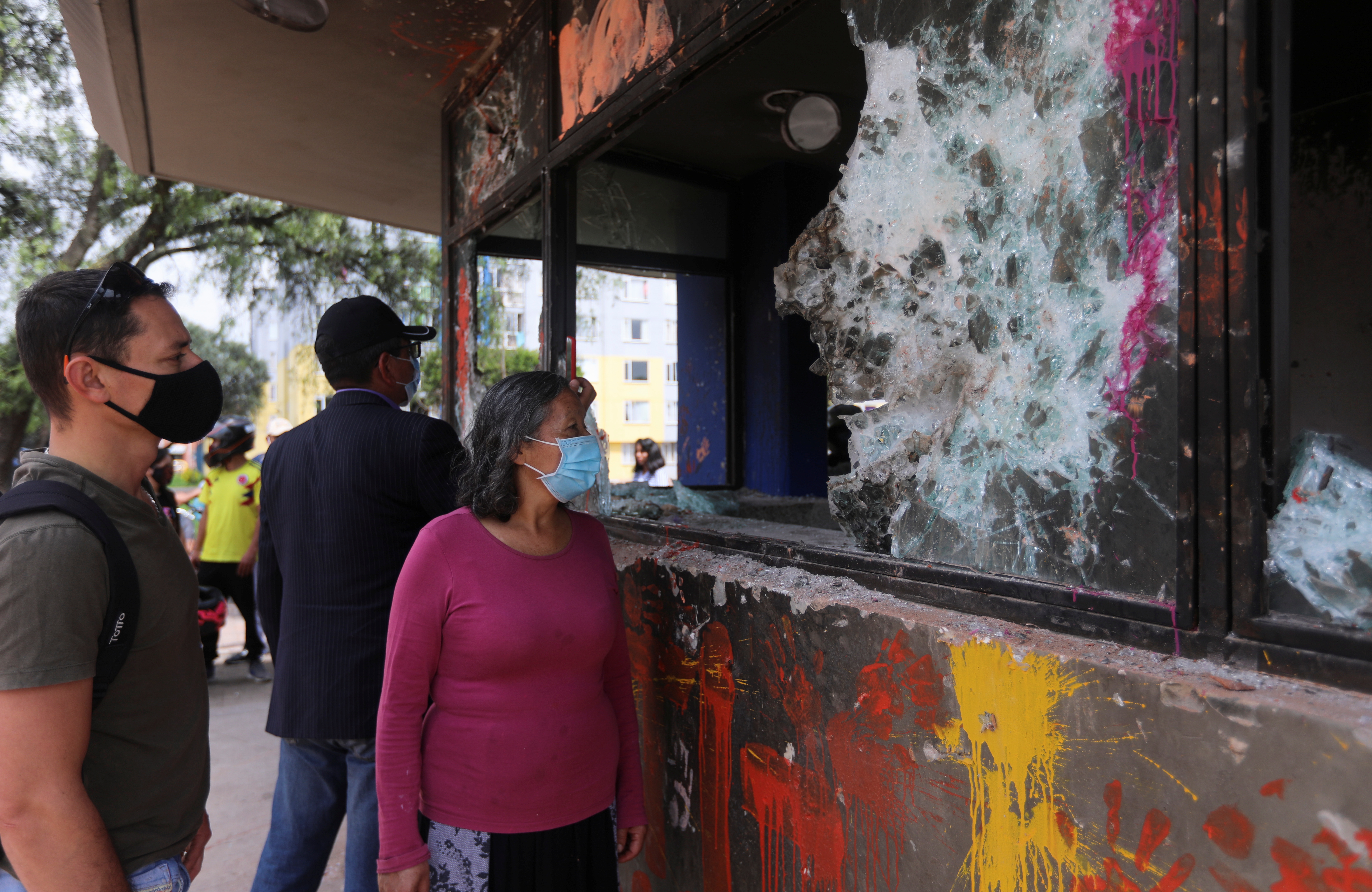
More than two dozen Bogota police stations suffered damage overnight and three were destroyed, the mayor’s office said.

In one attack, a crowd tried to “burn alive” a group of 10 police officers by setting fire to a station, it said.

Asked about the attack, a police officer in Bolivar Plaza told Reuters he was “disappointed as a human being.”

Mayor Claudia Lopez called the destruction and violence in the city overnight “unbelievable.”

Protests nationwide have resulted in 24 deaths, according to the human rights ombudsman, 15 of them in the western city of Cali.

The national police or the ESMAD riot squad were listed by the ombudsman as the entity “presumed responsible” for 11 of the deaths, including that of a boy under 18 years old. A local human rights observatory said the death toll was more than 30.

The post Colombians Continue Protest Marches, Police Use Tear Gas appeared first on The St Kitts Nevis Observer.