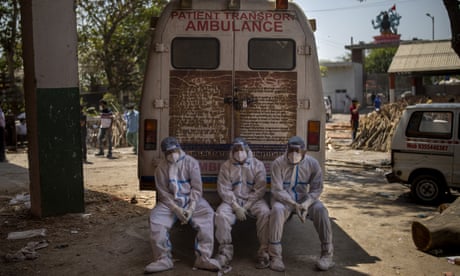
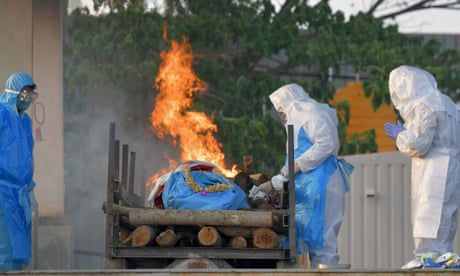
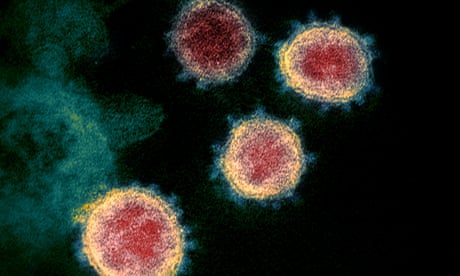
The world is watching in horror as India is stricken by a coronavirus crisis, but the nation does not actually have the most daily new cases in comparison to its massive population, according to official figures.
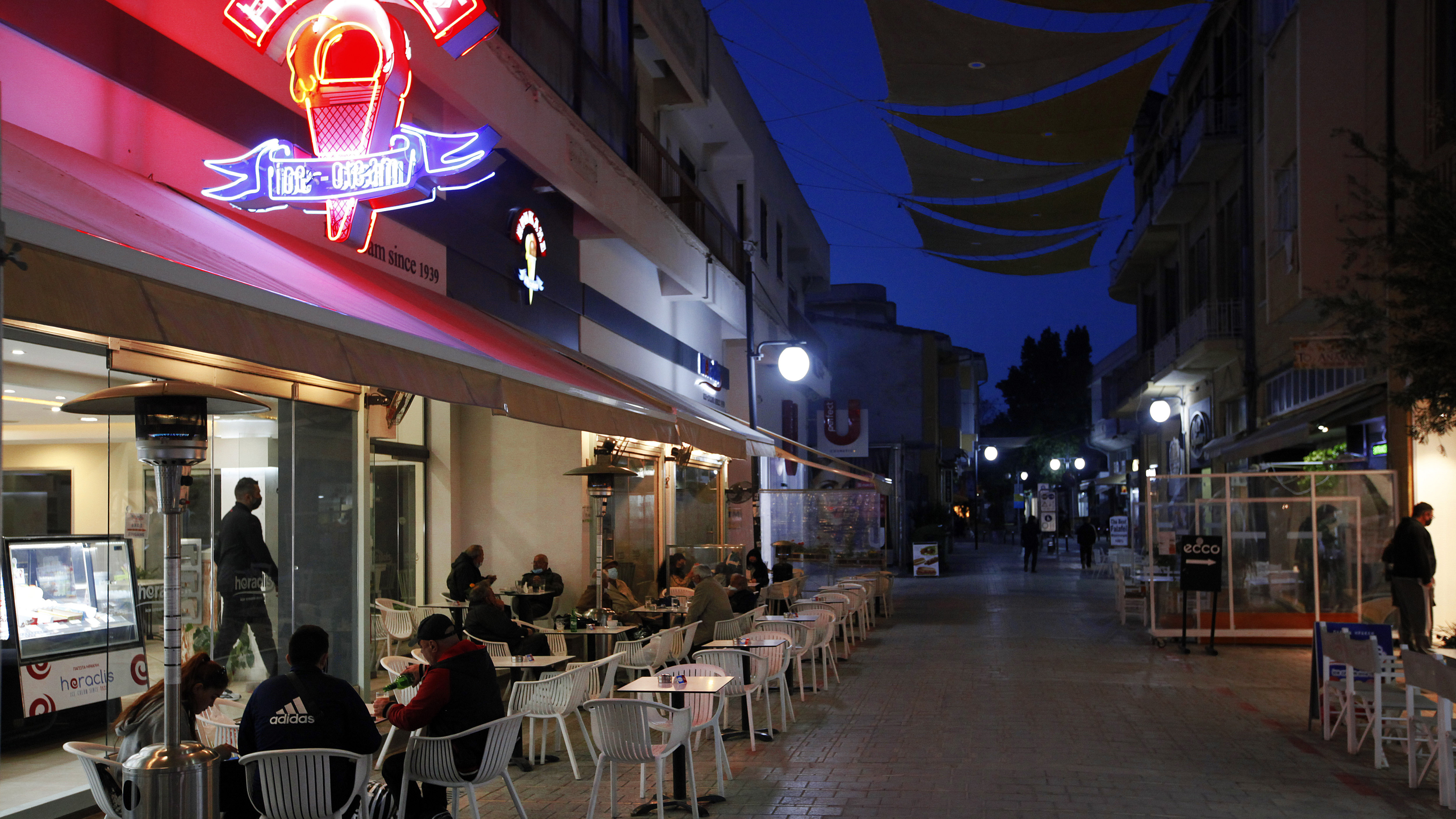
The Mediterranean island of Cyprus currently has the largest number of cases per population, with 929 people per one million testing positive daily in the last week.
By comparison, India is the world's second largest nation with almost 1.4 billion people and, according to Our World in Data, in the last week there have been about 209 new daily cases per one million people.
The South American nation of Uruguay (854 new daily cases per million) and the Middle Eastern country of Bahrain (620) are also at the top of the table in terms of case rates.
However, experts warn India's crisis could worsen with fears of half a million cases per day in coming weeks.
There are also fears that the true numbers are far higher, with many people with the virus likely not being tested and deaths not being properly recorded.
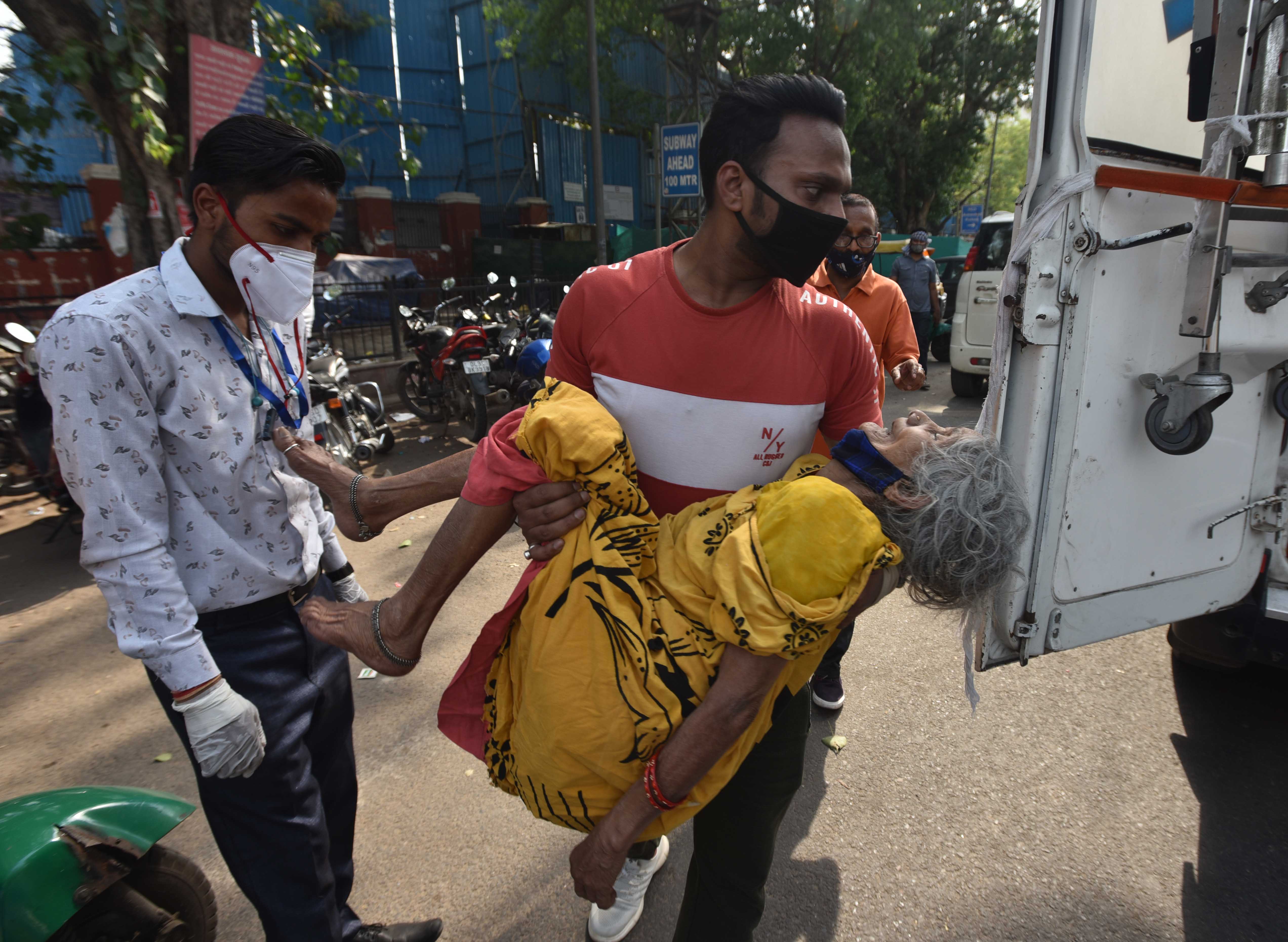
The nation also has notoriously poor health care, and hospitals are running out of oxygen and turning desperate patients away.
A total of 143 million vaccine doses have been given out, but less than two percent of the population is fully vaccinated, according to Our World in Data.
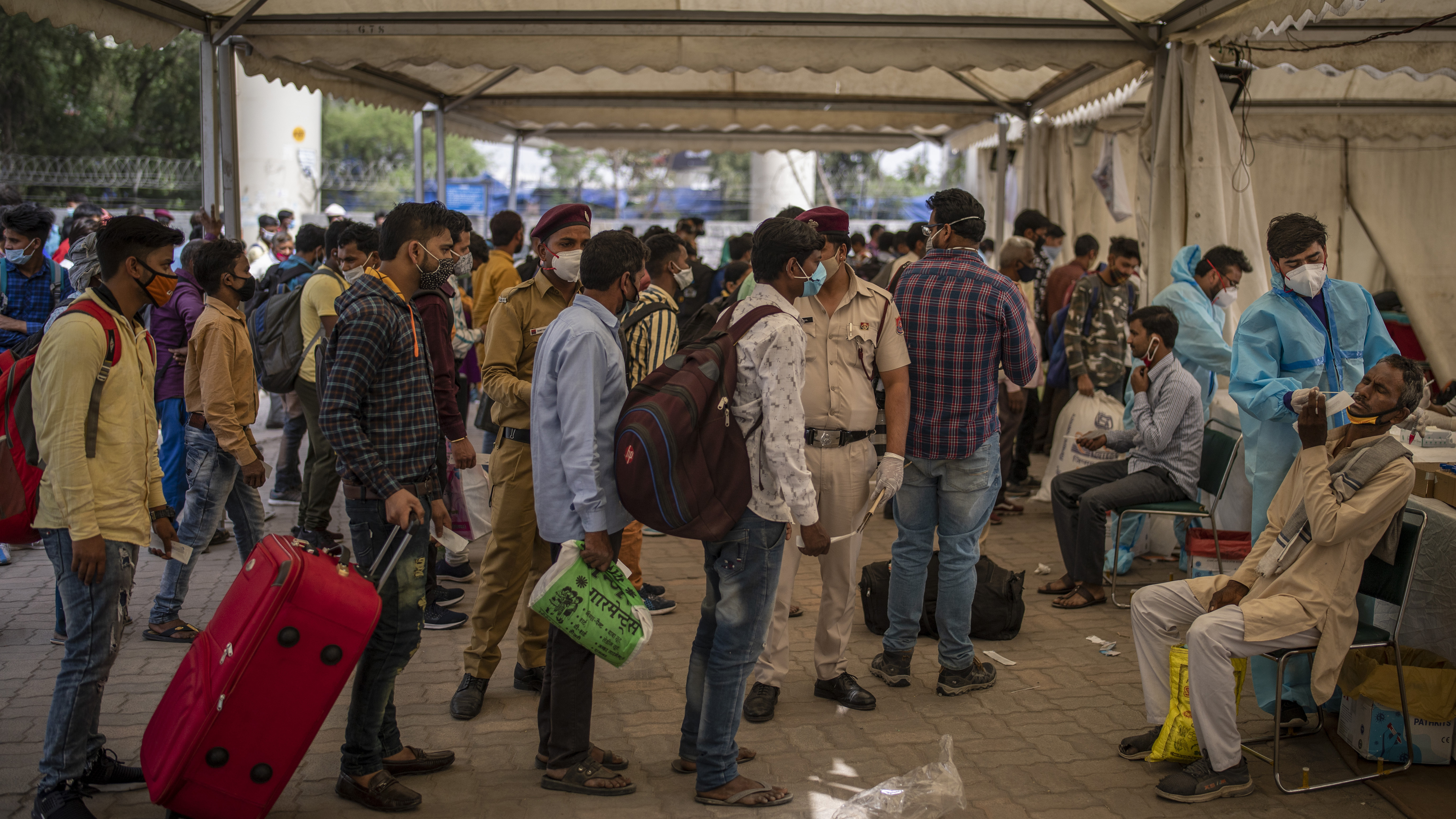
In the capital Delhi, one-in-three people going for a test were being told they had the virus.
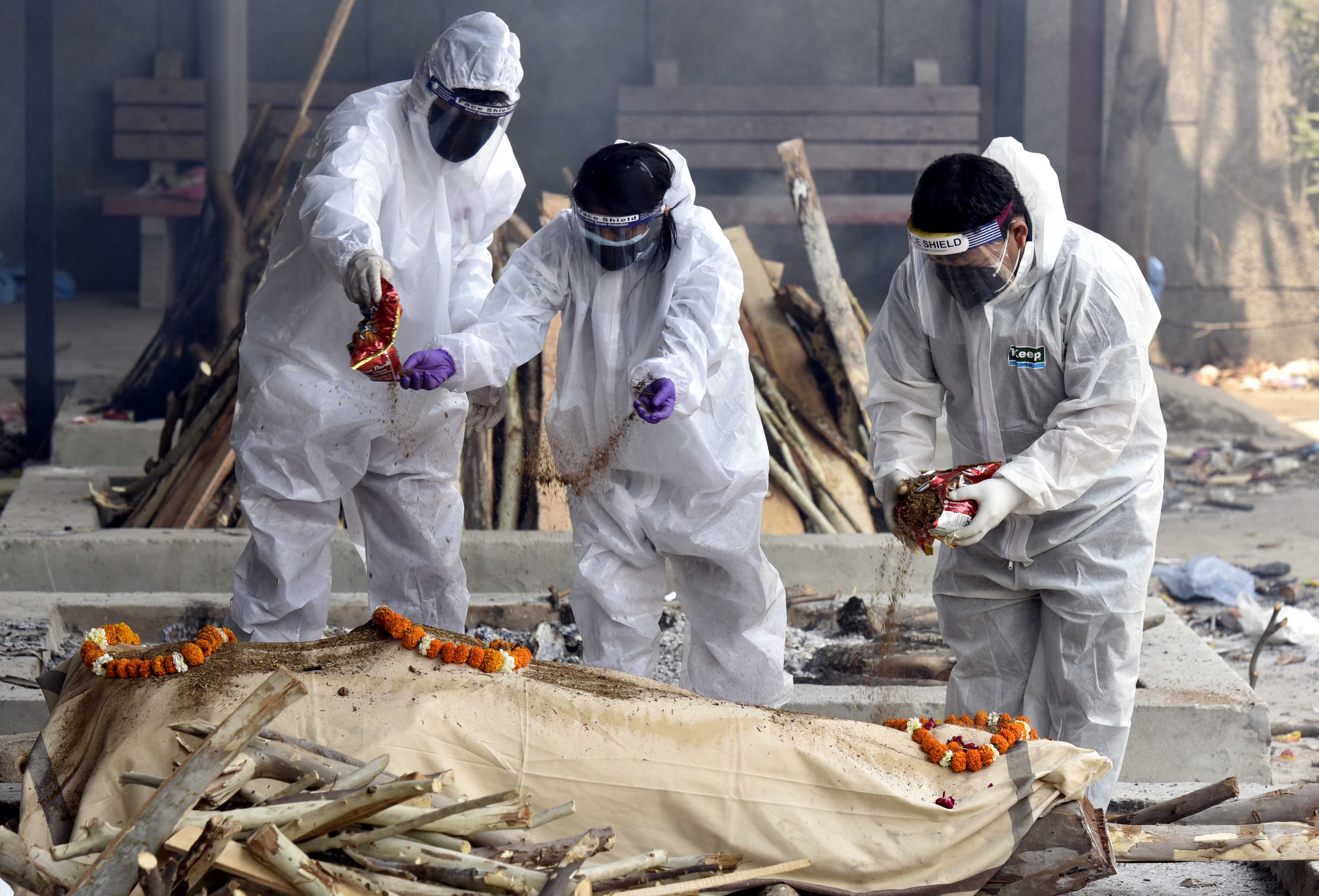
India has become the fourth nation to pass the grim figure of 200,000 coronavirus deaths, after the US, Brazil and Mexico.
Looking at the last seven days, the nation which has seen the most deaths in comparison with its population, is Hungary.
It has seen 20 deaths per one million people, while India is averaging 1.59 deaths per one million people.
The ban will last for at least two weeks, with Prime Minister Scott Morrison saying the number of Aussies returning from India with the virus is putting pressure on the mandatory hotel quarantine.
President Biden’s first 100 days in office have been aggressive on policy, but subdued on style.
Biden, a 78-year-old former vice president and centrist senator who was far from the first choice of most progressives in the 2020 Democratic primary, has gone big on policy, seeking to reshape the economy and social safety net amid a historic pandemic.
He’s sought to undo former President Trump’s agenda, issuing executive actions from Day One to do away with his predecessor’s wall on the southern border and travel ban, among many other issues.
While pushing a vaccination effort to open the economy and end the pandemic, he’s also been aggressive with legislation, winning passage of a $1.9 trillion COVID-19 relief bill and setting up measures on infrastructure, child care, free community college and other issues that would total more than $3 trillion.
But while Biden’s governing approach has been assertive, his style has been much more relaxed, particularly compared to his predecessor’s stream-of-conscious social media musings and impromptu sessions with reporters.
With semiregular speeches, few news interviews and no unscripted tweets, Biden has fashioned himself the foil of the previous president.
“He’s a fairly calm, rational person and he is a thoughtful person and he just is the antithesis, I think, of Donald Trump in terms of persona and style,” said Barbara Perry, director of presidential studies at the University of Virginia’s Miller Center. “I think that has come across and calmed the country.”
Polls suggest it has so far, as Biden’s honeymoon is ongoing judging by his approval ratings.
Sixty-four percent of American adults approve of Biden’s handling of the coronavirus and 65 percent support the $1.9 trillion relief package he signed into law in March, according to a recent Washington Post-ABC News poll.
A slimmer 52 percent majority of adults approve of Biden’s job overall — higher than Trump at this point in his presidency but lower than his other predecessors.
“The only issues that have really mattered in the last 100 days are the pandemic and its effects on the economy,” said veteran GOP pollster Whit Ayres. “President Biden has focused most of his attention on those problems and has made substantial progress on both.”
“That said, there are numerous other issues lurking beneath the surface, not the least of which is he ran as a unifying candidate who would govern in a bipartisan way and he has governed by pushing a purely partisan agenda through a very narrow partisan majority in Congress,” Ayres continued. “History suggests that following that course of action creates a backlash in the next midterm election.”
Biden campaigned as a moderate who could work with Republicans to get things done but has not been able to get GOP lawmakers behind his proposals.
Democrats were happy that Biden, recognizing the urgency of the moment, didn’t wait for Republicans to come around to support the coronavirus relief bill before passing it with only Democratic support using budget reconciliation.
“Going in, my concern was that he was going to spend too much time negotiating with Sen. [Mitch] McConnell, at a time when cutting deals with Sen. McConnell was impossible,” said Jim Manley, a Democratic strategist and former aide to then-Senate Majority Leader Harry Reid (D-Nev.). “I am absolutely convinced that if the Republicans were serious, they would find a willing negotiating partner in the president and his team, but he’s not willing to waste time while they play political games.”
But using the same strategy again carries political risk for the president.
The Post-ABC poll found that 60 percent of adults say they would rather see Biden try to win support from Republicans by making major changes to his proposals, versus 30 percent who would prefer he try to enact his ideas without major changes even if it means not getting GOP support.
Biden unveiled a $2 trillion infrastructure and climate package last month and is on the cusp of proposing another $1 trillion in spending on child care, education and paid family leave that he is proposing to pay for with tax hikes.
He’ll either need to find a way to pass them with GOP support — which would require significant change — or get Democrats behind their own package.
“Historically, there is a narrow window usually in the first year of a four-year presidency to get stuff done. After that, it gets a lot tougher,” said Manley.
Still, Jim Kessler, executive vice president for policy at the centrist Democratic think tank Third Way, argued that Biden is in a better position than past Democratic presidents to successfully “go big” in his first term because of the popularity of the relief proposal. Former presidents have been forced to enact policies that have been unpopular, he argued, noting President Obama’s bailout of banks in 2008.
“Joe Biden is going into this passing a rescue package that everyone loves and so, he still gets a few more bites at the apple of going big because his first big plans didn’t expend capital, it gained capital,” Kessler said.
Biden will push forward on his legislative agenda while his administration works toward increasing the uptake of coronavirus vaccines and communicates guidance on public health practices for those who are vaccinated.
“We certainly believe we’re still going to be at war at the virus and there is more work to be done to get the virus under control, to meet people where they are, to get people vaccinated who may not be confident in the efficacy at this time,” White House press secretary Jen Psaki told reporters Tuesday.
He’s also been saddled with a challenge he didn’t foresee: the wave of young migrants at the southern border. Republicans are trying to exploit Biden’s perceived weakness on the border to gain ground against Democrats in the midterms.
A recent Fox News poll found that 35 percent of U.S. adults approve of Biden’s handling of border security and 34 percent approve of his handling of immigration, while slim majorities disapprove of the president’s work on either issue.
“It has proved to be an issue that even this administration is finding difficult to manage,” said one Democratic strategist. Biden has “got to think about A, how to manage it humanely, and B, not have any swift reaction that would upset moderate to conservative voters.”
(CNN) Canada has deployed its military to Ontario amid a worsening Covid-19 wave that has caused the positivity rate to hit an all-time high in the province.
The government approved Ontario’s request for medical and other support as ICU admissions hit new highs Monday.
“We have approved a request for assistance from Ontario to provide support to their provincial healthcare system against COVID19,” Bill Blair, Minister of Public Safety and Emergency Preparedness, said on Twitter. “@CanadianForces will provide medical + civilian human health resources within medical care facilities in ON, as well as logistical and admin. Support.”
Earlier this month the province issued new stay-at-home orders that were met with some protests. The government doubled down on April 16 when it said it would strengthen enforcement and penalties for those not complying with orders.
Canada said it would deploy federal health human resources, provide support from the Canadian Armed Forces (CAF), and pay for the redeployment of the Canadian Red Cross to support and relieve staff in medical care facilities, a statement released late Monday said.
“The CAF is preparing to deploy up to three multi-purpose medical assistance teams (MMATs), which are scalable healthcare provider teams primarily composed of Nursing Officers and Medical Technicians as well as additional CAF members for general duty support as applicable,” the statement said. “The MMATs will be rotated in and out of the province rather than deployed simultaneously to ensure that CAF support is sustainable.”
Ontario is already using surge capacity in dozens of hospitals, including a few field hospitals that are admitting patients with Covid-19 who do not need intensive treatment or those who have recovered enough to be transferred into the field facilities.
A former minister in the government of Barbados was sentenced on Tuesday to two years in prison for laundering bribes he received from a Barbadian insurance company through a U.S. bank, the U.S. Justice Department said.
Donville Inniss, 55, who had served as minister of industry in the Caribbean nation and as a member of its parliament, was convicted by a federal jury in January 2020, the department said in a statement.
Inniss concealed the nature of the bribes by receiving them through a dental company and a bank located in Elmont, New York, according to the statement.
Inniss, a legal permanent resident of the United States who lived in Florida, had been charged in Brooklyn federal court.
The lawyer for a Bay of Plenty cop convicted after crashing a police car while drink driving on duty says the officer apologises to the public and his colleagues.Andrew Rush, 38, admitted two driving offences in the Whakatāne…
Reuters- Brazil’s President Jair Bolsonaro looks on during a ceremony at the Sao Sebastiao neighbourhood in Brasilia, Brazil April 5, 2021. REUTERS/Adriano Machado/File Photo
A Senate inquiry into the Brazilian government’s handling of the coronavirus pandemic kicked off on Tuesday, with lawmakers launching what may be a major headache for President Jair Bolsonaro ahead of next year’s election.
Nearly 400,000 people have died from COVID-19 in Brazil, the second-highest death toll in the world after the United States. Bolsonaro, a far-right former army captain, has drawn harsh criticism due to his long-running efforts to minimize the dangers of the virus, shun masks and push unproven remedies.
The inquiry will be overseen by Senator Renan Calheiros, a veteran lawmaker and Bolsonaro critic responsible for the final report. Procedural decisions will fall to Senator Omar Aziz, from the hard-hit state of Amazonas, as committee president and Senate opposition leader Randolfe Rodrigues as vice president.
The probe is expected to focus on the government’s delays in securing vaccines, including the details of drawn-out negotiations with foreign drugmakers, and missteps in Amazonas, where an infectious new variant sprung up late last year.
Beyond the new facts uncovered, the inquiry is expected to generate a political spectacle, with lawmakers pinning Bolsonaro on the ropes ahead of next year’s fraught presidential election, where he is almost certain to seek re-election.
Although the probe could add to calls for impeachment of Bolsonaro, experts say that is an unlikely outcome. Instead, they suggested the government could deflect blame toward former Health Minister Eduardo Pazuello, who oversaw the chaos in Amazonas and has been criticized for slow vaccine negotiations.
Bolsonaro’s early efforts to undermine the probe reflect its potential to cause him damage. He and his allies strove to have Calheiros removed from leading the inquiry, alleging he could not be impartial as his son is the governor of Alagoas state, and the inquiry will probe federal funding of state programs.
Carla Zambelli, a lower house lawmaker and Bolsonaro ally, convinced a court to block Calheiros on Monday night, but the decision was later reversed by another federal court.
On Tuesday, Calheiros said he would act impartially and that the probe would be “deep, technical, focused on its objectives and depoliticized.”
“The country has a right to know who contributed to the thousands of deaths, and they should be punished,” he added.
He said he had proposed calling for testimony from current Health Minister Marcelo Queiroga, as well as his predecessors during the pandemic, including Pazuello.
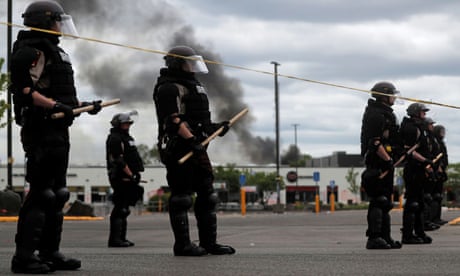
A week after the former Minneapolis police officer Derek Chauvin was convicted of murder in George Floyd’s death, the unabated epidemic of police killings of Black men and women in the US has now attracted scorching international attention.
In a devastating report running to 188 pages, human rights experts from 11 countries hold the US accountable for what they say is a long history of violations of international law that rise in some cases to the level of crimes against humanity.
Before Chauvin: decades of Minneapolis police violence that failed to spark reform
They point to what they call “police murders” as well as “severe deprivation of physical liberty, torture, persecution and other inhuman acts” as systematic attacks on the Black community that meet the definition of such crimes.
They also call on the prosecutor of the international criminal court (ICC) in The Hague to open an immediate investigation with a view to prosecutions.
“This finding of crimes against humanity was not given lightly, we included it with a very clear mind,” Hina Jilani, one of the 12 commissioners who led the inquiry, told the Guardian. “We examined all the facts and concluded that that there are situations in the US that beg the urgent scrutiny of the ICC.”
Among its other findings, the commission accuses the US of:
violating its international human rights obligations, both in terms of laws governing policing and in the practices of law enforcement officers, including traffic stops targeting Black people and race-based stop and frisk;
tolerating an “alarming national pattern of disproportionate use of deadly force not only by firearms but also by Tasers” against Black people;
operating a “culture of impunity” in which police officers are rarely held accountable while their homicidal actions are dismissed as those of just “a few bad apples”.
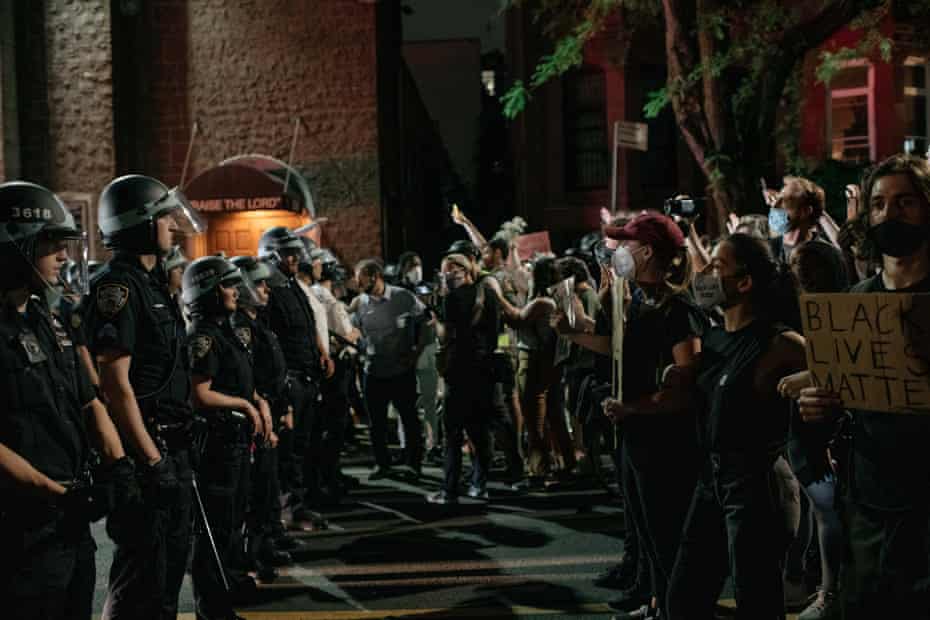
Demonstrators denouncing systemic racism in law enforcement face off with a line of NYPD officers, 4 June 2020. Photograph: Scott Heins/Getty Images
The commissioners also charge that African Americans are frequently subjected to torture at the hands of police. They assert that the use of chokeholds and other violent restraints during arrests are tantamount to torture – also a crime against humanity under international law.
Jilani, who is president of the World Organisation Against Torture, said that last week’s guilty verdict in the Floyd killing substantiated the commission’s views. “It clarified for us that the use of force during the arrest of an individual is not just dehumanizing, it clearly amounts to torture and potential loss of life.”
The report arose directly out of the foment that swept the country in the wake of Floyd’s murder last May. As protests erupted across the nation and around the world, the families of Floyd and other Black people killed by police in recent years petitioned the UN to set up an official inquiry into the shootings.
Under intense pressure from the Trump administration, however, the UN shrank from being drawn into the debate. A coalition of three leading lawyers’ organizations – the US-based National Conference of Black Lawyers and the National Lawyers Guild, and the worldwide International Association of Democratic Lawyers – stepped into the breach, joining forces to stage their own independent inquiry into US police brutality.
A panel of commissioners from Africa, Asia, Europe, Latin America and the Caribbean was assembled to look into police violence, and the structural racism that underpins it. Virtual public hearings were held earlier this year, with testimony from the families of the victims of some of the most notorious police killings in recent times.
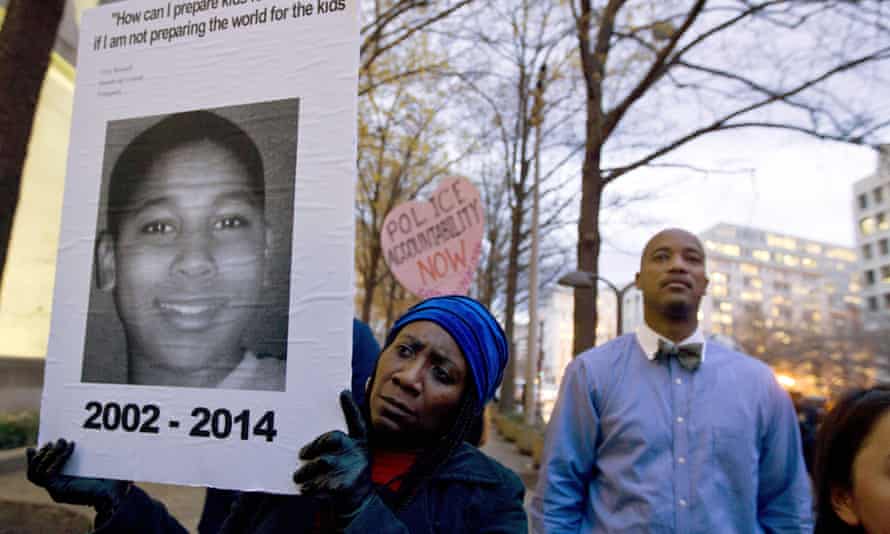
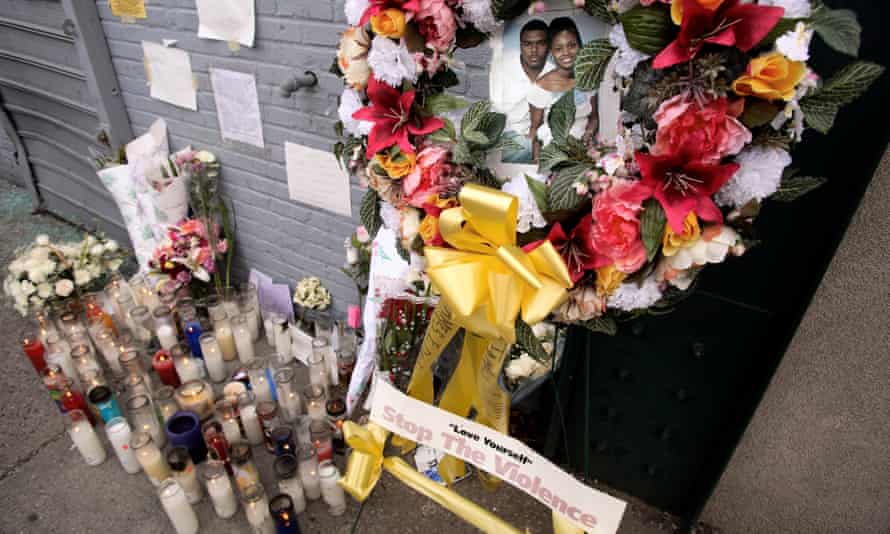
Among the 44 black people who died or were maimed by police and whose cases were put under the commission’s spotlight were: Floyd; Sean Bell, killed on his wedding day in 2006 after police fired 50 bullets; Eric Garner, who died in a chokehold in 2014 crying “I can’t breathe”; Tamir Rice, the 12-year-old playing with a toy gun shot in 2014 seconds after police arrived; Michael Brown, the unarmed 18-year-old whose killing ignited the Black Lives Matter movement; Freddie Gray who died in 2015 after enduring a “rough ride” in a police van; and Breonna Taylor, killed as she was sleeping in a police raid on her home in March 2020 in Louisville, Kentucky.
Tomiko Shine holds up a poster of Tamir Rice during a protest in Washington, 1 December 2014. Photograph: Jose Luis Magana/AP
On Monday, the US Department of Justice announced that it was holding a civil rights inquiry into police practices in Louisville.
Jilani told the Guardian that as a native of Pakistan who has participated in many UN investigations probing human rights abuses, she is familiar with accounts of extreme brutality by law enforcement. “But even I found the testimonies we heard in the US extremely distressing. I was taken aback that this country, which claims to be a global champion of human rights, itself fails to comply with international law.”
She added that as she listened to relatives of police shooting victims relate their stories, “it became clear that this was no longer an account of individual trauma, it was an account of trauma inflicted on a whole section of the US population.”
The commission’s report puts the human impact of systemic discrimination against African Americans in stark terms. It says that the US is operating two systems of law.
“One is for white people, and another for people of African descent,” it said.
In the course of the public hearings held in January and February, relatives gave a more personal impression of what such trauma entails. Nicole Paultre Bell, the wife of Sean Bell, testified: “Imagine living in a world where you must explain to your children that their father, an unarmed bridegroom on the morning of his wedding, can be justifiably killed in a hail of 50 police bullets.”
One of the most visceral accounts was given by Dominic Archibald, the mother of Nathaniel Pickett who was gunned down by a police officer in 2018 for doing nothing other than walking unarmed across the street. In her testimony, Archibald began by explaining that “Nate” was her only child.
“He was my legacy, my faith in the present moment, and my hope for the future. Can I ever put this impact into words? Would anyone ever understand?” she said.
Answering her own question, she went on: “That answer is no. Nate was my perfect gift from God. When he was killed, every hope and dream in my head was destroyed, taken and relegated to a statistic.”
The report gives its own searing figures. Unarmed Black people are almost four times as likely as their white equivalents to be killed by police.
Since 2005, about 15,000 people have been killed by law enforcement – a rate of about 1,000 every year. During that same period only 104 police officers have been charged with murder or manslaughter in relation to the incidents, and of those only 35 were convicted of any crime.
A photo of Sean Bell with Nicole Paultre Bell and one of his children at a candlelight memorial at the scene of his shooting in the Queens borough of New York, 29 November 2006. Photograph: Adam Rountree/AP
The commissioners make a number of demands on the US government and Congress. They want to see demilitarization of local police forces, and prohibition of no-knock warrants that allow officers to raid the homes of Black people like Breonna Taylor’s without warning and often without cause.
They also want an end to qualified immunity through which police officers avoid civil lawsuits. The commissioners say the loophole “amounts to condoning brutal police violence”.
But the most contentious demand is likely to be the call on the ICC prosecutor to launch an investigation against the US for crimes against humanity. It is questionable how effective that tactic would be even were such an inquiry started, given that the US has refused to recognize the international criminal court.
Jilani said she hoped that the US government would see that such an action would support much needed change. “We felt that the US would benefit were individual police officers further deterred from resorting to unjustified force, knowing that some kind of international criminal responsibility might be held against them.”
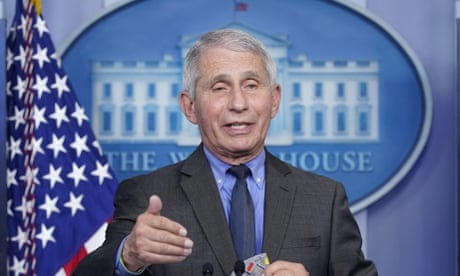
Guardian (UK) Dr Anthony Fauci, the White House’s chief medical adviser, has said countries have failed to unite to provide an adequate global response to prevent the “tragic” coronavirus outbreak from overwhelming India, and singled out wealthier nations for failing to provide equitable access to healthcare around the world.
Speaking to Guardian Australia from the US, Fauci said the situation in India had highlighted global inequality.
“The only way that you’re going to adequately respond to a global pandemic is by having a global response, and a global response means equity throughout the world,” Fauci said.
Australia should make Covid vaccine rollout ‘top priority’, Anthony Fauci says
“And that’s something that, unfortunately, has not been accomplished. Often when you have diseases in which there is a limited amount of intervention, be it therapeutic or prevention, this is something that all the countries that are relatively rich countries or countries that have a higher income have to pay more attention to.”
India recorded 360,960 new cases in the 24 hours to Wednesday morning according to health ministry data, another new daily global record. The ministry also said that India’s total number of fatalities had passed 200,000 to stand at 201,187.
The latest epidemiological update from the World Health Organization (WHO) issued on Tuesday said Covid-19 cases increased globally for the ninth consecutive week, with nearly 5.7m new cases reported. India accounts for the majority of cases, with 2,172,063 new cases reported in the past week – a 52% increase.
WHO chief says the Covid surge in India ‘beyond heartbreaking’ – video
Fauci said while WHO was trying to accelerate support to India through the Covax initiative – a global program aimed at ensuring countries most in need get access to vaccines and other treatments – “we have to do even more than that”.
“The United States has really revved up their activity in helping out India … we’re sending oxygen, remdesivir, personal protective equipment, a variety of other medications and soon we’ll be sending vaccine to help out,” he said.
Australia ‘morally obliged’ to help repatriate citizens caught in India’s Covid crisis
“So I think that that’s a responsibility that the rich countries need to assume. Right now it’s a terrible tragic situation where people are dying because there’s not enough oxygen, where there’s not enough hospital beds. We have to try, looking forward, to get as much equity when it comes to public health issues as we possibly can.
“Because we’re all in this together. It’s an interconnected world. And there are responsibilities that countries have to each other, particularly if you’re a wealthy country and you’re dealing with countries that don’t have the resources or capabilities that you have.”
Looking ahead, health systems globally would need to be upgraded so that issues emerging could be detected sooner, Fauci said. Transparency and communication between countries would be key, he said, adding that this was not just an issue for countries like India but for the US as well.
“You want to have the capability of better surveillance internationally, so that when something comes up and emerges in a given country there’s not a big delay in getting recognition of what’s going on,” he said.
“I know in the United States, for example, our local public health system has not been kept up to the level that we would have liked … we are still using fax machines, which is really unacceptable. You have to be prepared to have interconnectivity.”
As the tragedy unfolds in India, he said Australians should feel grateful that they had two safe and effective vaccines in AstraZeneca and Pfizer, even if the rollout of those vaccines had been slower than anticipated.
‘I don’t stop crying’: families of Australians caught in India Covid surge plead for repatriation
“Just because you have only two vaccines that are available, that doesn’t necessarily mean you’re at a disadvantage, so long as you have enough efficacious and safe vaccine,” he said. “I don’t think the numbers of [different types of] vaccines in the sense of different vaccines is as important as getting enough for your citizens.”
Though there had been delays to the rollout in Australia, the federal government has secured enough vaccine supply to vaccinate the entire Australian population of 25m, even before other candidates such as the Novavax vaccine have been approved and available. If regulators approve the Novavax vaccine once more clinical trial data is available, the government anticipates 51m doses of that vaccine will be made available in Australia during 2021.
Asked whether the situation in India and elsewhere, such as in Papua New Guinea, meant the world would struggle to ever contain Covid, Fauci responded: “I believe we will get there.
“But it makes it more difficult when you have the spread of infection in a country that’s not handling it very well. If you get infections in a country in which there are a lot of immunosuppressed individuals, including people who are infected with HIV and the virus infects them, they don’t clear it as rapidly as you would hope and that gives the virus a chance to mutate, which leads to the development of additional variants.”
Why Australia is under pressure to upgrade advice on Covid’s aerosol transmission
Fauci said the evolving situation meant he “can’t even begin to think” of a life and career beyond responding to the pandemic. While the rapid pace of the vaccination program in the US has seen a reduction of new infections, there were nonetheless 406,000 new cases reported in the US in the past week – a 15% decrease from the week prior.
“This is such an important and challenging situation we’re dealing with right now,” Fauci said. “I’m devoting all of my attention, all of my energy, 24/7, on trying to get control of this terrible outbreak that we’re experiencing, not only here in the United States, but throughout the world.”
New guidance from the Centers for Disease Control and Prevention (CDC) says it is safe for people who have been fully vaccinated against COVID-19 to be outside without a mask, but only in small groups.
The guidance, which CDC Director Rochelle Walensky outlined during a White House press conference Tuesday, builds on previous updates from the agency about the activities people can feel comfortable with once fully vaccinated.
“Today is another day we can take a step back to the normalcy of before. Over the past year, we have spent a lot of time telling Americans what they cannot do, what they should not do,” Walensky said. “Today, I’m going to tell you some of the things you can do if you are fully vaccinated.”
The guidance includes a color-coded chart that describes activities for both vaccinated and unvaccinated people indoors and outdoors, both with and without masks.
According to the CDC, fully vaccinated people do not need to wear masks during small, outdoor gatherings even if there’s a mixture of vaccinated and unvaccinated people.
Dining at an outdoor restaurant with friends from multiple households is also considered a safe activity for vaccinated people to do without a mask, the agency said.
“The release of these new guidelines is a first step at helping fully vaccinated Americans resume what they had stopped doing because of the pandemic, at low risk to themselves, while being mindful of the potential risk of transmitting the virus to others,” the CDC said.
Last month, the CDC said it was safe for fully vaccinated people to safely gather indoors with other fully vaccinated people without wearing masks, and could visit indoors with unvaccinated people from a single household.
People are considered fully vaccinated by the CDC two weeks after the second dose of the Pfizer-BioNTech or Moderna vaccines or two weeks after the single-dose Johnson & Johnson vaccine.
More than 42 percent of the U.S. population has received at least one vaccine dose, including nearly 30 percent who have been fully vaccinated, according to the CDC.
CDC emphasized that it’s ultimately up to individuals to consider their own personal situation and the risk to themselves, their family and community before venturing out without a mask.
Even vaccinated people should wear a mask when outdoors in a crowded public space, indoors in public spaces like a mall, houses of worship, or even a small indoor gathering with a mixture of vaccinated and unvaccinated people.
Studies have consistently found the risk of transmitting COVID-19 is significantly reduced when outdoors, particularly when individuals are socially distanced. Experts have increasingly questioned the need for mask use outdoors given the rising percentage of Americans who are vaccinated against the virus.
As vaccination levels have increased and infections dropped, there’s been a growing chorus of public experts calling for CDC to update its guidance on outdoor activities. But there are likely some who think this does not go far enough.
For example, the guidelines for unvaccinated people have not changed. The agency still recommends wearing a mask when outside in public spaces.
“Masks may not be necessary when you are outside by yourself away from others, or with people who live in your household,” the current guidance states.
“However, some areas may have mask mandates while out in public, so please check the rules in your local area (such as in your city, county, or state),” it adds.
Many states instituted strict universal mask mandates for indoors and outdoors, even if you’re alone. Some are beginning to lift them, and Walensky encouraged governors to distinguish between vaccinated and unvaccinated people, as well as between small outdoor gatherings and large ones, like concerts or sporting events, where many unvaccinated people may also be present.
But there’s widespread consensus that brief encounters with an unmasked person running, hiking or biking are very low risk.
“I think we have to say, no need for blanket outdoor mask mandates,” Leana Wen, a public health professor at George Washington University, said in an e-mail.
She noted that the World Health Organization says masks are not necessary outside unless physical distancing of three feet can’t be maintained.
“If you are vaccinated, it’s fine to take off your mask any time outdoors, even if you are around others,” Wen said. “If you are unvaccinated, you should keep three feet away from others who are also unvaccinated, or are of unknown vaccination status when outdoors; if you cannot maintain 3 feet distance, you should wear a mask.”