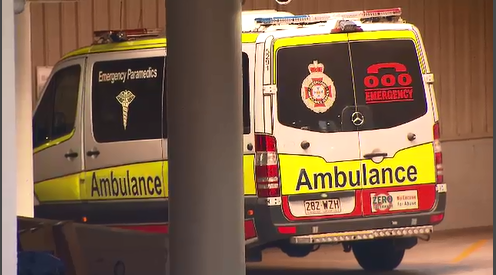
Queensland Health has responded to reports a police officer was hospitalised in Brisbane with blood clots three days after receiving the Pfizer coronavirus vaccine.
9News understands the 40-year-old man – a frontline worker responsible for patrolling Queensland quarantine hotels – received the Pfizer shot three days ago.
The officer had recently undergone knee surgery and developed deep vein thrombosis as a side-effect.
He has since been discharged and is back on duty.
In a statement released this afternoon, Queensland Health said they were aware of the media reports, but directed all queries surrounding the incident to the Federal Government.
"Queensland Health is aware of media reports that a 40-year-old had presented to a hospital following the Pfizer vaccine," the statement said.
"The patient presented to a private hospital, is not currently admitted and any queries should be directed to the Federal Government.
"In Queensland, all adverse events in relation to the COVID-19 vaccines are reported to the Therapeutic Good Administration (TGA).
"The TGA will then undertake an assessment and determine whether there is any clinical link to the vaccination."
When asked about the case this afternoon, Queensland Deputy Premier Steven Miles said authorities are looking at if there was a link between the vaccine and the blood clotting.
"It's too early to say whether this incident is linked to the Pfizer vaccine," Mr Miles said.
"Our authorities will be looking into whether there is a link here … and looking to see if it can help inform the vaccine rollout."
Pfizer became the recommended vaccine for Australians under 50 earlier this month, after the AstraZeneca jab was linked to rare cases of potentially life-threatening blood clots.
Prior to this report, there have been three Australians diagnosed with blood clots following a dose of the AstraZeneca vaccine.
An urgent investigation by Queensland Health and Federal Authorities is underway.
Juventus chairman Andrea Agnelli says the European Super League project cannot proceed following the withdrawal of the six Premier League clubs.
Agnelli was one of the chief architects of the breakaway plans, which involved 12 clubs from England, Spain and Italy.
However, with teams withdrawing, he accepts it cannot now go ahead.
“To be frank and honest no, evidently that is not the case,” said Agnelli, when asked whether the Super League could still happen.
“I remain convinced of the beauty of that project, of the value that it would have developed to the pyramid, of the creation of the best competition in the world, but evidently no. I don’t think that project is now still up and running.”
Agnelli was described as a “snake and a liar” by Uefa president Aleksander Ceferin on Monday after the announcement of the breakaway plans on Sunday evening.
Agnelli resigned his position as chairman of the European Clubs’ Association on Sunday and refused to take calls from Ceferin.
The 12-team Super League, set up by the six English teams and Inter, plus Spain’s Atletico Madrid, Barcelona and Real Madrid and Italy’s AC Milan and Juventus was announced on Sunday to widespread condemnation.
“Despite the announced departure of the English clubs, forced to take such decisions due to the pressure put on them, we are convinced our proposal is fully aligned with European law and regulations,” the ESL said earlier on Wednesday, adding it was “convinced that the current status quo of European football needs to change”.
“Real Madrid president Florentino Perez is insisting on the idea of keeping the group together to push for change,” says Spanish football expert Guillem Balague.
“Barcelona say they agreed to the ESL, but only if the season ticket holders’ assembly approve it, which could be their way out.”
Balague also says Atletico Madrid are meeting on Wednesday morning to review their position.
People with mild Covid-19 could take a pill or capsule at home to prevent the illness turning serious and requiring hospital treatment, under government plans to fast-track development of treatments for the disease.
The government is launching an antivirals taskforce to find at least two drugs by the autumn that people can take to stop coronavirus in its tracks and speed up recovery from it.
Boris Johnson said the plans were part of the UK adapting to a new reality. The prime minister told a Downing Street press conference on Tuesday: “The majority of scientific opinion in this country is still firmly of the view that there will be another wave of Covid at some stage this year.”
Johnson suggested the antivirals research would form part of a three-pronged approach to tackle this anticipated third wave, including booster jabs in the autumn to combat new variants as well as continuing mass testing.
However, he said that the reopening of the economy would proceed as planned, despite the warnings. “I see nothing in the data now that makes me think we are going to have to deviate in any way from the roadmap, cautious but irreversible, that we have set out.”
The government hopes the antivirals taskforce will match the success of the vaccines taskforce, which bought a range of effective Covid jabs for the UK and has put the country ahead of most of the world in immunisation against the coronavirus.
The new drive aims to find drugs that work against the virus – and its variants – in the early stages of disease. Most of the drugs discovered so far have been for use by people severely ill in hospital. Dexamethasone, a cheap steroid already in widespread use, was the biggest breakthrough. It was identified in the UK’s Recovery trial and is now saving lives all over the globe.
Now that there are far fewer deaths in the UK, more attention is being paid to drugs that could help stop mild Covid-19 infection from progressing to a more serious illness.
The taskforce is likely to focus on antiviral monoclonal antibodies – proteins made in the laboratory to fight the virus as the immune system does. The former US president Donald Trump was given an antibody cocktail that may have speeded his recovery from Covid. However, they are expensive and there have been questions over whether these drugs will be fully effective against variants.
The prime minister and health secretary both referenced the vaccines taskforce in the announcement of the new body. “The success of our vaccination programme has demonstrated what the UK can achieve when we bring together our brightest minds,” said Johnson.
“Our new antivirals taskforce will seek to develop innovative treatments you can take at home to stop Covid-19 in its tracks. These could provide another vital defence against any future increase in infections and save more lives.”
The health secretary, Matt Hancock, said he was “committed to boosting the UK’s position as a life science superpower and this new taskforce will help us beat Covid-19 and build back better”.
The UK was leading the world in rolling out treatments for Covid, he said, mentioning dexamethasone and also the hospital drug tocilizumab. “In combination with our fantastic vaccination programme, medicines are a vital weapon to protect our loved ones from this terrible virus,” Hancock said.
“Modelled on the success of the vaccines and therapeutics taskforces, which have played a crucial part in our response to the pandemic, we are now bringing together a new team that will supercharge the search for antiviral treatments and roll them out as soon as the autumn.
”Some of the drugs administered in hospital are given intravenously or by infusion, which makes them hard to use at home. “Antivirals in tablet form are another key tool for the response. They could help protect those not protected by or ineligible for vaccines. They could also be another layer of defence in the face of new variants of concern,” said the government’s chief scientific adviser, Sir Patrick Vallance.
The vaccines taskforce was until recently led by the businesswoman Kate Bingham. The government has said there will be a competition to decide the chair of the antivirals taskforce. The new taskforce will work alongside the therapeutics taskforce, led by the deputy chief medical officer, Prof Jonathan Van-Tam, which identifies potential Covid drugs and steers them into trials and eventually the NHS.
=============================================
Johnson & Johnson to Resume Distribution of COVID Vaccine
JJohnson & Johnson said it will resume distribution in Europe after EU regulators said its benefits outweigh the risks. A Congressional panel is investigating J&J manufacturer Emergent, and women are getting vaccinated more than men.
European regulator says Johnson & Johnson vaccine benefits outweigh risks
Europe’s drug regulator said Tuesday that it’s recommending a warning be added to the Johnson & Johnson COVID-19 vaccine about a possible link to blood clots, but noted they are “very rare” and the benefits still outweigh the risks.
In response, the company said it will resume its vaccine rollout in Europe.
J&J had decided to delay its rollout in the EU’s member states last week, after U.S. regulators called for a pause on the vaccine following concerns about the potential serious side effect.
“The reported combination of blood clots and low blood platelets is very rare, and the overall benefits of COVID-19 Vaccine Janssen in preventing COVID-19 outweigh the risks of side effects,” the European Medicines Agency (EMA) said in a statement.
Just eight cases of the blood clots out of about 7 million people who received the single-dose vaccine have been identified in the U.S., the agency noted.
Next move? The EMA’s decision could foreshadow what U.S. regulators will decide on Friday, when a Centers for Disease Control and Prevention (CDC) advisory committee meets again. The panel of experts previously met last week, but they put off a decision on what to do about the vaccine until another meeting this Friday because of a lack of evidence. That delay drew criticism from some experts, who said there was no good reason to prolong the pause.
Seen it before: The EMA noted that similar instances of rare blood clots have been linked to a different COVID-19 vaccine, from AstraZeneca. Use of that vaccine has resumed after pauses in some countries in Europe, though some nations have added age restrictions.
The clotting cases with the Johnson & Johnson vaccine have mostly been in women under 60 years of age.
=============================================
Argentina produces Russia’s Sputnik V vaccine in regional first
Reuters
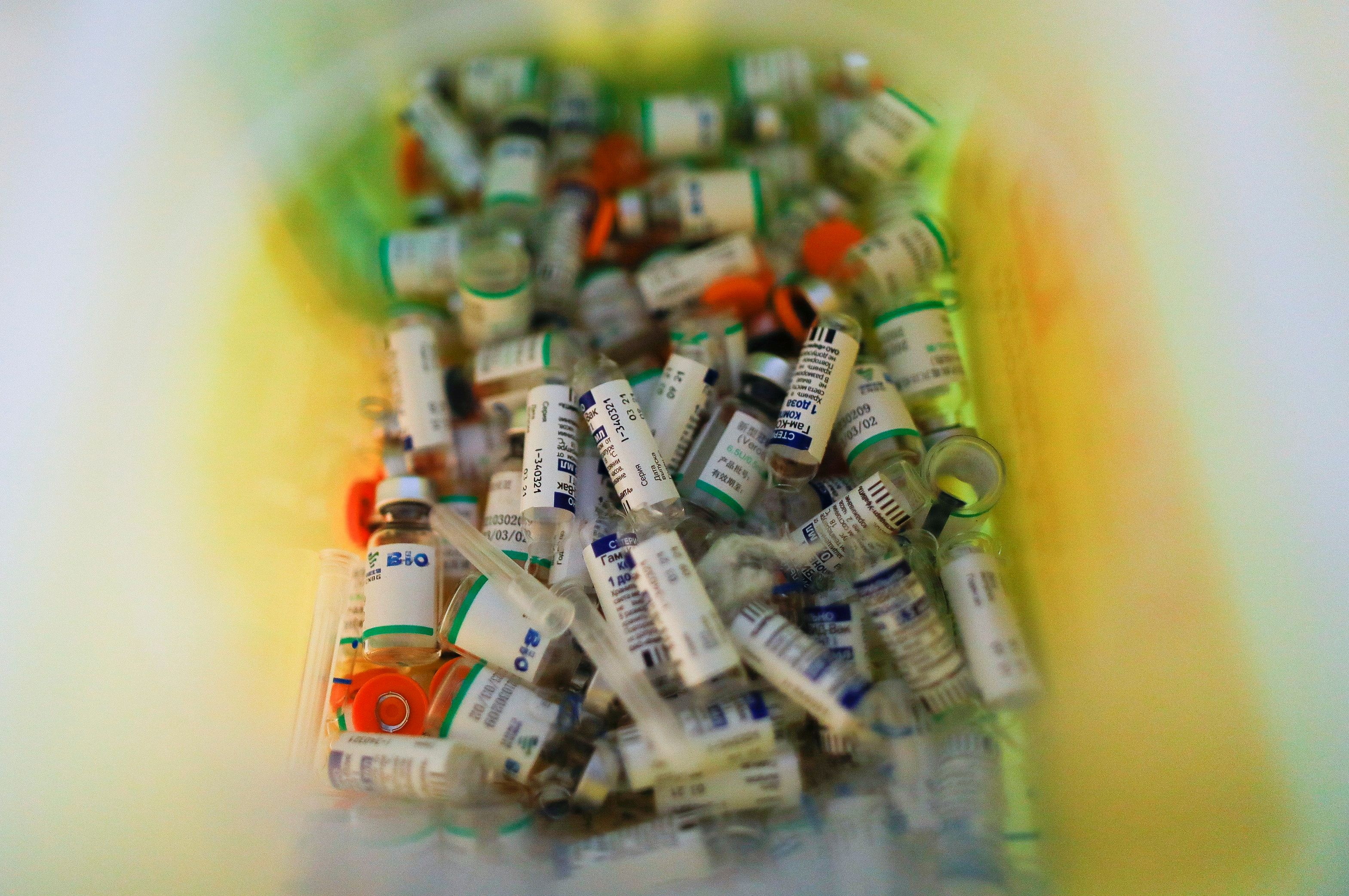
Doses of the Sputnik V (Gam-COVID-Vac) vaccine against the coronavirus disease (COVID-19) are pictured at the Tecnopolis Park, in Buenos Aires, Argentina April 15, 2021. REUTERS/Agustin Marcarian
An Argentine firm has produced test batches of Russia’s Sputnik V COVID-19 vaccine, the first in Latin America, with aims to scale up manufacturing of the drug by mid-year as the wider region grapples with a new surge in infections.
Russian sovereign wealth fund RDIF and Laboratorios Richmond (RICH.BA)said on Tuesday that the Argentina pharmaceutical company had carried out the test production and that the batches would be sent to Russia’s Gamaleya Institute for quality inspection.
“We estimate that, if the process is positive, scale production would begin in June 2021,” Richmond said in a statement, adding it aimed to have the vaccine ready “in the shortest possible time for the country and the region.”
Argentina’s inoculation program has relied heavily on Sputnik V. The South American country was one of the first globally to use the vaccine on scale to inoculate its population and has faced delays getting other vaccines.
The country has seen cases of the novel coronavirus hit daily records highs over the last week, forcing the government to tighten restrictions in and around capital city Buenos Aires and pledge to speed up its vaccination program.
Russian scientist Denis Logunov, a lead developer of the Sputnik V vaccine, said on Friday that the vaccine had proven itself 97.6% effective against COVID-19 in a real-world assessment, based on data from 3.8 million people.
That was higher than the 91.6% rate outlined in results from a large-scale trial of Sputnik V published in The Lancet medical journal earlier this year.
Police have received a report of a laser being pointed at a commercial aircraft at Auckland Airport last night. A police spokeswoman said the report came in at 7.15pm and the matter had been referred to the Civil Aviation Authority…
President Biden said Tuesday that the conviction of former Minneapolis police officer Derek Chauvin of the murder of George Floyd is a step forward toward ensuring racial justice in America, but he stressed that more must be done.
“We can’t leave this moment or look away thinking our work is done,” Biden said in remarks from the White House hours after the jury returned a guilty verdict in downtown Minneapolis. “We have to listen, ‘I can’t breathe. I can’t breathe.’ Those were George Floyd’s last words. We can’t let those words die with him.”
“We must not turn away, we can’t turn away. We have a chance to begin to change the trajectory in this country. It’s my hope and prayer that we live up to the legacy,” he continued. “This can be a moment of significant change.”
ADVERTISEMENT
Biden urged the Senate to pass police reform legislation named after Floyd that was approved by the House earlier this year, noting that it has been nearly a year since Floyd was killed in police custody last year as Chauvin knelt on his neck for about nine minutes.
Biden also said that his Justice Department, led by Attorney General Merrick Garland, was committed to restoring trust between law enforcement and the communities they are paid to protect.
And he said that “most” police officers serve communities honorably but stressed that those who don’t must be held accountable for misconduct, characterizing Tuesday’s verdict as a signal that no one is above the law and a step toward ensuring bad actors in law enforcement face consequences.
The jury returned its verdict Tuesday afternoon, finding Chauvin guilty on all three counts — second-degree murder, third-degree murder and second-degree manslaughter in the death of George Floyd last summer.
Biden and Vice President Harris watched the proceedings unfold with staff members in the Private Dining Room and each spoke with Philonise Floyd, George Floyd’s younger brother, from the Oval Office following the verdict.
ADVERTISEMENT
“Nothing can ever bring their brother, their father back, but this can be a giant step forward in the march toward justice in America. Let’s also be clear that such a verdict is also much too rare,” Biden said. “This takes acknowledging and confronting head on systemic racism and the racial disparities that exist in policing and our criminal justice system more broadly.”
The remarks represented Biden’s first extended commentary on the Floyd trial, though the president earlier in the day had made clear he believed a guilty verdict should be returned in brief comments to reporters.
Cities including Washington and Minneapolis had braced for unrest after the verdict, summoning National Guard troops to help manage potential crowds and protests. The White House has been clear in its call for peaceful protest as the nation awaited a conclusion of the trial.
Biden called for unity in his speech Tuesday and warned against any violent demonstrations.
“There are those who seek to exploit the raw emotions of the moment — agitators and extremists who have no interest in social justice — who seek to carry out violence, destroy property, fan the flames of hate and division, who will do everything in their power to stop this country’s march toward racial justice. We cannot let them succeed,” Biden said.
ADVERTISEMENT
The trial and verdict cap off months of public outcry over Floyd’s death at the hands of police last May, which set off protests against police brutality and racial injustice across the country. Now infamous video captured Chauvin kneeling on Floyd’s neck for about nine minutes as he struggled to breathe.
Biden spoke to Floyd’s family twice in the past 24 hours, after meeting with them last year, offering prayers on Monday as they awaited the verdict in the trial.
Both Biden and Harris used remarks Tuesday evening to call for the passage of the George Floyd Justice in Policing Act, a police reform measure that would ban the use of chokeholds and eliminate legal protections for law enforcement officials accused of misconduct, among other things. The measure passed the House in a party line vote in March.
“This bill is part of George Floyd’s legacy,” Harris said. “This work is long overdue. America has a long history of systemic racism.”
Another potential COVID-19 spread in hotel quarantine is under investigation by NSW Health.
The three returned travellers, two of whom are related, all tested positive to the South African strain of the virus.
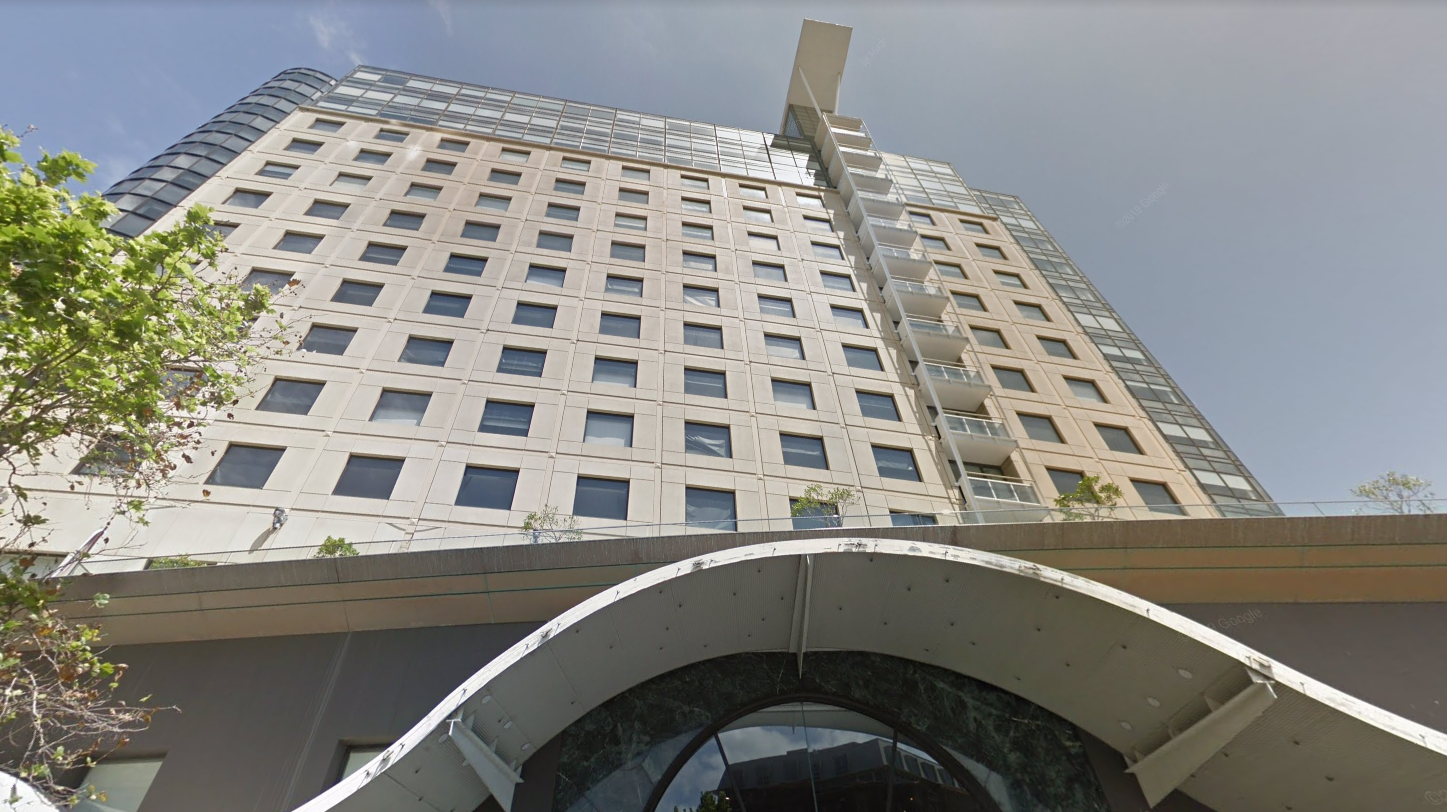
All three people arrived in Australia on April 3 on the same flight, and were quarantined next door to each other at the Mercure Hotel on George Street in the Sydney CBD.
Sao Paulo, Brazil (CNN) Indigenous groups gathered in Brazil’s capital on Monday to demonstrate against a bill proposed by the federal government that would legalize mining on their lands.
Carrying banners reading “Invaders get out! Miners gets out, Agrobusiness get out! Bolsonaro get out!” about 100 indigenous people from six states across Brazil protested the legislation, which has been backed by Brazilian President Jair Bolsonaro and lobbyists for the mining sector.
Brazilian indigenous people from various ethnic groups protest against the proposal of the federal government to legalize mining in indigenous lands, in front of Planalto Palace in Brasilia on April 19, 2021. Brazilian indigenous people from various ethnic groups protest against the proposal of the federal government to legalize mining in indigenous lands, in front of Planalto Palace in Brasilia on April 19,
Lobbyists have been advocating for the revival of the bill — known as Bill 191 — since it was dismissed by Brazil’s Congress last June. Last week, organizations of farmers and miners kicked off a coordinated pressure campaign, meeting with government representatives and urging the Congress to review and pass Bill 191, which would regulate mining including oil and gas projects, as well as hydroelectric dams, on indigenous territories for the first time.
Brazilian indigenous people from various ethnic groups protest against the proposal of the federal government to legalize mining in indigenous lands, in front of Planalto Palace in Brasilia on April 19, 2021.
Indigenous groups in Brasilia were also protesting proposed bills to give Congress the power to demarcate protected traditional lands (instead of indigenous affairs agency FUNAI) and demanding that that the federal government adhere to a Supreme Court decision last August to remove miners from indigenous lands. There are nearly 450 demarcated indigenous territories in Brazil.
President Bolsonaro signed Bill 191 in February last year. During the ceremony at the Planalto Palace, he said it was a long held “dream” to release indigenous reserves for mining. “I hope that this dream through the hands of Bento [Albuquerque, Minister of Mines and Energy] and the votes of parliamentarians will come true. The indigenous are human beings just like us,” he said.
He has long argued that the natural resources of indigenous lands must be put to use for indigenous groups’ own economic welfare and that of the country. In a social media diatribe on April 2019, he described indigenous lands as having “trillions of reais underground.”
“The indigenous cannot continue to be poor over a rich land,” he said.
But indigenous activists emphasized on Monday — Brazil’s national “Day of the Indigenous” — that they disagree with Bolsonaro’s vision of profiting from wild lands, and do not believe it will benefit them. “We are here to ask for respect from the federal government, that they respect our rights. This government is killing us, they want to annihilate our rights and territories,” said activist Eliseu Kaiowa of the Guarani Kaiowa land In a video shared on the Facebook page of the Articulation of Indigenous Peoples in the Southern Region.
In an open letter on Monday, members of the Munduruku indigenous group also warned that Bill 191 “will only bring more destruction to our people and our forest.” Last year, 2,052 hectares — an area equivalent to more than two thousand soccer fields — were deforested in Munduruku territory, according to data from the National Institute for Space Research (INPE), the official governmental institute that monitors deforestation in Brazil.
Members of the Articulation of Indigenous Peoples of Brazil (APIB), project the phrase “Indigenous April” at the National Congress in Brasilia during Indigenous Day, on April 19, 2021.Illegal miners have been accused of threatening Munduruku members who report their activity on indigenous lands. A Munduruku women’s group leader told CNN last month that miners had sent her audio messages claiming that they would
kill her and her family in their home. The Public Prosecutor in Para state, home to Munduruku territory, has said that it repeatedly alerted federal authorities to illegal gold-mining in the area, and since 2017 had been requesting courts to compel federal forces to step in and “prevent a violent attack by illegal miners on indigenous people.”
According to a study published Monday by Brazil’s National Committee in Defense of Territories Against Mining, rising gold prices during the Covid-19 pandemic have driven increased illegal gold mining in indigenous territories in the Amazon rainforest and other Brazilian lands.
Deforestation generally has skyrocketed during Bolsonaro’s presidency. While the President has passed several executive orders and laws to protect the Amazon, he has simultaneously slashed funding to government-run environmental protection and monitoring programs, and pushed to open indigenous lands to commercial farming and mining — acts which have cost him credibility among environmentalists in the country. His administration’s recently announced plan to reduce deforestation in the Amazon has been fiercely criticized by critics for its “modest” ambitions.
This week, Bolsonaro is set to attend an April 22 environmental summit of world leaders convened by US President Joe Biden. In a letter confirming his attendance, Bolsonaro said he was committed to eliminating illegal deforestation in the Amazon by 2030, but that it would require “massive resources” and the support of “the United States government, the private sector and the American civil society will be very welcome.”
Reporting contributed by CNN’s Rodrigo Pedroso and Caitlin Hu.
Canada and the United States have extended a land-border closure for non-essential travelers, and air passengers arriving in Canada will continue to be tested for COVID-19 ahead of a hotel quarantine period, authorities said.
The land-border restrictions, imposed in March 2020, have been extended to May 21. Now in place for 13 months, they are being renewed month by month. Mexico said late on Monday it was maintaining some of its border curbs too. read more
The U.S. Department of Homeland Security said it was “engaged in discussions with Canada and Mexico about easing restrictions as health conditions improve”.
The restrictions have hit many border communities and businesses hard. Many U.S. lawmakers have urged loosening the restrictions or setting a road map to resuming normalized travel.
But Canada lags the United States on vaccinations against the coronavirus, and much of the country is now fighting a virulent third wave of the pandemic with school and business closures. [L8N2MD6F9] read more
Canada’s mandatory three-day hotel quarantine following testing at airports, which was introduced as a temporary measure to discourage spring break travel, was also extended to May 21, health authorities said.
In February, Canada began testing and requiring international air arrivals to pay for a three-day hotel quarantine, a measure criticized by airlines squeezed by the pandemic. More flight restrictions may be coming.
“We are continuing to look at more (measures),” Prime Minister Justin Trudeau told a news conference. “I have asked our officials to look carefully at, for example, what the UK has done very recently on suspending flights from India.”
Quebec Premier Francois Legault also expressed concern on Tuesday about international flights from India and Brazil – two of the world’s worst hot spots for the coronavirus.
Air travelers to Canada are required to have had a test within three days of departure, and then again on arrival. If the airport text comes back negative, they can finish a 14-day quarantine at home.
However, data obtained by Reuters showed that more than 1,000 passengers, or 1.5% of those who arrived from Feb. 22 to March 25, tested positive for COVID-19, raising doubt about a broad easing of restrictions before the summer travel season. read more
Florencio Chavez sells herbs for medicine in downtown Havana, Cuba, March 30, 2021. Picture taken on March 30, 2021. REUTERS/Alexandre Meneghini
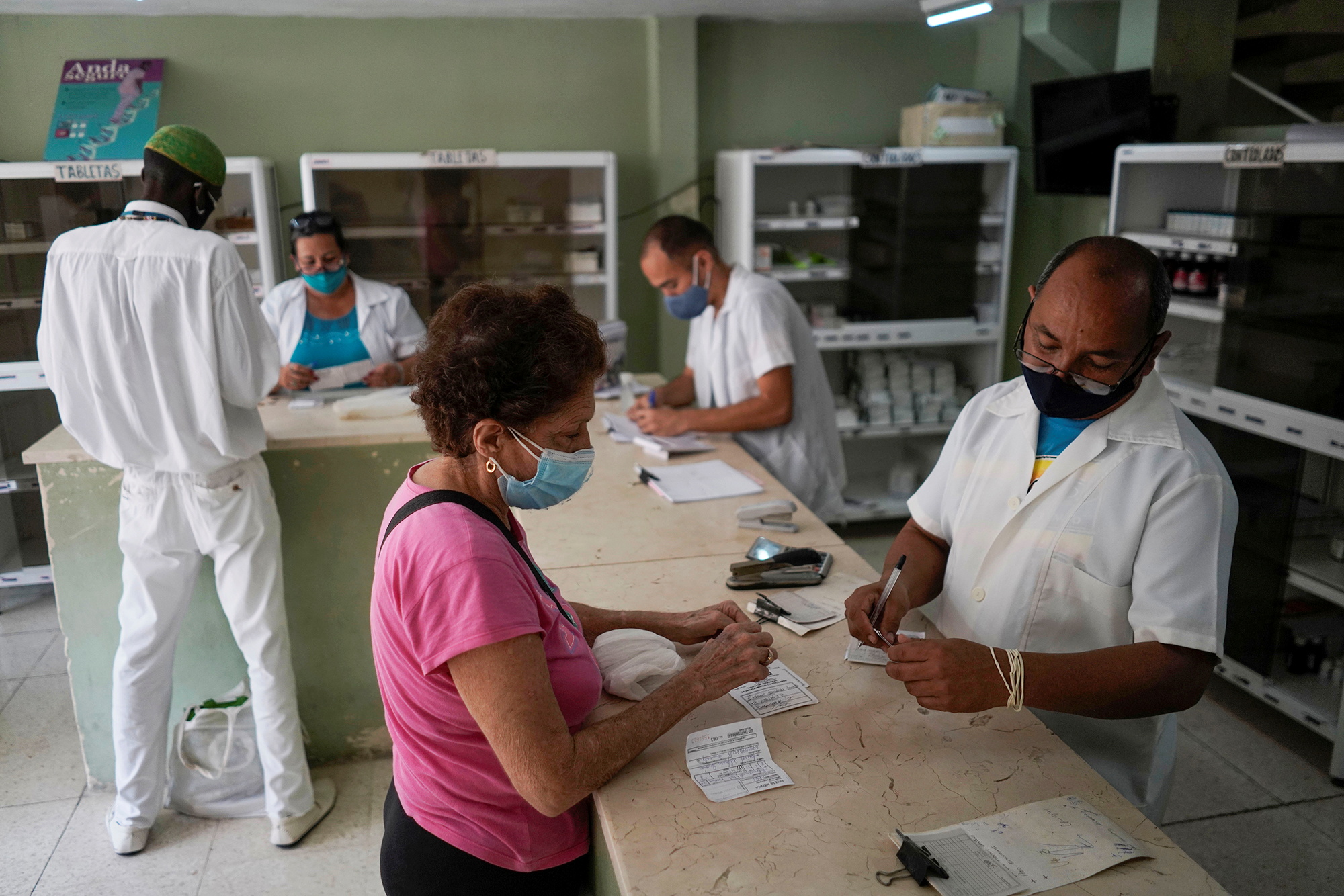
Dayana Rodriguez says her son is overwhelmed with scabies but she has not been able to find any of the treatments prescribed by their doctor at the poorly-stocked pharmacies in Havana so she is now turning to a herbal remedy instead.
Even as Cuba is leading the race to become the first country in Latin America to develop its own COVID-19 vaccine, the country is suffering acute shortages of basic medicines amid its worst economic crisis in decades.
“There aren’t any of the ones they prescribed him, Benzyl benzoate, or the other one for itching too that used to be in all the pharmacies,” said Rodriguez, buying medicinal plants at a shop on a commercial boulevard in Central Havana.
Nine families in Havana told Reuters they were struggling to treat outbreaks of scabies, a highly infectious yet preventable skin disease, due to medicine shortages.
Three doctors consulted by Reuters who declined to be named said they had resorted to advising their patients to boil up a mix of herbs to apply to their skin to provide temporary relief for scabies as it was futile to prescribe medicines that are scarce. One of those doctors also recommended a veterinary treatment for one of his patients.
Cuba’s healthcare system, built by late leader Fidel Castro, is one of the revolution’s most treasured achievements, having produced results on a par with rich nations using the resources of a developing country and in spite of the decades-old U.S. trade embargo.
But cash woes in the ailing state economy since the fall of former benefactor the Soviet Union have taken their toll on both healthcare facilities and the availability of medicine.
Over the past few years, the decline in aid from ally Venezuela, new U.S. sanctions and the pandemic have plunged Cuba into its worst economic crisis since the 1990s.
Health Minister Jose Portal reported on state television last year that as of June around a 116 basic medicines were scarce. Of those, 87 were produced locally and 29 imported.
Florencio Chavez, who has run a medicinal plant shop for 25 years, recommends guacamaya francesa, cundeamor, neem, Parthenium hysterophorus to treat scabies. He says demand for herbal remedies has risen in recent years.
Cubans have also set up groups on social media to barter medicines or other products for those they need, while the black market is thriving on the streets and online.
CHRONIC SHORTAGES
Cuban authorities started talking about chronic shortages of drugs, including basic ones like those treating hypertension and contraceptives due to a cash crunch in 2017, saying it had had to slash imports of inputs necessary for local production.
Last year, the country said shipping delays due to the pandemic had exacerbated the situation, as had U.S. sanctions.
While medicine is theoretically exempt from sanctions, the sanctions still are a strong disincentive to overseas medical providers, who might risk being fined, and the embargo hurts the economy across the board so there is less cash for imports.
Some senior citizens like Yolanda Perez, 80, who suffers from glaucoma, complain they do not have the stamina needed to line up at pharmacies overnight in the hope of grabbing their share of scant deliveries.
“It’s been six months since I was last able to get my latanoprost,” the drug that helps prevent her from going blind, she said.
Authorities in the eastern province of Holguin in January warned Cubans not to turn to the black market though because some drugs were not what they advertised and could even be harmful.
“The problem is people are despairing over the lack of medicine,” wrote a reader identified as Arcela under an article on the topic in state outlet Juventud Rebelde. She said her sister had had to buy black market antibiotics.
Reuters- A collapse in tourism due to the coronavirus pandemic has sent Aruba toward one of the world’s biggest economic contractions, prompting the island to try to diversify beyond its sun and sand image, namely by restarting a long-idled oil refinery.
Assistance from the Netherlands helped the Caribbean island finance a stimulus program, blunting the impact of the economy’s 25.5% contraction on workers and businesses in 2020. That downturn was behind only Libya, Maldives and Venezuela, International Monetary Fund (IMF) data show.
But those subsidies led to an increase in Aruba’s fiscal deficit to 17% of gross domestic product (GDP), according to the IMF, prompting some experts and residents to argue the island should diversify its economy to ensure the government can balance its budget without Dutch assistance.
The 67% drop in tourism arrivals was devastating for small businesses like Aruba Bob Snorkeling, which used to run multiple tours a day before the COVID-19 pandemic hit.
“When COVID came around, they just came crashing down to once a day, once or twice a week, and then to nothing at all,” said instructor and part-owner Jesus Maduro, 30, while sipping coffee under the shade of solar panels in the company’s tree-filled backyard.
But the company kept up rent and electricity payments thanks to quarterly 4,000 florin ($2,247.19) subsidies from the government. Such payments helped keep company closures below 2019 levels, said Martijn Balkestein, executive director of Aruba’s Chamber of Commerce.
As a constituent country of the Kingdom of the Netherlands, Aruba is receiving assistance from Amsterdam. The Netherlands has agreed to cover Aruba’s financing needs during the pandemic contingent on economic reforms, such as cuts in public sector salaries implemented last year. But Dutch officials have said they ultimately expect Aruba, as well as other constituent Caribbean islands Curacao and Sint Maarten – which are part of the Kingdom of the Netherlands but have autonomy over domestic affairs – to be self-reliant.
Fitch Ratings rates the island’s debt at BB, below investment grade. Aruba in 2012 issued a $253 million bond with a 4.625% yield maturing in 2023.
TALK OF REOPENING REFINERY
After closing its borders in March 2020, the island reopened for tourism last June for visitors who present a negative coronavirus test. The country has reported 10,324 COVID-19 cases and 92 deaths.
But the local business community is not banking on an immediate rebound in tourism to restore government finances. The Aruba Hotel and Tourism Association forecasts hotel occupancy will remain at less than half capacity in 2021.
“The pandemic shows very loud and clear to everybody living in Aruba that we cannot rely on one pillar,” Balkestein said.
To that end, authorities are in talks with a U.S. company seeking to build a liquefied natural gas import terminal on the site of an oil refinery that has been idled since 2012. Another company is seeking to restart the plant itself.
In 2012, the refinery’s former operator, U.S.-based Valero Energy Corp (VLO.N), abandoned it over low profits.
Still, some residents hope its revival could change the fortunes of San Nicolas, the rundown refinery town on Aruba’s southeastern tip a half hour’s drive from the glitzy beachfront hotels and casinos dotting the island’s west coast, whose largely empty mural-flanked streets are lined with shuttered dive bars.
“You can see, it’s a ghost town,” said Kendrick Kock, a cell phone repair shop owner who saw sales drop 50% last year, prompting him to lay off his two employees. “If they don’t open the refinery soon, this would be case closed for San Nicolas.”