Hayley Hamilton’s world was crumbling around her as she lifted her unconscious son off the road.Just seconds prior she had seen her 3-year-old boy, Bodie, fly metres through the air after being hit by a car on Discovery Dr, Hamilton,…
Category Archives: headline
Covering Climate Now: Warming will hit endemic species hardest
Thousands of plants and animals unique to the world’s most stunning places could face extinction if greenhouse gas emissions continue to rise, a new study finds. But while New Zealand has the highest proportion of endemic species…
'Decade of elimination': $5m project's big goal for NZ health
A major new research programme aims to build on our stunning success against Covid-19 by wiping out other infectious diseases – making the 2020s the “decade of elimination”.”The successful elimination of Covid-19 transmission in…
SPCA National Inspectorate Manager says Whanganui cat attack was 'confronting'
The manager in charge of the SPCA team that investigates animal welfare breaches says cases of abuse against animals are more prevalent than many people realise. The comments come in the wake of what he says was a “confronting”…
Why Māori are to be hit hardest by climate change, and what two east coast iwi are doing about it
The bountiful hauls of kaimoana integral to East Cape iwi have long been the envy of those inland. When manuhiri would arrive from across the motu they’d be treated to hākari (feasts) of kina, kōura (crayfish), kākahi…
Herald morning quiz: April 20
Test your brains with the Herald’s morning quiz. Be sure to check back on nzherald.co.nz at 3pm for the afternoon quiz. To challenge yourself with more quizzes, CLICK HERE.
75% chance of major Alpine Fault earthquake in next 50 years – study
New Zealand’s big-risk Alpine Fault has a 75 per cent chance of causing a major quake – most likely a powerful magnitude 8 event – within the next 50 years.That’s according to a new study that’s found the probability of an event…
India's capital to lock down amid devastating virus surge
New Delhi has imposed a weeklong lockdown starting Monday night to prevent the collapse of the Indian capital's health system, which authorities say has been pushed to its limit amid an explosive surge in coronavirus cases.
In scenes familiar from surges elsewhere, ambulances catapulted from one hospital to another, trying to find an empty bed over the weekend, while patients lined up outside of medical facilities waiting to be let in. Ambulances also idled outside of crematoriums, carrying half a dozen dead bodies each.
"People keep arriving, in an almost collapsing situation," said Dr. Suresh Kumar, who heads Lok Nayak Jai Prakash Narayan Hospital, one of New Delhi's largest hospitals for treating COVID-19 patients.
READ MORE: World's biggest vaccine producer is running out during second wave
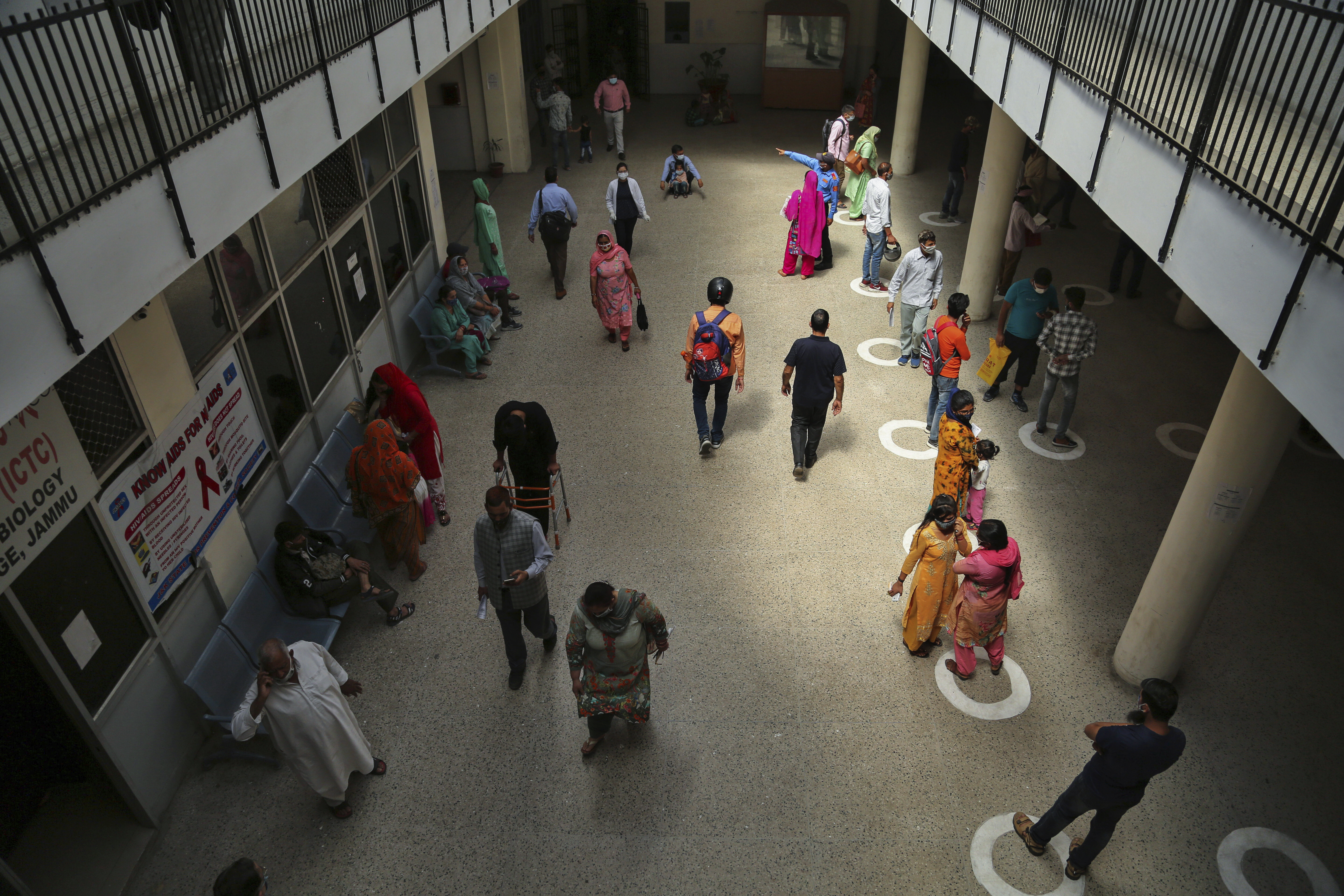
Most desperately need oxygen, Kumar said. But the city is facing shortages of oxygen and some medicine, according to Chief Minister Arvind Kejriwal, who told reporters that the new stringent measures being imposed were required to "prevent a collapse of the health system," which had "reached its limit."
Just months after India thought it had seen the worst of the pandemic, the virus is now spreading at a rate faster than at any other time, said Bhramar Mukherjee, a biostatistician at the University of Michigan who has been tracking infections in India.
The surge is devastating for India and has weighed heavily on the global efforts to end the pandemic since the country is a major vaccine producer but has been forced to delay exports of shots abroad, hampering campaigns in developing countries, in particular.
READ MORE: New Zealand bubble loophole could see Aussies fly to rest of the world
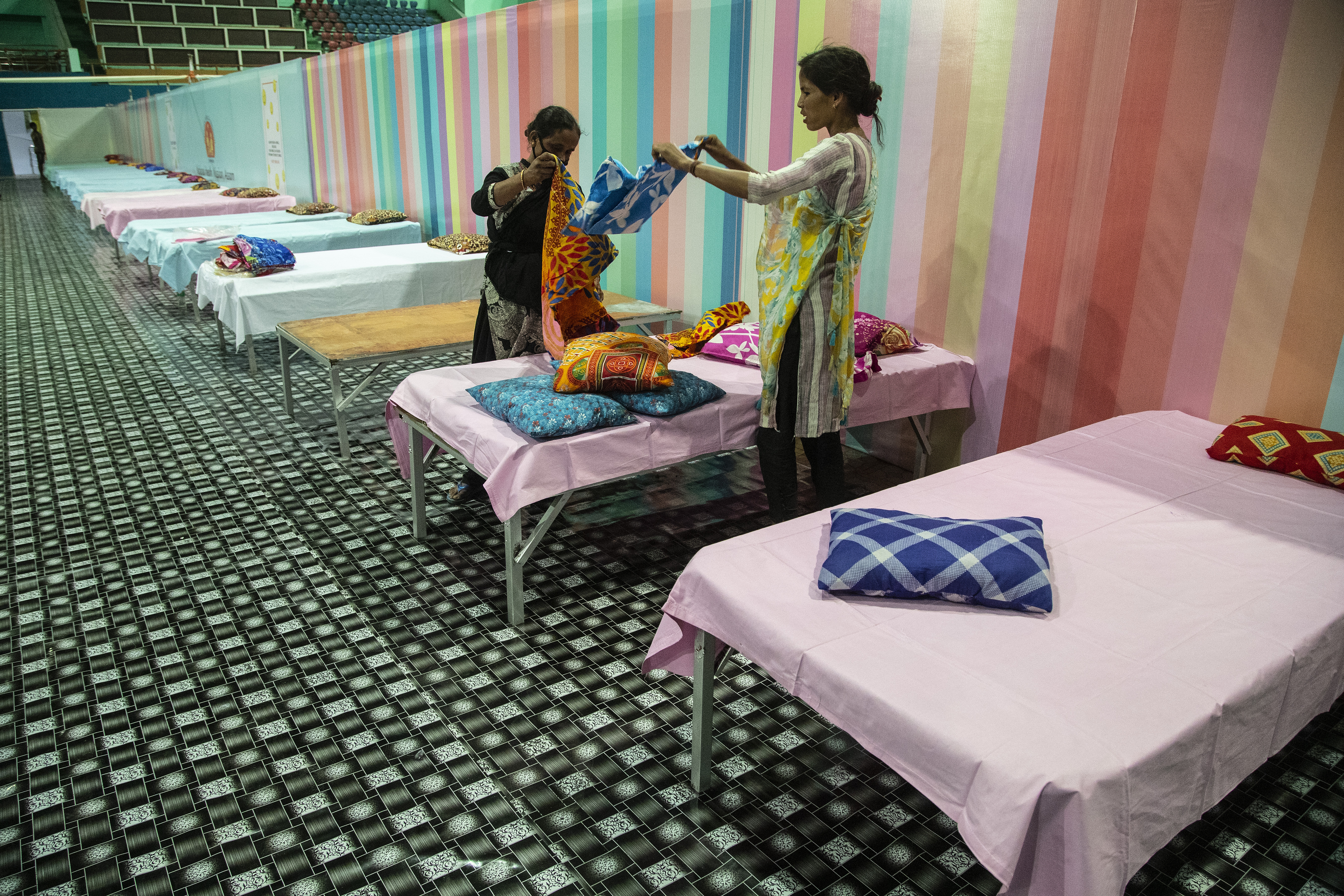
In a sign of the high stakes, the chief executive of Serum Institute of India, the world's largest maker of vaccines, asked US President Joe Biden on Twitter last week to lift the US embargo on exporting raw materials needed to make the shots.
The rise in cases comes amid setbacks in the worldwide vaccination campaign and deepening crises in many places beyond India, including Brazil and France. Over the weekend, the global death toll from the coronavirus passed a staggering 3 million people Saturday.
India reported over 270,000 infections on Monday, its highest daily rise since the pandemic started. It has now recorded more than 15 million infections and more than 178,000 deaths. Experts agree that even these figures are likely undercounts. Amid the rise in cases, British Prime Minister Boris Johnson called off a trip to New Delhi.
READ MORE: Nation shuts down travel after body with COVID washes ashore
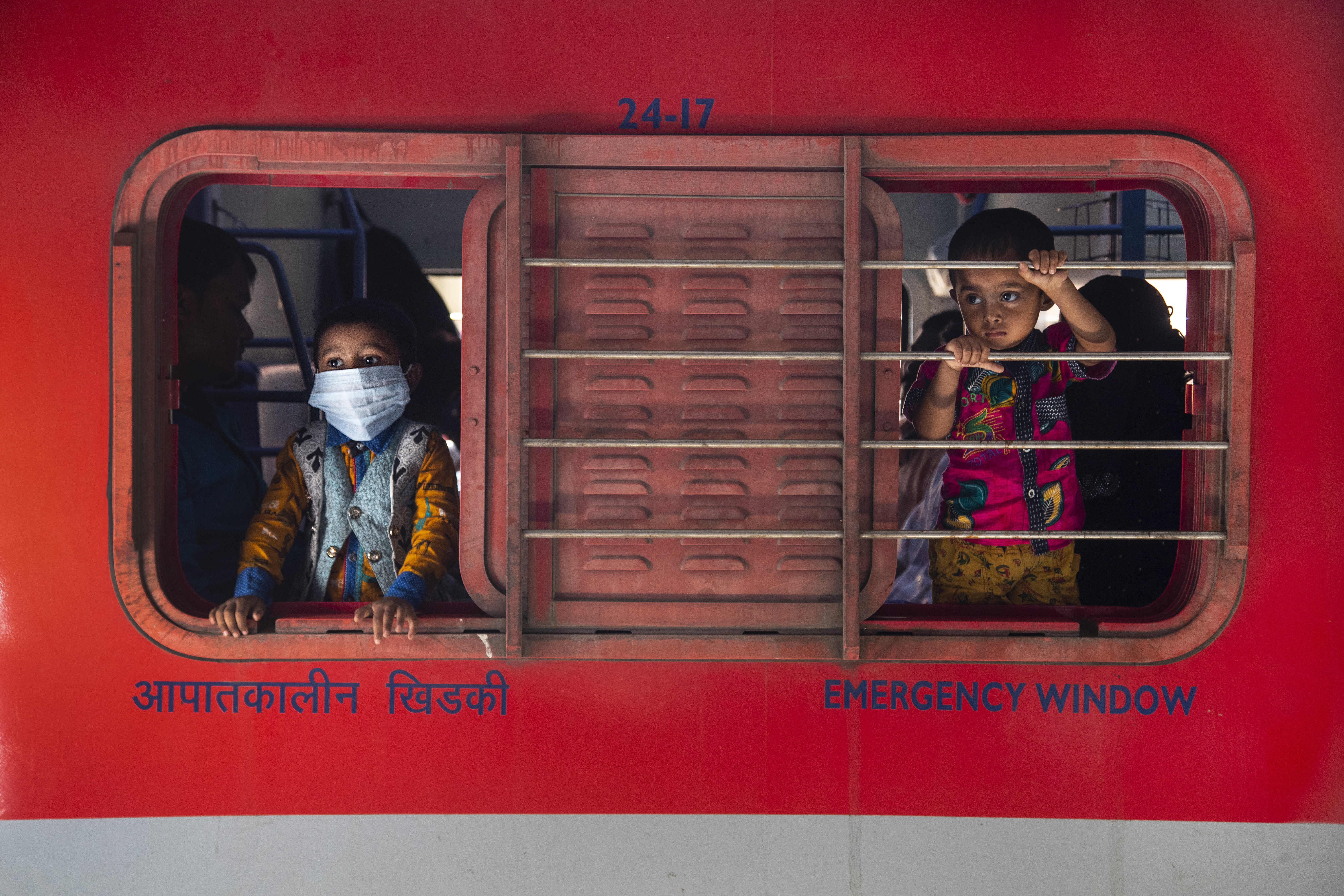
The city of 29 million people has fewer than 100 beds with ventilators, and fewer than 150 beds available for patients needing critical care. Similar strains can be seen in other parts of the vast country, where the fragile health system has been underfunded for decades and a failure to prepare for the current surge has left hospitals buckling under the pressure of mounting infections.
In the Himalayan Jammu state in India's north, the weekly average of COVID-19 cases has increased 14-fold in the past month. In Telengana state in southern India, home to Hyderabad city where most of India's vaccine makers are based, the weekly average of infections has increased 16-fold in the past month.
Meanwhile, election campaigns are continuing in West Bengal state in eastern India, amid an alarming increase there as well, and experts fear that crowded rallies could catalyse the spread of the virus. Top leaders of the ruling Bhartiya Janta Party, including Prime Minister Narendra Modi, have campaigned heavily to win polls in the region.
READ MORE: Victorians avoiding COVID-19 tests due to 'shame and stigma'
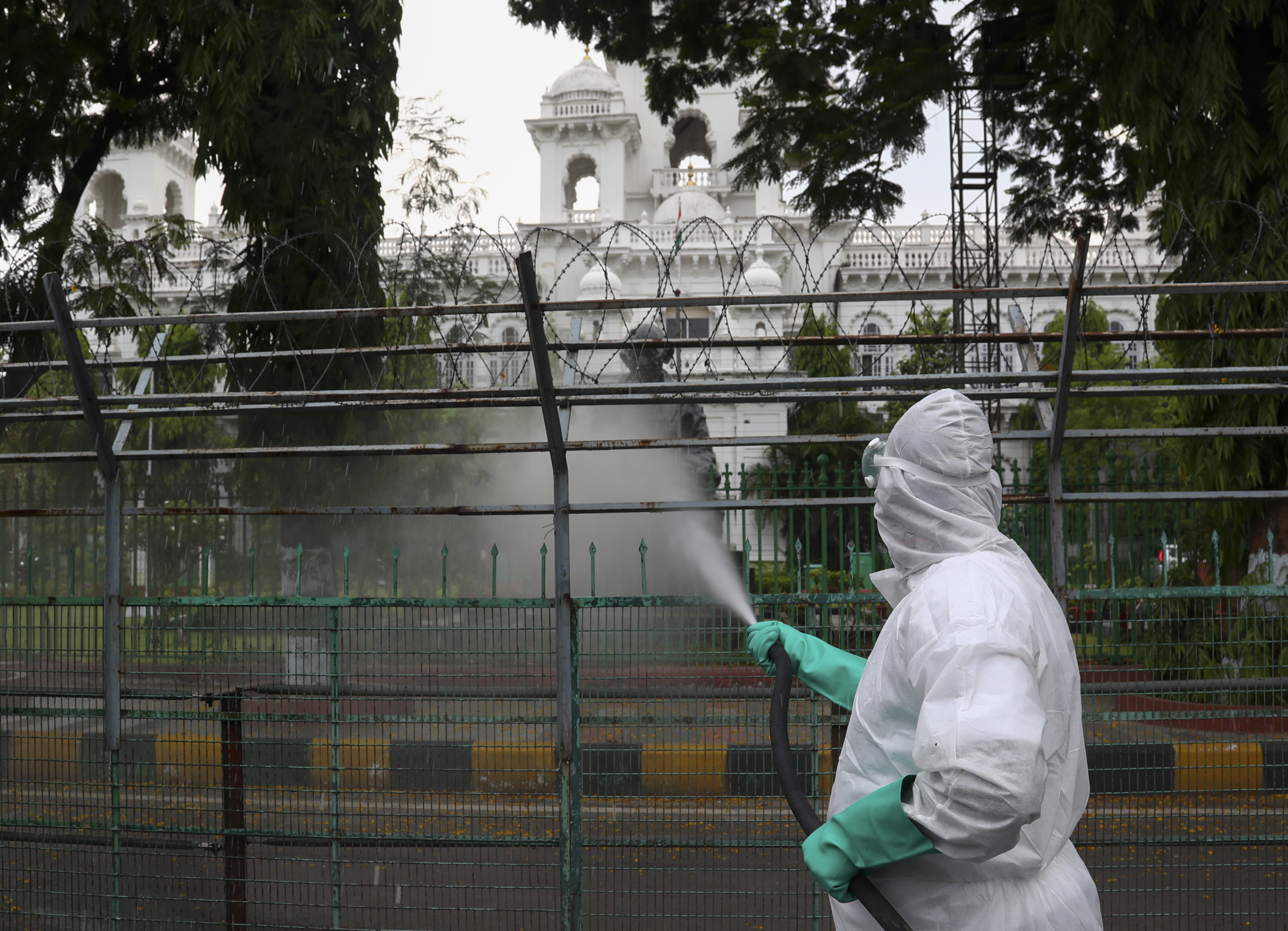
By contrast, in New Delhi, officials have begun to impose stringent measures again. The Indian capital was shut down over the weekend, but now authorities are extending that for a week: All shops and factories will close, except for those that provide essential services, like grocery stories. People are not supposed to leave their homes, except for a handful of reasons, like seeking medical care.
They will be allowed to travel to airports or train stations — a difference from the last lockdown when thousands of migrant workers were forced to walk to their home villages.
That previous harsh lockdown last year, which lasted months, left deep scars. Politicians have since been reticent to even mention the word. When similar measures were imposed in Mahrashtra state, home to the financial capital of Mumbai, in recent days, officials refused to call it a lockdown. Those restrictions are to last 15 days.
Kejriwal, the Delhi official, urged calm, especially among migrant workers who particularly suffered during the previous shutdown, saying this one would be "small."
But many feared it would spell economic ruin. Amrit Tripathi, a labourer in New Delhi, was among the thousands who walked home in last year's lockdown.
"We will starve," he said, if the current measures are extended.
D.R.Walwyn: A pioneer and an icon in Nevis
By Laughton Pemberton
The Honourable Dr Daniel Reynold Walwyn, founder of the Nevis Cooperative Bank. was born November 27, 1892, in Bath Village, Nevis, to parents Ernest Walwyn and Rhoda Walwyn.
From an early age, “D.R.” as he was affectionately referred to, exercised a strong will and determination. This was revealed at the age of seven, when he saved his life, as well as that of his aunt, Berl Walwyn. This led to his destiny of consciousness, fearlessness of the common, and constantly challenging the Establishment whenever the opportunity presented itself.
D.R. attended primary school in Charlestown ,Nevis, and later obtained a pupil teacher’s certificate after completing his primary school education in Montserrat.
After leaving primary school, he was apprenticed as a tailor to ‘learn the trade’. He soon decided that becoming a tailor was not for him and he left the trade to become a primary school teacher.
He taught in Brown Pasture, Nevis, and in 1913, encouraged by the Inspector of Schools for the Leeward Islands, he left Nevis to teach at Rousseau Boys School in Dominica. He taught in Dominica until 1915 and then worked in the Treasury in Portsmouth, Dominica, from 1915 to 1920 when he returned to Nevis.
His father, Ernest, died suddenly in 1914, while he was teaching in Dominica, and because of the state of communication technology at the time, it took him more than a week to learn of his father’s death.
On his return to Nevis in 1920, he taught once again at a primary school. He married Mabel Wilson in 1924 and the family lived in a two-bedroom house built by his father in Bath Village.
CAREER CHOICES AND TAKING ON THE ESTABLISHMENT
While teaching, D.R. enrolled in a correspondence course in accounting from an American institution. Upon completing the course, he applied for a job in the colonial civil service. The entry requirements for the civil service were O’ levels and he argued that the accounting course was equivalent to O’ levels. His application was summarily rejected and this led to him personally taking his case to the colonial office in London, which ruled in his favour, and he was appointed to the accounting area of the civil service in Nevis.
In 1930 D.R. was appointed as an audit clerk in the Treasury in Antigua ,where he moved with his young family, which eventually included six wonderful children. The family lived in Antigua from 1930 to 1937.
There are two noteworthy highlights of D.R.’s tenure in Antigua. He was required to serve as a lay magistrate in petty session courts, and every week he had to preside over cases brought by sugar cane estates against workers who did not turn up to work.
The existing law mandated that the absconding workers be sent to prison. He saw this as tantamount to slavery and directly petitioned the Colonial Office in London to have the law changed. The Colonial Office agreed with him and the law was changed.
Also while there, famed Antiguan medical practitioner, Sir Luther Wynter applied to the Antiguan Government for a job in Antigua. The application was made from Canada and the colonial powers assumed that he was white. When he arrived and the all-white welcoming party discovered that he was black, he was abruptly and shamefully abandoned on board the ship and left to fend for himself.
The Harbourmaster realising what was happening, sent for D.R., because he was a senior black civil servant, and got him to do the job of the welcoming party. The white colonial establishment proceeded to completely ostracise Sir Luther, and it was left to D.R. to try to make life tolerable for him.
A breakthrough came when the visiting daughters of Alexander Moody Stuart, the head of the sugar syndicate in Antigua, became stricken with a tropical illness that seemed very serious and that left the white doctors nonplussed.
D.R. suggested to a very sceptical white establishment that Sir Luther be allowed to treat the girls. The treatment was successful and Alexander Moody Stuart made him his personal physician. Sir Luther then became the very first black physician in Antigua to have white patients and his trajectory in Antiguan society was altered forever.
In 1937 Walwyn took up a nine-month appointment in Tortola as Treasurer, Post Master and Additional Magistrate. He spoke of travel in Tortola in those days being difficult, travel was by boat along the coastline,
His next civil service appointment was in late 1937 as Post Master for St Kitts, Nevis and Anguilla. He served in that position throughout the ravages of World War 2. He served in that position until 1947, when he was appointed to the civil service in Montserrat as Treasurer.
While serving as Treasurer in Montserrat, D.R. was also required to serve as a member of the Executive Council, which was a colonial approximation to a cabinet. He was additionally required to serve as a lay magistrate, presiding over petty session courts
D.R. retired from the civil service in 1953 and returned to live in Bath Village. His first priority was to extend the two-room house into more convenient accommodation. At the same time, he started to cultivate cotton and later peanuts on the land around the house. He and his wife also raised a few small animals, such as chickens, sheep, goats and pigs.
NEVIS COOPERATIVE BANK
That same year, D.R. and a small group of prominent residents of Charlestown and Bath Village conceived a plan to start a cooperative bank. The goal of the bank was to provide financial assistance to marginal individuals like small peasants, who were shut out of the mainstream financial sector.
The Nevis Cooperative Bank started its operation out of rented space on Main Street in Charlestown in 1954, with D.R. as its executive chairman (a position he would hold until his retirement in 1990). The bank constructed its offices on Chapel Street and relocated there in 1959. D.R. and the directors oversaw the evolution of the bank to embrace a broad customer base and the offering of a standard suite of banking services.
According to his granddaughter, Attorney at Law Ms. Jacqueline Walwyn, who resides in Antigua and Barbuda, the bank was created to give an option to black people who were then excluded from the banking sector.
“The bank’s employees were all white except for the cleaners and messengers. They did not accept deposits from black people or lend them money. People would save their money by hiding it in crab holes and the tides would wash it away. They saved in butter cans they dug holes in the ground… and hid their money. So he started the Co-op bank. The bank also owned a tractor with a plough which they rented at affordable rates to small farmers. Many persons borrowed money to migrate to start a new life, and they honoured their obligation and repaid their loans.”
In the late 50s and early 60s, in addition to being executive chairman of the bank, D.R. had to supplement his income by doing accounting work for a number of companies in St Kitts and Nevis. He used to commute between the two islands at least once a week to service his accounting customers in St Kitts, and do business with a correspondent bank in St Kitts on behalf of the Nevis Cooperative Bank.
Another of D.R. accomplishments was the starting of a Copra factory that manufactured edible oils. This Company, which was named NEVISOTA, eventually ran into difficulty and the bank took it over then sold it to a new owner in the Commonwealth of Dominica.
The earlier mentioned forays into small farming declined and disappeared altogether in the years following the death of his wife in 1971.
POWERFUL LEGACY
D.R. was extremely active in Nevisian society from 1953 to his retirement in 1990. He enthusiastically participated in many social events and was a member of the local chapters of the Red Cross and the Lions Club. He also served on the board of the Charlestown Secondary School, and was active in the Charlestown Methodist Church.
He received an Honorary Doctorate from the University of The West Indies, Cave Hill, Barbados campus in 1991, which was received by one of his sons, Dr Alford Walwyn, a few months before he passed away in January of 1992.
The Observer was able to contact Dr. Donald Walwyn, the youngest of D.R’s six children, who, in summing up the powerful legacy his father left them, said, every time he thinks of his father, he is reminded of the statement he drilled into him and his siblings that “Knowledge is Power.”
His children in order of age: Mr. Eugene Walwyn (Deceased, Attorney at Law, lived and practised in St. Kitts-Nevis); Mrs. Helen Crabbe (Retired Nurse, Lived in New York State, USA); Dr. Alford Walwyn, (a retired medical practitioner, lives and worked in Antigua); Mr. Ira Walwyn (Deceased, Retired civil servant and banker, who lived and worked in St.Kitts-Nevis); Mrs. Valarie Henry (widow and housewife living in Antigua) and Dr. Donald Walwyn, (Retired lecturer in Physics at UWI, Mona, in Jamaica, and currently lives in Jamaica).
The courage and humility of The Honourable Dr Daniel Reynold Walwyn, led him to become a pioneer in many aspects of his journey with us. He took every opportunity to advance himself and his community. The community has saluted him in so many ways. The D.R. Walwyn Plaza is a beautiful reflection of this. He will always be remembered as a pioneer and an icon.
The post D.R.Walwyn: A pioneer and an icon in Nevis appeared first on The St Kitts Nevis Observer.
Cuba: Poor Economy May Foster New Wave of Immigrants to US
April 19 (UPI) — Not all of the migrants hoping to claim asylum in the United States are fleeing Central America’s violence-torn “Northern Triangle” of Guatemala, Honduras and El Salvador, contrary to popular perception.
Of the 71,021 asylum seekers waiting in Mexico for their applications to be processed in the United States as of late February, 16% were Cuban, according to federal immigration data.
That makes Cubans the third-largest group of migrants, just ahead of Salvadorans and after Guatemalans and Hondurans.
Why Cubans flee
The Cubans at America’s doorstep are mostly economic refugees. But since Cubans no longer have preferential status over other immigrants — as they did until former President Barack Obama stopped automatically admitting Cubans who made it to the United States — claiming asylum is now virtually their only hope of winning entry.
Cubans who can afford it fly to South America or hire smugglers to take them to Mexico in “fast boats” before trekking north to the U.S. border. Those who can’t afford to pay smugglers try to cross the Florida Straits on rafts or small boats called “balsas” — a dangerous 90-mile ocean passage.
So far this year, the U.S. Coast Guard has picked up 180 Cuban “balseros” at sea trying to reach the United States. The number is modest — but it’s already more than three times the Coast Guard rescues of Cubans made last year. Cubans intercepted at sea are returned to Cuba under the terms of a 1995 migration agreement.
The current uptick recalls the gradual increase in rafters rescued at sea in the spring of 1994, numbers that rose exponentially that summer, culminating in the “balsero” migration crisis.
Triggered by the collapse of the Soviet Union — communist Cuba’s main international partner at the time — the 1994 exodus saw 35,000 Cubans arrive in the United States in two months.
It was the United States’ third Cuban migration crisis. In 1965, some 5,000 Cubans embarked from the port of Camarioca in small boats, landing in South Florida. In 1980, the Mariel boat crisis brought 125,000 Cuban migrants to the United States in the so-called “freedom flotilla.”
These migration waves came when the Cuban economy was in crisis and standards of living were falling. All three occurred when Cubans had few avenues for legal migration. With legal routes foreclosed, pressure to leave built over time as the economy deteriorated, finally exploding in a mass exodus of desperate people.
After studying U.S.-Cuban relations for four decades, I believe the conditions that led to these migration crises are building once again.
Economy in free fall
Hit by the dual shocks of renewed U.S. economic sanctions during the Trump administration and the COVID-19 pandemic, the Cuban economy shrank 11% in 2020.
Former President Donald Trump cut off two major sources of Cuba’s foreign exchange revenue: people-to-people educational travel from the United States, worth roughly $500 million annually, according to my analysis of data from the Cuban National Office of Statistics, and $3.5 billion annually in cash remittances.
The pandemic hammered Cuba’s tourist industry, which suffered a 75% decline — a loss of roughly $2.5 billion.
These external shocks hit an economy weakened by the decline in cheap oil from crisis-stricken Venezuela due to falling production there, forcing Cuba to spend more of its scarce foreign exchange currency on fuel. Since Cuba imports most of its food, the island nation has experienced a food crisis.
The result is the worst economic downturn since the 1990s.
Demand to emigrate
The 1994 Cuban migration crisis ended when former President Bill Clinton signed an accord with Cuba providing for safe and legal migration. The United States committed to providing at least 20,000 immigrant visas to Cubans annually to avoid future crises by creating a release valve.
President Donald Trump replaced Obama’s policy of normalizing U.S.-Cuban relations with one of “maximum pressure” aimed at collapsing the Cuban regime.
He downsized the U.S. Embassy in Havana in 2017, allegedly in response to injuries to U.S. personnel serving there. And he suspended the Cuban Family Reunification Parole Program, which provided upwards of 20,000 immigrant visas annually to Cubans with close relatives in the United States.
These measures drastically reduced the number of immigrant visas given, closing the safety valve Clinton negotiated in 1994. In 2020, just over 3,000 Cubans immigrants were admitted to the United States.
Today, some 100,000 Cubans who have applied for the reunification program are still waiting in limbo for the program to resume.
A policy problem
The migration crisis brewing in Cuba has been largely overlooked while the Biden administration focuses on managing the rush of Central American asylum seekers and caring for unaccompanied minors at the U.S.-Mexico border.
White House Press Secretary Jen Psaki recently said that Cuba policy is under review, but that it’s “not a top priority.”
U.S. officials could head off the migration crisis brewing in Cuba by making the changes to U.S.-Cuba relations Biden promised during his 2020 presidential campaign.
Restaffing the U.S. Embassy in Havana would make it possible to resume compliance with Clinton’s 1994 migration agreement to grant at least 20,000 immigrant visas annually. That would give Cubans a safe and legal way to come to the United States and discourage them from risking their lives on the open seas or with human traffickers.
Lifting Trump’s economic sanctions would curtail the need to emigrate by reducing Cuba’s economic hardship, in part by enabling Cuban Americans to send money directly to their families there.
And reversing Trump’s restrictions on travel to the island would help revitalize the private Cuban restaurants and bed-and-breakfasts that rely on U.S. visitors.
All these measures would put money directly into the hands of the Cuban people, giving them hope for a better future in Cuba.
William M. LeoGrande is a professor of government at the American University School of Public Affairs.
This article is republished from The Conversation under a Creative Commons license. Read the original article.
The post Cuba: Poor Economy May Foster New Wave of Immigrants to US appeared first on The St Kitts Nevis Observer.