Category Archives: headline

UK: Boris Johnson Confirms Easing of England Lockdown, Foreign Travel in Doubt

PM says pubs, hairdressers, shops and gyms can open, but resumption of foreign travel next month remains in doubt

Boris Johnson: no reason to alter course out of lockdown for England – video

Life will start returning to “some semblance of normality” in June, Boris Johnson has pledged, as he gave the green light for pubs, shops, hairdressers and gyms to reopen across England from next Monday – but he refused to be drawn on when foreign holidays could resume.

The prime minister said moving to the next stage of the government’s roadmap out of lockdown was “fully justified” by the success of the vaccine rollout and the drop in cases and hospitalisations, allowing a raft of venues to operate for the first time in three months.

But he suggested that Covid status certificates and mass weekly testing could be key to further restrictions being eased, raising the prospect of such interventions remaining in place for months to come.

Hopes that foreign holidays may be allowed from 17 May were dampened, as Johnson said he did “not wish to give hostages to fortune” and was nervous about “the virus being reimported” from abroad given the surge in cases across Europe.

Before the Downing Street press conference, scientists from the government’s Scientific Advisory Group for Emergencies (Sage) said next week’s reopening of venues, with outdoor service only at pubs and restaurants, was “highly unlikely” to overwhelm the NHS. But they warned that further easing in May and beyond could unleash a third UK wave as deadly as the one seen during the winter, when more than half of the country’s total of Covid deaths occurred.

Work by the London School of Hygiene and Tropical Medicine, based on pessimistic but realistic assumptions about the effectiveness of the vaccines, forecast that a third wave could peak at the end of July or early August, with hospitalisations on the same scale as in January. Most other modelled scenarios showed a smaller potential third wave peak.

Speaking alongside Prof Chris Whitty and Sir Patrick Vallance, Johnson confirmed that hospitality venues will be able to operate outdoors-only from Monday 12 April, as hoped, with no curfew or requirements for customers to eat a “substantial meal” when drinking alcohol.

“I will be going to the pub myself and cautiously but irreversibly raising a pint of beer to my lips,” he declared.

Johnson said Covid status certificates, for people to prove they have had either a vaccine, a recent negative Covid polymerase chain reaction (PCR) or rapid test, or antibodies from a coronavirus infection within the last six months, remain under review for use within the UK, and would come into use no earlier than May or June.

He gave no concrete assurance that the scheme would be voted on in parliament, after dozens of Tory and Labour backbenchers vowed to oppose it, but said: “If there’s something to put to parliament, I’m sure we’ll be doing that.”

Johnson was more supportive of such documents being used for international travel, saying it was “something that all countries are looking at”, and added that he thought that was going to be “part of the way people deal” with the continued threat posed by Covid-19 and new variants.

After criticism from Labour that the government’s hotel quarantine policy for people arriving in the UK was not strict enough, Whitty said that cases of the South Africa variant, which is believed to be more transmissible, were stable, and confirmed that there was “no evidence that this is increasing”.

But the chief medical officer for England added that measures to prevent another wave of the pandemic in the UK would last for some time, warning: “We will have significant problems with Covid for the foreseeable future and I don’t think we should pretend otherwise.”

Alongside the press conference, No 10 published a report on four ongoing reviews looking at social distancing, restarting mass events, foreign holidays and the Covid status certificates, also known as Covid passports.

The report said banning the certificates would be an “unjustified intrusion on how businesses choose to make their premises safe” in most cases, and left open the possibility of them being used in pubs and bars as well as theatres, nightclubs and at mass events like football matches and festivals.

It stated that they would not be required in essential shops, public service buildings or on public transport, and revealed that the NHS was looking at how to offer both digital and non-digital versions.
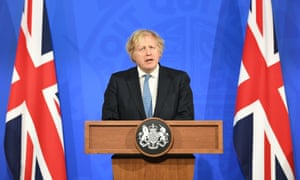
Boris Johnson confirmed that the roadmap will be going ahead as planned next week. Photograph: Stefan Rousseau/PA

In an update on restarting international travel, the document said the government “hopes people will be able to travel to and from the UK to take a summer holiday this year”.

Johnson’s roadmap out of lockdown, published on 22 February, had said that from 17 May, international travel would be permitted again “subject to review”. But in the latest review, while a traffic light system was confirmed for overseas travel, no endorsement of the date was given and no countries were named. “We are not yet in a position to confirm that non-essential international travel can resume from that point,” the document said.

The travel industry was left frustrated. Heathrow airport’s chief executive, John Holland-Kaye, said it was “disappointing that the opportunity has been missed” and “a clearer timeline” for the return to international travel was needed.

Johnson said that his February roadmap “continues to be one we are sticking to like glue” – but his unwillingness to move any faster, and the threat of Covid status certificates, provoked the ire of Tory backbencher Mark Harper, who chairs the Covid Recovery Group of MPs pushing for a quicker unlocking.

Harper said it was disappointing that the prime minister’s plan was “driven by dates, not data” when “the data suggests it could safely go faster rather than being tied rigidly”. He also warned that it wouldn’t be acceptable for the government to introduce Covid status certificates “by the back door” and said it was crucial for MPs to be allowed a vote on a system that would create “a two-tier Britain”.

More changes coming into force next Monday include allowing beauty and nail salons and spas to open – although not saunas and steam rooms. Overnight stays away from home in England will be permitted and self-contained accommodation can reopen, but only for use by members of the same household or support bubble.

Libraries and community centres will be allowed to open again, along with zoos, theme parks and drive-in cinemas.

The number of nominated people allowed to visit a care home will increase to two for each resident, and all children will be able to attend any indoor children’s activity, including sport, regardless of circumstance.

For those planning weddings, outdoor receptions will be able to take place with up to 15 attendees. People will still be encouraged to work from home where possible, and to minimise domestic travel.

The post UK: Boris Johnson Confirms Easing of England Lockdown, Foreign Travel in Doubt appeared first on The St Kitts Nevis Observer.
Haiti Tragedy: Amidst the Daily Chaos, Nobody Yet Has Been Vaccinated

PORT-AU-PRINCE, Haiti (AP) — Haiti does not have a single vaccine to offer its more than 11 million people over a year after the pandemic began, raising concerns among health experts that the well-being of Haitians is being pushed aside as violence and political instability across the country deepen.

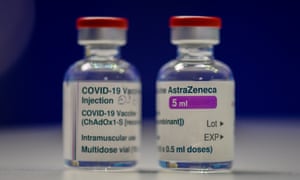
So far, Haiti is slated to receive only 756,000 doses of the AstraZeneca vaccine through a United Nations program aimed at ensuring the neediest countries get COVID-19 shots. The free doses were scheduled to arrive in May at the latest, but delays are expected because Haiti missed a deadline and the key Indian manufacturer is now prioritizing an increase in domestic demand.

“Haiti has only recently completed some of the essential documentation that are prerequisites for processing of a shipping order,” said Gavi, the Vaccine Alliance, a Geneva-based public-private partnership that is co-managing the U.N.-backed COVAX effort.

The country also didn’t apply for a pilot program in which it would have received some of its allotted doses early, according to the Pan American Health Organization. However, a spokeswoman commended its other pandemic efforts, including reinforcing hospital preparedness.

Meanwhile, a human rights research center cited in a new U.S. State Department report found Haiti’s government misappropriated more than $1 million worth of coronavirus aid. The report also accused government officials of spending $34 million in the “greatest opacity,” bypassing an agency charged with approving state contracts.

Lauré Adrien, general director of Haiti’s Health Ministry, blamed the vaccine delay on scrutiny of the AstraZeneca shots and concerns that the country lacks the necessary infrastructure to ensure proper vaccine storage, adding that his agency prefers a single-dose vaccine. AstraZeneca requires two doses.

“It’s no secret that we don’t have excellent conservation facilities,” he said. “We wanted to be sure that we had all the parameters under control before we received vaccine stocks.”

Adrien also noted all the money his agency received has been properly spent, but said he could not speak for other agencies. A presidential spokesman did not return calls for comment.

Many poorer countries have experienced long waits in getting COVAX vaccines as richer countries snapped up supplies, though most have received at least an initial shipment. Some took matters into their own hands, securing shots through donations and private deals.

Haiti’s lack of vaccines comes as it reports more than 12,700 cases and 250 deaths, numbers that experts believe are underreported.

Perceptions also remain a big challenge.

While face masks remain mandatory at Haiti businesses, airport closures and curfews have long since been lifted, and other precautions are rare.

“People don’t really believe in the coronavirus,” said Esther Racine, a 26-year-old mother of two boys whose father died in the catastrophic 2010 earthquake.

Racine once worked as a maid but began selling face masks at the beginning of the pandemic, making brisk business with some 800 sales a month. Now, she barely sells 200.

“Look around,” she said, waving at a maskless crowd bustling around her in downtown Port-au-Prince. The only customers nowadays are those who need a mask to enter a nearby grocery store, she said, adding that Haitians have other problems on their mind: “People worry more about violence than the virus.”

Ongoing protests and a spike in kidnappings and gang-related killings have some wondering how any vaccine will be administered given the lack of stability coupled with a growing number of people afraid to leave their homes.

Many also fear being inoculated, despite educational campaigns. In addition, some officials have raised concern about the AstraZeneca vaccine, which has recently come under scrutiny in Europe after a very small number of people who received it developed unusual blood clots.

“We can receive the vaccine and then discover with a heavy heart that the stocks expired a couple of months later because no one wanted to be vaccinated,” Adrien said.

Among those in Haiti who say they will not be vaccinated is Dorcelus Perkin, a brick factory owner. On a recent morning, the 60-year-old supervised more than a dozen employees working outdoors. No one was wearing any personal protective equipment.

“We can’t wear masks in the sun. We would be suffocating,” he said, adding that the sun kills the virus, something scientists have not proven.

Perkin also credited drinking a traditional green tea mixed with salt every day for his good health: “I believe more in these remedies than the vaccines. I don’t know what’s in the inside of these vaccines.”

International groups are behind most of the resources and educational campaigns related to COVID-19 in Haiti, with the Pan American Health Organization providing the government 500 test kits, along with instruction on lab diagnosis and virus detection. It also supplied thermometers, PPE and other items including megaphones and batteries as workers fanned out into rural areas. In addition, PAHO trained more than 2,800 health workers in Haiti and met with community leaders including Voodoo priests and traditional birth attendants to share information about protective measures and treatment centers.

In May 2020, the organization’s director said she was particularly concerned about the effects of a potential large-scale outbreak given Haiti’s frail health care system and the fact that many live in overcrowded households and lack access to clean water. But perplexed experts say that anticipated outbreak has not happened.

“It’s a surprise to a lot of people,” said Aline Serin, head of mission in Haiti for the international aid group Medecins Sans Frontieres. “For the moment, there is not enough research and documentation to explain why some countries were less affected by severe COVID-19 cases.”

Meanwhile, it’s unclear exactly when the country’s first vaccines, via COVAX, will arrive.

Haiti is among 92 low-income countries expected to receive them. It’s also among dozens that will be affected by last week’s announcement of a suspension of deliveries in March and April of doses made for the program by the Serum Institute of India – the world’s largest vaccine maker – amid a spike of coronavirus cases in India.

When the shots do become available, experts acknowledge it will be a struggle to get them into arms.

They would have to convince Haitians like Duperval Germain, a 55-year-old carpenter who said neither he nor his children will be getting a vaccine. He worries about falling ill from it and not being able to receive proper medical care.

“All these heads of state who have been here, any time they get sick, they all fly out of here,” he said. “If we get sick, where would we go? They can keep (the vaccines) to themselves. Use it in places that need it. Haiti doesn’t need the vaccine.”

Coto reported from San Juan, Puerto Rico. Associated Press writer Jamey Keaten in Geneva contributed to this report.

The post Haiti Tragedy: Amidst the Daily Chaos, Nobody Yet Has Been Vaccinated appeared first on The St Kitts Nevis Observer.
Police appeal for information after an alleged road rage incident

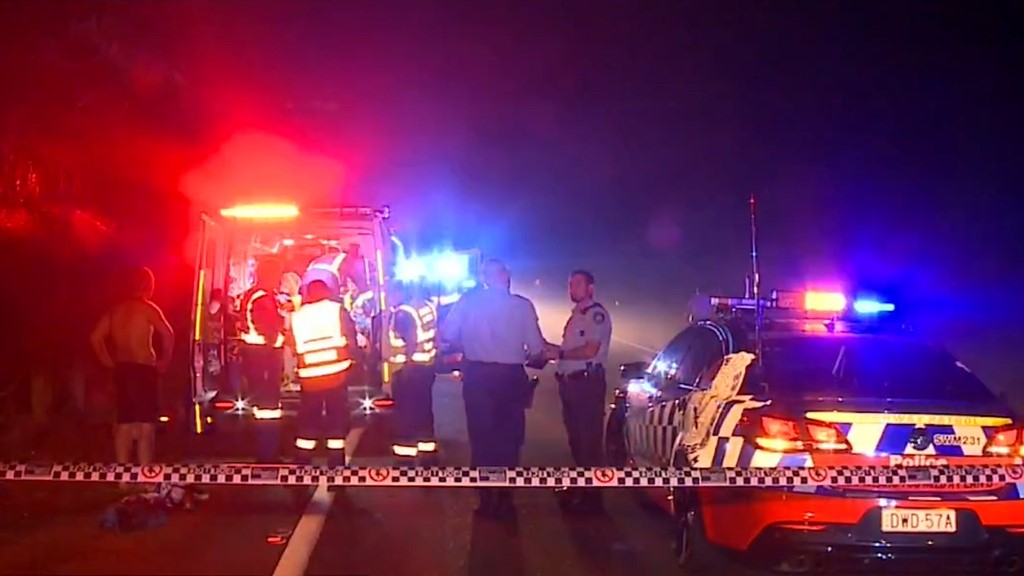
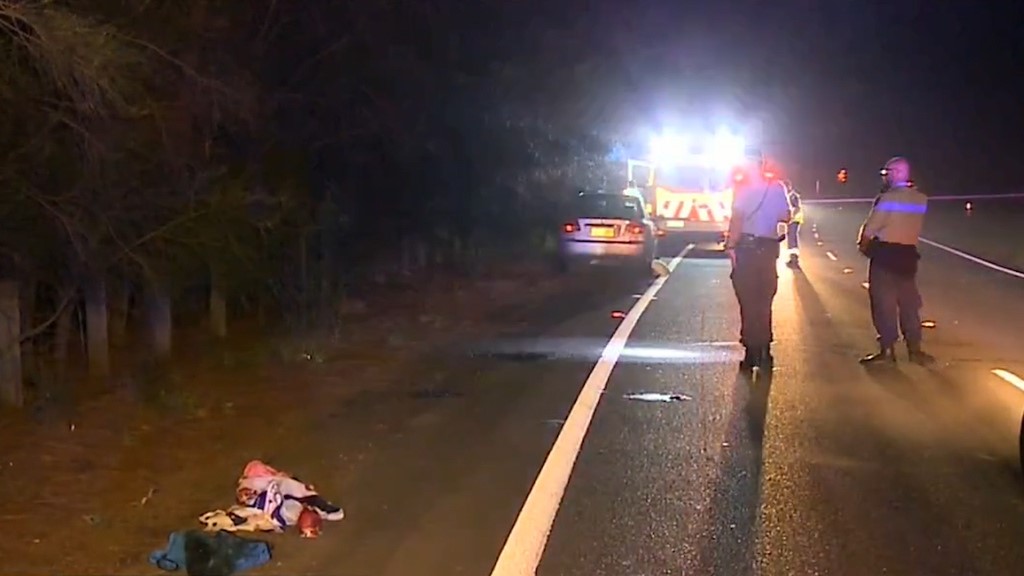
Police are appealing for information after an alleged road rage incident in Sydney's south-west left a man fighting for his life in hospital and three others injured.

Two groups of men in a Honda Civic and a ute were allegedly involved in an argument at an intersection of Henry Lawson Drive and the Hume Highway at Georges Hall around 10.45pm yesterday.

The ute allegedly then forced the Civic from the road and into bushland, where it rolled onto its roof.

READ MORE: Man charged with attempted murder after stabbing in Sydney

Darren Sly

The Civic driver, a 20-year-old man, and his passenger, a 17-year-old boy, managed to escape the car before being confronted by the second group of men.

The men from the ute then allegedly assaulted the pair, with the Civic driver stabbed in his left leg.

The ute then took off, driving north at high speed before colliding with a motorbike and a silver Toyota Camry.

The driver did not stop and continued travelling north along Henry Lawson Drive.

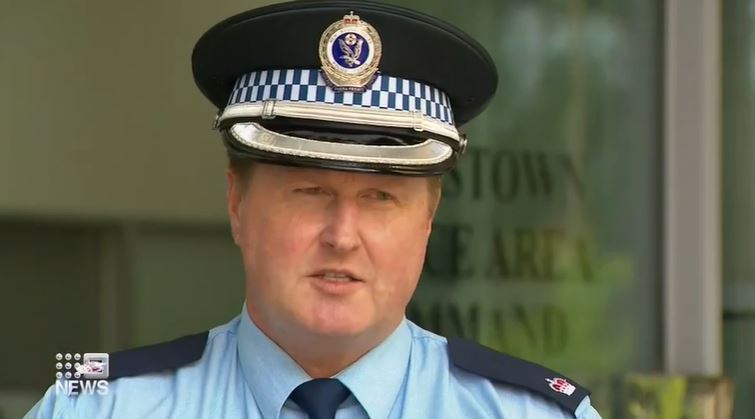
NSW Police Detective Chief Inspector Darren Sly said the incident was "something which our community just cannot stand for".

"It is dangerous. And that's why we're trying to seek systems of the public today to try and locate these men, and in particular the vehicle as well," Mr Sly said.

The 24-year-old motorcyclist is now fighting for life after being taken to Liverpool Hospital in a critical condition.

READ MORE: Four critical after boat explodes on Hawkesbury River

The male driver of the Toyota was also taken to hospital with chest injuries, along with the driver of the Honda – who remains in a serious but stable condition – after being stabbed.

The teenage passenger from the Honda was treated by paramedics at the scene for minor injuries.

"I actually just saw flashing lights through the blinds. I thought 'I wonder what's going on'. My wife said, 'I think there's roadworks going on'," witness Frank Abel said.

"And I thought 'not with all the police cars there'."

Henry Lawson Drive between Flinders Road and Tower Road was closed this morning as police examined the scene.

It took authorities about six hours to clear debris from the incident.

Police have appealed for public assistance to identify the men who may be able to assist with their investigation.

Anyone with information about the incident, or has dashcam footage, is urged to contact Crime Stoppers on 1800 333 000.

Corona Vaccines: How Long Will They Last?

(CNN) Ian Haydon helped test Moderna’s coronavirus vaccine last year. Now, he’s helping test the tweaked version of that vaccine designed to fight a new, more contagious variant.

“A year ago I tried the Moderna vaccine to see if it was safe. (Spoiler: It is!) Now, on my #COVIDvaccine anniversary, I’m happy to share that I just got a 3rd dose. This booster experiment will reveal (1) if strain-adapted vaccines boost immunity & (2) whether they are safe,” Haydon, a communications specialist at the University of Washington, said via Twitter last Saturday.

Photo: Sputnik. Russia is upping its vaccine production. Argentina is scheduled to start distributing the Russian Covid-19 vaccine before the New Year.

“It’s unclear whether this new tweaked version is even going to be necessary,” Haydon told CNN in a telephone interview.

“But it’s being developed and tested now so that we have it in hand.” 

Doctors are worried that coronavirus may end up being like influenza, which requires a new vaccine every year both because the circulating strains mutate fast and because immunity from the vaccine wears off quickly.

Although initial evidence suggests immunity from vaccination against coronavirus provides long-lasting protection, vaccine makers have begun making and testing versions of their vaccines that protect against worrying variants of the virus. That includes the B.1.351 version first seen in South Africa, which carries a mutation that, in lab experiments, appears to allow it to evade the human immune response a little.

The latest report from vaccine maker Pfizer shows people in South Africa who got its coronavirus vaccine after B.1.351 became the dominant circulating virus were still very strongly protected from infection — something that backs up laboratory experiments that have shown the vaccine causes such a strong and broad immune response that it provides a cushion against any effects of mutant viruses.

“It is still matched enough that we have good protection,” said Scott Hensley, an immunologist and vaccine expert at the University of Pennsylvania.

But vaccine makers are not taking chances. The trial Haydon is taking part in is testing not only a third dose of Moderna vaccine tweaked to protect specifically against B.1.351 — that’s what he got — but a third dose of original vaccine in some volunteers, too, to see if the boosted immune response is both safe and provides an advantage.

A report out last month from Pfizer suggests people who get both doses keep strong immunity for at least six months. Experts have been at pains to point out that doesn’t mean immunity stops at six months. It means that’s the longest volunteers in the trials have been followed to see what their immunity is. It’s likely to last much longer, Hensley said.

“I would not be surprised if we learned a year from now that these vaccines are still producing a strong immune response,” Hensley told CNN.

“I would not be surprised if this is a vaccine that we only get once.” 

That would make the vaccine more akin to vaccines against measles than flu vaccines. Vaccination against measles protects against infection for life in 96% of people.

Protection from Pfizer’s two-dose vaccine remains above 91% even at six months, according to the company. It has released the details in a statement, not a formal scientific publication, and the data covers only a few thousand people. But if it holds up, that’s an indication that both the Pfizer and Moderna vaccines elicit a long-lasting immune response, experts say.

Hensley says the technology used by both vaccines — delivery of genetic material known as messenger RNA of mRNA — is especially potent.

“The antibody responses elicited by these mRNA vaccines are incredibly high. What we know in animal models with other mRNA vaccines that have been tested previously — we know that those antibody responses are incredibly long-lived and they don’t drop over time,” said Hensley, whose lab has been testing experimental mRNA vaccines for years.

While the coronavirus vaccines are of course new — the virus has only been around since the end of 2019 — the mRNA technology has been studied for many years and used to make vaccines against influenza, Ebola and Zika virus.

Several studies have indicated this with coronavirus vaccine.

In January, a team led by Dr. Alicia Widge at the National Institute of Allergy and Infectious Diseases wrote the New England Journal of Medicine to say their research showed two doses of Moderna’s vaccine produced plenty of antibodies that declined only very slightly over time. The vaccine also caused the body to produce immune cells known as T cells and B cells that can keep defenses going for years. The vaccine-induced immune response was stronger and less variable than the immune response that follows a natural infection, they found.

Another study in the New England Journal of Medicine in February showed blood taken from people who got Pfizer/BioNTech’s Covid-19 vaccine continued to produce an immune response against B.1.351.

“Although we do not yet know exactly what level of neutralization is required for protection against Covid-19 disease or infection, our experience with other vaccines tells us that it is likely that the Pfizer vaccine offers relatively good protection against this new variant,” Scott Weaver, director of the Institute for Human Infections and Immunity at University of Texas Medical Branch, told CNN at the time.

Nonetheless, last month, South African virologists argued that there’s growing evidence the vaccines being developed do not work as well against B.1.351 and urged vaccine makes to start tweaking their formulas now.

Although he’s taking part in clinical trials that require regular blood draws to check his immunity, Haydon has no idea how well protected he is from the virus.

“I know that early on in the trial, myself and all the participants did develop neutralizing antibodies — the kind that you are looking for. That was clear many, many months ago,” Haydon said. “But the level of those antibodies, and how the levels have changed over time, is not something that I’m told. That is one of the main things that is being evaluated over the study.”

He had a strong reaction to the first round of vaccination and said the third dose he just received caused some effects, too.

“Flulike is the right way to describe my symptoms,” he said. “I ended up with a fever, chills, a little bit of nausea, headache,” he added.

Immunologists say that’s a sign the immune system is responding to the vaccine, although people who report no symptoms also develop an immune response, so the symptoms do not appear to suggest someone’s having a better response than someone who doesn’t develop a fever.

Haydon doesn’t know whether his response this time around says anything about what level of immunity he still had from the first dose he was given a year ago.

What he does know is that he cannot behave as if he is completely immune. So he still wears a mask whenever he goes out and has avoided almost all travel.

“We’re living in a world where most people aren’t vaccinated. The fact that you yourself are vaccinated doesn’t change everything for you,” Haydon said.

“We still have to take a lot of the same precautions as an unvaccinated person,” he added. Although your risk of going to the hospital is greatly diminished, spreading the virus is a major concern. It’s not until recently that we started to collect data (showing) that vaccinated people also spread the virus a lot less. So that’s a recent discovery and a very good sign.”

===================================================

Dr. Fauci: No Govt. Mandated Vaccine Passports

Dr. Anthony Fauci

President Biden’s chief medical adviser Anthony Fauci said in a Monday podcast that the federal government will not mandate passports that show proof of COVID-19 vaccinations.

But the head of the National Institute of Allergy and Infectious Diseases told the “Politico Dispatch” podcast that he expects certain businesses and educational institutions may require them.

“I doubt that the federal government will be the main mover of a vaccine passport concept,” he said. “They may be involved in making sure things are done fairly and equitably, but I doubt if the federal government is gonna be the leading element of that.”

Fauci said “individual entities,” such as theaters and universities, might take the lead on vaccine requirements and implement their own policies.

“I’m not saying that they should or that they would, but I’m saying you could foresee how an independent entity might say, ‘Well, we can’t be dealing with you unless we know you’re vaccinated,’ ” Fauci said. “But it’s not going to be mandated from the federal government.”

The debate over digital or physical vaccine passports has been growing in recent weeks as the U.S. starts to transition into post-pandemic life.

Fauci’s comments are in line with what other administration officials have said recently, with White House press secretary Jen Psaki saying last week that there will be “no federal mandate requiring everyone to obtain a single vaccination credential.”

Florida Gov. Ron DeSantis (R) signed an executive order last week banning government entities from giving out vaccine passports to residents and prohibiting businesses from mandating customers provide proof of vaccination to receive services.

New York, on the other hand, launched the Excelsior Pass last month, which uses a QR code on a phone app to verify proof of vaccination. The European Union also released a proposal for vaccine passports that would allow travelers to cross country borders without having to quarantine.

Republican strategists and operatives told The Hill that they plan to highlight the vaccine passport debate in an effort to win over midterm voters who are concerned about government overreach.

=================================================

A little less disinfecting is fine: CDC finds low risk of COVID-19 transmission on surfaces 

More than a year into the pandemic, and establishments continue to tout their cleaning protocols as a way to prove how safe it is to, say, eat in a restaurant, go to the store, or ride the subway. New guidance released by the CDC Monday ought to put that so-called “hygiene theater” to rest.

According to the guidance, the risk of getting a COVID-19 infection from contaminated surfaces is extremely low.

The principal mode by which people are infected with SARS-CoV-2 virus is through exposure to respiratory droplets, the CDC said.

How low? While not impossible, the agency said the risk of infection through fomites is “generally less than 1 in 10,000.”


The post Corona Vaccines: How Long Will They Last? appeared first on The St Kitts Nevis Observer.

Papua New Guinea man dies from COVID-19 in Queensland Hospital

A 77-year-old man from Papua New Guinea has died in a Queensland Hospital following complications with COVID-19.

Queensland Health confirmed that the man, a dual Papua New Guinea/UK national, was transported via medivac from the country to Queensland on March 28 after his condition deteriorated.

He then spent more than a week in ICU at Redcliffe Hospital, north of Brisbane, before passing away on Monday.

READ MORE: What's gone wrong with Australia's vaccination rollout?

Queensland Health confirmed that the man, a dual Papua New Guinea / UK national, was transported via medivac from the country to Redcliffe Hospital on March 28 after his condition deteriorated.

"Queensland Health offers its sincere condolences to his family during this time," authorities said in a statement released this evening.

Despite this being the 7th death related to COVID to take place in Queensland, it won't be counted in the state's statistics as the man was first diagnosed in Papua New Guinea.

The confirmation of the death comes as Queensland recorded 0 new COVID cases since March 3 today.

Australia's coronavirus death toll stands at 909.

More details to come.