A year 13 school student has been airlifted by rescue helicopter out of the Hopkins Valley in Canterbury after he suffered a medical event during a four day class hiking trip. The male student was tonight airlifted from a tramping…
Category Archives: headline
Train derails in Taiwan killing at least 48 people
At least 48 people are dead after a train partially derailed in eastern Taiwan, causing what's said to be the country's deadliest rail disaster.
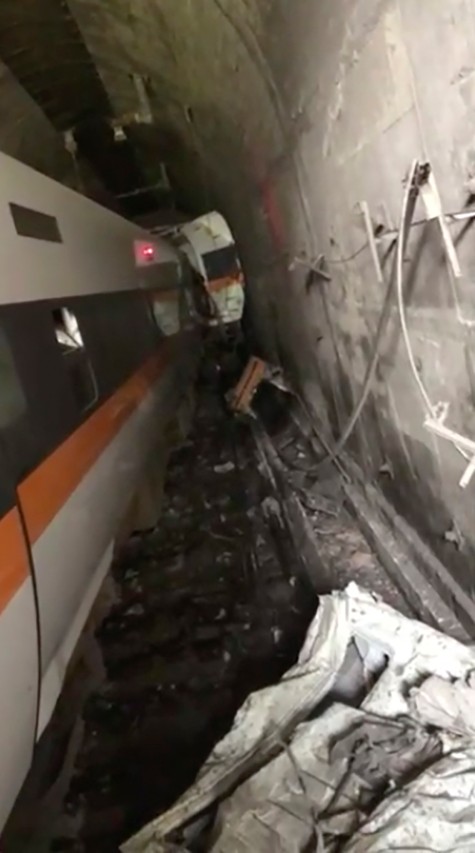
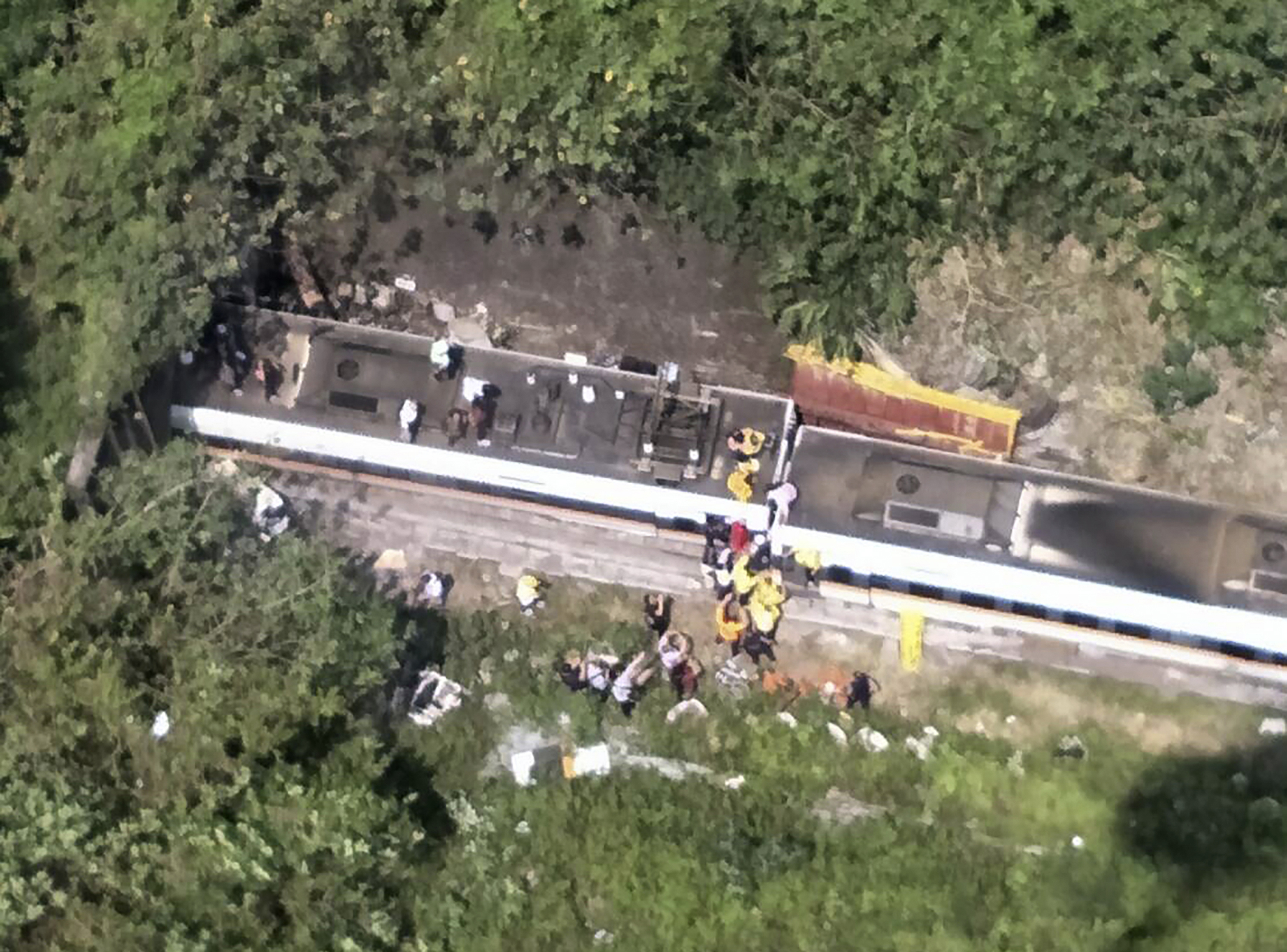
With the train still partly in a tunnel, survivors climbed out of windows and walked along the train's roof to reach safety, following a collision with an unmanned vehicle that had rolled down a hill.
The crash occurred near the Toroko Gorge scenic area on the first day of a long weekend when many people were hopping trains on Taiwan's extensive rail system. The train had been carrying more than 400 people.
READ MORE: 'Illegal structures found' where Chinese boats gathered near Philippines

The National Fire Service confirmed the death toll, which included the train's young, newly married driver, and said all aboard had been accounted for.
More than 100 people were injured, it said. Railways news officer Weng Hui-ping called the crash Taiwan's deadliest rail disaster.
Mr Weng said a construction truck operated by the railway administration slid onto the track from a worksite on the hillside above.
No one was in the truck at the time. He said the speed of the train was not known.
The train had only partially emerged from a tunnel, and with much of it still inside, many escaping passengers were forced to scramble out of doors and windows and scale the sides of the train to walk along the roof to safety.

Television footage and photos posted from the scene on the website of the official Central News Agency showed people climbing out of the open door of a railcar just outside the entrance to the tunnel.
Part of the wall of one car had smashed into a seat.
Taiwan is a mountainous island and most of its 24 million people live in the flatlands along the northern and western coasts that are home to most of the island's farmland, biggest cities and high-tech industries.
The lightly populated east is popular with tourists, many of whom travel there by train to avoid mountain roads.
An investigation was launched into the crash and there was no immediate word about any arrests.
In a tweet, Taiwanese President Tsai Ing-wen said emergency services "have been fully mobilised to rescue and assist the passengers & railway staff affected.
"We will continue to do everything we can to ensure their safety in the wake of this heartbreaking incident," he said.
The crash came on the first day of the four-day Tomb Sweeping Festival, an annual religious holiday when people travel to their hometowns for family gatherings and to pay their respects at the graves of their ancestors.
Taiwanese Premier Su Tseng-chang said the Railways Administration would be required to immediately conduct checks along other track lines to "prevent this from happening again."
About 50 volunteers from the Tzu Chi Buddhist Foundation stationed at an aid tent near the crash site said children were among the dozens who escaped the train cars. They were treating minor wounds and offering lunches.
"We see people coming off the train and they look shaken and nervous," said Chen Tzu-chong, a Tzu Chi team leader on site.

Taiwan's last major rail crash was in October 2018, when an express train derailed while rounding a tight corner on the northeast coast, killing at least 18 people and injuring nearly 200.
In 1991, a collision in western Taiwan killed 30 people and another crash a decade earlier also killed 30.
Those were said to be the worst previous crashes on the rail system that dates from the late 19th century.
Taiwan's extensive rail system has undergone substantial upgrades in recent years, particularly with the addition of a high-speed line connecting the capital Taipei with west-coast cities to the south.
The train involved in Friday's derailment, the Toroko 408, is one of Taiwan's newer models.
Associated Press World View: Train Wreck, Easter Celebrations, Myanmar Chaos, More
April 2, 2021

A train derailment in Taiwan has killed dozens of people. Rescuers are searching wrecked cars for survivors in the country’s deadliest railway disaster.
Many Christians around the world mark Good Friday amid tight COVID-19 restrictions for the second consecutive year, but religious sites are open to a limited number of visitors in the Holy Land.
While Italy may be in lockdown over Easter, a few miles offshore passengers are enjoying poolside cocktails aboard one of the few cruise ships operating globally.
Also this morning:
- Myanmar cuts wireless Internet services as protesters defy threat of deadly violence
- Duty sergeant testifies officers who restrained George Floyd could have ended it after he stopped resisting
KARL RITTER
Southern Europe News Director
The Associated Press
Rome
|
|
The Rundown

TAIPEI, Taiwan (AP) — A train partially derailed in eastern Taiwan on Friday after being hit by an unmanned vehicle that had rolled down a hill, killing 48 people. With the train still partly in a tunnel, survivors climbed out of windows and walked along the train’s roof to reach safety after the country’s deadliest railway…Read More
 *****@
 *****@
 *****@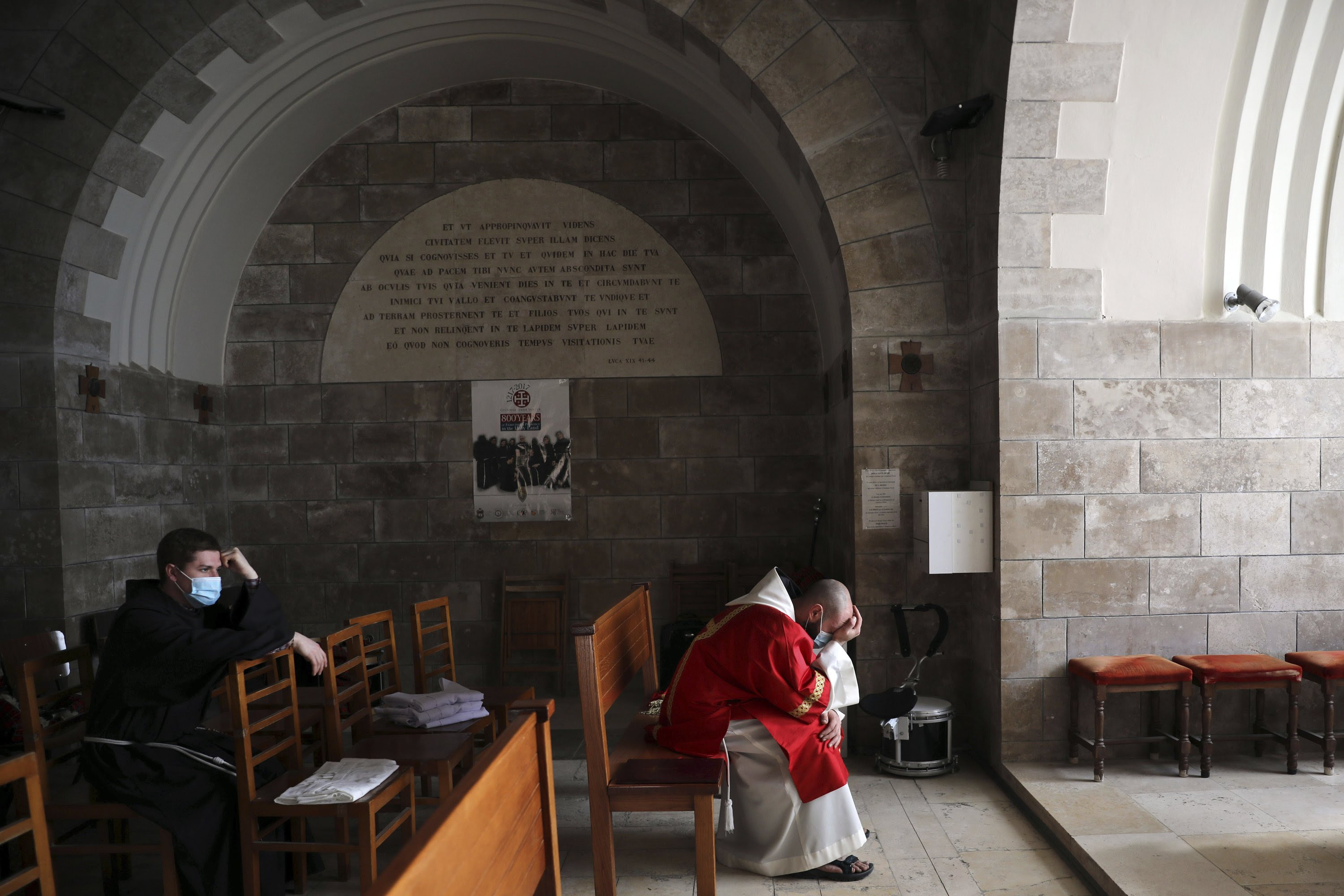
JERUSALEM (AP) — Christians in the Holy Land are marking Good Friday this year amid signs the coronavirus crisis is winding down, with religious sites open to limited numbers of faithful but none… …Read More
 *****@
 *****@
 *****@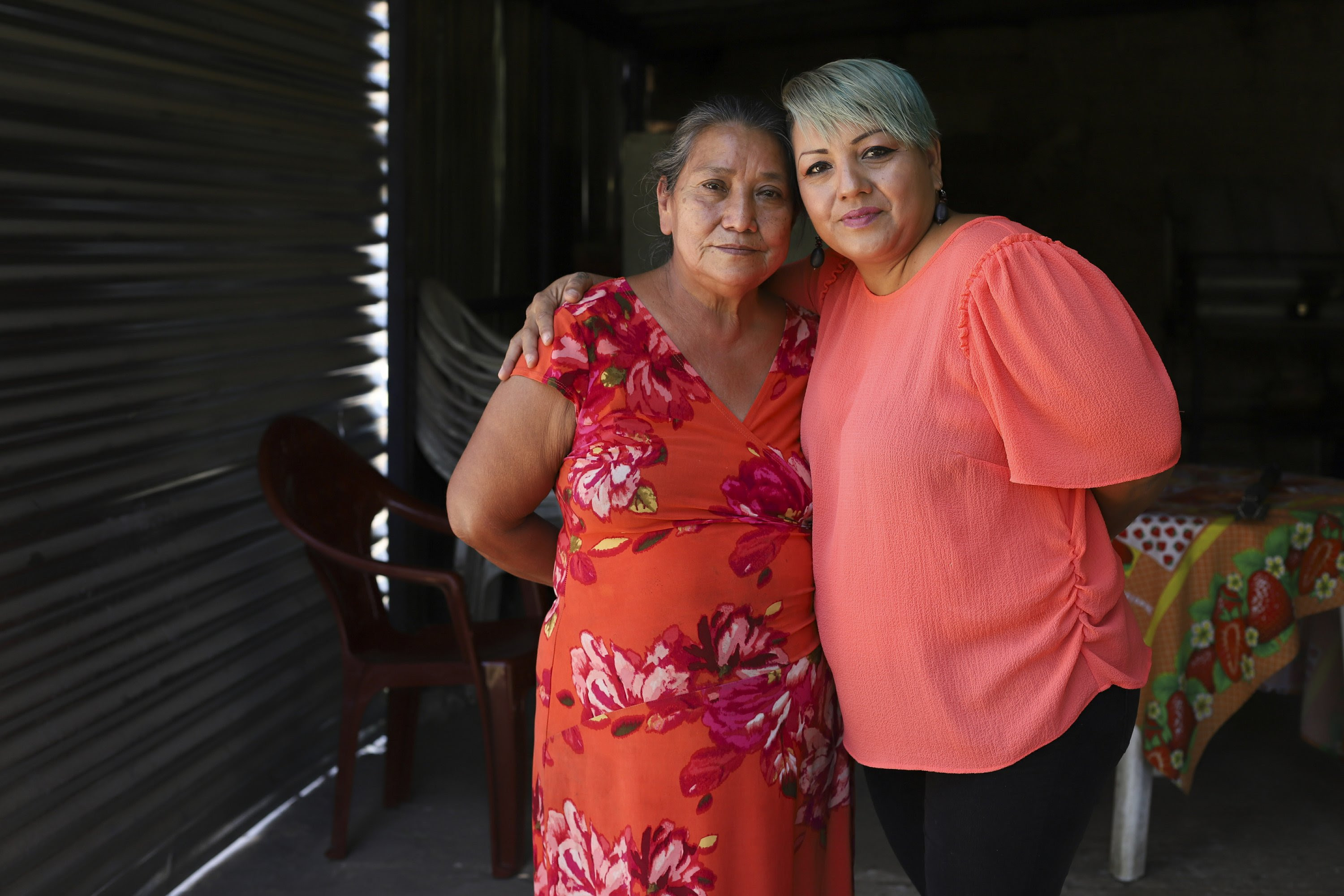
SPRINGDALE, Ark. (AP) — Irma Chavez is a married mother of four who leads a business networking initiative in this small Arkansas city she calls home. It’s a long way from her life as a live-in… …Read More
 *****@
 *****@
 *****@
ABOARD THE MSC GRANDIOSA (AP) — Italy may be in a strict coronavirus lockdown this Easter with travel restricted between regions and new quarantines imposed. But a few miles offshore, guests… …Read More
 *****@
 *****@
 *****@
MINNEAPOLIS (AP) — A Minneapolis police supervisory sergeant who was on duty the night George Floyd died testified that he believes the officers who restrained Floyd could have ended it after he… …Read More
|
|
OTHER TOP STORIES
WASHINGTON (AP) — President Joe Biden is setting about convincing America it needs his $2.3 trillion infrastructure plan, deputizing a five-member “jobs Cabinet” to help in…Read More
JERUSALEM (AP) — After spending much of the past year in lockdown, Tel Aviv makeup artist Artyom Kavnatsky was ready to get back to work. But when he showed up for a recent…Read More
YANGON, Myanmar (AP) — Myanmar’s wireless broadband internet services were shut down on Friday by order of the military, a local provider said, as protesters continued to d…Read More
PHOENIX (AP) — A border wall. Smugglers. Small children being dropped into America in the darkness. A grainy video released Wednesday by authorities — its figures visible o…Read More
The post Associated Press World View: Train Wreck, Easter Celebrations, Myanmar Chaos, More appeared first on The St Kitts Nevis Observer.
Pfizer Vaccine Has 91% Efficacy For Up To 6 Mo., Astra Zenica Blood Clots, World Stats
Findings based on two doses three weeks apart are first to show shot remains effective for many months

Ian Sample Science editor, Guardian
The coronavirus vaccine developed by Pfizer and its German partner BioNTech protects against symptomatic Covid for up to six months, an updated analysis of clinical trial data has found.
In a statement released on Thursday, the companies reported efficacy of 91.3% against any symptoms of the disease in participants assessed up to six months after their second shot. The level of protection is only marginally lower than the 95% achieved soon after vaccination.
The findings are the first to demonstrate that the vaccine remains effective for many months, an outcome that doctors and scientists had desperately hoped for because it suggests that people being vaccinated now should be protected at least until the autumn when boosters may be ready.
Analysis of participants in the phase 3 trial, which has enrolled 46,307 people, identified 927 symptomatic Covid cases. Of these, 850 were in the placebo arm of the trial and 77 in the vaccine group. There were 32 cases of severe Covid, as defined by the US Centers for Disease Control and Prevention (CDC), in the placebo group, and none in the vaccinated group. More than 12,000 people vaccinated in the trial have now been followed for at least six months after their second dose.
More striking still are results from the South African arm of the trial where nine Covid cases were observed among 800 participants. All of the cases were in the placebo group, and six were confirmed to be the new “variant of concern”, B.1.351, which has worried scientists because of its ability to partially evade antibodies produced in response to vaccines or past infection. Public Health England said on Wednesday that it knew of 469 confirmed or probable cases of the South African variant in the UK.
With cases in the South African arm of the trial so low, more evidence is needed to confirm the vaccine’s protection against the new variant, but scientists were still delighted by the result. “I do regard this as a really positive indication,” said Danny Altmann, a professor of immunology at Imperial College London.
He said scientists had become “terribly worried” about the variant’s ability to evade immunity from previous infection or vaccination. “Studies like this confirm our sense that the vaccine gives such massive protective headroom that even with some loss of immunity, you’re still safe,” he said.
The chairman of Pfizer, Albert Bourla, said the latest data put the company in a position to apply to the US Food and Drugs Administration for full approval of the vaccine. The jab is currently approved under emergency use authorisation.
The results came as scientists in the UK reported strong immune responses in older people who had received two shots of the Pfizer vaccine. Blood tests on 100 people aged 80 to 96 years old revealed that 98% produced strong antibody responses after two doses of the vaccine given three weeks apart. Antibody levels more than tripled after the second shot.
The findings, released in a preprint that has yet to be peer-reviewed, will boost confidence that the Pfizer vaccine can be highly effective against Covid even in the most vulnerable older people, who tend to generate far weaker immune responses to vaccines and natural infections. Pfizer trialled its vaccine with a three-week gap between shots, but the UK leaves a three-month gap, meaning it is unclear whether the same level of protection is achieved.
Paul Moss, a professor of haematology at the University of Birmingham who led the study with Dr Helen Parry, also at Birmingham, said the team was surprised and very pleased to see the results, which tallied with the “excellent clinical protection” the Pfizer vaccine appears to provide. The first major real-world study of the Pfizer vaccine, in Israel, found that two shots prevented 94% of symptomatic cases across all age groups.
The scientists went on to examine another branch of the immune defences raised by the vaccine, known as the T-cell response. Antibodies protect against infection by gumming up the virus and preventing it from infecting cells, but T-cells destroy human cells that are already infected, and may also support antibody production over time. After both shots of the vaccine, two-thirds of the participants had detectable T-cell responses. “We know that as people age their cellular immune responses are more difficult to elicit,” said Moss. “So that is something that we will need to keep an eye on very closely.”
Further work at Public Health England’s Porton Down lab showed that blood serum taken from the volunteers after two shots of vaccine strongly neutralised the original coronavirus that spread around the world last year. But it was on average 14 times less effective against the P.1 variant first seen in Brazil, and which has now reached the UK and elsewhere.
“The variant from Brazil reduces neutralisation response, but at this early stage after the vaccine where we’re seeing such high antibody levels we are still quietly confident that this should still provide valuable protection against this variant of concern,” said Parry.
=============================================
UK Officials Found 30 Blood Clot Cases in People Vaccinated with Astra Zenica
UK regulators said they have identified 30 cases of rare blood clot events after the use of Oxford-AstraZeneca vaccine.
However, the health officials said they still believe the benefits of the vaccine in the prevention of Covid-19 far outweigh any possible risk of blood clots
Some countries have restricted use of the AstraZeneca vaccine while others have resumed inoculations, as investigations into reports of rare, and sometimes severe, blood clots continue.
On March 18, the UK medicines regulator said that there had been five cases of a rare brain blood clot among 11 million administered shots.
On Thursday, it put the count at 22 reports of cerebral venous sinus thrombosis, an extremely rare brain clotting ailment, and eight reports of other clotting events associated with low blood platelets out of a total of 18.1 million doses given.
Last month, AstraZeneca did a review of more than 17 million people vaccinated in the United Kingdom and European Union, following the suspension of the use of vaccine in some countries over clotting issues.
AstraZeneca Plc said the review of safety data of people vaccinated with its Covid-19 vaccine has shown no evidence of an increased risk of blood clots.
“A careful review of all available safety data of more than 17 million people vaccinated in the European Union and UK with COVID-19 Vaccine AstraZeneca has shown no evidence of an increased risk of pulmonary embolism, deep vein thrombosis or thrombocytopenia, in any defined age group, gender, batch or in any particular country,” the company had said.
=====================================================
UK’s Chris Whitty: society will have to learn to live with Covid in similar way to flu
England’s chief medical officer says unrealistic to think border policy can stop new variants entering UK
Nicola Davis Science correspondent
The idea that Covid variants can be stopped from entering the country is “not realistic”, and Covid will eventually have to be managed in a similar manner to serious seasonal viruses such as flu, Prof Chris Whitty has said.
Speaking at a Royal Society of Medicine webinar, England’s chief medical adviser said the relaxation of Covid restrictions was likely to result in the R number rising above 1 and the risk of variants gaining a foothold and spreading increasing.
The more cases that have been imported, the quicker that will happen. As a result, Whitty said, border policies are focused on countries with more cases, or more cases of particular variants, than the UK.
“The UK is a net exporter of [the Kent] B117 variant, so other countries are understandably putting their border measures up against us to slow that down. We are a net importer of other variants that are a bit more of a worry from the vaccine point of view. That’s really what drives a lot of the policy, when it is being rational, excepting that border policy isn’t always fully rational,” he said.
Whitty said the majority of experts believed Covid was not going to go away and it would eventually have to be managed in a similar manner to flu. In a bad year, flu can kill 20,000 to 25,000 people. “It is not flu, it is a completely different disease, but the point I am making is, here is a seasonal, very dangerous disease that kills thousands of people every year and society has chosen a particular way around it,” he said.
While Whitty noted that factors such as variants and population density were important, he cautioned against trying to explain how Covid had affected different countries by focusing on just one or two factors, noting that Germany was now facing a difficult situation despite its previous success in tackling Covid largely being put down to its diagnostic capabilities.
“It is actually usually a large combination of factors, some of which are under our control, many of which are not. And more of it is chance than I think people are prepared to accept,” he said.
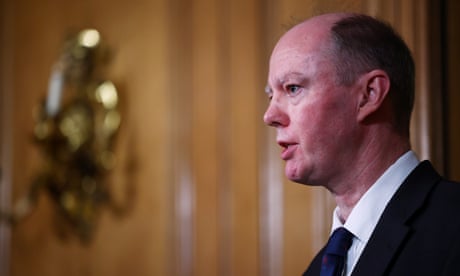
‘A class act’: Chris Whitty, the calm authority amid the Covid crisis
Whitty said new vaccine technologies meant it had become easier and quicker to tweak vaccines, which will be important for tackling new Covid variants, and he said that two years from now it was likely there would be a wide portfolio of vaccines available.
He said at present the main effort of companies was to boost vaccine supplies and there was less capacity to respond to new variants, while it was unclear whether current vaccines offer a “fair degree” of protection against severe disease and death even if they do not generate high levels of neutralising antibodies.
“What we have got to do is work out some balance which actually keeps [Covid] at a low level, minimises deaths as best we can but in a way that the population tolerates and do as much of the heavy lifting as we can by medical countermeasures,” he said.
=======================================================
WORLD STATS
Coronavirus Cases:
130,286,828
Deaths:
2,842,281
Recovered:
104,974,513
ACTIVE CASES
22,470,034
Highlighted in green
= all cases have recovered from the infection
Highlighted in grey
= all cases have had an outcome (there are no active cases)
Latest News
April 2 (GMT)
Updates
- 124 new cases and 2 new deaths in Seychelles [source]
- 15,310 new cases and 17 new deaths in the Philippines [source]
- 23 new cases and 1 new death in Afghanistan [source]
- 5 new cases in Antigua and Barbuda [source]
- 363 new cases in Papua New Guinea [source]
- 1 new case in the Wallis and Futuna Islands [source]
- 189 new cases in Uzbekistan [source]
- 162 new cases in Kyrgyzstan [source]
- 2,077 new cases and 12 new deaths in Kazakhstan [source]
- 555 new cases and 2 new deaths in South Korea [source]
The post Pfizer Vaccine Has 91% Efficacy For Up To 6 Mo., Astra Zenica Blood Clots, World Stats appeared first on The St Kitts Nevis Observer.
Biden with $2.25b Plan to Repair America
The White House is pushing an infrastructure bill that could reshape the discussion around capitalism as it seems to reestablish the federal government as a primary driver of how the economy should grow and function.
In addition to traditional infrastructure projects, Biden’s $2.25 trillion American Jobs Plan would make government investments in broadband, electric vehicles, climate change, elderly care, child benefits, housing and developing future technologies.
It would redefine classic infrastructure projects to include investments in workers and families paid for by tax hikes on corporations.
The ambitious proposal effectively transforms the relationship between the government and the private sector, making radical changes to key sectors of the economy that could be felt for years down the road.
It places a big bet on the ability of the federal government to drive sustained economic growth at a time when confidence in institutions is low.
And it will almost assuredly open Biden up to attacks from Republicans that he’s undermining traditional American capitalism and implementing a socialist agenda — after a heated election where cries of “socialism” were central to former President Trump’s campaign.
“Every corner of the country is going to be touched by this in some way,” said Mark Zandi, chief economist at Moody’s Analytics.
“It takes a whole different perspective on government,” Zandi added. “Ever since Ronald Reagan it’s been about government dysfunction, we need smaller government, less government. … This is the complete opposite. It’s saying government and only government can solve the problems we have because they’re so large and beyond any one of us. Infrastructure is a collective problem.”
Experts say a sizable infrastructure investment is badly needed as other countries make advances in high-speed rail and other modes of transportation, and pockets of the country still lack access to broadband when the internet is a necessity to participate in the economy. Biden’s plan also goes beyond traditional investments in roads, railways and bridges to include support for caregivers, affordable housing care and research and development to address climate change.
The White House views the proposal as a “once-in-a-generation opportunity” to make lasting investments in each of those areas, principal deputy press secretary Karine Jean-Pierre told reporters on Wednesday.
And the administration has made clear it will seek to address systemic issues tied to the capitalistic structure of the economy such as economic inequality, reliance on fossil fuels and racial and gender disparities through the American Jobs Plan and a subsequent package.
“No one making under $400,000 will see their federal taxes go up. Period. This is not about penalizing anyone,” Biden said Wednesday in Pennsylvania, explaining his proposal to pay for the package by raising the corporate tax rate. “I have nothing against millionaires and billionaires. I believe in American capitalism. I want everyone to do well.”
Biden is expected sometime in April to outline a second phase of his Build Back Better push that focuses on human infrastructure like health care and child care through tax credits, drug pricing and free tuition for community college.
Progressives have even pushed Biden to go bolder, citing the window of Democrats controlling the White House and both chambers of Congress.
“While President Biden’s proposal is a welcome first step, more must be done to improve on this initial framework to meet the challenges we face,” Rep. Pramila Jayapal (D-Wash.), head of the Congressional Progressive Caucus, said in a statement, calling it imperative “to enact the transformational policies that we were voted into office to deliver.”
Some progressives roll their eyes at comparisons between Biden and former President Franklin Roosevelt, whose New Deal to pull the U.S. out of the Great Depression is viewed by many as a framework for what Biden is trying to do.
They say the infrastructure package is fine but that the realities of politics and Biden’s moderate leanings have resulted in a bill that falls well-short of being a transformational reimagining of capitalism.
“If we are thinking more broadly about building more progressive power among voters, we should pocket the wins and use the debate to sketch out the full mosaic of a just economy, why rebuilding the country is not just about bricks and mortar but includes winning real wages for people by reinvigorating the labor movement via the PRO Act, ending the insanity of a wasteful health care system and of course, saving the planet,” said Jonathan Tasini, a progressive strategist.
But many mainstream Democrats believe the American Jobs Act could prove to be equally as popular as the COVID-19 relief bill, which has boosted Biden to high job approval ratings more than two months into his second term.
The ambitious plan, which would likely require Biden to go through the budget reconciliation process in Congress, would fundamentally shift the way the economy operates. And that has opened Biden up to attacks from the right.
Led by Trump, Republicans are already casting Biden’s plan as a socialist takeover and his presidency as a tax-and-spend nightmare that is certain to sink the fragile economy.
“This legislation would be among the largest self-inflicted economic wounds in history,” Trump said in a statement. “If this monstrosity is allowed to pass, the result will be more Americans out of work, more families shattered, more factories abandoned, more industries wrecked, and more Main Streets boarded up and closed down — just like it was before I took over the presidency 4 years ago.”
Freedomworks, a conservative advocacy group, acknowledged the need to improve the nation’s infrastructure but said “an injection of trillions of dollars in federal funds for leftist agenda items, immediately after passing yet another multi-trillion ‘stimulus’ package, is fiscally reckless.”
Democrats are brushing off the attacks, describing it as standard GOP talking points trotted out whenever popular new programs are put in place.
“It’s pretty clear Republicans are going to say socialist to anything,” said Joel Payne, a Democratic strategist.
“I mean, Republicans tried to call Joe Manchin a socialist,” he added, referring to the West Virginia Democratic senator who opposes calls to eliminate the filibuster. “So it’s clearly a tactic they’re going to use. But they have been trying to label Joe Biden a socialist for the last two years and it’s not sticking.”
The post Biden with $2.25b Plan to Repair America appeared first on The St Kitts Nevis Observer.
41 Killed, 200 Trapped in Taiwan Train Tunnel Derailment
At least 41 people have died and up to 200 remain trapped after a train carrying nearly 500 people crashed and then derailed in a tunnel in Taiwan.
Dozens more have been injured, with rescuers trying to access several badly damaged carriages.
The eight-carriage train reportedly hit a construction vehicle that had slipped onto the tracks at the tunnel’s mouth.
The train, from the capital Taipei to Taitung, was carrying people travelling for a long-weekend annual holiday.
Many people may have been standing because the train was so full.
The 408 train is one of the fastest deployed on a network that is generally considered safe. It can reach speeds of 130km/h (80mph).
 image copyrightReuters
The latest reports from the National Fire Agency say 490 people were on the train, with 41 dead and more than 60 injured.
Some people at the back of the train were able to walk away unscathed, but 100 were rescued from the first four carriages and about 200 more remain trapped.
“It felt like there was a sudden violent jolt and I found myself falling to the floor,” one female survivor told Taiwan’s UDN. “We broke the window to climb to the roof of the train to get out.”
Another rescued woman said: “My whole body fell to the floor. I hit my head and it started bleeding.”
The crash took place at about 09:00 local time (01:00 GMT). Taiwan’s President Tsai Ing-wen issued a statement saying “rescuing those trapped is our highest priority now”.
Local media reports say the train driver is among the dead.
Images show a large, yellow flatbed truck lying at the side of the tracks. A construction project has been under way near the north end of the tunnel.
It is not known how the vehicle slipped down the embankment.
 image copyrightEPA
Other pictures online showed people walking along the tracks with their belongings as they were evacuated from less badly affected carriages. Other survivors were being carried away on stretchers with their necks in braces.
Many of those on the train are believed to have been travelling to celebrate the Tomb Sweeping festival – a time when people pay their respects to the dead by visiting the graves of friends and family, sprucing them up and making offerings to their spirits.


Friday’s crash could be the island’s worst rail disaster in decades.
The last major train derailment in Taiwan was in 2018, which left 18 people dead.
The island’s worst crash in recent history was in 1991, when 30 passengers were killed and 112 injured after two trains collided.
The post 41 Killed, 200 Trapped in Taiwan Train Tunnel Derailment appeared first on The St Kitts Nevis Observer.
Mexico: Environmentalists Call for Effort to Save Tiny Porpoises
MEXICO CITY (AP) — Environmental groups called Thursday for an international ban on trade in a range of Mexican seafood and wildlife, seeking to force Mexico to do more to save the vaquita marina porpoise, the world’s most endangered marine mammal.
The United States already has an embargo on imports of shrimp from the upper Gulf of California. Also known as the Sea of Cortez, the body of water is the only place where the vaquita lives, and as few as 10 remain.
The Natural Resources Defense Council, the Center for Biological Diversity and two other groups said in an open letter that Mexico has failed to enforce a ban on fishermen using gill nets, which trap vaquitas. The nets are set to catch totoaba, an endangered fish whose swim bladder is considered a delicacy in China and is worth thousands of dollars.
“Only the strongest international pressure will force Mexico to get lethal fishing nets out of the water before these little porpoises disappear forever,” wrote Sarah Uhlemann, international program director at the Center for Biological Diversity.
There was no immediate comment from Mexico’s government.
In March, a government body raised criticism by announcing it would consider several proposals that would almost certainly harm the vaquita. The government has not announced whether those proposals will be accepted.
The Mexican inter-agency group said it is considering lifting endangered-species protection on the totoaba. Opening up legal fishing of totoaba would probably increase the deaths of vaquitas, but would provide a windfall for some fishermen in Mexico.
The group also said it is considering reducing the protection area for the vaquita, which would open up more areas to gill nets used for totoaba and other species. The nets trap and drown vaquitas.
The group also revived an old, discredited theory that blames the vaquitas’ decline on the lack of water flows from the U.S. through the Colorado River, which starts in the United States and empties into the Gulf of California.
The Colorado River theory posited that a decline of fresh water from the river due to U.S. usage had increased salinity in the upper Gulf, somehow affecting the vaquita.
Last week, the International Union for Conservation of Nature published a letter disputing that argument, saying that “the scientific community widely accepts that unsustainable mortality in gillnets (set for shrimp, totoaba and other finfish) is the cause of the vaquita’s rapid decline … There is no reason to seek an alternative explanation for the vaquita’s unprecedented decline.”
Mexico’s Environment Department has said the drop in the number of vaquitas and the area where they have been seen in recent years justifies reducing the protection zone, which currently covers most of the upper gulf. The zone starts around the Colorado River delta and extends south past the fishing town of San Felipe and near Puerto Penasco.
But such a move is also an admission the tiny porpoise may never return to the entire historic range of its habitat.
The post Mexico: Environmentalists Call for Effort to Save Tiny Porpoises appeared first on The St Kitts Nevis Observer.
Brazil: Former Health Officer Named New Army Chief
The appointment of the Brazilian army’s former chief health officer as the new army commander is an effort by President Jair Bolsonaro to heal a rift created by his firing of the defense minister and the subsequent removal of the top generals of all three military branches, analysts said Thursday.
Gen. Paulo Sérgio Nogueira, responsible for the army’s human resources, was appointed army chief Wednesday following the hasty departure of the leaders of Brazil’s army, navy and air force. The three men were forced out a day after Bolsonaro summarily fired retired army Gen. Fernando Azevedo e Silva as defense minister.
There has been little transparency around this week’s events, as neither the president nor the Defense Ministry explained what caused the change in leadership. Military and political experts said the unexpected firings, which some described as a “bomb,” were partly the result of the commanders’ reluctance to serve Bolsonaro’s political interests.
The reshuffle generated a deep — if brief — crisis within the military. Never since the return of democracy in 1985 had a president fired all the leaders of the military’s three branches, analysts said. The move caused uneasiness and great uncertainty as to the future of Brazil’s armed forces as the far-right president struggles with declining popularity and COVID-19 batters the country.
But the tapping of Nogueira as army chief was widely seen as an attempt by the president to ease tensions.
“The choice was to lower the tone,” said Juliano Cortinhas, who coordinates the research and study group on international security at the University of Brasilia.
Inside the military, Nogueira has a reputation of being a conscientious, reliable officer. He is also the man behind the military’s pandemic contingency plan, based on social distancing.
In a rare interview with Correio Braziliense on March 28, Nogueira praised the results of the measures he implemented to limit the spread of the coronavirus among military personnel and said he was preparing for a third wave of infections.
“The figures are relatively good in comparison with the population in general because of the prevention we have,” Nogueira said. “If this improved in Brazil, the number of people infected would probably be smaller.”
The lengthy interview was said by experts and the media to have greatly displeased Bolsonaro, who has strongly opposed the imposition by states and localities of strict health measures for the pandemic, arguing their economic damage will be more harmful than illnesses.
Brazil is currently battling with a fierce resurgence in coronavirus cases. The country reported a new daily high of nearly 4,000 deaths Wednesday, raising the toll for March above 66,000 deaths. That is more than double the number of deaths reported last July, which had been Brazil’s worst month in the pandemic.
“We have to be ready in Brazil. We can’t waver,” Nogueira said in the interview. “We have to work, improve the structure of our hospitals, have more beds, human resources so we can react if there’s a stronger wave.”
In the list of possible candidate for the army’s top post, he was among the oldest serving generals on active duty, which preserves military traditions and hierarchy.
For Cortinhas, the University of Brasilia professor, the changes in the military will not alter profoundly their relationship with Bolsonaro, at least in the short term.
“There was a name change, the game goes on,” he said. “The military continues to make a very important part of the Bolsonaro government.”
Other experts, however, said the crisis revealed a split in the ranks.
Eduardo Munhoz Svartman, president of the Brazilian Association for Defense Studies, stressed the distinction between active-duty members of the military — a contingent of about 300,000 men and women — and retired members.
Those who have entered the Bolsonaro government, including the new defense minister, former Gen. Walter Braga Netto, are usually retired military members and support the president.
But among active-duty military personnel, “there is a part that doesn’t want the armed forces to be used as a tool by the president,” said Svartman, who also teaches at the Federal University of Rio Grande do Sul. “There is growing internal polarization.”
Some active-duty generals are also eager to distance themselves from Bolsonaro’s handling of the pandemic. Most of Brazil’s 320,000 deaths occurred under the watch of active-duty Gen. Eduardo Pazuello, who was the federal health minister from May until last month. Pazuello is being investigated by a federal court for his handling of the collapse of the public health care system in the Amazonian city of Manaus.
While tensions have waned, João Roberto Martins Filho, a military expert, said things might never be the same between Bolsonaro and active-duty generals because of the removal of the three commanders.
“He crossed a dangerous line, and lost,” Martins Filho said. “This left a scar.”
The post Brazil: Former Health Officer Named New Army Chief appeared first on The St Kitts Nevis Observer.
In pictures: Easter long weekend around Australia
While residents in Sydney begin preparing for the Easter long weekend, some communities in the state's north are facing the prospect of a new virus outbreak.
Thieves steal food from Brisbane aged care home before Easter
Thieves have stolen containers of food set aside for an Easter feast from a Brisbane aged care home.
Residents of the Brassall Retirement and Aged Care home were already preparing to spend the Easter weekend alone in the wake of Brisbane's recent COVID-19 outbreak, as none of them have received the vaccine.
Now, they won't receive a home-cooked meal either.
READ MORE: Vaccine stoush heats up between state and federal governments

Security video shows a man help himself to the kitchen cabinet just after midnight on Thursday morning, stealing containers of food before being picked up by an accomplice.
He returned an hour later with his face covered and fills a suitcase with meat from the freezer.
A television in the communal area was also smashed.
READ MORE: Sun, storms and a cyclone: Your Easter weather forecast
Owner Louisa Galagher told 9News that meals and special occasions were a highlight for residents.
"Food is important to them, entertainment is important to them," Ms Galagher said.
"Today we've got nothing.
"It's left them feeling stressed and insecure."
Ms Galagher said she had managed to buy food for the residents today but was worried about how she would feed them for the rest of the long weekend.