A rare sighting of five hatchling tuatara emerging at Orokonui Ecosanctuary has been caught on camera by University of Otago researchers who were undertaking a routine inspection of the nest at the time.The first indication that…
Category Archives: headline
Man facing murder charge after serious assault in Taupō
A 34-year-old has been charged with murder after a man was seriously assaulted and died in Taupō.Police said they were called to the attack on the man at Arthur Cr just after 11pm yesterday.He subsequently died, police said.A…
Easter weekend: Two dead in crashes at beginning of holiday period
By RNZ Two people died on the roads last night at the beginning of the Easter holiday period.One person died and three others received moderate injuries after a truck and car collided on State Highway 27 in Hauraki just before…
Covid 19 coronavirus: Two thirds of Kiwis found lockdown 'silver linings', study shows
From hearing the birds sing to global online knitting networks, many Kiwis have reported experiencing “silver linings” during last year’s level 4 lockdown, a study has shown. Published one year on from New Zealand’s nationwide…
Waitematā Harbour charter tragedy: Investigations under way after woman suffers fatal injuries
Investigations are continuing into how a woman went overboard from a charter boat before suffering fatal injuries on Auckland’s Waitematā Harbour. Police and Maritime NZ are today working together to understand the circumstances…
School community rallies around Tairua 'boat rage' teacher after resignation
The Tairua School community has called on the Board of Trustees to “do everything in its power” to persuade the deputy principal embroiled in so-called “boat rage” to reconsider her resignation.Catherine Browning, 52, stepped down…
George Floyd's girlfriend tells of couple's 'sweet' meeting, drug use
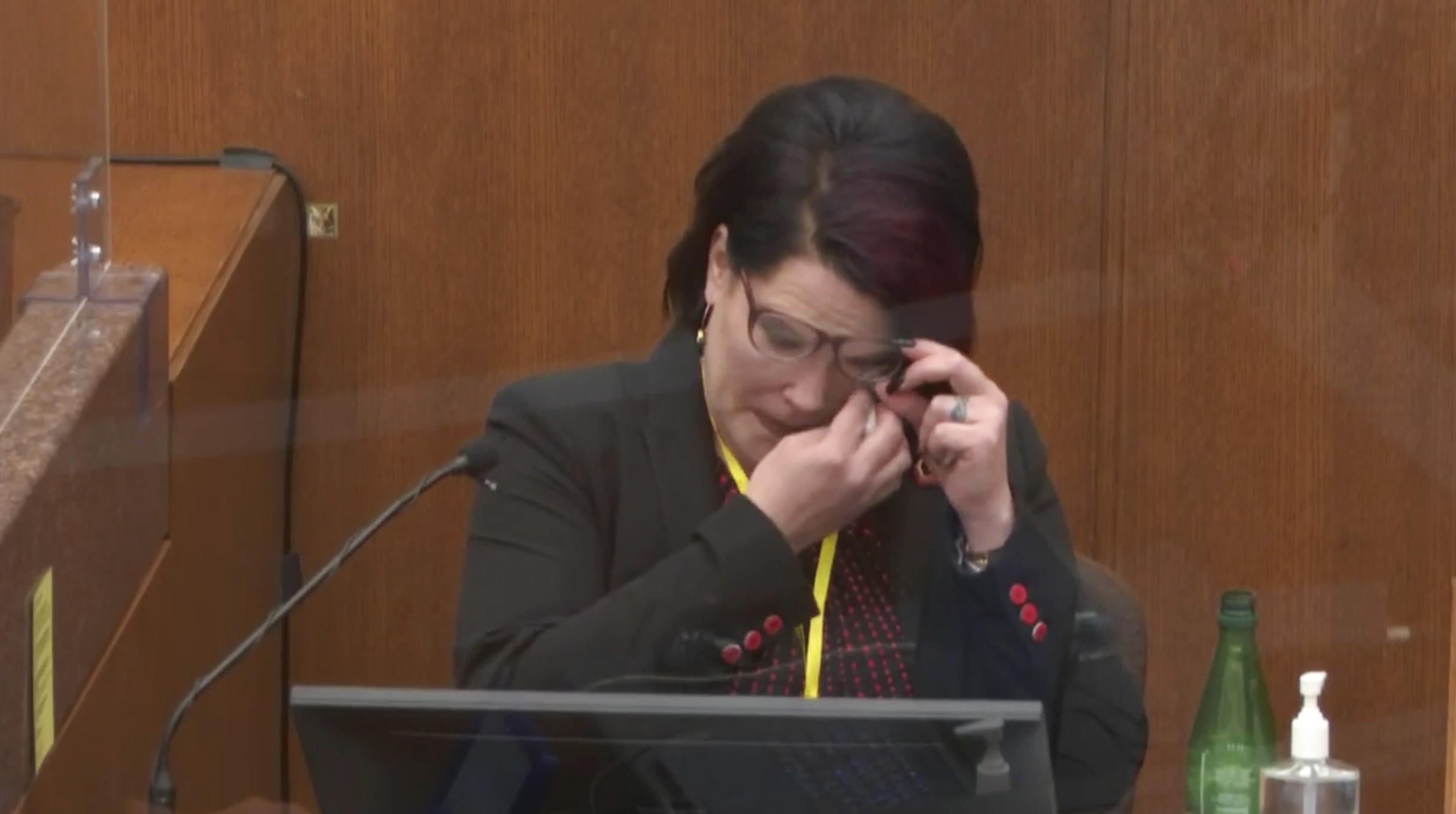
George Floyd's girlfriend has cried on the witness stand telling the story of how they first met.
The encounter was in 2017 at a Salvation Army shelter where Floyd was a security guard with "this great Southern voice, raspy", Courteney Ross said on day four of former Officer Derek Chauvin's murder trial.
The 45-year-old also recounted how both she and her boyfriend struggled with opioid addiction.
READ MORE: Bodycam shows moments after George Floyd was taken away by ambulance
"Both Floyd and I, our story, it's a classic story of how many people get addicted to opioids," she said.
"We both suffered from chronic pain. Mine was in my neck and his was in his back."
She said they "tried really hard to break that addiction many times."
Prosecutors put Ms Ross on the stand as part of an effort to humanise Mr Floyd in front of the jury and portray him as more than a crime statistic.
It was also apparently to explain his drug use to the jurors and perhaps get them to empathise with what he went through.
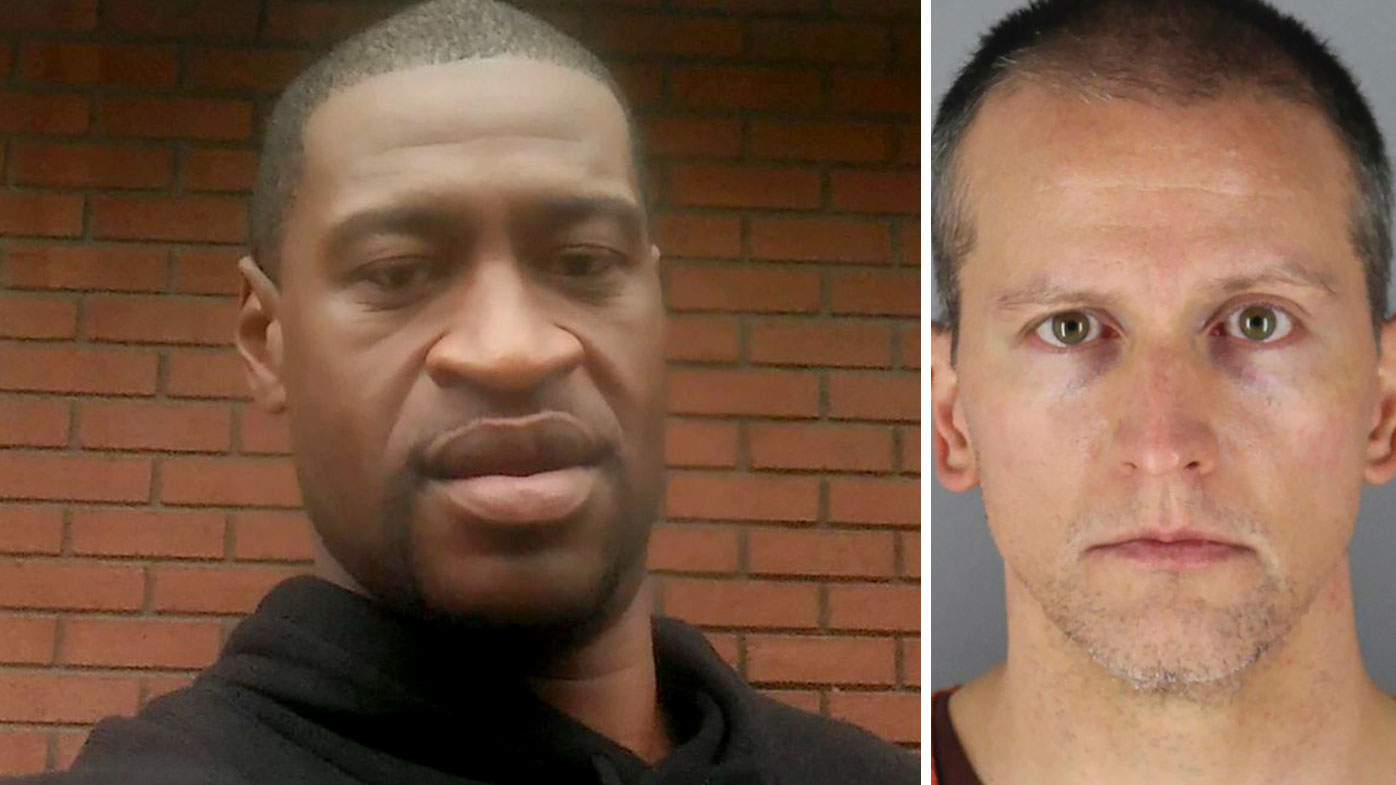
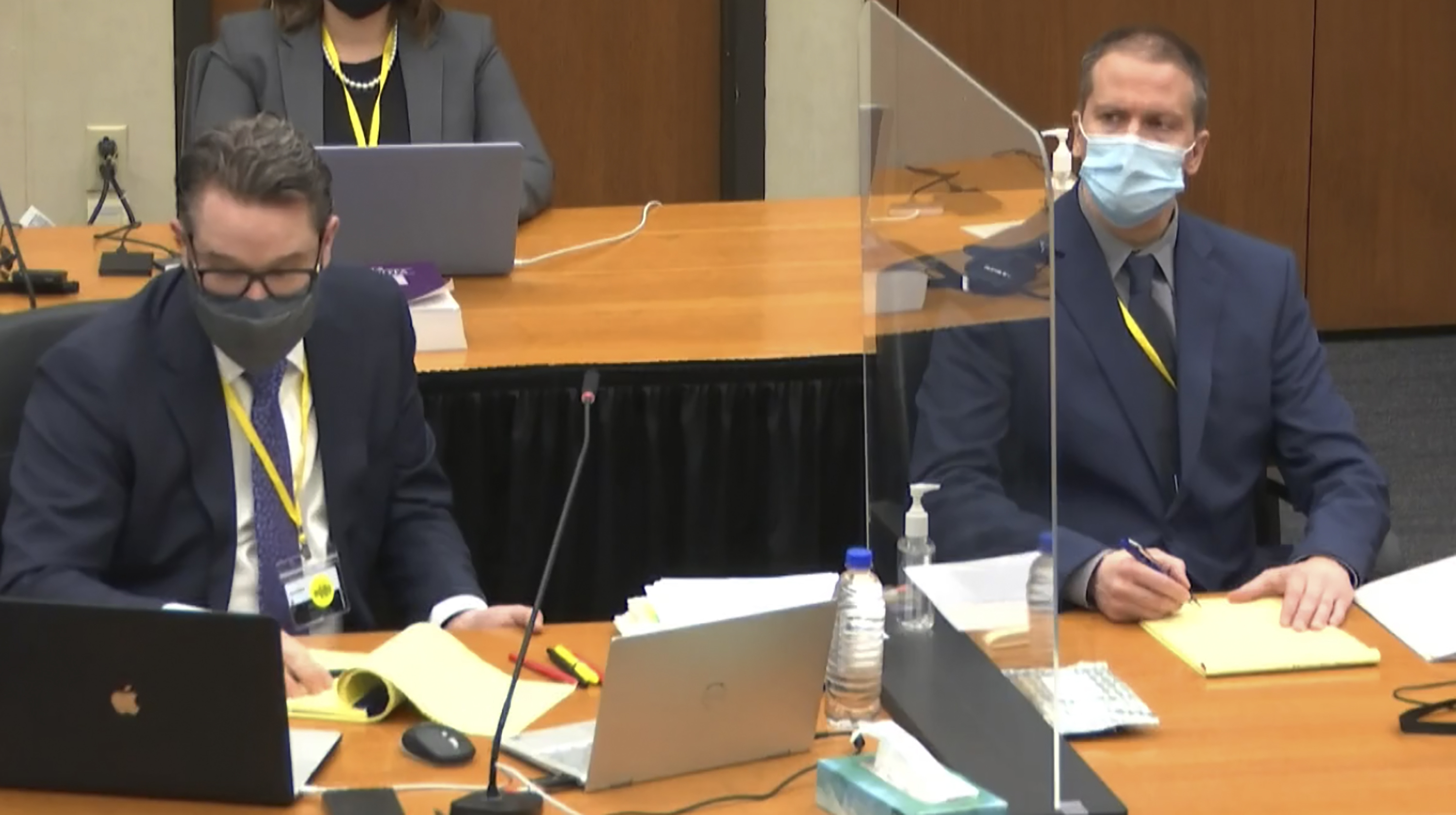
Mr Chauvin, 45, is charged with murder and manslaughter, accused of killing Floyd by kneeling on the 46-year-old Black man's neck for 9 minutes, 29 seconds, as he lay face-down in handcuffs last May.
The most serious charge against the now-fired white officer carries up to 40 years in prison.
READ MORE: 'Disbelief and guilt' as cashier takes the stand in George Floyd trial
The defence has argued Mr Chauvin did what he was trained to do and Mr Floyd's death was caused instead by his illegal drug use, underlying health conditions and the adrenaline flowing through his body.
An autopsy found fentanyl and methamphetamine in his system.
Under cross-examination by defence attorney Eric Nelson, Ms Ross said Mr Floyd's pet name for her in his phone was "Mama" — testimony that called into question the widely reported account that Mr Floyd was crying out for this mother as he lay pinned to the pavement.
In some of the video, Mr Floyd can be heard calling out, "Mama!" repeatedly and saying, "Mama, I love you! … Tell my kids I love them."
In her testimony, Ms Ross described how both she and Mr Floyd struggled with their addiction to painkillers throughout their relationship.
She said they both had prescriptions, and when those ran out, they took the prescriptions of others and also used illegal drugs.
"Addiction, in my opinion, is a lifelong struggle," she said.
"… It's not something that just kind of comes and goes. It's something I'll deal with forever.
READ MORE: Teen who shot George Mr Floyd video says he was 'begging for his life'
In March 2020, Ms Ross drove Mr Floyd to the emergency room because he was in extreme stomach pain, later learning he overdosed.
In the months that followed, she said, spent a lot of time together during the coronavirus quarantine, and Mr Floyd was clean.
She suspected he began using again about two weeks before his death because his behaviour changed.
She said there would be times when he would be up and bouncing around and other times when he would be unintelligible.
Ms Ross began her testimony by telling how the two of them met.
"May I tell the story?" she asked.
"It's one of my favorite stories to tell."
The witness said she had gone to the shelter because her sons' father was staying there.
She said she became upset because the father was not coming to the lobby to discuss their son's birthday. Mr Floyd came over to check on her.
"Mr Floyd has this great Southern voice, raspy. He was like, `Sis, you OK, sis?'" Ms Ross recalled.
"I was tired. We've been through so much, my sons and I, and (for) this kind person just to come up and say, 'Can I pray with you?' … it was so sweet.
"At the time, I had lost a lot of faith in God."
READ MORE: 'The very life was squeezed out of him': George Mr Floyd trial begins
Minnesota is a rarity in explicitly permitting such "spark of life" testimony about a crime victim ahead of a verdict.
Defence attorneys often complain such testimony allows prosecutors to play on jurors' emotions.
Mr Floyd's death, along with the harrowing bystander video of him gasping for breath as onlookers yelled at Mr Chauvin to get off him, triggered sometimes violent protests around the world and demands the US confront racism and police brutality.
Thursday's testimony came a day after prosecutors played extensive video footage documenting the chain of events that culminated in Mr Floyd's death, beginning with his alleged use of a counterfeit $20 bill at a neighbourhood market to pay for a pack of cigarettes.
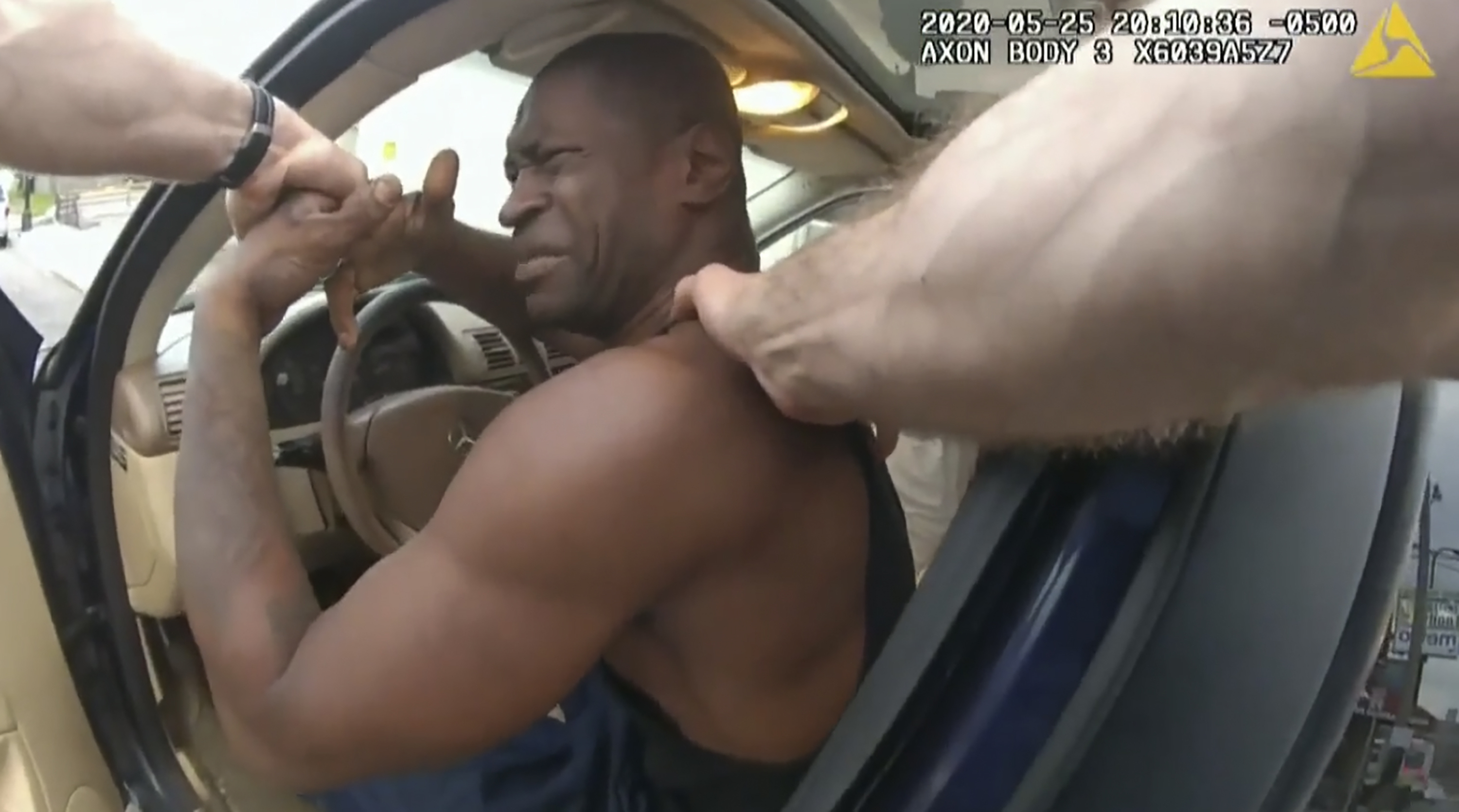
Bystander and police bodycam video showed officers pulling Mr Floyd from his SUV at gunpoint, then struggling to put him in the back of the squad car as the panicky-sounding man writhed and cried, "I'm claustrophobic!"
The footage also showed Mr Floyd being loaded into an ambulance.
When Mr Floyd was finally taken away, a bystander objected to what Mr Chauvin had done.
"That's one person's opinion," Mr Chauvin could be heard responding.
"We gotta control this guy 'cause he's a sizable guy … and it looks like he's probably on something."
Mr Floyd was 193 centimetres and 101 kilograms, according to the autopsy.
Mr Chauvin's lawyer said the officer was 175 centimetres and 64 kilograms.
Collective CARICOM voice for recovery at IMF-World Bank meetings
By Sir Ronald Sanders
(The writer is Antigua and Barbuda’s Ambassador to the United States and the Organization of American States. He is also a Senior Fellow at the Institute of Commonwealth Studies at the University of London and Massey College in the University of Toronto. The views expressed are entirely his own)
The response by policy makers of the International Financial Institutions (IFIs) to the depth of COVID-19’s effects on Caribbean economies needs to be urgently reviewed, particularly regarding debt.
An unduly optimistic assessment of the extent of damage to economies and an overly confident expectation of how long the effects will last, have resulted in inadequate instruments to help Caribbean countries get out of the hole into which they have been sunk through no fault of their own. Caribbean countries did not create the pandemic and they have been among the most successful in containing it at great cost to their Treasuries.
The staff of the International Monetary Fund (IMF) and World Bank Group (WBG) and the Directors on the Boards, representing CARICOM countries, deserve credit for advancing the region’s interests. The inadequacy of the IFIs response is not their fault; it is entirely due to Board directors of some larger countries who remain stuck to mistaken policy positions whose failures have enlarged the harmful effects of the pandemic.
One of these continuing unhelpful policy positions is the application of per capita income as a criterion to deny high income Caribbean countries access to concessionary loans, even though these countries are subject to the same vulnerabilities as lower income countries.
Something of a breakthrough might have occurred. The World Bank Board has approved the preparation of loan documents of $100 million each for the Bahamas and Barbados – two of the countries with the highest per capita incomes in CARICOM – “due to their heavy reliance on tourism”. This is an admission that the Board of the Bank has accepted vulnerability as a criterion, that is superior to high income, as a qualification for concessionary loans. It is to be assumed, therefore, that, if these loans are approved by the Board in the coming weeks, this criterion can now be applied to other high-income CARICOM countries such as Antigua and Barbuda and St Kitts-Nevis. CARICOM Finance Ministers at the Spring Meetings of the Bank and Fund should raise this issue collectively.
Doing so, is especially relevant since countries that might have been “high income”, according to IMF/WBG measurements, in 2019, are certainly not so today. High unemployment, resulting from the pandemic, has shaved as much as 30 % from per capita income in some countries and is likely to reduce it even more as unemployment increases and poverty expands.
Amid all this, the IFIs response to high and crippling debt in many CARICOM countries that has spiralled because of the COVID-19 pandemic, has increased their debt service burdens. While the Bank and Fund have explicitly stated that debt levels were, for some, more than 100 % of GDP prior to the pandemic, the debt instruments that they have provided are burdensome.
As an example, the IMF’s Debt Service Suspension Initiative is only temporary. It is also applicable only to the poorest countries. Therefore only 5 CARICOM countries qualified. The initiative is supposedly to help them cope with the economic and fiscal constraints caused by the COVID-19 crisis. But it gives only a one-year grace with repayment having to be made over 5 years. Clearly, there will be an increase in the debt service burdens of these countries.
The duration of the pandemic’s effects on CARICOM economies and its severe impact, will be longer than anticipated. Countries, such as Guyana and Suriname, with their oil and gas resources will be better placed, but Post-COVID, many CARICOM countries will have much reduced economies, high debt, diminished revenues, and little capacity to recover. The UN has already said that the Caribbean will face ‘a lost decade’ with economies and per capita income declining to 2010 levels.
They will need access to low-cost financing and grants from both IFI’s and donor governments. Immediately, they need debt relief in the forms of write-offs and deferral of repayments on easier terms.
If these initiatives are not taken, Caribbean economies will be caught in a poverty trap from which they will not emerge for a generation and, even then, only if they experience no disasters such as hurricanes, prolonged droughts, or flooding – all of which have a high probability of occurring.
The governments of CARICOM countries are struggling to keep their economies afloat with policy initiatives either to revive dormant activities, such as agricultural and fisheries production, or to encourage new technology-based endeavours. These will help with economic diversification over time, but they will not be immediate large contributors to economic growth or replacements for industries such as tourism.
The Spring meetings of the Bank and Fund are an opportunity for robust presentations of the plight of CARICOM countries, always recalling they did not originate or spread COVID-19. They are in their current situation because of their vulnerability to their trading partners which, without exception, enjoy relatively large trade surpluses with the region. Some of these same trading partners are among the most vociferous in the continued application of mistaken criteria that disqualify many CARICOM countries from concessionary financing and debt relief.
At this month’s meetings of the IMF/WBG, Caribbean representatives have an opportunity to advance proposals for support. One of the points that should be made is that, since the huge balance of trade surplus that rich countries enjoy with CARICOM states runs into billions of dollars perennially, giving them revenues and employment, they should regard debt forgiveness and rescheduling, as well as concessional financing, as investments in CARICOM countries from which they derive considerable benefits annually.
If the economies of CARICOM countries are not helped to recover, there will be a corresponding contraction in their ability to continue to buy goods and services from the rich.
Efforts must be made to create a framework that integrates debt sustainability, growth-investment, and building resilience for CARICOM countries. Such a framework must also take full account of the region’s vulnerability to destructive forces they do not create, such as Climate Change.
CARICOM countries should speak with a collective voice in proposing such a framework to the IMF/WBG meetings, omitting no country.
Responses and previous commentaries: www.sirronaldsanders.com
The post Collective CARICOM voice for recovery at IMF-World Bank meetings appeared first on The St Kitts Nevis Observer.
Toddler tragedy: Little girl hung by curtain cord, Coroner calls for regulation, safety improvements
A Coroner has released details of the death of a toddler hung and fatally strangled by a curtain cord – saying while the case is horrifying and traumatic for her family, sharing what happened could prevent future deaths. And she…
Health Minister Andrew Little praises new Māori-led service for at-risk mothers in Whanganui
Minister of Health Andrew Little was in Whanganui on Thursday, meeting with Māori and iwi health practitioners tasked with delivering a new programme for at-risk mothers and their whānau.He Puna Ora, roughly translated…