Deep job losses and benefits lags have meant an increase in homeless Americans, and shelters have struggled to keep up
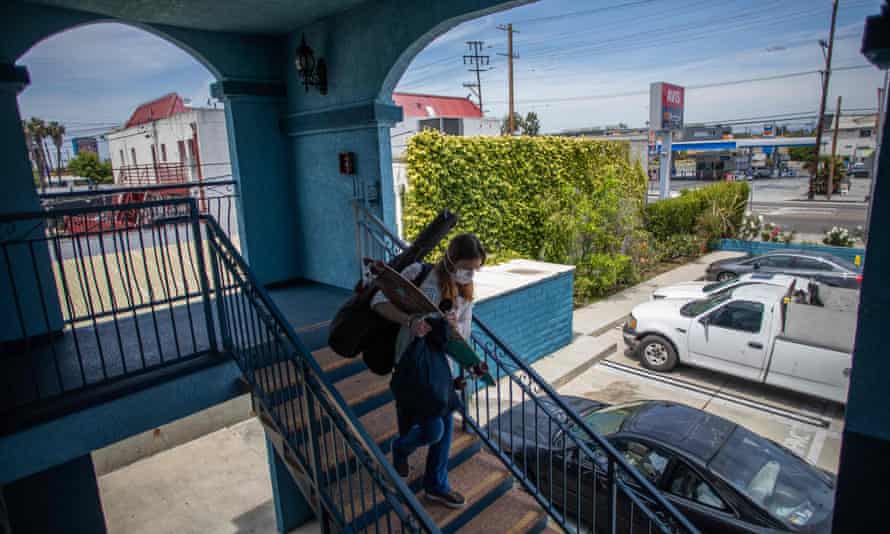
A motel provided to homeless people in Venice, California. A report in January warned homelessness could increase by twice as much as during the 2008 recession. Photograph: Apu Gomes/AFP via Getty Images
Michael Sainato
Rick Temple and his 15-year-old son were living in a room in his work office in Bakersfield, California, before the coronavirus hit in March last year, where Temple, 51, worked as an independent contractor as a dispatcher for freight cargo. But he quickly lost his job and the room, and has relied on unemployment benefits ever since.
When he first applied for unemployment, it took a couple of months before his benefits started, and from November to January he experienced a lag in benefits as well due to a fraud hold which meant he needed to submit new paperwork before his benefits resumed.
While relying on unemployment, Temple and his son have struggled with homelessness, living out of their car and renting motel rooms when they can afford to do so. His son has attended school virtually since the pandemic began.
“Being poor and homeless is very expensive. My credit score is trash now. Being unemployed, I can’t pay for much of anything, let alone three months’ worth of rent to get an apartment,” said Temple. “I have to live in the car and scrounge by, doing whatever I can to eat. I’ll get a $3 Whopper off a coupon app, have the one meal and go as long as I can.”
Homelessness has been a significant problem in America during the pandemic. Homeless people are at significant risk for coronavirus, and these populations have almost certainly grown amid mass job losses. After the 2008 economic recession, US cities experienced significant increases in homeless populations, estimated at 3% between 2008 and 2009.
According to a report this month provided to Congress by the US housing department, 580,466 Americans experienced homelessness on any given night in 2020, a 2.2% increase from 2019. Rates of unsheltered individuals increased by 7% and chronic homelessness increased by 15%, based on surveys conducted before the pandemic in January 2020.
A report in January by non-profit research organization Economic Roundtable warned homeless population increases would be twice as high as the increases experienced after the 2008 recession.
“Most jurisdictions feel that unsheltered homelessness has gone up,” said Nan Roman, president of the National Alliance to End Homelessness. “It could be that they’re just more visible, but the sense is that it’s growing.”
When the pandemic began, Temple struggled to find a parking lot where he could sleep in his car, often switching between parks and parking lots at Home Depot and Walmart, before getting kicked out by police or security. A church found him and his son and gave them permission to sleep in the church parking lot. They have avoided the local homeless shelter because of coronavirus concerns; it is held in a warehouse, and Temple has spent years without health insurance or being able to afford to see a doctor.
“One of the things that I don’t like is, especially during the pandemic, the choices they gave us,” Temple added. “I’m not sure where we go from here.”
When the pandemic began, Temple struggled to find a parking lot where he could sleep in his car
Based on community surveys from the National Alliance to End Homelessness, homeless systems are continuing to experience staffing shortages, shortages of hotel or motel spaces, and shortages of permanent housing to meet the needs of homeless people. Community leaders expressed concerns about anticipated increases in unsheltered homelessness of Americans without new funding for homeless resources.
Coronavirus outbreaks overwhelmed homeless shelters in places like Los Angeles, and other cities have continued sweeps of homeless encampments despite CDC guidance not to do so unless housing units are available for the homeless.
In Dallas, a woman who requested to remain anonymous has lived in her car since November after escaping domestic violence at home. A significant portion of US homeless people identify as domestic violence survivors.
She says she spends the majority of her time trying to find day passes for local gyms to be able to shower, or going to a local library to charge her phone and use the internet. If she can’t find free food, she relies solely on fast-food dollar menus, and buys a $1 large soda from McDonald’s every day to have a cup to use to pee in.
“It’s like solitary confinement with windows,” she said. “Most people have a support system. I have no one. Everyone thinks everyone has someone, but some people have no one.”
Although a federal eviction moratorium has been in place since 4 September, holes in the moratorium and a nearly six-month delay in enacting one have meant that thousands of evictions have been carried out during the pandemic, and homeless shelters have struggled to keep up with increases in demand while trying to mitigate Covid outbreaks. The ban is currently set to expire on 31 March.
According to Princeton’s Eviction Lab, over 260,000 evictions have been filed during the pandemic in the five states (Connecticut, Delaware, Missouri, Indiana and Minnesota) and 27 cities tracked by the lab.
Austin Valentine, 19, was attending East Tennessee State University as a freshman undergraduate student this year, but recently became homeless because he was unable to pay his tuition and room and board fees after student loans, because he lost his food-service job. He’s now living in a motel in Pigeon Forge, Tennessee.
“I got kicked out on 12 February,” said Valentine. “Now I’m living in a $200-a-week motel room that’s covered with bedbugs and cockroaches, and no electricity, little heat, and just cold water.”
He’s currently looking for a second job, as the recent restaurant job he started doesn’t provide enough hours. His search has been difficult because the hospitality and tourism industry in eastern Tennessee has been hit hard. He started a GoFundMe campaign to try to raise funds to move into an apartment.
“No one’s really hiring at the moment,” added Valentine. “I’ve been working, [and] trying to save up as much money as I can so I can get out of this situation.”
East Tennessee State University declined to comment on Valentine’s situation, citing the Family Educational Rights and Privacy Act. But it said it provides payment plans and counseling to connect students facing financial hardship with local resources and support.
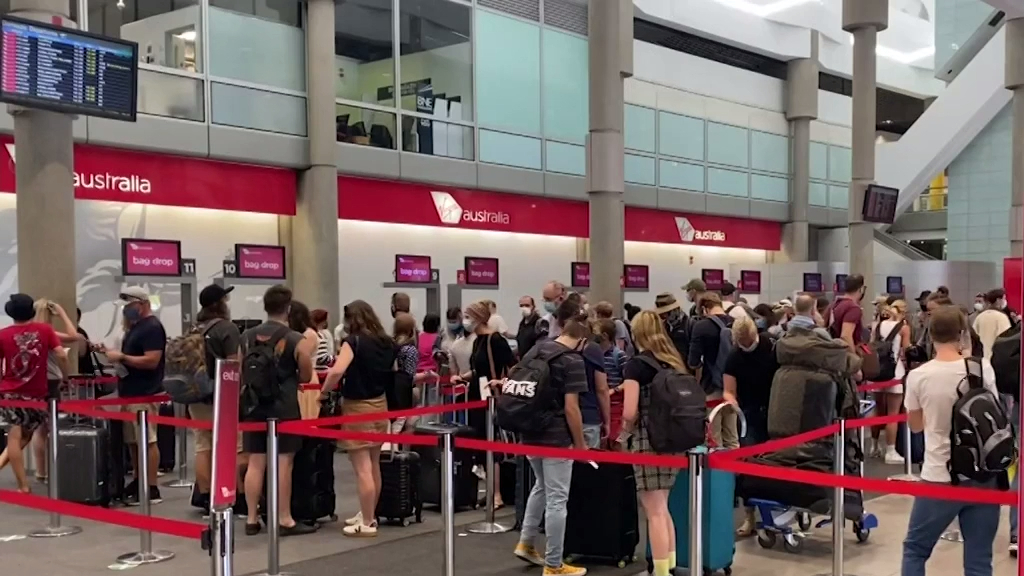
Western Australia has blocked all Queenslanders from entering the state, one of the multiple travel bans enacted around Australia to clamp down on the new COVID-19 cluster.
States and territories across Australia are increasing border restrictions for Queensland after Premier Annastacia Palaszczuk declared Greater Brisbane a hotspot and encouraged her counterparts to do the same.
In Victoria, the entire Greater Brisbane area has been designated a "red zone" under the state's travel permit system.
This means from 6pm AEDT today, returning Victorian residents will need to apply for a red-zone permit – and if approved – will need to return straight home and self-quarantine for 14 days.
The Greater Brisbane area includes the City of Brisbane, City of Ipswich, Logan City, Moreton Bay Region and Redlands City.
South Australia will impose hard border with Greater Brisbane from 4pm (AECT) today.
Anyone who arrives prior to this time will need to get tested on arrival and isolate until negative result is returned.
They will also be required to be tested on day 5 and day 12 as an additional precaution.
Any travellers who have arrived from Greater Brisbane since March 20 are now banned from entering venues where more than 1000 people are gathered including AFL games.
The Tasmanian Government has declared five local government areas in Queensland as high risk, effective immediately.
Anyone travelling to the state from Brisbane, Logan, Moreton Bay, Ipswich and Redlands will not be permitted to enter without quarantining for two weeks.
Premier Gladys Berejiklian says the state will not shut its borders to Queensland over Easter but has urged people to "reconsider" their travel plans.
"We are in a cautious position," she said, asking anyone with plans to visit Greater Brisbane or broader Queensland to cancel their holiday and stay in NSW over the long weekend.
Ms Berejiklian also told people to take "extra caution" over the coming days and weeks as the state monitors the "evolving situation" in Brisbane.
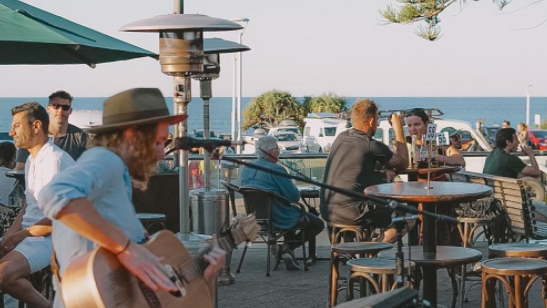
Coronavirus alerts have been issued for two popular Byron Bay venues after two of the Queenslanders infected with the highly-contagious UK strain visited there.
NSW Health authorities have contacted more than 1400 people who visited either the Beach Hotel on March 26 or The Farm on March 28.
Dr Kerry Chant, the state's Chief Health Officer said the window of exposure at both venues would likely be narrowed over the next 48 hours.
However, she said anyone contacted must follow health advice and isolate for two weekend regardless of a negative test result.
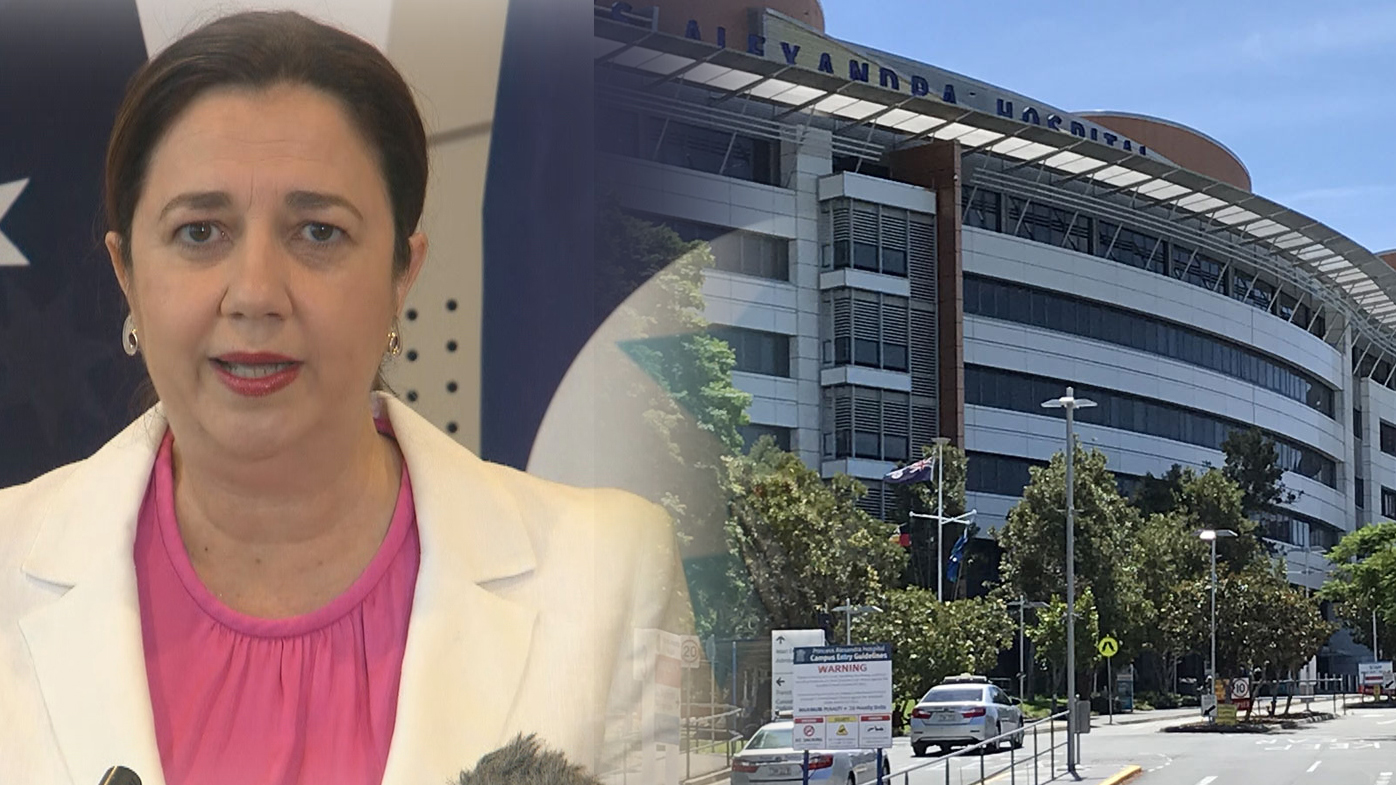
An infected Brisbane nurse from The Royal Alexandra Hospital and her sister- who also has the virus – visited the NSW resort town from March 26 to 28.
NSW Health has issued an alert asking anyone who went to the venues they visited to self-isolate and go for a test immediately.
ACT
The ACT government has issued a travel alert for Greater Brisbane.
Anyone who has visited the City of Brisbane and Moreton Bay Council regions from 11 March 2021 now needs to get tested and isolate until they receive a negative result.
NORTHERN TERRITORY
The Northern Territory has declared several regions in Greater Brisbane COVID-19 hotspots, demanding that all travellers from those areas go into mandatory supervised quarantine.
Ipswich, Logan, Redlands, Moreton, Brisbane and a newly added Toowoomba council areas will be declared hotspots in the Territory from 4.30pm today.
While there are no official reports of COVID exposure sites in the Toowoomba region, the area has been marked following the NT's Chief Minister developing symptoms after being around people from the area.
Making the announcement this afternoon, Deputy Chief Minister Nicole Manison said Mr Gunner had developed symptoms after he met with family who had travelled from Toowoomba.
The Queensland Government has yet to declare Toowoomba a COVID-19 hotspot and at 5:30pm Monday afternoon Queensland Health were "not aware of any community transmission (at) … Toowoomba."
"I'm going to be very upfront that he's had family abroad from Toowoomba over the weekend," Ms Manison said this afternoon.
"The Chief Minister has had some cold symptoms so he's doing the right thing and making sure that he self isolates and gets tested," she added.
"Clearly his family members that have come over from Toowoomba, following the declarations we've made today, they will need to isolate and get tested too."
The Nine Network is at the centre of the largest cyber attack on a media company in Australia's history, which has brought network's news production systems around the country to a grinding halt for more than 24 hours.
Fergus Hanson, of the Australian Strategic Policy Institute, told Today that the fact ransomware was used but no ransom demanded pointed to a government behind the incident.
"If you did get asked to pay a ransom, it might be a ransomware attack, in which case you would be looking at a cyber criminal … If you didn't get asked to pay a ransom, you may be looking at other actors, including state actors," Mr Hanson said.
"If you do actually get a call to hand over $1 million to free up your systems, then you would be looking more at a cyber criminal activity but you have to get a bit more detail to be clearer about which type of attack you've got."
He also said reports parts of Federal Parliament was under cyber attack also suggested a state-based source.
Mr Hanson said Nine's reporting of authoritarian governments around the world could have triggered the cyber attack.
The network is airing an investigation tonight about Russian President Vladimir Putin and the use of poison against overseas dissidents.
"That would be absolutely something you would be looking into. I think that type of reporting that rubs authoritarian leaders the wrong way can certainly motivate this type of attack."
Treasurer Josh Frydenberg refused to be drawn on who could be behind such an attack, but said the threat is 'very real'.
Television and digital production systems have been offline since the early hours of yesterday morning. This site, 9news.com.au, has also been affected.
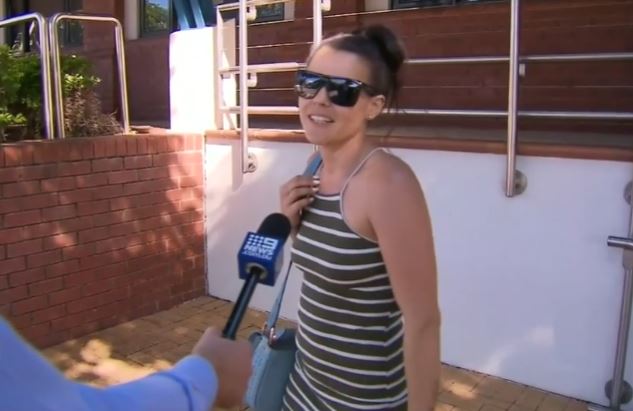
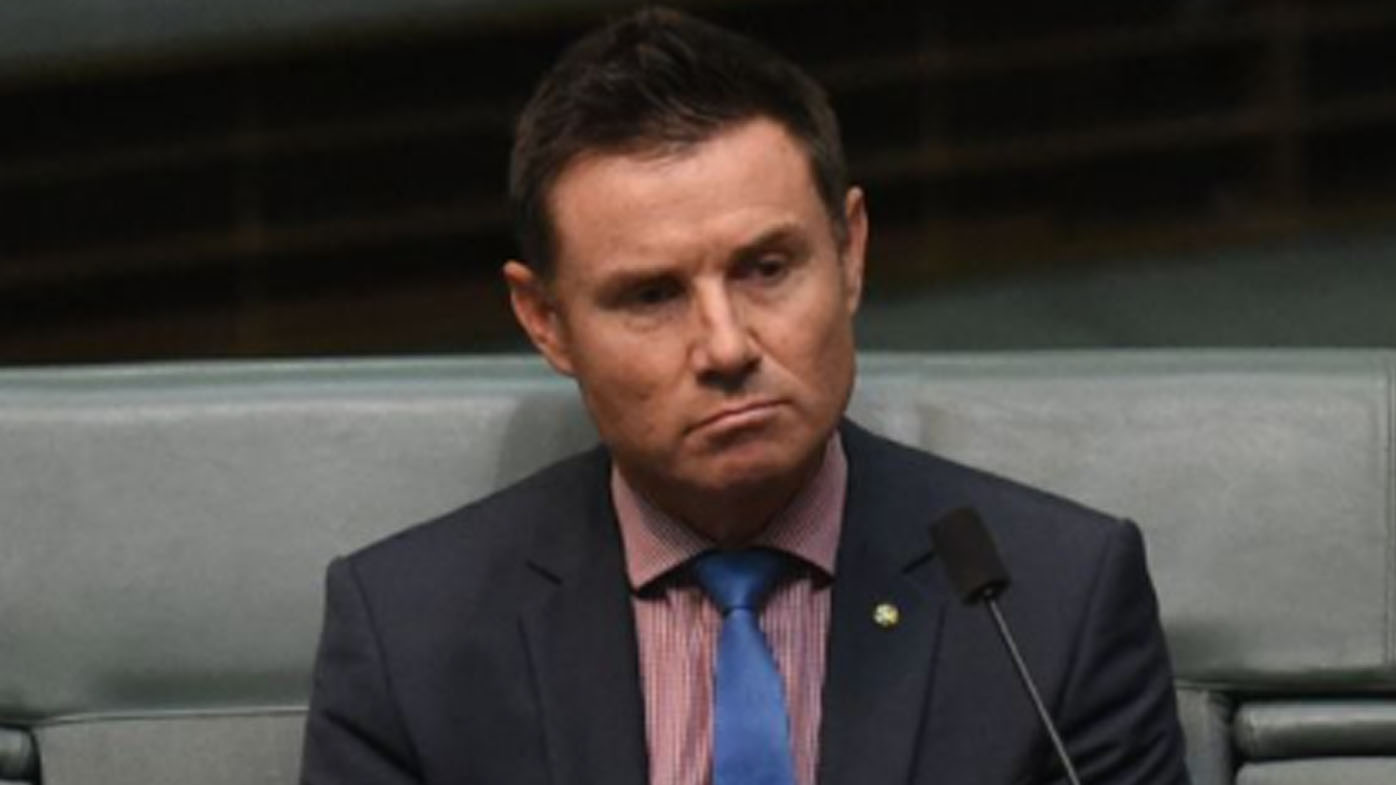
Arriving at Cleveland Police station today, Crystal White began the complaints process with officers into the alleged incident that was among a string of claims that led to Mr Laming confirming he would retire from politics at the next election.
Ms White alleges Mr Lamming took a photo of her bottom as she stacked a bar fridge at a Queensland landscaping supplies company.
ARAUQUITA, Colombia (AP) — Clashes that began over the weekend between Venezuela’s military and a Colombian armed group in a community along the nations’ shared border have continued, prompting more Venezuelans to seek refuge in a nearby Colombian community, international monitoring groups said Thursday.
Colombian officials said more than 3,900 people have now moved from Venezuela to northeast Colombia, about 800 more than Wednesday. The children and adults are in eight shelters set up to host them.
“It was reported that families continue to flee across the border in search of safety as the violence in the area has not completely stopped,” said Dominika Arseniuk, the Norwegian Refugee Council’s Country Director in Colombia. “People we have spoken with are terrified and fear for their lives.”
Venezuelan Defense Minister Gen. Vladimir Padrino López confirmed on Monday in a statement that the clashes began Sunday. He said they resulted in the arrests of 32 people, the destruction of six camps and the seizure of weapons, but he did not name the Colombian armed group involved.
Human Rights Watch told The Associated Press the armed group involved is the 10th Front, which is made up of dissidents of the Revolutionary Armed Forces of Colombia, known by its Spanish acronym FARC. The fighting is taking place in in the border state of Apure, Venezuela.
“We have received credible complaints of abuses by the Venezuelan security forces against the population in Apure, including violent raids without a warrant, possible arbitrary detentions and theft of property from the population,” said José Miguel Vivanco, the organization’s director for the Americas.
A peace deal between the Colombian government and the FARC in 2016 ended five decades of war. But the group has suffered deep divisions, with some of its members joining mainstream leftist movements and others giving up on the peace process and returning to arms.
In the Colombian municipality of Arauquita, where the displaced people have taken refuge, a humanitarian crisis has developed, according to local and national officials. One shelter is hosting about 400 people, but despite the addition of 13 tents, some families have had to sleep on small mattresses set up on the ground and on the stands of a space normally used for sporting events.
Marta Orozco, a Venezuelan, said she fled her home in Apure because houses were being looted.
“The one that is entering (the homes) is the government. It is looting and beating people … the government of Venezuela,” Orozco, 38, said.
The Colombian government has repeatedly accused Venezuela of harboring members of the National Liberation Army as well as FARC dissidents. Colombia’s Ministry of Foreign Affairs expressed its concern for the civilian population and called on the international community “to join in assisting in the face of this humanitarian crisis.”
Colombia and Venezuela share about 1,370 miles (2,200 kilometers) of border but have not had diplomatic relations since February 2019 following the decision of President Nicolás Maduro to expel Colombian diplomats. Colombia President Iván Duque does not recognize Maduro as Venezuela’s legitimate president and instead supports opposition leader Juan Guaidó.
The Colombian government on Wednesday reinforced the military presence on the border with Venezuela in the Arauca area with about 2,000 soldiers, according to the Defense Ministry.
Suárez reported from Bucaramanga. Associated Press writer Jorge Rueda in Caracas, Venezuela
The Hill -Recall the desperate early days of the COVID-19 pandemic in early Spring 2020. Researchers worried that the Spanish flu of 1918 that cost millions of American lives could be a possible model.
The Imperial College of London released a projection of over 2 million deaths in the U.S. alone if the government failed to take action. The government’s top advisor, Anthony Fauci, recommended a strategy of non-pharmaceutical interventions (NPI) to “bend the curve.” However, the highly infectious nature of the disease meant that they could offer only a temporary respite.
Adding to the gloom was the scientific community’s pessimism concerning the prospects for an early vaccine. Past history suggested that vaccines required years to get through regulatory approval — and then an additional year or more to scale-up for the millions of doses needed. Four months into the pandemic in the Spring of 2020, the most optimistic observers projected that we were well more than a year away from a viable vaccination program.
Contrary to earlier expectations, two vaccines (Pfizer and Moderna) were approved in December 2020, and the first doses were administered less than a week later. These advances occurred under the auspices of Operation Warp Speed, a joint government, business, and military venture. Its unique feature was to guarantee purchases of experimental vaccines as they proceeded through regulatory approval in order to scale-up quickly the successful ones.
To date, more than 89 million Americans have received at least one vaccination dose — 27 percent of the population. For the high-risk 65 and over age group, more than 38 million (71 percent) have received at least one dose. Although some small risk of COVID infection remains, the vaccines appear to have rendered symptoms milder, and deaths exceedingly rare. The CDC and FDA conclude that a review of available clinical information — including death certificates, autopsy, and medical records — revealed no evidence that vaccination contributed to patient deaths.
The primary reason to fear COVID-19 has been its lethality. It has killed over a half million — largely the elderly — in the United States. With the vaccines being widely administered, we can now introduce a more benign statistic; namely, “deaths averted” by vaccination. Here is a possible approach:
In my back-of-the-envelope calculation, I consider only the 65 and over. The lethality rates for those under 65 are low and would not add much to the outcome. Of those over 65, 38 million have received at least one dose. My data are primarily from CDC sources: here, here, here, and here.
In the absence of Warp Speed there would be, as of today’s date, no vaccinations. We therefore proceed to follow these vaccinated elders in their hypothetical world of no vaccine. As time passes, some will contract COVID-19, and some of them will die. How many? Erring on the very conservative side, we assume that they would be subject to the current mortality risk (COVID deaths divided by population) of the 65 and older group, which stands at approximately 8 tenths of 1 percent (.008 percent). Applying this rate to the 38 million who would not have been vaccinated in the absence of Warp Speed, we get 295,000 deaths averted as a result of vaccination.
That figure is likely an underestimate because we use the latest mortality rate (which has dropped considerably). On the other hand, one third currently lack the second dose, but we have few if any cases of deaths attributable to COVID-19 after the first dose.
As time passes, scientists can produce complex models of “averted deaths” due to vaccination, but for now this simple back-of-the-envelope calculation provides a rough order of magnitude.
Operation Warp Speed is a rare example of a successful government-business-military endeavor. It is reminiscent, in my view, of the Manhattan Project that produced the first atomic bomb. Both worked because of the extreme importance of the undertaking, as all participants realized we could solve this problem only one shot at a time.
‘Lack of perspective’: why Ursula von der Leyen’s EU vaccine strategy is failing
European commission president accused of focusing too much on UK and domestic German image
Von der Leyen speaking in Brussels. ‘Fundamentally she seems to be struggling with her basic narrative,’ said one commentator. Photograph: Anadolu Agency/Getty Images
When Jean-Claude Juncker, her predecessor in the commission’s Berlaymont headquarters, took aim at the EU’s error-strewn vaccine strategy last week, it prompted a tweet of appreciation from Dominic Cummings, former chief adviser to Boris Johnson and key architect of Brexit.
“Juncker no dummy, he right,” the ex-Vote Leave strategist wrote. “& if Commission, now melting down, don’t listen, UK shd NOT tit-for-tat but shd make generous offer over heads of EU leaders to EUR peoples – will bring years of goodwill, good policy & politics, & Cmsn will cave shortly after.”
Von der Leyen is unlikely to lose sleep over the barb. As for Juncker’s intervention, sources close to the ex-president say his target was not Von der Leyen but instead the EU’s member states.
Between calling on his successor to drop the “stupid vaccine war” with Britain and criticising an overly cautious and budget-conscious approach to vaccine procurement, he dismissed calls for her resignation. “These are not failures of the commission. These are failures of the member states in total and so I don’t think that the getting rid of Mrs Von der Leyen would be helpful,” he told the BBC’s HARDtalk programme.
But critics within the commission describe Juncker’s broadside as “unprecedented”. It has been seen by many in Brussels as a reflection of the growing exasperation, both within the institution and the governments, of some of the member states at Von der Leyen’s performance.
The European commission was always likely to have a difficult pandemic, without the fiscal firepower and autonomy of action of a nation state. “We’re tired of being the scapegoat,” Von der Leyen said in a recent interview. But since January, she has been engaged in a bitter row with the Anglo-Swedish pharmaceutical company AstraZeneca, and in turn the British government, over a shortfall in EU vaccine supplies, culminating last week in a broadening of the bloc’s powers to block exports.
EU leaders back ‘global value chains’ instead of vaccine export bans
Her aides point to the necessity of challenging a company that has fallen dramatically short on its promise of 120m doses of vaccine this quarter – just 30m are expected – and the need to confront Britain over its refusal to export any of those being made in the firm’s plants in Oxford and Staffordshire.
Others, however, question the tone of the commission’s communications and the subsequent focus on the UK’s lack of exports, a country with a population a seventh the size of the EU and with a small and stuttering vaccine production line. AstraZeneca has only delivered a third of expected deliveries to the UK in the first quarter of the year.
Diplomats complain Von der Leyen may be overly concerned about sating her critics in the CDU, the centre-right political party of which she and the German chancellor, Angela Merkel, are members, ahead of September’s federal election, where the slow progress of vaccination is being seen as a vote-decider. Britain’s success has heavily featured in the German media as a point of comparison.
Officials who have worked alongside Von der Leyen, who has chosen to live in an apartment on the 13th floor of the commission HQ in Brussels, add that she is overly insular, trusting and confiding in a small group, namely her head of cabinet Björn Seibert and communications adviser, Jens Flosdorff, both Germans. “Sleeping in the office doesn’t make for good decisions – rather a lack of perspective and political feel,” said one.
Last week’s events were a fresh cause of irritation for some. On Wednesday, the commission published a revised regulation to allow the EU to block vaccine export requests to countries with better vaccination coverage or where, through contracts or law, exports or raw materials are being blocked from being sent to the bloc’s 27 member states.
The revised regulation had not been shared with a number of capitals, coming as a fait accompli just 24 hours before a summit of leaders. The prime ministers of Belgium and the Netherlands, Alexander De Croo and Mark Rutte, insisted on additional commitments to open supply chains in the Thursday night summit communiqué.
That development follows the debacle of the aborted attempt to draw an export border on the island of Ireland at the time of the announcement of the original export authorisation regulation. “It has been noticed that the commission has a habit of landing things on the member states and a number of us have raised our concerns,” said a senior diplomat.
Jacob Funk Kirkegaard, a senior fellow at the German Marshall Fund thinktank in Brussels, believes Von der Leyen’s gravest mistake is missing an opportunity to tell a “fantastic story” about EU openness.
“I think fundamentally she seems to be struggling with her basic narrative,” he said. “She tries to either be this sort of vaccine nationalist that is going to block exports of Pfizer even though they are in full compliance – a sort of sawn-off-shotgun approach, where you can fire it but you never know what you will hit; and on the other hand, the really good story of the EU basically at cost to itself in the short run helping supply the world.” About 77m doses of vaccine have been exported from plants located in EU member states to 33 countries.
Kirkegaard said the enormous scale-up by Pfizer and other suppliers, with a further 360m doses by June set to join the 100m delivered this quarter, had only been possible due to the policy of keeping the EU open. The bloc will also be best placed to respond to new Covid-19 variants. “A leader that was a leader would have told that story,” he said. “She is the German commissioner, it is the biggest country, she has a special role in ‘keeping Germany happy’, so there is a lot of pressure coming from there. You look at the polls and there [are] a lot people in the CDU who are going to lose their jobs. They are looking for a scapegoat and she is in the firing line.”
But, Kirkegaard said, the battle over exports had been “nonsense”. Von der Leyen, he suggests, may have been guilty of letting Boris Johnson get under her skin.
“The UK is a tiny, tiny vaccine producer and will always be that. One of the biggest communication mistakes they made was that AstraZeneca supplies were down in the EU because they were up in the UK, which is absurd,” he said.
“They think of the UK [as] much more of an equal than it is. In vaccine production it is a mouse and the EU will very soon by far be the largest producer in the world … I think they should stop reading the Daily Mail.”
Mexico’s government acknowledged Saturday that the country’s true death toll from the coronavirus pandemic now stands above 321,000, almost 60% more than the official test-confirmed number of 201,429.
Mexico does little testing, and because hospitals were overwhelmed, many Mexicans died at home without getting a test. The only way to get a clear picture is to review “excess deaths” and review death certificates.
On Saturday, the government quietly published such a report, which found there were 294,287 deaths linked to COVID-19 from the start of the pandemic through Feb. 14. Since Feb. 15 there have been an additional 26,772 test-confirmed deaths.
The higher toll would rival that of Brazil, which currently has the world’s second-highest number of deaths after the United States. But Mexico’s population of 126 million is far smaller than either of those countries.
The new report also confirms just how deadly Mexico’s second wave in January was. As of the end of December, excess death estimates suggested a total of about 220,000 deaths related to COVID-19 in Mexico. That number jumped by around 75,000 in just a month and a half.
Also suggestive were the overall number of “excess deaths” since the pandemic began, around 417,000. Excess deaths are determined by comparing the deaths in a given year to those that would be expected based on data from previous years.
A review of death certificates found about 70.5% of the excess deaths were COVID-19 related, often because it was listed on the certificates as a suspected or contributing cause of death. But some experts say COVID-19 may have contributed to many of the other excess deaths because many people couldn’t get treatment for other diseases because hospitals were overwhelmed.
Former President Felipe Calderón wrote in his Twitter account Saturday that “more than 400,000 Mexicans have died, above the average for previous years … probably the highest figure in the worl
By Tess Brunton of RNZ Military leaders say trade routes in the South China Sea face increased risk and New Zealand cannot be complacent about it.The two-day Asia Pacific Security Innovation Summit has attracted influential…
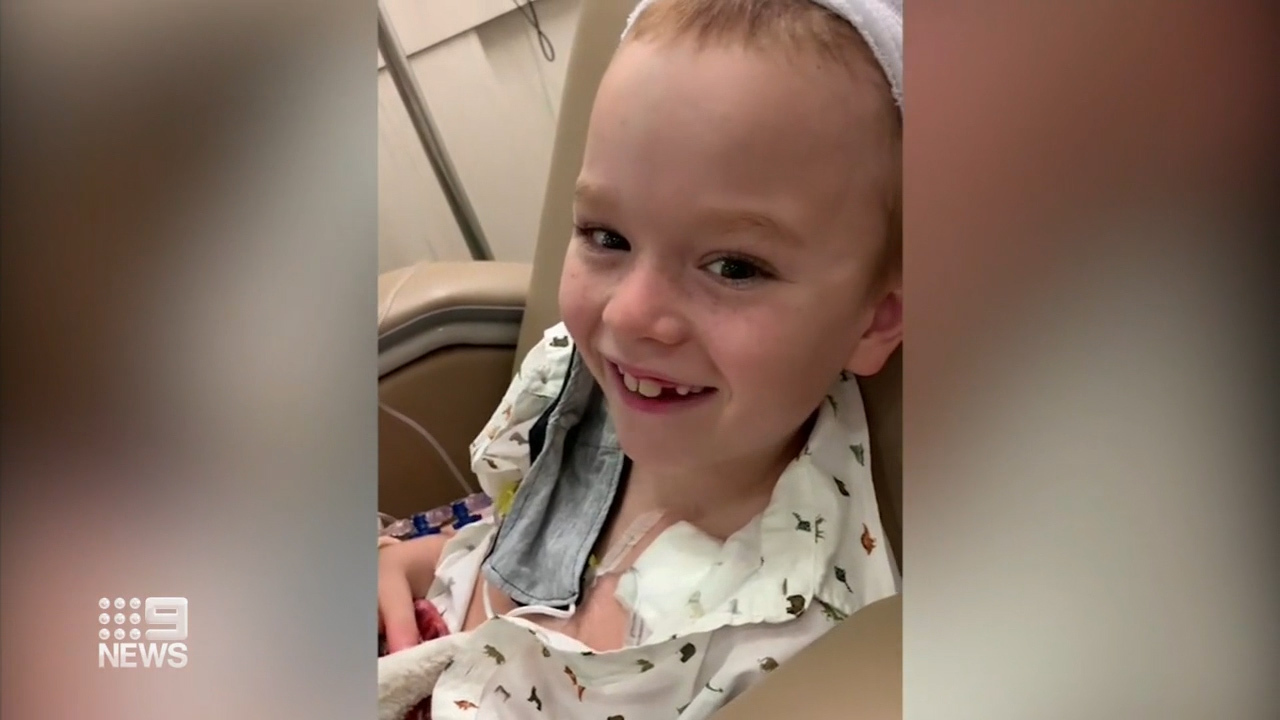
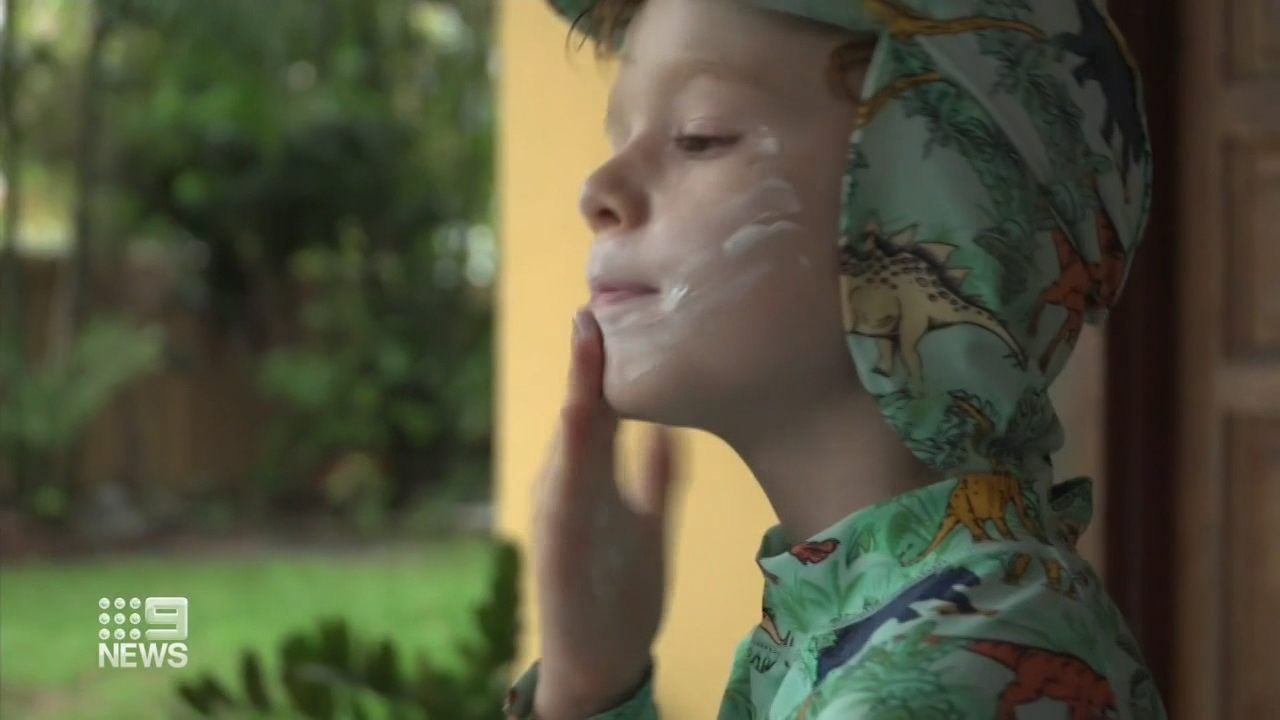
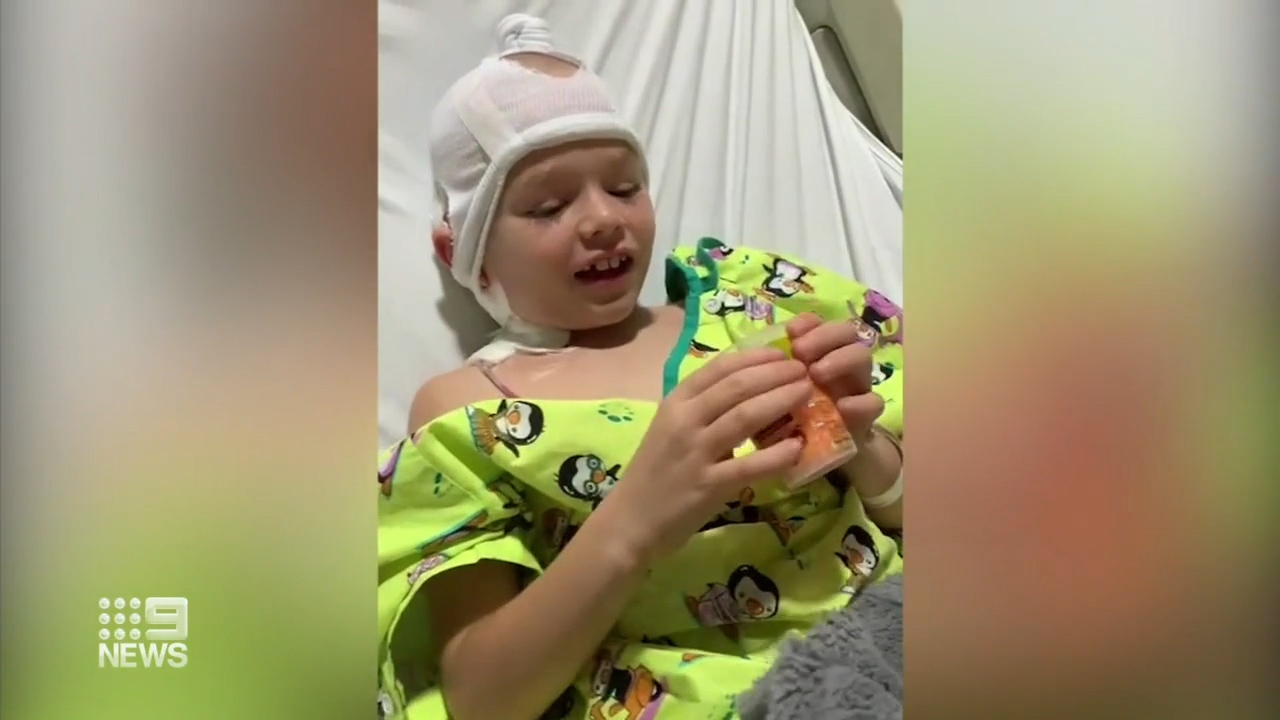
An Australian couple is warning parents to be extra vigilant about changes in their children's skin after their eight-year-old son was diagnosed with a rare form of melanoma.
Hayden Price always wears sun protection and his parents say he's never been burnt in his life.
The couple first noticed what they thought was a skin tag on the back of Hayden's head.
"It was being irritated every time he put on his hat or his helmet or his goggles so we went to the doctor had it removed and we thought that was the end of it," Ms Price said.
"We were very shocked when the doctor called up and said 'we're sorry we've found cancer,'" Hayden's Mum, Liza Price told 9News.
The family was told the cancer had spread to lymph nodes in Hayden's neck and immediately underwent major surgery in Singapore.
"It was really traumatic to live through that. No one likes to see their kid sick," Nathan Price said.
Hayden is now receiving immunotherapy – a treatment that uses the body's own defence system to kill cancer.
Melanoma is the most common cancer affecting 15 to 39-year-old Australians and while it is generally caused by UV from the sun, this isn't always the case.
For Hayden, his condition is caused by a rare sub-type unrelated to sun exposure.
A MediaWorks radio host has resigned from one of the company’s major shows. The media personality tendered his resignation on Monday and it was accepted effective immediately, MediaWorks confirmed to the Herald. Images and references…
Within minutes of a woman calling for help after falling and being left unable to walk in the remote Kaweka Forest, rescuers were on the way.It was only because the 60-year-old woman and her partner activated a personal locator…