Category Archives: headline

Cruise Assn. Asks US CDC to Relax Restrictions, Allowing Summer Sailings

The Cruise Lines International Association (CLIA) has called on the US Centres for Disease Control and Prevention (CDC) to lift the Framework for Conditional Sailing Orders (CSO) and allow for the planning of a phased resumption of cruise operations from American ports by the beginning of July.

CLIA said the early-July timeframe is in line with President Joe Biden’s forecast for when the United States will be “closer to normal.”

CLIA represents 95 per cent of global ocean-going cruise capacity.

Kelly Craighead, CLIA’s President and CEO said: “Over the past eight months, a highly-controlled resumption of cruising has continued in Europe, Asia, and the South Pacific—with nearly 400,000 passengers sailing to date in more than 10 major cruise markets. These voyages were successfully completed with industry-leading protocols that have effectively mitigated the spread of COVID-19. Additional sailings are planned in the Mediterranean and Caribbean later this spring and summer.”

CLIA said less than 50 coronavirus (COVID-19) cases have been reported since some cruises resumed.

“This is a testament to the industry’s unparalleled expertise, gained over more than half a century, in coordinating movements of guests and crew, efficiently organizing complex embarkations and excursions, and designing vessels that are more technologically advanced and operationally agile than any other mode of transportation,” said Craighead.

“The cruise industry has adopted a high bar for resumption around the world with a multi-layered set of policies that is intended to be revised as conditions change. Our Members continue to follow this multi-layered approach to enhancing health and safety that has proven effective, making cruising one of the best and most adaptable choices for travel,” she added.

Craighead also noted “the accelerated rollout of vaccines is a game changer in providing for the health and well-being of the public, especially in the United States, where President Biden expects all adults will be eligible for vaccinations by May 1, 2021.”

Following the industry’s voluntary suspension of operations one year ago, cruise lines have been prevented from operating in the US by a series of “No Sail Orders” issued by the CDC.

The CSO was issued last October, but since then the CDC has not released any further guidance, as called for in the CSO, to support the resumption of US cruise operations.

CLIA stated the lack of any action by the CDC has effectively banned all sailings in the largest cruise market in the world.

“The outdated CSO, which was issued almost five months ago, does not reflect the industry’s proven advancements and success operating in other parts of the world, nor the advent of vaccines, and unfairly treats cruises differently. Cruise lines should be treated the same as other travel, tourism, hospitality, and entertainment sectors,” Craighead emphasized.

While some cruise lines have announced a few sailings catering to those who have received vaccinations, CLIA does not currently have a policy related to vaccines.

The association said members are exploring a workable approach on how to include vaccinated people in their safety protocols.

The post Cruise Assn. Asks US CDC to Relax Restrictions, Allowing Summer Sailings appeared first on The St Kitts Nevis Observer.

Jamaica: Lockdowns Declared, PM Gets His COVID Shot

On Sunday, March 21, Prime Minister Andrew Holness declared that Jamaica had reached its breaking point in the management of the COVID-19 pandemic and declared lockdowns.

As promised, Holness announced a slew of stronger measures, including a series of lockdowns for the next three weekends. The Prime Minister lashed out at some residents for not adhering to the protocols, saying that although the government had tried to hold off imposing any form of lockdown, the selfishness of some Jamaicans would be felt by all.

“Some people have interests in going to parties. It is the ultimate expression of social selfishness to be pursuing these kinds of activities which aid in the spread,” Prime Minister Holness said.

The minister of health and wellness, Dr. Christopher Tufton also echoed Holness’s comments and painted a grim picture of the healthcare system. Dr. Tufton said that some sick patients across Jamaica now have to be housed under subpar conditions because hospitals are overcapacity.

“There are some thirteen hospitals, including Kingston Public and the University Hospital, that are now in the red alert zone and they have all exceed 100% of their COVID-19 isolation capacity. To exceed the capacity means that we now have to house positive patients who have to be hospitalized under less than ideal circumstances. In other words, we have to put them in makeshift sections of the hospital. That is the clearest indicator of a system being overwhelmed — in some cases, up to 150% of capacity,” Dr. Tufton explained.

To curb the spike in cases, Jamaicans will have to stay at home for the next three weekends. The lockdowns would begin from midday on Saturdays to Mondays at 5 a.m. During the Easter holidays, the lockdown will commence on Good Friday, April 2 to 5 a.m. on April 6th.

On the ‘no movement’ days, only people employed to essential businesses, people seeking emergency medical care and those traveling to and from the airports will be allowed to travel.

Other measures announced include extensions of the UK travel ban until mid-April and the pretesting travel requirement until June 30, a ban on funerals and closure of beaches and attractions.

Harsher Penalties for those Who Breach COVID-19 Protocols

 One key component of the COVID-19 management that the Jamaica government has struggled with is the enforcement of the protocols. But that could change following the new changes Disaster Risk Management (Amendment) Act.

The legislation has been used by the government to legally implement and enforce COVID-19 restrictions.

On March 23, the House of Representatives approved amendments to the Act to add a ticketing system with fines for persons who breach COVID-19 protocols. The fines range from JMD $3000 for tier one offenses like using a river outside of the specified times to JMD $500,000 for tier ten offenses like operating a bar, club, or attraction during a prohibited period.

In showing his support for the new fines, the island’s Minister of Justice, Delroy Chuck said, “This country needs some discipline and it’s the intention that this bill will assist the police force to save lives. Our hospitals are overflowing and unless we have some drastic actions, lives will be lost.”

The new penalties have also been supported by the Prime Minister and members of the opposition, People’s National Party.

=====================================

Prime Prime Minister and Opposition Leader Get Vaccinated

Andrew Holness vaccine
PHOTO: JIS PHOTOGRAPHER Prime Minister, the Most Hon. Andrew Holness (left), receives his first dose of the coronavirus (COVID-19) vaccine from nurse, Fiona Ellis, at The Good Samaritans Inn in Kingston on Monda y(March 22). Observing in the background is Miniister of Health and Wellness, Dr. The Hon. Christopher Tufton.

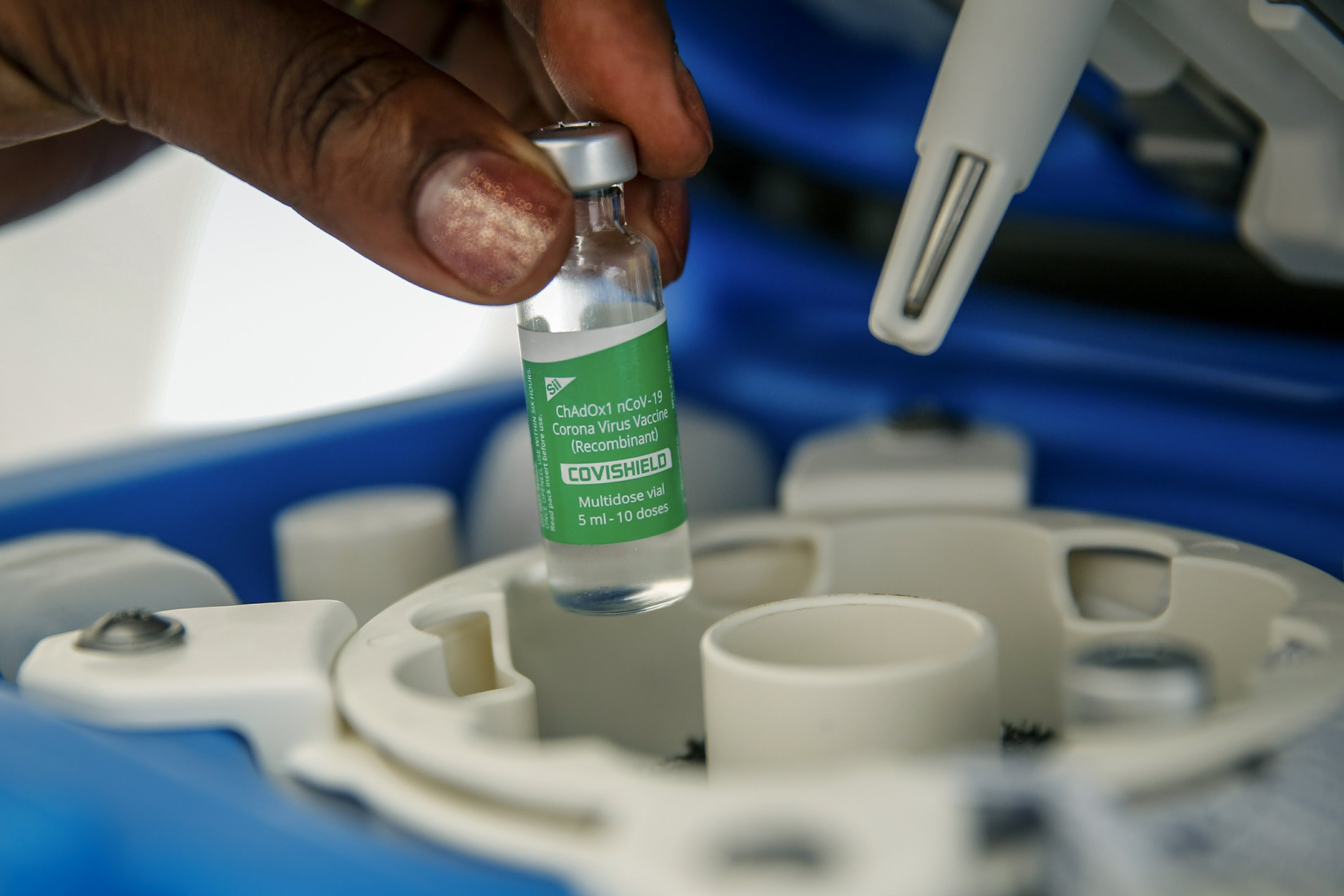
Jamaica’s Prime Minister Andrew Holness and wife Juliet, Member of Parliament for East Rural St. Andrew, along with Opposition Leader Mark Golding received their first shots of the AstraZeneca vaccine on Monday, March 22.

The jabs were administered at the Good Samaritan Inn in Kingston.

Prime Minister Holness used the opportunity to push for the national identification system (NIDS) saying that the vaccination process would be much easier for Jamaicans under the program.

“If we had the NIDS, then all that would happen is, you come in, just show your card and all that data captured would then go into the vaccination database. It would take maybe two or three [or] four minutes off the process time,” Mr. Holness said.

The post Jamaica: Lockdowns Declared, PM Gets His COVID Shot appeared first on The St Kitts Nevis Observer.

UN Hits Haiti’s Political Crisis, Urges Elections

The post UN Hits Haiti’s Political Crisis, Urges Elections appeared first on The St Kitts Nevis Observer.
Associated Press World View: Astra Zenica, Virus Origin,Mexican Border, Bolsonaro Under Fire,

March 25, 2021

Alternate text

AstraZeneca has sought to allay concerns about its coronavirus vaccine data, insisting its vaccine gives strong protection. Meanwhile, a team of Chinese and international scientists is poised to report on its hunt for the origins of the virus that sparked the global pandemic. And that container ship blocking in the Suez Canal? It’s still stuck in the vital trade route.

Also:

  • Migrant crossings are straining resources in Rio Grande Valley.
  • Brazil’s president is under fire as the country’s pandemic death toll hits 300,000.
  • And President Joe Biden’s dogs are back at the White House.

MIKE CORDER

The Associated Press

The Hague, Netherlands

The Rundown

I'm an image

AstraZeneca insisted Wednesday that its COVID-19 vaccine is strongly effective even after counting additional illnesses in its disputed U.S. study, the latest in an extraordinary public rift with……Read More

I'm an image

GENEVA (AP) — A team of international and Chinese scientists is poised to report on its joint search for the origins of the coronavirus that sparked a pandemic after it was first detected in China…..Read More

I'm an image

WASHINGTON (AP) — President Joe Biden held off on holding his first news conference so he could use it to celebrate passage of a defining legislative achievement, his giant COVID-19 relief… …Read More

I'm an image

BOULDER, Colo. (AP) — Hundreds of mourners gathered Wednesday night at a candlelight vigil to remember the 10 people gunned down at a supermarket in a Colorado college town, while the 21-year-old……Read More

I'm an image

ISMAILIA, Egypt (AP) — A skyscraper-sized cargo ship wedged across Egypt’s Suez Canal further imperiled global shipping Thursday as at least 150 other vessels needing to pass through the crucial… …Read More

OTHER TOP STORIES

HARLINGEN, Texas (AP) — Elmer Maldonado spent a week in immigration custody with his 1-year-old son after crossing the Rio Grande through Texas to request asylum. O…Read More

SEOUL, South Korea (AP) — South Korea’s military says North Korea has fired at least one unidentified projectile into its eastern waters. South Korea’s Joint Chiefs…Read More

SAO PAULO (AP) — Mere miles from Brazil’s presidential palace, the bodies of COVID-19 victims were laid on floors of hospitals whose morgues were overflowing. Lawma…Read More

WASHINGTON (AP) — President Joe Biden’s dogs — Champ and Major — are roaming the White House again, after having been sent to Delaware when Major, the younger dog, …Read More

The post Associated Press World View: Astra Zenica, Virus Origin,Mexican Border, Bolsonaro Under Fire, appeared first on The St Kitts Nevis Observer.

US: Black, Hispanics Hit Hardest by Coronavirus

CDC: Asian, Black, Hispanic communities hit hardest, earliest by coronavirus
© Getty Images

Counties with high proportions of Asian, Black and Hispanic populations were hit harder by the coronavirus pandemic’s first and second waves than were predominantly white counties, according to a new report from the Centers for Disease Control and Prevention (CDC).

The report is the latest indication of the disproportionate burden the outbreak has had on racial and ethnic minorities.

In the CDC’s findings, to be published in this week’s Morbidity and Mortality Weekly Report, researchers found counties with high levels of Asian and Black residents were the first to experience big waves of coronavirus infections.

The report adds to a body of research that shows a respiratory virus like SARS-CoV-2 can spread more easily in communities that have been historically left behind by health care systems.

“Inequalities in social, economic an environmental conditions among racial and ethnic minority groups lead to disparities in health risks and outcomes, including those related to Covid-19,” the researchers wrote.

Over the first two weeks of April, about 11 percent of counties across the country experienced widespread transmission of the virus. But 29 percent of counties with high Asian populations and 28 percent of those with substantial Black populations reported significant spread as the virus ripped through New York, New Jersey, Philadelphia, New Orleans and southwest Georgia.

In early August, as the second wave of coronavirus infections surged in the Southeast, two-thirds of American counties reported widespread transmission. That figure included 92 percent of counties with large Black populations and three-quarters of counties with high Hispanic populations.

At the time, counties suffering the worst outbreaks were in California’s Inland Empire, in the Rio Grande Valley in southern Texas and along the Gulf Coast.

By contrast, counties with higher Asian American populations experienced lower spread during that August surge, driven in part by an ebb in the New York City area that was hit so hard in the first wave. Just over half, 52 percent, of counties with large Asian American populations experienced widespread transmission over that period.

The data adds to previous reports that show racial and ethnic minority groups made up disproportionate shares of coronavirus cases, hospitalizations and deaths in most parts of the country.

“Long-standing systemic social, economic, and environmental inequalities in the United States have put many communities of color (racial and ethnic minority groups) at increased risk for exposure to and infection with SARS-CoV-2,” the researchers wrote.

The post US: Black, Hispanics Hit Hardest by Coronavirus appeared first on The St Kitts Nevis Observer.

As Pandemic Eases, US Gun Violence Increases

Two mass shootings in one week have provided a sudden and disturbing return to the reality of gun violence in America.

The COVID-19 pandemic created a pause in mass shootings, with schools and workplaces closed, and people staying away from large gatherings.

With people returning to work and children across the country likely to report back to school in the fall, the prospect of more gun violence — a depressing part of American life — also comes to the forefront.

Eight people, including six Asian women, were killed in shootings at separate spas in the Atlanta area last week. In a supermarket in Boulder, Colo., this week, 10 people were murdered, including one police officer.

The COVID-19 pandemic led to a kind of reprieve from mass shootings, with the number of sprees in public places at its lowest in over 10 years. The nation has had a reprieve from school shootings, perhaps in part because so many fewer students have been physically going to school.

Former President Obama after the Boulder shooting wrote on Twitter, “a once-in-a-century pandemic cannot be the only thing that slows mass shootings in this country.”

“It’s such a rude awakening. We’ve spent a year pining for the real world to come and these mass shootings remind us of the best and the worst of the ‘real world,’ ” said Jonathan Metzl, director of the Department of Medicine, Health and Society at Vanderbilt University. “The minute we start seeing the light at the end of the tunnel, the minute we start congregating again, we see the other risk of human gathering, which is other people.”

Before the pandemic, the nation had been worn out by gun violence. There were shootings every 15 days on average in 2019.

Comedian Dave Chappelle in November spoke about the pause in gun violence while hosting “Saturday Night Live,” just hours after the election was called for President Biden.

“Do you guys remember what life was like before COVID?” he said. “I do. It was a mass shooting every week. Anyone remember that? Thank God for COVID.”

The twin shootings still underscored the sense that as people return to a more normal life, deaths from gun violence will also rise anew.

“America is the only place where resuming normal lives means these horrific shootings resume. It’s the only high-income country where this is happening,” said Shannon Watts, founder of Moms Demand Action.

Gun control advocates, who have been pushing to strengthen background checks and close loopholes that allow certain people to have guns, weren’t shocked about the return of mass shootings.

“Is it a surprise? No. Why would anyone be surprised. Why would you ever expect anything to change? We haven’t done anything to change it,” Brian Lemek, executive director of Brady PAC, said.

Gun violence overall didn’t slow down during the pandemic, which saw increases in community violence, suicide and domestic violence.

Gun sales also spiked over the past year. A record number of background checks for firearms were performed, according to the FBI, reaching over 39.6 million background checks in 2020.

“Sure, we saw a dip in mass shootings. We saw a massive increase in all other forms of gun violence,” Lemek said.

“I’m particularly worried about schools reopening,” said Watts. “We know that even before the pandemic, 5 million kids lived in homes without secure guns.”

She pointed to data that shows that about 4.6 million children live in households with at least one unlocked and loaded firearm.

Prominent venues for mass shootings were limited over the past year. But, experts in gun violence point to the fact that grocery stores, like the scene in Boulder, were open.

“We know that schools and workplaces are definitely forums where shootings happen, but we also know that it has been in other settings. This grocery store shooting could have happened anytime over the past year,” said Ben Newman, associate professor in the school of public policy at University of California, Riverside.

In Boulder, the shooter’s family said he was bullied in high school, anti-social and paranoid. In Atlanta, the shooter claimed to have a sex addiction and wanted to eliminate temptation.

“In this case, I just think that it’s such a natural human tendency to try to prescribe some kind of rational human narrative because it helps us to try to understand why someone would do something — kill strangers,” Metzl said. “So many things go back to access to guns. That’s also so much a part of it. We’ve made it so easy.”

Pleas to Washington this week to act echoed those heard after other mass shootings like the 2012 Sandy Hook shooting and the 2018 Parkland shooting.

Advocates are looking to Biden to act by executive order on gun violence.

“It’s an ongoing policy process internally. His view, the vice president’s view and our policy team’s view is it’s not just about addressing gun access, that’s important … it’s also about addressing community violence and a range of issues that are root causes and kind of lead to the deaths and the impact that we’re seeing that’s so troubling,” White House press secretary Jen Psaki said on Wednesday when asked about the issue.

In Congress, Senate Majority Leader Charles Schumer (D-N.Y.) has promised quick action on House-passed legislation, one to strengthen background checks and another to extend the time federal investigators have to perform background checks from three days to 10 days.

But in the 50-50 Senate, at least 10 Republicans need to vote to end the debate on the legislation along with every Democrat — an uphill battle for these bills.

The post As Pandemic Eases, US Gun Violence Increases appeared first on The St Kitts Nevis Observer.

US Passes 30m Corona Cases, 25% of Americans Get 1st Shot, Boris Warns EU

The U.S. on Wednesday surpassed 30 million cases of COVID-19, highlighting the continued threat of the virus even as the country makes progress on vaccinations.

While new cases per day have decreased significantly from their peak in January, positivity totals remain high, at around 55,000 cases per day.

As more vulnerable people get vaccinated, the number of deaths is declining, but there are still about 1,000 people dying from the virus every day.

Over one year into the pandemic, Americans appear to be getting restless after months of lockdowns.

Scenes of hundreds of spring breakers flooding the streets, beaches and restaurants in Miami Beach, Fla., have prompted health officials to urge people not to let down their guard.

Health officials have also warned against states lifting coronavirus restrictions until a wider share of the population is vaccinated.

Leaders in states like Texas and Mississippi have lifted coronavirus restrictions, including mask mandates and social distancing requirements in businesses.

“When I’m often asked, ‘Are we turning the corner?’ my response is really more like, ‘We are at the corner. Whether or not we’re going to be turning that corner still remains to be seen,’ ” Anthony Fauci, the government’s top infectious disease expert, said Wednesday at a White House briefing.

With around 55,000 cases every day, “I don’t think you can declare victory and say you’ve turned the corner,” he added. “You’ve got to continue to do what we’re doing: more vaccinations and continue to do public health measures until we actually do turn the corner.”

The country is now vaccinating people at a solid clip, around 2.5 million shots per day.

Among people age 65 and older, the most vulnerable group, 70 percent have now received at least one shot, according to Centers for Disease Control and Prevention Data.

Still, among all adults, about 18 percent are fully vaccinated, and 33 percent have received at least one dose, highlighting that there is still a significant way to go in vaccinating the public before a full “return to normal” can occur.

Experts say people should still wear masks when in public and avoid crowds and travel.

“I continue to be worried about the latest data and the apparent stall we are seeing in the trajectory of the pandemic,” Centers for Disease Control and Prevention Director Rochelle Walensky said Wednesday. “CDC is watching these numbers very closely. As I said on Monday, the decisions we make now will determine what the pandemic looks like in the days and weeks ahead.”

======================================================

One-quarter of Americans have now had at least one COVID-19 vaccine dose, per CDC

More than a quarter of all Americans have received at least one dose of a coronavirus vaccine, according to data from the Centers for Disease Control and Prevention (CDC).

Nearly 85.5 million Americans have received at least one shot, accounting for 25.7 percent of the U.S. population.

Vaccine progress: More than 46 million people — approximately 14 percent of the U.S. population — are now fully vaccinated, according to the CDC.

The data show that 70 percent of adults above the age of 65 have received at least one dose and a third of those under the age of 65 have received one dose.

Overall, more than 130 million doses have been administered out of the nearly 170 million that have been delivered.

Of the three COVID-19 vaccines authorized for emergency use in the U.S., 67 million Pfizer vaccines doses, 61.7 million Moderna doses and 2.6 million Johnson & Johnson doses have been administered.

State by state

All Louisiana adults eligible for COVID-19 vaccine Monday (Associated Press)

Ohio lawmakers override Gov. Mike DeWine’s veto of health order bill (Columbus Dispatch)

White Republicans are refusing to get the COVID-19 vaccine more than any other demographic group in Texas (Texas Tribune)

Michigan sees ‘alarming increase’ in COVID-19 hospitalizations among unvaccinated adults (M Live)

=====================================================

Boris Johnson warns EU not to ban Covid vaccine exports to UK

PM says Europe would be the loser if it were to impose a blockade in the latest salvo in row over supplies

Boris Johnson

01:49
Boris Johnson on EU vaccine exports and ‘vaccination passports’ – video
in Brussels and in London

Boris Johnson has told the EU that Europe would be the loser if it imposes a Covid vaccine blockade on Britain, as Brussels empowered officials to prohibit shipments to countries with a better record in vaccinating their population.

The UK had been singled out by EU officials for failing to export any doses to the bloc as the European commission introduced fresh export controls that could lead to a ban on shipments to Britain.

“I don’t think that blockades, of either vaccines or medicines or ingredients for vaccines are sensible and I think that the long-term damage done by blockades can be very big,” the prime minister told the Commons liaison committee after the EU announcement.

“I would just gently push anybody considering a blockade or interruption of supply chains that companies may look at such actions and draw conclusions about whether or not it is sensible to make future investments in countries where arbitrary blockades are imposed.”

Asked directly if he would rule out taking retaliatory action should a blockade be imposed, Johnson said: “Our priority is to continue the vaccine rollout to vaccinate the British people. We’ll do everything necessary that we can to ensure that happens.”

The UK government and the European commission said in a joint statement on Wednesday evening that talks on a compromise were ongoing, and that they were working on a “win-win” solution to expand vaccine supply. It was clear, however, that a resolution remained some way off.

Under the EU’s revised regulation published on Wednesday, countries with a high level of vaccination coverage or those that restrict exports through law or their contracts with suppliers risk having shipments to them prohibited.

The UK does not ban the export of vaccines, but the government signed a contract with AstraZeneca that obliges the Anglo-Swedish company to deliver doses produced in Oxford and Staffordshire to Britain first.

The UK also appears to fall foul of the EU’s new criteria on vaccination coverage, with 45 jabs administered per 100 residents compared with 13 per 100 on average across the 27 member states. The regulation previously only took into account whether a supplier was fulfilling their contract with the EU.

Valdis Dombrovskis, a vice-president of the commission, said it had been forced to act to “ensure vaccination of our own population”.

He said: “The EU still faces a very serious epidemiological situation and continues to export significantly to countries whose situation is less serious than ours, or whose vaccination rollout is more advanced than ours.

“Our export authorisation mechanism is not addressed at any specific country. But it is clear that you need to ensure vaccination of our own population. We are in a sense behind. And if you look at the same time, despite the fact that EU is one of the global hotspots of the pandemic, the EU is also the largest exporter of vaccines.

“Just since the introduction of the export authorisation [in January] some 10m doses have been exported from the EU to the UK and zero doses have been exported from the UK to the EU. So, if we discuss reciprocity, solidarity and say global responsibility, it is clear that we also need to look at those aspects of reciprocity and proportionality.”

EU vaccine exports: UK singled out for failing to export Covid vaccines – video

02:13
EU vaccine exports: UK singled out for failing to export Covid vaccines – video

The regulation notes that manufacturers in the EU “have exported large quantities of goods covered by the export authorisation mechanism to certain countries without production capacity, but which have a higher vaccination rate than the union or where the current epidemiological situation is less serious than in the union.

“Exports to those countries may thus threaten the security of supply within the union. Member states should refuse export authorisations accordingly.”

The EU has suffered from a major supply shortfall of the Oxford/AstraZeneca vaccine because of a yield problem at a plant in Belgium and the company’s subsequent refusal to divert doses made in the UK.

The EU is threatening to block the export to the UK of an unspecified number of doses being made at an AstraZeneca plant in the Netherlands. UK officials have been in negotiations since Monday on the issue.

The joint UK and EU statement said: “We are all facing the same pandemic and the third wave makes cooperation between the EU and UK even more important.

“We have been discussing what more we can do to ensure a reciprocally beneficial relationship between the UK and EU on Covid-19.

“Given our interdependencies, we are working on specific steps we can take in the short, medium and long term to create a win-win situation and expand vaccine supply for all our citizens.

“In the end, openness and global cooperation of all countries will be key to finally overcome this pandemic and ensure better preparation for meeting future challenges. We will continue our discussions.”

The Guardian revealed on Monday that the UK’s vaccination programme would be delayed by two months if there was a total ban on doses being exported to the UK. EU officials said decisions on exports would be taken on a case-by-case basis. “It is not an export ban,” an EU official insisted.

The EU’s 27 heads of state and government will discuss the change to the export mechanism at a summit on Thursday.

A number of EU capitals have voiced their concern about the proposal, which was not briefed in detail to the representatives in Brussels ahead of publication.

“We hope this is a stick which we will not use because it might be a lose-lose and even before we use it we will want to know what the consequences are,” said one senior EU diplomat representing one of the sceptical member states. “We are hesitant about this, we are not convinced.”

Despite the concerns shared by Ireland, the Netherlands and Belgium, among others, there is little prospect of the regulation being withdrawn. It would require a reverse qualified majority of member states to kill the proposal.

“What we put on the table is something very defendable,” said an EU official.

The European commission president, Ursula von der Leyen, said the EU was a global producer of vaccines, with 43m doses distributed to 33 countries since the end of January, but that the bloc needed to protect its supplies.

“While our member states are facing the third wave of the pandemic and not every company is delivering on its contract, the EU is the only major Organisation for Economic Co-operation and Development producer that continues to export vaccines at large scale to dozens of countries,” she said. “But open roads should run in both directions.”

Only one export request has so far been prohibited by the EU: a 250,000-dose shipment by AstraZeneca from Italy to Australia.

The main export destinations for vaccines made in the EU include the UK with about 10.9m doses, Canada with 6.6m, Japan 5.4m, Mexico 4.4m, Saudi Arabia 1.5m, Singapore 1.5m, Chile 1.5m, Hong Kong 1.3m, South Korea 1m and Australia 1m.

The EU is also widened the scope of the export authorisation mechanism to take in all neighbouring countries including those with which it has a close trading relationship, such as Norway and Switzerland.

The post US Passes 30m Corona Cases, 25% of Americans Get 1st Shot, Boris Warns EU appeared first on The St Kitts Nevis Observer.

VP Harris Charged with Mexican Border Mess

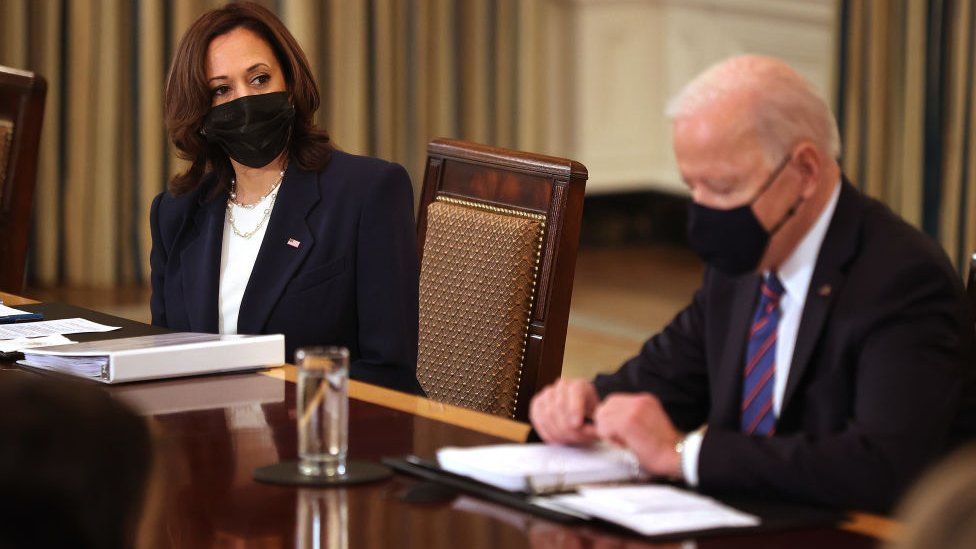
BBC- US President Joe Biden has put Vice-President Kamala Harris in charge of controlling migration at the southern border following a big influx of new arrivals.

Mr Biden said he was giving her a “tough job” but that she was “the most qualified person to do it”.

The numbers of people arriving have grown since Mr Biden took office.

They include hundreds of unaccompanied minors who are being held in immigration detention facilities.

Mr Biden’s predecessor, Donald Trump, was widely criticised over his government’s treatment of young migrants at the US-Mexico border.

Since January, the Biden administration has reversed a policy of turning away unaccompanied children, instead choosing to process them and place them with sponsoring families in the US.

But Mr Biden’s critics say his policies have led to a surge in illegal migration.

In February, US Customs officials took more than 100,000 people into custody along the southern border, a 28% increase on the previous month.

Announcing Ms Harris’s appointment as his immigration czar, Mr Biden told reporters and officials at the White House: “She’s the most qualified person to do it, to lead our efforts with Mexico and the Northern Triangle [Honduras, Guatemala and El Salvador], and the countries that are going to need help in stemming the movement of so many folks – stemming the migration to our southern border”.

Mr Biden said Ms Harris’s past work as California’s attorney general made her well suited to leading the effort, adding: “When she speaks, she speaks for me.”

In response Ms Harris said: “Needless to say, the work will not be easy. But it is important work.”

Kamala Harris and President Joe Biden meet cabinet members and immigration advisers in the State Dining Room on March 24, 2021
President Biden said he was giving his second-in-command “a tough job”


Many of those arriving at the border have fled poverty and violence in Central America.

In an interview with CBS on Wednesday, Ms Harris said there was a need “to deal with the root causes… of what’s happening in the Northern Triangle”.

“Dealing with what we need to do around aid in a way that is about developing those countries so that we also deal with the cause of why people are coming into our country,” she said.


The post VP Harris Charged with Mexican Border Mess appeared first on The St Kitts Nevis Observer.

Brazil: Now It’s the Young Dying from COVID

São Paulo (CNN) It took only 10 days from start to finish, from the time 28-year-old Graciane da Silva got sick to the time she died.

She was alone when she passed away in a Rio de Janeiro Hospital — her mom, Maria da Penha da Silva Siqueira, thinks about that often.

“It never crossed our mind that it would happen to her,” said da Silva Siqueira. “It was too fast. This virus does not let us say goodbye.”

Da Silva, who left behind a 4-year-old son, died of Covid-19 in June of last year. At the time, hers was a slightly more unusual death.

During the first part of Brazil’s struggle with the coronavirus, it was the elderly who made up the majority of those who were getting sick and dying from Covid-19.

But since the new year, Brazil has descended into its worst days of this pandemic so far. Daily death and case numbers have shattered previous records.

And amid that surge, a worrying pattern has emerged—more young people seem to be getting severely ill and dying from Covid-19, doctors tell CNN.

The question is why: Is a new variant infecting more young people and making them sicker? Are young people behaving in ways that make them more likely to become infected? Could it be some combination of both?

ICU doctors: Our patients keep getting younger

Across the country, intensive care physicians keep saying the same thing: In this latest wave, their patients are younger than ever.

“We have otherwise healthy patients that are between 30 and 50-years-old and that is the profile for the majority of patients,” said Dr. Pedro Archer, a 33 year-old intensive care physician at a public hospital in Rio de Janeiro. “That is the big differentiator in this latest wave.”

CNN has spoken to nearly a dozen ICU physicians and nurses since mid-January, across multiple hospitals in several Brazilian states. Each said their ICU beds are filled with more young people than ever.

No vaccines, no leadership, no end in sight. How Brazil became a global threat

“The numbers of serious infections are much higher than in the first wave,” said ICU Dr. Luan Matos de Menezes back in January, speaking to CNN near a public hospital in the Amazonian city of Manaus. “You can tell their conditions are much more critical.”

Brazil’s Health Ministry publishes national statistics on the ages of Covid-19 victims. An AFP analysis of data from that ministry found the number of people aged 30-59 represented about 27% of Covid-19 deaths over the past three months or so — a 7% increase from pre-December numbers.

Brazil’s death toll now has passed 300,000, 2nd only to the United States.

The AFP also found the share of the death toll for those aged 60 and over fell by 7% in that same time period. CNN has not independently verified the analysis.

State health officials in São Paulo, Brazil’s most populous state, said earlier this month that anecdotal testimony from doctors across the country about the severity of cases in younger people is backed up by their data.

Officials said 60% of younger patients with Covid-19 needed ICU beds, a higher figure than earlier in the pandemic.

For doctors, watching younger patients die is especially brutal.

“Death for a person in their 30’s is very, very painful,” said Dr. Maria Dolores da Silva, a 42-year veteran of intensive care medicine in São Paulo. “They have their whole lives ahead of them and Covid takes it.”

What’s to blame?

The increase in both illness and death in younger people has coincided with the rise of at least one Covid-19 variant in Brazil.

The so-called P.1 variant, which scientists say originated from Brazil, is widely agreed upon to be more easily transmissible, up to 2.2 times so according to a recent study.

According to a March 4 study of eight Brazilian states by national health research institute Fiocruz, over half of all Covid-19 cases in six states were “associated with variants of concern” including P.1, as well as variants first identified in the UK and South Africa.

First appearing at the end of last year, multiple doctors speculated the P1 variant has something to do with the shift in demographics among the sick. But it’s far too early to know what role exactly this variant is playing.

“It’s possible that these new variants are more lethal but we don’t have scientific data to confirm that,” said Jesem Orellana, a Brazilian epidemiologist. “But what we do know is that the P.1 variant is more transmissible and that plays a big part in this second wave.”

Experts also point to an increase in parties around the new year and Carnival holidays in the first part of the year. Younger people taking part in parties may simply have been more exposed as of late.

Videos of illegal gatherings are very easy to find online and authorities in cities across the country are writing imposing fines and breaking up parties every single weekend. 

“You have a much more transmissible virus going around,” said Brazilian microbiologist Natalia Pasternak. “It’s going to infect more people, including more young people. [The surge] may just be an epidemiological effect of having so many more people infected at the same time.”

And although Brazil’s vaccine rollout program has been plagued with delays, it is moving ahead slowly with the elderly as its priority. The more older people get vaccinated, experts say, the more skewed case and death numbers could be toward the young.

It’s an effect that Maria da Penha da Silva Siqueira feels acutely nearly every day. It’s been nine months since she lost her daughter too young but sometimes, she says, it feels like yesterday.

“When my grandson, her son, sees the stars, he says that she is there. This week, he told my sister that he wanted to visit heaven so he could see his mom.”

Reporting contributed by Marcia Reverdosa and Eduardo Duwe.

The post Brazil: Now It’s the Young Dying from COVID appeared first on The St Kitts Nevis Observer.

Haiti: Election Chief Wants Parliamentary Seats Guaranteed for Women

(CNN) Everyone seems to agree that Haiti needs change. The question of how to get there is tearing the country apart.

After a tumultuous four years in office marked by mass protests, political gridlock, gas shortages, economic pain, and a grim surge in kidnappings, Haitian President Jovenel Moise is staking his legacy on a series of nationwide votes planned for this year: a summer referendum to overhaul the Caribbean nation’s constitution, and general elections in the fall.

According to Moise’s government, the elections will guarantee a peaceful transfer of power to his successor, and the new constitution will empower that successor to solve problems that Moise could not. These plans are backed by powerful voices in the international community, including the United Nations

But opposition leaders — who like many legal experts believe Moise has already overstayed his welcome — say the whole process is a farce. They point out that the President could have organized elections earlier to fill the country’s vacant parliament, but instead chose to rule by decree for more than a year, fueling skepticism that the elections will be free and fair. Plus, the current constitution expressly forbids making changes by referendum.

Nevertheless, in an interview last week with CNN, Haiti’s elections minister, Mathias Pierre, said the government would forge ahead. “As President Moise has said, elected leaders have to hand power to another elected leader, and we’re going to do everything that we can to organize the election, and give that power to the people with the ballot,” he said.

‘He had to wait until parliament because dysfunctional’

Pierre said the President’s often unilateral decision-making — which critics say violates the country’s democracy — is necessary for the greater good of holding elections.

“There’s no way to organize an election without a law to hold election, and an electoral council. Those two had been blocked by the previous parliament, so he had to wait until the parliament became dysfunctional to get into the process through an executive order, because you can’t have executive orders while there’s a parliament,” Pierre said.

Failing to hold elections would result in “chaos” with no clear leader next year, he warned.

The minister also defended the constitutional referendum planned for June 27. The current constitution creates confusion and political logjams, he emphasized, and argued that a new constitution is a necessary precondition for holding general elections in September, describing the current electoral system as overcomplicated and too expensive for Haiti.

“The (current) constitution allows multiple elections, like congressmen being elected for four years and senators, some elected for two years … and then we have the president elected for five years. All these elections, no resources to organize them,” he said.

The new proposed Constitution would reduce the number of elected officials in Haiti from 6,844 to just 931 and streamline term limits for all positions to 5 years, he said.

The Haitian public has been invited to review and debate the proposed constitutional changes, which among other things would offer greater political representation to the Haitian diaspora and restructure the legislative branch.

Reserving parliamentary seats for women

More changes may be in the works that could also dramatically affect the outcome of the parliamentary elections, Pierre said.

He is working on a draft provision for the new constitution that would force the government to set aside 35% of parliamentary seats for women, he said. Though yet to be submitted for inclusion in the new constitution, this could theoretically produce major change in a country with one of the lowest rates of women’s political representation in the world.

“The ideal would be to follow the steps of Rwanda. You know Rwanda is one of the countries that has created so-called “reserve seats” for women and Rwanda today is the only country with more women in the parliament than men,” Pierre said.

Haiti’s current constitution already calls for women to be represented on all levels of government by a minimum of 30% — but with no laws instructing the country on how to implement this measure, it has never been enforced.

Reserving seats only for female candidates could change that, though there remain steep disadvantages for women in Haitian politics, including security concerns and sexist treatment by media and opponents.

“In a country with a patriarchal culture, it can be very difficult for women to get elected unless they have reserve seats,” Pierre said. “For the new reserve seats, all political parties will have to register only women candidates to participate in the vote.”

Gabrielle Bardall, an elections expert who consulted with several international organizations last year on how to implement Haiti’s gender quota, told CNN it is an opportunity to correct a longstanding violation of the current constitution — despite criticisms of the referendum’s legitimacy.

“This is as good of a time as any to show that it is possible,” she said, adding that the currently vacant Parliament could even present a unique opportunity.

“If you have 100% men in parliament, and you’re not going to change the parliament size or anything like that, then you have a bunch of male incumbents that don’t want to give up the seats. But there’s no parliament now. So you don’t have the same tradeoff with incumbents.”

‘No legitimate candidate will participate’

It’s unclear who will ultimately participate in the two votes. Pierre said he would be content with around 1 million votes cast — a low number for a country with an estimated population of 11 million, but consistent with past voter participation.

Meanwhile, security concerns for both candidates and voters haunt any attempt to predict turnout this year, and opposition leaders have already vowed to boycott the whole process.

“No legitimate candidate will participate,” said anti-corruption activist Emmanuela Douyon, who leads the think tank Policité Haiti.

Instead, she and other government critics are working to propose a new transitional government to shepherd the election process — a solution that she pointed out has been supported by the international community in other countries where the executive has lost confidence, like Venezuela.

As for the constitutional referendum, Douyon said this is no time to meddle with it.

“It would be better to have an election and let the new elected government have discussion to see whether or not we want to change the constitution. The priority now is to have a parliament, to have democratic order,” she said.

It’s an opinion shared by the President of the National Association of Haitian Judges, Jean Wilner Morin.

Morin tells CNN that as a judge, he says, he cannot criticize the government’s decision to hold a referendum, in order to maintain impartiality for any future potential case that comes before him.

But as a lawyer, he doesn’t believe a new constitution will solve much, considering that “the constitution that is currently in force in Haiti has never been applied or respected,” he said. “The emergency in Haiti is not a new constitution but the establishment of rule of law and good governance, while prioritizing strict respect for the constitution.”

Pragmatism versus principles

Asked to address credibility concerns around the referendum and election, Pierre pointed beyond Haiti’s borders. He is working with the United Nations Development Programme, and the United Nations Office for Project Services, and has invited the Organization of American States to send election monitoring teams.

“The idea is for these institutions who have experience in organizing elections in Haiti…to provide technical support and assistance and logistical support to the electoral council,” Pierre said. The government also hopes to galvanize public support by working to get buy-in from the Catholic Church, a powerful institution in the country, he added.

“Now we need our people from the opposition, the political leaders to understand we need to have an election. Elections should be a must. Certainly I understand their concerns. Where should we address those concerns? On the table of negotiation,” he said.

But Douyon says the government’s international partners can’t confer confidence in the process — and have themselves lost credibility by standing with President Moise.

Anyone who asks the country to participate in elections organized without full democratic and legal protocol is “telling the Haitian people we don’t deserve better,” she added.

“This is the kind of signal we don’t want to send to the kids who are going to study Haitian history.”

The post Haiti: Election Chief Wants Parliamentary Seats Guaranteed for Women appeared first on The St Kitts Nevis Observer.