MOSCOW (Reuters) – The Kremlin said that Moscow always hoped for the best but prepared for the worst when it was asked about the possibility of a new Cold War between the United States and Russia.
Diplomatic ties sank to a new low this week after U.S. President Joe Biden said he thought President Vladimir Putin was “a killer” in an interview that prompted Russia to recall its ambassador to the United States. Putin later offered Biden live online talks in the coming days.
On Friday, the Kremlin’s spokesman, Dmitry Peskov, said Putin’s offer of talks remained open and that Putin could do any time that was convenient for Biden, though the offer would not stay on the table indefinitely.
“Putin said that despite everything there’s no point in playing at megaphone diplomacy and trading barbs. There is a point in continuing relations,” Peskov told reporters on a conference call.
He was asked about a new Cold War between the two countries.
“We, of course, always hope for the best, but are always ready for the worst. As far as Russia is concerned, President Putin has clearly stated his desire to continue ties…,” he said.
“But of course, we can’t not take into account Biden’s comments,” he said, in a reference to Biden’s interview with ABC News broadcast on Wednesday.
In it, Biden said “I do” when asked if he believed Putin was a killer, prompting Putin to cite a Russian children’s playground chant in response saying “he who said it, did it”.
Biden also described Putin as having no soul in the interview, and said the Russian leader would pay a price for alleged meddling in the November 2020 U.S. presidential election, something the Kremlin denies.
(Reporting by Dmitry Antonov; Writing by Tom Balmforth; Editing by Alison Williams and Gareth Jones)
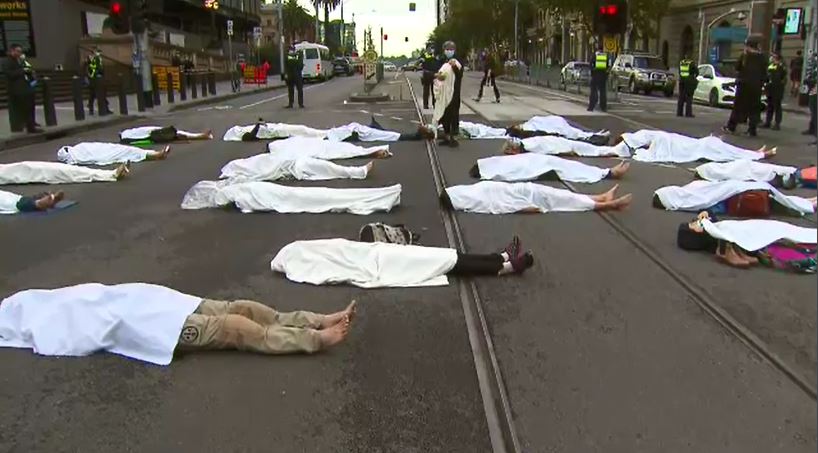
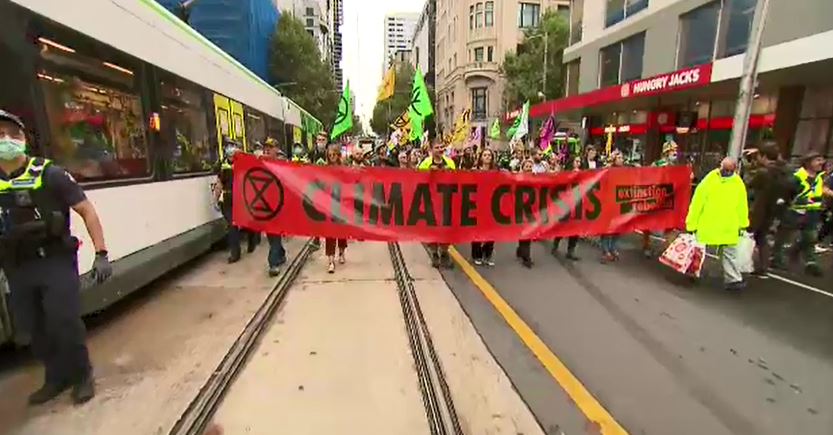
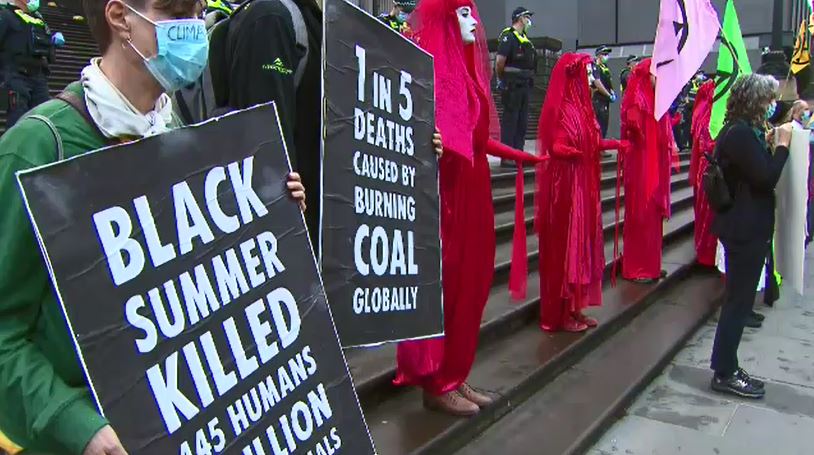
Climate protesters dressed in red have stopped traffic on a busy Melbourne CBD intersection on day one of a week of disruptive demonstrations.
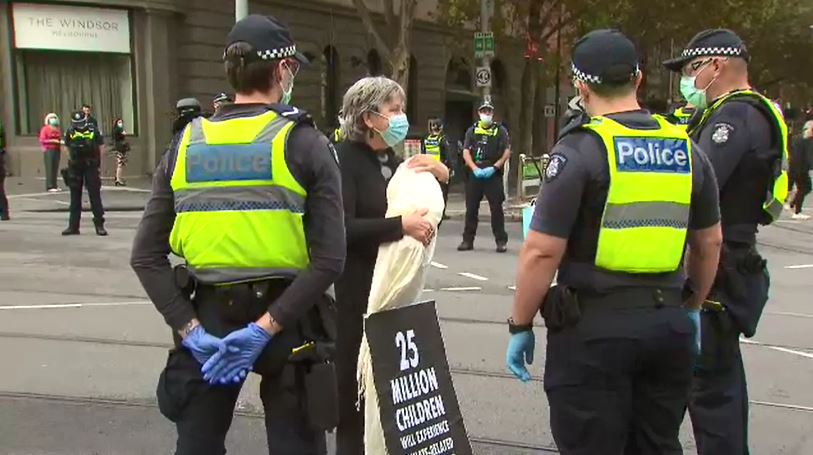
The Extinction Rebellion activists rallied at State Parliament this morning, blocking Spring Street and Bourke Street, with some pretending to lie dead on the road with white sheets covering their bodies and wearing toe tags.
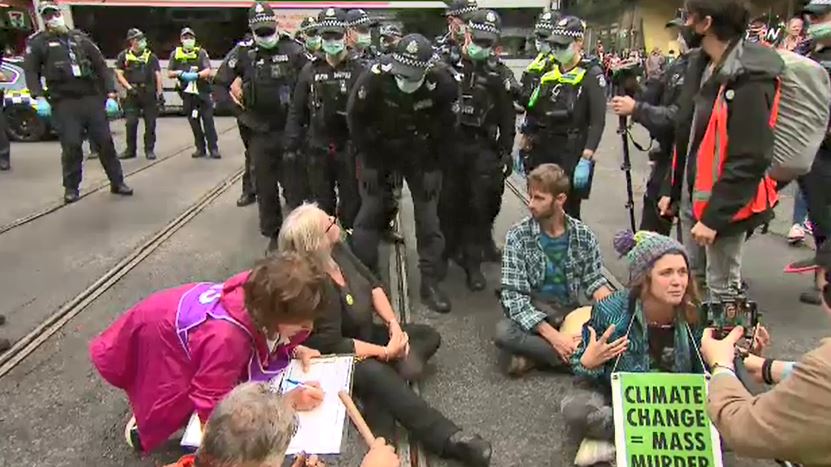
Assistant Commissioner Luke Cornelius told 3AW police would not hesitate to make arrests.
"We will issue a direction for them to cease their obstruction and if they don't comply we will move in to arrest people," he said.
Protesters have also vowed to camp out at Carlton Gardens as part of the planned protests, but Mr Cornelius said the City of Melbourne had made it "very clear" camping was not permitted.
"They will not permit camping in the Carlton Gardens," he said.
"If camping occurs, we will support the City of Melbourne … to have those camping sites taken down."
Several people have been arrested.
Protester Helen Bowman said she was arrested and fined for obstructing traffic, which she believed was a small price to pay to advocate for change.
"I feel very sure that this is the right thing to do," she said.
"Until people listen, I am afraid we will have to keep doing this.
"This is too important. This is the future of everything, but particularly our children."
Another protester, Timothy Neville said the group wanted to force action on the climate crisis.
"We want to draw attention to the fact that nothing's been done about cataclysmic climate and meteorological lapse," he said.
Activist Jane said she felt a responsibility to protest.
"I have known for a number of years that we're facing a climate and ecological emergency and I feel I have no choice."
Nurse Sasha King said she was marching out of concern for her patients.
Ms King was part of a group that went to deliver a letter to energy company AGL, but they were refused entry.
"I'm a nurse, there are thousands of nurses that are extremely concerned about the health impacts of climate change for our patients," she said.
Victoria Police confirmed to 9News just under 2000 police officers, who would normally work at local stations, have been rostered on this week to monitor the protests.
A spokesperson said people could expect a heavy police presence in the CBD, under the "significant public order operation".
"Everyone has the right to protest peacefully and lawfully, without impacting the rest of the community," a police statement read.
"The police objective is always to facilitate the safe and peaceful protest until there is a point where a significant risk is presented – either through significant obstructions that threatens the free movement and assembly of the broader community or in the face of violence.
"If this occurs, rest assured police will be taking swift action to remove the obstruction and to ensure the many people who are going about their daily lives in the city are not unduly disrupted."
Atlantic- Substantial surges in new coronavirus cases and hospitalizations in Europe and Brazil offer a worrying preview of what the United States faces in the coming weeks and months as the plummeting number of cases here begins to level off.
The United States has reported an average of 54,740 cases per day over the past week, a steady decline from the apex of the outbreak in January, when the daily case count was about five times higher. Daily case counts stand about where they were in mid-October, and close to the apex of the summer surge that hit Sun Belt states particularly hard.
But the precipitous drop that occurred through February is now nearing a plateau, one that could presage yet another spike in cases just as optimism about the course of the pandemic begins to take hold.
Public health experts are nervously watching European nations, where a surge in cases is once again straining health care systems. European nations have reported 242 cases per million residents, a rate about 50 percent higher than the United States and one that has climbed by about a third since mid-February.
The increase appears to be driven by spread among younger people, and by the emergence of the B.1.1.7 variant that studies show is substantially more infectious, even among children. That raises the specter that the variant will continue spreading widely even as older and more vulnerable people receive doses of vaccine.
“Even if we are able to reduce the number of cases in the older age population of serious disease, we will pick up more in younger populations, which is exactly what we’ve seen in Europe,” said Michael Osterholm, director of the Center for Infectious Disease Research and Prevention at the University of Minnesota.
The situation in Brazil is even more frightening. Hospitals in all but two of Brazil’s 27 states are north of 80 percent capacity, and more than 2,000 people are dying on a daily basis from COVID-19. Brazil’s seven-day average of new cases stands at 71,800, higher than at any point during the pandemic.
President Jair Bolsonaro has continuously downplayed the threat of the virus. In remarks last week, he told Brazilians to “stop whining” about the virus that has killed more than 280,000 of his constituents.
“What’s happening in Brazil is a tragedy,” Osterholm said.
That level of crisis is not likely to return to the United States in the coming weeks, as more than 2 million people every day receive doses of one of the three vaccines approved by the Food and Drug Administration. But some models project more spread in the coming weeks, concentrated in the Upper Midwest, the Northeast and the mid-Atlantic.
Hospital visits are rising in Detroit, Flint and Macomb County, Mich. Midwestern cities such as Minneapolis and Chicago are likely to see spikes in the coming weeks, as are the Washington metro area and New York City, according to the PolicyLab at the Children’s Hospital of Philadelphia. Positivity rates are rising in Phoenix, San Diego, Los Angeles and Las Vegas, a worrying sign of a potential spike.
“Our country remains very much in a period of sustained COVID-19 transmission. Although increases in transmission are somewhat expected as communities begin to reopen, these trends are concerning and a reminder that this pandemic is far from over,” the PolicyLab researchers wrote. “The regions of most concern right now are metropolitan areas. This is likely because they are more densely populated, facilitating easier viral transmission and making it more difficult to achieve higher population-level vaccination rates.”
The race to vaccinate as many Americans as quickly as possible represents the first time in the entire pandemic that the United States has been on the leading edge of the battle against the coronavirus. Americans are being vaccinated at a faster pace than any nation other than Chile, Israel, the United Arab Emirates and Bahrain.
Americans are being vaccinated twice as fast on a per capita basis than are Canadians, and three times faster than the best-performing European nations.
The Biden administration has said it will send millions of doses of a vaccine developed by AstraZeneca and Oxford University, one that has not been approved by the Food and Drug Administration, to Canada and Mexico.
In testimony to the House Foreign Affairs Committee on Thursday, health experts told Congress the United States needs to step up its multilateral efforts to end the pandemic overseas as fast as possible.
“We live in a deeply interconnected, interdependent world, and an outbreak anywhere can quickly become an outbreak everywhere,” said Ashish Jha, dean of the Brown University School of Public Health. “We need a vigorous, multipronged, multilateral approach to bring this pandemic to an end by vaccinating a large majority of the world.”
Dozens of low- and middle-income nations have not even received their first doses of vaccine, raising the frightening prospect that unchecked spread could lead to new variants that might evolve a more successful means of evading vaccine effectiveness.
“If you have billions of people in low-income countries that are getting infected with this, that is where you’re going to spit out variant after variant that could very well challenge the integrity of our vaccines,” Osterholm warned. “These variants are going to just keep spinning out. This is why we’re not done yet.”
If certain corners of the French internet are anything to go by, COVID-19 vaccines are unsafe, those who refuse them risk becoming “second-class citizens,” and the country has turned into a “health dictatorship.” That such claims have gained currency in France—home to Louis Pasteur, a robust welfare state, and a universal-health-care system—would have been far-fetched 25 years ago. But the country that helped develop the rabies and anthrax vaccines is now one of the most vaccine-hesitant nations on the planet.
A December survey by the pollster Ipsos MORI and the World Economic Forum estimated that as little as 40 percent of the French public intends to receive a COVID-19 vaccine—the lowest percentage of any of the 15 countries surveyed, including Brazil (78 percent), Japan (60 percent), and Russia (43 percent). Another study concluded that nearly a third of France’s working-age population might refuse a vaccine.
This puts France in the peculiar position of being among the wealthy countries with an ample supply of vaccines yet with a large swath of its population unwilling to get them. Recent history offers clues about how the country came to be this way. What’s less clear, and more urgent, is what the government wants.
Decades ago, the French public was overwhelmingly supportive of vaccination. But a series of health controversies in the 1990s began to chip away at its trust in vaccines and the health officials who promote them. The first consumed the public’s attention for years. The government, a journalist revealed, had knowingly distributed transfusions of blood contaminated with HIV, which resulted in hundreds of deaths; several ministers were charged with manslaughter (only one, the health minister, was convicted).
The second concerned a rise in multiple-sclerosis cases, which some in the population feared was linked to the government’s hepatitis B vaccination program. Although no evidence supported this claim, the government sent opposing messages—one minister approved the program, another suspended it—that undermined public confidence.
But the government’s 2009 response to the swine-flu outbreak made vaccine safety a matter of national debate. France embarked on a mass-vaccination campaign to stem the virus’s spread, purchasing more than enough doses to cover its population of 65 million. The problem was that barely anyone was willing to take them. “The French didn’t want to be vaccinated against an illness that didn’t really affect France,” said Laurent-Henri Vignaud, a co-author of a recent history of anti-vaccine sentiment in France. With fewer than 325 swine-flu-related deaths in the country, many resented the government for spending funds on expensive and unnecessary vaccines; pharmaceutical companies, critics pointed out, were the campaign’s prime beneficiaries. “Doubts about the government’s vaccine policy turned into doubts about vaccination itself,” Vignaud told me. In the end, less than 10 percent of the population got a jab.
By the following year, a national survey found that 38.2 percent of the public held an unfavorable view of vaccination in general, up from 8.5 percent in 2000. It was a significant shift, but one that could be misread: Of those who held an unfavorable view of vaccines, just 5 percent said they opposed getting any. The rest cited specific vaccines, including those for hepatitis B (12 percent) and swine flu (50 percent).
Researchers say this distinction is important because not every person who expresses hesitancy about vaccines is necessarily an anti-vaxxer. “Hesitation, by definition, is kind of an undecided state,” Heidi Larson, the director of the Vaccine Confidence Project at the London School of Hygiene and Tropical Medicine, told me. In France, vaccine hesitancy is highest among women, young people, those who are less educated, and those who vote on the political extremes. Common reasons include concerns about vaccine safety and effectiveness, but the biggest predictor of vaccine hesitancy is a lack of confidence in the state. “Trust in government is such a strong variable,” said Larson, “and that’s wobbly in France.
A survey published last month by the French university Sciences Po showed that confidence in the government hasn’t exceeded 35 percent in more than a decade. This antipathy was on full display in 2017, when the French repudiated the country’s mainstream parties and narrowed the presidential race to the far-right candidate Marine Le Pen and the self-avowed outsider Emmanuel Macron. That dissatisfaction returned in force a year later with the rise of the gilets jaunes, or “yellow vests,” the grassroots movement born out of anger at the Macron government’s proposed fuel tax, which quickly evolved into a wider protest over economic inequality and the self-dealing of the political class.
Opposition to vaccines doesn’t feature in the rhetoric of the yellow vests. But researchers and disinformation experts I spoke with noted a strong correlation between those who identify with the yellow vests and those who espouse anti-vaccine sentiments online. Both groups have lost faith in the French state: The former tends to regard Macron as a technocrat whose loyalties lie with the metropolitan elite; the latter is more likely to disapprove of his handling of COVID-19. Yellow-vest protesters “already had a lot of grievances against this government,” Cooper Gatewood, a senior digital-research manager at the Institute for Strategic Dialogue, a London-based think tank, told me.
“If they’re hearing from whatever conspiracy or unreliable source that COVID is exaggerated, that it’s not really that big of a deal, that it’s a hoax, then it’s easy to use that as justification for opposition to further action taken by the government. So the narrative aligns quite well.”
The French government hasn’t done itself many favors. Its shambolic handling of the AstraZeneca vaccine has seen the country reverse course twice. In January, Macron erroneously declared that the jab was “quasi-ineffective” for people over the age of 65. After studies debunked the claim, the government announced the elderly could receive the vaccine.
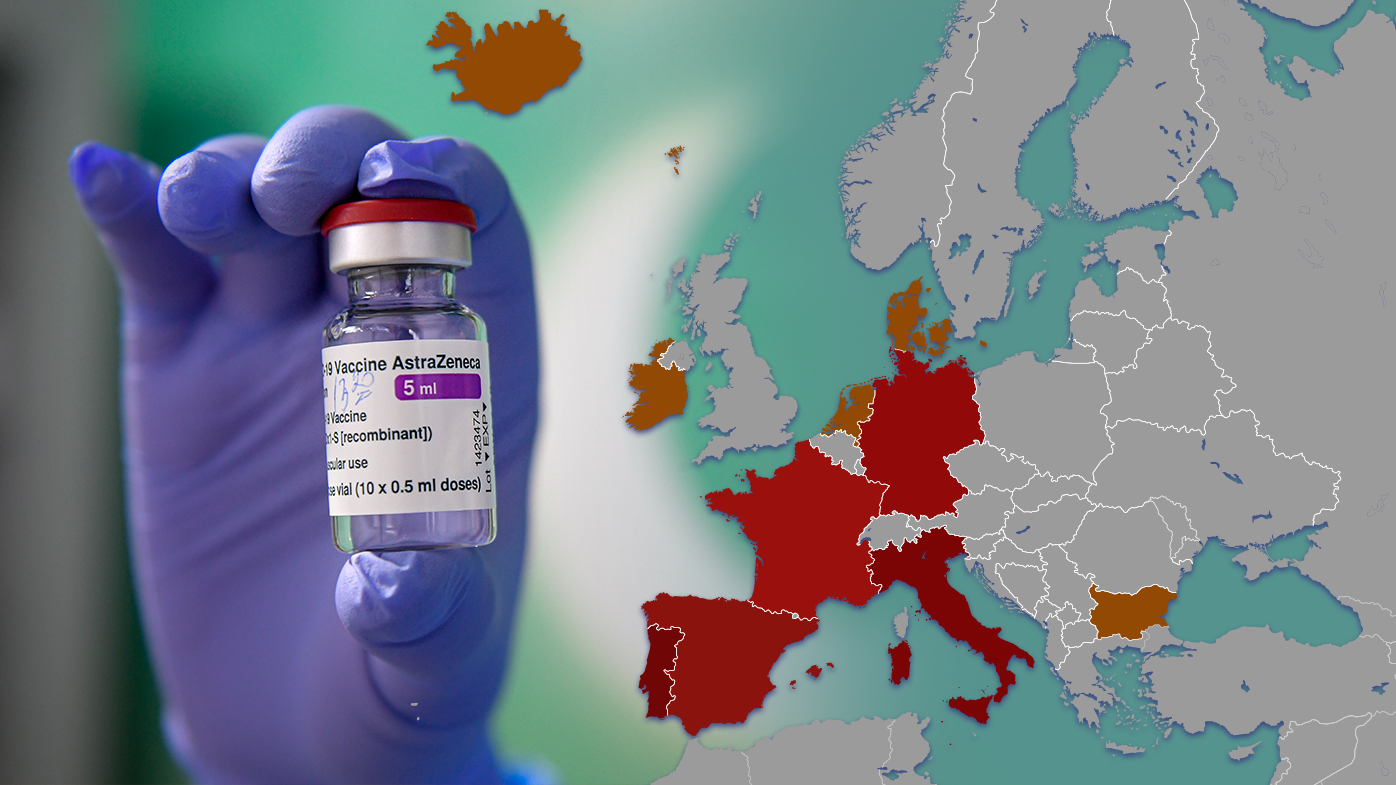
This week, France changed its policy again, when it joined more than a dozen European countries in suspending its AstraZeneca rollout. The reason for the halt was that 37 out of more than 17 million AstraZeneca recipients had developed blood clots. But now that the European Medicines Agency has concluded its investigation determining that the vaccine is “safe and effective,” the French government is likely to reverse itself once again.
The damage done to AstraZeneca’s vaccine, though, might prove irreversible: A recent poll found that more than half of the French public no longer trusts the AstraZeneca vaccine, up from just 22 percent earlier this month. “We absolutely need this vaccine to get our non-at-risk population vaccinated,” Mélanie Heard, a member of the committee advising the government on its vaccine communication strategy, told me, prior to the blood-clot investigation. “We can’t do it without AstraZeneca.
The government’s immediate focus is on vaccinating its most at-risk populations, including the elderly and health-care workers (many of whom have refused to get a jab, citing among their concerns a lack of confidence in vaccine safety).
As a result, vaccination has been promoted not as a social benefit but rather as a way for the country’s most vulnerable to protect themselves. “This choice, I think, also explains why younger people at the moment aren’t fully convinced with the vaccine,” Heard said. As more evidence supports vaccination’s ability to reduce transmission, she added, “that should change.”
France’s prime minister announced this month that the country would open more centers, with the aim of vaccinating 30 million people, or roughly two-thirds of the adult population, by the summer. That’s an ambitious jump from the country’s current pace, which has seen 5 million people vaccinated since January.
But ramping up France’s rollout won’t solve its hesitancy problem. To do that, the government has begun to enlist primary-care doctors and pharmacists, who tend to be more trusted than the state, to help distribute vaccines. It has also begun promoting a series of advertisements aimed at encouraging the public to get a jab. The first, which was shared by the country’s health minister, focuses on the elderly. Heard said future ads will feature the country’s younger populations.
The question is whether relying on family physicians and nostalgic ads will be enough. When I asked public-health experts, none was convinced. “We won’t get to herd immunity with vaccination,” Michaël Schwarzinger, a researcher at Bordeaux University Hospital and the lead author of a recent study on vaccine hesitancy in France, told me. “There’s only one alternative—and if it’s not with a vaccine, it’s y infection.”
Yasmeen Serhan is a London-based staff writer at The Atlantic.
================================================
Former NRL star Jarryd Hayne has been found guilty of sexually assaulting a woman near Newcastle.
The jury found Hayne not guilty of further charges which included recklessly inflicting actual bodily harm.
There was no visible reaction from Hayne as the verdicts were delivered three days into deliberations.
Hayne met the woman on Instagram before he stopped his taxi at her home on the way back to Sydney from a buck's weekend on NRL grand final day in 2018.
The court was told the woman suffered two lacerations and bled heavily afterwards.
Hayne has been granted bail on a $50,000 surety and will be sentenced on May 6.
Outside court today, the former NRL star said: "I told the truth and I'll do it all again."
Detective Superintendent Stacey Maloney from NSW Police has praised the woman who came forward to police after she was sexually assaulted by former NRL player Jarryd Hayne.
"What an incredible feat it was for the victim to go through this process," she said.
Detective Superintendent Maloney highlighted the victim's "courage, resilience and steely nature" through the process.
She also thanked to NSW Police for their professionalism, and urged any other alleged victims of alleged sexual assault to come forward.
"We want to know, we want people to come forward to us, we want to hear your story and we need you to know that we believe you, and we will be on the journey with you," she said.
The US study comprised 30,000 volunteers, 20,000 of whom were given the vaccine while the rest got dummy shots. The results were announced Monday.
In a statement, AstraZeneca said its COVID-19 vaccine had a 79 per cent efficacy rate at preventing symptomatic COVID and was 100 per cent effective in stopping severe disease and hospitalisation.
Investigators said the vaccine was effective across all ages, including older people — which previous studies in other countries had failed to establish.
The early findings from the US study are just one set of information AstraZeneca must submit to the Food and Drug Administration.
An FDA advisory committee will publicly debate the evidence behind the shots before the agency decides whether to allow emergency use of the vaccine.
Britain first authorised the vaccine based on partial results from testing in the United Kingdom, Brazil and South Africa that suggested the shots were about 70 per cent effective.
But those results were clouded by a manufacturing mistake that led some participants to get just a half dose in their first shot — an error the researchers didn’t immediately acknowledge.
Then came more questions, about how well the vaccine protected older adults and how long to wait before the second dose. Some European countries including Germany, France and Belgium initially withheld the shot from older adults and only reversed their decisions after new data suggested it is offering seniors protection.
Last week, more than a dozen countries, mostly in Europe, temporarily suspended their use of the AstraZeneca shot after reports it was linked to blood clots.
On Thursday, the European Medicines Agency concluded after an investigation that the vaccine did not raise the overall risk of blood clots, but could not rule out that it was connected to two very rare types of clots.
France, Germany, Italy and other countries subsequently resumed their use of the shot on Friday, with senior politicians rolling up their sleeves to show the vaccine was safe.
Officials are investigating if a returnee in managed isolation who tested positive for Covid-19 at Auckland’s Grand Mercure hotel caught the virus from another MIQ guest. And 23 other returnees who shared a bus with the positive…
By Andrew McRae of RNZ The Primates of the Anglican Church say some of the historical abuse of people in its care was ignored or covered up by the church.The three archbishops – representing Tikanga Pākehā, Tikanga…
By Guyon Espiner of RNZ Mihi Bassett survived a suicide attempt in Auckland Women’s Prison and lived through conditions a judge has described as a concerted effort by Corrections to break her spirit.Auckland Women’s Prison faces…
OPINION: If there’s one thing this Government’s good at, better than any of its predecessors, in fact standing head and shoulders above them – it’s making an announcement about an upcoming announcement.The hospitality industry…
A “staunch God-fearing Christian” couple killed in a stabbing in Epsom had expressed unhappiness that their 25-year-old only son wanted to move out of their family home, the Herald has learned.Police on Sunday named the two deceased…