Category Archives: headline

Almost 40 schools closed due to flooding

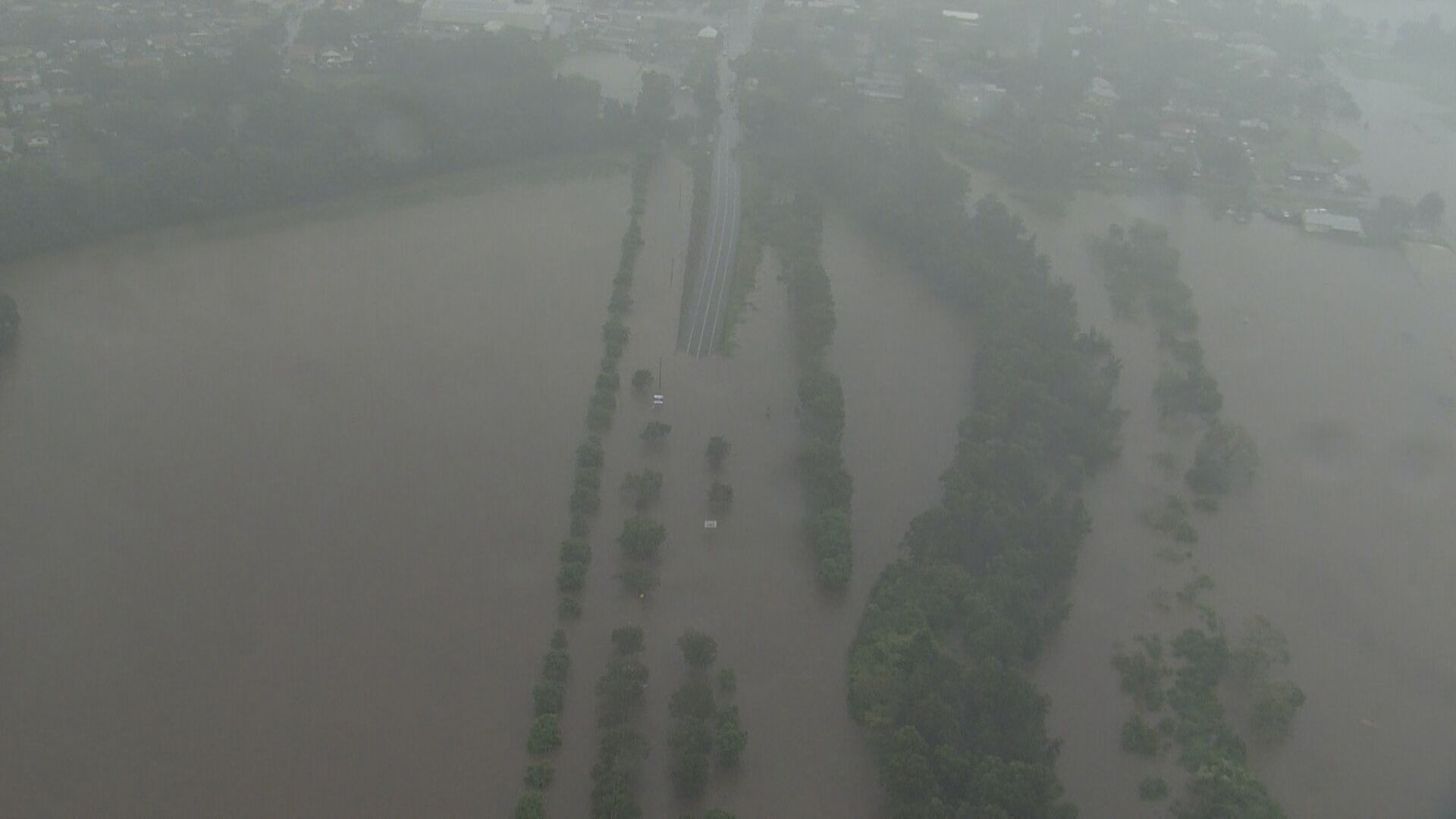
Scores of schools across flood-hit New South Wales have been closed due to the extreme weather emergency and are expected to remain shut tomorrow.

State Emergency Service Commissioner Carlene York today confirmed some schools on the Mid-North Coast are expected to close tomorrow.

Ms York also urged people in flooded areas to work from home tomorrow.

LIVE UPDATES: 'One-in-100-year' extreme weather event

"We do not want people on the roads putting themselves at risk," she said.

The NSW Education Department has released a list of public schools that are closed due to flooding.

  • Barrington Public School
  • Bellbrook Public School
  • Bellingen High School
  • Bellingen Public School
  • Bowraville Central School
  • Bungwahl Public School
  • Cartwright Public School
  • Elands Public School
  • Eungai Public School
  • Gladstone Public School
  • Hannam Vale Public School
  • Huntingdon Public School
  • Jilliby Public School
  • Johns River Public School
  • Kendall Public School
  • Kinchella Public School
  • Long Flat Public School
  • Lowana Public School
  • Medlow Public School
  • Mitchells Island Public School
  • Mount George Public School
  • Mount Kanwary Public School
  • Mount Pleasant Public School
  • Nambucca Heads High School
  • North Haven Public School
  • Orama Public School
  • Orara Upper Public School
  • Pacific Palms Public School
  • Rolland Plains Public School
  • Stratford Public School
  • Stroud Public School
  • Telegraph Point Public School
  • Toormina High School
  • Ulong Public School
  • Ungwahl Public School
  • Upper Lansdowne Public School
  • Willawarrin Public School
  • Wooli Public School

Updates on school closures are expected later today.

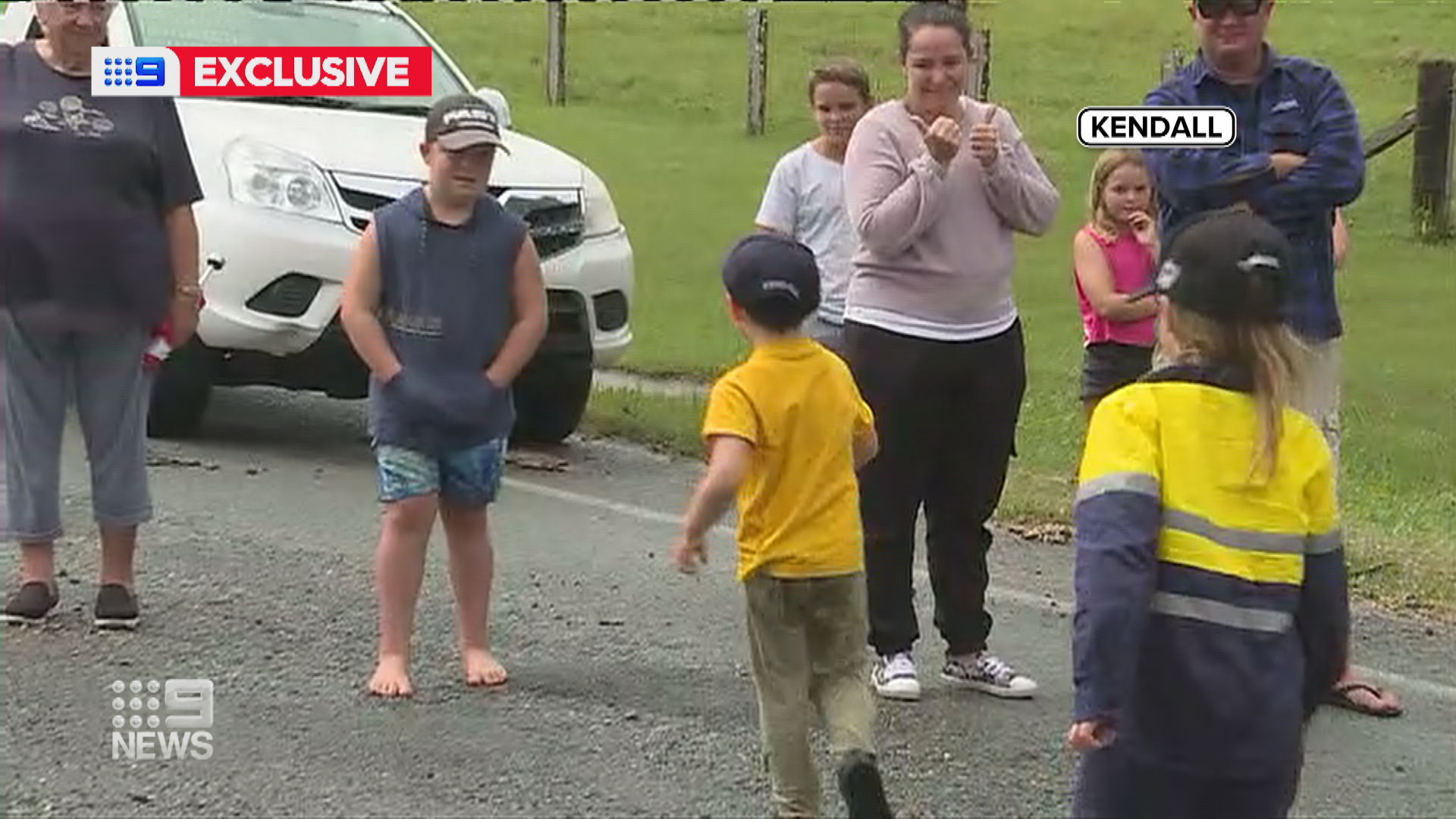
Yesterday students at school on the NSW Mid North Coast were rescued from their library, after they were forced to sleep there overnight due to floodwaters.

More than a dozen Kendall Public School staff stayed to look after the children at the small school, south of Port Macquarie.

NSW flooding

In a statement, the NSW Education Department said the safest option was to keep students and staff at the school.

NSW Premier Gladys Berejiklian has called this weekend's flooding on the North Coast a "one in 100-year event" as intense rainfall continues to hammer the east coast with no signs of slowing.

"Regrettably, parts of the Mid North Coast are experiencing a one in 100-year event, and while we don't think things will worsen on the Mid North Coast, definitely conditions will continue," Ms Berejiklian said.

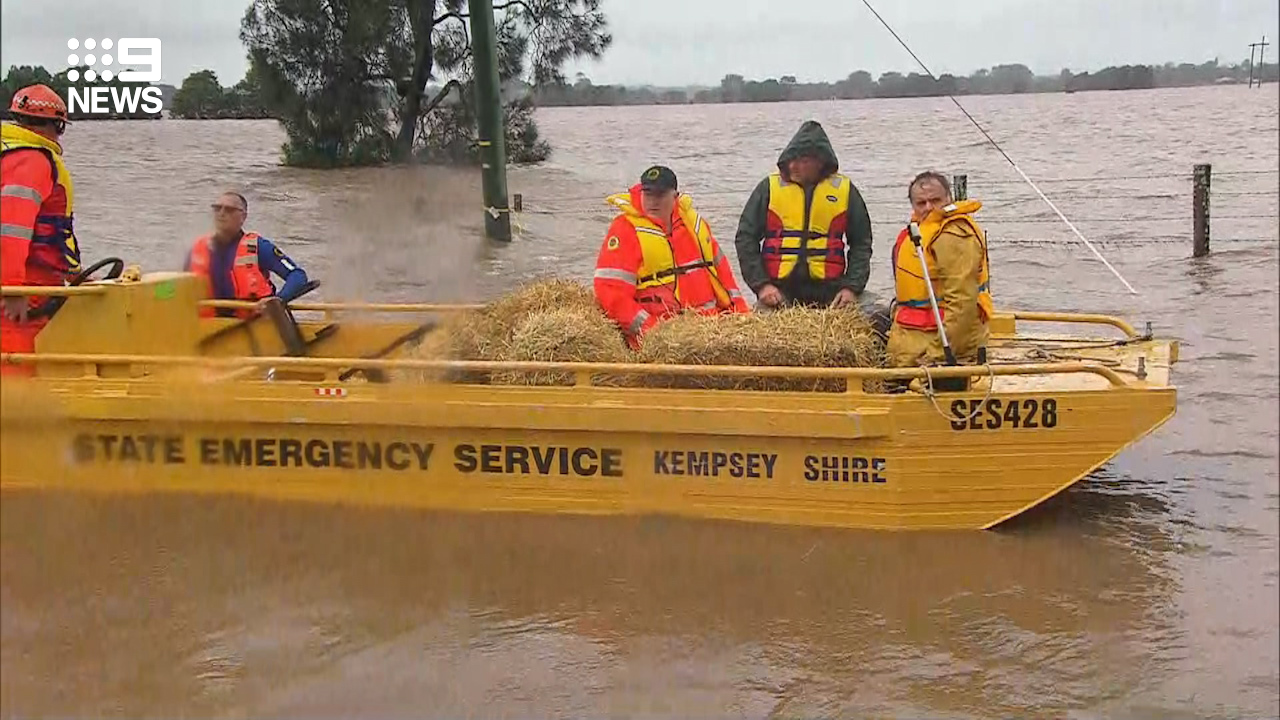
NSW SES's Assistant Commissioner Dean Storey described the conditions today as a "serious, potential life-threatening weather event" as he urged affected residents to heed flood warnings and evacuation orders.

He urged everyone in impacted communities to avoid unnecessary travel, with landslips causing treacherous conditions on the roads.

SES volunteers have now responded to 7000 calls for assistance and that was "increasing exponentially by the hour."

Western Sydney to see 'worst floods in sixty years'

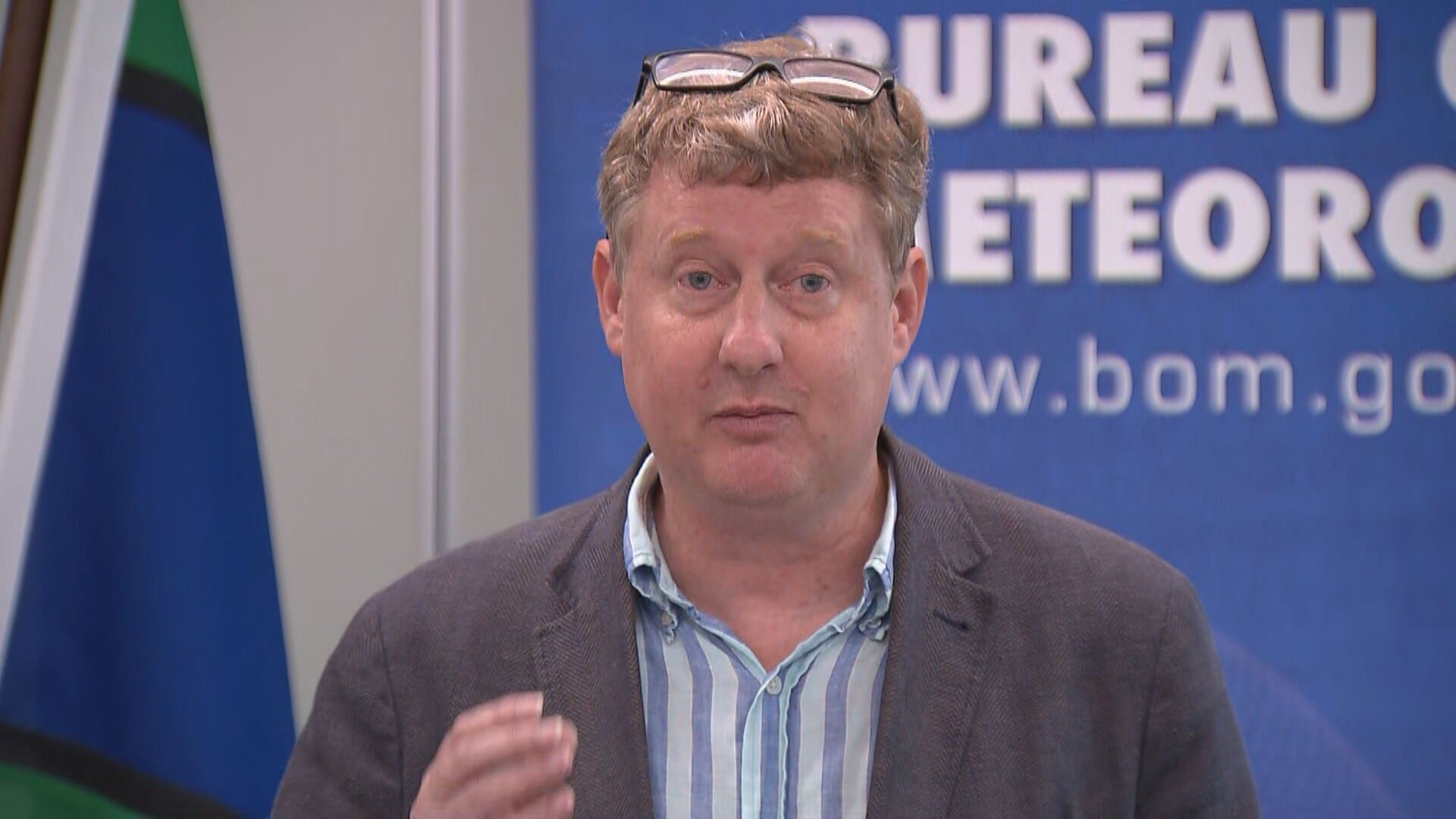
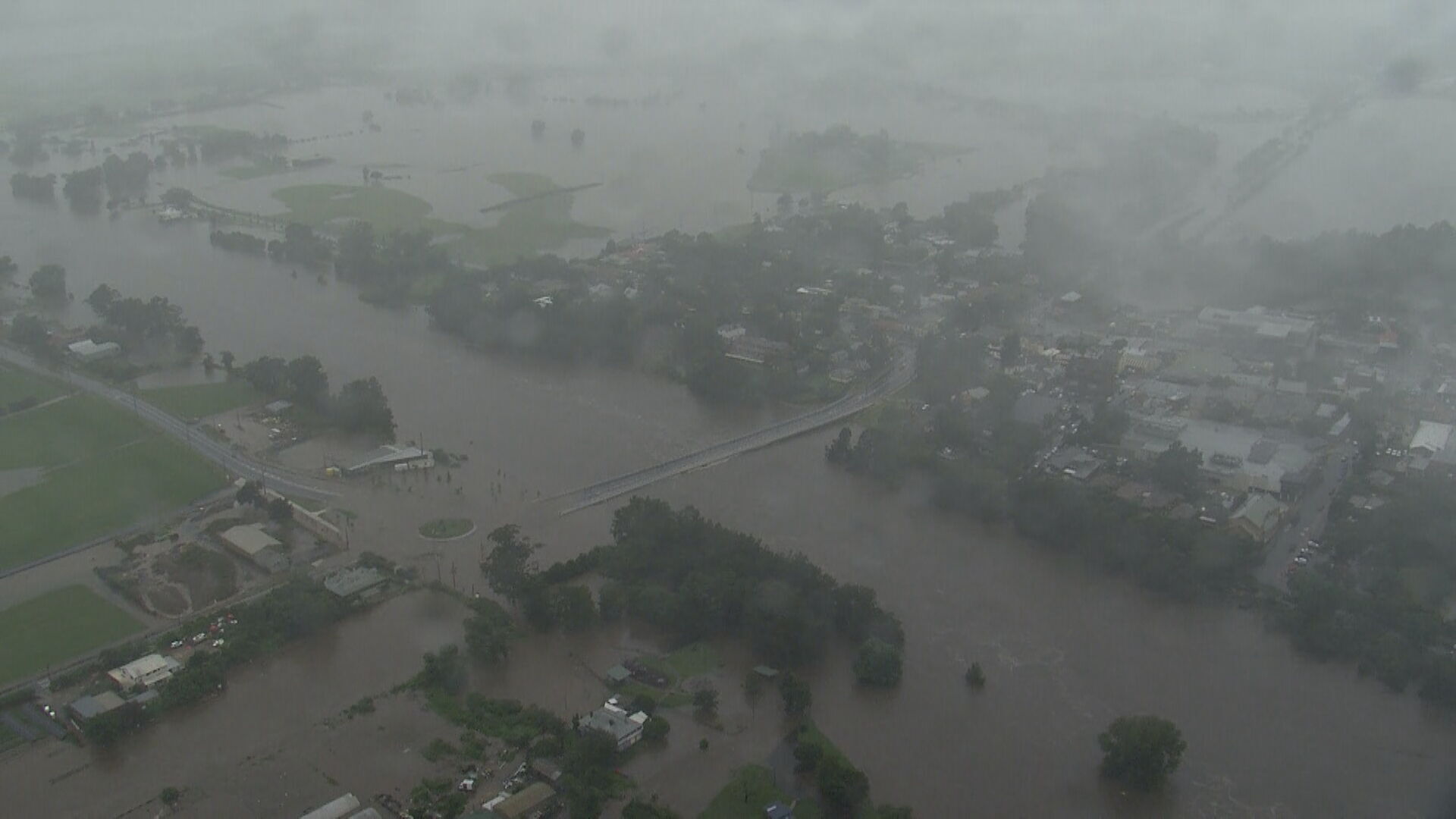
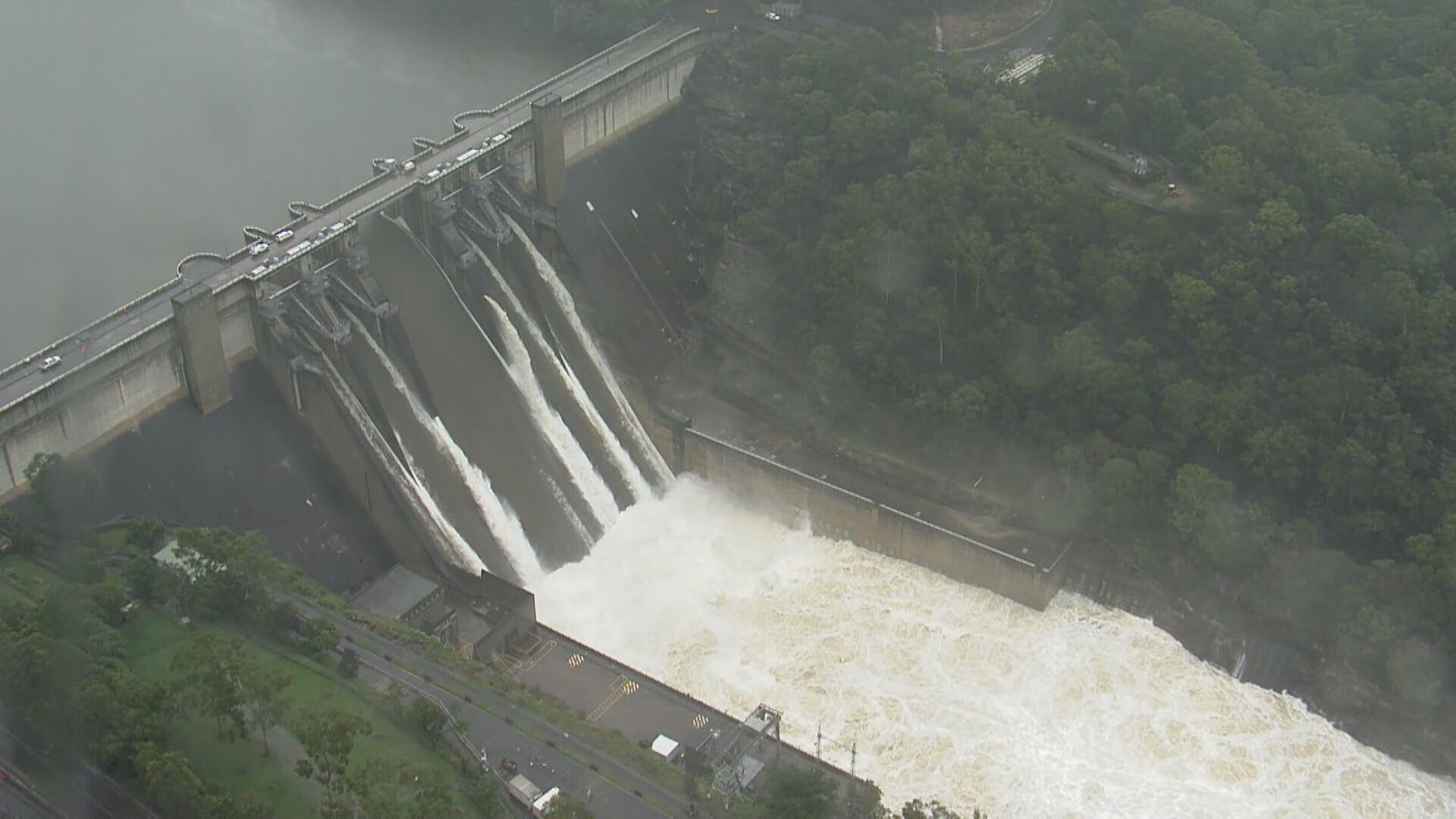
The Bureau of Meteorology has issued an urgent warning to communities in the Nepean Valley in Sydney's far west as floodwaters swell far beyond predicted levels.

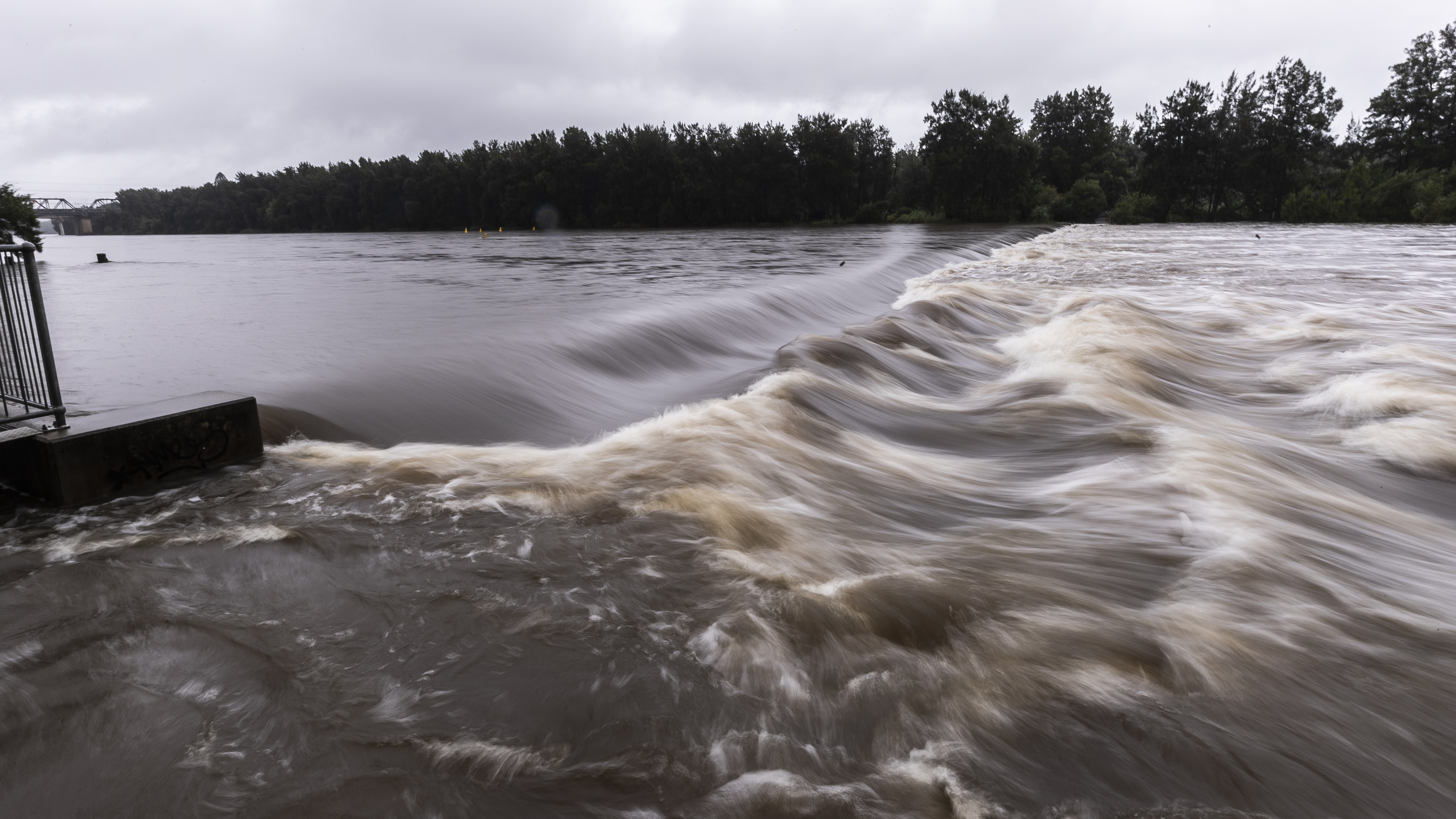
Heavy rainfall overnight concentrated on the Penrith region has seen the Nepean-Hawkesbury River rapidly rise this morning.

The river is expected to reach a peak of 9.8 metres at Penrith by 9pm tonight – the highest floodwaters since the floods of 1961.

LIVE UPDATES: Flood disaster a 'one in 100-year event', says NSW Premier

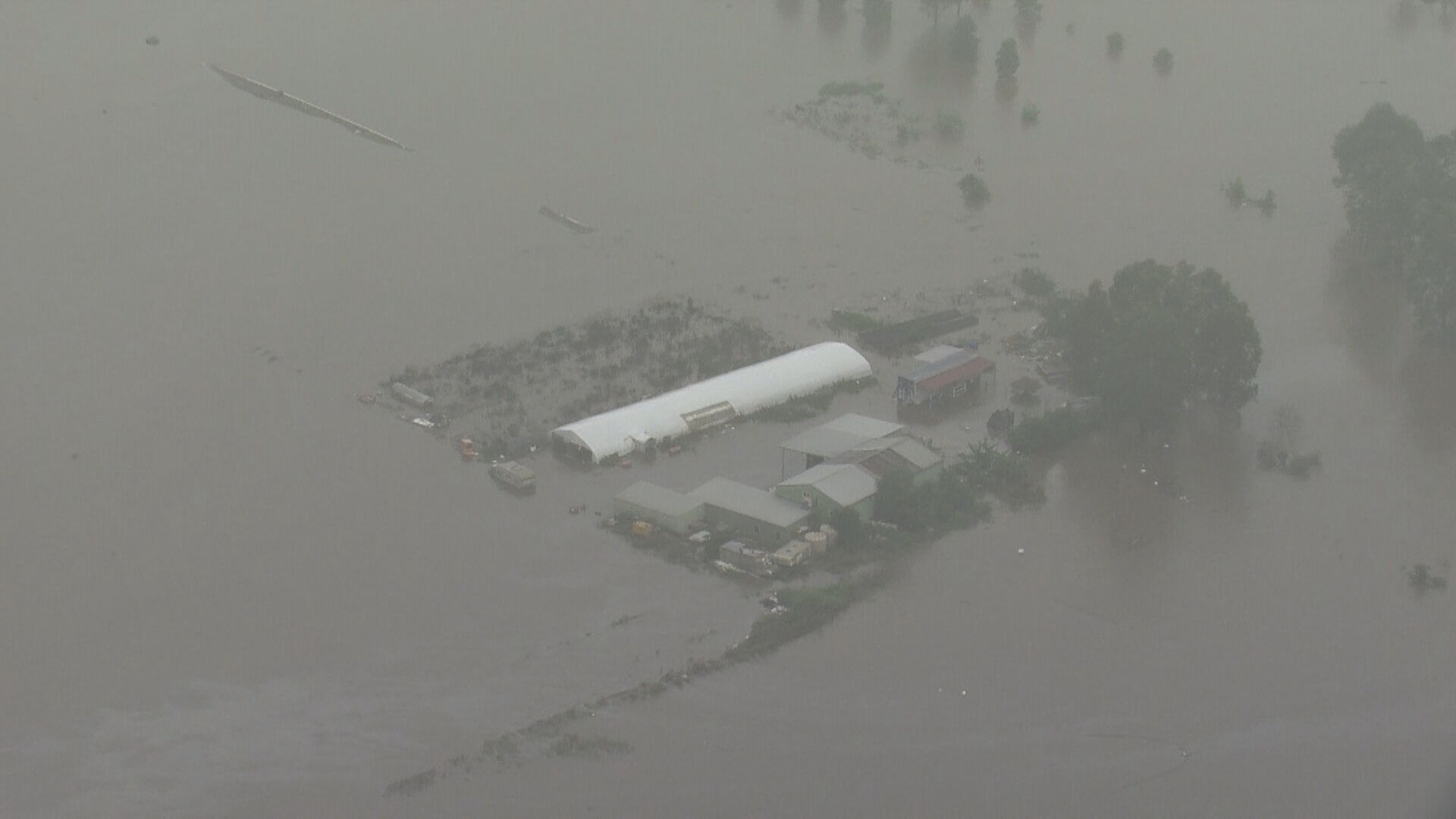
Floodwaters will then move downstream and impact communities at North Richmond, Windsor and Sackville over the next 48 hours, where floods have already seen residents forced to evacuate, submerged bridges and cut off communities.

"To give you some context around that, it is bigger than the February 2020 flood, it is bigger than the 1988 flood, it is bigger than the 1990 flood and it is bigger than the 1964 flood," the Bureau of Meteorology's Justin Robinson said

"It is one of the biggest floods we are likely to see for a very long time."

https://twitter.com/BOM_NSW/status/1373453091740250113?ref_src=twsrc%5Etfw

Mr Robinson said the Bureau was "very concerned" about flooding across the whole Nepean Valley.

He noted that predictions on flood peaks remained difficult, with the situation "dynamic and constantly changing".

If flood levels reach 10 metres or more, large areas of Sydney including Emu Plains and suburbs along the Nepean River will be heavily affected.

A major flooding warning is currently in place for communities along the Hawkesbury River at North Richmond.

READ MORE: Middle-of-the-night evacuations along Hawkesbury River

READ MORE: Floods, landslides close roads across NSW

Major flooding is also possible at Penrith and Lower Portland, while a moderate flood warning is in place along the Nepean River at Menangle and Wallacia during Sunday.

Mr Robinson urged affected communities to stay up-to-date with evacuation and flood warnings and heed all emergency advice.

"The river levels are still rising and we expect to see those river levels peak later today," he said.

NSW SES's Assistant Commissioner Dean Storey described the conditions as a "serious, potential life-threatening weather event" as he urged affected residents to heed flood warnings and evacuation orders.

READ MORE: Couple loses pet dog inside home swept away by floods

Flooding Penrith

NSW SES's Assistant Commissioner Dean Storey described the conditions as a "serious, potential life-threatening weather event" as he urged affected residents to heed flood warnings and evacuation orders.

He urged everyone in impacted communities to avoid unnecessary travel, with landslips causing treacherous conditions on the roads.

SES volunteers have now responded to 7,000 calls for assistance and that was "increasing exponentially by the hour."

There have been over 650 flood rescues conducted, most of them to rescue people from cars trapped in floodwaters.

Megalodon: Killer sharks could have been bigger than previously thought

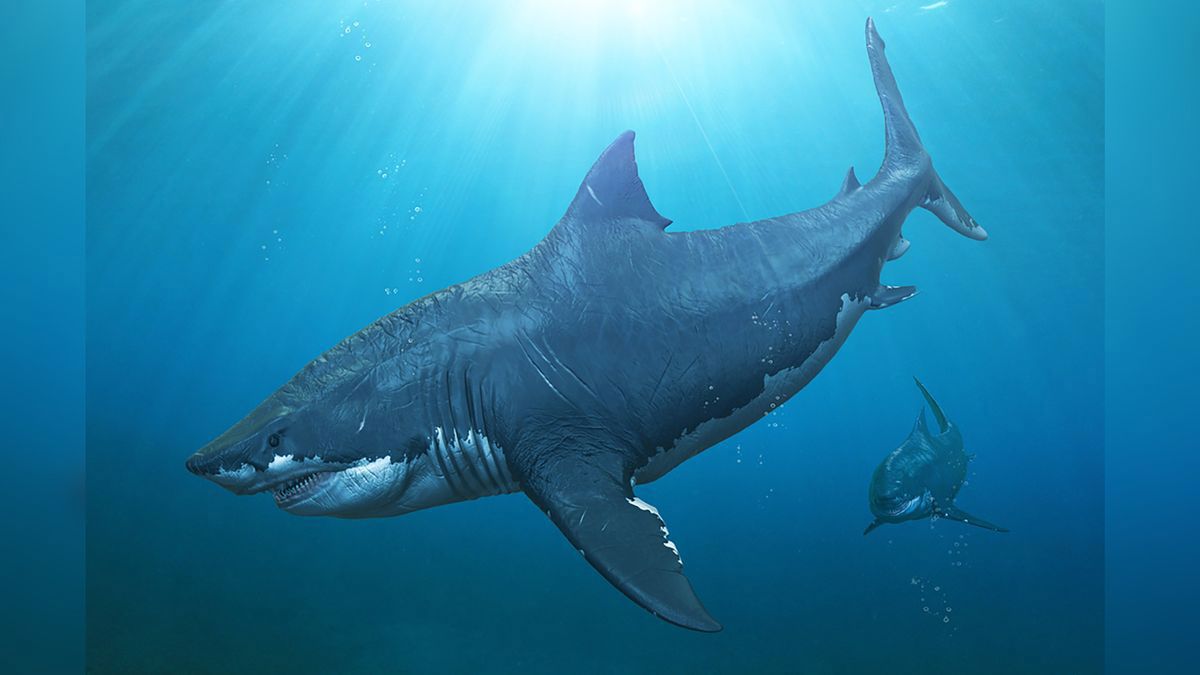
The giant prehistoric Carcharocles megalodon (or Otodus megalodon for some researchers) was the largest predatory shark to ever swim in Earth's seas.

Scientific evidence points to megalodon having lived between 16 million and 2.6 million years ago, going extinct at the end of the Pliocene Epoch when the world's oceans were much colder than today's.

READ MORE: Megalodons became so big through cannibalism in utero: study

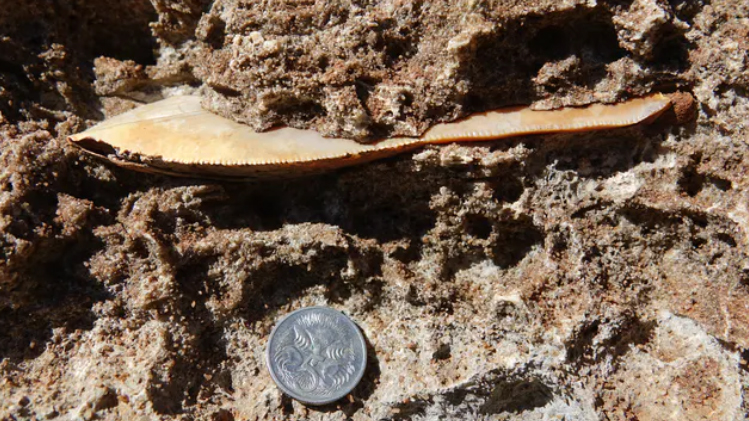
Over the years, several research papers have estimated meg's size. It's teeth are shaped like large, flat triangles with serrated edges — much like the teeth of living white sharks.

White sharks, along with mako sharks and the porbeagle shark all belong in the family Lamnidae and are referred to as "lamnids".

The close similarities between meg teeth and those of living lamnid sharks are strong evidence meg was indeed an ancient kind of lamnid shark. This premise is important, as it forms the basis of how we estimate the size of this ancient giant.

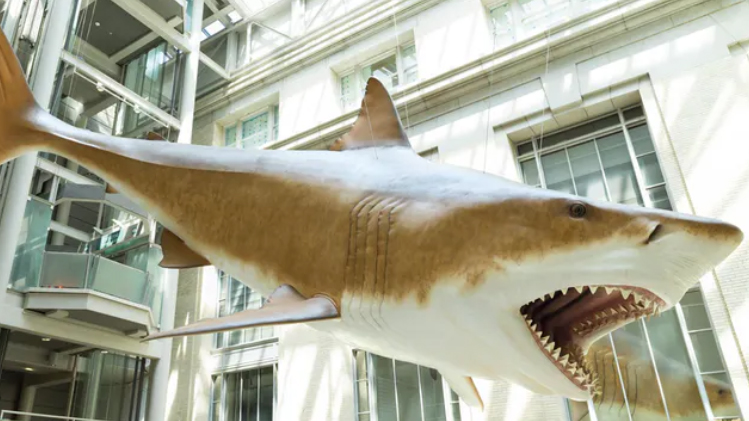
Two museum exhibits recently opened public displays featuring spectacular models of megalodon: one at the Smithsonian Museum of Natural History in Washington DC, and the other at the Western Australian Museum Boola Bardip in Perth.

These models, while both outstanding, don't depict entirely the same shark. So how was each one made? And what scientific approaches were used?

megalodon

Making the meghead

The Smithsonian's megalodon model is a full-body reconstruction measuring 15 metres.

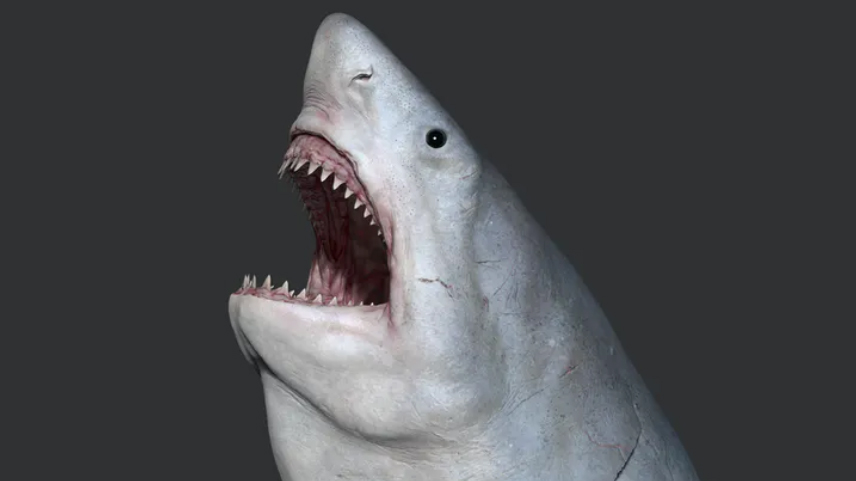
The other, at the Museum Boola Bardip, is a beautifully crafted model of meg's head.

This was built under the direction of one of us (Mikael) and opened to the public in November.

The giant megalodon

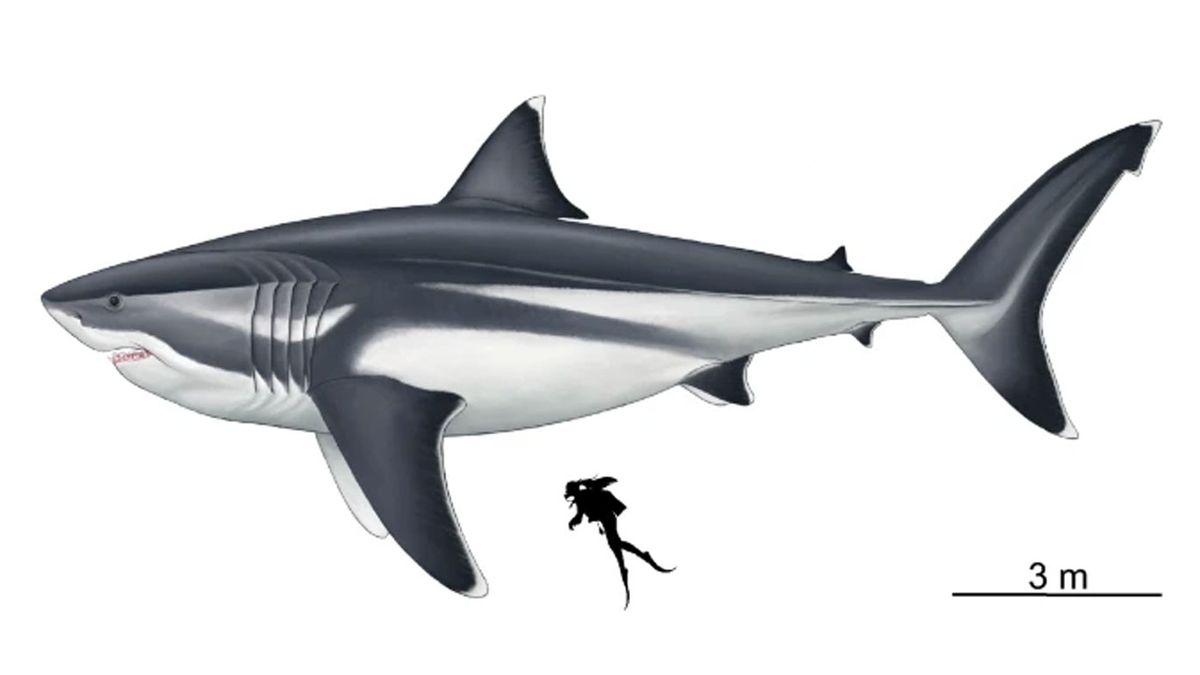
The shape of the "meghead" is similar to a white shark's head, but has a shorter and much rounder snout. Its colouration features "counter-shading" with a dark back and lighter belly — also similar to white sharks, but less contrasted.

The greater this colour contrast, the easier it becomes for underwater predators to go unnoticed by prey.

The meghead's jaw size was based on multiple teeth from a single ancient shark.

These specimens allowed us to scale the body size to correspond with tooth size, as well as to match the widest front tooth of another megalodon found in Cape Range, Western Australia.

megalodon

The rest of the meghead was then 3D modelled to fit the jaws. The end result was a head that corresponded to a creature roughly 14m in length.

This would be the largest meg shark ever found in Western Australia, but not the largest overall.

Magnificent displays make for great selfies

The Smithsonian meg model was overseen by Hans-Dieter Sues, a US paleontologist who drew the shark's outline based on a general lamnid shark body plan. This was then finessed by University of Maryland shark fossil expert Bretton Kent.

Read more: The true size of the megalodon revealed

After reviewing a small scale model, the full-size model was constructed based on a complete set of meg teeth assembled by Gordon Hubble, another megalodon expert.

Measuring a whopping 15m, the final model had to be assembled as modules, as it wouldn't have made it through the museum's doors or corridors in one piece.

This model is now suspended by cables from the Smithsonian's walls and ceiling, positioned strategically so visitors may take selfies from a nearby balcony.

Calculating maximum size

The meghead model in Perth was based on several specific tooth specimens found locally and from overseas, painting a picture of a 14m-long predator.

However, to calculate the species's maximum size, we first estimated the maximum jaw size possible for Meg and then scaled this up, using the same jaw size-to-body length ratio of living white sharks.

The maximum jaw size of meg can be calculated by scaling up the few known "associated dentitions" (multiple tooth specimens that were found together and came from a single shark) with the widest meg tooth ever found.

READ MORE: Great Whites wiped out the megalodon

Once we did this, the size estimate we reached was between 19–20m.

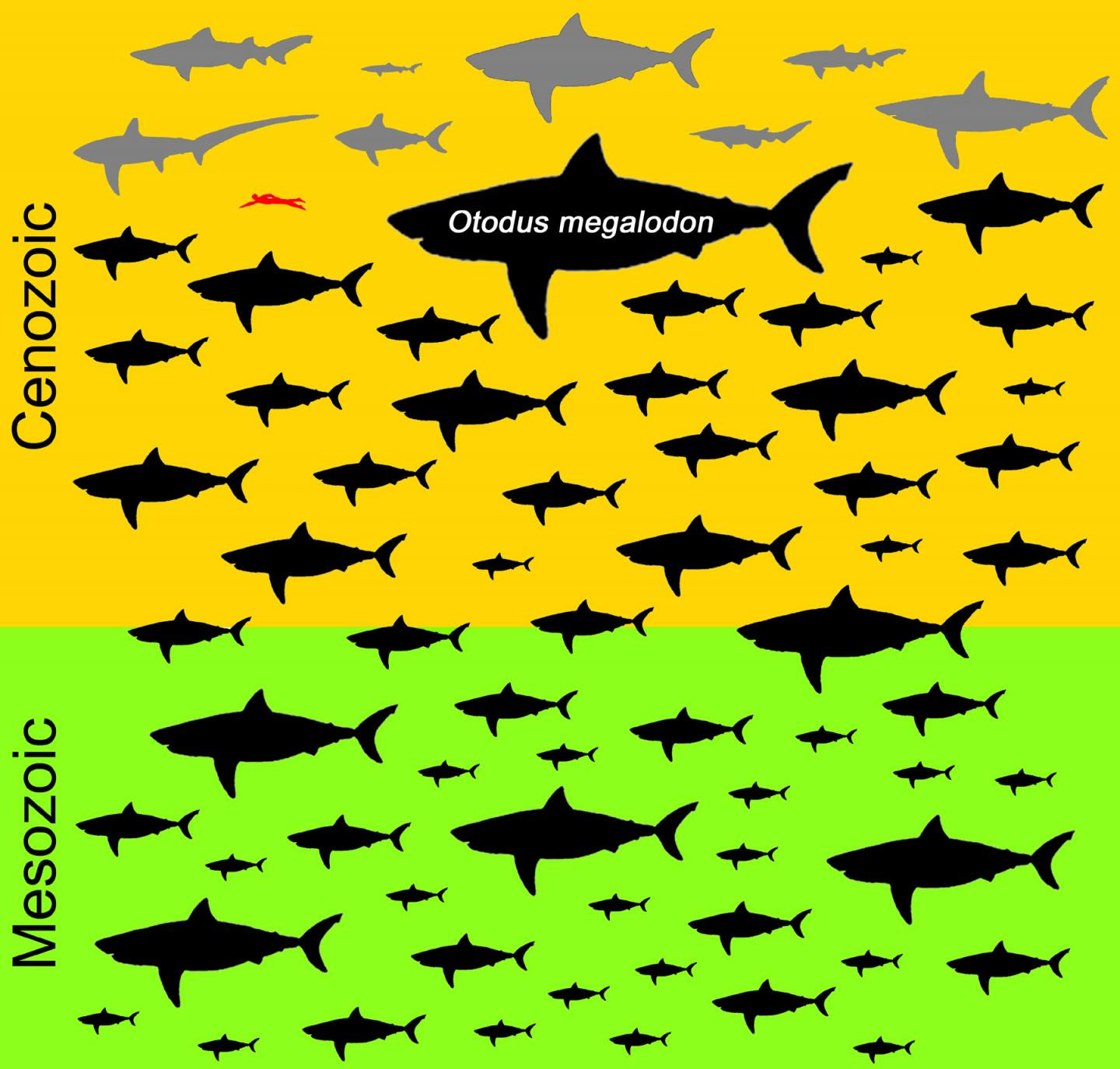
The otodus megalodon dwarfed all other sharks. A human is seen on this diagram in red.

And this is much larger than most other recent estimates.

The megashark lineage

Scientists have discovered meg's teeth to be part of a species continuum known as the megatooth shark lineage.

This is based on the discovery of many thousands of fossilised teeth that seem to merge into new shapes over time, pointing to the evolution of new species.

The start of this lineage began in the Danian stage about 63 million years ago, when the first sharks of the genus Otodus appeared.

This is why megalodon, belonging to this lineage, is now officially classified as Otodus megalodon. That said, the shark has been placed in various genera, including Carcharocles and Procarcharodon, and continues to be the subject of debate.

With an estimated body length of about 4m, the first Otodus sharks in the megatooth lineage would have been smaller than several other sharks living at the time.

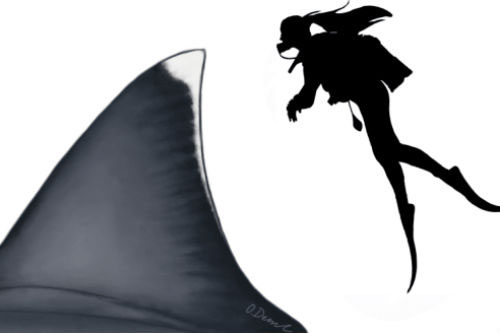
An artist's depiction of a human beside a megalodon shark's fin.

So how could they have evolved to become the colossus that is meg?

DePaul University professor Kenshu Shimada has suggested meg's huge size may have had something to do with a strange trait of lamnid sharks, which is that their young eat each other in the womb.

This behaviour, called "intrauterine cannibalism", provides a ready source of nutrition for growing fetuses and may have driven increased growth in megalodon.

That said, it would have also forced mothers to feed more actively, due to increased nutrition demand from the rapidly growing young.

This wouldn't have helped meg's survival when global temperatures cooled down about three million years ago. The cold spell would have killed off much of meg's food sources, eventually triggering its extinction.

In recent years, coastal limestone outcrops in Western Australia have yielded several new exciting megalodon teeth.

We hope these will tell us more about the story of meg and its variations which swam through the seas of ancient Australia.

By John Long, Strategic Professor in Palaeontology, Flinders University, and Mikael Siversson, Head of Department, Earth & Planetary Sciences, Western Australian Museum, reproduced with permission.

Mental health crisis: Why the suicide rate for veterinarians is so high

"Most people think vets earn a lot of money to play with cute animals all day, which couldn't be further from the truth," Sunshine Coast vet Sarah Morton says.

The reality is many vets in Australia are taking home surprisingly low salaries in exchange for long hours spent working under stressful conditions, according to those in the industry.

There is also one dark fact most Australians have never heard before.

Vets are about four times as likely to take their own life than the general Australian population and twice as likely as healthcare workers.

READ MORE: Sydney mother's plea after losing teen son to suicide
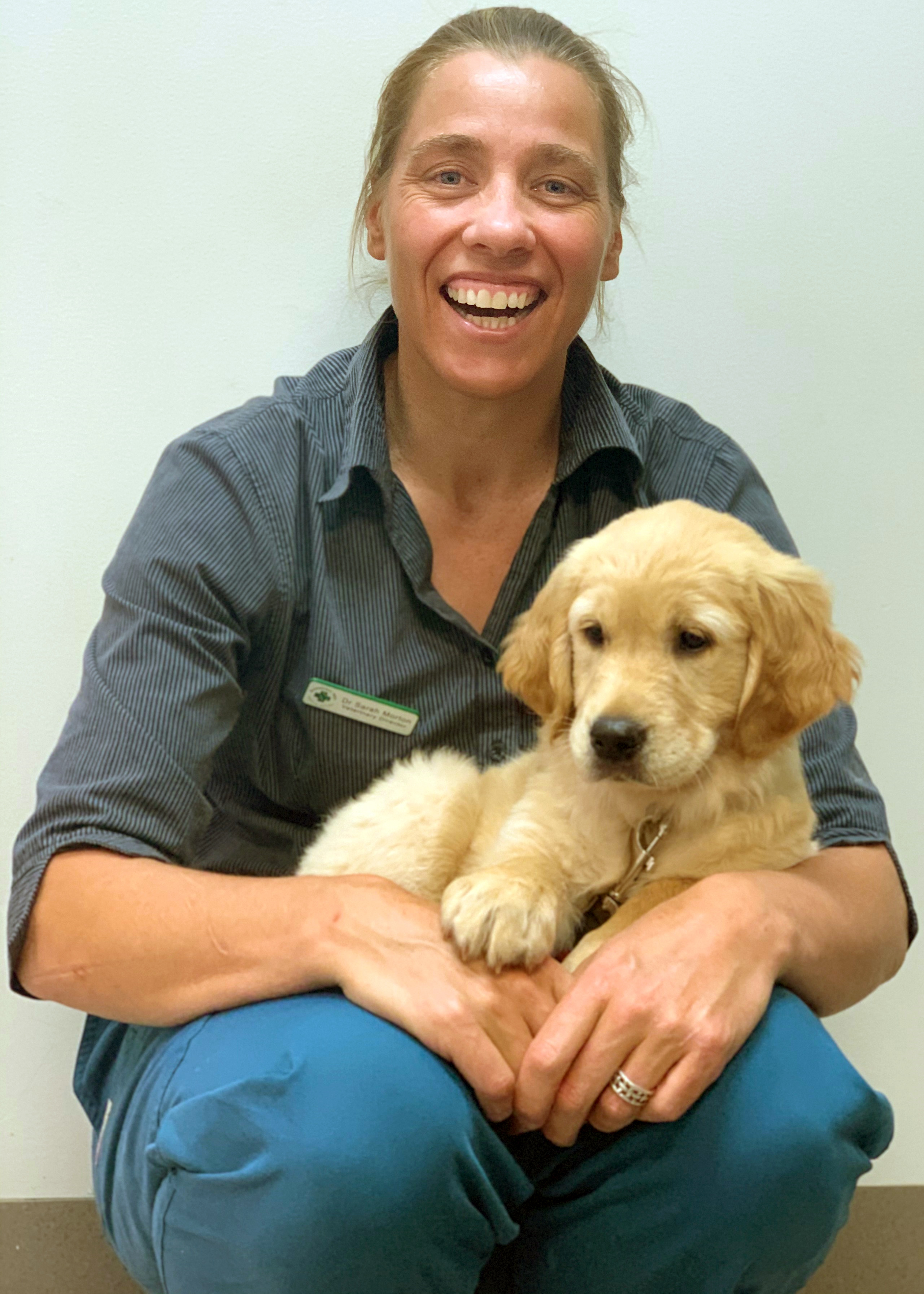
Dr Morton says many vets are struggling to meet the stressful demands of the job.

One vet will die by suicide every 12 weeks, figures from the Australian Veterinary Association show.

It's a tragedy that has hit home on a personal level for most vets, including Dr Morton.

In August 2019, she lost her senior vet and close friend, Jo, to suicide.

"Jo was just terrific – she was loud, bubbly, happy and smiley," Dr Morton said.

"The clients all adored her. They loved her so much, it really rocked their world."

Studious and astute by nature, Jo always worked to an "exceptional standard", Dr Morton said.

"She made me a better vet because her standards were second to none. I guess in hindsight she was always a bit too hard on herself and making sure everything was perfect," she said.

While Jo had been struggling with poor mental health for a long time, her friend had selflessly hidden her suffering from everyone, Dr Morton said.

Gold Coast psychologist Nadine Hamilton has spent years researching mental health among veterinarians and the reasons behind the profession's high suicide rate, which is seen not just in Australia but worldwide.

Vets were often incredibly intelligent, high achievers who put a lot of pressure on themselves in the face of a very demanding job, Dr Hamilton said.

"A vet's job is incredibly stressful," Dr Hamilton said.

"They could go from vaccinating a kitten to having a dog come in that has half of its face ripped off in a dog fight. Then they might need to euthanise someone's 16-year-old dog before seeing another cat that has been hit by a car. It is just this pressure."

Facing such suffering day-in-day-out led many vets to experience compassion fatigue towards the animals and their owners, Dr Hamilton said.

Emotional blackmail and difficult customers

Another big issue for vets was having to deal with difficult customers who were sometimes "rude, threatening and bullying", she said.

"Every vet that I have ever met and worked with is hugely compassionate, but it can be taken advantage of," she said, adding that some owners weren't above using emotional blackmail if they could not afford the treatment their pet needed.

"Owners will say things like, 'If you don't do this for my pet then I will take care of it myself.' I have heard plenty of horror stories around that sort of manipulation.

"I have heard of vets who have had guns pulled on them, it is horrific stuff."
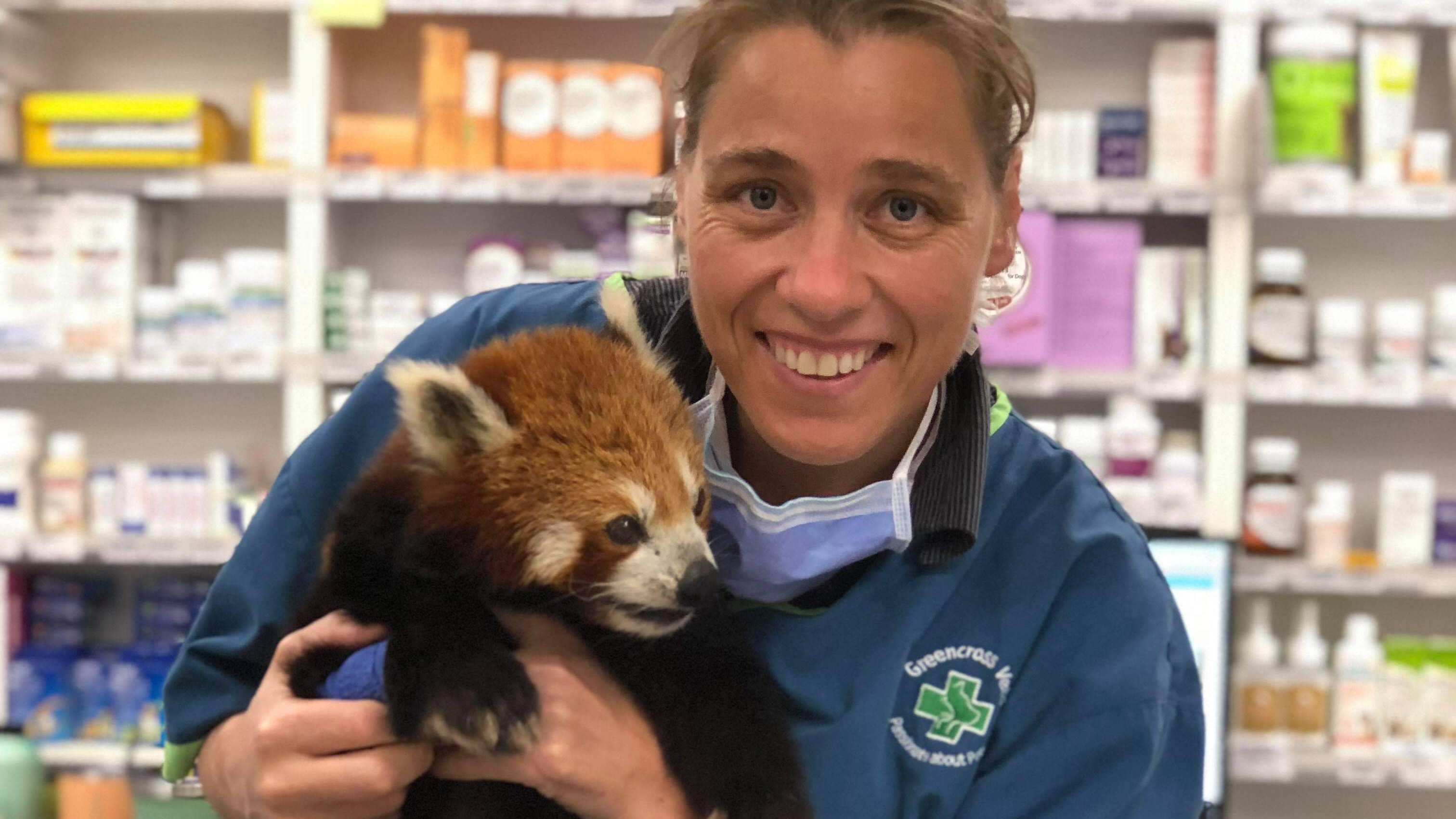
Dr Sarah Morton says people's perceptions of vets need to change.

The financial worries that came with running a small business were a common stress factor for vets, while they also perversely had to deal with the misconception from owners that they were earning a lot of money off the back of their high bills.

"We don't get Medicare for our pets. When we get their vet bills we are comparing it to a heavily-subsidised medical system for humans. It's not the vet's fault but they cop the blame for it," Dr Hamilton said.

"The reality is that after five years of uni the average starting salary for vets is around $48,000-$50,000 a year, and the average salary of a vet is between $75,000-$80,000 a year."

High attrition rate leading to vet shortage

While government figures show there is an increasing number of vets graduating from courses at university, they also point to a growing number of job vacancies.

Dr Hamilton said many vets were choosing to leave the industry before it became too much for them.

"Sadly, the numbers are dwindling in the vet industry. They are either leaving or taking their lives," she said.

Dr Morton said she was considered unusual for how long she had continued to work as a vet full time.

"We are finding that a lot of people are leaving within five years, or they are dropping right back to part time or locuming a few days a week," she said.

"At the moment I have two vacancies I am trying to fill because both of my vets – who are wonderful and gorgeous – need a break and are taking extended leave. They are both about to turn 30 and are taking 12 months and 6 months off respectively."
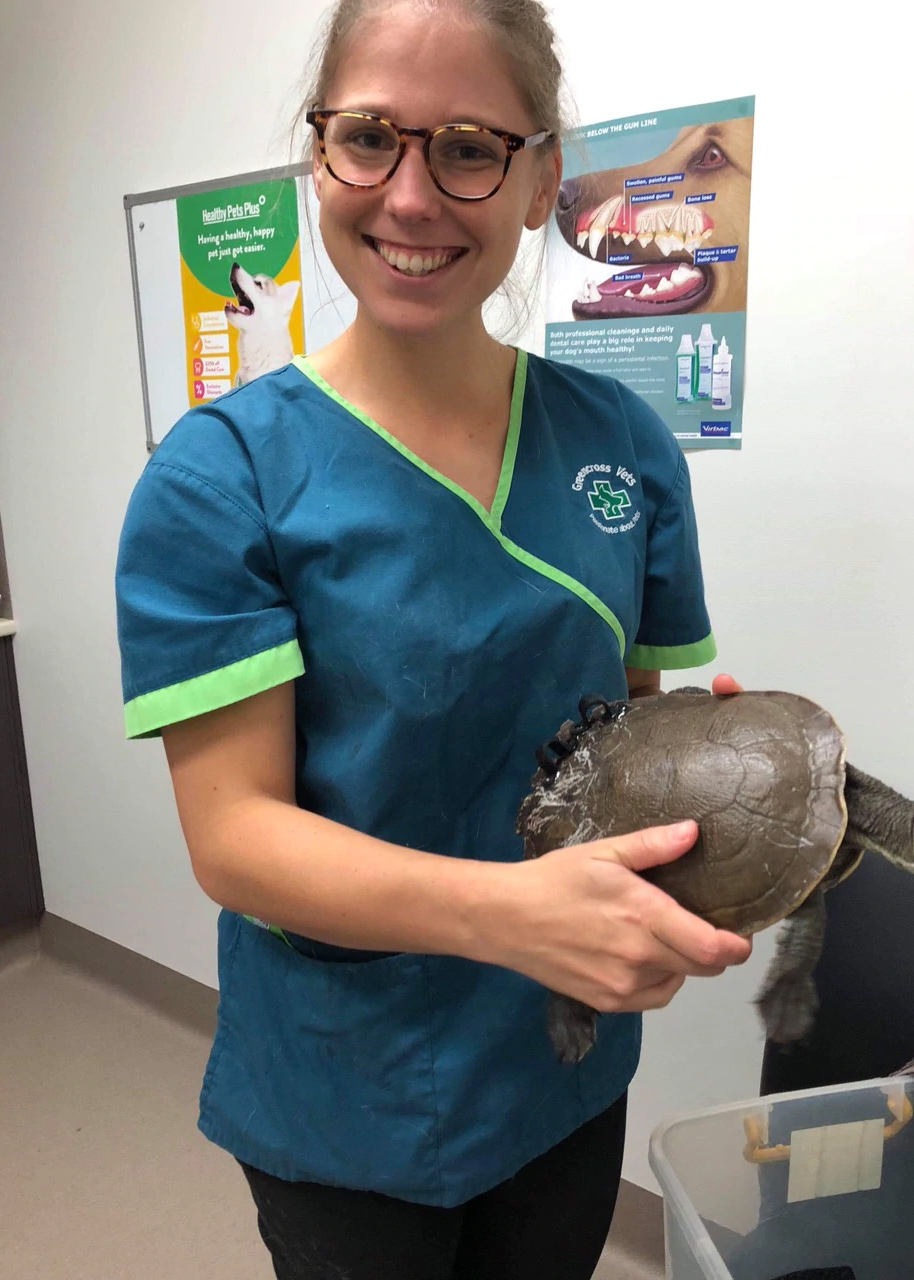
Senior vet Jo took her own life in 2019 after struggling with mental health issues.

There were many things that needed to be done to help address the emotional burnout among vets, Dr Morton said.

Mental health peer support groups with mentors for vets and vet nurses were needed urgently, while more attention should be given to the topics of mental health and resilience during vet school, she said.

Vet salaries also needed to increase, while people should be more realistic about how much their pet's medical care would likely cost, she said.

"I think that when people take on an animal they need to understand that it is a luxury item and they need to put aside $4000-$5000 a year to pay for things that may or may not come up. They need to understand that this is the case, or they need to get pet insurance," she said.

Dr Hamilton said raising awareness about the plight of vets among the public was key.

Over the past few years, there have been several high-profile campaigns launched with this aim in mind.

A Facebook campaign called Not One More Vet began in 2014 after the suicide of the world-renown US vet, Dr Sophia Yin.

In Australia, Dr Hamilton started her own campaign 'Love Your Pet Love Your Vet' in 2017, which is now a registered charity.

Yet, despite all the work that had been done, Dr Hamilton said most people were still not aware of the suicide rate for vets.

"This year we'll be running a campaign to highlight just that, that people aren't aware of it and where would we be without vets," Dr Hamilton said.

"My theory is that it took a pandemic for people to realise the value of doctors and nurses. But what about our vets?

"Our vets have been on the front line with all the wildlife that was injured in the bushfires. If someone's dog gets run over it's straight to the vet. Where would we be if they weren't here?"

Readers seeking support and information about suicide prevention can contact Lifeline on 13 11 14, Suicide Call Back Service 1300 659 467 or Kids Helpline on 1800 551 800.

Contact reporter Emily McPherson at em********@******om.au