Test your brains with the Herald’s morning quiz. Be sure to check back on nzherald.co.nz at 3pm for the afternoon quiz. To challenge yourself with more quizzes, CLICK HERE.
Category Archives: headline
More Dead Sea Scroll Fragments Found in Desert Cave
Six-millennia-old skeleton of child also unearthed during dig in Judean Desert by Israeli archeologists
Oliver Holmes in Jerusalem
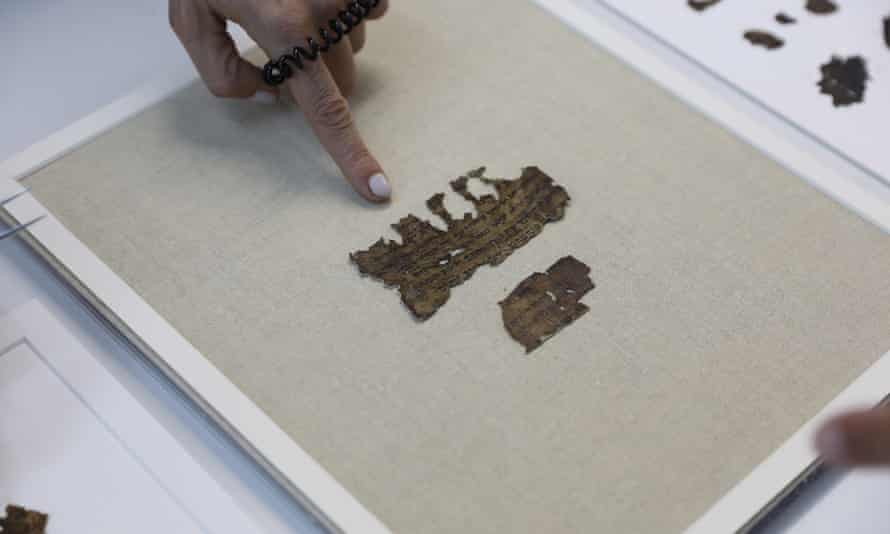
Israeli archaeologists have unearthed two dozen Dead Sea scroll fragments from a remote cave in the Judean Desert, the first discovery of such Jewish religious texts in more than half a century.
“For the first time in approximately 60 years, archaeological excavations have uncovered fragments of a biblical scroll,” the Israel Antiquities Authority (IAA) said in a statement.
More than 20 bits of parchment were found after teams rappelled down an 80-metre cliff and scoured the Cave of Horror, so called due to its precarious position and because 40 skeletons of women, men and children were found there during excavations in the 1960s.
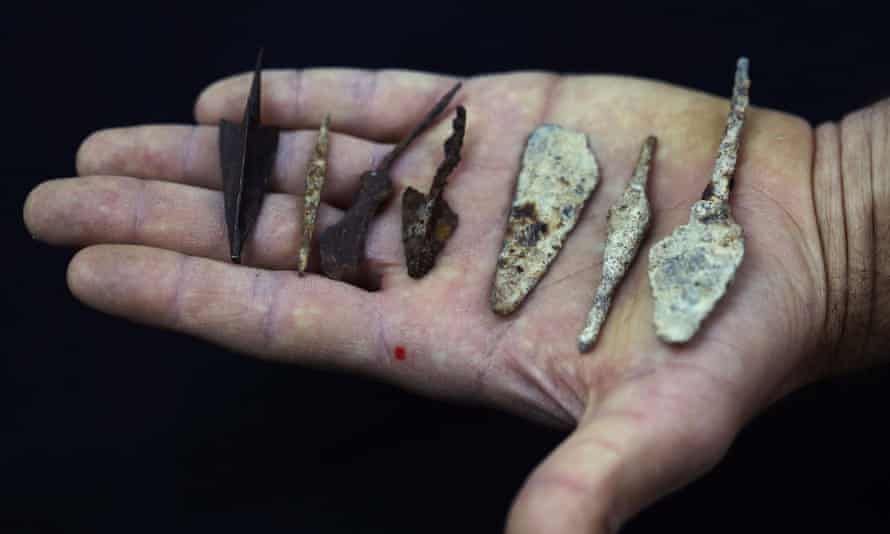
Jewish rebels are believed to have hidden in the canyon south of Jerusalem two millennia ago to escape a Roman advance. The fragments from the Hebrew Bible may have been stashed in the cave during the Bar Kochba Revolt, a Jewish uprising against Roman Emperor Hadrian, between AD132 and AD136.
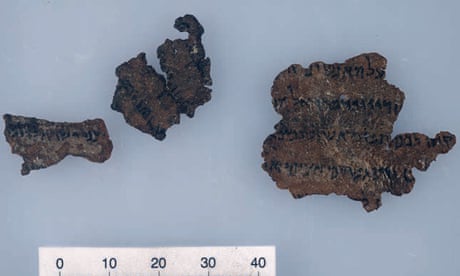
The IAA said the scrolls it found were Greek translations of the books of Zechariah and Nahum from the Book of the Twelve Minor Prophets, and were radiocarbon-dated to the 2nd century AD. The name of God is written in Hebrew.
One fragment read: “These are the things you are to do: Speak the truth to one another, render true and perfect justice in your gates.”
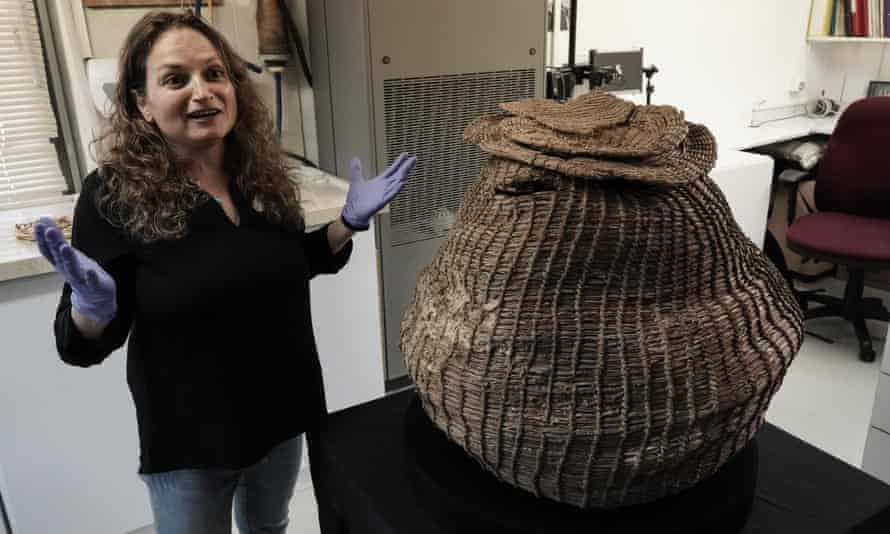
Following a years-long dig across caves and cliffs, the authority said it had also discovered a six-millennia-old skeleton of a child and a basket it described as the oldest in the world, at over 10,000 years.
The authority had commissioned the operation in 2017 following reports of plundering.
IAA director Israel Hasson said the findings were “a wakeup call” for devoting more resources to continue the project and said it had only surveyed half the cliffs so far.
Trade in Dead Sea Scrolls awash with suspected forgeries, experts warn
“We must ensure that we recover all the data that has not yet been discovered in the caves before the robbers do. Some things are beyond value,” Hasson said.
Sections of the dig took place in the occupied West Bank, a part of the Palestinian territories, a common Israeli practice that has led to controversy. The IAA coordinated with the defence ministry, which runs the occupation.
The original Dead Sea scrolls, a collection of Jewish texts, were also found in desert caves in the West Bank. However, they were discovered by nomadic Bedouin shepherds in the 1940s and 1950s.
Those texts included sections of the Hebrew bible 1,000 years older than any previously known copy and revolutionised the understanding of Judaism from which early Christianity emerged.
The post More Dead Sea Scroll Fragments Found in Desert Cave appeared first on The St Kitts Nevis Observer.
US Airlines See Recovery Coming
(Reuters) – U.S. airline executives on Monday pointed to concrete signs of a domestic leisure travel recovery as a slowing pandemic drives spring and summer bookings, pushing shares to their highest level since the coronavirus crisis hit the sector a year ago.
“We certainly are seeing the beginning of what feels like a very large uptick,” said American Airlines Chief Executive Doug Parker, one of several CEOs speaking at a J.P. Morgan conference.
Ted Christie, CEO of budget carrier Spirit Airlines, said the recovery appeared to “have legs.”
Executives cited data showing that U.S. COVID-19 vaccinations are accelerating and have outstripped the number of positive cases, which are on the decline.
As of Sunday, 21% of the U.S. population had received at least one dose of a vaccine.
As a result, people are booking vacations and visits to friends and relatives, helping to slow the pace of expected revenue declines in the first quarter, though business and international travel remain depressed.
Airline shares started dropping dramatically on Feb 21, 2020, as the pandemic spread, reaching a low on May 14 and gradually increasing since then to the current high.
United Airlines expects to halt its cash burn in March, CEO Scott Kirby said, the first major carrier to say it could hit the industry’s milestone. In January, United said an average daily core cash burn of $19 million in the fourth quarter would likely continue in the beginning of 2021.
The positive trend in core cash burn is expected to continue after March, assuming the current bookings trajectory remains in place, Kirby said. Core cash burn excludes debt and severance payments.
Shares of United surged 9% and the Dow Jones U.S. Airlines Index [.DJUSAR] climbed more than 4%.
Delta Air Lines is “cautiously optimistic” that it can halt its cash burn this spring, CEO Ed Bastian said.
Delta said it will use cash for aircraft purchases in the second quarter and expects its first-quarter revenue decline to be at the low end of its forecast for a 60% to 65% decline from the same quarter in 2019, before the onset of the pandemic.
Southwest Airlines estimated lower cash burn in the first quarter and a lower decline in operating revenue for March than previously forecast.
JetBlue Airways also forecast a slowing pace in its first-quarter revenue drop, projecting a decline of between 61% and 64%, compared with the same period in 2019. It had previously forecast a fall in revenue of 65% to 70%.
American, the most leveraged U.S. airline, said it is not looking to raise any more financing after a $10 billion debt deal last week and expects to have more than $17 billion of liquidity at the end of March.
More than 1.3 million passengers were screened in U.S. airports on Friday and Sunday, according to Transportation Security Administration data, the highest number since the pandemic crushed air travel in 2020.
“I do think we’re near the end of the virtual world,” said United’s Kirby.
Reporting by Tracy Rucinski and Sanjana Shivdas; Additional reporting by Ankit Ajmera; Editing by Louise Heavens, Paul Simao, Jonathan Oatis and Aurora Ellis
The post US Airlines See Recovery Coming appeared first on The St Kitts Nevis Observer.
Israeli experts announce discovery of new Dead Sea scrolls
Israeli archaeologists on Tuesday announced the discovery of dozens of new Dead Sea Scroll fragments bearing a biblical text found in a desert cave and believed hidden during a Jewish revolt against Rome nearly 1900 years ago.
The fragments of parchment bear lines of Greek text from the books of Zechariah and Nahum and have been dated around the 1st century AD based on the writing style, according to the Israel Antiquities Authority. They are the first new scrolls found in archaeological excavations in the desert south of Jerusalem in 60 years.
The Dead Sea Scrolls, a collection of Jewish texts found in desert caves in the West Bank near Qumran in the 1940s and 1950s, date from the 3rd century BC to the 1st century AD. They include the earliest known copies of biblical texts and documents outlining the beliefs of a little understood Jewish sect.
READ MORE: Boy discovers incredibly rare 2500-year-old artefact on family trip
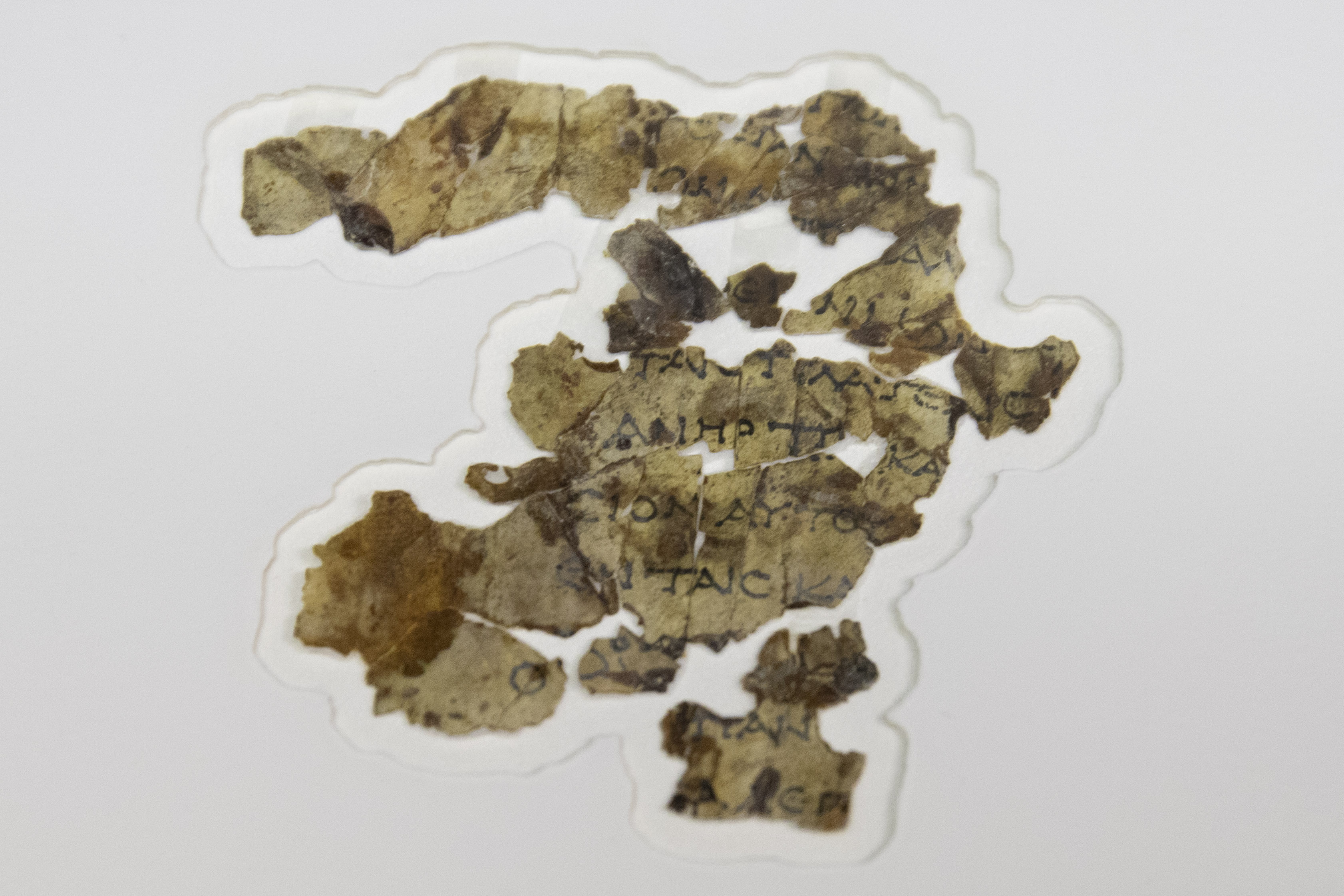
The roughly 80 new pieces are believed to belong to a set of parchment fragments found in a site in southern Israel known as the "Cave of Horror" — named for the 40 human skeletons found there during excavations in the 1960s — that also bear a Greek rendition of the Twelve Minor Prophets, a book in the Hebrew Bible. The cave is located in a remote canyon around 40km south of Jerusalem.
The artefacts were found during an operation in Israel and the occupied West Bank conducted by the Israel Antiquities Authority to find scrolls and other artefacts to prevent possible plundering. Israel captured the West Bank in the 1967 war, and international law prohibits the removal of cultural property from occupied territory. The authority held a news conference Tuesday to unveil the discovery.
The fragments are believed to have been part of a scroll stashed away in the cave during the Bar Kochba Revolt, an armed Jewish uprising against Rome during the reign of Emperor Hadrian, between 132 and 136 AD. Coins struck by rebels and arrowheads found in other caves in the region also hail from that period.
READ MORE: Strange reason decapitated head ended up in Italian cave
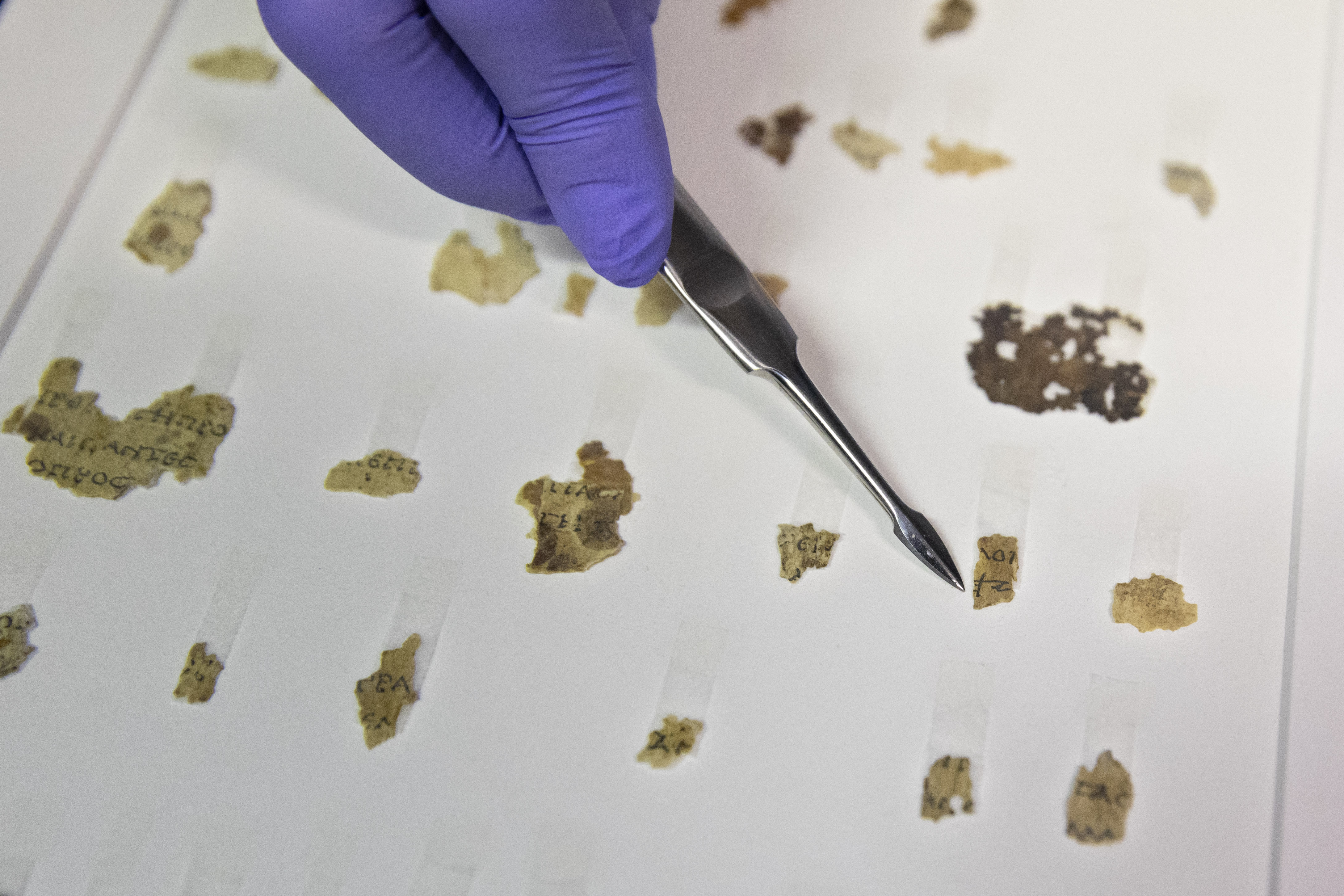
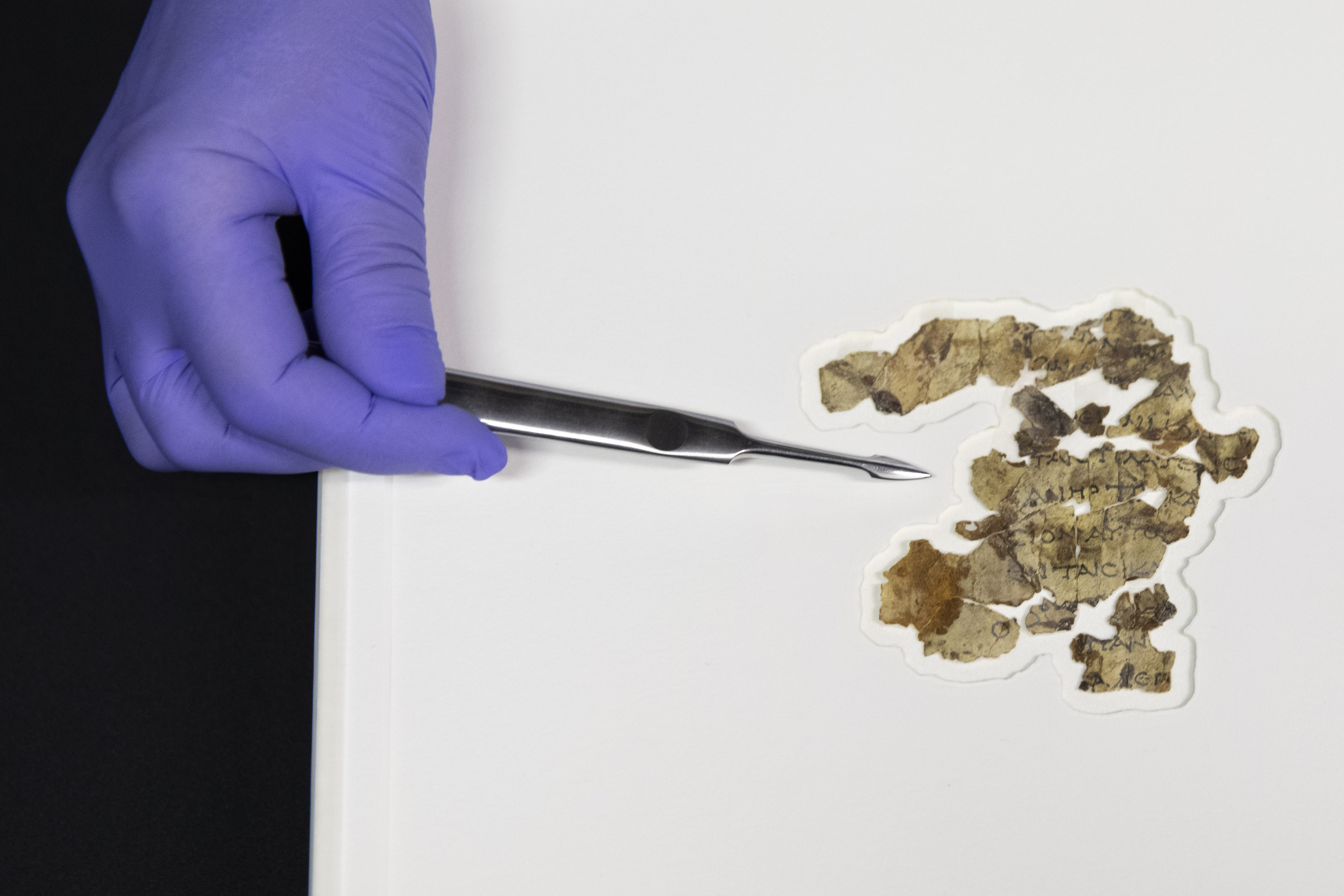
"We found a textual difference that has no parallel with any other manuscript, either in Hebrew or in Greek," said Oren Ableman, a Dead Sea Scroll researcher with the Israel Antiquities Authority. He referred to slight variations in the Greek rendering of the Hebrew original compared to the Septuagint — a translation of the Hebrew Bible to Greek made in Egypt in the 3rd and 2nd centuries BC.
"When we think about the biblical text, we think about something very static. It wasn't static. There are slight differences and some of those differences are important," said Joe Uziel, head of the antiquities authority's Dead Sea Scrolls unit. "Every little piece of information that we can add, we can understand a little bit better" how the Biblical text came into its traditional Hebrew form.
Alongside the Roman-era artefacts, the exhibit included far older discoveries of no lesser importance found during its sweep of more than 500 caves in the desert: the 6000-year-old mummified skeleton of a child, an immense, complete woven basket from the Neolithic period, estimated to be 10,500 years old, and scores of other delicate organic materials preserved in caves' arid climate.
In 1961, Israeli archaeologist Yohanan Aharoni excavated the "Cave of Horror" and his team found nine parchment fragments belonging to a scroll with texts from the Twelve Minor Prophets in Greek, and a scrap of Greek papyrus.
READ MORE: Modern medicine reveals violent cause of death for ancient pharaoh
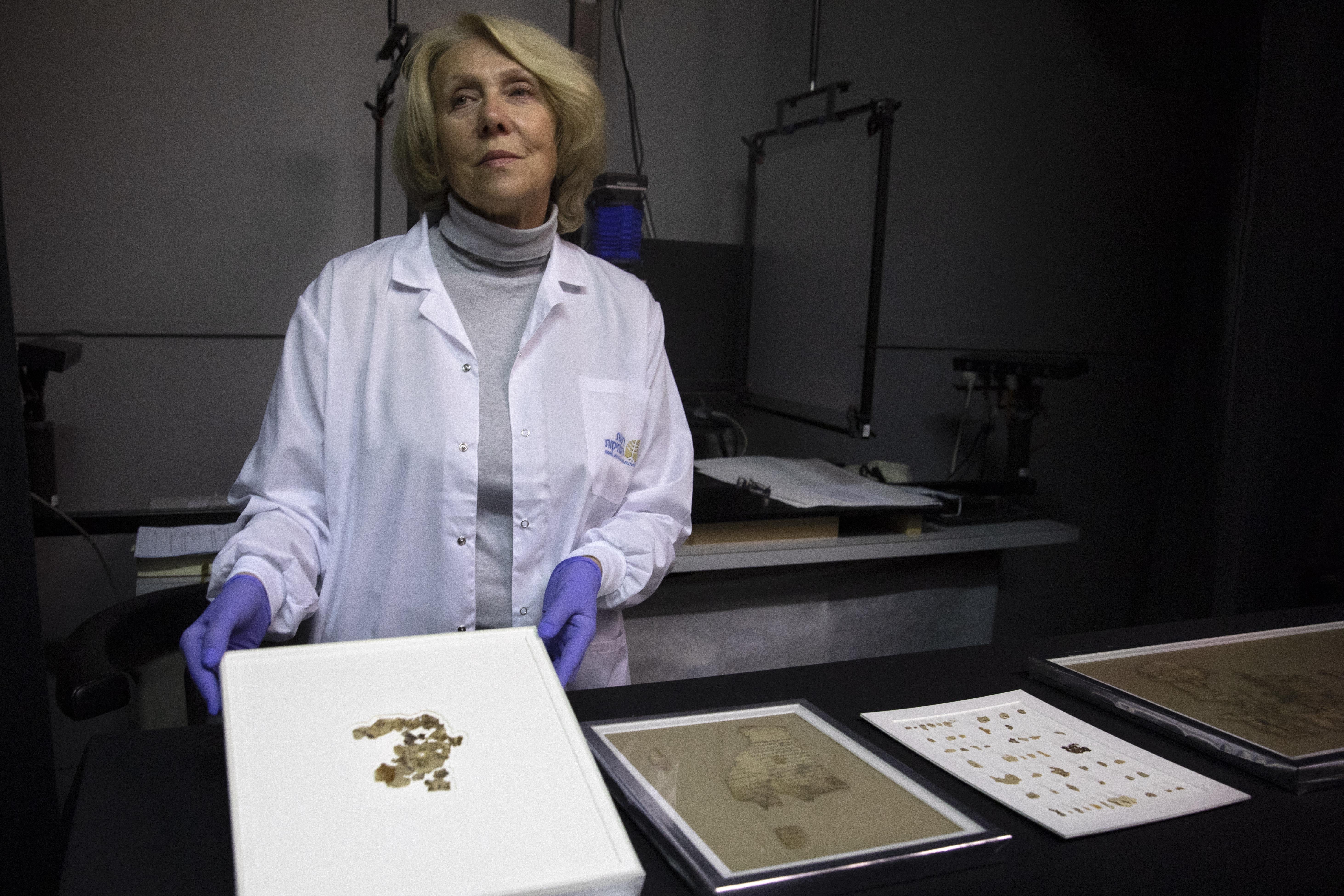
Since then, no new texts have been found during archaeological excavations, but many have turned up on the black market, apparently plundered from caves.
For the past four years, Israeli archaeologists have launched a major campaign to scour caves nestled in the precipitous canyons of the Judean Desert in search of scrolls and other rare artefacts. The aim is to find them before plunderers disturb the remote sites, destroying archaeological strata and data in search of antiquities bound for the black market.
Until now the hunt had only found a handful of parchment scraps that bore no text.
Amir Ganor, head of the antiquities theft prevention unit, said that since the commencement of the operation in 2017 there has been virtually no antiquities plundering in the Judean Desert, calling the operation a success.
"For the first time in 70 years, we were able to preempt the plunderers," he said.
Corona Effect: 2020 Caribbean Tourism Down 65%
BRIDGETOWN, Barbados (CMC) — Tourist arrivals to the Caribbean fell by 65.5 percent in 2020, according to the Caribbean Tourism Organisation (CTO), but it is forecasting a turnaround this year.
In a statement released yesterday, the CTO said the impact of COVID-19 on the travel and tourism industry was particularly evident during the period of April to mid-June, when there was literally no activity in some destinations.
“This was characterised by empty hotels and restaurants, deserted attractions, shut borders, laid-off workers, grounded airlines and crippled cruise lines. While we saw some fluctuations in the levels of visitors for the remaining months of 2020, the influx of visitors has not reached levels even closely comparable to those being experienced prior to March 2020,” it said.
“In fact, some destinations remain closed to visitors, with limited airlift primarily for repatriation of locals and cargo.”There was a 72 per cent slide to 8.5 million cruise visits in 2020, when compared to the 30 million visits in 2019.
Cruise lines plying Caribbean routes remain non-operational due to a strict ban imposed by the US Centres for Disease Control and Prevention (CDC).
The CTO noted that with government restrictions both in the Caribbean and globally reducing and, in many cases, preventing travel for large periods of time, tourist arrivals to the region in 2020 fell to just over 11 million, a decline of 65.5 per cent when compared to the record 32 million tourist visits in 2019.
“Still, this was better than the world average of 73.9 per cent decline during the same period,” it said.
The CTO said a period of virtually no tourism began in mid-March, and the second quarter was the worst-performing with arrivals down by 97.3 per cent. Tourists began visiting again in June as the sector began to reopen.
“Still, the fall-off in stayover arrivals continued through to September — when a gradual reversal began — and continued right up to December. Destination initiatives such as the long-stay work programmes, other promotional activities and efforts of regional organisations such as the CTO, the Caribbean Hotel and Tourism Association and the Caribbean Public Health Agency, contributed to the gradual rise in arrivals,” the regional tourism organisation said.
Like stayover arrivals, cruise was buoyed by the performance in the first three months of 2020, particularly the month of February, when there was a 4.2 per cent rise in visits.
However, a 20.1 per cent fall in the first quarter was followed by no activity for the remainder of the year as ships remained non-operational. The overall result was a 72 per cent slide to 8.5 million cruise visits, when compared to the 30 million visits in 2019.
The limited travel beyond the first two-and-a-half months of the year, resulted in difficulties in compiling visitor expenditure numbers in 2020.
However, based on information derived from international partners such as the United Nations World Tourism Organization (UNWTO), and limited reporting by Caribbean countries, the CTO estimated that across the region visitor expenditure declined by 60 to 80 per cent, in line with the decline in stayover and cruise arrivals.
Preliminary data indicates that the average length of stay for 2020 remained at roughly seven nights, the same as in in 2019.
In its forecast, the CTO said the Caribbean’s performance in 2021 will depend largely on the success of the authorities in the marketplace and the region in combating, containing and controlling the virus.
“Already, there are some encouraging signs like the vaccine roll-out taking place in North America, Europe and the Caribbean,” it said.
“However, this must be tempered by some other factors such as: lockdowns in our key source markets which are expected to continue into the second quarter, international travel confidence not expected to pick up until the summer 2021, a steep fall in the number of people planning to travel abroad and the possible requirement by the authorities in our key markets for their citizens to vaccinate before travelling abroad.”
Taking those factors into consideration, the CTO said its initial forecast is for a 20 per cent rise in arrivals in 2021, with a similar increase in visitor expenditure, when compared to 2020.
The post Corona Effect: 2020 Caribbean Tourism Down 65% appeared first on The St Kitts Nevis Observer.
Three Killed in Bahamas Boat Mishaps, One Missing
A man and two women were killed in separate boating accidents in the Bahamas on Sunday, with one man still missing.
The post Three Killed in Bahamas Boat Mishaps, One Missing appeared first on The St Kitts Nevis Observer.
'No indication' AstraZeneca vaccine caused blood clots: EU drug agency
With coronavirus cases rising in many places, governments faced the grimmest of dilemmas Tuesday: push on with a vaccine that is known to save lives or suspend use of AstraZeneca over reports of dangerous blood clots in a few recipients despite no evidence the shot was responsible.
It has created a jagged divide across the globe, forcing politicians to assess the health risks of halting the shots at a time when many countries, especially in Europe, are already struggling to overcome logistical hurdles and vaccine hesitancy among their populations.
Sweden was the latest to join a swelling group of European Union nations choosing caution over speed, even as the head of the European Medicines Agency said there was "no indication" that AstraZeneca vaccines were the cause of the clots.
READ MORE: 'No link' between vaccine and blood clots, Australia's top doctor says

Emer Cooke said Tuesday that the agency is "firmly convinced" that the benefits of the AstraZeneca shot outweigh the risks, but an evaluation is ongoing.
Europe has the luxury to be able to pick from several vaccine candidates — but the decision is still not an easy one on the continent, where the virus is again surging and where the vaccination campaign has repeatedly stumbled.
The choice may be even more fraught elsewhere because many countries are relying heavily on AstraZeneca, which is cheaper and easier to handle than some other shots. The vaccine has so far played a huge role in the global initiative to ensure vaccines get to poorer countries known as COVAX.
The difficulty of the decision was clear in Thailand, the first country outside Europe to temporarily suspend use of the AstraZeneca vaccine, only to recant on Tuesday — when its prime minister received a dose.
READ MORE: Estonia's prime minister tests positive for COVID-19
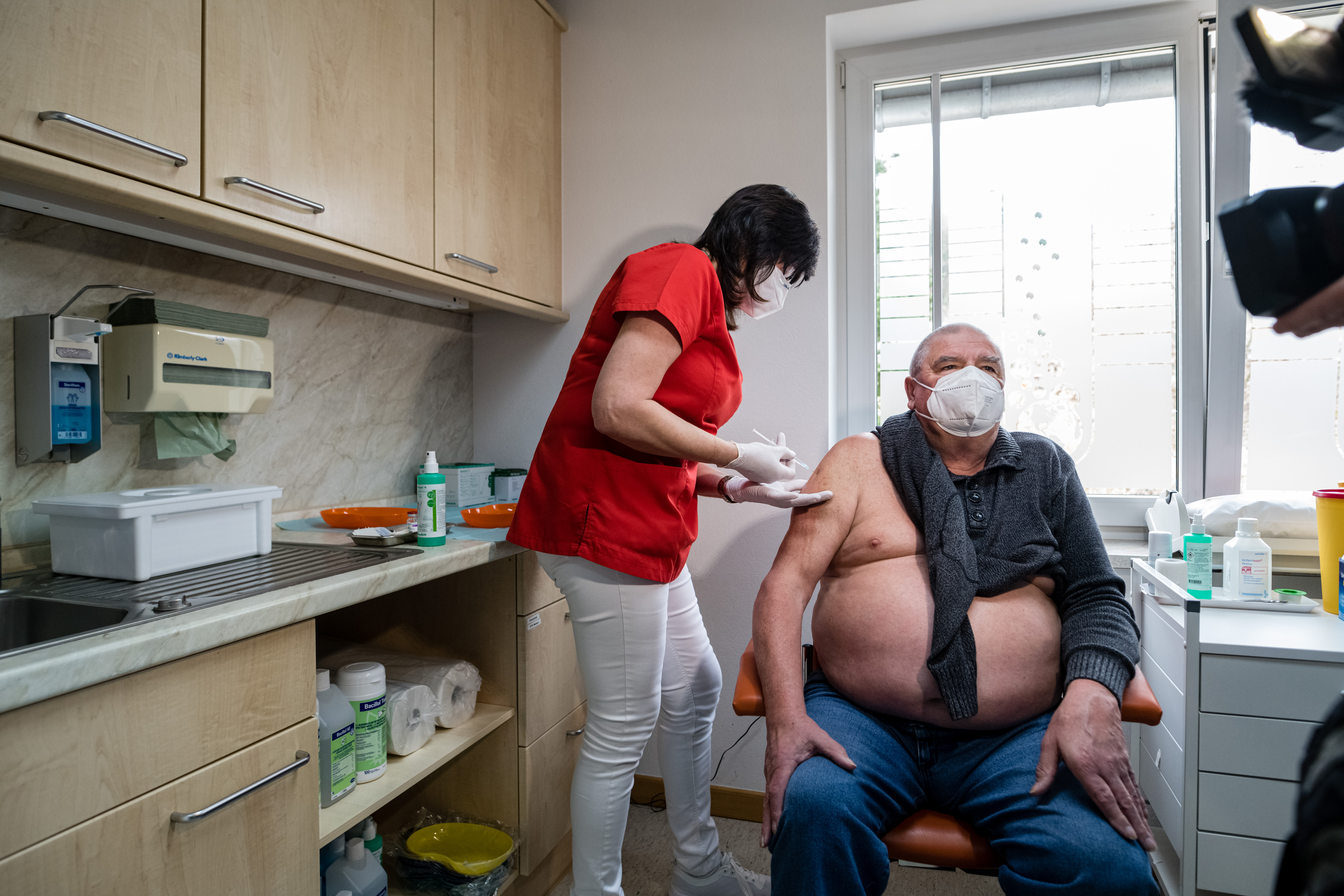
"There are people who have concerns," Prayuth Chan-ocha said after getting the shot. "But we must believe doctors, believe in our medical professionals."
Many other countries in Asia have likewise shrugged off concerns, though Indonesia halted use of the shot this week, saying it would wait for a World Health Organization report on the issue.
In addition to the EMA, AstraZeneca and the WHO have said there is no evidence the vaccine carries an increased risk of blood clots. There have been 37 reports of blood clots among the more than 17 million people who have received the vaccine across the EU and Britain, the company said.
"This is much lower than would be expected to occur naturally in a general population of this size and is similar across other licensed COVID-19 vaccines," the Anglo-Swedish drugmaker said.
The EMA has asked experts to look into the issue and originally planned to share their findings Thursday, but as the debate reached a fever pitch Tuesday, the regulator provided an update in a news conference.
Cooke, the agency's head, said experts meeting this week will make a recommendation Thursday.
But in the meantime, the number of countries in the bloc that are sticking with the shot is falling after heavyweights like Germany, Italy, France and Spain all said they were suspending it.
READ MORE: Brazil's COVID-19 resurgence is pushing hospitals to overflowing

That left Belgium — and a handful of others such as Poland, Romania and Greece — increasingly isolated in their insistence that halting the shots now would cause a lot more harm that the side effects so hotly debated now.
"When you know how the virus is making the rounds, it would be very imprudent to stop," Belgian Health Minister Frank Vandenbroucke told VRT network early Tuesday.
Experts have noted that such concerns are inevitable in mass vaccination campaigns — with so many people getting shots, some are bound to get sick even if the vaccine is not to blame. That would mean "we'd have to incessantly interrupt campaigns during the coming months," Vandenbroucke said.
"We wanted to remain as scientific as possible in the mediatic-political turmoil that is currently agitating Europe," Belgian virologist Yves Van Laethem said.
In Spain, which announced it was suspending the vaccine on Monday, some medical experts had their doubt about the move. Amós García, president of the Spanish Vaccinology Association, said that countries were being overzealous in halting use of AstraZeneca.
And the decisions seemed to be having a snowball effect. "There's a cross-border contagion effect," Garcia said.
"Anything triggers the principle of caution," García told Spanish broadcaster TVE. "Once it begins it's like a domino, it becomes very difficult for a country to keep delivering the vaccine," if others stop, even if only out of precaution.
With the torrent of decisions casting doubt on the AstraZeneca vaccine despite assurances of experts, public opinion was tested once again to believe science over suspicion.
Serbia's Prime Minister Ana Brnabic says the Balkan country won't stop the use of Astra-Zeneca vaccines and insisted that "unfortunately, some people are having second thoughts because of a negative campaign."
So often in disarray during the vaccine drive, the 27-nation EU was once again out of lockstep, with the member states each taking their own decision, as the executive Commission called on all to heed EMA advice. When asked if EU Commission President Ursula von der Leyen would take the AstraZeneca vaccine, her spokesman Eric Mamer said "of course."
Adelaide hotel robber exposes backside to camera in stumbling getaway
They came dressed in black, faces covered, armed with a kitchen knife.
But it was what was left uncovered that drew attention to the CCTV footage.
As two robbers fled an Adelaide hotel with Monday night's takings, one stumbled down the stairs, briefly exposing his backside to the cameras.
READ MORE: More tourism vouchers available in South Australia
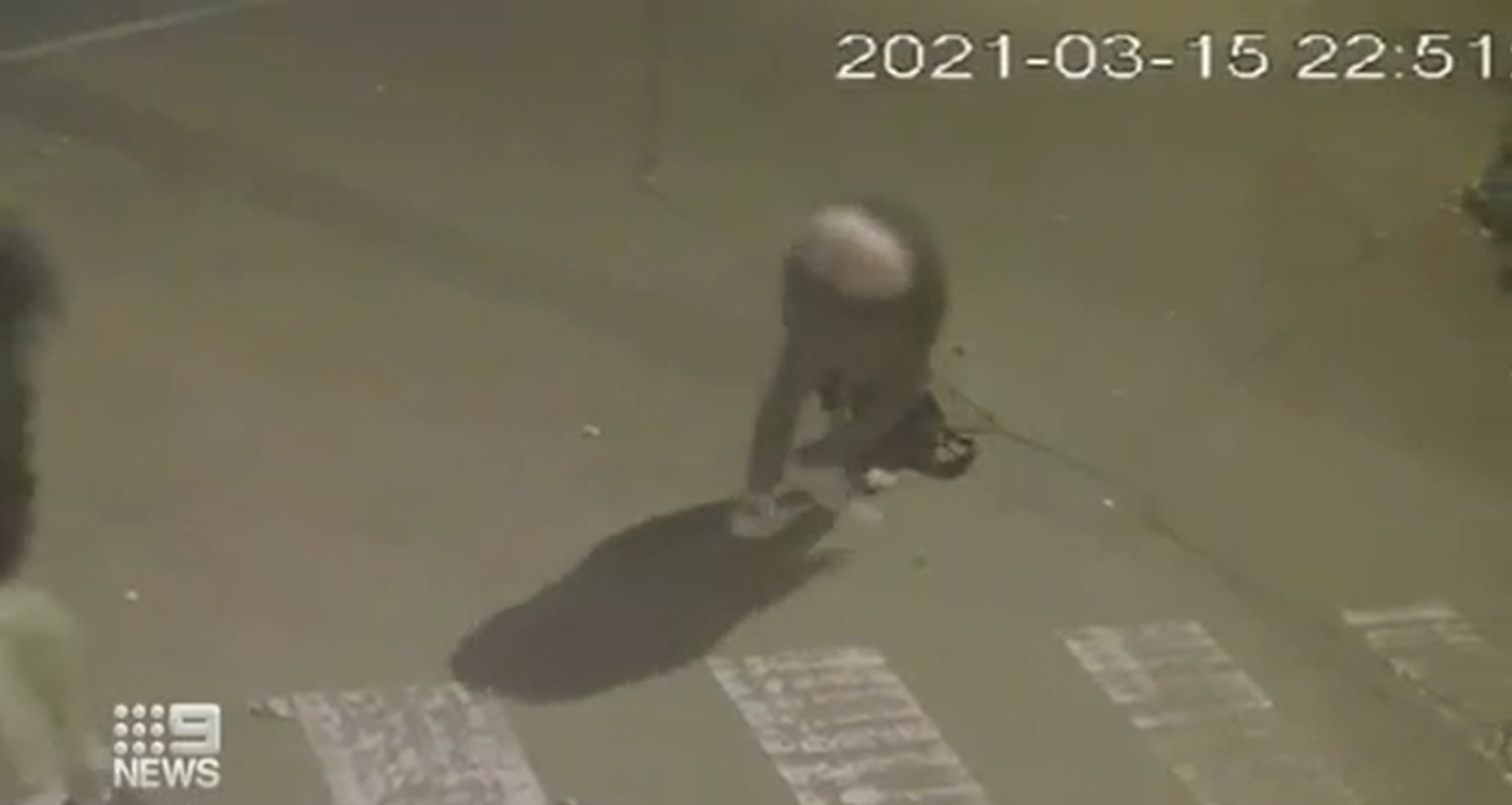
Pankaj Kaushik from the Hilton Hotel in the Adelaide suburb of Hilton said the pair "came in, pointed the knife and then they left".
Police said the robbers stormed the South Road venue's gaming room just before 11pm on Monday and held staff and customers at knifepoint while they raided the tills.
"The female staff member pressed the alarm when they came in and pointed a knife towards her, and yeah police, (it) was pretty quickly they come over," Mr Kaushik said.
The bandits remain on the run after fleeing down nearby Mallen Street before detectives could flood the area.
READ MORE: SA vaccine rollout second-slowest in the country
https://twitter.com/9keziahsullivan/status/1371557727718141952?ref_src=twsrc%5Etfw
Hotel staff believed the attack was premeditated, saying the security shift was due to start about 11.30pm, just half an hour after the hit took place.
"We have got good protocols over here in the Hilton but we will still have to review it and see what best we can do for our staff protection," Mr Kaushik said.
" … It is a stressful situation, if you look at it we are just coming to do our work and facing that kind of a scenario is pretty stressful for us."
READ MORE: AFL fans considering cancelling memberships after COVID changes
Shaken employees were left unharmed but given the day off on Tuesday and offered support.
Police appealed for anyone who recognised anything about the crooks to contact Crime Stoppers on 1800 333 000.
They said the man carrying the knife was wearing a black, hooded jumper, beige trousers, beige working gloves and grey shoes with a white base.
The other man had fair-coloured hands and was wearing a black, hooded jumper, grey tracksuit pants, white runners and a black Nike backpack, police said.
Global Economic Survey Has High Hopes for Caribbean
The post Global Economic Survey Has High Hopes for Caribbean appeared first on The St Kitts Nevis Observer.
West Indies Sweep Sri Lanka Series 3-0
NORTH SOUND, Antigua – Stylish left-hander Darren Bravo stroked his first One-Day International hundred in five years to propel West Indies to a comfortable five-wicket win over Sri Lanka and a clean sweep of the three-match series on Sunday.
The 32-year-old top-scored with 102 off 132 deliveries while irrepressible opener Shai Hope struck 64 off 72 balls and captain Kieron Pollard an unbeaten 52 off 42 deliveries, as West Indies, reeled in a target of 275 at the Vivian Richards Cricket Stadium with nine deliveries to spare.
Bravo had previously gone 13 innings without a half-century, during which time he averaged a paltry 18, but his fourth ODI century saw him turn the page on that depressing run of form as he hit five fours and four sixes.
“I think today was an important day for me,” said Bravo after he was adjudged Man-of-the-Match.
“I tried my best today. It wasn’t the most fluent but at the end of the day, we got the job done which is the most important thing,”
For the home side, the result marked their third whitewash in their last five series following similar achievements against Ireland and Afghanistan and was also payback for the 3-0 drubbing they received on Sri Lankan soil last year.
The clean sweep also follows on the heels of a chastening 3-0 result in Bangladesh last month when an inexperienced side was soundly thrashed.
“This gives us the confidence we can do certain things. We’re going to build on this … we’re looking to continue to work hard and continue to improve as we go forward,” said an obviously contented Pollard.
Number eight Wanindu Hasaranga had earlier lashed a cavalier unbeaten 80 off 60 balls and Ashen Bandara, a supportive 55 not out, to help pull Sri Lanka’s innings around to 274 for six off their 50 overs.
Sent in, the visitors had slumped to 151 for six in the 32nd over after being undermined by left-arm spinner Akeal Hosein’s three-wicket haul, before the pair put on an invaluable 123 in an unbroken seventh-wicket partnership to ensure West Indies were given a serious target to chase.
Their stand was vitally important after Sri Lanka were guilty of wasting an opening stand of 68 between in-form Danushka Gunathilaka (36) and captain Dimuth Karunaratne (31).
The left-handed Gunathilaka had stroked half-dozen fours in a 38-ball knock when he top-edged a pull at fast bowler Alzarri Joseph onto his helmet and was taken at a point in the 14th over.
Karunaratne followed with two runs added in the next over after striking one four and a six, missing a swipe at part-time off-spinner Jason Mohammed and losing his leg stump.
Pathum Nissanka then produced a breezy 24 off 25 balls in a 31-run stand for the third wicket with veteran Dinesh Chandimal (16) to get Sri Lanka up to 101 without further loss.
However, once Hosein hit Nissanka in front to earn an lbw decision in the 21st over, Sri Lanka lost four wickets for 50 runs to lose their way.
Hasaranga came to his side’s rescue, clubbing seven fours and three sixes – including three fours and a six off the final over from pacer Jason Holder – while Bandara punched three fours and a six as Sri Lanka gathered 89 runs from the last 10 overs.
For the first time in the series, West Indies went without a solid start as left-hander Evin Lewis played down the wrong line to a full-length delivery from pacer Suranga Lakmal (2-56) and was bowled for 13 in the fifth over and Jason Mohammed missed a drive at a Wanindu Hasaranga googly and was bowled for eight in the 10th.
However, Bravo then anchored the innings, posting 109 for the third wicket with Hope before adding a further 80 for the fifth wicket with Pollard.
He started slowly with only three runs from his first 13 balls and never really quickened his pace, reaching his half-century off 81 balls in the 30th over. His second fifty required only 49 balls and he brought up three figures with a boundary to fine leg off leg-spinner Hasaranga in the 45th, before perishing seven balls later, driving a Lakmal full toss to cover.
Hope, already with a hundred and a fifty in the series, counted three fours and two sixes before holing out to long-on in the 32nd over off seamer Thisara Perera.
When Nicholas Pooran missed a sweep and was lbw to part-time off-spinner Danushka Gunathilaka in the 35th-over, West Indies needed a partnership and Pollard arrived to blast four fours and a six to ensure there were no late stumbles.
SCORES
SRI LANKA 274 for six off 50 overs (Wanindu Hasaranga 80 not out, Ashen Bandara 55 not out, Danushka Gunathilaka 36, Dimuth Karunaratne 31; Akeal Hosein 3-33)
WEST INDIES 276 for five off 48.3 overs (Darren Bravo 102, Shai Hope 64, Kieron Pollard 53 not out; Suranga Lakmal 2-56)
(CMC)
The post West Indies Sweep Sri Lanka Series 3-0 appeared first on The St Kitts Nevis Observer.