Category Archives: headline

Some Asian Nations Restricting Dual Nationality

(CNN) — Anna was born with the right to dual citizenship, because she has a Japanese mother and American father. She spent her life traveling between both countries, and says she felt deeply connected to the two cultures.

But Japan requires those with multiple passports to pick one by the age of 22 — an impossible choice for Anna, who requested a pseudonym for privacy reasons.

“I’m mixed race, I’ve lived both in Japan and the US, I speak both languages, I am completely split down the middle in terms of my identity,” she said. “It’s like asking someone whether they love their mother or father more. It’s such a cruel question.”

The past few decades have seen people travel and live abroad more, with the number of international migrants — people who changed their country of residence for at least a year — tripling from 1970 to 2015, according to the International Organization for Migration.

At the same time, tolerance to dual citizenship has generally increased. In 1960, less than one-third of countries allowed citizens to acquire a second nationality, compared to three-quarters today, according to a 2019 paper by Maartin Vink, professor of political sociology of Maastricht University in the Netherlands.

Passports for purchase: Open citizenship doors around the world

Asia is an exception to that trend. It is the world’s most restrictive region in terms of dual citizenship, with only 65% of countries and territories permitting it, according to the Maastricht Center for Citizenship, Migration and Development. To put that in perspective, 91% do in the Americas, which rank as the most liberal.

And some Asian countries are tightening their immigration laws. Japan reinforced its strict stance in January when a court upheld the country’s ban against dual citizenship, rejecting a lawsuit filed by Japanese citizens living in Europe. Hong Kong took a harder line in February, barring dual citizens from receiving consular protection — a step never before taken in the Chinese city, where dual citizenship is not legally allowed but had been tolerated.

“Dual nationality is not recognized in the Chinese Nationality Law,” said Hong Kong leader Carrie Lam in February. “That is very clear. We are strictly enforcing or implementing that particular policy.”

There are a number of reasons why the region is so resistant toward dual citizenship, including histories of conflict and colonialism. But in some countries, critics say the ban on dual citizenship also reflects a tilt toward nationalism — and the desire to maintain a monoethnic, monocultural identity.

Loyalty and nationalism

In Asia Pacific, only a few places accept dual citizenship with no caveats, including Cambodia, East Timor, Australia, New Zealand and Fiji.

Most countries are against it, although some choose not to strictly enforce their policies, allowing people to keep multiple passports by simply not declaring them. Others allow dual citizenship in restricted forms: the Philippines permits it for those who were born Filipino citizens, but not for naturalized Filipinos. South Korea allows children born to its nationals abroad to hold the passport of both their birth country and their parents.

One reason why many Asian countries oppose dual nationality is a belief that it can create divided loyalties among citizens, said Jelena Dzankic, co-director of the Global Citizenship Observatory (GLOBALCIT), an international citizenship research network. “The reason why, historically and traditionally, countries have not been permissive of dual nationality is because, whom are you going to defend if the two of our countries go to war?” she said.

Japan drafted its current nationality laws shortly after World War II, when many Japanese Americans were put in internment camps in the US; other dual citizens renounced their loyalty to the Japanese Emperor for their own safety, said Atsushi Kondo, a law professor at Japan’s Meijo University.

In one famous case, a US-born Japanese-American dual citizen worked in Japan for a company that oversaw American prisoners of war. Upon his return to the US after the war, he was sentenced to death on treason charges. He was eventually pardoned and deported to Japan — but for decades afterward, Japanese lawmakers pointed to this case as an example of the conflicting obligations that came with dual nationality.

“In wartime, double citizenship showed disadvantage,” Kondo said. “But in peacetime, dual citizens have many advantages” – Including visa-free travel to more countries, greater international employment opportunities, potentially cheaper university education, and more. There are modern downsides, too — for instance, US dual citizens have to pay double taxation, but that’s not the case for most countries.

The international context has now changed, and Japan’s “beliefs are a little outdated,” he added — yet the government is reluctant to open up immigration laws and risk upsetting conservative voters.

China’s ban on dual nationality is also to ensure that its nationals are “only giving undivided loyalty to the government,” said Low Choo Chin, a history lecturer at the Universiti Sains Malaysia.

During the Cold War era, China’s efforts to normalize relations with neighboring countries and end international isolation were hampered because “overseas Chinese were associated with revolutionary activities” and Communist uprisings, Low wrote in a 2016 paper. So, the Communist government formulated the current nationality law in 1980 to resolve “diplomatic frictions” and to “end divided loyalty among the overseas Chinese.”

Under Chinese President Xi Jinping, the government has cracked down on dual citizens, encouraging the public to report people secretly holding two passports. Those caught can find their access to public services curtailed.

The crackdown is part of the government’s anti-corruption efforts against “dual nationals taking advantage of the grey areas in the law, and trying to evade legal sanctions with (their) foreign nationality status … fleeing abroad, transferring their assets,” said Low, pointing to estimates by the Chinese central bank that 18,000 corrupt officials may have fled the country with 800 billion yuan ($122 billion) between the mid-1990s and 2008.

The matter of citizenship was thrust to the fore during the Covid-19 pandemic. In the midst of a crisis that transcended national boundaries, governments were suddenly faced with questions like: Which citizens do we claim as our own? For whom are we responsible? Who do we protect?

Because China doesn’t recognize dual citizenship, many Chinese nationals were forbidden from evacuating back to their country of second citizenship — even if that was their place of birth or primary residency.

There were cases of families split apart; one British woman was told she could not evacuate with her 3-year-old son because he has a Chinese passport, even though he is also a British citizen with a British passport. In the face of international pressure, the government eventually relented.

Ethnicity and blood

The idea of loyalty to a single country and culture, particularly in East Asia, may also “imply the desire to maintain a cohesive ethnocultural identity,” said Dzankic, of GLOBALCIT. Several of the countries that don’t allow dual citizenship are also highly homogenous — for instance, 92% of China is Han Chinese, according to the CIA’s World Factbook.

And one of the easiest ways for a country to control its ethnic makeup is through the type of citizenship it chooses to recognize.

There are multiple ways of obtaining a first, or second, citizenship, including through marriage, adoption and naturalization. But the most common ways are birthright citizenship (jus soli) — meaning babies automatically gain citizenship of the country they are born in — and through parental descent (jus sanguinis), which sees children automatically gain the citizenship of their parents.

The world’s most powerful passports in the age of coronavirus

In Asia, the vast majority of countries today don’t recognize birthright citizenship, one of the quickest ways for ethnically foreign or minority populations to grow in a country.

Or if they do, it is so with certain conditions, according to GLOBALCIT. South Korea, for instance, only applies birthright citizenship for children whose parents are unknown or have no nationality — so if a child born on Korean soil has been abandoned, or its parents are stateless, it will receive Korean citizenship.

“A shift from jus soli to jus sanguinis has been witnessed in Asia in the course of the twentieth century,” wrote Olivier Vonk at the Maastricht Centre in a 2017 paper. Bangladesh, Indonesia, and India are among the countries that have transitioned to primarily recognizing citizenship by descent.

The type of citizenship recognized, and the rigidity of a country’s restrictions, influence how diverse or homogenous its population can be, said Kondo.

“South Korea was also a monoethnic country in the old days,” he said. “But they changed the policies, so they are more relaxed to double citizens now … And now they are considered multi-ethnic, or a multicultural country,” Kondo added.

South Korea liberalized its nationality law with sweeping amendments in 2010, which allowed permanent dual citizenship for its nationals for the first time (albeit under specific circumstances); dual citizens who fall outside those circumstances were given longer to choose; and a special naturalization path was created for talented individuals.

Birthright citizenship: Trump claims only the US grants it, he’s wrong

Japan remains strict in its nationality laws and is ethnically homogenous, said Kondo, though the government’s statistics don’t include an ethnic breakdown.

“Maybe ordinary Japanese (consider) ethnicity and citizenship as equal … Such a traditional feeling is strong in common Japanese,” he said. Even some current politicians believe Japan “should be a monoethnic country,” he said.

Even the term jus sanguinis, citizenship by descent, implies ethnicity, said Anna, who is now based in the UK and declined to disclose her current citizenship status. The Latin translation means “right of blood,” and Japanese citizenship is built on this idea — so “the idea of blood is very strong in their understanding of citizenship.”

If a naturalized Japanese citizen who isn’t ethnically Japanese gives birth, that child would automatically become a Japanese citizen — but social attitudes and norms continue to draw lines around ethnicity, she said. There continues to be bullying in schools and a sense of social exclusion for biracial or mixed-race Japanese.

“It is this thought of blood purity … which is why even though I have Japanese citizenship, I’m not accepted as Japanese citizen in most cases because I’m not ‘purely’ Japanese as they would say … because I don’t look like them,” she said. “A lot of it is xenophobia. A lot of it is racism.”

Looking forward

The recent moves in China, Japan and Hong Kong suggest parts of Asia are moving further away from dual citizenship even as other parts of the world embrace it. Malawi, which had previously banned dual citizenship, amended its laws to allow it in 2019. Russia and Norway followed suit in 2020.

In Hong Kong, the future of dual citizenship is unclear. Though the government has insisted that it is taking a harder line in enforcement, it hasn’t provided information on what measures will be taken or how the city’s thousands of dual citizens will be affected.

Naomi Osaka to choose Japan nationality for Tokyo Olympics

“Maybe 70% of my friends have another passport,” said Janice Tam, a Hong Konger who also holds a British passport. She isn’t particularly worried about the government’s recent rhetoric — but “it depends on whether they force you to select one,” she said. “What is the consequence of that? If you’ve chosen your foreign passport, what do you still get if you stay in Hong Kong?”

Ella Wong, who holds Canadian and Hong Kong passports, is also “optimistic” that dual citizens might not be affected in their daily life. Her only concern is if Hong Kong continues to change its immigration laws to be similar to mainland China — or adopt mainland laws altogether.

“With the Hong Kong passport, you don’t know what it’s going to evolve into,” she said. “Could it become a Chinese passport, and then what does that mean in terms of travel and work and living?”

More broadly across Asia, most countries are unlikely to liberalize their laws anytime soon, said Low. The West “prioritizes liberalism, individual rights to (dual) nationality,” she said. “(But) in many Asian constitutions, access to citizenship is very tough for migrant communities because governments believe that the right to nationality is a privilege, not a right. In this context, it’s quite difficult to imagine that Asian governments would allow dual citizenship.”

Yet, experts and dual citizens remain hopeful that change will inevitably come as global migration grows. It takes time, said Vink, the Maastricht University professor.

And though they remain a minority, a few Asian countries have introduced new rules allowing for more flexible citizenship arrangements. India, for instance, created a new category of permanent residency in 2005 that allowed people of Indian descent to live and work in the country.

It’s still not dual citizenship — but it marked “a way of acknowledging the realities of a globalizing world and adapting to them step by step,” Dzankic said. “Even though countries are generally restrictive of dual citizenship, one could wonder whether those intermediate statuses could be a step or a move towards a more permissive policy.”

“I hope that the world will change,” she added. “What I think is essential or what will be important is a move towards dual nationality, not as a mechanism of being related to the state, but also as a mechanism for protecting individuals — for granting them greater life opportunities in the future.”

The post Some Asian Nations Restricting Dual Nationality appeared first on The St Kitts Nevis Observer.
Great-grandmother accused of pulling gun on youths faces NT court

A great-grandmother accused of pulling a rifle out on a group of youths in Darwin faced court today for the first time.

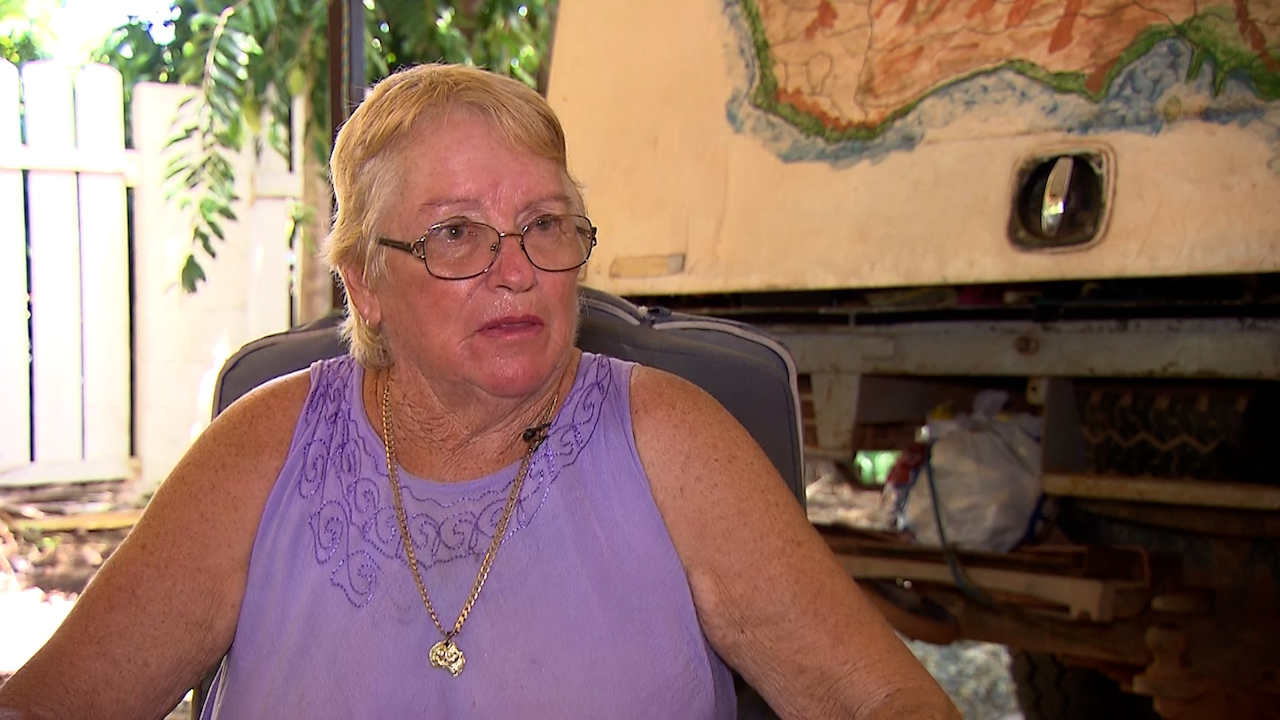
Lorraine Welch, 75, is currently facing a Northern Territory court over the allegation.

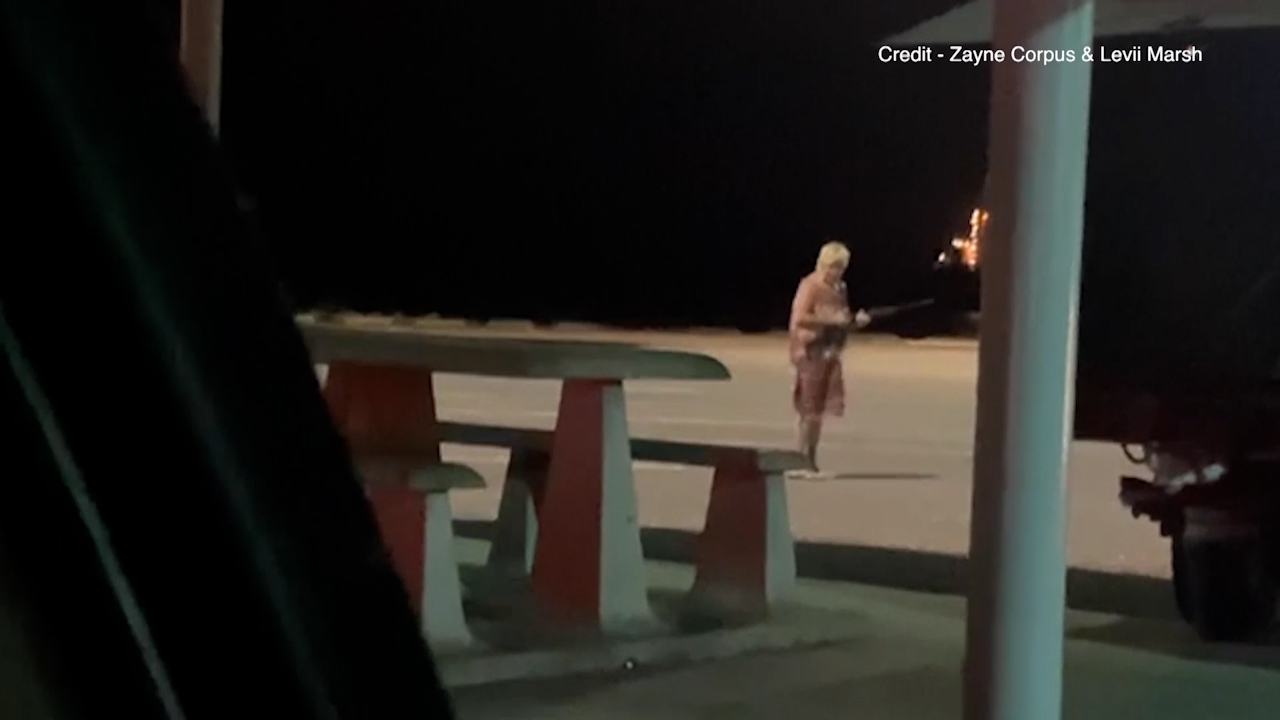
She's accused of pulling out a gun on a group of youths during their Friday night car cruise at East Arm boat ramp in Darwin, last month.

However, Ms Welch claimed she did not point the weapon at anybody.

She claimed she climbed back into bed shortly after the alleged incident, before the police Tactical Response Group arrived.

Ms Welch has lived in a motorhome for more than three decades.

"They were pointing guns at me in the back of my truck," she told 9News.

"'Get out of that truck, get down here', and I said, 'yeah okay, I'll come, I'm coming', and I said, 'I've got to be a bit slower because I've had both hips replaced'."

Ms Welch was charged with four counts of aggravated assault, carrying a firearm in a public place, possessing a firearm under the influence, and failing to meet storage requirements.

Her lawyer told the court today Ms Welch was injured from this experience, suffering broken legs.

"I'll never, ever come back to Darwin again," Ms Welch said.

"I'll never set foot in the Territory again, I'll just drive straight through.

"I will be writing about this, and that's going to put a lot of tourists off, because these are tourist papers that I write for."

Ms Welch will attend court again next month.

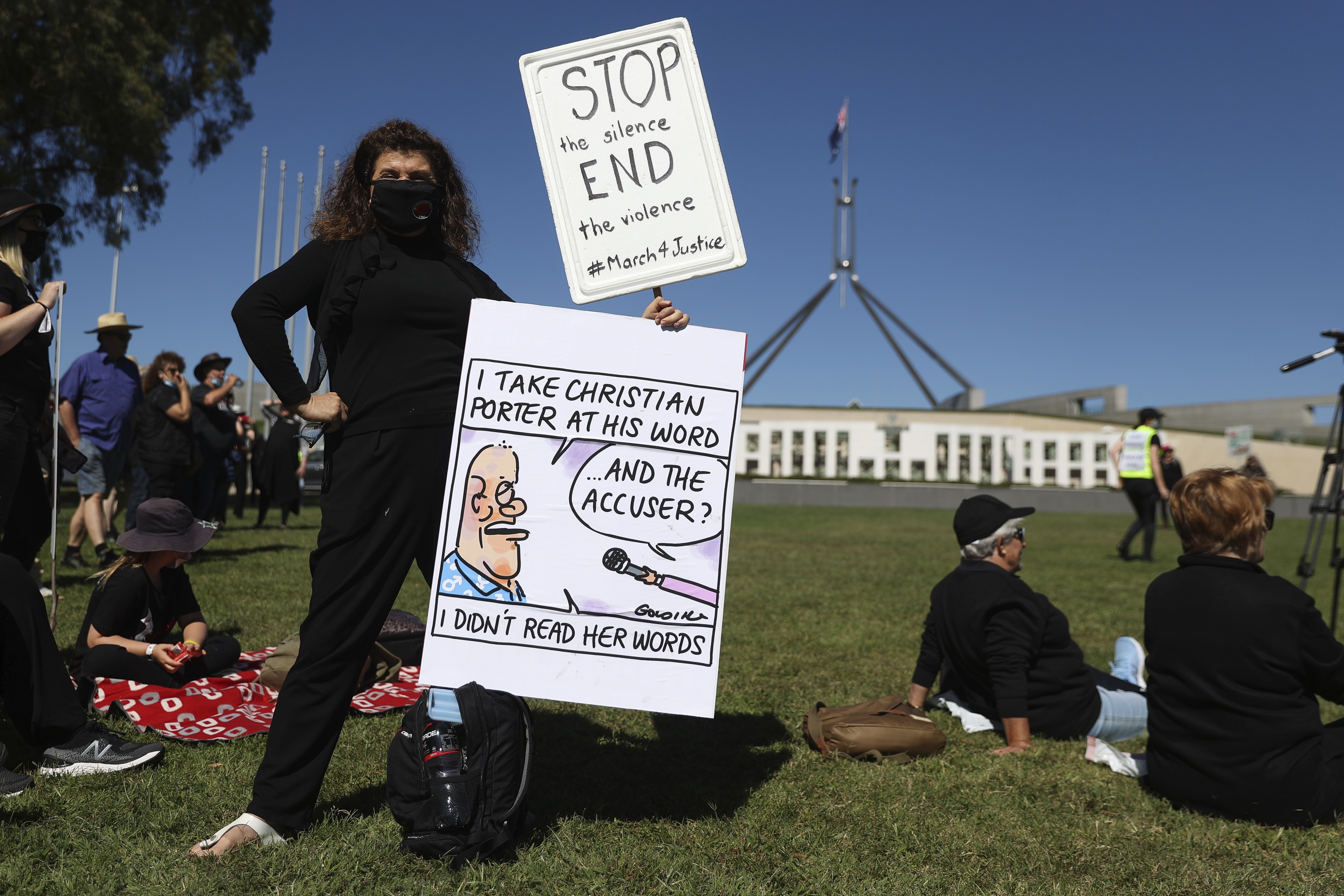
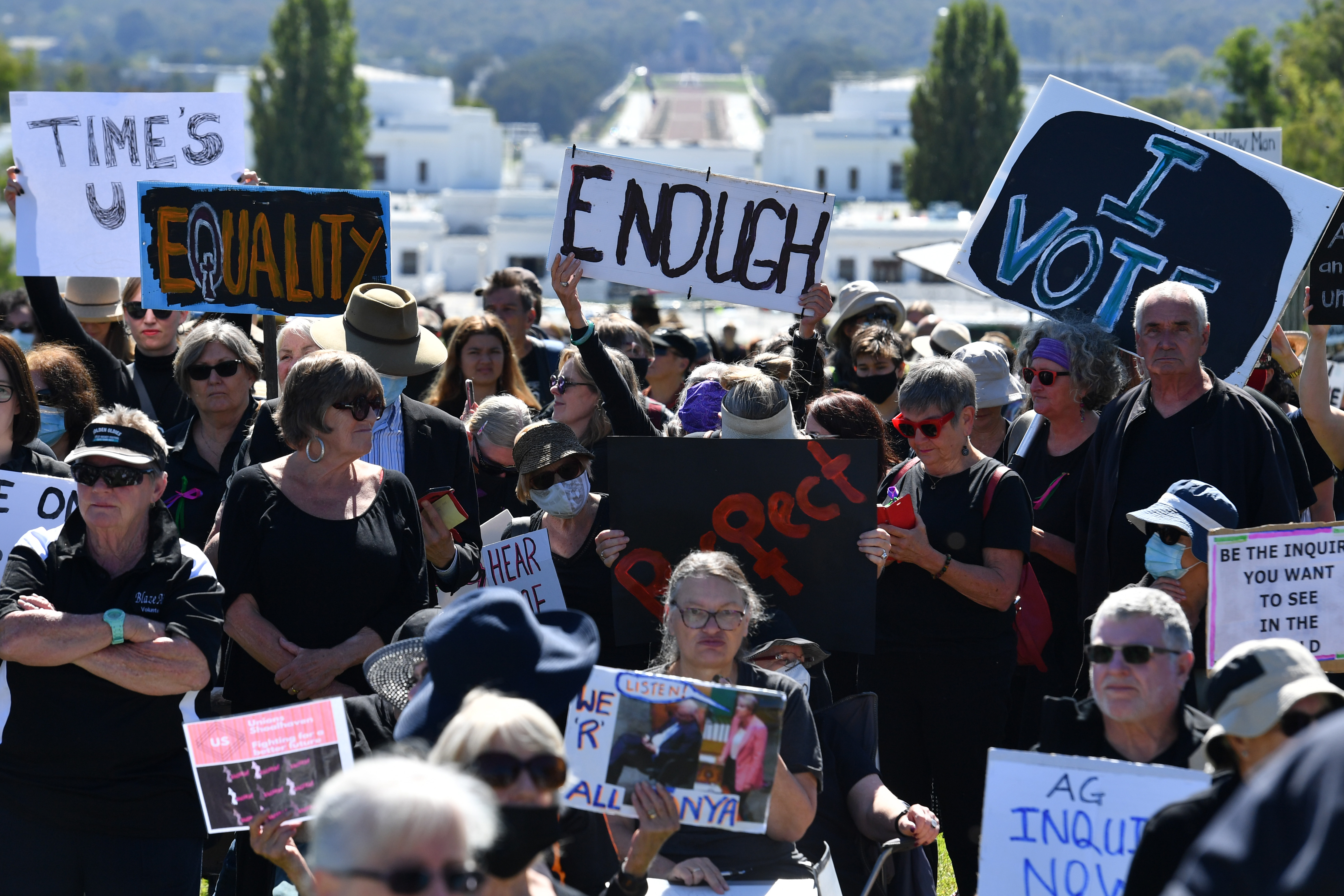
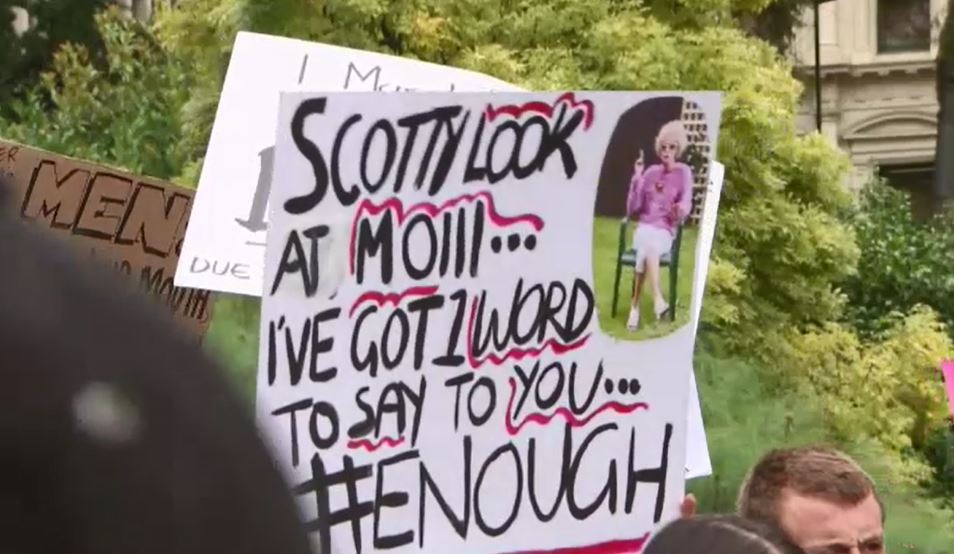
Brisbane March 4 Justice protesters brave the rain to send a message

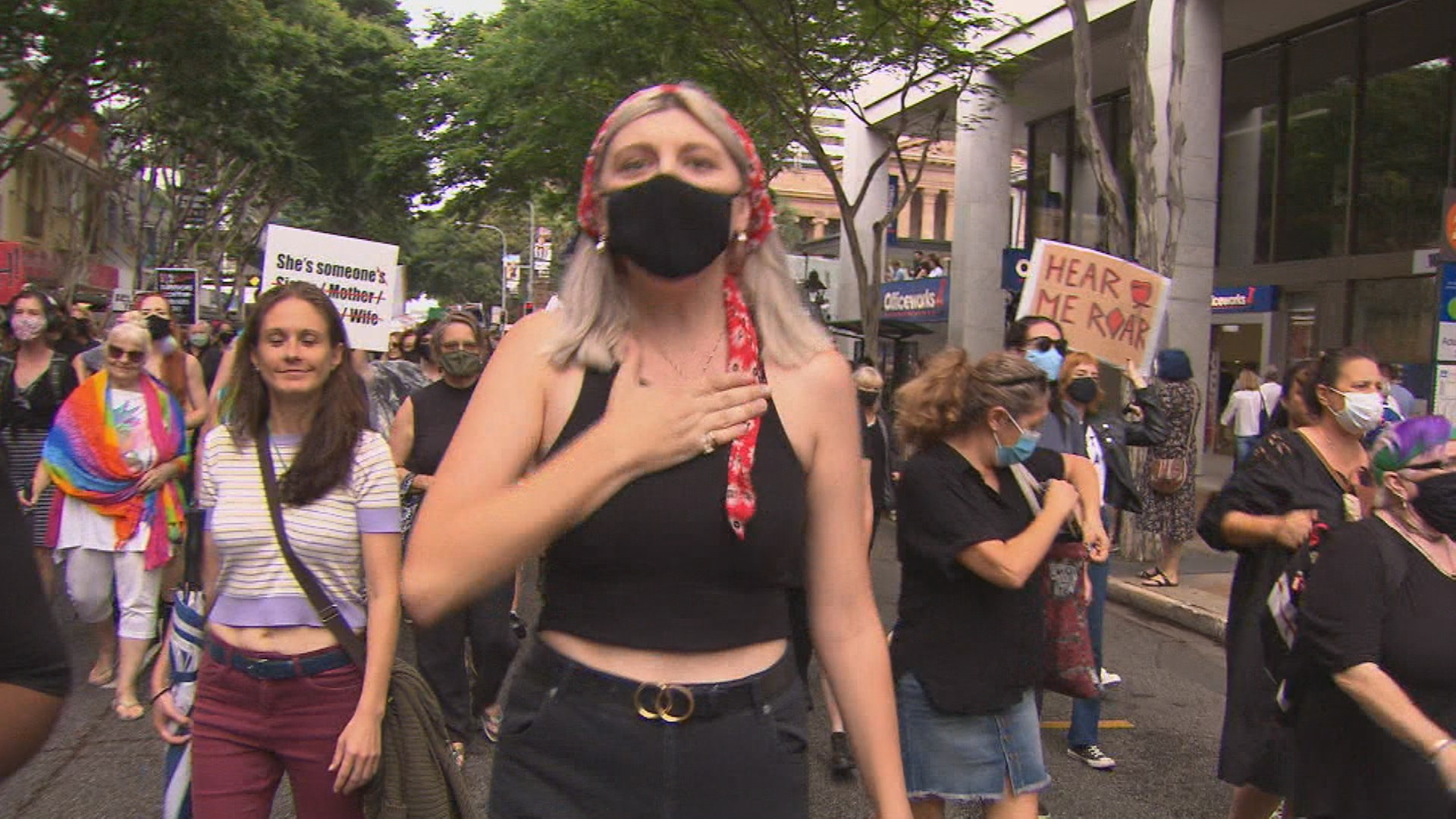
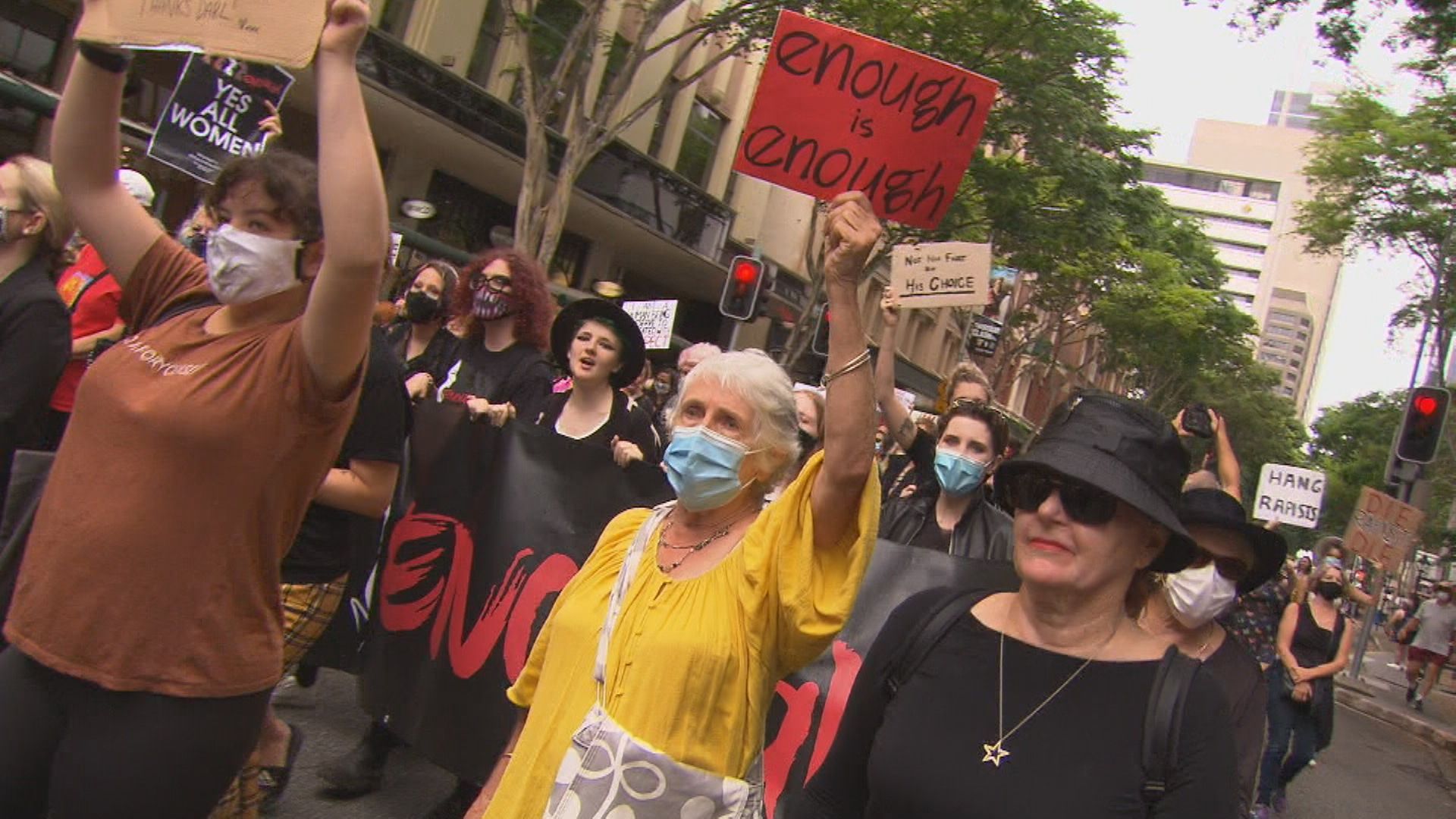
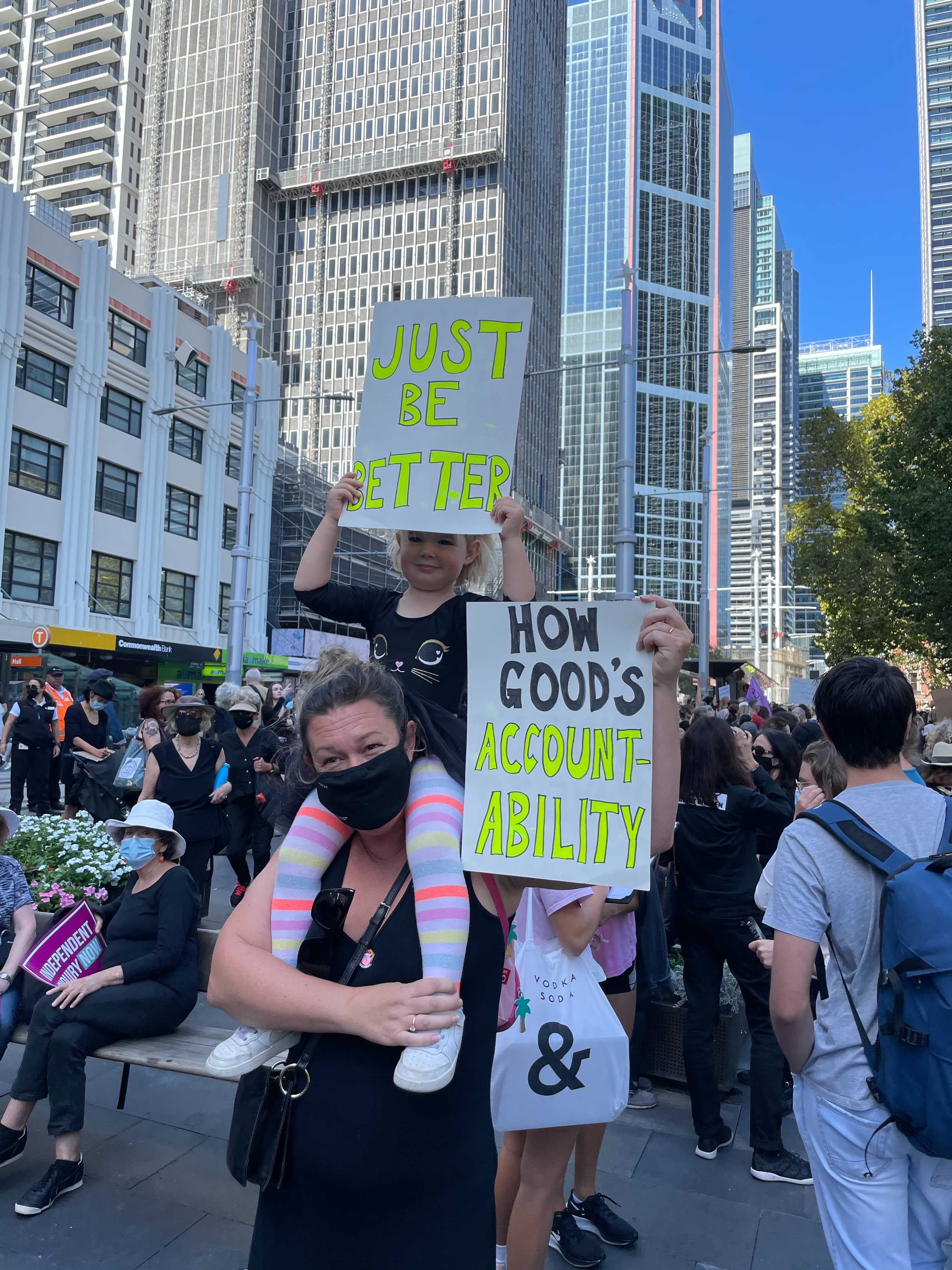
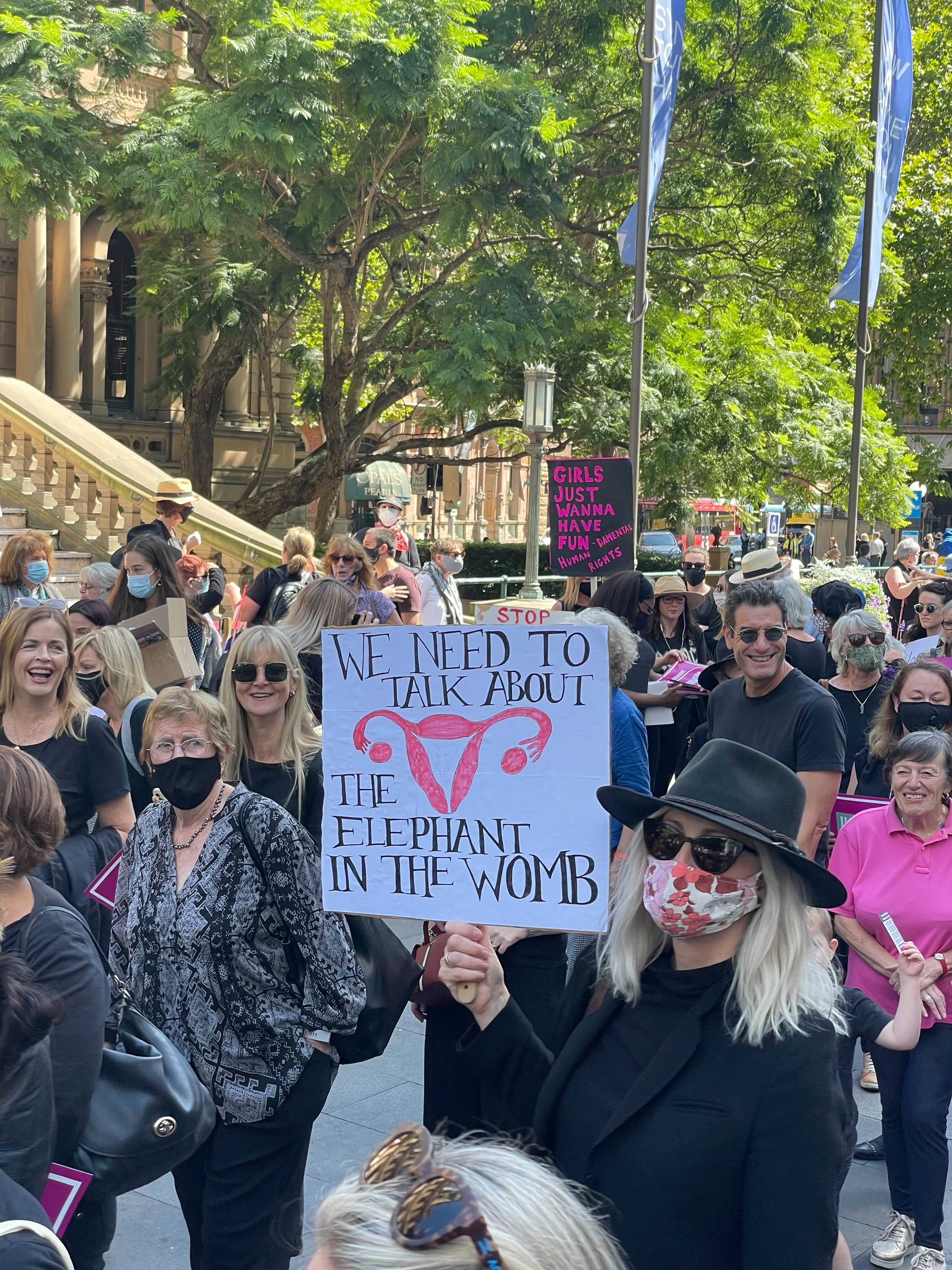
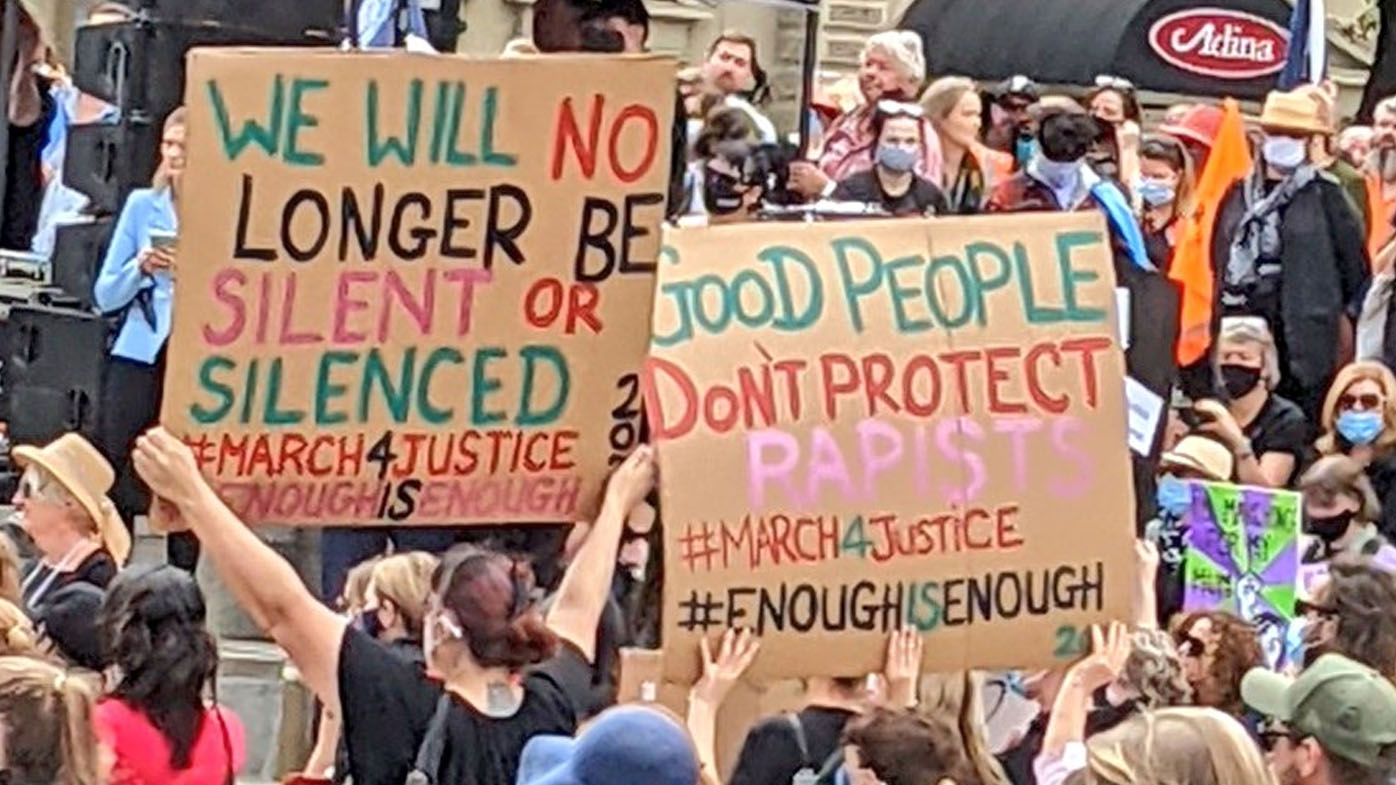
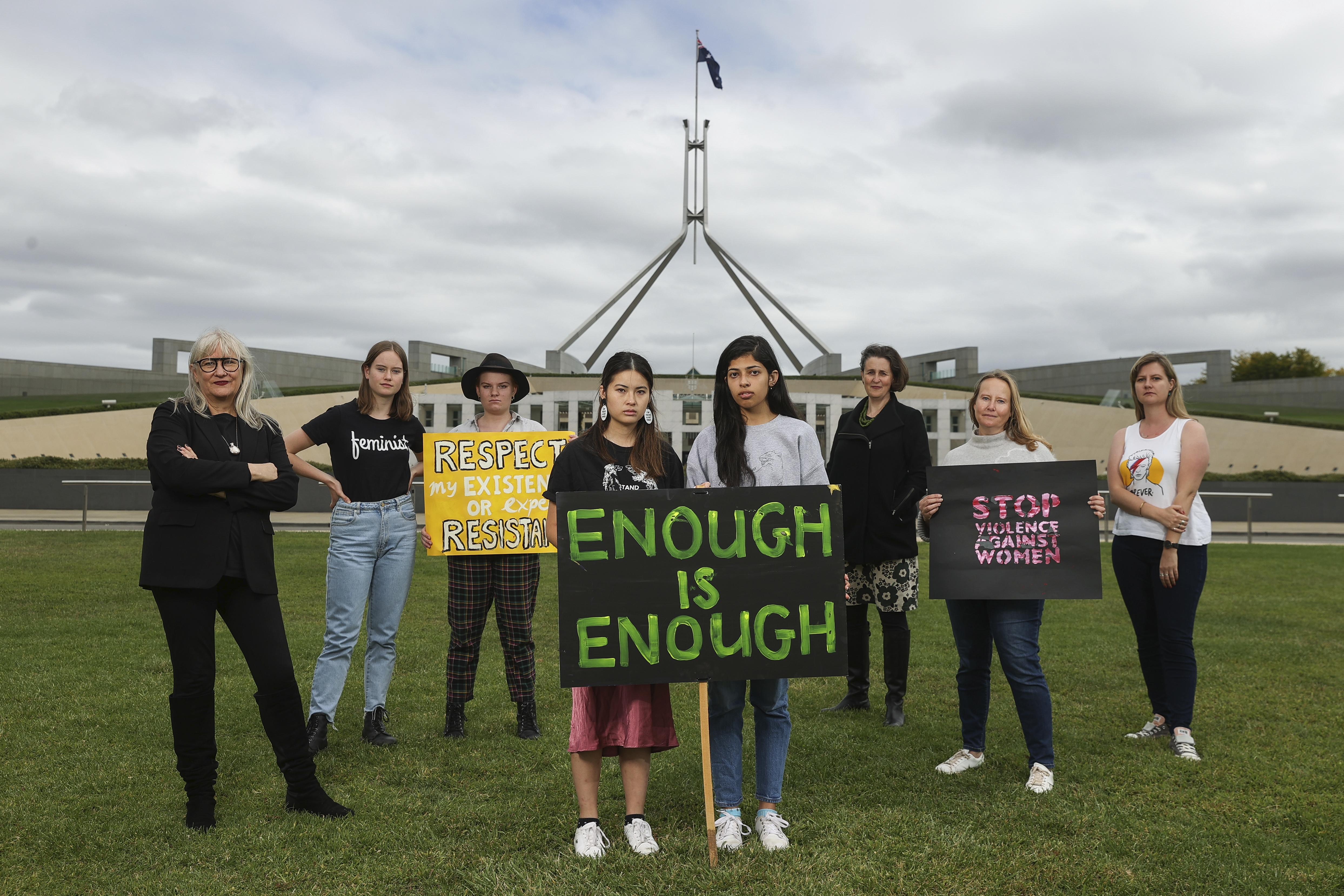
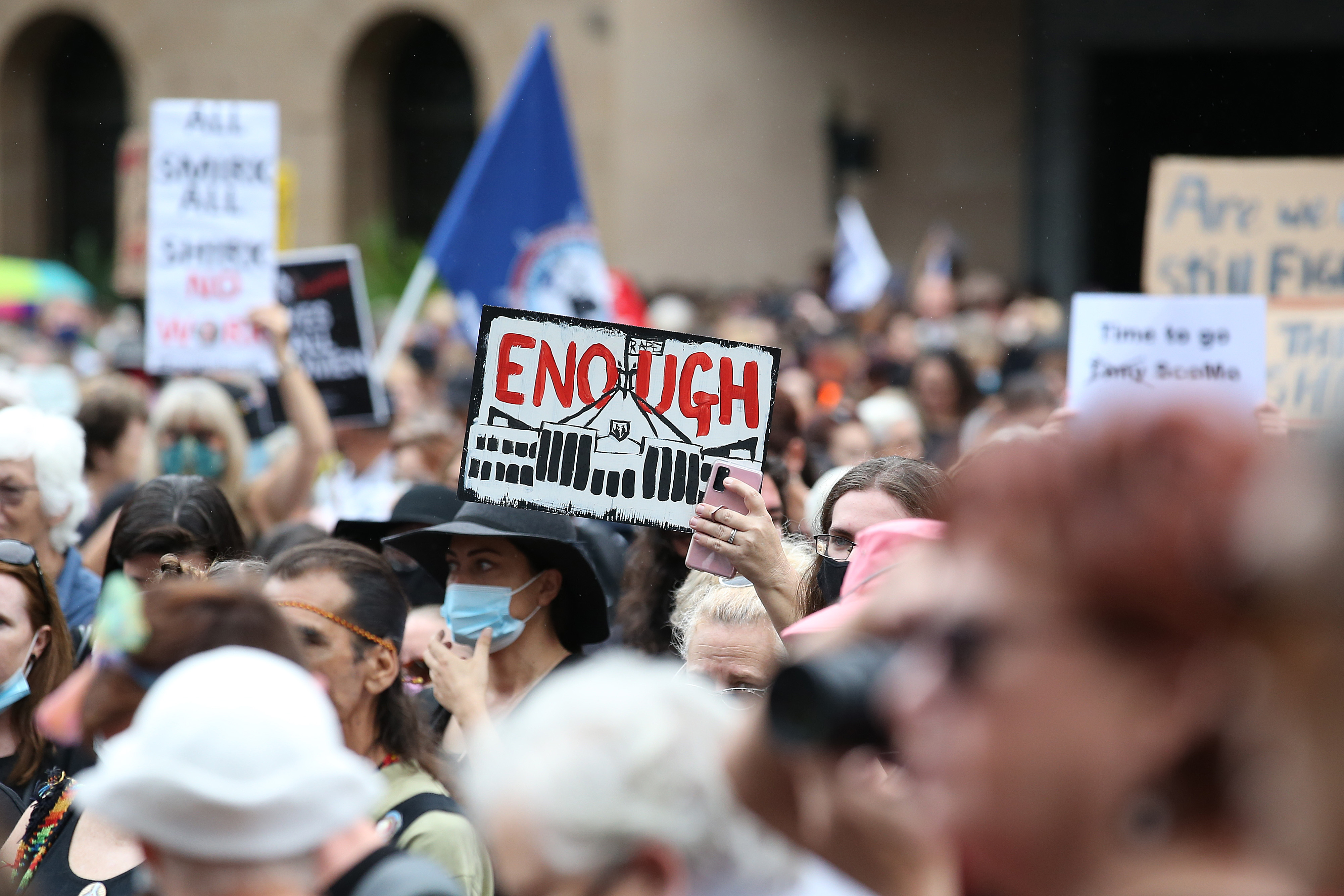
From Brisbane's King George Square to the Queensland Parliament, and right around the country, they marched in their tens of thousands.

Not because they wanted to but because the moment demanded it.

"No one wants to protest," one Women's March 4 Justice protester told 9News.

"No one wants to walk the streets and demand to be respected.

"This shouldn't be a reality, but it is."

READ MORE: Tracy Grimshaw slams Prime Minister's absence from March 4 Justice rally

The movement that began with a tweet rolled into Monday as a powerful force for change as organisers registered more than 40 rallies around the country.

https://twitter.com/janine_hendry/status/1364723860126375941

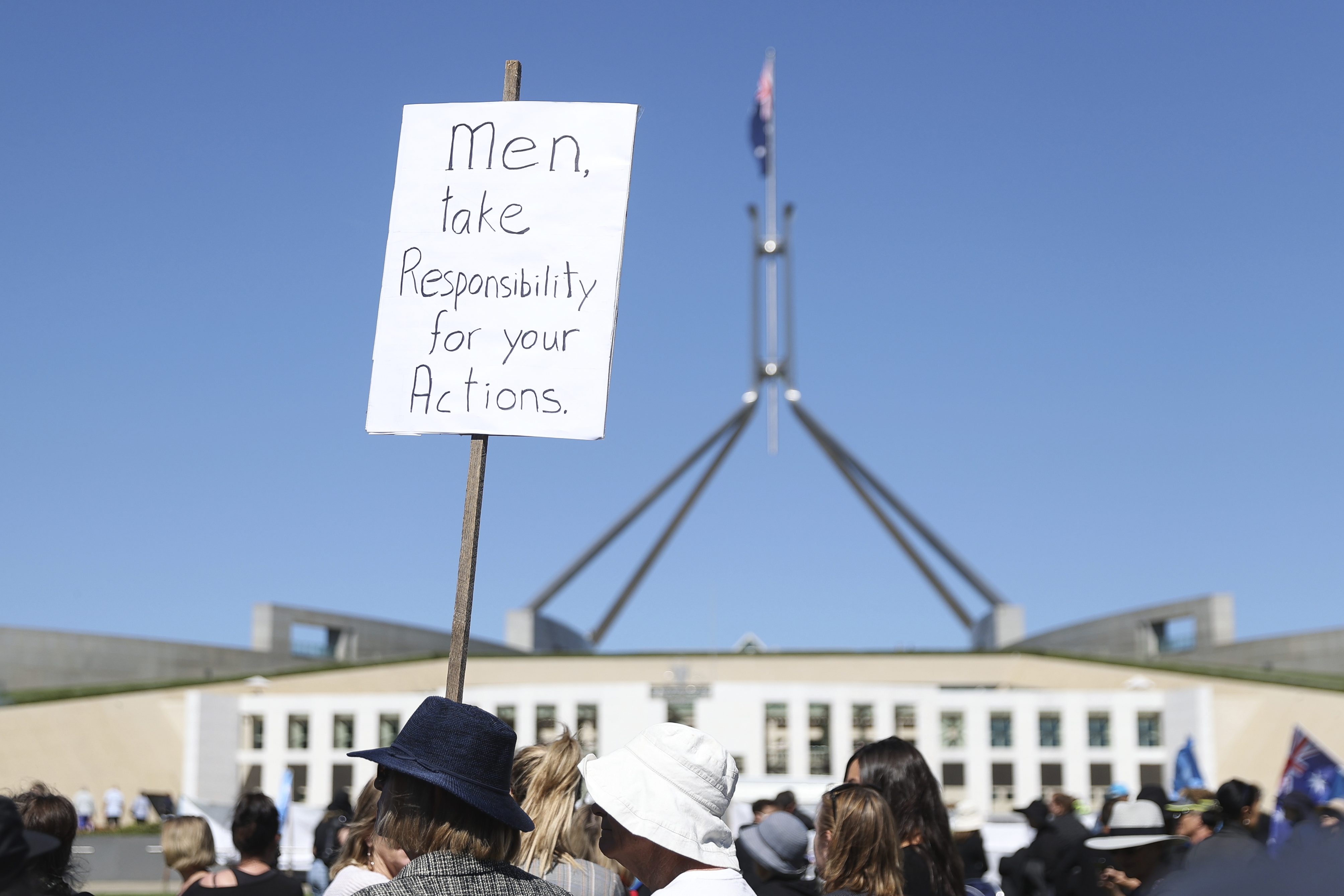
They were demanding all politicians address and "put an end to the issues of sexism, misogyny, dangerous workplace cultures and lack of equality in politics and the community at large".

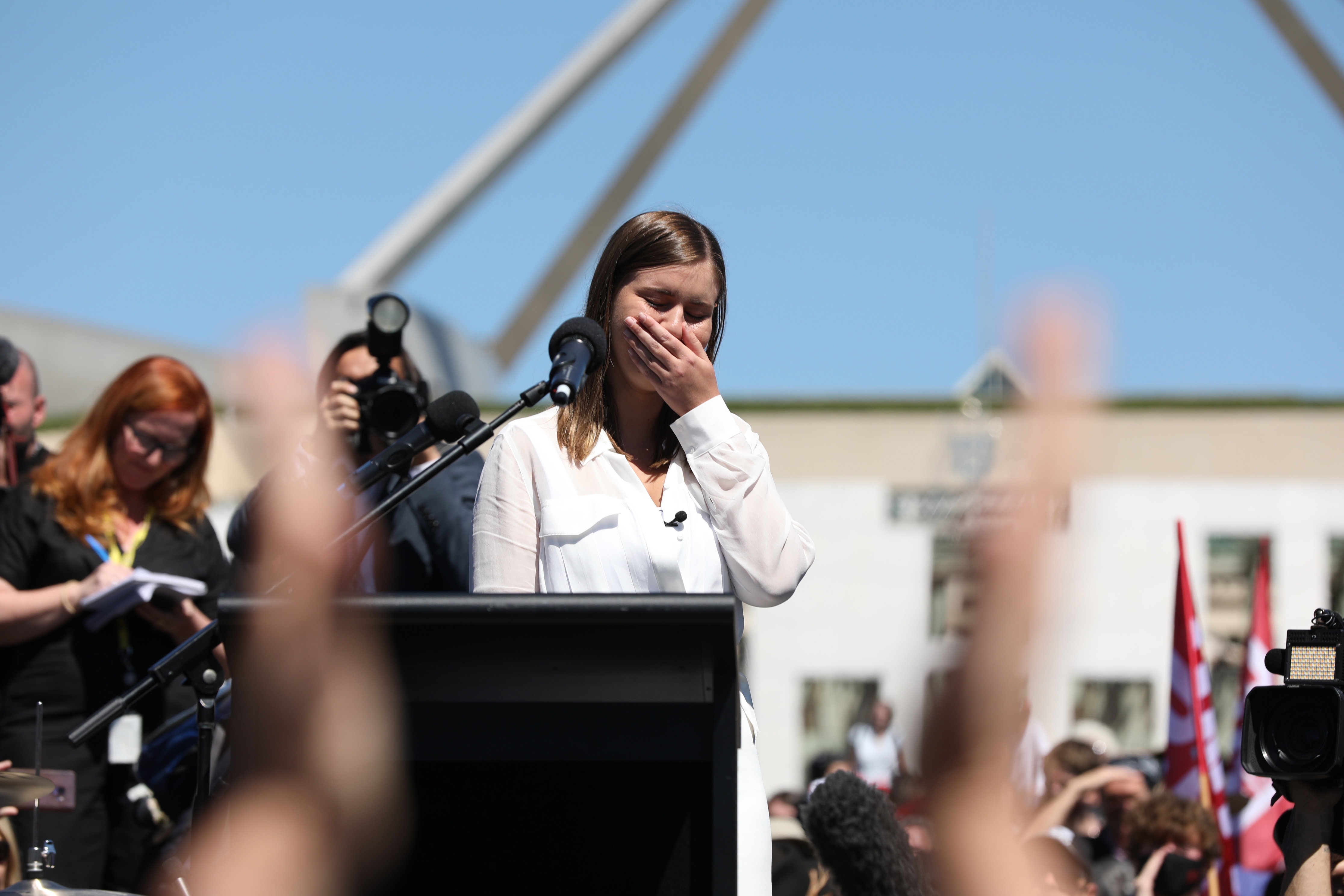
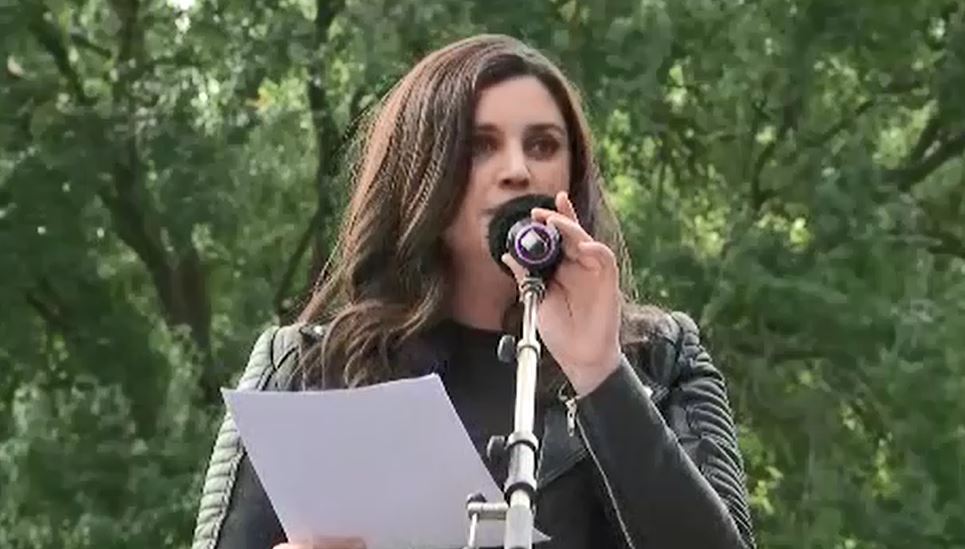
Former Liberal staffer Brittany Higgins, who has alleged she was raped by a male colleague, declared the "system is broken" as she spoke to the March 4 Justice crowd in Canberra.

"We are here because it is unfathomable that we are still having to fight this same stale, tired fight," she said.

"It's time our leaders on both sides of politics stop avoiding the public and side-stepping accountability. It's time we actually address the problem."

Hours earlier, organisers in the nation's capital rejected Prime Minister Scott Morrison's offer of a meeting "behind closed doors", saying "we have already come to the front door, it's up to the Government to cross the threshold and come to us".

Federal Liberal MP Katie Allen told Today she was "disappointed" with the decision and Deputy Prime Minister Michael McCormack refused to commit to or rule out attending the rally.

READ MORE: Women's protest organiser demands change during confrontation with Deputy PM

But in Brisbane, there was no such hesitancy, with Premier Annastacia Palaszczuk, Deputy Premier Steven Miles, Health Minister Yvette D'Ath and other senior politicians lending their support.

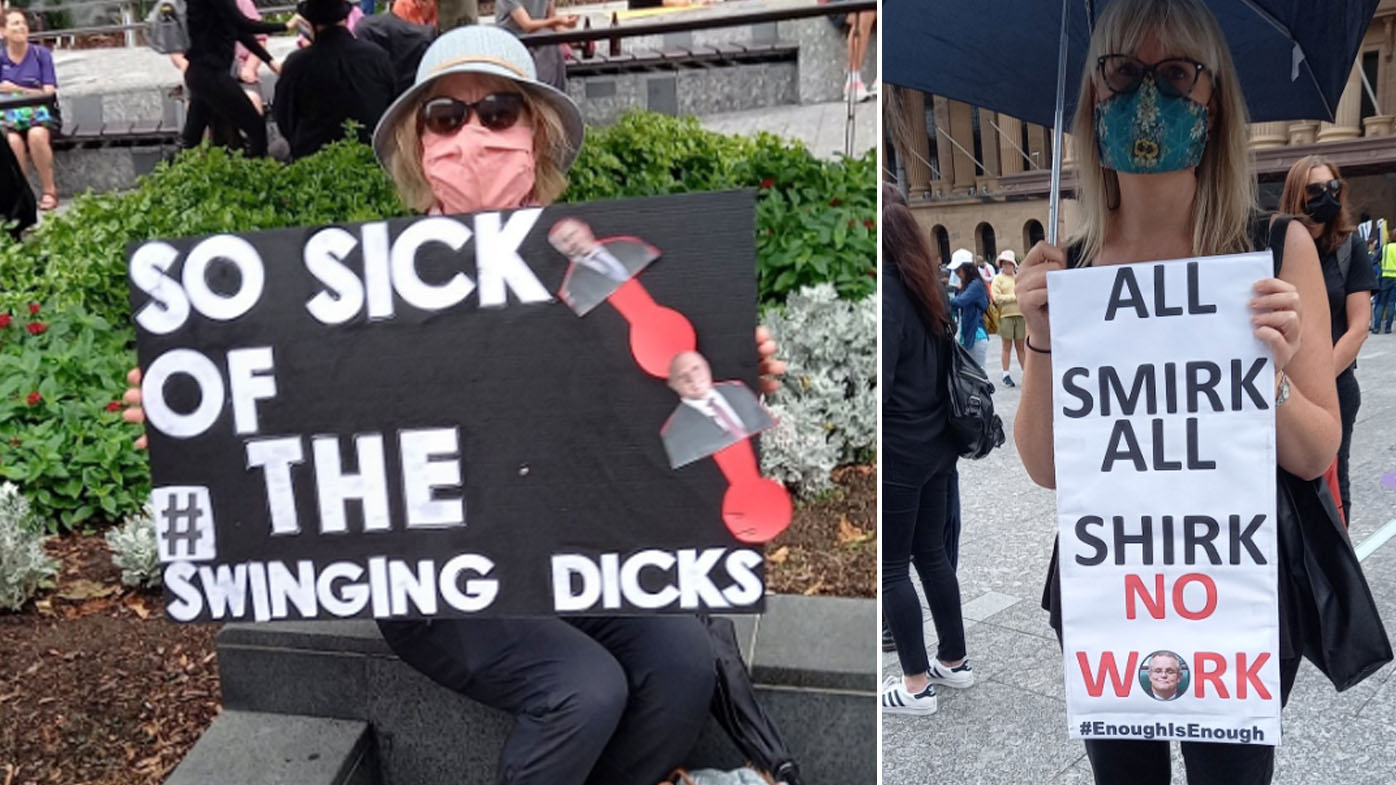
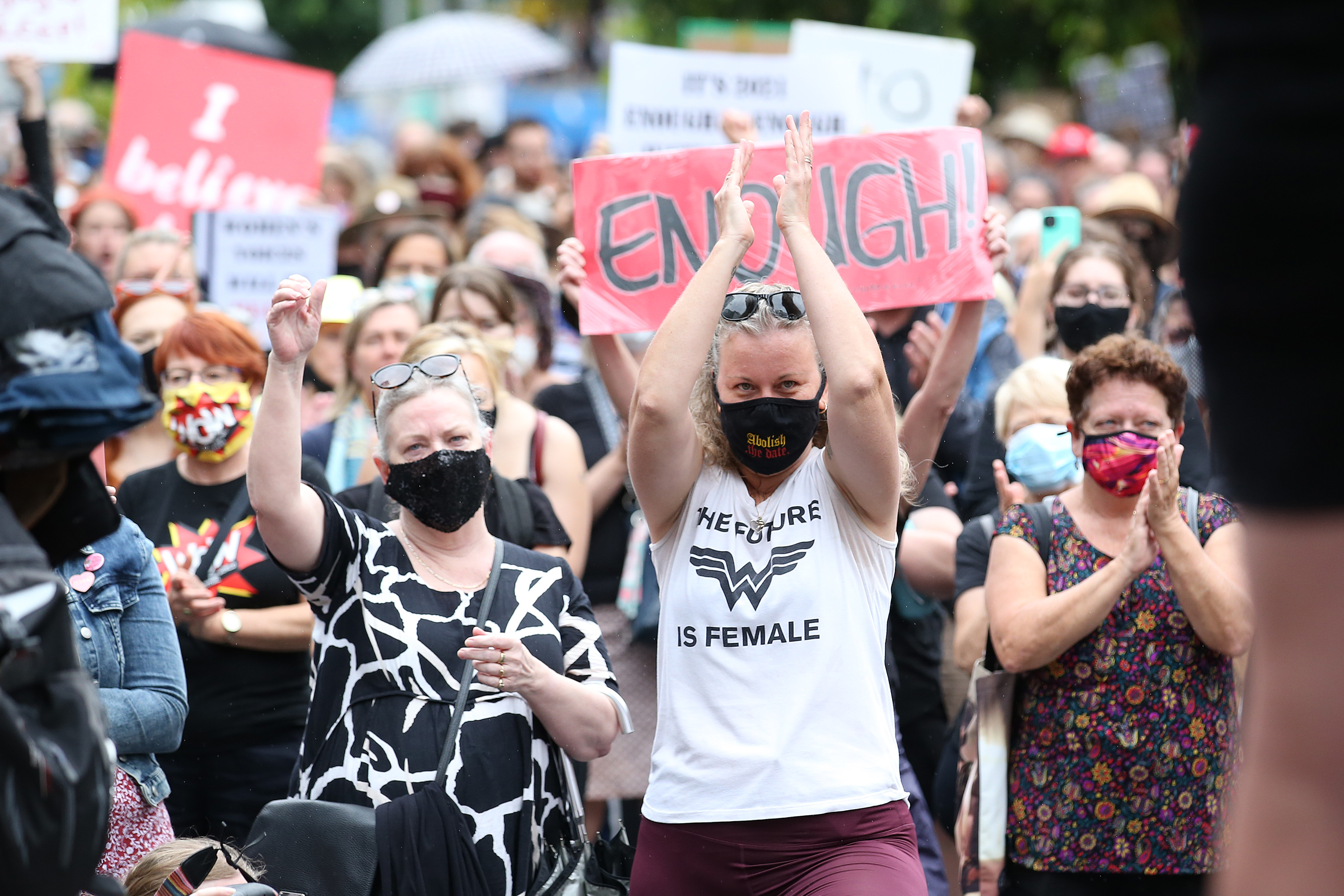
Marchers' banners and voices wound down rainy Edward and Charlotte streets in the CBD.

It's unclear how many protesters joined in but some said it was the largest crowd they'd ever seen.

"We don't need another survey, we don't need training, we need action now," Queensland Council of Unions assistant general secretary Jacqueline King told the assembled masses.

Further afield they took to the streets on the Sunshine Coast and in Cairns.

"All the incidents in our lives, the mistreatments, the sexual harassment, discrimination, we've had a gut full, it's over," another marcher said.

Mouse plague decimating crops, destroying livelihoods

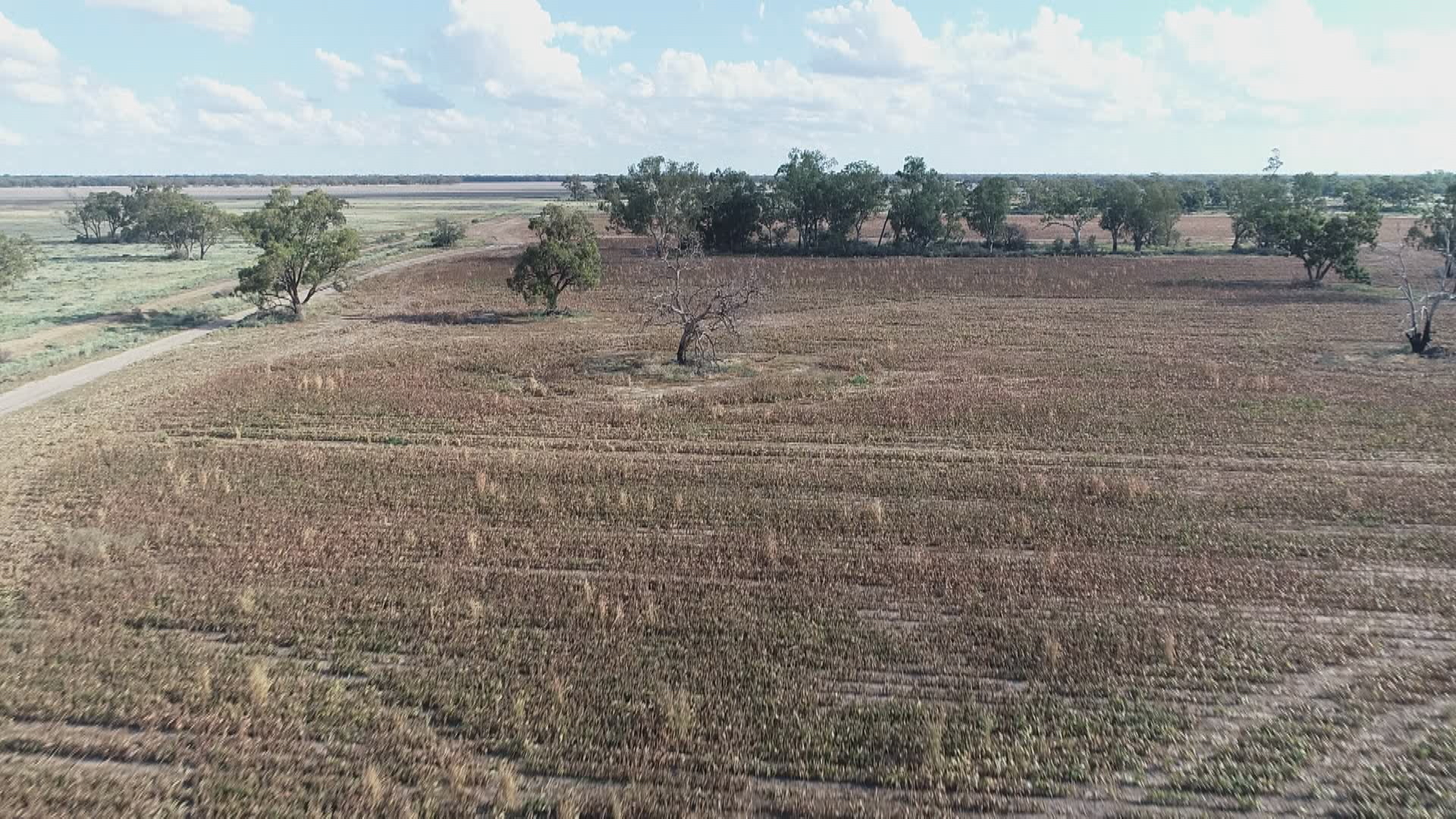
A mouse plague in western NSW is decimating crops, destroying livelihoods and leaving some businesses at breaking point.

Record rains and a bumper crop were supposed to bring farmers relief, but it also attracted millions of rodents.

The Whiteley family farm in Warren, 500 kilometres from Sydney, has been hit hard over the last few years, but last summer saw a harvest to make up for the hardship.

READ MORE: Farmers forecast to earn record $66 billion despite trade tensions, pandemic

A mouse plague is wiping out crops across NSW's central west.

But the plague of millions of mice running rampant across the state's central west has snatched that away.

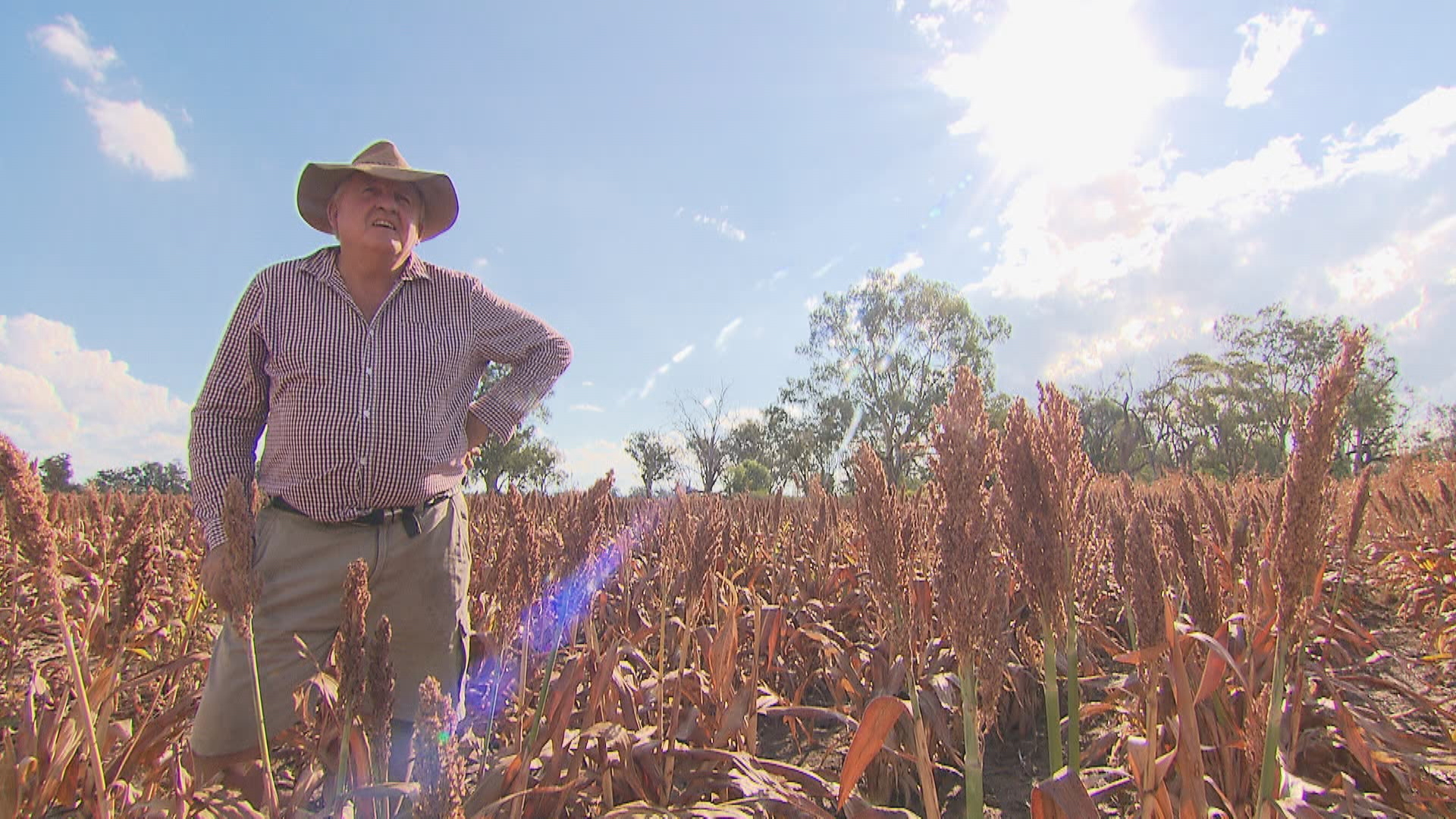
"It's a punishment for the good season we've had, that's just nature's cycle," Tim Whiteley told 9News.

"The mice have just overrun us; we had a go at harvesting the other day but it's basically a write-off."

READ MORE: Border shutdowns to impact fruit and vegetable prices

The Whiteley family farm in Warren, 500 kilometres from Sydney, has been hit hard over the last few years.

Tim and his dad Greg believe the mice have robbed them of hundreds of thousands of dollars' worth of grain.

"It's certainly the worst I've seen in my farming career," Tim said.

The Macquarie Valley Motor Inn has also been hit hard, with 97 mice chased out of just two rooms.

Video shows thousands of the rodents scampering across fields.

"Every business in town is struggling, every single one," Ben Meyer said.

The Meyers have had to cancel bookings with mice overrunning management.

"We've had two guests bitten, the wife's been bitten, and I'm fairly sure the eldest daughter is being bitten by them," he added.

CSIRO researcher Steven Henry said beyond the financial impact, the situation can also have "a significant impact on your social wellbeing and that's something that we don't really think about".

Ex-Liberal staffer Brittany Higgins speaks at March 4 Justice rally

Ex-Liberal staffer Brittany Higgins, who has alleged she was raped by a male colleague, declared the "system is broken" as she spoke to the March 4 Justice crowd in Canberra.

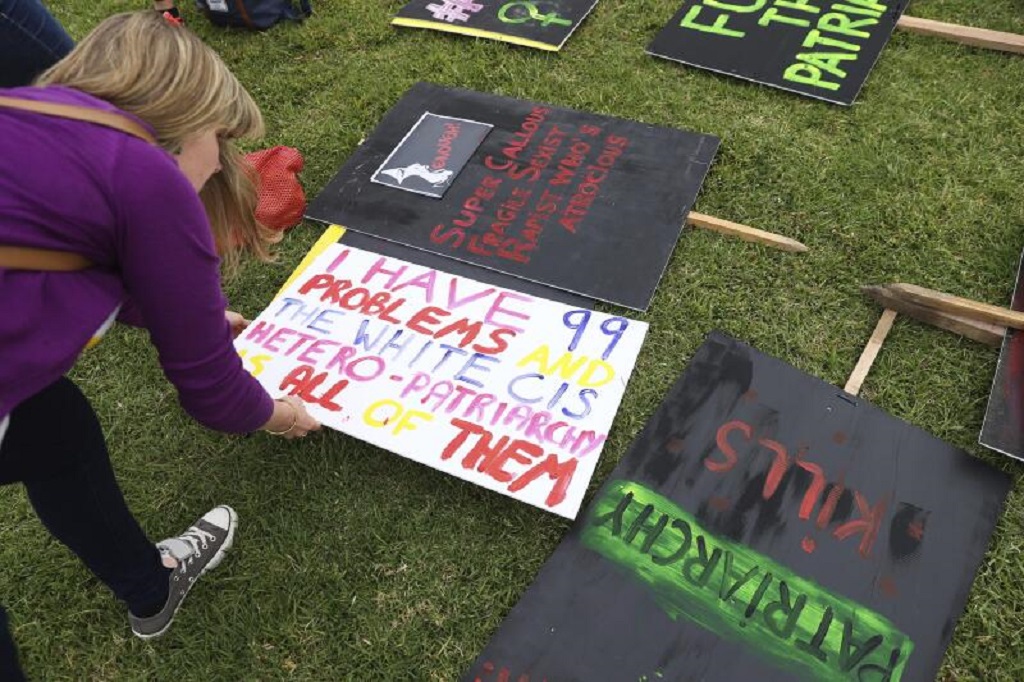
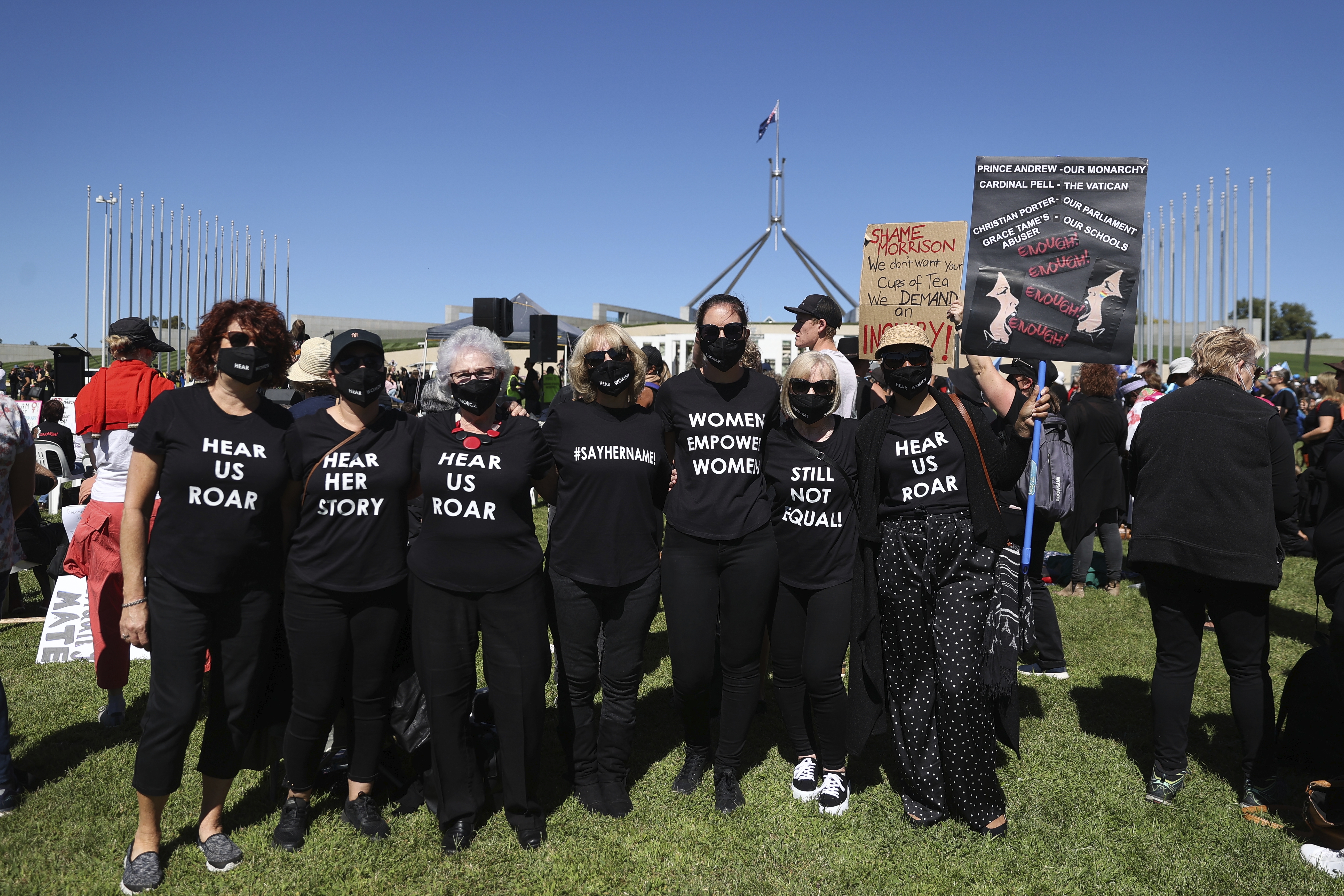
What started as a single tweet has turned into tens of thousands of people flooding city streets across Australia to take a stand against gendered violence in the Women's March 4 Justice rally.

After a long pause in front of a large crowd awaiting her address, Ms Higgins said she spoke today "out of necessity".

LIVE UPDATES: Thousands gather for March 4 Justice rally

"We are all here today not because we want to be here, because we have to be here. We fundamentally recognise the system is broken, the glass ceiling is still in place, and there are significant failings in the power structures within our institution," she said.

"We are here because it is unfathomable that we are still having to fight this same stale, tired fight.

"It's time our leaders on both sides of politics stop avoiding the public and side-stepping accountability. It's time we actually address the problem."

https://twitter.com/janine_hendry/status/1364723860126375941

State organisers are calling for swift action to stamp out sexual assault and violence, in the wake of recent allegations towards the treatment of women.

The movement began 18 days ago when Melbourne academic Janine Hendry tweeted an idea to form a ring of people around Parliament House.

The protests could be the "biggest uprising of women that Australia's seen" as thousands demand government reform.

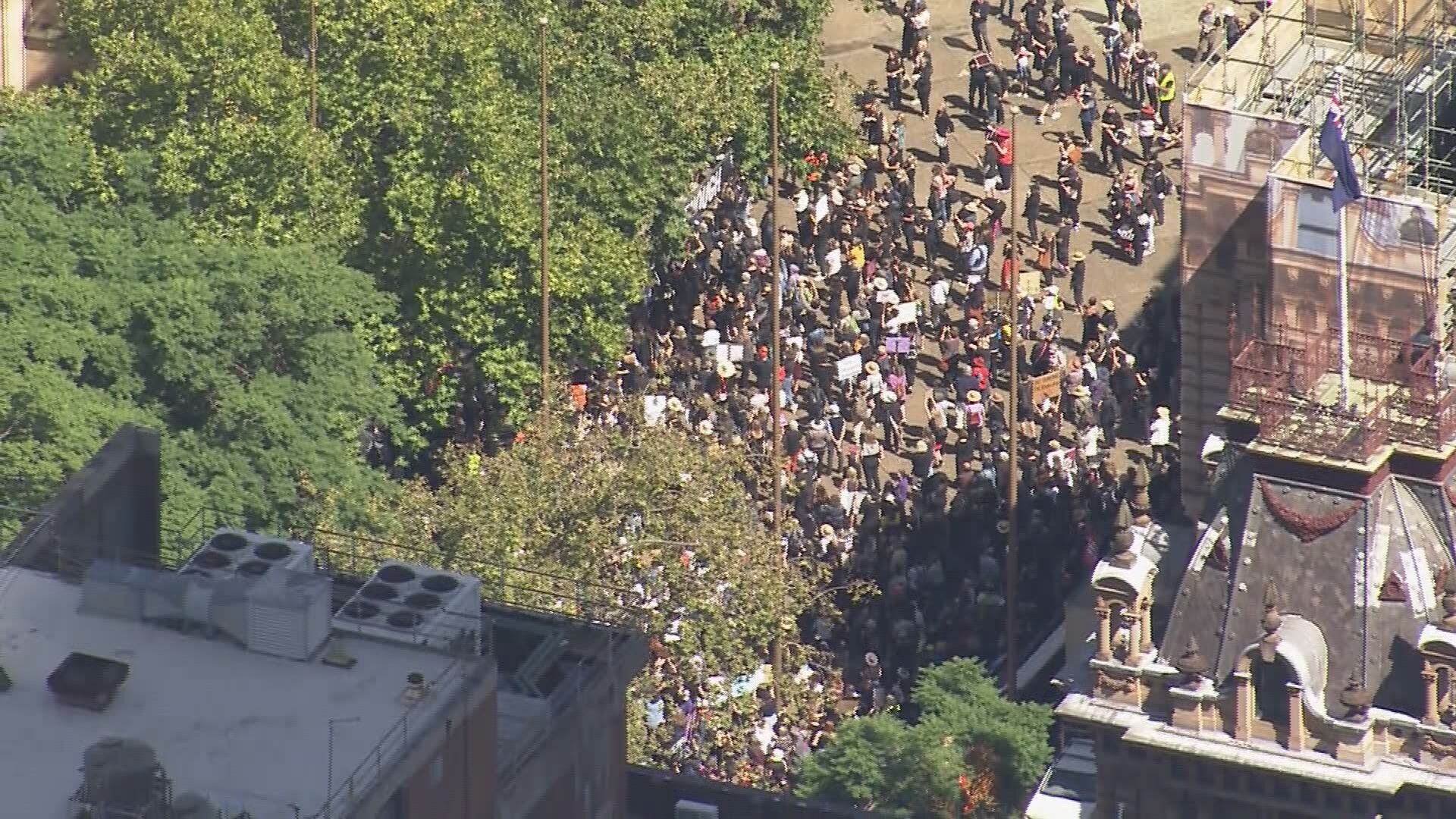
Aerial vision captured by 9News shows masses of people gathering in CBD locations around the country in protest.

Sydney march organiser Jaime Evans, 33, told 9News the group decided to take action into their own hands after politicians had failed to put change in motion.

"We're marching to say this problem is happening now, it's happening far too often, and we need to do something about it," she said.

"Our politicians response, our Prime Minister's response hasn't been good enough.

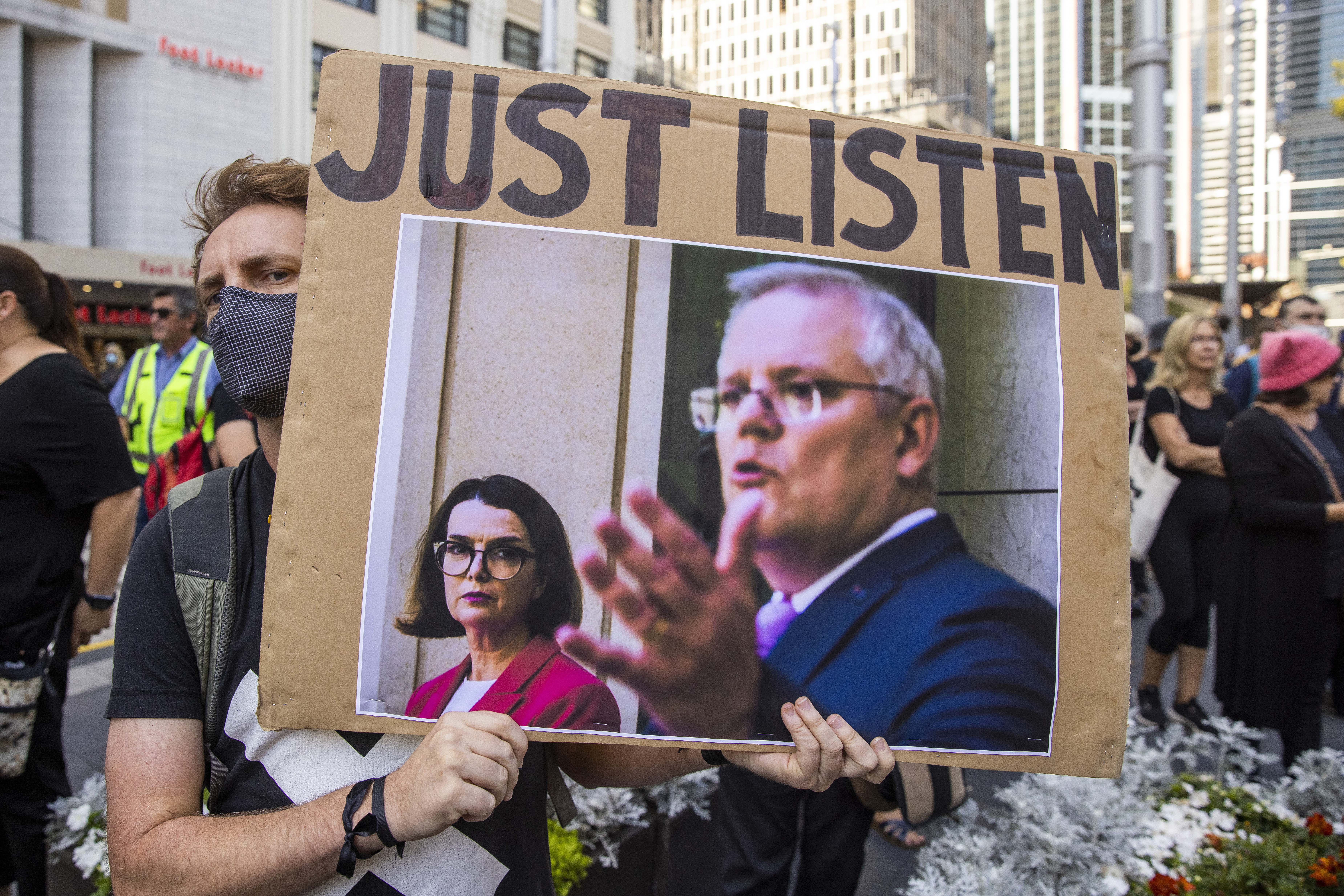
"If our leaders take away anything from today, it's that they need to listen, and they need to act."

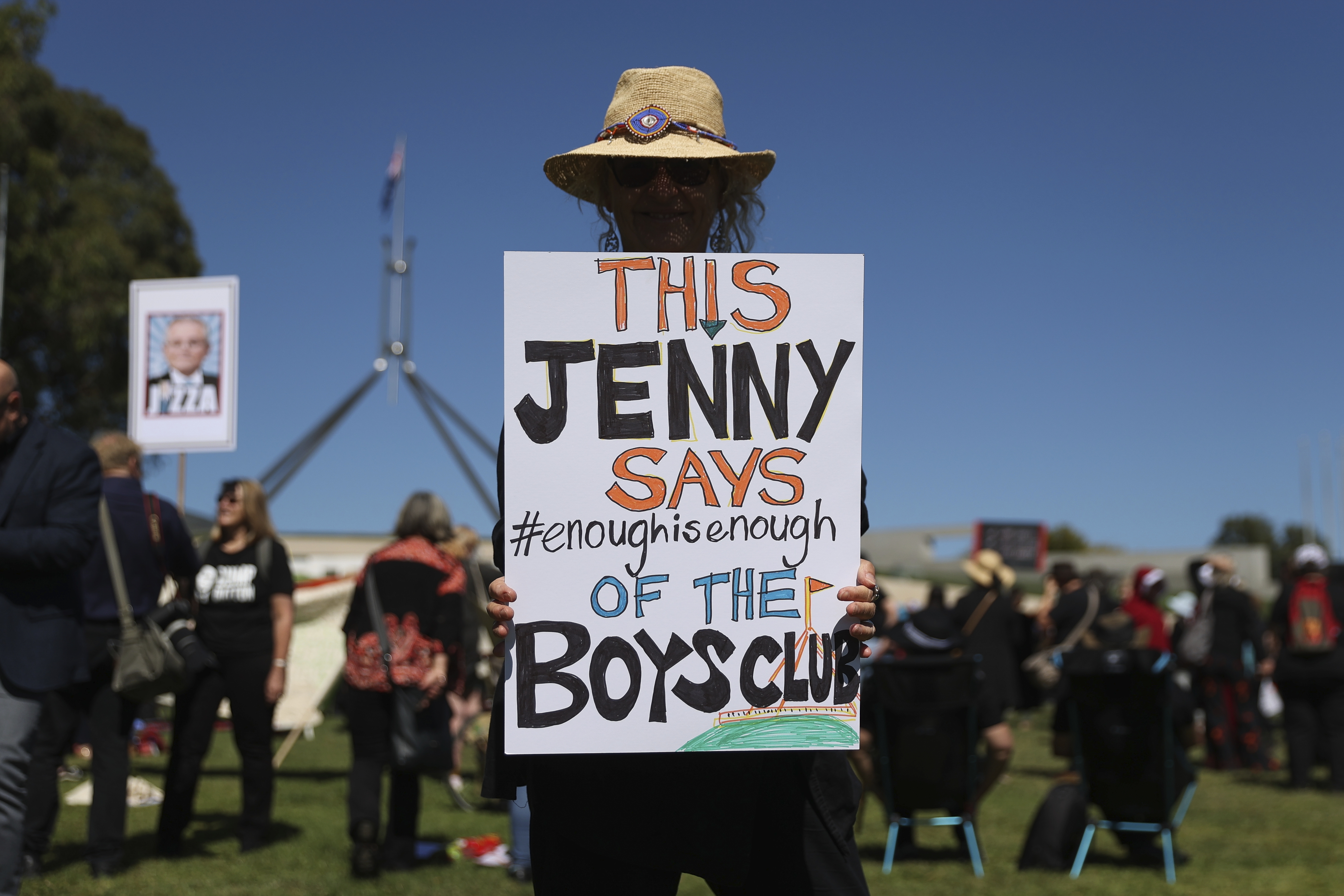
The Women's March 4 Justice movement, which has more than 40 rallies registered across the country, is calling for change in Federal Parliament, demanding all politicians address and "put an end to the issues of sexism, misogyny, dangerous workplace cultures and lack of equality in politics and the community at large".

https://twitter.com/sophie_walsh9/status/1371263239451860999

READ MORE: Organisers reject 'behind closed doors' meeting with Prime Minister

The demands include police investigations into all sexual assault allegations by members of Parliament, a federal ICAC investigation and an independent review by the High Court of Australia into gendered violence within Australia's parliaments.

Ms Evans said women should be able to feel safe to move around in society without the fear of assault.

"Women should not and do not accept that the things we have to do to protect ourselves are a cost of living," she said.

READ MORE: Organiser demands change during confrontation with Deputy PM

Women's March 4 Justice in SydneyMarch 4 Justice preparations

"Our freedom should not be included in that cost.

"The people that will be out there today are sending a message to the people who are survivors of violence and assault that we believe you and you deserve better than this and far better than the way you've been treated.

"So many women are having these horrific things happen in spaces where they should be safe."

Lyndal Gowland, 62, of Gowland Legal, said she was particularly concerned over the large number of women and children dying from domestic violence.

"Women have been marginalised by the system," she told 9news.com.au.

"I'm here to get justice for women."

Grace Tame gives empowering speech

Australian of the Year and sexual assault survivor Grace Tame has given an empowering speech to protesters in Tasmania as rallies ramp up in Hobart.

Ms Tame said the rallies were an opportunity to make some noise.

"Evil thrives in silence. Behaviour unspoken, behaviour ignored, is behaviour endorsed," she said.

"The start of the solution is also quite simple – making noise.

"It starts with conversation, and from conversation, education is born.

"I feel like I've been bashing my head against a wall recently, because these are not explosive revelations. These are common-sense ideas.

"Whatever happened to connecting with our fellow human beings and supporting each other and empowering each other and listening?"

Mass rallies spawned by a tweet

The mass rallies across Australian cities all started with a tweet by organiser Janine Hendry last month, in the wake of sexual assault allegations in the nation's Parliament.

The 58-year-old Melbourne academic pondered how many disgruntled women coming together around Parliament House it would take for politicians to action change.

"I need someone to tell me if this is possible," she said.

"I then also need someone to estimate the distance and how many women we would need? I'm absolutely serious – if this is possible we need to protest at a time and place that tells not only this government, but the world that we've had enough."

New South Wales

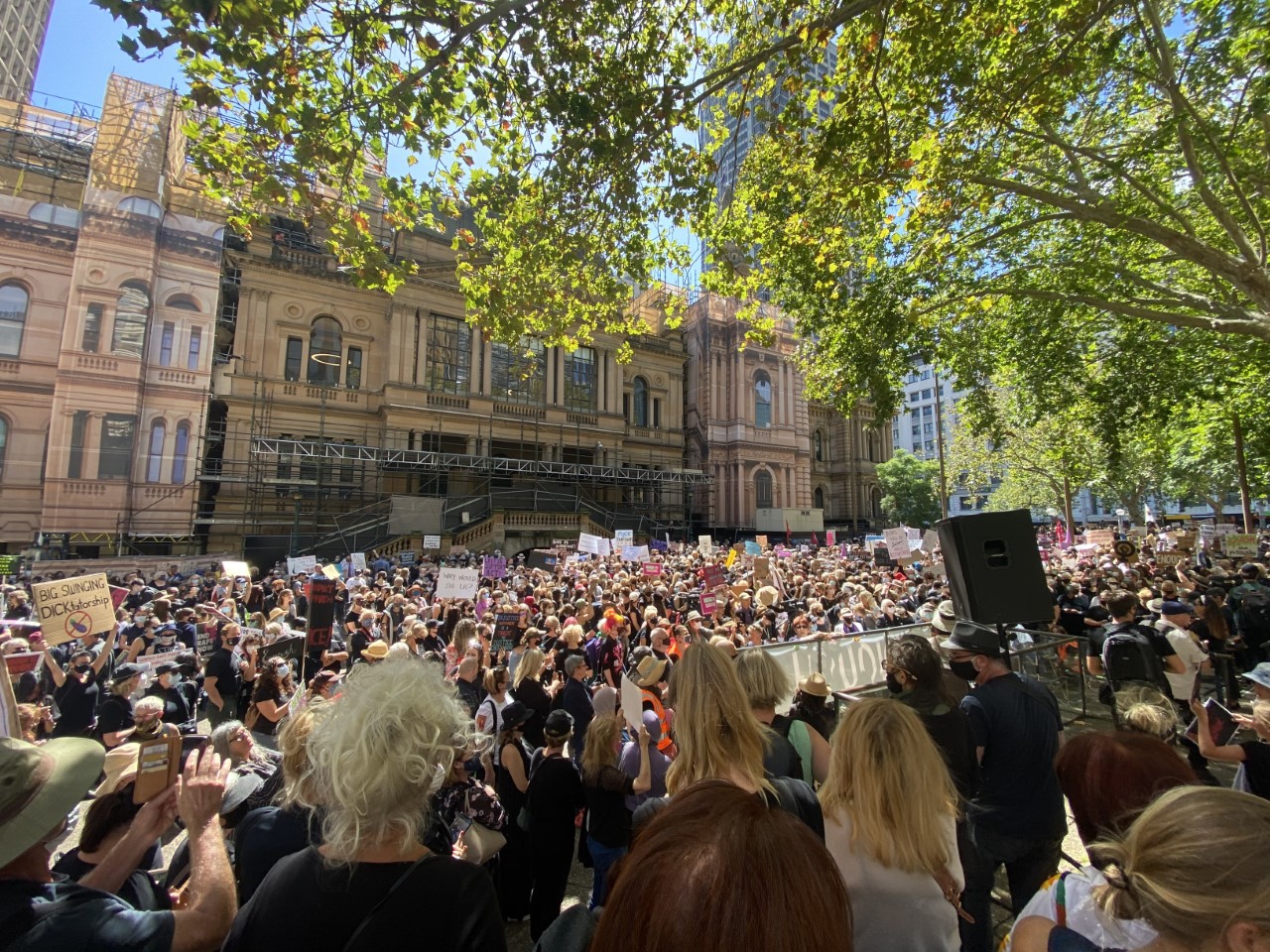
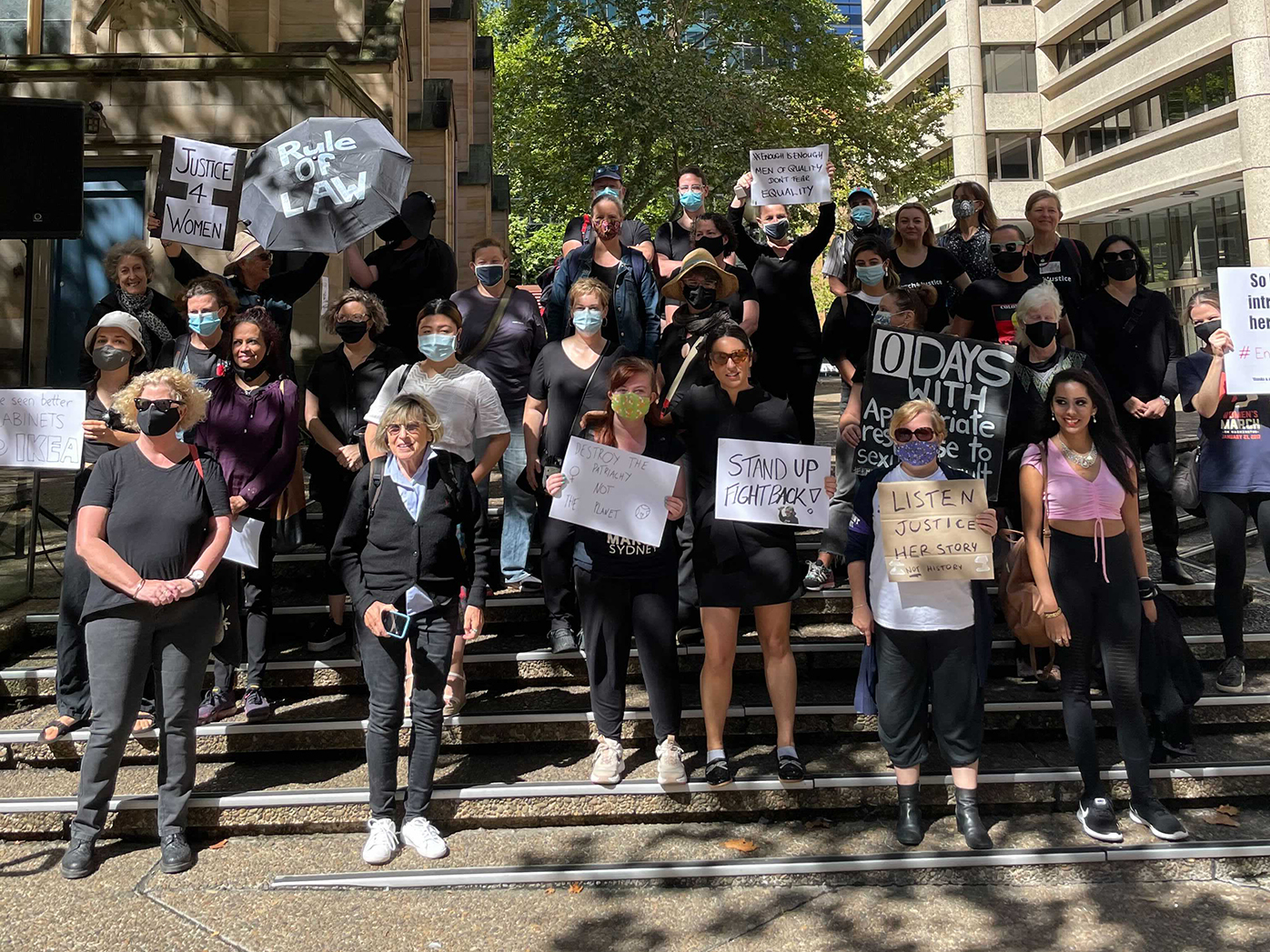
Large crowds have made impassioned pleas to the Federal Government to listen to the gender violence reforms they are calling for outside Sydney's Town Hall.

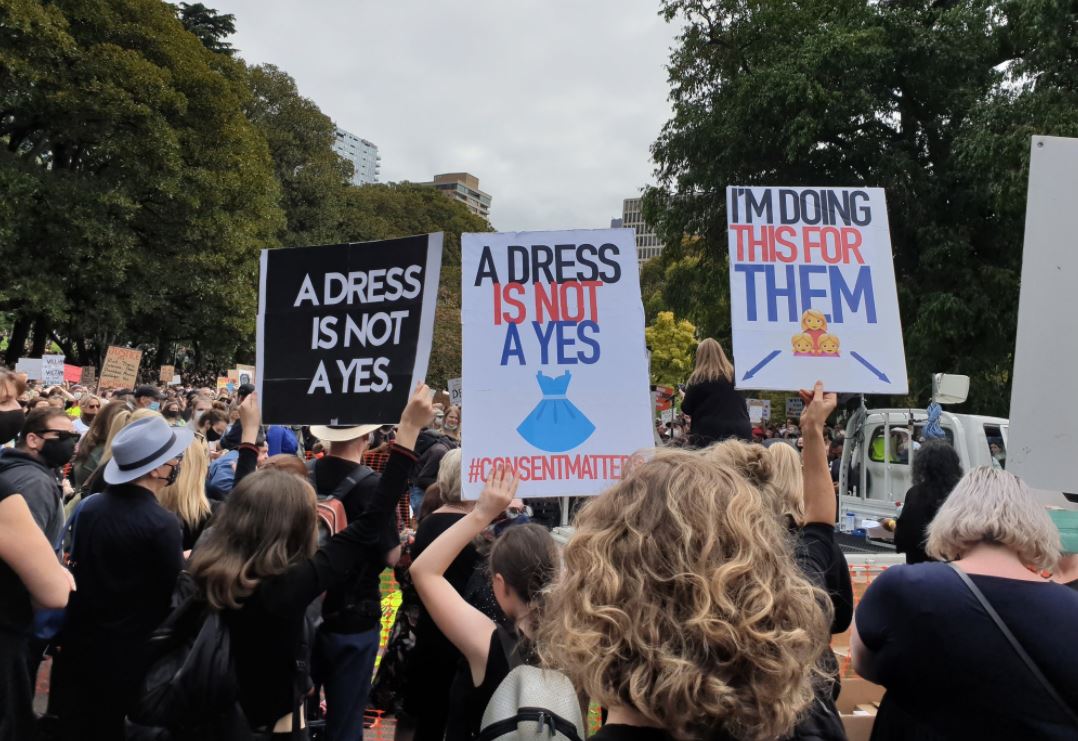
Town Hall Square has filled with thousands of people, with crowds spilling out to George Street and beyond.

In a Welcome to Country, Auntie Shirley said sexual assault was deeply ingrained in Aboriginal history.

"The one thing I want to say is I will not stand by and let the most vulnerable people be raped," she said.

"This is disgusting, this is disgusting."

Mother Alison Hallworth attended the rally with daughters Cassidy and Tully, telling 9News she wanted to show them the fight against sexism and violence was not over.

"It's not just about being a mother, or a mother of daughters," she said.

"I want them to understand there's so much happening these days, the fight's not over.

"Nothing is going to change unless we do something."

Michael Bradley from Marque Lawyers kicked off the day's speeches with a critique of the legal system and how it fails victims and survivors.

"The rule of law promises equality under the law. Equal access … equal accountability," Mr Bradley said.

"If there is no justice, then the law has failed."

Victoria

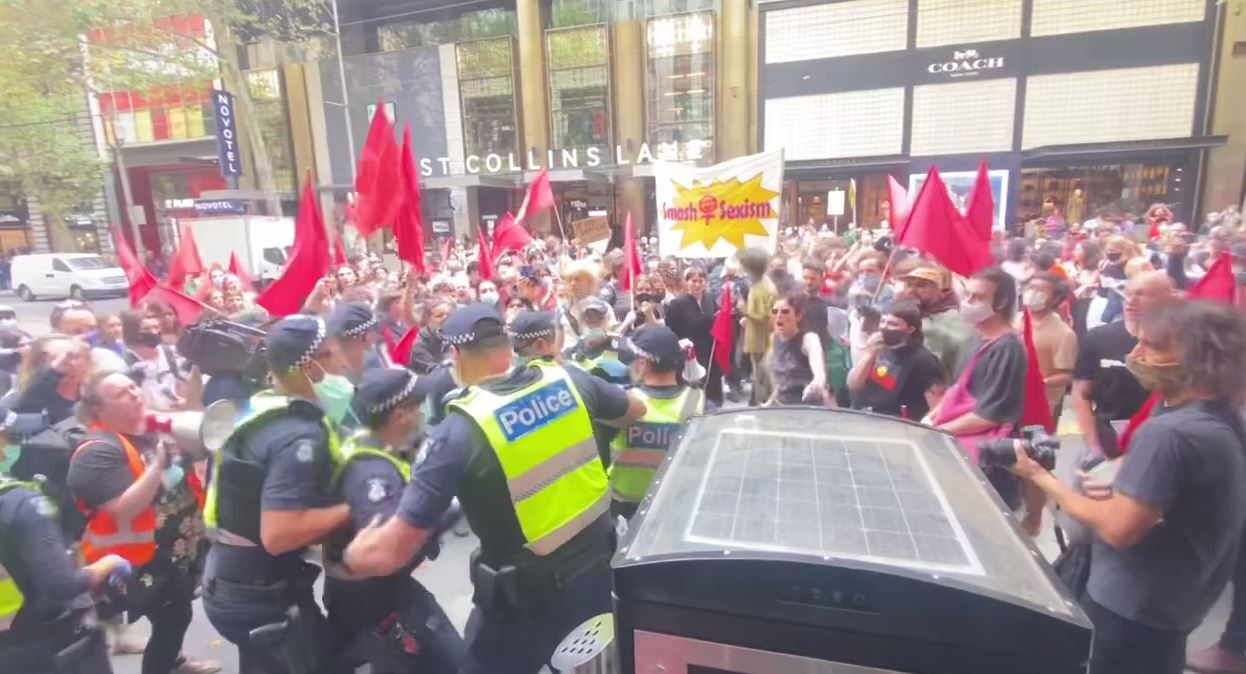
Protesters have scuffled with police in Melbourne's CBD as passionate pleas of justice for women turned violent this afternoon.

The splinter group from the march called for Prime Minister Scott Morrison and Attorney-General Christian Porter to stand down from their roles as activists say their voices are being ignored by political leaders.

9News understands no arrests have been made.

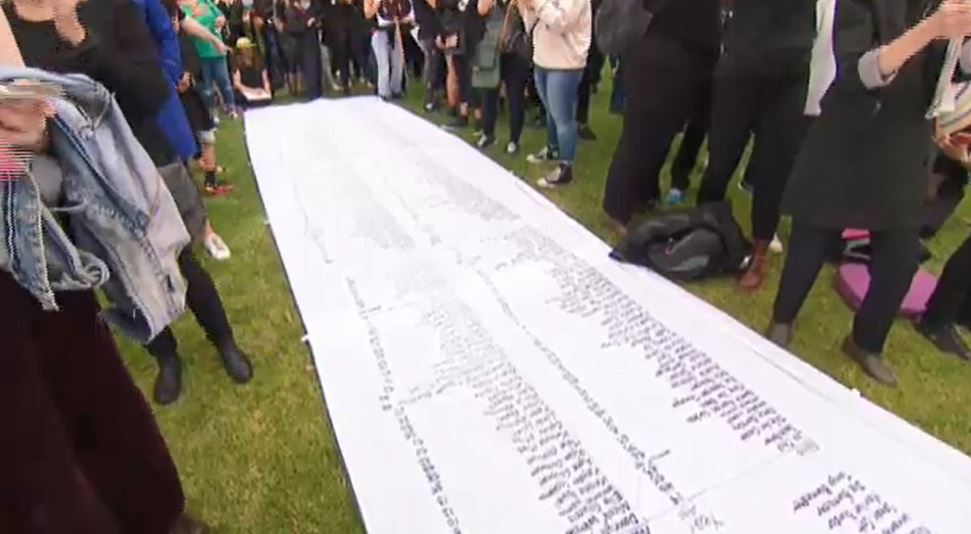
Protesters unfurled a list names spanning several metres of almost 900 women who have been killed by male violence since 2008.

Federal MP Julia Banks made a speech at the march today, despite initially being afraid to speak.

"I said no because I was frightened, I was scared," she said.

"I've seen what those in the centre of power do … they try to silence you, they create fear, they use their power over you … and of course then follows the threats and the abuse."

Ms Banks said the overwhelming number of people rallying today moved her to join the demonstration.

"All of you in our home town of Melbourne, I couldn't feel more honoured to speak up with all of you.

"Our federal parliament is dominated by men in power … but there is something more powerful.

"It's the people."

The former federal MP said she wanted to "speak for the thousands of women" who were unable to stand up for themselves for fear of persecution.

"I'm speaking here for the thousands and thousands of women who can't speak and who have been silenced … for fear of losing their jobs, their health, their safety or their life.

"I'm here today speaking up for the women – too many women – who have lost their lives, or taken their lives because of gendered violence."

Wurundjeri woman and social worker Sue Anne Hunter said the current system had failed Indigenous women.

"It is still white men who commit these crimes and it was white men who judge their innocence," she said.

"The allegations of gendered violence in parliament are the part of the same system of abuse and lack of legal and political consequence.

"Enough is enough."

Writer Jamila Rizvi acknowledged the fight for women was taking place "on stolen land".

Ms Rizvi was 22 years old when she started working as a staffer at Parliament House and was there for five years.

"It wasn't until years later I realised just how unusual, just how dangerous that experience was," she said.

"As a staffer I was a young woman in a world of older men and for many of those men parliament was their playground.

"Away from their family and friends … Canberra was a place here they worked hard and played harder."

The Future Women Editor-at-Large said she was more fortunate than other women who worked in government.

"I know now of course I was one of the lucky ones. I left that building without having been raped.

"I was spared the indignity, the distress, the trauma and the brutality and the memories that would have gone along with that.

"I was spared the experience alleged by Brittany Higgins.

"Brittany Higgins is someone who in my mind deserves an enormous amount of applause."

A huge demonstration also took place in a beachside Victorian town Torquay, with protesters spelling the word "justice" across the beach.

PM says his offer to meet with organisers was of 'good faith'

Prime Minister Scott Morrison says his offer to meet with rally organisers privately was "a good faith action", but he respected their right to refuse.

"I respect their right of organisers to choose not to meet – that is their right and I respect the right," he said during Question Time.

"If we were to meet, I would advise them of the following of the matters raised in virtue of the petition.

"We all agree that all cases of gendered violence should be referred to the authorities.

"Police are the appropriate independent authority. As terribly difficult as it must be, going to the police and making a statement is the only way to achieve justice and to ensure the perpetrator can no longer harm anyone else."

Mr Morrison said it was "good and right" that protesters were able to gather to express their "very genuine and real" frustrations.

"Those who gather here today and around the country do so out of a sense of great frustration and great concern," he said.

"That's deserved frustration and concern that I share and I believe the members of this House share."

Labor Leader Anthony Albanese implored the prime minister to listen to the thousands of women across the country marching for change.

"The prime minister needs to listen. To listen to what women are saying about what is happening in this building, and outside," he said during Question Time.

"And what I saw outside was passionate women who are angry, they are angry about what has happened to them, they are angry about what has happened to their mothers, their grandmothers, their sisters, their daughters and their granddaughters.

"And they're crying out that this is a moment that requires leadership. And it requires leadership from this prime minister."

Queensland

Thousands gathered at King George Square in Brisbane to rally in the women's justice march as Premier Annastacia Palaszczuk assured cabinet would "absolutely" be showing their support.

"Cabinet will be going down to Parliament House to show our support for a large number of women, I think right across Australia, who support that more needs to be done to allow women's voices to be heard," Ms Palaszczuk said today.

https://twitter.com/ShannonFentiman/status/1371319767961800709

Queensland Attorney-General Shannon Fentiman said she was "frustrated and saddened" by the inaction of Australia's leaders.

"I am in constant awe of the courage and bravery women continue to show in sharing their stories of violence committed against them," she said.

https://twitter.com/NatarjshaKramer/status/1371277338000777220

"It's time that we listen to them, believe them and support them. Because respect for women starts at the top. Today we say we are here, take notice. Today we say we want gender equality and violence against women to end.

"Today we stand in solidarity with victims, and survivors and women and #march4justice

"Today we say enough is enough."

Trio jailed for life over Queensland toolbox murders

Three men have been sentenced to life in prison over the toolbox murders of two Queensland parents.

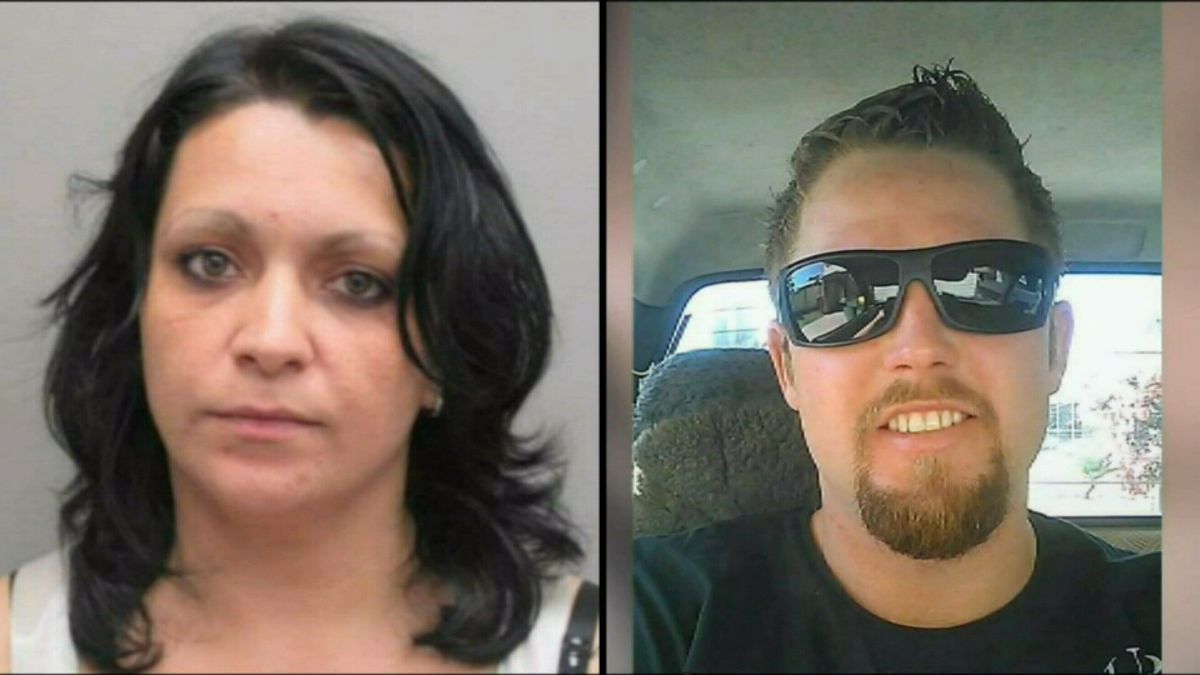
Trent Thrupp, Stou Daniels and Davy Taiao were found guilty last week of torturing and stuffing Iuliana Triscaru and Cory Breton in a toolbox and dumping it in a dam at Logan, back in January 2016.

In court, Justice David Boddice described the trio's actions as a complete lack of humanity.

READ MORE: Men face court over alleged Queensland toolbox murders

"They are despicable crimes involving senseless yet sadistic conduct perpetrated against two defenceless individuals," Justice Boddice said.

A fourth man, Waylon Walker, was found guilty of manslaughter. He will serve 12 years in prison.

In January 2016, Triscaru and Breton were lured to a unit in Kingston, south of Brisbane, where they were tortured and assaulted over a drug dispute.

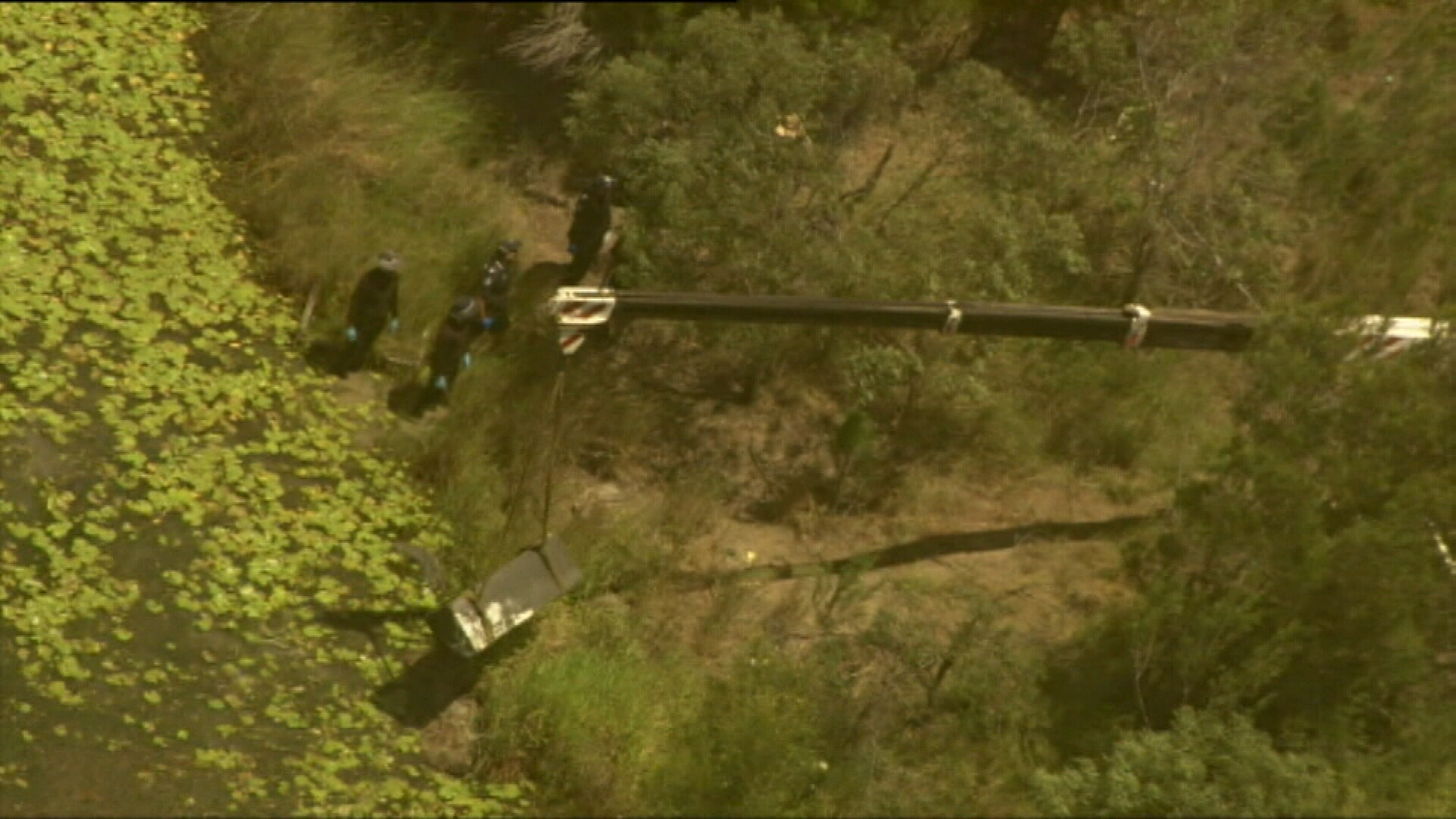
Next, their killers forced them inside a metal toolbox and dumped the box in a Logan dam.

"Over the last five years we have not been able to properly grieve for Cory due to court proceedings," Mr Breton's widow, Miranda Parkinson, told reporters outside Brisbane's Supreme Court last week.

"Now we have some sort of closure."

At the start of the trial in February, all four had pleaded not guilty.

Crown prosecutor David Meredith had described the killings as "breathtakingly evil".

Thrupp attempted to plead guilty to manslaughter, but the prosecution refused to accept it.

The slain pair's remains were found 18 days after they were reported missing.