Category Archives: headline

DO THOSE WHO RECEIVE TAX CUTS SPEND OR INVEST? By Everson W. Hull Ph.D.

By Everson W. Hull Ph.D.

Recently, one of my very thoughtful friends with whom I seldom ever disagree suggested that:

“…the folks that get tax cuts don’t spend; they invest…”

We have seen up front the very damaging effects of policy actions that are aimed at punishing the rich with higher and higher taxes. These punitive contractionary fiscal policy actions are exactly the opposite of what is needed during a severe economic downturn when the masses are desperately searching for alternative sources of funds that would allow them to feed their families and pay their rent on time.

Tax policy can be very complex.  Consider the simplest case of black billionaire – Robert Morris – a graduate of Morehouse College. At the graduation exercises in 2019, Mr. Morris surprised the 400 graduate students by announcing that he would pay off the entire outstanding student debt of the graduating class.  He chose to exercise what Nobel Laureate — Milton Friedman — refers to as the “Freedom to Choose” by SPENDING (U.S.) $34 million of his hard-earned surplus tax money on his own people who he loves dearly, and with whom he shares a common bond.   By donating his money to the students, he enjoyed the benefits of sharing his own wealth rather than have it taken away from him, against his will, allowing others to exercise the bragging rights of giving away that which they did not earn.  

The parents consider him a hero.  The huge outstanding balances for room and board and tuition were no longer a financial burden.  He did not issue a military decree as to how the parents and students should spend their windfall game.  He granted them the exclusive right to be “FREE TO CHOOSE” how they spend  their money. The students and parents will remember Morris’ generosity and m Many students will seek to do exactly what Morris has done when they find themselves with surplus cash.  It is in the nature of mankind to give of him- or her-self to others.   

By contrast, if Mr. Morris chose not to support the students at Morehouse college and chose instead to park a few dollars INVEST in low risk / low return time savings deposits, the ordinary man on the street would welcome this opportunity.  The parents will submit a loan application and inform the bank that they have a few extra dollars that allow them to qualify for a small loan for repairing a leaky roof or replacing the unreliable family car.  The neighborhood carpenter would be called in to replace the roof, creating jobs for the workers in the neighborhood.

As a reward to Mr. Morris for suffering the discomfort of not having direct access to his money, he will receive a rate of return from the lending institution.  This rate of return would typically be sufficient to cover any losses that he would have incurred if the price of goods and services soared during the loan interval that he was without access to his money.  

In a similar vein, if Mr. Morris INVESTED in the Park Hyatt hotel on the Peninsular, he would pocket a healthy return on his capital investment.   But, at the same time a large number of locals are going to be hired to work at the site.  On pay day, they will choose to SPEND their hard-earned money and pick up a few groceries or stop at a few Mom-and-Pop establishments on the way home.

The rich are really not bad people.  They cannot hide from us.  Every dollar that they “SPEND” or “INVEST” becomes income for the rest of us.  Because it is “we the people” who must be called on to produce the goods and services that they purchase.  We are the “SECONDARY” beneficiaries of their largesse.

Whether the investor chooses to spend or invest matters a great deal.  Our Nation has established a Prosperity Agenda. The preponderance of the evidence suggests that the Nation’s mission objective in pursuit of a prosperous state will make us better off rather than worse off.  

Many of us are old enough to recall the massive human capital exodus that occurred during the late 1950s.  Faced with insufficient income, the masses made an entirely rational decision.  They bailed out and sought refuge in safe harbors that offered higher levels of income that allowed them to pay their rent on time and take care of their loved ones at home.

Today, the human capital exodus that St. Kitts and Nevis once experienced is now being observed in Haiti, the country with the lowest income in the Western Hemisphere.  With a per capita income of U.S. $1,801, a total of 175,000 Haitians fled in 2017. 

Today, there is no mass out migration from St. Kitts and Nevis.  We are no longer losing the highly valued top talent pool that is critical to our development and, in turn, the Nation’s Prosperity.  Indeed, what we are observing is a flow of Nationals from other states seeking refuge in St. Kitts and Nevis.  

We have learned the hard way.  We have set aside the inclination to impose higher and higher taxes and have learned to live within our means.  By so doing, we have reduced the heavy burden of the high costs associated with paying interest on the outstanding public debt. These discretionary policy actions have freed up resources for spending on other highly valued causes. These actions have allowed us, proudly, to reduce our outstanding public debt-to-GDP ratio from 152 percent in 2005 – the highest among OECS member states of CARICOM — to 57 percent the lowest ratio of the OECS group.  It is a level that is below the regulatory minimum threshold of 60 percent, established by the Eastern Caribbean Central Bank.

It is noteworthy that the U.S. experienced its best years ever recorded in 2017, 2018 and 2019.  Total expenditures on leisure travel by Americans amounted to US$186.5 billion in 2018.  Canadians spent $33.6 billion and the British spent $68.9 billion.

Where did the American visit?  A fair share of them visited St. Kitts and Nevis shattering every visitor-arrival record that existed, following the global slowdown in 2008.  In 2019, there were 80,509 stay-over visitors from the USA, an all-time record high.  The same stay-over records were shattered in other OECS member states, which own a larger share of available rooms.  A record high number of stay-over visitors from the USA, richly endowed with their surplus tax money headed for St. Lucia (191,719).  Our neighbor in Antigua and Barbuda also recorded an all-time record high number of stay-over American visitors (123,553) visitors.  

This is what people everywhere do with surplus income. It is not rational for anyone of sound mind to hoard their money.  They either spend it or save it.  And the more of their money they spend or invest; the better off each one of us will be.    Why? Because it is “WE THE PEOPLE” who will be called on to produce the goods and services that they demand.

We depend on them for our sustenance.  Without them, we will all be up a creek without a paddle.  We have tried it the Haitian way, and it has not worked well for us.  Today, there is no massive human capital flight out of St. Kitts and Nevis. 

Every effort should be made towards recognizing and rewarding our top talent for their supra-normal efforts in sustaining our current Western Hemispheric lead in pursuit of the Nation’s Prosperity Agenda; and in so doing thrusting the Nation closer to its highest productive potential.    


Dr. Everson Hull is a business economist.  He currently serves as Ambassador for St. Kitts and Nevis to the OAS. He has served as Adjunct Professor of Economics at Howard University, Head of Money and Banking at the Congressional Research Service and U.S. Presidential Appointee as Deputy Assistant Secretary for Policy and Research at the U.S. Department of Labor.

The post DO THOSE WHO RECEIVE TAX CUTS SPEND OR INVEST? By Everson W. Hull Ph.D. appeared first on The St Kitts Nevis Observer.
Federation’s COVID-19 vaccinations launch a major milestone

BASSETERRE, St. Kitts – February 22 will be remembered as a major milestone in St. Kitts and Nevis’ history in the fight against the COVID-19 virus, according to Medical Chief of Staff at the Joseph Nathaniel France General Hospital, Dr. Cameron Wilkinson.

“Despite the stark realization of the importance and efficacy of vaccines, there are still some persons who are reluctant to take them,” he said. “I am certain that our people will do the right thing again and be protected through vaccinations.

“Over 70 frontline and essential workers, including 22 of my medical colleagues, joined us, rolled up their sleeves and took the vaccine against COVID-19,” said Dr. Wilkinson.

“It was also reassuring to see the Prime Minister, the Minister of Health, Members of the Cabinet, and the top brass from the Police, Army, and Port Authorities leading by example,” he added.

“The vaccine rollout was not only an effort to protect us from this deadly virus but to assure you of the confidence we have in the vaccine’s efficacy and safety,” said Dr. Wilkinson. “The success of vaccines in eliminating a number of diseases locally and worldwide, a sum that requires over 90 percent population coverage to achieve herd immunity, speaks to the fact that the majority of us will do the right thing and get vaccinated.”

The post Federation’s COVID-19 vaccinations launch a major milestone appeared first on The St Kitts Nevis Observer.

Global solidarity needed to effectively tackle COVID-19 pandemic

BASSETERRE, St. Kitts — With the COVID-19 virus still active, Kaye Bass, Permanent Secretary in the Ministry of Foreign Affairs and Aviation, has called for continued global solidarity and cooperation as they are considered effective tools to combat the pandemic.

“In the initial phase in the fight against this global health challenge, we were pleased to witness a universal solidarity among families, communities, and nations,” said Ms. Bass during the presentation ceremony of an ambulance and passenger bus at the Joseph Nathaniel France General Hospital on February 24. “We are where we are today because of our homebred experts, but we have come this far as a consequence of the benevolence of bilateral friends such as the United States and international partners such as the International Federation of Red Cross and Red Crescent Societies.”

Ms. Bass noted that St. Kitts and Nevis’ successes at properly managing the spread of the virus should not go unnoticed.

“We believe that our success to date at curbing the spread of the disease within our community puts us in a good place to warrant further attention and assistance as we move to achieve herd immunity”, she said. “This is an opportune juncture to therefore make an appeal for a similar show of solidarity from the United States and others with respect to ensuring equitable access to vaccines and call upon all nations to realize that the actions of each nation globally will ultimately have an impact on its own welfare domestically.”

Ms. Bass said a robust and resilient health system is necessary for a continued healthy population in a post-COVID-19 world.

She noted that the COVID-19 pandemic calls for global togetherness as coming together brings everyone hope and can help protect the world from future outbreaks of infectious diseases.

“The pandemic calls for uniting the entire global community to build societal resilience to cope with the next crisis,” said Ms. Bass. “We believe solidarity and unity of action can assist in mitigating against trends that will render the world vulnerable to the spread of infectious diseases. Solidarity is building on elements of relationships among individuals, peoples, and states and underpins global partnerships.”

Ms. Bass highlighted the bond between St. Kitts and Nevis and the United States, noting that the Federation “cherishes the almost 38 years of formal relations between the two nations and the mutual solidarity that has helped to solidify this bond.”

The post Global solidarity needed to effectively tackle COVID-19 pandemic appeared first on The St Kitts Nevis Observer.

St. Kitts and Nevis Intangible Cultural Heritage Project to transcend generations

BASSETERRE, St. Kitts — The Intangible Cultural Heritage (ICH) Project, will enable culture in St. Kitts and Nevis to transcend generations, according to Minister of Culture, the Honourable Jonel Powell.

Minister Powell’s commented during Phase Four St. Kitts and Nevis Internal Cultural Heritage (ICH) Awareness Campaign, “Seminar for Policy Makers and Community ICH Stakeholders St. Kitts and Nevis UNESCO Capacity Building Project entitled “Strengthening Inventory Preparation Capacity for Implementing 2003 Convention for the Safeguarding of Intangible Cultural Heritage in St. Kitts and Nevis” on February 24.

“Throughout the Federation there is evidence of mingling and intertwining of various cultures and traditions,” said Hon. Powell. “This is not only with our Caribbean neighbours like Guyana, the Dominican Republic, and Jamaica, but from international cultures like the Chinese and the Indians.

“These non-nationals practice their culture, adhere to their principles and traditions and all aspects of their living,” he said. “In this paradigm, it becomes critically important for us to not only be aware of our own culture and heritage, but for us to continue to live it, practice it, preserve it, and indeed pass it down from generation to generation.

“If we do not do this, our cultural identity and uniqueness would not only be diluted, but it would gradually become obsolete,” said Powell. “As fragile as intangible cultural heritage is in the face of growing globalization it is an important factor in maintaining cultural diversity.

“An understanding of the ICH in different communities across the Federation helps with intercultural dialogue and encourages mutual respect for other ways of life and living,” he said. “That is why the last two years or so we have had teams, some 14 of them, going out into the communities to do research and to interview you the man of Phillip’s Village, the woman in Butler’s, to gain much insight.”

According to the convention text, intangible cultural heritage’ means “the practices, representations, expressions, knowledge, skills – as well as the instruments, objects, artifacts and cultural spaces associated therewith – that communities, groups and, in some cases, individuals recognize as part of their cultural heritage.”

“This intangible cultural heritage, transmitted from generation to generation, is constantly recreated by communities and groups in response to their environment, their interaction with nature and their history, and provides them with a sense of identity and continuity, thus promoting respect for cultural diversity and human creativity,” the text stated.

In 2018, St. Kitts and Nevis was the first country in the English Speaking Caribbean Community to successfully apply for the project.

Minister Powell pledged the Federal Government’s support to the continuity and longevity of the Secretariat that has been established within the Department of Culture to carry out the project.

The post St. Kitts and Nevis Intangible Cultural Heritage Project to transcend generations appeared first on The St Kitts Nevis Observer.

CDB Projects Regional Economic Growth of 3.8 percent in 2021

BRIDGETOWN, Barbados — After an extremely difficult year in which the economies of its 19 Borrowing Member Countries (BMCs) contracted by 12.8 percent on average due to the onset of Covid-19, the Caribbean Development Bank (CDB) is projecting an average gross domestic product (GDP) growth of 3.8 percent in 2021. However, this projection, made in Part 1 of CDB’s Regional Report: 2020 Review and 2021 Outlook, released today, is clouded by the ongoing uncertainty, caused by the global pandemic.

“The pandemic has underscored the importance of building economic and social resilience,” said CDB President Dr. William Warren Smith. “We can only reduce the susceptibility to external shocks when we accelerate the diversification of our economies; broaden our productive base; and take appropriate measures to build competitiveness whilst providing adequate safety nets to protect our most vulnerable groups.”

In 2020, the majority of BMCs registered double-digit declines in GDP. Countries with significant tourism industries, such as The Bahamas, Barbados, Belize, Cayman Islands, Dominica, and Grenada, were hard-hit by a more than 70 percent drop in overnight visitors in 2020, which spilled over to affect other economic sectors. An increase in agricultural production in Jamaica could not prevent the economy shrinking by 10.4 percent . Agriculture in Belize was affected by a severe drought from the previous year, and then a reduction in tourism-related demand. The economy contracted by 13.3 percent.

Guyana was the only economy to record economic growth (26 percent ), solely due to the start-up of its first oil production. However, growth was lower than expected due to lower global oil prices. Declining oil prices also caused economic contraction of 11.1 percent in Trinidad and Tobago. Guyana also saw mixed performances in agriculture – sugar production fell while rice production rose. In Haiti the pandemic affected manufacturing supply chains. This compounded the effect of social unrest on the economy early in the year.

Across the Region, the fall in economic activity led to a steep decline in government revenues. At the same time governments increased expenditure to support health sectors, and to provide social support and economic stimulus. Primary fiscal balances worsened in every BMC, averaging -4.1 percent of GDP compared with -1.3 in 2019. Increases in unemployment rates were recorded in many countries, including The Bahamas, Belize, Cayman Islands, Grenada, and Jamaica, and are expected in most others. Unemployment rates were generally higher for women and for young people.

In 2020, debt rose in every BMC except Guyana. The regional debt-to-GDP average moved from 66.5 percent to 79.5 percent . In Barbados debt reached almost 150 percent of GDP. While regional debt is projected to continue rising to 81.5 percent of GDP in 2021, debt-to-GDP ratios are expected to fall in seven countries, with the steepest decreases in Barbados by 8.3 points to 141.2 percent and in Jamaica by 6.7 percent to 97.4 percent .

While the bank does not expect a return to 2019 tourism levels this year, tourism-dependent BMCs will experience some economic recovery, led by Anguilla, where GDP is expected to increase by 10.9 percent . This recovery is underpinned by a gradual return of tourists, which is expected in the fourth quarter of the year, and focused efforts to roll out mass vaccination programmes throughout the Region. However, recovery is subject to risks, such as new waves of infection and possible new variants of the virus, and widespread availability of vaccines for some countries.

Expected oil price increases along with production expansion should contribute to projected GDP growth of 8.4 percent for Guyana in 2021. Higher oil prices will also support modest economic growth of 0.3 percent in Trinidad and Tobago.

When the pandemic diminishes, countries must continue to address the enormous economic challenges that confront the Region. Accelerated programmes to strengthen macro˗fiscal frameworks and broad-based structural reforms are required to address the development constraints limiting productivity and growth.

The post CDB Projects Regional Economic Growth of 3.8 percent in 2021 appeared first on The St Kitts Nevis Observer.

Dubai princess 'held hostage' urges police to investigate sister's kidnapping

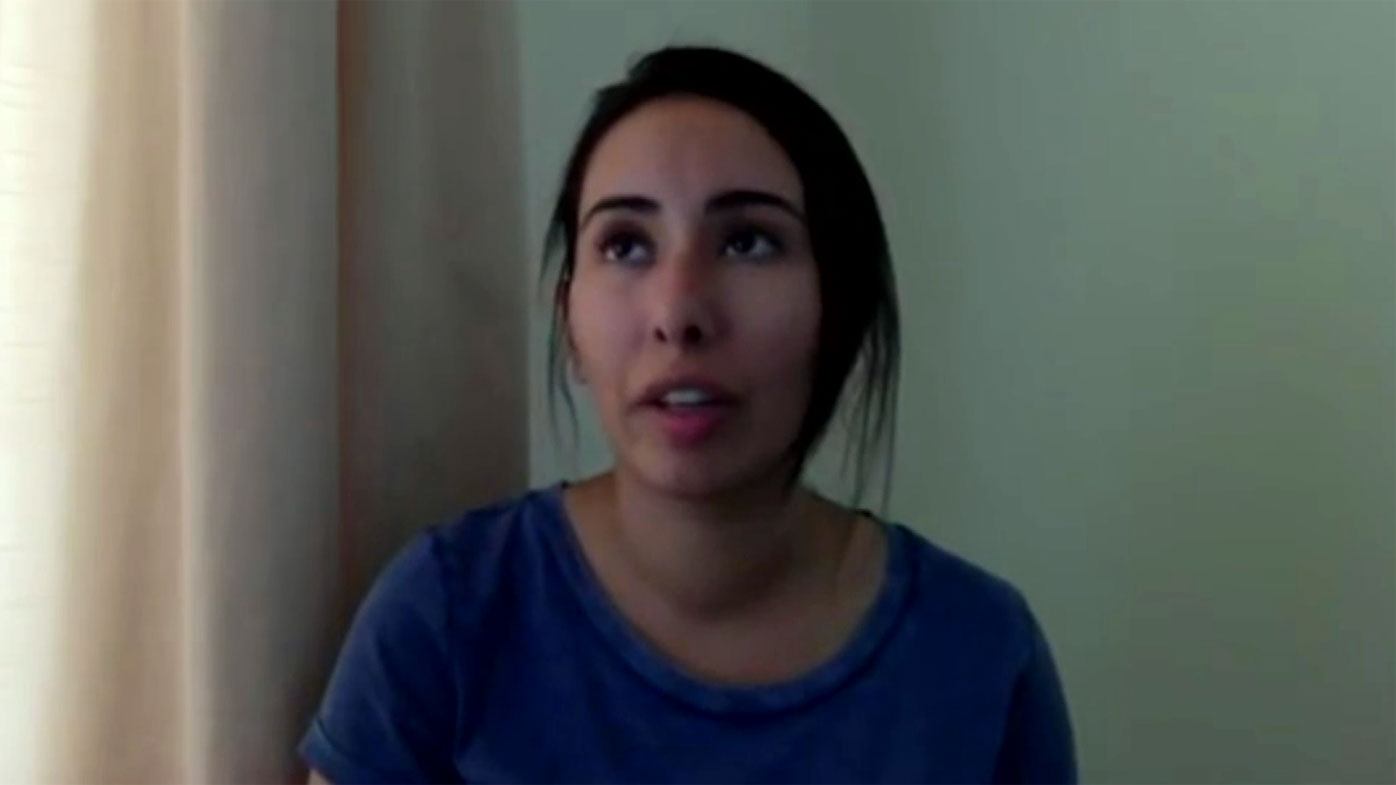
Latifa bint Mohammed Al Maktoum, the daughter of Dubai ruler and UAE Prime Minister Sheikh Mohammed bin Rashid Al Maktoum, has sent a letter to police in the UK asking them to investigate the alleged kidnapping of her older sister, Princess Shamsa, from Britain in 2000.​​

"In the summer of 2000 Shamsa escaped the family vacation house in England. She was 18 years old … and of sound mind," Princess Latifa, who has also claimed she is being held hostage, wrote in a letter sent to CNN by her friend David Haigh, a campaigner for her release and part of Detained International, a legal advocacy NGO.

"She was enslaved and oppressed and suffered physical abuse at the hands of family members … She wanted to seek asylum in the UK where she has family permanently living there. After a few months, she was kidnapped … She was dragged from the street kicking and screaming. She was tranquilised and flown back to Dubai," Latifa wrote in the document dated February 2018.

READ MORE: Missing Dubai princess re-emerges in videos at 'jail villa'

The princess added her sister was tortured, "kept incommunicado with no release date, trial, or charge."

"She was tortured by getting her feet caned which is something I experienced myself with my own imprisonment," she wrote.

"Her ultimate goal is to be an emancipated person, to live with dignity, to have freedom of choice and freedom of movement … She wants the basic rights that all human beings are entitled to," the princess continued.

RELATED: Backers of detained Dubai princess seek Joe Biden's help to win her freedom

The princess said her sister has "strong links to England" and was "abducted in an illegal manner, on UK soil."

"All I ask of you is to please give attention on her case because it could get her freedom, which is the only thing that she wants in life," she added.

In a statement sent to CNN, Cambridgeshire Police confirmed it has received a letter, "dated February 2018 in relation to this case which will be looked at as part of the ongoing review."

The Missing Princess - Part two

The force also said it is investigating the recent BBC Panorama documentary, in which Latifa herself claims to be held hostage in Dubai.

The UK Foreign Office declined to comment on Thursday.

A recent statement by her family said coverage of Latifa's situation "is not reflective of the actual position," according to the United Arab Emirates embassy in London.

The letter was obtained and delivered to the police by one of Latifa's cousins and Haigh.

The group also submitted a "transcript of a number of video statements from Sheikha Latifa," which were obtained by "smuggling, with great difficulty and danger, a mobile phone into the Dubai jail of Sheikha Latifa," Haigh said in the letter sent to police and shared with CNN, using her Arabic title.

"Contact [with Latifa] was maintained throughout the majority of 2019 and 2020. Contact was lost in the second half of 2020," Haigh said.

The group also claims it has evidence that one British citizen was involved in the kidnapping of Princess Shamsa.

"We were not able to release such evidence previously due to what we believed was an unacceptable risk to the life and safety of Sheikha Latifa. However, now that contact has been lost, we are gravely concerned for her life and safety and decided to take the step to release the evidence obtained," Haigh added.