Hawke’s Bay police are calling for witnesses of a logging truck crash in a rural area of Central Hawke’s Bay.The truck was heavily damaged after rolling into a bank on Route 52, also known as Wimbledon Rd, near Porangahau, between…
Category Archives: headline
State by state: Australia's COVID-19 vaccine rollout
The first phase of Australia's coronavirus vaccination program is set to begin in full today.
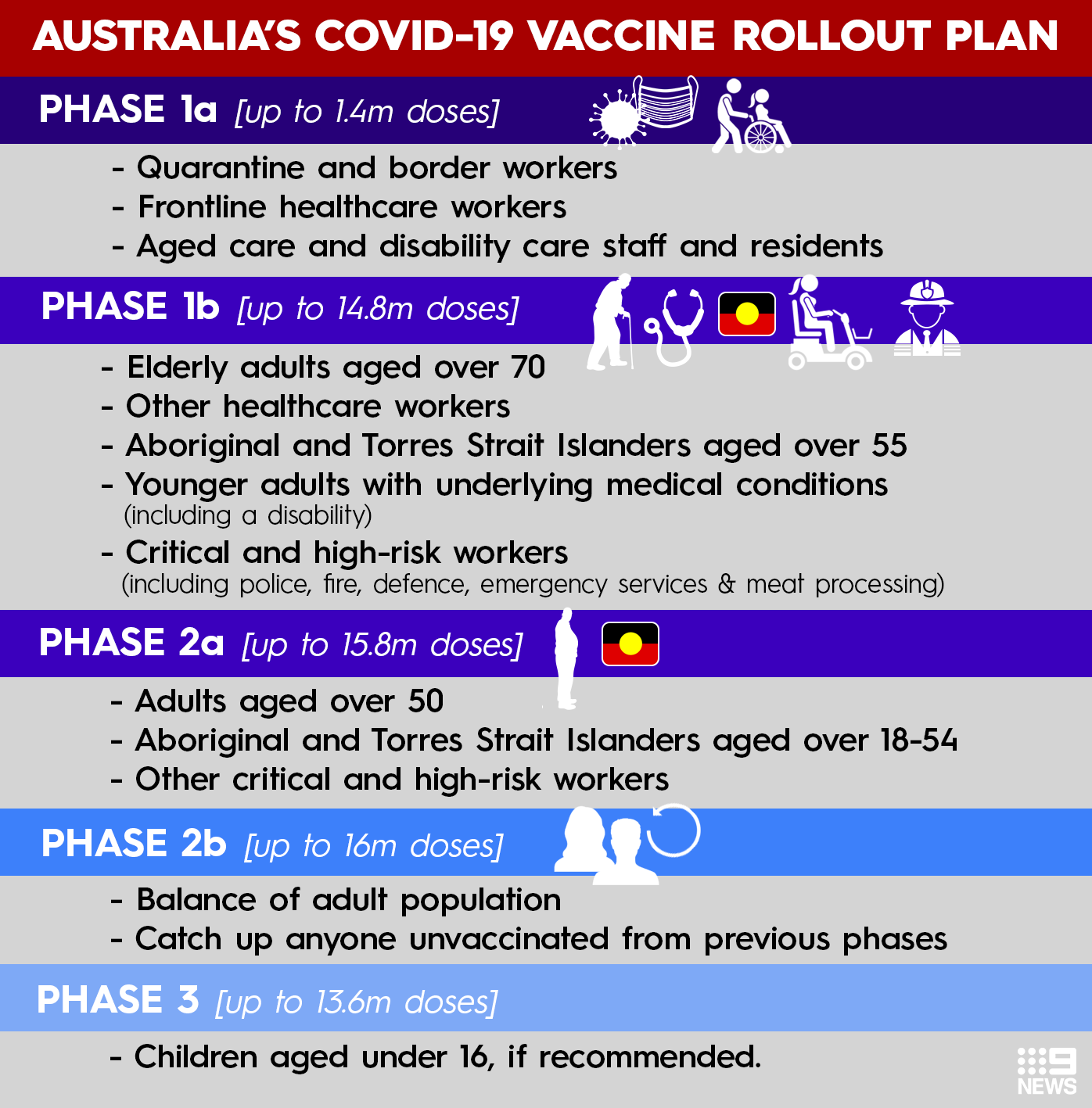
Up to 1.4 million doses of the Pfizer vaccine will be given to hotel quarantine workers, frontline healthcare workers and aged care staff and residents in the coming weeks.
Health Minister Greg Hunt said he hoped to see 60,000 vaccinations across Australia in the next week.
READ MORE: 'More than three wars': US nears 500,000 coronavirus death in one year
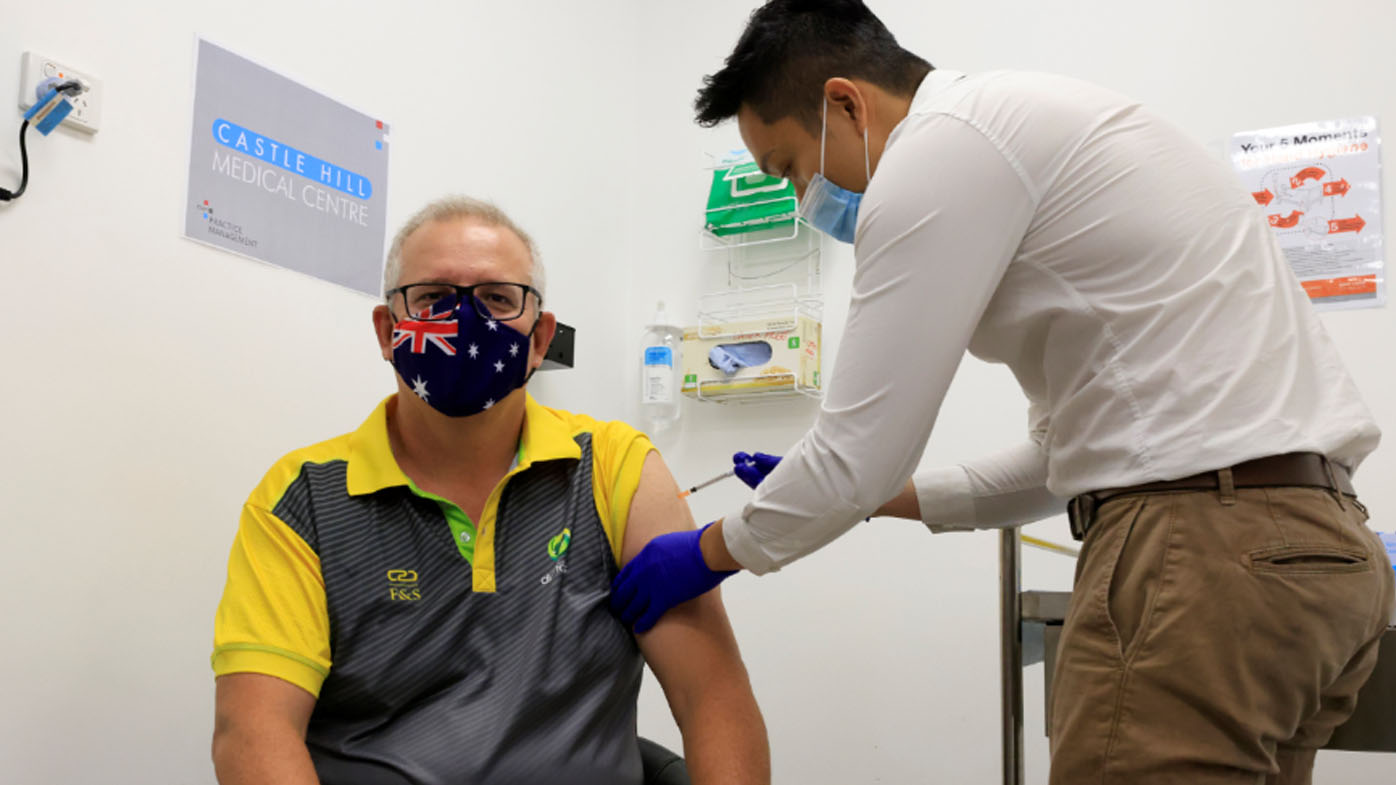
Larger volumes of the AstraZeneca vaccine will become available in March for Phase 1B of the rollout, when the vaccine becomes available to people aged over 70, high-risk workers such as Defence Force personnel and police, and the disabled and vulnerable.
Here is where each state stands:
NEW SOUTH WALES
Around 4000 doses of the Pfizer vaccine were due to arrive in Sydney on Sunday, with the state aiming to vaccinate around 12,000 frontline workers in the next three weeks.
READ MORE: First Aussies receive COVID-19 vaccines
Three vaccination hubs operating out of the Royal Prince Alfred, Westmead and Liverpool Hospitals will aim to vaccinate 1100 people every day, with border workers, hotel quarantine staff and frontline health workers the first in line.
This includes staff at the three hospitals, with 480 Westmead workers set to get the jab today.
VICTORIA
The first shipment of the vaccine arrived in Victoria by road over the weekend.
Phase 1A of the rollout kicks off today, with quarantine, hospital and airport workers first in line to get the jab, along with aged care residents and staff.
Prof Rhonda Stuart from Monash Health said about 100 health care workers were expected to be vaccinated at the Monash clinic from this morning. The first appointments are at 7.30am.
"They're the ED, the intensive care, the wards that actually care for COVID patients. They're the main ones we're focusing on," she said.
Victoria is receiving 11,000 doses this week.
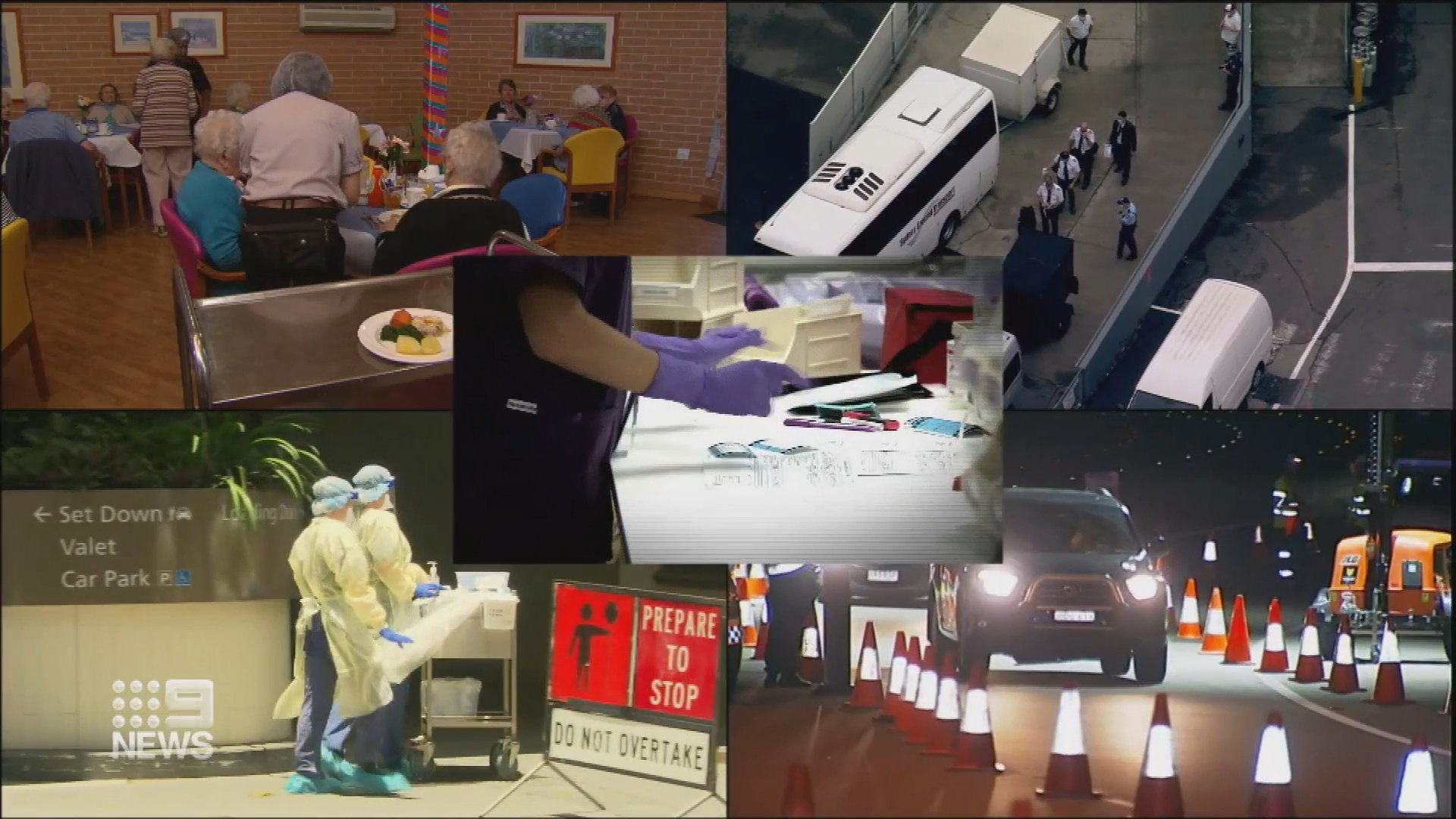
The CSL facility in Melbourne, which is manufacturing the AstraZeneca COVID-19 vaccine is expected to be delivering one million doses a week by the end of March.
SOUTH AUSTRALIA
South Australia received its first batch of the Pfizer vaccine from Sydney on Sunday.
The state will begin rolling out the shipment of 4000 doses today.
Frontline health workers will be the first to receive the jab.
In about three weeks, 12,000 hotel quarantine, airport, health and aged care workers will be next to receive the vaccine, while hundreds of aged care residents will also get their dose.
QUEENSLAND
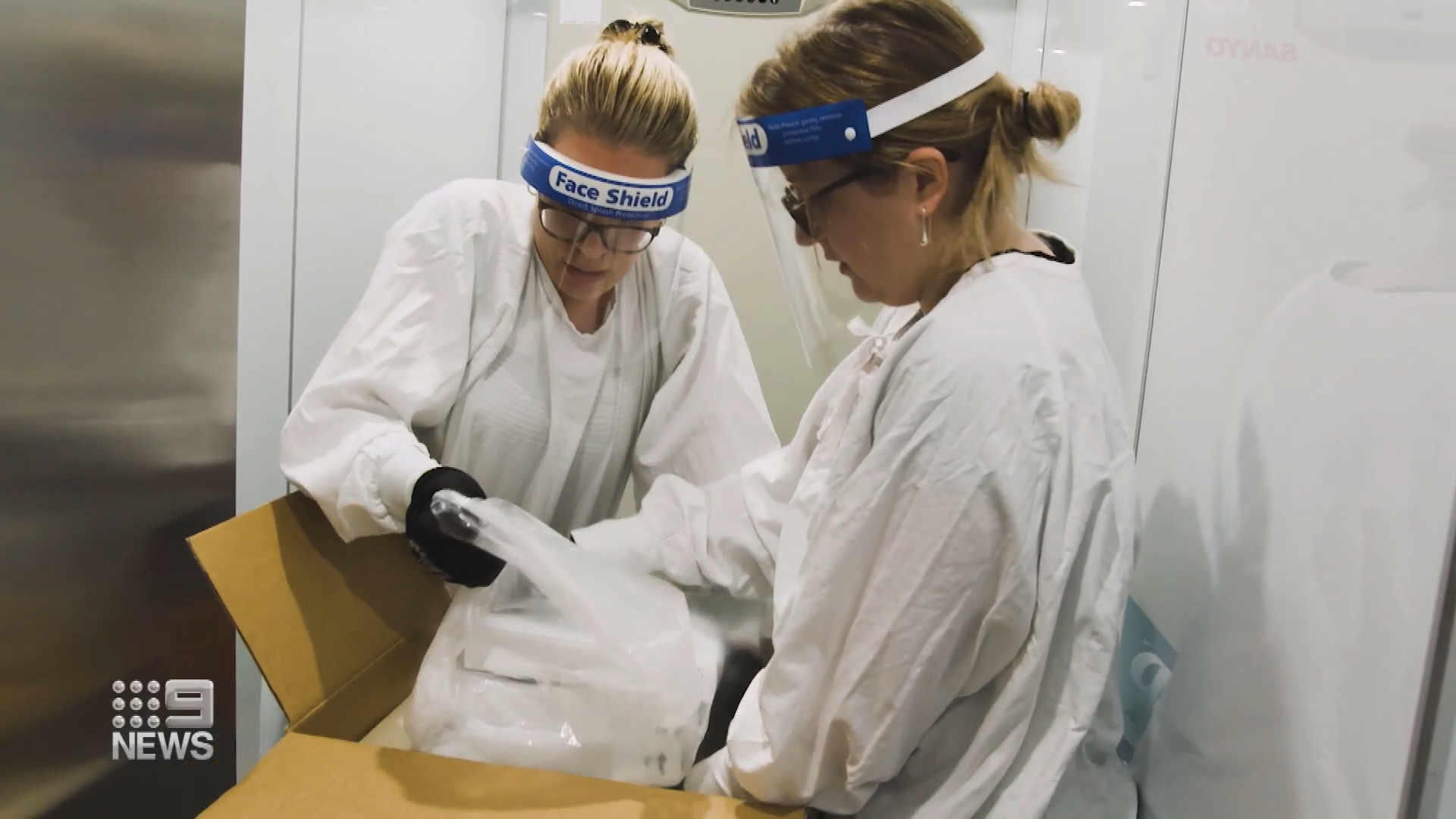
Queensland's first shipment of 10,000 vials of the vaccine arrived at Brisbane airport yesterday.
The first 100 people received their vaccine notification on Sunday, for their jab at Gold Coast University Hospital today.
"We hope to vaccinate more than 1000 Queenslanders in the first week of this rollout, 125,000 across the state in the next six weeks," Queensland Premier Annastacia Palaszczuk said.
All of them a priority, what Queensland Health calls category 1A – frontline staff in hospitals, residents and workers in aged care, border security and airline crew, and most importantly, those working in hotel quarantine.
The next phase, 1B vaccinating an estimated 1 million Queenslanders considered high risk.
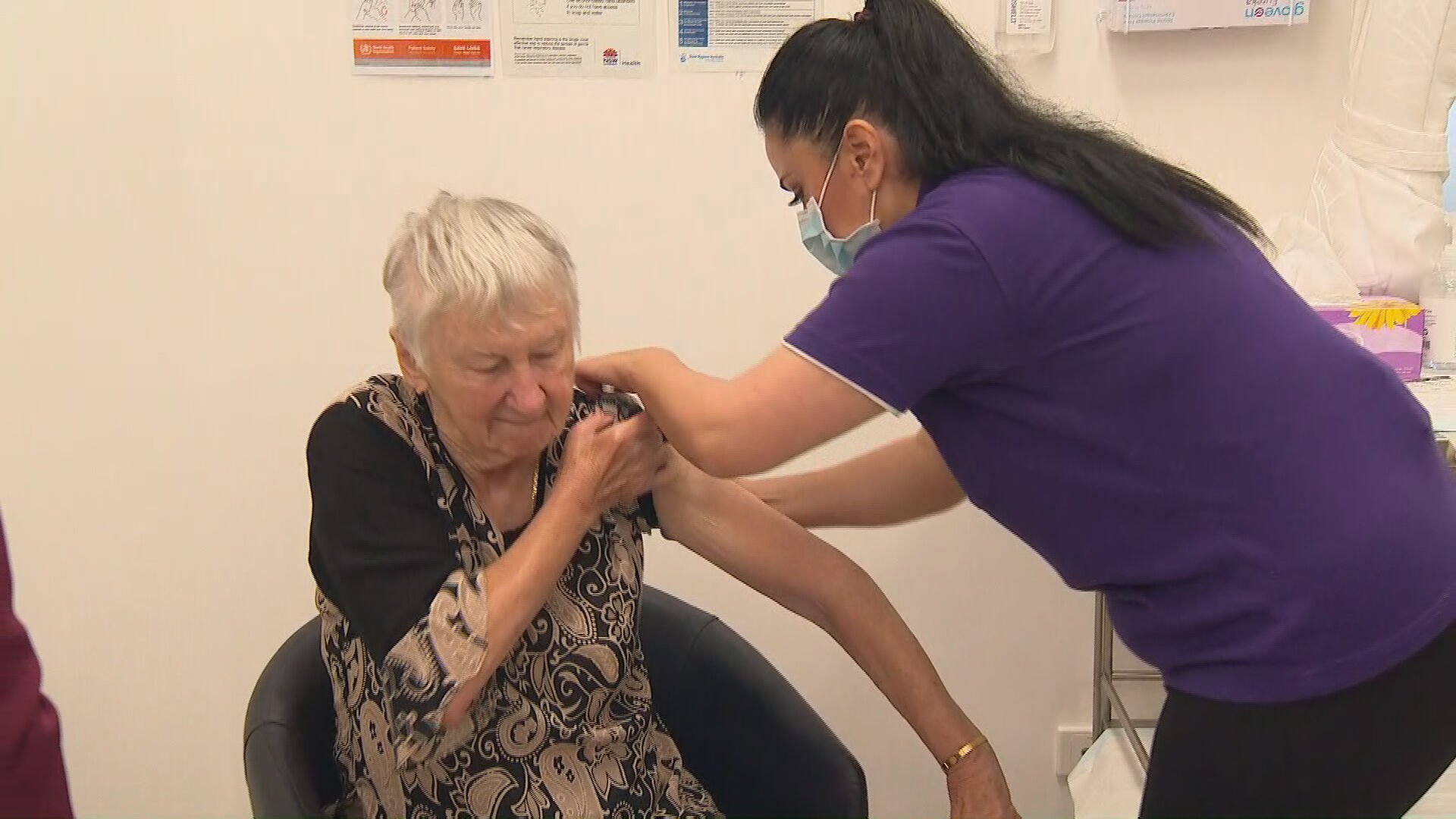
Those over 70, younger adults with an underlying medical condition or disability and the indigenous 55 and older.
Vaccinations will also rollout at the RBWH and Princess Alexandra Hospital later this week but most of the general Queensland population won't get theirs for at least a few months. The premier pleading with public not to swamp hospitals tomorrow.

WESTERN AUSTRALIA
Six days after touching down in Sydney, Western Australia's share arrived just after 1pm yesterday.
There are 5000 vials of the Pfizer vaccine, tightly packaged and taken to a secure facility.
It was then was transferred from one van to another, flanked by undercover police to Perth Children's Hospital where it was stored overnight.
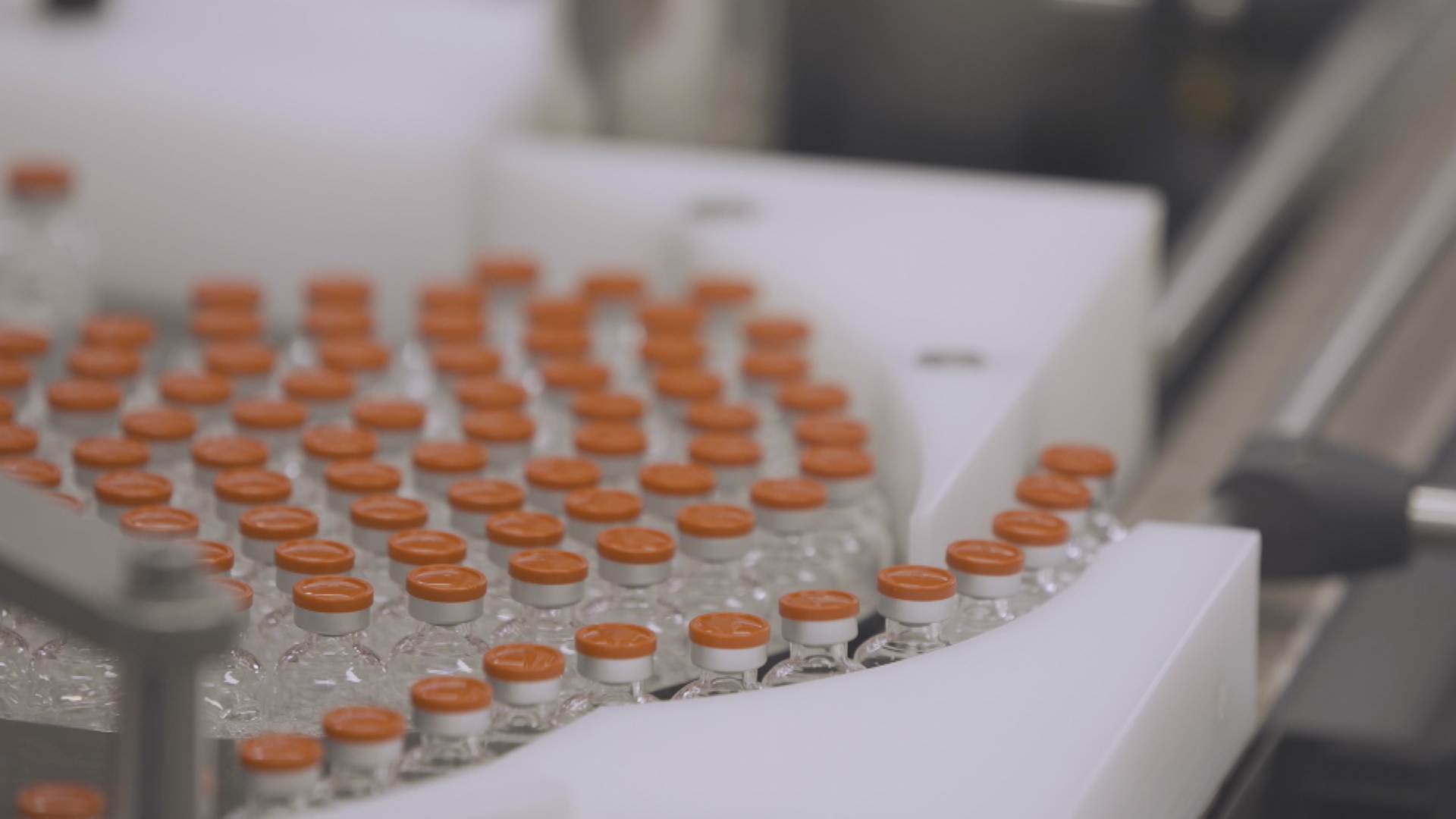
More than 200 people have signed up for the first day of vaccinations.
In phase one of the rollout – priority recipients across the state include quarantine hotel workers, those at airports, people on the front line of health services, aged and disability care staff and their residents.
Seniors aged over 70 will be next to get the jab, indigenous people 55 plus, younger cohorts with underlying medical conditions and then other emergency service workers, such as police officers.
The Hyatt Hotel will be transformed into Western Australia's first vaccine clinic there's also plans for more clinics to be set up at Fremantle Port and the Airport later this week.
Survey finds support for increasing income for low or non-waged
From RNZ A survey has found seven out of 10 New Zealanders believe the Government should increase income support for those on low wages or not in paid work.The UMR poll was commissioned by a group of more than 40 organisations,…
Homicide investigation launched in Christchurch after serious assault turns deadly
A homicide investigation is under way in Christchurch after initial reports of a serious assault and a hammer-wielding man seen “saturated” in blood. Police said emergency services received a report of a serious assault at an Armagh…
US nears 500,000 coronavirus death in one year
Just over a year since the first known US COVID-19 death, more than 500,000 people will have died from the disease by the end of this week.
"It's something that is historic. It's nothing like we've ever been though in the last 102 years since the 1918 influenza pandemic," said Dr Anthony Fauci, director of the National Institute of Allergy and Infectious Diseases.
"It really is a terrible situation that we've been through and that we're still going through. And that's the reason why we keep insisting to continue with the public health measures — because we don't want this to get much worse than it already is."
READ MORE: With heavy hearts, Italians mark year of COVID-19 outbreak
https://twitter.com/nytimes/status/1363498989652426754
The New York Times published a confronting front page graphic on Sunday with a dot for every one of the nearly 500,000 deaths already in the US.
"More than in three wars," one of the newspaper's headlines read.
More than 497,600 people have so far died from COVID-19 in the US, according to Johns Hopkins University.
And another 91,000 Americans are projected to die from the disease by June 1, according to the University of Washington's Institute for Health Metrics and Evaluation.
Decreases in new COVID-19 cases and hospitalisations in recent weeks have prompted some state and local leaders to loosen restrictions.
But as new coronavirus variants spread, health experts say it's critical to double down on safety measures to prevent yet another catastrophic surge.
READ MORE: UK speeds up vaccinations, all adults get first jab by July 31
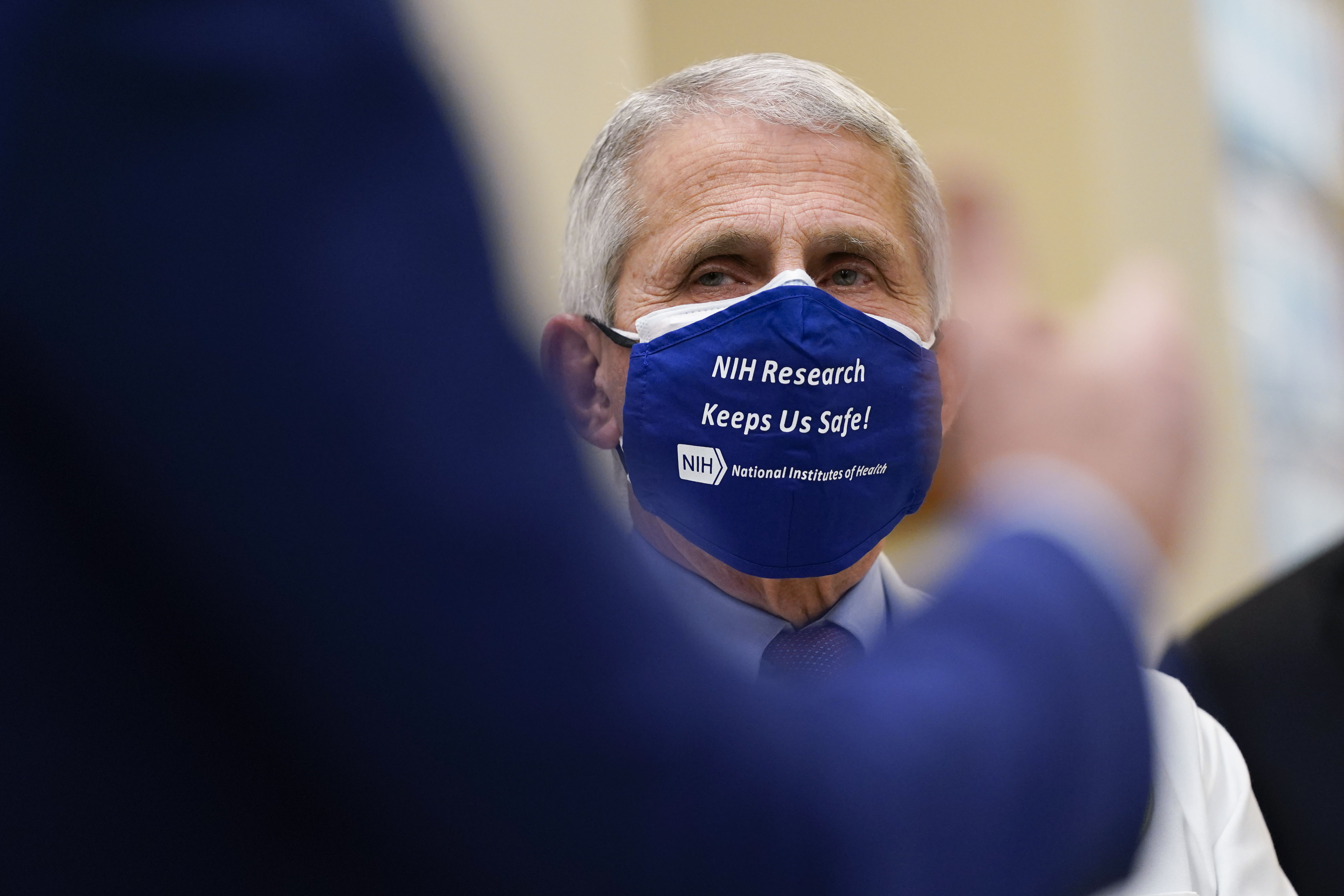
"The most uncertain driver of the trajectory of the epidemic over the next four months is how individuals will respond to steady declines in daily cases and deaths," the IHME team wrote.
"More rapid increases in mobility or reductions in mask use can easily lead to increasing cases and deaths in many states in April."
'Rapid growth' of the B.1.1.7 strain expected
Several new concerning variants of coronavirus have been found in the US, including the highly contagious B.1.1.7 strain first detected in the UK.
The Centres for Disease Control and Prevention has projected a "rapid growth" of the B.1.1.7 strain across the US, saying it will likely become the predominant variant in the country by March.
The IHME team said while the B.1.1.7 strain likely accounts for less than 20 per cent of coronavirus infections now, that number could jump to 80 per cent by late April.
That's why experts say the US should also ramp up its testing: not just to track infections and antibodies, but also variants.
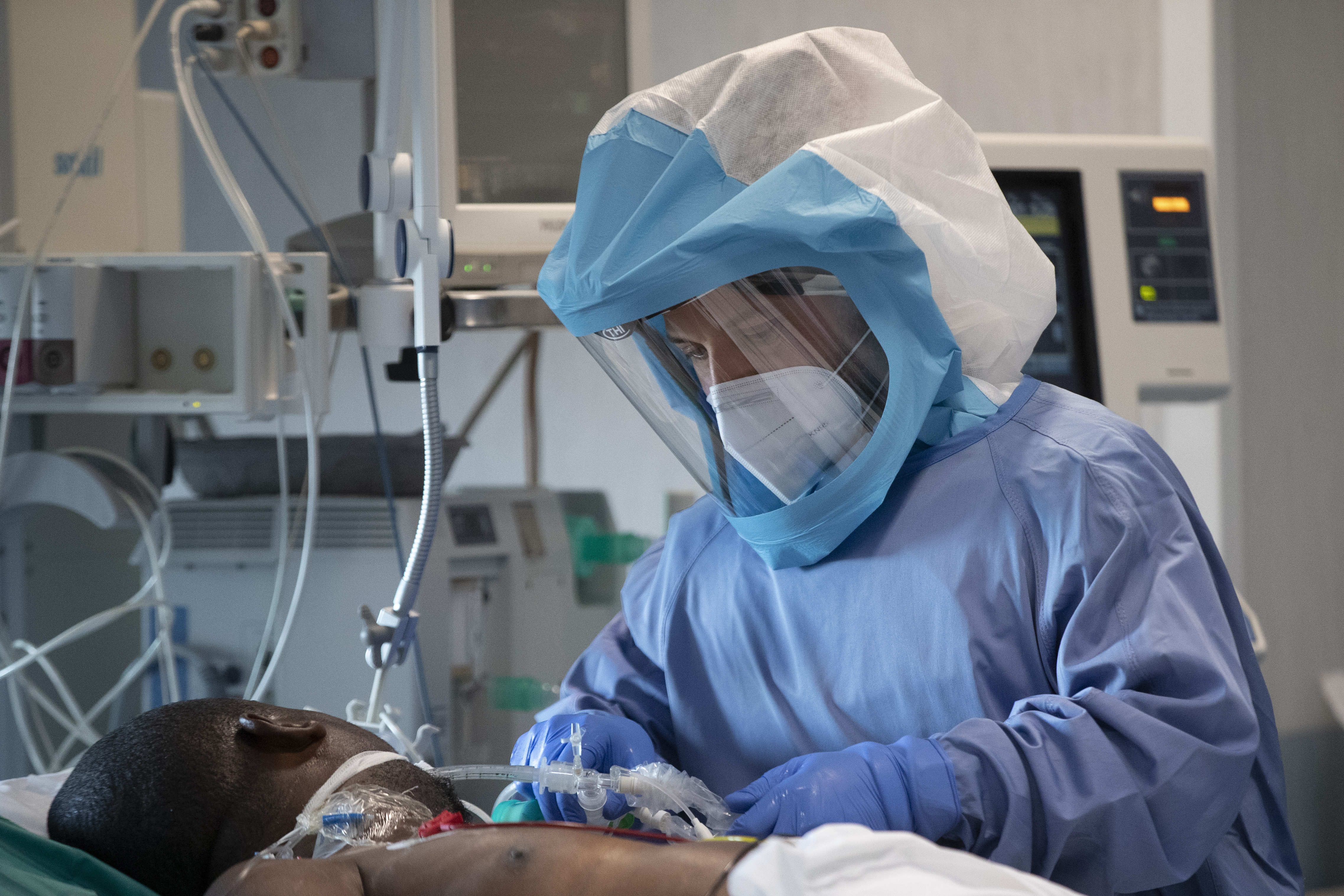
"We have been behind on testing from day one," Kathleen Sebelius, former Health and Human Services Secretary, said Saturday.
She said the US needs to "focus on both testing that we need to identify who has the disease, and then the serology tests that will tell us more about antibodies and what kind of variant is circulating."
5.5 per cent of US is fully vaccinated
While vaccinations are ongoing, it's unlikely they'll help the US reach herd immunity levels any time soon.
So far, more than 42.8 million Americans have received at least the first dose of a COVID-19 vaccine, according to CDC data.
More than 17.8 million people have been fully vaccinated. That's about 5.5 per cent of the US population.
READ MORE: US flight drops debris onto houses after 'big explosion'
Herd immunity is reached when the majority of the population becomes immune to an infectious disease — either through infection and recovery or through vaccination.
Fauci estimates between 70 per cent to 85 per cent of the US population needs to be immune for herd immunity to take effect against the virus.
The IHME team wrote they do not expect the country will reach herd immunity before next winter.
"The model suggests that we should have a quiet summer," IHME Director Dr Chris Murray told CNN. "But we know COVID's really seasonal, so when the next winter rolls around, we need to have a much higher level of protection to stop COVID in its tracks than we're likely to achieve."
To speed up getting at least the first doses into arms, the US should consider delaying the second dose of vaccines, another expert said.
Herald morning quiz: February 22
Test your brains with the Herald’s morning quiz. Be sure to check back on nzherald.co.nz at 3pm for the afternoon quiz.
Matariki holiday could cost up to $448m as minister rules out subbing out another day off
Making Matariki a public holiday could cost New Zealand businesses up to $448 million – double previous forecasts, according to officials.It’s the first time the Government has revealed the potential cost of adding a 12th public…
Letters to the editor: Tourism, Saudi Arabia, Dilworth School
Rules around tourists Most people believe that we need to restrict future tourists visiting our country, but there are many problems in doing so. This could be done by ballot, but this would entail a bureaucracy to make decisions…
Covid 19 coronavirus: Auckland's move to level 1 – epidemiologist confident region is ready
Prime Minister Jacinda Ardern says she’s not aware of any Covid-19 updates from overnight but said more than 70,000 Kiwis had been tested.Ardern told TVNZ that bar anything significant, Auckland would move down to alert level 1.”The…
UK speeds up vaccinations, all adults get first jab by July 31
The British government announced Sunday that it aims to give every adult in the country a first dose of coronavirus vaccine by July 31, a month earlier than its previous target.
The new target also aims for everyone over 50 or with an underlying health condition to get a vaccine shot by April 15, rather than the previous target of May 1.
The makers of the two vaccines that Britain is using, Pfizer and AstraZeneca, have both experienced supply problems in Europe. But UK Health Secretary Matt Hancock, who announced the new targets, said "we now think that we have the supplies" to speed up the vaccination campaign.
READ MORE: State by state: Australia's COVID-19 vaccine rollout
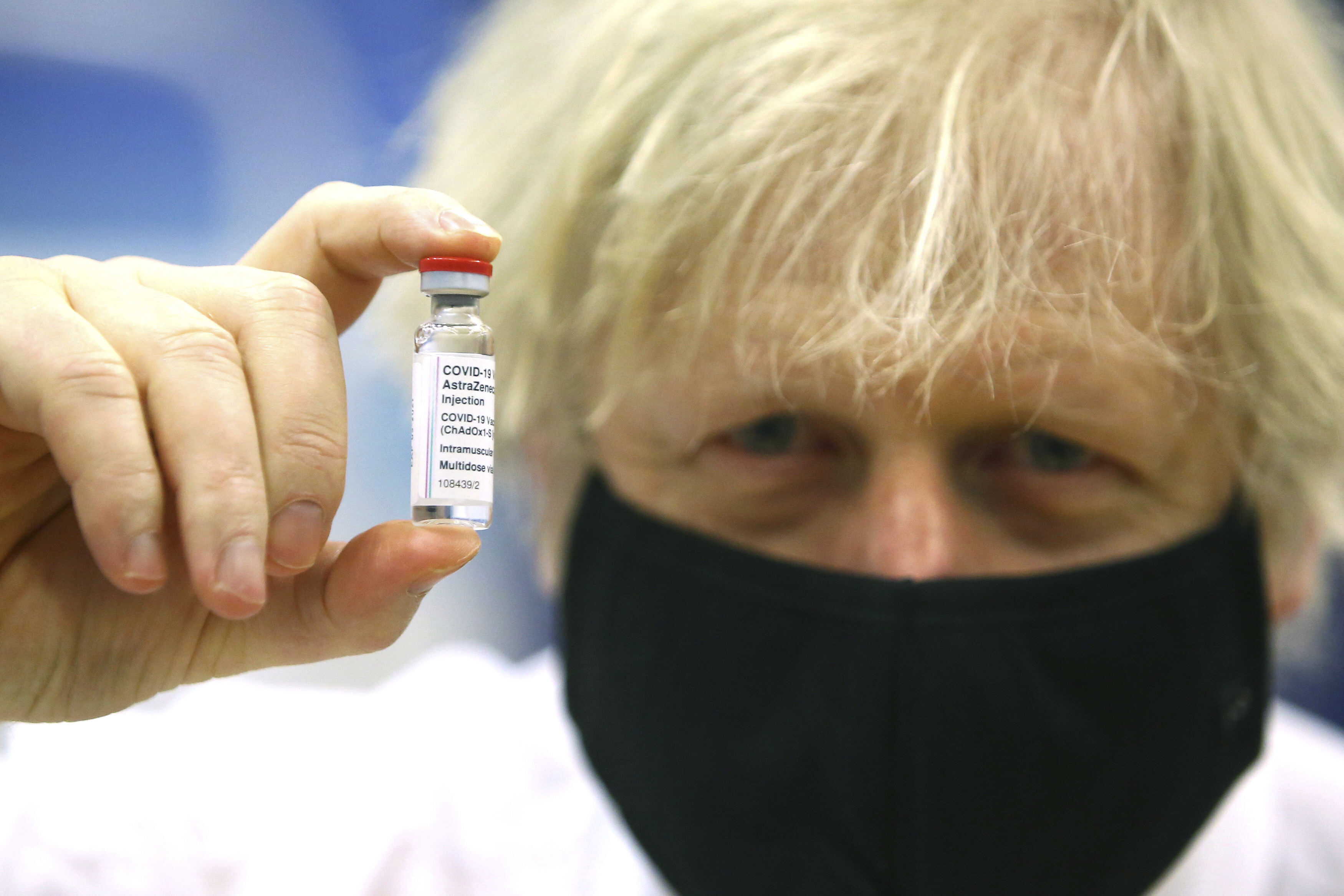
The early success of Britain's vaccination campaign is welcome good news for a country that has had more than 120,000 coronavirus deaths, the highest toll in Europe. More than 17.2 million people, almost a third of the country's adults, have been given the first of two doses of vaccine since inoculations began on December 8.
Britain is delaying giving second vaccine doses until 12 weeks after the first in order to give as many people as possible partial protection quickly. The approach has been criticised in some countries — and by Pfizer, which says it does not have any data to support the delay — but is backed by the UK government's scientific advisers.
News of the new vaccine targets came as Prime Minister Boris Johnson met with senior ministers on Sunday to finalise a "road map" out of the national lockdown, a plan he is to announce on Monday.
Faced with a dominant UK virus variant that scientists say is both more transmissible and more deadly, Britain has spent much of the winter under a tight lockdown. Bars, restaurants, gyms, schools, hair salons and all nonessential shops have been closed while grocery stories, pharmacies and takeout food venues are still open.
READ MORE: First Aussies receive COVID-19 vaccines
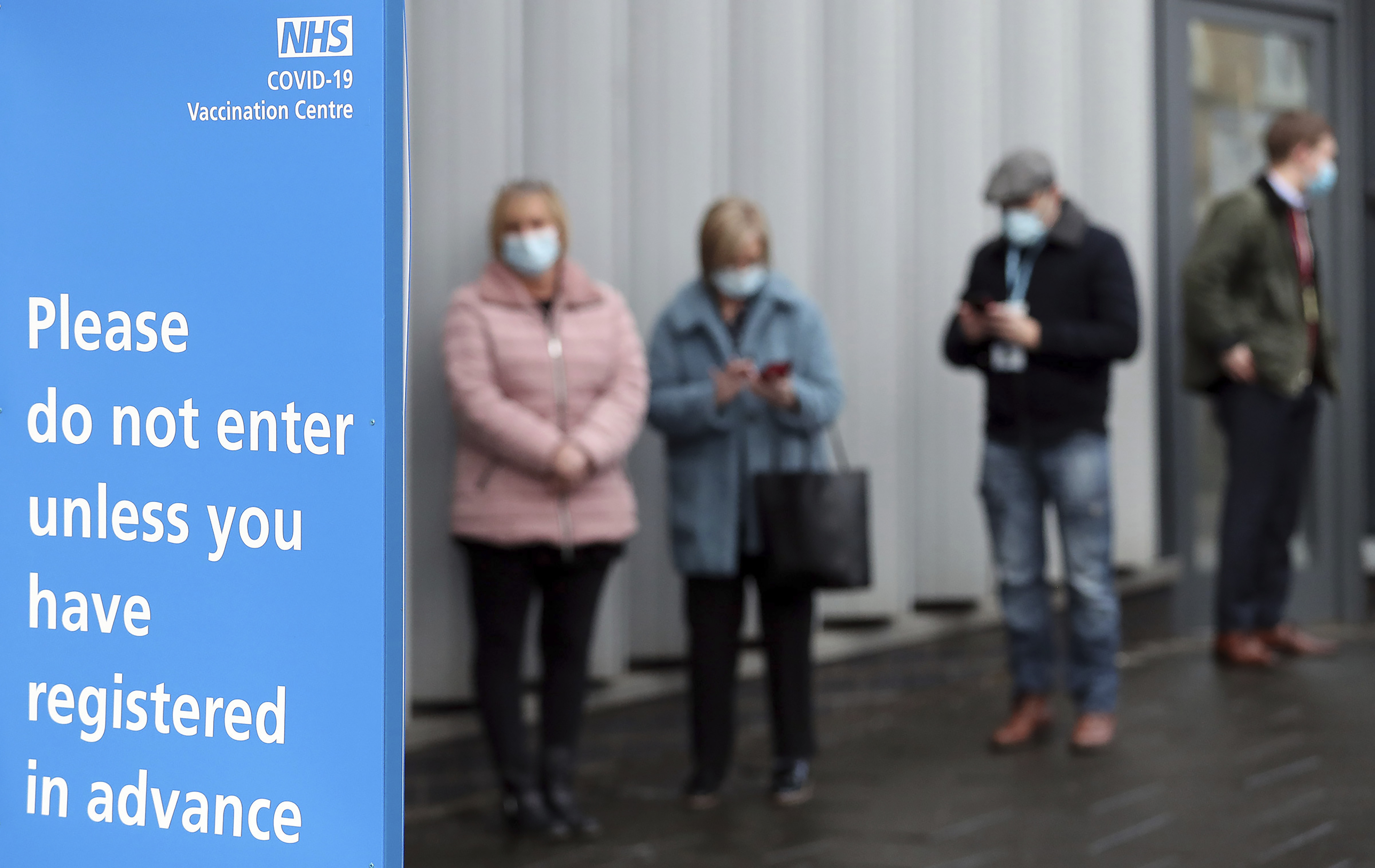
The government has stressed that economic and social reopenings will be slow and cautious, with nonessential shopping or outdoor socialising unlikely before April. Many children will go back to school beginning March 8 and nursing home residents will be able to have one visitor from the same date.
Johnson's Conservative government has been accused of reopening the country too quickly after the first lockdown in the spring.
The number of new confirmed cases, hospitalisation and deaths are all declining but remain high, and Johnson says his reopening road map would follow "data, not dates."
But he is under pressure from Conservative lawmakers, who argue that restrictions should be lifted quickly to revive an economy that has been hammered by three lockdowns in the last year.
John Edmunds, a member of the government's scientific advisory group, said British hospitals are still treating about 20,000 coronavirus patients, half the January peak but almost as much as height of the first surge in the spring.
READ MORE: Inside one of Sydney's COVID-19 vaccine hubs
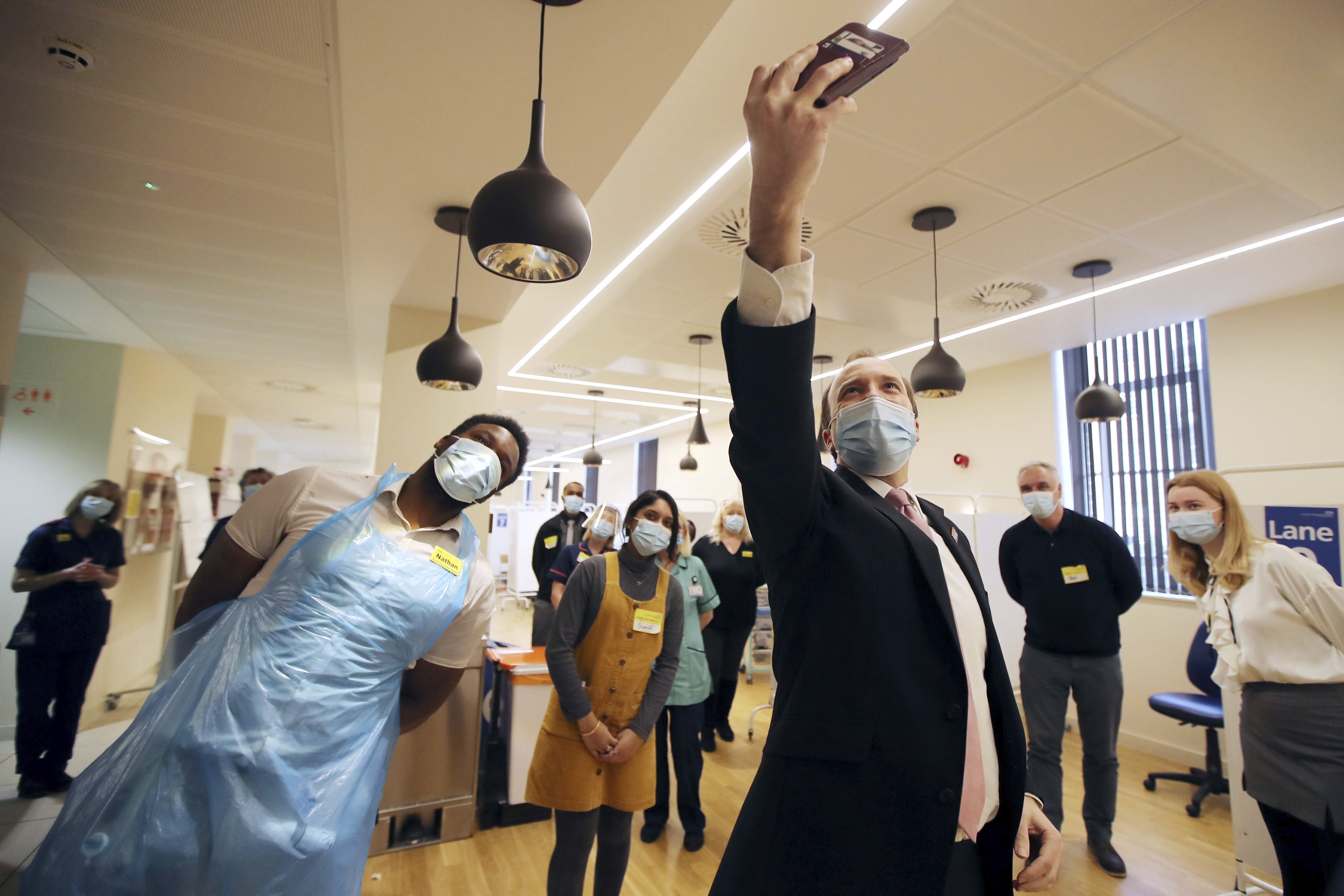
"If we eased off very rapidly now, we would get another surge in hospitalisations" and deaths, he told the BBC.
Edmunds said there is added uncertainty because of new virus variants, including one identified in South Africa that may be more resistant to current vaccines.
Hancock told Sky News that the government would take a "cautious but irreversible approach" to reopening the economy.