Category Archives: headline

Volunteer Paramedics Take to Streets of Caracas

CARACAS, Venezuela (AP) — Venezuela’s deepening crisis has gutted emergency ambulance services, so a group of volunteer paramedics has stepped into the void to offer life-saving help on the tough streets of Caracas.

Calling themselves Angels of the Road, the volunteer corps relies on donated medical supplies and funding from international organizations. Despite receiving no paychecks, its roughly 40 paramedics are ready at a moment’s notice to jump onto motorcycles and fire up their single ambulance and race into the streets.

Jonathan Quantip, 44, said he and co-founder Zuly Rodiz launched the project two years ago after watching their native Venezuela precipitously decline over years of political and social crisis.

“We Venezuelans have to solve our own country’s problems,” Quantip said. “We have to use the skills we’re each good at.”

The group works on a shoestring budget with nothing left over for wages, so each paramedic relies on another source of income. Some donate their off-time after working in hospitals and firehouses. Others flip burgers in fast-food restaurants.

The paramedics say they feed off the adrenaline of each emergency call to a chaotic crash scene or shooting in an underserved barrio. Simple gestures of gratitude also motivate them, said 21-year-old paramedic Laura Lara.

“It’s helping people and hearing them say ‘thank you’ after hanging on despite their pain and suffering,” Lara said. “All that emotion is what makes you fall in love with this.”

Venezuela was once a wealthy oil nation, but years of political crisis has left it in ruins. Most residents don’t have reliable running water and electricity at home. The crisis has sent more than 5 million fleeing in a migration rivaling that of war-torn Syria.

Venezuela’s hospitals lack basic medicine and trained personnel and there aren’t enough ambulances in service to meet the needs of its population, said Quantip, adding that no other volunteer paramedic organizations like this exist in Venezuela. Some state services exist, but they are unreliable and often don’t have adequate medical supplies, while private companies are more expensive than most Venezuelans can afford.

Staffers for Angels of the Road work in rented office space at a national newspaper that no longer prints a paper edition. They keep a constant ear on walkie-talkie radio traffic and scan online chats dedicated to emergency services.

Sometimes, colleagues in the public sector ambulance and fire services need help and call them for backup, they said, noting a recent call from a firehouse with a truck that had no gasoline.

Most of their calls involve traffic accidents in Caracas, where general lawlessness means few obey stop signs and signals, Rodiz said.

Rodiz said they’ve abandoned any sense of rivalry with public services, including police, fire and ambulances. Their colleagues in the public sector often lack basic medical supplies like gloves, so they share what they have, she said.

“The moment comes that they call saying, ‘Look, we need your help,’” she said. “OK, you do it with all the love and care in the world in order to be able to help anybody who opens the door for us.”

Each day brings on average three to four calls, and the new coronavirus pandemic means that at least one of those is a request to take a patient with trouble breathing to a hospital, putting the volunteers themselves at risk of catching the disease.

Dr. Luis Richard, a surgeon who specializes in trauma care, trained many members of Angels of the Road, calling them “stars.” He said there simply aren’t enough paramedics to meet the need.

Richard, who recently migrated to Costa Rica, said the first responders often mean the difference between life and death.

“Fifty percent of the patients live or die because of their pre-hospital care,” Richard said. “They’re the ones making the difference.”

The post Volunteer Paramedics Take to Streets of Caracas appeared first on The St Kitts Nevis Observer.

Peru: Francisco Sagasti, 3rd President in Week, Sworn-In

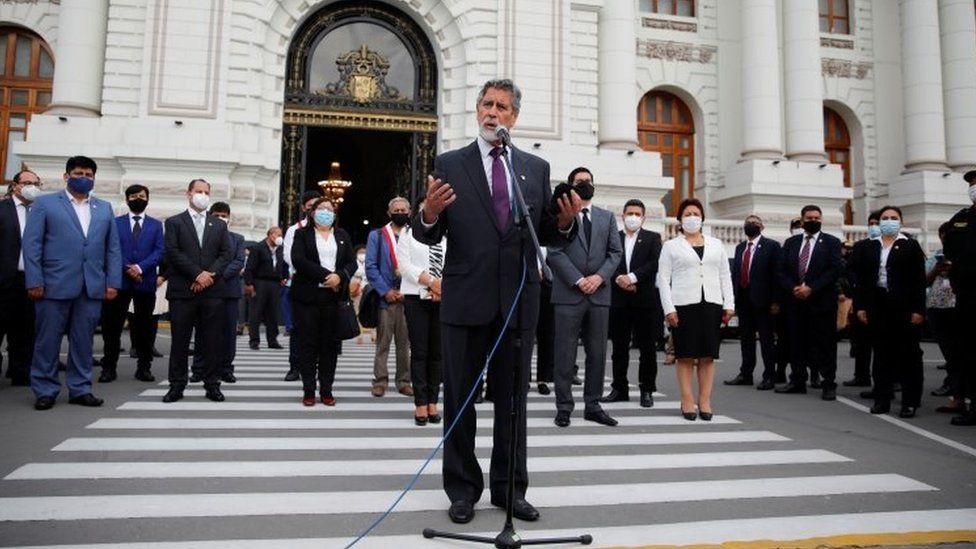
Francisco Sagasti (right) will act as an interim president ahead of next year’s general election

Francisco Sagasti has been sworn in as Peru’s new interim president – the country’s third head of state in under a week.

The 76-year-old engineer and academic will lead Peru until the presidential election next year.

Last week, President Martín Vizcarra was impeached over bribery allegations, which he denies – a move that sparked protests across the country.

At least two people were killed and many were injured in the protests.

President Sagasti was elected leader after securing the minimum 60 votes required. He belongs to the only party that voted against the impeachment of Mr Vizcarra last week.

In an address to Congress, President Sagasti asked for “forgiveness on behalf of the state” from the families of those killed during demonstrations.

“We cannot bring these young people back to life,” he added. “It is absolutely necessary to remain calm, but do not confuse this with passivity, conformity, or resignation”.

What’s been happening in Peru?

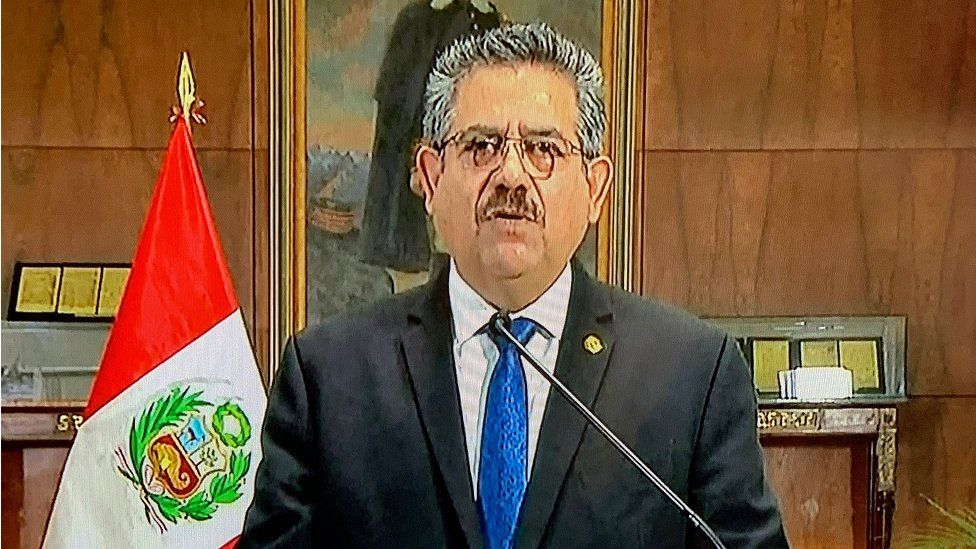
Mr Sagasti has taken over from Manuel Merino, the former speaker of Congress who became interim president following the impeachment of Mr Vizcarra.

Mr Merino had been in the post for less than a week when protesters and politicians called for his resignation following a violent crackdown on demonstrations against him.

A TV grab taken as Manuel Merino announces his resignation in a televised message from the Government Palace, on 15 November 2020
Mr Merino announced his resignation in a televised address on Sunday

Tens of thousands of demonstrators – many of them young – took part in protests against Mr Vizcarra’s removal from office.

While some were there to support Mr Vizcarra and his reform agenda, others said they were fed up with members of Congress and what they described as the “parliamentary coup” it staged in the middle of the coronavirus pandemic and an economic downturn.

Peru has so far reported nearly 935,000 infections and more than 35,000 deaths, according to Johns Hopkins University – making it the country with the third highest rate of deaths per 100,000 people in the world.

The violence used by police to disperse the protests further fuelled anger against Mr Merino.

Twelve ministers from his newly appointed cabinet resigned on Sunday in protest against police brutality and his handling of the crisis.

What next?

Mr Sagasti has said his main task will be to ensure that general elections scheduled for April 2021 go ahead as planned.

Francisco Sagasti addresses the media after he was elected by Congress as Peru's interim president, in Lima, November 16, 2020
Francisco Sagasti struck a conciliatory note

He struck a conciliatory note in his first interviews, saying that he would lead an inclusive cabinet which could continue to fight against corruption.

He visited some of the protesters who were injured in clashes with the police in hospital and paid tribute to the two students who were killed.

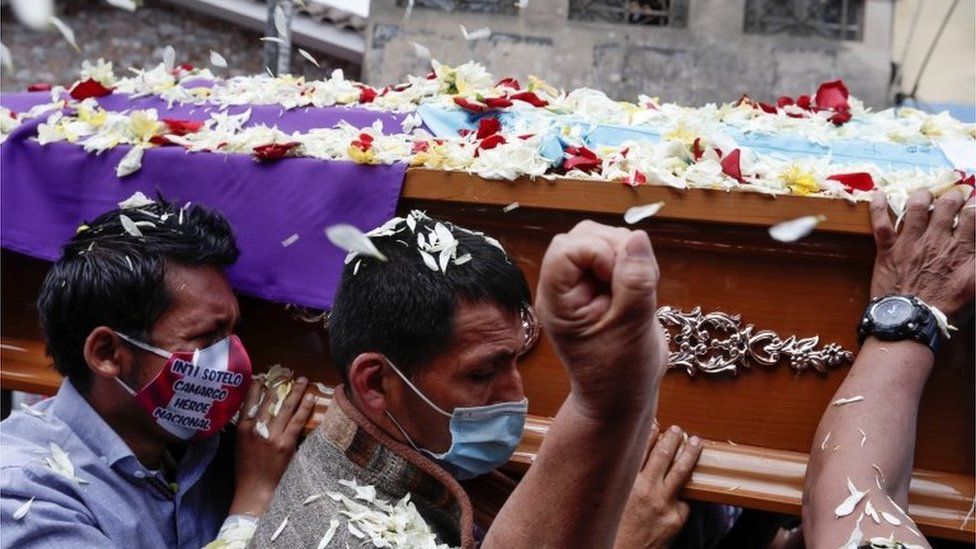
Friends and family members carry the coffin holding the body of Inti Sotelo, who died in clashes following the ouster of Peru"s President Martin Vizcarra, in Lima, November 16, 2020.
Sotelo, one of the students killed in the protests, was buried on Monday

“Today is not a day of celebration because we have seen the death of two young people,” he said. “We cannot bring them back to life but from the Congress and the executive we can take actions so that this does not happen

The post Peru: Francisco Sagasti, 3rd President in Week, Sworn-In appeared first on The St Kitts Nevis Observer.

Russian COVID Vaccine Spreads Over Latin America

(CNN) Russia is becoming a major provider of Covid-19 vaccines to Latin America, a move that could have long-standing consequences in shaping the post-pandemic world and further dent US prestige in the region.

While Moscow faces protests at home and condemnation over human rights issues from the US, France, UK, Canada and other Western countries, those issues have had little resonance in Latin America, where the recent publication of a positive peer-reviewed assessment of the Russian Sputnik V vaccine in The Lancet, Britain’s leading medical journal, was widely celebrated.

Eduardo Valdes, a former diplomat and member of government coalition Frente de Todos, who now serves in as chair of the Foreign Affairs Committee in Argentina’s Chamber of Deputies, says there’s a clear line between vaccine negotiations and external factors.

“Now is not the time to do ideology. Our goal is for the Western Hemisphere to get its vaccines and not to poke into someone else’s internal affairs,” he told CNN.


Healthcare workers hold national flags from Venezuela and Russia as workers unload a shipment of the Russian COVID-19 vaccine Sputnik V, at the Simon Bolivar International Airport in Maiquetia, Venezuela, Saturday, Feb. 13, 2021.

Turning to Moscow for help

Though historically seen as Washington’s geopolitical “backyard,” Latin America is increasingly turning to Moscow for help dealing with the pandemic. Six countries across the region — Argentina, Bolivia, Mexico, Nicaragua, Paraguay, and Venezuela — have now authorized use of the Sputnik V vaccine. Others are considering authorization requests, ever more urgent given the global shortage of available vaccines.

Colombia’s case is an example: America’s closest regional ally, Bogotá is now poised to authorize Sputnik V as well — a decision that surprised many due to the close alignment between some sectors of the government coalition and the US Republican Party. In the past, right-wing members of Duque’s own party, Centro Democrático, openly criticized Putin’s involvement in Latin America.

But when the country found itself without vaccines in hand at the end of January, Duque seems to have decided to push ideology to the side. The day after The Lancet’s publication on the Sputnik V, Colombia announced it was entering negotiations with Russia.

Less than three months prior, Bogotá had expelled two Russian officials in unclear circumstances. But the expulsion “did not influence the negotiations to bring here the vaccine,” Leonid Sboiko, first secretary at the Russian Embassy in Bogotá, told CNN. The Colombian Health Ministry declined to comment on the status of negotiations.

If anything, the vaccine deal could be a step toward smoothing things over. “Both countries want to turn the page. It was regrettable, but we want to move on,” Sboiko said, adding, “Cooperating on the vaccines is the most pressing issue right now, and is going to positively influence [Colombia and Russia’s] bilateral relationships.”

Sboiko told CNN that the Russian Direct Investment Fund (RDIF) which handles Sputnik V’s commercialization, last week presented an emergency authorization request to the Colombian medical agency INVIMA, and it is ready to deliver 100,000 doses within 14 days after a purchase.

“I think they had to bite the bullet and buy the vaccine regardless to whom they bought it from. And the Russians acted with enormous pragmatism,” Juan Carlos Ruiz, professor of Foreign Relationships at Bogotá’s Universidad del Rosario, told CNN.

Colombia will begin vaccinations this week, after receiving 50,000 doses as first shipment from Pfizer.

Ease of doing business

The need to secure more vaccines is urgently felt in the region. Latin American countries have been among the most affected in the world by the pandemic, but large-scale vaccination campaigns have not commenced yet, with limited exceptions.

According to the University of Oxford, South American countries have on average dispensed less than two doses of any coronavirus vaccine per 100 people, compared to almost five doses per 100 people in the EU and over 14 doses per 100 people in the US.

Russia’s readiness to strike deals has been key in spreading the vaccine across Latin America so far, according to Danil Bochkov, an expert of international relationship at the Russian International Affairs Council.

“It is always easier to deal with the state than with a private company, which has to hedge possible risks fearing huge losses. State-owned companies are easier to negotiate with, especially when they are pursuing political goals,” Bochkov told CNN.

Valdes, the Argentinian lawmaker, says negotiations with Moscow were easier than with Pfizer, from whom the Argentinian government initially planned to purchase vaccines. “When we looked at the contract, we evaluated that the ones with Pfizer did not comply with the legal protocols we expected,” Valdes said. “We reached out to the Russians and [Argentinian] President Fernandez related directly with Putin, and this sped things up,” he told CNN.

Argentina has so far purchased up to 25 million doses of the Sputnik vaccine and dispensed over 600,000 doses. Meanwhile, it is still waiting to dispense the first Pfizer vaccine.

In a statement to CNN, Pfizer said the company remains committed to working with the Argentinian government but refused to comment on the status of confidential negotiations.

Regional neighbors Peru and Brazil have also cited issues in negotiations with Pfizer, allegedly because of some of the liability clauses it requested, and ultimately turned to other vaccines — Chinese-made Sinopharm in Peru, and Coronavac and AstraZeneca in Brazil.

Apart from ease of negotiations, two more factors have worked to advantage the spread of Sputnik V through Latin America, according to analysts and lawmakers involved in vaccine purchases in Argentina and Bolivia: Sputnik V is cheap, and relatively easy to store.

Even before the negotiations start, the RDIF lists Sputnik V’s price at approximately $10 per doses — roughly half the price of the Pfizer vaccine, which costs $19.50 per dose. Latin American economies have been badly hit by the pandemic, and any possible saving is more than welcome by administrators and politicians.

The Russian vaccine can also be stored at a temperature of 2 to 8°C (35 to 45°F) and does not require the ultra-freezing temperature the Pfizer vaccine is stored at. Most of Latin America lacks the infrastructure to maintain ultra-freezing temperatures, especially in rural regions with limited road access.

Other privately made vaccines, like those made by AstraZeneca and Moderna, are yet to arrive in large quantities in Latin America, while countries like Brazil, Chile and Mexico have invested in Chinese-made vaccines.

Around the world, 26 countries have approved the Sputnik V vaccine.

What Russia stands to gain

Former diplomats and analysts in Buenos Aires, Bogota and La Paz say Russian president Vladimir Putin could now reap benefits from the vaccine’s spread, potentially using it as a global business card to start new and more forgiving relationships.

According to Andres Serbin, president of the Regional Coordinator of Social and Economic Research (CRIES), a foreign policy think tank in Buenos Aires, Russia’s interests in Latin America are both political, to rival the United States’ hegemony in the Western hemisphere, and commercial, expanding markets for Russian-owned companies. Selling the vaccine serves both of these objectives.

“Russia made a big bet on the vaccine: in the last few years, Russia has re-discovered Latin America, not for ideology but because if your goal is to question the norms and values of the liberal international order, Latin America is a region particularly sensitive to that goal,” Serbin said.

Both Russia and China are looking to improve their reputations after years of confrontation with the US and the EU, and the role of vaccine provider for the developing world is a perfect opportunity for a positive PR campaign. As Bochkov puts is, “Russia has mastered the Sputnik V as a diplomatic instrument so far.”

Commercially, selling millions of vaccine doses also means turning multi-million dollar profits — something of primary importance for the Russian economy, which has been hit by Western sanctions in recent times.

In contrast, the West’s handling of vaccine distribution has often seemed inward-looking. In January, Britain and the EU squabbled over vaccine distribution, while the White House bulked up purchases of vaccines to a total of more than 7 potential doses available for every American, according to data collected by Duke University.

“The difference is that the United States are working to get vaccines mostly to vaccinate US citizens. Others like Russia and China are looking to stretch relationships where they can,” Pablo Solon, a former Bolivian ambassador to the United Nations, told CNN.

A missed opportunity for the West?

Western powers could have seized the political — and even moral — advantage, says Amadeo Gandolfo, an Argentinian scholar in political communication at Berlin’s Humboldt University. He argues that Western countries missed a key opportunity to claim a moral victory when they allowed companies to patent their vaccines.

“Faced with the absolute necessity for the whole world to obtain the vaccine, leaving it in the hands of the pharmaceutical companies and not allowing a liberalization of the formula, I think it is something that pushed some sectors of Latin America away,” he told CNN.

Now, as with any new patented product, the privately developed vaccines are protected by property right and cannot be replicated by other companies or countries. So while private companies like Pfizer and AstraZeneca are struggling to meet committed orders, other laboratories cannot step in to produce the same vaccines and increase supplies.

Many Western countries have instead invested in the Covax mechanism, a framework promoted by the World Health Organization to purchase vaccines in bulk and secure deliveries to developing countries that cannot afford to purchase them on their own.

But while Covax promises to inoculate up to 20% of the developing world and says it will prioritize four Latin American countries including Bolivia and Colombia for early access, it has yet to deliver a single dose.

Whether vaccination efforts would be more equal if Western pharmaceutical companies were not allowed to patent and commercialize the vaccines has been discussed since the beginning of the pandemic. An effort by South Africa and India urging the World Trade Organization to suspend intellectual property rights related to Covid-19 has so far proved unsuccessful.

This will cost Western governments dearly in post-pandemic geopolitics, argues Solon, the Bolivian diplomat. “The world has been multipolar for some time,” he told CNN. “But within this multipolar world Russia and China are advancing fast. This vaccine situation is only strengthening the trend.”

The post Russian COVID Vaccine Spreads Over Latin America appeared first on The St Kitts Nevis Observer.
Harry & Meg to Appear on Oprah March 7

Prince Harry and Meghan will give their first interview since stepping back from royal duties when they talk to Oprah Winfrey next month.

The announcement comes a day after the Duke and Duchess of Sussex revealed they are expecting their second child.

CBS said the interview will be aired on 7 March.

The US broadcaster said in a statement: “Winfrey will speak with Meghan, the Duchess of Sussex, in a wide-ranging interview, covering everything from stepping into life as a royal, marriage, motherhood, philanthropic work to how she is handling life under intense public pressure.

“Later, the two are joined by Prince Harry as they speak about their move to the United States and their future hopes and dreams for their expanding family.”

Buckingham Palace said it would not be commenting on the Sussexes’ decision to do the Oprah interview.

The duke and duchess are no longer working members of the Royal Family and are under no obligation to inform the Royal Household of such plans.

Harry and Meghan married at Windsor Castle in 2018 in a ceremony that captured the world’s attention, but later gave up their official royal roles in the face of huge media attention as they sought financial freedom.

The couple moved to Southern California with their infant son Archie last year and have signed a multi-year production deal with Netflix, a major step in their plan to make a living for themselves outside of the Royal Family.

Image: Oprah Winfrey at Harry and Meghan’s wedding in May 2018

Their relationship with the British press swiftly soured and the couple have launched legal cases against several newspapers.

Meghan won a privacy claim against Associated Newspapers last week after the Mail on Sunday paper had printed extracts of a letter she wrote to her father in August 2018.

Winfrey, one of America’s richest and most influential women, was one of the many high-profile celebrities to have attended the Sussexes’ wedding.  View this post on Instagram

They are also reported to live near each other in California and Winfrey shared an Instagram post in December after receiving a Christmas gift basket from Meghan.

She wrote: “On the first day of Christmas my neighbour ‘M’ sent to me… a basket of deliciousness!”

The post Harry & Meg to Appear on Oprah March 7 appeared first on The St Kitts Nevis Observer.
UK: Air Passengers Fined $14,000 for Breaking COVID Travel Rules

Four people have been fined £10,000 for breaching Covid-19 rules after arriving at Birmingham Airport without declaring they had travelled from red list countries.

On the first day of the new restrictions, Birmingham Airport received six passengers who declared they had flown from red list countries but four were caught lying about where they had been.


Temporary assistant chief constable of West Midlands Police (WMP), Chris Todd, said on Tuesday: “Even by midday yesterday, on the first day of implementation, we had received six passengers who had declared travelling from a red list country and were taken to a quarantine hotel.

Read more: First ‘red list’ arrivals at Heathrow head straight into £1,750 hotel quarantine

“We also had four passengers who were identified as having travelled from a red list country but hadn’t declared it.

“There are some people who attempted to hide their routes but that’s not worked out and they were identified and received £10,000 fines as a result.”

First ‘red list’ arrivals leave Heathrow

Since Monday, people arriving in England from 33 virus hotspots have been required to go into quarantine.

Government guidance states that people arriving at UK airports must quarantine if they have been in a country at high risk of new Covid-19 variants in the previous 10 days.

A WMP spokesperson told LBC: “West Midlands Police has a proportionate increase in policing at the airport in order to support checks with regards to essential only travel.

“Fines for breaches of current restrictions are issued by Border Force. The safety of passengers is a key priority for us and we will continue to engage with passengers to ensure they are only at the airport for essential purposes only and encouraging those without good reason to be there to go home.

“Enforcement will be used as a last resort for those who fail to comply with the regulations.”

The post UK: Air Passengers Fined $14,000 for Breaking COVID Travel Rules appeared first on The St Kitts Nevis Observer.

Associated Press World View Feb. 17, 2021: Big Chill Covers Most of US

Feb 17, 2021

Alternate text
  • Millions in US endure record cold without power; at least 20 dead.

  • Japan begins belated vaccination drive amid Olympic worries.

  • Biden reframes pandemic goal on reopening of elementary schools.

  • Pandemic politicking: Israel’s election sprint echoes 2020 in US.  

TAMER FAKAHANY
DEPUTY DIRECTOR – GLOBAL NEWS COORDINATION, LONDON

The Rundown

Alternate text

AP PHOTO/LM OTERO

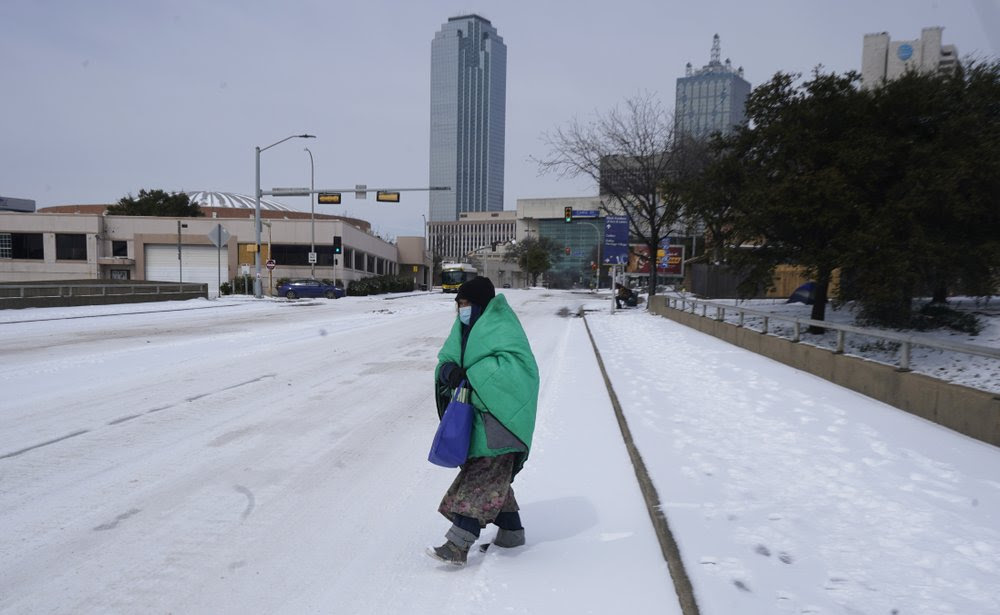
Millions endure record, bitter cold without power, at least 20 dead;  ‘A complete bungle’: Texas’ energy pride goes out with freezing temperatures

A bitter U.S. winter storm that has left millions without power in record-breaking cold has claimed more lives, including three people dead after a tornado hit a seaside town in North Carolina and four family members who perished in a Houston-area house fire while using a fireplace to stay warm.

At least 20 deaths across the country were reported.

The storm, which overwhelmed power grids and immobilized the Southern Plains, carried heavy snow and freezing rain into New England and the Deep South and left behind painfully low temperatures. Wind-chill warnings extended from Canada into Mexico. Bryan Anderson reports.

The worst U.S. power outages were in Texas, affecting more than 2 million homes and businesses. More than 250,000 people also lost power across Appalachia, and another 200,000 were without electricity following an ice storm in northwest Oregon.

Four million people lost power in Mexico.

The tornado that hit North Carolina’s Brunswick County had winds estimated at 160 mph, the weather service said. Three people died and 10 were injured when it tore through a golf course community and another rural area, destroying dozens of homes.

VIDEO: Aerial video shows tornado damage in North Carolina.

The paralyzing winter storm also wreaked havoc with COVID-19 vaccination efforts around the country, forcing the cancellation of appointments and delaying vaccine deliveries just as the federal government rolled out new mass vaccination sites to reach hard-hit communities, Eugene Garcia and Jocelyn Noveck report.

Power Failures: Anger over Texas’ power grid failing in the face of a record winter freeze mounted as millions there remained shivering with no assurances that their electricity and heat  — out for 36 hours or longer in many homes — would return soon or stay on once it finally does. One Austin resident summed up the prevailing feeling: “We’re all angry because there is no reason to leave entire neighborhoods freezing to death. This is a complete bungle,” she said. Paul J. Weber reports from Austin.

VIDEO: Millions of Texans without power after storm.

Power Failure Misinformation:Conservative commentators shared a false narrative that wind turbines and solar energy were primarily to blame for power outages across Texas as the power grid buckled. A variety of misleading claims spread on social media, with the Green New Deal and wind turbines getting much of the attention. But the Texas state power agency said gas, coal and nuclear plants actually caused nearly twice as many outages as wind and solar power, Ali Swenson and Arijeta Lajka report.

EXPLAINER: Topsy-turvy weather comes from polar vortex. It seems like the world’s weather has turned upside-down. There have been record subzero temperatures in Texas and Oklahoma, and Greenland is warmer than normal. Snow fell in Greece and Turkey. Meteorologists blame the all-too-familiar polar vortex. The cold air that’s normally penned up in the high Arctic got slammed by an atmospheric wave in late December. It broke apart in early January and moved out of its normal area. The result has been crazy winter weather, Seth Borenstein reports.

Alternate text

POOL PHOTO VIA AP/BEHROUZ MEHRI

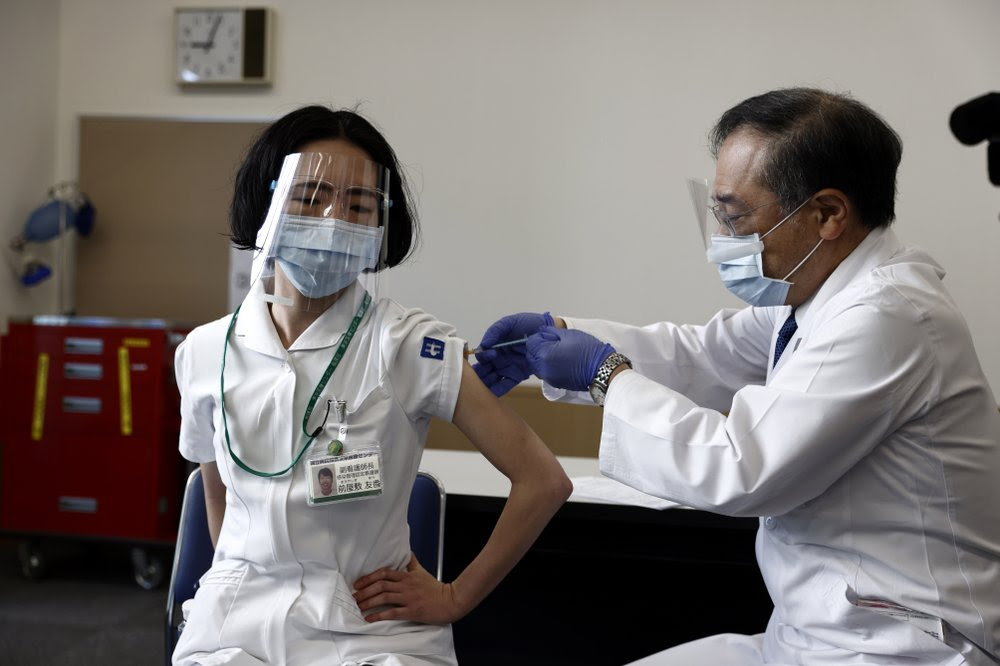
Japan belatedly begins COVID-19 vaccination drive amid Olympic worries; Volunteer paramedics patrol Venezuela’s Caracas amid virus

Months after other major world economies, Japan has belatedly begun giving its first coronavirus vaccines to front-line health workers today.

Many are wondering if the campaign will reach enough people in time to save a Summer Olympics already delayed a year by the worst pandemic in a century, Mari Yamaguchi reports from Tokyo.

Japan has largely dodged the kind of pandemic suffering that has battered other wealthy countries, but the fate of the Olympics, and the billions of dollars at stake, makes Japan’s vaccine campaign crucial.

The effort faces worries about shortages of the imported coronavirus vaccines and a reluctance among many Japanese to take them. Workers treating COVID-19 patients were the first to get jabs. Experts say Japan’s late rollout makes “herd immunity” impossible before the Olympics begins in July.

EXPLAINER: Japan begins vaccination drive, but why so late?

Venezuela Volunteer Paramedics: “We Venezuelans have to solve our own country’s problems. We have to use the skills we’re each good at.”  That’s the coda expressed by a  volunteer paramedic whose group has stepped into the void to offer lifesaving help on the tough streets of Caracas, from where Scott Smith reports. Venezuela has been wracked by a deepening economic crisis for years that has gutted emergency ambulance services.

Calling themselves Angels of the Road, the volunteers rely on donated medical supplies and funding from international organizations. Despite receiving no pay, roughly 40 paramedics are ready at a moment’s notice to jump onto motorcycles, fire up their single ambulance and race into the streets.

Each day brings three to four calls, and at least one is a request to take a patient with trouble breathing to a hospital, putting the volunteers themselves at risk.

More from Around the World: 

  • Mexico has topped 2 million confirmed coronavirus cases and 175,000 deaths, though officials conceded that the country’s extremely low rate of testing means the real figures are much higher.
  • Slovakia has become the country with most virus deaths by size of population in the world with 1.78 deaths per 100,000 people. Portugal had topped the grim global table for more than three weeks, A Slovak epidemiologist says the highly contagious variant first found in Britain has significantly contributed to the situation.
  • Pfizer and BioNTech say they’ve reached a deal to send the European Union another 200 million vaccine doses.
  • A shipment of vaccines produced in China has arrived in Hungary. That makes the country the first in the European Union to receive a Chinese vaccine. The shipment, by China’s state-owned company Sinopharm, is enough to treat 275,000 people. Hungary has also granted emergency approval to Russia’s Sputnik V vaccine.
  • A lockdown in the New Zealand city of Auckland will end at midnight, the government announced after concluding a virus outbreak had been contained.
  • Australia’s second largest city, Melbourne, will relax its third lockdown and allow spectators to return to the Australian Open tennis tournament after a five-day absence.
  • The United Nations children’s agency has launched an initiative to get airlines to give priority to delivering vaccines, medicine and other critical supplies to respond to the global pandemic. UNICEF said that more than 15 airlines have signed agreements to support the priority delivery of coronavirus-related cargo.
Alternate text

AP PHOTO/EVAN VUCCI

Biden declares reopening elementary schools a top goal; Latinos in US face daunting barriers to getting vaccine shot; Native Americans embrace vaccines, virus containment measures

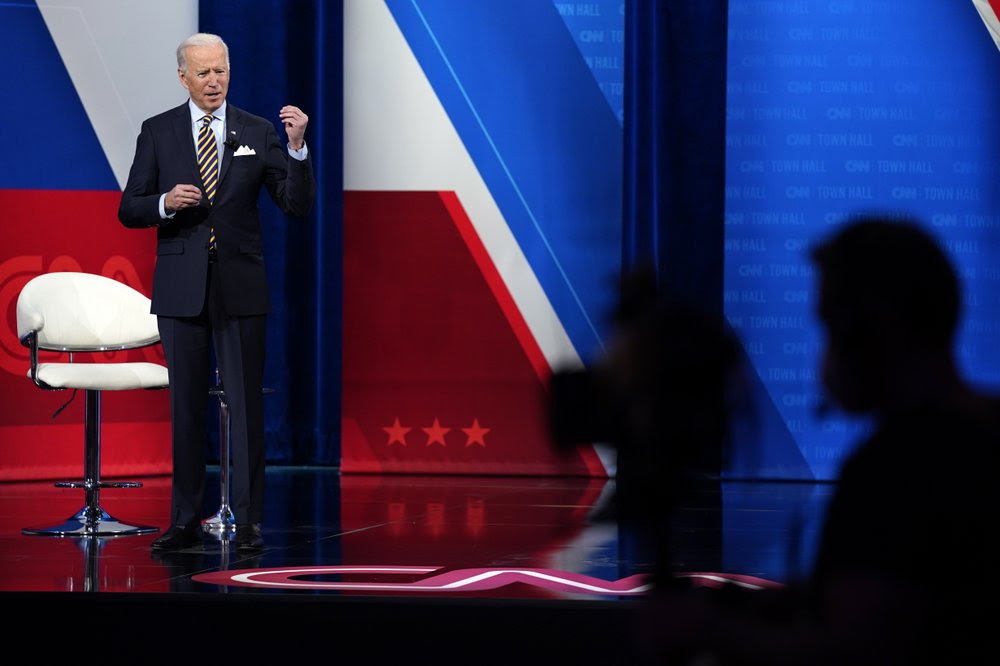
President Joe Biden has promised that a majority of U.S. elementary schools will be open five days a week by the end of his first 100 days in office.

Biden was restating a pandemic goal after his administration came under fire when aides said schools would be considered open if they held in-person learning just one day a week, Aamer Madhani and Alexandra Jaffe report.

Biden spoke during a CNN town hall last night in Milwaukee, Wisconsin. He has faced increasing questions about how he would reopen schools, with school districts operating under a patchwork of different virtual and in-person learning arrangements nationwide.

Biden’s trip comes as infection rates and deaths are falling after the nation endured the two deadliest months so far of the pandemic. The White House is also reporting an increase in the administration of vaccines throughout the country after a slow start.

But Biden has stressed that the U.S. still has a long road ahead as thousands of Americans die each day. The virus has killed more than 485,000, and newly emerging variants are complicating the response effort.

Latinos Vaccinations: Latinos face daunting barriers to getting vaccine shots in the U.S., creating a risk for public health as the coronavirus mutates and spreads. Many are struggling with a lack of knowledge about the shots, state vaccine websites that don’t have Spanish instructions and fears they could be targeted for immigration enforcement. Ranging from the elderly Cuban Americans in Florida to farmworkers in California, health problems like diabetes, obesity and hypertension are prevalent. That makes Latinos one of the groups at highest risk from COVID-19 in America. Gisela Salomon, Claudia Torrens and Anita Snow have that story.

VIDEO: Latinos in US struggle with access to vaccines. 

Native Americans Vaccinations: Tribes across the U.S. are bucking a trend of minority populations who harbor doubts about the vaccines. Native Americans are embracing inoculations and are adopting virus containment measures. The Centers for Disease Control and Prevention says Native Americans and Alaskan Natives are four times more likely to be hospitalized from COVID-19. And community before self has long been a core principle in their culture. Tribal leaders and health care providers say it is about preserving a fragile heritage that has been under threat for centuries. Sarah Blake Morgan reports from Cherokee, North Carolina.

VIDEO: Native Americans embrace vaccine in North Carolina.

Tracking Mutations:Scientists would gain vastly expanded capabilities to identify potentially deadlier mutations under legislation advancing in Congress. The U.S. now maps only the genetic makeup of a minuscule fraction of positive virus samples, a situation some experts liken to flying blind. It means the true spread of problematic mutations first identified in the U.K. and South Africa remains a matter of guesswork.

Such ignorance could prove costly in the race to vaccinate Americans before virus variants become dominant. The House COVID-19 relief bill would provide $1.75 billion for mapping virus genes, Ricardo Alonso-Zaldivar reports.

Alternate text

AP PHOTO/ODED BALILTY

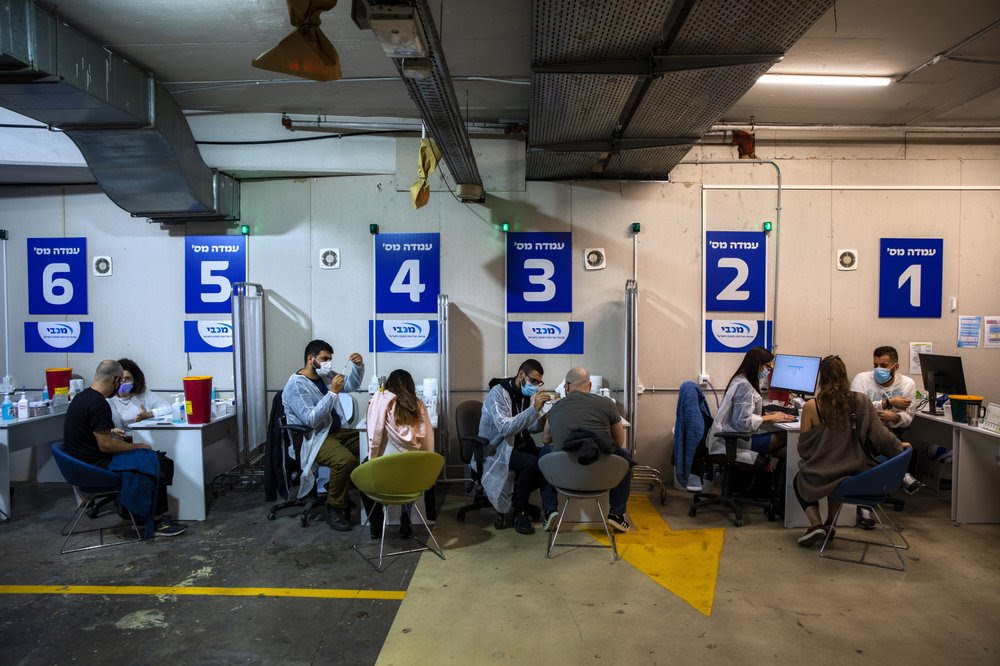
Israel: Coronavirus Election

Israel’s fourth bruising election campaign in two years, reflecting a bitterly divided society and political class, is on the final stretch.

The March 23 election is striking a notable resemblance to the toxic American presidential brawl in 2020, Laurie Kellman reports from Jerusalem.

Candidates are holding virtual events or limited in-person gatherings due to the pandemic. Some have signed up star U.S. advisers who faced off against each other during the contest between Donald Trump and Joe Biden.

And as in the United States, the Israeli race is a referendum on the divisive personality of Prime Minister Benjamin Netanyahu and his stewardship of a nation brutalized by COVID-19. Many Americans saw the choice as Trump — or almost anyone else. In Israel, the field is divided between those who are for or against Netanyahu.

The question of moral authority, too, is a common theme. As president, Trump stood accused of a multitude of wrongdoing, including sexual misconduct against more than a dozen women (he denies all), questions about his taxes and serial problems telling the truth.

Netanyahu last week pleaded not guilty to charges of breach of trust, fraud and accepting bribes. Both men have cast themselves as victims of a ”witch hunt” and waged a war against the news media.

Other Top Stories

The end of Donald Trump’s impeachment trial is only the beginning of Congress’ reckoning with the riot of Jan. 6. Lawmakers will spend months working through the many unanswered questions about the attack. Democratic leaders say they will form an independent investigative commission modeled after the one that studied security failures before the 9/11 attacks. Two Senate committees have summoned top security officials to testify. And retired Army Lt. Gen. Russel Honoré is leading an ongoing review of the Capitol’s security, commissioned by House Speaker Nancy Pelosi.

Demonstrators in Myanmar have gathered in their largest numbers so far to protest the military’s seizure of power. A U.N. human rights expert warned that troops being brought to Yangon and elsewhere could signal the prospect for major violence. Today’s turnout appears to be one of the biggest so far in Yangon. Protesters have adopted a tactic of blocking off streets from security forces by parking vehicles in groups with their hoods up and the excuse of having engine trouble. In the capital Naypyitaw, thousands including private bank employees and engineers marched down its wide boulevards, chanting for the release of ousted leader Aung San Suu Kyi and the country’s president who remain under house arrest.

Libyans are marking the tenth anniversary of their 2011 uprising that led to the overthrow and killing of longtime ruler Moammar Gadhafi, with eyes on a recently appointed government that would lead the country through elections late this year. Libya has become one of the most intractable conflicts left over from the “Arab spring” a decade ago. The country has descended into devastating chaos and has become a haven for Islamic militants and armed groups that survive on looting and human trafficking. An interim government has been appointed in order to prepare the divided country for elections scheduled on December 24.

China’s internet watchdog is cracking down further on online speech, issuing a requirement that bloggers and influencers have a government-approved credential before they can publish on certain topics. The rule from the Cyberspace Administration of China goes into effect next week, shrinking an already narrow space for discourse amid heavy censorship of sensitive topics and any perceived criticism of the ruling Communist Party. The revised regulation is just one of a series of actions the internet regulator has taken to tighten its grip. The agency head recently signaled the harder line, saying the agency must “let our supervision and management grow teeth.”

The post Associated Press World View Feb. 17, 2021: Big Chill Covers Most of US appeared first on The St Kitts Nevis Observer.
Queensland acts to strengthen domestic violence laws

The Queensland Government will set up an independent taskforce to investigate the potential to make coercive control a crime.

Premier Annastacia Palaszczuk made the announcement in a series of tweets this morning.

The move comes a year after Brisbane mum Hannah Clarke and her three children were murdered by her estranged husband.

The mum-of-three with her three-year-old son Trey.

Coercive control is a form of non-physical domestic and family violence.

It includes behaviours such as controlling what someone wears, limiting access to money, tracking someone's location, controlling who they see and persistent texting.

Coercive control is seen by many domestic violence experts as a precursor to physical violence and murder.

The new taskforce will consult with a wide range of domestic violence survivors, service providers, legal experts, domestic and family violence experts and the community.

"We've seen legislation against coercive control in places like the UK, and it's important that we too have legislation in place to better protect victims," Ms Palaszczuk wrote on Twitter.

https://twitter.com/AnnastaciaMP/status/1361771068323553282?ref_src=twsrc%5Etfw

The chair of the taskforce is expected to be announced later today.

During the election, Ms Palaszczuk committed to making coercive control a crime.

Currently, Tasmania is the only Australian state which has laws directly addressing coercive and controlling behaviours.

However, the NSW, Victoria, South Australian and the Northern Territory state governments are also considering introducing similar laws.

Hannah Clarke with her two daughters Laianah and Aaliyah.

Ms Clarke's family have advocated for law reform when it comes to coercive control.

She and her children, Aaliyah, six, Laianah, four, and Trey, three, died after they were doused in petrol and set alight by Rowan Baxter on February 19, 2020.

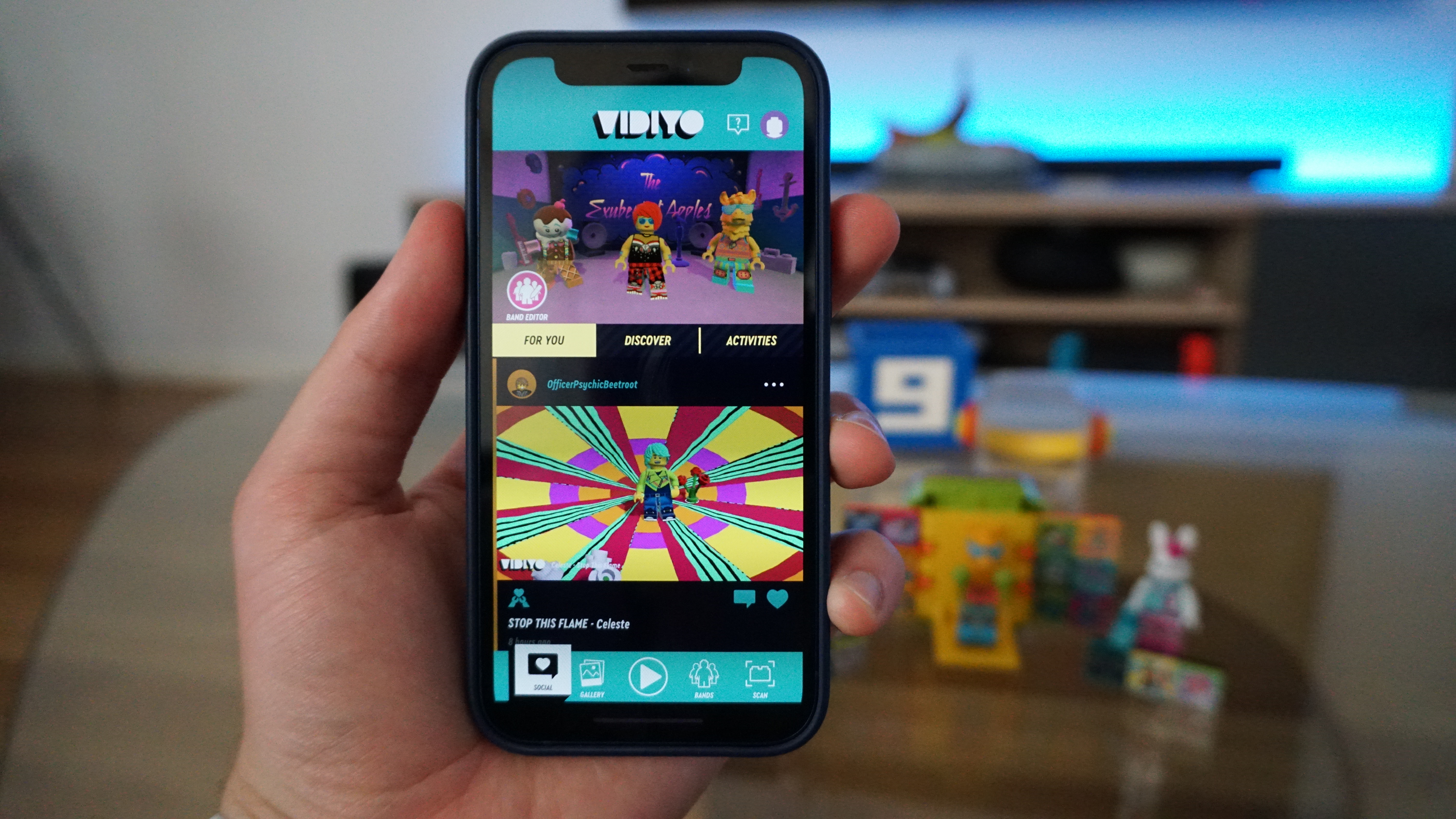
REVIEW: Lego pushes into the online market with new app VIDIYO

Lego's take on TikTok is as fascinating as it is limited. 

On March 1, Lego VIDIYO will start appearing on app stores and store shelves in a bid to combine the world's most famous plastic bricks with the fun of creating and safely sharing music videos from home.

It sounds simple but the pitch gets a little complicated to explain (or write about) compared to good ol' fashioned Lego. 

On top of buying a set, you have to build the character, scan them into the app to unlock them as a bandmate, then create a Lego account to share the videos you make to earn points that unlock costumes and more.  

You can download the Lego VIDIYO app and get started for free, but you can't unlock its full potential without buying the physical sets.   

The bricks

There are six "beatbox" starter kits to collect that fuse colourful characters with music genres. 

Party Llama is all about Latin music, K-Pop tracks are hiding within Unicorn DJ and ETDM is Lego's extraterrestrial take on electronic dance music. 

There are a variety of new Lego blocks that are part of the concept.

Scanning one of these six figures both allows you to use a virtual version of the character in your music videos and unlocks a selection of songs in their respective genres. If you, like me, love the look of Party Llama but aren't the biggest fan of latin music, you'll be rewarded with a selection of songs you might not recognise let alone like.     

There are just 30 songs at launch which pales in comparison to the near-unlimited selection you can find on TikTok and Instagram. Big names like Taylor Swift and The Weeknd are among the selection and Lego's promising to add new music every week in partnership with Universal Music. 

Lego VIDIYO wouldn't exist without this partnership but it also means hits from artists signed to other labels will likely never see the light of day.  

In addition to characters and music, the starter kits – as well as the mystery bandmate packs – come with a number of critical new bricks called "beat bits".

There are more than 130 beat bits and each unlocks different effects to use in your videos. 

Unlike the characters which only have to be scanned once, beat bits have to be scanned at the start of every video. You can stack up to 12 on either side of your starter kit which you can then activate at any time with a tap. 

Beat bits can send cats flying across the screen, add X-ray and underwater filters or trigger dance moves that can send your bandmates floating into the sky.   

There's nothing to explain what each beat bit does or how they'll work in combination with one another, and much of the fun comes from trial and error. 

The app is bright and colourful.The music theme runs throughout the concept.

The app

There's plenty to do in the VIDIYO app (even in early access) but the meat on this bone is recording and sharing video. 

Unfortunately, the process isn't as simple as choosing your song and hitting record. 

You have to register each character separately before they can be used and if you swap out their head or legs, the scan won't recognise them. 

You then have to create a band, select your band, scan your beat bits and select your 'stage'. VIDIYO is an augmented reality (AR) experience, so the background in videos is the world around you.

The app uses your camera to search for a flat surface but has some problems with shiny, reflective or glass surfaces, which can leave your bandmates floating in midair. However, that's not nearly as big a hurdle to the fun as needing to scan a character surrounded by beat bits before every video. 

There are many collectables involved, like most Lego.The app links up with your phone to display the content.

You literally can't record a video without access to the physical bricks. There's no option to virtually select the best bits you've previously scanned from a list either, so you'll have to rearrange them in the real world every time. Building and rebuilding is part of the fun with Lego but in this instance, it's an unnecessary barrier to it. 

Once you're scanned and set up, the music starts and you have 60 seconds to 'perform'. Infinitely more creative minds than mine have already directed some wonderfully inventive clips using the tools provided by Lego combined with handcrafted sets and editing. You can still have fun with the basics as I did, but there's a wealth of depth for players who want it. 

Each video is automatically saved to your gallery, but you can only share 5, 10 or 20 second clips. Every video is watched and approved by Lego's team before being shared online which can take up to 15 minutes. A delay Lego is happy to wear to deliver on its promise of a safe social network for kids. 

Videos can't be named but can be tagged with prewritten phrases like "My Favourite Band" and "Wow".

Once approved, videos appear on one of two tabs on the app's home page: 'for you' and 'discover'. The latter has some basic search functions based on those prewritten tags but is generally pretty limited.  

If you're lacking inspiration, there are a number of daily activities to complete to earn 'beat coins'. Beat coins can be spent in the app on cosmetics like new hairstyles, clothing, poses for those in your band, which you can then use in videos or take photos that can be used to create and share album covers. 

No real money can be spent to gather beat coins and there are no microtransactions in the app. 

Verdict

Lego VIDIYO aims to be greater than the sum of its parts. The problem is those parts get in the way of each other.

On their own, the individual $25.99 'beat boxes' are basic – and somewhat boring – builds.

Their value is explicitly tied to the app which, at launch, doesn't offer enough for those who don't heavily invest.   

Accessing all 30 songs requires all six 'beat boxes' which together cost $155.94. 

That being said, Lego has created something special.

Kids aged 7-10 who can navigate the hurdles required before hitting the record button will undoubtedly have fun, but the app must be streamlined and offer more for free over time if it's to unlock its own potential. 

Sydney mum 'butchered like she was nothing' by daughter

The sister of a woman who decapitated their mother in her western Sydney home says she will never forgive her, as audio of the Triple Zero call made in the moments after the attack was made public.

Jessica Camilleri faced a sentence hearing in the Supreme Court today after she was found guilty of the manslaughter of her mother Rita in St Clair in 2019.

Audio of an emergency call Ms Camilleri made after fatally stabbing her mother was released today.

Jessica Camilleri

She can be heard telling the operator she needs police and an ambulance, and saying she killed her mother "in self-defence".

"In the frustration I didn't know what I was doing, I cut her head off," she said.  

"I chopped her head off with a knife."

She did not react as her sister Kristy Torrisi delivered her powerful victim impact statement.

"My mother was taken from me by the selfish hands of my own sister," Ms Torrisi said.

"She was killed and butchered like she was nothing, all because of a fit of rage."

Ms Torrisi told the court they had tried to help Ms Camilleri with her various mental health issues for many years.

"She preferred the attention her behaviour attracted instead," she said.

"It was her own choices in refusing the help that led her here.

"My mother Rita Camilleri was a beautiful woman inside and out, she had a heart of gold and always put others before herself including Jessica."

She also detailed her battle with depression and the difficulties of dealing with the outside world.

"I have been labelled that girl, the girl whose mother got beheaded," Ms Torrisi said.

Ms Camilleri had history of making prank phone calls and threatening to cut people's heads off before the killing.

She was also obsessed with horror movies which included The Texas Chainsaw Massacre.

Her trial was told an argument broke out when Mrs Camilleri threatened to send her daughter to a mental health unit because she'd had enough.

"I couldn't stop because I had enough of living like his always being belt up when I did something wrong," Ms Camilleri later told police.

Rita Camilleri

She had stabbed her mother more than 200 times.

Mrs Camilleri's sister Mary Hill told the court today she had raised concerns about her sister's safety on several occasions.

"She was blinded and couldn't see what I could see… Rita was a testament to a mother's unconditional love for her daughter," Ms Hill said.

She also hit out at the mental health system for failing the family.

"Until more resources and funding put towards essential mental health services, there will be more tragic cases," Ms Hill said.