Category Archives: headline

Trump Senate Trial Will Consume US Capitol

Former President Trump’s second impeachment will consume Washington this week, putting the Trump era on trial and GOP divisions on full display.

Trump, who has been nearly invisible since leaving office and getting booted from social media platforms, will once again be the biggest story in the country.

The former president will not testify at his trial, but the hearings will draw the spotlight on an ugly few weeks in American history that culminated with the deadly siege of the Capitol by a mob of Trump supporters.

Many Republicans are deeply ashamed of that episode and believe Trump was at least partly responsible for whipping the crowd into a frenzy around his unsupported claims that the election was stolen from him.

However, Senate Republicans are expected to acquit Trump for a second time, arguing that it is unconstitutional to impeach a former president and that the bar for establishing incitement is high.

Still, the trial will expose the deep rift inside a Republican Party that is struggling to find its way in the post-Trump era.

The GOP is torn between a conservative base that is loyal to Trump and the traditional wing that sees Trumpism as a political death spiral.

“No one has any idea about what the Republican Party will look like in the future,” said Mark Braden, the former chief counsel for the Republican National Committee. “Will it be a conspiratorial party of a tiny fringe of black helicopter people? A populist party? Will it be a more traditional business conservative party that it was in the past? I have no idea where things will end up.”

The impeachment trial will focus narrowly on Trump’s role in the mayhem that overtook the Capitol on Jan. 6. Ten House Republicans joined all Democrats to impeach Trump last month for “incitement of insurrection against the Republic he swore to protect.”

Trump’s legal team is expected to file a trial brief by 10 a.m. on Monday morning outlining the arguments they’ll make in his defense.

In a brief last week, Trump’s lawyers said it is unconstitutional to impeach someone once they’ve left office.

They argued that Trump did not directly call on the mob to storm the Capitol and pointed to police reports that some of the rioters were planning the siege before Trump’s address.

The attorneys, David Schoen and Bruce Castor, also made a First Amendment case, arguing that conviction would severely curb political speech and make all politicians liable for the actions of the worst actors in their party.

Trump’s allies view the proceedings as an explicitly political effort aimed at ensuring Trump can never run for office again.

Forty-five out of 50 Senate Republicans have already voted to advance a motion to dismiss the trial on the grounds that it is unconstitutional, making it extremely unlikely that 17 Republicans will join Democrats this week to convict.

“If the Senate had been able to vote on this in early January, there may have been some appetite to convict,” said John Pudner, a former adviser to one of Sen. Mitt Romney’s (R-Utah) presidential campaigns. “But now it all looks political, with Democrats wanting to be remembered for making this case against Trump and every Republican thinking about their next primary challenge.”

Democrats plan to draw a direct line between Trump’s speech and the rioters, many of whom attacked the Capitol in an effort to stop the Electoral College vote count because they believed Trump’s claims that the election had been stolen.

Democrats will also make an emotional case that includes video of the deadly riots and personal stories about the dangers they encountered as they fled for safety.

The White House is signaling it has little interest in being involved in the spectacle.

President Biden this week will meet with the Defense secretary at the Pentagon, visit the National Institutes of Health and hold a virtual tour of a vaccination center as he aims to keep his focus on the coronavirus, the economy and national security.

But Democrats say the impeachment trial is something that must be done to ensure that democracy is never again threatened by a mob seeking to overturn the outcome of an election.

“President Trump’s conduct must be declared unacceptable in the clearest and most unequivocal terms,” the House impeachment managers wrote in a legal brief. “This is not a partisan matter. His actions directly threatened the very foundation on which all other political debates and disagreements unfold. They also threatened the constitutional system that protects the fundamental freedoms we cherish.”

This will be the second consecutive week that internal GOP politics will dominate on Capitol Hill, pushing Biden’s first 100 days agenda to the backburner.

Republicans slugged it out last week over the future roles of two members with different worldviews, Reps. Liz Cheney (R-Wyo.) and Marjorie Taylor Greene (R-Ga.).

Trump’s allies sought to have Cheney, the No. 3 Republican in the House, ousted from her leadership post for voting to impeach Trump.

Democrats stripped Greene of her committee assignments over a series of controversial remarks embracing various conspiracies, and they were joined by nearly a dozen Republicans.

Greene then gave a defiant speech reiterating her loyalty to Trump. “The party is his,” Taylor Greene said. “It doesn’t belong to anyone else.”

Meanwhile, Sen. Ben Sasse (R-Neb.), who was censured by his state party for criticizing Trump, said the GOP is at a crossroads. “We’re going to have to choose between conservatism and madness,” Sasse said.

There is anxiety among Republicans heading into the midterm election season over the extent of Trump’s grip on the party.

Trump brought to the forefront several issues Republicans believe to be winners; and he undeniably energizes large swaths of the party — Republicans gained seats in the House in the 2020 elections.

At the same time, Trump’s rhetoric and style are a huge turnoff to moderates, independents and suburban-dwellers, who propelled Biden to the White House and Democrats to majorities in the House and Senate.

“The way forward is to steal Trump’s ideas while kicking him out of the party,” said Keith Naughton, a veteran Republican strategist. “It’s simple to say but a tough thing to do.”

Former President Trump’s second impeachment will consume Washington this week, putting the Trump era on trial and GOP divisions on full display.

Trump, who has been nearly invisible since leaving office and getting booted from social media platforms, will once again be the biggest story in the country.

The former president will not testify at his trial, but the hearings will draw the spotlight on an ugly few weeks in American history that culminated with the deadly siege of the Capitol by a mob of Trump supporters.

ADVERTISEMENT

Many Republicans are deeply ashamed of that episode and believe Trump was at least partly responsible for whipping the crowd into a frenzy around his unsupported claims that the election was stolen from him.

However, Senate Republicans are expected to acquit Trump for a second time, arguing that it is unconstitutional to impeach a former president and that the bar for establishing incitement is high.

Still, the trial will expose the deep rift inside a Republican Party that is struggling to find its way in the post-Trump era.

The GOP is torn between a conservative base that is loyal to Trump and the traditional wing that sees Trumpism as a political death spiral.

“No one has any idea about what the Republican Party will look like in the future,” said Mark Braden, the former chief counsel for the Republican National Committee. “Will it be a conspiratorial party of a tiny fringe of black helicopter people? A populist party? Will it be a more traditional business conservative party that it was in the past? I have no idea where things will end up.”

The impeachment trial will focus narrowly on Trump’s role in the mayhem that overtook the Capitol on Jan. 6. Ten House Republicans joined all Democrats to impeach Trump last month for “incitement of insurrection against the Republic he swore to protect.”

ADVERTISEMENT

Trump’s legal team is expected to file a trial brief by 10 a.m. on Monday morning outlining the arguments they’ll make in his defense.

In a brief last week, Trump’s lawyers said it is unconstitutional to impeach someone once they’ve left office.

They argued that Trump did not directly call on the mob to storm the Capitol and pointed to police reports that some of the rioters were planning the siege before Trump’s address.

The attorneys, David Schoen and Bruce Castor, also made a First Amendment case, arguing that conviction would severely curb political speech and make all politicians liable for the actions of the worst actors in their party.

Trump’s allies view the proceedings as an explicitly political effort aimed at ensuring Trump can never run for office again.

Forty-five out of 50 Senate Republicans have already voted to advance a motion to dismiss the trial on the grounds that it is unconstitutional, making it extremely unlikely that 17 Republicans will join Democrats this week to convict.

“If the Senate had been able to vote on this in early January, there may have been some appetite to convict,” said John Pudner, a former adviser to one of Sen. Mitt Romney’s (R-Utah) presidential campaigns. “But now it all looks political, with Democrats wanting to be remembered for making this case against Trump and every Republican thinking about their next primary challenge.”

Democrats plan to draw a direct line between Trump’s speech and the rioters, many of whom attacked the Capitol in an effort to stop the Electoral College vote count because they believed Trump’s claims that the election had been stolen.

Democrats will also make an emotional case that includes video of the deadly riots and personal stories about the dangers they encountered as they fled for safety.

The White House is signaling it has little interest in being involved in the spectacle.

President Biden this week will meet with the Defense secretary at the Pentagon, visit the National Institutes of Health and hold a virtual tour of a vaccination center as he aims to keep his focus on the coronavirus, the economy and national security.

But Democrats say the impeachment trial is something that must be done to ensure that democracy is never again threatened by a mob seeking to overturn the outcome of an election.

ADVERTISEMENT

“President Trump’s conduct must be declared unacceptable in the clearest and most unequivocal terms,” the House impeachment managers wrote in a legal brief. “This is not a partisan matter. His actions directly threatened the very foundation on which all other political debates and disagreements unfold. They also threatened the constitutional system that protects the fundamental freedoms we cherish.”

This will be the second consecutive week that internal GOP politics will dominate on Capitol Hill, pushing Biden’s first 100 days agenda to the backburner.

Republicans slugged it out last week over the future roles of two members with different worldviews, Reps. Liz Cheney (R-Wyo.) and Marjorie Taylor Greene (R-Ga.).

Trump’s allies sought to have Cheney, the No. 3 Republican in the House, ousted from her leadership post for voting to impeach Trump.

Democrats stripped Greene of her committee assignments over a series of controversial remarks embracing various conspiracies, and they were joined by nearly a dozen Republicans.

Greene then gave a defiant speech reiterating her loyalty to Trump. “The party is his,” Taylor Greene said. “It doesn’t belong to anyone else.”

ADVERTISEMENT

Meanwhile, Sen. Ben Sasse (R-Neb.), who was censured by his state party for criticizing Trump, said the GOP is at a crossroads. “We’re going to have to choose between conservatism and madness,” Sasse said.

There is anxiety among Republicans heading into the midterm election season over the extent of Trump’s grip on the party.

Trump brought to the forefront several issues Republicans believe to be winners; and he undeniably energizes large swaths of the party — Republicans gained seats in the House in the 2020 elections.

At the same time, Trump’s rhetoric and style are a huge turnoff to moderates, independents and suburban-dwellers, who propelled Biden to the White House and Democrats to majorities in the House and Senate.

“The way forward is to steal Trump’s ideas while kicking him out of the party,” said Keith Naughton, a veteran Republican strategist. “It’s simple to say but a tough thing to do.”

The post Trump Senate Trial Will Consume US Capitol appeared first on The St Kitts Nevis Observer.
Nevis Disaster Management Department changes operating hours

CHARLESTOWN, Nevis — The public has been advised by the Nevis Disaster Management Department that it will changes its operating hours and delivery services to the quarantine facilities at Oualie Beach Hotel and Potworks.

Effective Monday, February 15, the following hours apply:

Monday to Friday, Operating hours, 8 a.m. to 4 p.m.; Departure time, 12 noon and 4 p.m.

Saturday and Sundays: Operating hours, 10 a.m. to 12 noon; Departure time, 12 noon.

Public Holidays: Operating hours, 10 a.m. to 12 noon; Departure time, 12 noon.

Everyone is encouraged to adhere to these changes as Disaster Management continues to provide these essential services.

The post Nevis Disaster Management Department changes operating hours appeared first on The St Kitts Nevis Observer.
Nevis Water Department plans changes in 2021 to serve public

CHARLESTOWN, Nevis — The Nevis Water Department (NWD) will undergo changes in its operations throughout 2021, in an effort to improve on deficient areas which were brought to the fore by the COVID-19 pandemic.

NWD Manager, Ms. Tonya Bartlette, made the disclosure while delivering remarks at a retreat for staff recently, at the Nevis Performing Arts Centre.

“In 2021, there will be a few rollouts, the launching our E-payment portal where customers can pay bills online and a NWD website,” said Ms. Bartlette. “These initiatives are long overdue, we are almost there.

“We will also launch updated e-billing software in an effort to conserve paper,” she said. “This will save paper, reduce costs and decrease our carbon footprint.

“We will also make structural changes to the reporting lines,” said Ms. Bartlette. “The Nevis Water Department is a small business. It should have an organizational structure that reflects better serving internal and external customers.”

NWD will also focus on documenting its Standard Operating Procedures in the entire department. Ms. Bartlette said work to improve operations is ongoing with minor adjustments made to ensure efficiency.

She said date collection will come under sharp focus, since the world is now data-driven.

“This is the direction NWD is heading,” said Ms. Bartlette. “Decisions must be made based on data as this will avoid making blind or uninformed decisions.

“Information collected will drive us to make decisions, not because we want to do something, but because we should take steps to enhance our product,” she said. “Data will serve as a means for future generations to continue to build the Nevis we love on the solid foundation that we have laid.”

Ms. Bartlette said NWD will also continue to collaborate with other departments and organisations.

“At present, we are collaborating with the Nevis Fire Department in mapping out island-wide fire hydrant locations to improve our fire-hydrant network.

“We are collaborating with the Geographical Information Unit, Public Works Department, and the Information Technology Department with other mapping projects. This will enable us to produce maps of our system to enhance our planning capabilities,” she said.

Ms. Bartlette underscored the need for staff training. She explained NWD is making provisions to provide online staff training.

“The Caribbean Water and Sewage Association, is hosting a full year of training sessions, which cover the entire department,” said Ms. Bartlette. “These will be delivered virtually as COVUD-19 has restricted travel and interactive face-to-face learning.

“With this in mind and in an effort to have this knowledge-sharing experience, a conference/training room will be established to accommodate all NWD staff,” concluded Ms. Bartlette. “Team members will be notified of the designated dates and times for this training.”

The post Nevis Water Department plans changes in 2021 to serve public appeared first on The St Kitts Nevis Observer.
H.E. Ian McDonald Liburd presents credentials to U.N. Secretary General

NEW YORK, New York — On February 3, Ambassador/Plenipotentiary and Extraordinary H.E. Ian Liburd, Permanent Representative of St. Kitts-Nevis to the United Nations, presented his credentials to the United Nations Secretary General H.E. Antonio Guterres in a formal ceremony at the United Nations Headquarters.

Ambassador Liburd brought greetings from the Prime Minister, Dr. the Hon Timothy Sylvester Harris. The ambassador reassured the Secretary General of St. Kitts-Nevis’ full support for his strong leadership in these unprecedented times.

Secretary General H.E. Guterres spoke of his personal commitment to St. Kitts-Nevis, the Caribbean and Small Island Developing States. Throughout the ceremony, Ambassador Liburd discussed a number of matters of great importance to St. Kitts and Nevis with H.E. Guterres and presented the foreign policy objectives of the Federation.

H.E. Guterres and H.E. Liburd discussed the impact of the COVID-19 pandemic, the effects of Climate Change on the Federation, rebuilding the economy and building resilience in tourism, health, education and infrastructure.

H.E. Guterres said that St. Kitts-Nevis can count on his solidarity to defend the interests of St. Kitts and Nevis, and to make its voice heard in the international arena. They also discussed the efforts St. Kitts-Nevis and the United Nations have been doing to advance access to the COVID-19 vaccine as a global public good.

In addition to Ambassador Liburd, five other ambassadors also presented credentials in formal ceremonies. These included; Bolivia, Benin, Sri Lanka, Guinea and South Africa. The ceremony concluded with a photo opportunity.

The post H.E. Ian McDonald Liburd presents credentials to U.N. Secretary General appeared first on The St Kitts Nevis Observer.
Water fired at crowd as anti-coup protests swell in Myanmar

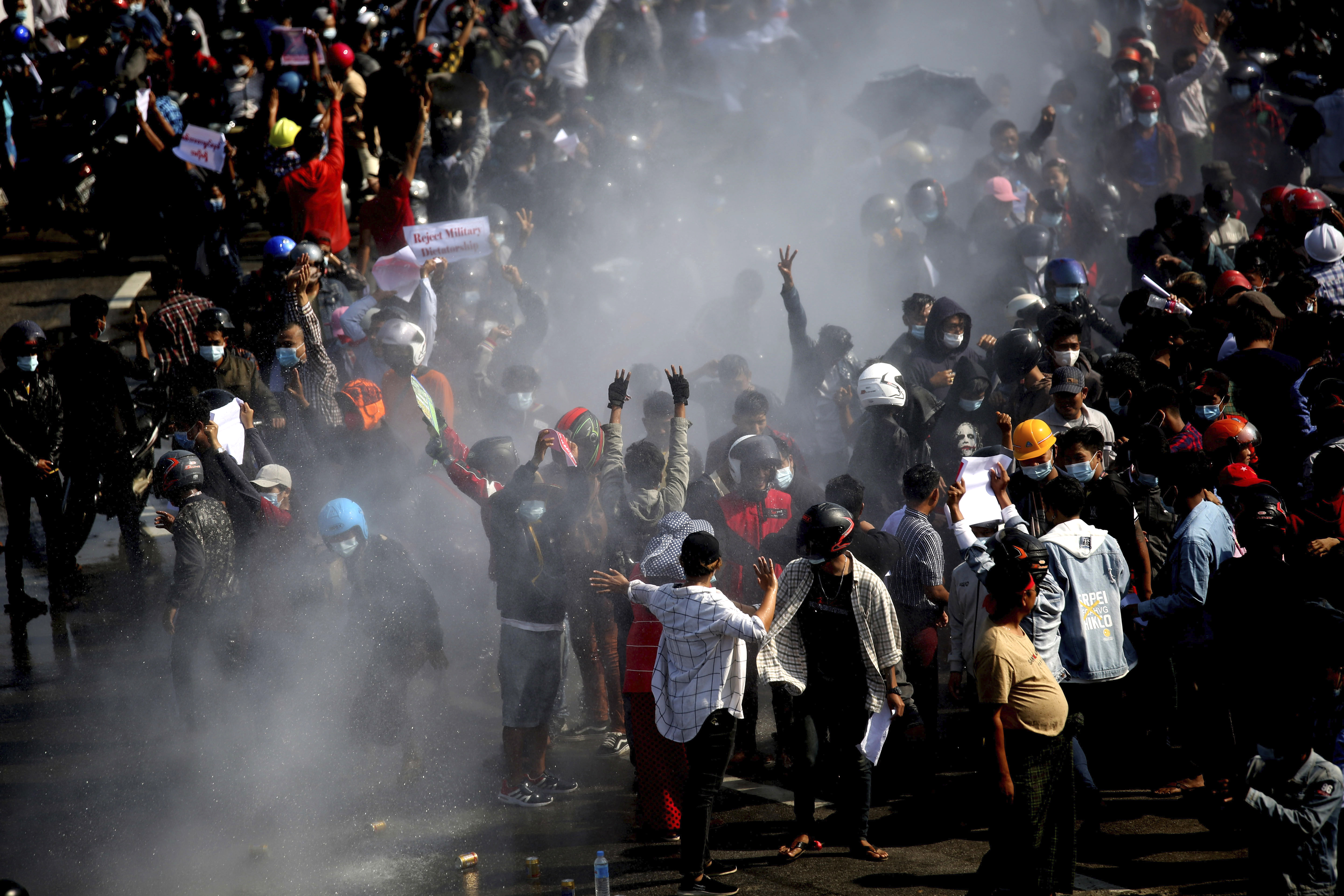
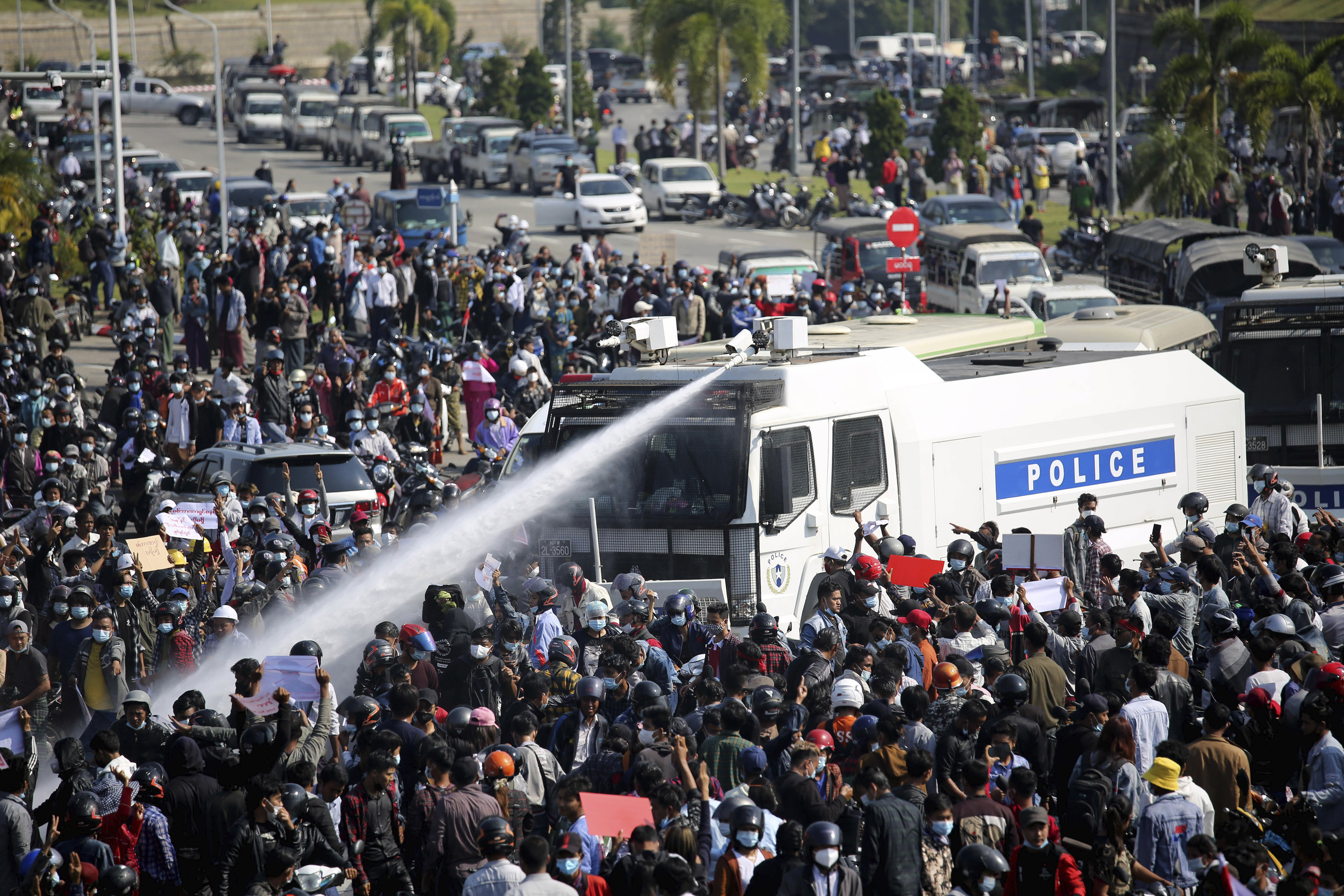
Police fired a water cannon at hundreds of protesters in Myanmar's capital on Monday who are demanding the military hand power back to elected officials, as demonstrations against last week's coup intensified and spread to more parts of the country.

The demonstrations in Naypyitaw, ongoing for several days, are especially significant since the city, whose population includes many civil servants and their families, has no tradition of protest and has a heavy military presence.

READ MORE: 'Deep concern' after Australian detained in Myanmar

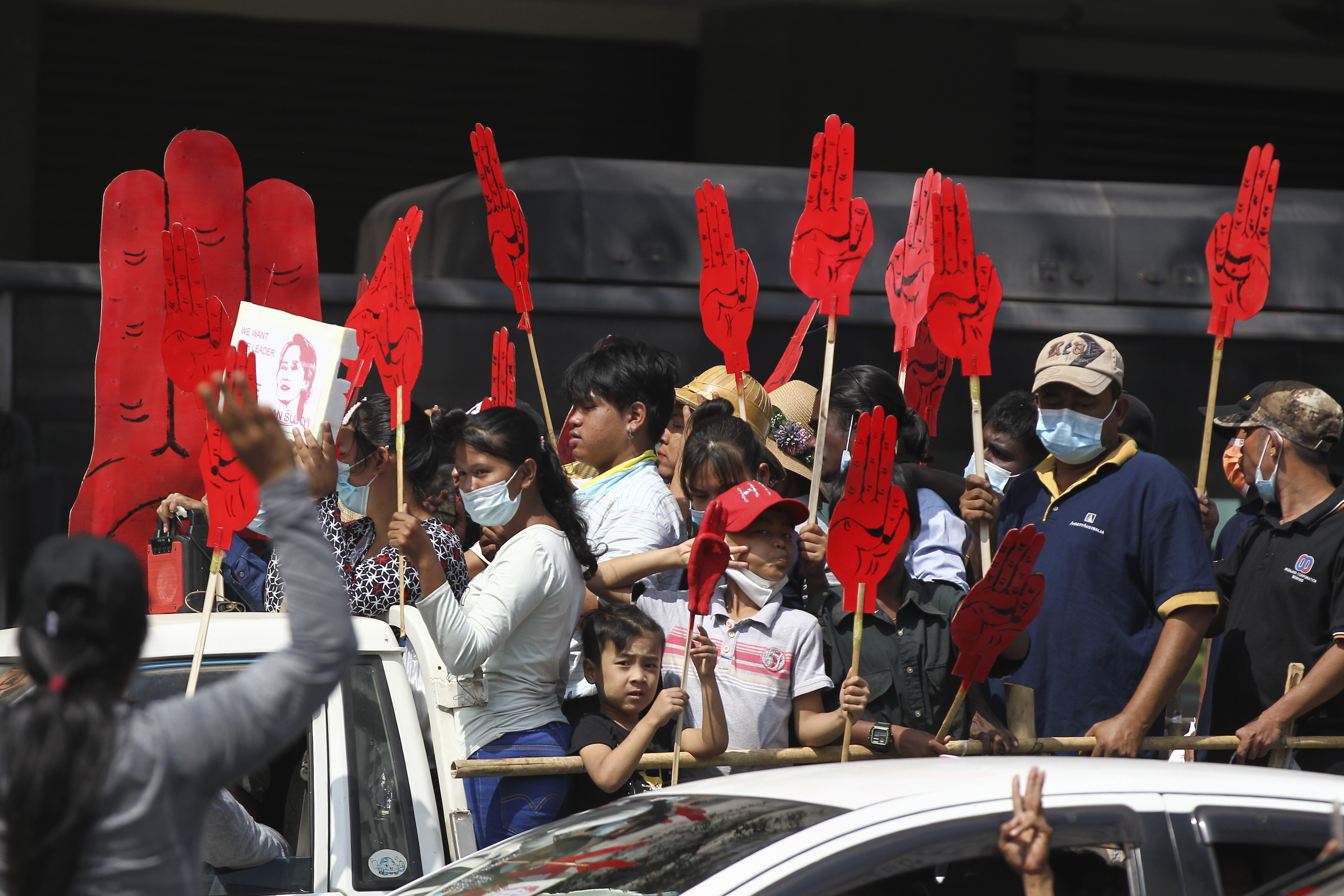
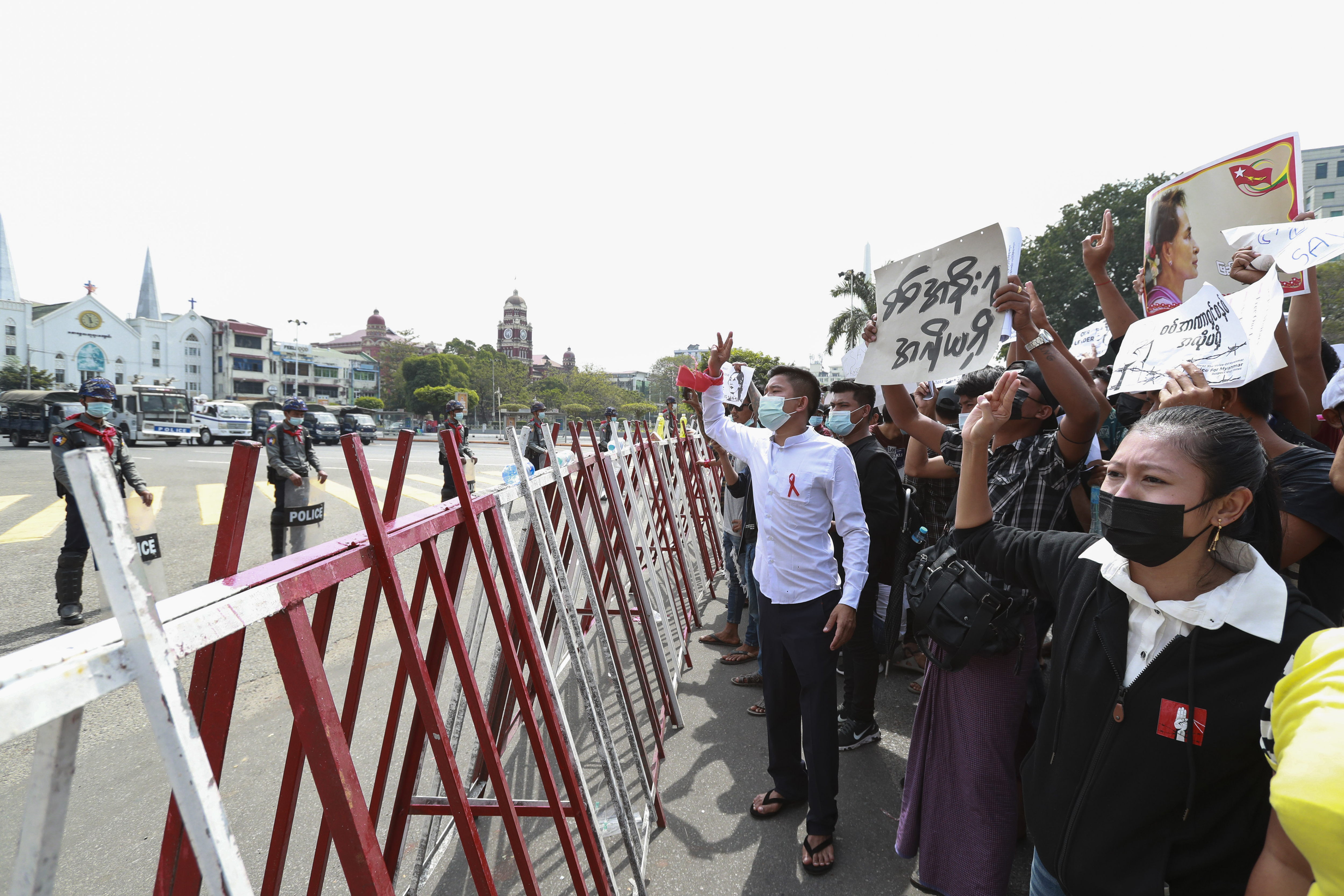
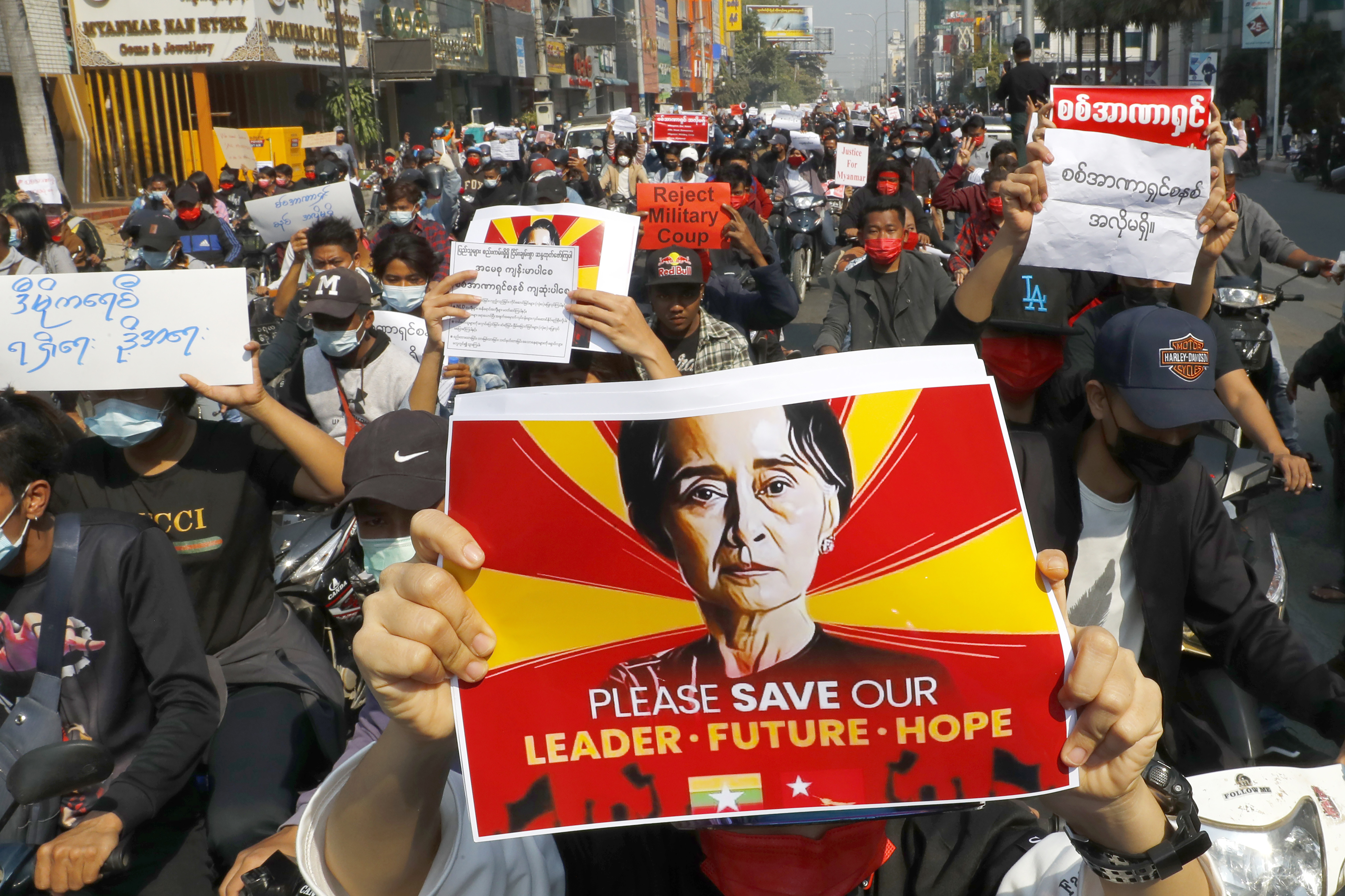
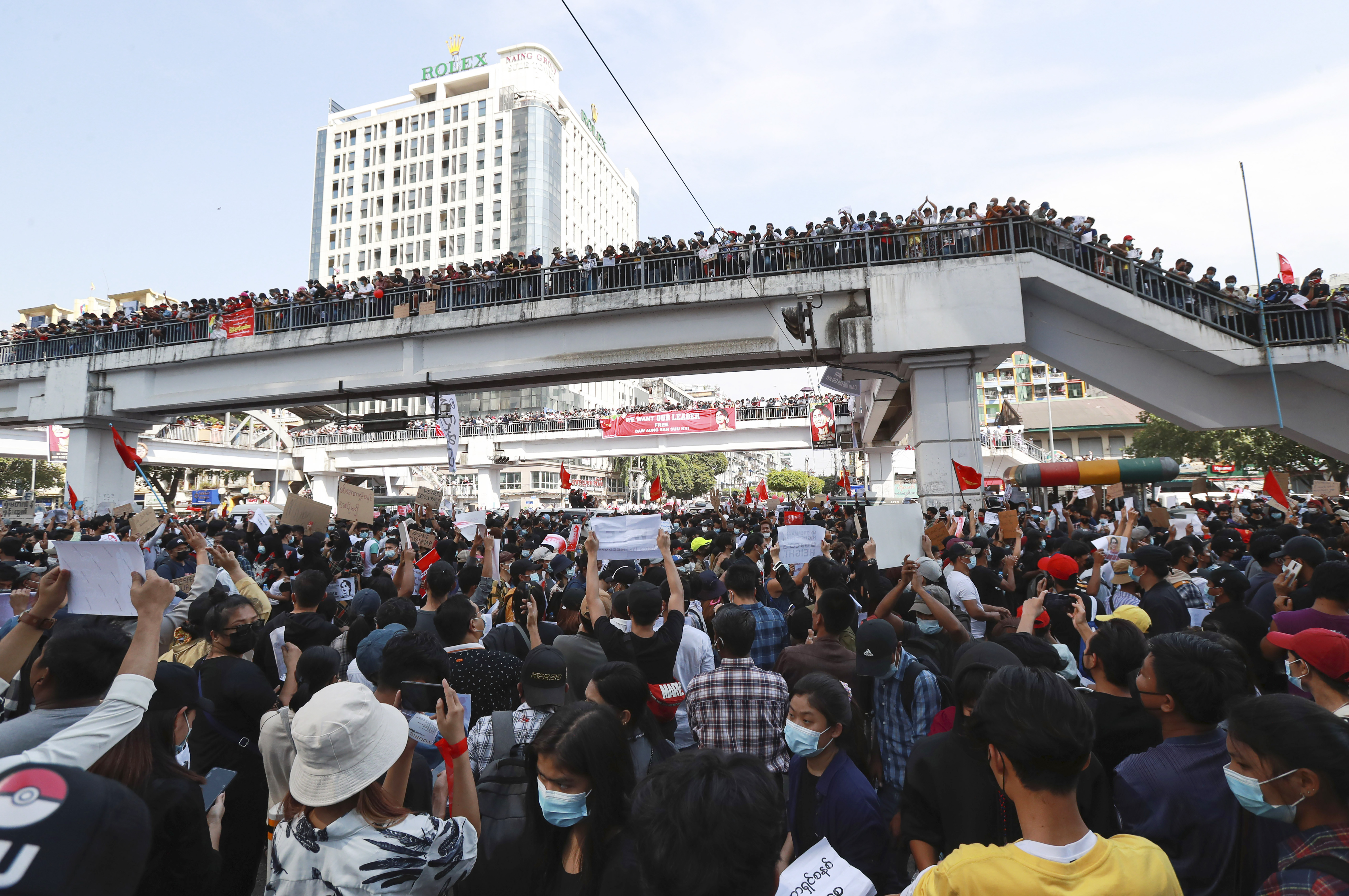
A protest also swelled at a major downtown intersection in the country's largest city, Yangon, with people chanting slogans, raising a three-finger salute that is a symbol of resistance and carrying placards saying, "Reject the military coup" and "Justice for Myanmar."

There were also reports of new demonstrations in towns in the north, southeast and east of the country, as well as in the city of Mandalay, where there was a procession of marchers and motorbikes.

"We do not want the military junta," Daw Moe, a protester in Yangon, said.

"We never ever wanted this junta. Nobody wants it. All the people are ready to fight them."

State media for the first time on Monday made reference to the protests, claiming they were endangering the country's stability.

"Democracy can be destroyed if there is no discipline," a statement from the Ministry of Information said, read on state television station MRTV.

"We will have to take legal actions to prevent acts that are violating state stability, public safety and the rule of law."

READ MORE: Myanmar blocks Facebook as resistance grows to coup

The coup was seen internationally as a shocking setback for Myanmar, which had been making progress toward democracy in recent years after five decades of military rule.

The takeover came the day newly elected lawmakers were supposed to take their seats in Parliament after November elections.

The generals have said that vote was marred by fraud, though the country's election commission has dismissed that claim.

The growing protests recall previous movements in the Southeast Asian country's long and bloody struggle for democracy.

On Sunday, tens of thousands of protesters rallied at the city's Sule Pagoda, which was a focal point of demonstrations against military rule during a massive 1988 uprising and again during a 2007 revolt led by Buddhist monks.

The military used deadly force to end both of those uprisings.

Aside from a few officers, soldiers have not been in the streets at protests this past week.

Photos of the standoff in Naypyitaw on Monday showed a vast crowd of protesters hemmed in on several sides by large numbers of police and police vehicles.

Officers there trained a water cannon on the crowd, which was gathered near a giant statue of Aung San, who led the country's 1940s fight for independence from Britain and is the father of Aung San Suu Kyi, the elected leader who was deposed by last week's takeover.

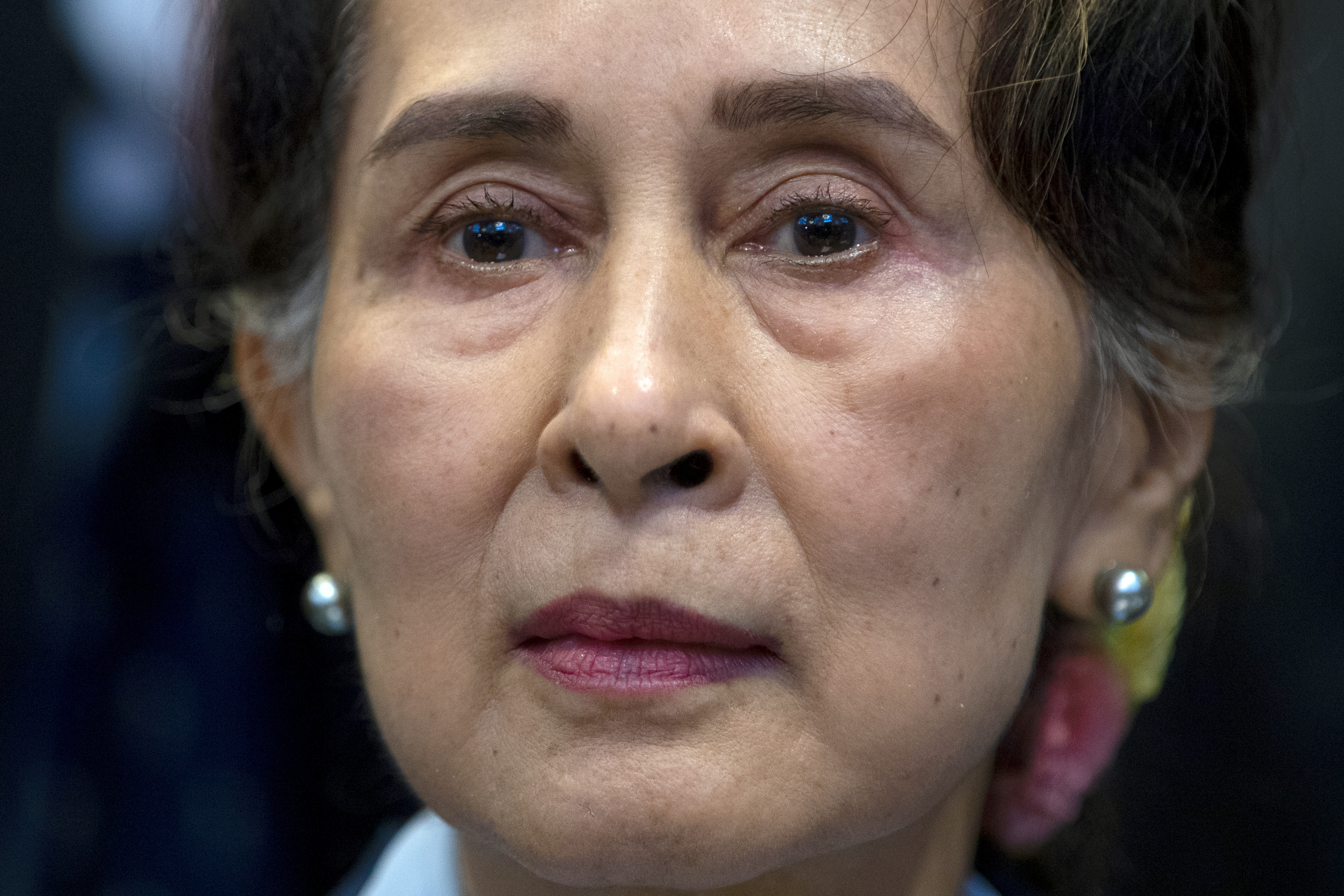
Suu Kyi, who became an international symbol of the country's fight for freedom while detained in her home for 15 years and earned the Nobel Peace Prize for her efforts, is now back under house arrest.

The risks of such confrontations were highlighted on Sunday in the town of Myawaddy, on Myanmar's eastern border with Thailand, when police shot into the air in an effort to disperse a crowd.

The Assistance Association for Political Prisoners, an independent watchdog group, said one woman had been shot, without providing details about her condition.

There have been no signs that either the protesters or the military will back down in their fight over who is the country's legitimate government: the politicians from Suu Kyi's National League for Democracy party, which won the recent elections in a landslide, or the junta.

Suu Kyi's party has asked for international recognition as the legitimate representatives of the people.

A call for a general strike was issued late on Sunday by several activist groups in Yangon, but it was not clear if it had been widely circulated or adopted by the informally organised civil disobedience movement at the forefront of the protests.

The Assistance Association for Political Prisoners says 165 people, mostly politicians, had been detained since the February 1 coup, with just 13 released.

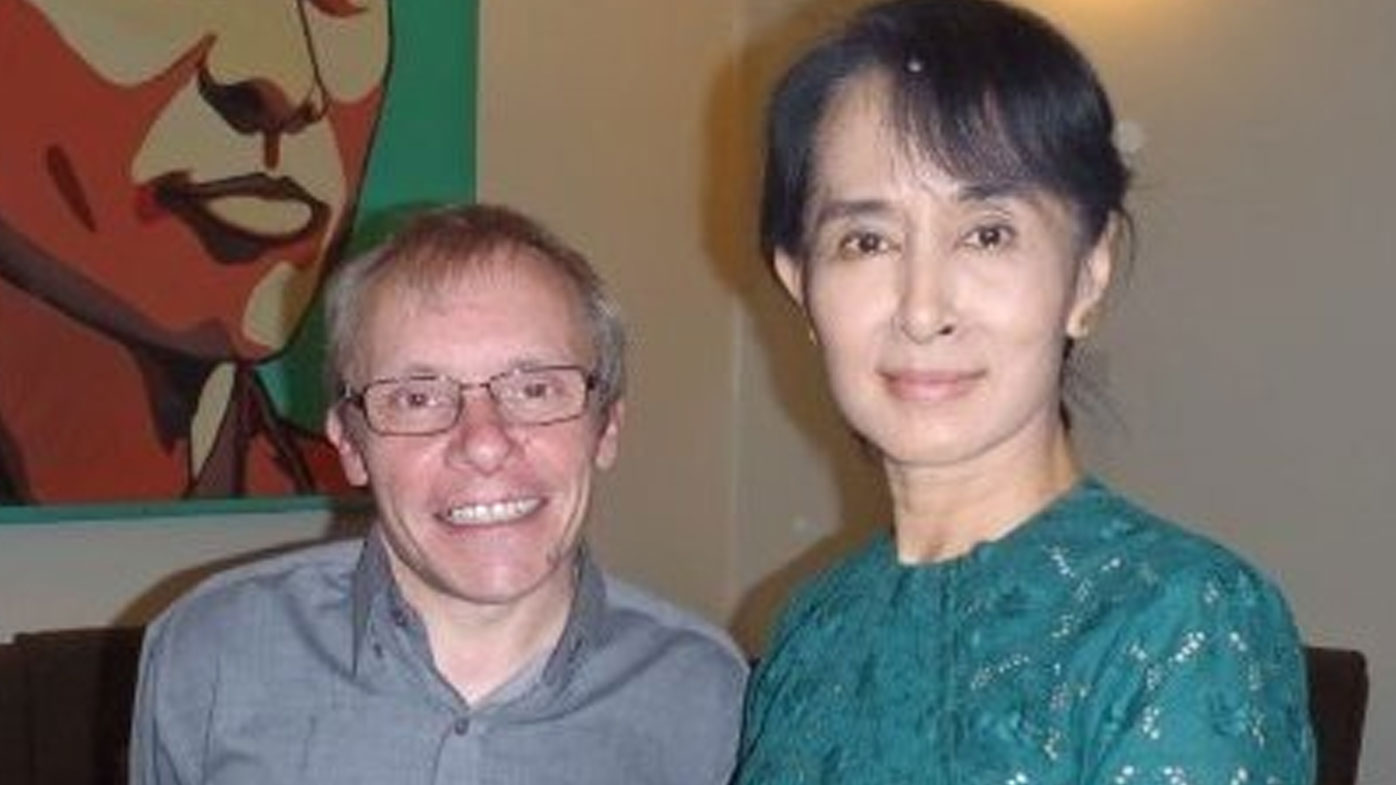
One foreigner has been confirmed held by the authorities, Sean Turnell, an economist at Australia's Macquarie University who was an adviser to Suu Kyi's government.

He was detained Saturday under unclear circumstances.

A statement issued on Monday by the office of Australian Foreign Minister Marise Payne said he was being provided with consular support and described him as "a highly regarded advisor, member of the academic community."

"We certainly believe he should be immediately released," the statement read.

Sean Turnell and Aung San Suu Kyi in his LinkedIn bio photo

The military has accused Suu Kyi's government of failing to act on its complaints that last November's election was marred by fraud, though the election commission said it had found no evidence to support the claims.

Superbowl: Brady Led Bucks Rout Chiefs 31-9

The Tampa Bay Buccaneers, led by ageless Tom Brady, hoisted the Lombardi Trophy last night, dominating the Kansas City Chiefs 31-9 in Super Bowl LV.

While the victory further cemented quarterback Tom Brady’s Hall of Fame credentials, the story of the night was Tampa Bay’s tenacious defense, which held the dynamic Chiefs offense to just three field goals. For Kansas City’s star quarterback Patrick Mahomes, it was the first time since high school that a team he led failed to score a touchdown.

Brady threw for just over 200 yards and three touchdowns, en route to his record-breaking fifth Super Bowl MVP. The win marks Brady’s seventh title and his first in Tampa, after leaving the New England Patriots last year. Before acquiring Brady, the Buccaneers went 7-9 last season, while the Patriots fell to 7-9 this season after his departure. For Tampa Bay, it’s their second title in franchise history and the first since 2002.

The city of Tampa has had an exceptional sports year—the Devil Rays made the World Series in October while the Lightning won the Stanley Cup in September.

The post Superbowl: Brady Led Bucks Rout Chiefs 31-9 appeared first on The St Kitts Nevis Observer.
COVID Latest: Cuba’s Socialist Vaccine Program: For People, Not Profit


by W.T. Whitne

Cuba’s socialist approach to developing vaccines against COVID-19 differs strikingly from that of capitalist nations of the world. Cuba’s production of four vaccines is grounded in science and dedicated to saving the lives of all Cubans, and to international solidarity.

The New York Times’s running report on the world’s vaccine programs shows 67 vaccines having advanced to human trials; 20 of them are in the final phase of trials or have completed them. The United States, China, Canada, the United Kingdom, Germany, South Korea, and India have each produced many vaccines; most vaccine-manufacturing countries are offering one or two vaccines.

Cuba is the only vaccine manufacturer in Latin America; there are none in Africa. The only state-owned entities producing the leading vaccines are those of Cuba and Russia.

Cuba’s Finlay Vaccine Institute has produced two COVID-19 vaccines. Trials for one of them, called Sovereign I, focus on protecting people previously infected with COVID-19. The antibody levels of some of them turned out to be low, and the vaccine might provide a boost.

The other vaccine, Sovereign II, is about to enter final human trials. For verifying protection, these trials require tens of thousands of subjects, one half receiving the vaccine and the other half, a placebo vaccine. Cuba’s population is relatively small, 11 million people, too small to yield enough infected people in the short time required to test the vaccine’s protective effect. That’s why Sovereign II will be tested in Iran.

100 million doses of Sovereign II are being prepared, enough to immunize all 11 million Cubans, beginning in March or April. The 70 million remaining doses will go to Vietnam, Iran, Pakistan, India, Venezuela, Bolivia, and Nicaragua. Sovereign II “will be the vaccine of ALBA,” explained Venezuelan Vice President Delcy Rodríguez, referring to the solidarity alliance established in 2004 by Venezuelan President Hugo Chavez and Cuba’s Fidel Castro.

Cuba’s strategy in commercializing the vaccine represents a combination of what’s good for humankind and the impact on world health. We are not a multinational where a financial objective comes first,” says Vicente Vérez Bencomo, director of Cuba’s Finlay Vaccine Institute. Income generated by vaccine sales abroad will pay for health care, education, and pensions in Cuba just as happens with exports of medical services and medicines.

Cuba’s Center for Genetic and Biotechnological Engineering is developing two other COVID-19 vaccines; One, named “Mambisa” (signifying a female combatant in wars of liberation from Spain), is administered via the nasal route, just as is Cuba’s hepatitis B vaccine. The other vaccine, named “Abdala” (a character in a Jose Marti poem) is administered intramuscularly. The two vaccines are involved in early trials.

Cuba was ready

Cuban education emphasizes science and technology. In the 1990s, Cuba accounted for 11% of doctorate-level Latin American scientists. Cuban scientists work in the 50 or so biomedical research and production facilities which together make up Cuba’s state-owned BioCubaFarma Corporation, and which produces vaccines, drugs, medical tests, and medical equipment. It makes 60% of medicines used in Cuba, and 8 of 12 vaccines.

Cuba previously produced a pioneering vaccine that prevents life-threatening infection caused by type B meningococcus. Cuba developed a genetically-engineered hepatitis B vaccine and a vaccine offering palliative treatment for lung cancer. A Cuba-developed vaccine offers protection against infection, particularly childhood meningitis, caused by the Hemophilus Influenza type B bacterium.

In fashioning vaccines, Cuban scientists relied on familiar technology.

To provide an immunological extra, the antigen of Cuba’s Sovereign II vaccine is mixed with tetanus toxoid, as was done with Cuba’s Hemophilus influenza vaccine. As with other vaccines, scientists used a segment of the virus’s protein – here the COVID-19 virus – to form an antigen to stimulate protective antibodies. By contrast, the U. S. Pfizer and Moderna vaccines contain the whole viral protein, not a segment. That protein contains “genetic instructions” which enter human cells, causing them “to make spike proteins, which then get released into the body” where they trigger antibodies.

Observers suggest that this innovative U.S. technology may be less safe than the one used in Cuban vaccines. Not requiring extremely cold storage, as do the U.S. vaccines, the Cuban vaccines are suited for areas without adequate refrigeration capabilities.

Cuba’s bio-medical production sector has also created drugs for treating Covid-19 infection. Interferon, an antiviral agent developed in Cuba, produced in China, and used throughout the world, prevents many Covid – infected patients from becoming critically ill. The Cuban anti-inflammatory drug Jusvinza, used for treating auto-immune diseases, and Cuba’s monoclonal antibody Itolizumab, which moderates exaggerated immune responses, are both effective in reducing Covid-19 deaths.

The other way

The U. S. approach to producing and distributing COVID-19 vaccines is based on private enterprise, although the U. S. government did deliver billions of dollars to pharmaceutical companies to produce vaccines free of charge to recipients. The companies have contracted with purchasers abroad.

According to forbes.com in November, 2020, ‘If Moderna’s [vaccine] can get FDA approval and can make enough doses, its top line could be nearly $35 billion higher … than … in the last 12 months.” Another report suggests that, “The companies (Pfizer and Moderna) stand to earn billions of dollars in profits from their COVID vaccines this year [and] there will be more profits in later years.” The companies “claim the rights to vast amounts of intellectual property.”

With corporations in charge, distribution of COVID-19 vaccines is skewed. As of Jan. 27, “some 66.83 million doses have been sent out, of which 93 percent were supplied to only 15 countries.” In Latin America, only Brazil, Argentina, Mexico, and Chile have secured purchase contracts adequate for immunizing entire populations. The companies’ contracts with African nations allow for immunization of only 30 percent of Africans in 2021. Meaningful immunization has yet to begin there.

The wealth divide determines distribution. Epidemiologists at Duke University report that, “While high-income countries represent only 16% of the world’s population, they currently hold 60% of the vaccines for COVID-19 that have been purchased so far.” Cuban journalist Randy Alonso reports that only “27 percent of the total population of low and middle income countries can be vaccinated this year.”

The world is on the brink of a catastrophic moral failure – and the price of this failure will be paid with lives and livelihoods in the world’s poorest countries,” declared Dr. Tedros Adhanom Ghebreyesus, director of the World Health Organization, on January 18. He warned that, “some countries and companies continue to prioritize bilateral deals, going around COVAX, driving up prices and attempting to jump to the front of the queue.”

The WHO initiated the global vaccine collaboration COVAX to assure access by poor nations to COVID-19 vaccines. The 190 nations that are enrolled agreed to obtain vaccines through COVAX. Rich nations would supply COVAX with funds to enable 90 poor nations to receive no-charge vaccines. COVAX anticipates distributing two billion doses, enough to immunize only 25 % of the populations of poor nations during 2021.

Problems include: wealthy nations order vaccines independent of COVAX; they buy more vaccine than they need; manufacturers set prices; and prices are secret, variable, and very high.

Most other countries producing COVID-19 vaccines are at variance with Cuba through their profiteering and because they are complicit with the U.S. economic blockade of Cuba. Pursuing routine overseas commercial affairs, they all too easily adjust to U.S. regulations by means of which that cruel policy is enforced. More to the point, the U.S. blockade hinders Cuba’s vaccine efforts, and they are silent.

“We don’t have in Cuba all the raw materials and supplies we’ll need for the unprecedented scale of production that vaccinating our whole population requires,” Dagmar García-Rivera, Director of Research at Cuba’s Finlay Vaccine Institute, explained. “They have to be purchased and for this, we need financing. This is made infinitely more difficult by the US embargo … Procuring the necessary reagents for research and the raw materials for production is a challenge we face daily.”

In confronting the pandemic, Cuba exhibits attention to detail suggestive of a level of caring and concern not readily matched elsewhere. For example, Cuba’s government-friendly cubadebate.cu website provides a daily, detailed update of the infection’s impact. Its report on Jan. 27 presents data relating to cities, provinces, the nation, and the world – and the nation’s intensive care units. Readers learn that of 43 patients in intensive care that day, 16 were in critical condition, stable or unstable, and 27 were in “grave” condition.

All 43 cases are reviewed, beginning with: “Cuban citizen, 75 years old, from Alquízar, in Artemisa, already suffering from arterial hypertension and ischemic cardiopathy who is afebrile, on mechanical ventilation, is hemodynamically stable… with acceptable blood gases (oxygen and CO2), is improving radiologically with inflammatory lesions in the right [lung] base – reported as critical but stable.” The cases of four Cubans who died that day are also presented.

Fighting a pandemic in Cuba, it’s understood, is no casual matter. Nor is the health of Cuba’s people.

W.T. Whitney Jr. is a retired pediatrician and political journalist living in Maine.

==============================================

Then there are many of the economically poor nations

Giving one’s citizens “the peace of mind” offered by the COVID-19 vaccine, as a Honduran business leader succinctly put it, has become a focal effort for some poorer countries who have gotten tired of waiting to get doses through a United Nations program.

Countries including Honduras, Serbia and Mexico are actively striking out on their own, cutting their own private deals, report Maria Cheng and Aniruddha Ghosal.

Experts are increasingly concerned that these go-it-alone efforts could undermine a U.N.-backed program to get shots to the neediest people worldwide.

In past disease outbreaks, less wealthy countries generally waited for vaccines to be delivered by the U.N. and others. Many are now taking matters into their own hands. Those deals, however,  could leave fewer vaccines for the program known as COVAX.

U.K.-EU Vaccinations: The European Union has chosen a careful route in its vaccine campaign to defeat the pandemic. And as a result, it has seen a slow rollout of shots compared with Britain. Across the channel, the United Kingdom has shown speed and agility in its vaccine strategy. It has announced vaccine deals earlier, authorized shots from different companies more quickly, and experimented with stretching out the time between doses to get more people some protection quicker. The result is that the EU is in the U.K.’s rearview mirror in the vaccination drive. Britain has given at least one vaccine shot to about 15% of its population, compared with some 3% in the EU’s 27 nations, Raf Casert and Masha Macpherson report.

Timeline of virus vaccine deals reveals EU’s lag behind UK.

South Africa Vaccine:The country has suspended plans to inoculate its front-line health care workers with the AstraZeneca vaccine after a small clinical trial suggested that it isn’t effective in preventing mild to moderate illness from the variant dominant in the country. South Africa received its first 1 million doses of the AstraZeneca vaccine last week and was expected to begin giving jabs to health care workers in mid-February. The disappointing early results indicate that an inoculation drive using the AstraZeneca vaccine may not be useful, Andrew Meldrum and Sylvia Hui report.

Burkina Faso Hospitals: The West African country, which at first managed to avoid a catastrophic surge of the coronavirus, is now trying to cope with a much deadlier resurgence. Although Burkina Faso’s virus figures are still relatively small, officials worry that a general lack of understanding and adherence to basic safeguards will end up overwhelming the country’s already strained health system. Complicating matters, Burkina Faso is suffering from a conflict involving Islamic militants, the army and local defense groups that has pushed hundreds of thousands to the brink of starvation and forced the closure of more than 130 health centers in the tiny country, Sam Mednick reports.

Spring Travel: Around the globe, tough new restrictions on travel because of variants of the virus are hitting just when millions of people are normally on the move. That’s more bad news for airlines, restaurants and hotels, which have been struggling mightily for the past year. In late winter and early spring, Chinese factory workers are normally heading home for Lunar New Year, American college students are hitting the beach over spring break, and Germans and Britons are fleeing drab skies for some Mediterranean sun over Easter. But all of that is now canceled or in doubt, Dave McHugh, Casey Smith and Joe McDonald report.

The post COVID Latest: Cuba’s Socialist Vaccine Program: For People, Not Profit appeared first on The St Kitts Nevis Observer.
Jamaica: ‘Canada Travel Ban Will Be a Hard Hit on Caribbean’

Canada’s ban on travel to the Caribbean will deliver a massive blow to Jamaica’s economy, with nearly half a billion dollars in tourism revenue to be lost. This is according to the island’s Minister of Tourism, Edmund Bartlett.

On January 29, Canada’s Prime Minister Justin Trudeau moved to suspend all flights to the Caribbean and Mexico as part of a host of new travel restrictions. The suspension of flights began on Sunday, January 31, and will run until April 30.

As one of the major tourist markets for Jamaica, Canada’s ban on travel is expected to further sink the economy of the tourism-dependent island, which has been struggling to stay afloat throughout the pandemic.

In an interview with CBC News, Bartlett said he estimates that the ban will cost Jamaica $350 million US ($449 million Cdn). That estimate is based on what the country would see during a regular peak winter season, when Jamaica welcomes between 175,000 – 200,000 Canadians.

Minister Bartlett said that he is hoping that Canada will be able to relax its measures soon to avoid a complete fallout.

“It is difficult and it is causing us some unintended consequences because I know that Canada has no real intention of hurting Jamaica. What we are doing here is to hope and pray that Canada will get through this very quickly so that we can return to the normal course of our trade relations,” said Bartlett.

In the last two months, Jamaica’s top three tourist markets: the United Kingdom, Canada, and United States have all imposed new travel requirements covertly aimed at limiting international travel.

The UK and the US both require negative COVID-19 tests for entry, but since December, Jamaica has had a UK travel ban in place. Prime Minister Andrew Holness estimated that the COVID-19 pandemic has cut tourism revenue by some 70%. The Jamaica Hotel and Tourist Association states that some 47% of accommodations on the island remain closed, despite the industry reopening in June 2020. Prime Minister Holness says the hotels that are open are reporting some 30% occupancy.

To cater to the tourists that are allowed to travel to the island, the government has had to put new measures in place to meet the new travel requirements.

“All major hotels have testing facilities at the hotel. And for the smaller hotels, we’ve arranged transportation to our testing centers across the island,” explained Minister Bartlett. Testing is also being done at the Norman Manley International Airport in Kingston and the Sangster’s International Airport in Montego Bay.


While the government is doing all it can to cater to tourists, Minister Bartlett says the protocols will threaten the viability of tourist attractions and accommodations on the island.

Bartlett’s sentiments have been echoed by the Caribbean Hotel and Tourism Association which has warned that the region’s economic survival is in serious jeopardy because of travel restrictions.

The post Jamaica: ‘Canada Travel Ban Will Be a Hard Hit on Caribbean’ appeared first on The St Kitts Nevis Observer.
Guyana-Brazil Increasing Anti-Virus Border Patrols

Guyana’s Minister of Health Dr. Frank Anthony says both the joint services in Guyana and the federal police in Brazil have increased border patrols between the two countries to reduce the risk of the spread of COVID-19.

He acknowledged that while there are challenges manning the border, efforts are being made by law enforcement on both sides to observe the order.

“While we have heightened our presence on our borders through the joint services, if people really want to slip through, I think there are possibilities of that happening. But it’s not only us who have heightened our presence on our border, on the Brazilian side, the federal police have also increased presence on their side,” the Minister said.

Dr. Anthony said this has been happening for more than a month.

“That’s because we have been in talks with them and we are very pleased that they have also increased their patrols and so forth. It is much tighter than it was before,” he said.

Dr. Anthony had previously indicated that Guyana’s land border with Brazil was closed and that that decision would remain in place for the foreseeable future.

“We allow for an official exchange of goods and services on Thursdays. So, every Thursday, there is an interlude where if there are goods from Brazil that is coming over to Lethem that’s allowed. Of course, given the protocols and everything, and from our side which goes across to Brazil as well,” he said.

Just last week, the government announced the suspension of air travel between Guyana and Brazil to reduce transmission of the new variants of COVID-19 found in that country.

That order also remains in place, Dr. Anthony said, noting monitoring and evaluation are also ongoing.

CMC

The post Guyana-Brazil Increasing Anti-Virus Border Patrols appeared first on The St Kitts Nevis Observer.