Category Archives: headline

‘Too African for Jamaica, Too Jamaican for America, Too American for Nigeria’

FLOATING IN A MOST PECULIAR WAY
By Louis Chude-Sokei

NY Times– I was about 10 when I found out that my whole life I’d been saying my name wrong. A friend of my father’s — an “uncle” — had come to town, and my white mom had dressed us up for the occasion in traditional Nigerian dress. My top and wrap skirt were of a gorgeous orange- and red-printed fabric, hand-sewn by a woman from my father’s village in Rivers State. But when this uncle asked me my name, I embarrassed myself and my family by mispronouncing it “Joma.”

“That is not your name,” he replied. “Your name is Ijeoma. You have to know how to say your name. It is a very good Nigerian name.” Suddenly my clothing felt tight and uncomfortable, as if my uncle could see that none of this — the clothing or the name — fit me.

To this day, when people ask me how to pronounce my name, part of me knows that no matter how much I’ve practiced, I still don’t say it right. It is a good Nigerian name, and my father was a good Nigerian, while I am floating in this space just outside.

Image

In his debut memoir, “Floating in a Most Peculiar Way,” Louis Chude-Sokei writes from that space outside, detailing with unflinching directness the confusion, isolation, horror and bizarre humor of his life as a child born to a high-ranking Biafran major father and a Jamaican mother in the midst of civil war in Nigeria.

Born the day that war was declared in 1967 — “Family legend had it that while she was in labor she could hear the first fruits of the federal government’s bombing campaign against Biafra” — Chude-Sokei, the director of the African-American studies program at Boston University, doesn’t remember being carried away by his mother to Jamaica. By 6 he was living in a “home for left-behind children” in Montego Bay while his mother tried to find work in the United States. “America was a place where people disappeared all the time,” Chude-Sokei writes, “mothers in particular.”

But eventually, after years in this austere and often abusive environment, he joined his mother as an adolescent in Inglewood, Calif.

Chude-Sokei’s prose is both direct and poetic, describing horrific trauma with such flat immediacy that at times I had to set the book down for a moment, just to process what I was reading.

This is a story of a young Black man trying to find himself in a world where he never quite seems to belong. Too African for Jamaica, too Jamaican for America, too American for Nigeria, Chude-Sokei grows up grasping at these various identities in the hopes of finding a Blackness that fits him, as each of these realms places its own, often contradictory, expectations upon him.

I cringed with recognition as Chude-Sokei attempts and fails to escape American racism by embracing his African forebears’ prejudice against Black Americans. But Chude-Sokei resists editorializing. There are no life lessons, no rationalizations of the bigotry and violence that exist in a diaspora so ravaged by white colonialism.

We must look at the author’s story, see how messy it is, and try to figure out why alongside him. Reading this book I wondered if white readers would get its complexity, if they’d be able to reserve judgment. As I reached the end I was anxious for a satisfying resolution, a clear takeaway, to soothe the pain of this uncomfortable journey.

But as I sat with that discomfort I began to laugh at the absurdity of my expectations. How very American to expect a story so wide, so vast, so nuanced to be tied up in a bow. This is not a Hollywood movie; this is a man’s life, and a life like those of so many of us who make up the African diaspora. Herein lies the beauty of “Floating in a Most Peculiar Way”: It reveals how we carry trauma with us, how that trauma can cause us to hurt one another, and how we still love and carry one another with wounds unhealed. I finished this book wanting to know more — about Chude-Sokei’s mother’s story, about my own father’s. There were times when I enjoyed this book and times when I felt like I survived it, but there was never a time when I did not find myself within it. These are words in which those of us who have floated outside for so long can touch down for a bit, and connect.

Ijeoma Oluo is the author, most recently, of “Mediocre: The Dangerous Legacy of White Male America.”

FLOATING IN A MOST PECULIAR WAY
By Louis Chude-Sokei
219 pp. Houghton Mifflin Harcourt. $27.

The post ‘Too African for Jamaica, Too Jamaican for America, Too American for Nigeria’ appeared first on The St Kitts Nevis Observer.

Pandemic News: US Deadliest Month, Italy Reopens, Two Face Masks?

HYThe deadliest month of the coronavirus outbreak in the U.S. ended with some encouraging signs of progress: new COVID-19 cases and hospitalizations were plummeting, while vaccinations were picking up speed.

The critical question remains whether America can stay ahead of the fast-spreading mutations of the virus, report Michael Kunzelman and Michelle Smith.

The U.S. death toll has climbed past 443,000, with over 95,000 lives lost in January alone. Deaths are running at about 3,150 per day on average, down slightly, by about 200, from their peak in mid-January.

U.S. Teachers: The pandemic has cut instruction time in America’s schools by as much as half, and many middle school and high school teachers have given up on covering all the material they normally do. Instead, they are cutting lessons. English teachers are deciding which books to skip. History teachers are condensing units. Science teachers are often doing without experiments. Certain topics must be taught because they will appear on important exams. But teachers are largely on their own to make difficult choices on what to prioritize and what to sacrifice, Michael Melia reports.

Italy Reopening: Much of Italy is gingerly reopening from pre-Christmas closures. The Vatican Museums welcomed a trickle of visitors to the Sistine Chapel and locals ordered their cappuccinos at outdoor tables for the first time in weeks. While many European countries remain in hard lockdowns amid surging infections and virus variants, most Italian regions graduated to the coveted “yellow” category of risk.

But Italy is by no means out of the woods. The country is averaging around 12,000-15,000 new confirmed cases and 300-600 COVID-19 deaths each day. But it appears to have avoided the severe post-Christmas surges in Britain and elsewhere thanks to tightened restrictions over the holidays. Trisha Thomas and Elisa Colella report from Rome.

Does wearing two masks provide more protection?

It depends, but it’s possible that doubling up could help in some situations.

The U.S. Centers for Disease Control and Prevention recommends wearing a cloth mask made with two or more layers, and ensuring it covers your nose and mouth. The agency says it should fit snugly so there aren’t any gaps at the sides of your face.

Wearing just one mask should be enough for most situations, as long as it fits well and isn’t loose, said Dr. David Hamer, an infectious disease expert at Boston University.

“Starting out with a good mask to begin with is going to be key,” Hamer said.

Still, some people might want extra protection if they’re at risk for severe illness if infected or will be in situations where they expect to be around others for extended periods, such as on a plane.

One option in scenarios when you want extra protection is to wear a cloth mask as well as a regular surgical mask, said Dr. Monica Gandhi, an infectious disease expert at the University of California, San Francisco.

Gandhi said that combination — with either mask on top — could help achieve a similar effect as the N95 mask. She recommended the added protection for people who will be indoors in areas where transmission rates are high — which could reflect the circulation of more contagious variants.

Another option Gandhi and a colleague recommend for situations where you want “maximum” protection: A two-layer cloth mask that has a filter material in between.

With single cloth masks for everyday use, Gandhi noted it’s important that they’re made of tightly woven material and have at least two layers, which creates “an obstacle course” that makes it harder for virus-carrying particles to break through.

___

The post Pandemic News: US Deadliest Month, Italy Reopens, Two Face Masks? appeared first on The St Kitts Nevis Observer.

Haitian Leader Won’t Quit, Talks of Power for Diaspora

PORT-AU-PRINCE, Haiti (AP) — Haitian President Jovenel Moïse said Monday that proposed constitutional amendments would allow members of the country’s diaspora to run for the presidency and other high-ranking offices.

The announcement came during an online public address during which Moïse reiterated that he would not step down until February 2022 and urged Haitians to support the creation of a new constitution, which is due to be voted upon in April.

“It’s time to change it,” he said. “We can’t continue like this. The country is paralyzed.”

Moïse spoke on the first day of a two-day transportation strike that paralyzed parts of Haiti and forced the closure of banks, schools and businesses. Haiti also has been hit by ongoing, often violent protests in recent years against corruption and for better living conditions.

The proposed constitutional changes are expected to be made public this week as opposition leaders step up their demands that Moïse relinquish power on Sunday, arguing that his five-year term began when that of former President Michel Martelly expired in February 2016.

However, a chaotic election process led to the appointment of a provisional president for a year until Moïse was sworn in a year later.

Moïse also pledged to keep fighting a rise in kidnapping, saying he won’t allow gang members to scare people into not participating in the upcoming constitutional referendum or the general elections scheduled for later this year.

The post Haitian Leader Won’t Quit, Talks of Power for Diaspora appeared first on The St Kitts Nevis Observer.
El Salvador: 2 Killed at Campaign Rally Attack, Doctor Group Quits Over Violence

Gunmen opened fire on activists from El Salvador’s main opposition party, killing two people, a rare political attack that has shocked one of Latin America’s most violent countries.

The Farabundo Martí National Liberation Front (FMLN) supporters were returning from a A

The attack happened in the centre of the capital, San Salvador, on Sunday afternoon local time in front of one of the offices of the FMLN party. Five other people were injured

Party activists had attended a rally launching the campaign for mayor of FMLN’s candidate Rogelio Canales.

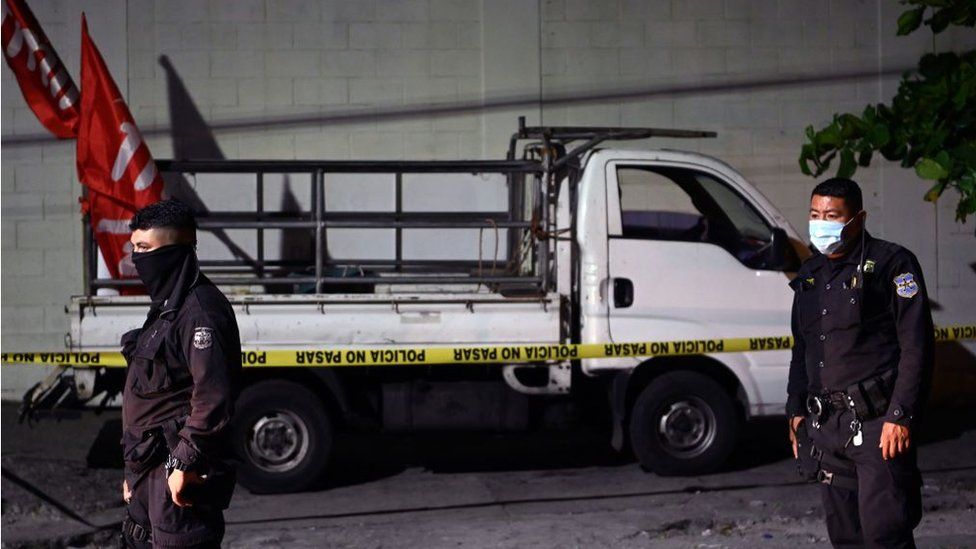
Nidia Díaz, a FMLN lawmaker, said she saw the car with the attackers block the path of an open-backed lorry carrying party supporters. “A man got out with a gun in his hand and started shooting,” she tweeted.

Police guard a truck that carried supporters of the political party Farabundo Marti Front (FMLN)image copyrightGetty Images
image captionThe FMLN supporters were returning from a campaign rally

El Salvador’s Attorney General, Raúl Melara, called the attack “serious”, saying: “The electoral battle cannot become a bloodbath”.

In a reference to the country’s civil war, San Salvador’s mayor, Neto Muyshondt, also condemned the attack, calling it a “step back” in El Salvador’s history.

According to a 1993 United Nations Truth Commission report, 80,000 people were killed in the conflict, which lasted from 1979 until a peace deal was signed in 1992.

The FMLN party was formed by left-wing rebels as part of the peace deal and quickly became an influential force.

It won the 2014 presidential election and its candidate, Salvador Sánchez Ceren, served as president until 2019.

In the most recent presidential election, however, the FMLN’s candidate lost out to Nayib Bukele of the centre-right Gana party.

Some FMLN politicians have accused President Bukele of inciting violence against their party and of “threatening anyone who doesn’t agree with him”.

Mr Bukele tweeted that all those responsible for the attack would “pay for their acts”.]

=======================================

Humanitarian Medical Group Suspends El Salvador Service Over Violence

SAN SALVADOR, El Salvador (AP) — Doctors Without Borders suspended its work in El Salvador on Sunday after one of its ambulances was waylaid on the outskirts of San Salvador.

Armed men forced the crew of the ambulance to stop and get out of the vehicle in a gang-dominated neighborhood in the township of Ilopango, the humanitarian group said.

It said the crew members were interrogated and roughed up, and threatened with guns, before they managed to leave the area. A doctor and a nurse suffered light injuries.

The group said it would not continue to take emergency calls unless the safety of its personnel was guaranteed. The group, also known as Medicos Sin Fronteras, said the incident was the first such attack since it started working in El Salvador in 2018.

The post El Salvador: 2 Killed at Campaign Rally Attack, Doctor Group Quits Over Violence appeared first on The St Kitts Nevis Observer.

'Looks like a nuclear bomb': Bushfire victims confront devastation

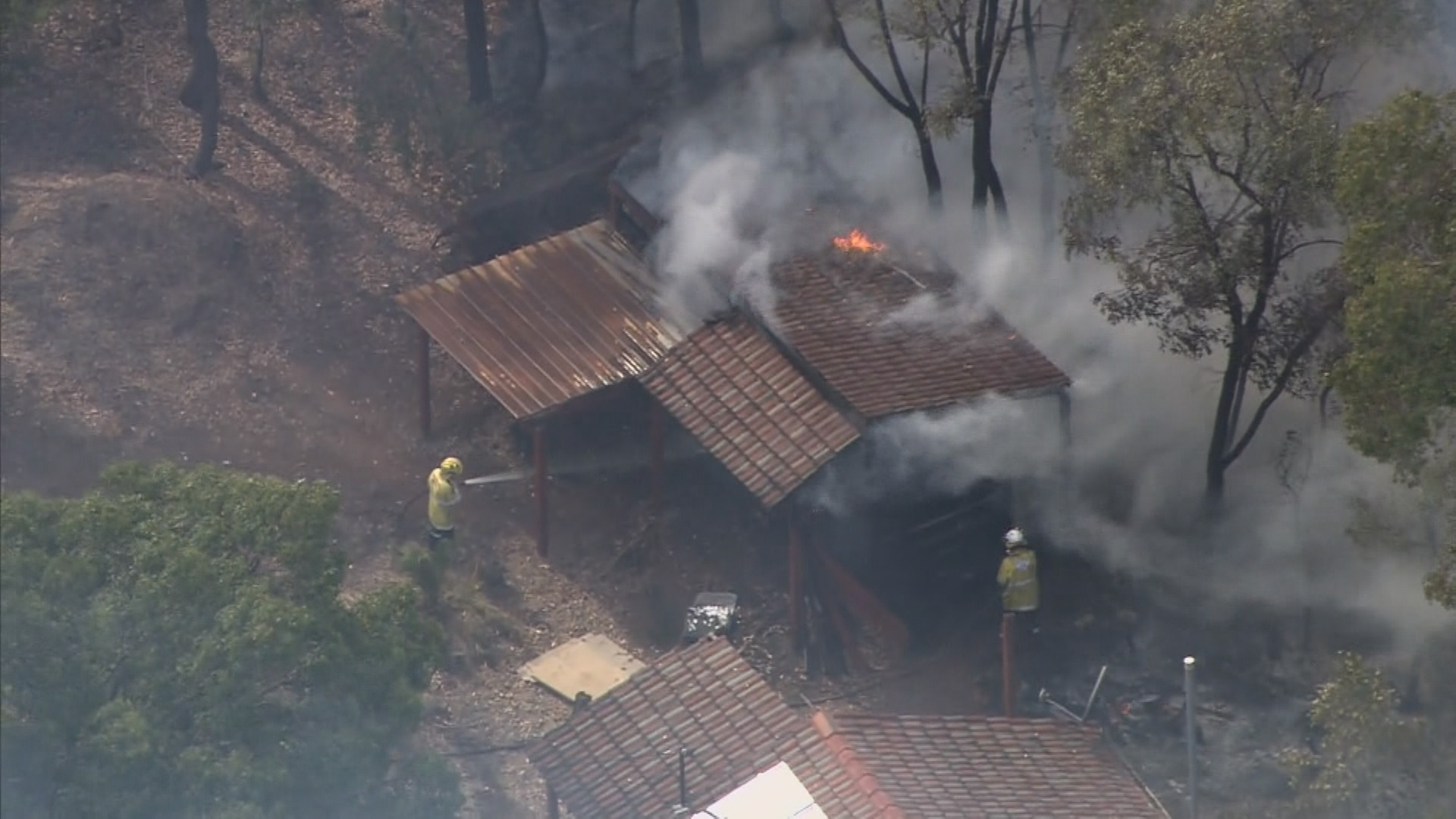
Shattered victims of the bushfire raging around Perth have told of their devastation after their homes were destroyed.

At least 59 homes have been confirmed to have been destroyed by the Wooroloo bushfire north-east of the capital.

Mother-of-four Elaine Palfrey watched her Wooroloo home burn, just three months after the family moved into their dream rural retreat.

READ MORE: Dozens of homes lost in Wooroloo bushfire

"When we saw that footage, we knew everything was lost," she said.

The family was forced to flee, grabbing what they could, lacking time even to find their cat.

"It's just so devastating," Ms Palfrey said.

"Our home is gone — that feeling of not knowing where to live at this point is very devastating."

Darren Stoneman was caught outside a roadblock on Toodjay Road while getting fuel this morning.

READ MORE: Hair-raising video shows firefighters driving through smoke of WA bushfire

For now his car is his home, and he's waiting to see what's left of where he lived.

"We're hoping that everything stays as it is and we can get in as soon as possible," he said.

Jo Murphy's house in Gidgegannup was somehow saved as the blaze passed over it, but she suffered her own losses.

Despite getting out with her four dogs, her chickens and pet cat couldn't be saved.

"The scenes are just like a nuclear bomb has gone off, there's power lines all over the roads," she said.

"Unfortunately a number of our neighbours weren't as lucky as we were, they've lost their homes, it's just terrible."

Hundreds of firefighters are still on the ground, with the battle expected to continue into the night.

Up to 8000 hectares have been burned.

Tributes Paid to UK’s 1st Black Head Teacher, Dies at 81

Yvonne Conolly

TRIBUTES were paid this week to the country’s first woman black headteacher who moved to Camden from Jamaica with just £36 ($50) in her pocket.

Yvonne Conolly, who has died aged 81 following a long battle with myeloma, had to be accompanied by a “minder” on the day she took over Ring Cross primary school, Islington, in 1968.

“All hell broke loose” with “all sorts of nasty” racist abuse, she had recalled in a wide-ranging interview with the New Journal last year.

But she had also said that before taking the top job at Ring Cross, she had enjoyed five happy years as a teacher at George Eliot School, Swiss Cottage.

Living in 12 Canfield Gardens, near Finchley Road tube, her first impressions of the country she would call home were of her street’s “tall distinctive red brick buildings” and how she was left “gawking in amazement at the high ceilings in the flat as this was an unusual feature in residential buildings in Jamaica”.


SEE ALSO UK’S FIRST BLACK FEMALE HEADTEACHER: ‘I HAD TO HAVE A MINDER WITH ME ON MY FIRST DAY IN THE JOB’


A pioneer of the Windrush generation, she had come to London with an expat teacher friend called Elizabeth Heybeard on what at the time was described as a “banana boat”.

“I was also aware of the tube trains passing at the back of the building. John Barnes the department store was smack opposite, and it was there that Elizabeth encouraged me to get a store card….. now the John Lewis Partnership Card.

“The flat was rented, and on the ground floor. I was given the smallest room for which I paid £6 per month /week. I think of this period of my life in London as one of much joy.”

On top of her teaching, she had taken a job as a baby sitter, cleaner and typist.

“I can now clearly remember a curious typing job with an eccentric archaeologist who translated a script from Hebrew to English at a furiously fast pace, with me barely able to keep up,” she said.

“I was also completely unprepared for the effect that Jewish religious holidays would have on children’s attendance at George Eliot, and on me. Nearly half my class would be absent on those days. I remember seeing the children and their families as they slowly walked along the road between St John’s Wood and Swiss Cottage at Passover, in what seemed a solemn procession.

“Parents were usually dressed in black on that occasion in those days. That led me to read about the Second World War with more rigour and intensity than I would otherwise have done.”

She added: “I have a special memory of the Swiss Cottage pub. It was there that the District Inspector of schools in Islington took me for lunch to celebrate my appointment to the headship of Ring Cross school. The daughter of the landlord then, Alison Pickup, was in my class at George Eliot.”

After accepting the job at Ring Cross in December 1968, Ms Conolly was subjected to repeated attacks in national newspapers and would receive hate mail at home.

She had said: “It was on that basis that I decided to create the Caribbean Teachers Association. I realised at the time there were not many black teachers in the system, and if there were, they weren’t being promoted. We sat down and looked at strategies, how you write an application, and do interviews.”

Ms Conolly, who lived in Finsbury Park, was in October awarded the 2020 Honorary Fellow of Education award at The Naz Legacy Foundation by Prince Charles, who described her as “a pioneer of the Windrush generation must be cherished by us all”, adding: “I cannot begin to imagine the character and determination she must have shown to lead the way for black educators 50 years ago.” She was made a CBE in the new year’s honours list.

Ms Conolly had backed las year’s campaign for Beckford Primary School to be named after its former headteacher Beryl Gilroy.

The school had agreed to change its name – after a major Jamaica sugar plantation slave owner William Beckford – following the Black Lives Matter protests.

But a vote of parents and pupils saw the West Hampstead School be chosen instead.

On the concept of changing buildings names, Ms Conolly had said: “I have a theory that you are never ever going to get rid of racism completely. We are not going to get rid of burglary, or fraud. Let’s not kid ourselves. Wherever human beings go, there will be some discrimination, prejudices and lack of empathy.

“I remember when one school inspector asked me whether they could touch my hair. And I remember people looking at me washing my hands, thinking the water would run brown. Were they being racist, or just ignorant?”

She said racism “used to be crass – ‘no dogs, no Irish, no blacks’”, adding: “Now it is very different, more subtle. That’s why institutions have to question themselves at every point. They need to think about how fair they are really being.”

The post Tributes Paid to UK’s 1st Black Head Teacher, Dies at 81 appeared first on The St Kitts Nevis Observer.
Myanmar Coup: Govt. Leaders Confined by Military, US Sanction Threat

Hundreds of lawmakers from Myanmar’s Parliament are still confined inside government housing in the country’s capital, a day after the military staged a coup and detained senior politicians including Nobel laureate and de facto government leader Aung San Suu Kyi.

The takeover came the morning that lawmakers from all of the country had gathered in the capital for the opening of the new parliamentary session and followed days of worry that a coup was coming.

One lawmakers told the AP that he and about 400 parliament members were able to speak with each another inside the compound and communicate with their constituencies by phone, but were not allowed to leave. The lawmaker spoke on condition of anonymity out of concern for his safety.

Military Junta Back in Charge: The man installed by army leaders as Myanmar’s new president is best known for his role in the crackdown on 2007 pro-democracy protests. Myint Swe was the army-appointed vice president who was elevated after the military arrested civilian leaders and declared a one-year state of emergency. But while Myint Swe is president, the real power lies with the country’s top military commander, Senior Gen. Min Aung Hlaing. He has been commander of the armed forces since 2011 and is due to retire soon, clearing the way for him to take a civilian leadership role if the junta holds an election as promised, Elaine Kurtenbach and Victoria Milko report.

U.S. Sanctions: President Joe Biden threatened new sanctions on Myanmar, calling the coup a “direct assault on the country’s transition to democracy and rule of law.” Myanmar has been a Western democracy promotion project for decades and had been a symbol of some success. But over the past several years, there have been growing concerns about its backsliding into authoritarianism. Global opprobrium toward Suu Kyi has been acute over her resistance to rein in or condemn brutal massacres and the forced exodus of Rohingya Muslims by the Burmese army. Matthew Lee reports.

The post Myanmar Coup: Govt. Leaders Confined by Military, US Sanction Threat appeared first on The St Kitts Nevis Observer.

England: Mass Door-to-Door Testing for New COVID Variant

Drive-in Covid testing outside Twickenham stadium. Photograph: Amer Ghazzal/REX/Shutterstock

Tens of thousands of people will be tested in a door-to-door “two-week sprint” to halt the spread of the South African coronavirus variant as cases were found across England.

Squads of health officials, firefighters and volunteers have been established to deliver and collect PCR test kits door-to-door and mobile testing units will be sent to each area. Wastewater could also be tested to determined the prevalence of the strain.

The new South Africa variant, which is more transmissible than the original virus, appears to show a slightly “diminished” response to vaccines, and may eventually require a booster shot, Public Health England (PHE) said.

The health secretary, Matt Hancock, said that cases indicating community transmission were discovered in eight areas from Surrey in the south of England to Sefton in Merseyside.

Labour said the “deeply worrying” news bolstered the argument for closing UK borders and enforcing hotel quarantine for all new arrivals.

Hancock ordered testing of around 80,000 residents in postcode areas where cases were found which did not originate from travel. He said the goal was to “stop the spread altogether of these new variants” and “bring this virus to heel”.

“If you live in one of these postcodes where we are sending in enhanced testing then it is imperative that you stay at home and you get a test even if you don’t have symptoms,” Hancock told a Downing Street press conference. “This is so important so that we can break the chains of transmission of this new variant.” He said it was “a stark reminder that the fight against this virus isn’t over yet”.

There is no firm research on the efficacy of the AstraZeneca vaccine against the variant, though laboratory research is under way, said Dr Susan Hopkins, PHE’s Covid strategic response director.

A briefing document on the response seen by the Guardian described the plan as “a two-week sprint” and said Hancock “has ordered an attempt at eradication of the new variant if at all possible”.

Eleven cases unconnected to travel were found in eight postcode areas, health officials announced. They are W7 in Ealing, N17 in Haringey, CR4 in Merton, WS2 in Walsall, ME15 in Kent, EN10 in Hertfordshire, GU21 in Surrey and PR9 in Merseyside and Lancashire.

They emerged from routine genomic screening of around 5% of positive PCR test results dating back to 18 December. Consequently they are likely to be just a fraction of the actual community transmission. Some 94 cases of the virus linked to travel from South Africa have also been identified.

Hopkins said that with the R value now under 1 “we can reduce these cases of the new variant”. But other scientists warned it may be too late to eliminate it. Prof Rowland Kao, chair of veterinary epidemiology and data science at the University of Edinburgh, said: “It is probable that it’s quite widespread if [we are] already seeing community cases across eight authorities. The surge testing will be more about slowing it down, than any absolute expectation that it will get rid of it.”

Success partially depends on the public complying with test requests and Gabriel Scally, visiting professor of public health at the University of Bristol, said: “This process is extraordinarily intensive and probably won’t succeed.”

The shadow home secretary, Nick Thomas-Symonds, described the developments as “deeply worrying”. “It shows the UK government’s quarantine system is not working with the country being exposed to dangerous strains of the virus and new cases now appearing,” he said. “While door-to-door testing is welcome … how can the home secretary justify keeping our borders open to Covid, allowing around 21,000 people to arrive every day?”

Direct flights from South Africa to the UK were banned from Christmas Eve but a plan for forced hotel quarantine, announced in January, has yet to be launched.

The briefing document on the “surge-testing” plan states: “There is now no evidence that this variant causes more severe illness, or that the regulated vaccine would not protect against it. Virus variation and mutation occurs naturally. The more we suppress new variants the more we will avoid variants which cause problems for treatment or vaccination.”

But one public health official questioned the approach of using postcode areas “because it assumes infected people don’t have contact with others outside the postcode”. They described the approach as “experimental” but said it could help develop a template for responding to future mutations of the virus.

Ruth Hutchinson, director of public health for Surrey, said door-to-door testing was “a precautionary measure – the more cases of the variant we find, the better chance we have at stopping it from spreading further”. “It’s really important to say that there is now no evidence that this variant causes more severe illness, so you don’t need to worry,” she said.

Door-to-door testing is set to start in Hertfordshire on Thursday. It has previously been used by authorities in high-infection areas such as the London borough of Redbridge, Leicester and Oldham.

Dr Alison Barnett, a regional director at PHE South East, said: “The most important thing is that people continue to follow the guidance that is in place: limit your number of contacts, wash your hands regularly and thoroughly, keep your distance and cover your face. If you test positive by any method, you must isolate to stop the spread of the virus.”

This article was amended on 2 February 2021. Sefton is in Merseyside, not Lancashire as stated in an earlier version.

The post England: Mass Door-to-Door Testing for New COVID Variant appeared first on The St Kitts Nevis Observer.

'Porn King' gives evidence in ex-employee's $787k fraud case

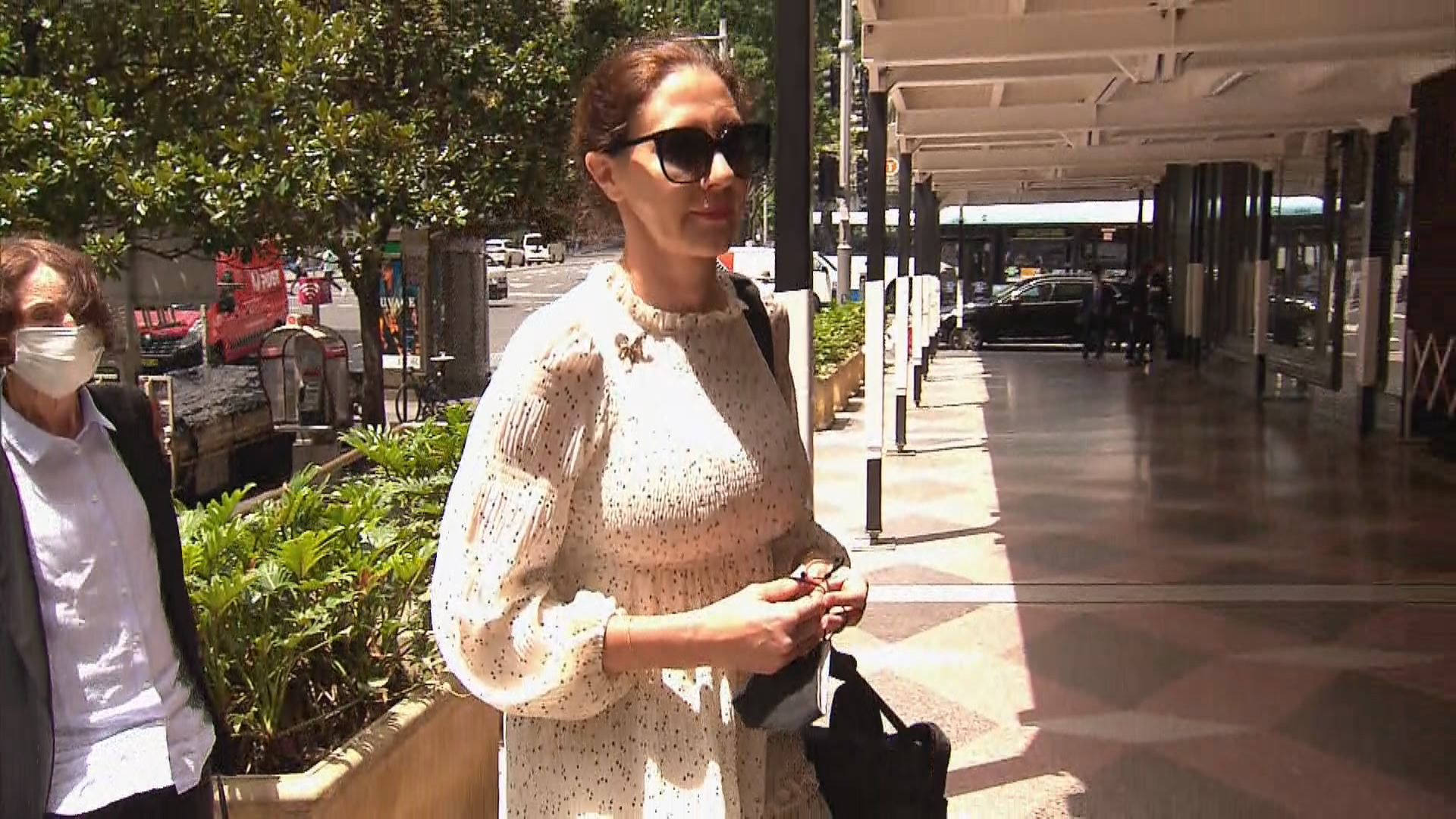
Con Ange, known as the Porn King, has denied he instructed a former employee to transfer pay into her husband's and daughter's accounts to avoid paying tax. 

Neva Lozzi, 44, is accused of stealing more than $787,000 from Mr Ange's Sydney adult store business while in control of the company's finances from 2015 to 2020. 

She's alleged to have siphoned the funds from Ange Con Group into other accounts to pay for her lavish wedding, holidays, her children's private school fees and the rent of her $1100-a-week Point Piper apartment.

Mr Ange claims Ms Lozzi took advantage of his absence from the business while he was seeking treatment for motor neurone disease. 

"I employed her as a trusted employee. I thought I could trust her. My concerns were my health," Mr Ange told Magistrate Brett Shields. 

Sitting in the witness box, Mr Ange, who no longer has use of his hands, needed assistance putting on his glasses and turning the page of documents presented to him.

When questioned by Ms Lozzi's barrister, Frank Coyne, as to why he didn't notice the payments, Mr Ange replied, "I was too busy trying to stay alive".

From February 2016 to 2020, Ms Lozzi is also alleged to have transferred more than $140,000 into the bank account of her husband, real estate agent Jonathan Dorrell, and from 2019, money was also transferred into her young daughter's bank account, disguised under another employee's name. 

There is no suggestion Mr Dorrell was aware of the origin of the funds. 

When Mr Coyne asked Mr Ange, if he told Ms Lozzi to make the payments to her children, he denied it. 

"That's why I hired Neva, to pay my staff, do the tax, do the right thing. She told me she had a tax law degree," he told the court. 

He also denied the payments were part of her remuneration package. 

The business relationship soured early last year, when Mr Ange claims he uncovered the alleged fraud and went to the police. 

The hearing continues tomorrow.