Category Archives: headline

Nevis COVID-19 Task Force commended for vigilance, proper quarantine accommodations

Hon. Mark Brantley, Premier of Nevis and Minister of Health and Tourism in the Nevis Island Administration.

CHARLESTOWN, Nevis — Nevis Premier Hon. Mark Brantley has commended the Nevis COVID-19 Task Force for its efficiency in keeping Nevis a COVID safe destination.

During a January 28 press meeting, the Premier who is also the Minister of Health and Tourism in the Nevis Island Administration commended the efforts of the Task Force, especially in regard to ensuring quarantine procedures and accommodations are kept at a high standard.
Continue reading Nevis COVID-19 Task Force commended for vigilance, proper quarantine accommodations

Dog stuck under Melbourne tram leads to owner's arrest

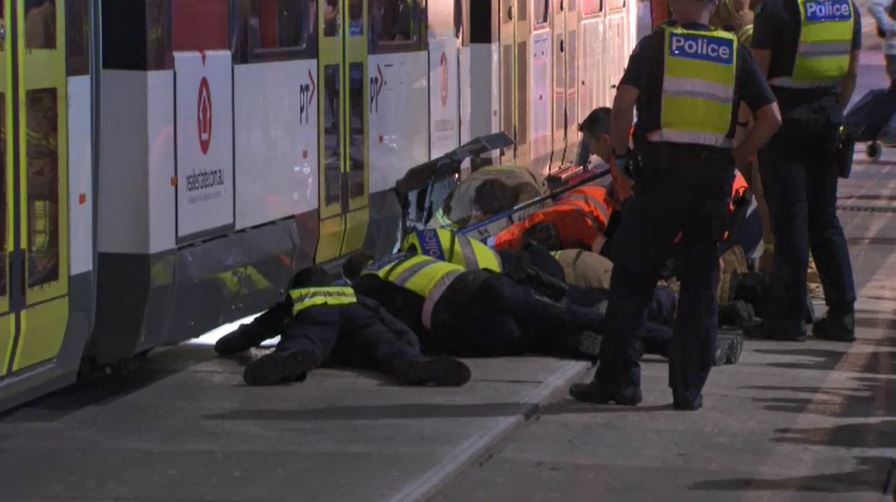
A dog rescued after becoming stuck under a tram in Melbourne's CBD overnight has led to his owner's arrest.

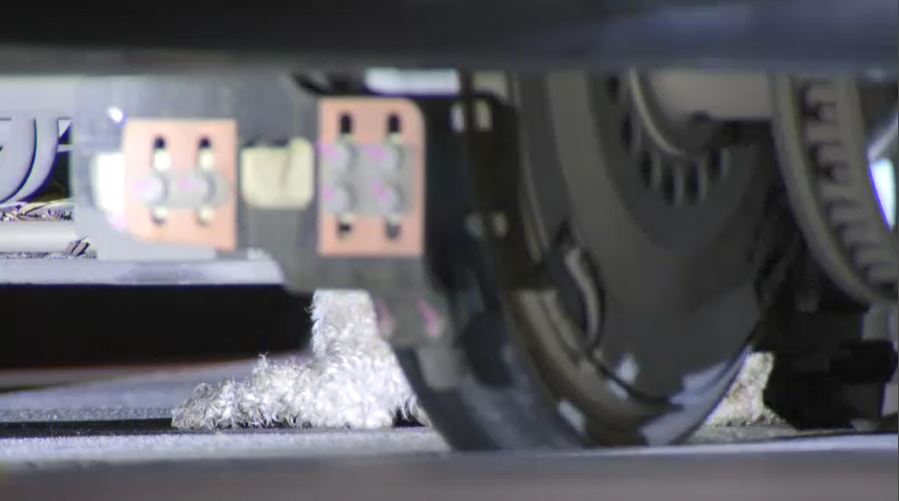
Firefighters, police and tram staff spent more than an hour trying to pull the small white dog out from underneath the tram at the corner of Swanston and Bourke Streets about 8.50pm.

A Fire Rescue Victoria (FRV) spokeswoman said the dog ran under the tram when it pulled up to the intersection.

READ MORE: Dog tumbles out of moving car window

Bystanders cheered when the dog was safely freed and handed into the care of an animal ranger just before 10pm.

"Firefighters worked with Victoria Police and the ranger to coax the dog out from under the tram," the FRV spokeswoman said.

"There were initial concerns the dog was injured, however thankfully it was unharmed."

Police then arrested the dog's owner after realising there was an outstanding warrant for his arrest.

"A man at the scene was arrested in relation to a separate ongoing investigation," Victoria Police said in a statement.

NEVIS Water Department to collect Solid Waste Levy in May

CHARLESTOWN, Nevis — The Solid Waste Levy will no longer be collected by the Nevis Electricity Company Limited (NEVLEC) as of May 2021.

Hon. Mark Brantley, Premier of Nevis, who is also the Minister of Finance and the Minister responsible for Public Utilities in the Nevis Island Administration (NIA) made the announcement at his monthly press conference on January 28.

“The Nevis Water Department [NWD] will be collecting the Solid Waste Levy on behalf of the Nevis Island Administration instead of the Nevis Electricity Company Limited during the second quarter of 2021,” said Hon. Brantley. “The necessary legislative changes, regulations, policies etc. will be put in place.”

Brantley used the opportunity to announce that due to health concerns, the NWD offices will relocate elsewhere in Charlestown.

“The Nevis Water Department will be relocating their offices soon to better serve the public and to avoid a potential rising health issue with the presence of mold at their old office,” said Brantley. “The offices, including the billing section, will be in the Solomon Arcade located opposite the War Memorial in the heart of Charlestown.”

NWD’s disconnection programme will be implemented on March 1, for non-payment, the Premier sought the public’s cooperation.

“The Water Department is asking all people, entities and businesses that are in arrears to settle all outstanding debts with the Nevis Water Department as soon as possible,” he said. “The department will implement a disconnection programme due to non-payment starting March 1.

“You’re given, I believe, ample time,” said Brantley. “Your full cooperation and understanding will be greatly appreciated as we seek to improve the services to the general public.”

Brantley explained the department decided to embark on the disconnection programme because of the vast amount of outstanding bills owed.

“Now why are we engaging in this?” asked Brantley. “The numbers are simply staggering; the numbers are staggering and the kind of people and businesses on the list for not paying for water will make even the hardest heart cry.

“I believe that all of us must play our part, said Brantley. “It cannot be fair that the single mother who is currently unemployed is trying to find a little money each month to pay for water and big companies and wealthy people in the community are refusing to pay. The same is true of electricity.”

The Premier added that it appears there are some persons in the community who are refusing to settle their bills.

“There seems to be a cadre of people in the community who feel that these things ought to be free for them … but the minute that water goes off … are off to the media, social media.

“They abuse everybody because there’s no water in the pipes but somehow, we seem to forget that the staff has to be paid; that the generation of water to bring it to your homes cost money, and that water is currently a heavily subsidised commodity,” said Brantley. “They say water is life but is one of the cheapest commodities that is available.”

Brantley said the time had come for people to be responsible citizens. He added that the Nevis Island Administration is not seeking to put any additional burden or hardship on the people of Nevis. He urged persons to make the necessary payments on their outstanding bills.

“We understand the situation, but I go back to my analogy, it is unfair for the single mother, the struggling father, the old grandmother to have to find the resources to get water and electricity while persons who we know can pay, business that we know can pay refuse,” explained Brantley. “We are getting serious, and I’m making the announcement openly that persons can go in, do the right thing, and if you cannot pay all that is okay.

“Go in and make an arrangement but at least demonstrate you are a responsible citizen, and that you understand that we cannot run these departments on air or ether,” he concluded. “We need those who are consuming to pay for what they consume, and so we encourage you to do the right thing.”

The post NEVIS Water Department to collect Solid Waste Levy in May appeared first on The St Kitts Nevis Observer.

The Americas surpass one million deaths from COVID-19

WASHINGTON, D.C. — “Today marks another tragic milestone in our region: over one million people in the Americas have now died from complications of COVID-19. We’ve lost more people to this virus than the entire population of many cities,” said Pan American Health Organization Director Carissa F. Etienne.

Speaking at a press briefing, said Etienne, “The weight of this loss is incalculable,” noting that over 44 million people in the Americas have now been infected with COVID-19, including more than two million in the last week.

“One million people with hopes, dreams and a future cut short. One million mourning families – many unable to say goodbye – who will feel their absence forever. The scars and the lessons of this pandemic will stay with us,” said Etienne.

The COVID-19 pandemic “has brought a triple crisis throughout our region as it has ravaged our health systems, fractured our social protection, and destabilized our economies. The loss of one million people from this virus should serve as an urgent call that we must do more to protect ourselves and each other from getting sick. This includes strong calls to action to reinforce the public health measures that are needed now in each of the places that are seeing outbreaks,” said Etienne.

Calling health workers in the region “our heroes who have cared for every patient that has been hospitalized for this virus,” she said, “Many have risked their own lives and those of their families to care for those who are sick, and their heroic efforts have saved many COVID patients.”

Etienne added, “Although there’s limited data, we know that more than a million health workers in our region have become sick with COVID-19 and at least 4,000 – most of them women – have died as a result, affecting our ability to respond to this public health threat. Each of these people has a face, a name and story.”

She recognized one of the many health workers as an example of those lost, Dr Rosemary Costa Pinto, who headed the leading public health agency in the Brazilian state of Amazonas. “Today, we celebrate her life and we thank the millions of health workers still on the front lines of this virus, who are saving lives every day. Their countless sacrifices will not be forgotten,” said Etienne.

Etienne outlined the course of the pandemic in North America, with the highest number of cases and growing pressure on hospital capacity, and in the Caribbean, where some smaller countries are seeing a rapid acceleration of cases.

“By contrast, most countries in Central America, except for Honduras and Guatemala, are seeing a decrease in COVID-19 infections over the previous week,” said Etienne. “In South America, while hospitalizations are on the rise throughout much of the region, including in Colombia, Chile and Peru, the situation in Brazil is particularly worrisome.”

The pandemic of COVID-19 “has ushered in a mental health crisis, as we’ve been shaken by fear, depression, isolation, and loss that is made especially acute as we mark this grim milestone, Etienne said, noting that 29 countries have reported disruptions in mental health services.

Etienne also highlighted the economic impact of the pandemic, “Today, 16 million more people are living in poverty, compared to when the pandemic started and millions of others are at risk of falling deeper into poverty in the wake of this virus.” Rising food prices also place millions of people at risk of going hungry.”

As COVID vaccines are rolled out over the coming months, we need health systems to track vaccinations and prioritize those most at risk of severe illness, like the elderly and our health workers so we can reduce demand on our hospitals.

“We owe a great debt to our front line health workers, so I’ve been pleased to see that in countries where vaccinations are underway, doses are being prioritized for health workers, with similar plans across other countries that will roll out vaccines soon.

Broad access to vaccines represents our way out of this pandemic, but while supplies are limited, we need to focus on preventing new infections now to keep the virus under control,” said Etienne.

The post The Americas surpass one million deaths from COVID-19 appeared first on The St Kitts Nevis Observer.

Three variants of the COVID-19 virus found in 14 countries in the Americas

WASHINGTON, D.C. — Three new variants of the SARS-CoV-2 virus, which are raising concerns about possible heightened spread and severity of COVID-19, have been detected in 14 countries in the Americas, the Pan American Health Organization (PAHO) reported in a new Epidemiological Update.

“Mutations are an expected part of the spread of any virus,” said PAHO Incident Manager Sylvain Aldighieri. “That’s why we’re asking national and local authorities to continue to strengthen existing disease control activities, including monitoring COVID-19 closely. We need epidemiological surveillance, including expanding regional genomics surveillance, outbreak investigation, and contact tracing. Where appropriate, we need to adjust public health and social measures to reduce transmission.”

The PAHO update notes, “It has recently been documented that people infected with the VOC 202012/01 variant have a higher risk of death than people infected with other variants. Preliminary studies suggest that the 501Y.V2 variant is associated with a higher viral load, which could suggest a potential for greater transmissibility.”

Referring to the two variants detected in the United Kingdom and South Africa, Aldighieri said that so far, they do not appear to have generated community transmission in the region of the Americas. So far, cases appear to be limited to people travelling from the two countries or connected to people traveling from those countries.

The third variant, detected in the state of Amazonas, Brazil, is most prevalent locally and researchers have recently suggested a causal link with the increase observed during the last weeks in hospitalization in Manaus. “But it’s still early to conclude on the strength of the association between the emergence of the variant and the recent dynamics of transmission,” Aldighieri said.

Hitting a grim milestone, the number of deaths in the Americas due to COVID-19 reached 1,015,534 on Jan 26. The number of people infected with the disease in 56 countries and territories within the Americas reached 44,197,482.

During a recent press briefing, PAHO Director Carissa F. Etienne said, “The loss of one million people from this virus should serve as an urgent call that we must do more to protect ourselves and each other from getting sick. This includes strong calls to action to reinforce the public health measures that are needed now in each of the places that are seeing outbreaks.”

The post Three variants of the COVID-19 virus found in 14 countries in the Americas appeared first on The St Kitts Nevis Observer.
New variants, acceleration of virus makes continuing public health measures urgent

WASHINGTON, D.C. — The appearance of new variants of the COVID-19 virus in several countries of the Americas, combined with an acceleration in the virus’s spread in virtually every country in the Americas, makes it urgent to continue public health measures such as social distancing, wearing masks, and washing hands often, said Pan American Health Organization Director Carisa F. Etienne.

Our collective ability to keep up with these measures has the power to determine the trajectory of this year. If we remain diligent, we have the power to control this virus; if we relax, make no mistake: 2021 could well be far worse than 2020.”

“Since the start of this pandemic, over 39 million people across the Americas have become infected by COVID-19 and over 925,000 of them have succumbed to the virus,” said Dr. Etienne. “In the last week alone, 2.5 million people were infected with COVID-19 in our region – the highest weekly cases since the virus first reached our shores.”

PAHO’s genomics surveillance network of 21 laboratories has been tracking the spread of the virus and mutations, she highlighted, and the variant first seen circulating in the UK has now been reported in eight countries: Brazil, Canada, Chile, Ecuador, Jamaica, Mexico, Peru, and the USA. In addition, Brazil and Canada have reported seeing another variant that was first reported in South Africa.

“At this time, there is no evidence to suggest that these variants affect patients differently, but early data does suggest that the virus can spread more easily, accelerating the threat to our health systems at a time in which they are already close to capacity,” said Dr. Etienne.

One vaccine has been approved by WHO and more are underway. Some countries in the region have started vaccinating health workers and vulnerable groups, but “as long as doses remain limited, we can’t rely on vaccinations to flatten the pandemic curve,” she said.

PAHO’s priorities in 2021 include ensuring equitable access to protective equipment for health workers, medications and hospital care when required, and vaccines, Etienne said.

“With the arrival of vaccines, we must ensure not just that doses are produced quickly, but that they’re equitably delivered and swiftly across every country – regardless of income. This will require global and regional collaboration and solidarity, with donors pitching in resources through mechanisms like the COVAX Facility,” said Dr. Etienne.

PAHO is working with all countries in the Americas to help secure the vaccine doses countries need to protect their populations.

“We’re also providing support with vaccine demand planning, logistics, and cold chain management, surveillance and information system strengthening, health worker training, and vaccine communication planning, among others,” said Dr. Etienne. “Luckily, our region has a strong legacy of immunization, noting that through PAHO’s Revolving Fund, “Member States pool their national resources to procure vaccines and related products at the lowest price. COVID will be a challenge, but one I believe that we can meet by working together.”

“In the year ahead, political leaders “will face difficult choices as we work to flatten the transmission curve,”. And that’s why we need leaders to act transparently so that the public understands their decisions, and the scientific evidence that is behind those decisions, so we can rally people around a shared plan,” the PAHO Director said.

The post New variants, acceleration of virus makes continuing public health measures urgent appeared first on The St Kitts Nevis Observer.