A stalker who harassed a recruitment agent using YouTube, voicemails and text messages has been ordered to get help.Manukau District Court today heard the middle-aged man was seeking work when he met the agent and became obsessed…
Category Archives: headline
Covid 19 coronavirus: Two more cases linked to Pullman Hotel being investigated by health officials
Two more people in the community who recently left managed isolation have tested positive for Covid-19 and health officials are now urgently re-testing them.The Ministry of Health said this evening that two other people who completed…
Aussies fear becoming victims to cyber criminals
Exclusive: Two-thirds of Australians say they are worried about becoming the victim of a cyber attack after spending vastly more time online since the beginning of the COVID-19 pandemic.
New findings from McAfee's 2021 Consumer Security Mindset Report found most Australians fear their financial data could be stolen while 65 per cent were concerned their social media accounts could be hacked.
The report, which profiled the views of 1000 Australian adults, found older citizens were the most worried about having their banking details hacked, but were also the most disciplined in online hygiene compared to younger Australians.
READ MORE: Australia's financial watchdog ASIC hit by cyber attack
During the worst of the pandemic – when traditional face-to-face services such as banking were muted – almost half of 55- to 74-year-olds surveyed said they started using digital tools for the first time.
Concerningly, an overwhelming majority of respondents said they had "never" considered how much their online data would be worth to a cyber criminal.
Terry Hicks, EVP of McAfee's Consumer Business, told 9news.com.au avoiding criminals online was about creating habits that made clicking dodgy links or shopping on suspicious sites less likely.
READ MORE: Aussies targeted with COVID-19 scams in 2020
"The first step in protecting ourselves is realising that there's a lot we can do to stay safe online and to preserve our digital wellness," Mr Hicks said.
"It's better to prevent a problem then be in a position of having to fix it. We can always work on our own safe online habits – from the apps we install, to the websites we click on, to the emails we open.
"Making this shift in our mindset and behaviours is a necessity in protecting what we value most- our privacy and identity- giving us all much needed peace of mind."
READ MORE: Data leak exposes information from more than 214 million accounts
Data from Scamwatch, Australia's regulator-run cybercrime tracker, shows that in 2020 alone Australians lost more than $176 million to online scams.
Even more frightening is that these are only the reported losses, with many victims unlikely to come forward due to embarrassment or lack of knowledge that they were swindled.
According to Scamwatch, if you think you've sent money or shared confidential details with a scammer, it's best to call your bank as soon as possible.
READ MORE: New anti-troll bill a 'world first' in Australia
"If you've sent money or shared your banking details with a scammer, contact your financial institution immediately," Scamwatch advises.
"They may be able to stop a transaction, or close your account if the scammer has your account details.
"Your credit card provider may be able to perform a 'charge back' (reverse the transaction) if your credit card was billed fraudulently."
The information provided on this website is general in nature only and does not constitute personal financial advice. The information has been prepared without taking into account your personal objectives, financial situation or needs. Before acting on any information on this website you should consider the appropriateness of the information having regard to your objectives, financial situation and needs.
America's billionaires have grown $1.1 trillion richer during the pandemic
Billionaires are minting money during the pandemic, even as millions of Americans join the ranks of the poor.
US billionaires have collectively become $1.1 trillion – nearly 40 per cent – richer since mid-March, according to a report published Tuesday by progressive groups Institute for Policy Studies and Americans for Tax Fairness.
LIVE UPDATES: NSW to ease COVID-19 restrictions on Friday
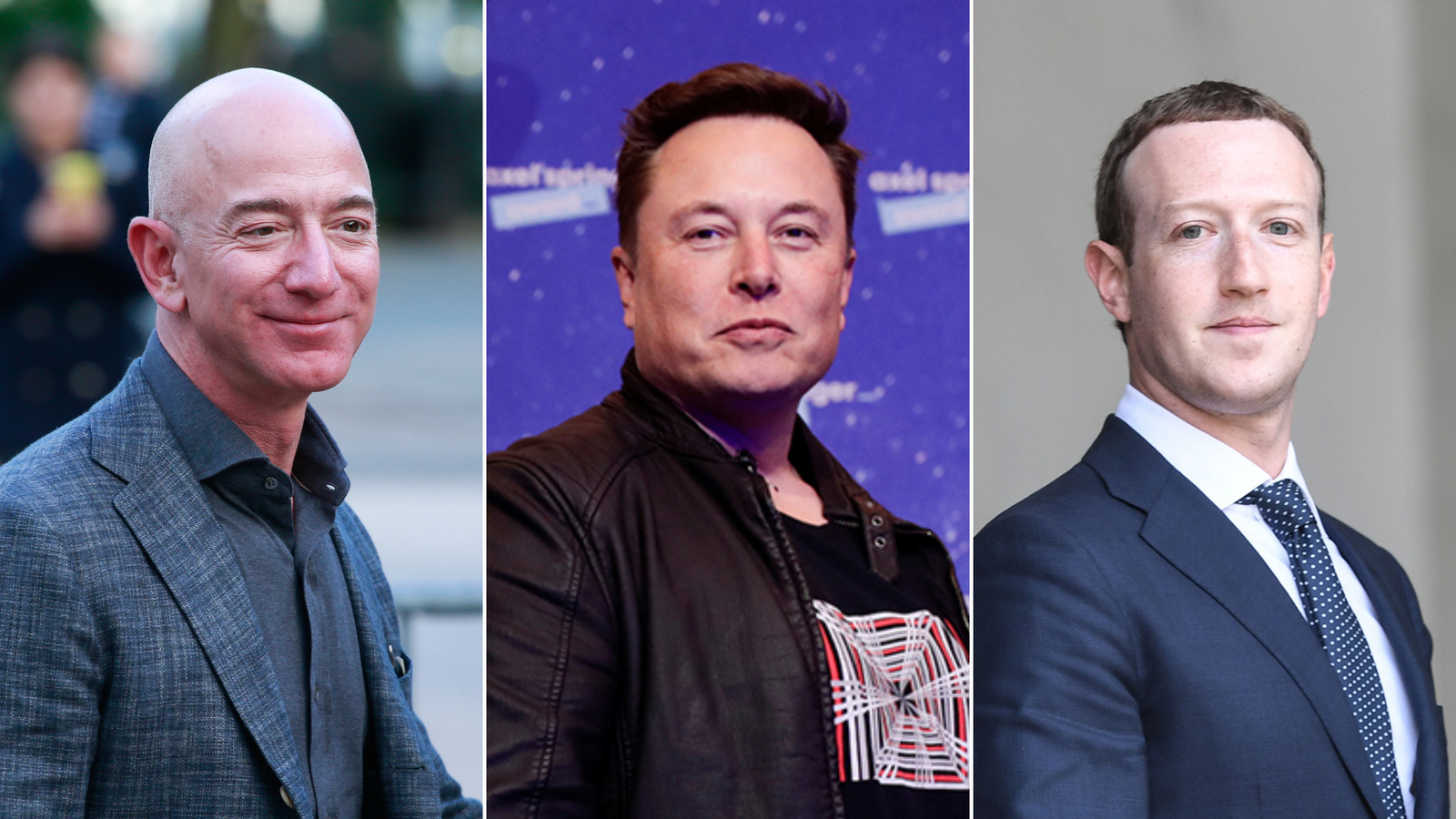
In other words, not only have the uber-wealthy recovered their losses from the spring, many are faring much better than before.
That's in large part because of the sizzling stock market.
Elon Musk alone is about $155 billion (about $200.1 billion AUD) richer, boosted by Tesla's skyrocketing market valuation.
Forty-six people joined the ranks of billionaires since March 18, 2020, the week after the World Health Organisation declared a global pandemic, according to the report.
READ ALSO: Australia's financial watchdog ASIC hit by cyber attack
Clearly, the pandemic is worsening America's already troubling inequality crisis.
The staggering gains at the top contrast sharply with the financial struggles of those at the bottom, many of whom are on the front lines of the pandemic and have lost their jobs or had wages cut.
America's 660 billionaires now hold $4.1 trillion (about $5.2 trillion AUD) in wealth – two thirds more than the amount held by the bottom 50 per cent of the US population, the report found.
Poverty rate climbs sharply
More than eight million Americans fell into poverty during the final six months of 2020, according to real-time estimates published by economists at the University of Chicago, University of Notre Dame and the Lab for Economic Opportunities.
The US poverty rate declined during the first few months of the pandemic, in large part because of the federal government's stimulus checks.
However, the poverty rate climbed 2.4 percentage points during the second half of the year – nearly double the largest annual increase in poverty since the 1960s, the economists found. Some groups have suffered more than others.
READ ALSO: Woman wins $60 million lottery using numbers from her husband's dream
The poverty rate for Black Americans is 5.4 percentage points higher today than in June 2020, translating to 2.4 million people who have fallen into poverty, the economists found.
For those with a high school education or less, the poverty rate has surged to 22.5 per cent, compared to 17 per cent in June.
Florida, Mississippi, Arizona and North Carolina were among the states that suffered the largest increases in poverty rates.
The state-level findings "suggest that poverty rose more in states with less effective unemployment insurance systems," the economists said in the report.
How Biden wants to fight inequality
The wealth and poverty statistics provide further proof of America's K-shaped economic recovery.
The stock market is at record highs, the housing market is booming and Big Tech is thriving.
However, other industries including airlines, restaurants, hotels and movie theaters are still in disarray.
Janet Yellen, President Joe Biden's newly confirmed Treasury secretary, has acknowledged this problem and suggested it's nothing new.
"Well before Covid-19 infected a single American, we were living in a K-shaped economy, one where wealth built on wealth while working families fell further and further behind," Ms Yellen told lawmakers during her confirmation hearing last week.
READ ALSO: Australians 'extremely concerned' about superannuation future after COVID withdrawals
Biden and Yellen are calling for bold action from Congress to ease inequality.
Biden's $1.9 trillion (about $2.4 trillion AUD) American Rescue Plan includes $1400 (about $1800 AUD) stimulus checks, $350 billion (about $452.1 billion AUD) in state and local aid and enhanced unemployment benefits.
The White House is also expected to push for a multi-trillion infrastructure package that would be aimed at further boosting the economy – and could be financed in part by raising taxes on corporations and the wealthy.
Surging housing, stock markets
The pandemic has been a boon to the housing market, with existing home sales hitting a 14-year high in 2020.
Home prices, a major source of wealth, hit a record high.
The stock market has played a significant role in the divide between rich and poor.
Even though the US economy has not fully recovered from the pandemic, the S&P 500 is up by 72 per cent from its low point in March.
That V-shaped recovery reflects optimism about vaccines, trillions in relief provided by Washington and unprecedented steps from the Federal Reserve that have essentially forced investors to bet on stocks.
Not surprisingly, surging stock prices are especially helpful to the wealthy because they have more skin in the game.
As of early 2020, the wealthiest 10 per cent of US households owned 87 per cent of all stocks and mutual funds, according to the Federal Reserve.
READ ALSO: Biden restarts push to put Harriet Tubman on $20 note
By contrast, millions of less affluent Americans can't feel the stock market boom.
Tesla's skyrocketing share price has lifted Musk's wealth by more than 600 per cent, according to the wealth report.
Other big gainers include Amazon founder and CEO Jeff Bezos, whose wealth has climbed by more than $68 billion (about $87.8 billion AUD) during the pandemic.
Facebook co-founder and CEO Mark Zuckerberg is about $37 billion (about $47.7 billion AUD) more wealthy than in mid-March.
Inequality isn't just an American problem.
It will take more than a decade for the world's poorest to recoup their losses from the pandemic, according to Oxfam International's annual inequality report released Sunday.
By contrast, it took just nine months for the world's top 1,000 billionaires to recover.
Australia deadliest country in world for shark attacks in 2020
With eight fatalities last year, Australia was the deadliest location for shark attacks in the world.
In 2020, shark attacks decreased for the third consecutive year, falling to 57 unprovoked bites worldwide, compared with 64 bites in 2019 and 66 in 2018, according to the annual summary issued by the University of Florida's International Shark Attack File (ISAF).
But 2020 proved to be the deadliest year since 2013, with 12 bites resulting in fatalities, up from the average of four per year.
READ MORE: Pod of over 100 dolphins herded into Japan's notorious 'Red Cove'
Eight of those fatal bites were in Australia, three in the US and one in the waters of St Martin in the Caribbean.
Three people were killed in Western Australia, and two each in New South Wales and Queensland.
The total of eight came close to Australia's 90-year-old record of nine shark attack deaths in a single year.
There were 11 non-fatal bites recorded in Australia last year.
Local Australian figures from Taronga Zoo's shark file reported higher total attacks than the ISAF data across the decade in Australia (see below), but it too showed a spike in fatal attacks in 2020 compared with previous years.
Gavin Naylor, director of the Florida Museum of Natural History's shark research program, said the high number of deaths globally in 2020 is likely an anomaly.
"It's a dramatic spike, but it's not yet cause for alarm," he said.
"We expect some year-to-year variability in bite numbers and fatalities. One year does not make a trend."
Mr Naylor said 2020's total bite count was "extremely low" and that long-term data showed the number of fatal bites is decreasing over time.
READ MORE: Survivor tells of near-death experience after shark attack
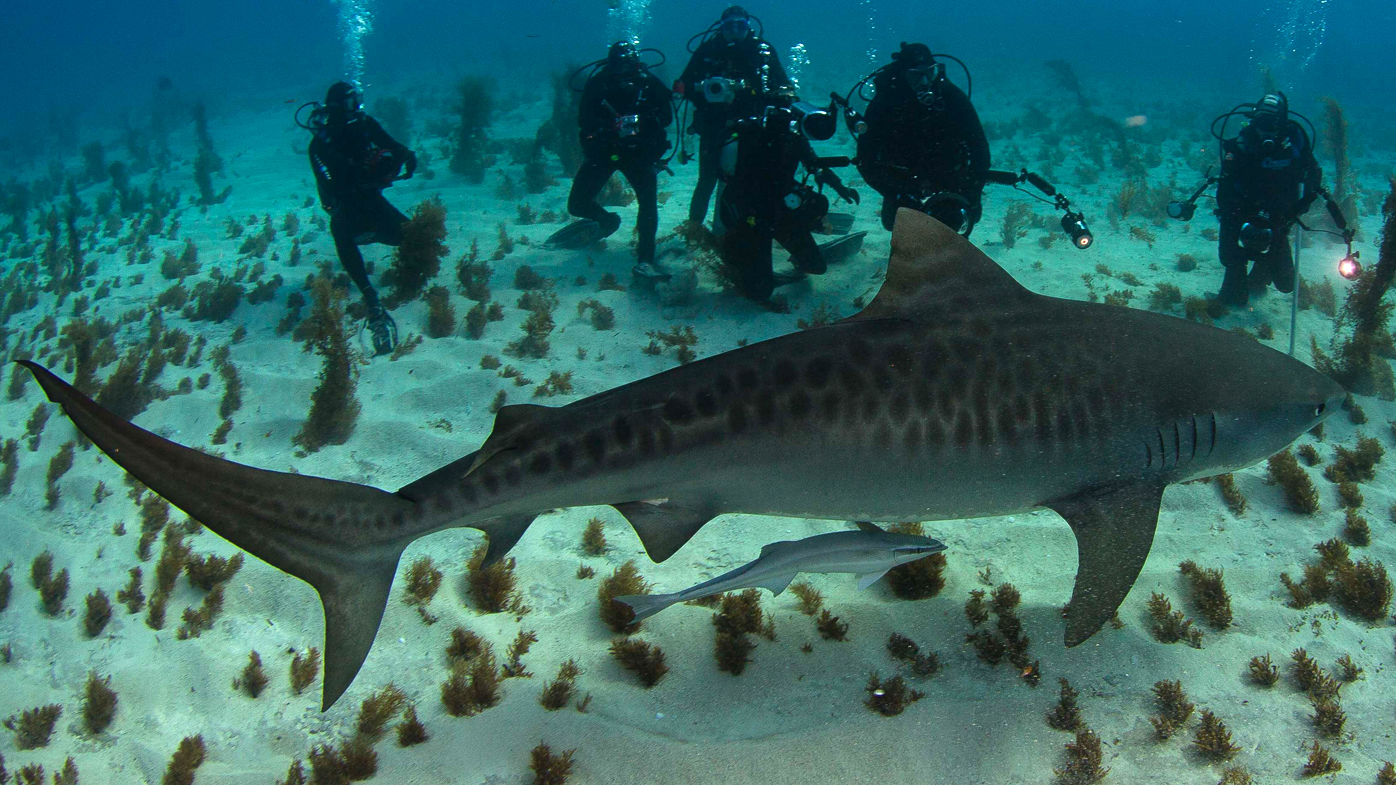
ISAF experts confirmed great white sharks were involved in at least 16 unprovoked bites in 2020, including six of the year's 10 fatalities: four in Australia, one in California and one in Maine.
Of the remaining deaths, two were the result of tiger shark bites, including the fatality in Hawaii, and two could not be identified to species.
Surfers and other board sport athletes experienced 61 per cent of bites worldwide in 2020, compared with 53 per cent in 2019 and 2018.
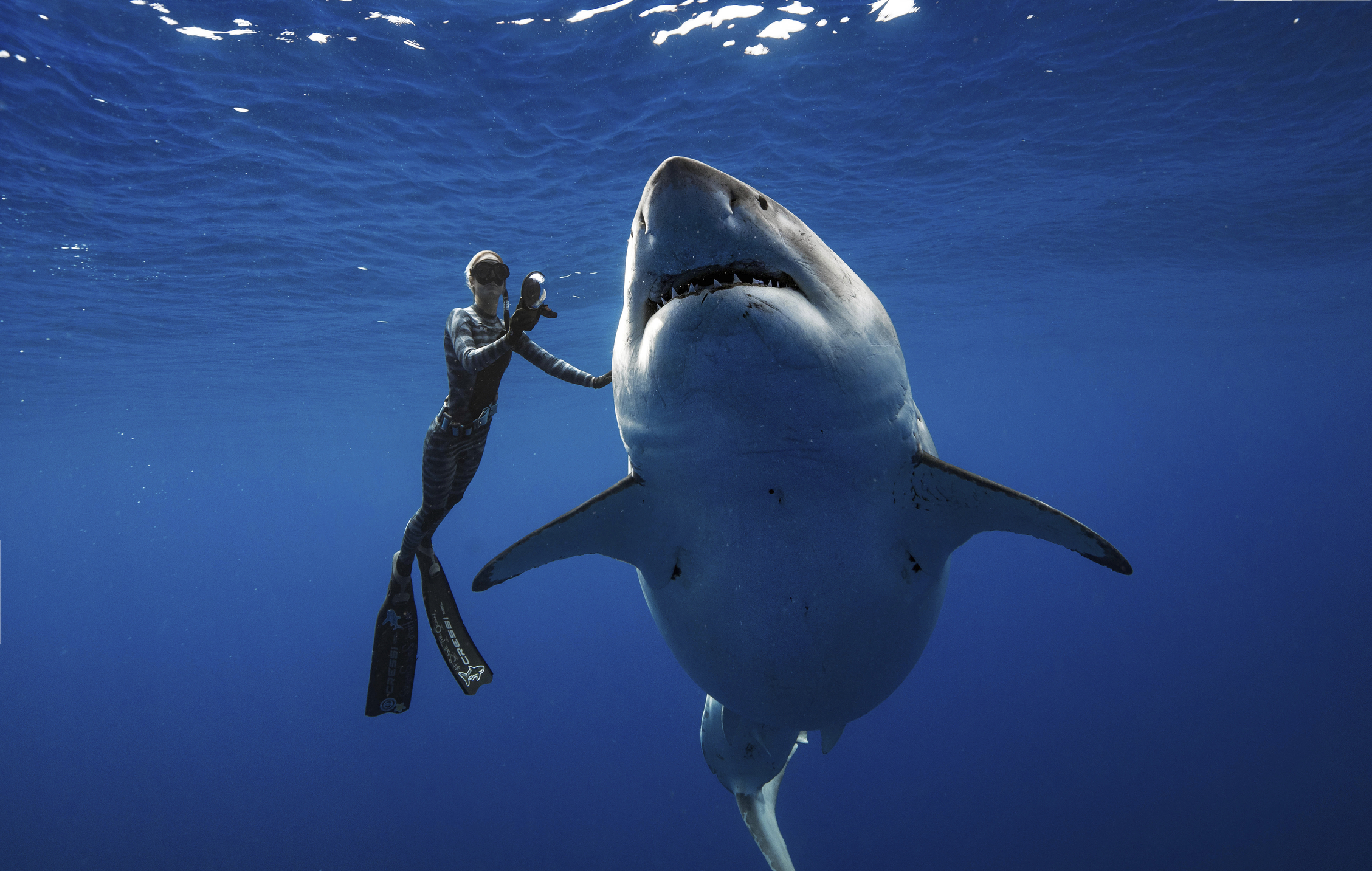
While some scientists have suggested various reasons for the high number of bites caused by white sharks in 2020 – global warming, changing fish populations and migrations or even "rogue" sharks – Mr Naylor cautioned against jumping to conclusions.
"We need to focus on long-term trends and rigorous scientific study, rather than speculation," he said.
"I think the frequency of white sharks swimming in the same places as humans may be on the rise, but if so, we don't yet know the cause."
Encounters with white sharks can result in more serious wounds, because of the species' size and power, Mr Naylor added.
"A blacktip can give you four stitches while a nibble from a white shark can remove your leg," he said.
But Mr Naylor said there is no evidence sharks are actively hunting humans and that most bites occur when sharks mistake people for fish, seals or other animals.
He cited examples of drone footage showing sharks, including white sharks, approaching and circling surfers and swimmers before jetting in the opposite direction.
Words: Mark Saunokonoko
Infographics: Tara Blancato
Dept. of Culture documenting, preserving local Intangible Cultural Heritage
BASSETERRE, St. Kitts — The St. Kitts and Nevis Department of Culture will explore additional strategies to preserve and promote the intangible cultural heritage (ICH) of the Federation when it meets with research and documentation teams on January 27.
ICH is described as the practice, representation, expression, knowledge, or skill considered to be a part of a country’s cultural heritage. Local examples of ICH include the story of the Mansion Bull, the dance and chants of the Masquerades, the method of making mauby, and more.
Marlene Phillips, Research and Documentation Specialist in the Department of Culture is spearheading the activities to safeguard ICH. She noted that an ICH project was launched in April 2019. Seven teams were trained in November 2019, and dispatched in July 2020 to various communities to research, identify, and digitally document aspects of ICH. The teams comprised a coordinator, researcher, interviewer, and videographer/photographer. Documentation was done via audio and video recordings as well as photography.
The team members will meet with Ms. Phillips and others involved with the project on Wednesday at the Players Dining Room at the Warner Park Cricket Stadium. They will share their experiences out in the field and recommendations on the way forward.
“We want suggestions on how to improve the process. We hope that the meeting will inform us where more training is necessary and we’ll also be discussing the future of the Secretariat,” said Ms. Phillip.
The participants who will attend the meeting will also discuss ideas to share their findings with the public during a seminar slated for February 2021.
Ms. Phillips said that the ICH project goes to the heart of what makes St. Kitts and Nevis and its people unique.
“The intangible part of our lives is our identity,” said Ms. Phillips. “It shapes the society, who the people are. If the elders or the people in the community, who are keeping it ICH alive decide to stop, then your culture is lost. So to safeguard, we need to identify what these beloved traditions are, see if they are in danger of becoming extinct, and discuss with the tradition bearers how we can pass it on to the next generation by involving them in the whole process.”
The post Dept. of Culture documenting, preserving local Intangible Cultural Heritage appeared first on The St Kitts Nevis Observer.
Australia's surprise best state economy revealed
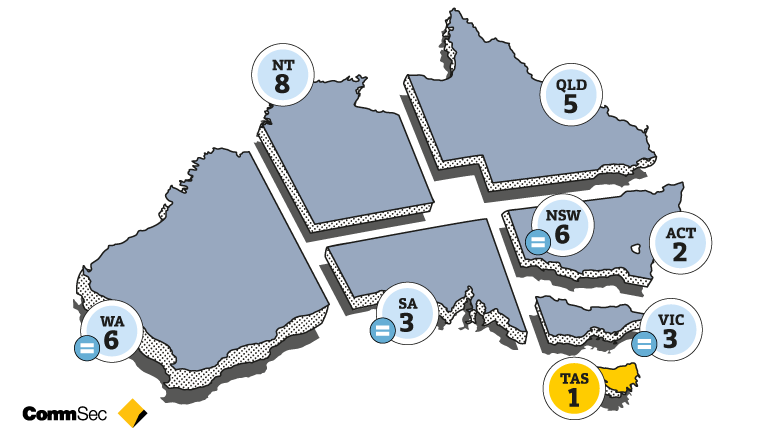
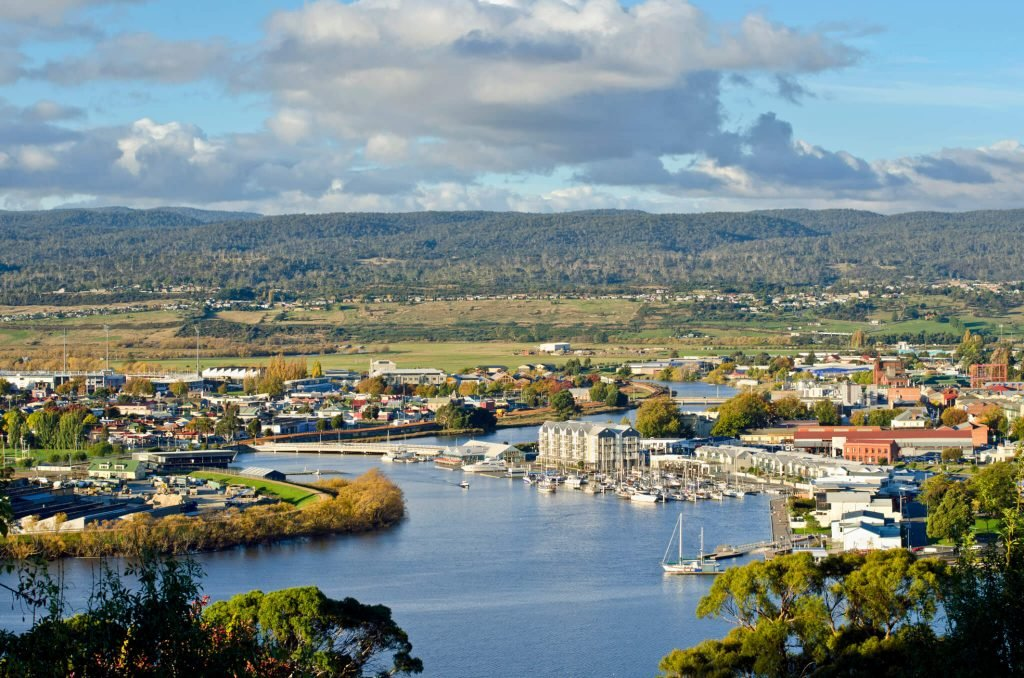
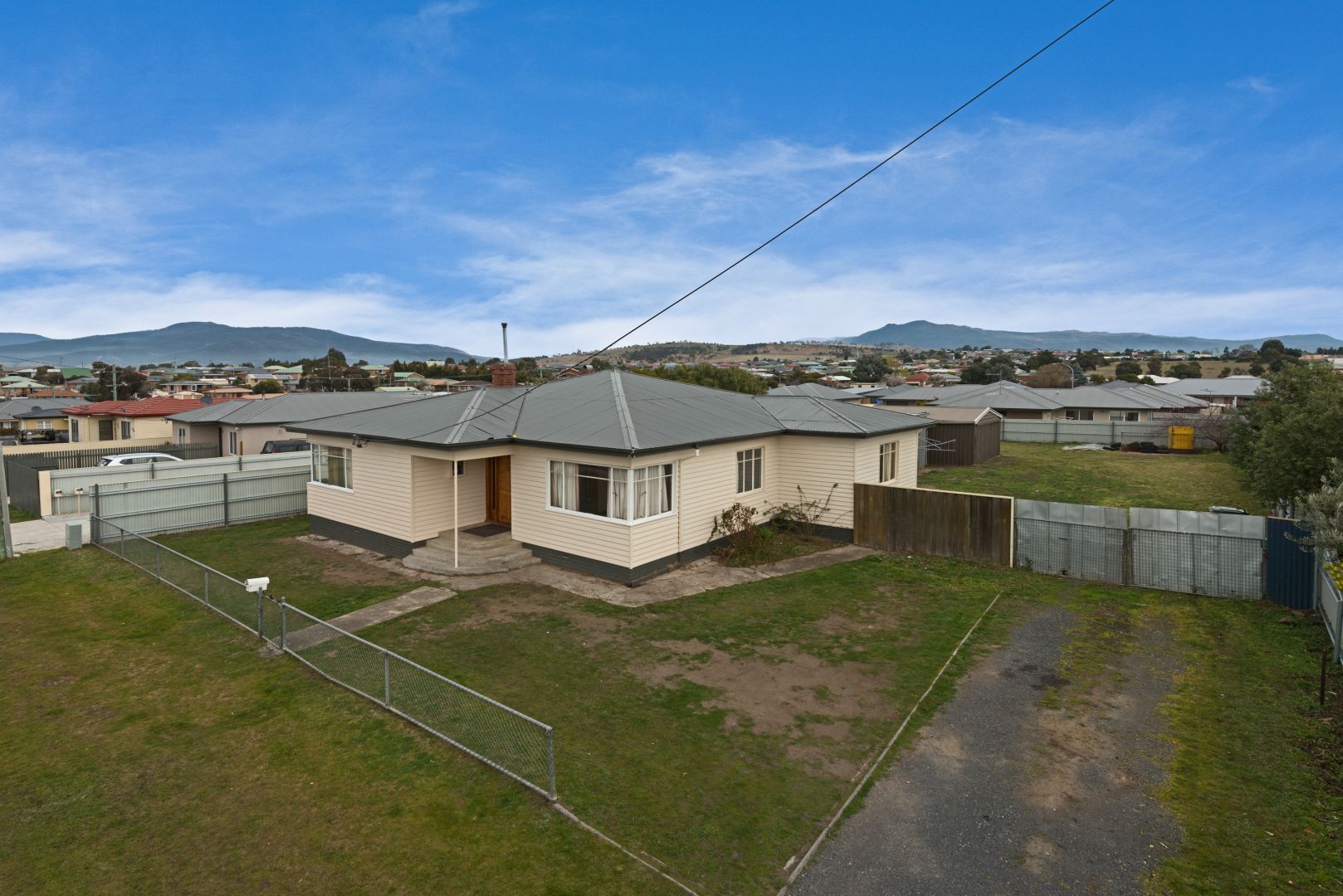
Tasmania has been named Australia's best-performing state economy for the fourth quarter in a row, boosting numbers across the board despite the threat of a global pandemic.
CommSec's quarterly State of the States report found Tasmania led the country on four of eight indicators used to assess the health and growth prospects of each region.
In population growth, equipment investment, dwelling starts and retail trade, no other state can hold a candle to Tasmania.
READ MORE: Sydney travellers to Tasmania will have to quarantine after new order
It's also home to the most profitable property market in the entire country.
The news for other states and territories was not as pretty.
The ACT remains in second position, followed by South Australia and Victoria sharing an equal third. Queensland came in fifth, while NSW and Western Australia were both awarded a joint sixth place.
The sixth ranking for NSW is its lowest spot in eight years.
READ MORE: Tasmania to add NSW to list of open borders
Rounding out the top eight (which is slightly muddled due to multiple joint placings) was the Northern Territory.
CommSec's report uses eight categories – economic growth, retail spending, equipment investment, unemployment, construction work done, population growth, housing finance, and dwelling commencements – to compare the relative performance of each state and territory.
CommSec Chief Economist Craig James said the gaps between states and territories have been shortened as different strategies to the COVID-19 virus play out economically.
"We began to see compression in the economic rankings in the last quarter, and this has continued in the latest report," Mr James said.
"Queensland, South Australia and Western Australia were the biggest improvers over the past quarter with their success in suppressing the COVID-19 virus appearing to have supported these states' economic performance.
"Victoria and ACT suffered more in their rankings due to the uncertainty and change brought by the pandemic."
READ MORE: Tassie devils return to mainland Australia after 3000 years
Mr James said federal economic supports like JobKeeper levelled the playing field between states, meaning the next two quarters are likely to see similar rankings.
"Regardless, the compression in the rankings shows that the pandemic, and likely the government's economic stimulus, is somewhat of a leveller. Australia's state and territories have arguably never been closer together in terms of economic performance," Mr James said.
"Tasmania and the ACT will likely consolidate their top two positions in the coming quarters, while Western Australia has potential to lift further in the rankings given solid growth of key economic indicators."
READ MORE: Aussie house prices nosedive 2 per cent during COVID-19 pandemic
HOW YOUR STATE OR TERRITORY RANKED
|
State/Territory: |
Ranking: |
Economic highlights: |
|
Tasmania |
1st |
Population (1st), Retail (1st) |
|
ACT |
2nd |
Relative unemployment (1st) |
|
South Australia |
3rd |
Population growth (2nd) |
|
Victoria |
3rd |
Construction work (1st) |
|
Queensland |
5th |
Housing finance (1st) |
|
New South Wales |
6th |
Housing finance (2nd) |
|
Western Australia |
6th |
Equipment investment (2nd) |
|
Northern Territory |
8th |
Relative economic growth (5th) |
You can get up-to-date information from the Federal Government's Coronavirus Australia app, available on the App Store, Google Play and the Government's WhatsApp channel.
Beyond Blue's Coronavirus Mental Wellbeing Support Service is a 24/7 service free of charge to all Australians. Visit the site here or call 1800512348
For coronavirus breaking news alerts and livestreams straight to your smartphone sign up to the 9News app and set notifications to on at the App Store or Google Play.
Barbados US Embassy cancels all Non-Immigrant Visa Appointments until further notice
BASSETERRE, St. Kitts — The Ministry of Foreign Affairs has informed the public that owing to changes in Barbados’s general COVID-19 posture, the US Embassy in Bridgetown, Barbados, has cancelled all non-immigrant visa appointments effective Thursday, January 28.
If any persons have an urgent matter and need to travel immediately, they are asked to please follow the guidance provided at https://ais.usvisa-info.com/en-bb or call (246) 623-9832 or (246) 623-9833 to request an emergency appointment. The Machine Readable Visa fee remains valid until September 30, 2022, and may be used for a visa application in the country where it was purchased.
The embassy will resume routine non-immigrant visa services as soon as possible, but is unable to provide a specific date at this time. The general public is asked to monitor the embassy’s website and social media for updates.
The post Barbados US Embassy cancels all Non-Immigrant Visa Appointments until further notice appeared first on The St Kitts Nevis Observer.
Two new COVID-19 cases reported
BASSETERRE, St. Kitts — The Federation of St. Kitts and Nevis continues to experience a gradual increase in the number of positive cases of COVID-19. As of Monday, January 25, the Federation confirmed two additional cases of coronavirus disease.
The international travellers landed in the Federation on January 10, 2021 from the United States. The patients have been in quarantine at one of the COVID-19 certified hotels since arrival. The patients were duly notified and are now in isolation.
These additional cases bring the total number of confirmed COVID-19 cases to 37 with 25 cases for St. Kitts and 12 cases for Nevis. Thirty-five cases have fully recovered with zero deaths. There are now two active cases. These patients are stable and are being monitored.
The risk of further cases occurring in the Federation remains very high. We continue to adhere to the ‘St. Kitts & Nevis Health & Travel Protocols’ which can be found at https://www.knatravelform.kn.
All front-line workers continue to adhere to the COVID-19 protocols along the corridor of containment between the ports of entry and hotel/accommodation sites.
The Ministry of Health assures the public that the following measures are being taken to restrict the spread of coronavirus:
• In-depth contact tracing to effectively assess the front-line workers with whom the recently diagnosed cases would have interacted.
• Quarantine, monitoring and testing of contacts as indicated.
The Ministry of Health-in particular-and Federal Government wish to assure all citizens and residents that every effort is being made to prevent the spread of this virus locally.
With reports of the SARS – CoV-2 variant in the region and with increase in cases locally more and more persons are adhering to the COVID-19 prevention and control measures. These include:
* Wearing a face mask when in public places;
* Maintaining good hand hygiene,
* Maintaining a physical distance of at least 6-feet from others when in public places; and avoiding crowds and events.
These control measures work and we are encouraging you to continue. Let us work together to maintain and protect the health and well-being of the people of the Federation.
The post Two new COVID-19 cases reported appeared first on The St Kitts Nevis Observer.
How Joe Biden ended up with a moon rock in the Oval Office
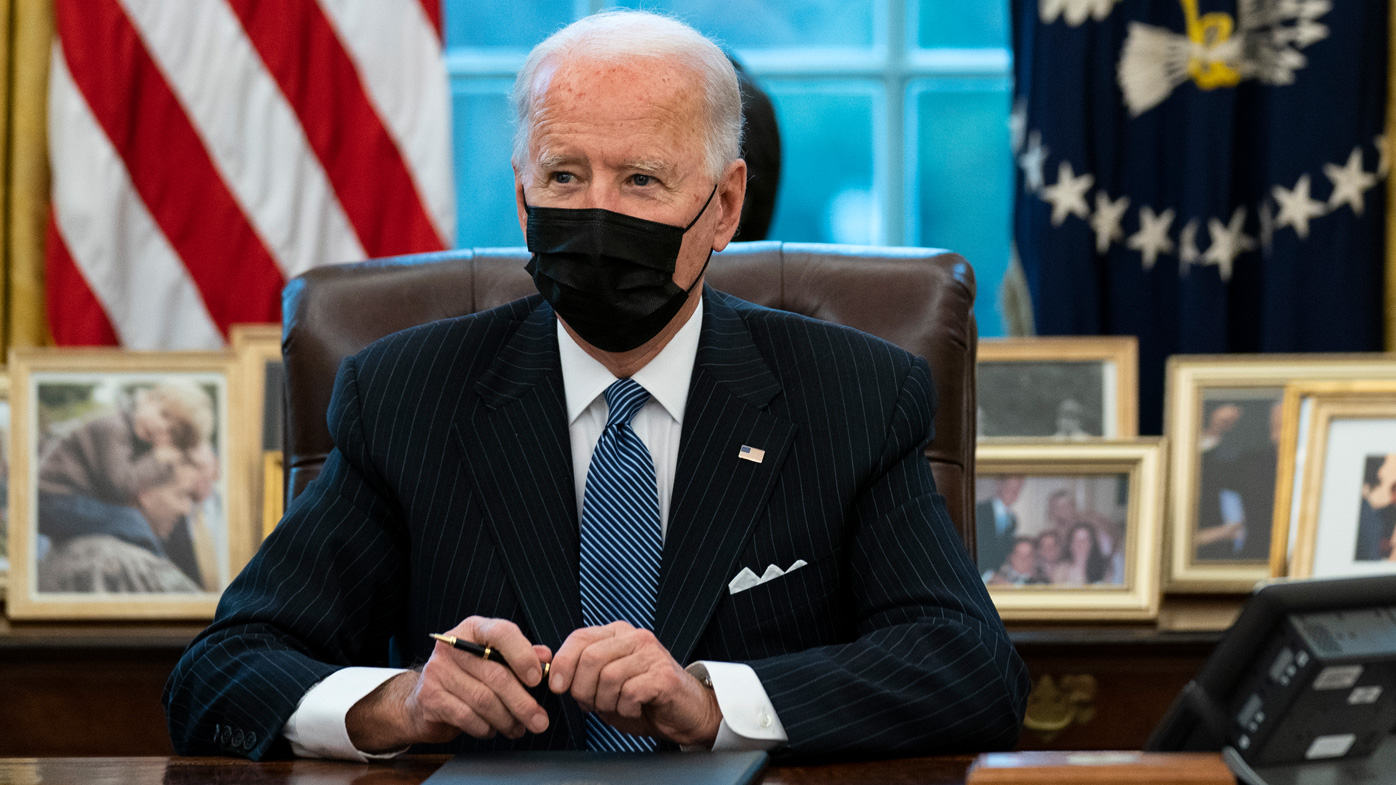
The day after the inauguration of President Joe Biden and Vice President Kamala Harris, the Washington Post reported on the aesthetics of the newly-redecorated Oval Office.
Among all sorts of noteworthy items, a moon rock was found to be sitting on a bookshelf.
LIVE UPDATES: World COVID-19 figure passes 100 million
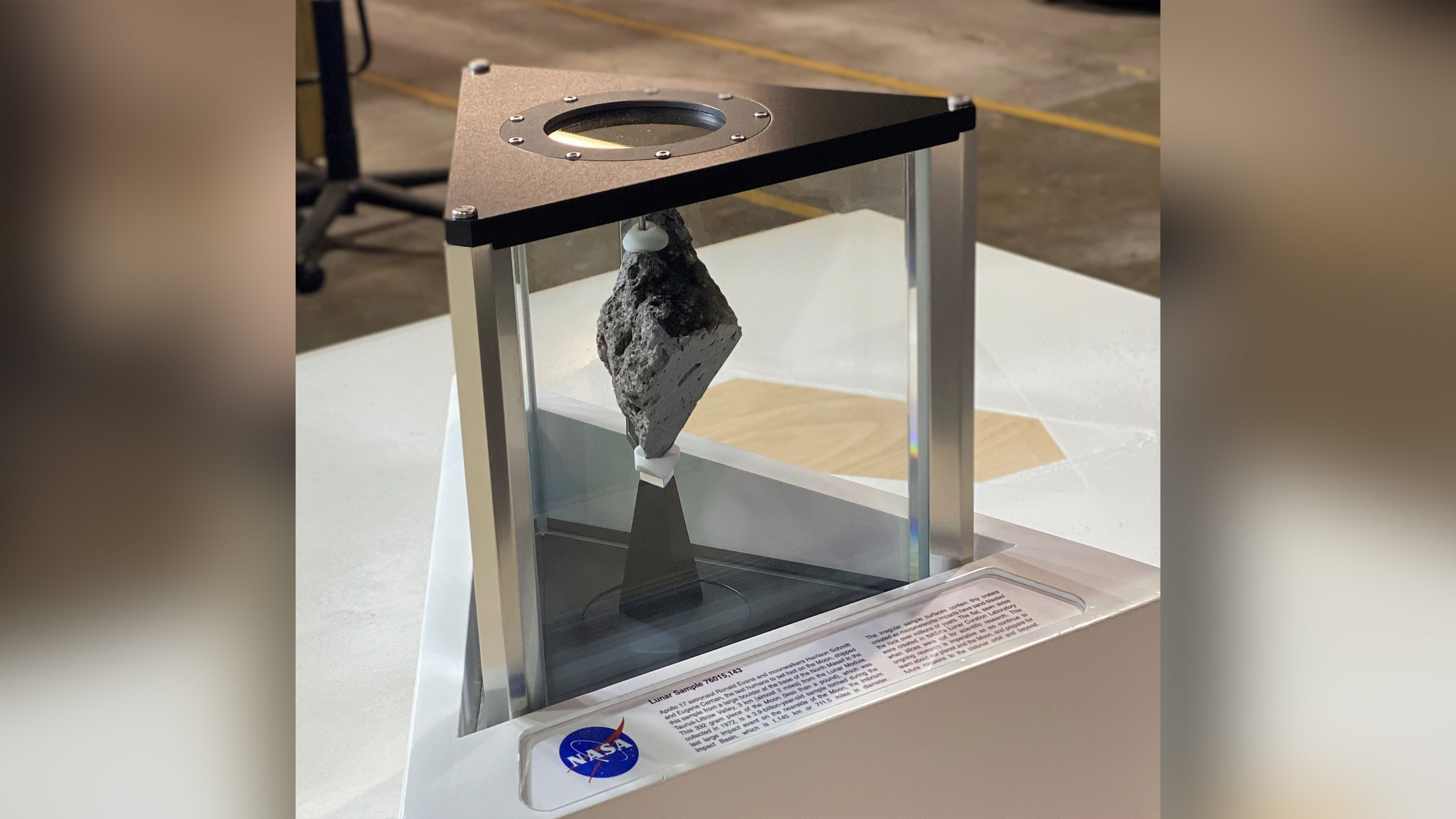
Social media rejoiced at the sight, an indubitably cool artifact to find inside the White House.
But what many didn't know was that this rock, dubbed Lunar Sample 76015,143, had been on an Odyssean journey to get there, one 3.9 billion years in the making.
The current thinking is that 4.5 billion years ago, a protoplanet the size of Mars slammed into a magma ocean-covered Earth.
Debris from the baby planet and the spaceborne projectile was sent into orbit, eventually clumping together to make the moon.
The solar system was a bit like the inside of a pinball machine back then, with countless would-be worlds crashing into each other.
READ ALSO: Biden calls Putin and presses Russia on election hacking
Like the adolescent Earth, the youthful moon was a target too, with several enormous impacts carving out ginormous basins on its surface.
And around 600 million years after it was formed, the moon rendezvoused with a rock the size of New Jersey, weighing about 25,000 trillion tons and moving at a speed of around 83,000km/h.
This interloping giant rock, which hit the moon at an inclined angle, disintegrated upon impact, sending boulders shooting across the lunar surface, cutting deep, long grooves into the crust as if it were attacked by a cosmic, clawed beast.
The impact would have been way more powerful than a gargantuan volcanic explosion like Mount St Helens, which itself had unleashed more energy than the sum total of all the explosives used during World War II, including the two nuclear bombs.
The rock carved out a circular chasm some 1142 kilometres across.
For the sake of comparison, the asteroid that careened into earth 66 million years ago and heralded the end of the age of the dinosaurs excavated a pit a mere 177 kilometres in diameter.
Around 250 million years later, lava later poured into this great depression, forming a sea of molten rock named Mare Imbrium, the "Sea of Rains".
And as lava lapped at the shores of this magnificent desolation, a curious rock sat nearby: a mangled amalgam of crushed sediment and once-molten matter, a product of the ferocity of that ancient, colossal impact.
READ ALSO: Biden restarts push to put Harriet Tubman on $20 note
For what seemed like an eternity, that rock sat silently on the moon, hit by the occasional micrometeorite.
And 3.9 billion years after it was formed, in the twilight days of 1972, two visitors from another world, Apollo 17 astronauts Eugene Cernan and Harrison Schmitt – Mr Schmitt was the first and only geologist sent to the moon – saw it glinting in starlight.

The last two people to set foot on the moon carved off a chunk and brought a sample back home.
Like the other rocks brought back by the Apollo missions, it was housed at the Lunar Sample Laboratory Facility at NASA's Johnson Space Centre in Houston.
There, it was broken up, and its pieces – including number 76015,143 – were examined by scientists hoping to unravel the secrets of the moon's origins and its evolution, as well as providing them with a window into Earth's obfuscated distant past.
That we can host such stunning off-world geologic treasures on Earth and decode the epochal stories they tell without needing to invent time travel is a remarkable achievement. But Lunar Sample 76015,143 isn't sitting in any old building.
It's in the office of the most powerful person in the world.
That imbues this lithic archive with novel significance.
For the last four years, the Trump administration threw science into the sewers, treating it like an inconvenience at best and a shameful pursuit at worst.
More than 400,000 Americans died of COVID-19 during Donald Trump's time in office.
We may never know how many lives could have been saved had the former president not shown an allergic reaction to reality – not only on the pandemic, but on another death-dealing existential crisis: climate change.
READ ALSO: 'Attempted sedition': Justice Department launches investigation into alleged Trump plot
Mr Biden is clearly ushering in a new era. Immediately after the inauguration, the new administration went to task, initiating their 198-page plan to defeat the pandemic while beginning the difficult work of stemming climate change.
The Oval Office's moon rock is, for many, a cathartic sight, a symbol of the new President's science-driven agenda, of his administration's adherence to facts and to objective truths, something America needs now more than ever.
Landing astronauts on the moon was a political ambition first and foremost.
But that rock, on loan from NASA at the request of the Biden administration, represents what can happen when a national priority is made of the pursuit of knowledge for its own sake.
If America can send people across the expanse and bring them back with geologic treasures, then it can also bring an end to a pandemic.
Ideally, this rock also represents a calling card to the stars. We can only comprehend our place in the cosmos if we go out and explore it – and look not just to the moon, but beyond it.
NASA is about to land its Perseverance rover on Mars, the first step in an 11-year operation to bring back the first pristine rocks from that planet's surface.
One day, astronauts will be hauling Martian rocks home themselves. But who will be the first Earth-born emissaries to the Red Planet?
A future president of the United States may have a piece of Mars sitting on her bookshelf.
If so, one suspects Americans will look back in pride at the moment they saw a moon rock sitting in Mr Biden's Oval Office.
It may mark the day the White House was exorcised of its ignorance, transforming once again – and, we hope, forevermore – into a place that champions science.