Category Archives: headline

Kerry O'Brien rejects Australia Day honour in protest

Kerry O'Brien has rejected his Australia Day honour in protest against the decision to give Margaret Court Australia's highest award, which he labelled "deeply insensitive and divisive".

The distinguished journalist and television news presenter was named as an Officer of the Order of Australia recipient, the second-highest honour, ahead of Australia Day celebrations today.

READ MORE: Malcolm Turnbull, Gai Waterhouse and Tim Cahill among star names on Australia Day Honours list
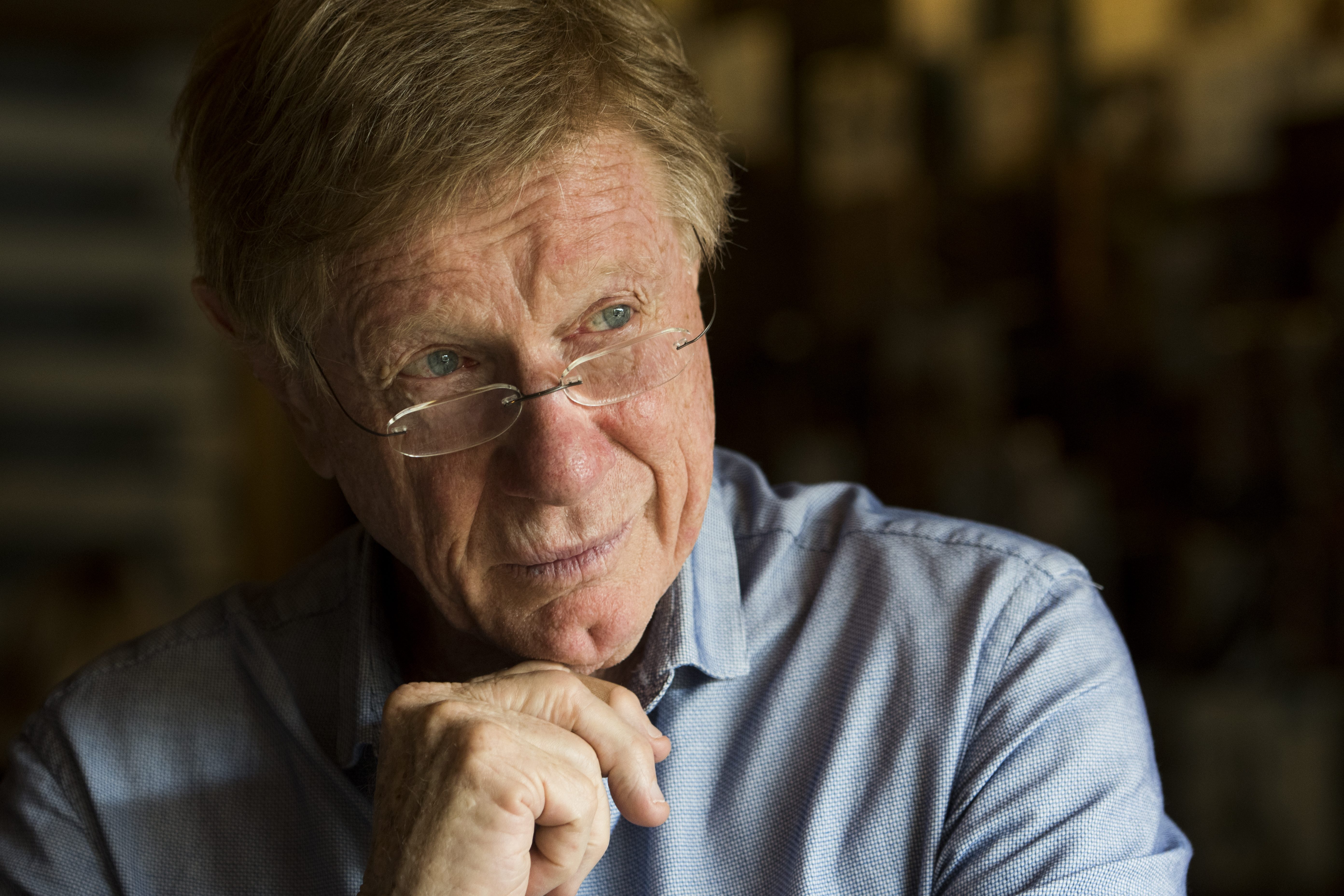
However, in a letter to the governor general's secretary on Sunday, the renowned journalist said there was something "fundamentally wrong" with the honours awards.

Mr O'Brien labelled Ms Court's appointment as a Companion of the Order of Australia (AC) as "a deeply insensitive and divisive decision".

While Mr O'Brien acknowledged there are "many well-meaning people involved in the Order of Australia process," he said Ms Court's "hurtful and divisive criticisms relating to the fundamental rights of the LGBTQ+ community", were "repugnant to many Australians".

READ MORE: Margaret Court not fazed by Australia Day honours backlash
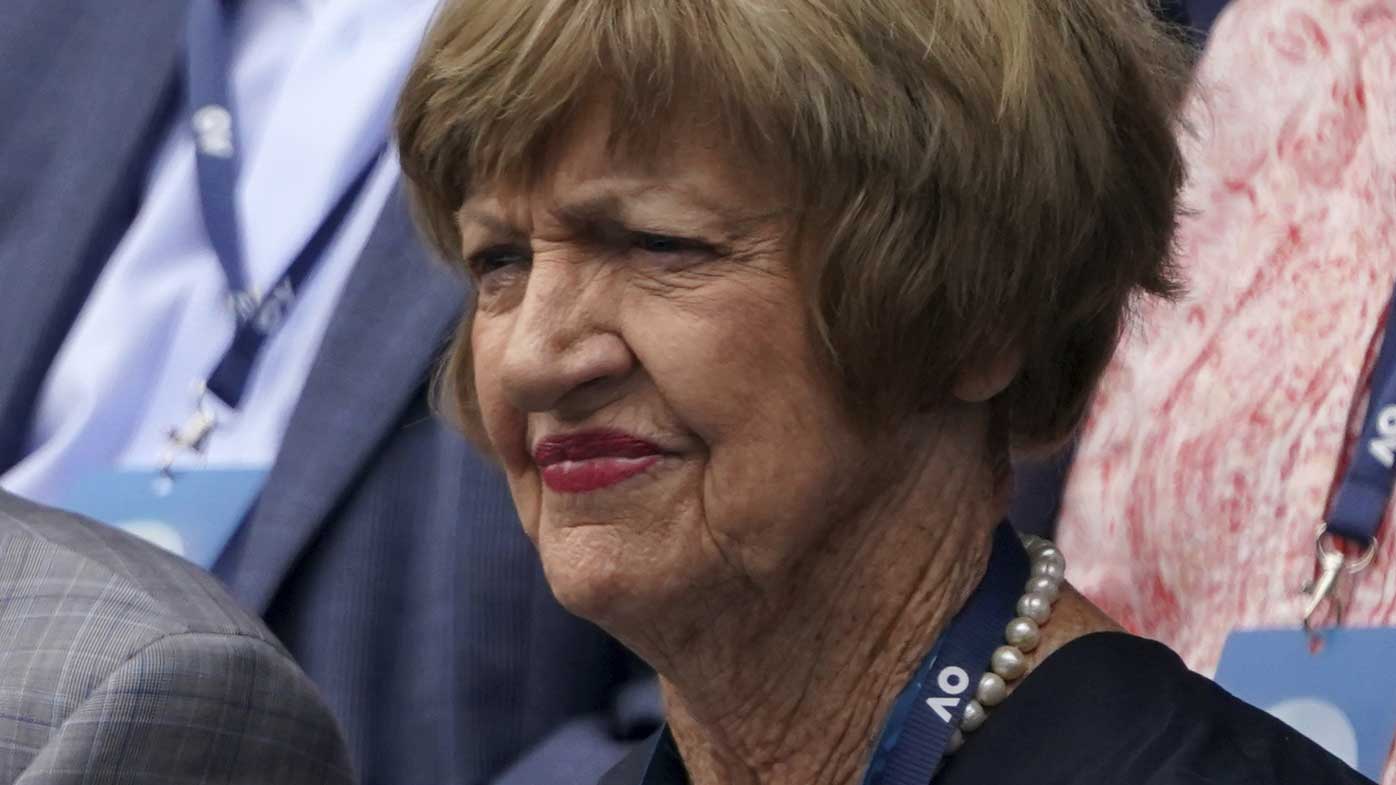
Margaret Court.

"I believe the decision to award Australia's highest honour to Margaret Court may serve to erode the hard-fought gains made over decades in reducing the impact of discrimination against members of the LGBTQ+ community — discrimination that has caused immense pain to untold people and destroyed lives," he said.

"I believe the decision to present her with this award was deeply insensitive and must undermine community respect for awards that were created to celebrate a true spirit of community, not divide it."

Mr O'Brien joins Canberra doctor Clara Tuck Meng Soo in protest of Ms Court's award.

Dr Soo handed back her 2016 Order of Australia Medal in protest of the decision to award Ms Court.

"[This award] is condoning if not supporting the very negative and hurtful statements she has made about the LGBTIQ community over the past few years," Dr Soo said.

In 2018, Dr Soo became one of the first GPs in Australia to undergo gender transition.

Margaret Court not fazed by Australia Day honours backlash

Last week, Ms Margaret Court told 9News she was not fazed by the immense backlash and criticism after being recognised in the 2021 Australia Day honours list.

Court will be made a Companion in the General Division of the Order of Australia (AC) today – the nation's highest honour – for her success as a player and as a mentor to athletes.

However, her recognition has been the subject of criticism due to her controversial views on same-sex marriage and homosexuality.
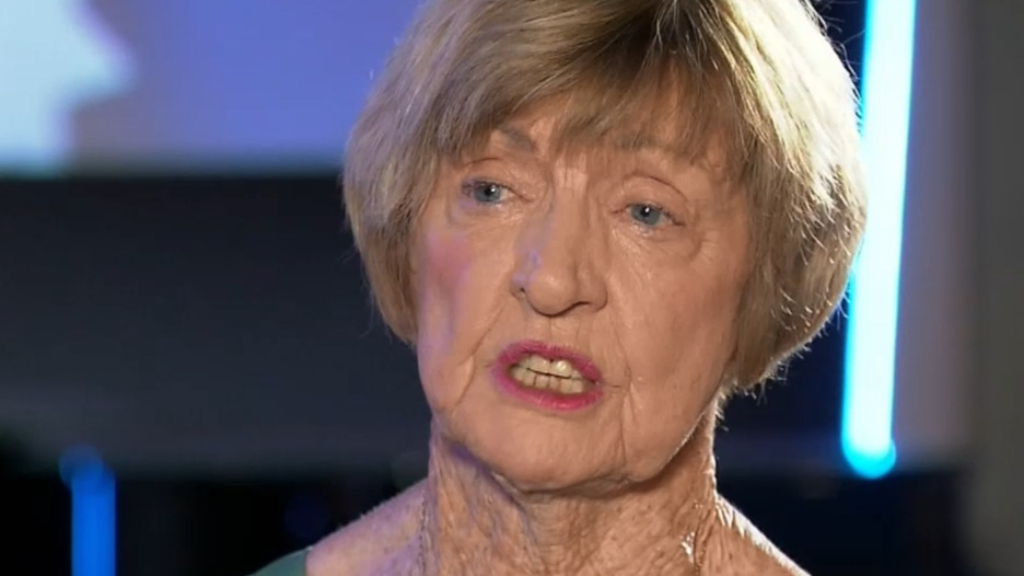
Margaret Court addresses recent controversy

Court said she would be praying for those who did not support her and blessing them.

"I think over the years, I've had so much criticism that it doesn't really affect me," she said.

"I call them blessed because I pray for them and I pray for my nation."

Costa Rican scientists develop saliva tests for quick COVID-19 detection

By the A.M. Costa Rica staff

SAN JOSE, Costa Rica — Scientists from the three principal public universities in Costa Rica, the University of Costa Rica, the Technologic University and the National University, completed the first prototype of saliva tests for a speedy diagnosis of COVID-19.

After almost a month of investigation and the support of more than 20 specialists, the scientists begin with the verification phase of the saliva tests they are developing for the fast diagnosis of COVID-19.

With the use of synthetic genes also designed by the scientists, the preliminary results obtained so far are successful, according to the scientists.

“The first results show that in vitro tests using synthetic genes achieved a sensitivity of 94.4 percent in the ability of the test to detect the disease. It also has a specificity level of 100 percent in the case of applying the test to healthy individuals,” German Madrigal, director of the Institute for Pharmaceutical Research said. “The percentages obtained are very high and mean that the test has great potential to improve the diagnosis of COVID-19.”

Intending to carry the validation tests, the scientists designed synthetic COVID-19 genes and artificial saliva as a first step to counteract the results with the standard test known as Polymerase chain reaction, PCR.

The most common test is the PCR, which is a process that amplifies (replicates) a small, well-defined segment of DNA hundreds of thousands of times, creating enough of it for analysis. Samples can be obtained by a nasopharyngeal swab (or nasopharyngeal culture) for collecting nasal secretions from the back of the nose and throat.

If this new test successfully passes the following two stages that are still pending, it is expected that within a few months the university will share with Social Security, the Ministry of Health and any company that wishes to produce the tests.

The country will have an additional resource to the standard test for the diagnosis of COVID-19 with 70 percent less cost, the scientist said in the statement.

The speedy and efficient detection of COVID-19 is vital for health authorities, due to the increase in virus contagions in the country.

The post Costa Rican scientists develop saliva tests for quick COVID-19 detection appeared first on The St Kitts Nevis Observer.

ILO expects uncertain, uneven labour market recovery

GENEVA – Tentative signs of recovery are emerging in global labour markets, following unprecedented disruption in 2020 due to the COVID-19 pandemic, according to the latest report from the International Labour Organization.

New annual estimates in the seventh edition of the ILO Monitor: COVID-19 and the world of work confirm the massive impact that labour markets suffered in 2020. The latest figures show that 8.8 percent of global working hours were lost for the whole of last year (relative to the fourth quarter of 2019), equivalent to 255 million full-time jobs1 . This is approximately four times greater than the number lost during the 2009 global financial crisis.

These lost working hours are accounted for either by reduced working hours for those in employment or “unprecedented” levels of employment loss, hitting 114 million people2 . Significantly, 71 percent of these employment losses (81 million people) came in the form of inactivity, rather than unemployment, meaning that people left the labour market because they were unable to work, perhaps because of pandemic restrictions, or simply ceased to look for work. Looking at unemployment alone drastically understates the impact of COVID-19 on the labour market.

These massive losses resulted in an 8.3 percent decline in global labour income (before support measures are included), equivalent to US$3.7 trillion or 4.4 percent of global Gross Domestic Product (GDP).

Impact by groups and sectors

Women have been more affected than men by the pandemic’s labour market disruptions. Globally, employment losses for women stand at 5 percent, versus 3.9 percent for men. In particular, women were much more likely than men to drop out of the labour market and become inactive.

Younger workers have also been particularly hard hit, either losing jobs, dropping out of the labour force or delaying entry into it. The employment loss among youth (15-24 years old) stood at 8.7 percent, compared to 3.7 percent for adults. This “highlights the all too real risk of a lost generation,” the Monitor says.

The report shows the uneven impact on different economic, geographic, and labour market sectors. It highlights concerns of a “K-shaped recovery,” whereby those sectors and workers hit hardest could be left behind in the recovery, leading to increasing inequality, unless corrective measures are taken.

The worst affected sector has been accommodation and food services, where employment declined by more than 20 percent, on average, followed by retail and manufacturing. In contrast, employment in information and communication, and finance and insurance, increased in the second and third quarters of 2020. Marginal increases were also seen in mining, quarrying and utilities.

Looking ahead

While there is still a high degree of uncertainty, the latest projections for 2021 show that most countries will experience a relatively strong recovery in the second half of the year, as vaccination programmes take effect.

The Monitor puts forward three scenarios for recovery; baseline, pessimistic and optimistic. The baseline scenario (which draws on International Monetary Fund forecasts from October 2020), projects a 3 percent loss of working hours globally in 2021 (compared to Q4 2019), equivalent to 90 million full time jobs.

“The signs of recovery we see are encouraging, but they are fragile and highly uncertain, and we must remember that no country or group can recover alone.”

Guy Ryder, ILO Director-General

The pessimistic scenario, which assumes slow progress on vaccination in particular, would see working hours drop by 4.6 percent, while the optimistic scenario forecasts a 1.3 percent decline. This would depend on the pandemic being under control and an upsurge of consumer and business confidence.

In all scenarios the Americas, Europe and Central Asia would experience around twice the working hour losses of other regions.

The post ILO expects uncertain, uneven labour market recovery appeared first on The St Kitts Nevis Observer.