Category Archives: headline

Most Contagious COVID Variant Discovered in US

A new variant of the coronavirus was discovered in the United States, and seems to be even more contagious than both the South African and  British strain previously discovered, two studies revealed.
In the first study, scientists from Southern Illinois University identified a third US variant of COVID-19, that may be the most contagious strain yet, researchers said Thursday, adding it is believed to be responsible for up to 50% of all US cases.

“It’s here. We found it,” said Keith Gagnon, an associate professor of biochemistry at SIU Carbondale who discovered the new variant, referred to as 20C-US.

“It’s definitely home-grown and widespread, and we’re the first to characterize it,” Gagnon said, adding that its impact on vaccines is uncertain.
The homegrown mutation is hitting mostly the Midwest, researchers said in a press release, revealing that they traced back the strain to Texas, where it apparently first appeared in May.

“We have identified a new variant of the SARS-CoV-2 virus that emerged in the United States early in the coronavirus disease pandemic and has become one of the most prevalent US variants,” the release states.

“It might be more easily transmissible than other variants, and its impact on vaccines is uncertain,” the study said.

These findings were revealed a day after scientists from the Ohio State University Wexner Medical Center and College of Medicine discovered the new variant of SARS-Cov-2, identical to the UK strain, but likely arising in a virus strain already present in the United States.

The researchers also reported the evolution of another US strain, 20C-US, that acquired three other gene mutations not previously seen together in SARS-CoV2.

The results of the 20C-US study were published in the online journal bioRxiv.org on Wednesday.

“The big question is whether these mutations will render vaccines and current therapeutic approaches less effective,” said Peter Mohler, a co-author of the study and chief scientific officer at the Ohio State Wexner Medical Center and vice dean for research at the College of Medicine. “At this point, we have no data to believe that these mutations will have any impact on the effectiveness of vaccines now in use.”
“It’s important that we don’t overreact to this new variant until we obtain additional data,” Mohler said. “We need to understand the impact of mutations on transmission of the virus, the prevalence of the strain in the population and whether it has a more significant impact on human health.”

“Further, it is critical that we continue to monitor the evolution of the virus, so we can understand the impact of the mutant forms on the design of both diagnostics and therapeutics. It is critical that we make decisions based on the best science.”

The scientists said that discovery of the Columbus variant, COH.20G/501Y, suggests that the same mutation may be occurring independently in multiple parts of the world during the past few months.
“Viruses naturally mutate and evolve over time, but the changes seen in the last two months have been more prominent than in the first months of the pandemic,” Jones said. His team has been conducting Ohio State’s genetic sequencing on environmental and patient SARS-CoV2 samples, and he’ll continue to monitor for changes as vaccination occurs.
The Centers for Disease Control and Prevention said last week that it had not seen the emergence of a highly contagious new US variant of the coronavirus. It noted, however, that there are probably many variants emerging around the globe.

The post Most Contagious COVID Variant Discovered in US appeared first on The St Kitts Nevis Observer.

Wales: Man Offers City Council $65M to Seach Dump for Lost Bitcoins

A Welshman was on Friday offering local officials a £50m UK pound ($65m) coronavirus relief fund if they let him search a landfill for a hard drive containing bitcoin worth £210 million pounds ($300m) which he dumped in 2013.

James Howells had 7,500 units of the virtual currency on his laptop hard drive, which had been gathering dust in an office drawer after he spilled a drink on the device.

He threw the drive away during an office clearout in 2013, having forgotten that the bitcoin he acquired for a paltry sum four years earlier were still on the memory device.

Newport Council, in south Wales, has repeatedly rejected Howell’s requests to be able to search the landfill, despite his offer of a cut of the bounty.

“In 2017 the value of my hard drive was approximately £125 million, at which point I made them another offer of 10pc and unfortunately that offer was refused,” Howells told BBC Radio 5 Live.

The value of bitcoin has since shot up even further.

He is now willing to donate 25pc of the value of the buried treasure to his home city for a “Covid relief fund” if he finds the hard drive.

“Imagine how great it would be to say ‘I’ve given everyone in the city a few hundred pounds’,” he told the BBC.

The council told the broadcaster its licensing laws bars any excavation.

“The cost of digging up the landfill, storing and treating the waste could run into millions of pounds without any guarantee of either finding it or it still being in working order,” said a council spokeswoman.

Howells believes the search would “not be as hard as you might think” as a professional team would be able to hone in on the likely spot because he knows exactly when he threw it away.

The post Wales: Man Offers City Council $65M to Seach Dump for Lost Bitcoins appeared first on The St Kitts Nevis Observer.

More Demonstrations in the Wind from Haiti Opposition

Haiti’s President Jovenel Moise .


Haiti braced for a fresh round of widespread protests starting Friday, with opposition leaders demanding that President Jovenel Moïse step down next month, worried he is amassing too much power as he enters his second year of rule by decree.

“The priority right now is to put in place another economic, social and political system,” André Michel, of the opposition coalition Democratic and Popular Sector, said by phone. “It is clear that Moïse is hanging on to power.”

Opposition leaders are demanding Moïse’s resignation and legislative elections to restart a Parliament dissolved a year ago.

They claim that Moïse’s five-year term is legally ending — that it began when former President Michel Martelly’s term expired in February 2016. But Moïse maintains his term began when he actually took office in early 2017, an inauguration delayed by a chaotic election process that forced the appointment of a provisional president to serve during a year-long gap.

Haiti’s international backers have echoed some of the opposition’s concerns, calling for parliamentary elections as soon as possible. They were originally scheduled for October 2019 but were delayed by political gridlock and protests that paralyzed much of the country, forcing schools, businesses and several government offices to close for weeks at a time.

Some in the international community also condemned several of Moïse’s decrees.

One of those limited the powers of a court that audits government contracts and had accused Moïse and other officials of embezzlement and fraud involving a Venezuelan program which provided cheap oil. Moïse and others have rejected those accusations.

Moïse also decreed that acts such as robbery, arson and blocking public roads — a common ploy during protests — would be classed as terrorism and subject to heavy penalties. He also created an intelligence agency that answers only to the president.

The Core Group, which includes officials from the United Nations, U.S., Canada and France, questioned those moves.

“The decree creating the National Intelligence Agency gives the agents of this institution quasi-immunity, thus opening up the possibility of abuse,” the group said in a recent statement. “These two presidential decrees, issued in areas that fall within the competence of a Parliament, do not seem to conform to certain fundamental principles of democracy, the rule of law, and the civil and political rights of citizens.”

Moïse has dismissed such concerns and vowed to move forward at his own pace.

In a New Year’s tweet, he called 2021 “a very important year for the future of the country.” He has called for a constitutional referendum in April followed by parliamentary and presidential elections in September, with runoffs scheduled for November.

“There is no doubt elections will happen,” Foreign Minister Claude Joseph told The Associated Press, rejecting calls that Moïse step down in February. “Haiti cannot afford another transition. We need to let democracy work the way it should.”

Joseph said Moïse remains open to dialogue and is ready to meet anytime with opposition leaders to solve the political stalemate.

He also said the constitutional referendum won’t give Moïse more power but said changes are needed to the 1987 document.

“It is a source of instability. It does not have checks and balances. It gives extraordinary power to the Parliament that abuses this power over and over,” Joseph said. “It’s not the president’s own personal project. It’s a national project.”

While officials haven’t released details of the referendum, one of the members of the consulting committee, Louis Naud Pierre, told radio station Magik9 last week that proposals include creating a unicameral Parliament to replace the current Senate and Chamber of Deputies, extending parliamentary terms and giving Haitians who live abroad more power.

The referendum and flurry of decrees are frustrating many Haitians, including Rose-Ducast Dupont, a mother of three who sells perfumes on the sidewalks of Delmas, a neighborhood in the capital.

“The political problems in my country have been dragging on for too long,” she said. “They are never able to find a solution for the nation. … We are the ones suffering.”

The nation of more than 11 million people has grown increasingly unstable under Moïse, who received more than 50% of the vote but with only 21% voter turnout.

Haiti is still trying to recover from the devastating 2010 earthquake and Hurricane Matthew that struck in 2016. Its economic, political and social woes have deepened, with gang violence resurging, inflation spiraling and food and fuel becoming more scarce at times in a country where 60% of the population makes less than $2 a day.

“I don’t have a life,” said Jean-Marc François, who wants Moïse gone. “I don’t have any savings. I have three kids. I have to survive day by day with no guarantee that I’ll come home with bread to put on the table.”

Some days he works in construction; others he does yardwork or disposes of garbage or moves boxes at warehouses, which sometimes pays 500 gourdes ($7) a day.

François said he won’t take part in the “circus act” of voting in the referendum or elections.

“We’re talking about voting for a new president? A new constitution? Deputies and senators? They’re all going to be the same,” he said. “This is a country of corruption.”

Moïse has faced numerous calls for resignation since taking office, with protests roiling Haiti since late 2017. The demonstrations have been fueled largely by demands for better living conditions and anger over crime, corruption allegations and price increases after the government ended fuel subsidies.

The most violent protests occurred in 2019, with dozens killed, and some worry about even more violence as the opposition steps up its demands that Moïse resign amid fears that elections will be delayed once more.

“Can the current status quo continue for another year?” said Jake Johnston, senior research associate at the Center for Economic and Policy Research in Washington. “Moïse can announce an electoral calendar … but what signs are there that that’s going to actually happen?”

___

Associated Press writer Evens Sanon reported this story in Port-au-Prince and AP writer Danica Coto reported from San Juan, Puerto Rico.

The post More Demonstrations in the Wind from Haiti Opposition appeared first on The St Kitts Nevis Observer.

Inauguration rehearsals pushed back amid security concerns

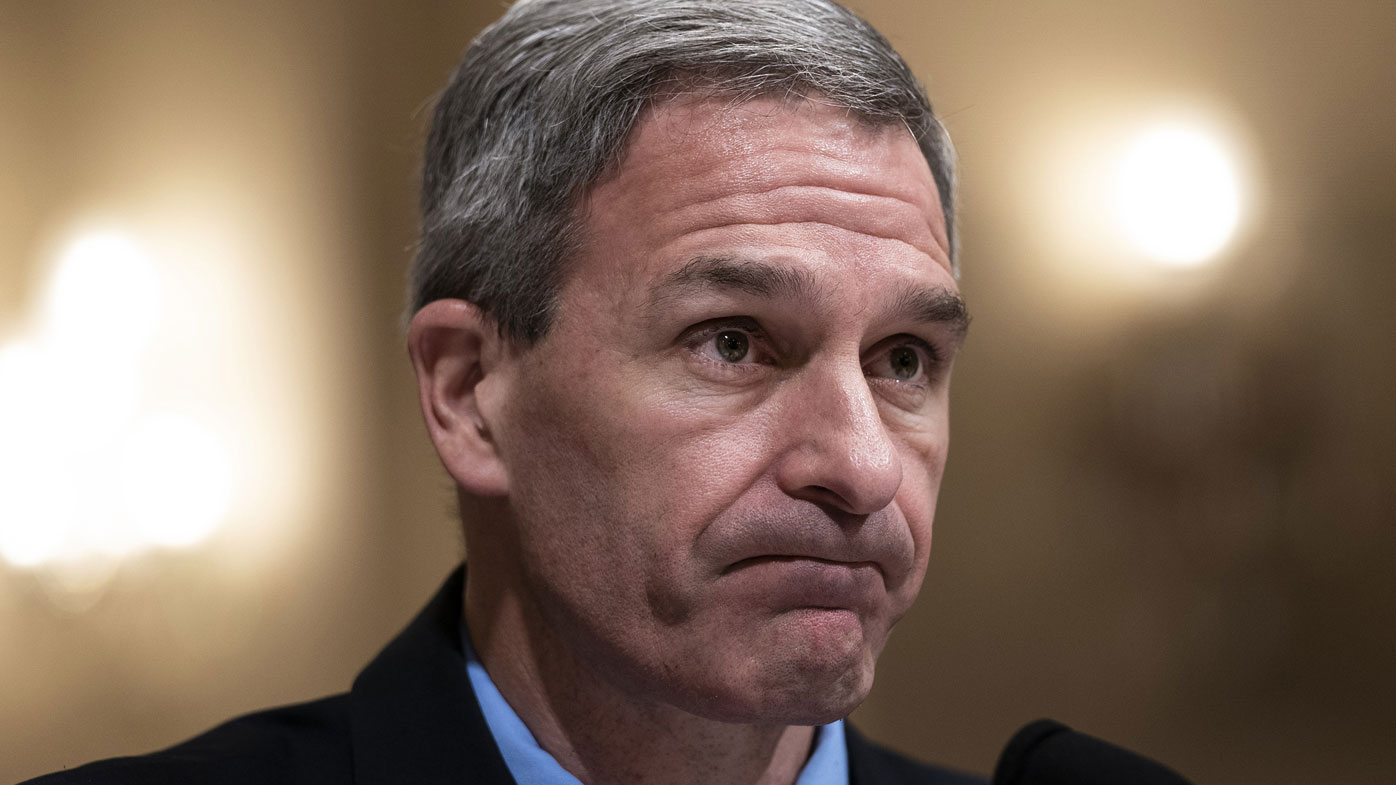
The rehearsal for the inauguration ceremony will be delayed a day amid heightened security concerns, acting Homeland Security Deputy Secretary Ken Cuccinelli told CNN Friday morning.

"It is going to take place on Monday, is the current schedule. Secret Service is in charge of running that schedule, but that's done in partnership with Biden team, and it was their decision to delay a day," Cuccinelli told CNN's John Berman on New Day.

Cuccinelli cited "online chatter" about Sunday, but said there are "no specific credible threats."

RELATED: Washington DC locks down one week before Biden's inauguration amid safety concerns

The rehearsal for the inauguration of President-elect Joe Biden was pushed back a day amid security concerns. Pictured here, Ken Cuccinelli on Capitol Hill March 11, 2020 in Washington, DC.

"The decision was made to delay a day and leave the Secret Service in a position, and the whole team across the Washington metro area, to be prepared to respond on that day if needed," he said.

Law enforcement officials have warned that domestic extremists are likely more emboldened to carry out attacks on the inauguration, which takes place next Wednesday, and throughout 2021 after seeing the success of last week's siege on the US Capitol.

"We certainly agree there's a good deal of online chatter. It isn't just about Washington, by the way. There's also conversations about state capitols but very unspecific," Cuccinelli said, citing a briefing with state and local law enforcement earlier in the week along with FBI Director Chris Wray.

"It's that higher level of tension that we focus on."

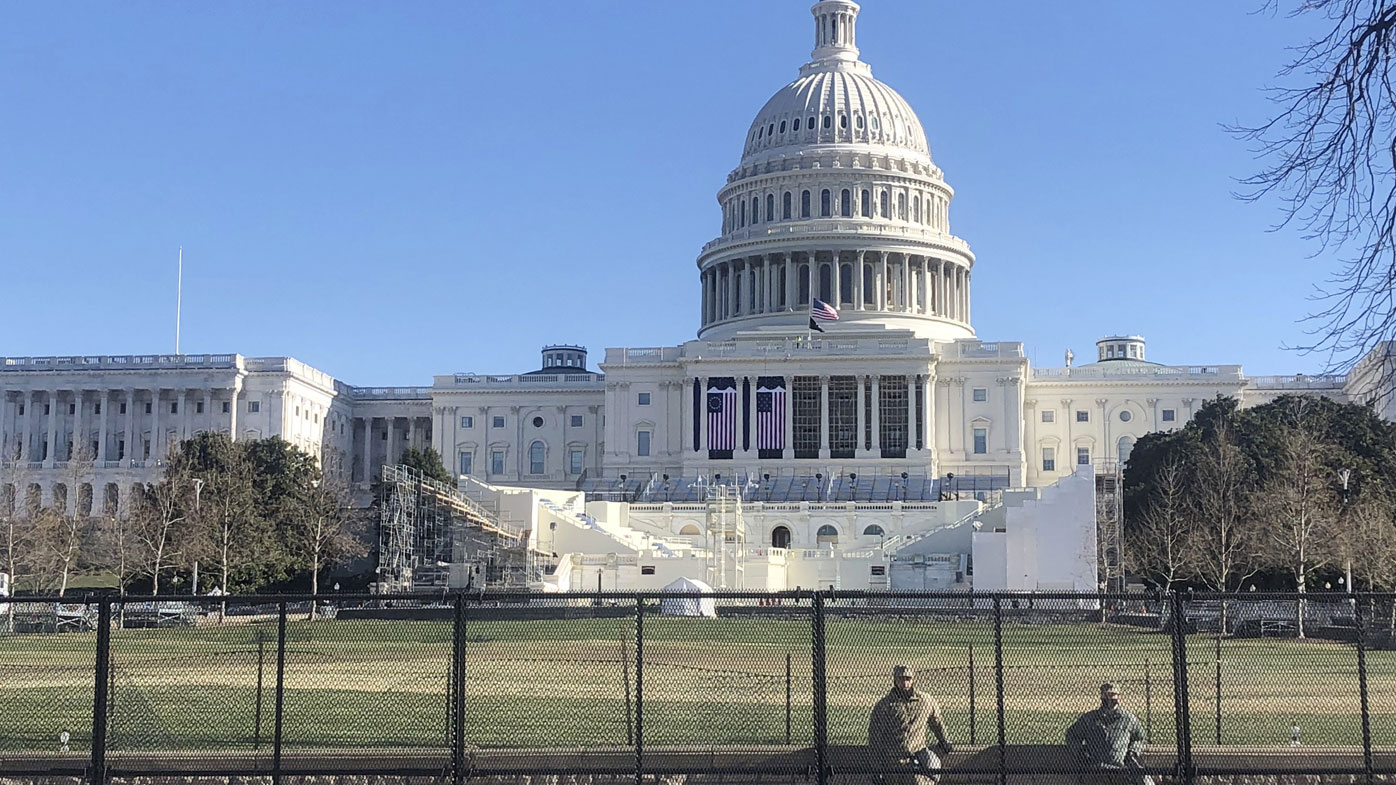
Members of the National Guard stand inside anti-scaling fencing that surrounds the Capitol, Sunday, Jan. 10, 2021, in Washington. The inaugural stand is centre

Cuccinelli said a decision to raise the nation's terrorism threat level has not been made. CNN reported earlier this week that it had been discussed among officials.

In Washington, federal and local officials are taking extraordinary steps to bolster security.

The National Mall will be closed to the general public on Inauguration Day, an official familiar with discussions has told CNN, and President-elect Joe Biden will no longer take an Amtrak train to Washington next week as previously planned.

Latin America: A Week in Pictures from Associated Press

AP Week in Pictures, Latin America & Caribbean

This photo gallery highlights some of the most compelling images made or published by Associated Press Photographers in Latin America and the Caribbean. It was curated by AP photojournalist Esteban Felix in Santiago, Chile.

Mexico City resident Romina Montoya takes a playful selfie wearing a protective face mask over her eyes and nose, in Playa del Carmen, Quintana Roo state, Mexico, Wednesday, Jan. 6, 2021. (AP Photo/Emilio Espejel)

The shadows of restaurant workers banging metal pots are cast on the street as more than a hundred employees from multiple restaurants block an intersection in the Polanco neighborhood to protest COVID-19 “red alert” restrictions that have closed on-site dining in Mexico City, Tuesday, Jan. 12, 2021. (AP Photo/Rebecca Blackwell)

Street artist Wolfgang Salazar works on his mural featuring Venezuelan athlete Yulimar Rojas, in the Boleita neighborhood of Caracas, Venezuela, Saturday, Jan. 2, 2021. (AP Photo/Matias Delacroix)

Children play in an occupied building that used to house a factory, amid the new coronavirus pandemic, in Rio de Janeiro, Brazil, Wednesday, Jan. 13, 2021. (AP Photo/Silvia Izquierdo)

raceli Ramirez holds the stuffed bear she had made from the shirt of her father, Lorenzo Ramirez, who died so quickly from COVID-19 two months ago that she was unable to say goodbye, as she sits outside the home of bear maker Erendira Guerrero, where she returned for a TV interview, in Ciudad Juarez, Mexico, Monday, Jan. 11, 2021. (AP Photo/Christian Chavez)

A penguin swims in an enclosure housing Gentoo and chinstrap penguins at Inbursa Aquarium, in Mexico City, Wednesday, Jan. 13, 2021. Last month Inbursa saw the birth of Alex, the first gentoo penguin to be born in Mexico. (AP Photo/Rebecca Blackwell)

Children play at a park during the COVID-19 pandemic in Montevideo, Uruguay, Sunday, Jan. 10, 2021. (AP Photo/Matilde Campodonico)

Dressed in a Nazi uniform, Carlos Mendoza, 39, gathers with other men after giving a political speech at Plaza San Martin, where dozens of people meet daily to exchange political ideas in public forums in Lima, Peru, Saturday, Jan. 9, 2021. (AP Photo/Rodrigo Abd)

Birds fly about in Bolivar Square empty of visitors during an official continuous multi-day curfew in an effort to contain the increase of COVID-19 infections, in Bogota, Colombia, Friday, Jan. 8, 2021. (AP Photo/Ivan Valencia)

Aymara Indigenous women wearing masks amid the new coronavirus pandemic wait to enter the archaeological museum in Tiwanaku, Bolivia, Tuesday, Jan. 12, 2021. (AP Photo/Juan Karita)

Fishermen’s boats sit idle on the dry banks of a Paraguay River tributary in Puerto Pabla, Lambare, Paraguay, Tuesday, Jan. 12, 2021. (AP Photo/Jorge Saenz)

Instagram: https://www.instagram.com/apnews

The post Latin America: A Week in Pictures from Associated Press appeared first on The St Kitts Nevis Observer.

United Women’s Economic Development Network launched

WASHINGTON — Women business leaders and entrepreneurs from the United States, Bahrain, Morocco, Israel, United Arab Emirates, Sudan, Uzbekistan, and Kosovo convened today for the virtual launch of the United Women’s Economic Development Network.

The event was hosted by U.S. Ambassador for Global Women’s Issues Kelley Currie, Special Envoy for Economic Normalization Aryeh Lightstone, and U.S. International Development Finance Corporation Senior Vice President and Managing Director of Global Women’s Issues Charity Wallace.

Following the signing of the Abraham Accords in September 2020, signatory parties have worked to establish across the region a warm peace, inclusive of all, and to develop new cross-country economic partnerships. In pursuit of those goals, the advancement of women’s economic empowerment has come to occupy a role of central importance.

The United Women’s Economic Development Network will provide a platform for building ties and trust among women in each country. It deepens the greater regional cooperation promised by the Abraham Accords and bringing the economic benefits of normalization to businesswomen and leaders in Abraham Accords countries and other likeminded countries.

The Network will also advance women’s economic empowerment and entrepreneurship, a major facet of U.S. foreign policy, in line with the White House-led Women’s Global Development and Prosperity (W-GDP) Initiative.

Special Envoy for Economic Normalization Aryeh Lightstone welcomed the group of approximately 40 women to the event, noting that in business you look for trends, and trends on women’s economic empowerment are positive. He also noted that the Abraham Accords countries are ascendant and female entrepreneurship in those countries has unlimited potential. Lightstone closed by stating that the women leaders at the event today are building directly on the Abraham Accords and translating it into tangible and sustainable benefits that will reach all sectors of society.

In her remarks, Ambassador-at-Large for Global Women’s Issues Kelley Currie applauded Marwa Al-Mansouri, an Emirati entrepreneur and board member of the UAE’s Economic Collaboration Committee, and Netta Korin, co-founder of Israel’s largest blockchain infrastructure company Orbs, for founding the network, which will complement U.S. objectives under W-GDP and contribute to lasting peace across the region. The launch of the Network also builds on the announcement last week of the DFC’s W-GDP 2X MENA initiative, launched in Morocco by Ambassador Currie and DFC SVP Wallace.

The post United Women’s Economic Development Network launched appeared first on The St Kitts Nevis Observer.

Biden Uveils $1.9 Trillion Virus Plan, Includes $1,400 Stimulus Cash for Taxpayers

WILMINGTON, Del. (AP) — President-elect Joe Biden has unveiled a $1.9 trillion coronavirus plan to end “a crisis of deep human suffering” by speeding up vaccines and pumping out financial help to those struggling with the pandemic’s prolonged economic fallout.

Called the “American Rescue Plan,” the legislative proposal would meet Biden’s goal of administering 100 million vaccines by the 100th day of his administration, and advance his objective of reopening most schools by the spring. On a parallel track, it delivers another round of aid to stabilize the economy while the public health effort seeks the upper hand on the pandemic.

“We not only have an economic imperative to act now — I believe we have a moral obligation,” Biden said in a nationwide address Thursday. At the same time, he acknowledged that his plan “does not come cheaply.”

Biden proposed $1,400 checks for most Americans, which on top of $600 provided in the most recent COVID-19 bill would bring the total to the $2,000 that Biden has called for. It would also extend a temporary boost in unemployment benefits and a moratorium on evictions and foreclosures through September.

And it shoehorns in long-term Democratic policy aims such as increasing the minimum wage to $15 an hour, expanding paid leave for workers, and increasing tax credits for families with children. The last item would make it easier for women to go back to work, which in turn would help the economy recover.

The political outlook for the legislation remained unclear. In a joint statement, House Speaker Nancy Pelosi and Senate Democratic leader Chuck Schumer praised Biden for including liberal priorities, saying they would move quickly to pass it after Biden takes office next Wednesday. But Democrats have narrow margins in both chambers of Congress, and Republicans will push back on issues that range from increasing the minimum wage to providing more money for states, while demanding inclusion of their priorities, such as liability protection for businesses.

“Remember that a bipartisan $900 billion #COVID19 relief bill became law just 18 days ago,” tweeted Sen. John Cornyn, R-Texas. But Biden says that was only a down payment, and he promised more major legislation next month, focused on rebuilding the economy.

“The crisis of deep human suffering is in plain sight, and there’s not time to waste,” Biden said. “We have to act and we have to act now.”

Still, he sought to manage expectations. “We’re better equipped to do this than any nation in the world,” he said. “But even with all these small steps, it’s going to take time.

His relief bill would be paid for with borrowed money, adding to trillions in debt the government has already incurred to confront the pandemic. Aides said Biden will make the case that the additional spending and borrowing is necessary to prevent the economy from sliding into an even deeper hole. Interest rates are low, making debt more manageable.

Biden has long held that economic recovery is inextricably linked with controlling the coronavirus.

That squares with the judgment of the U.S. Chamber of Commerce, the most powerful business lobbying group and traditionally an adversary of Democrats. “We must defeat COVID before we can restore our economy and that requires turbocharging our vaccination efforts,” the Chamber said in a statement Thursday night that welcomed Biden’s plan but stopped short of endorsing it.

The plan comes as a divided nation is in the grip of the pandemic’s most dangerous wave yet. So far, more than 385,000 people have died of COVID-19 in the U.S. And government numbers out Thursday reported a jump in weekly unemployment claims, to 965,000, a sign that rising infections are forcing businesses to cut back and lay off workers.

Under Biden’s multipronged strategy, about $400 billion would go directly to combating the pandemic, while the rest is focused on economic relief and aid to states and localities.

About $20 billion would be allocated for a more disciplined focus on vaccination, on top of some $8 billion already approved by Congress. Biden has called for setting up mass vaccination centers and sending mobile units to hard-to-reach areas.

To that end, Biden on Friday announced former FDA chief David Kessler as his chief science officer for the vaccine drive. Kessler has been advising Biden as a co-chair of his advisory board on the coronavirus pandemic. A pediatrician and attorney, he has emphasized the need to ease public concerns about the safety of the coronavirus vaccines. Confidence in the FDA’s review process is critical to ramping up the effort to vaccinate millions of Americans.

With the backing of Congress and the expertise of private and government scientists, the Trump administration delivered two highly effective vaccines and more are on the way. Yet a month after the first shots were given, the nation’s vaccination campaign is off to a slow start with about 11 million people getting the first of two shots, although more than 30 million doses have been delivered.

Biden called the vaccine rollout “a dismal failure so far” and said he would provide more details about his vaccination campaign on Friday.

The plan also provides $50 billion to expand testing, which is seen as key to reopening most schools by the end of the new administration’s first 100 days. About $130 billion would be allocated to help schools reopen without risking further contagion.

The plan would fund the hiring of 100,000 public health workers, to focus on encouraging people to get vaccinated and on tracing the contacts of those infected with the coronavirus.

There’s also a proposal to boost investment in genetic sequencing, to help track new virus strains including the more contagious variants identified in the United Kingdom and South Africa.

Throughout the plan, there’s a focus on ensuring that minority communities that have borne the brunt of the pandemic are not shortchanged on vaccines and treatments, aides said.

With the new proposals comes a call to redouble efforts on the basics.

Biden is asking Americans to override their sense of pandemic fatigue and recommit to wearing masks, practicing social distancing and avoiding indoor gatherings, particularly larger ones. It’s still the surest way to slow the COVID-19 wave, with more than 4,400 deaths reported just on Tuesday.

Biden’s biggest challenge will be to “win the hearts and minds of the American people to follow his lead,” said Dr. Leana Wen, a public health expert and emergency physician.

The pace of vaccination in the U.S. is approaching 1 million shots a day, but 1.8 million a day would be needed to reach widespread or “herd” immunity by the summer, according to a recent estimate by the American Hospital Association. Wen says the pace should be even higher — closer to 3 million a day.

Biden believes the key to speeding that up lies not only in delivering more vaccine but also in working closely with states and local communities to get shots into the arms of more people. The Trump administration provided the vaccine to states and set guidelines for who should get priority for shots, but largely left it up to state and local officials to organize their vaccination campaigns.

It’s still unclear how the new administration will address the issue of vaccine hesitancy, the doubts and suspicions that keep many people from getting a shot. Polls show it’s particularly a problem among Black Americans.

“We will have to move heaven and earth to get more people vaccinated,” Biden said.

Next Wednesday, when Biden is sworn in as president, marks the anniversary of the first confirmed case of COVID-19 in the United States.

___

Associated Press writers Josh Boak and Alan Fram contributed to this report.
The post Biden Uveils $1.9 Trillion Virus Plan, Includes $1,400 Stimulus Cash for Taxpayers appeared first on The St Kitts Nevis Observer.

Indonesian divers find parts of crashed plane's cockpit voice recorder

Divers found parts of the cockpit voice recorder on Friday as more personnel joined the search for wreckage and victims from an Indonesian plane that crashed last weekend in the Java Sea with 62 people on board.

The aerial search for the crashed Sriwijaya Air jet was being expanded as well, said National Search and Rescue Agency mission coordinator Rasman, who uses one name.

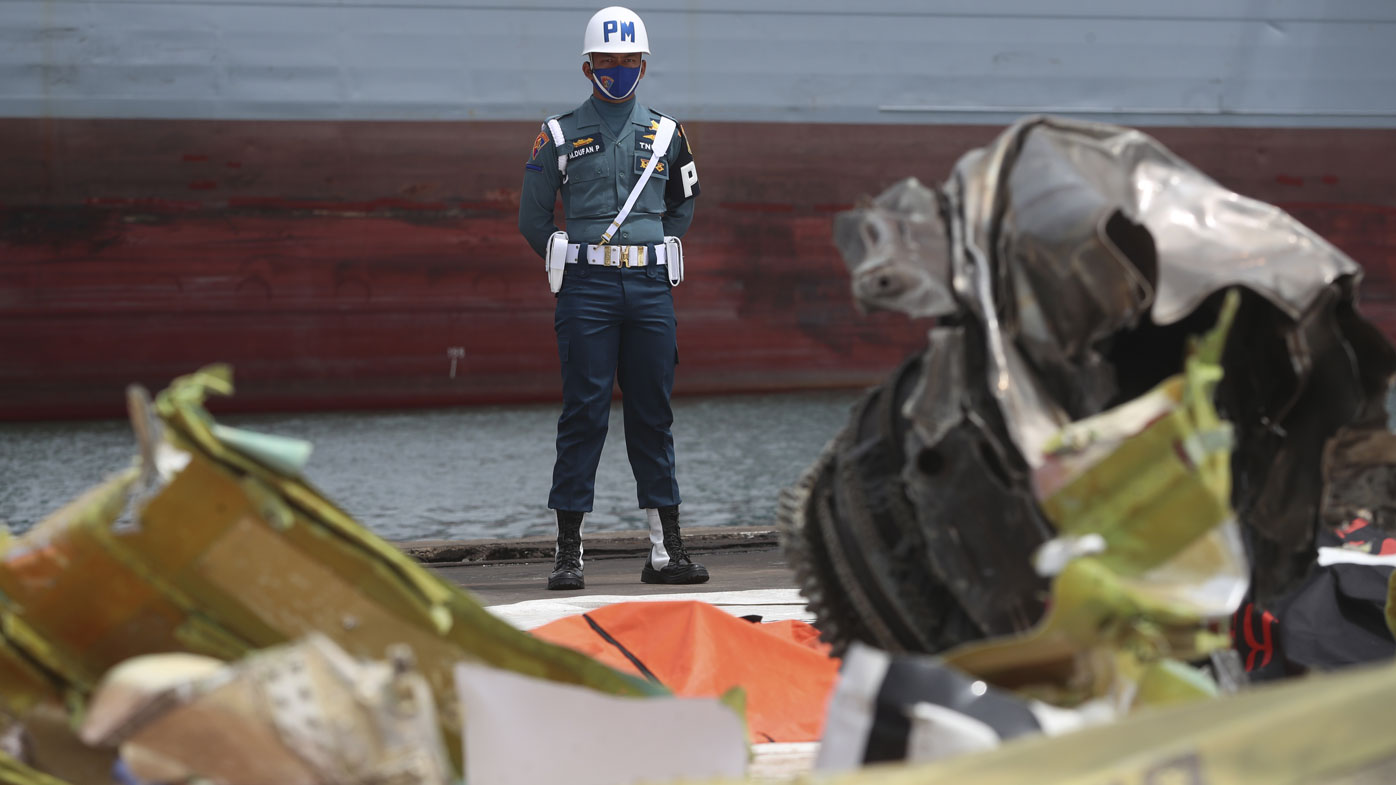
More than 4,000 search and rescue personnel are supported by 14 airplanes, 62 ships and 21 inflatable boats. They are using an underwater metal detector and remotely operated vehicle to search for human remains, the cockpit voice recorder and more wreckage.

An Indonesian soldier stand guard near debris found in the waters around the location where a Sriwijaya Air passenger jet crashed at the search and rescue command centre at Tanjung Priok Port in Jakarta, Indonesia, Friday, Jan 15, 2021

Divers narrowed the search for the cockpit voice recorder after finding some of its parts.

"We have found the casing, the beacon and the CVR batteries. We need to search for the memory unit," the commander of the navy's First Fleet Command, Abdul Rasyid, said Friday.

"We hope it will be not far from them," he said.

RELATED: Black box recovered from missing Indonesia flight SJ182

Investigators have downloaded information from the plane's flight data recorder, which was recovered earlier this week.

"There are 330 parameters and everything is in good condition. We are learning about it now," said Soerjanto Tjahjono, chairman of the National Transportation Safety Committee.

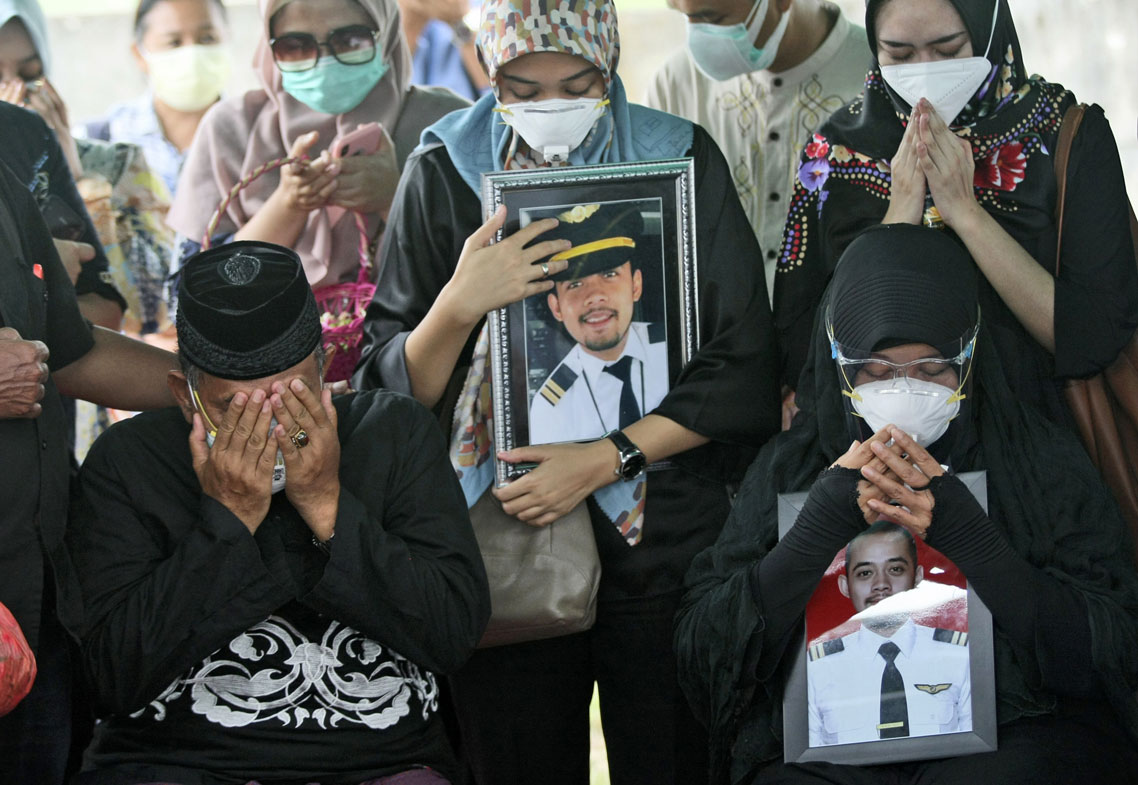
Families of those on board have been providing DNA samples to help identify them. National Police spokesperson Rusdi Hartono said 12 of the 62 victims had been identified as of Thursday, including a flight attendant and an off-duty pilot.

Relatives weep as they pray during the burial of Fadly Satrianto, a victim of the crash of Sriwijaya Air flight SJ-182 in Surabaya, East Java, Indonesia, Friday, Jan. 15, 2021

The committee has said the crew did not declare an emergency or report any technical problems before the plane plunged into the sea minutes after taking off from Jakarta in heavy rain. They said it broke apart upon impact with the water, ruling out a midair explosion, because the debris field is concentrated and engine parts indicate it was running until impact.

The 26-year-old Boeing 737-500 was out of service for almost nine months last year because of flight cutbacks caused by the coronavirus pandemic. The airline and Indonesian officials say it underwent inspections, including for possible engine corrosion that could have developed during the layoff, before it resumed commercial flying in December.

Indonesia's aviation industry grew quickly after the nation's economy was opened following the fall of dictator Suharto in the late 1990s. Safety concerns led the United States and the European Union to ban Indonesian carriers for years, but the bans have since been lifted due to better compliance with international aviation standards.

St. Kitts and Nevis records year-after-year reduction in major crimes

Community policing team checks on the well-being at a home.

BASSETERRE, St. Kitts — Crime statistics in St. Kitts and Nevis continue to trend in the right direction, with Prime Minister Dr. the Honourable Timothy Harris stating that the Federation has recorded year after year reduction in major crimes, including homicides.

A total of 10 homicides were recorded in the Federation in 2020, compared to 12 homicides committed in 2019.

“We ended 2020 with a 20 percent reduction in major crimes when compared to 2019. Additionally, our detection rose to 50 percent, the best detection rate so far. This is the third year in a row that we have experienced such significant reduction in major crimes,” said Prime Minister Harris, who is also Minister of National Security.

The prime minister said the immediate goal of his Government is to enhance the safety and security of St. Kitts and Nevis to such an extent that homicides are reduced even further to a single digit.

Dr. Harris, however, urged every citizen and resident to assist the Government in ensuring that St. Kitts and Nevis is the safest place to live, work and to visit.

“I must remind our citizens and residents that each of us can contribute to crime reduction if we practice to say something when we see a crime being committed or become privy to any information on it. No one must be allowed to take another’s life with impunity. The law must take its course. We must never recoil from seeking peace and pursuing it. We continue to work hard to make St Kitts and Nevis the safest small island state in the World,” Prime Minister Harris said.

The National Security Minister commended the rank and file of the Royal St. Christopher and Nevis Police Force. He singled out the leadership of Commissioner of Police, Mr. Hilroy Brandy, who, on the recommendation of the Cabinet, was awarded the Queen’s Police Medal (QPM) for his distinguished and meritorious service to law enforcement.

“Mr. Brandy’s excellent record in law enforcement has finally received recognition and acclaim from Her Majesty…and I want to commend him on this significant conferment at this time in his career, and of course on behalf of all of us at Cabinet I extend to you again, Commissioner Brandy, our most sincere congratulations and best wishes,” Prime Minister Harris added.

The post St. Kitts and Nevis records year-after-year reduction in major crimes appeared first on The St Kitts Nevis Observer.

Indonesia: Strong Quake on Sulawesi Island Kills at Least 67

A strong earthquake with a magnitude 6.2 hit Indonesia’s Sulawesi island Friday, killing at least 67 people, destroying residential and commercial buildings and triggering landslides, local authorities said.

More than 600 people were injured, and many others were trapped in the rubble of collapsed homes and other buildings, Indonesia’s National Disaster Mitigation Agency said in a statement.

The earthquake, with an epicenter 36 kilometers south of West Sulawesi province’s Mamuju district and at a depth of 18 kilometers struck at 2:18 am local time, the U.S. Geological Survey said.

Rescue teams were searching for more than a dozen patients and staff trapped in the rubble of a flattened Mamuju hospital.

Landslides occurred in three locations and blocked a main road connecting Mamuju to the Majene district, a spokesperson for the disaster agency said.

The Indonesian Red Cross announced its rescue teams were searching for survivors in the rubble and providing first aid.

“This is a most tragic earthquake and our specialist teams have been working through the night to help people amid the rubble,” adding that “these hours are critical for saving lives,” Sudirman Said, the organization’s secretary general said.

On Thursday, a 5.9-magnitude undersea quake struck the same region, damaging several homes but no casualties.

Earthquakes, volcanos and tsunamis are common in Indonesia due to its location on the “Ring of Fire,” which is one of the world’s most seismically active areas.

In 2018, a 7.5-magnitude earthquake and a tsunami that followed in Palu on Sulawesi killed more than 4,000 people.

In December 2004, a 9.1-magnitude earthquake struck off the coast of Sumatra in Indian Ocean and triggered a tsunami that killed about 230,000 people in the region, most of them in Indonesia.

The post Indonesia: Strong Quake on Sulawesi Island Kills at Least 67 appeared first on The St Kitts Nevis Observer.