Category Archives: headline

Farmer witnesses more rain fall in 24 hours than an entire year

When Steve Dalitz woke to his once drought-ravaged paddocks soaked and swelling with teeming rain, it was a sight the Victorian dairy farmer hadn't seen in years.

It was early one morning in April this year and 74mm had fallen in just 24 hours. It was more rain than the region had experienced in all of 2019.

By May, the paddocks would be somewhat restored, with lush boot-high grass offering a bounty to a sorely depleted dairy cow herd.

It was a bittersweet moment for Mr Dalitz and his family, who were forced off the land midway through last year after the crippling drought and political baggage from the dairy industry all but broke them.

READ MORE: Drought in NSW drops by almost 80 per cent as La Nina kicks in

Steve Dalitz (bottom right) with his family.

For the family of five, the slow recovery just came too late.

Earlier this month, Mr Dalitz bid farewell to 35 years as a dairy farmer after selling off part of the family's 468-acre farm.

"Selling the farm will get rid of our debt … we'll have a little bit of debt left over," he told nine.com.au before pausing.

"Seems a bit of waste. Basically, we worked 35 years and ended up with a house."

The crushing drought

Selling part of the farm ends a devastating five and a half years for the family where financial strains brought on by milk companies, price wars over $1 milk and government policy over water proved too great. 

"Hindsight is a great thing," he said.

"We thought about riding out the drought, but the drought went on for two years instead of one.

"We should have sold the cattle and sold hay.

"But the cows were more than a money source to me.

"Dairy cows are a bit different … you see them twice a day.

"They were my grandfather's herd and we worked them up into a fairly good stud herd."

READ MORE: Farmers forced to abandon bumper crop due to worker shortage
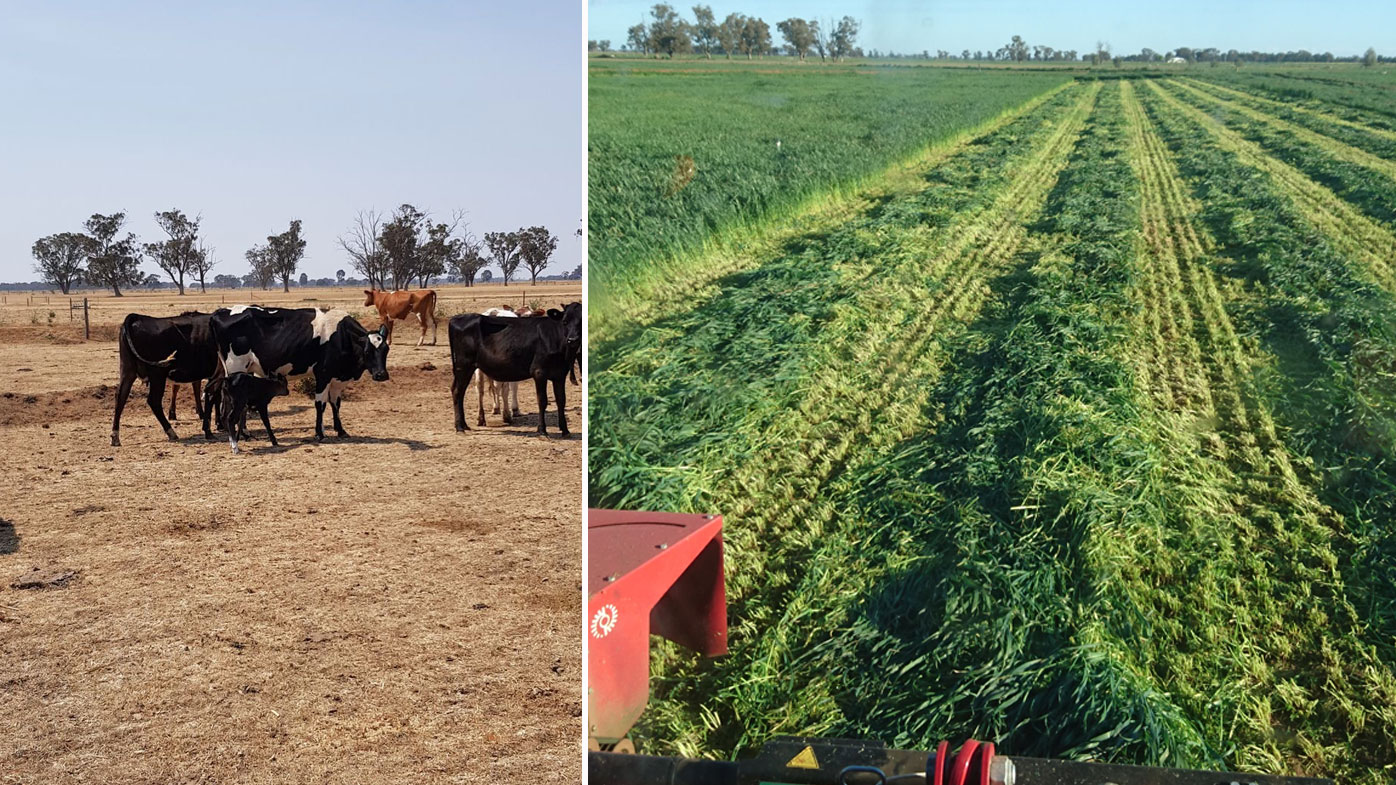
Then and now: Steve Dalitz documents the last few years drought versus this year's lush green.

He said for the first year of the drought, the family went into survival mode where they went back to milking the cows once a day.

When he eventually sold his stock, he was again stung by the drought.

Outside of a drought, dairy cows were worth around $2500 each, yet in a drought their worth had plummeted close to $1000.

Even the price of water was proving too steep.

In pre-drought, a megalitre of water sold for $100. During the drought, he said, the price jump to around $800 a megalitre.

But during the drought the cost jumped from $70,000 to $550,000 to water the paddocks.

'I'm not being ungrateful'

The Dalitzes were one the hundreds of Australian farming families who saw firsthand the good farming aid provided for those on the land.

And while he will be forever grateful for the donations and kindness of strangers during the major drought appeals, it simply would never be enough to restore what so many lost.
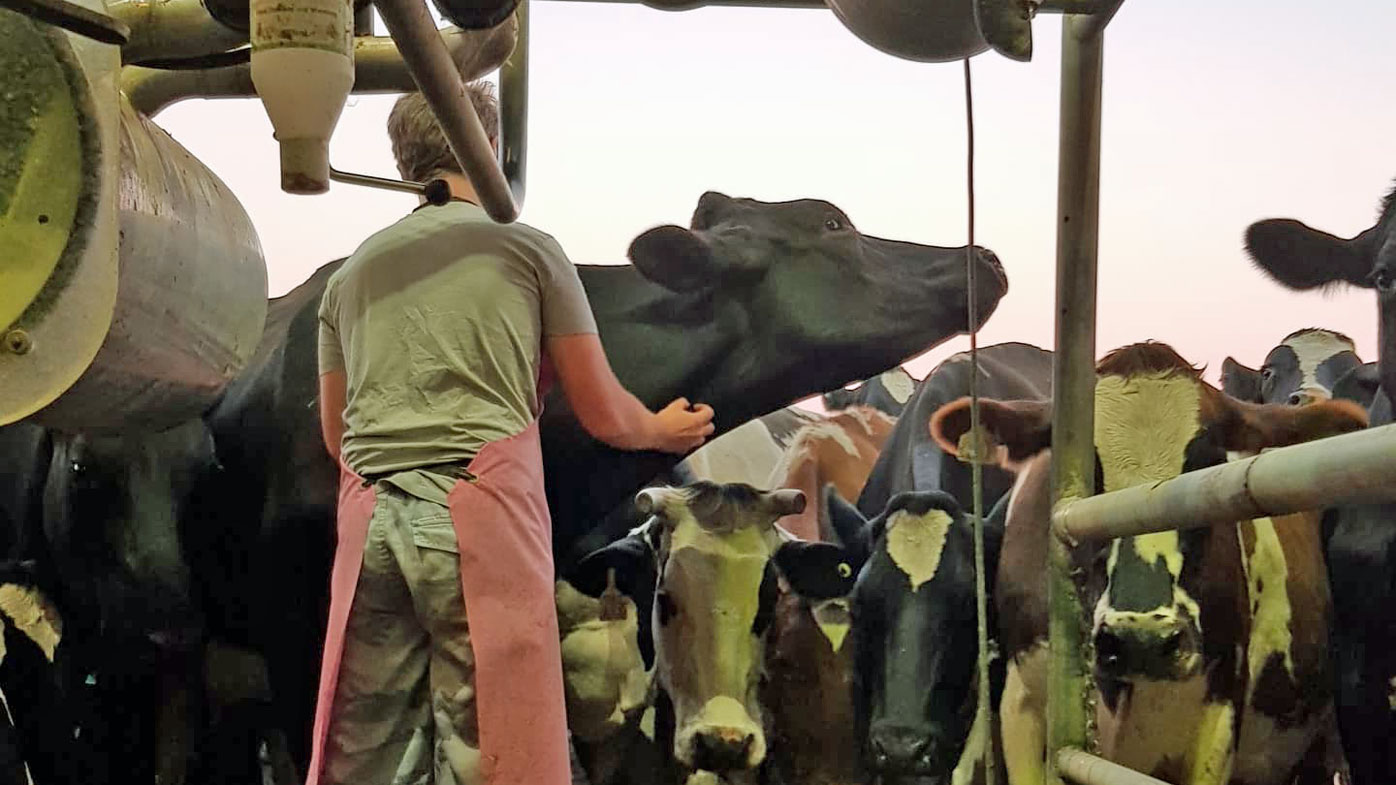
Dairy cows lining up for a milking.

"At the time most of the drought aid had probably helped mentally more so than financially," he said, referring to the hampers and touching hand drawn messages from the local schools.

"It didn't really help us that much, it did help us mentally. It's a bit the same as those hay runs … we got hay and we got 10 bales which keeps our cows going for two days.

"It was great what people were doing, but it didn't really help … I'm not being ungrateful."

To illustrate his point, he said a farmer he worked with this year was unable to afford his medication or petrol to get to work.

He was eating Weet-Bix for his three meals just to get by.

In Mr Dalitz's view, the government aid "was aimed wrong" with millions of dollars wasted.

He said instead of financial counselling more pressure should have been put on Coles selling milk for $1 per litre.

"That was the milk price in 1984 … but the Coles executives aren't on 1984 wages," he said.

As the hard months continued, he took on other work at nearby farms to help supplement his income.

He spent the last 12 months travelling around Gippsland and the Western District farm-sitting to give respite to other dairy farmers.
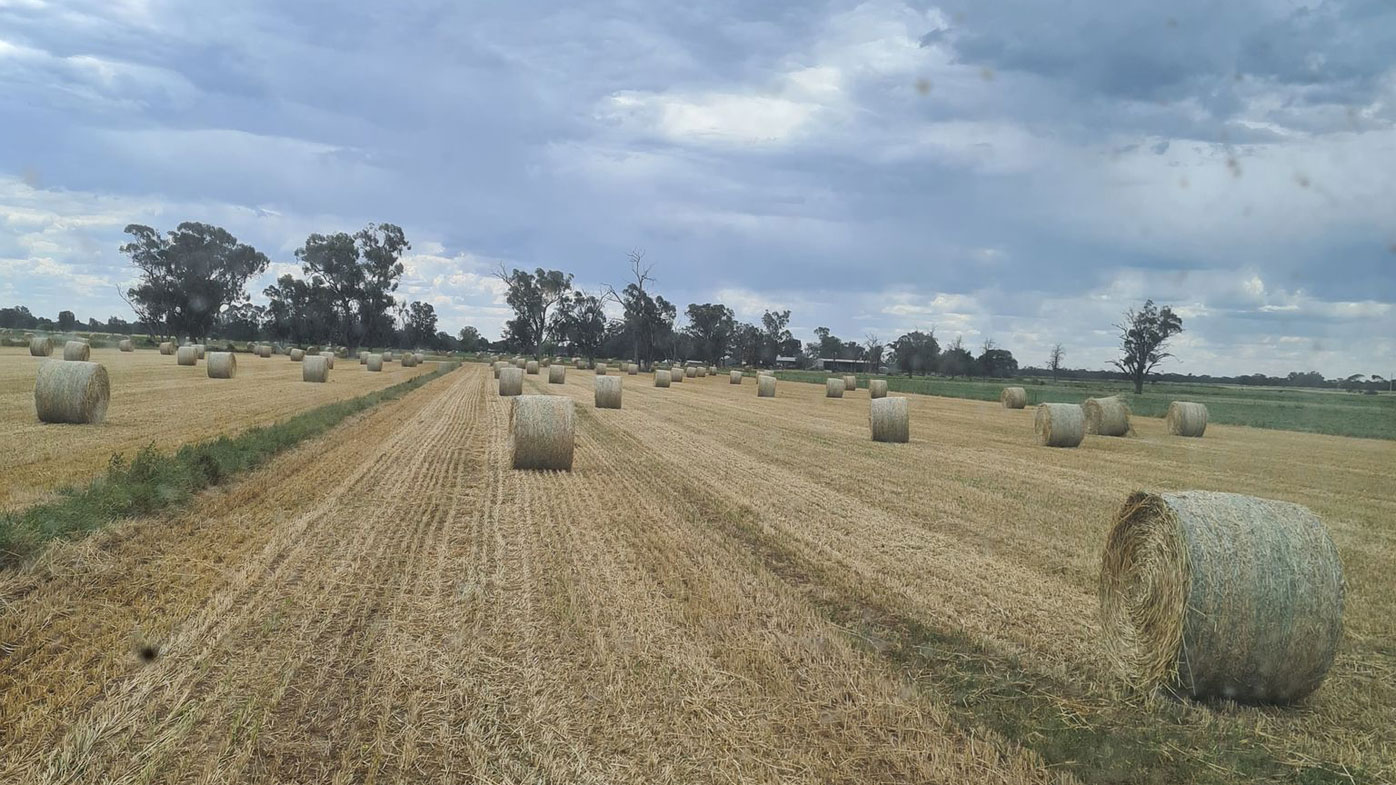
Mr Dalitz bid farewell to 35 years as a dairy farmer after selling off part of the family's 468-acre farm in October.

The 12-month stint back

He documented his travels through his Facebook page, sharing the daily experiences of his new normal working on the land.

"My legs are sore, my back aches as it's a long time since I have milked 270 cows for six milkings in a row. But there (sic) good aches," he wrote in July last year.

As a comparison, during the drought before he started the farm sitting he was milking less than 60 cows once a day for months.

"I really enjoyed it, but I was always wanting to come home all the time. Being a dairy family, you are used to be around each other," he said.

When the coronavirus pandemic hit Australia in March, Mr Dalitz's jobs dried up.

Harsh lockdowns in Victoria meant no more holidays.

He picked up more work nearby but as the health crisis worsened that job also ended.

During his 12-month stint, he worked more on than 20 farms.
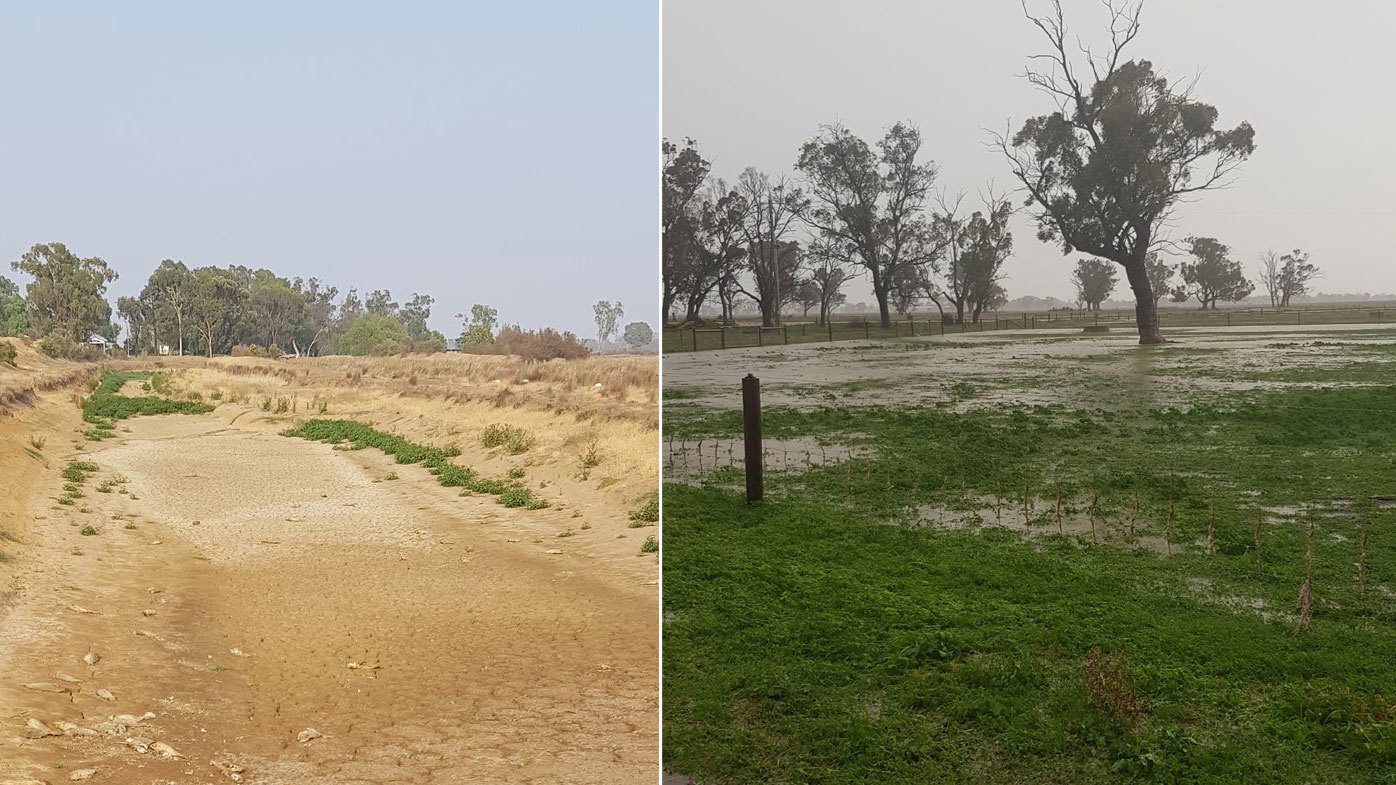
Relief from Australia's crippling drought came 12 months too late for the Dalitzs.

These days, the family remain in their house on a subdivided block of their land with the change in weather also changing their fortunes.

Mr Dalitz is now making a solid living selling hay and is back studying to be a counsellor.  
"If we had this 12 months earlier we would have survived," he said.

"Sometimes you look back and I might have done the same thing and worked for someone else.

"That's what I'm enjoying now, I'm doing what I love doing but I haven't got the financial stresses.

"This year we've had an absolutely brilliant system … financially we're really good. It's the best it's been for 10 years."

Contact reporter Kate Kachor at kk*****@******om.au

Explorer’s Youth Clubs inaugurate new Phillip’s Village headquarters

Ribbon-cutting ceremony, left to right, Inspector Rosemary Isles; Deputy Prime Minister Hon. Shawn Richards; Prime Minister Dr. The Hon. Timothy Harris; Permanent Secretary Osmond Petty; Resident Taiwanese Ambassador H.E. Tom Lee; and Commissioner of Police Hilroy Brandy.

BASSETERRE, St. Kitts — Following the official opening of their headquarters in Phillip’s Village, the Explorer’s Youth Clubs now have a permanent place to call home.

The new 10,420 square foot building was opened by Prime Minister and Minister of National Security, Dr. The Honourable Timothy Harris, at a December 31 ceremony. It features a number of amenities for the members of the 12 Explorers Clubs across St. Kitts. Each club is expected to have weekly sessions there when the threat of COVID-19 ends.

Project Engineer, George Gilbert of the Public Works Department, congratulated Myron Percival and his company, M&D Construction for the excellent work in building the $2.47 million facility. Gilbert said that the sleeping rooms with accompanying bathrooms for males, females, and staff will allow camping events. Also featured are a recreation room, offices, a common dining room and kitchen, and a laundry area. There are three 500 gallon water storage tanks on the roof.

Prime Minister Harris plays table tennis with Inspector Rosemary Isles at the Explorer’s Youth Clubs Headquarters.

In his remarks, Prime Minister Harris referred to the incredible growth of the Explorers Movement, which started in July 2017 with the launch of the Mol-Phil group. Since then, other communities have joined including Tabernacle, Shadwell, Cayon, Newtown, Lodge, Old Road, Dieppe Bay, St. Peter’s, St. Paul’s, Trinity, and Newton Ground.

Dr. Harris said that there are over 1,200 Explorers. He expects the numbers to continue growing as other communities have signalled an eagerness to establish clubs.

“This is a legacy development in the context of law and order in our country,” said the Prime Minister. “This is a legacy initiative that generations after us will speak to as being an important stabilizer of our society and contributing to the advancement of St. Kitts and Nevis.”

He said the government remains committed to the empowerment of young people as well as the rule of law within society. This is reflected in the record amounts allocated to related ministries for the 2021 fiscal year.

The Ministry of National Security was allocated more than $86.1 million. The Ministry of Education received over $103 million, while the Ministry of Youth, Sports and Culture was allotted over $10 million.

Prime Minister Harris appealed to parents, businesses, and other stakeholders to join with the government in building a stronger and safer future for all.

The post Explorer’s Youth Clubs inaugurate new Phillip’s Village headquarters appeared first on The St Kitts Nevis Observer.

WHO issues emergency-use validation for Pfizer/BioNTech COVID-19 mRNA vaccine

GENEVA -– The World Health Organization (WHO) has listed the Comirnaty COVID-19 mRNA vaccine for emergency use, making the Pfizer/BioNTech vaccine the first to receive emergency validation from WHO since the outbreak began a year ago.

The WHO’s Emergency Use Listing (EUL) opens the door for countries to expedite their own regulatory approval processes to import and administer the vaccine. It also enables UNICEF and the Pan-American Health Organization to procure the vaccine for distribution to countries in need.

“This is a very positive step towards ensuring global access to COVID-19 vaccines. But I want to emphasize the need for an even greater global effort to achieve enough vaccine supply to meet the needs of priority populations everywhere,” said Dr. Mariângela Simão, WHO Assistant-Director General for Access to Medicines and Health Products. “WHO and our partners are working night and day to evaluate other vaccines that have reached safety and efficacy standards. We encourage even more developers to come forward for review and assessment. It’s vitally important that we secure the critical supply needed to serve all countries around the world and stem the pandemic.”

Regulatory experts convened by WHO from around the world and WHO’s own teams reviewed the data on the Pfizer/BioNTech vaccine’s safety, efficacy and quality as part of a risk-versus-benefit analysis. The review found that the vaccine met the must-have criteria for safety and efficacy set out by WHO, and that the benefits of using the vaccine to address COVID-19 offset potential risks.

The vaccine is also under policy review WHO’s Strategic Advisory Group of Experts on Immunization (SAGE) will convene on January 5, 2021, to formulate vaccine specific policies and recommendations for this product’s use in populations, drawing from the SAGE population prioritization recommendations for COVID-19 vaccines in general, issued in September 2020.

The Comirnaty vaccine requires storage using an ultra-cold chain; it needs to be stored at -60°C to -90°C degrees. This requirement makes the vaccine more challenging to deploy in settings where ultra-cold chain equipment may not be available or reliably accessible. For that reason, WHO is working to support countries in assessing their delivery plans and preparing for use where possible.

How the emergency use listing works

The emergency use listing procedure assesses the suitability of novel health products during public health emergencies. The objective is to make medicines, vaccines and diagnostics available as rapidly as possible to address the emergency while adhering to stringent criteria of safety, efficacy and quality. The assessment weighs the threat posed by the emergency as well as the benefit that would accrue from the use of the product against any potential risks.

The EUL pathway involves a rigorous assessment of late phase II and phase III clinical trial data as well as substantial additional data on safety, efficacy, quality and a risk management plan. These data are reviewed by independent experts and WHO teams who consider the current body of evidence on the vaccine under consideration, the plans for monitoring its use, and plans for further studies.
Experts from individual national authorities are invited to participate in the EUL review. Once a vaccine has been listed for WHO emergency use, WHO engages its regional regulatory networks and partners to inform national health authorities on the vaccine and its anticipated benefits based on data from clinical studies to date.

In addition to the global, regional, and country regulatory procedures for emergency use, each country undertakes a policy process to decide whether and in whom to use the vaccine, with prioritization specified for the earliest use. Countries also undertake a vaccine readiness assessment which informs the vaccine deployment and introduction plan for the implementation of the vaccine under the EUL.

As part of the EUL process, the company producing the vaccine must commit to continue to generate data to enable full licensure and WHO prequalification of the vaccine. The WHO prequalification process will assess additional clinical data generated from vaccine trials and deployment on a rolling basis to ensure the vaccine meets the necessary standards of quality, safety and efficacy for broader availability.

The post WHO issues emergency-use validation for Pfizer/BioNTech COVID-19 mRNA vaccine appeared first on The St Kitts Nevis Observer.

UVI Leadership Research Publication features Kittitian Luminaries’

ST. THOMAS, Virgin Islands — The Caribbean Perspectives – A Leadership Research Publication of the Eastern Caribbean Centre, University of the Virgin Islands, features Kittitian Luminaries’ work.

Featured in the recently published issue of Caribbean Perspectives under the theme, “Female Leadership in the 20th and 21st Century Caribbean,” are Kittitians; Advisor with responsibility for OAS National Offices in the Americas at the Organization of American States Her Excellency Jacinth Henry-Martin, International Relations and National Security Specialist Dr. Mutryce A. Williams and Attorney Talibah V. O. Byron.

Her Excellency Jacinth Henry-Martin

Dr. Mutryce A. Williams

Attorney Talibah V.O. Byron

Dr. Williams’ submission is titled “Inspiring a New Generation of Female Political Leadership across the Caribbean.” Attorney Byron’s work is titled “The Case for More Leaders in the Caribbean.”

Common threads woven throughout the three submissions are the need for Caribbean women to ‘stop leading from behind, stop sacrificing their expertise, skills set and often their truth in campaigning, coordinating, and negotiating to win elections often for a full slate of men.’ The authors also highlighted the need to ‘question and challenge the structural, societal, political, economic, and cultural constraints that have and continues to prevent women from aspiring not only to political office but to the highest office in their respective countries.’

Editor of the publication Dr. Frank L. Mills, in his editorial noted, “This issue of Caribbean Perspectives shares the views of five prominent Caribbean females, all leaders in their own rights, and who are proponents of the views of charismatic Caribbean leaders who articulate their vision with clarity, decisiveness, courage, passion, and humility.”

Also featured in this issue of UVI’s Caribbean Perspective Leadership Research Publication is Nandi Sekou Esq. who is of Kittitian descent, and Dr. Valerie Knowles Combie. Attorney Sekou’s submission is titled, “Caribbean Women of Consequence: New Leadership for the 21st Century. Dr. Knowles Combie’s work is titled “Biblical Female Leaders: Trailblazers for 21st Century Women.”

Caribbean Perspectives is a product of the Eastern Caribbean Centre (ECC). The ECC is a resource organization that conducts research and associated training, technology transfer, and information dissemination, responsive to development of issues in an evolving U.S. Virgin Islands and applicable to small island communities. It conducts and sponsors research in the U.S. Virgin Islands and the rest of the Eastern Caribbean and disseminates information to enhance the contributions of scientific inquiry to human well-being in the Caribbean region.

Founded in 1962, UVI is a public, co-ed, land-grant HBCU (Historically Black College and University) in the United States Virgin Islands (USVI). Approximately 2,500 students are enrolled on the two campuses: the Albert A. Sheen Campus on St. Croix and the St. Thomas campus. The institution offers 47 undergraduate and graduate degree programs across its five colleges and schools.
UVI boasts more than 7,000 alumni who excel as physicians, attorneys, judges, politicians, university administrators, teachers, nurses, and many other professionals. Among the many accomplished former UVI students are two Rhodes Scholars and a Pulitzer Prize-winning journalist.

Dr. Mutryce A. Williams

Attorney Talibah V.O. Byron

The post UVI Leadership Research Publication features Kittitian Luminaries’ appeared first on The St Kitts Nevis Observer.

Traffic light installation underway

The general public is asked to note that Synergy Engineering Limited out of Jamaica, along with several local partners, commenced work on phase two of the Traffic Lights Project on Monday, December 28, 2020. Traffic lights will be installed at the following junctions/areas:

– Wellington Road and Leonard Dickson Street;

– Bird Rock Road and the Bay Road;

– Sandown Road and the Bay Road;

– The Bay Road and the roundabout in the vicinity of The Sands Complex;

– The Bay Road in the vicinity of the roundabout on Port Zante (west);

– College Street Ghaut and the Bay Road;

– Upper College Street Ghaut and Cayon Street.

As a result of the work being done, there will be some obstructions to the flow of traffic and some parking spaces will be occupied. Motorists and pedestrians are asked to proceed with caution in these areas. The project is expected to be completed in April 2021.

The post Traffic light installation underway appeared first on The St Kitts Nevis Observer.

How Fast Is ‘Warp Speed’? US Way Behind On Vaccine Administration As Deaths Hit New Record.

DECEMBER 31st, 2020–(Daily Mail)–Are the United States falling at the final hurdle? The “Warp Speed” chief has admitted that just 2.6m Americans have been vaccinated instead of 20m target – despite 12m doses sitting in freezers across the states

The US has only administered about 10 percent – less than 2.6million – of the 20 million doses of coronavirus vaccine it promised to give to Americans by the end of 2020, despite having distributed more than 12million doses to states and territories.

CDC data reveal that as of 9am ET on Wednesday, fewer than 2.6million people had received their first doses of Moderna or Pfizer’s vaccines – both of which are difficult to ship and handle because they need to be stored at freezing temperatures.

The bottleneck is caused by officials on state and federal level who have failed to create plans to get those shots into the arms of Americans according to a former FDA official who told DailyMail.com that the failure is akin to dropping the baton on the last leg of the vaccine race.

The hold-ups came as the US set yet another grim record for the deadliest day yet with 3,903 deaths recorded in a single day on Wednesday – and a new mutant ‘super strain’ of the virus was detected in southern California and Colorado.

While Americans continue to wait to be vaccinated, the UK on Wednesday authorized a vaccine by AstraZeneca that will almost certainly accelerate vaccine distribution there because it is cheaper, far easier to ship, handle and store than the Pfizer and Moderna alternatives.

Yet US regulators have no intention of approving the more efficient shot until April – two months after AstraZeneca’s US trial will have enough data to prove to the FDA that it works. Other trials have already shown that AstraZeneca’s $4 vaccine is safe and about 70 percent effective – well above the efficacy the FDA said it will require to approve a vaccine.

But in the US, federal government has punted distribution plans almost entirely to states, where health departments are already stretched thin by surging COVID-19 cases. The result is a helter-skelter patchwork of last-minute plans that look vastly different from state to state, bumping drug addicts and prisoners to the front of the line in some places, while in others, like Florida, elderly Americans are camping out in lawn chairs overnight in a bid to get vaccinated.

Others say essential workers and the aged are being told to ‘call around’ to see if they can get a vaccine.

As anger mounted that only about 230,000 Americans are getting vaccinated a day, President Trump tweeted on Wednesday that states had the doses and needed to ‘get moving!’. Even Operation Warp Speed’s chief scientist Dr Moncef Slaoui admitted. that the US vaccine roll-out ‘should be better’.

There were more than 3,903 deaths in 24 hours on Wednesday – the highest since the start of the pandemic. It is the ninth time this month that single-day fatalities have exceeded 3,000 – numbers never seen in the U.S. before December. Hospitalizations soared to a new high too, with 125,220 Americans with coronavirus in inpatient treatment.

In the past 48 hours, 461,982 vaccines have been given – about 230,000 a day.

‘We agreed that the number is lower than what we hoped for,’ said co-chief of Operation Warp Speed Dr Moncef Slaoui during a Wednesday briefing.

‘We know that it should be better and we are working hard to make it better,’ he added, of the distribution process.

At least 11.45 million doses have been distributed and the federal government has allocated just shy of 20 million doses to be distributed by the end of next week.

But that has not translated to shots in arms.

The vaccine roll-out in the US lags behind other wealthy nations. In the 16 days since the U.S. began vaccinating people, 2,589,125 Americans have gotten their first dose.

That means an average of about 40 out of every 100,000 people in the US are getting vaccinated a day, compared to 60 per capita in the UK, which approved the Oxford University-developed vaccine made by AstraZeneca on Wednesday.

Dr Slaoui said that vaccine – which is more easily distributed because it can be shipped and stored at refrigerator temperatures – likely won’t be authorized until April.

US regulators have faced broad criticism – including from President Trump – for dragging their feet on vaccine approvals while thousands of Americans die of COVID-19 each day.

It seems that the harsh words have done little to hurry the Food and Drug Administration (FDA) up.

AstraZeneca expects to have results from its ongoing US vaccine trial by February – yet Operation Warp Speed says it doesn’t expect the shot to get authorized for another two months thereafter.

It remains unclear why. The vaccine was at least 70 percent effective in trials. Data published in the Lancet gave rise to no major concerns over side effects or safety (despite trials being paused in September after two participants developed neurological issues, both of which were ultimately deemed unrelated to the jab).

The post How Fast Is ‘Warp Speed’? US Way Behind On Vaccine Administration As Deaths Hit New Record. appeared first on The St Kitts Nevis Observer.