Anyone who travels unlawfully to Ukraine for combat will be investigated on their return to the UK, the Foreign office has said
Some military veterans have received cold call approaches about fighting in Ukraine, the BBC understands.
Private militias have reportedly been scouring social media to recruit ex-soldiers.
Ukraine has previously asked for volunteers to join its International Legion.
But the Foreign Office has said anyone who travels unlawfully to Ukraine for combat will be investigated on their return to the UK.
Afghanistan veteran Steve, not his real name, told the BBC Wales Live programme he had received at least 10 approaches, including one which offered him money.
“Whenever there’s conflict the chatter starts up, but there was a different tone to this, a more deliberate tone,” he said.
“There are private militias who’ve been scouring social media for veterans, so these private militias have been trying to recruit.”
Steve said he believed the offer of money wasn’t genuine, but many of the other contacts he’d received were from other veterans looking to organise groups in the UK before travelling to Ukraine.
One veteran said he had been offered money to fight in Ukraine
“I did very well on my second tour of Afghanistan and obviously when you’re over there you make a lot of contacts,” he said.
“The more serious guys are trying to organise it here and go as a group of people that are people you’ve deployed with, served with, people who know each other’s skill set.”
‘Some have no military experience’
However, Steve said he was increasingly concerned for the welfare of both veterans and civilian volunteers.
“A lot of guys want to go out and help, but some are jumping on the bandwagon and have no military experience. Some are veterans, but they’ve never deployed, so they’ve never been in combat,” he said.
“Veterans with mental health issues, physical issues, and people that go over there that can’t fight, that’s not actually a help that’s more of a hindrance.
“Who are you meeting at the border? Will you get good weapons systems? Will you get medical care? There are too many moving parts.”
Image source, Rab Grady,
A Scottish grandfather, Rab Grady (centre), announced he was fighting alongside the Ukrainians on a video he posted online
Despite doing his best to warn others of the dangers, Steve said many veterans would be vulnerable to offers, and the constant talk about going to fight had left his own mind racing.
“I did take myself off down to the beach early hours one morning,” he said.
“I needed to get some de-sensitisation away from radio, away from social media, and to just think it through.
“If I think with my brain and not emotion then that tells me I’ve fought – I’ve been somewhere and done something – and my priority now is my family.”
BBC Wales Live has heard from veteran support staff concerned that more vulnerable members of the community could be tempted by approaches.
Mark, not his real name, is an agricultural worker with no military experience. But he feels he can contribute to Ukraine’s war effort.
“I’ve spoken to a few people, but not many,” the 26-year-old said.
“They’ve all been telling me not to go, that I’m a bit crazy for wanting to go and there are different ways to help, but it feels like the best way to help is by being on the ground.
“I’m ready to book a flight, I’ve just got bits and bobs to get now and then I’ll be over there.”
‘We’ve had people ringing up with lists’
Kirsty, who works in an Army surplus store, said it had almost sold out of its entire stock of combat helmets and vests.
“We’ve had people ringing up with lists, asking can we donate items. Things like helmets, plate carriers, any proper military protective gear,” she said.
“We’re a very small business, the things people want, we can’t just give them away.”
Robert McCartney, from charity Beyond the Battlefield, said he’d heard of veterans approaching each other about going out to Ukraine.
“Social media is full of it,” he said. “A lot of these guys are saying ‘right, I’m on my way – does anybody want to be there?’
“They see themselves as being able to go out there and recreate themselves as soldiers.
“They are approaching the guys who are in responsible positions, who are in relationships.”
Mr McCartney raised concerns for some vulnerable veterans.
“One of them came in here last week telling me that he was going on Sunday,” he said.
“I was able to talk him out of it. He’s got an eight-week-old baby and that was his biggest worry, so I was able to play on those worries.”
A spokesperson for the Foreign, Commonwealth and Development Office said: “We advise against travel to Ukraine and anyone who travels to conflict zones to engage in unlawful activity, should expect to be investigated upon their return to the UK.”
NIA CHARLESTOWN NEVIS — Ten women and girls along with two organisations on Nevis were honoured at an International Women’s Day Awards Ceremony at the Nevis Performing Arts Centre (NEPAC) on March 08, 2022. The theme was “Gender equality today for a sustainable tomorrow” #breakthebias.
At the event which was hosted by the Ministry of Health and Gender Affairs, awards were presented to Mrs. Wendy Elliott-Williams; Mrs. Merla Isles Barzey; Ms. Rhosyll Jeffers; Mrs. Rita Tamara Persuad; Ms. Joy Napier; Ms. Devene Smithen; Ms. Aleyah Powell; Ms. Kwesian Davis; Ms. Hydeia Tyson; Ms. Nykiesha Henry and two organisations namely the Nevis Historical and Conservation Society (NHCS); and Windward in Action (WinA), for their contributions in various areas of sustainable development on Nevis.
Hon. Hazel Brandy-Williams, Junior Minister of Health and Gender Affairs in her remarks told the awardees they were valued, and urged them to encourage others to follow in their footsteps.
“I salute you this evening. You are our prized possession. Your stellar efforts and accomplishments cause you to shine even more. Let this evening’s award cause you to do more. Never stop at where you are. Exceed more expectations, surpass more limits, shatter more glass ceilings and do so while bringing other women and girls along with you on the path to greatness. The difference you make will empower others to make a difference likewise.
“You have made us all proud. We are eternally proud of your accomplishments. You make me proud to be woman. So on behalf of the Nevis Island Administration, I want to thank you for being amazing, to thank you for what you have started, and we implore you to continue to do what you are doing. We congratulate you and we say kudos on a job well done,” she said.
Mrs. Brandy-Williams stated that those who were awarded proves that the theme for International Women’s Day 2022, “Gender Equality Today, for a Sustainable Tomorrow” is a fact that can be realised.
“These movers and shakers, world changers and history makers that are being honoured here are making ardent strides towards the sustainability of our nation. Years ago, they felt empowered enough as girls and women to start making a lasting difference in their lives. Little did they know that what they were doing would have such a solid impact on the lives of others. They have made a positive difference in the lives of their families, their neighbours and in the lives of Nevisians as a whole.
“Imagine, the women who are blazing the trail in agriculture today are feeding us. They are reducing the import bill and tackling a major global concern. That global concern of food security but if they were never empowered as equals in the past, their contributions would not have been realized, and we would not have been here to celebrate them today,” she said.
The minister noted, it was for that reason she will continue to be resolute in her stance that space should be made for women and girls in every aspect of life, in every avenue of business, at every level of policy making and in every field of study because the manner in which women and girls are valued today, impacts what they can achieve tomorrow, and what they achieve tomorrow will directly impact the success everyone can enjoy as a nation.
She used the opportunity to encourage every woman and girl to dream big and to pursue their dreams.
“Never let anyone dissuade you. Never let anyone discount your ability. Never let anyone disenfranchise or discourage you. Know that you have much to give and the world would only be less without your valid input.
“Let us all embrace and empower our women, equip our girls and view them as capable equals, and let us all start now. Let us be mentors to other women and girls around us; let us celebrate and promote women instead of criticizing and pulling down; let us lobby for women to be treated fairly and to be paid equally for the great work that they are doing; let us create space, let us create valuable space for our women and girls so that they can have their ideas, opinions valued and heard, and so let us start by doing it now,” she said.
Also present at the ceremony were Her Hon. Hyleta Liburd, Deputy Governor General on Nevis; Hon. Mark Brantley, Premier of Nevis and Minister of Health and Gender Affairs and Mrs. Brantley; Hon. Spencer Brand and Mrs Brand; Mrs. Hélèn Lewis, Legal Advisor and her husband; and Hon. Cleone Stapleton-Simmonds, Opposition Member.
Russia may be using unguided ‘dumb’ bombs in Ukraine war -U.S. official
WASHINGTON (Reuters) -The United States has seen indications that Russia’s military in its assault on Ukraine is using so-called dumb bombs that are unguided and greatly increase the risk of missing targets, a senior U.S. defense official said on Wednesday.
Cubans protest at Havana embassy as Panama tightens visa requirements
Upwards of 400 Cubans, many holding passports and plane tickets, gathered at Panama´s embassy in Havana on Wednesday protesting new visa requirements that hinder those in a growing wave of migrants hoping to pass through the Central American nation and north to the United States.
Russia acknowledges conscripts were part of Ukraine operation, some are POWs
(Reuters) -Russia’s defence ministry acknowledged on Wednesday that some conscripts were taking part in the conflict with Ukraine after President Vladimir Putin denied this on various occasions, saying only professional soldiers and officers had been sent in.
S.Korea conservative presidential candidate Yoon projected to win election -KBS
South Korea’s conservative opposition presidential candidate Yoon Suk-yeol is projected to win the election, state-funded local television network KBS reported on Thursday.
French court convicts associates of jihadists who killed Catholic priest
Three acquaintances of the teenage assailants who murdered an 85-year-old Catholic priest as he celebrated mass in his church in 2016 were respectively sentenced to 8, 10 and 13 years in prison for “criminal terrorist association”, French media reported on Wednesday.
Thousands more Ukrainians flee across borders, many with nowhere to go
PRZEMYSL, Poland/ISACCEA, Romania (Reuters) -Thousands more Ukrainian refugees fled to central and eastern Europe on Wednesday, many with no contacts and nowhere to go, as host countries scrambled to accommodate them.
CNW- For 2022, International Women’s Day highlights the need to break biases associated with gender inequality with the hope of forging women’s equality in the workplace, at home, and in the community.
Over the past year, several Caribbean women have broken such biases to make history as either the first woman, black woman, or woman of Caribbean descent to achieve an incredible feat. Here are a few of the wonderful women we want to highlight:
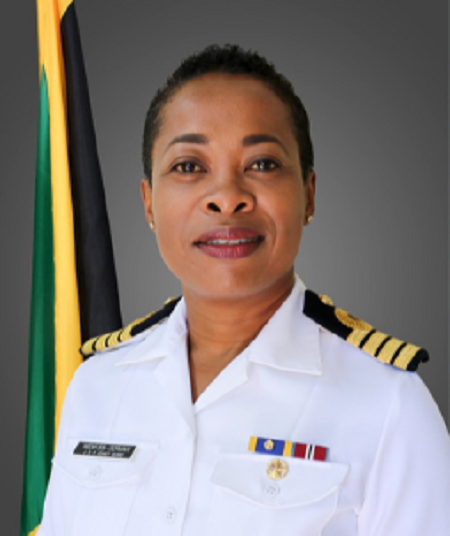
Rear Admiral Antonette Wemyss-Gorman
Here’s to a woman who makes you stand at attention. Though small in stature Rear Admiral Antonette Wemyss-Gorman made big news this year when she assumed the role of Jamaica’s first female Chief of Defence Staff. This appointment is the first time in the island’s history that a woman heads the Jamaica Defence Force (JDF).
– Advertisement –
She was also the first female officer to serve at sea, which led to her becoming the first female appointed to a frontline combat role in the Caribbean. Wemyss-Gorman is also the first female officer of the Jamaica Defence Force to attain the rank of Rear Admiral, a first for the English-speaking Caribbean and the Commonwealth. This role makes her a senior naval flag officer, equivalent to a major general and air vice-marshal.
The world’s first army boss served 15 years aboard Jamaica Coast Guard ships and as Operations Officer and Officer Commanding Shore Base, Second in Command of the JDF Airwing, and Commanding Officer of the JDF Coast Guard. She was responsible for the founding of the Caribbean Military Maritime Training Centre. She is an alumna of the US Naval War College and received a master’s in National Security and Strategic Studies from the University of the West Indies (UWI).
We salute Antonette for her devotion to national security and repeatedly making history.
Dr. Terri-Karelle Reid
Dubbed ‘Your Jamaican Girl,’ Dr. Terri-Karelle Reid certainly has become Jamaica’s and the region’s number one ‘hostess with the mostess.’ The veterinary-scientist-turned professional emcee, speaker, human ethernet, and entrepreneur made history last year when she became the first Jamaican woman to speak at TEDxAstonUniversity under the theme UNTAPPED.
Focusing on her parenting skills and relationship with her daughter Naima-Kourtnae, Reid wowed the crowd with her speech “The untapped potential of raising children holistically.” After posting her presentation on its official TEDx Talks YouTube channel, more than 42,000 people flocked to get a taste of what Reid had to share. Fans were beyond proud and excited for her and showered her with praises.
We honor Terri-Karelle for being a stalwart mother, businesswoman, and motivator for other women who break biases and bet on themselves.
Elaine Thompson Herah
With a track record of track records, Jamaican sprinter Elaine Thompson Herah created history at the Tokyo Olympics last year by retaining her 200m title in 21.53 seconds. This time follows her historic 100 meters win of 10.61 seconds on July 31. She broke Florence Griffith-Joyner’s Olympic Record of 10.62 set at the 1988 Seoul Olympics.
Last year Thompson Herah became the first woman to retain the sprint double at the Olympic games. In the 2016 Olympic Games in Rio de Janeiro, Thompson Herah won the 100m gold medal with 10.71s. She won her second gold in the 200 m final, clocking 21.78s.
Elaine Thompson-Herah, of Jamaica, reacts after winning the women’s 100 meters during the Meeting de Paris Diamond League athletics meet at Stade Charlety in Paris, Saturday, Aug. 28, 2021. (AP Photo/Francois Mori)
Thompson Herah is the fastest woman alive and the second-fastest woman in history. With her 200m Olympic win, she also ranks as the second-fastest woman in the 200 meters. She also shattered Jamaica’s 200m national record of 21.64secs set by Merlene Ottey in 1991.
She now holds four of the top 10 times ever run in the 100m and is the only woman to run four legal times under 10.70 seconds in history.
We continue to be on our marks and set to watch Elaine go as she creates more history for herself and the Jamaican athletics community.
Mia Motley and Sandra Mason
Barbados Prime Minister Mia Motley made history along with President Sandra Mason to become the first women to lead Barbados as an independent republic.
The Right Honorable Mia Motley, the island’s first female prime minister, also made history calling the country’s first election as a republic. Her party won 100% of the seats for the second time in a row. The Barbadian politician and attorney is also the first woman to lead the Barbados Labour Party (BLP), which she has led since 2008.
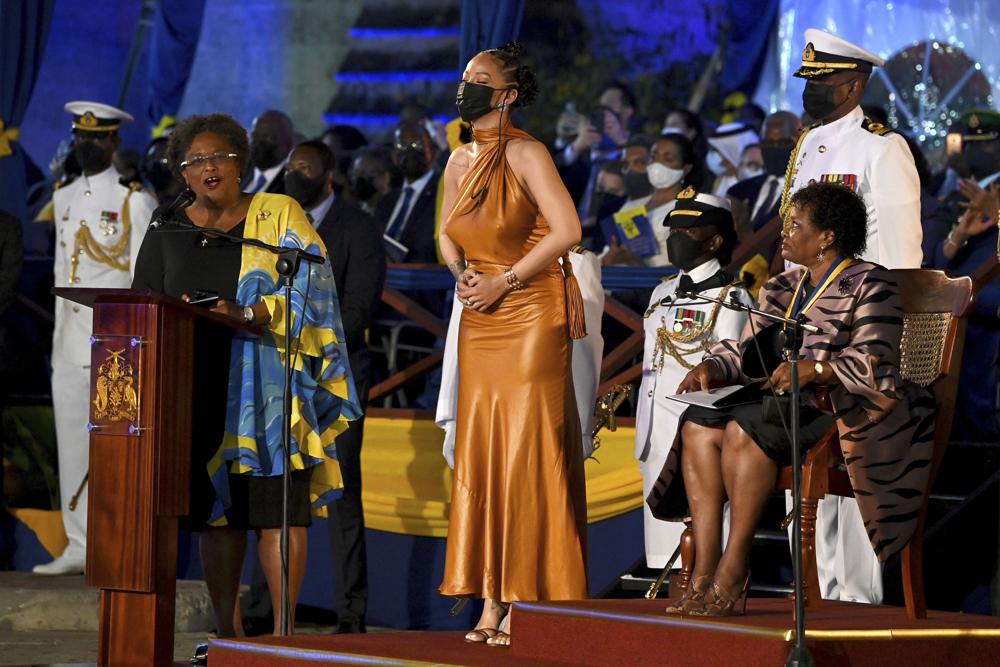
Barbados’ Prime Minister Mia Mottley, left, and President of Barbados, Dame Sandra Mason, right, honor Rihanna as a National Hero, during the Presidential Inauguration Ceremony, at Heroes Square, in Bridgetown, Barbados, Tuesday, Nov. 30, 2021. Barbados has stopped pledging allegiance to Queen Elizabeth II as it shed another vestige of its colonial past and became a republic for the first time in history. Several leaders, dignitaries, and artists, including Prince Charles, attended a ceremony that began late Monday and stretched into Tuesday in a popular square where the statue of a well-known British lord was removed last year amid a worldwide push to erase symbols of oppression. (Jeff J Mitchell PA via AP)
Dame Sandra Mason, formerly the island’s governor-general since 2018, was named president of the nation following a vote in parliament late last year. She now replaces the Queen as the head of state.
Motley also declared Robyn “Rihanna” Fenty as the nation’s newest and youngest female National Hero.
We raise our glasses to Mia and Sandra for their drive and desire to break biases and to do so unapologetically.
Leondra Kruger
The year started on a high for Supreme Court Justice and Deputy assistant U.S. attorney general Leondra Kruger when U.S. President Joe Biden announced her as a nominee to fill a vacancy on the Supreme Court following the retirement of Justice Stephen Breyer.
Born to Jamaican parents, Kruger made history as the first black woman nominated for that office. The 45-year-old is a native of California, but her mother immigrated to the United States from Jamaica, and her late father was an American Jew.
FILE – In this Dec. 22, 2014 file photo Leondra Kruger addresses the Commission of Judicial Appointments during her confirmation hearing to the California Supreme Court in San Francisco. The California Supreme Court has sided with employers in a fight over the right of workers to sue over treatment of injuries that occur on the job. The court ruled unanimously on Thursday that workers receiving medical care through their employers’ workers’ compensation insurance generally cannot sue a doctor who decides whether treatment is needed. (AP Photo/S. Todd Rogers, Pool, File)
Famous for her life of firsts, Kruger graduated with a Bachelor of Arts from Harvard University, where she earned her law degree from Yale Law School and served as Editor-in-Chief of the Yale Law Journal. She was the first Black woman elected to the position. Furthermore, from 2007 to 2013, Kruger was an assistant to the United States Solicitor General and the acting principal deputy solicitor general. She was the first Black woman to hold that role also.
Moreover, in 2014, she assumed her role as Associate Justice to the California Supreme Court. She became the court’s second African-American woman justice, following Janice Rogers Brown, but at 38, was the youngest appointee to the court in recent years and the third youngest appointee ever.
Kruger and her attorney husband, Brian Hauck, have two young children. She was the first member of the California Supreme Court to give birth while serving on the bench.
We hail Leondra for her commitment to the US legal system and her life of history-making firsts.
Shericka Jackson
Olympian Shericka Jackson raced her way to a new milestone this year when she became Scotiabank Jamaica’s first brand ambassador. Yes, that means she became an ambassador before any Jamaican male athlete.
Her endorsement with Scotia comes months ahead of the 2022 World Athletics Championships scheduled for July 15-24 in the United States and will see the Bank supporting the athlete’s career for the next three years.
Audrey Tugwell Henry, Audrey Tugwell Henry, President, and CEO, Scotia Group Jamaica, symbolically passes the baton to the Bank’s first brand ambassador, athlete, Shericka Jackson.
.
Photo credit: Contributed
Jackson is an all-around Jamaican sprinter who has accumulated several medals in the 400 meters, 4x400m relay, and most recently, 100, 200, and 4x100m events. Last year’s season won a bronze medal in the 100 meters at the 2020 Tokyo Olympics while forming part of the Jamaican sprint queen trio, which dominated the track. She also won gold for Jamaica at the Tokyo Olympics, running the anchor leg on the Jamaican 4x100m relay team.
We continue to watch Shericka blaze a trail for herself and other upcoming female athletes determined to break biases.
Dr. Susan Collins
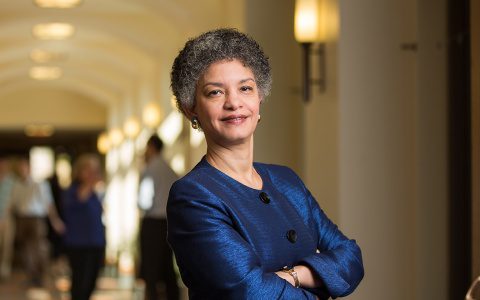
In July, Jamaican-American Economist Dr. Susan Collins will become the first black woman to lead a Federal Reserve Bank in the United States when she assumes the position of President and CEO of The Federal Reserve Bank of Boston. She will oversee the Boston Fed’s monetary policy and economic research, its operational role in the US financial payments system, bank supervision, and community development in her new capacity.
The 63-year-old grew up in New York with her parents – a social anthropologist father who worked at the United Nations and a university librarian mother who had migrated from Kingston.
Jamaican-American Economist Dr. Susan Collins.
Photo credit: fordschool.umich.edu
Collins says she came to economics out of curiosity after observing the poverty in Jamaica where she frequently visited with her parents to see relatives. So, with her interest piqued and with support from her parents, she pursued her career in economics.
She graduated summa cum laude from Harvard University in 1980 and earned her Ph.D. in economics at the Massachusetts Institute of Technology (MIT) in 1984. She has held various teaching positions at Harvard, Georgetown University, and the University of Michigan and served on the President’s Council of Economic Advisers from 1989 to 1990.
Until her appointment takes effect on July 1, Collins will continue to serve as provost and executive vice-president for academic affairs at the University of Michigan, where she has been since 2020.
Kudos to Susan for making money moves and history in the US economy.
Winsome Sears
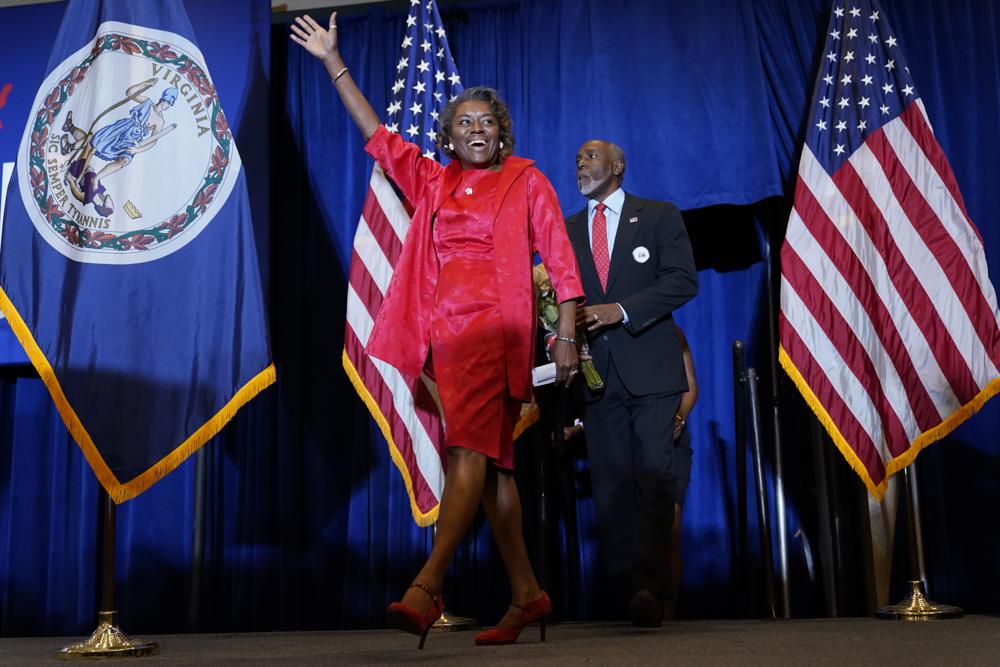
Jamaican-born Winsome Sears assumed office on January 15, 2022, to become Virginia’s first woman lieutenant governor. Sears, a U.S. Marine Corps veteran born in Kingston, Jamaica, is the first woman of color to be elected to statewide office in Virginia.
The 57-year-old emigrated from Jamaica and grew up in the Bronx, New York.
She majored in English and minored in economics at Old Dominion University and holds a master’s from Regent University. She then served as an electrician in the United States Marines. Sears, who ran unsuccessfully for Congress in 2004, previously served on the Virginia Board of Education. She was also appointed to the U.S. Veterans Affairs Advisory Committee by former U.S. President George W Bush. Before running for office, she served as a Marine pilot.
Lt. Gov. Gov.-elect Winsome Sears arrives to speak before Virginia Gov.-elect Glenn Youngkin at an election night party in Chantilly, Va., early Wednesday, Nov. 3, 2021, after he defeated Democrat Terry McAuliffe. (AP Photo/Andrew Harnik)
Sears said she was honored and humbled to be sworn in as the first woman to this high office and promised that during her tenure, she would partner with the Embassy of Jamaica to look at how they could collaborate in improving trade, education, and tourism and twinning with several towns.
Cheers to Winsome for her determination, breaking biases and barriers for women across the country.
Sylvia O. Hinds-Radix
Barbados-born jurist, Sylvia O. Hinds-Radix, is New York City’s new Corporation Counsel, following a historic 51-0 vote by the New York City Council. This appointment makes her the first-ever Caribbean-born woman to serve in that capacity.
As Corporation Counsel, Hinds-Radix will lead the City’s Law Department, primarily responsible for providing legal representation to the City, the Mayor, other elected officials, and City agencies in all affirmative and defensive civil litigation. Her last position was an associate justice of the New York State Appellate Division, Second Department, where she served as an associate justice since 2021.
Justice Sylvia O. Hinds-Radix
Before her appointment to the Appellate Division, Justice Hinds-Radix served as Administrative Judge for Civil Matters in the Second Judicial District for three and a half years.
Hinds-Radix, the first and current president of the Brooklyn-based Caribbean American Lawyers Association (CALA), was elected to the Supreme Court, Kings County (Brooklyn) in November 2004. She served as a New York City Civil Court Judge from 2002 through 2004, spending her first year in the Criminal Court of Kings County.
We stand with the Bajan community in being proud of Sylvia and her achievements as she keeps breaking barriers and biases.
Of course, we could go on to mention so many other Caribbean women who made history in the past year, but we want to know from you. Who else broke biases and made history, in your opinion?
LVIV, Ukraine (AP) — Air raid sirens blared over Ukraine’s capital on Wednesday as officials said they were bolstering defenses in key cities threatened by Russian…Read More
MEXICO CITY, March 8 (Reuters) – Guatemala’s Congress approved on Tuesday a law that punishes abortion with up to 25 years in prison and prohibits same-sex marriage and teaching about sexual diversity in schools.
Proposed by the conservative Viva Party, the law for the protection of life and the family was unexpectedly approved by a large majority of lawmakers including allies of President Alejandro Giammattei.
The legislation had been on ice since 2018 and still has to be published in the official gazette to come into force.
The penalty for an abortion was increased from between five to 10 years to 25 years – except when the life of the mother is in danger.
The law also prohibits teaching children and young adults about sexual diversity and gender ideology and stipulates that no orientations other than heterosexuality are “normal”, the draft text shows.
Activists and some politicians have criticized the law, which was passed on International Woman’s Day.
Guatemala’s human rights ombudsman, Jordan Rodas, said he would challenge it on human rights grounds.
“It violates human rights, it violates the international agreements ratified by Guatemala, it is a setback to freedoms,” Rodas told reporters outside Congress.
Some lawmakers argued that the law promotes hatred, homophobia and unfairly criminalizes women.
Reporting by Sofia Menchu; Editing by Robert Birsel
The Amazon rainforest is moving towards a “tipping point” where trees may die off en masse, say researchers.
A study suggests the world’s largest rainforest is losing its ability to bounce back from damage caused by droughts, fires and deforestation.
Large swathes could become sparsely forested savannah, which is much less efficient than tropical forest at sucking carbon dioxide from the air.
The giant forest traps carbon that would otherwise add to global warming.
But previous studies have shown that parts of the Amazon are now emitting more carbon dioxide than can be absorbed.
“The trees are losing health and could be approaching a tipping point – basically, a mass loss of trees,” said Dr Chris Boulton of the University of Exeter.
The findings, based on three decades of satellite data, show alarming trends in the “health” of the Amazon rainforest.
There are signs of a loss of resilience in more than 75% of the forest, with trees taking longer to recover from the effects of droughts largely driven by climate change as well as human impacts such as deforestation and fires.
A vicious cycle of damage could trigger “dieback”, the scientists said.
And while it’s not clear when that critical point might be reached, the implications for climate change, biodiversity and the local community would be “devastating”.
Image source, Getty Images
Image caption,
The more trees cut down, the less the forest can soak up emissions
Once the process begins they predict it could be a matter of decades before a “significant chunk” of the Amazon is transformed into savannah – a vastly different ecosystem made up of a mixture of grassland and trees.
“The Amazon stores lots of carbon and all of that would be released into the atmosphere, which would then further contribute to increasing temperatures and have future effects on global mean temperatures,” Dr Boulton said, adding that stopping deforestation would go some way to addressing the problem.
Around a fifth of the rainforest has already been lost, compared to pre-industrial levels, they said.
The research was carried out by the University of Exeter, the Potsdam Institute for Climate Impact Research (PIK) and Technical University of Munich.
“Deforestation and climate change are likely to be the main drivers of this decline,” said Prof Niklas Boers of PIK and the Technical University of Munich.
Commenting, Dr Bonnie Waring of the Grantham Institute – Climate Change and Environment, Imperial College London, said: “These latest findings are consistent with the accumulating evidence that the twin pressures of climate change and human exploitation of tropical forests are endangering the world’s largest rainforest, which is home to one out of every 10 species known to science.”
The findings, based on satellite data from 1991 to 2016, are published in the journal Nature Climate Change.
Almost two weeks on from Russia’s invasion of Ukraine, the conflict commands Americans’ attention, the headlines and the airwaves.
But that will not always be the case. The shock sparked by the initial images of the invasion will be blunted by time.
The defenders of Ukraine, however valiant, are unlikely to stave off the Russian forces forever.
The media’s focus on Ukraine will become less intense too, as happened in the wars in Iraq and Afghanistan in which American forces were directly involved.
The overarching political question is whether Americans, while not suffering the life-and-death consequences being visited upon the Ukrainian people, have the stomach to make sacrifices for a long fight in a faraway place.
Right now, there is clear and avid sympathy for the Ukrainians — and an apparent willingness to withstand economic pain at home to support them.
In a Quinnipiac University poll released Monday, a large majority of Americans — 71 percent — said they would support a ban on Russian oil even if it meant higher gas prices in the United States. The figure encompassed 82 percent of Democrats and 66 percent of Republicans.
Whether those numbers will be sustained as a hypothetical becomes reality is a whole different question.
The average price of gasoline in the United States hit an all-time high on Monday, according to the GasBuddy website, cresting above $4.10.
The stock market is also taking a battering, with the S&P 500 falling roughly three percent on Monday to notch its worst day since October 2020.
Broader inflationary pressures are increasing too, as the price of other commodities, such as wheat, surges.
Even Democrats who are supportive of President Biden’s approach to the crisis are on-edge about how all of this shakes out politically, with the midterm elections just eight months away.
Democratic pollster Mark Mellman told this column that, while he did not doubt the sincerity of Americans’ concern with the plight of Ukraine, “people are ultimately always more focused on their own lives than other people’s lives.”
Electorally speaking, “on the one hand, there is no question that, the better the economy, the better we’ll do in the midterms; and the worse it is, the worse we’ll do,” he added.
“On the other hand, there are few better reasons to have inflation and a tougher economy than the fact that we are defending Ukraine and sanctioning Russia.”
Right now, Biden seems to be getting a small but measurable boost in his standing as he spearheads a western alliance against Russian President Vladimir Putin.
An NPR/PBS NewsHour/Marist poll released late last week showed Biden’s overall approval rating jumping eight percentage points in a month. Approval of his handling of Ukraine went up by a striking 18 points.
The Republican Party has also been in some degree of disarray over the issue, with GOP opinion splintering at least three ways.
Some have favored an ultra-aggressive approach, with Sen. Lindsey Graham (R-S.C.) going so far as to call on Russian citizens to assassinate Putin.
Others, often loosely affiliated with former President Trump, have been hesitant about the U.S. getting too deeply involved at all.
And in the middle, some of the most senior figures including Senate Minority Leader Mitch McConnell (R-Ky.) have given Biden a measure of cautious support for now.
All of that could change.
The semblance of bipartisanship could fade as more divisive issues such as the exact nature of aid the U.S. should render become sharper.
Terry Madonna, a polling expert and the senior fellow in residence for political affairs at Pennsylvania’s Millersville University, said that there was near-unanimity that American troops should not be put in harm’s way — but that cross-party agreement could begin to break down on any issue beyond that.
“The issue between Republicans and Democrats is likely to not be, are we engaging in ‘boots on the ground’ in Ukraine — I think there is a bipartisan consensus against that — but how quick do we supply, and what do we supply, to the Ukrainians?
“You’ll have some Republicans saying, ‘We need to do more,’ and we’ll have to see what happens.”
On the other side of the equation, some Republicans continue to express skepticism about just how much the American public truly cares about what happens in Ukraine over the long haul.
One strategist affiliated with the more populist, pro-Trump element of the GOP insisted that Republican voters, at least, “are far more concerned with the territorial integrity of the United States than they are with the territorial integrity of Ukraine.”
To be sure, much remains unclear.
Most analysts believe it is near-certain that Russia will gain control over the Ukrainian capital of Kyiv sooner or later.
That, in turn, would almost certainly spark an insurgent campaign by Ukrainian forces, presumably with the aid of many Western nations.
Such conflicts are almost never short or clean.
The sanctions campaign being waged by Biden will also not work anytime soon, as the president has repeatedly warned.
In his State of the Union speech, Biden emphasized that the Russian invasion “has costs around the world.”
He added that, for Americans, “This is a real test. It’s going to take time.”
Right now, no-one can be sure whether American voters will give him the time he, or Ukraine, needs.
The World Health Organization (WHO) updated its vaccine guidance on Tuesday to recommend the administration of COVID-19 booster shots, marking a reversal from what the United Nations organization has previously said about additional vaccine doses.
In a statement, the WHO said the Technical Advisory Group on COVID-19 Vaccine Composition “strongly supports urgent and broad access to current COVID-19 vaccines for primary series and booster doses, particularly for groups at risk of developing severe disease.”
The WHO has previously spoken out against administering COVID-19 booster shots, arguing that wealthier countries should abstain from administering additional doses while low- and middle-income countries have struggled to provide initial rounds of vaccinations for their populations.
WHO Director-General Tedros Adhanom Ghebreyesus called for a moratorium on booster shots for healthy adults through the end of 2021.
“We do not want to see widespread use of boosters for healthy people who are fully vaccinated,” Tedros said in September.
What’s different: The WHO has also previously recommended prioritizing booster shots for high-risk individuals in countries that have moderate-to-high coverage. However, the newest guidance marks a shift in urgency for the organization, now recommending “broad” access to boosters.
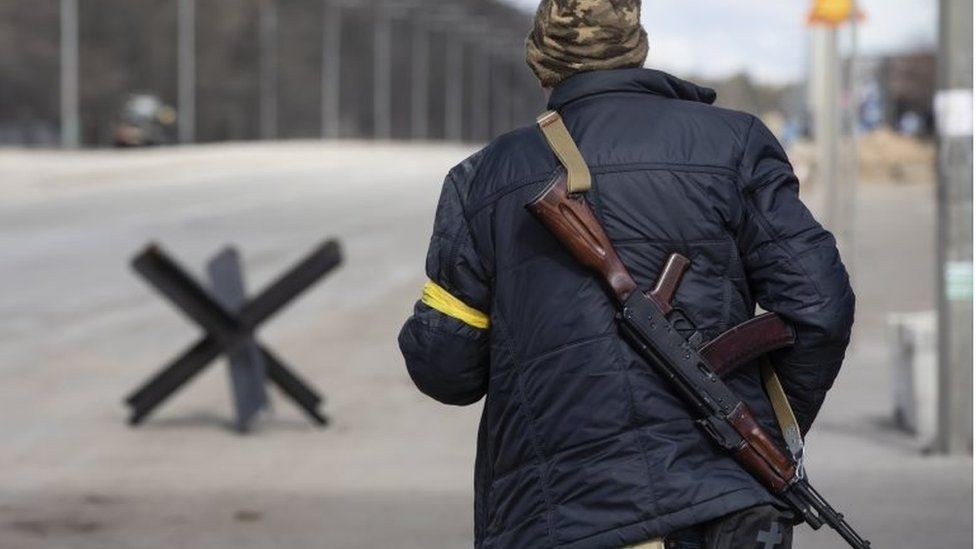


 Image source, Rab Grady,








 *****@


 *****@
 *****@
 *****@


 *****@
 *****@
 *****@