MEXICO CITY, March 4 (Reuters) – A Mexican journalist was shot and killed in the central state of Zacatecas on Friday, officials said, the latest in a string of assassinations of media workers this year that has piled criticism on President Andres Manuel Lopez Obrador’s government.
Juan Carlos Muniz, who worked for local news website Testigo Minero and was also a taxi driver, was shot in the head while driving at least two passengers, an employee at the outlet told Reuters.
Muniz’s death, which was confirmed by state police, follows at least five other murders of media workers in Mexico this year.
Local activists along with international groups and U.S. lawmakers have called on Lopez Obrador to ramp up efforts to rein in the violence and protect reporters, including in Zacatecas.
Muniz worked at Testigo Minero for two years covering crime in the city of Fresnillo, said the other employee, who requested anonymity for fear of retaliation.
The state’s governor, David Monreal, condemned the killing on Twitter.
“I have asked (local police) to investigate and find those guilty as quickly as possible,” he tweeted.
Police said they would investigate the murder in relation to Muniz’s work as a reporter.
Around 145 journalists were killed in Mexico from 2000 to 2021, according to human rights organization Article 19, making the country one of the deadliest for journalists.
The worst year in recent history was 2017, with 12 murders, followed by 2010, with 10.
Jan-Albert Hootsen, the Mexico representative to the Committee to Protect Journalists, said Muniz’s death added to a concerning toll of killings this year.
“The frequency in which murders are occurring this year is chilling,” he said.
Reporting by Kylie Madry and Lizbeth Diaz in Mexico City Editing by Matthew Lewis
WASHINGTON, March 4 (Reuters) – President Joe Biden’s administration can continue to rapidly expel migrant families caught crossing the U.S.-Mexico border, but should not send them anywhere they could be persecuted or tortured, a federal appeals court ruled on Friday.
The ruling by a three-judge panel of the U.S. Court of Appeals for the District of Columbia Circuit lets the government keep in place restrictions first implemented under Democrat Biden’s Republican predecessor Donald Trump in the early stages of the COVID-19 pandemic.
A group of affected migrants, represented by the American Civil Liberties Union and other non-profit organizations, challenged the legality of the expulsion policy, known as Title 42, in court.
The appeals court decided that the migrants covered by the policy likely “have no right to be in the United States” and that Biden’s administration “can immediately expel them.”
It added that the administration “cannot remove aliens to a country where their ‘life or freedom would be threatened’ on account of their ‘race, religion, nationality, membership in a particular social group or political opinion’” or “to a country where they will likely be tortured.”
The Justice Department declined to comment on the ruling.
Biden has fought to retain the Title 42 order, which was issued by the U.S. Centers for Disease Control and Prevention (CDC) in March 2020 as a pandemic-related public health measure. Many in Biden’s party have joined some health experts and pro-immigrant advocates in opposing the order, saying it unlawfully cuts off access to asylum and is not supported by scientific evidence.
Biden reversed some of Trump’s hardline immigration policies after taking office in January 2021. But government data shows that his administration has expelled migrants more than a million times under the Title 42 order. The total number of migrants expelled under the policy is not clear because many have crossed the border more than once. Most of those expelled have been single adults.
The ruling raises the possibility of the U.S. government having to conduct screenings to determine whether or not a person caught crossing the border has a reasonable fear of persecution or torture if expelled.
Such screenings would make it difficult for the Biden administration to continue large-scale expulsions of families at the border, according to Aaron Reichlin-Melnick, policy analyst with the American Immigration Council, a pro-immigration group.
A federal judge ruled last September that the Title 42 policy could not be applied to families, but the Biden administration appealed that decision.
Early in his presidency, Biden exempted unaccompanied children from the expulsion policy. But a federal judge in Texas ruled in a separate decision on Friday that the Biden administration could no longer grant such an exemption.
The Texas ruling, which is at odds with another U.S. District Court order in 2020 blocking expulsions of minors traveling alone when caught at the border, goes into effect in seven days, giving the Biden administration time to appeal.
Border arrests soared to record levels in 2021, Biden’s first year in office, and could climb even higher this year, U.S. officials told Reuters in January.
Republicans have made immigration a major focus heading into the Nov. 8 midterm elections in which they are seeking to regain control of Congress from Biden’s party. Republican majorities in Congress could stymie Biden’s legislative agenda.
Reporting by Ted Hesson in Washington and Kristina Cooke in San Francisco; Editing by Will Dunham, Mica Rosenberg and Aurora Ellis
CARACAS/WASHINGTON, March 6 (Reuters) – U.S. and Venezuelan officials discussed the possibility of easing oil sanctions on Venezuela but made scant progress toward a deal in their first high-level bilateral talks in years, five sources familiar with the matter said, as Washington seeks to separate Russia from one of its key allies.
Both sides used Saturday’s meeting in Caracas to present what one of the sources described as “maximalist” demands, reflecting longtime tensions between the Western Hemisphere’s main power and one of its biggest ideological foes.
A U.S. delegation led by Juan Gonzalez – the top White House Latin America adviser – and Ambassador James Story held talks at the Miraflores palace with socialist President Nicolas Maduro and his Vice President, Delcy Rodriguez, the sources said.
Roger Carstens, the special presidential envoy for hostage affairs, was also a member of the U.S. group and made the case to the Venezuela government for the release of American citizens and dual nationals held there, including six Citgo executives, according to one person familiar with the matter
U.S. officials saw the meeting as a chance to gauge whether Venezuela, one of Russia’s closest Latin American allies, is prepared to distance itself from President Vladimir Putin over his invasion of Ukraine, a source in Washington said.
Washington also wants to identify alternative oil supplies to fill the gap if it seeks a boycott of Moscow’s energy industry. Venezuela could boost crude exports if Washington eases sanctions.
The White House, the U.S. State Department and Venezuela’s Information ministry declined comment.
The U.S. willingness to re-engage after years of shunning such contact appeared to be a boost for Maduro.
The meeting came as Venezuela’s financial lifeline to Russia is fraying under sanctions on Moscow following its military onslaught in Ukraine, which Russia calls a “special operation”. Caracas used the talks to press for U.S. sanctions relief.
Venezuela has asked Russia in recent days to unfreeze oil proceeds at several Russian banks blacklisted by the United States, especially the Promsvyazbank (PSB), where Venezuela’s state-run oil company PDVSA and the Defense Ministry have bank accounts, two separate sources said.
In 2019, as part of U.S. sanctions on Venezuela, another bank widely used for trade with Russia, the Evrofinance Mosnarbank, was blacklisted, forcing PDVSA to move its collecting accounts to other banks.
In the talks, Washington sought guarantees of free presidential elections, broad reforms of Venezuela’s oil industry to facilitate production and exports by foreign firms and the government’s public condemnation of the Ukraine invasion, which Maduro has defended, three people familiar with the matter said.
As a concession, the U.S. officials were willing to consider temporarily allowing Venezuela to use the SWIFT system, which facilitates financial transactions between banks worldwide, to move money to other accounts, one of the sources said.
Maduro sought a total lifting of sanctions prohibiting Venezuela’s oil exports, the removal of sanctions on him and other Venezuelan officials and the return to the state’s control of PDVSA’s U.S. subsidiary Citgo Petroleum, sources said.
Easing oil sanctions could start by allowing companies including U.S. Chevron Corp (CVX.N), India’s ONGC (ONGC.NS) and Europeans Eni , Repsol (REP.MC) and Maurel & Prom (MAUP.PA) to trade cargoes of Venezuelan oil. Those firms have made separate requests to Biden’s administration, but no decisions have been made.
‘ANXIOUS FOR SANCTIONS RELIEF’?
Even if Washington does not accede to Maduro’s demands, he could use the U.S. meeting to pressure Russia to allow Venezuelan money to continue flowing, two of the sources said.
“Yes, Maduro is anxious for sanctions relief. No, he is not interested in shifting alliances. This is tactical,” Eric Farnsworth, head of the Washington office of the Council of the Americas, said on Saturday on Twitter. “(The) U.S. must be clear-eyed about this, not naive.”
The Caracas meeting was requested by Maduro’s government through multinational law firm Dentons, previously used by other state entities for debt negotiations, two of the sources said.
A Dentons representative in Caracas did not immediately respond to a request for comment.
The U.S. officials agreed to a follow-up meeting but no date was set, sources said.
Aides to Venezuelan opposition leader Juan Guaido were only notified about the meeting on Saturday morning. Guaido was recognized by the United States and dozens of other nations as Venezuela’s rightful leader after they dismissed Maduro’s 2018 re-election as a sham, but several countries have since dropped their recognition.
In the encounter, the U.S. officials reiterated their demand for the release of six former Citgo executives jailed in Venezuela and other detained U.S. nationals, but did not offer any kind of swap involving businessman Alex Saab, a key Maduro ally detained in the United States. Saab’s release has been a key demand by Maduro to return to talks with the opposition.
Reporting by Marianna Parraga in Houston, Vivian Sequera in Caracas, Matt Spetalnik and Brian Ellsworth in Washington and Diego Ore in Mexico City; Editing by Daniel Flynn and Stephen Coates
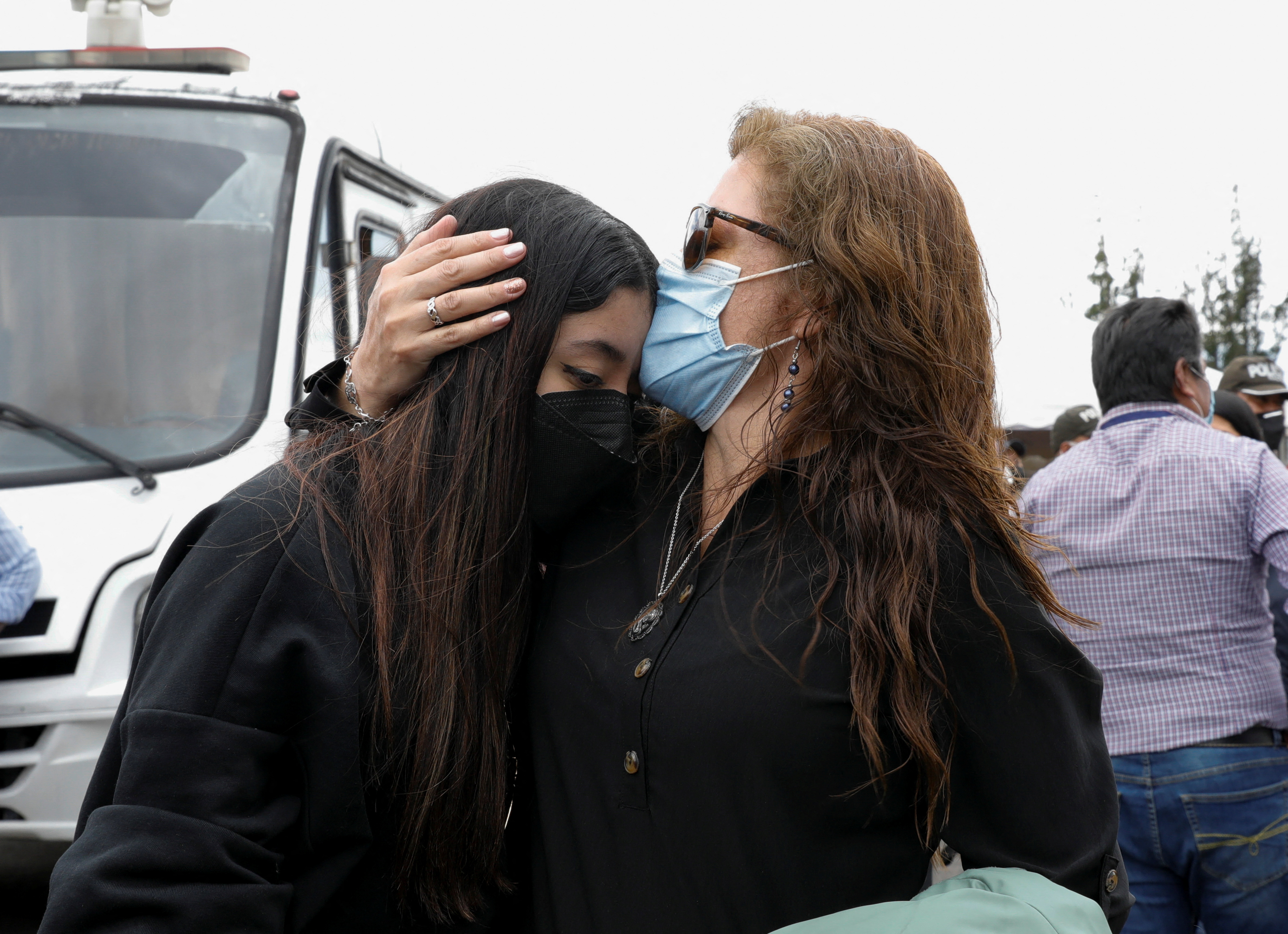
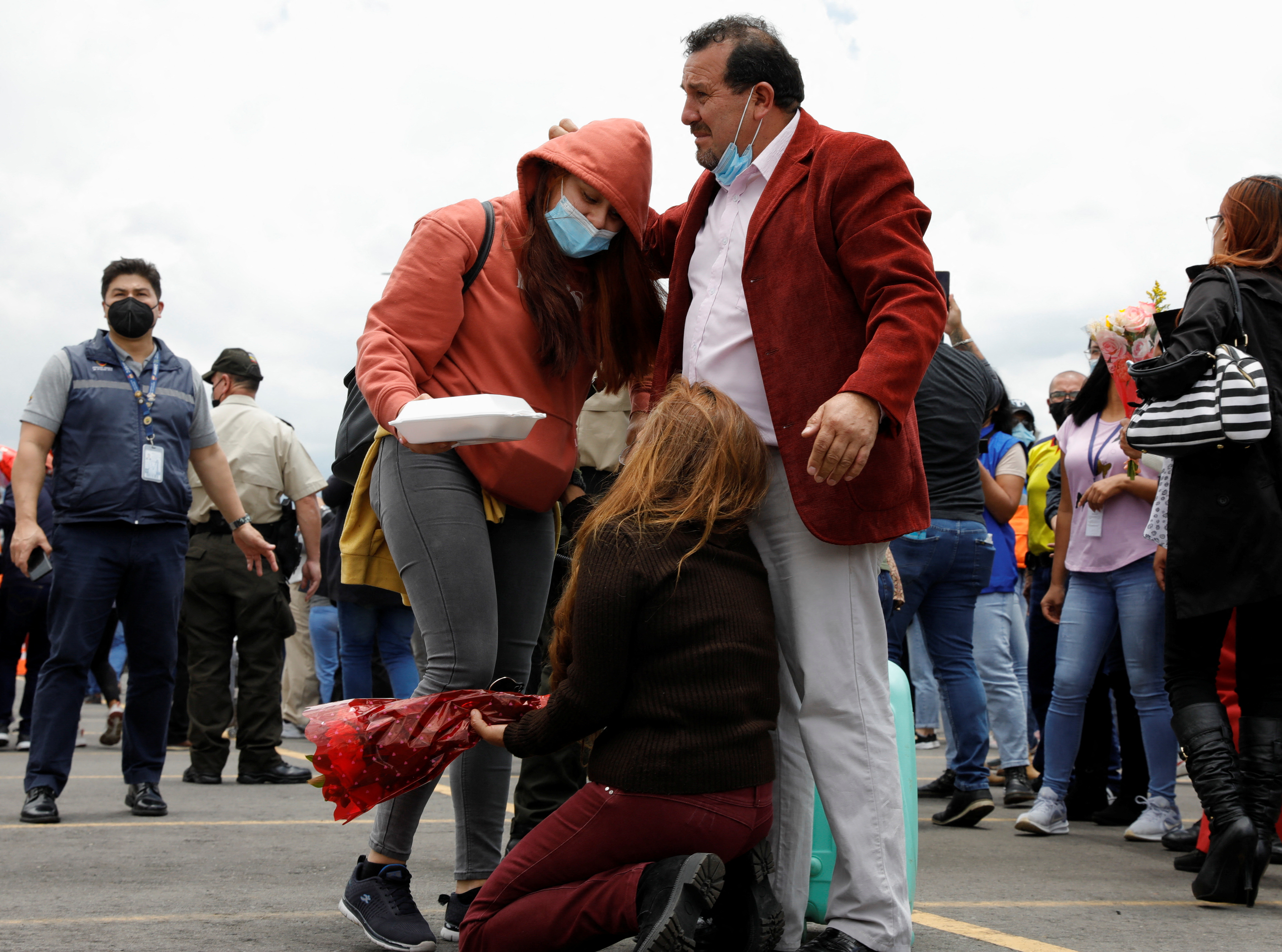
People react upon the arrival of family members, many of them university students, after they fled Ukraine following Russia’s invasion, joining hundreds of other Latin Americans who have evacuated, in Quito, Ecuador March 4, 2022. REUTERS/Karen Toro
QUITO, March 4 (Reuters) – Close to 250 Ecuadoreans, many of them university students, arrived in the country on Friday after fleeing Ukraine following Russia’s invasion, joining hundreds of other Latin Americans who have evacuated.
Thousands of people are believed to have been killed and more than 1 million refugees have fled Ukraine since Feb. 24, when Russian President Vladimir Putin ordered the biggest attack on a European state since World War Two. read more
Latin American countries have been coordinating flights from Ukraine’s neighbors like Romania, Poland and Hungary.
“This has marked our lives,” said Mercedes Sanchez, whose 18-year-old son Jorge Criollo arrived back in Quito on the Friday flight, after traveling through several Ukrainian cities that he said were under fire from Russian troops, crossing into Slovakia and later going to Budapest.
“My greatest fear was that my son would die there,” Sanchez told Reuters late on Thursday from her home in northern Quito
Some 850 Ecuadoreans were registered as living in Ukraine, according to Ecuador’s Foreign Minister Juan Carlos Holguin.
Another evacuation flight will leave Friday for Quito from Warsaw and Holguin told local radio Ecuador is also working to bring over some 100 pets.
A total of 1,500 Ecuadorean citizens, including those living in border areas in Russia, may be at risk in the conflict, the government has said.
Forty-four Mexicans and 37 people of other nationalities, including 7 Ecuadoreans, arrived in Mexico on a flight from Romania in the early hours of Friday, Mexico’s foreign ministry said on Twitter.
Meanwhile, Colombia said some 248 of its citizens – most of the 293 registered as being resident in Ukraine – had evacuated as of Thursday. Another 26 are in the process of leaving, it added.
Chile says it has two reception centers in Poland, while 31 Peruvians had left Ukraine as of Wednesday.
Venezuelan opposition leader Juan Guaido said on Thursday 348 Venezuelans were living in Ukraine. The Venezuelan government has not given an official figure.
Reporting by Alexandra Valencia in Quito, additional reporting by Diego Ore in Mexico City, Marco Aquino in Lima and Vivian Sequera in Caracas Writing by Julia Symmes Cobb Editing by Rosalba O’Brien
Canada tells citizens to leave Russia due to unpredictable security situation
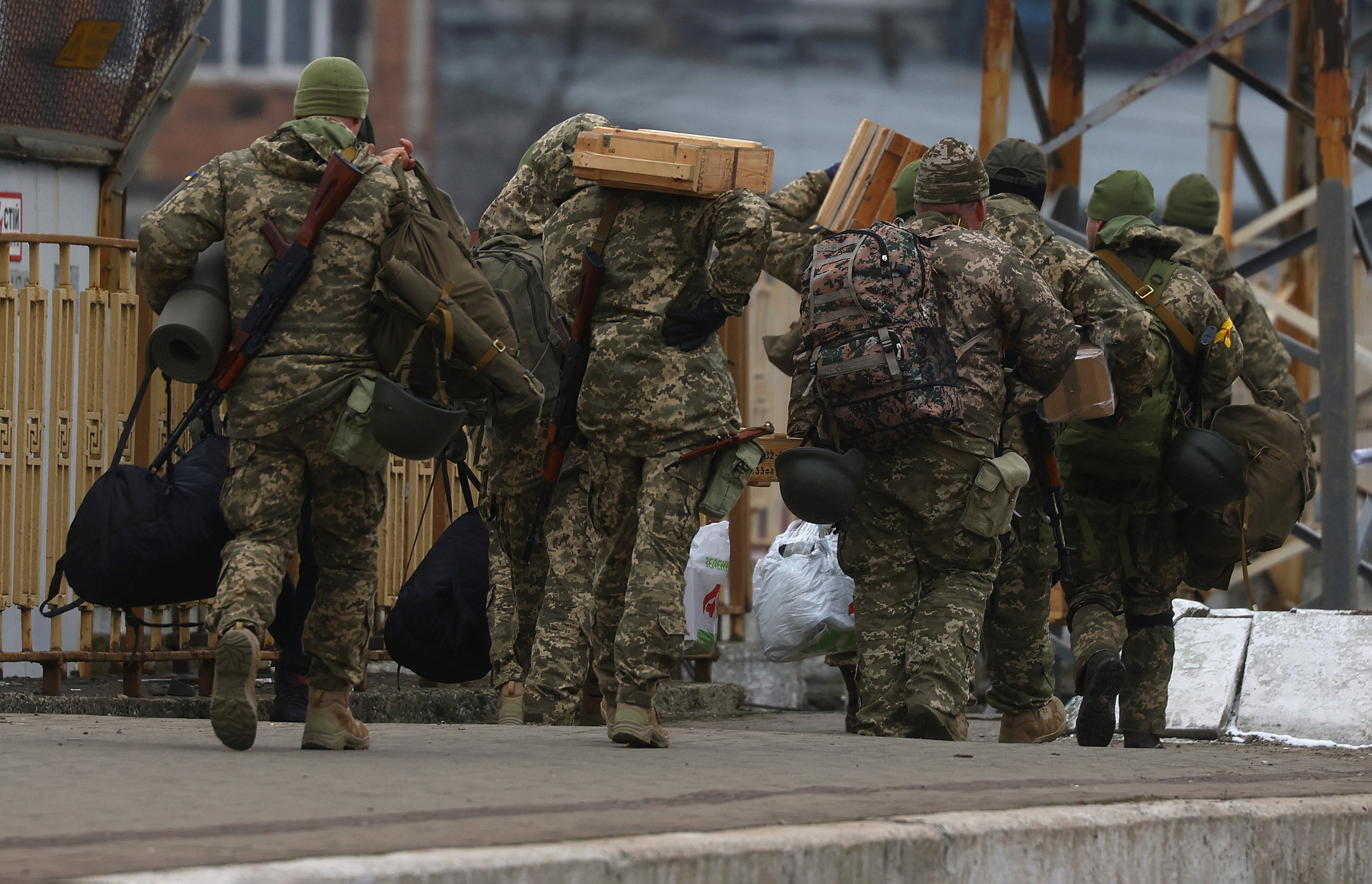
Ukrainian military members walk following the ongoing Russian invasion in Lviv, Ukraine, March 5, 2022. REUTERS/Kai Pfaffenbach
OTTAWA, March 5 (Reuters) – Canada told its citizens on Saturday to leave Russia “while commercial means are still available,” saying security conditions were unpredictable and could deteriorate without notice.
“Flight availability is becoming extremely limited … The ability of our embassy to provide consular services in Russia may become severely limited,” Canada’s foreign ministry said in a travel advisory. Canada, like many other Western nations, imposed broad sanctions on Russia after the invasion of Ukraine.
Reporting by David Ljunggren Editing by Paul Simao
At least 26 people were injured when violence broke out among the crowd at a top-flight match in Mexico.
The Liga MX encounter between Queretaro and Atlas was abandoned after 63 minutes when fighting spilled on to the field at La Corregidora stadium.
Some players attempted to calm fans down before they were sent to the locker room.
Three people were seriously injured, with 26 supporters in total taken to hospital.
“Even though there are no deaths, we cannot say this is not a tragedy,” said Queretaro state governor Mauricio Kuri on Sunday.
He added that, of the 26 people taken to hospital, three have been discharged but “three are in a serious condition, 10 are in a delicate state and the other 10 are not serious”.
Visitors Atlas led 1-0 when the match was suspended.
Liga MX president Mikel Arriola said all Sunday’s matches have been suspended “in solidarity with the people affected”.
“Those responsible for the lack of the security at the stadium will be exemplarily punished,” he wrote on Twitter.
“The safety of our players and fans is priority!”
Fifa called the violence “unacceptable and intolerable”.
In a statement, world football’s governing body added that it was: “Encouraging the local authorities to bring swift justice to those responsible. Our thoughts are with all those who suffered its consequences.”
NIA CHARLESTOWN NEVIS (March 04, 2022) —Hon. Eric Evelyn, Area Representative for the St. George’s Parish is expressing satisfaction with the participation and the results of a month-long clean-up campaign he funded and executed throughout February.
Mr. Evelyn was at the time speaking with the Department of Information on March 03, 2022 about the outcome of the activity.
“I’m very, very pleased with the way things turned out. I am happy with the turnout of persons who came to assist and as I said I think it’s a worthwhile effort, one that was very needed.
“Generally, I think we all on the island should take more pride in our country and we should ensure that we have a cleaner community because of course a cleaner community means a healthy community,” he said.
The Area Representative explained that the environment’s cleanliness was a key factor for organising the general clean-up event for the area.
“Over the years I have been very concerned about the cleanliness of our country and so as the area representative for St. George/Gingerland, I decided to organise a clean-up campaign in the month of February and I dubbed this clean-up campaign “Let’s clean up,” he said.
For the first two Saturdays in the month the focus of the clean-up campaign was on white goods. The Area Representative noted that the reason for that was the indiscriminate dumping happening not only in St. George’s but in all of Nevis.
“That is something not only myself but the entire administration has been very concerned about, people dumping in the ghauts, people dumping in roadways;, things ending up in the sea and that is absolutely not healthy.
“A lot of the stuff that we dump indiscriminately ends up in the ocean, and then indirectly we take in this stuff through the marine species that we consume, and so I decided let’s do a white goods clean-up so at least persons would have an opportunity to get rid of the white goods,” he explained.
According to Mr. Evelyn that leg of the campaign went exceptionally well although inclement weather forced them to abort the activity on the first two Saturdays.
However, on the third Saturday, the 19th, he said that an overwhelming amount of white goods was cleaned from the parish during a general clean up in the communities and villages.
On the 26th which was set aside for coastal clean-up in the areas of Indian Castle including Black Bay, Landing Bay and at the Huggins Bay and New River areas yielded more garbage with the assistance of many volunteers.
“For the Huggins Bay area we had close to 20 volunteers cleaning that area. For the Indian Castle and surrounding areas, we had close to 30 volunteers cleaning, and I was very, very pleased with the turn out.
“I was also very amazed at the volume of garbage that we were able to collect both at the Indian Castle and the Huggins Bay areas. We had two truckloads to take to the landfill. One from Huggins Bay area and one from the Indian Castle Bay area,” he said.
Mr. Evelyn expressed his surprise at the volume of accumulated garbage on the coastline so soon after a clean-up exercise at Indian Castle in April last year, and another hosted in November by the Nevis Historical and Conservation Society (NHCS). He cited the need for them to be done with greater frequency.
“It shows that there is the need for us to clean up the coastline ever so often, bearing in mind that some of these garbage that we take up would actually end up in the sea. Some of them are actually from the ocean and from neighbouring islands but it is important that we do these clean-ups now and again,” he said.
Among the volunteers were members of the NHCS, the Nevis Turtle Group and other civic minded persons in the community.
Mr. Evelyn used the opportunity to encourage persons to join the effort when activities such as these are organised since the more hands involved the cleaner the communities and by extension the country would be.
He thanked all those who assisted in making the month-long clean-up exercise successful.
“I want to thank all who would have assisted. I want to specially thank the [Nevis] Solid Waste Management Authority for assisting in such a huge way as well, and I want to assure persons that I as the Area Representative for St. George Parish was extremely, extremely pleased to provide this service to you…It was a need that was met for the people of St. George/Gingerland,” he said in conclusion.
BASSETERRE, ST. KITTS, March 5, 2022 (MMS-SKN) — Acutely aware of the need to pay serious attention to the way in which people dispose of waste, the Government of St. Kitts and Nevis, through the Ministry of Environment, is encouraging its citizens to become better environmental stewards.
Federal Minister of Environment and Cooperatives, the Hon Eric Evelyn, made the remarks on Friday March 4 at a ceremony held at the Solid Waste Management Conference Room in Taylor’s Range to officially launch the US$1m St. Kitts and Nevis Solid Waste Management and Recycling Project.
“The implementation of this project is a step toward building a coordinated framework to address waste disposal practices and I may dare say, quite timely,” said Hon Evelyn at the ceremony which was chaired by Director of Environment, Ms June Hughes.
The project is funded by the Taiwan International Cooperation and Development Fund (ICDF), and present at the meeting was the Resident Ambassador of the Republic of China (Taiwan) His Excellency Michael Chau-Horng Lin, who also gave brief remarks. He was supported by Second Secretary at the Embassy, Mr Jack Li.
“This project is timely for two main reasons,” pointed out Hon Evelyn. “Firstly, it aligns with my Ministry’s commitment to encourage our citizens to become better environmental stewards. We are acutely aware of the need to pay serious attention to the way in which we dispose of waste. The ever niggling but critical issues associated with waste separation and excessive waste contribute to environmental degradation.”
The overall outcome of the project, he pointed out, is to seek to establish a recycling system to improve efficiency and increase the amount of waste recycled by twice the amount. He noted that setting the systemic framework will be a foundational pillar to create efficient and collaborative pathways among the stakeholders and ultimately result in more environmentally responsible actions from all the citizens, which he added would be the beginning of a mind-set shift.
The Honourable Minister advised that the Ministry of Environment and Co-operatives is leading the charge to implement a ban on single-use plastics as St. Kitts and Nevis endeavours to achieve UN’s Sustainable Goal 12, which is to ‘Ensure responsible consumption and production patterns.’
“To achieve this goal, we must reflect on ways in which we can use our resources efficiently to reduce waste in a sustainable manner,” observed Hon Evelyn. “It also points us to the possibilities of economic innovation for sustainability.”
These will include the possibilities of packaging products using environmentally friendly material, diverse offering of how to reuse plastics or any other product, adding: “The use of technology in reducing waste are all ways of reimagining how we can achieve resource efficiency.”
In attendance was Project Manager, Ms Joyce Chang, who gave an overview of the three-year project which comes to an end in July 2024, having started in July 2021.
Stakeholders from both St. Kitts and Nevis were invited for the launch, and among those present included the Solid Waste Management St. Kitts, Ministry of Tourism, Transport and Post, Ministry of Education, Sustainable Development Planning Unit, Nevis Tourism Authority represented by CEO Mr Devon Liburd, Bureau of Standards, General Manager of Handi Plastics Mr Michael Edgecomb, and Department of Environment members of staff.
“I want to use this opportunity to say thanks to all the stakeholders who have agreed to join the fight of tackling waste matters and the recycling programme in general,” said Minister Evelyn. “We recognise that the implementation of a recycling programme will require some cultural changes in attitude and behaviour. However, I am confident that with the diverse composition of the Project Steering Committee, innovative ways will be presented to address this.”
The partnership with Taiwan International Cooperation and Development Fund (ICDF), pointed out the Minister, does not only provide the financial assistance but also technical assistance. He noted that the country was honoured to have Ms Joyce Chang, the project coordinator, working here and promised that she will receive support and guidance from the project steering committee.
He said that he firmly believes that this healthy knowledge building and exchange management process is pivotal as the country will learn from Ms Chang and that she would also learn from the stakeholders, and that he looks forward to strengthening capacities across government institutions and the stakeholders throughout St. Kitts and Nevis.
“Once again allow me to express my profound thanks to the Republic of China (Taiwan) for supporting this project, the International Cooperation and Development Fund (ICDF) for authorising and guiding the project concept and my team at the Ministry and Department of Environment,” said the Hon Evelyn in conclusion. He added: “The implementation of the Solid Waste Management and Recycling Project has already started and we look forward to the continued collaboration.”
New Zealand prime minister Jacinda Ardern says she expects the Covid Omicron wave to peak at the end of March. Photograph: Getty Images
WELLINGTON, New Zealand — For much of the past two years, Covid-19 was a phantom presence in New Zealand, a plague experienced mostly through news reports from faraway lands.
Now, suddenly, it has become a highly personal threat.
New Zealand is being walloped by a major outbreak of the Omicron variant, with the virus spreading at what may be the fastest rate in the world. On Thursday, the country reported 23,194 new cases, a once unthinkable number in a small island nation of about five million people where the record daily case count before the current wave was in the low hundreds.
The explosion in cases has come as the government, under political pressure, loosened its strict regulations meant to prevent the spread of the virus, and as the highly transmissible Omicron reduced the effectiveness of the controls that remained.
That has filled many New Zealanders with anxiety as they learn to live with the pandemic-related risk that the rest of the world has grappled with since early 2020
“For the vast majority of the pandemic, most New Zealanders didn’t know anyone who had Covid-19. That’s changing massively now,” said Siouxsie Wiles, a microbiologist at the University of Auckland. “This is the first time most New Zealanders are dealing with Covid-19 in their own homes.
The police checking vaccination passes at a checkpoint in Auckland in December. During most of the pandemic, the country has kept infections and deaths very low through controls and lockdowns.Credit…Fiona Goodall/Getty Images
While the ever-growing case numbers may be unsettling, New Zealand was perhaps as well positioned as it could have been for its deferred reckoning with the virus.
Earlier in the pandemic, before the population was widely vaccinated, the country kept infections and deaths very low through a stringent quarantine system for incoming travelers, lockdowns during outbreaks and significant isolation periods for those who tested positive or were close contacts.
Caseloads often stood at zero, and life for long periods resembled a time before the pandemic. Even after New Zealand began to shift away from a “Covid zero” strategy following the emergence of the Delta variant, case numbers remained relatively small.
By the time of the arrival of the Omicron variant — which is more contagious but often produces milder symptoms — the country was well protected. Ninety-five percent of New Zealanders over age 12 have been vaccinated, and 57 percent have had a booster shot.
With this combination of strict measures and widespread inoculation, the country has reported just 56 virus deaths throughout the pandemic — by far the lowest rate of any major democracy.
Ninety-five percent of New Zealanders over age 12 have been vaccinated.Credit…Dean Purcell/New Zealand Herald, via Associated Press
But New Zealand’s initial caution toward the virus became politically untenable this year as citizens living overseas protested limits on their return and business advocates called for fewer restrictions.
In response, the government weakened its pandemic controls. Last week, it removed many self-isolation requirements, and on Monday it announced that vaccinated New Zealanders could freely enter the country without isolating or quarantining. New Zealand remains closed to international tourists.
With the virus now spreading rapidly, the country has been forced to undergo a “big psychological shift,” said Michael Baker, an epidemiologist at the University of Otago in Dunedin.
While the approach to managing the virus was once one of “collective protection,” Dr. Baker said, it is now one of “much more individual and family responsibility.”
The government has tried to prepare the public for this shift by warning that New Zealanders’ experience of the virus would change. Prime Minister Jacinda Ardern noted last week that “very soon we will all know people who have Covid-19 or we will potentially get it ourselves.”
Modelers estimate that each Omicron-positive New Zealander is infecting an average of 4.64 other people — the highest rate among 180 countries analyzed. Experts believe that half the country could be infected within three months.
“We’re finally experiencing the difficult side of exponential growth,” said Dr. Wiles, the University of Auckland microbiologist. “I feel quite nervous about the rest of the year.”
“Very soon we will all know people who have Covid-19 or we will potentially get it ourselves,” said Prime Minister Jacinda Ardern.Credit…Pool photo by Ross Giblin
Jin Russell, a community and developmental pediatrician at the University of Auckland, said that some vaccinated New Zealanders just wanted to get on with their lives.
But for families with members who are at heightened risk from the virus, it’s an unnerving time. “And then there are other people who continue to mourn the elimination strategy and are living quite restricted lives as they try to avoid or delay catching the virus,” Dr. Russell said.
Approximately 40 percent of New Zealanders are now working from home, according to Brad Olsen, a senior economist at Infometrics, a consultancy in Wellington. On Tuesday, lawmakers participated remotely in parliamentary debates for the first time.
Major outbreaks have also occurred in other countries, like Australia, that loosened strict pandemic measures. Australia’s spike, however, occurred during the Southern Hemisphere summer, which Dr. Baker said significantly slowed the virus’s spread.
New Zealand’s outbreak, by contrast, has come as workplaces settled into the business year and students headed back to school and college. Ashley Bloomfield, New Zealand’s director-general of health, has called it a “nationwide superspreader event.”
At the University of Otago, for example, students hosted a series of large parties at which hundreds of people were exposed to an Omicron-positive person. The police intervened to prevent another party at which Covid-positive students intended to invite dozens of friends who were also infected.
“Police advised them that this is a stupid idea,” Anthony Bond, a senior police sergeant, said at the time.
While these were a minority of students, over the weeks since, the virus has spread rapidly in large apartments with multiple people, according to the president of the local students association, Melissa Lama.
By Tuesday, there were over 3,200 active cases of Covid-19 in Dunedin, with many hundreds more people self-isolating as household contacts. Students are anxious about the virus’s spread and frustrated with the individual pressure they feel about managing it, Ms. Lama said.
Elsewhere in the country, anger over the government’s Covid-19 response produced a different kind of superspreader event. In Wellington, the capital, hundreds of demonstrators opposed to vaccine mandates occupied the grounds surrounding Parliament in an occasionally violent protest that lasted for over three weeks.
After serious clashes between the police and demonstrators, multiple officers began reporting Covid-19 infections. Partly because of the health risk, officers battled protesters to clear the occupation on Wednesday.
I’m a Covid researcher, but I’ve never tested positive. Studying variations in immune systems could lead to better vaccines
‘There is also a possibility that different immune systems respond differently to the virus.’ A doctor injecting a patient with the Covid-19 vaccine. Photograph:
I’m one of the fortunate people who is yet to test positive for Covid. This is despite the fact that I work with live replicating Sars-CoV-2 (the virus that causes Covid) for my research, teach face-to-face at university, and have school-age children.
My fully vaccinated healthy friends of the same age were not so lucky, and some have suffered from more than one case of Covid in the past couple of years. What does this reveal about my immune system.
First, we have to consider a number of scenarios. There is a very small chance that I have never come into contact with the virus. But given the duration of the pandemic, and the number of highly transmissible variants, this is unlikely. Then there is the chance that I have come into contact with Sars-CoV-2, but it was cleared from my body quickly before it developed into the disease Covid (abortive infection). At the start of the pandemic, and before I was vaccinated, I could have caught the virus but I could have been one of the small number of people who did not display symptoms and therefore did not test for it.
Some people may clear the virus quickly because they have pre-existing antibodies and memory immune cells that recognise the virus. These could be cross-reactive memory T-cells generated previously to fight similar coronaviruses that cause the common cold. There is evidence of higher prevalence of endemic (non-Covid) coronavirus infections in the young and reduced cross-reactive T-cell presence in older people.
When vaccines became available, I received my first and second doses, along with a booster shot. Vaccines work by introducing our immune system to the virus spike protein, and setting off an early arsenal of specific antibodies and T-cells. These leave memory cells behind, which can persist for years and spring into action to prevent reinfection.
Although Covid vaccines still protect from severe disease, each time there is a new variant we scientists frantically search for any evidence of vaccine escape in real-life data. We can’t predict vaccine escape because we are not observing stepwise virus evolution, where emerging strains add new mutations to their predecessors; the now-prevalent Omicron variant has few similarities with Delta, which was spread widely last year. Natural infection does not offer long-term protection, and the more potent vaccine-induced immunity needs a booster to protect against variants.
As a result, if I had previously caught but coped well with one variant, I am not convinced that I would be immune to the next one. Indeed, people report different symptoms after different rounds of infection, some doing better, some worse in later infections.
There is also a possibility that different immune systems respond differently to the virus. For Sars-CoV-2 to infect, the spike protein on the surface of the virus needs to stick to specific proteins on the target cells, like the ACE2 protein. Is it possible that those resistant to infection have different levels of ACE2 than others? Age-related ACE2 expression in the lungs of children compared with adults may partly explain why children often show milder infection.
It is also possible that some of us may have rare types of ACE2 that the coronavirus spike cannot stick to. Differences in protein expression between people are known as polymorphisms, and they are valuable to discover. People that have a rare genetic polymorphism for CCR5 protein have been immune to HIV infection. To support this theory, recent genetic analyses have revealed that rare types of ACE2 may influence susceptibility to Covid.
Additionally, studies in healthcare workers who consistently remained negative for Covid showed the presence of pre-existing T-cells that recognise peptides – the chain of molecules that make up a protein – from less variable parts of the virus than the spike protein (which, under pressure from our immune response, mutates frequently to evade our antibodies). This work suggests that it would be wise to not rely on spike-targeting vaccines if we want to induce immunity to new variants, and we should think about incorporating more parts of the virus that don’t change over time (“evolutionarily conserved proteins”) into our vaccine design.
While we are still learning about what may be causing Covid resistance, we can’t be sure why someone like me hasn’t yet tested positive. But what I do know is that because of the likelihood of emerging variants, there is no guarantee that I won’t develop Covid still. Even if you’ve been lucky so far, don’t take your chances.
Dr Zania Stamataki is a senior lecturer and researcher in viral immunology at the University of Birmingham
Russia’s invasion of Ukraine has provoked an international outcry that has led to a more unified response from the international community than many might have expected.
It’s also led to a series of surprise moves, form Germany joining efforts to arm the Ukrainian resistance to Switzerland imposing sanctions on Russia.
Germany’s decision to send anti-tank weapons and Stinger missiles to Ukraine represented a reversal of a longstanding policy of not sending weapons into conflict zones. Berlin also said it would boost military spending to above 2 percent of gross domestic product.
“This is really the first time that we’ve seen Germany do that since the end of the Cold War,” said Charles Kupchan, former senior director for European affairs on the National Security Council under the Obama administration.
The moves are good news for the White House and President Biden, who devoted significant time to uniting allies behind a common approach to counter Russian President Vladimir Putin in the event of a Russian invasion.
Russia’s weeklong assault on Ukraine has spawned a refugee crisis and killed thousands of civilians, with world leaders and government officials warning that Russian-led atrocities are likely to escalate.
Widespread revulsion to Putin’s invasion of Ukraine has united the global community as well as Democrats and Republicans in Congress — at least for the most part.
“President Putin has been one of the greatest unifiers of NATO in modern history, so I guess that is one thing we can thank him for,” White House press secretary Jen Psaki said this week.
House lawmakers told The Hill they were heartened by resounding bipartisan support for the administration’s strategy toward Ukraine, signaled with spontaneous applause during a classified briefing by senior administration officials at the Capitol on Monday.
Biden also received bipartisan applause when he rebuked Putin during his first State of the Union on Tuesday.
And Sen. Mitt Romney (R-Utah) emerged from the classified briefing for senators on Monday to tell reporters that “the administration has done a really sound job in bringing together our allies and friends from around the world and presenting a united front against a very evil, ambitious leader of Russia.”
Thomas Rid, professor of strategic studies at Johns Hopkins University’s School of Advanced International Studies, said during a panel discussion that Putin’s actions had achieved “what no European politician has achieved in a generation, he made the European Union discover its spine.”
He added that Russia’s invasion has managed “to get Germany over historic trauma. The historic trauma was for a long time never to fight again, avoiding wars by not fighting, by not providing weapons, but of course now we have shifted and now have the approach that avoiding war means defending yourself.”
But not all close American allies and partners have fallen in line with Biden’s strategy.
Israel initially held back from condemning outright Russia’s invasion of Ukraine. Jerusalem relies on strategic communication with Moscow to carry out military operations in Syria against Iran and its proxy forces.
That hesitation drew pushback from stalwart Israel allies in Congress. Sen. Lindsey Graham (R-S.C.) said he was “concerned” over Israel’s position but, after speaking with Israeli officials and Israel’s ambassador to the U.S., said he is encouraged by new steps from Jerusalem.
This includes Israel voting in favor of a resolution at the United Nations General Assembly on Wednesday that condemned Russia’s invasion of Ukraine.
Israeli Prime Minister Naftali Bennett has also spoken with Ukrainian President Volodymyr Zelensky and is delivering a 100-ton humanitarian aid package. Bennett has also reportedly offered Israel to act as a mediator between Russia and Ukraine.
But Zelensky, who is Jewish, told an Israeli news outlet on Thursday that while he is appreciative of support expressed by the Israeli public, “I don’t feel the Israeli prime minister has wrapped himself in the Ukrainian flag.”
“I spoke with the Israeli leadership, we have not bad relations — but these things are tested in times of crisis,” he reportedly said during a press conference in Kyiv.
Graham told The Hill that Jerusalem’s initial hesitation was a “hiccup.”
“I came away pleased,” he said of talks with Israeli officials. “They jumped on the [U.N.] resolution yesterday, they’ve been providing pretty robust assistance, they’re having constant contact with the Ukrainian president and his team, so I think we had a hiccup early on and hope we’re in a better position and I believe we are.”
Another holdout country that is challenging the administration’s global response is India, which has a historically close relationship with Moscow rooted in importing and relying on Russian military equipment.
India abstained from voting at the U.N., in both the Security Council and the General Assembly, on the resolution condemning Russia’s invasion of Ukraine.
Donald Lu, the assistant secretary of State for South Asian affairs, told lawmakers on Wednesday that the administration has been in a “pitched battle” to get India to more publicly commit itself to the U.S. position against Russia and is weighing sanctions against New Delhi over its Russian military stockpiles.
Biden spoke with Indian Prime Minister Narendra Modi on Thursday along with leaders of Australia and Japan under the banner of the Quadrilateral Security Dialogue, a security grouping focused on the Indo-Pacific.
Psaki did not address a reporter’s question over whether India’s relationship with Russia was discussed, saying only that the Quad conversation was “constructive.”
Pakistan is another challenge for the U.S. over its close ties with Russia. Pakistan is a key military partner for the U.S. in its counterterrorism operations in South Asia.
Lu, during the hearing with lawmakers, said a visit by Pakistani Prime Minister Imran Khan to Moscow on the day that Russia launched its invasion against Ukraine has hurt communication between Washington and Islamabad.
“I think we’re trying to figure out how to engage with the prime minister following that decision,” the assistant secretary said.
And China has not backed down from supporting Russia’s position in the conflict, despite reported efforts by the administration to recruit Beijing to help stop war in Ukraine.
Relations between the U.S. and China are at a nadir, and export controls and sanctions recently imposed on Russia by the West may ultimately have the effect of pushing Russia and China closer together.
In the Gulf, Saudi Arabia has resisted calls to increase oil exports to prevent energy prices from spiking for global consumers amid Russia’s invasion.
Psaki on Thursday said that administration officials last engaged directly with the Saudis in Riyadh on global energy markets in February related to Russia’s then-potential invasion of Ukraine, but had no announcements about upcoming communication.
The United Arab Emirates, another key oil exporter, has also resisted taking a public stance against Russia. The UAE abstained from voting on the U.N. Security Council for the resolution against Russia, but voted in the affirmative in the General Assembly.
Yousef Al Otaiba, the Emirati envoy to the U.S., said that relations between Washington and Abu Dhabi are going through a “stress test, but I am confident that we will get out of it and get to a better place,” Reuters reported.
Biden is coming under increasing pressure to impose sanctions on Russia’s oil and gas sector. House Speaker Nancy Pelosi (D-Calif.) on Thursday added her name to a list of lawmakers who have backed a ban on U.S. imports of Russian oil.
But the administration has stopped short of targeting Russia’s energy sector thus far in part due to Europe’s heavy reliance on Russian oil and natural gas.
Experts say it’s part of deliberate effort to stay in concert with allies on sanctions policy.
“I think that the Biden administration has been right to put a priority on solidarity, and that’s part because sanctions are most effective when they are broadly applied and in part because I think it’s important to maintain a united front against Putin,” said Kupchan. “In some cases, you maintain a united front by going with the consensus even if that consensus may be less than you want.”
KYIV, Ukraine (AP) — Ukrainian firefighters on Friday extinguished a blaze at Europe’s biggest nuclear plant that was ignited by Russian shelling, as Russian forces seized…Read More





 *****@
 *****@
 *****@


 *****@
 *****@
 *****@


 *****@