Tag Archives: caribbean

Forbes Claims Trump Made $2.4B During Presidency, Lost $200M

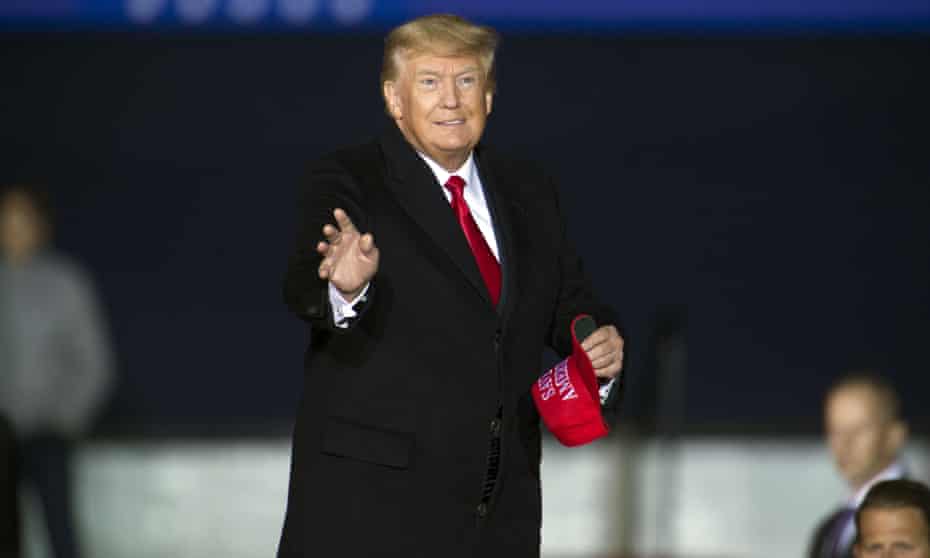
In April 2017, Press Secretary Sean Spicer took the podium in the White House briefing room and announced that the president was donating his first-quarter salary to the National Park Service. With a serious look on his face, Spicer pulled out an oversize check with an oversize signature. It was the first of several checks that Donald Trump signed while in office, handing over his $400,000 salary in exchange for good publicity.

That was pocket change for Trump. His real money came from the business he refused to divest, not from his government salary. An analysis of documents, some of which only became public in recent weeks, shows just how much Trump’s businesses raked in while he was in office. Dig through everything—including property records, ethics disclosures, debt documents and securities filings—and you’ll find about $2.4 billion of revenue from January 2017 to December 2020.

If not for the pandemic, there would have been even more. Trump’s business was hauling in about $650 million annually during the first three years of his presidency. But in 2020, revenues plunged to an estimated $450 million as Covid infected the business. “It’s hurting me, and it’s hurting Hilton, and it’s hurting all of the great hotel chains all over the world,” Trump said in a March 2020 press conference at the White House. “It’s hurting everybody. I mean, there are very few businesses that are doing well now.”

The biggest portion of Trump’s revenue flowed through his clubs and golf properties, which generated approximately $940 million over four years. Trump National Doral, the golf resort in Miami, contributed roughly $270 million to that total. Mar-a-Lago, Trump’s club in Palm Beach, brought in about $90 million.

A New Jersey golf club, where the former president has been spending time this summer, took in $60 million or so. Those top-line figures didn’t all end up in Trump’s pocket, however. Golf clubs and resorts are expensive to manage, with operating profit margins running at 20% in good times. During the pandemic, Trump’s traditional courses fared reasonably well, but his golf resorts had to contend with long shutdowns, causing his overall golf and club revenues to drop 27% to an estimated $190 million in 2020.

Donald Trump owns a 30% interest in 555 California Street, a San Francisco office building.

David Paul Morris/Bloomberg

Fortunately for Trump, he also had high-margin commercial real estate holdings to bolster his bottom line. That proved especially critical in 2020, as commercial tenants—many locked into long-term leases—continued to pay rent.

At 555 California Street, a San Francisco office building in which Trump holds a 30% stake, his rent actually inched up last year, from $42 million to $43 million, according to an analysis of filings. The same thing happened at New York City’s 1290 Avenue of the Americas, where Trump’s haul increased from roughly $55 million to $58 million.

The hotel, licensing and management businesses, on the other hand, didn’t fare so well. Estimated revenues stayed well above $100 million from 2017 to 2019 but dropped closer to $50 million in 2020. No part of Trump’s portfolio was more poorly positioned to withstand such a blow, given the debt load against his hotels.

Inside his Washington, D.C., hotel, revenues flatlined at about $52 million from 2017 to 2019. With the top line stalled out, the hotel didn’t seem to be producing enough profit before the pandemic to cover the interest on its $170 million loan from Deutsche Bank. Things only got worse when Covid-19 hit, and revenues plunged to less $20 million. It’s no wonder the Trump Organization tried to sell the place.


Just down the street from the White House stands the Trump International Hotel in Washington, D.C.

Alex Brandon/AP

But the former president didn’t have much luck offloading that hotel or other assets last year. Trump ditched $32 million of real estate in 2017, an estimated $53 million in 2018, then $32 million in 2019. In 2020, however, he pocketed just $435,000, by selling condos in Vegas. The lack of deals was one reason revenues dropped about 25% to an estimated $450 million. A smaller sum, to be sure, but still more than 1,000 times the annual salary he gave away.


The post Forbes Claims Trump Made $2.4B During Presidency, Lost $200M appeared first on The St Kitts Nevis Observer.
PR: US Coast Guard in $15M Cocaine Haul

 The United States Coast Guard says the crew of the cutter Joseph Tezanos has offloaded nearly US$15 million in seized cocaine and transferred custody of two male smugglers at Coast Guard Base San Juan, following the interdiction of a go-fast vessel in the Mona Passage waters in the Caribbean Sea near Mona Island, Puerto Rico.

“The interdiction resulted from multi-agency efforts in support of US Southern Command’s enhanced counter-narcotics operations in the Western Hemisphere and coordination with the Caribbean Corridor Strike Force (CCSF),” the US Coast Guard said.

It said the United States Attorney’s Office for the District of Puerto Rico is leading the prosecution for this case.

During a routine patrol Saturday afternoon, the US Coast Guard said a Customs and Border Protection (CBP) Air and Marine Operations (AMO) Multi-Role Enforcement Aircraft (MEA) aircrew detected two men aboard a go-fast vessel suspected of drug trafficking.

It’s reported that the Coast Guard Cutter Joseph Tezanos, was operating in the vicinity when it was diverted and responded in hot pursuit to interdict the suspect vessel.

“Shortly thereafter, cutter Joseph Tezanos arrived on scene and interdicted the go-fast vessel with the assistance of the cutter’s small boat,” it added. “The crew of cutter Joseph Tezanos embarked the suspected smugglers and located loose packages aboard the 24-foot go-fast vessel, and they also recovered packages from the water that were jettisoned from the go-fast vessel.”

In total, the US Coast Guard said the crew seized 502 packages of cocaine with a combined weight of about 1,104 pounds.

“I directly attribute the success of this interdiction to the close interoperability that the Coast Guard has with CBP and my crew’s phenomenal performance during the pursuit, boarding and towing of the go-fast vessel,” said Lieutenant Anthony Orr, Cutter Joseph Tezanos commanding officer.

Hector Rojas, director of the Caribbean Air and Marine Branch, said: “The Caribbean Air and Marine Branch values its partnerships that result in successful seizures like this one.

“Our agents will continue to use our advanced aeronautical and maritime capabilities to detect and interdict smuggling attempts throughout our coastal borders,” he added.

The US Coast Guard said CCSF is a multi-agency Organized Crime Drug Enforcement Task Force group operating in the District of Puerto Rico focusing on Caribbean and South American-based Transnational Criminal Organizations involved in the maritime and air smuggling shipments of narcotics from Puerto Rico to the Continental US and in the laundering of drug proceeds using bulk cash smuggling and sophisticated laundering activities.

The post PR: US Coast Guard in $15M Cocaine Haul appeared first on The St Kitts Nevis Observer.

Haitian President’s Frantic Phone Call for Help

Miami Herald- Assassinated Haitian president Jovenel Moise made a frantic phone for help before being killed.

The call came at 1:34 a.m. Haitian President Jovenel Moïse, who was on the other line,was in difficulty, and he needed reinforcement.

“They are shooting by the house,” he told the Haitian National Police commissioner. “Mobilize people.”

The non-stop automatic gunfire in Pelerin 5 where Moïse, his wife Martine and two children lived, started at about 1:30 a.m., according to a resident in the area, who said she ducked underneath her bed to escape the sound as she looked at her phone to see what time it was.

While neighbors in the area weren’t sure what was happening, unknown assailants who would later claim to be part of the Drug Enforcement Administration (a claim denied by the DEA) were advancing and making their way to the president’s private residence in the foothills of Haiti’s capital.

Inside the president’s bedroom, they would open fire. He was shot in the forehead, chest, hip and stomach, and his left eye was gouged, according to Charles Henry Destin, a justice of the peace who later documented the crime scene.

The deadly assault followed 10 minutes of frantic pleas. With no sign of his security forces, Moïse, 53, would make another call, this time to a tactically trained officer with the Haiti National Police.

“Where are you?” Moïse said, calling the officer by name after he answered, “Mr. President.”

“I need your assistance, now!” Moïse said. “My life is in danger. Come quick; come save my life.”

Before the phone call ended, there was silence. Then, the sound of an assault rifle. Refusing to accept what was inevitable, the officer — who asked to remain anonymous in an interview with the Herald, yelled to his fellow officers, “Everyone get back in your cars. We need to leave now.”

The three-car convoy was headed to Pelerin 5, the hilltop neighborhood of modest homes, unpaved roads and million-dollar mansions where Moïse lived.

What ensued in the next hours would be a police manhunt for former Colombian special forces and two Haitian Americans from South Florida, using high-beam lights and specialized units of Haiti’s national police along a well-traveled road.

The fierce pursuit started on the main road leading to Moïse’s residence. It would subsequently involve nearby impoverished neighborhoods, an abandoned building behind a police station and the Taiwanese Embassy, on whose premises 11 of the alleged commandos were apprehended.

More than a week after the murder, 18 Colombians and two Haitian Americans are in custody, while three Colombians are dead and five remain-at-large. Haitian security forces have also made other arrests, including that of a South Florida-based Haitian doctor, Christian Emmanuel Sanon. The owner of a Doral-based firm, CTU Security, run by a Venezuelan émigré, has been named as a person of interest.

Still questions linger. The Miami Herald and the McClatchy Washington Bureau have spoken to at least three people who received calls from inside the president’s house on the morning of July 7. All agreed to speak on the condition of anonymity due to the sensitive nature of the ongoing probe, which has led to 24 security agents being sanctioned and five high-ranking members of the president’s security team being relieved of administrative duties and placed in isolation.

All have recounted the final moments of Moïse, who was killed in the brazen middle-of-the night assassination as his alleged assailants ransacked his house and bedroom, according to multiple sources, and then shot him after positively identifying him with a caller on the other line.

“They came inside, went straight to the room and kept talking to someone on the phone to identify the president,” the officer said, confirming the report of another person familiar with the investigation. “They turned the house upside down.’ ”

When the shooter described the president’s profile to the other person on the line, “he turned to face the president and shot him without any conversation.”

‘When I send you to protect a president, I don’t send you to live’

How foreign mercenaries got past at least three police checkpoints on the road to Moïse’s house and past presumably dozens of security agents inside his walled-off compound to gain access to his second-floor bedroom remains one of the key questions more than a week after his shocking death.

The ongoing multi-national investigation involves at least four countries and four law enforcement agencies, including the Federal Bureau of Investigation, and has so far led to the arrest of several Haitians with ties to South Florida.

What happened to the president’s security team, none of whom were killed or reportedly shot, is another unsolved mystery — one that one of several Haitian national police officers who arrived at the scene shortly after 2 a.m. say they are also asking themselves.

The post Haitian President’s Frantic Phone Call for Help appeared first on The St Kitts Nevis Observer.
World View: US Fires, German Floods, Japan Olympics, More

July 19, 2021

Alternate text

AP Morning Wire

Good morning from The Hague.

  • Dangerous conditions are complicating firefighters’ efforts to battle wildfires in the Western United States,
  • While in Germany, authorities are defending their preparations for flooding that left more than 180 people dead in Western Europe.
  • The AP looks at global inequity in COVID-19 vaccinations that persists deep into the pandemic.
  • And Japan prepares for an Olympics unlike any other as Tokyo counts down to the July 23 start of a Summer Games unlike any other.
  • Man faces 1st sentencing for felony in US capitol rioting.
  • American father, son sent to prison in Carlos Ghosn escape.
  • Survivors of Breivik massacre worry racism is re-emerging in Norway.

MIKE CORDER

The Associated Press


The Rundown

I'm an image

BLY, Ore. (AP) — Erratic winds and parched Oregon forests added to the dangers for firefighters on Monday as they battled the largest wildfire in the U.S., one of dozens burning across several Western states….Read More

I'm an image

PARIS (AP) — No one disputes that the world is unfair. But no one expected a vaccine gap between the global rich and poor that was this bad, this far into the pandemic. Inequity is everywhere: Inoculations go…Read More

Learn more about RevenueStripe...
I'm an image

TOKYO (AP) — After a yearlong delay and months of hand-wringing that rippled across a pandemic-inflected world, a Summer Games unlike any other is at hand. It’s an Olympics, sure, but also, in a very real way…Read More

I'm an image

CHICAGO (AP) — A Florida man who breached the U.S. Senate chamber carrying a Trump campaign flag is scheduled to become the first Jan. 6 rioter sentenced for a felony, in a hearing that will help set a benchm…Read More

Learn more about RevenueStripe...
I'm an image

BERLIN (AP) — German officials are defending their preparations for flooding in the face of the raging torrents that caught many people by surprise and left over 180 people dead in Western Europe, but they co…Read More

OTHER TOP STORIES

TOKYO (AP) — A Tokyo court handed down prison terms for the American father and son accused of helping Nissan’s former chairman, Carlos Ghosn, escape to Lebanon while aw…Read More

STAVANGER, Norway (AP) — On the 10th anniversary of Norway’s worst peacetime slaughter, survivors of Anders Behring Breivik’s assault worry that the racism which nurture…Read More

WASHINGTON (AP) — President Joe Biden is set to host King Abdullah II of Jordan during one of the most difficult moments of the Jordanian leader’s 22-year rule and at a …Read More

WASHINGTON (AP) — A cocktail of propaganda, conspiracy theory and disinformation — of the kind intoxicating to the masses in the darkest turns of history — is fueling de…Read More

The post World View: US Fires, German Floods, Japan Olympics, More appeared first on The St Kitts Nevis Observer.

Local Hip Hop Song Drives Cuban Protests

Cuba is suffering through a summer of dire shortages, from food and electricity to medicine. Fed-up Cubans are taking to the streets in unprecedented protests — and they’re voicing their outrage through a song called Patria y Vida — homeland and life.

The slogan is a spin on the communist regime’s decades-old slogan of “patria o muerte” — homeland or death. In strong terms, the song accuses the government of destroying the quality of life in Cuba, a message that quickly found traction with protesters who are demanding change.

“No more lies. My people demand freedom. No more doctrines!” the song says. It calls for people to shout “patria y vida … and start building what we dreamed of/ what they destroyed with their hands.”

The viral hit has become a political slogan

Patria y Vida has been a phenomenon since its release this year. The song is a collaboration between a group of Afro-Cuban reggaeton and hip-hop stars based in Miami, such as Yotuel Romero and Alexander Delgado, along with rappers Maykel Osorbo and El Funky, who live in Cuba. A YouTube video of the song has been viewed nearly 6 million times.

YouTube

When the single was released, Romero, who is part of the group Orishas, said that for him, the song was motivated by a look back at Cuba’s long history.

“Before the revolution, we had a beautiful Havana; now we have ruins,” he told Billboard in February. “From that point on, I said, ‘I’m not going to be quiet anymore.’ ”

Where the original Castro-era slogan was a call to arms for people to stand against outside influence, the new slogan tells people to hit the streets and take back their country.

“It’s over now! And we’re not afraid,” the song declares.

Patria y Vida quickly became an anthem. When large protests erupted in April, NPR’s Carrie Kahn declared it “astonishing” and a sign of “a growing movement challenging the regime like we haven’t seen in decades.”

After the song’s release, Cuban authorities arrested Osorbo. His supporters have submitted complaints to the United Nations over his treatment, saying that the government is persecuting him for expressing his views and for helping create the song.

The protests have been some of Cuba’s largest

Thousands of Cubans have been taking part in protests in Havana and elsewhere on the island, shouting their demands for more freedom along with calls for an end to high prices and economic turmoil. A run of electrical blackouts has added to their frustrations.

Crowds have been chanting slogans against Cuban President Miguel Díaz-Canel as well as demanding more access to vaccines. Cuba has been experiencing a record spike in COVID-19 cases and deaths in recent weeks. Overall, the nation has reported nearly 245,000 cases.

Marches and protests have been disrupted by police, who made mass arrests and used tear gas against demonstrators on Sunday. Videos circulating online have also shown officers firing toward crowds, reporter Nora Gámez Torres of the Miami Herald and El Nuevo Herald told NPR.

“There were really unprecedented images coming out of the island,” she said.

Why is Cuba suffering?

There are several main reasons, including U.S. economic sanctions that were tightened under former President Donald Trump and the pandemic’s toll on the island’s economy and infrastructure. Cuba is also getting less economic help from one of its main allies, Venezuela.

“The government is in debt and has no money,” Torres said. “So the population has been enduring severe scarcities of food and medicine.”

Many are also angry and frustrated by Cuba’s policy of selling food in U.S dollars — which most of the country’s people don’t earn.

Remittances from relatives in the U.S. and elsewhere are also down. And like many places, Cuba’s tourism industry has been hollowed out by more than a year of travel restrictions due to COVID-19.

It’s not yet clear what will happen next, Torres said.

“Even if the government retains control, which is the most likely scenario, Cubans now see what they can do if enough people come out to protest,” she said. “So the genie is out of the bottle now and the frustration is not going anywhere.”

With the government facing a deep crisis, she warned, we’ll likely see more repression in the coming days.

The Cuban government is blaming the U.S.

Granma, the Communist Party newspaper, blames the protests on “annexationist interests, paid and directed by the United States.”

Díaz-Canel has said Cuba is facing difficulties that it knew were coming when the U.S. put tight economic sanctions on the country. And while the pandemic has made the situation worse, the president said every country in the world is being forced to cope with the coronavirus.

In a speech Monday, Díaz-Canel also dwelled on his country’s national electrical system, saying its infrastructure is hobbled by both the U.S. embargo and by overconsumption.

The U.S. stance

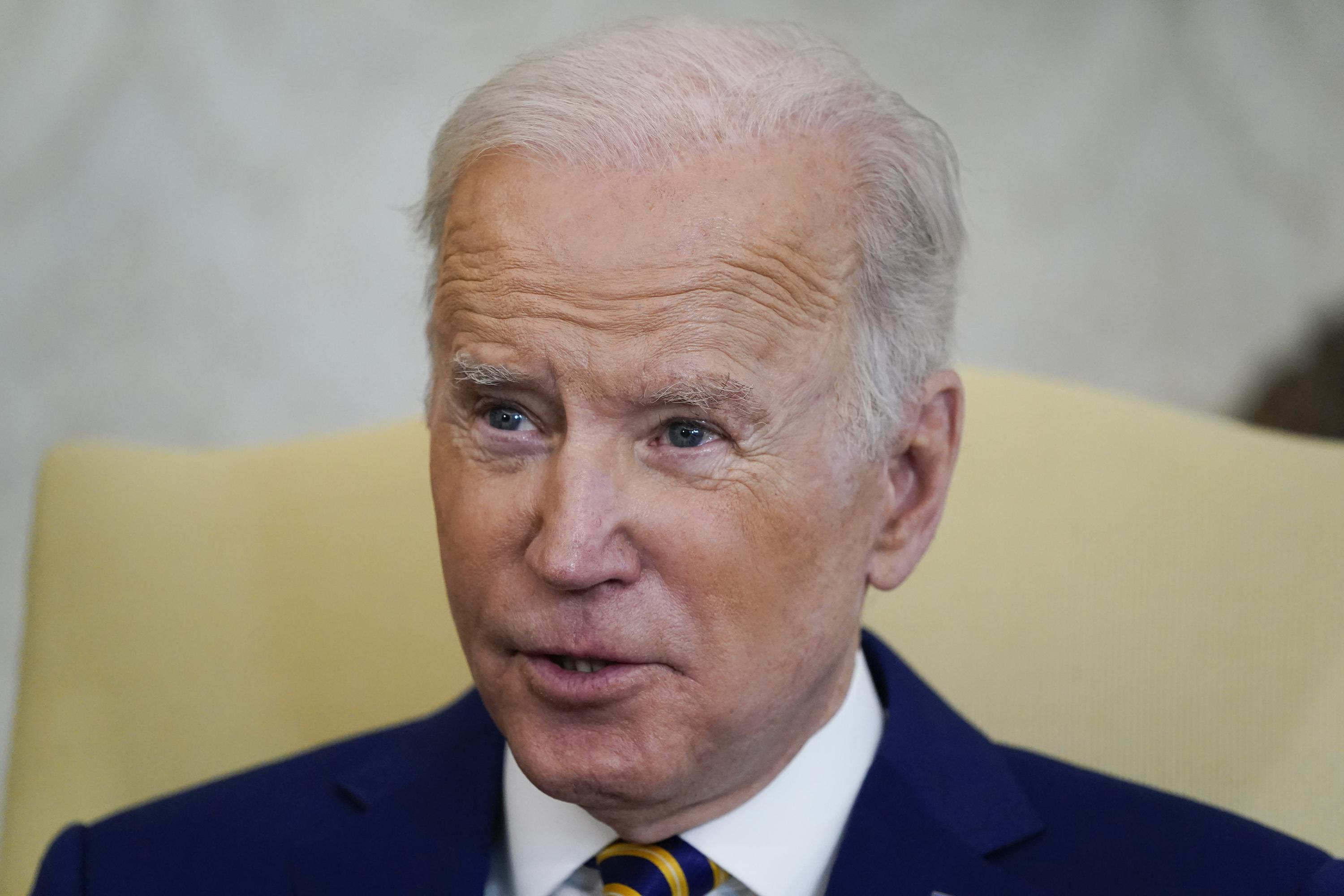
President Biden said he strongly supports the protesters.

“The Cuban people are demanding their freedom from an authoritarian regime,” Biden said during a White House event Monday. “I don’t think we’ve seen anything like these protests in a long, long time if, quite frankly, ever.”

Biden added, “The U.S. stands firmly with the people of Cuba as they assert their universal rights. And we call on the government of Cuba to refrain from violence in their attempt to silence the voices of the people of Cuba.”

The post Local Hip Hop Song Drives Cuban Protests appeared first on The St Kitts Nevis Observer.

Back Home: Honduran Toddler Found Alone in Mexico

CABAÑAS, Honduras, July 18 (Reuters) – Wilder, the 2-year-old Honduran boy found abandoned and half-naked on a secluded Mexican highway near a truck carrying migrants, was welcomed home with cake and fireworks by relatives in the poor rural town of Cabañas in western Honduras.

The toddler made international headlines when Mexican security agents found him crying alone in southern Mexico in June near the cargo truck that contained dozens of people trying to make their way to the U.S. border.

The boy, who is in good condition, was flown on Friday to the northern Honduran city of San Pedro Sula where he was reunited with his mother after nearly 20 days in the custody of Mexican authorities. read more

“Never again will I let my child go. I’m so happy to have him with me,” Lorena Garcia, 23, told Reuters by phone. “Eating beans and corn, we’ll get by,” said Garcia, a farmer, who lives in a modest home with dirt floors.

Grandparents, uncles and cousins greeted the boy on Saturday with fireworks and a sign reading: “Welcome back Wilder.”

Garcia said her husband, Noel Ladino, left with Wilder in a bid to migrate to the United States with a human smuggler. It was unclear why the father and son became separated before the boy was found by Mexican authorities.

Elated to have her son back in her arms, Garcia lamented not being able to reunite as well with her husband, who she said is detained in Mexico. “I hope he comes back to help us too,” Garcia said.

The young family survived on Noel Ladino’s precarious salary of 100 lempiras a day, the equivalent of $4, when he could find work, which is scarce in the area, Garcia said.

They are among the thousands of people living in Cabañas in the mountains of the Copan department of Honduras, where 94% of the inhabitants are poor, according to official data.

Hundreds of thousands of Hondurans, including families with children, have set off for the United States in recent years to escape poverty, violence and corruption. Many are turned back by Mexico or the United States.

There has been an increase this year in unaccompanied children, mainly from Central America, arriving at the U.S.-Mexico border, even as President Joe Biden’s administration warns migrants not to come.

Reporting by Jose Cabezas in Cabañas, Honduras and Gustavo Palencia in Tegucigalpa; Writing by Anthony Esposito; Editing by Peter Cooney

The post Back Home: Honduran Toddler Found Alone in Mexico appeared first on The St Kitts Nevis Observer.

Biden says Cuba Is a Failed State’ and Calls Communism ‘a Universally Failed System’

(CNN) President Joe Biden said on Thursday that Cuba is a “failed state” and called communism a “failed system” as protests play out against the Caribbean nation’s repressive regime.

During a news conference with German Chancellor Angela Merkel, Biden said that the United States is looking into ways to possibly reinstate access to the internet in Cuba but indicated that the US is not considering reestablishing US to Cuba remittances — the practice of Americans transferring money to their Cuban relatives — over concerns that the regime would confiscate the funds.
“Cuba is unfortunately a failed state and repressing their citizens. There are a number of things that we would consider doing to help the people of Cuba, but it would require a different circumstance or a guarantee that they would not be taken advantage of by the government,” Biden said. “For example, the ability to send remittances back to Cuba. We would not do that now because the fact is it’s highly likely the regime would confiscate those remittances or big chunks of it.”

When asked about his views on communism, the President added: “Communism is a failed system — a universally failed system. And I don’t see socialism as a very useful substitute. But that’s another story.”

Thousands of Cubans took to the streets across the island nation last weekend to protest chronic shortages of basic goods, curbs on civil liberties and the government’s handling of a worsening coronavirus outbreak, marking the most significant unrest in decades.

Since Biden’s arrival in office, Cuba policies have remained in review.

Under the Obama administration, Cuba oversaw the reopening of embassies and relaxing of many restrictions long in place since the embargo. But the Trump administration enacted some of the toughest economic measures against Cuba in decades, reinstated travel restrictions and — before leaving office — named Cuba a state sponsor of terrorism.

On Friday, Cuban President Miguel Díaz-Canel responded to Biden’s comments by calling on him to repeal Trump’s moves.

“If President Joe Biden really had humanitarian concerns for the Cuban people he would eliminate the 243 measures applied by President Donald Trump, including 50 imposed cruelly during the pandemic,” Diaz-Canel posted on his official Twitter account. He added, “The US has failed in its attempts to destroy Cuba, although by trying to achieve it has wasted millions of dollars.”

The demonstrations in Cuba, along with the recent presidential assassination in Haiti, has forced the Biden administration to place a focus on foreign policy with nations in the Caribbean. The President confirmed that he plans to send US Marines to Haiti to secure the US embassy there, but no plans are in the works for additional troops to go to Haiti.

Biden said he was ready to send Covid-19 vaccines to Cuba, but the nation has not joined the international vaccine coalition, COVAX, with whom the US is working closely.

“I’d be prepared to give significant amounts of vaccine if in fact I was assured an international organization would administer those vaccines and would do it in a way that average citizens would have access to those vaccines,” he continued.

The President volunteered information about reinstating internet access in Cuba, telling reporters, “We’re considering whether we have the technological ability to reinstate that access.”

Earlier this week social media platforms were being restricted in Cuba, according to internet monitor NetBlocks. The NetBlocks website said its metrics showed that WhatsApp, Facebook, Instagram and some Telegram servers were being disrupted.

This story has been updated with additional information.

The post Biden says Cuba Is a Failed State’ and Calls Communism ‘a Universally Failed System’ appeared first on The St Kitts Nevis Observer.

Haiti: Moise’s Widow Back Home After Treatment in US

The widow of Haiti’s assassinated president has returned to the Caribbean nation after being treated in Florida for wounds suffered in the attack.

Martine Moïse was seen wearing an arm sling and a bulletproof vest after arriving by plane at Port-au-Prince airport on Saturday.

Her husband Jovenel Moïse was killed by assassins in their home on 7 July.

Mrs Moïse was injured in the attack, and was flown to a hospital in Miami, Florida for treatment.

In a tweet, a Haitian official said Mrs Moïse had returned to the country to prepare for her husband’s funeral next week.

Flanked by security agents, she was pictured being greeted by Interim Prime Minister Claude Joseph and other officials on the tarmac.

Mrs Moïse has made few comments since the attack, for which police have blamed a group of foreign mercenaries, most of them Colombians.

From her hospital bed, she recorded an audio message in which she described the moment assassins “riddled” her husband with bullets after bursting into their home in the middle of the night.

Mrs Moïse said the attack happened so quickly that her husband was unable to “say a single word”. Earlier this week, she tweeted: “This pain will never pass.”

Mr Moïse, 53, had been president of Haiti, the poorest nation in the Americas, since 2017. His time in office was rocky as he faced accusations of corruption and there were widespread demonstrations against him earlier this year.

Correspondents say that as a witness to the attack, Ms Moïse could help investigators understand who carried out the assassination and why.

Many of the details surrounding the attack remain a mystery.

Haitian police say a group of mainly foreign mercenaries – 26 Colombians and two Haitian Americans – made up the group that carried out the killing.

At least 20 have been detained, while three were killed by police and five are still on the run.

Haitian police have also arrested a Florida-based Haitian doctor, Christian Emmanuel Sanon, whom they described as a “key suspect” in the assassination.

The post Haiti: Moise’s Widow Back Home After Treatment in US appeared first on The St Kitts Nevis Observer.

Latin American Foto Festival: Strength and Resistance

Portraits of survival and resistance go on show in New York, at The Bronx Documentary Center’s fourth Annual Latin American Foto Festival.

Works by artists from Colombia, Argentina, Chile, Mexico, Venezuela, Peru and El Salvador are displayed from a variety of long-term projects focusing on social issues.

Here is a selection of some of this year’s featured photographers alongside their comments on their projects.

Five-year-old Alfred Flores holds a bunch of quenettes in Patanemo, Venezuela.image copyrightAndrea Hernandez Briceno
image captionFive-year-old Alfred Flores holds a bunch of quenettes in Patanemo, Venezuela.

Andrea Hernández Briceño

“We call it mango season. It happens every year in the dry season when the fruit starts falling from the trees, abundant and generous to those who are hungry.

“In Venezuela this past year, its arrival was particularly celebrated, as the pandemic wore away access to basic necessities in a country wracked by deepening poverty and crisis.

“I made these images while walking on the streets of Caracas, the capital, and smaller towns. On my long trips I observed that most Venezuelans eat fewer than two meals a day.”

line
Paola during Ash Wednesday.image copyrightCarlos Saavedra
image captionPaola during Ash Wednesday. In her youth, she was a victim of sexual violence perpetrated by paramilitaries.

Carlos Saavedra

“This photo project concentrates on a community called ‘La Isla’, composed of mainly displaced Afro-Colombians from the Pacific coast of the country, one of the most affected sectors due to the internal violence from guerrillas, paramilitaries and the Colombian Army.

“We worked with the community members targeted by the social cleansing campaigns – some are reformed drug addicts, some live with NGOs and some are activists who advocate against these violent ‘cleansings’.

line
Camilo Gálvez, 24, is a sound technician, Puente Alto, Santiagoimage copyrightCamilo Gálvez
image captionCamilo Gálvez, 24, is a sound technician who lives in Puente Alto, Santiago
1px transparent line

Cristóbal Olivares

“Camilo received the impact of a pellet that lodged in his right eye on 15 November 2019, near the Catholic University of Santiago, Chile. His diagnosis was an ocular burst and fracture with total loss of the right eye.

“Four hundred and sixty people have had serious eye injuries, 34 of whom suffered total loss due to the indiscriminate use of pellets and tear gas bombs by the Carabineros, Chilean special forces.”

line
Alex (13), right, and other children stand during a Regional Co-ordinator of Community Authorities community police force gun training presentation in Ayahualtempa, Guerrero state, Mexico.image copyrightLuis Antonio Rojas
image captionAlex, 13, right, and other children stand during a Regional Co-ordinator of Community Authorities community police force gun training presentation in Ayahualtempa, Guerrero state, Mexico.
1px transparent line

Luis Antonio Rojas

“Documenting the way organised crime has ripped through Mexico was never something I intended to do.

“I grew up in a safe place in Mexico City, where violence never reached me directly, and I was unsure about how to cover such baffling and obscure events.

“But these realities cannot escape the daily news or documentary projects, and covering them is fundamental for many Mexican photographers.

“Alex had to stop attending high school in the town of Hueycantenango due to the presence of drug cartel Los Ardillos.”

line
Villagers take a break from cleaning oil off freshly harvested crabs from Lake Maracaibo, in Punta Gorda, Cabimas, Venezuela.image copyrightRodrigo Abd
image captionVillagers take a break from cleaning oil off freshly harvested crabs from Lake Maracaibo, in Punta Gorda, Cabimas, Venezuela.
1px transparent line

Rodrigo Abd

“The wreckage of Venezuela’s oil industry, once the richest in the world, lies all around fishermen and their families who live in villages clustered on the edge of Lake Maracaibo.

“Their struggles on a briny bay fouled by petroleum leaks and derelict oil rigs are etched on to their faces and stained into their clothes.

“Seeing these people and this place on an earlier reporting trip, I knew I had to return with my wooden box film camera to make black-and-white portraits of the fishermen and the industrial decay they call home.

“The slower pace and mood of box photography would help capture the poignancy and pain of Cabimas, where fishermen live and work among the idle, grey machinery.”

line
Informal vendors disinfect their bodies before entering the municipal market in Nahuizalco, Sonsonate, to sell their fruit and vegetables.image copyrightVíctor Peña
image captionInformal vendors disinfect their bodies before entering the municipal market in Nahuizalco, Sonsonate, to sell their fruit and vegetables.
1px transparent line

Víctor Peña

“The pandemic health crisis in El Salvador has become a political crisis.

“In the cities and in the small villages, the streets were silent and lonely during the quarantine, with the lockdown enforced by the military.

“Most of the country’s economic activity was paralysed for those three months. El Salvador’s economy will suffer the greatest decline in Central America.”

line
A hand holding a photograph of two people on a locketimage copyrightVictoria Razo
image captionSometimes I think that I don’t want my parents to go through the pain of searching and recognising my body. Veracruz, Mexico.
1px transparent line

Victoria Razo

“Resilience is a series of photographs taken over the years that I have lived and walked with a camera in my hand, portraying episodes from my personal life, and documenting the stories of women who have crossed my path.

“It is a series that helps me to know my own history of violence, questioning and reflecting while I relive the memory, and to fight for the construction of a more equitable society – one in which being a woman does not imply a risk to life itself.

“In this project, I have tried to make resilience visible. I photograph the pain and anger of mothers who scratch the earth to find their missing loved ones; through the women who endured domestic abuse and in the resistance of trans women who live in violence after understanding and assuming their gender identity.”

The Bronx Documentary Center’s fourth Annual Latin American Foto Festival is taking place in New York, until 1 August 2021.

Related Topics

The post Latin American Foto Festival: Strength and Resistance appeared first on The St Kitts Nevis Observer.

Covid-19: Second Doses Run Dry in Brazil’s Scramble to Vaccinate

By Ana Ionova
Rio de Janeiro


Vinicius Alexis da Cruz felt a wave of relief when his turn came to take the Covid-19 vaccine.

As the virus ravaged Brazil, the 32-year-old had spent more than a year risking his life, working as an Uber driver. Diabetes and high blood pressure made Mr Cruz especially vulnerable. But he kept driving passengers across São Paulo to make ends meet.

“I was really scared of getting sick,” said the father of one, who lost his job as a sports commentator before the pandemic hit. “But I was taking the risk because I had to keep working.”

Mr Cruz got his first dose of CoronaVac in late May. But when the time came to get his second jab, he was turned away. “Nobody had a vaccine for me,” he said. “I went to five clinics near my house. I couldn’t find it anywhere. The same thing happened the next day, and the day after that.”

He scoured the city for four days before he got his hands on a second shot. “Finally, I’m fully vaccinated. But it became really clear to me just how short we are on vaccines.”

Like Mr Cruz, millions are struggling to get their second shot of the Covid-19 vaccine, dealing a blow to Brazil’s already troubled vaccination campaign. Some 3.1 million Brazilians had not had their second jab as of 4 July despite being eligible for it, according to researchers tracking vaccinations.

Some have intentionally skipped their second dose, falling for misinformation campaigns that have sowed doubts about the vaccine or claimed a single shot offers enough protection. But the main hurdle has been a supply crunch of doses driven by a rushed vaccine rollout, said Dr Ligia Bahia, a public health specialist at the Federal University of Rio de Janeiro.

“There is this drive to speed up vaccination with the first dose,” said Dr Bahia, one of the researchers tracking immunisations. “And the second dose has ended up on the backburner.”

Coronavirus has claimed more than 530,000 lives in Brazil, a toll second only to the United States. Yet only about 40% of Brazilians have received at least one dose of the vaccine and just 15% are fully immunised.

The post Covid-19: Second Doses Run Dry in Brazil’s Scramble to Vaccinate appeared first on The St Kitts Nevis Observer.